Showing posts with label Parineeta. Show all posts
Showing posts with label Parineeta. Show all posts
I got my big movie break at Enrique’s concert-Vidya Balan
8:41 AM

Renuka Vyavahare (BOMBAY TIMES; October 28, 2025)
Spanish pop sensation Enrique Iglesias has been to India twice before in 2004 and 2012 but has performed in Mumbai only during his first visit to the country. So, the Latino sensation will be returning to the maximum city on October 29 and 30 after 21 years.
Interestingly, not many know that Vidya Balan, who is also a diehard Enrique fan, shares a heartfelt connection with his return to Mumbai after two decades. In an exclusive interaction with Bombay Times, the noted actress went down the memory lane and shared some precious trivia and why she’s looking forward to his Mumbai show on Wednesday.
Beaming with excitement, Vidya recalled, “My friend and I, we were at Enrique’s concert in Mumbai in 2004, when Pradeep Sarkar called me to offer Parineeta. We were trying to inch closer to the stage, my phone was off and Enrique had gone off the stage between the songs. We were hoping to get to the front by the time he comes back to perform. I was hoping he waves at me and pulls me on stage (smiles)… all these were young girl fantasies. Around this time, Pradeep dada (Sarkar) must have called me but he couldn’t get through so he called Pavitra my friend, the two of us had gone to the concert. He asked her ‘Vidya kaha hai’? Pavitra said she is right here and handed the phone to me. Dada told me Vidhu Vinod Chopra wants to talk to you. I told him I am at a concert and can talk to him once I get out. By then Mr Chopra came on the line. I wondered if he wanted to say, you are really good but it’s not going to work out because I had gone through a series of tests and auditions before that. I didn’t know what to expect. VVC told me, “Vidya Balan you need to get out of that venue and reach a quieter place where you can speak.” Grudgingly I dragged Pavitra along and we reached the gate. VVC told me then that, ‘you are my Parineeta’ and by then Enrique had come back on stage and sang Hero. While the song was always special to me, this moment sealed the deal for me. For me to receive this news when that song played, I couldn’t stop crying. I don’t remember what happened after that. My hands and legs were trembling. It is undoubtedly one of the most special moments in my life and it was quite cinematic.”
The actress confesses to crushing on the singer like every girl her age did. She expressed, “Enrique embodied what every young girl my age wanted and hoped for in their boyfriend. There was something raw about him. He was cool and effortlessly sexy. He seemed like a passionate lover. He embodied the pain that love brings along, one romanticizes this feeling at that age. You see glimpses of the feeling when someone is madly in love with you in ‘Addicted’ and ‘love to see you cry’. He’s just too sexy. I was definitely crushing on him. I won’t say obsession but he was a rage… bad boy played to the hilt. I remember back then everyone wanted to be at his concert.”
Vidya believes nostalgia plays a huge role in making the singer relevant even today. “MMRDA is going to be filled with people my age who are nostalgic about him. People who have grown up dreaming of him and fantasizing about him. He’s so unapologetically private about his life which I deeply admire. He is true to who he is. His voice resonates the pain of youthful love, where you feel everything intensely.”
On a parting note, the actress shared, “I got my big movie break at Enrique’s concert and that was my first concert experience as a young girl. Not many concerts happened in those days. Michael Jackson happened but I was younger then. So when people ask me are you going to his concert, which I am, I joke around and say, I complete 20 years in the movies. No wonder he’s come back to celebrate that. It almost felt like the birth of me as a heroine happened at his show while he sang Hero. You feel these moments happen only in the movies but it happened to me in real life. I am looking forward to reliving that moment and time hence watching him live again will be special. I am so grateful to what has happened since. If I were to dedicate one of my songs to Enrique, it would be Piyu Bole from Parineeta. That would be poetic justice.”
Shantanu Moitra turns director, producer for docu series
7:58 AM
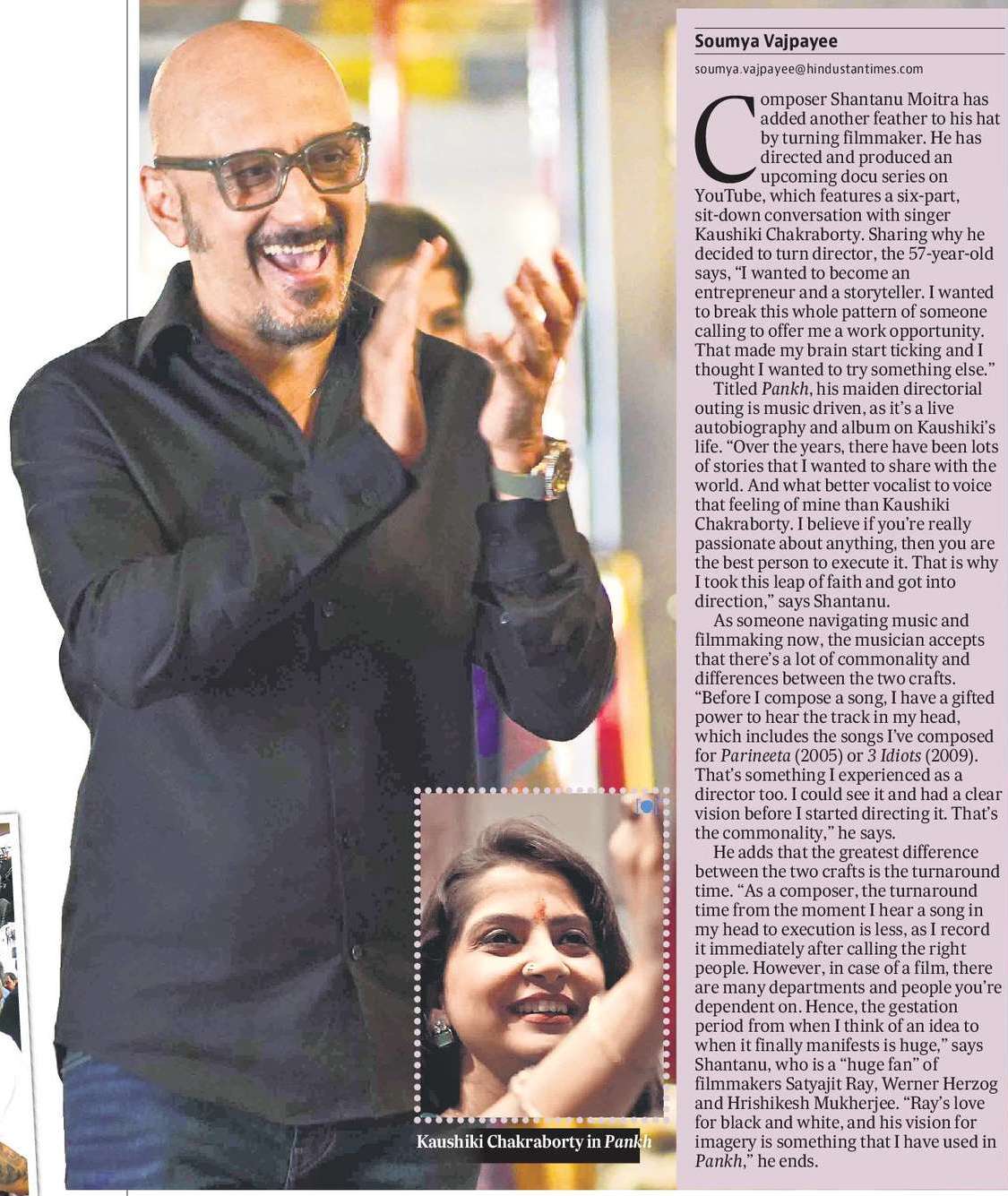
As composer Shantanu Moitra steps behind the camera for the first time, he talks about the commonality and difference between music and filmmaking
Soumya Vajpayee (HINDUSTAN TIMES; June 27, 2025)
Composer Shantanu Moitra has added another feather to his hat by turning filmmaker. He has directed and produced an upcoming docu series on YouTube, which features a six-part, sit-down conversation with singer Kaushiki Chakraborty.
Sharing why he decided to turn director, the 57-year-old says, “I wanted to become an entrepreneur and a storyteller. I wanted to break this whole pattern of someone calling to offer me a work opportunity. That made my brain start ticking and I thought I wanted to try something else.”
Titled Pankh, his maiden directorial outing is music driven, as it’s a live autobiography and album on Kaushiki’s life. “Over the years, there have been lots of stories that I wanted to share with the world. And what better vocalist to voice that feeling of mine than Kaushiki Chakraborty. I believe if you’re really passionate about anything, then you are the best person to execute it. That is why I took this leap of faith and got into direction,” says Shantanu.
As someone navigating music and filmmaking now, the musician accepts that there’s a lot of commonality and differences between the two crafts. “Before I compose a song, I have a gifted power to hear the track in my head, which includes the songs I’ve composed for Parineeta (2005) or 3 Idiots (2009). That’s something I experienced as a director too. I could see it and had a clear vision before I started directing it. That’s the commonality,” he says.
He adds that the greatest difference between the two crafts is the turnaround time. “As a composer, the turnaround time from the moment I hear a song in my head to execution is less, as I record it immediately after calling the right people. However, in case of a film, there are many departments and people you’re dependent on. Hence, the gestation period from when I think of an idea to when it finally manifests is huge,” says Shantanu, who is a “huge fan” of filmmakers Satyajit Ray, Werner Herzog and Hrishikesh Mukherjee. “Ray’s love for black and white, and his vision for imagery is something that I have used in Pankh,” he ends.
I always thought the boys were my real competition-Vidya Balan
4:00 PM

Madhureeta Mukherjee (BOMBAY TIMES; June 10, 2025)
The world may hail her as a game-changer, a sherni who roared her way through Bollywood’s rulebook — but Vidya Balan doesn’t see it that way. Twenty years in Hindi cinema, and she is still dancing to her own rhythm. The actor, who defied norms, wants to be free of those tags and labels – free of that baggage. There’s a newfound lightness about her, yet she’s just as fiercely passionate about her craft as she was two decades ago. In this deeply personal interview with us, she talks about her inner battles, her evolution shaped by heartbreak and healing – and all the joy that went into it.
If you could relive one moment from your 20-year journey in Hindi cinema, which one would it be?
The premiere of Parineeta in Amsterdam. I don’t remember watching the film, as that memory is a blur. It’s like your wedding day (laughs). What I remember is standing up on that stage along with the cast and looking at the world. It was a full house. It was something about that moment – this is what I had always wanted. I didn’t know if there was a road ahead, but I felt I had reached the summit. That moment has stayed with me. It’s like I walked up with my back to the audience, and when I turned to the world, my world had changed.
In your early days, how did you deal with stereotypes and industry expectations of how an actress should be? You’ve never been apologetic about the characters you’ve played – whether it was flawed, sensual, loud or silent. How did you stay so true to your choices?
I don’t think I did anything consciously. It’s just the way I am made. I am shamelessly accepting of my dreams and aspirations. I don’t think anything was stopping me from being a conventional heroine. Also, I never thought of myself as unconventional and different – these were the tags given to me. I wanted to be like all the actresses I had admired over the years. With every opportunity I got, I made the most of it – whether it was Guru with Mani Ratnam, Halla Bol with Rajkumar Santoshi or Salaam-E-Ishq with Nikkhil Advani. I played the lead in these films, but they were all different. That is who I am and that began to find expression. When there is success, you are okay being seen for who you are. There are two films where I feel I didn’t do my best – Heyy Babyy and Kismat Konnection. People enjoyed those films, but I got a lot of criticism for it.
It must have been shattering at that point. Would you say there were many such breaking points in your career, from where you had to rebuild your confidence, renew your spirit and rise again?
It happened at various points. After The Dirty Picture and Kahaani, many of my films didn’t work and I was going through a persecution complex. I felt everyone was out to get me. I began to assume a certain kind of self-importance thinking everyone was talking about me. Everyone is not talking about you, but you feel that because you are only looking at yourself. I thought, why is my dressing such a problem? Today, when I look back, yes, it was a huge problem, as I was not doing anything that I liked doing. I am so grateful for that period, those films, the criticism, the nasty things that people said and the humiliating experiences – it made me realize what is the kind of work I want to do. Who am I really? I slowly started embracing myself. It was tough and it came with a lot of heartbreak. I feel my father has given me a certain fearlessness to be myself and my mom has given me faith and that has taken me a long way.
When did the feeling of being comfortable with who you are — your work, your body — finally come in?
After The Dirty Picture, I was going through some health issues and the weight kept going up. I had also got married, so people thought that I was taking it easy. Every few months, there’d be a rumour that I was pregnant. I wanted to be invisible in those days, and that is a horrible place to be in. I was at my lowest professionally and personally because of the way I was viewing myself. I’ve been with a healer for the past 14 years, and that has been a huge help. It is a lifelong process. I feel now everyone goes through it and a lot more. At that point, I felt that I was being singled out and judged for everything. Today, I am more in touch with who I am.
If you met the Vidya of 2005 today, the Vidya who was on the cusp of becoming a star, what would you tell her?
I would say don’t try too hard. I’ve spent a lot of time trying too hard. Be yourself and go with the flow. Don’t think of where, what, when and how it will happen. It will all happen. Deep down, even I knew that, yet I needed life to teach me that through my journey.
In 2012, when your career was soaring, you married Siddharth (Roy Kapur) — despite having once said that marriage wasn’t really on the cards. Thirteen years in, has the experience changed your perspective?
Yes, I didn’t want to get married at all. Even today I don’t think partnerships are easy and I don’t think marriage is easy. But the fact that we both are from the industry is a blessing, because if anyone can understand our work and life, it is people from the same business. Now I’ve come to understand that marriage is always work in progress, it’s learning, unlearning, relearning and growing together. Siddharth and I never give each other advice, but we are fully supportive of each other and respect how passionate we are about what we do. I feel blessed to have a partner who lets me be. He is my anchor.
Your perspective on marriage has changed, but what were the beliefs or fears that made you resist it initially?
Earlier, I could never see myself getting married because I felt marriage was about domestication. I often wondered who my mother would have been if she hadn’t been married. I don’t know if she wondered that though. I always felt ki mujhe shaadi nahin karni hai. Also, I have always wanted to be better than the boys, so a long partnership with a boy seemed impossible. Come to think of it, maybe I never competed with the girls because I always thought the boys were my real competition. At the gym, I would lift heavier weights than the boys. We are two sisters, and I do think that my mom subconsciously wanted a boy, as she already had a girl. In our extended family, there were mostly girls, so the ones with boys were given that much more importance. These are very subconscious things, and I picked up on all those cues and I thought I will be better than the boys. Maybe that explains my career, too, in a way… don’t you think?
Perhaps, a lot of my hormonal issues were an outcome of this rejection of the feminine part of me and I fought it, as I wanted to constantly prove that I was better than the boys. But marriage has allowed me to accept that side of me. Maybe, it has made me realize that I’m not lesser and don’t need to be better than the boys to be good enough. I’m good enough just being me…wholly me!
There’s something about the Bengali culture that just feels very familiar-Vidya Balan
2:30 PM

Onkar Kulkarni (BOMBAY TIMES; October 11, 2024)
Dressed in a red Banarasi sari, Vidya Balan enthusiastically soaked in the Durga Puja festivities at the Chembur Durga Puja Association. The actress, who believes, “Ami mon theke Bengali (I am a Bengali at heart)”, immersed herself into the celebrations – from blowing the conch, playing the dhak to gorging on some irresistible Bengali mishti. She talks to us about her connect with Durga Puja, her Bengaliness and how Satyajit Ray has a role to play in her love for Bengali culture.
‘My first visit to a Durga Pujo pandal was in my early 20s’
While growing up, Vidya was more familiar with Navratri than Durga Pujo. She tells us, “We celebrated Navratri every year in the South Indian way. For us, Navratri meant ‘girl time’. My mom would call her female friends and their girls over for haldi kumkum and we would visit others too. My first visit to a Durga Pujo pandal was only in my early 20s. I’d done a music video, Kabhi Aana Tu Meri Gali, with Euphoria and Pradeep Sarkar (director of Parineeta). Since I lived in Chembur, dada’s then assistant Paula, invited me to this pandal because she was going to be singing here.”
‘Fortunate to explore various facets of Durga Maa through my work’
As she revisits this pandal after 20 years, Vidya gets nostalgic. She says, “The image of Durga Maa instantly called out to me. What Durga Maa stands for resonated with me at a very deep level, even before I could articulate it or understand it. I’ve been fortunate to explore various facets of Durga Maa in some of my most popular films.”
‘Bengalis are known for their beautiful women and their beautiful weaves’
The Kahaani actress loves the khichuri along with begun bhaja (brinjal fry) bhog served during pujo. One of the other highlights is, of course, dressing up in gorgeous saris. “I love wearing saris with the red bindi, and hair left loose, and now I also have my own shakha pola (the traditional Bengali white and red bangles). Bengalis are known for their beautiful women and their beautiful weaves. I wear all kinds of saris, but I love Bengali saris, the Dhakai, Baluchari and even the simple Bengal cotton saris. I remember on one of my early trips to Kolkata, I had gone to Punjabi House at Gariahat and bought my mom a sari for Rs. 135, and she still has it.”
‘I see Navratri and Durga Puja as a celebration of the divine feminine’
Apart from the grand celebrations, the festival is also a tribute to the divine feminine, Maa Durga. Vidya shares, “I see Navratri and Durga Pujo as a celebration of the divine feminine and the power of Shakti. I guess my sister and I have imbibed that from my mother. Growing up, I had examples of a lot of strong women in my life, including my mother, aunts, neighbours and sister, who I’ve always said is my hero. They are all delicate, simple women, but women with a lot of strength. So, when you grow up with such role models, you believe that you can do whatever you want to do in life and that femininity is not an appendage, it is powerful.”
‘The first time I visited Kolkata, it felt like this was also home’
Vidya has had a strong association with Bengal and its culture. In one of her most outstanding performances, Kahaani, she was called Vidya Bagchi, and the final moment in the film culminated in a Dashami scene. She made her acting debut with a Bengali film, Bhalo Theko, and then her Bollywood debut with Parineeta, which was set in Bengal.
She says, “There’s something about the Bengali culture that just feels very familiar. You know, I visited Kolkata for the first time only in 2003, but the moment I went there, it felt like this was also home. I’ve also shot a lot of important films in my career, including Bhalo Theko (2003), Parineeta (2005), Kahaani (2012), Kahaani 2 (2016) and Te3n (2016) in Kolkata.”
‘Satyajit Ray has a role to play in my love for Bengali culture’
“I think Satyajit Ray also has a role to play in my love for Bengali culture. I’ve watched a lot of Bengali films, and I know some songs and rhymes (like aabol-taabol) too. I couldn’t have imagined that my film debut would be in the land of Ray. I didn’t get an opportunity to work with him, but I’ve had a lot of people tell me that I look like one of his favourites, Madhabi Mukherjee (laughs)!”

Now we aren’t making movies that can become classics. We’re just wound up in numbers-Aahana Kumra
8:19 AM

Sundas Jawed (BOMBAY TIMES; June 9, 2024)
Actress Aahana Kumra is known for her out-of-the-box choices when it comes to films and speaking her mind. The Lipstick Under My Burkha and Khuda Haafiz actress was in Kolkata on Saturday and did touristy things in the city. CT caught up with her about her impromptu visit, her love for theatre, films and more. Excerpts.
The city as an inspiration
Aahana had posted her Kolkata pictures with a caption quoting Amitabh Bachchan ‘if one needs inspiration, one should come to Kolkata’.
“The simplicity of the city really inspires me,” said the India Lockdown actress. “I have many friends here and just love the city. The beauty of Kolkata also lies in the fact that the city never changes, I have been coming here for 20 years now,” she said. Actor Chandan Roy Sanyal, who is shooting in Kolkata invited her over.
“He invited me to have lunch with him and Tony da (Aniruddha Roy Chowdhury), said the actress. “Everyone from the set of their next movie was there too. I loved the fact that the food I had on set was home cooked,” said Aahana who enjoyed a hearty meal of Kolkata-style fish and mutton on set.
Indian cinema and the need to tell our own heartland stories
“Many big films don’t work because the Indian audience has become very smart now, they want fresh and original content and cannot be fooled,” said Kumra, adding, “We have a lot of stories to tell, we just need to look into our periphery and not imitate the West. We need to make more heartland movies and Bengali cinema is doing that. It is the everyday stories that people connect with. If we look at India’s feat at the Cannes, it is these stories that made it to the global platform."
‘Theatre is like life, with no second chances’
“Both theatre and movies have given me immense love and an understanding of my profession. Theatre is just like life, it doesn’t give you a second chance. But then it is also about how you accept, adapt and move on. Theatre also helps you connect with the audience. Kolkata has the best audience I have ever seen in my life.”
The beauty of Bengali classics
Aahana believes, the beauty of cinema lies in its simplicity, and Satyajit Ray and other Bengali filmmakers aced this art. “When at film school, I watched the Apu trilogy and was awe struck by the simplicity of the film and Ray. Charulata, Aparajito, are stories that stay with you,” said Kumra, adding, “Now we aren’t making movies that can become classics. We’re just wound up in numbers.”
Shopping and food in Kolkata
“My Kolkata visit happened under funny circumstances. I was shooting in Goa and was supposed to be here for a play but the play got cancelled last minute but I decided to come down anyway as I love being in the city,” she said.
Like a true tourist, the actress loves all things Kolkata, heritage eateries included. “I love being on Park Street because of Mocambo and Peter Cat there. I love Chelo kebab. I went sari shopping and love the handloom here,” she added.
------------------------------------------------------------
“I went to Kalighat on Saturday afternoon. It was raining that time and it felt so good and peaceful”
------------------------------------------------------------
“I’d love to work with Shoojit Sircar & Tony da. I’d have loved to work with Pradeep Sarkar but sadly that cannot happen. Films like Parineeta aren’t made everyday”
"He gave me an ad though it was complete just so that I get paid": Dia Mirza, Swanand Kirkire remember Pradeep Sarkar
8:40 AM
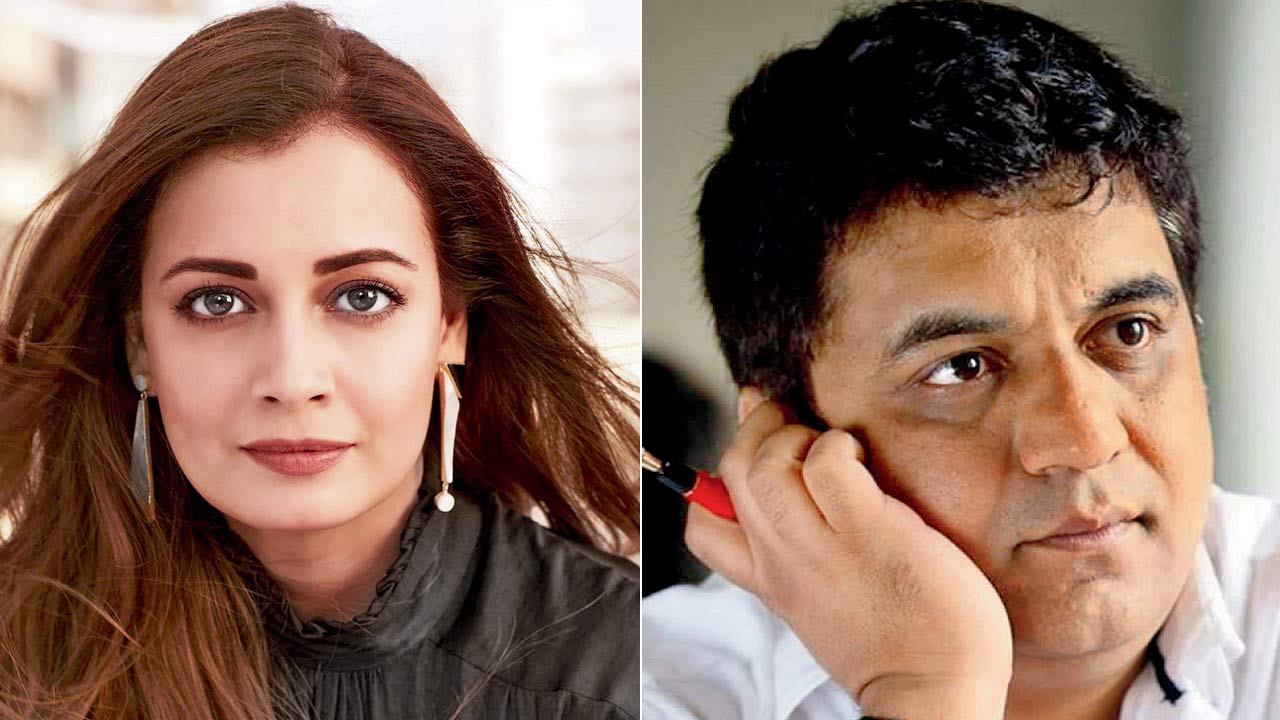
Lyricist Swanand Kirkire, composer Shantanu Moitra and actor Dia Mirza remember the Parineeta filmmaker whose life revolved around music and movies
Upala KBR, Priyanka Sharma (MID-DAY; March 25, 2023)
At 51, Pradeep Sarkar won the National Film Award for Best Debut Film of a Director for Parineeta (2005). Fifties is hardly the age bracket one associates with debutant directors. Yet, here was Sarkar, beginning his innings in the movies, armed with the wisdom and expertise that he had accrued from his 17-year career of making ads and music videos.
From Shubha Mudgal’s Ab Ke Sawan to Euphoria’s Dhoom Pichak Dhoom and Sultan Khan’s Piya Basanti, each music video showcased his keen eye for detail, and the ability to tell a story in an unhurried and honest manner. A trait that came to a climax in his maiden feature film, Parineeta, an adaptation of Sarat Chandra Chattopadhyay’s 1914 novella of the same name. With the love story, Bollywood got more than it bargained for — an honest voice in Sarkar, and a rich talent in actor Vidya Balan.
Parineeta lyricist Swanand Kirkire remembers how Sarkar, or Dada as he was fondly referred to in the industry, approached him right after hearing his song, Bawra Mann from Hazaaron Khwaishein Aisi (2005). “After hearing the song, Dada called me the next day and said, ‘I don’t know whether I can afford you, but I want to work with you.’ I told him that I had no money, and there was no question of him being unable to afford me. Dada immediately gave me an ad to write, though it was already complete. He just wanted me to get paid. Then, we started working on Parineeta,” recalls the lyricist-writer.
With composer Shantanu Moitra, Kirkire created the melodious Piyu Bole, among other songs. He says it was the director’s inherent love for poetry and music that translated on screen. “When making a film, Dada would get engrossed in every word that was written; he would make sure that every song was shot in a particular way. There are very few film directors who understand how to shoot melodies; the way he shot songs was almost unparalleled.”
Dia Mirza, who played a supporting role in the Balan-led love story, remembers Sarkar as a “generous soul”. “He created a rich, nuanced world for us to inhabit, and we immersed ourselves in it. He was a nurturer of people. He had no ego, and did not command anyone to do things his way. Yet, his aura was such that everyone wanted to do their best,” shares the actor.
His knack for mounting visually aesthetic films was valued by filmmaker-mentor Vidhu Vinod Chopra, who roped him in as the visual director for Eklavya: The Royal Guard (2007). But Sarkar’s bigger contribution to the movies was perhaps his depiction of women. Be it his second directorial venture Laaga Chunari Mein Daag (2007), or the gritty Mardaani (2014), each story had a strong woman at its centre, navigating the world on her own terms.
Rani Mukerji, who fronted the two films, shares, “I spoke to him [earlier this week] when he had called me to talk me about my latest film. We were planning to meet this week, but this is so unexpected.”
Kirkire says that above all, he will remember the filmmaker as one who took care of those he believed in. “He would keep giving me regular work so that I would get paid. [A few years earlier], he called to ask me how much I charge to write an ad. When I quoted my fee, he shouted at me, ‘Are you mad? You should charge four times that amount!’ He paid me more when I worked for his production company,” says the lyricist-writer, adding that Sarkar was a man of conviction.
“I am sure Vidya too would [vouch for his conviction]. He kept showing Vidhu sir so many tests of Vidya till he got convinced [to cast her in Parineeta]. Dada was passionate because he knew exactly what he wanted.”
The filmmaker forayed into digital entertainment in 2019 with Coldd Lassi Aur Chicken Masala. Drashti Dhami-starrer Duranga was his last web show.
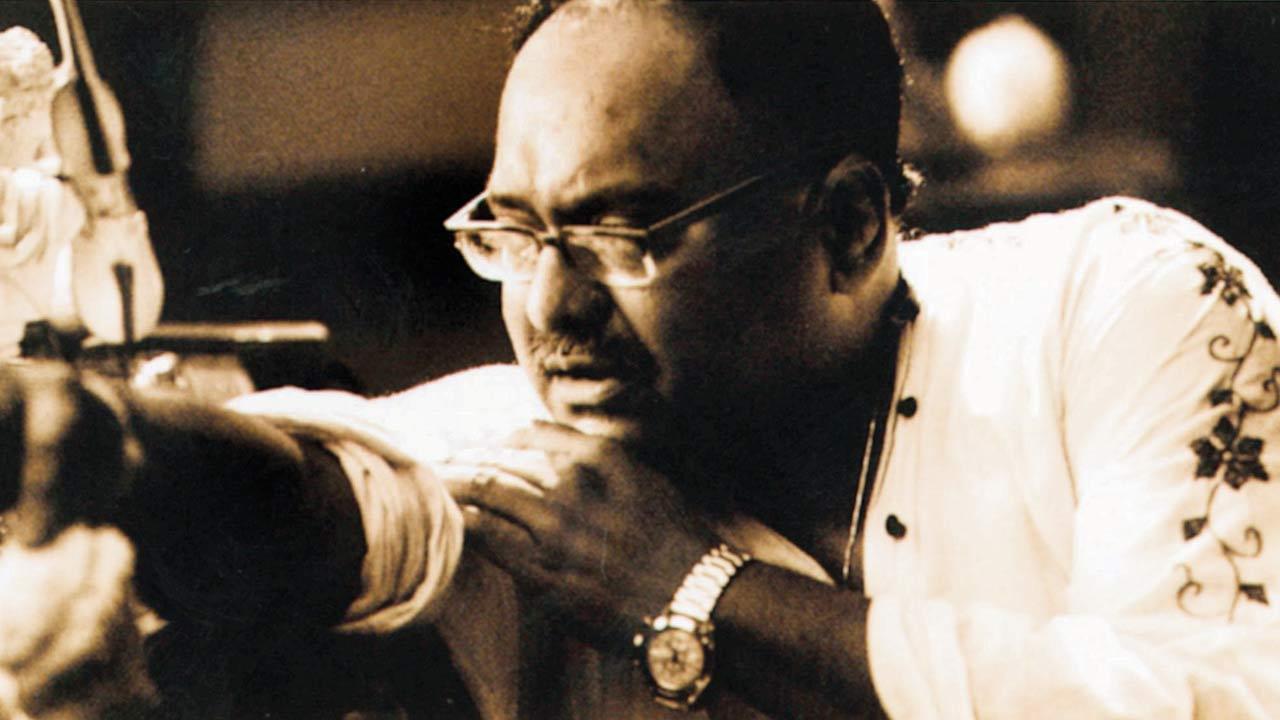
"I lost a family member": Bollywood celebs mourn the demise of Pradeep Sarkar
8:35 AM

BOMBAY TIMES (March 25, 2023)
VIDYA AND I WOULD PLAY PRANKS ON DADA, BUT HE WOULD NEVER GET ANGRY: RAIMA SEN
I still can’t believe the news that Dada is no more! Boudi, his wife, gave me the news. I have worked on numerous ad films with him and in Parineeta. In fact, he was the person who convinced Vidhu Vinod Chopra to cast me in Eklavya. I went to his home to meet him after the lockdown. I shared a beautiful rapport with him where I could walk into his office or home without a prior appointment. Dada used to be super cool on the sets. I remember Vidya and I would play pranks on Dada, but he would never get angry. Food used to play an important role on his sets since he enjoyed eating. Dada will remain with us forever.
IT FEELS LIKE I HAVE LOST A FAMILY MEMBER: RANI MUKERJI
I am shocked by the news of Dada’s passing away. I, in fact, spoke to him just the other day when I had gone to Amritsar, to the Golden Temple, where he had called me telling me about my film so we had a long chat. He was insisting on a video call, but the network was not good, so I was unable to do that. We were planning to meet this week… but this is just so unexpected. I had a great connection with him, we’ve done a lot of work together over the years, so it’s literally like losing a family member. I will hold on to my last memory of him being so happy and excited for me when he had called me to share the feedback he was getting for my film and me from all over.
HUGE LOSS TO THE FILM & AD WORLD: RIDDHI SEN
This a huge loss to the film and advertising world, but I will miss Pradeep Sarkar the human being the most. He was one of the most passionate, honest and empathetic people I’ve known, a person with an incredible sense of humour and a heart of gold.
DADA, YOU WILL BE MISSED: KAJOL
Dada, you will be missed. Your sense of humour, humility and all the work you put into your films will always be remembered. RIP
‘A BRILLIANT FILMMAKER FULL OF LIFE, ENERGY, AND POSITIVITY’
AJAY DEVGN: The news of Pradeep Sarkar’s demise, ‘Dada’ to some of us is still hard to digest. My deepest condolences. My prayers are with the departed and his family. RIP Dada (sic).
SWANAND KIRKIRE: Filmmaker and dearest friend Pradeep Sarkar the mad man left us this morning. Dada your passion for the art of cinema will stay in your works! Duniya bhar ki mitti ikatthi karte the ab jannat ki mitti dibiya mein bharna. Thank you for loving me and my words (sic).
ABHISHEK BACHCHAN: Terrible news to wake up to. Rest in peace, Dada. Thank you for the love and for making me a small part of your life. Will miss you. #PradeepSarkar (sic).
RITUPARNA SENGUPTA: I am one of the privileged ones who had an opportunity to work with you in two ad films. You have always made us proud, you have left us too early. My condolences to the entire family (sic).
NEIL NITIN MUKESH: In my heart and in my fond memories of him, Dada will always be remembered as that grownup child with the vision of a genius. He was full of life, energy, and positivity. A brilliant husband and brother. He loved eating chalk, and I would always tease him for that.
RAJEEV KHANDELWAL: That I spent some time with him... that I got the opportunity to know him... that I knew I was close to him... that I knew he loved me too is enough for me to cherish his life. When I crossed that line of professionalism and developed that emotional bond with him the only worry was his health. Those innumerable lectures of trying to shake him from his complacency on the health front and those innumerable ‘I know you love me’ smiles on his face as the response. My short-lived journey with him will be large enough for me to miss him for life. If I could reach him, I would say... thank you, Dada, for giving me those moments. You will remain special forever (sic).
TAHIR RAJ BHASIN: I will always remember Pradeep Dada with eternal gratitude as the man who trusted me with Mardaani. I remember being extremely nervous on day one of the shoot. It was a production-heavy day, we were holding up traffic, and there were 100 junior artists on set — an intimidating environment for a first-timer. After my first take, I waited with bated breath as he watched the monitor. After what seemed like an eternity, he yelled out for the entire set to hear, “that was great!”. That validation still rings in my ears when I walk onto a set to this day. He was a visionary par excellence and ahead of his time. He lives on in the films he created.
— With inputs from Renuka Vyavahare & Ruman Ganguly
---------------------------------------
HINDUSTAN TIMES (March 25, 2023)
Hansal Mehta: Pradeep Sarkar. Dada. RIP.” Sharing Mehta’s tweet, actor Manoj Bajpayee also condoled his death and wrote, “Ohh! That’s so shocking! Rest in peace Dada!! (sic).”
Ajay Devgn: “The news of Pradeep Sarkar’s demise, ‘Dada’ to some of us is still hard to digest. My deepest condolences (flower bouquet). My prayers are with the departed and his family. RIP Dada (sic).”
Kajol: “Dada, you will be missed. Your sense of humor, humility and all the work you put into your films will always be remembered :pray: RIP (sic).”
Abhishek Bachchan: “Terrible news to wake up to. Rest in peace Dada. Thank you for the love and for making me a small part of your life. Will miss you (sic).”
Nimrat Kaur: “Had the great pleasure of being on his set a few times in my modeling days. His hearty laughter and relentless perfectionism will forever be etched in my heart. Deepest condolences to his loved ones. Rest on Dada…the heavens above are a happier place. #RIPPradeepSarkar (sic).”
Bollywood director Pradeep Sarkar, of Parineeta fame, passes away
8:32 AM
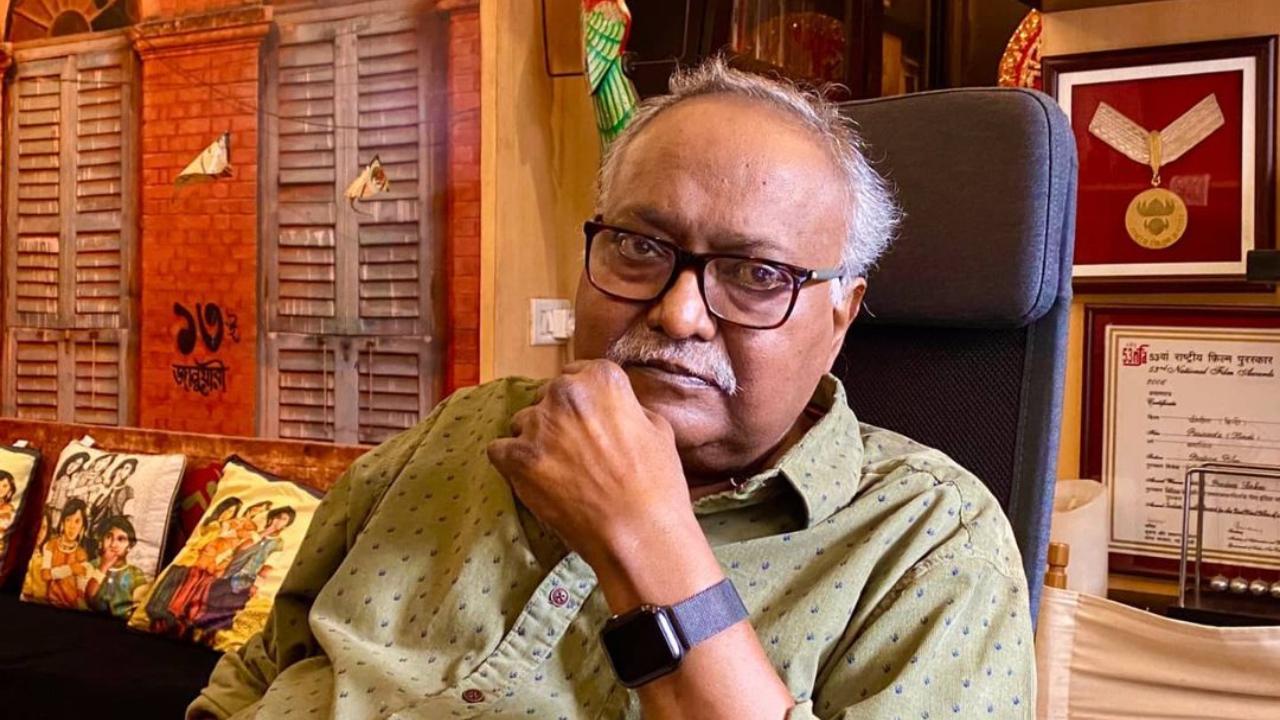
Avijit Ghosh (THE TIMES OF INDIA; March 25, 2023)
Film director Pradeep Sarkar, who sensitively adapted Saratchandra’s coy romantic novel into an elegant 1960s love story in ‘Parineeta’ (2005), and who gave crucial career breaks to a bunch of aspiring talents in his earlier adman avatar, passed away early on Friday. He was 67.
The film director was admitted to the ICU in Mumbai’s Lilavati hospital on March 22 with complications, including pneumonia, arising from a viral fever. The hospital’s CEO, Lt Gen Dr V Ravishankar, told TOI that Sarkar was a patient of chronic kidney disease needing regular dialysis.
Kolkata-born and Delhi-bred, Sarkar moved to Mumbai in the late 1990s making his feature film debut as a director with ‘Parineeta’ at the advanced age of 50. Collaborating with producer and fellow screenplay writer Vidhu Vinod Chopra, he transported the story’s setting from early 20th century to 1962 Calcutta where the modish genteel listened to sultry jazz in smoke-filled nightclubs. Sarkar, who had earlier assisted Chopra in ‘Mission Kashmir’ (2000), captured the bhadralok sensibility of the time, framing scenes of love with playful tenderness.
Not all his films worked. But Sarkar returned to form with the thriller ‘Mardaani’ (2014) with a woman protagonist cop (Rani Mukerji) at its gripping centre. Even ‘Laaga Chunari Mein Daag’ (2007) and ‘Lafangey Parindey’ (2010) were peopled by women of resolve. All three films were produced by Bollywood’s premium banner, YRF films.
Sarkar was a gold medalist from Delhi College of Art. The national capital was his early karmabhoomi. In the mid-1980s, he was a key figure in Delhi’s advertising world. “Pradeep was a creative engine of the agencies he worked for. Trained as an art director, his visualization was excellent. He had a sense of spectacle and constructed elaborate audio-visual shows," recalled television producer Siddhartha Basu. Sarkar and Basu collaborated on several shows, including ‘Quiz Time, Season 3’ (1988).
Young talent was mentored and encouraged by Sarkar. Filmmaker Shoojit Sircar (‘Vicky Donor’) said that Sarkar had given him his first break. “Getting to direct an ad film independently was a big thing. It was an ad for Dettol during the 1998 football World Cup,” he recalled.
Fashion photographer Atul Kasbekar posted that Sarkar had given him “early significant breaks”. “For taking big chances on a newcomer I will be eternally grateful,” he wrote.
And ‘Parineeta’ “introduced’ Vidya Balan in a Bollywood feature. Speaking to yourstory.com in 2021, composer Shantanu Moitra recalled that Sarkar gave him his break as a composer when he was a client servicing executive. On a particular night when there were no musicians or composers around, Moitra was asked to come up with a tune. And he composed the Uncle Chips jingle — Bole mere lips, I love Uncle Chips — on a mahogany table in a jiffy.
In the mid-1990s, when music videos mushroomed on television, Sarkar directed a bunch of first-rate videos underlining his visual sense and his felicity with storytelling. Indi-pop band Euphoria’s perky debut video, ‘Dhoom Pichak Dhoom’, was shot on the ghats of Benaras and captured the temple town’s vivacity and generous heart. The more evocative, ‘Maeeri’, underlined his gift for emotional storytelling. Shubha Mudgal’s, ‘Ab Ke Saawan’s’ music video reflected his Bengali sensibility; the visuals and the song being perfect synergy with each other.
Sarkar was passionate about his work. “Some people call it being a workaholic, but I say, ‘Yeh nasha hai, peshaa nahin (It is an addiction, not an occupation)’’’, he said in a 2011 interview. The film director was also very methodical. "Before shooting ‘Parineeta’, he did a complete audio board of the story,” Basu said. From all accounts, Sarkar had a great sense of humour. “I would just laugh whenever we were in conversation,” Sircar said.
Sarkar also loved food and drinks. "Bhey (lotus stem) ke pakode at Nairoji Nagar was one of his favourites,” Basu said. Sircar remembered how they would often fight on the sets but always make-up over good food. “Our last phone call was, ‘Shoojit why don’t you and me together direct the next film.’”
That was not to be.
(With inputs from Malathy Iyer)
----------------------------------------
BOMBAY TIMES (March 25, 2023)
National Award-winning filmmaker Pradeep Sarkar, 67, passed away in Mumbai after a prolonged illness early on Friday morning. The director, who had launched Vidya Balan in Bollywood with Parineeta, was known for making films with strong female protagonists.
A graduate of the College of Art, New Delhi, Sarkar began his career in commercials and music videos. He helmed several popular music videos in the 1990s and early 2000s. Shubha Mudgal’s Ab Ke Saawan, Euphoria’s Dhoom Pichak Dhoom and Maaeri, Sultan Khan’s Piya Basanti and Bhupen Hazarika’s Ganga are among the music videos that he made, which were highly appreciated for their cinematic beauty and engaging storytelling.
He was also the editor for Munna Bhai MBBS (2003) along with Rajkumar Hirani. Sarkar made his directorial debut with Parineeta, starring Vidya Balan, Saif Ali Khan and Sanjay Dutt. The film, based on a Sarat Chandra Chattopadhyay novella, Sarkar, won him the best debut director at the 53rd National Film Awards.
The filmmaker, whose movies showcased strong and independent female protagonists, went on to direct Laaga Chunari Mein Daag (2007), featuring Rani Mukerji and Konkona Sen Sharma. He followed it with Lafangey Parindey (2010) with Deepika Padukone and Neil Nitin Mukesh, which, unlike his earlier films, was a romantic drama. He then teamed up with Rani Mukerji again for Mardaani (2014) and with Kajol for Helicopter Eela (2018).
In recent years, he helmed the web shows Coldd Lassi Aur Chicken Masala, Forbidden Love and Duranga. The filmmaker planned to direct a biopic on Bengali theatre star Noti Binodini with Kangana Ranaut in the lead.
We pulled out many items from Saif Ali Khan's personal wardrobe, says Tandav stylist Subarna Ray
8:30 AM

Stylist Subarna Ray breaks down how she fused classic and contemporary styles to curate modern-day politician look for Khan in Tandav
Mohar Basu (MID-DAY; January 17, 2021)
When creating Saif Ali Khan's politician look for Tandav, stylist Subarna Ray wanted to fuse classic styles with the contemporary looks of new-age leaders. "Classic styles of Indian political leaders during [Jawaharlal] Nehru's times are our inspiration. The younger politicians today play with structured looks by opting for trousers with bandhgalas and Jodhpuri jackets," says Ray, who dressed Khan's Samar Pratap Singh in pristine white kurtas and sleek Nehru jackets. "In Delhi, younger politicians wear a lot of understated designer outfits. I interacted with the designers who work closely with politicians and got a peek into their look books."
The stylist, who collaborated with the actor on Parineeta (2005) and Eklavya (2007), knows of his love for Raghavendra Rathore's creations. She knocked on the couturier's door as formal Indian menswear is right up his alley. "Raghu created a few outfits, aligning with the palette of the show. Semi-formal kurtas, pinstripes, Jodhpuri jackets and bandhgalas were picked up from his Delhi store. Fine khadi was our go-to fabric for the looks."
Gauging that the character was not too divorced from Khan, Ray reveals that she raided the actor's personal collection, using some heirloom pieces in the Amazon Prime Video series. "We pulled out many items from his personal wardrobe, including creations from House of Pataudi, and his mul kurtas in shades of beige and grey. He wanted a lot of him in Samar. We got hand-painted silver and ivory cufflinks from a manufacturer in Delhi to perfect the look. Saif gave his personal watches too."
Broken, I once walked in the scorching heat from Nariman Point to Bandra-Vidya Balan
8:44 AM

Ballsy Vidya Balan on Bollywood and the walk longer than Chembur to Juhu, or Nariman Point to Bandra!
Mayank Shekhar (MID-DAY; August 29, 2020)
 There's Sahir's 'Yeh duniya agar mil bhi jaaye toh kya hai' kinda quality to the last time actor Vidya Balan felt her thoughts on her professional life totally turn around. On the Sunday after the release of her film Hamari Adhuri Kahani (2015), directed by Mohit Suri — who she says she couldn't "gel with, in an actor-director relationship" — producer Mahesh Bhatt called to say that the film had pretty much tanked in theatres.
This, after a series of back-to-back commercial duds — Bobby Jasoos (2014), the outcome of which had disappointed her the most; Shaadi Ke Side Effects (2014); Ghanchakkar (2013). Unsure of what to do, Balan's husband, producer Siddharth Roy Kapur — a non-believer himself — simply drove her down to the Sai Baba temple in Chembur. Where she just wailed non-stop, totally out of breath. She knew something needed to change about her life.
The penny dropped. "I realised I'd begun to focus too much on numbers. That stress had taken the joy away from what I do — that I like, and enjoy so much!" I didn't ask the exact lane the said Sai Baba temple is in. Which Balan says she used to visit every day of her growing up in Mumbai's eastern suburb.
Glad she brought up Chembur though. For that's where I'm chatting with her (on video) from. She's at her husband's office in Khar, which is also the neighbourhood her parents moved to, while she lives in Juhu. These are heartwarming coordinates for Bombayites, among whom she remains still the 'Chembur girl'.
The now popular term 'outsider' refers to first-generation professionals in the film industry. And they're in huge numbers — lead actors aren't all there is to the movies. Still, there are in fact far fewer 'insiders' of Bombay, who are but outsiders to Bollywood, than you'd imagine. Despite the unmatchable geographical/real-estate head-start.
Especially among heroes, if you may. Even Govinda, the 'Virar ka chokra', is a producer's son. Off-hand one mainstream Bollywood hero from Bombay, but with no family connections to films, I can think of, is Balan's super-hit Bhool Bhulaiyaa (2007) co-star, Akshay Kumar, who grew up in Sion, quite close to Chembur: "Shilpa [Shetty] was three years my senior in school [St Anthony's], although I didn't know her personally then," Balan points out.
 "But it's such a valid observation, I wonder why," she asks, as an answer. "There are various levels of being an insider-outsider, in any case. This debate has left me confused. It's different for different people, right? Also family/financial support makes it easier, if you are not operating from a space of survival. Think it's about how hard you're willing to work, once you get that break. And even how much you're willing to wait out for that break!"
Speaking of which, one of the instant inspirations/reasons to invite Balan over for this edition of Sit with Hitlist was in fact music composer Shantanu Moitra, who recently spoke at length on the reality show Times Of Music, about how Balan had auditioned 75 times for her debut film Parineeta (2005). It was while she was in the front row of a Bryan Adams concert that producer Vidhu Vinod Chopra finally called to say she was on.
Hearing it from the horse's mouth, Bryan Adams has turned into Enrique Iglesias. The number 75, Balan feels, is way off the mark. But yes, Iglesias was playing her favourite track Hero. Chopra insisted she step out of the venue to take her call. She heard the sweetest music to her ears, "You're my Parineeta." Up until then, Chopra had wanted Aishwarya Rai for the part: "He was putting in a lot of money, I was a newcomer, and the film was called Parineeta [after the female protagonist] for God's sake!"
She only has to thank, first, the persistence of her ad filmmaker-mentor Pradeep Sarkar (Dada), who had written the role, based on Sarat Chandra Chattopadhyay's novel, keeping Balan in mind. She'd performed in a series of Sarkar's ad films, plus music videos, starting with Euphoria's Kabhi aana tu meri gully.
She had even assisted him on a Fanta commercial, with Rani Mukerji in it, and where she "learnt nothing on the set". Because the crew, knowing that she was Sarkar's future leading-lady, was too busy taking care of her instead!
"Before my last test for Parineeta, I went to Dada, and said whatever happens, this is also your first [feature] film —just make it with or without me. His wife was there. He looked at her and said, 'Tell her something, tu kya keh rahi hai?' He had more belief in me than I had in myself." Evidently, beyond talent, you need somebody to appreciate it, and offer you a job, basically —just as it takes a village to make both a film, and a star.
Having not formally trained in acting per se, Balan credits Naseeruddin Shah, for instance, for texting her during the shoot of Milan Luthria's The Dirty Picture (2011) that she learn to leave behind her character on set, before heading home. The film remains still her most iconic, and that took everything out of her. Kahaani (2012), in comparison, she suggests, was a breeze, because she had all along been part of the writing process as a sounding-board for director Sujoy Ghosh.
The Dirty Picture, inspired by the life of south siren Silk Smitha, is also iconic because of the line, 'Filmein sirf teen cheezon ki wajah se chalti hain: Entertainment, entertainment, entertainment. Aur main entertainment hoon!" It's an obvious take on hotelier Conrad Hilton's famous quote about three things you need to run a successful hotel: Location, location, location!
"Now, it is my introduction at every event I go to. I had no idea it would become so popular. There were other lines that I thought would. It's all in Rajat Arora's [dialogue] writing." The one I love from one of her films the most though, while not her dialogue, is the tag-line, "Tumhara ishq, ishq; aur hamara ishq, sex?"
Apparently actor Shiney Ahuja had responded with these words after being narrated Ishqiya's script by director Abhishek Chaubey. It stuck. Arshad Warsi finally played the part — vying with uncle (Naseer) for Balan's attention: "I was just amazed by how Arshad mouths a lot of throwaway lines, like it just came out of his head! That's the beauty of his delivery."
Yet, so far as shock value of a film is concerned, towering over The Dirty Picture might well be Paa (2009), with Balan playing Amitabh Bachchan's mom: "[Before shoot] I kept chewing [director] Balki's brains to set up a reading with Mr Bachchan. Mother and son have a very physically comfortable relationship. I just can't hit him on the head, or instinctively pull his cheeks. You normally do that with a child. He is Amitabh Bachchan! We were shooting from Monday. Balki called me to Mr Bachchan's house for a look-test on Friday — to be [finally] followed by a reading. Abhishek [Bachchan, who plays the husband] and I were ready with our costumes, waiting for Mr Bachchan to emerge from the make-up room. When he came out, I told Balki, I don't need a reading. I saw a 13-year-old Auro. Something happened. I'm getting that same feeling [recalling the moment]!"
And these are generally the instinctive/immersive moments that Balan has managed to create, movie after movie. The last time we saw her on screen was as the math wiz Shakuntala Devi. The film had to drop online — instead of releasing in theatres — due to the pandemic. Her film before that Mission Mangal (2019), with a female ensemble cast, plus Akshay Kumar, had her headlining the act — surpassing Rs 200 crore, touching Rs 300 crore, at the box-office.
By all accounts, Shakuntala Devi was equally well-received on Amazon Prime, although nobody knows its viewership figure. Personally, what's the difference that she's discovered between success online, and in theatres?
She says, "The reactions come staggered — well after the date [the film drops]. With movies in theatres, after the first weekend, all conversations are centred on numbers. Also, unlike with Mission Mangal, where my character was fictionalised, Shakuntala Devi was a real person. And so, people read more and more about her, and kept getting back with responses."
To pick a few, I cite mythologist Devdutt Pattanaik, who argued in his mid-day column that Shakuntala Devi's husband actually being gay was conveniently/unfortunately touted as hoax in the film. Balan gently counters, "Shakuntala Devi's daughter [from whose perspective the film has been written, and who partnered on the project] has been very transparent talking about her mother. Why wouldn't she do the same with her father?"
Some people who'd actually met Shakuntala Devi had found her to be reserved, even if witty; rather than boisterous as Balan played the part in the picture: "Maybe they met her at a time when she was not very boisterous for whatever reasons. Maybe she was going through something, I don't know."
Also, there was a phony element of contestable astrology/numerology mixed with her skill with numbers that the film hardly touched upon — let alone debated — from Shakuntala Devi's life: "It is a two-hour film. We wanted to definitely focus on the maths, which is what got her worldwide recognition. The politics, astrology and all of that came much later in her life."
To be fair to Balan, who's not the film's writer, but as she puts it, "People will have various opinions, especially because it is a real person that we're talking about. And I respect that. But then, it would have been a different film. This is the film we chose to make!" Point taken. Possibly applies to a lot of arguments around biopics, actually.
Where Shakuntala Devi does follow a seamless narrative — a natural extension of sorts — is actually in Balan's own current filmography — if you also consider Tumhari Sulu (2017), right before Mission Mangal. What's common to these films — besides feminist subjects — are the roles of almost impossibly secure and sweet men by her side. Whether it's Shakuntala's husband Paritosh (Jisshu Sengupta), Tara's Sunil (Sanjay Kapoor) or Sulu's Ashok (Manav Kaul). There seems to be a feminist film in the Balan mould, developing into a sub-genre of its own. Or too soon to tell? "I think that is my world view. The men in my life have been the same. They have just accepted me and the women around for who they are. I feel that's where it comes from."
Really? No jerk boyfriends, ever? "Yeah, well, it's literally a rite of passage. Unless you go through… I'm trying not to use harsh rude words here. But you know, you have to sift through life to get the real deal!"
 Maybe I'm just trying to locate/shame some douches of Chembur she grew up with! Or let's go back to my current Auro-like obsession: Why aren't there so many Bombay-born/bred superstars from outside Bollywood families? Could it be that Bambaiya Hindi is no good? Compare, say, Cyrus Broacha to Nawazuddin Siddiqui in a Hindi picture, if you may (no knock; just kidding Cyrus!).
Balan laughs. In her case, because she was clear she wanted to be an actor from a young age, she made sure her Hindi was perfect: "My parents have an accent, I don't." Besides, she can speak fluent Tamil, Malayalam, Telugu, Urdu, Bengali, English… What language does she think in? "In English. But on the set, at work, it's weird — only Hindi. I recently did a Telugu film (the NTR biopic), and I had to keep translating Telugu into Hindi in my head first."
If it wasn't for a string of bad luck, which ironically led her thereafter to be considered jinxed — having debuted opposite Mohanlal, and with around multiple Malayalam films signed up, on that account alone, Balan was once all set to kick off her career, between 2000-03, as a South Indian star. The Mohanlal movie, after being extensively shot, got shelved. All other producers backed off.
In the Tamil industry, Balan had been signed up by veteran K Balachander for two films. Subsequently, dropped from both. There were two other films that she got replaced from, after having shot for their first schedules. She also walked out of another, realising on the set, that it was a sex-comedy: "I got sued at 22!"
It reached a point that her parents landed up in Chennai at the office of one of the producers who had fired her. He simply remarked: "Just look at her; does she look like a heroine?" "For six months, I didn't look into the mirror. Broken, I once walked in the scorching heat from Nariman Point to Bandra, like a [revelatory] scene in a film — just to clear my head." That's 18 kilometres straight.
She did travel a much further distance, only few years later though. After Rajkumar Hirani's Lage Raho Munna Bhai (2006), she bumped into the same 'look at her face' producer at the airport, who right away offered her a film [opposite Kamal Haasan]. "I said sure, speak to my manager!" Kamal Haasan called later. She couldn't do the film: "My father felt a great sense of vindication. They've brought us up to feel the world's fair."
It rarely is. It also depends on how you look at it. Behind all the 'Miss Congeniality' exterior, if you observe her 15 years as a movie star, Balan comes across as one of the ballsiest in Bollywood. And yet never making a lamenting event of herself — almost disarmingly turning on its head the simplistic grammar/binary of victim and oppressor.
She's had a fair share of trolling — mainly body-shaming, style-policing online, and in the mainline press — a reason, I'm told, she rarely reads anything about herself. Whether any of this targeting has to do with groupism/favouritism, it's essential that this bullying aspect of the profession is being brought to light. As it has been, lately.
That's one of the reasons an old video-clip of her at a film-award show, being called out by hosts Shah Rukh Khan, Saif Ali Khan, for her tacky costume in the film Heyy Babyy (2007), started doing the rounds online. She looks visibly pissed in that moment. Such shows are typically scripted with celebs in the audience told in advance about what to expect for an impromptu engagement/act. Not the case?
"I'm a sport, and I was fine with it actually. But when I went there, I realised there were a couple of other contenders [for the worst dressed] award as well. They said they couldn't give it to them, because so-and-so, and the people around them, will get upset. I felt cheated and angry. I thought, now, that is a clear case of — and it didn't occur to me then, because I don't look at the world through that prism… I don't know, what is it called, nepotism?" Balan laughs.
We’re too talented to rely on classics for remixes-Shantanu Moitra
8:05 AM

Shantanu Moitra opens up about what keeps him busy and his upcoming projects
Nascimento Pinto (HINDUSTAN TIMES; January 26, 2020)
Although Bollywood music composer Shantanu Moitra may have last worked on the Varun Dhawan-starrer October in 2018, it is his personal projects that have been keeping him busy since. He was first occupied with a project, 100 Days In The Himalayas with wildlife photographer Dhritiman Mukherjee, he then went on to compose music for Chandrayaan: Celebrating India’s Journey To The Moon, which he performed at the NCPA, recently.
Being at the forefront of composing music in the film industry, the current trend of remixes may seem like quite a bore. According to Shantanu, while he is thankful that he isn’t a part of it, he knows the phase will pass because of the immense talent younger composers possess today. “When I started off, it was an interesting time because there were a lot of songs being used as part of a film’s narrative, which is really important because you can make great songs but how they are being used and what is their place in the narrative, is also crucial. In fact, when I was doing Parineeta (2005), every song was a part of the narrative — be it Kasto Mazza, Piyu Bole or Kaisi Paheli Zindagani — and from there, we moved off to a score. And I have done that in Madras Cafe (2013) as well,” says the composer, adding, “Now, we are in this phase of remixing old songs and thankfully I am not a part of that but I feel that too shall pass because we are too talented a nation to rely on old classics and that’s great but a narrative cannot be just that.”
The composer has had a host of hits in movies such as Parineeta, Lage Raho Munna Bhai (2006) and 3 Idiots (2009), and his prowess also reflects in the fact that he has composed music for Bengali and Telugu films, and received the National Award for Best Music Direction (background score) for Na Bangaaru Talli (2013). His collaboration with lyricist Swanand Kirkire in 2005 for Bawara Mann in the film Hazaaron Khwaishein Aisi, is also a favourite among many.
Having been a part of the industry for over 15 years, the 52-year-old artiste says the hits don’t matter but the relationships you cultivate along the way is what makes for a better experience. “I thought I’d go back to Delhi after the first two years, and play football and eat fish. However, the last 13 years have literally been a bonus for me because I also got to create music the way I want, without being stuck to a recording studio,” he adds.
So, what is he currently working on and what can fans expect from him in the coming months? Shantanu reveals, “I am currently working on Shoojit Sircar’s Gulabo Sitabo with Amitabh Bachchan and Ayushmann Khurrana, and looking to take Chandrayaan on tour.” He adds that he is also working on a Bengali film after a really long time but remains tight-lipped about the details.
How Bollywood has infused the spirit of Durga Puja in films
8:16 AM

Rachana Dubey (BOMBY TIMES; October 8, 2019)
Call it Vijaya Dashami, Bijoya, or Dussehra — the festival is celebrated with fervour in most parts of India. The day underlines the victory of good over evil — a theme that has been translated on celluloid often by Bollywood filmmakers.
For decades, filmmakers have used Durga Pujo, Navratri and Dussehra celebrations as motifs or as backdrops for key events in their narratives. Visuals from the festive season have often lent themselves for the creation of dance numbers, memorable scenes and sequences, replete with symbolism.
Sujoy Ghosh’s Kahaani (2012) features one of the most well-recalled, and what is considered to be one of the best amalgamations of Durga Puja into a story. The film unfolds in Kolkata, which is gearing up for the pujo, and culminates on dashami (last day of Durga puja), drawing parallels between the festival’s message — the victory of good over evil — and the story, as Bidya Bagchi (Vidya Balan) defeats her husband’s murderer.
 Bring this up and Sujoy says, “The thought behind the sequence was to highlight the strength and will of a mother. I’m a huge fan of Maa Durga, because in this form of hers, she’s always with her children. For Bengalis around the world, she’s a mother — we equate her to a human being. In Kahaani, I wanted to depict that Maa arrives once a year, she listens to you and solves your problems. We threaded in a lot of stuff. The build up-to the story is pretty much like the build-up to Bijoya. The climax blended beautifully with the culmination of the pujos.”
Pradeep Sarkar’s Parineeta (2005), adapted from the eponymous Bengali novel by Sarat Chandra Chattopadhyay, uses Durga Puja as a backdrop on two crucial occasions — once to show the love and care Lolita (Vidya Balan) has for Shekhar (Saif Ali Khan) and then to show Shekhar’s jealousy towards Lolita’s friendship with Girish (Sanjay Dutt). The film also uses the traditional dhunuchi dance as a tool for the narrative.
 The filmmaker shares, “Durga Puja has often been used as a backdrop in films or as a part of the story. It only makes sense to include the festivities when there is some meaning to it. During pujo, you meet people and interact with them, and relationships also blossom. That is how we also used it in the film.”
Shoojit Sircar’s Vicky Donor (2012) briefly takes the audience pandal-hopping during Durga Puja in Delhi, to show the growing proximity between Vicky (Ayushmann Khurrana) and Ashima (Yami Gautam). The Ranveer Singh and Arjun Kapoor-starrer, Gunday (2014), also saw the two actors sway to beats of dhols against the backdrop of Durga puja in the song Jashn-e-Ishqa.

FILMMAKERS SPIN THE NARRATIVE AROUND THE FESTIVAL
Sanjay Leela Bhansali’s screen adaptation of Sarat Chandra Chattopadhyay’s Devdas (2002) shows Paro (Aishwarya Rai Bachchan) and Chandramukhi (Madhuri Dixit-Nene) meeting and even dancing together. Paro is seen at Chandramukhi’s kotha, asking for mitti of her aangan to make an idol of Maa Durga for her baadi. This marks the beginning of a crucial turn in the story when Paro is forbidden from stepping out of her house.
The story of Akshay Kumar’s Bhool Bhulaiyaa (2007) peaks in the thick of Navratri in a village in North India. The film’s climax, which sets off on ashtami, underlining the theme of good winning over evil, shows Vidya Balan as the revengeful dancer Monjulika, who is seeking protishodh (revenge) for her lover’s death. Raveena Tandon played a victim of marital violence in Kalpana Lajmi’s Daman (2001). Her character Durga vanquishes her patriarchal tormentor on dashami, freeing herself from bondage.
 Vikramaditya Motwane’s Lootera (2013) opens in a traditional zamindar’s baadi celebrating Durga Puja. Sonakshi Sinha, as Paakhi, is seen enjoying a jatra with her friend in the house. Here, the celebration is more of a backdrop to show how festivals were seen as symbols of power and prestige in society those days. Elaborating on it, writer Bhavani Iyer, who wrote the screenplay, shares, “I don’t think one really sets out to put a festival into the story. A lot depends on the milieu or the household you set the story in. Maa embodies vengeance and righteous anger, and if that fits into a story, then, Durga Puja could become an ideal motif. We used pujo to define the Bengal of the 1960s when zamindari was breathing its last. The jatra that Sonakshi is watching in the film, depicts her family’s power and stronghold in a fast-changing society. It was metaphoric.”
In Kurukshetra (2000), Sanjay Dutt, who plays an honest cop, is seen wiping out evil politicians, while Dussehra firecrackers drown out the sound of gun-shots, symbolising the defeat of modern-day Raavans. Ram Leela, which is an integral part of Navratri celebrations, was also used effectively in Rakeysh Omprakash Mehra’s Delhi 6 (2009). While depicting the glorious celebrations at Delhi’s Ramleela Maidan, the narrative also delves into frictions within men from the neighbourhood.
 Ashutosh Gowariker’s Swades (2004) also featured a Ramleela performance by debutant Gayatri Joshi. Here, it was a philosophical discourse — a conversation between Raavan and Sita that tries to highlight the difference between the evil and good. In a face-off sequence in Rajkumar Santoshi’s Lajja (2001), Madhuri Dixit-Nene, while playing Sita, refuses to go through an agnipariksha to prove her chastity.
More recently, Akshay Kumar, revealing his upcoming Laxmmi Bomb avatar, put out a picture with the backdrop of Maa Durga, embodying power and anger. Talking about the reducing number of instances of films using the festival as a motif, writer Bhavani Iyer says, “Kahaani was one of those films that integrated the festival so beautifully into the story. Even Sanjay Leela Bhansali’s ritualistic semblance of the celebrations in Devdas was a sight. Storytelling, in the last few years, has changed. The pujas are extravagant celebrations as opposed to the lives that we lead today, which are so clinical. We’ve also begun to write our stories in a more realistic manner. That doesn’t always allow us to merge festivals and rituals with the stories.”
IN THE BYGONE ERA...
Amitabh Bachchan and Rakhee’s 1981 Bengali-Hindi bilingual Anushandhan, made in Hindi as Barsaat Ki Ek Raat, used Durga as the metaphor of triumph. As a police officer, Amitabh is seen investigating an evil father-son duo. He is even seen playing drums during Durga pujo and beating Amjad Khan at a competition.
On the other hand, is Shakti Samanta’s Amar Prem (1972), featuring Rajesh Khanna, Vinod Mehra and Sharmila Tagore. The film had a brief, but an extremely powerful depiction of Durga pujo, which appears at the end of the film. While Nandu (Vinod) takes Pushpa (Sharmila), his foster mother, home, we see protimas of Maa Durga being taken to pandals, hinting at mahalaya. The symbolic reference to Maa’s homecoming was hard for anyone to miss.
 Apart from Hindi films, Bengali movies have evidently underlined the spirit of Durga Pujas through their stories. Pather Panchali (1955), Devi (1960), Titas Ekti Nadir Naam (1973), Joi Baba Felunath (1979), Utsab (2000; right), Debipaksha (2004), Antarmahal (2005; below), Durga Sohay (2017), Bishorjan (2017) and Uma (2018) are some films where important parts of the narrative have been woven around the festival. Writer-director of the Bengali film, Mahalaya, Soumik Sen says, “The pujos have been used as motifs in Bengali cinema very often. Utsab, Joi Baba Felunath, Bishorjon (2017), Nayak (1966) and Bela Seshe (2015) are some examples of how differently and beautifully the festival has been merged into the story. In Hindi films, Kahaani and Devdas come to the mind when one thinks of weaving in the celebrations of Durga Pujo into the story. The difference lies in the way the festival has found its place across popular cultures from the West to the East.”
Filmmaker Ramkamal Mukherjee’s Season’s Greetings (2018), a homage to filmmaker Rituparno Ghosh, uses a motif of children visiting parents for the Durga Puja in his film — something Ghosh’s Utsab also employed. Ramkamal says, “The festival has different meanings and style of celebrations across the country. For Bengalis, it’s about Maa’s homecoming, symbolically depicted as a mother, daughter, wife or a sister in films. I’ve shown this in my film, too, to doff my hat to someone who crafted bold stories and broke all taboos — something that Maa also embodies.”

Pradeep Sarkar to helm a biopic on Bengali theatre doyen Notee Binodini
7:18 AM

Rachana Dubey (BOMBAY TIMES; August 30, 2019)
 Filmmaker Pradeep Sarkar is gearing up to bring a classic Bengali story to the big screen. He is planning a biopic on Notee Binodini (Binodini Dasi), the prima donna of Bengali theatre, and the first woman in India to become a notable stage performer from the Bengal Presidency in the 1870s. Sarkar has partnered with scholar Shibashish Bandhopadhay to develop the screenplay for the film, which will roll out soon.
He told BT, “I have been looking into her story for some time now. It just so happened that I got to know Shibashish, who has thoroughly explored the subject. Notee Binodini was the first-of-her-kind. She started performing when she was still in her teens, and in a matter of 10 years, she had gone off the stage. Many people, including Ramakrishna Paramhans, have watched her perform. She’s a fascinating person and her story is captivating.”
Sarkar has often showcased his love for Bangla literature and culture on the big screen. His first feature film, Parineeta (2005), was an adaptation of Sarat Chandra Chattopadhyay’s eponymous novel. With Notee Binodini, he is returning to the bylanes of his home city, albeit in another era.
“Parineeta was a fictional character, who Vidya Balan adapted in her own way. But Notee Binodini was a real person and whoever plays her, will have to adapt themselves to her body language and mannerisms. Her life and what led to her early exit from the world of theatre are fascinating. We haven’t decided if we’ll make a Bangla-Hindi bilingual or keep it to Hindi alone, but it’s a story that will appeal to a lot of people in India.”
Notee Binodini’s life has previously been adapted for the big screen in a Bangla film called Nati Binodini (1994), starring Prasenjit and Debashree Roy. Her life has also inspired a Bangla play, which was based on her autobiography. Bring this up and Sarkar says, “I haven’t seen the film or the play. My film is strictly based on Shibashish’s research. The screenplay will be structured in a manner that we can accommodate a large part of her story.”
There were days when I’d go to sleep in tears-Vidya Balan
8:15 AM

Vidya Balan on her early struggles as an actress and how it helped forge a bond with her screen alter ego in her next, based on the Mars Orbiter mission
Roshmila Bhattacharya (MUMBAI MIRROR; August 12, 2019)
Today, who doesn’t know Vidya Balan. She is the lovelorn Lolita of Parineeta, the desi siren of Ishqiya, The Dirty Picture’s unabashed Silk, the surprise twist of Kahaani and housewife-next-door of Tumhari Sulu with a call-in-the-night radio show. And these are just some of her screen turns which have made the National Award-winning actress a household name. But there was a time when her aspirations made her cry.
“Coming from a non-filmi family I had no idea how to go about becoming an actress, yet I wanted to be one. It worried my family, though they have always supported me. It must have come as a relief to them when my first TV show, La Bella, shut down after a few months. They must have thought, ‘Chalo, abhi to bhoot utar jayega,’” she reminisces.
But Vidya continued to chase after her celluloid pipedream, despite friends telling her she needed to her studies or at least a back-up plan in plac She did enroll for her Masters to keep herself occupied after some of the offers she had been banking on fizzled out. “It was three years of constant rejections from down South and there were days when I would go to sleep in tears. But next morning, I and smiling, hop something good would happen, and Parineeta did,” she smiles. Perhaps it was her real-life struggle, along with the fact that in the last decade she has spearheaded many films which can get frustrating when things are not going right, that helped Vidya forge an instant connection with Tara Shinde, her character in the upcoming Mission Mangal. The Independence Day-release is inspired by India’s Mars Orbiter Mission which had once seemed like an impossible dream too. “But even when the challenges seem insurmountable, Tara refuses to give up,” says Vidya, pointing to the similarities between herself and her screen alter ego.
You wonder if as a child she had wanted to be an astronaut and reach for the stars, and she laughs, “The closest I have come to that is being on the sets of this film. In fact, I was nervous about spouting all the technical jargon because these concepts were so alien to me. I spent hours reading and watching the videos Jagan (Shakti, director) had given me for my prep.”
Her journey with co-star Akshay Kumar goes back to 2007, Heyy Babyy and Bhool Bhulaiyaa. How much has he changed in the years since, you wonder, and Vidya admits she was thinking the same thing before they started shooting. “But I quickly discovered that the madness is intact, while interestingly, Akshay has reinvented himself as an actor, exploring different genres, moving from action and comedy to socially relevant subjects which he feels strongly about. Which is perhaps why these films are working for him,” Vidya reasons. And for her, how different was it moving from a woman centric film to a women centric one? Vidya is quick to correct you, pointing out that both genders contributed equally to the Mars mission, though the five women, played by her, Taapsee Pannu, Sonakshi Sinha, Nithya Menen and Kirti Kulhari, have a significant role to play in this narrative. “Personally, I like all the girls and the work they are doing. All of us in our own ways are trying to push the envelope and do something interesting,” she avers.
Next up for her is the Shakuntala Devi biopic which kicks soon. Vidya admits that since it was reported that she is doing the film, several people, including her Kahaani director, Sujoy Ghosh, have told her that they had met the mathematician, and all of them have an interesting story to tell about the ‘human computer’. “For me, Shakuntala Devi was just a photograph in the newspapers—her head slightly tilted, a smile playing on her lips and a bindi dotting her forehead. Since I am a South Indian, academics come easily to me, still when I heard the narration, I was left gobsmacked!” she exclaims. Prod her on what impressed her the most, and she says, “She wasn’t only about numbers, she had a wicked sense of humour too.”
There was a time when Vidya was offered as many as eight biopics, but apart from the one on M S Subbulakshmi, which has hit a roadblock, she steered clear of the rest. “It’s not enough to just make a film on an imposing personality. The person should have a story to tell too,” she explains, sighing over the fact that she’d been approached for a Meena Kumari biopic soon after The Dirty Picture, and since their trajectories were similar, she’d turned it down. “Since then no one else has come forward, but I’d still love to play my favourite actress on screen.”
For now, she is working towards resurrecting our former Prime Minister Indira Gandhi on screen, after having bought the rights to Sagarika Ghose’s book, Indira—India’s Most Powerful Prime Minister. “The project is not likely to take off soon, it needs a lot of work. The material is vast, Ronnie Screwvala is helping me figure out what we want to tell,” Vidya informs.
The high for now is that after several misses in the early stages of her career, she has just featured in her first Tamil film, the remake of Shoojit Sircar’s Pink. “I worshipped Sridevi as an actress and for the love I have for her and my affection for Boney Kapoor (who produced the film), I agreed to a special appearance,” she points out, as she gets ready to blast off into space with another mission impossible.
Amitabh Bachchan makes a special appearance in Pradeep Sarkar’s Helicopter Eela
8:19 AM

Rohit Bhatnagar (MUMBAI MIRROR; August 14, 2018)
Kajol, who plays a single mother to National Award-winning Bengali actor Riddhi Sen in the Pradeep Sarkar-directed Helicopter Eela, is up for a reunion with her Kabhi Khushi Kabhie Gham co-star, Amitabh Bachchan.
 Mirror has learnt that the film, which deals with parenting and the generation gap and is based on Anand Gandhi’s Gujarati play, Beta Kaagdo, will feature the Big B in a cameo. He plays himself. The film also features Neha Dhupia and is produced by Ajay Devgn and Jayantilal Gada. Confirming the news, Sarkar told Mirror, “There is a particular scene for which we needed him, so we requested him to play this part. It is an important scene and Mr Bachchan agreed to do this since he has worked with me before and is also close to Ajay and Kajol.”
According to the filmmaker, it will be a single-day shoot. “Since he is playing a cameo, we had to plan everything in advance,” Sarkar added, refusing to divulge further details as the turn has a surprise element to it.
Sarkar and Bachchan have worked together twice before — the actor was a narrator in the filmmaker’s directorial debut, Parineeta (2005), that also marked the acting debut of Vidya Balan. In 2007, the Big B featured in a pivotal role in Vidhu Vinod Chopra’s Eklavya: The Royal Guard on which Sarkar had served as the visual director. Meanwhile, after K3G, Kajol had made a cameo appearance in the Bachchan-starrer Kabhi Alvida Na Kehna.
Me and my wife dozed off in the Parineeta premiere-Pradeep Sarkar
8:04 AM

Roshmila Bhattacharya (MUMBAI MIRROR; June 14, 2018)
When Vidhu Vinod Chopra during a meeting with ad filmmaker Pradeep Sarkar casually enquired if he had any story for a Hindi film, Dada admitted he wanted to adapt Sarat Chandra Chattopadhyay’s 1914 Bengali novel Parineeta but wasn’t quite convinced about Shekhar and Lalita’s ‘mala badal’ wedding which forms the crux of the story. Intrigued, Vinod asked for a narration and surprised Dada by saying, “Chalo, yeh film ek saath karte hain.” Dada however wasn’t sure of convincing the new-age audience, for that matter Lalita herself, that uske shaadi ho gayi when she unthinkingly slipped his gold chain around the neck of her neighbour Shekhar. Just because this happened while a priest was conducting another wedding next door and the mahurat was auspicious, did it make the marriage real and binding? How was he going to justify the title Parineeta (The Married Woman) when he wasn’t convinced? Vinod insisted they go ahead, reassuring Dada that they’d find a way of making that defining moment believable. “And so I went into Parineeta, unconvinced, waiting to see what would happen, the only consolation being the team believed aisa ho sakta hai,” Dada reminisces.
On D-day, a fight erupted between Saif Ali Khan and Vidya Balan after she used an unscripted Bengali expression which he believed to be rude. “Saif was really angry and noting the cold vibes, I’d resigned myself to an early pack-up when it struck me that perhaps this was how it was between Shekhar and Lalita too,” reasons Dada.
In the story Shekhar is miffed that Lalita has found new friends, including Girish, a tycoon from London, and when she swings by to hand him his kurta buttons and slips the gold chain around his neck he exclaims, “What have you done?” She retorts, “Ab kya galat kar diya maine?” and suddenly, his anger melts away and he reaches for her. She struggles to break free, not wanting to be held but also not wanting him to let her go. “As I watched the scene play out, I realised that kabhi kabhi jhagade aur manana brings lovers close,” Dada explains, sighing that filmmaking is a huge responsibility as you’re creating a world of your own. “Sometimes the responsibilities can overwhelm you and when that happens it is best to leave things to a higher power sitting besides you. He could be the cinematographer or the spotboy. That evening, I felt God was with me and he resolved the dilemma. When I told Kabir Bedi this on a TV show, he asked me, ‘So what happened during Laaga Chunari Mein Daag?’ and left me speechless.”
He also veered from the original ending where Shekhar leaves the final decision to his mother, telling her to do what she thinks right. “It was a lukewarm end, not the way a hero would react,” he asserts, and so made Shekhar break down the wall that had come up between his house and Lalita’s, in the process breaking down the wall between them. “I knew I’d have to face the repercussions of this in Kolkata and was relieved when Rituparno Ghosh called me at 2 am after a screening and lauded me, saying Sarat babu too had wanted to break down walls, metaphorically.”
He goes on to recall the first’s day’s shoot in Kolkata after a schedule in Assam. “We were waiting for three trucks of props to arrive so we could start filming 'Piyu Bole Piya Bole' when I was informed they were stuck in Orissa. We had just a piano. I called for a ghoda gaadi but since we didn’t have permission for the horses, the cart was positioned in a corner, and I sat Saif down by the piano and around 10 pm got started on the song, shooting through the night. Cinema is all about magic and madness,” he smiles.
By the time Dada arrived in Amsterdam for Parineeta’s premiere he was exhausted, mentally and physically. “The screening was in a beautiful hall with an old world charm, lots of big names around but they were all strangers since I was from the ad world. The film started and both my wife and I dozed off. I woke up with a start to hear my name being called and realised they wanted me up on stage,” he laughs, saying fondly, “It was a film made from the heart, that’s why we are still talking about it 13 years later.”
I don’t think I am sexy enough to play my father-Saif Ali Khan
7:57 AM

Sonil Dedhia (MID-DAY; December 14, 2017)
With biopics gaining popularity in Bollywood, there has been chatter, over the past two years, about a film on one of India’s most charismatic cricketers — Mansoor Ali Khan Pataudi. The legend’s son, actor Saif Ali Khan, is part enthusiastic and part wary on the subject. Khan asserts that he is interested in bringing his father’s life to screen, provided he finds an actor who will do justice to it.
“I am keen to produce the film. But we have to find the right guy who can play my father,” he begins, cautioning that it will not be an easy film to make. “There is not much footage available. So whoever plans to make it, will have to do a lot of research.”
Asked if he could be a contender for the role, given his innate style and effortless elegance — a gene that we suspect runs in the family — he dismisses the idea. “I don’t think I am sexy enough. He was a stylish person and played the game with his own style. He carried the right attitude. I don’t think I can copy him.”
Khan reasons that at 47, he won’t be the right choice to play the cricketer, who was a force to reckon with in the ’60s. “Most of my dad’s glorious days on the field were when he was young. So I am not sure if I’d suit the part. Although I’d love to play him, I think we need a young actor.”
Interestingly, Khan’s mother Sharmila Tagore had suggested that Ranbir Kapoor would be a perfect fit for the role of Tiger Pataudi — an idea that was then backed by Khan too. The star reveals that he channeled his father in Pradeep Sarkar’s 2005 hit, Parineeta. “That is one of the reasons why my mother liked Parineeta a lot,” he smiles, before adding, “In fact, my sister [Soha Ali Khan] told me that I looked like Abba in the film.”
I still kept rehearsing like I was possessed-Vidya Balan on her Bhool Bhulaiyaa experience
7:53 AM

As told to Avinash Lohana (MUMBAI MIRROR; December 11, 2017)
In Priyadarshan’s horror-comedy Bhool Bhulaiyaa I played a new bride Avni who is possessed by the vengeful ghost of a dancer from Bengal, Manjulika, and was required to brush up on Bharatanatyam that I had learnt as a child. I remember how much I hated waking up early on Sunday and going to class and would bring the house down. My father once complained to my mother about how my wails would ruin his day off and cajoled her into discontinuing my class. I was ecstatic but Bharatanatyam caught up with me years later when I signed this film.
I began training with Sharda Ganeshji at her institute, Kalasadan. I was doing a lot of films in those first couple of years and I was hard pressed for time and really had to work to fit these dance classes into my hectic schedule. It was only when we started shooting that I realised how much those sessions helped. Bharatanatyam demands a different stance which can be quite painful but my guru’s training had made it easier for me.
Two weeks before the film went on the floors, I started rehearsing with choreographer Pony Verma and another Kathak dancer from Delhi, Poornima, who assured me that I knew the dance form well but I still kept rehearsing like I was possessed. In fact, while shooting in Film City studio, we hired a room in Subhashji’s (director Subhash Ghai) institute where I would go to rehearse for an hour during the lunch break before reporting back on the sets.
I had to match steps with Vineeth who has been dancing since the age of four so I gave it my 100 per cent. Expressions are important in Bharatanatyam but you have to be subtle. I remember watching Padma Subrahmanyam perform when I was a child at the Fine Arts Society in Chembur where I used to live earlier. I was spellbound! This dance form is like acting but it has rhythm.
My guru was really disappointed that I didn’t continue with my lessons after the film. But now I’m considering taking up Kathak or Bharatanatyam just for the joy of it. At one stage when I was learning Kathak, I could do 27 chakkars without feeling dizzy.
As part of my prep I also learnt a language. My first film before Parineeta was a Bengali film, Bhalo Theko, and I learnt ‘bangla’ for that. I would keep going over my dialogues on set as I wanted to dub for the film myself. But when I went to the dubbing studio, they realised my accent was flawed and got a dubbing artist. That day I decided I was going to master the language and today I can proudly say that for all my ad films, I dub in Bengali myself.
I have been learning the language from different people over the years as I have worked with a lot Bengali filmmakers, including my Parineeta director (Pradeep Sarkar). Dada’s entire team is Bengali and my grasp of the language helped during Bhool Bhulaiyaa because I had a few lines in bangla as Manjulika.
I also learnt the Punjabi accent for Raj Kumar Gupta’s black comedy-drama Ghanchakkar from Sumit Batheja who has scripted Luv Shuv Tey Chicken Khurana, Hyderabadi accent for Samar Shaikh’s Bobby Jasoos from Abbas sir and UP Hindi for Abhishek Chaubey’s Ishqiya from another tutor, Vikas. I trained for a month before we started filming and would record their voices and listen to the tape later.
I always wanted to learn to ride a horse. It was a resolution that made it to my bucket list every year. I finally did, thanks to Srijit Mukherji’s Begum Jaan. I got on a horse a couple of days before we started shooting last year. It was a lot of fun but at one point, because of the chiffon fabric I was wearing, I slipped and fell off the horse. Now, I want to learn swimming and sword fighting.
Subscribe to:
Posts (Atom)