(Crisp) Movie Review: NAAM by FENIL SETA
3:54 PM

Naam is a film which was made nearly 20 years ago but couldn’t be released due to certain factors. It finally saw a release yesterday in cinemas. The colour correction and DI give the film a today’s look but in terms of story, effects and young look of actors, it becomes crystal clear that it’s a dated film. The core plot is interesting but right now, it doesn’t have the same effect. Also, there are loose ends in the film and with a script like this, Naam would have flopped even in 2004. Also, it seems like some scenes were never filmed and it's sure to bewilder the audience. Ajay Devgn looks stylish and performs well. Bhumika Chawla is lovely as always. Sameera Reddy has a late entry and delivers a fine performance. Rahul Dev, Yashpal Sharma and Mukesh Tiwari are appropriate as the villains. Shriya Sharma (who plays the young daughter Muskaan) is cute. Rajpal Yadav and Vijay Raaz are funny initially but later, they are too irritating. Sharat Saxena is fine. Dipesh Shah (Constable Nimbalkar), Shehzad Khan (cop), S M Zaheer, Yusuf Hussain and others are okay. Sharad Ponkshe and Varsha Usgaonkar are hardly there. Surprisingly, the film stars Mahie Gill in a cameo. Songs are poor but 'Mera Tumhara Rishta Purana' is pleasant to the ears. All in all, Naam is poor and even in 2004, it wouldn’t have worked.
My rating - * ½ out of 5!
Fenil's Bollywood Talk # 857
11:09 AM

The trend of re-releases is going on in full force and tomorrow, the biggest experiment in this regard is going to take place. Karan Arjun, the much loved film starring Shah Rukh Khan and Salman Khan, will be re-released on a grand scale. It’ll have the biggest screen count for a re-release in India and also abroad. Producer-director Rakesh Roshan has gone all out to promote the film with his son Hrithik Roshan even giving voiceover to the re-release trailer. The film has been remastered and hence, now looks as good as a fresh film.
The advance booking began in full force on Wednesday evening. The makers are keeping their expectations within limits but the exhibitors are hopeful that it can surprise.
As for the new release, the biggest is I Want To Talk, starring Abhishek Bachchan. It is directed by Shoojit Sircar of Piku and Vicky Donor fame. The trailer is intriguing and Abhishek seems in top form. However, the film also looks quite niche. The pre-release screening reports are positive and hopefully, it can see a jump in the collections from the second day.
All We Imagine As Light, which made waves for India abroad, will finally get an all-India release tomorrow. The film has got a limited release and might surprise in select pockets due to the extremely positive buzz around it. Of course, since it’s a film festival cinema, it’s meant for a minuscule audience.
Interestingly, Naam finally arrives in cinemas tomorrow. It was shot 20 years ago and stars Ajay Devgn, Bhumika Chawla and Sameera Reddy. It is directed by Anees Bazmee of Bhool Bhulaiyaa 3 fame. None of them are promoting the film and even the audience is aware that it’s a dated movie. As a result, the awareness is limited and the excitement to see it is negligible.
Lastly, the big Hollywood release is Wicked. The musical fantasy is all set for a very huge opening in North America. In India, the buzz is hardly there but it’s a film that can surprise and keep getting audiences for weeks, albeit in select premium multiplexes, if the reports are positive.
Ajay Devgn's Naam to release in theatres 20 years after shoot; producer reflects on financial challenges
8:11 AM


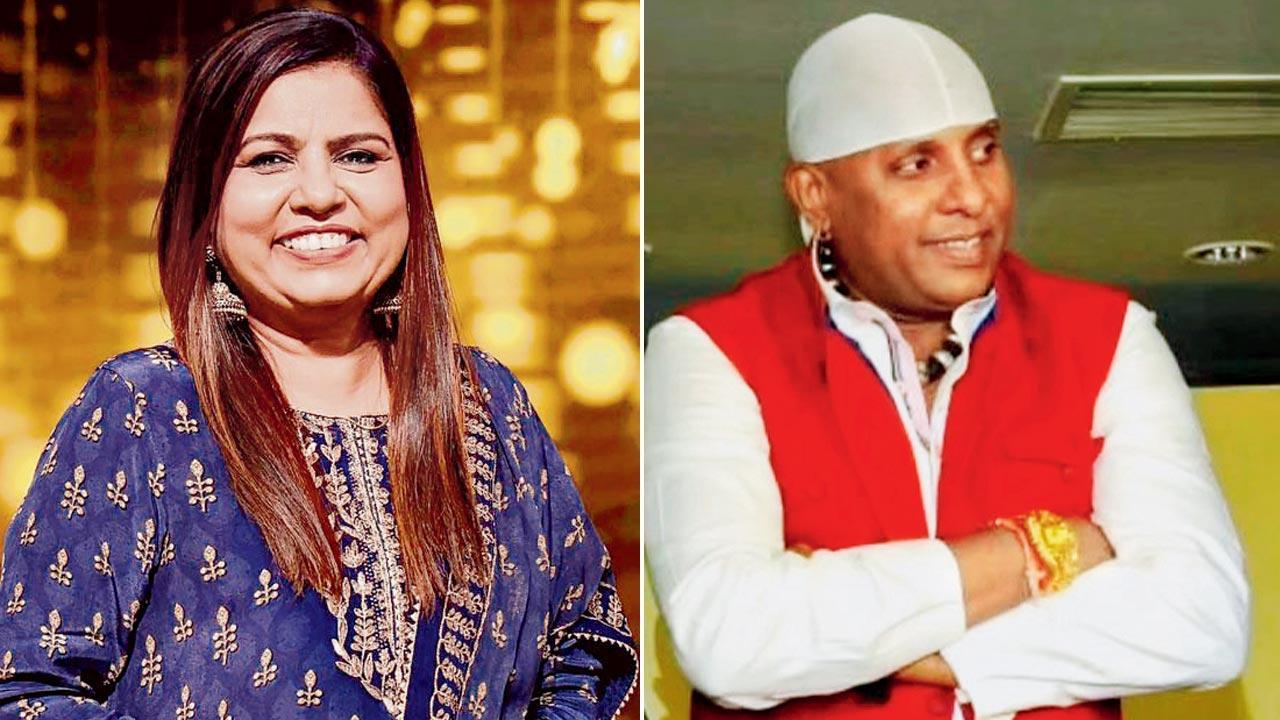
Talat Aziz, Anup Jalota, Sadhana Sargam, Sivamani remember Pankaj Udhas
8:18 AM
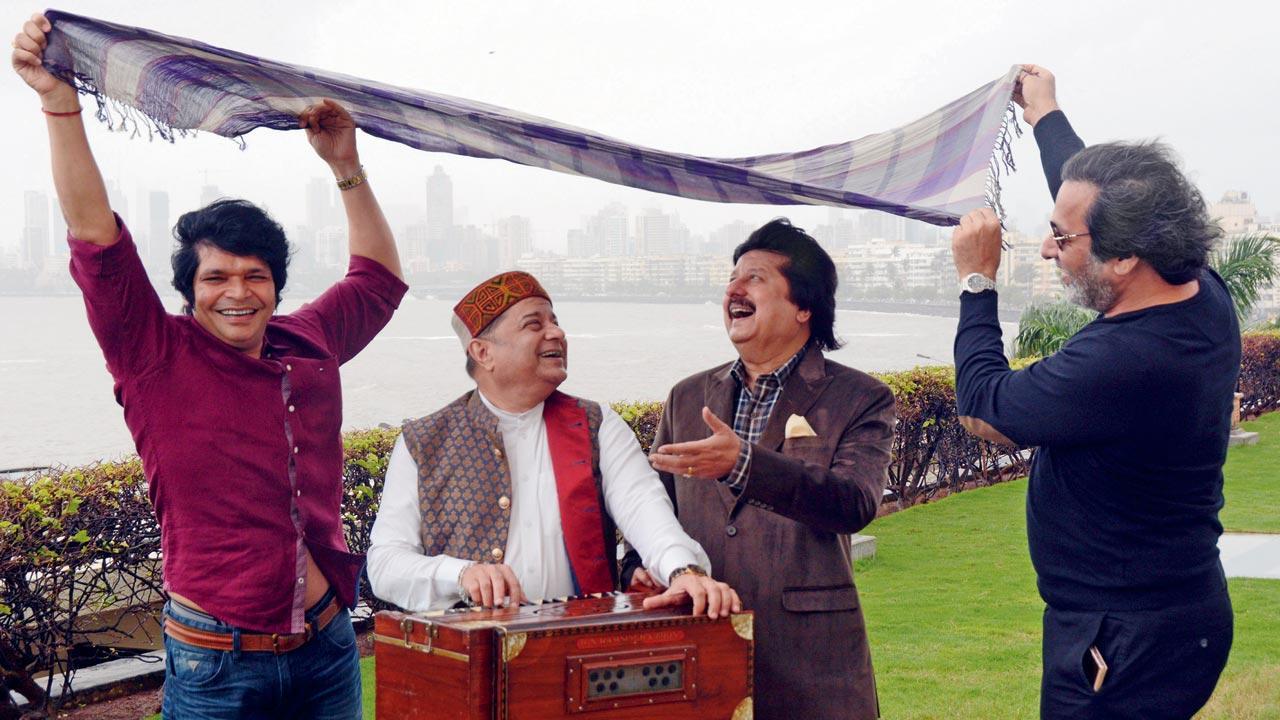
She also collaborated with him on Khazana and co-created the album, Kabhi Aasoon, Kabhi Khushboo. She adds, “Pankaj ji was successful in bringing Urdu to the people by simplifying it for the masses. His poetry was as simple as he was as a person.”
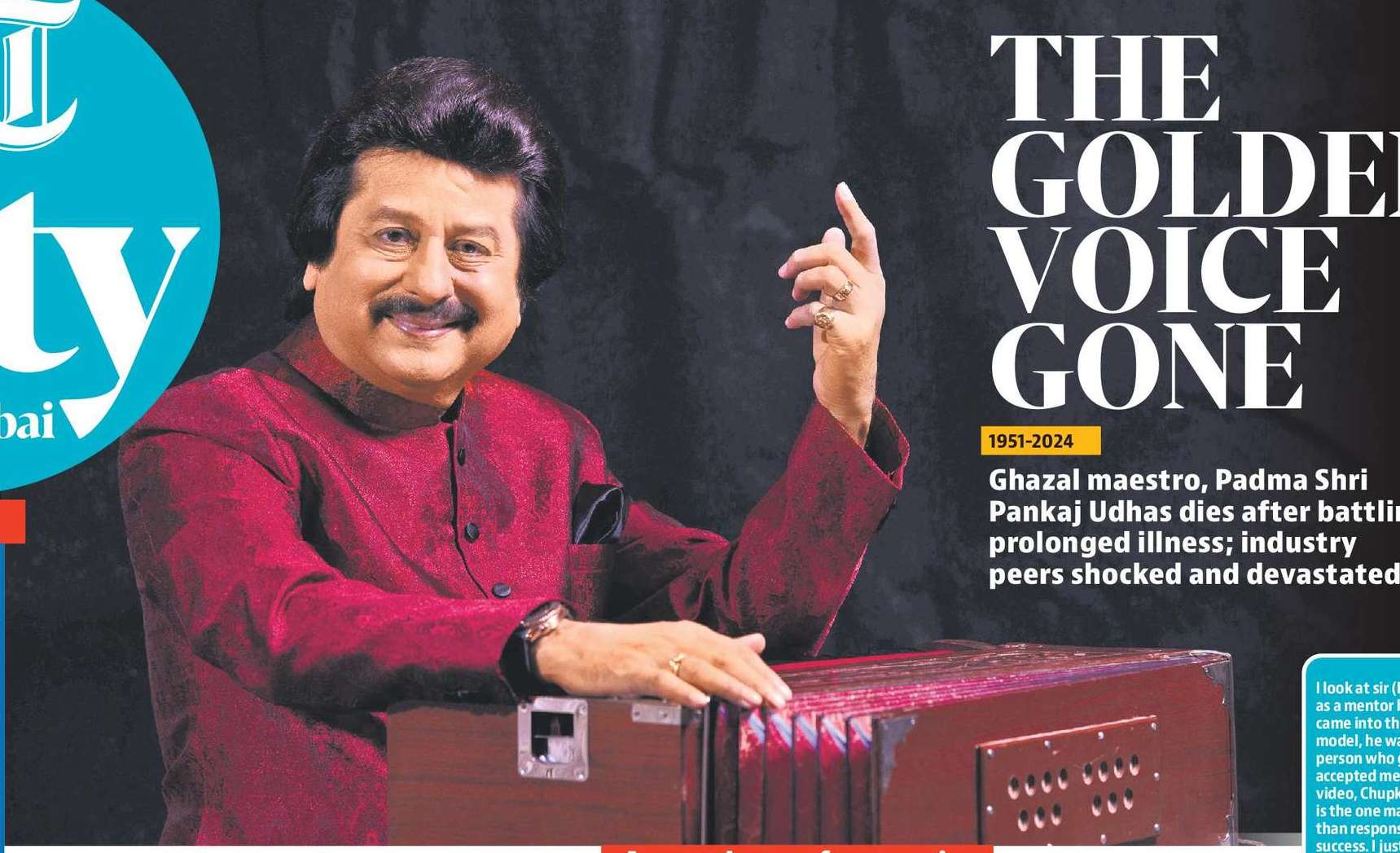
Pankaj Udhas no more, ghazal loses a chart-topper
8:13 AM

Ajay Devgn-starrer Naam to release this summer
8:29 AM

Even today, I never get tired of ghazal-Pankaj Udhas
8:27 AM

Singer Pankaj Udhas, who completed 40 years in the industry, reminds us that Ghazals — the genre he pioneered — should go through a revival
Sanskrita Bharadwaj (HINDUSTAN TIMES; March 22, 2020)
 As a young girl growing up in the ’90s, it would be an anomaly if you didn’t gush over John Abraham in Pankaj Udhas’ music video for Chupke Chupke, or if you didn’t empathise with Sameera Reddy’s in Aur Ahista. Udhas, in the Indian context, is a Ghazal singer beyond recognition. Not only a prolific singer, he had a certain flair for coming up with romantic and mushy, yet unusual videos for all his songs.
This year, the maestro has marked 40 years in the industry. A feat, he says, he’s proud of as he never thought he could be “popular”. “My passion for this form of music is absolutely pure. Even today, I never get tired of the genre. I genuinely believe that it is my passion and hard work which has paid off,” he adds.
 Back in the day
The singer, who comes from a family where everyone was into music in some way or the other, says, “My father used to play an instrument called the dilruba. It is closer to a sarangi and he played it like a hobby. I have two elder brothers — Manhar and Nirmal Udhas. They’re both well-known singers. Manhar has sung quite a few popular film songs. I am the youngest of the three, so, I grew up learning a lot from them. I took it up from there, and then, internally decided that I wanted to sing. I completed my school and college education. The point is that I grew up in an era, where there were only two music labels available and to get a deal with them was like winning an Oscar. You had to really prove yourself. I was lucky to be able to record a film song at only 20 years of age, for a film called Kaamna (1972), the music for which was composed by Usha Khanna. I sang a nazam; it was a beautiful one. After that, I struggled hard to get a break.”
He admits that at one point he had plans of “giving up”. “I felt I should look for an alternate vocation in life, because it was not working out. I took a break and went away to Canada for some time. I thought of making a living there. You wouldn’t believe… within three to four days of my arrival in Canada, I ended up singing. I did many concerts there. I realised two things. Firstly, I could hold an audience of 600 to 700 people for three hours by singing Ghazals. Secondly, I gathered tremendous confidence about being able to entertain people,” he elaborates.
The market in Canada, Udhas says, was limited and he knew his future and destiny lay in India. So, he packed his bags and came back.
Udhas grew up in the era of the radio. For him, there were no other means of listening to music. “We had a radio at home that kept playing most of the time. Two singers who really inspired me were Begum Akhtar and Lata Mangeshkar,” he says.
Four decades
The singer, who lent his voice to cult songs like Chitthi Aayi Hai (Naam; 1986), has performed all across the world and has also made an impact in Bollywood and Indie music through his songs. He is witness to the change that music has gone through, especially in India, over the years.
“The business model of music has changed tremendously since I started my career in 1980. Back then, it was a brick and mortar business of CDs and cassettes. Although it was difficult to 'make it big', if you were good, 60,000 cassettes could be sold out within five days of the song being out. The revenue generated also went on in promoting and giving a space to new artistes. But, today, we have reached a point in the music business where not enough revenues are made. If you do a single or an album, you put it on iTunes. But India is still not ready to use a credit card and purchase music online. There are online payment options, but at the grassroots, buyers are still not using it,” Udhas explains.
Will times change?
There is a known concept, Udhas says, that television does not work anymore. “I feel it still does. It is very effective. Television drove my music videos as well. The other important elements are various social media apps, where you create your channel and try to make a base. Bollywood, of course, is still big,” he says.
According to Udhas, YouTube needs to be used more effectively. “I have my own channel and I have more than 1,00,000 subscribers as of now. I was a little late and a little slow on it, but what I have tried to develop is a certain side of my personality. I think there should be informative programmes about Ghazal singers and Ghazals. That could be a way to keep the genre alive,” the singer signs off.
As an actor, I definitely cannot be in the zone that I was in 20 years ago-Sanjay Dutt
8:14 AM

Rachana Dubey (BOMBAY TIMES; December 6, 2019)
Sanjay Dutt is on the road to rediscover himself as a performer. At 60, the actor prefers being age-appropriate on screen rather than trying to fit into the roles that suited him two decades ago. In a conversation with BT, Sanjay talks about what matters to him as an artiste today, and his role as Ahmad Shah Abdali in Ashutosh Gowariker’s historical war drama, Panipat. Excerpts:
Your Panipat director, Ashutosh Gowariker and you go back a long way. You featured in Mahesh Bhatt’s Naam (1986) in which he was your co-actor. How was it reconnecting with him as a director on Panipat?
It was fantastic! In Naam, he played a cab driver. We had connected well on that film, and then, went our separate ways. I was not surprised, but very happy when he came to me with Panipat and a role like that of Ahmad Shah Abdali, who is regarded as the father of Afghanistan.
Ashutosh told BT that he would often ask you to undo your trademark style of walking when you were on set and in character. That apart, was it difficult getting into the skin of the role?
No, and I have Ashu to thank for that. It’s a great role. We’re depicting what happened in history and he is a real character. The character has many shades and a fantastic arc. The turmoil within his tribe, his entry into India and the realisation that he was fighting a battle he shouldn’t be, were interesting to depict. And yes, I really had to take care of my walk. Ashu would always check on that. He would often say, ‘Sanju, I want Ahmad Shah Abdali.’ But smaller details like this make a large difference to how an actor plays his part.
In the last 18 months, you also shot Kalank (2019), Prassthanam and Torbaaz.Was it taxing to work on projects in quick succession or simultaneously?
I don’t think it was difficult to do any of these films while shooting the others. I’ve been working for 40 years, and earlier, it was normal for actors to work on multiple projects at one time. Having said that, you need the director of each film to hold you together. That is important for me to be on the right path as far as my performance is concerned. I wanted to know everything about Abdali, what happened and why. Ashu provided those details, which came in very handy.
Ashutosh made another observation about you. He feels that you’re not only calmer and more focussed than ever before, but you are also eager to reinvent yourself at this stage of your career. Do you agree?
As an actor, today, I don’t know where I am exactly, but I know that I want to keep working on characters that seem relevant to me. I have always been focussed on my work. Maybe, it didn’t show it the way it does now or maybe people didn’t see it that way back then. The roles I played in Naam, Sadak (1991), Saajan (1991), Munnabhai MBBS (2003) and Agneepath (2012) were all complex characters. Approaching them without any focus would have led to complete mayhem. Such roles don’t work if the actor doesn’t concentrate. As for trying out newer and tougher roles, I would say that yes, people are approaching me with challenging characters, but it’s a conscious effort on my part to tap that space. I definitely cannot be in the zone that I was in 20 years ago. I want to do good work, the way actors after a certain age do in America. Look at Mel Gibson, Kevin Costner or Robert De Niro. They have been unbelievably good at every age. I wanted to move on, too, and I am happy that it has also worked for my audience. You have to come to terms with the fact that you’re older, and you have to take that leap of faith. I did and it got me into a better zone as an actor. I can’t do what Kartik Aaryan and Ayushmann Khurrana are doing today. They’re the heroes of this generation, who can do all the romance and singing.
While you are tapping the character-actor zone, do you think that actors have better roles to pick from in that space today than what was available 20 years ago?
You know this is just a phase that comes and goes. Heroism in movies is a strong idea and will always be there. In films down South, a hero never dies and herogiri never goes out of fashion. In Hindi cinema, you could look at Rohit Shetty’s films like Singham (2011) and Simmba (2018). They are all heroic cops. Ultimately, the hero will be back. While I can no longer be the typical ‘hero’, I can be the kind of hero Denzel Washington plays in his films. He’s older, but the film revolves around him. I don’t write stories, but I do suggest things that I’d like to work on. Like the space of a mature action hero always interests me. Of course, that is not something that has found complete acceptance here right now; but we are getting there. Sadak 2 is an example of that.
Lately, you’ve been working with many of your former colleagues including Ashutosh Gowariker, Chunky Panday, Jackie Shroff, Pooja Bhatt, Manisha Koirala and Mahesh Bhatt. What’s it like to be in the same workspace with them after so many years?
Age has a lot to do with wisdom, and it does come with age. When we were younger, we used to do a lot of things that we don’t do anymore. Today, when I meet my former colleagues, we spend time reminiscing the past. We’ve had such a beautiful journey together. We were close to each other, irrespective of everything that had happened. Whether it was Jackie, Anil ji (Anil Kapoor) or Chunky, it didn’t matter who was shining. We were together, united, which I don’t find happening in the industry today. I hope that changes because this industry is one big, happy family and we should not forget that. Today’s scenario is a lot more career-oriented and professional, but people should ensure that they stand by each other in good and bad times.
Talking about the industry being one big family, a recent picture of yours with Rishi and Neetu Kapoor went viral on social media. It seemed like an emotional moment for all of you….
Chintu sir (Rishi Kapoor) and I have worked together in several films. I appreciate him as an actor and a person. I couldn’t visit him in the US when he was undergoing treatment though I stayed in touch with him and Neetu ji, just the way they were with me when I was in jail. I can’t get the visa to travel, but I would have been by his side if that was possible. When he returned home, I felt deeply emotional and wanted to spend some time with him, not in the capacity of an actor or a fraternity member, but as a younger brother.
On Vishesh Films' 30th anniversary, Mahesh Bhatt revisits seven intensely personal dramas
8:19 AM

As Vishesh Films completes three decades on April 2, its lodestar, Mahesh Bhatt, talks about its latest offering and six intensely personal dramas that are cherished memories today
Roshmila Bhattacharya (MUMBAI MIRROR; April 1, 2017)

BEGUM JAAN (2017)
This Partition drama is a new spring for Vishesh Films. After a few flops, a gloom had descended over the establishment which had the infrastructure and access to money, but the core from where my films had come had withered. That’s when I accidentally stumbled on this Bengali film, Rajkahini, whose director, Srijit Mukherji, was suggested to me by my writer Suhrita Sengupta.
I’d liked his work and when invited to see the film at a preview theatre, I dragged my reluctant brother, Mukesh Bhatt, along. I was devastated by it. The film shook me, my body and soul. I came out of the screening, hugged Srijit tightly and said, “As long as there are storytellers and filmmakers like you, the moral compass of the nation is intact.” In that embrace was born the narrative of Begum Jaan.
When Mukesh saw how overwhelmed I was by the film, he decided to remake it in Hindi. With all his caution and worldly wiseness, Mukesh Bhatt has taken many risks based on my gut instincts. He’s as much a gambler as me, without whom we would not have come this far.

ZAKHM (1998)
So many painful memories because this film was semiautobiographical, based on my proud origin of having a Hindu father, a Muslim mother and a Christian schooling. It was my last directorial and because it dealt with communal politics and the carnage post ’92-’93, my mother was concerned believing that by taking up for secular values, I’d upset the ultra right-wing forces. She died after the first schedule and I had to unmask her Muslim identity which she had hidden behind a sari, tika and mangalsutra when she was alive and had to tell the family that her last wish was to be buried.
She went into the grave as Shirin Mohammad Ali as she didn’t have her husband’s name attached to her. It was graceful of the man in charge of the burial ground in Byculla to let me perform the last rites after learning that I was a Hindu by the name of Mahesh Bhatt. When I stepped into the grave and turned her face towards Kaba, it was the most intimate time I spent with my mother who was no more. That became the defining image planted in the climax which touched the nation’s consciousness.

SADAK (1991)
I remember an enchanting night in Mysore’s Brindavan Gardens where we were shooting Nadeem-Shravan’s romantic track, “Tumhe Apna Banaane Ki Kasam” with a young Pooja Bhatt and the new star Sanjay Dutt. In between shots, I would be listening to a commentary on the Gulf War. Sanjay wondered why I was interested in something happening in Iraq. We had to finish the shoot before dawn becauses it was an expensive location but even though we stretched ourselves, one shot remained. I resigned myself to completing it elsewhere but Sanjay protested, saying, “We have to shoot it here.”
I told him it was impossible to carry the equipment to a distant location before daybreak. “I’ll do it,” he said, and lugging one of the huge archlights, turned to the lightboys and commanded, “Follow me.” They did and we got the shot before the sun came up.

DADDY (1989)
Not for nothing was I labelled the “autobiographical” filmmaker. I went through the attics of my life and shamelessly pulled out stuff others shudder to reveal to the world, including my battle with the bottle, to launch my 16-year-old daughter Pooja Bhatt as an actress in Daddy. It’s a film about an alcoholic struggling to reform for his daughter, part fiction-part real.
My wife Soni Razdan is away in Hong Kong with our newborn child and Pooja was staying with me in Juhu during the shoot. Every night she would rehearse her lines for the next day, perform them for me, then go to bed. One night, after she and the rest of the world had fallen asleep, I had a sudden craving to go to a bar and have a drink.
‘Who would know’, I asked myself. My wife was away and my daughter, asleep. A voice replied from deep within, “You can con the world, you can con your child, but how can you con yourself Mahesh Bhatt? You would know.”
I didn’t have that drink and it was a turning point for me in my struggle with alcoholism. The next morning, I rewrote the climax with Anupam Kher who played the alcoholic, being offered a drink by the baddie before going on stage and tossing the whiskey and the temptation away. What happened in life was transported to the movies. Celluoid has been my intimate diary and I’ve let the world into that space because there’s nothing to hide.

NAAM (1986)
After the critically acclaimed Saaransh and Arth, this was my first money-spinner. It enjoyed a golden jubilee run and brought back Sanjay Dutt after a string of disasters. It also put the spotlight back on Salim Khan after a split with his scriptwriter partner Javed Akhtar.
I have to thank Kumar Gaurav for making Naam possible for us. When I narrated the idea to his producer-father, Rajendra Kumar admitted it was good but then apprehensively turned to his son and pointed out that Sanjay Dutt’s role in this two-hero film was more powerful. “Why not do a film with you at the heart of it?” he suggested.
Without blinking an eye Kumar Gaurav replied, “If we’re going to make this movie, it has to be on this story.” Seeing his conviction his father agreed but ironically, Rajendra Kumar’s fears are confirmed because despite Kumar Gaurav’s brilliant performance, Naam is Sanjay’s show.

ARTH (1982)
The film was done and was the talk of the town. But there were no takers. The end —Shabana Azmi’s character Pooja choosing not to return to her philandering husband or jump into the arms of her lover who promises her the moon but opting to live alone as a single mother to her maid’s daughter—was too bold and unconventional for our Hindi film industry.
There was another problem. My narrative stood on the shoulders of two brilliant actresses, Shabana and Smita Patil, but the latter had moved out of the art house circuit into Bollywood’s A-list. She was convinced I’d been grossly unfair to her character, Kavita, pruning some of her best scenes to make her look like a lesser actress to build up Shabana. An uncomfortable silence stretched between us which I didn’t know how to bridge.
One day, I ran into her at Parkview Hotel. I’d gone to drop off playwright Vijay Tendulkar whom she’d come to meet. The staircase was too narrow to avoid a collision. She tried to walk away but I wouldn’t let her. “Smita, you can’t do this to me. You can accuse me of being a less talented director who could not do justice to your part, but to accuse me of being partial is unfair and you know it,” I entreated, looking into her eyes.
“How can you do this to me? Now I can’t even be angry with you. You’ve taken away all my anger,” she wailed. She went on to watch the film and liked it. And our almost-sour relationship had a happy ending.
SAARANSH (1984)
On the first day of the new year, when my colleagues, after a night of indulgence were still recovering from the hangover, I was at Mehboob Studio with my actors and technicians, and the entire Barjatya family, gearing up to take the first shot of my new film. I shouted, “Action” and in the foreground a telephone began to ring. A grainy image of Anupam Kher as BV Pradhan, a retired school teacher of 70, walked into the frame to pick up the receiver. A disembodied voice — mine — informed him that his only son was dead after being mugged while returning from an Independence Day celebration in New York. The shot was okayed in one take but instead of the usual claps and smiles I could see that my producers were uncomfortable.
Rajkumar Barjatya, speaking for his family, asked me respectfully if it was the right shot for the mahurat given that we were announcing an end. I pointed out that the essence of Saaransh was coming to terms with the finality of death and debunking the popular notion of immortality. With my words their concerns melted away as the true meaning of Saaransh asserted itself with the first shot.

Emraan Hashmi a fanboy moment with Sanjay Dutt on Ungli sets
7:47 AM

BOMBAY TIMES (November 26, 2014)
Says a unit member, “Emraan has always wanted to work with Sanjay sir. During the shoot, he narrated how, in his younger days, he used to sneak into the private screenings to watch Sanjay's films.“ Emraan thoroughly enjoyed working with Dutt. What amazed him was that the senior actor never rehearsed his lines and gave impromptu takes.Says Emraan, “Sanju sir is not only a great actor, but also an extremely warm person. Not many know that my grandmother played Sanjay Dutt's grandmother in Naam, which was her last film. I remember sneaking into preview screenings at Ajanta Arts with my friends to watch the film.“
Ungli, produced by Dharma Productions, releases November 28.
Naam: The film Kumar Gaurav made for buddy Sanjay Dutt
7:40 AM

Roshmilla Bhattacharya (MUMBAI MIRROR; October 28, 2014)
Sanjay Dutt's career got off to a Rocky start in '81. Following a battle with drugs and a series of flops, it had hit a dead end five years later. In these testing times, his buddy who became his brother-in-law, Kumar Gaurav, not only stood by him but was determined to make a film that would bring him back into the race. This film was Naam.
The idea of two half-brothers came from Mahesh Bhatt, who during his growing up years was haunted by the ghost of his own illegitimacy. He sketched out the story of Ravi and Vicky to the two young actors and instantly, impulsively, Kumar Gaurav decided to turn it into a film under his banner.
His father, Rajendra Kumar, wasn't convinced, having spotted the dangers inherent in the script. "Even though it was a two-hero project, Rajendra Kumar knew that the audience's sympathies would eventually swing from Kumar Gaurav's character Ravi to Sanju's bad boy Vicky," reasons Bhatt who went on to direct the film.
Naturally, no father would want his son to get over-shadowed in a film he was producing but Kumar Gauarv stood his ground and insisted he wanted to make this film and none other.
Eventually his dad gave in.
Bhatt then took his idea to Salim Khan. After the split of the Salim-Javed jodi, Javed Akhtar was the one getting the plum offers and it was being said that Salim had been just the business component in the partnership that had given Bollywood blockbusters like Sholay, Zanjeer, Trishul and Seeta Aur Geeta. Naam brought Salim Khan back into the spotlight as a scriptwriter and he gave it all he had. "He added box-office sparkle to my offbeat story of two half brothers and turned it into a blockbuster. Naam was my first golden jubilee," reminisces Bhatt.
Sanjay Dutt, he remembers, was like a bhakt who surrendered himself completely to the film with single-minded dedication and boundless energy. "I never saw that kind of focus in Sanju again. With his stunning performance, he broke people's heart. We became a lifelong friend and years later, on the eve of his departure to the Yerwada Jail, I remember sitting with him and feeling as helpless as Kumar Gaurav's character in Naam because there was so little that I could do for him," he sighs.
There's a word of praise for Amrita Singh too who played Sanjay's wife and the mother of his unborn child for whom he finally decides to give up his life of crime and return home. It was like waking up to a new day after a long dark night and was beautifully expressed in the song, Chhiti aaye hai.
"Laxmikant-Pyarelal scored some beautiful songs for the film, but this is the one people still want to talk about whenever I travel to the Middle-East," says Bhatt, recalling how when Rajendra Kumar first heard Anand Bakshi's lyrics he innocently asked about the mukhdas and the anatras, convinced that a song that strayed from the traditional format would not work. Bhatt was far more accepting and Bakshi told their producer, "That's why you have put a younger director in charge. He understands my language, you don't," Once again, Rajendra Kumar gracefully gave in.
Pankaj Udhas, a popular ghazal singer in the '80s, not only recorded it but it was also picturised on him. "Pankaj would shoot for us during the day and sing at concerts at night. He struck a chord with the Indian and Pakistani diaspora," points out Bhatt, adding that Salim saab had stressed on the bonds of brotherhood between the two countries through the friendship of Sanjay and Aakash Khurana, his Pakistani neighbour who stands by him when he is imprisoned in Dubai.
As he signs off Bhatt adds Naam's misguided search for identity would not have had the emotional impact it did without its mother figure. He says, "Nutan wasn't keeping well at the time but she instantly agree to do the role and would come on the sets an hour-and-a-half early to get into the skin of the character. As always she was outstanding!"