Showing posts with label NEET Protest 2026. Show all posts
Showing posts with label NEET Protest 2026. Show all posts
Violence has become the drug, and we are supplying that drug through cinema-Neeraj Kabi
10:40 AM

Akash Bhatnagar (HINDUSTAN TIMES; October 2, 2026)
Neeraj Kabi played the character of Mahatma Gandhi in the TV show Samvidhaan more than a decade ago, but the actor believes the Gandhian way of life holds extreme relevance, especially today. “His relevance will remain for generations to come. Such a human will never become irrelevant,” he tells us on Gandhi Jayanti today.
The actor attributes his relevance to his six qualities: ahimsa, satyagrah, sacrifice, leadership, humanity and equality.
“He treated them as weapons, not as a gentle way of meditation. Just as you need weapons for war and train a soldier with those weapons, the training has to be there for these too,” Kabi insists, adding, “If you want to get the highest version of every human being on this planet, then you need to follow these six Gandhian rules.”
Neeraj Kabi feels the young generation is already exhibiting the power of Gandhian principles, as proven by the student protests at Jantar Mantar earlier this year against NEET paper leaks. “The baton of change was carried forward by the youth of the nation during the freedom struggle, and even today, they brought about a change by majorly sticking to non violence and working towards their goals,” he says.
While Gandhi preached non-violence, the Hindi film industry today is increasingly showing violence on screen and it is also emerging a success with the audience. Mention that to Kabi and he says, “Just as you have smoking and drinking, violence in cinema has become like a drug that people go to enjoy because sensibility levels are going down across the world. The only way to mark the success of a country is not GDP, it’s about where you have taken your citizens to reach their higher versions. And our levels are going down, and we are becoming insensitive. Violence has become the drug, and we are supplying that drug through cinema. Gandhism is the antidote to that and we need to understand this quickly before it becomes a shame for us.”
However, he asserts that he isn’t against violence being shown on screen, but it needs to serve a purpose. “There needs to be a higher sensibility that we should have as an artiste. If you make films only to create money and therefore you're making violence, then it's a dichotomy, because then you're going against not just Gandhism, it goes against art itself. Unless your violence is leading to something much bigger in your story, and you are able to use violence as a genre to give away something much more powerful, like it was in Schindler’s List, that makes sense, otherwise not. People look up to cinema and then you inspire them the wrong way,” he ends.
I have given my word to my father to not comment on anything I am not knowledgeable about-Sonu Nigam
4:53 PM
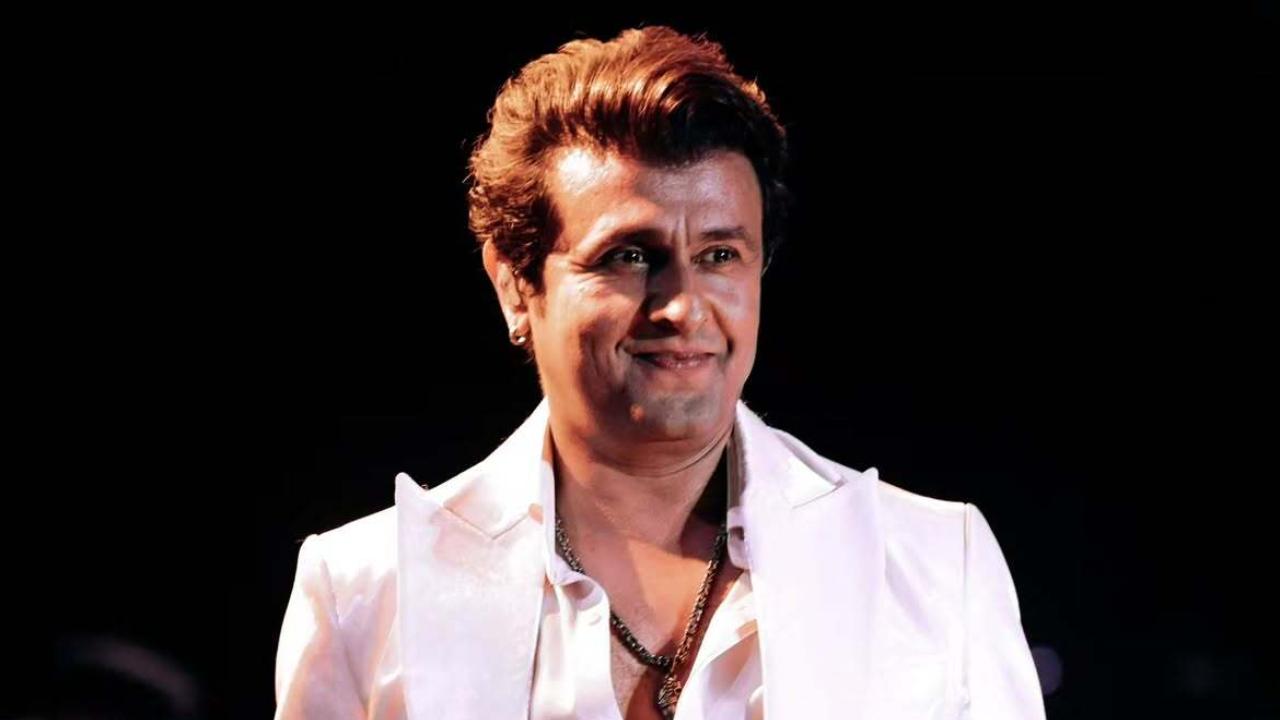
Vinay MR Mishra (BOMBAY TIMES; August 12, 2026)
Sonu Nigam has never really been one to shy away from taking a stand. Over the years, the singer has spoken openly about issues ranging from the use of loudspeakers at religious places to royalty rights for performers. So, when a recent video of him refusing to comment on the ongoing student protests over alleged NEET irregularities went viral, his silence was bound to invite questions. During the interaction, Sonu was visibly irritated when reporters continued to ask him about the issue and eventually ended the exchange. Now, explaining his decision, Sonu says it was less about avoiding a difficult question and more about choosing when — and on what — he should speak.
“Firstly, in the last more than three decades of being in Mumbai, I have learnt one basic etiquette for any press conference. Always adhere to the agenda of the occasion and do not let conversation wander to disconnected matters,” he says, adding, “Talking politics when you have come to talk about your tribute to your Guru Pankaj Udhas is disrespectful in my eyes. And I would very politely expect the press and media gathered to maintain the same decorum.”
The singer who recently sang a Haryanvi song, Chunni, continues, "I have also given a word to my father to not comment on just anything which I’m not knowledgeable about. I don’t have social media on my phone. My life is about music and Bhakti. I have taken enough stands throughout my life and have been instrumental in bringing many mammoth changes in the system. From my outcry against loudspeakers on religious places to the right to royalty for performers, I have belled the cat alone bravely. Now let others take up new courageous stands and see what changes they can bring through their steadfastness. Let them become real warriors and not just social media lampoons,” he says.
‘The pain had nothing to do with my vocal chords’
Apart from the controversies, the singer has recently been in the news for his health. Sonu had earlier spoken about experiencing severe pain, with reports describing a pinched nerve, and has since also shared a video from a separate medical procedure involving a recurring growth on his left ring finger.
"I am perfectly fine due to the timely intervention of a wonderful and kind physiotherapist from Delhi called Arvind Kumar. He rid me of the excruciating pain in four days. More than anything else, I was overwhelmed with the outpour of love and concern for me from every quarter.” The singer clarifies that the pain was not related to his voice.
“The pain was in the side of the neck and had nothing to do with vocal chords, thankfully. But of course, your ability to sing comfortably is compromised when you are under such severe agony,” he says.
Not comfortable with dating apps either; I come from village jahan honour killings hoti thi-Nawazuddin Siddiqui
3:26 PM

Renuka Vyavahare (BOMBAY TIMES; September 4, 2026)
Nawazuddin Siddiqui’s daughter, Shora, has inherited her father’s piercing eyes, while her features recall a young Aishwarya Rai. At 16, the actor-to-be, who is set to make her film debut in an Arijit Singh project, is much like any other teenager, spirited, easygoing and seemingly unaware of just how striking she is. In her first-ever media interview, Shora sat down with her father for a candid conversation about life, love and career. While Nawazuddin advised her to stay away from junk food and opt for healthier choices, Shora was quick to turn the tables on him: vaping isn’t healthy either, she pointed out. Excerpts...
What’s your take on modern love and relationships? Do you discuss this with each other?
Shora: At 16, I want to focus on my studies, but I do share stories about my crushes with Mom. I’m also starting to open up to Dad. He doesn’t react at all (laughs). He’s a very protective father and doesn’t approve of anyone for me, period. I strongly believe that self-love is the most important thing. You can’t wait around for someone else to complete you. So many people choose to be single and are perfectly happy. I don’t believe in soulmates. With relationships falling apart, expecting someone to stay with you forever seems unrealistic. Also, you can’t shop for love on dating apps. Go out and meet people, bro! And if you don’t find anyone, that’s okay too.
Nawaz: I’m not comfortable with dating apps either. Jis gaon se main belong karta hoon, wahan honour killings hoti thi. When I was 16, I had a crush on a girl. For three years, I just kept looking at her. Himmat hi nahi hui kabhi usse baat karne ki. And agar soulmates hote, toh divorces nahi hote.
As far as my daughter is concerned, she can decide for herself once she turns 18. But tab tak usko sambhal ke rakhna mera kartavya hai. I am a protective father. She is driven and focused on her studies, so I’m happy. Yeh saari cheezein bata deti hain. Woh kaafi samajhdaar hai, which is great.
What is the biggest misconception about Gen Z?
Nawaz: We tend to underestimate Gen Z. We often think, “Yeh log mast-maula hain.” Shora sleeping for 10-12 hours some days used to bother me. I barely sleep for six hours, even on my days off. I follow a routine, believe in discipline and reading, and expect her to do the same. But I’ve realized that Gen Z has its own way of doing things, and that doesn’t necessarily make them irresponsible.
For instance, I needed a makeup artist for this shoot, while Shora did her own makeup. We recently returned from the US after performing our 90-minute Hindi play in nine cities. I’ve been doing theatre and acting for decades, but this was Shora’s stage debut and she was completely unfazed. I was the nervous one!
I’ve worked with fellow NSD actors, so I know the pressure that comes with performing on stage. I kept going over my lines, worrying about whether she would remember hers. I was excessively focused, while she was casually practicing her martial arts moves before the play began. She didn’t forget a single line. The only thing she complained about was having to repeat the entire play after the fourth performance, but she kept going. Gen Z may approach life differently, but that doesn’t mean they lack ambition. I realised that after working with her.
Shora, do you think the students’ protests changed how we perceive Gen Z—from the “reel generation” to change-makers?
Shora: I’m glad people realized that there’s more to us than reels and TikTok. We have it in us to voice our concerns and bring about change, and I’m proud of what we can achieve. I often wonder why something as basic as speaking up is misinterpreted as disrespect or rebellion. What’s wrong with standing up for yourself? Sharing your opinion isn’t the same as talking back. Blindly taking orders and conforming often comes from fear, not respect.
Do you envy the Gen Z mindset, Nawaz?
Nawaz: I do. At 16, I didn’t even know what clothes to wear. At 16, she knows which profile works best on camera. I wish I had the freedom to express my thoughts to my parents and seniors the way she does. That is my biggest regret. Kaash hum bhi khulke baat kar paate apne seniors se.
Look at the students’ protests. These kids are bearing the brunt of our silence and inaction. If someone ill-treated or disrespected us, hum log sunke lete the, bolne se darte the. We were spineless; they are not. They question everything. They don’t think speaking up or talking back is wrong, and I find that inspiring. I constantly feel that my seniors know more, and now the youngsters know more. Hum beech mein phas gaye hain.
What is that one quality you admire in each other?
Shora: He’s mature. He knows right from wrong, thinks before he acts, whereas I act before I think. I want to learn that from him, but I also wish he would listen more. When I express myself, don’t dismiss my opinion by saying, “You’re being difficult.” Hear me out first. I also want to be as good an actor as he is. I’m keen on filmmaking too.
Nawaz: Gen Z has access to information and isn’t in awe of anyone. They don’t mistake self-expression for disrespect, and I find that inspiring. If I’m disciplining Shora, she’ll tell me, “Don’t raise your voice. Don’t be rude.” I never had the courage to say that to my father. She’s unapologetic about her ambitions and also knows how to enjoy life. Inko life jeeni hai; hum log sirf mehnat karte reh gaye. I’m learning from her that you don’t have to suffer to prove your worth. My struggles made me stronger and convinced me ke suffer kiye bagair kuch haaseel hi nahi ho sakta. Shora doesn't believe that but I want her to be strong and adaptable enough to weather any storm.
Reading is becoming archaic in the age of scrolling. What’s your take?
Nawaz: I’m not against technology. The problem is not using your mind and becoming too reliant on or invested in virtual life. Mindless scrolling as an escape is scary because it’s unproductive. Kids don’t think reading is relevant anymore, and that’s affecting their memory and attention spans. Reading improves your ability to think, imagine and remember.
Aaj ke actors ka career paanch saal se zyada chalna mushkil hai because, I feel, they lack the imagination that comes from reading and experiencing life. Where is the source material? Shah Rukh, Salman and Aamir dominated for 35 years for a reason. Woh achieve karna aasaan nahi hai. I want Shora to read more and work on her Hindi and Devanagari.
Shora: For acting, I do read books, but otherwise I prefer my phone. I get easily distracted while reading and find it hard to focus. If you want to learn something, why not learn it on your phone?
Gen Z questions everything; they aren’t spineless like my generation
Citing the recent students’ protests, Nawaz believes today’s youngsters have achieved what his generation couldn’t. “They are bearing the brunt of our silence and inaction. If someone ill-treated or disrespected us, hum sunke lete thay, bolne se darte thay, because hum dare hue log thay. These kids question everything. They aren’t spineless, and I believe they will bring about positive change.”
Naseeruddin Shah wishes ‘more strength’ to student protestors
9:16 AM

Aadrika Sominder (HINDUSTAN TIMES; September 1, 2026)
Over a month after posting an impassioned video condemning the police crackdown on students protesting over alleged irregularities and paper leaks in the NEET-UG exams, Naseeruddin Shah has a new message for student protestors.
“I wish these kids all the best, and I wish them more strength,” the veteran actor told HT City on the sidelines of the launch of Mahmood Farooqui's memoir The Tihar Players, in the Capital on Sunday. Asked if he believes such protests could change the state of affairs, he said, “This kind of protest will definitely work.”
In his July video, Shah had compared Delhi Police personnel who lathi-charged students to American ICE agents, and also took a dig at A-list actors who chose silence during the protests. His message drew criticism from Kangana Ranaut and Piyush Mishra.
At the event, the 76-year-old praised a theatrical performance by former Tihar Jail inmates, saying, “Seldom have I seen this much truth in a performance, performed by those who have gained redemption.”
Over the years, Shah has mentored several actors in the Indian film and theatre industry. During an on-stage interaction with Farooqui, who held drama classes during his own prison time at the Tihar Jail, Shah said, “I find that many of my student actors struggle to shed their inhibitions even in simple exercises such as drinking from an imaginary cup, and the women resort to crying after reading an imaginary break-up letter from their boyfriends, mainly because they join these classes to get a job. But I’m sure you didn’t get this struggle in the jail."
He also recalled his own years at boarding school, likening that experience to being in jail. He recounted how punishments there were far harsher than what students face today. “The teachers today would be arrested,” he quipped.
Shaadi jab honi hogi tab ho jayegi-Huma Qureshi
4:26 PM

Sonal Kalra (HINDUSTAN TIMES; August 7, 2026)
Huma Qureshi has lately made headlines on both the personal and professional fronts. While she turned producer with recently released Baby Do Die Do, which clashed with Alia Bhatt’s Alpha in theatres, her appearances with actor and acting coach Rachit Singh have also fuelled wedding speculation.
Qureshi, however, says marriage will have to wait. “You and my mum have the same questions! I don’t have an answer to when the wedding is going to happen. Shaadi jab honi hogi tab ho jayegi; I have a lot of work to do. This is a very busy year and, right now, I am just focusing on that.”
How big a risk was turning producer? “It is a high-risk, high-reward business. It is exciting because you get to be the creator and keeper of your IP. I feel every creative person should produce a film once to understand the entire process.
As an actor, your job is largely in front of the camera. A producer, however, is responsible for everything needed to make a project happen. Sometimes, even somebody’s temperament becomes your problem.
It is a humbling experience and teaches you the value of time, money and professionalism. At the same time, the risk involved is considerable.
As actors, we are dependent on other people to hire us. Saqib (Saleem, brother- actor) and I are not cribbers, and we do not like playing victims over the roles we are not getting. The only option was to create opportunities for ourselves.
Saleem Siblings is our little brother-sister cottage industry, through which we hope to create interesting projects with like-minded people. We may not have mammoth budgets, but not every story needs Rs. 150 crore to be made. Some stories need only a fraction of that amount and can still be engaging. Baby Do Die Do is now in its fifth weekend and continues to get shows. I keep sharing whenever a show goes houseful in any part of the country.”
How have your recent trips to Delhi been and what keeps bringing you back to the city?
Delhi, of course, is home. I have spent my entire life there. So I don’t need an excuse to come back. But when I was there recently to promote Baby Do Die Do, I toured with the film. We went to theatres to ask people, ‘What do you think of the film?’ These were all surprise visits. So, sometimes I would just bump into an old friend from college or an aunty who used to be my neighbour.
We’ve loved watching your funny Reels, especially the ones where you and your dad pull each other’s leg. How did he react to Baby Do Die Do?
As a family, it’s been surreal. My dad runs a restaurant business in Delhi for almost 50 years, called Salim’s. My mum’s been a housewife. And we have grown up in a Punjabi part of Delhi, so I identify as a Punjabi. For us, even becoming actors was a huge leap. To have taken that step, and found success with the grace of God, and now become first-generation producers is a very strange feeling.
These days, producers take pride in saying, ‘My film is worth Rs. 800 crores or Rs. 900 crores’. How much pressure does it create for people who want to tell small, meaningful stories?
I don’t take that pressure. Firstly, because I don’t have Rs. 800-900 crores to make movies. Secondly, I feel like films take too much pressure of the opening weekend box office number. Oftentimes, the industry figures are inflated ones. I don’t know who are we trying to impress. At times, it is just to create a sort of perception of how bankable a film or a particular star is. So, I don’t take them too seriously. The conversation has to shift beyond numbers to the content itself. When I was growing up, I didn’t know how much films made at the box office, but I remember those scenes and songs that had a deep impact on me. For me, my metric would be ‘Hey, did you go a second time and watch the film? Or would you recommend it to another friend? Would you talk about it?’
It’s lovely to see this recognition come your way, especially when you speak so passionately about the film. Sadly, the whole chatter around, ‘kitne ki opening lagi?’, ‘aapko toh OTT mein chale jaana chahiye,’ and ‘itna bada risk le rahe ho’ continues...
This is very unhealthy. OTT mein... Arre, kyun? Somebody recently said to me, ‘Kuch films toh OTT ke liye hoti hain’. I replied, ‘Are you trying to say only people with pots and pots of money should be allowed to make theatrical films? And everybody else should just do OTT? If this happens, then a lot of movies wouldn’t get made, and a lot of new voices and people wouldn’t be discovered.’
Regarding your recent presence at the students’ protests… There must be people who would’ve warned you that it was risky, that it could be connected as a way to promote your film, or simply advised you to stay away. What made you negate those voices?
I would be lying if I said it didn’t cross my mind. We were in Delhi, and it just didn’t feel right for us not to go there and stand in solidarity. We didn’t take a single picture or inform any media. We quietly went at 2 am and just sat there... I am not aligned to any political party or movement, but I felt really bad for those students... I chose not to make a statement about it because people have a way of like misinterpreting it.
Do you feel that your profession sometimes takes away your right as a citizen to do and say whatever you want to?
I am very conscious of the fact that because I’m a public figure and what I say will impact people. So, I say as less as I can. But yes, I feel like for me, the logic is that I should always speak up for humanity and that’s my only guiding light. But I cannot be expected, at every and any given point of time, to offer my opinion because sometimes even I’m in the middle of forming one. There are also athletes, sports people and industrialists who choose not to talk about things. Koi unko nahi bolta. But I feel somehow, as actors, we always come under scrutiny.
------------------------
I refuse to be boxed. Whenever I feel people have figured me out and they want to tell me ‘this is what you’re good at and this is what you should do’, I want to do something entirely opposite. I am not here to be in some kind of rat race. I am here for the work. I am here for the creativity... I think of myself as an artiste, and I want to be, by the end of my career, counted as a leading artiste of our times. That, for me, is like the goalpost.
- Huma Qureshi
Viral 'apology' post brings Kangana Ranaut and Hrithik Roshan's old feud back into focus
8:57 AM

HINDUSTAN TIMES (August 3, 2026)
Kangana Ranaut has hit back at actor Hrithik Roshan after he commented on a viral social media post saying that “the world owes an apology” to him. The post followed backlash against Ranaut over her remarks on recent student protests, including those over the alleged NEET-UG paper leak. The actor and BJP MP criticised the protesters’ conduct and language, describing some young women at the demonstrations as “Generation Gutter”.
Her comments drew a response from Cockroach Janta Party spokesperson Saurav Das, whom Kangana later called “useless and unemployed”. Saurav then joked that she may have been targeting him because he resembled a younger Hrithik Roshan.
The remark prompted social media users to revive Kangana and Hrithik’s old public dispute, with “We need to apologise to Hrithik Roshan” gaining traction online. Influencer Freddy Birdy also shared a post that read, “The world owes an apology to Hrithik Roshan.”
Hrithik responded in the comments, questioning the tendency to side with one person merely because another had fallen out of favour. Kangana hit back on Instagram Stories on Saturday, accusing him of fuelling the online harassment against her.
---------------------------------------------------
In 2016, Kangana Ranaut referred to an unnamed former partner as a “silly ex”, prompting Hrithik Roshan to send her a legal notice. She issued a counter-notice, and their conflicting claims over an alleged relationship, emails and photographs subsequently played out in public. The old controversy resurfaced after Saurav Das joked that Ranaut was targeting him because he resembled a younger Hrithik.
"Generation Gutter": Kangana Ranaut fires at protesters
10:02 AM

The actor-MP criticized CJP protesters and also called out young Hindu women
HINDUSTAN TIMES (July 29, 2026)
Actor and MP Kangana Ranaut has criticized participants in the CJP-led student protest at Delhi’s Jantar Mantar, which had demanded then-Education Minister Dharmendra Pradhan’s resignation over the alleged NEET-UG paper leak and other examination irregularities. Pradhan resigned on July 25, following which the group called off its protest.
Reacting to videos from the agitation in a series of Instagram Stories (see insets), Ranaut criticized the protesters’ language and behaviour, describing the clips as “puke inducing”, “jarring” and “crass”.
In a subsequent Story, she turned her attention specifically to young Hindu women, writing, “Most appalling is the behaviour of young Hindu women, who want to imitate the lives of independent career women without earning that freedom.”
Ranaut said women who are truly independent make “rebellious choices”, express bold opinions, take unconventional career decisions and remain accountable for their actions. She referred to a section of “westernized Indian women” as “Generation Gutter” and alleged that some sought independence while continuing to live off their parents’ earnings.
Concluding with what she called a “gentle reminder”, Ranaut wrote, “Independent life needs to be earned. If you try to live independent without accountability you are just a distorted entity. Gutter chap.”
Kritika Kamra says Shivaji Park student protest felt safe and united
10:19 AM

Kritika Kamra, Atul Kulkarni and Navjot Gulati
Mohar Basu (MID-DAY; July 26, 2026)
On Friday, a day before Dharmendra Pradhan, Union Education Minister, sent his resignation letter to Narendra Modi, Prime Minister, the atmosphere at Shivaji Park buzzed with energy.
Despite a heavy police presence around the venue, crowds poured in from all directions, clutching placards and backpacks, determined to make the government hear them. Blending into the crowd were actors Atul Kulkarni, Kritika Kamra, Manav Kaul, Geetanjali Kulkarni, and Makarand Deshpande, along with filmmakers Navjot Gulati and Hardik Mehta.
“The energy was beautiful and the young people of this country have shown how a protest is done,” shared Kamra, reflecting on how well-organized the movement had been.
“It felt safe and everyone was united. It was crowded but everyone was prepared. People were kind, helpful, and willing to cooperate. Young people were giving away tricolour wristbands [to everyone].”
Kaul, who distributed water bottles to protesters, shared, “This is the time to let the young people’s loud and clear voices be heard.”
As students began dispersing, several people spotted Atul folding his hands and thanking the police personnel for doing their duty throughout the day. Students joined him and applauded the officers, blurring the line between the police and the protesters.
Dissent and dialogue are not acts of disrespect; they are essential to a healthy society-Shabana Azmi
4:55 PM

Renuka Vyavahare (BOMBAY TIMES; July 25, 2026)
Shabana Azmi is cut from a different cloth. At 75, while much of the film industry remained silent or issued carefully worded, "neutral" statements, she chose to travel to Jantar Mantar in solidarity with the student movement led by the CJP, demanding accountability from the education minister and those in power. The students remain resolute, vowing to continue their nationwide agitation until their demands are met. Back from Delhi, Azmi spoke to Bombay Times while recovering from an asthma attack triggered by tear gas during the protest. In a candid conversation, she reflects on why she felt compelled to stand with the students, what she witnessed on the ground, and why she believes silence is no longer an option. Excerpts…
At 75, you travelled all the way to Delhi to stand with the students, age and health issues not withstanding. What compelled you to take that decision?
The sheer injustice of it. Students of our country are peacefully demanding a dialogue for educational reforms. They seek an overhauling of the educational system and accountability for the several lapses in key entrance exams over the years leading to despair to the point of suicide. Why can’t you listen to them? We need to build their hope, not crush their spirit. The prolonged hunger strike by the students and Sonam Wangchuk whose deteriorating health we were all witness to deeply concerned me. Can you imagine the pain of their parents who made huge personal sacrifices to assure a better future for their children?
What was that particular moment that made you feel, "Enough is enough"?
The complete indifference of the ruling party to initiate a dialogue. Sonam Wangchuk is a respected scientist and environmentalist whose work on climate change is applauded across the world. Yet, attempts were made to discredit him through canards and insinuations. The students, too, were branded anti-national and accused of being stooges of "foreign powers." That was the tipping point for me.
You've often been labelled 'anti-national' for speaking out, yet you've never stopped raising your voice. What gives you the courage to continue despite the personal attacks?
These are attempts to obfuscate the real issue and replace dialogue. And we take pride in being the world’s largest democracy?
India has witnessed many protests over the years, but this movement seems to have united people across generations and, for many, broken the collective fear of speaking up. Why do you think it has resonated so deeply with people across the country?
Because we all know that the youth are the future of our country. Increasingly, young couples are choosing not to have children because they cannot guarantee them a secure or hopeful future. That should worry all of us. I remember a university student saying during a debate many years ago, "Humko azaadi aadhi raat ko mili thi, aur savera aaj tak nahin hua." ("We got Independence at midnight, but dawn has still not arrived.") Those words stayed with me. In fact, I used that line to open my maiden speech in the Rajya Sabha. Atal Bihari Vajpayee ji appreciated it, you can verify it in the records. He did not treat it as a personal insult or an attack on his government. It resonated with him because he understood the larger sentiment behind it and responded like a true statesman. They were leaders of a different mettle. It saddens me to see how far we've drifted from that spirit today, where every criticism is viewed through the lens of hostility instead of being seen as an opportunity for dialogue and introspection.
Many believe we as a nation are conditioned from childhood to equate obedience with respect, whether at home, in school or at work. The people who don't question authority are often rewarded. Do you think this culture of silence and unquestioning compliance has become one of our biggest societal challenges?
I don't think it can be generalized like that. I would leave that to experts in the field. Speaking for myself, I was raised until the age of nine in Red Flag Hall, the commune of the Communist Party of India (CPI) in Mumbai. It was a remarkable space where discussions on social justice, women's empowerment and India's composite culture were part of everyday life. Progressive writers, poets, artists and political thinkers came together there, and our parents believed that art should be an instrument of social change. My brother Baba and I absorbed these values almost by osmosis. We were encouraged to ask questions, voice our opinions and speak up whenever we felt strongly about something, even if it meant disagreeing with others. That environment taught us that dissent and dialogue are not acts of disrespect; they are essential to a healthy society.
The day of the Parliament march shocked the nation. Videos showed unarmed students, including young women, being beaten, while later claims suggested the crowd had turned violent. You were in the middle of it. What did you witness firsthand, and what would you want the nation to know about what really happened?
Prakash Raj and I had been helped into a police truck by the protesters. I had to lie down for a while to catch my breath after one of the activists rushed to pull me up because the police had entered the area, triggering a stampede. Looking through the truck's grills, I narrowly escaped being hit by a large stone that was hurled towards it. Soon after, the tear gas and lathi charge began. The police were furious because they claimed that a shoe had been thrown at one of their colleagues. Now, who can verify that? It is their word against the students. What is beyond dispute, however, is that there is a clear protocol the police are mandated to follow while dispersing a gathering they deem "unlawful." It is fair to assume that those protocols were not strictly followed. I personally witnessed young boys and girls, many of them barely out of their teens, badly injured and bleeding because of the lathi charge. When I sat down in the mud with the protesters, I saw students who had themselves been injured rushing to shield and protect me instead of tending to their own wounds. One young man told me, "Ek lathi khaane ke baad lathi ka darr nikal jaata hai." ("Once you've been hit by a baton, the fear of it disappears.") A 15-year-old boy said, "Had I not joined this protest, I would never have been able to look myself in the mirror." My respect and salaam to these young people. Their courage, compassion and conviction showed us the way.
Many people are now unfollowing celebrities and actors who chose to remain silent, arguing that silence in the face of injustice amounts to complicity. It seems people are rethinking who they want to look up to and consider role models. Even the formulaic statements now trickling in, many feel they sound pre-planned and follow a familiar template rather than expressing genuine conviction. All this has only added to the public's frustration. What's your take on this?
Every artist has to make that decision for themselves. I don’t think it’s fair to judge people for speaking out, and I don’t think it’s fair to judge those who choose not to. Everyone weighs the consequences differently. What is important is that we don’t lose sight of the real issue. The conversation should remain focused on the concerns raised by the students and on how those concerns are addressed, rather than on whether individual celebrities have commented. Artists can amplify conversations, but they are not a substitute for institutions or democratic processes. Lasting educational reform and the protection of democratic rights come through public engagement, civic participation and accountable governance. It is encouraging that many members of the film industry have chosen to speak this time. The issues affecting young people because they are our future and we are all stake holders.
A paper leak isn’t just an administrative glitch, it affects millions of hours of hard work-Manushi Chhillar
10:01 AM

The actor backs students demanding a fair system
Natasha Coutinho (HINDUSTAN TIMES; July 25, 2026)
As protests continue over the alleged NEET-UG 2026 paper leak, actor and former Miss World Manushi Chhillar has spoken about facing a similar ordeal in 2015, when she had to appear for the medical entrance exam twice following a paper leak.
“I remember the uncertainty more than anything else. You prepare for years believing that the exam day is the finish line, and then suddenly you’re told that it isn’t. It’s not just about writing another paper. It’s about reliving months of anxiety, postponing plans, and staying mentally prepared all over again,” she tells us.
Manushi, who had enrolled in medical college before entering the Miss India pageant, says, “I appeared for the Joint Entrance Examination (JEE) Main in April after my board exams and the All India Pre-Medical Test (AIPMT), now known as the National Eligibility-cum-Entrance Test (NEET), in May. I chose not to take JEE Advanced because I was clear that I wanted to study medicine.”
She adds that while she had the privilege of choosing between fields, many students do not: “For most, NEET is a chance to build a better life. You feel responsible not just for yourself, but for the hopes of everyone around you. By the end of it, most students are exhausted.”
She reappeared for the examination 45 days later and secured a good score, but says the burden of another attempt cannot be overlooked. “Another attempt comes with emotional, financial, and psychological costs that deserve to be acknowledged.”
Supporting students speaking out for a fair examination system, Manushi adds, “A paper leak isn’t just an administrative glitch, it affects millions of hours of hard work. For many families, preparing for competitive exams involves significant financial sacrifices, years of disciplined study, and immense emotional investment. The real damage goes beyond one examination. It erodes trust. Students should walk into an exam hall believing that effort and merit alone will determine the outcome.”
Artistes take a stand
JNU and DU have issued advisories asking students and faculty to stay away from protests at Jantar Mantar, citing safety concerns, possible legal consequences and the impact on academics. The notices drew criticism from Rahul Gandhi and Pooja Bhatt.
The actor backs students demanding a fair system
Meanwhile, comedian-actor Anubhav Singh Bassi (above) postponed his July 25 show at Talkatora Stadium and actor-podcaster Soha Ali Khan cancelled this week’s episode in solidarity with the protesting students. Sonu Nigam (left) also postponed his July 25 concert at Delhi’s Yashobhoomi Convention Centre in solidarity with the students.
Renuka Shahane pens moving note on student protests: "We don’t need hollow words, we need accountability"
9:38 AM

As told to Priyanka Sharma (MID-DAY; July 25, 2026)
Of the people, by the people, and for the people. That is a true democracy. Every citizen is important in a democracy. Not hearing out citizens is not something that democracies should do. Instead, things were allowed to fester for so long and then citizens were treated with disregard; that is terrible. The response to the students’ protest should have been handled better.
Unfortunately, it was not handled properly at all. I don’t think we should label the students as terrorists, foreign-funded, or whatever names they were called. It is important for the government to listen to what students want and take action. Just listening to them is also not enough. Good education is something that will determine what every child’s and our country’s future will look like. Education is one of the most important pillars of a nation.
We need to pull up our socks and make the system better. There are no doubts that a lot needs to be done. What we require is for the government to make changes, not just pay lip service. They have to begin with accountability and taking responsibility for repetitive failures. They have to be more compassionate about the children who lost their lives. We don’t need hollow words; we need responsibility, accountability, and action.
---------------------------------
Actors Atul Kulkarni, Arjun Mathur, Kritika Kamra, Chandan Roy Sanyal, and comedian Kunal Kamra were among the many who attended the July 24 protest in Mumbai
Amol Palekar on student protest: "When questions are answered with batons, the State stands diminished"
9:35 AM

Anguished by the police brutality at the Delhi protest, actor and filmmaker Amol Palekar pens an open letter for mid-day, applauding the students’ courage; offers financial and medical support
MID-DAY (July 24, 2026)
Dear brave students,
I write to you not merely in solidarity, but with gratitude. Every generation inherits the unfinished work of democracy. Yours has accepted both the burden and the privilege of carrying it forward.
Albert Camus’s Caligula tells the story of an emperor who comes to believe that because he possesses absolute power, he is answerable to no moral limits. Convinced that power alone can define justice, he imprisons himself within his own tyranny. He systematically dismantles every restraint on governance, believing that authority itself entitles him to do so. As I and Sandhya, my wife, watched the deeply disturbing events unfold in Delhi, we were reminded of that enduring truth.
History has taught this lesson repeatedly. From Tsarist Russia to the student revolt of Paris in 1968, from the youth-led struggle against apartheid in South Africa, Tiananmen Square, to the Navnirman Andolan of 1974 in Gujarat, attempts to suppress young voices have never extinguished the desire for freedom. Authority may command obedience for a while; it cannot indefinitely command the conscience of a generation.
The images of the brutality inflicted upon you have filled us with anguish and anger.
A society learns to question itself in its universities. To question those who hold power over your future is not a privilege you seek; it is a democratic responsibility you fulfil. When questions are answered with batons instead of reason, it is not the students who stand diminished. It is the State.
Reflecting on his years in a Siberian prison camp, Fyodor Dostoevsky observed that the civilization of a society is revealed by the way it treats those it imprisons. One might extend that thought today: the health of a democracy is equally revealed by the way it treats its students and citizens. On that count, our democracy failed. In unleashing force instead of dialogue, those in authority revealed not their strength, but their insecurity.
If I was not there beside you physically, it was for two reasons. The first one I resent deeply: age has imposed boundaries on my body that my spirit refuses to accept. If I could not march beside you, it was never because my conscience hesitated. The second was a conscious choice. I did not want the attention to drift away from where it rightly belongs.
This is your movement, your voice, your moment of moral courage. You do not need celebrity validation. Democratic movements derive their legitimacy from the courage of those at their centre, not from the visibility of those who stand beside them.
Please know that distance has never meant detachment. Sandhya and I shall continue to stand with you in every way available to us. Should this struggle require legal support, medical care, or financial assistance within our means, please do not hesitate to reach out.
You are not merely the seeds of transformation; you are its first green shoots. Today you may be called students. Tomorrow you will be known as the generation that chose courage over silence. The future belongs to those who refuse to surrender their humanity. Long after today’s slogans have faded and today’s rulers have passed, it is your courage that history will remember.
Take care of one another. Guard your compassion and your hope. Do not allow anger to harden into hatred. Stand firm. Walk forward without bitterness, without fear, and without apology.
Affectionately,
Amol Palekar
Sonakshi Sinha's student protest post flagged as sensitive by Instagram
9:33 AM

Mohar Basu (MID-DAY; July 23, 2026)
A day after Sonakshi Sinha shared a series of visuals from the July 20 protest in New Delhi and criticised the violence meted out to the youth, Instagram appeared to have limited the post’s visibility. On Wednesday, the actor’s post had a ‘sensitive content’ warning over it. Users attempting to view it were met with a message that read, ‘This video contains content that some people may find upsetting’, along with a prompt to ‘See why’ before the content could be viewed.
The shadowban comes amid broader complaints from actors and public figures who have alleged that politically sensitive posts on Instagram face reduced visibility or content warnings.
Sinha was among the many Bollywood artistes who voiced their support for students amid the Cockroach Janta Party (CJP)-led protests in New Delhi, demanding education reforms and the resignation of Union Education Minister Dharmendra Pradhan.
Her post in question had a series of pictures from the July 20 protest, where the demonstrators were subjected to tear gas and lathi charge by the police. Alongside, she wrote, “20th July. Bohot logon ki haddiyan tooti, aur poore desh ka dil toota.”
An actor, who wanted to reshare the post, said on condition of anonymity, “I couldn’t reshare Sonakshi’s post initially. I thought it’s an error, but it turns out she had been shadowbanned. The post has no video content.”
Another source told mid-day that Shabana Azmi, Prakash Raj, Seema Pahwa, Revathy, and Anurag Kashyap’s posts on the ongoing protests were also blocked temporarily on July 21. “They disappeared temporarily or became inaccessible for a while before being restored. These incidents have prompted accusations of content suppression on Instagram.”
mid-day reached out to Meta India, which didn’t respond till press time.
More celebrities have condemned the police’s actions of July 20, and supported the students’ protest. With an excerpt of his post reading “bootlickers, one and all,” Imran Khan criticised the lathi charge against the protesters, while Naseeruddin Shah compared the act to that of America’s ICE agents.
Shabana Azmi on what happened at Chalo Sansad march in Delhi: "Tear gas and lathi charge were unwarranted"
4:37 PM

Niharika Lal (BOMBAY TIMES; July 22, 2026)
Five days before she reached Jantar Mantar, Shabana Azmi and Javed Akhtar had written to PM Modi as concerned citizens and former nominated members of the Rajya Sabha, urging him to begin a dialogue with Sonam Wangchuk and the students. The letter was emailed, faxed and personally delivered, and an acknowledgement promised a response within two days.
When no reply came, Azmi decided to join the protest herself. “We waited two days, then three, then four. On the fifth day, I decided I would come here,” she said at Jantar Mantar on Monday.
Azmi maintained that her presence was never about herself. Standing in solidarity with the students, she said her presence was meant to draw attention to the young people who had shown the courage to raise their voices.
She also rejected claims that the students were being used for political ends. Speaking to a news channel, she said, “It was a sea of young people. I have never seen such a scene in my life… I have never been involved with any political party. I have never been a member of any political party. On record, I’m telling you, nor do I intend to be. I have never been a member of any political party because I have always believed that joining a political party means the party’s truth becomes your truth, which could be a one-sided truth. When I was in Parliament, we (she and Javed Akhtar) were Presidential nominees. We were with no party.”
‘MAIN HAMESHA NAHI BOLTI HOON. JAB MUJHE KOI CHEEZ ANDAR SE JHINJHORTI HAI TAB BOLTI HOON’
About the protesters, Shabana Azmi told reporters at Jantar Mantar, “They are saying violence kiya, jo bilkul sachh nahi hai. Ek tarfa jo sach bata rahe hain woh nainsaafi ho rahi hai yahan.”
When asked how she responds to being repeatedly labelled anti-national, she said, “Iss baat ko dil se nahi lagana chahiye. Mujhe kitni baar anti-national kaha gaya hai.”
At 75, Azmi said she sees speaking out not as activism but as a moral compulsion. “Main hamesha nahi bolti hoon. Jab paani hadd se guzar jata hai, jab mujhe koi cheez andar se jhinjhorti hai tab bolti hoon... ab meri 75 saal umar ho gayi hai, main bahut kuch dekh chhuki hoon.”
She added that she understands the resolve required for a hunger strike because she has experienced it herself. In May 1986, she joined filmmaker Anand Patwardhan and activist Gurubai Bhaskar Hamza in a five-day hunger strike demanding rehabilitation for slum dwellers displaced from Colaba in Mumbai. The protest was successful.
Throughout the protest, Azmi posted several videos from Jantar Mantar and recited a verse by her father, Kaifi Azmi: “Koi toh sood chukaye, koi toh zimma le, uss inqalab ka jo aaj tak udhaar sa hai.”
-----------------------------------
Upala KBR (MID-DAY; July 22, 2026)
When you express solidarity with others, you come back strengthened. That’s something Shabana Azmi always believed in. And the veteran actor experienced it over the past three days as she joined the ongoing protests — led by Abhijeet Dipke’s Cockroach Janta Party (CJP) — at Jantar Mantar in New Delhi, demanding education reforms and the resignation of Union Education Minister Dharmendra Pradhan over the NEET paper leak.
Since July 19, Azmi has been at Jantar Mantar, even joining thousands of youth in the Chalo Sansad march on July 20. Talking to mid-day from New Delhi, she said, “These young people have been pushed to the wall, and they have chosen to resist with courage and dignity.”
The actor criticized the police that resorted to lathi charge and tear gas even as the students protested peacefully on Monday. According to Dipke, over 150 protesters were undergoing treatment in hospital due to the violence.
Expressing her disapproval over the police’s handling of the situation, Azmi said, “What impressed me most was that despite their pain, their anger, and the provocation, the students remained determined to protest peacefully. The tear gas and lathi charge were completely unwarranted and condemnable. Who treats young students this way when all they are asking for is dialogue?”
A dialogue with the students, in fact, is what Azmi and her husband, noted writer and lyricist Javed Akhtar — both former members of the Rajya Sabha — sought from Prime Minister Narendra Modi. Azmi revealed that they wrote a letter to the PM, urging him to understand the students’ concerns.
“We received an acknowledgement, saying that we would get a reply within two days. When four days passed without any response, I decided to go to Delhi in support of the students. We are constantly told that our youth are our greatest strength. Then why were their voices not even being heard? When I went to Jantar Mantar, I saw hope and strength. We often dismiss Gen Z as careless or disengaged. I think the failure is ours. We have failed to provide them with the leadership that inspires trust. Yet today they are inspiring us, even to the extent of risking their own lives for what they believe is right,” said Azmi, referring to the protesters’ hunger strike.
The actor’s participation has been criticized by some sections, who claimed her presence was giving a political colour as she is seen as aligned with Left-wing politics. “I have never been a member of any political party,” she asserted, before adding that a patriot must hold those in power accountable for the betterment of the country.
“Democracy is strengthened by questioning, not weakened by it. I’ve been called many things over the years. Both Javed and I are criticized with equal intensity by Hindu and Muslim fundamentalists, which says something about our refusal to belong to any ideological camp. The real question is not what people call me. The real question is whether young citizens asking for dialogue deserve to be heard.”
Hearing their concerns and acting on them is the need of the hour, Azmi insisted. For her, the students are the “real story”. “Throughout history, young people have been the harbingers of change. They are our greatest investment. Let us nurture them, undertake the educational reforms they have been demanding, overhaul a system that too often fails them, and give every young Indian an equal opportunity to realize their potential.”
Subscribe to:
Posts (Atom)