Showing posts with label Mumbai. Show all posts
Showing posts with label Mumbai. Show all posts
Ahan Shetty to begin shooting for 1920: Cold Winter in December across Ooty, Mumbai
10:29 AM

Mohar Basu (MID-DAY; November 20, 2026)
December will see Ahan Shetty and director Vikram Bhatt head to the set as they begin shooting for ‘1920: Cold Winter’. We’ve learnt that the supernatural thriller will be filmed across Ooty and Mumbai from December 2026 to March 2027. Producer Anand Pandit decided to cast Shetty right after he watched the actor in ‘Border 2’.
“It is always interesting to see actors taking the audience by surprise. The way Ahan played Lieutenant Commander M S Rawat in ‘Border 2’ caught my eye. I know he is ready to sparkle in a different role in ‘1920: Cold Winter’,” said the producer.
Shetty will reunite with his ‘Border 2’ co-star Anya Singh in his first supernatural thriller. Confident that the two-film-old actor is best suited for the movie, Pandit added, “Horror films are about not just elemental emotions, but also subtle psychological shifts. Ahan has depth, vulnerability, and a lot of expressive energy. He also does not take any opportunity for granted and is working hard to get the character’s tonality right.”
With marriage, the family has grown and so have our celebrations-Kritika Kamra
10:05 PM

Kritika Kamra on celebrating her first Diwali after marriage and creating new traditions with Gaurav Kapur
Renuka Vyavahare (BOMBAY TIMES; November 7, 2026)
This Diwali is special for more than one reason for Kritika Kamra. Celebrating the festival for the first time after her wedding to Gaurav Kapur, the actress looks forward to bringing both families together and creating new memories as a couple. Having spent much of her life away from her parents, the annual Diwali gathering has become a cherished tradition.
“Food is always the focus of all celebrations in our house. I don’t play cards. For me, Diwali is about eating, dancing and socialising. It’s the best time of the year.”
She continues, “I look forward to reconnecting with family during this time. I left home quite early, went to boarding school, then to college in Delhi and eventually, I moved to Mumbai for work. I have been away from my parents for many years. They visit me during Diwali, so getting together has become an annual ritual. My parents, my brother and now our respective spouses, we all meet up and celebrate the festival.”
‘DRESSING UP AND COOKING HAVE ALWAYS BEEN A BIG PART OF OUR CELEBRATIONS’
Looking back, the actress says she grew up in a nuclear family, so festive celebrations were always intimate. Kritika recalls, “I was raised in a small town in Madhya Pradesh, where neighbours were like family. It was a close-knit community that loved celebrating festivals together, so there was always a lovely sense of togetherness. Friends would drop in, and I loved decorating the house with my mother. The entire week felt festive.”
She adds, “My mother is very creative, so even today, I discuss my outfits with her, including which saree to wear. She would design our clothes when we were children. We are a Punjabi family, so dressing up and cooking have always been a big part of our celebrations.”
‘IT WAS LOVELY DECORATING OUR NEW HOUSE TOGETHER’
This Diwali is extra special for Kritika as it’s her first after marriage. She shares, “It was lovely decorating our new house and preparing for the festivities together as a couple. With marriage, your family expands. So, we are spending time together as one big family and video-calling all those who couldn’t be here. As the family has grown, our celebrations have grown too. I don’t buy gold myself, but both my mother and mother-in-law love gifting me gold jewellery.”
‘OUR CELEBRATIONS ARE MORE INTIMATE THAN ELABORATE’
Always the one to keep it minimalistic, Kritika says, “We don’t have too many elaborate plans, especially since Gaurav is working. The India-New Zealand series is on. On the day he isn’t working, we plan to spend some quality time at home. My husband loves to laze around in the house. We are a very relaxed couple and like creating our own rituals. We do things our way, with a lot of love and intention. We aren’t particularly traditional, so we don’t stress about getting every aspect of the house or celebrations perfect. We believe festivals are about bringing people together. If something isn’t perfect, that’s absolutely fine. We focus on the bigger picture and cherish the time we get to spend together. Our celebrations are more intimate than elaborate.”
As you can see in my cough, Bombay is going through the worst phase right now-Divyenndu
9:58 PM

Vishakha Pandit (HINDUSTAN TIMES; November 6, 2026)
For actor Divyenndu, Dhanteras means bringing home something auspicious and keeping family traditions alive. One ritual he continues to follow is buying silver coins, which are also part of the family’s Diwali pooja. “Those silver coins, I think. We have a tradition of using them as part of our Diwali pooja. My mom always made sure we brought them home every year,” he says.
While he believes in making an auspicious purchase, his wife, Akanksha Dahiya, takes charge of the planning. “I am so busy shooting, I don’t know what to do. But my wife takes all of these decisions. She tells me what to do. So, Akanksha is the best judge. But yeah, I am a firm believer that we should do something auspicious and we make it a point to follow those traditions every year,” he says.
Dhanteras also reminds him of the first big gift he bought for his mother after he started earning: a fully automatic washing machine.
“I gifted them a swanky new washing machine, fully automatic. When I started earning, I was like, this is one thing, you know, every woman deserves.” The family had earlier used a semi-automatic, two-tub machine. “I remember gifting them the front-loading thing was the big thing back in the day. That was my gift to them, I was like now you chill,” he recalls.
Now based in Mumbai, the 43-year-old says his childhood Diwalis in Delhi remain special. “I think somewhere deep down inside, I am still that Delhi boy. Because Diwali and all these days like Dhanteras, Choti Diwali, they are very big in Delhi.”
Growing up near North Campus, he remembers the festive shopping, family outings and food. “All those childhood memories, how we used to go out, eat a lot of food, sweet food. We used to shop a lot. How we used to get money separately for Diwali, as our shopping money. Everyone coming together, celebrating; all this combined brings back happy memories for me.”
Food was central to those celebrations, with his mother insisting that the family eat out instead of cooking at home. “In our house, my mom used to say that for the five-six days of Diwali, we have a challenge that we never cook. She said that there will be no cooking at home, rather we will all go out and eat. Delhi being very big on street food, during Diwali, it became even more,” he says.
He also remembers Kamla Nagar lighting up for the festival. “I mean, it all gets decked up with all the lights and everything. So, yeah, every day is such a joy. All those memories are so special.”
Despite his shooting schedule, Divyenndu makes time for festive preparations at home. “I’m 100% hands-on. But me and my partner Akanksha Dahiya, we make sure that both of us are there to do every small little detail,” he says, adding that his wife ensures he stays involved in everything.
This year, however, work is likely to leave him with little time to celebrate. “It’s going to be a full-on working festival. And this actually is a very busy time for the Hindi film industry every year. So Diwali ke liye hardly I take out like two days if I’m very lucky. And otherwise, it’s all work, work, work here,” he says.
He prefers spending time with family and close friends over attending large industry parties. “I don’t really go out for parties. But yeah, like two, three places where, you know, I really know the people. But otherwise, I tend to avoid the big gatherings where, you know, it’s just not my thing.”
His wish this festive season is for cleaner air, particularly with Mumbai struggling with poor AQI. “As you can see in my cough, Bombay is going through the worst phase right now. It’s got such a bad AQI. I really want some goodness, some godly power to come and, you know, just save us from this dystopian world we see right now. It’s really sad,” he says.
Amit Sadh, Tigmanshu Dhulia have joined hands for Vardi; short film honours martyred Inspector Sunil Kumar
3:48 PM

Tigmanshu Dhulia, Amit Sadh and UP Police look back at the making of the short film honouring martyred STF Inspector Sunil Kumar and the families of fallen police personnel
Iti Shree Misra & Amina Ashraf (BOMBAY TIMES; October 30, 2026)
Amit Sadh and Tigmanshu Dhulia have joined hands for Vardi, a short film by the Uttar Pradesh Police that pays tribute to the courage and sacrifice behind the uniform.
Sadh portrays martyred STF Inspector Sunil Kumar, the first UP Police officer to be posthumously awarded the Kirti Chakra, India’s second-highest peacetime gallantry award.
Directed by Dhulia, the film was released on October 21 to mark Police Commemoration Day 2026. Looking beyond the encounter that claimed Kumar’s life, Vardi portrays the emotional void left in the family of a police officer who dies in the line of duty.
A STORY SADH COULD NOT REFUSE
For Sadh, the decision to join the project was immediate. “I got a call at 10 at night from Tigmanshu Sir, who has been a mentor and guiding force in my career, about this film and how he was directing it. By 7 the next morning, I was on set. That’s how much this story meant to me,” he says.
Sadh portrays Inspector Sunil Kumar of UP Police’s Special Task Force (STF), who made the supreme sacrifice during an encounter with members of the Mukim Kala gang in Shamli on January 20-21, 2025. Despite his injuries, Kumar continued to lead his team before succumbing on January 22.
‘THE FILM BEGAN WITH A SCRIPT BY CONSTABLE KAPIL DINKAR OF OUR SOCIAL MEDIA CENTRE’
Rahul Srivastava, IPS, Superintendent of Police and Public Relations Officer to the Director General of Police, UP, who led the film’s creative direction, says the idea originated within the police department.
“The film began when Constable Kapil Dinkar from our Social Media Centre came up with an evocative script and voice-over. Kapil, who was also invited to Samay Raina’s show for his creative pursuits, had written a deeply moving narrative. I felt it could be brought to life cinematically. The idea received the DGP’s approval, and that is how Vardi came into existence,” he says.
A film made in 24 hours
The film was initially planned in Lucknow but was eventually shot in Mumbai. Srivastava shares, “I had initially planned to shoot in Lucknow, but time constraints meant we shifted the shoot to Mumbai. I approached Tigmanshu Dhulia just a day before the shoot and explained the urgency. After he agreed, the script was quickly finalized and the shoot plan was ready within a few hours. He shot continuously for almost 17 hours with a crew of nearly 100 people. We had worked with Tigmanshu earlier, in 2018, when he directed On Duty, a film based on a real UP112 incident. That film, too, was conceived within a few hours on a tight schedule. He has always supported our projects, including those that need to be completed at short notice.”
‘We expect policemen to be fearless & unbreakable’
For Dhulia, the film’s appeal lay in portraying the policeman as a person, rather than reducing him to an image of fearlessness.
He says, “A policeman doesn’t stop being a husband, a father, a son or a vulnerable human being when he puts on his uniform. We judge them by what they do in public life and expect them to be fearless, available and unbreakable, often forgetting that they too have personal lives and battles of their own.”
‘GRATEFUL TO B’WOOD FOR BRINGING SOCIALLY RELEVANT STORIES TO THE SCREEN’
Uttar Pradesh DGP Rajeev Krishna, under whose guidance the film is produced, says, “Vardi is a humble tribute to the brave police personnel who laid down their lives in the line of duty. Dedicated to martyred STF Inspector Sunil Kumar, who was posthumously awarded the Kirti Chakra, the film honours his courage and devotion while remembering all those who made the ultimate sacrifice in service of the nation. I am grateful to the Bollywood film industry for joining us in bringing socially relevant stories to the screen.”
Mumbai’s Ganpati is grand, but Delhi’s Diwali is dazzling-Tahir Raj Bhasin
3:34 PM

Shagun Roy (HINDUSTAN TIMES; October 29, 2026)
For actor Tahir Raj Bhasin, Diwali in Delhi is not just a festival; it is a city-wide celebration that feels like a wedding. Having moved to Mumbai at 23 to pursue acting, the actor says he still prefers being in the Capital during the festive season whenever his shooting schedule allows.
“Though Bombay is all about the extravaganza of Ganpati, people in Mumbai don’t understand Diwali. In Delhi, the city completely transforms. It’s like one big wedding ceremony, with all the streets lit up and markets looking festive and decked with lights. If I’m not shooting, my preference is always to be in Delhi for Diwali because that vibe is unmatched anywhere in the world,” he says.
And that one tradition that particularly makes him nostalgic is Delhi’s Diwali card parties. “My favourite Diwali memory, and this only Delhi people will understand, are the card parties. They start 15 days before Diwali. So I’m already getting FOMO because I have messages from friends inviting me to their card parties, and some saying that they’ve started playing cards already an I am missing out on hat fun,” he says.
Beyond Diwali, exploring the city is always on his to-do list. He likes to “revisit familiar places while discovering how rapidly the city is changing”. “Humayun’s Tomb holds memories of college picnics, while Lodhi Garden remains a favourite escape... My generation is the sort of pre-malls generation, where we were really used to using public spaces to hang out,” he says, recalling spending time at monuments and parks before catching a film or meeting friends at Khan Market.
From coffee at Depaul’s to momos in Chanakyapuri, his old haunts remain close to his heart. If he had an entire day free in the Capital, he would begin with a jog at Lodhi Garden, head to Defence Colony for breakfast, stop for gelato and rolls at Khan Market, and wind down at Sunder Nursery before exploring Hauz Khas Village.
While Delhi remains home, Mumbai has taught him patience. Bhasin recalls arriving in the city at 23, expecting projects to move much faster than they do. “When you shoot a project, it often takes months for it to be edited, go through post-production and colour, and then release. Patience is something that you learn with time in this industry,” he says.
And sometimes you have to turn down projects despite the lure of the money. But he also has no regrets about turning down projects. “The journey is too short to be looking over your shoulder,” he says, adding that in Mumbai, “your nos are as important as your yes-es. One has to know that it is as important to pass on stories not worth doing as it is to choose the ones to pursue.
For now, he wants to pursue, “as slice-of-life drama would be amazing,” he says, and a “comedy-drama that would be diametrically opposite to the crime thriller” Mardaani. He is also keen to explore detective dramas, particularly a role involving an investigative agency and solving crimes
He adds that he prefers stories that challenge familiar formulas, “It is an artist’s job to take risks, and I enjoy telling clutter-breaking stories.”
Yeh shahar mera partner hai-Gulzar
2:47 PM

Debarati S Sen (BOMBAY TIMES; October 27, 2026)
At the recently concluded literature festival at the NCPA, poet, lyricist and filmmaker Gulzar saab took the audience on a poetic journey through Mumbai, a city that has shaped his writing as much as he has chronicled its many moods. In a conversation titled Ek Shayar Iss Sheher Mein: A Poet’s Love Letter to His City, with translator Dr Rakhshanda Jalil and screenwriter-lyricist Kausar Munir as chair, Gulzar read from, 'Aamchi Mumbai: My City in Stories and Poems'.
Written in Urdu and translated into English by Jalil, the book captures his enduring relationship with the city through its changing identity, people, seasons and the realities of migrant life. The session offered a Mumbai darshan through the words of a poet who has made the city an inseparable part of his creative journey.
‘YEH SHAHAR MERA PARTNER HAI’
Explaining why he chose the word aamchi for the title, Gulzar traced it to Mumbai’s linguistic and cultural history, recalling the slogan that emerged during the debate over the capital of Maharashtra.
“Bambai mein mushkil yeh hai ki aap kisi bhi zuban mein baat karein, aap bade conveniently reh letein hain. But I wish ke aisa na hota. Agar Bambai mein Marathi na bole aapka guzara na hota toh bada accha hota, kyonki fir aap badi jaldi Marathi seekh jaatein. Decades ago, when they were deciding what should be the capital of Maharashtra on the basis of language, there was a slogan: ‘Mumbai konachi?’ And the answer was: ‘Mumbai aamchi.’ Aur maine 'Aamchi Mumbai wahan se chuna.”
For Gulzar, however, the title is also deeply personal. The city is not merely the backdrop to his work but a collaborator that has influenced his stories, poetry and understanding of life. “Meri shayari, kahaniyaan, aur jo kuch maine yahan sikha, Babmbai ke saath hissa liya, yeh shahar mera partner hai. Yeh meri Mumbai lagti hai mujhe.”
‘MUMBAI KA NAMAK ADAA KARNA PADTA HAI’
Reflecting on how Mumbai has influenced his writing, Gulzar spoke of growing and evolving alongside the city. Its atmosphere, he suggested, leaves a distinct flavour on those who live in it - one that finds its way into their work and their interactions with people.
“I have learnt and changed with Mumbai. Iske saath saath hum sikhtein bhi rahein, badalte bhi rahein. Lekin Mumbai ka namak chakha hai yahan ki hawa mein, yahan ke samadar se udti hui jo aati hai. Uss namak ke hum kayal hain. Woah toh adaa karna padta hai. Agar namak chakh liya hai, toh aapki cheezein bhi namkeen ho jaati hain. Bahar bhi ghoomte hain toh log bhi namkeen lagte hain. Main uss namak ko kaise adaa karta, aur koi tarika nahi tha... I wanted to pay homage to this ‘namkeen’.”
'For a translator, capturing the essence of his writing and his voice is very challenging'
On the challenge of translating Gulzar Saab’s voice, at the 17th edition of Godrej Literature Live! The Mumbai LitFest 2026, Rakhshanda Jalil said, “Two distinct features of Gulzar Saab’s work are imagery and the way he talks through images and his voice. He has a childlike quality, a whimsicality of his own. For a translator, capturing this essence is very challenging. It is not just about craft or vocabulary. His voice is very distinctive.”
'Gulzar saab doesn’t see the city only through rose-tinted glasses'
Talking about the city that emerges from Gulzar Saab’s writing, Kausar Munir said, "Socialism, realism, political consciousness, environmental concerns, all of this comes through in Gulzar Saab’s work. This new work isn’t just a romantic love letter to the city. There is a truth to it, there is a lived reality to it rather than a romanticized version of Mumbai. Gulzar saab doesn’t see the city only through rose-tinted glasses.”
I would rather see Maachis re-released than have a sequel-Chandrachur Singh
3:48 PM

Tanvi Trivedi (MUMBAI MIRROR; November 7, 2026)
Chandrachur Singh, who made a lasting impression with Gulzar’s Maachis, recently marked 30 years of the film, which released before his debut project Tere Mere Sapne. The actor, who was shooting for both films simultaneously, recalls how he landed the role in the 1996 film. “I went to meet Gulzar saab in his office because he was looking for the lead character. I had not shaved my beard, and it was an unkempt sort of look. But that was the kind of character he was looking for,” says Chandrachur.
“I was recommended for the role by common acquaintances. Gulzar saab subsequently watched my audition tapes for Tere Mere Sapne, after speaking with Jaya ji (Bachchan), and decided to cast me. I have always believed that if things are meant to happen right, they do happen and fall into place at the right time.”
The actor says working with a filmmaker of Gulzar’s stature early in his career was a valuable learning experience. Maachis, shot across Himachal Pradesh, Kota and Mumbai, went on to earn critical acclaim and commercial success.
“We never assumed that it would become such a hit. We knew it would be critically appreciated, but commercially doing so well was something none of us had imagined,” he says, adding, “The film’s success grew through word of mouth in those days.”
Recalling the challenges of filming against the backdrop of political turmoil in Punjab, he says, “At that time, though the film was centred around the political turmoil in Punjab, we could not shoot it in Punjab, nor did we shoot in Kashmir due to security issues. We shot in Manali, Kota and then in Mumbai.”
Asked about a possible sequel to Maachis, Chandrachur says, “I would rather see Maachis re-released. I always believed that the original had said everything it needed and so there was nothing much left to carry it forward.”
Chandrachur is now focussing on both OTT and movies. He says, “There are good films and there is good work. OTT platforms have opened up opportunities for talented performers.”
When I came to Mumbai and started out, I thought I would star as a leading lady in Bollywood-Saumya Tandon
4:16 PM

Onkar Kulkarni (BOMBAY TIMES; November 4, 2026)
Sometimes, a small role can make a big impact, and Saumya Tandon has experienced that with Dhurandhar. Known for her comic performances, the actress surprised audiences with a layered, intense portrayal that relied on expressions and silences rather than dialogue. The film has brought her a new wave of recognition. While the appreciation has been reassuring, have the right opportunities come as easily as she would have hoped? As she moves on to a very different character in a Sooraj Barjatya’s next, Saumya reflects on life after Dhurandhar, the struggle to find quality scripts and her determination to keep evolving as an actor.
‘Things have taken off post Dhurandhar’
Talking about life post Dhurandhar, Saumya says, “Things have taken off post Dhurandhar. I think there is a lot of validation from people in the industry now. I always thought I could, but now even they feel that I can do something serious and deep which has a lot of layers. I get a lot of calls from people saying, ‘Oh, you act so well.’ I was always seen as somebody who did comedy and had not done anything intense like this before. So, there has been a change.”
‘The struggle is to find the right character in a good script’
Saumya is excited about her part in Sooraj Barjatya’s upcoming release, however, she explains that actors often find themselves being offered variations of characters they have already played.
“They tend to keep calling you for similar parts — a wife grieving the loss of a child or a complicated husband-wife relationship. The struggle is to find the right character in a good script. The real challenge in this industry is finding a good script and a good part. I have always been a thinking actor, and I have always struggled. I consider myself a struggler for life. If you are looking for quality work and good parts, it is going to be tough because there are very few good scripts.”
‘With time, I have calmed down’
Saumya admits that her career has not unfolded quite as she had imagined when she first arrived in Mumbai.
“When I came to Mumbai and started out, I had huge expectations of myself. I really thought I would star as a leading lady in Bollywood. So yes, I am definitely failing at that. Having said that, I think I am on a journey. With time and so many years in this industry, I have calmed down. I feel the focus should be on how you are evolving and improving as an artiste, rather than just looking at where you have reached.”
‘I don’t expect anything from this industry’
The increased recognition has not necessarily translated into the kind of work she has been hoping for. Saumya believes that finding a good script and a character that offers something new remains the real challenge.
“A lot has happened, but I am a little disappointed that a lot more could have happened and has not. I don’t expect anything from this industry. I am pretty cynical about it. I don’t think the industry really roots for you or changes things for you. You have to change things for yourself. The calls have increased, and the roles being offered are more now, but the question is: what kind of roles are coming my way? They should be different from what I have already done.”
Move over celebrity hotspots, Mumbai's courtroom 55 is where Bollywood’s brush with Lawrence Bishnoi gang plays out
4:48 PM

Rebecca Samervel (THE TIMES OF INDIA; October 20, 2026)
Mumbai: Until recently, celebrity-spotters hoping to catch a glimpse of film stars would stake out Bandra Bandstand, Juhu or Film City in the suburbs. The hunt has now taken an unexpected turn to south Mumbai-to Courtroom No. 55, tucked away on the fifth floor of a building in the city civil and sessions court complex in Kala Ghoda.
For those tracking Bollywood's uneasy brush with the gangland network of Lawrence Bishnoi, this is the arena where the famous meet the infamous.
Presided over by special judge Satyanarayan Ramjivan Navandar, the court is hearing a cluster of cases linked to the Lawrence gang under the Maharashtra Control of Organized Crime Act (MCOCA). The list includes alleged firing outside actor Salman Khan's Bandra residence and filmmaker Rohit Shetty's home, and the murder of politician Baba Siddique who had ties with Bollywood's elite. If MCOCA is invoked in the attack on actor Tiger Shroff, that matter too could find its way here.
It was the Salman Khan case hearings that first brought the chamber into the spotlight. He is expected to appear as a key witness along with his brother, actor-producer Arbaaz. It was on the same building's fourth floor in Courtroom No 52 that Salman was sentenced to 5 years in jail for running over four people and killing one in 2002 (he was acquitted by Bombay high court). His repeated appearances over 2 years then drew large crowds.
Among regular visitors was Pranita Fulsagar from Pune who travelled four hours for every hearing. Now married to a cop and mother to twins, Fulsagar, 32, is hoping to see the actor in person again. "I have a book full of his pictures," she said. "I want him to live a full and happy life," she said.
Scaling pipes, just to see a bit of Salman in court
Quiet courtrooms in the City Civil and Sessions Court complex have often been dramatically transformed during sensational trials into packed spaced filled with lawyers, litigants, court staff and curious onlookers. They make up a motley bunch. One frequent attendee at Salman’s last trial was a senior citizen from Bandra, who took notes with coloured pens and claimed he had been at the accident spot on the night of the incident. For the Salman Khan case of 2002, the day of the judgment in May 2015 was marked by special arrangements.
Entry to the fourth-floor courtroom was cordoned off, and people scaled the building opposite the court using water pipelines to catch a glimpse of Khan through the courtroom window. Court staff fear a repeat of the dangerous climb, this time a floor higher, when Khan arrives to depose in the MCOCA trial. Threats received by the actor from the Bishnoi network culminated in the firing outside his home on Apr 14, 2024 and triggered a major investigation into organised crime rackets operating across states.
The Baba Siddique case has added a graver dimension. Siddique was shot dead outside his son’s office in Bandra (E) on October 12, 2024. Police linked the murder to Bishnoi-led organised crime activity. The tone in court around such a case is sombre. Even in a room used to high-profile name-dropping, a murder trial changes the atmosphere. There is less whispering, more note-taking, and a constant reminder that behind every “sensational case” is a dead man, a grieving family and a prosecution required to prove guilt beyond reasonable doubt.
The Rohit Shetty case has added to the impression that Courtroom 55 is the place where cases involving alleged gang threats to Bollywood are heard. Now, with reports that the Tiger Shroff case may be tried under MCOCA, Courtroom No 55 could see another high-profile number. MCOCA cases are not routine assignments, they require allegations of organised crime activity, prior offences, continuing unlawful activity and sanction from the authorities.
If that threshold is crossed, Courtroom No 55 could be assigned with hearing more such remands. Yet despite the celebrity backdrop, everyday life inside 55 remains rooted in bureaucratic reality. Known for maintaining a strict, no-nonsense courtroom, Judge Navandar delivers sharp judicial remarks when police procedure falters.
When investigators recently faced difficulty securing physical custody of Anmol Bishnoi, the judge pulled up the Crime Branch for showing little effort and asked why video conferencing had not been used if transfer orders were stuck in red tape. In 55, celebrity, box-office success and gangster notoriety carry little weight if the paperwork is not in order.
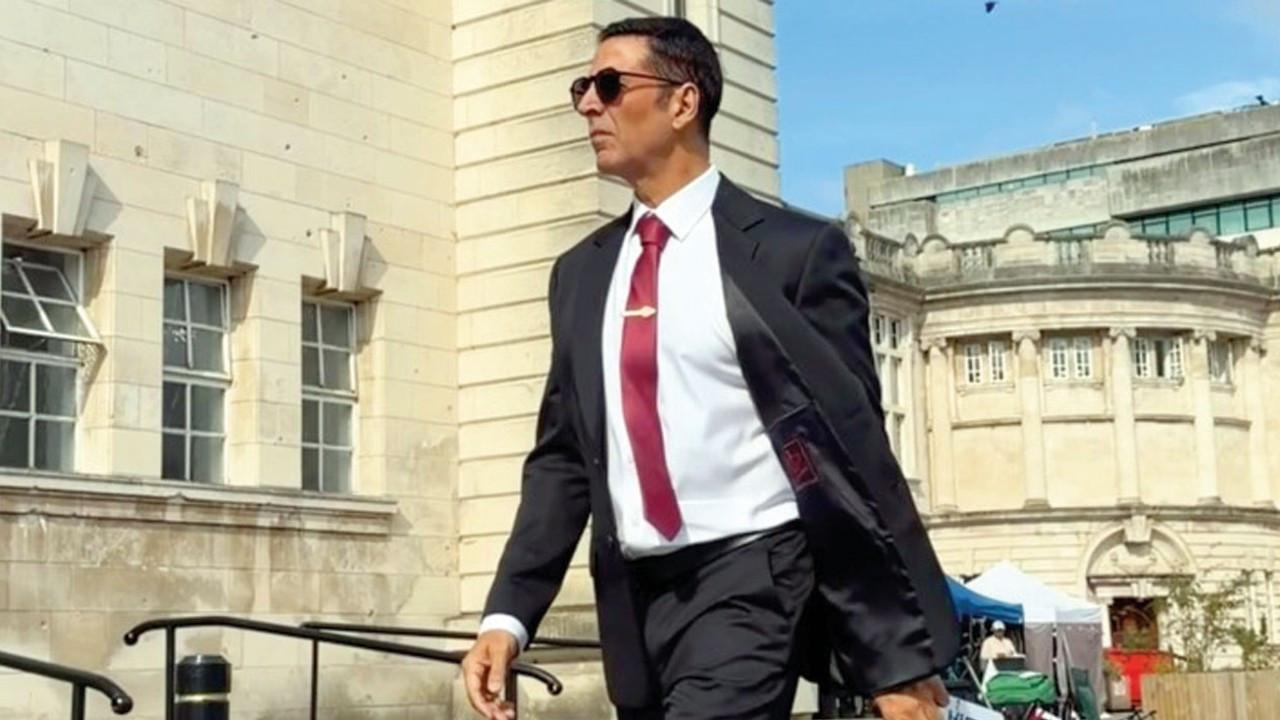
Samuk makers take extra security measures to avoid leaks from sets
10:14 AM
Mohar Basu (MID-DAY; October 27, 2026)
Early on during the UK leg, an image from the shoot of Samuk made its way online, giving a glimpse into the world of the Akshay Kumar-starrer. Now, as the sci-fi survival thriller’s final leg rolled in Powai on October 26, director Kanishk Varma and producer Vipul A Shah stepped up security measures to ensure that images from the set aren’t leaked online.
The makers want to keep the visual elements under wraps as Samuk has a distinct sci-fi premise and much effort has gone into building its world. Sources told us that mobile phones and photography have been barred on the set. Entry to the venue is also limited to essential cast and crew, with security personnel monitoring access.
A source said, “Samuk is not a conventional action film. There is a novel world that Kanishk wants audiences to discover on screen. The security measures are intended to ensure that no footage or visuals reach the audience before that.”
About two weeks of filming will take place across Mumbai, including at Film City and Jogeshwari. By mid-November, it will be a wrap on the thriller.
Heritage nod for Capitol makeover
9:44 AM

MHCC approves revival plan, including addition of two missing architectural elements to 1879 structure that will soon host a single screen and a retail space
Diwakar Sharma (MUMBAI MIRROR; October 24, 2026)
Plans are afoot to restore and revamp Fort’s historic Capitol Cinema that opened in 1879, but tenanted shop-owners and hawkers who have carried out their trade on the building’s ground floor or around it for decades are complaining of being squeezed out of their spaces for the redevelopment.
The Mumbai Heritage Conservation Committee (MHCC) has given its thumbs-up to the revival plan, which will see the heritage structure house a 210-seat single-screen cinema spread across 264 sq m, apart from a commercial retail space of 316 sq m.
The ball to restore the structure was set in motion after the parent firm of the cinema, Nadir Company Private Limited, was bought over by real estate major K Raheja. Mirror was the first to report on the takeover on January 21. Capitol has been shut since 2007, according to sources.
Single screen plus retail space
“The Capitol Cinema building is a Grade II-B heritage structure. We received an application from K Raheja for the proposed conservation, restoration, additions and adaptive reuse of the theatre, for which we have granted permission. They are planning to use the existing structure for both commercial retail and a single-screen cinema with a proposed seating capacity of 210,” a senior civic official told Mumbai Mirror.
He added that as part of the renovation, the single-screen theatre’s entrance will shift to the rear of the heritage structure, with the auditorium layout being reconfigured from the back. “So, the front portion of Capitol Cinema will be reserved for commercial retail spaces, while the rear section will house the theatre,” he added.
Civic safeguards for heritage structure
The approval, however, comes with a string of strict heritage safeguards, said the civic sources. “Rooftop service structures must be kept as low as possible, while all original features, including window grids, roof patterns and historic flooring, must be retained or restored under expert supervision and in accordance with conservation norms. Box grills on windows and air-conditioning units on the front façade are prohibited,” said the source.
The MHCC’s NOC covers heritage-related aspects only, with ownership, structural stability, FSI, setbacks and parking still requiring clearance from the BMC’s Building Proposal Department under prevailing DCPR rules, reads the civic document.
According to the civic document, the approval is valid for two years and must be revalidated if work has not commenced or a Commencement Certificate (CC) has not been obtained within that period. An MHCC Completion Certificate will also be mandatory once the work is completed.
On the thorny issue of the existing tenants, the civic official said: “I am not sure whether the existing shopline tenants will be retained or asked to vacate, as that decision rests solely with the owner.”
Tenants, hawkers in a fix over rehab
Most of the tenants at Capitol are unaware if they will be retained or asked to vacate. Mirror spoke to many of them and confirmed that since the ownership change, no one has approached them for rent. “Earlier the owner would ask us for the rent and we would pay by cheque, but after the ownership transfer, no one is asking us for rent. We do not know if we will be evicted or asked to stay. But if we are asked to vacate, we will demand space for the space given up,” said a shop owner, who has been operating for the last eight decades.
A newspaper vendor, Ajay Prajapati, alleged that the owner is not directly engaged with the tenants or sub-tenants or vendors, “instead, they are provoking civic officials to throw out vendors and sub-tenants from the premises,” he told Mirror.
“I’ve been running a newspaper stall for the last 50 years and I have all valid BMC permissions. But after the Capitol Cinema structure has been covered in green net, I was thrown out of the premises and they are deployed bouncers. I was not even a tenant, but sold newspapers on the footpath for five decades, but the civic authority evicted me despite having QR code, which validates I am a genuine vendor in the area. Where should I go to seek justice? How will I run my house?” wondered Prajapati.
Deepak Chourasia, a paanwala-turned-juice seller, has also been removed. “I’m living hand-to-mouth and finding it difficult to pay my children’s school fees. In the name renovation, the owner has encroached upon the footpath. The pedestrians are forced to walk on the busy road. But BMC will never crack down on builders. We, the poor vendors, will be reminded of rules and regulations,” Chourasia said.
Abdul Gaffar Shaikh, the owner of World Stamp and Coin House and a sub-tenant of the structure, said that he has been forcefully evicted. “This shop has been run by my family for the past 80 years, but the civic officials evicted me. Now, the green net is blocking my shop. I have written to the authorities to seek their intervention, but everyone is just a spectator,” Shaikh told Mumbai Mirror.
The green net has also covered Blue Moon Watch at the corner of the building. “It’s been hampering my business. I had to fight with them to allow my shop to be visible to customers. This is ridiculous,” said Noor Mohammad, the staff at Blue Moon Watch.
“We are committed to restoring this historic building into a landmark Mumbai will be proud of, with all works carried out as per law and after securing approvals from the relevant authorities. Restoration works will commence shortly, and all necessary measures have been taken to ensure public safety. We remain in dialogue with all stakeholders and are working closely with the authorities throughout the process,” a senior representative from the K Raheja Corp told Mumbai Mirror.
CAPITOL CINEMA: Where history met style
- It opened in 1879 as a theatre for performing arts and was originally known as Gaiety
- During the British Raj, it staged countless plays. It was converted to cinema in 1928, after which the name was changed to Capitol
- The Neo-Classical beauty, with its Kurla Basalt façade and Porbunder limestone carvings, is a Grade II-B heritage structure on the ‘A’ Ward list
- It also stands in the shadow of giants, as the landmark structure sits in the buffer zone of Grade-I icons CSMT and the BMC Head Office
- A senior civic official told Mumbai Mirror that There were two turrets – above the staircase blocks – atop the structure. “The original roof will be restored as per the archival images. So, these two turrets will be constructed after securing due permission from MHCC,” the civil official added
What is a Grade II-B heritage structure?
A heritage structure is classified as such for its architectural, historical, cultural or townscape significance and is subject to regulations aimed at preserving its heritage character.
“Under Mumbai’s heritage classification system, Grade II is divided into Grade II-A and Grade II-B, with the latter allowing certain adaptations and additional construction under specified conditions. Original façades, ornamental features, architectural details and other significant elements must be protected. Essential structural repairs, restoration, internal alterations and adaptive reuse may be permitted, provided they do not compromise the building’s heritage value. However, changes to the exterior, façade or other protected features are subject to scrutiny and may require approval from the competent civic and heritage authorities. Demolition or major redevelopment cannot be undertaken as a matter of course and must comply with applicable heritage regulations,” said a city-based architect, requesting anonymity.
100 years of Johnny Walker, who used a Rs 26-a-month ticket punch to map the soul of cinema
11:07 AM

Today marks 100 years of Johnny Walker: the non-drinking bus conductor who used a Rs 26-a-month ticket punch to map the soul of cinema
Alpana Chowdhury (MUMBAI MIRROR; October 18, 2026)
Playing a petty pickpocket with irresistible aplomb in C.I.D. (1955), the iconic Johnny Walker took audiences through a city of striking contrasts singing “Ae dil hai mushkil jeena yahan… Yeh hai Bombay meri jaan.” On the one hand, Bombay boasted stately Art Deco buildings, palm-tree-lined sea fronts, broad avenues, rumbling trams, horse-drawn Victorias, Plymouths, textile mills, and a unique work culture. On the other, it could be a cold, unforgiving landscape. Having experienced its harsh underbelly while struggling for a living, the comedian sang the track with such infectious chutzpah that it became the defining anthem of the metropolis.
Born as Badruddin Kazi on 11 November 1926 in Indore, the late actor would have celebrated his centenary this year. Delightfully, despite being a lifelong teetotaller who never touched a drop of alcohol, Kazi was rechristened after the famous Scotch whisky brand by filmmaker Guru Dutt, who was thoroughly mesmerised by Kazi’s uncanny impression of a stumbling drunkard.
A ticket to stardom
Long before Baazi (1951) changed his fortunes, the comedian endured a crushing early life. After his father lost his job at an Indore cotton mill, his large family relocated first to Deolali and then to Bombay. Starting out selling ice candy in Deolali at the tender age of fourteen, Kazi later sold fruits and vegetables on the streets of Bombay to support his household. Eventually, he secured a job as a conductor on the BEST bus routes, earning a modest monthly wage of Rs 26.26.
The job had one silver lining: free transit across the length and breadth of Bombay, which allowed him to drop by movie studios. The cheeky conductor transformed the aisle of the bus into his personal stage. He would shout out stops in bizarre, exaggerated voices—bellowing “Mahim-wala passenger, get ready, ladies first!”—and pull off uncanny mimicry to keep weary commuters laughing.
When his family relocated to Hyderabad in 1947, the uncomplaining youngster stayed behind to chase his cinematic dreams, entering the industry as a junior artiste—a polite euphemism for an extra in the crowd. “If I was lucky, I got a few lines of dialogue, for which I would be paid Rs 10,” he recalled during an interview at his spacious bungalow in the 1990s, long after retiring from the screen.
The turning point
While working as a crowd extra for Rs. 5 a day, Kazi often entertained stars on set during breaks with his impressions. While shooting Hulchul, actor-scriptwriter Balraj Sahni watched him perform and saw a genuine talent being treated like a jester. Sahni pulled him aside, told him to respect his craft, and arranged an audition with Guru Dutt, who was then drafting Baazi. The audition led to the birth of a screen legend. Kazi had staggered into Dutt’s office, pretending to be sloshed, picking a quarrel and causing such a scene that Dutt nearly had security toss him onto the street—until Sahni revealed it was all an act. Impressed by the the performance, Dutt cast him on the spot and gave him the catchy moniker after the release of Baazi.
The film marked the start of a legendary partnership. The two men were polar opposites—Dutt the erudite intellectual, and Kazi the unpretentious, cheery realist who had studied only until the sixth standard—yet they forged a deep personal bond. They played badminton after wrap-ups, ate phuchkas (pani puris) at street stalls, and went on hunting trips to Madhya Pradesh.
Dutt valued his friend so highly that he conceived specific roles for him, gave him top billing directly under the leads, and even asked lyricists to write entertaining, profound songs especially for him. Following Aar Paar (1954), Dutt gifted his favourite screen prankster a brand-new convertible Ford. Until then, Kazi had happily ridden public transport, thrilled whenever commuters recognized him.
Romance and realism
It was on the sets of Aar Paar that the actor fell for his co-star, Noorjahan (Noor), sister of actress Shakila. Though her character on screen rebuffed him coquettishly with Na na na tauba, real-life romance blossomed between the stanzas.
In stark contrast to the rogue he played on screen, Johnny Walker was a devoted family man who loved quiet fishing trips to Powai Lake with his wife. “Being married to her has made me one of the happiest men on earth!” he effused.
Playing the man on the street came naturally to him as he had been one himself. The unforgettable tel-maalish champiwala in Pyaasa (1957) was modelled on street masseurs Dutt and Walker had observed in Calcutta, who chattered incessantly while massaging clients. “My years of struggle made me aware of human foibles and frailties. That’s why I could play these characters in an identifiable manner,” he reflected.
Stepping off the wheel
Walker lent his comic genius to masterpieces by directors like Chetan Anand (Taxi Driver), Raj Khosla (C.I.D.), B R Chopra (Naya Daur), Bimal Roy (Madhumati), and H S Rawail (Mere Mehboob). Yet in 1968, at the pinnacle of his stardom, he voluntarily cut back his workload. “I was doing double shifts then, but I felt money was of no use if I didn’t have time to eat or sleep when I should,” he reasoned.
In 1985, he stepped away from cinema altogether, coming out of retirement only once for Kamal Haasan’s Chachi 420 in 1997. Content with his quiet life, his car, his home, and providing his children the education he missed, he famously remarked: “Crorepatis don’t have my peace of mind.”
For his 100th birthday, here’s a toast to the non-drinker who gave this melting pot of a city its beating heart: Main Bambai ka babu, Naam mera Anjana, English dhun mein gaaun, Hindustani gaana…
Ramayana makers plan a special screening at Rashtrapati Bhavan
10:06 AM

Mohar Basu (MID-DAY; October 14, 2026)
November 5 is when filmmaker Nitesh Tiwari’s ambitious epic, ‘Ramayana: Part 1’, will reach the audience. Interestingly, the Ranbir Kapoor, Sai Pallavi, and Yash-starrer will also reach the corridors of power that day. mid-day has learnt that the film will be screened for political leaders at Rashtrapati Bhavan in Delhi. The makers are said to be currently seeking the required permissions for the event.
A source revealed, “The Rashtrapati Bhavan screening is being planned for the same day as the film’s worldwide release, adding a high-profile engagement to the launch of Indian cinema’s most ambitious project. The event is yet to be officially confirmed, with the team understood to be pursuing the necessary permissions.” Kapoor, Pallavi, and Yash are expected to attend the screening along with Tiwari.
The makers are also working on two premieres, one in Mumbai that will be held at the Nita Mukesh Ambani Cultural Centre, and another in Delhi for dignitaries.
mid-day reached out to the film’s production team, which didn’t respond till press time.
Shah Rukh Khan starts filming final schedule of King in Mumbai ahead of December release
4:51 PM

Shah Rukh Khan has kicked off the final schedule of his upcoming action thriller King in Mumbai with action sequences and an additional song with Suhana Khan lined up
Mohar Basu (MID-DAY; October 13, 2026)
With only two months to go for King’s release, has the Shah Rukh Khan-starrer reached the finish line? It’s nearly there. Filmmaker Siddharth Anand kicked off the action extravaganza’s final schedule on October 11 in Goregaon, Mumbai. In the line-up are some action set-pieces and an additional song featuring Suhana Khan.
A source close to the production revealed, “The cast and crew resumed shooting on Sunday. From October 12, they began filming an action sequence with Shah Rukh at a studio in Andheri East. The idea is to wrap up all the action portions by mid-October after which Siddharth will turn his attention to the song that has been recently added.”
We’re told it’s a dance number that will showcase Suhana’s skills. The source added, “Choreographers Piyush Bhagat and Shazia Samji are working on the track. It will be shot at a massive set in Film City. Simultaneously, the team is wrapping up the movie’s visual effects ahead of its December 24 release.”
King also stars Deepika Padukone, Rani Mukerji, Abhishek Bachchan, and Jaideep Ahlawat.
The sessions with Nana Patekar would be educative for me, the energy invigorating-Ananth Narayan Mahadevan
9:57 AM

Onkar Kulkarni (THE TIMES OF INDIA; October 11, 2026)
It is still difficult for filmmaker Ananth Narayan Mahadevan to believe that Nana Patekar is no more. The two shared a long-standing creative association, having first worked together on Hum Dono, and then reuniting for The Confession Of Mary — a film that would become among Patekar’s last few projects.
The film had recently had a market screening at the Toronto International Film Festival and is now nearing completion of post-production. Patekar was also expected to complete the remaining dubbing work for the film before his untimely death.
“I was in the middle of my yoga when the news hit me. It was numbing and I am still processing the truth,” Mahadevan says.
“I had spoken to him a few days back, prompting him to go to the Toronto Film Festival for a screening of our film, but he revealed how long haul flights made him claustrophobic. He admitted that he had once returned from the airport, blowing up 7 lakhs on a ticket to Melbourne because the flight was too long.”
Mahadevan says the two remained in regular touch, even after Patekar moved to Pune. “We spoke at regular intervals. He had ideas to make another film with me and we ended up having exploratory conversations. Since he had shifted to Pune he would visit Mumbai only for work. The exchange deal would be filter coffee packets from my side and mangoes on his part. But the sessions would be educative for me and the energy invigorating.”
He adds, “The Confession Of Mary was close to his heart. In our first meeting for the film he was clear that he wanted a character he hadn’t played before. The character of the Kerala priest who was accused in a scandal touched him so much that he delved into it with childlike enthusiasm.”
Patekar, Mahadevan recalls, also gave him a compliment that has stayed with him. He told me, “I normally comb through scripts to modify the rough patches but The Confession Of Mary was near perfect and I jumped straight into the shoot.”
Now, with Patekar’s death, the film has taken on a meaning that neither the actor nor the filmmaker could have anticipated while making it.
Kalyani Priyadarshan shifts to Mumbai for Pralay's prep and shoot
10:08 AM

Upala KBR (MID-DAY; September 30, 2026)
Chennai and Kochi have always been home for Kalyani Priyadarshan. But Mumbai has been the actor’s address throughout this year. That’s thanks to Pralay, director Jai Mehta’s zombie thriller in which she stars opposite Ranveer Singh. Sources have told mid-day that Kalyani, daughter of filmmaker Priyadarshan, has rented a swanky apartment in Juhu from late 2025.
A source revealed, “Kalyani will be living in Mumbai till Pralay is complete. The producers set up a spacious apartment for her in Juhu so that she can focus on the film.”
The move makes sense considering the thriller demands intense prep. Kalyani began training in action in May, before the project rolled in July.
The source added, “Kalyani and Ranveer did multiple readings, workshops, and rehearsals together. After completing the first schedule, Ranveer went on his paternity leave. The unit will resume shooting in October, working till December. Through these months, Kalyani has been training in action and following a special diet as she needs to sport a lithe frame.”
Having a pad also helps the actor, who is foraying into Hindi films with Pralay, find her footing in Bollywood. The source added, “She has been meeting top directors in Mumbai as she wants to do both Hindi and South movies.”
Jinnah wanted to be in Bombay even as he governed Pakistan-Nikkhil Advani
9:00 AM

As a boy in 1980s Bombay, Nikkhil Advani tuned out his grandmother’s stories of Partition. Forty years later, he has made it his business to tell them
Anindita Paul (MUMBAI MIRROR; September 20, 2026)
In the late summer of 1947, as the British empire unspooled into the blood and panic of Partition, Nikkhil Advani’s ancestors left Sindh on a commercial flight. They were not among the millions crammed onto wooden train roofs or marching through the dust of the Punjab; his father, Suresh, was an infant, born in 1946 into an affluent, well-connected Sindhi family in Karachi and Hyderabad. When his great-grandfather sensed the geopolitical tides turning, he booked tickets, gathered the family, and flew to Bombay. They landed unmaimed, stepped off the tarmac, and walked straight into the cold, levelling reality of displacement.
On the journey, Advani’s grandfather carried a heavy money belt strapped around his waist. But the cash was not his. He worked for Habib Bank, which was shifting its headquarters to Karachi at Muhammad Ali Jinnah’s behest, and had been entrusted to deliver the funds to its Bombay branch. He handed over every rupee. For Advani’s grandmother, Lila, the story was a testament to her husband’s unyielding integrity—though during the lean years that followed, she would occasionally wonder aloud how different their lives might have been had he simply kept it.
The family’s fortune was gone. In the single-room flat on Raghavji Road that they lived in, Advani’s grandmother nursed no soft, weeping nostalgia for lost estates; she wanted her sons to work towards careers in engineering, and demanded flawless academic credentials.
“I don’t want to belittle those who suffered the horrors of migration by pretending their pain is mine,” Advani says. “My family was fortunate. But the atmosphere in that one-room flat was defined by a single imperative: every generation must outperform the last.”
A generation, removed
Growing up in the comfortable, cosmopolitan Bombay of the 1980s—his father by then a corporate executive in a pharmaceutical firm—young Advani initially tuned out his grandmother’s constant monologues about Partition. “To a kid in a safe, prosperous city, it felt like an endless lecture,” he admits. “My reaction was, ‘Who cares? I’m not struggling.’ It took 30 years to realize those weren’t history lessons; they were meant to remind us of how we had built – rebuilt – everything from scratch.”
When Advani announced his intention to forgo a conventional career for the unstable world of Hindi cinema, his grandmother viewed it as sheer madness. How could making movies constitute a proper profession? What she may not have realized just then was Partition wasn’t this family’s only inheritance. A deep love for cinema may have been handed down genetically, too. Advani’s grandfather, the one who had guarded the bank’s cash through that trip from Karachi, had a Friday ritual: he would leave his jacket draped over his office chair so that his manager would assume he’s around, while he slipped out to catch a matinee.
Besides, Advani’s true artistic education unfolded outside formal classrooms. After studying at St Xavier’s College and taking a film appreciation course at FTII, he served an apprenticeship alongside the fiercely political, iconoclastic directors of 1990s Bombay—Saeed Mirza, Kundan Shah, and Sudhir Mishra. These were sets where filmmaking was treated as social inquiry rather than commercial gloss. Nights were spent in messy apartments listening to Hindustani classical records and late-night ghazals; Mishra once dragged him to a gathering at Shekhar Kapur’s house where Nusrat Fateh Ali Khan sang until daybreak. Advani absorbed the music, the politics, and the intellectual friction without quite knowing where to put them.
“When you’re young, you’re like a sponge,” he says. “You don’t always have the context for what you’re taking in, but it stays somewhere inside you. Then, years later, something happens and you realize, ‘Oh, I heard this before. I saw this before. I was around this before.’”
Flying Blind in 1947
That delayed understanding eventually collided with his work as a director. When Advani turned his camera to history, he eschewed monumental hagiography in favour of panicky, unscripted friction. In Freedom At Midnight, his epic streaming chronicle adapted from Larry Collins and Dominique Lapierre’s book, Independence arrives through argument, and administrative absurdity—where bureaucrats haggle over splitting railways, treasuries, and even the instruments of a police band in Lahore.
At the centre of the storm, the architects of Indian independence—Gandhi, Nehru, Patel, Jinnah, Mountbatten—are stripped of their textbook composure. They sweat in humid rooms. They operate in a lacuna of intelligence.
“Today, we have the privilege of hindsight,” Advani, now 55, observes. “Eighty years later, it is easy to debate what a statesman ought to have done. But in 1947, they were flying blind—there was no precedent, no telemetry, no script. I wanted the audience to be there with them, without knowing what was going to happen.”
That idea also drove The Revolutionaries, adapted from Sanjeev Sanyal’s book. The series turns its lens toward armed anti-colonialists like Rash Behari Bose, Bagha Jatin, and Sachindra Nath Sanyal, whose militant struggles were largely swallowed by official Congress narratives. Yet rather than reducing them to violent zealots, Advani recovers their intellectual world—their debates over Irish resistance, poetry, and philosophy, alongside the quiet, personal sacrifices of women like Pratibha Lahiri.
“I knew after Freedom At Midnight that critics would point at the stories I have left out,” Advani says. “In modern India, if you leave a vacuum in historical storytelling, someone may fill it with cheap propaganda. My job isn’t to hand out moral verdicts, though of course I pull the frame toward the people I admire. My job is to resurrect the volatility of the moment before the history books froze it in place.”
Ruptures of Empire
That insistence on context over caricature met its stiffest test in his portrayal of Muhammad Ali Jinnah. Freedom At Midnight drew both sharp praise and fierce pushback for humanising the founder of Pakistan.
“Before Jinnah was the Quaid-e-Azam, he was just a Bombay guy,” Advani says. “And he wanted to be in Bombay even as he governed Pakistan. I found that incredibly interesting.”
He has watched that fluid relationship with the past extend to his own filmography. Younger audiences now dissect his earlier mainstream hits like Kal Ho Naa Ho or Chandni Chowk To China through entirely modern lenses—sometimes with nostalgia, sometimes with utter bewilderment.
“The people asking me for a Chandni Chowk sequel today were four years old when it was released,” he laughs. “They didn’t care about narrative structure; they just saw Akshay Kumar [who plays a chef in the film] fighting a giant potato and somehow it worked for them.”
Films wait intact for the next generation; family memory does not. With that in mind, on his father Suresh’s 80th birthday this year, after the release of the second season of Freedom At Midnight, the family invited Gitanjali Chandrasekharan’s Talered, a platform that specializes in customised oral histories, to help them document their vanishing memories of Sindh. The result, a custom-made coffee-table book with a record of survival, food, family jokes, and small evasions, was then gifted to family members.
People say that you are flattering Narendra Modi, doing chamchagiri. I don’t care-
9:54 AM

Nishad Neelambaran (HINDUSTAN TIMES; September 18, 2026)
Veteran actor Anant Nag has been announced as the recipient of the prestigious Dadasaheb Phalke Award. Nag said he was “surprised” to learn that the Hon’ble Prime Minister Narendra Modi had tweeted about it and announced it on social media. “I was pleasantly surprised, to say the least. When people said that the Prime Minister had tweeted it; I was doubly happy.”
Anant Nag, who is best known for his films such as Ankur (1974), Accident (1985), Beladingala Baale (1995) and Minchina Ota (1980), to name a few, mentioned that none of this would have been possible without the love and acceptance he has received from the people of Karnataka.
“It is the soil and cultural atmosphere of Karnataka that made me feel very much at home, and I felt that this is the ground to achieve whatever I have to... This is my karmabhoomi. This was all about 50 years ago. That is why I dedicate last year’s Padma Bhushan and this Dadasaheb Phalke Award to Karnataka and Kannadigas. I was in Mumbai, too, for 18 years, where I began my theatre career at Karnataka Kala Kendra,” he mentioned.
With more than five decades of experience, the veteran said that his art and craft were always appreciated. “I was called to work in all the neighbouring states. Kerala, Tamil Nadu, Andhra Pradesh and Maharashtra, I have worked in all their languages, but I went there as an ambassador of Karnataka,” he shared. Having mentioned that he is honoured to see these recognitions come his way, the 78-year-old actor said that he has never really been the one to work for an award.
“One never really works for an award. Yes, we want to do well in our careers, but none of us works for an award, as it is made out to be. And of course, there is lobbying and other kinds of activities to get an award, but that is different, and that is not from an actor’s point of view,” he explained.
Anant in his previous statements to the media, also mentioned that Hon’ble PM Narendra Modi was responsible for getting rid of nepotism and favouritism.
Commenting further, he added, “Yes, that is true. There are so many fields of activity almost everywhere favouritism and nepotism stopped after 2014, when he took over... From A to Z, in every field, he has ensured that people [get recognized]. He said suggest names from your own surroundings who deserve the recognition. He has done a great job in that respect also.”
Anant also went on to admit that a certain section of the internet is criticizing him for supporting PM Narendra Modi: “People say that you are flattering him, doing chamchagiri. I don’t care. The more they abuse, the more it shows their calibre, that’s all. They are not able to do anything except this,” said the actor.
More than 30 years ago, in 1995, Kannada legend Dr Rajkumar received the Dadasaheb Phalke Award. Anant Nag is only the second Kannada actor to receive the honour. Ask him why the long gap, and he said, “As far as I understand, the Dadasaheb Phalke Award comes at the fag-end of one’s career. Nobody gets it in their 20s, 30s or even in the 60s. It comes much later. The point is that they have recognised many people in our country.”
Congratulating actor Anant Nag on this prestigious award, Chaluve Gowda, co-founder, Hombale Films, said, “Anant Nag sir receiving the Dadasaheb Phalke Award is a proud moment for Kannada cinema. For generations, his work has shown us that great acting is not about being larger than life, but about bringing truth, depth and authenticity to every character. His five-decade-plus journey is a remarkable part of the history of Indian cinema.”
Some other actor was playing Ram Nandan Bhosle; he didn't turn up and I entered-Chandan K Anand
10:23 AM

S Farah Rizvi (HINDUSTAN TIMES; September 8, 2026)
Actor Chandan K Anand reflected on the unexpected success of the film Hanuman Ansh, noting how it surpassed even the team’s wildest aspirations, “We were convinced that it would be liked, but we were unaware that it would become so big; nobody in the team, including the makers, was expecting this turnaround, that too after it ran for two weeks of release. Kaun soch sakta hain yeh? I feel abhi shuru hua hain; it will go far because the festive season is around the corner.”
Addressing the initial struggle of securing screen space against major releases, Anand noted the reality of the industry: “It’s no secret, we all know small films get less shows, less screens. It’s difficult to find a place, but this film found its way and proved that conviction in your story, characters can do wonders, magic,” he adds.
The actor, who appears as the narrator, also shared the serendipitous story of how he landed his role: “It was a small role I was initially offered. I arrived from Mumbai, but within a day of joining, it turned out that I got to be a full-fledged character of Ram Nandan Bhosle. I had no idea who was playing [it] earlier, but that actor didn’t turn up and I entered the shoot—no idea how we managed my dates and availability. It’s one of those roles that stays throughout the film and sets the narrative, and I am happy my work is reaching that far. That was my karma; Baba wanted this from me after giving acting years of hard work.”
Filming the story of Neem Karoli Baba required a unique atmosphere, with strict adherence to discipline and spirituality on set. “Yes, it was a completely sathvik atmosphere, prohibiting abusive language, arguments, and fights, as well as keeping non-vegetarian food and any type of alcohol completely off the sets, was strictly enforced by the team for everyone. And that’s what it was, and we all didn’t even feel that it was so sab apna kaam kar rahe thhe; we were moving with the flow,” concludes Anand, who has since resumed shooting for his next project.
Sunny Deol, Mithun Chakraborty, Sanjay Dutt, Jackie Shroff shoot music video for Baap
8:41 AM

Upala KBR (MID-DAY; September 3, 2026)
Put Mithun Chakraborty, Sunny Deol, Sanjay Dutt, and Jackie Shroff in one frame, and you can expect an action extravaganza. That’s exactly what Baap promises. Now, producer Ahmed Khan has also woven in an element of dance in it.
While the movie’s principal shoot was wrapped up in April 2025, mid-day has learnt that Khan and director Vivek Chauhan recently filmed a music video with the four leading men and Johny Lever.
Think of it as a stylised promotional track that will highlight the heroes’ action set-pieces from the movie.
A source from the creative team revealed, “A peppy dance number featuring the four actors, and another track celebrating their camaraderie were to be shot last year. However, only the latter was filmed in the jungles of Mizoram and in Film City, Mumbai. The dance track was finally shot in June. A set depicting a mill was created at Madh Island for the purpose.”
Considering Baap is high on stunts designed by action directors Parvez Shaikh and Ravi Varma, Zee Studios as well as Khan felt portions of it should be incorporated in the single. The source added, “It’s intercut with different action set-pieces. For instance, one sequence has Sunny and Sanjay fighting on top of a Boeing plane; it may make the cut.”
For Khan, it was wonderful to see the four stars shake a leg together. “It was great fun to have the true action heroes dancing and doing dialoguebaazi,” he told mid-day, while the director added, “Seeing these macho icons together in one frame is a cinematic feast!”
Subscribe to:
Posts (Atom)