Showing posts with label Mani Ratnam. Show all posts
Showing posts with label Mani Ratnam. Show all posts
Without backing, opportunities are often missed or delayed-Arjan Bajwa
11:01 AM

Neha Maheshwri (MUMBAI MIRROR; May 5, 2026)
After nearly 18 years, Arjan Bajwa has reunited with filmmaker Madhur Bhandarkar for The Wives, which marks their first collaboration since Fashion (2008), a turning point in his career.
He says, “My association with Madhur sir has been beyond films. He treats me like a younger brother. We socialize, party and travel together. After Fashion, our professional relationship turned into a longstanding friendship. Being part of a successful film opposite Priyanka Chopra, with a National Award-winning director like him, was a defining experience. And here we are, collaborating again after many years because he believes in my talent, sincerity and ability to carry out his vision. I also have complete faith in his commitment to his craft as a filmmaker.”
Another filmmaker he holds in equally high regard is Mani Ratnam, with whom he worked in Guru early in his career, an experience that shaped his understanding of cinema.
Arjan shares, “I consider myself fortunate to have worked with Mani Ratnam sir on one of his most ambitious projects, Guru. At that stage, I had limited understanding of cinema beyond my role. These are things you learn over time, especially if you don’t come from a film background. I did not have that environment, so whatever I learnt came through the films I worked on. Having said that, it is always work in progress for any actor at any stage of their career. While Madhur sir keeps a very light-hearted approach on set, everyone used to be on their toes with Mani sir.”
Speaking about the challenges of navigating the industry without backing, he admits that the lack of guidance has had a direct impact on his journey. He says, “When you are an outsider without any support system, PR machinery or a mentor, opportunities are often missed or delayed. It affects your trajectory as an actor and can sometimes lead to signing the wrong films as well. I have been through all of that because there was no one to guide me about the workings of the film business.”
He adds, “While my filmography includes several landmark films and collaborations with big directors, there have been instances when I did not feel accomplished or content. It matters who is backing you and giving you multiple films even when things are not going your way. In spite of all the odds, I know I am here for the long run, having completed 29 films in different languages and made my international debut with the India-Taiwan collaboration Demon Hunters. I can only depend on my craft, sincerity, professionalism, and capability as an actor and hope for the best results. The rest is a matter of time.”
Ahan Shetty's next gets delayed by 5 months; makers replace director Shaad Ali
10:46 AM

After Ahan Shetty’s film is delayed by five months due to director Shaad Ali’s prior commitment, makers replace him with Tinu Desai
Mohar Basu (MID-DAY; April 11, 2026)
In February, Ahan Shetty had revealed to mid-day that his next, an action love story directed by Shaad Ali, would go on floors by summer (We should start filming around March-April, Feb 2). But in the latest development, the yet-untitled film has been delayed by nearly five months.
Sources have indicated that Ali’s commitment to mentor Mani Ratnam’s next production caused the delay, eventually leading the makers to seek another director for Shetty’s film.
It turns out that Ali has been deeply involved with Ratnam’s project that is currently on floors. An industry insider revealed, “Since Mani sir’s film is not a short-term engagement, Shaad wanted his directorial feature with Ahan to be pushed. It became clear earlier this year that the two movies’ timelines would clash. So, the producers decided to part ways with Shaad and find another director. Tinu Desai, who last directed Mission Raniganj [2023], was roped in last week.”
Apparently the makers aren’t perturbed by the postponement, utilising the time to fine-tune the script and conduct intensive pre-production. As per the revised timelines, the film is expected to go on floors in August in Uttar Pradesh.
Producers find 8K reasons to restore old movies and rake it in
10:51 AM

Scanning in 8K format is cheaper than restoring and helps in being future-ready, while fetching higher valuations for film libraries
Rajesh N Naidu (THE ECONOMIC TIMES; April 3, 2026)
Filmmakers across Indian language industries are increasingly scanning and restoring their works in 8k, as a new market develops for restored movies long after their release days and box office numbers are forgotten. Helping preserve older content from irreversible damage is opening new monetization opportunities in a more visual-first market.
Prominent Indian directors and actors who have scanned their films in the 8k format include Mani Ratnam, Vidhu Vinod Chopra, Rajinikanth and Kamal Haasan.
“The cost of scanning a film is relatively cheaper than restoring it. Today, scanning old films in 8k is all about becoming future-ready. Film negatives are vulnerable. In future, when makers want their films in higher resolution, they can go back to their scanned 8k version,” explained Kavita Prasad, managing director, Prasad Corporation, one of the oldest film laboratories in India.
According to film processing labs, the average cost of scanning films in the 8k format is in the range of Rs 25–50 lakh. For 4k format scanning, the average cost is in the range of Rs 7–20 lakh.
Scanning films in 8k is a strategic rather than a tactical decision, said industry veterans. “Today, new films, especially big-budget spectacle films, are shot digitally in 8k. Producers can monetize such films across multiple avenues. One of these is large-screen formats such as IMAX,” said Hiren Gada, CEO, Shemaroo Entertainment.
“But scanning existing films in 8k is more of a strategic decision. Negatives are susceptible to natural decay due to climatic and storage conditions. Also, it is difficult to upgrade 4k content to 8k. However, it is easier to convert 8k resolution to 4k, given the high pixel density of 8k content,” he added.
Scanning films in 8k also helps significantly in digitally repairing and restoring images, said editors.
“A film restored in 8k can bring in visual aspects that may be missing in earlier formats. With the help of AI and VFX tools, a technician can repair images in an 8k version of a film to bring them as close to the original visual as possible,” said veteran editor Vaibhav Desai.
Scanned 8k films also fetch higher valuations for film libraries and licensing deals, said producers.
“8k scanning and restoration of films are increasingly becoming value drivers for film libraries. They significantly improve licensing negotiations. We are already seeing demand from streaming platforms for the best available formats. Films with superior archival quality tend to command stronger deals, especially in global syndication and long-tail monetization,” said Suniel Wadhwa, co-founder and director, Karmic Films.
Koushik Bhattacharya, founder, Quality Matters, a company involved in film restoration, echoes Wadhwa, “8k scanning of films is still in its nascent stage in India. But as observed in the West, demand for higher-resolution content is likely to grow rapidly in India as well. This demand is being driven by audiences and streaming platforms. So, there is huge scope for scanning and restoring films in the 8k format.”
If I could do Guru again, I’d do a much better job-Abhishek Bachchan
10:05 AM

Ankita Kanabar (MUMBAI MIRROR; November 24, 2025)
With a career spanning over 25 years, Abhishek Bachchan has several successful films to his credit. Yet, one movie that a lot of his fans and critics swear by is Guru. This Mani Ratnam film helped Abhishek garner love and appreciation in the industry. However, Abhishek says that if given another chance, he would love to work on Guru again, shot by shot, and do a better job.
In a chat, he said, “If given the opportunity to do the film again, I can unequivocally say that I can do a much better job today. Having said that, I don’t compare my movies or treat this as a benchmark to other movies because every film is different. But if Mani Ratnam gave me the opportunity to do Guru scene by scene, shot by shot again today, 100 percent, I’d do a much better job for him.”
On one hand, where Guru is loved for its storyline and performances, it also holds a special place in Abhishek and Aishwarya’s love story. “I proposed to her at the premiere, after the premiere in New York,” said the actor.
He further added, “But all my films are very personal. And I ensure that. There are possibly one or two that might not be as personal. But my rule of thumb is it has to be personal. If it’s not personal, then I’ll probably not do it.”
During the conversation, he spoke about another character and movie he did with Mani Ratnam — Yuva. Speaking about Lallan from Yuva, Abhishek shared, “The first time you are working with the great Mani Ratnam, you don’t say anything. But Mani sir involved me so deeply in Lallan, in the preparation of Lallan, and allowed me to have an opinion on him. He heard me very sweetly; he didn’t need to. I thought Lallan was the sweetest character, you feel for that guy.”
Walking down memory lane, he added, “There was this one scene in Yuva which sadly never made it to the final cut, which I thought was very important, wherein he’s had a huge fight with Rani (Mukerji), his wife, and she’s like, Why can’t you change? He’s lying down on the bed and she is sitting next to him. He is on her lap, and he is howling. Because she has caught him going back to what he was doing, and she’s trying to bring reform to him. So, she asks him, ‘Why can’t you change?’ And there was a line that Anurag (Kashyap) had written, which just summed it up for me. I felt so bad when I read that. Lallan says, ‘I am trying, lekin suvar goo khana chhodta nahi hai (A pig never stops eating shit or being around shit).’ I felt so bad when I read that. He said, I’m trying, but I don’t know anything else.”
I have an issue with it being called Bollywood all the time-Mani Ratnam
9:39 AM
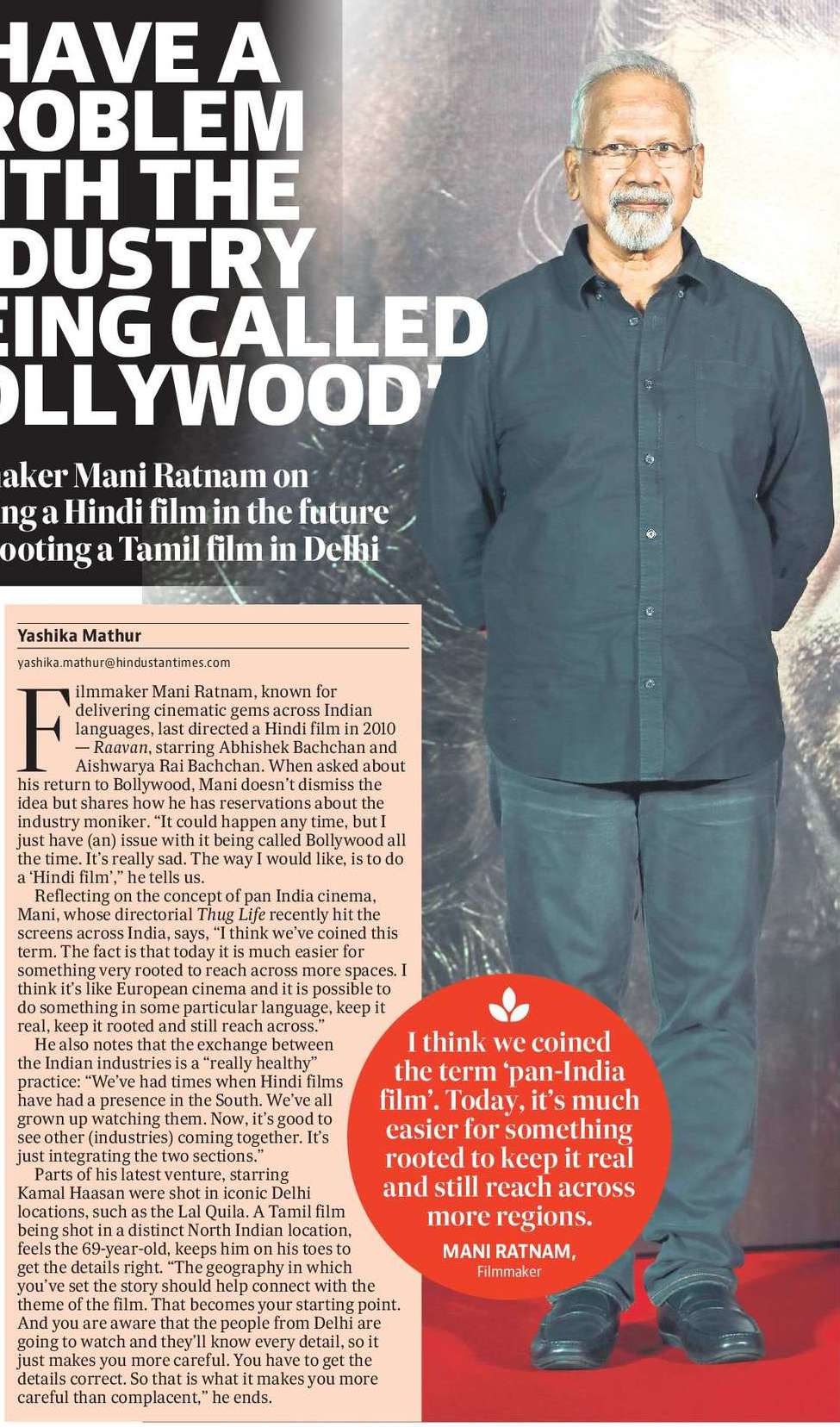
Filmmaker Mani Ratnam on directing a Hindi film in the future and shooting a Tamil film in Delhi
Yashika Mathur (HINDUSTAN TIMES; June 9, 2025)
Filmmaker Mani Ratnam, known for delivering cinematic gems across Indian languages, last directed a Hindi film in 2010 — Raavan, starring Abhishek Bachchan and Aishwarya Rai Bachchan. When asked about his return to Bollywood, Mani doesn’t dismiss the idea but shares how he has reservations about the industry moniker.
“It could happen any time, but I just have (an) issue with it being called Bollywood all the time. It’s really sad. The way I would like, is to do a ‘Hindi film’,” he tells us.
Reflecting on the concept of pan India cinema, Mani, whose directorial Thug Life recently hit the screens across India, says, “I think we’ve coined this term. The fact is that today it is much easier for something very rooted to reach across more spaces. I think it’s like European cinema and it is possible to do something in some particular language, keep it real, keep it rooted and still reach across.”
He also notes that the exchange between the Indian industries is a “really healthy” practice: “We’ve had times when Hindi films have had a presence in the South. We’ve all grown up watching them. Now, it’s good to see other (industries) coming together. It’s just integrating the two sections.”
Parts of his latest venture, starring Kamal Haasan were shot in iconic Delhi locations, such as the Lal Quila. A Tamil film being shot in a distinct North Indian location, feels the 69-year-old, keeps him on his toes to get the details right.
“The geography in which you’ve set the story should help connect with the theme of the film. That becomes your starting point. And you are aware that the people from Delhi are going to watch and they’ll know every detail, so it just makes you more careful. You have to get the details correct. So that is what it makes you more careful than complacent,” he ends.
Mani Ratnam backs Deepika Padukone's 8-hour shift demand
9:54 AM

Filmmaker Mani Ratnam says actor Deepika Padukone’s demand for limited shoot hours is ‘not unreasonable’ but an ‘absolute necessity’ for the industry
HINDUSTAN TIMES (June 4, 2025)
Actor Deepika Padukone’s exit from director Sandeep Reddy Vanga’s Spirit has been in the news for a while, as she reportedly demanded an eight-hour work shift to be able to spend time with her nine-month-old daughter, Dua. Apart from social media trolls, even Sandeep appeared to take a veiled jab at Deepika’s “professionalism” and accused her of playing “dirty PR games”. While actors Ajay Devgn and Saif Ali Khan spoke about the importance of prioritising personal life, now filmmaker Mani Ratnam, too, has commented on the ongoing debate on shift hours.
“I think it is a rightful demand. I’m glad she’s in a position to ask for it. I think, as a filmmaker, you will take that into consideration when you cast. It is not an unreasonable thing to ask, but an absolute necessity. I think that should be the priority. You have to acknowledge that, understand it and work around it,” he told News18.
Earlier, Ajay had said: “It’s not that it’s not going down well with people. Most honest filmmakers will not have a problem with it.”
Similarly, speaking at the Arab Media Summit, Saif said: “I hate coming home and seeing the kids already asleep. That’s not success. Success is being able to say, ‘No, I need to go home now to catch that half hour with them’.”
To be welcomed by Kamal Haasan with such generosity is beyond anything I could’ve imagined-Ali Fazal
10:28 AM
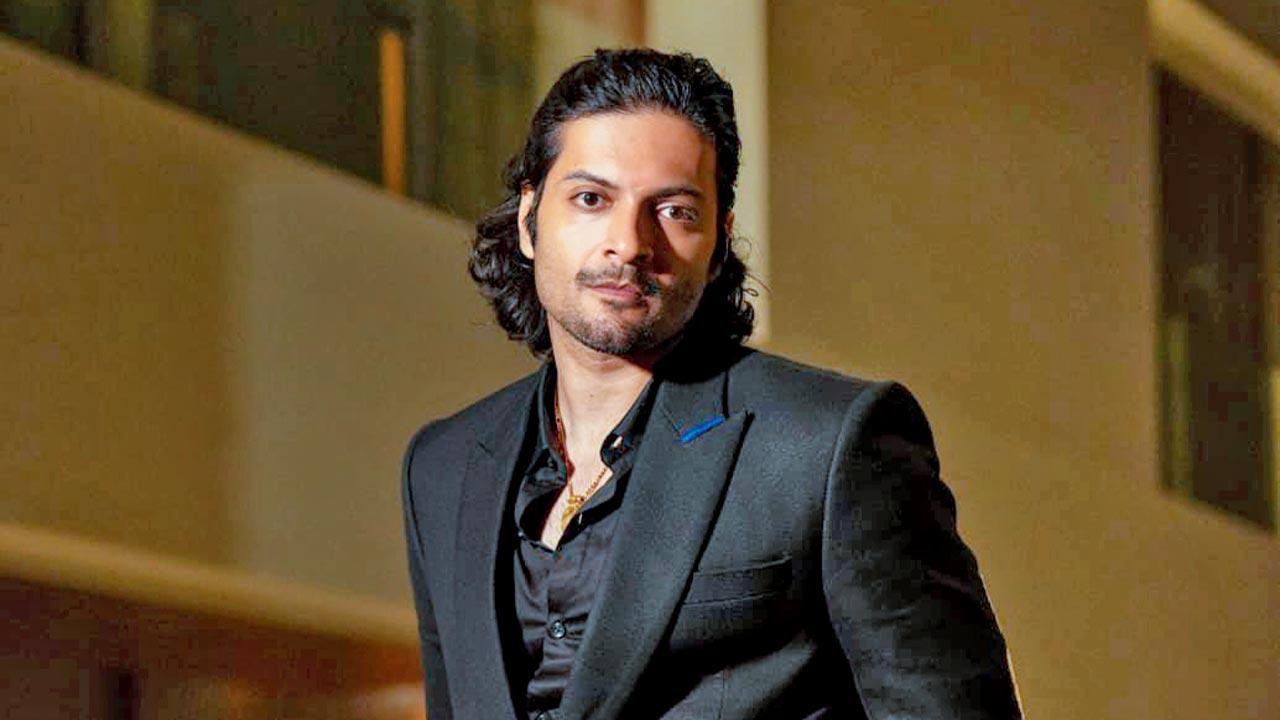
Ali Fazal, who makes his Tamil debut with Thug Life, on how saying yes to Mani Ratnam and Kamal Haasan’s action drama was a no-brainer
Mohar Basu (MID-DAY; June 2, 2025)
Exploring South Indian cinema was an idea Ali Fazal often toyed with. But the actor had never imagined making his Tamil debut in a Mani Ratnam film and having Kamal Haasan as a co-star. At a recent promotional event of Thug Life, the superstar welcomed Fazal to south cinema, revealing that he wanted to work with him ever since he saw his work in Vishal Bhardwaj’s Khufiya (2023). When we sit down with Fazal, the first thing we ask him is how it feels to be praised by Haasan.
“Kamal sir is not just a legend, but a force of art and cinema. Getting to share the screen with him feels like a once-in-a-lifetime moment. To be welcomed by him with such generosity is beyond anything I could’ve imagined,” he smiles.
Featuring in the action drama, which also stars Silambarasan T R, Trisha Krishnan, and Abhirami, was among the easiest decisions he has made.
Fazal says, “There are some calls you get that you instantly know are meant to change the course of your journey. This was one of them. When you hear the name Mani Ratnam, you think of legacy, storytelling that’s timeless and deeply rooted in human emotion. I didn’t have to think before saying yes to Thug Life. A Mani Ratnam film isn’t something you get offered every day, and certainly not alongside someone as iconic as Kamal Haasan.”
Thug Life is being mounted as a pan-India action extravaganza. For Fazal, that was another draw. He reasons, “That the project brings together talent from across the Indian film industries makes it more special. Language, geography, or ethnicity should never be a barrier for an actor.”
During Nayakan, Kamal Haasan was a big star, and I was a beginner. But he trusted me fully-Mani Ratnam
4:04 PM
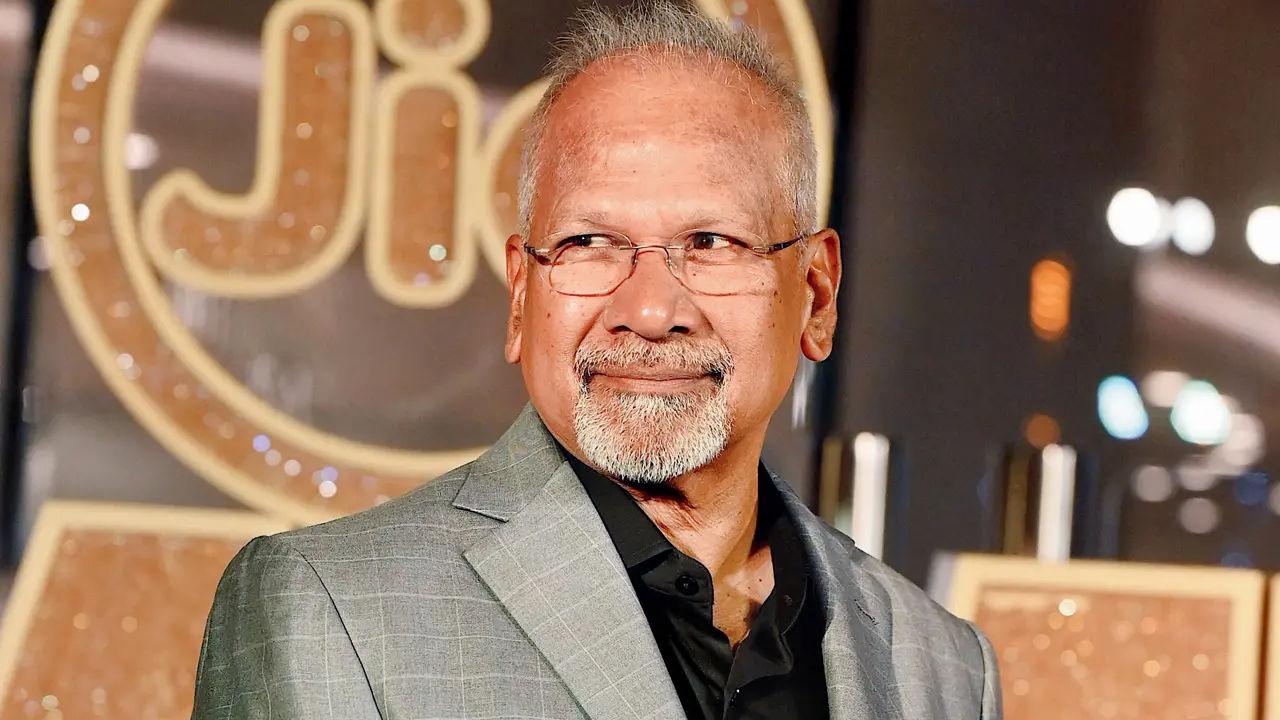
Ready with Thug Life, filmmaker Mani Ratnam on how his experimental instinct and not carrying the baggage of past successes have shaped his rich career
Priyanka Sharma (MID-DAY; May 29, 2025)
Expectedly, Mani Ratnam’s head is always brimming with ideas. And it was, after the release of his last film, Ponniyin Selvan 2 (2023). But the filmmaker points out that his upcoming movie, Thug Life, led by Kamal Haasan, wasn’t one of them.
“This was an idea that Kamal had. We decided to pick this up because something in this idea resonated with me. It had the germ, which I liked,” he smiles.
Thug Life — also starring Silambarasan T R, Trisha Krishnan, and Abhirami — sees Haasan as a gangster, who is forced to turn on his family in the face of betrayal. The June 5 release is pegged as a gangster action drama, but to Ratnam, it is an emotional story that has “a lot of action” in it. Those emotionally charged, interpersonal conflicts are admittedly the “germ” of an idea that struck a chord with him.
“I think action is made for cinema. It has all the elements that highlight the medium fully. I’ve always liked action films, but only when they are an integral part of the film, and not action for action’s sake. This film has action as an integral part of the story. What hooked me were its emotional content, the relationships, and interaction between the characters,” he explains.
Much of the anticipation about Thug Life lies in the fact that it marks the director’s reunion with Haasan 38 years after their maiden collaboration, Nayakan (1987). A lot has naturally changed over the decades.
Has anything remained the same? The trust, Ratnam promptly replies. “When I did Nayakan, Kamal sir had done maybe 100 films. He was a big star, and I, a beginner. But he trusted me fully. He would let us do things exactly the way we wanted. That was encouraging, and it hasn’t changed even today.”
Surely, given Nayakan’s iconic status, the actor-director duo was conscious of the audience’s expectations while making Thug Life. No, says the filmmaker. “You can’t be carrying the baggage all your life. You just try to do the next one. You’re not in competition with your previous work.”
Mani Ratnam agrees that experimenting is risky, especially when the star status of an artiste tempts them to recreate the past glory. But he doesn’t know any way other than experimenting. “It’s a survival instinct, you keep shifting so that you don’t become predictable and repetitive. There is a certain amount of risk [when I do] something new; I don’t know how it is going to be, I have to figure it out. That keeps me excited and fresh.”
This approach has made Ratnam one of the finest Indian directors, with works ranging from a gangster drama in Thalapathi (1991) to a real-life drama in Bombay (1995), from a film about youth politics in Yuva (2004) to a rom-com in O Kadhal Kanmani (2015). Despite the rich four-decade career, the filmmaker confesses to not feeling good enough.
“I am insecure all the time. No artiste would deny that. Insecurity stems from what you think of yourself. I can make a film, and then think I can do better. The standard of cinema around the world is so high. Younger filmmakers are making brilliant movies. So there is always scope for you to push yourself higher, and not settle for where you stand.”
While he keeps mum on what he is planning to do next, we probe about the possibility of him reuniting with his Guru (2007) and Raavan (2010) stars Aishwarya Rai Bachchan and Abhishek Bachchan. The rumours of their potential collaboration did the rounds all of last year.
“I am working on ideas, but I don’t really have something concrete to offer the two of them. If I have something which is right for them, I will call and ask them, ‘Can I meet you?’” But are the ideas he is working on exclusively for them? “They are exclusively for me,” he grins.
Another producer could not have taken the pressure of Thug Life-Kamal Haasan
8:22 AM
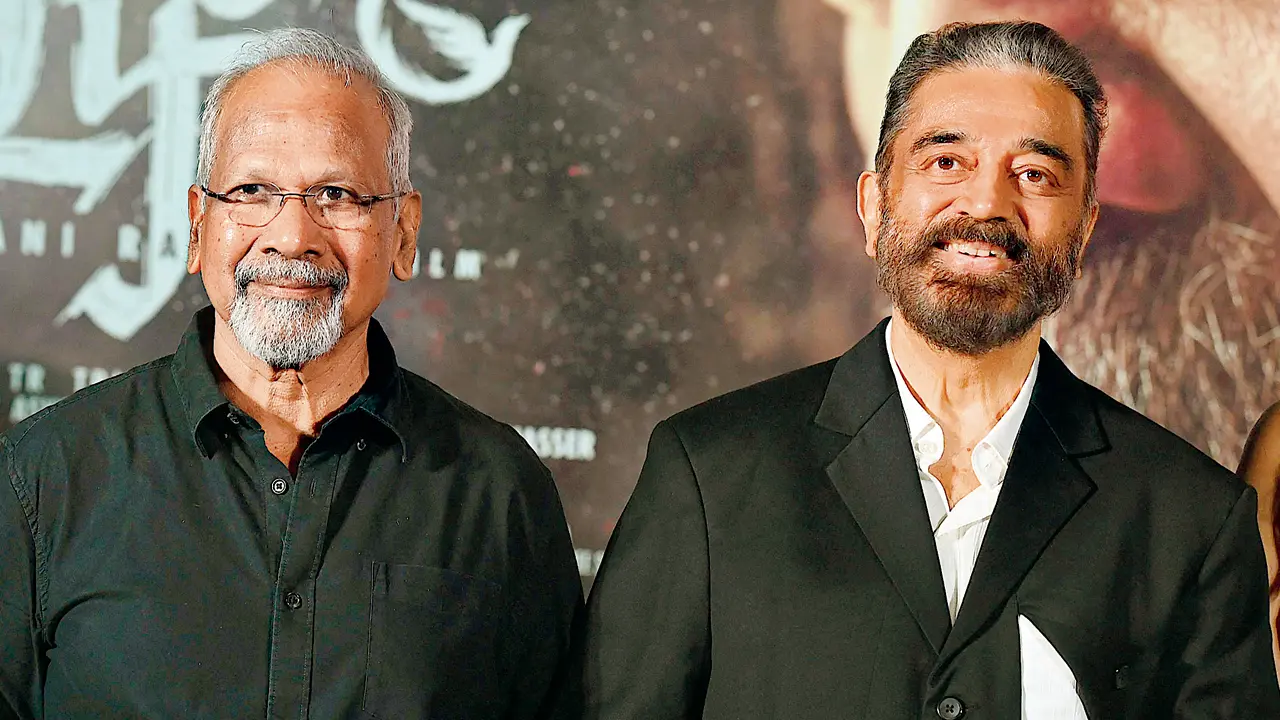
Reuniting with Mani Ratnam after 38 years for Thug Life, Kamal Haasan on how they don’t care for stardom and would rather use their money to realise their cinematic vision
Priyanka Sharma (MID-DAY; May 24, 2025)
What took you more than 30 years to reunite with Mani Ratnam? - This question has made a frequent appearance since Kamal Haasan kicked off the promotions for his next, Thug Life. When we express our curiosity, the superstar smiles before saying, “I’m almost tempted to request all of you not to ask that question because I can only say sorry, it’s our fault. We should have done it earlier.”
In 1987, the two gave Indian cinema the much-loved Nayakan. Thirty-eight years later, as the actor reunites with one of his favourite filmmakers for the gangster action drama, he reveals that an encore was always on their mind.
“Sometimes, we were thinking too big, and at other times, we would think something small and then [shoot it down] believing that these are the days of big films. Sometimes, I’d come up with an idea, and Mani would already be working on something else, and vice versa. But we were gently, subconsciously, and from a distance, inspiring each other,” grins the actor.
That decades-long inspiration has resulted in Thug Life, which also stars Silambarasan T R, Trisha Krishnan, Abhirami, Ali Fazal, and Sanya Malhotra. How was it working together considering they both have come a long way from Nayakan? Haasan is an even bigger star today, and Ratnam, one of the greatest filmmakers in the country. Did the actor try to impress his director this time?
“I can’t impress the director; the character can. He booked Kamal Haasan not because of the stardom. Left to us, I think we are both overpaid. But then if we let that go, they [the industry] won’t respect us. So, we will take our cut.”
This time around, their collaboration has also taken a different turn. Haasan not only leads the June 5 release, but has also co-written and co-produced it with Ratnam. And he firmly believes that nobody else could’ve done justice to the film as far as production is concerned.
The superstar states, “[We are the kind] who will put our money into the film. Suppose all that we have shot is destroyed, we won’t panic. We will go ahead, put our own money, and do it [again]. Another producer could not have taken the pressure of Thug Life. We made some difficult decisions.”
Production and direction were a natural graduation for the actor. It all stems from his endless love for movies and deep respect for the craft. His passion is evident as he says, “I never walk out of a film because that would [mean] insulting my peers. We’ve made stupid films. When I say that, I don’t include Mani’s films in it. But I have, because I needed finance for my own productions.”
That is a career lesson Haasan learnt from late actor and filmmaker Shashi Kapoor. “He would be singing a song on top of an elephant in Shaan [1980], and the same elephant would be beside him in Junoon [1978]. I had asked him, ‘Can I also [juggle mainstream and parallel cinema]?’ He said, ‘Sure. It’s pragmatism. Don’t mistake it for valour.’ Some of the great Italian directors did commercial films, made money out of them, and [used that] to make films that would live on.”
Wise career lessons, unmatched talent, and a progressive worldview have come together to shape Haasan’s enviable filmography that spans over six decades and different branches of filmmaking. Through his films, he has positioned himself as an artiste who often mirrors society’s fractured reality. In Nayakan, he showed the perils of violence. But today, how does he view Indian storytelling’s penchant for violence and the audience’s love for it? He points to a chapter in history to make his case.
“You know, after the Second World War, America kept making musicals; they didn’t want any violence. Now we’ve had enough peace. Now, the time of violence has begun, and that’s reflecting on screen. Earlier, the angry young man was only angry; now he will become violent if his voice is not heard. At least, a soapbox oratory should be allowed in front of the Red Fort. Listening to [the common man’s] voice is what great leaders have always done. After Partition, look at the kind of films we made — Naya Daur [1957] and Waqt [1965]. Even now, cinema is reflecting society, and [the violent films imply] that society has become violent. If you want proof, watch any television channel.”
I knew Mani Ratnam, Kamal Haasan wouldn’t waste me in the film-Trisha Krishnan
8:47 AM
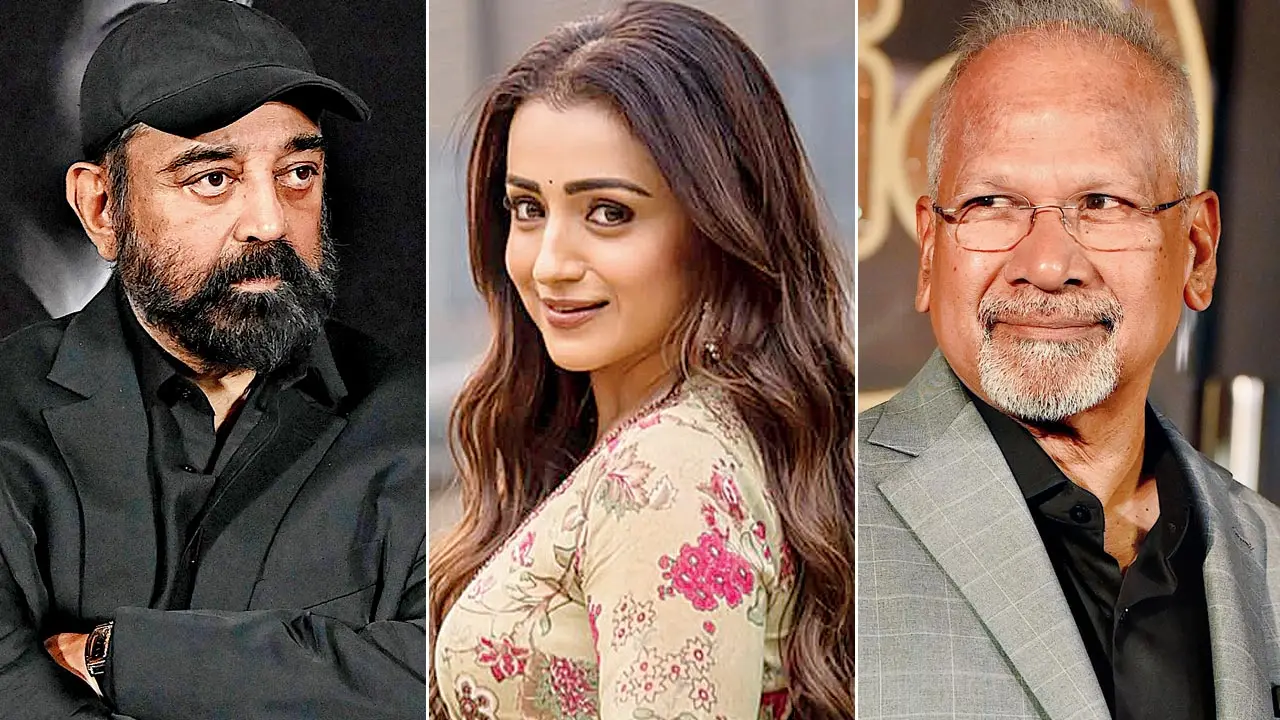
Convinced that Mani Ratnam and Kamal Haasan would utilize her talent to the most — Trisha Krishnan on why she came aboard Thug Life
Priyanka Sharma (MID-DAY; May 19, 2025)
When Mani Ratnam offers you a film headlined by Kamal Haasan, you need to know nothing more to come aboard, shares South star Trisha Krishnan, as we sit down in Chennai to chat about the gangster action drama, Thug Life. “This combination was more than enough for me to be part of it,” she adds. It’s not just their genius as artistes but also her faith in the legends to utilise her well — despite a huge ensemble cast — that made her confident about the film.
“Kamal sir and Mani sir are [greats]. I always knew they wouldn’t ever waste [me] in a film, irrespective of the [character I] play in it. Being in the best of hands, [I was sure] Mani sir would fine-tune me into becoming the character. Kamal sir always makes sure that his co-actors have their space in the film. He is one of the most generous co-actors I have worked with,” she smiles.
Ratnam and Haasan have co-written and co-produced the film, which also stars Silambarasan TR and Abhirami. When asked what a set with the filmmaker feels like, Krishnan quips, “A very early morning!” The actor explains that before the film went on floors, the director-actor duo had meticulously planned everything, with tons of rehearsals to ensure that the shoot progressed smoothly.
“There has never been a day we did not finish what was planned. They had done a lot of homework before coming to the set. It was a structured set, despite the chaos.”
With the veterans
Thug Life, set to release next month, marks Trisha Krishnan’s fourth film with Mani Ratnam after Aaytha Ezhuthu (2004), Yuva (2004), and Ponniyin Selvan (2022–23). And It is her third venture with Kamal Haasan after Manmadan Ambu (2010) and Thoongaa Vanam (2015).
Dia Mirza on Nadaaniyan backlash: "I feel there’s a culture of ‘eat the privilege’, which is harsh"
8:21 AM
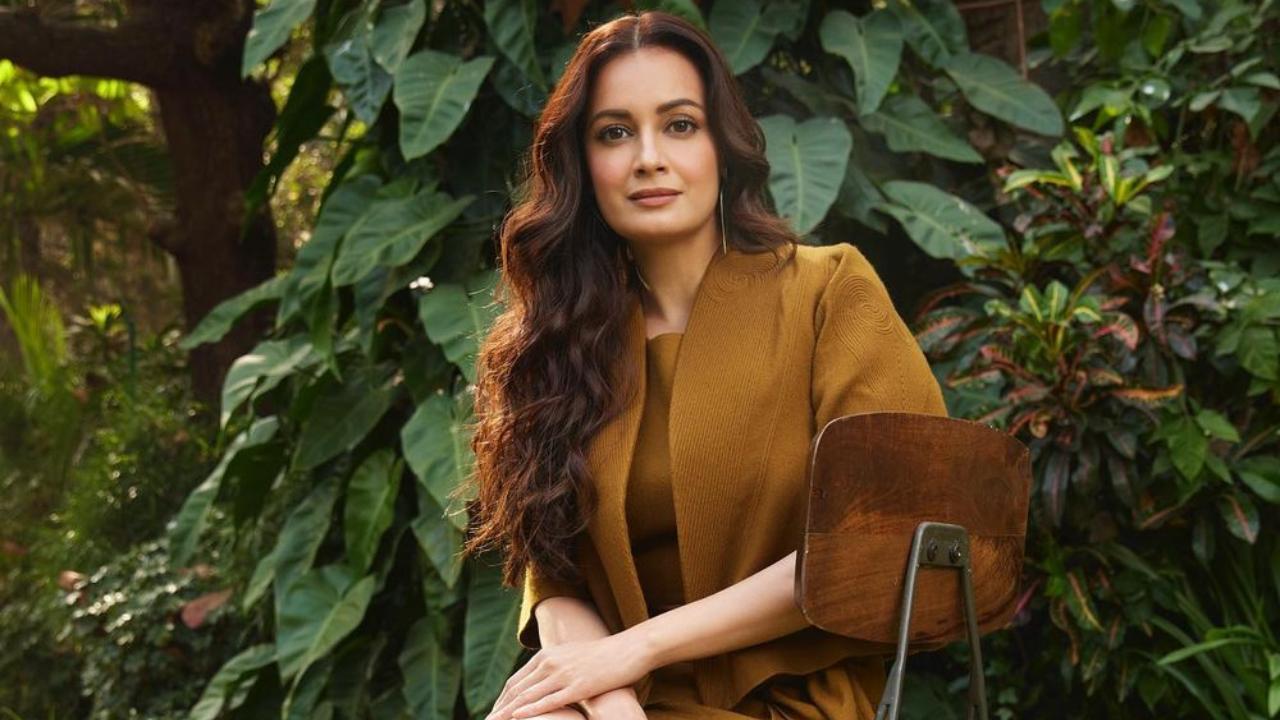
Roopa Radhakrishnan (BOMBAY TIMES; April 3, 2025)
While she started her film journey as a background dancer in the Tamil film En Swasa Kaatre (1999), Dia Mirza hasn’t acted in any Tamil film so far. “I have no idea why I haven’t done a Tamil film yet; I would love to work here,” states the Bollywood actress, who was recently in Chennai. She speaks to us about her wish to be part of Tamil films, making her debut in Rehnaa Hai Terre Dil Mein (RHTDM) alongside Madhavan, the backlash against her recent film, Nadaaniyan, and more…
‘OPINIONS SHOULDN’T BE EXPRESSED AT THE COST OF SOMEBODY’S MENTAL HEALTH’
Addressing the backlash directed at Ibrahim Ali Khan and Khushi Kapoor for Nadaaniyan, Dia, who was also a part of the film, states, “I have never been in favour of personal attacks and find them extremely disrespectful. Everyone is free to have an opinion, but it shouldn’t be expressed at the cost of somebody’s mental health. I’ve been concerned, especially for the younger actors, about the harshness of what’s being said. I feel there’s a culture of ‘eat the privilege’, which is harsh, because people have their own stuff to deal with.”
‘MANI RATNAM SIR CHANGED MY PERCEPTION OF STORYTELLING’
Sharing about her recent interaction with director Mani Ratnam, Dia says, “Mani Ratnam sir is one of my all-time favourite directors. We were recently on a flight together, and I was awestruck by him. I went up to him and said, ‘I don’t want to lose this opportunity to tell you how much I admire you.’ It was interesting to see how awkward he is with praise. His cinema impacted my childhood and influenced my perception of storytelling.”
‘I HAVE A DEEP REGARD AND RESPECT FOR ARVIND SWAMI SIR; SIDDHARTH IS PHENOMENAL’
The actress was part of IC 814: The Kandahar Hijack that featured actor Arvind Swami. Speaking about him, she says, “I didn’t get to share a scene with Arvind (Swami) sir, but I have a deep regard and respect for him. He is a phenomenal artiste. Another artiste I admire from here is Siddharth, who is phenomenal. I watched Chithha, a film he produced and acted in, and what a powerful film it was! The entire cast was so compelling.”
‘NAGARJUNA SIR WAS WARM, KIND AND ACCESSIBLE’
Dia is also all praise for actor Nagarjuna, who acted opposite her in her Telugu debut, Wild Dog. “COVID-19 had just started when we did the film, and we were all terrified. But Nag sir made the experience very easy, which says a lot about him. It can be extremely intimidating when you are working with a superstar, but he was the most accessible co-actor. He was so warm and kind. I also spent a lot of time with Amala ma’am. I’ve always admired her and love the work that she’s done for animal care,” she shares.
‘MY IDEA OF SUCCESS WAS CONNECTED MORE TO BOX OFFICE’
Speaking about how her idea of success has changed over the years, Dia says, “When I started out, my idea of success was connected more to box office and material gains. Over the years, I’ve realized that success is about showing up every moment with preparedness and an understanding of the medium that you are a part of. It’s about being able to offer your best self to the opportunity.”
‘As a teenager, I had the biggest crush on Maddy’
Talking to us about her first film, a remake of the Tamil film Minnale, which starred Madhavan and was directed by Gautham Vasudev Menon, Dia shares, “Working with them was wonderful. I would attribute a big part of the love the film continues to receive to Harris Jayaraj’s music. Zara Zara (Vaseegara in Tamil) evokes an indescribable feeling. I’m still in touch with Maddy, but not with Gautham sir. As a teenager, I used to watch Maddy’s TV shows and had the biggest crush on him.”
The audience can sense it when an actor is lazy and is looking lethargic-Anil Kapoor
9:15 AM

Madhureeta Mukherjee (BOMBAY TIMES; April 1, 2025)
From the start, Anil Kapoor knew he was here for the marathon. So, he pulled up his socks, picked up his gear, did a warm-up and set out for a long race. And here he is, four decades later, still running (speed in check) – full of gusto, greed for great roles and looking glam as ever with his greys. He brought along his infectious energy on the set of Bombay Times Lounge and left the audience charmed and asking for more. When it was time to wrap up the talk show, he said, “I don’t want it to get over.” That’s him, unstoppable and always, all in.
In four decades as a leading man in Hindi cinema, you have always fielded criticism — whether it was comments on your looks, or film choices — with calm and courage. You have this amazing trait, this sense of humour, where you can laugh at yourself. Has this helped you in your journey?
I always thought that if anyone believed I had a minus point, I should turn that into something positive. People would call me all kinds of things, like, ‘He doesn’t need to wear a shirt,’ because I had so much hair. So, I went on the front foot. Tuku tuku kya khelna hai... I just hit it out of the park. When I had started out, a lot of people would tell me, ‘Yeh actor hai, star nahin ban sakta.’ They even compared me with the great Sanjeev Kumar, and I’d be thrilled, as what more could I ask for? He was one of the most versatile actors we had. After some point in my career, they turned around and said, “Yeh star hai!” These tags kept changing. Then they said, “Looks nahin hai,” and now they can’t stop talking about how I look (laughs!).
Somewhere, at the right time, you realized that you had to go beyond running around trees and playing the romantic hero. Is that what possibly gave you a larger playing field and longevity?
When I started my journey, I consciously didn’t want to do that. There were the great Kapoors (Raj Kapoor’s family), and their contribution to cinema was great. I thought I have the same last name, how do I make myself a different Kapoor? I knew I had to be the different Kapoor. I did films with M S Sathyu, Bapu saab and Mani Ratnam. I tried to work with filmmakers like Shyam Benegal and Mrinal Sen, too. My initial films like Woh Saat Din and Mashaal didn’t bank on songs, they had strong characters. Later on, I went on to do massy films... the running around trees, dancing and romantic kind of roles. Every decade, I have done mainstream films that people want to see me in, and along with that some out-of-the-box roles that challenged me.
Today, actors have to focus on so many aspects beyond acting — like fitness, fashion, social media — which can be distracting and a bit overwhelming, too. Back in the day, like you had once told me, stepping out the way you wanted to was so easy.
Yes, but you have to change with the times. The audience doesn’t mind actors who are doing age-appropriate roles which suit them. You might have wrinkles... you don’t have to try to look younger. You should look the best you can. The audience can sense it when an actor is lazy and is looking lethargic. You can get away with it two-three times, but then it will catch up. Sometimes, actors in the past took it easy, and they felt they could get away with it, but it showed on screen. Their stardom would last for five-six years and then fade away.
In the past, you have said, “I just wanted to become an actor, galti se star bhi ban gaya.” You have witnessed superstardom. Today, there is a lot of talk about how the concept of stardom is changing, evolving. What are your thoughts?
What is stardom? It’s what happens when films become a huge success, and the characters become so popular that people want to see the actor again and again. It is happening even now. The truth is, today one film is enough for an actor to achieve stardom. Earlier, we had to do four-five superhit films in a row and then people would accept us. Now one film can give you that kind of stardom, because that’s the kind of business some of the films are doing. Aisa kuch nahin hai ki aage superstars nahin honge. Aisa kuch nahin hai ki we are seeing the last of the superstars. Aagey humse bhi bade superstars honge. Every era and every decade will have their own superstars, of course, there will be different kinds of superstars.
With your children, Sonam, Rhea and Harsh Varrdhan, well on their own path and enjoying what they are doing, do you feel settled as a father?
I have always let them be, but not in a way that when they do something where we need to step in, Sunita and I will just leave it and say… aapko joh karna hai karo. Woh galat baat hai. Aur yeh bhi galat baat hai ke I tell them… tu aise hi kar. I can’t tell Sonam that do these kinds of films, I can’t tell Harsh tu thoda bahar nikal, take some photos and be out there, he will do it when the time comes. Rhea is making her kind of films, which I am proud of. I feel even fashion comes in the bandwidth of entertainment, and it’s an art to create those kind of looks. About Salman Khan and Shah Rukh Khan, people would say, “Yeh log yehi karte hain, aise hi karte hain.” I would tell those people, you do this and show me. I am proud of my children, and I tell them that don’t be apologetic about what you are doing, instead, go on the front foot, else people will try to pin you down.
I got a debut that big directors can’t for their kids-R Madhavan
8:20 AM
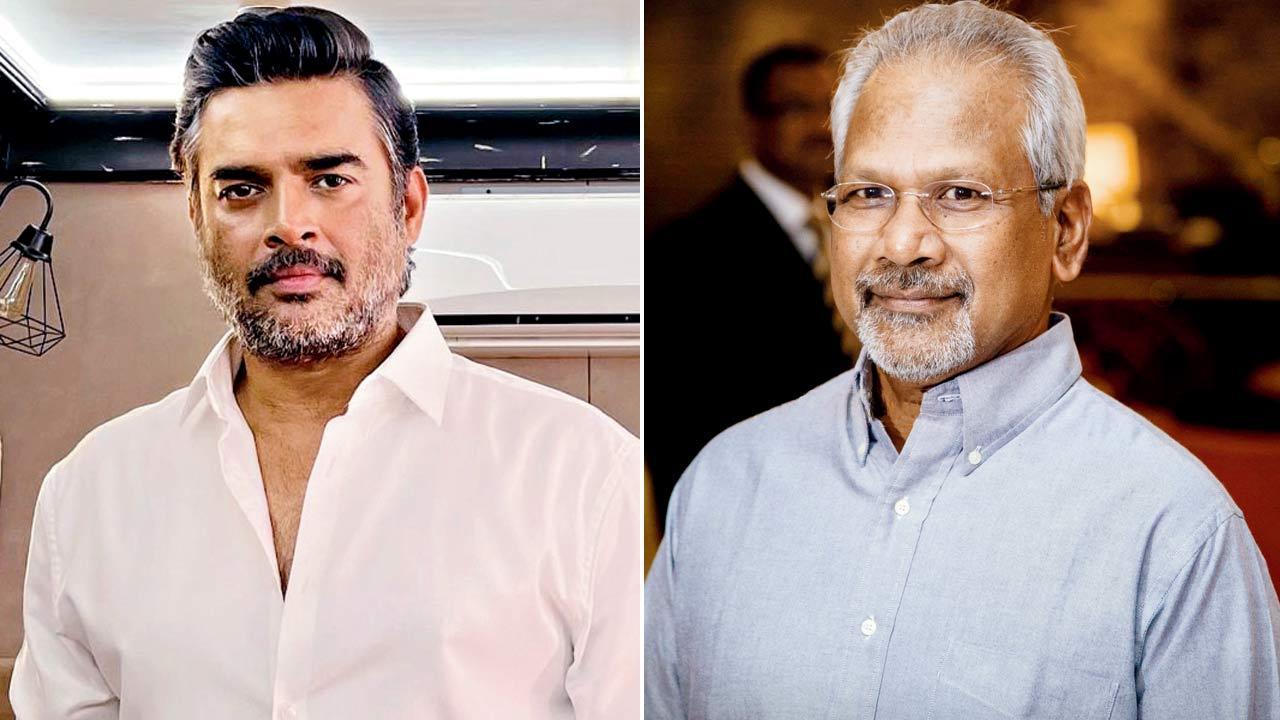
As he completes 25 years in the industry, versatile actor R Madhavan recalls getting his first break with Mani Ratnam’s Alai Payuthey despite being an outsider
Priyanka Sharma (MID-DAY; January 29, 2025)
Milestones often bring moments of reflection. Naturally then, R Madhavan, who completes 25 years in the film industry, is looking back at his journey these days as much as he is looking forward to his 2025 slate that includes De De Pyaar De 2, Dhurandhar, and a romantic comedy with Fatima Sana Shaikh. Asked how he views his journey so far, the actor-director describes it succinctly in one word—“anomaly”.
“I have done everything that people said couldn’t be done,” he shares, recalling the time he was told he wouldn’t make it on the big screen due to his popularity on TV, thanks to Banegi Apni Baat and Saaya.
“When I over-exposed myself by doing 1,800 episodes of a show, people said, ‘You’ll never become a film actor.’ I told them I didn’t want to be one. Then, I got a debut that big producers and directors can’t for their kids — a film with Mani Ratnam, A R Rahman and P C Sreeram [cinematographer],” says Madhavan of Alai Payuthey (2000) that launched him as a leading man in Tamil cinema.
Madhavan’s self-confessed anomalous ways showed up throughout his career. While the crossover of south Indian stars in Hindi films has surged only in the recent past, the actor explored Hindi movies in the early 2000s, beginning with Rehnaa Hai Terre Dil Mein (2001).
“When they said I was a Tamil hero, that’s when I did Hindi films. And when they called me a Hindi hero, I did Tamil films,” he smiles.
After the first National award, I felt I must go higher-A R Rahman
8:08 AM
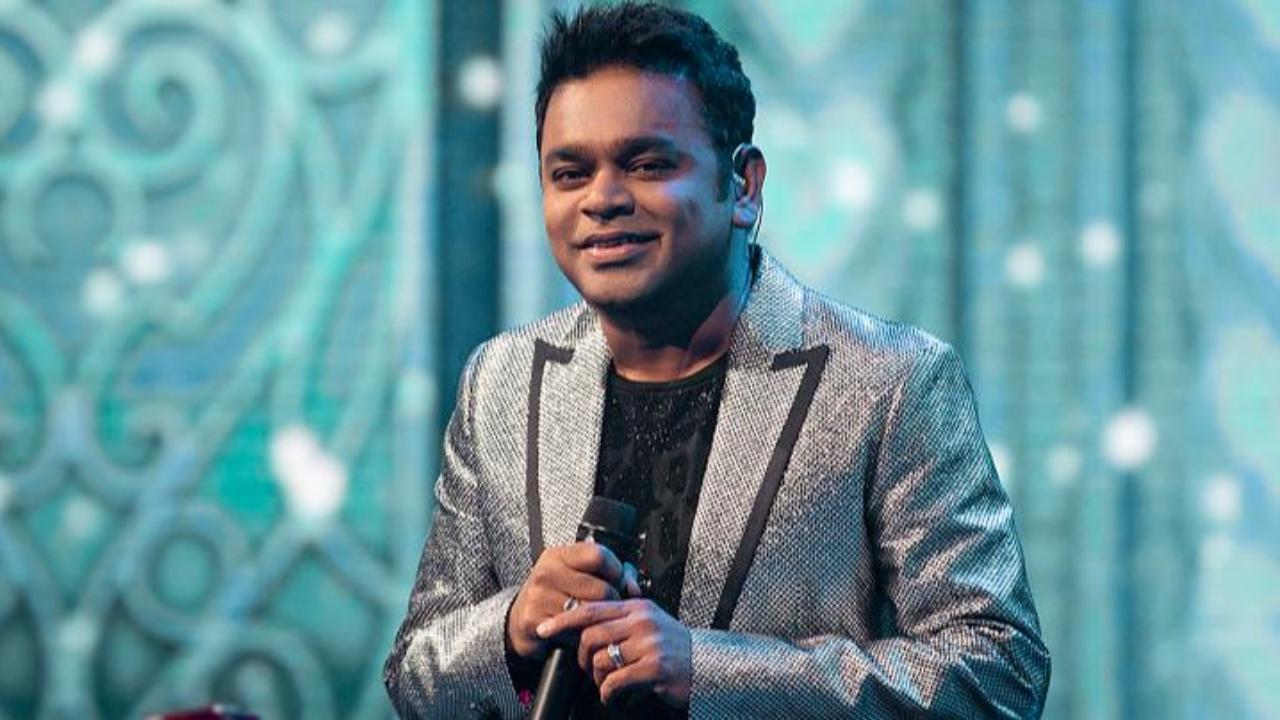
Niharika Lal (BOMBAY TIMES; October 15, 2024)
A R Rahman received his seventh National Film Award on Tuesday, and he says it definitely feels like a first all over again. “As an artist, you always feel like you're shedding your skin, evolving into a new person. The artist who has evolved is the one getting the recognition,” he shares. Interestingly, Rahman won his very first National Award for Mani Ratnam's Roja, and now, over three decades later, he's being awarded again for a Mani Ratnam film.
Music lovers say that the music of Roja still feels as fresh today as it did back then. Talking about what he does as a musician to create timeless music, Rahman shares, "From the very beginning, I had all these tick marks - the music should be recorded well, produced well, and the intention of creating the music has always been very pure. There is a big hero so I should do better music for this and there us a small hero so I should just...no! My music was never like that, the music has to be timeless. Whether it's a small hero or a big hero, the music has to be timeless. What I do should reach the full potential of what I can do. Sometimes, when you're working on a movie, a great tune comes for a small movie, and everyone says, 'Why are you putting this tune in a small movie? Use it for a Rajinikanth movie.' And I say, 'No, this tune came to me for this person, and I can't cheat. I can't take it out and put it somewhere else.' So that is the route I always took."
Excerpts from a conversation -
'After the first National Award, I felt like we have to go higher because the National Award is the highest recognition for any Indian musician'
Remembering how he felt when he received his first National Award, Rahman says, "I remember after I got my first National Award (for Roja), one of the reporters asked me, 'Do you think it is too early in your career to get a National Award for your first movie?' (laughs). After the first National Award, I felt like we have to go higher because the National Award is the highest recognition for any Indian musician. Even now, the National Award is something the whole nation acknowledges. As an artist, you always feel like you're shedding your skin, evolving into a new person. The artist who has evolved is the one getting the recognition. It's not the same thing - you've moved on from a lot of things, you're reinventing yourself, sometimes keeping what is good, sometimes letting go. So, this definitely feels like a first."
'I studied at Mani Ratnam university'
When the award was announced Rahman told us that it's a full circle, a National Award 32 years later, again for a Mani Ratnam movie. He says, "It is," and elaborates, "I think I was sitting with Mithun da and Mani Ratnam, and the minister Ashwini Vaishnaw asked something like, 'Where did you study?' I pointed at Mani Ratnam and said, 'Mani Ratnam university.' I think when you work with certain people, they bring out the best in you. And even without them asking, you understand. It's a telepathy that happens; after a while, they don't have to ask you. What they're asking comes as a mind impression, like, 'Okay, this is what he's thinking.' Then you go much further than what he's thinking, and he comes back and says, 'Oh! I like that. Why did you take so much time? Because you gave something far ahead of what I was thinking.' I'm like, 'Well, I had to take time.' So, we have a nice, interesting relationship."
Rahman says that because he had worked with so many traditional composers when he was young, he had to fight himself to break free from those influences. He says, "I had to take a 180-degree turn and say, 'I don't want to do what they did because I need to have a new experience.' So if they used one raga, I'd go and find another raga that was very unusual. Even in Roja, we used several ragas that were rarely used in Tamil. It was more of a North Indian raga, and when Tamil people heard it, it made North Indian people feel closer because they knew the ragas. Usually, Bhairavi, Yaman, and Todi are more common in South Indian compositions. So, I've consciously tried to move away from what is expected. Sometimes, some movies need a traditional score, and sometimes the director is ready to explore and gamble, and is ready for an adventure and then we have fun, which is what Mani Ratnam does."
'We can go into anthropology-driven details, but the ultimate goal is to create an experience'
Rahman says that a lot of research actually happened for the music of Ponniyin Selvan and he also had research material about what kind of equipment they had at that time, and then decided how to bring that sound from modern equipment and add it to the score.
He says, "Some of the instruments we got sound similar, and for others, we took some liberties and hid them in the score, which just adds to the musicality. We can go into anthropology-driven details, but the ultimate goal is to create an experience. It's about how truthful you are while giving people that experience because you're taking them to that era, and that era itself is a mystery because nobody really knows what happened. You imagine that, and imagination can be small or wild - most of the time, it's a wild imagination."
In Bond films, whether its composer Thomas Newman or John Barry - the theme is same
As Ponniyin Selvan has a sequel, so when he creates music for films which have sequels, how important is continuity? Sharing examples, Rahman says, "When it's a sequel, sometimes you have to continue with the score for continuity. Take the Bond movies. They have one theme that recurs. Different composers have done it too. Thomas Newman (Skyfall, Spectre) did it. John Barry (From Russia with Love, Goldfinger, On Her Majesty’s Secret Service, etc.) used to do it, and they all became the same theme.
It depends on the movie. If it's a continuation story, then it's better to have the same theme, like John Williams did for some of his work." (John Williams composed for many film series such as the Star Wars series, Harry Potter series, and Indiana Jones series.)
'I always feel like money comes as a blessing, but your work is more important'
Whether it's a big-budget film or a small-budget film, Rahman says it does not matter to him. Because his name is associated with the movie, when films don't have the budget, he has often paid from his own pocket.
He shares, "Sometimes, even for a big movie, a small score works, and it doesn't have to have 200 instruments every time. And sometimes, for a small movie, you need a big score. The film might not have the budget, but I say, 'It's fine, it's my movie, my name,' and I go ahead and book the orchestra. For instance, there is a movie Gandhi Godse - Ek Yudh (2023) that Rajkumar Santoshi directed, and it had a small budget. It required a very, very big sound, so we went ahead and did some of the score. He said, 'I don't have the budget for this,' and I said, 'No worries, I'm paying for this.' (Laughs)
How often does he have to do that?
Rahman says that he had these very strict standards from the beginning, and says, "See, for me, there is a truth, an honesty and that's important. I have to look at the music. To give an example - the first jingle that got me noticed, I was paid Rs. 2,000 bucks, and I used to charge Rs. 20,000 at that time. If I'd thought about money then, I wouldn't have worked very well on that. I always feel like money comes as a blessing, but your work is more important. How you work, what you give, should stand the test of time. I should feel proud of all my films and work."
We literally did the score for Ponniyin Selvan in buses while touring USA-A R Rahman
8:38 AM

Niharika Lal (BOMBAY TIMES; August 18, 2024)
Oscar-winning composer A R Rahman secured his seventh National Award for the background score of Mani Ratnam’s film Ponniyin Selvan - Part 1. The victory felt like a full-circle moment for Rahman, as his first National Award was also for a Mani Ratnam film.
Reflecting on the achievement, Rahman said, “It feels surreal because the first movie I ever got a National Award was with Mani Ratnam and Balachander sir (K Balachander for Roja). It’s a full circle, 32 years later, again for a Mani Ratnam movie. I’m very grateful for his guidance, mentorship and his extraordinary genius. I dedicate this to all my sound engineers, musicians, singers, lyricists, and all of them who worked because we were touring the US – we were literally doing the score in between in buses. We’d do a show and at night we would be talking to Mr Mani Ratnam. So, this is to all the hard work of my musicians, singers, and recording engineers.”
The opportunity to collaborate with two stalwarts of Indian cinema has been humbling-Ali Fazal
8:21 AM
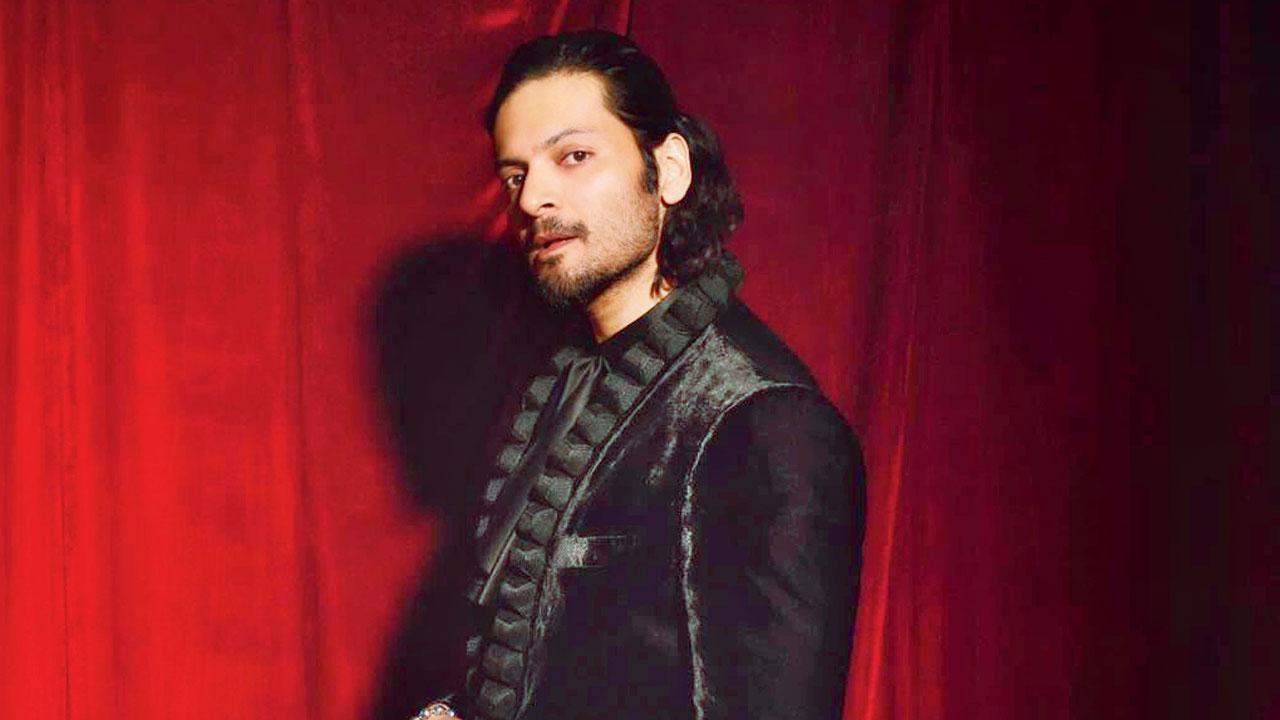
Ali says he is honoured to work with Haasan and Ratnam as he joins Thug Life shoot; to film in Delhi’s bustling markets over next few days
Mohar Basu (MID-DAY; May 9, 2024)
Ali Fazal had wished for it, even pictured in his head how it would be if he ever got the opportunity to work with Mani Ratnam. But years of hoping had not prepared him for the surprise that is Thug Life. The action drama not only marks the actor’s first collaboration with the filmmaker, but also sees him share screen space with his childhood hero Kamal Haasan. Fazal, who has joined the Delhi shoot, says he is a mixed bag of emotions—from excitement to pride and nervousness—but above all, he feels a deep sense of honour to work with the two masters of the craft.
“I am thrilled to be a part of Mani sir’s vision, and I can only hope to bring something of significance to this canvas. It’s an honour to work alongside Kamal Haasan sir and share notes with him. The opportunity to collaborate with two stalwarts of Indian cinema has been humbling,” says the actor about his maiden Tamil project.
Announced in November 2022, Thug Life sees Haasan and Ratnam reuniting 37 years after their acclaimed Nayakan (1987). This time around, they have jointly written the script of the ambitious action drama that also stars Trisha, Silambarasan, Abhirami, Pankaj Tripathi and Sanya Malhotra. While Haasan kicked off the shoot in January with a schedule in Chennai, the team began the second stint in the capital this month.
A source reveals, “This week, Fazal will shoot a few sequences at some iconic markets of Delhi. The team has procured the necessary permissions to film at such busy places. Late next week, the shoot will move to Chennai where it will go on till May-end.”
We hear Fazal will report back to Thug Life’s set only in August after wrapping up Anurag Basu’s Metro... In Dino in June. The source adds, “He has kept his July dates free as Richa [Chadha, actor-wife] and he are expecting the arrival of their baby then. In August, he will juggle Mani sir’s shoot with the promotions for the third season of Mirzapur.”
My story would’ve been different if I’d started today as an actress-Shriya Saran
10:39 AM

Onkar Kulkarni (BOMBAY TIMES; December 30, 2023)
In Hindi cinema, Shriya Saran doesn’t have as many films to boast of in her filmography, but in the South film industry, the actress made a mark long before we started cheering for pan-India films. When it comes to Bollywood, it is the Drishyam franchise that the audience identifies her with. In a chat with us, Shriya talks about how she wished she had got similar recognition in Hindi cinema, the opportunities the OTT medium offers and more.
‘B-Town thought I had South Indian features’
Talking about starting her career down South, Shriya, who hails from Haridwar, says, “I wanted to do South films because I felt the industry was very welcoming. They thought my features were a mix of South and North, whereas the industry folks in Mumbai thought I looked very South Indian.” Even though she has worked with top stars from the South, Shriya points out that she didn’t get the much-needed recognition as an actor in Bollywood.”
‘My work in the South industry never reached the Hindi audience’
Explaining why her work didn’t reach a wider audience, she says, “Today we are living in the times of OTT, which wasn’t the case back then. Jo main kaam South mein kar rahi thi, woh kaam Bollywood audience tak pahuchta nahi tha. Back then, we didn’t have access to movies across languages, the way we have today, thanks to OTT platforms. And South films did not release pan-India at that time. This is why people in Mumbai didn’t know much about my work. My professors from my college in Delhi refused to accept that I was an actor down South. My father had to convince them and tell them that I was working with stars like Chiranjeevi and Nagarjuna, so that they could consider my low attendance in college and allow me to sit for my exams.”
‘Earlier, there was a lot that was lost in translation’
Shriya, who was seen in S S Rajamouli’s Oscar Award-winning pan-Indian film RRR (2022), is glad that the audience is receptive towards different kinds of cinema in various languages now. “Earlier, there was a lot that was lost in translation, which doesn’t happen today. Thanks to people like Mani Ratnam sir, who I guess was one of the first filmmakers to have released a film in multiple languages. Even Shankar sir (maker of films like Sivaji: The Boss, Enthiran and 2.0) did that. All cinema is under one umbrella today,” says Shriya, who hoped her films like Sivaji: The Boss (2007), Manam (2014), Chatrapathi (2005) and Tagore (2003) had a pan-India release.
She adds, “These films were pan-Indian films as they were not limited to one kind of audience. The subjects they revolved around were pan-India. Drishyam, too, was a pan-India story, where the idea was about protecting your family.”
‘OTT has certainly shown us a shift in storytelling’
Talking about the changes digital platforms have brought about and what she misses about the earlier times, she says, “I wish OTT platforms were there when I started off because the actors working today have such amazing opportunities. The audience base is massive, and even with one show, you can go places. OTT has certainly shown us a shift in storytelling. I feel that if I had started out in today’s times, in the presence of OTT, social media and pan-Indian films, my career would have been a different story. Having said that, those days were also magical, beautiful and raw in their own way.”
‘It’s been a major shift for my husband Andrei’
Shriya married her Russian boyfriend, Andrei Koscheev, in 2018. She shares, “It’s been a major shift for him. He’s a sales head with a corporate firm and travels from Andheri to Thane to his office every day. It’s a very different life for him. He had a countryside house overlooking a lake and mountains, drove a convertible car and even went sailing. However, he loves his time in India. He only eats Indian food now, like roti-sabzi and also loves golgappas.”
When your car drives to KIFF at Nandan cinema, Kolkata, you know the energy is full of cinema-Aditi Rao Hydari
8:11 AM

Ruman Ganguly (THE TIMES OF INDIA; December 15, 2023)
Aditi Rao Hydari, who was in town to attend the closing ceremony of the 29th International Film Festival on Tuesday, had a candid chat with us over a cup of coffee.
“Kolkata is home to some incredible cinema, so I feel this sacred energy here as an actor. The city has a positive vibe that one cannot miss. My life has a lot of Bengali influences, so I feel comfortable and extremely loved whenever I come to this city,” she told us, adding, “Bangla cinema has always been spoken about in the world. I grew up watching Bangla films and I must admit that my taste for films has a lot to do with that learning.” She also spoke about her connection to Bengali cuisine, how Mani Ratnam helped shape her career and more. Excerpts:
‘BANGLA IS SUCH A SWEET LANGUAGE’
Speaking about the Bengali influences in her life, Aditi said, “Our cook at home is Bengali, and so was my childhood nanny, Nomi di. So, I love Bengali dishes such as Sorshe bata maach, Patla macher jhol, Mochar ghonto, shukto, chorchori and many more. I had aloo posto and bhaat for lunch; it tasted heavenly. I also love sarees from Kolkata, the cotton ones – Dhaniakhali. I don’t have time to go saree shopping this time, but I’m going to buy ghee to add in the shukto I have at home. Everyone at home loves notun gurer rosogolla, so I’m buying that too.”
When asked if she can speak Bangla, the actress said, “I can understand it, but I’m not a fluent speaker. Nomi di used to keep telling me, ‘Tatari koro, taratari khaoa sesh koro’ (laughs). Bangla is such a sweet language.”
‘I’M A DIRECTOR’S ACTOR’
Speaking about her approach to acting, Aditi said, “I am 100 % a director’s actor, but at times I do ask questions so that I can internalize the character. The director has a vision for the film and we actors just support that, so I prefer to listen to my director. But great directors give you room to explore and ask questions, make mistakes. And I feel it is good, as you learn from it.”
She added, “As an actor I don’t judge the characters I play, but at the same time I must be responsible for what I do on screen, as those films are watched by a lot of people. We need to feel responsible for what we put up on the big screen.”
-------------------------------------------------
Bengali films are so rich in content. The industry boasts of directors such as Satyajit Ray, Ritwik Ghatak, Mrinal Sen, Rituparno Ghosh… the list is endless. I’ve also watched Bengali films by many contemporary directors
-------------------------------------------------
It was wonderful to work with Bumba da (Prosenjit Chatterjee) in Jubilee. He is just amazing! He was the first one to be on the set and the last to leave. A true front bencher, I must say
-------------------------------------------------
I’ve come up from a mixed family, heritage, and lineage, whatever you call it. And I feel lucky to be an actor of Indian cinema, which is so diverse in nature. There are so many stories to be told in different languages
-------------------------------------------------
I’m very proud to be a Mani Ratnam student; I became an actor because of him. I enjoyed doing two films with him so much. Cinema is magical and I love magic. I want to be part of it all my life
-------------------------------------------------
Rhythm, musicality, silences and finding music in silence are things I’ve grown up with. My teacher used to tell me dance is not just about showing a mudra, it’s about how you use the silence between two movements. To me, acting is about finding the music in the silences
-------------------------------------------------
I couldn’t be part of dada’s (Arindam Sil) film Har Har Byomkesh due to date problems. But if he offers me a Bengali film again, I’ll be honoured to be part of it.
-------------------------------------------------
When your car drives to a film festival, you know the energy is full of cinema and that is exactly what I felt when I came to Nandan. Everybody here loves cinema so that energy is infectious. KIFF is such a prestigious film festival of the country. It is an honour to be part of prestigious film festivals as you are surrounded by artistic people with a vision and great filmmakers.
-------------------------------------------------
Awards are huge inspirations for me. I feel like a little child. It’s so exciting when you bag an award. When you get that love through an award it is indeed fascinating and inspires you more to do good, better work. It is lovely for your work to get recognized.
-------------------------------------------------
I have never lived in Kolkata, but my mother, who is a classical musician, used to visit the city. So, I used to come here with my mother.
-------------------------------------------------
Everybody should be a child forever in their heart. I get teased a lot by everybody that I am still a five-year-old child within, and I’ll never grow up. That’s fine, as I learnt that from my nani (grandmother). That’s the only way to be in life. I guess I love the company of little kids and animals the most, as they are the purest and unafraid of what they say. So, I am a five-year-old forever.
Films should have rich classical music, why dumb things down?-A R Rahman
8:29 AM

Niharika Lal (BOMBAY TIMES; December 4, 2023)
Wrapped in their jackets and shawls, Delhiites turned up to hear AR Rahman talk about storytelling, films and music at the Kathakar festival in Sunder Nursery on Friday evening. Rahman received so much love from the Delhi audience that they didn’t want to let him go, with Rahman saying, “I love you guys so much. I will come back again.” Rahman shared some insightful and straightforward comments on the music scenario in India.
‘WHY DO YOU WANT TO DUMB IT DOWN FOR THE AUDIENCE?’
Rahman shared that these days, filmmakers often want to oversimplify things. In reference to Gulzar’s comment that Rahman and Mani Ratnam didn’t interfere with excessive Urdu usage in songs in Dil Se.., he said, “That’s how it should be. It happens a lot these days – you dumb things down. ‘No, no, people are not going to understand that. Make it simple. Don’t do this and don’t do that.’ A poet or lyricist has a responsibility to the audience. Why do you want to dumb it down? Okay, you can dumb down one song, but not all songs. I feel like film music should have rich classical music – thumris, khayals. If you want one item song, it’s fine, do it. But for the rest of the stuff, let it live and breathe. Why can’t you figure out a way that the screenplay doesn’t make it boring? That’s the question I keep asking people.”
‘HATRED COMES WHEN ONE FAILS TO UNDERSTAND THE HUMANITY BEHIND ANY CULTURE’
Speaking about the films he wrote and directed, such as Le Musk and 99 Songs, Rahman said, “I’m slowly getting into storytelling. If people don’t have their own narratives, their narratives are just taken over. It is important to tell beautiful stories so that people can understand each other and different cultures. Hatred comes when you don’t understand the humanity behind any culture.”
When the host of the evening Mohit Chauhan asked Rahman how he identifies himself with music, Rahman responded, “That’s the question I’m asking myself. I’m still discovering myself. Long ago, my agent asked me, ‘How do I pitch you to people? You’re like a supermarket – you’re doing classical, Indian folk, film songs.’ But I love all kinds of music. I respect all cultures and people, and I never make fun of anything. I go deeper, and I find the truth in it.”
Recently, Rahman’s rendition of a poem by Bengali poet Kazi Nazrul Islam for the film Pippa was in the news after the poet’s family said that the new version distorted the original tune and rhythm. Without mentioning the song, Rahman said at the event, “Sometimes I get it, and sometimes I get caught in embarrassing situations, like the one last month. There are no bad intentions; there is no disrespect to anyone.”
‘YOU CAN’T MISS NIZAMUDDIN DARGAH IN DELHI’
“In Delhi, you can’t miss Nizamuddin sahab Dargah. For the song Kun Faya Kun (from Rockstar), Imtiaz Ali ji called me and asked ‘Can you add the word Nizamuddin in it?’ And I was like of course! It was not there initially; it was not meant to be there. It’s beyond religion and beyond everything. The President of Berklee (College of Music) told me, ‘One song of yours that I love is Kun Faya Kun.’ I don’t know what he understood about that song. Inherently, there is something in it.”
Shah Rukh Khan’s Dil Se character was not just an All India Radio reporter, he was everyone’s voice-Mani Ratnam
9:54 AM
Anees Bazmee backs out of Nawaz’s next; filmmaker wants to ‘focus on other projects’
Renuka Vyavahare (BOMBAY TIMES; October 30, 2023)
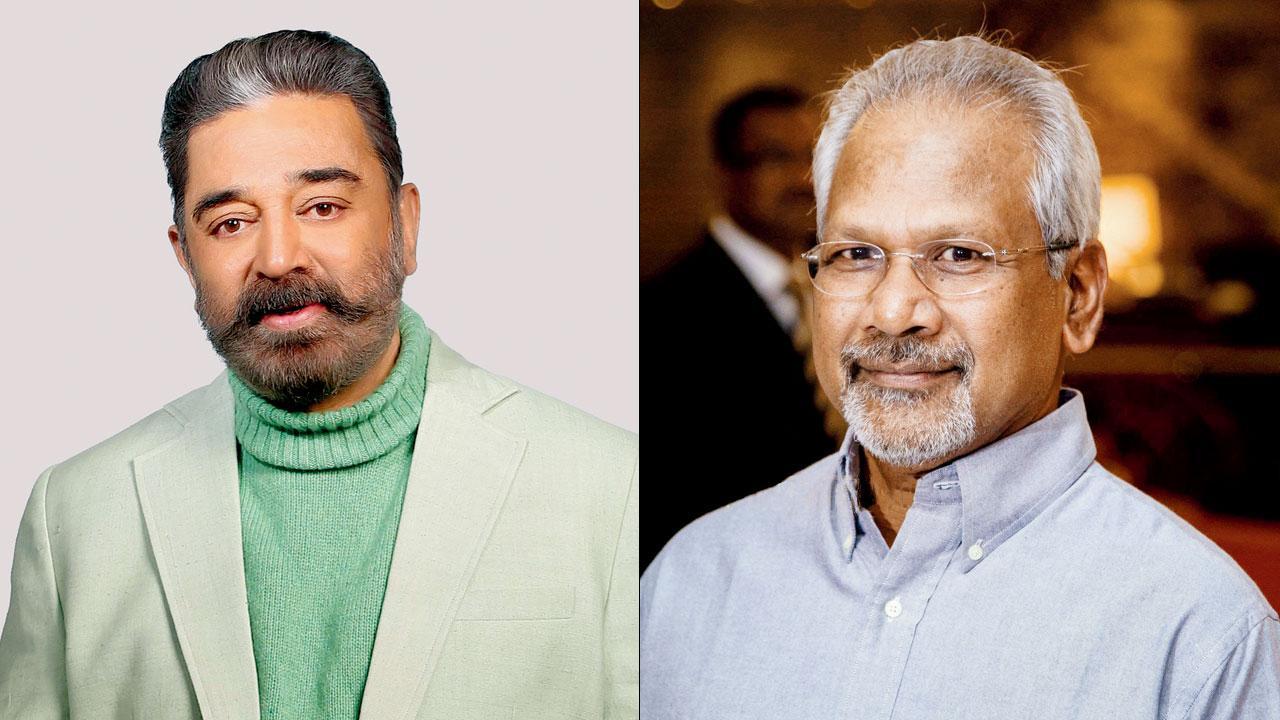
An entire screen was jam-packed as cinephiles strived to bag a seat for MAMI Mumbai Film Festival 2023’s first masterclass that saw Mani Ratnam in conversation with Imtiaz Ali. It was a heart-toheart chat with some savage one-liners from Ratnam. Excerpts from the conversation:
‘DIL SE WAS A SOCIAL COMMENTARY’
Talking about Dil Se, he said, “Dil Se was made around India’s 50 years of Independence. It was a reminder that not all corners of the country are liberated as one would like to believe. Shah Rukh Khan’s character was not just an All India Radio reporter, he was everyone’s voice.”
‘MAKING RAAVAN AS A BILINGUAL FILM WAS A MISTAKE’
Ratnam made Raavan (2010) in two languages at a time, not many attempted to do so. The director, however, admitted that it wasn’t the right decision. “Making Raavan as a bilingual film was a mistake. It was a burden because I was literally making two films at a time, and neither the Hindi nor the Tamil audience could completely relate to it. It was a case of neither here nor there,” he said.
‘AS A STORYTELLER, YOU REALISE YOU’RE A SCAVENGER’
Elaborating on filmmakers’ constant hunt for great stories and subjects, Ratnam explains, “As a storyteller, you realise that you’re a scavenger. Even when tragedy strikes, you’re looking for stories and opportunities. I remember witnessing a blast from a close distance, and the first thing that struck me wasn’t the tragedy alone but even the technique. In films, we show that blasts generally happen from a distance, but that isn’t the case.”
‘I DON’T WANT OBEDIENCE FROM MY ACTORS, I EXPECT CONTRIBUTION’
The director, known for his unique vision and extracting the best out of his actors, had an interesting take on teamwork. He revealed, “I don’t want obedience from my actors, I expect contribution. I can always tell you what I want, but what more can you bring to the table? I like actors who give you that little more.” When asked what happens in case of a massive difference of opinion, Ratnam teased, “Then I tell them who’s the boss (laughs)!” Citing examples, he said, “Shah Rukh Khan and Rajinikanth often joked about this. They would say, ‘We can tell you what we feel, but you won’t accept it. This is your film, isn’t it?’”
‘SOMETIMES I WONDER IF I AM A ONE-TRICK PONY’
Despite having made acclaimed films, the director feels that there is still an element of self-doubt. He revealed, “Sometimes I wonder if I am a one-trick pony. I always thought of myself as a fraud director. When I did my first film, I didn’t know how to shoot. I had to pretend that I knew. I remember Kamal Haasan telling me this when I pitched my first film to him. He said, ‘Don’t aim at the heart, aim at the gut and you will make it.’ Haasan suggested that I need to make something that a lot of people can identify with, and how you communicate with the audience is important.”
‘AS AN AUDIENCE, I AM EVOLVED; AS A FILMMAKER, I AM NOT!’
Ratnam says, “My assistant directors don’t hesitate to tell me if something doesn’t thrill them. The day they find mistakes in my work, I know they are potential filmmakers. I used to criticise films when I didn’t even know how to make one. Finding fault is important. As an audience, I am evolved. As a filmmaker, I am not! There is nothing in this art form that can be called perfect. I don’t watch my films after they are released. I can’t take it. I only see the errors and I cringe.”
Subscribe to:
Posts (Atom)