Showing posts with label Madhur Bhandarkar interview. Show all posts
Showing posts with label Madhur Bhandarkar interview. Show all posts
You can’t expect a Pushpa, Kantara or RRR from Bollywood; makers want to play safe-Madhur Bhandarkar
10:10 AM

Toshiro Agarwal (BOMBAY TIMES; December 19, 2025)
Filmmaker Madhur Bhandarkar feels that talent can emerge from any platform when it comes to showbiz—theatre, TV, OTT or films. “Also, if a filmmaker wants to narrate a story today, all they need to do is take out a mobile and create the entire narrative,” he adds. Speaking to us on the sidelines of the second edition of Symbiosis Film Festival, the Page 3 and Fashion director touched upon his style of filmmaking, Bollywood’s lack of conviction and more. Excerpts:
‘My movies are grounded and my stories, basic’
In the 2000s, Madhur’s brand of cinema was celebrated as raw and realistic. Ask him how his storytelling has evolved over the years and he says, “My storytelling hasn’t evolved at all. I’m still making what I used to make back in the 2000s. I always say that I am a storyteller, not a tech-savvy filmmaker. My movies are very grounded and my stories are basic, about everyday lives of people. It’s just that my films have aged well as I mainly focus on human dramas.”
The Babli Bouncer and India Lockdown filmmaker adds that human drama is something that will connect with you ‘even after 100 years’. “Technology will come and go, but the emotions or complexities of relationships will always be relevant no matter what the backdrop is, be it a corporate world, or politics, or even the film industry. My style is to make realistic cinema and I will continue to do so,” he says.
‘Storytelling has changed, but Bollywood lacks conviction’
“Every five years, there is a major revamp in the film industry,” says the filmmaker, who will return to the big screen next year with The Wives. He feels that with OTT, a lot has changed. “The audience is now more aware of world cinema. As a result, Bollywood’s storytelling also has changed a lot. However, Bollywood lacks rawness and conviction. If tomorrow somebody narrates a story like Kantara to a Bollywood filmmaker, they will not be entertained,” opines Madhur.
Applauding Rishab Shetty for his vision, the Heroine filmmaker adds, “You can’t expect films like Pushpa, Kantara or RRR from Bollywood. Because Bollywood wants to play safe with tried and tested remakes of south Indian films. Actors ko original movie dikha denge, bol denge zyada mehnat nahi karni hai, yeh picture hai, South mein chal gayi yahan bhi chal jayegi. Despite this, in the last five years, most Hindi remakes of south films have flopped. There are so many stories in Bollywood that are waiting to be explored.”
‘There’s a lot of noise about everything due to social media’
His films have drawn contrasting opinions, and Madhur says he understands that. “There will always be people who liked something and others who didn’t like it. The reception of a film will never be unanimous,” he says, adding, “But, nowadays everyone is just picking films apart. Thanks to social media, everyone has a voice and now there is a lot more noise. Having said that, I care only about my audience. They are the reason I am where I am today.”
On the backlash on Ranveer Singh’s Kantara reenactment at IFFI
Madhur was at IFFI when the incident involving Ranveer Singh trying to mimic Rishabh Shetty’s Kantara performance happened. Sharing his stance on the controversy, he says, “I felt that he took it a little too far. That said, he owned up to it and apologised, which is commendable. I think he was praising the performance and got lost in the flow. In the process, he crossed a line.”
Azerbaijan was pleasant, but the recent political developments have left me with a sense of betrayal-Madhur Bhandarkar
8:36 AM

Vinay MR Mishra (BOMBAY TIMES; May 18, 2025)
Filmmaker Madhur Bhandarkar, who had visited Azerbaijan in 2023, has weighed in on the calls to cancel travel plans and shoots in Turkey and Azerbaijan. The two countries supported Pakistan after India’s Operation Sindoor.
The filmmaker says, “In the current situation, Turkey and Azerbaijan’s support to the enemies calls for an understanding of the larger picture. Right now, people should refrain from going to these countries. We are giving them the revenue to supply weapons that are used against our jawans. I’m not speaking for the film industry or anybody. I am sharing my opinion as an independent filmmaker.”
Talking about the calls for cancellation of shoots in Turkey and Azerbaijan, Madhur adds, “As an individual, I believe that art and politics shouldn’t be intertwined, but when so many people are killed, you need to draw the line. When Indian soldiers are at risk and lives are being lost, emotions run high. We must respect the sentiments of the people of India, who have faced considerable pain due to actions taken by these countries. Nothing is bigger than our country and our Armed Forces. We should put the nation’s sentiments above all else.”
‘It is hard not to feel a sense of betrayal’
When asked about his trip to Azerbaijan in 2023, he shares, “My trip to Azerbaijan was pleasant, but the recent political developments have left me with a sense of betrayal. Any country that harms my countrymen or soldiers, it pains me. It is hard not to feel a sense of betrayal. In these testing times, we should support our Armed Forces and our nation. Films and entertainment will always be there, but the safety of our soldiers and the unity of our country should come first.”
20 Years of Page 3: I am lucky to have worked with both Lata Mangeshkar, Asha Bhosle-Madhur Bhandarkar
8:59 AM

As actor Konkona Sen Sharma-starrer Page 3 turns 20, director Madhur Bhandarkar opens up on how the theme for the cult classic cropped up and more
Akash Bhatnagar (HINDUSTAN TIMES; January 21, 2025)
Bhandarkar shares that since the film came out at a time when there was no social media or pap culture, many people were not sure what Page 3 even meant. “Many of them thought that this was a murder mystery,” he tells us, adding, “Someone even questioned if the film was based on a literal page numbered 3.”
Getting the journos’ POV
Bhandarkar reveals that he was fascinated by Bollywood parties. “One day, I went to a party where I saw big politicians, Bollywood celebrities, and all of them were interacting with the journalists there,” the 56-year-old recalls, adding, “After the party, I dropped a few of them in my car to a taxi stand.” It was that encounter that prompted Bhandarkar to capture a journalist’s point of view in the film.
“I realized that these people (journalists) who have access to the biggest people in the world... their own life is very normal and middle-class,” he reflects.
Konkona’s entry in the mainstream
Ask the director about the casting process, and he shares, “I did approach a couple of big actresses. They heard the idea. Some liked it. Some had date issues, and some had drive issues, as we didn’t have a budget. Some actresses didn’t even see any merit in the idea.”
Eventually, he decided to approach Sen Sharma, as he had seen her film Mr & Mrs Iyer (2002). “Nobody in Bollywood knew of Konkona Sen Sharma... I called her, and she had no idea what Page 3 culture was all about. We were 15-20 minutes into the narration, and she said bluntly that she wasn’t getting the film. But she had faith in my vision as a filmmaker, so she said yes even without hearing the full script,” Bhandarkar reveals.
The iconic driver scene was the last addition to the film
Bhandarkar reveals that the iconic scene from Page 3 that saw actor Manoj Joshi’s character, a chauffeur, gossip about the industry was the last addition in the film. “The whole sequence was put at the end. I called up Manoj to play the driver, and that sequence was derived from real life, and he agreed. We shot it all in four hours, and it became a highlight of the film,” he tells us, divulging, “80% of Page 3 is derived from real-life incidents that I have witnessed. I went to a Bollywood celebrity’s funeral, and I saw people discussing the designer they were wearing, inviting people to trial screenings and all. So, I put that exactly that way in the film.”
No Page 3 without Lata Mangeshkar
At a time when singer Lata Mangeshkar had almost quit doing playback singing, Bhandarkar got her to record Kitne Ajeeb Rishte Hai Yahan for the film. “Page 3 is incomplete without Lata Mangeshkar,” Bhandarkar muses, revealing, “It was very difficult (to get her to sing for the film) as we didn’t have a budget. But she agreed to sing because she loved the song.” He shares, “She would stop after every word to check if I was getting what I wanted... Her dedication at that age [she was in her late 70s} was so inspiring. I got to work with both Mangeshkar sisters (also, singer Asha Bhosle) in that film, and I feel so lucky about that.”
Behind the scenes and glamour
Bhandarkar believes Page 3 started a whole new trend — films dwelling on the underbelly of the glamour industry. The trend that started with the Konkona-starrer continued with Fashion (2008) and Heroine (2012) “It was appreciated globally in film festivals and in India too... I continue on that path with my next film, Wives of Bollywood, which is like Page 3 on steroids,” he says.
If Trishakti was a hit, I would never have made a Chandni Bar in my life-Madhur Bhandarkar
8:45 AM

As HT City turns 25, we catch up with Madhur Bhandarkar, marking his 25-year journey as a director
Akash Bhatnagar (HINDUSTAN TIMES; March 12, 2024)
In 1999, Madhur Bhandarkar embarked on his directorial journey with Trishakti. Reflecting on this milestone, he expresses disbelief, saying, “I just can’t believe it has been 25 years. I made 15 movies in this span, and I am very happy with those films. I’ve always been an independent filmmaker and never went to any camp, lobby or kothari. The best part about this journey is that I made movies that I believed in.”
The 55-year-old reveals that over the last 25 years, he has acquired various tags, such as “women-centric filmmaker”, and his style being described as “topical, hard-hitting, real cinema”. “I am okay with it,” he insists, adding, “Even the current generation connects with the films I have made. My films have aged well.”
Bhandarkar boasts some cult classics to his credit, including Chandni Bar (2001), Page 3 (2005) and Fashion (2008). However, the fate of Trishakti did lead Bhandarkar to doubt himself.
He divulges, “Those days, commercial cinema had a certain template, and I had to make Trishakti fit into that. Even though I didn’t want to do it, I was under duress. But it bombed very badly, and I was completely disturbed. I thought my career was over.”
Fortunately, things took a 180-degree turn after his next release, Chandni Bar. The Tabu-starrer emerged as a big hit, bringing National Awards for the director and the actor.
He shares, “It was the first female-led film that became a success not only in multiplexes but also on single screens. I made the movie when people used to make big-budgeted and male-centric films. The film was nominated in the popular category with big films like Kabhi Khushi Kabhie Gham, Gadar: Ek Prem Katha and Dil Chahta Hai. It was evident that our film made a strong noise and disrupted the whole grammar of cinema.”
He goes on to insist, “If Trishakti was a hit, I would never have made a Chandni Bar in my life.”
Showtime creator Sumit Roy, Heroine director Madhur Bhandarkar talk about depicting inner workings of the industry
9:57 PM
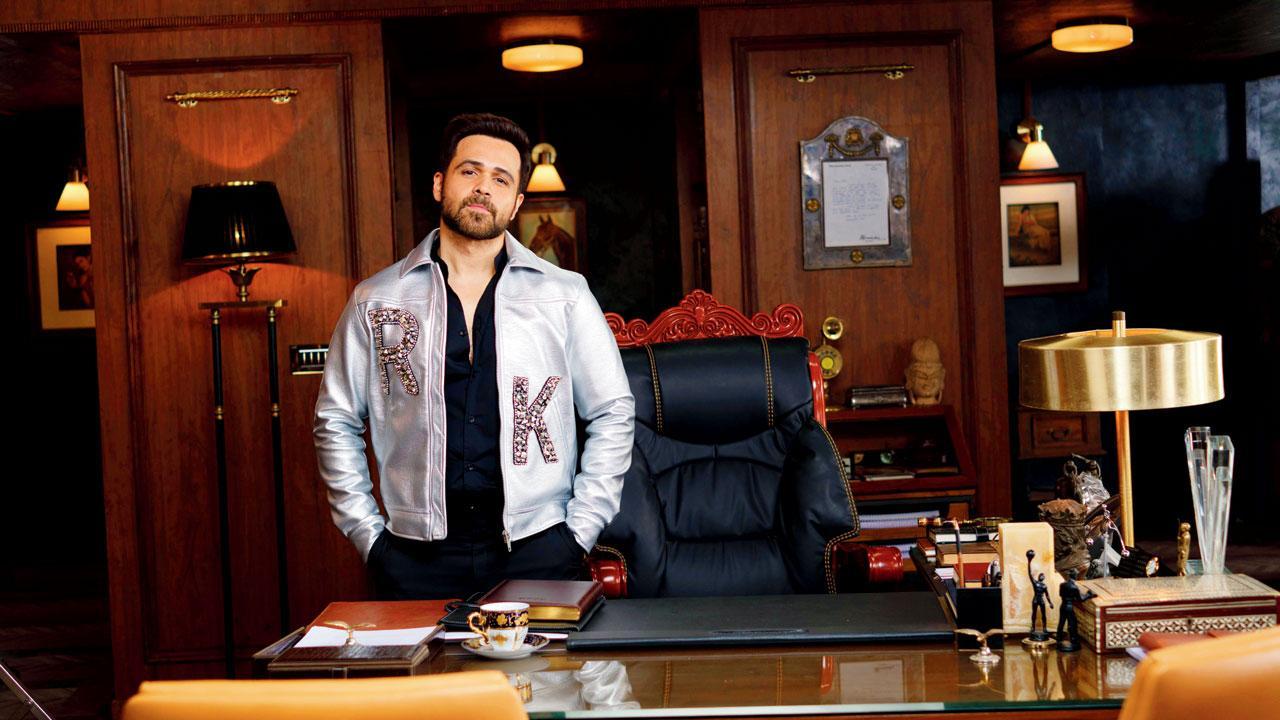
With Showtime set in the world of movies, creator-writer Roy and Heroine director Bhandarkar on what it takes to depict the inner workings of the industry
Letty Mariam Abraham (MID-DAY; March 5, 2024)
Movies about movies are a sub-genre unto themselves, each telling a distinct story. While Farah Khan gave a comedic touch to her directorial venture Om Shanti Om (2007), Heroine (2012) highlighted the ups and downs of stardom in a cut-throat industry; while Luck by Chance (2009) showcased the struggle of an outsider making it in showbiz, the series Call My Agent: Bollywood talked about the life of PR agents.
Disney+ Hotstar’s upcoming series, Showtime—featuring Emraan Hashmi, Rajeev Khandelwal, Naseeruddin Shah, Mouni Roy, and Mahima Makwana—is set to expose the inner workings of an industry that has often made people curious.
So, what does it take to tell an insider story about the industry? Access, one would say. However, to show all that goes on behind the tint of glamour, it takes much more—guts, the willingness to risk being in people’s bad books, the ability to get people to support your idea and a compelling narrative to get the audience hooked. The challenges of crafting such stories are as diverse as the films themselves.
Balancing authenticity with sensitivity
When Rajkumar Hirani tried to capture Sanjay Dutt’s life with Sanju (2018), it was created after months of long conversations with the superstar and the people around him. While the biopic, with Dutt at its centre, had the advantage of first-hand view, it also had the disadvantage of having a filtered perspective. The insider knowledge comes with the responsibility to portray the industry authentically while treading carefully to avoid stepping on toes. Striking that balance is paramount. Showtime writer-creator Sumit Roy says that a huge part of the writing process involved writers ruminating about their experiences in the film industry.
“A few years ago, there was a huge amount of misinformation about Bollywood, and I was aghast, as a member of the industry, at how people were saying and believing anything about it. When Showtime came to me, I thought it was a perfect opportunity to address the misconception that everything in the industry is bad. Bollywood is an artistic business and artistes tend to have huge egos. So much so that I feel there are some people in Bollywood whose body weight is like 90 per cent hot air and pompousness. They can be extremely sensitive sometimes about how they’re portrayed, how they’re spoken about. So, when we were about to start writing our show, which is going behind the scenes in Bollywood and spilling the beans, there were definitely concerns about how it will be received. But at the same time, I was clear that, the material has to come from a place of observation, a place of truth, [and must reflect] things that I have seen in the industry. Because in the last three-four years, Bollywood has been over-scrutinized,” says Roy.
He was certain that he didn’t want to get called out for giving an inauthentic take. “The intent of the show is to talk about larger themes within Bollywood—what it means to be an insider versus an outsider, or to be a woman in Bollywood, and also to talk about the tyranny of the superstar.”
He gives example of a scene in the series where Hashmi’s producer character is shown yelling at a superstar [played by Khandelwal], outside his house, for refusing a project. Roy says that this had actually happened between a superstar and a producer.
Fear of whitewashing
While authenticity is paramount, many times, filmmakers choose to avoid telling the whole truth so as to not aggravate the person involved. For instance, Hirani was criticized for whitewashing Dutt and going soft on the allegations of his connection with the criminal world. In sharp contrast, filmmaker Madhur Bhandarkar depicted the harsh side of showbiz with Heroine.
“When I made Chandni Bar [2001] or Traffic Signal [2007] or Corporate [2006], all the film industry people applauded me and were happy for my films’ success. However, when I decided to make Heroine, people were not thrilled. My movies are 70 per cent true and 30 per cent fiction, so people start drawing parallels and that can get tough sometimes. When the trailer of Heroine released, a lot of people got upset with me. This is the same film fraternity that appreciated my National Awards; they were all happy till the time it was not about them. People wondered how I’d expose my own fraternity. But I didn’t want to lose my integrity by sugarcoating things. My honesty is with the audience, not with the fraternity,” he says.
Industry politics
Behind the glitzy façade of Bollywood lies a complex mesh of power dynamics, rivalries, and groupism. Gaining access to insider information can be both a blessing and a curse. While it provides invaluable insights, it also means treading cautiously to avoid getting embroiled in industry politics or running the risk of offending many with the truth.
Bhandarkar shares, “That’s why I am an independent filmmaker. I am not part of any group, gang or circle. There is a pressure when it comes to the film fraternity because people think it’s uncomfortable because you are showing [the truth].”
While Roy is eagerly waiting for his March 8 release, there is also tension in the air. The creator-writer says, “The stars and filmmakers in the series are based on real-life stars and filmmakers. A lot of the plot points are anecdotes from our lives that we witnessed or knew of. After writing, one of the concerns was what would happen when we took it to Karan [Johar, producer]? I was a bit skeptical. But to his absolute credit, he was a complete champion. He immediately saw the intent of what we were going for. [I am not making this] because I have some axe to grind with someone. Lots of characters are amalgamations of different people, so they [audience] can have fun decoding. There are some worries about what will happen when the show eventually drops. Will people be offended? Maybe we should go underground for a couple of days.”
15 years of Fashion: People from the industry were upset as I had exposed the reality-Madhur Bhandarkar
8:10 AM

Director Madhur Bhandarkar and some members of the cast look back at the filming and what makes it relevant even in the present day
Syeda Eba Fatima (HINDUSTAN TIMES; October 29, 2023)
Fashion (2008) is a film that won appreciation from critics and the audience alike, for the manner in which it unearthed the dark reality of the fashion world. Moreover, two of the lead actors — Priyanka Chopra Jonas and Kangana Ranaut — won National Film Awards for their performances. But, director Madhur Bhandarkar reveals people around him were apprehensive.
As the film clocks 15 years of release, Bhandarkar tells us, “After the film released, there was a lot of appreciation that came my way. But people from the fashion industry got upset with me because they felt I had exposed the reality. But all my stories are derived from real-life [incidents]… That’s what Madhur Bhandarkar films are about. The model taking drugs, having an affair with a married man... These [incidents] were all true.”
The scale of the film, too, made people apprehensive. “Before Fashion, most of my films, be it Chandni Bar (2001) to Traffic Signal (2007), were small-budget films. And in comparison, Fashion was a bigger project in terms of its scale. There were 11-12 sets for fashion shows. That’s why people were doubting this move of mine; many even conveyed that I wasn’t doing the right thing,” the India Lockdown (2022) director says, adding that he had clarity regarding the film and hence, went ahead with it.
Despite the subject being intense, the filmmaker recalls how he’d try and keep things as lively as possible on set. “I was always cracking jokes, mimicking people and having fun. Priyanka would sometimes request me to stop because she had to give a very emotional shot and she wanted to get the expressions right,” he says and goes on to recall a particular scene: “When she was about to shoot the part where her character cries while looking in the mirror, she shot at midnight in an apartment. Nobody would believe me, but she was laughing out loud just before the scene. But, she performed it really well.”
One can’t help but mention Ranaut, who was another highlight of the film. “I still can’t forget her walk. It was iconic,” he continues, “I asked her to focus on the strength of her character rather than the length as hers was a very complex, layered but beautiful role. And it was a game-changer for her as she won a National Award!”
Yeh main saalon se sun raha hun ki audiences might stop going to theatres-Madhur Bhandarkar
8:50 AM

Soumitra Das (BOMBAY TIMES; April 25, 2023)
From working as a video cassette delivery boy in Mumbai to becoming a well-known filmmaker in the country, Madhur Bhandarkar’s journey has been an eventful one. The National Award-winning filmmaker, known for films like Traffic Signal, Chandni Bar, Corporate, Page 3 and Fashion, talks about how theatrical releases and OTT can coexist.
‘I DON’T BELIEVE THAT AUDIENCES WILL STOP GOING TO THEATRES’
Bhandarkar, whose recent projects like India Lockdown and Babli Bouncer were OTT releases, says that while it is more challenging now to draw audiences to theatres, he doesn’t believe that they will stop craving for the big screen experience.
He shares, “Yeh main saalon se sun raha hun ki audiences might stop going to theatres. Lekin woh magic jo hai — the joy of watching a film on the big screen with our family or friends while having popcorn, that is unmatched. I am a very positive person; I believe that theatrical releases and OTT content can happily co-exist – theatres toh rahenge.”
Madhur adds, “However, during the Coronavirus pandemic, our audiences were exposed to good regional cinema, excellent foreign films and series on OTT. Now, they think twice about whether a film is worth watching in theatres. Also, when a film releases in theatres now, bahut log yeh sochte hain ki ek mahine ke baad toh OTT pe aa he jayegi film, toh tab dekh lenge. So, it is a big challenge and it’s not like filmmakers are facing this issue only in India, it’s happening across the globe. But this is a temporary phase and I don’t believe that audiences will stop going to theatres.”
‘HINDI FILM INDUSTRY USS TARAH NAHI CHAL RAHI HAI, JIS TARAH CHALNI CHAHIYE’
Bhandarkar admits that the going has been tough for Bollywood in the last couple of years. He says, “If we talk about the last two years, yeh sach hai ki Hindi film industry uss tarah nahi chal rahi hai, jis tarah chalni chahiye. Not too many films have worked at the box office but at the same time, films like Pathaan, Drishyam 2, Gangubai Kathiawadi and The Kashmir Files have been successful.”
When asked about films from south making it big across the country and even globally, he tells us, “Films like KGF - Chapter 2, RRR, Pushpa: The Rise - Part 01 and Kantara did so well because there was a lot of focus on good writing. I am an independent filmmaker and a very small part of the Hindi film industry. However, I feel that we need to give more importance to writers and invest in them. Original writing pe dhyan dena chahiye.”
Talking about the ongoing trend of Bollywood focusing a lot on remakes of south as well as Hollywood films, Bhandarkar says, “I have made 15 films so far and I have always focused on original content. I love researching for my films. However, a lot of producers want to play safe and so, they opt for remakes. When they approach actors with a remake, toh actor ko lagta hai ki film already English/regional language mein hit hai, toh 70% safe hai.”
Directors told me that while crossing traffic signals, they never thought of making a film around it-Madhur Bhandarkar
8:17 AM

Rachana Dubey (BOMBAY TIMES; September 27, 2022)
Madhur Bhandarkar is known for telling stories that centre around female protagonists, and now with Babli Bouncer, which marks his digital debut, the filmmaker has done it once again. The film, starring Tamannaah Bhatia, dropped last week on Disney+ Hotstar. Produced by Star Studios and Junglee Pictures, it also stars Saurabh Shukla, Abhishek Bajaj and Sahil Vaid in pivotal roles. In a conversation with us, Madhur spoke about his transition to the digital medium, why he wanted to make a light-hearted film and what lies ahead. Excerpts:
You’ve ventured into the zone of a woman-centric film yet again after Indu Sarkar which had received mixed responses. What propelled you to do that, and that too, after a gap of five years?
Indu Sarkar was a small, but profitable film. I had a bunch of new actors, but I feel very satisfied with the film we made. The producers were happy because it made money and rated well on TV. And it was not meant to be a blockbuster. I knew the scale of the film I was making. I’m a storyteller and I like taking breaks. I don’t make films like a factory anyway. Besides, the pandemic consumed two years of our lives. Apart from that, I’ve always taken breaks to travel, read, watch movies and reconnect with my spiritual side. I have finite needs and I am content with how I live on my terms.
Are you happy with the feedback you’ve received for Babli Bouncer?
As a filmmaker, this is a world that no one has explored and I am happy that it’s been accepted well by the audience. No one prior to this had depicted the world of lady bouncers. This film could’ve easily taken a serious tonality, but we were careful about that. At one point, the thought of making this film for a theatrical run did cross my mind, but once we locked our deal to make it as a digital original, we didn’t ever go back to that idea. Each time that I have set out to make a film, I’ve sought out-of-the-box stories. My director buddies always say that even though we all cross traffic signals, it never crossed their mind to make a film around it. Or about the world of fashion or page 3 parties. I pride myself in the fact that I can spot such stories. These worlds are fascinating and challenging to depict, like Babli Bouncer was. She’s naughty, feisty and a prankster, but she’s principled and strong, too.
Tamannaah Bhatia nailed it. The most fascinating part of making this film was to see how beautifully her story unfolded, and how she transitioned from being a rural girl to one in an urban set-up. I’m absolutely delighted and overwhelmed with the appreciation we are getting from all the world. Babli Bouncer is pure entertainment for the entire family and the positive messages that we have been constantly receiving have been heartwarming. I’m glad we could achieve what we set out to do — make a movie that the whole family can watch together and enjoy.
You had roped in Atul Kulkarni in Chandni Bar to feature along with Tabu, who was the protagonist of the film. Casting a male lead opposite strong female actors has often been a challenging task for filmmakers in our cinema. Why do you think that continues to happen?
I can talk for myself here. I have always cast actors according to the character we created on paper. When I made Chandni Bar, I had a lot of actors in contention to play Potiya, but Atul Kulkarni was the perfect fit. I was very impressed with his performance in Heyy Ram. Atul was in two minds, but I was certain because I could visualize him clearly in that character. Likewise, Jai Kalra in Page 3 and Arjan Bajwa in Fashion. As a filmmaker, if I can sense that someone has the potential to pull off a character and I can draw a performance out, I cast that person in the role. Like Tamannaah has shouldered the entire film here, and so wonderfully. She surrendered to my vision. When I cast Sudhir Mishra as the villain in Traffic Signal, he was so uncertain about it. He was forgetting his lines. But he went with my conviction and eventually, it all worked out. I practice this — I cast actors on the basis of what the character is. I could not have cast a newbie for my film, Heroine. I needed a charismatic girl like Kareena Kapoor Khan, and her star boyfriend had to be played by someone with a certain persona. Hence, Arjun Rampal was cast.
Today, filmmakers and creative thinkers feel liberated that they have an OTT platform as an option for out-ofthe-box and bolder content. But you’ve always made bold content. In that context, how well do you think an OTT platform can work for you?
The space to make content the way I see it fit. I mean, even I have stories that can’t be narrated in a measly two hours. I need a longer runtime and the space to let the characters dwell properly. OTT channels allow you to play out content differently. And no matter where you go and what content you make, you have to use certain filters and apply a degree of moderation. It’s always going to be there for each one of us. Back in the day, we only had the option of making movies. Today, we have more options. Digital platforms have also opened doors to a world of content across languages and countries for all of us. There is a paradigm shift in consumption and exhibition. OTT and cinemas will co-exist, but with differentiated content. OTT platforms have given us a parallel universe of stars, writers and directors which is great for the business.
Lata Mangeshkar would scold me saying, ‘Phone nahin kiya, bade din baad kiya’-Madhur Bhandarkar
8:18 AM

Rishabh Suri (HINDUSTAN TIMES; February 8, 2022)
Filmmaker Madhur Bhandarkar says he has lost a mother figure with the death of singer Lata Mangeshkar. The two had started bonding when they collaborated for Kitne Ajeeb Rishte from the former’s film Page 3 (2005).
A day before the singer breathed her last, Bhandarkar was at the hospital in Mumbai where she was admitted, and was told that her condition is stable. He says, “I can’t believe it. I was there at the cremation till the end, completely shattered. I was at the hospital a day before for three-and-a-half hours. On February 6 morning, I got a call from her family member about this news. It was shocking.”
Talking about collaborating on the song Kitne Ajeeb Rishte, Bhandarkar reveals the singer was reluctant about it, initially. “I was a great admirer of Lata didi. When we met her, it was a small budget film, and we tried to convince her. It was a period when she wasn’t taking up singing. The music director was new, the film was small, but we tried. She said she will think about it and took a month. We waited, and she finally agreed. Then, we waited another 15-20 days for her to get time. The journey started from that point, and then came Daata Sun Le for Jail (2009),” he recalls fondly.
And ever since, Bhandarkar was constantly in touch with her and would call her every 15 days. He says, “It became a ritual. Wherever in the world I was, be it US or Israel, I’d call her and tell her I was there. She would get very happy and encourage me to make more films. She had a great sense of humour. Whenever I would get late in calling her, she would scold me saying, ‘Phone nahin kiya, bade din baad kiya’. She would also wish me every year on my birthday on Twitter.”
I wrote Chandni Bar's story keeping Tabu in mind. She was my first and last choice-Madhur Bhandarkar
8:36 AM

As Chandni Bar clocks in 20 years, the filmmaker says that he wants to take the story ahead as there’s still a lot left to be said about the subject
Rachana Dubey (BOMBAY TIMES; September 28, 2021)
Madhur Bhandarkar recently completed his 15th film that revolves around the first phase of the lockdown due to COVID-19, but the memories of his landmark project, Chandni Bar, are still fresh in his mind. This was his second film as a director, which gave him the identity that he proudly holds on to even today. On the film’s 20th anniversary, in an interview with BT, the filmmaker reveals why he wants to make Chandni Bar 2.0 and more. Excerpts:
As a filmmaker who debuted with a commercial potboiler like Trishakti (1999), what drew you to Chandni Bar at that stage of your career?
Trishakti was a potboiler, but it tanked at the box office. That was the time when people were making cinema of that kind. I was a newcomer and I wanted to get into direction. Hopping onto that bandwagon seemed safe. But the film took three years in the making and when it was released, it looked stale and didn’t do much. Beggars can’t be choosers. I went with the first film that I could get a producer to approve. Before I made Trishakti, I had approached producers and shared some of my ideas. Some said, ‘Yeh toh Shyam Benegal aur Govind Nihalani ka space hai.’ A popular producer told me to tell him the message of my film. He offered to SMS it to the whole industry, and said that he would rather spend money on sending the message across directly than make the film. Trishakti was seen as my professional obituary by many. Thankfully, some people saw that I did know my technique and when I got the chance, Chandni Bar became my second film.
For Chandni Bar, like most of your other films that followed, we believe you did thorough research on your own…
Chandni Bar happened because a wealthy friend of mine once took me to a ladies bar during summer, post Trishakti’s release. When he took me there, I didn’t know exactly where we were going.
Even though I was not a recognised face, I became conscious as I didn’t want anyone to see me there and think ki Trishakti pit gayi to main bar jaane laga hoon (laughs!).
My first experience of the bar was seeing women dance to Mungda and Do Ghunt Mujhe Bhi Pila De Sharaabi in bright, colourful clothes and a room packed with people smoking. Log paisa uda rahe the. I left the place early, but that image haunted me and left me intrigued about who these girls really are. I had spoiled my friend’s evening, but I wanted to go there again, so I requested him for another round. When my friend asked me why I wanted to go there again, I told him that that visual bothered me and I wanted to observe some more.
How did you do the groundwork needed for your film?
I had cast an actor in Trishakti, who owned a bar. He got me the access. He made me sit in the bar dancers’ dressing room and told them that I am a documentary filmmaker. Slowly, I befriended the girls, the staff and the bouncers. I would crack jokes and mimic actors to entertain them. I blended into their group and then, they opened up to me. My writer and I must have gone to at least 60 bars between Mira Road and Mumbai Central. I started writing down their stories, their reasons to be in the business and so on. Eventually, 80 per cent of the film was based on reality. When I told my friend that I wanted to make a movie on bar dancers, he said no one would watch a film like that, but that didn’t stop me. If I was making Chandni Bar today, I could have made a three-season web series with the material that I still have.
Tabu has always been very selective about the roles she chooses to play. Was she always your first choice and how did you convince her to be a part of the film?
For me, she was Mumtaz (the protagonist played by Tabu) even before I narrated the film to her. I didn’t know her, but she was my first choice. My producer R Mohan was sceptical if she’d agree, given how busy she was. It was a new concept with a new filmmaker, we had virtually no budget, and we wanted her to play the mother of two teenage children. It took us 45 days to get a window with her. With every passing minute in the narration, she started getting immersed into the world, the subject and the character. She believed in my vision when I didn’t have any credentials. Tabu reinvented me and stood by me like a rock. She didn’t let me change the name of the film, which I was told to do. People thought Chandni Bar was a sleazy, C-grade title. We made the film on a budget of Rs. 1.5 crore; Kareena Kapoor Khan’s costumes in Heroine cost me more. The film picked up through word of mouth. And I won a National Award for it. It made me who I am.
How committed are you to take the story of Chandni Bar forward?
I want to make Chandni Bar 2.0 either as a show or as a movie, but it may not happen immediately as I have committed my time to other projects.
Whenever it happens, it will delve into how the lives of these bar dancers came crashing down when dance bars were forced to shut shop. A lot of them were out of work and the dynamics of their business changed forever. We may have moved on, but the lives of these dancers were damaged forever.

---------------------------
Titas Chowdhury (HINDUSTAN TIMES; September 28, 2021)
After filmmaker Madhur Bhandarkar’s debut directorial Trishakti (1999) bombed at the box office, his 2001 film Chandni Bar marked a turning point in his career. As the critically acclaimed film completes 20 years of its release today, he looks back at how his first visit to a dance bar nudged him to helm the project. “Girls in flashy sarees, ghaghra cholis and churidars were dancing to jarring music... That night before I went to sleep, those visuals flashed before my eyes,” Bhandarkar recalls.
The film was made on a budget of mere Rs. 1.5 crore, and he hails its leading lady, Tabu, for agreeing to do it. “I wrote the story keeping her in mind. Tabu was my first and last choice,” Bhandarkar says, adding that releasing the “hard-hitting” film wasn’t a cakewalk. “Many prominent people said Chandni Bar was a sleazy title,” he shares.
But things changed for him when the film won a National Award. “From a nobody, I became someone who makes realistic cinema. I couldn’t believe it when I received the award from late Dr APJ Abdul Kalam. Tabu kept asking how I was feeling and I was speechless,” he ends.
‘Have ideas for chandni bar 2.0’
“Mumbai bars shut in 2005 and I kept wondering what happened to these women. I’ve been researching on it since 2005. Many of them died by suicide, some went abroad. There’s a lot of pathos and emotions attached to their stories. With Chandni Bar 2.0, I want to revisit that zone. I’m intrigued. I’m craving to tell the story. I have some ideas but haven’t streamlined it yet,” shares Bhandarkar.

Madhur Bhandarkar rues inability to send his film India Lockdown to Cannes, Venice film festivals
8:01 AM

Rishabh Suri (HINDUSTAN TIMES; July 2, 2021)
Madhur Bhandarkar was almost done with his upcoming film India Lockdown when he had to stop everything due to the second Coronavirus wave. The National Award-winning filmmaker says he intended to send it to many prestigious film festivals but his plans were thrown into a tizzy.
“I wanted to send the film to Cannes and Venice film festivals, I missed the dates for both because of the lockdown. The editing also stopped, we didn’t know what to do,” he laments.
However, Bhandarkar is happy that he had enough time at hand before the second wave to work on the film.
“I am very fortunate that I had started shooting in January end, and completed most of the film in 27-28 days. We followed all Covid protocols. I shot with a crowd also, everything was taken care of. I completed most of it in one go,” says Bhandarkar, thanking his actors Prateik Babbar, Sai Tamhankar, Aahana Kumra for cooperating well. “They knew the subject I was dealing with. I was showing what happened in the first lockdown in 2020. It is a human story,” he adds.
The industry had again suffered losses due to the shutdown, considering a lot of releases and announced films had to put work on hold. The last day of the shoot before work shut down for Bhandarkar was March 9.
The Fashion (2008) director says the unlock has come as a big sigh of relief, with actors venturing out to resume shoot. He shared pictures of the post production work beginning again.
“The whole of April and May, we didn’t know what to do. My editor couldn’t come, the office was shut. In this crisis, you just had to sit at home. Now that work has opened up again, I am happy with the way my film is shaping up,” ends Bhandarkar.
Tabu didn't get to see her shoots on the monitor because we didn't have one-Madhur Bhandarkar
8:23 AM

Roshmila Bhattacharya (MUMBAI MIRROR; November 6, 2020)
He had not even met her, yet Madhur Bhandarkar had Tabu in mind when scripting Chandni Bar with his writers and once it was locked, told his producer R Mohan that she was the right actress to play the protagonist Mumtaz. Having worked with Tabu in Kaalapani, he sounded her about this new director and his story about a bar girl, and a couple of months later, Madhur found himself giving her a narration. It was hard-hitting and real, and Tabu admitted she could empathise with this girl from UP who, after her family is wiped out in communal riots, comes to Mumbai with her uncle who forces her to dance in a bar, living off her earnings and even raping her one night. Just when Mumtaz is resigning herself to this life, she catches the eye of a hot-headed gangster, Potya Sawant, who, when he learns her story, kills the uncle and marries her. She finally quits the job she loathes to be a wife and a mother to their two children, Abhay and Payal, while he quickly rises in the ranks in the world of crime. But then, Potya is killed, and circumstances take not just Mumtaz but also her young daughter back to the bar, while her son picks up the gun.
Tabu was the only National Award-winning star in the cast while most of the others, from Atul Kulkarni, who played Potya, to Ananya Khare, who was another bar girl Deepa, were relatively new. Almost two decades later, Madhur marvels at the fact that his heroine had absolutely no airs and didn’t even get to see her shots on the monitor because working with a budget of a-crore-and-a-half they didn’t have money for one. She would generously give cues to her co-stars and surrendered completely to his vision. “Between ‘Action’ and ‘Start Sound’ she was a terrific performer, but the minute I shouted ‘Cut’, she went back to being a normal, happy-go-lucky girl, laughing, joking and acting out her lines the way some actresses from the ’70s and ’80s would, with me mimicking the hero,” Madhur laughs, remembering all the masti on the sets.
He is quick to add that what was amazing was that the minute they got back to the shoot, Tabu was instantly in character, and even when the camera panned briefly on her before settling on another actor, it always managed to catch an expression on her face that had come spontaneously out of nowhere. “I have my shooting lingo and she quickly understood that when I said ‘Ek channel neeche’ I wanted subtlety and when I said ‘Isme awaaz chahiye’ or ‘Do channel upar’ I wanted her to up her histrionics,” he shares, adding that when he was laid low with jaundice during the last three days of shoot, burning with fever and shivering in a corner despite the shawl, she’d hover around him like a real life Florence Nightingale.
The film was shot over 40-50 days, with the last schedule in Mumbai. Tabu was excited to get back on the set, cracking up everyone with her hilarious one-liners between heavy-duty dramatics. The director remembers one eight-minute sequence where, after Potya’s death, Mumtaz is thrown into jail on suspicion that she was connected to the ’93 blasts too, along with several others. In lock-up she is brutally tortured, and Madhur admits that just talking about the scene gives him gooseflesh still. “Unfortunately, we had to trim the film by around 15-20 minutes and with a heavy heart, I had to leave that sequence out because the film was already too dark and grim, but what a performance!” he exclaims.
Chandni Bar bagged Tabu the National Award for Best Actress. The Best Supporting Actor and Actress Awards went to Atul and Ananya. It was also adjudged the Best Film on Other Social Issues. Sitting in the Vigyan Bhavan, Madhur found it hard to believe that a guy who had once worked in a video cassette library, whose obituary had been written after a disastrous debut (Trishakti), was waiting to receive the country’s highest honour from President APJ Abdul Kalam. “I have Tabu, R Mohan and the entire team of Chandni Bar to thank for all their support and overwhelming love,” he says fervently.
Last year, on the film’s 18th anniversary, he was surprised by a call from Tabu when out of Mumbai. “Kya jalwa Madhur, what’s happening? Our Chandni Bar has turned 18 today, she’s an adult now,” his actress-friend quipped, making him guffaw uproariously. So, when will they reunite, you wonder, and he reveals that he had approached her for an action film and she’d liked the idea too. “In Chandni Bar she had played a strong but submissive character. So, knowing what a fabulous performer she is, who is always looking to do something different, I wanted to cast Tabu in a strong negative role. She would have aced it as a quirky villain but unfortunately, the film didn’t happen. Tabu celebrated her birthday on Wednesday, and along with the choicest of wishes, I want to make a promise that we’ll get together soon for something exciting. We have the Chandni Bar yardstick to live up to,” Madhur signs off.
At an award ceremony, I saw a veteran filmmaker made to sit almost 15 rows behind-Madhur Bhandarkar
8:40 AM

Rishabh Suri (HINDUSTAN TIMES; August 22, 2020)
Filmmaker Madhur Bhandarkar is well aware of the ways of the film industry, and one of them is that the business remembers you as long as you’re proving hits. He recounts, “In 2001, I was nominated at an awards for Chandni Bar. I saw a veteran filmmaker made to sit almost 15 rows behind. I was shocked, and asked ‘Sir aap yahaan baithe ho?’. He said ‘Yahaan bithaya hai’. If his son would have been an actor, he’d have been in the front row. That pained me.”
The 51-year-old adds, “I’m a person who felt this is my future, if it has happened to this veteran. I said ‘Sir, aap mere saath aao’, and he sat with me. I got a strong perspective, this is life, and it’s so sad. I meet veterans, they tell me ‘Humein koi phone nahi karta’, and are in tears. I’ve seen that very much.”
Bhandarkar got to learn that it all depends on your commercial viability early in his career after his debut directorial, Trishakti (1999) flopped at the box office.
“I’m practical, and learnt that ‘success has a lot of fathers, failure is an orphan. That’s why I kept away from camps. I kept my sanity. It’s very important to have that intact. If you remain mesmerised with the glamour, and suddenly success isn’t there, you realise mere liye success hai nahi,” he tells us.
Bhandarkar adds that he doesn’t have any friends in the industry, and had no support when he needed it. “I don’t have a single friend in the film industry, but I know some nice people, and they’re limited in number. During the time of Indu Sarkar’s (2017) release… I was the guy who stood up for films of other people, because I believe freedom of expression should be maintained. But when my film got targeted, nobody wanted to come (forward). You’ve to fight your own battles here.”
My career’s obituary was written the day my first film flopped-Madhur Bhandarkar
5:45 PM

Rishabh Suri (HINDUSTAN TIMES; July 27, 2020)
The one thing filmmaker Madhur Bhandarkar has stayed away from in the film industry in a career spanning 25 years, is being part of a group or camp. He’s always been solo, and has a reason, rather a shocking experience behind it. He says groupism is a “reality”, and it’s there more than nepotism.
“My first film, Trishakti (1999) flopped, and I got a ringside view of how people desert you. They feel ‘Film flopped, so yeh manhoos hai’. It could be anyone — an actor or director — the tone and texture of their personality changes. This industry is very cruel,” admits the 51-year-old.
“The minute Trishakti bombed, people who used to take my calls disappeared. It was difficult for me to get a foothold again. An obituary was written for my work the day my film flopped,” recounts the director, who went on to direct critically-acclaimed films such as Page 3 (2005) and Fashion (2008).
It was after two years since his debut that he got his breakthrough with his second film, Chandni Bar (2001). But the gap in between, he reveals was quite “humiliating”.
“I remember going to parties, and nobody would talk to me. People didn’t take my calls. Nobody sent me invitations. But I’m a fighter,” concludes Bhandarkar.
Why should producers be deprived of a good deal-Madhur Bhandarkar
8:28 AM

Juhi Chakraborty (HINDUSTAN TIMES; June 8, 2020)
As the OTT versus theatre debate gathers steam with producers opting for digital release as opposed to theatrical, filmmaker Madhur Bhandarkar feels that both sides need to lend an ear to each other instead of standing at loggerheads.
He says, “All these movies that have been officially announced to come on the web, were made for theatres. OTT is a second option for producers. Amid this Coronavirus pandemic, everything is in a limbo. There are films that are ready, but theatres aren’t open. Producers have to take a call now.”
Bhandarkar calls this a global phenomenon and points out that even major Hollywood production houses are opting for digital or video on demand release given the situation. “So, why should producers be deprived of a good deal,” he asks, and continues, “There is so much of uncertainty and producers don’t want their film to get stale.”
The 51-year-old filmmaker, however, doesn’t deny that every filmmaker dreams to get a theatrical release and doesn’t want to see someone watching their film on a mobile phone or laptop.
“But producers have invested so much in the film. They take loans, and the delay in release would mean piling up of the interest. If they’re getting a reasonable price and have calculated the risks, then it’s fine to opt for web,” he says.
Having said that, Bhandarkar sympathises with theatre owners, too, as he feels every theatre owner wants films with big stars to release on the big screen. “They’re bleeding as well. But, some producers don’t have holding power, so you’ve to look at it in a holistic manner. You can’t say that ‘bech di picture’. The magic of big screen will be there. OTT platforms and theatres have been coexisting for the last three years, so why not now?” he asks.
Casting age appropriate actors is a filmmaker’s call-Madhur Bhandarkar
7:56 AM

Flexcia Dsouza (BOMBAY TIMES; November 23, 2019)
Filmmaker Madhur Bhandarkar, who participated in the Master’s Social Perspective at the International Film Festival of India (IFFI) in Goa, also plans to take out time to visit his ancestral Lakshminarasimha Temple in Mardol. But, before taking off, he spoke to us about his Bollywood journey, casting age-appropriate actors and more. Excerpts:
Recently, there was a controversy over casting age-appropriate female leads in Saand Ki Aankh. Your films have always had very strong women characters. What is your take on this?
It depends entirely on the filmmaker and who he wants to cast. There have been so many instances when actors have played older characters. Rakhee- ji and Amitabh ji did that in Kabhie Kabhie, when they were at the peak of their careers. It differs from one filmmaker to another and is ultimately about every individual’s conviction.
How would you assess your journey in Bollywood?
I am not here to analyse what people think about my career. I am very happy that I have received National Awards and the Padma Shri, and my films have received critical acclaim and box office success. Even my actors have received National Awards for their performances. The industry and the audience have been very fair to me. And people want to know which issue will Madhur Bhandarkar touch upon in his next film. I don’t belong to any lobby and have had an independent journey. From Chandni Bar to Indu Sarkar, it has been a great experience.
What is your take on censorship of creative content in the country?
I am very happy that the censors have been liberal and moderate and their perspective has changed. Censor is a very strong pillar. A lot of things in today’s movies, which wouldn’t have been passed earlier, is now given a U/A certificate.
What’s been your best memory at IFFI?
We had a great masterclass where I could share my experiences. The students asked a lot of good questions. It was great connecting with the youth and upcoming filmmakers. I look forward to IFFI each year – to watch movies, attend masterclasses and interact with people. I have seen IFFI evolve over the last few years, and this has been a great year, too.
Kumbh has many layers and stories that are interesting-Madhur Bhandarkar
10:50 AM

Meera Vohra (BOMBAY TIMES; February 17, 2019)
Director Madhur Bhandarkar fulfilled a long time wish of visiting the mega fair of Ardh Kumbh Mela at Prayagraj this week. “I’m happy that I was able to fulfill what I wanted to do for a long time,” said the filmmaker, who took part in the Ganga Aarti that took place there. “The dip in the river Ganga was an once-in-a-lifetime experience. The water was really cold. But once I submerged in it, I forgot everything and just savoured the experience,” he added.
The National Award winning director explored the Kumbh Mela extensively during his two-day trip there. “I went to the various akharas, met the sadhus and gurus. In fact, I visited an akhara post-midnight and filmed certain things. It was serene, beautiful and blissful in Kumbh,” he said.
Madhur found a lot of change, in terms of visitors at the Kumbh. “Earlier, Kumbh was projected as more of a rural fair. But I was surprised to see a lot of people from the metros like Mumbai, Delhi and, Kolkata also being a part of it. I also bumped into some musician friends from Israel. Having said that, there is a vast global presence at the Kumbh this time, the proof of which you’ll also find on social media,” he said.
Kumbh is also every creative person’s delight, believes the Indu Sarkar director. “Kumbh has so many layers and stories to it, which is interesting from the point of storytelling,” he elaborated.
Madhur Bhandarkar and Rakeysh Omprakash Mehra tell IIT students to not fear failure
7:45 AM

Amidst a hall full of enthusiastic students at IIT Bombay’s annual cultural fest, filmmakers Madhur Bhandarkar and Rakeysh Omprakash Mehra threw the crowd into a frenzy with interesting anecdotes from their lives
Pallabi Purkayastha (BOMBAY TIMES; December 27, 2017)
Madhur Bhandarkar, the critically-acclaimed director, who is known for making hard-hitting cinema about the darker side of life, had to overcome some mammoth obstacles to get to where he is today. Talking about his struggling years, Bhandarkar said, “I come from a middle-class family. So I had to struggle a lot... I sold video cassettes on cycles. As a delivery boy, I have given cassettes to every person— from dance bar girls to people from the underworld. I used to meet film actors during those days. One person who knows that I am the same video cassette delivery boy who used to go around on his bicycle is Mithun Chakraborty. He remembers me well because I used to go to his place for four years. He cannot believe it that I am that same guy. At the success party of Corporate, he went on stage and said ‘half chhaddi main aata tha mere paas.’ It was so sweet of Dada.”
Bhandarkar also spoke about the pay disparity in showbiz and had a powerful message to convey when a student quizzed him about his take on the glaring issue. “Like I always say, all superhit films are not good films and films that do not work are not bad films. Bollywood is definitely star-driven. As a consumer, if you go to a shop, you prefer to buy a trusted brand. Similarly, you will go for a small budget film only when you start hearing good things about it. A lot of people ask me why heroines face pay disparity, as opposed to heroes in films. To which, I reply ‘Aap hamesha puchte ho hero kaun hai, aapne kabhi pucha heroine kaun hai?’ Nobody asks that. The priority is always given to the male lead. Everyone wants to know only about the actor and not the actress. The day we change this mindset and go to watch a female-centric movie with the same zeal as we have for a male-lead film, that day the actress will be paid equally,” he said. Needless to say, the answer was received with a thunderous applause.
While the students were bowled over by Bhandarkar’s brutal honesty, Rakyesh Omprakash Mehra left everyone in splits with his tongue-in-cheek humour. When he was asked to impart life lessons to the young generation, he said, “There is a price you have to pay, whether you like it or you don’t. There are many who manage to do that (excel in academics) and lose out on life. I would rather not lose out on life chasing a certain percentage. I cannot speak for others but for myself. Some people have the ability to multitask, I cannot.”
Mehra, who is known for his films like Rang De Basanti and Bhaag Milkha Bhaag, shared how failures and rejections instilled a sense of fearlessness in him and urged him to go on. “Rang De Basanti was supposed to be a Box Office disaster. We all knew it. It is a miracle that it worked. Nobody was financing us, nothing was happening and for us, it was even more fun. Every time we hit a wall, we said aur maza aayega. We went to every actor from A to Z and all of them rejected it. I went to Amitji (Amitabh Bachchan) and told him that there is this character of a 22-year-old, which has been rejected by everyone. He said when he looked at me for the first time, he thought I was crazy. Now he is sure that I am totally mad. That was his way of encouraging me.” The director is clear in his thoughts that he would rather learn from his mistakes than repeat his success.
While talking about the process behind making the biopic Bhaag Milkha Bhaag, he made a startling revelation. He shared, “Every time I would interview Milkha Singh, I would ask him to repeat his stories. He welled up on two occasions — when he lost the 400 metres Rome Olympics and second, when he spoke about the massacre. Milkha Singh had demons in his heart about the partition. I don’t blame him; he has witnessed the massacre of his mother, sister, brother and cousin. When he saw the film, he broke down. He held my hand and said ‘jitni nafrat thi aaj sab nikal gayi’.”
Both Madhur and Rakeysh urged the youth to chase their dreams without an iota of hesitation and told them that they should never let anyone plant the seed of self-doubt in their beaming minds.

Madhur Bhandarkar outraged after Censors ask for 12 cuts & 2 disclaimers in Indu Sarkar
8:25 AM

National Award-winning filmmaker outraged after the censor board’s Examining Committee ordered 12 cuts and two disclaimers in his upcoming film that is set against the Emergency.
Roshmila Bhattacharya (MUMBAI MIRROR; July 11, 2017)
Madhur Bhandarkar is in
shock after coming out of a Censor Board screening which has handed his
upcoming drama set against the backdrop of the Emergency 12 cuts and two
disclaimers. “It’s absurd that names of political leaders like Atal
Bihari Vajpayee, Morarji Desai and Lal Krishna Advani that appear in a
newspaper that someone is reading doesn’t pass muster, nor does that of
Jayaprakash Narayan even when it’s just part of a slogan being shouted.
Nor for that matter do references to political terms like ‘Akali’,
‘Communist’ and the organisation RSS. It’s really disappointing. But
what’s really mind-boggling is that even Kishore Kumar’s name (the
singer’s songs were banned on All India Radio on Doordarshan because the
he refused to perform at a Congress rally in Mumbai at the time) needs
to be dropped!” exclaims the National Award-winning filmmaker, adding
that before submitting the print to the censors, following discussions
with friends from several political parties post the trailer release, he
had already carried out voluntary censorship, making several changes in
names and content because he did not want to upset or offend anyone.
What’s taken him by surprise is that lines like “Ab iss desh mein Gandhi ke maayne badal chuke hain” and “Bharat ki ek beti ne desh ko bandi banaya hua hai” which have been playing in the trailer on television, the social media and in the theatres since June 16, now appear in the list of lines to be deleted before the film can be released. Also, words like ‘IB’, ‘Section Officer’ and even ‘PM’ have been blacklisted. “What parameters are they following? What yardstick?” rages the disbelieving filmmaker who is also being questioned on his dedication to the “unsung heroes who fought for democracy during Emergency”. He has been asked to remove it and add two disclaimers.
The film has been in the eye of a storm since last month when members of the Congress party released a poster in Allahabad, demanding that the state government ban the film and stated that they would not let it open in city theatres.
The agitation spilled over to other states too. In a letter addressed to the Cine Circuit Association and the Cine Grah Sanchalan in Indore, Congress party workers demanded a ban in the Madhya Pradesh capital too and threatened to vandalise theatres, burn effigies of Bhandarkar and Anupam Kher, holding theatre owners responsible for any violence.
Earlier, Congress spokesperson Jyotiraditya Scindia had said, “The organisation and the individual who is behind the film is known to us. We totally condemn the false depictions in the film.” In his reply, Madhur has asked the party to let the CBFC take a call.
Today, he finds himself fighting on two fronts for what he points out is primarily a work of fiction which is simply set against a political backdrop. Reminding himself that ‘freedom of expression’ is his Constitutional right, he promises to fight this “arbitrary” censor diktat without relenting. “I will go to the Revising Committee and then the Tribunal. I’m deeply disappointed,” Bhandarkar asserts.
We tried calling CBFC chairperson Pahlaj Nihalani and even texted him but he remained unavailable for comment.
Many livelihoods depend on Mumbai's dance bars-Madhur Bhandarkar
7:43 AM

Hiren Kotwani (BOMBAY TIMES; October 17, 2015)
A day after the Supreme
Court struck down a Maharashtra government law on Thursday that bans
dance bars, the news has spread cheer among Mumbai bar girls and owners.
Director Madhur Bhandarkar, who made Chandni Bar (2001), which was
based on dance bars and won the National Award for Best Film on Social
Issues, welcomes the ruling. He says, “While I haven't seen the detailed
judgement, I think it's the right decision because the livelihood of a
lot of people is dependent on these bars, especially the dancers. While
researching for Chandni Bar, I've seen their plight and trauma. Most of
them come
from small towns in North India. I know of girls whose husbands had
abandoned them, leaving them to fend for themselves and their
children. When the bars were banned, many of the girls had shifted base
to Dubai and Malaysia. Their children were forced to take a break from
education due to monetary issues. Some women even started doing odd jobs
to earn a living.“
The filmmaker adds that bar owners should follow rules and regulations, like ensuring the safety and security of the dancers and adhering to the timings etc. He says, “Though I'm in favour of the dance bars opening again, the rules of the law should be followed. They should not be a nuisance to the public.“
Subscribe to:
Posts (Atom)