Showing posts with label Kranti. Show all posts
Showing posts with label Kranti. Show all posts
Decoding Manoj Kumar's phenomenal box office track record as an actor
8:59 AM

Box Office India Trade Network
Legandary actor director Manoj Kumar passed away on April 4, 2025 due to a prolonged illness and LEGEND is a word used very easily but here was a man who has a legitimate claim. There is not much to say about him as a director of blockbusters as that will be pretty well documented but as actor he also had a record which would put the people with tags like superstar, megastar, emperor, king, queen etc. to shame.
Manoj Kumar was an actor who started his career in the late 50's and that time there was hardly anything called PR as this started in the late 60's. Then the tags mentioned above came into play as the media also sprang its wings with many more publications. So, various journalists probably got the nudge to write certain things and it continues till date. The super and mega tags were missing even for all the legends who came before the late 60's as they did not indulge in PR. There will be exceptions but the real talents did not at that time. Actually its easier to write about people whose success is less documented as the ones with the tags who are no doubt huge also but the level of success tends to get overrated due the actors pushing a lot themselves.
The track record of Manoj Kumar as an actor may well be second to none or at least up there with Dilip Kumar in terms of HIT ratio and success ratio if we count post stardom only. There was selective work as the filmography is only 50 films plus but this is the method of almost all the major stars today as well. However, they are unable to have this sort of track record even though it is actually easier today as an initial and seven days does the job.
In the times of Manoj Kumar, it had to be done over weeks and many of his films hit 25 weeks in ten centres or more. Obviously he was a better filmmaker than anyone today in the industry so that understanding helped pile up the HITS (many were ghost directed by him though credits had other names) and even other wise, there were generally better filmmakers around then who knew how to tell a story the Indian way.
It was on April 9, 1965 that HIMALAY KI GOD MEIN first released in Delhi/UP which made Manoj Kumar a box office star and there was no looking back after that. In the next 15-16 years, which was his peak before health took its toll, he had 25 releases and out of them only three films flopped and another four were successful while all the others were HITS or better. Out of the three films which flopped, there was the long delayed PICNIC which should have come a few years earlier and in 1976 there was another long delayed film AMAANAT which should have come in the early 70's. But such was the goodwill of Manoj Kumar that even AMAANAT somehow succeeded to the shock of its distributors.
Despite just twenty five films in these fifteen odd years there was a clash also as PEHCHAN and YAADGAAR released on the same day in 1970 and both did well. At that time, clashes were not important as a film would release in Mumbai and another film would have its premiere in Delhi/UP or East Punjab or West Bengal but here it was a genuine clash. Both these films started their journey in the same circuit as PEHCHAN released in Delhi /UP and CP Berar while YAADGAAR released in Delhi/UP and East Punjab. Business of both films was similar but PEHCHAN had less costs involved.
Below is the phenomenal box office record of Manoj Kumar between 1965 and 1981. The HIT or better films are in BOLD and the verdicts of these will be put up later this year as the site is updated. The way its going today, it may all be about nostalgia and the great records of years gone by. Nevertheless, you live in hope for things to get better and a director or two like Manoj Kumar would give confidence. This list does not include two films, MERA NAAM JOKER and SHIRDI KE SAI BABA, as they are seen as guest roles. The former failed while the latter did well.
The list is in release order.
Himalay Ki God Mein (1965)
Poonam Ki Raat (1965) - FLOP
Bedaag (1965) - AVERAGE
Gumnaam (1965)
Shaheed (1965)
Do Badan (1966)
Sawan Ki Ghata (1966)
Anita (1967) - FLOP
Picnic (1967) - FLOP (Delayed Release)
Upkar (1967)
Pathar Ke Sanam (1968)
Aadmi (1968)
Neel Kamal (1968)
Sajan (1969)
Pehchan (1970)
Yaadgaar (1970) - SEMI HIT
Purab Aur Paschim (1971)
Balidaan (1971) - SEMI HIT
Beimaan (1972)
Shor (1972)
Roti Kapada Aur Makaan (1974)
Sanyasi (1975)
Dus Numbri (1976)
Amaanat (1976) - SEMI HIT (Delayed Release)
Kranti (1981)
I was perennially late on the sets, but Manoj Kumar never scolded me-Shatrughan Sinha
8:30 AM

Tanvi Trivedi (BOMBAY TIMES; April 6, 2025)
Shatrughan Sinha, who worked with Manoj Kumar in films like Kranti and Santosh, shares, “Manoj Kumar was a Bharat Ratna in the true sense. He was rightly called the son of the soil, and he was the pride of the nation. He was not only my co-actor and director, but also a very good friend. We were regularly in touch for the last three decades. He used to fondly call me Ramayanvasi because my house is called Ramayan and when my kids Luv and Kush were born, he had come to visit us at the hospital. He had named my kids and he would say, 'Main unka mama hoon'. He used to love Poonam's cooking and we would regularly send his favourite dishes to his home. Around four months ago, we met him at his home, and I asked him about his health and homeopathy medicines because he knew a lot about it. He said, 'Arre Shotgun chhodo woh baatein, I am very fine and strong'.”
Sharing how he regretted not doing his film Shor with Jaya Bachchan, he says, “Sir had offered me a film Shor with Jaya ji, but we had date issues. Jaya ji wanted to complete the film in 4 months and I needed 8 months. So Premnath ji, who was also a very good actor, did the role. I could not act in Shor and it is my biggest regret till date.”
Sinha shared further, “We all actors would agree that there were two most handsome guys from those days - Manoj Kumar and Dharam ji. We had never seen such good-looking men who were also talented.”
Recounting their time together on the sets, Sinha says, “I was perennially late on the sets, but he never scolded me. He used to say, 'There must be a genuine reason why you are late. Let's finish our work on time now’. I remember him as a complete artiste - a talented actor, even better director and editor, and he had passion for Indian cinema. He used to sometimes write scenes on the set and shoot a song at one go. A positive mind, great sense of humour and fun-loving. Manoj sir had deshbhakti ingrained in him and I will always fondly remember him.”
Manoj Kumar's flops can be counted on one hand; was successful actor and even more successful director
4:10 PM

Box Office India Trade Network
Legendary actor director producer Manoj Kumar passed away on 4th April due to age related issues which had been going on for some time. Manoj Kumar was one of the greatest directors ever seen in India and also had a pretty impeccable record as an actor. He was known for his patriotic films due to the huge success of them but was also very successful in other genres.
Manoj Kumar (born Harikishan Goswami in 1937) started his journey in the late 50's and was on the payroll of producer/director Lekhraj Bhatia appearing in practically all his films. But the turnaround came in HARIYALI AUR RASTA in 1962 which put Manoj Kumar on the road to stardom and this was consolidated with the blockbuster HIMALAY KI GOD MEIN which made Manoj Kumar a bonafide star.
He only worked in 53 films (not counting guest roles) which is very less for a career spanning 20 years as hero for that era. From HIMALAY KI GOD MEIN till 1981, the track record was such as hero that his flops can be counted on one hand. The stardom was not like say the blind following of a Dharmendra but the audience knew a film which had Manoj Kumar's name attached to it meant its a worth a watch and flocked to see them.
Manoj Kumar was super successful as an actor but even more successful as a director and only comparable to the great Raj Kapoor as an actor director. But as Manoj Kumar made patriotic films, they were probably not seen in the same way in the English media in India as they saw patriotism as jingoism but that cant take away the insane success.
As a director, it was blockbuster after blockbuster which culminated in KRANTI in 1981 which is among the top ten blockbusters ever seen in India. The directing career started with SHAHEED in 1965. It was ghost directed by him and was not credited to him. Nevertheless, it was a huge hit. It was followed by UPKAR, PURAB AUR PASCHIM, SHOR, ROTI KAPADA AUR MAKAAN followed by KRANTI and all of them were huge hits. Health problems took over post KRANTI and it was never the same as a hugely delayed CLERK released in 1989 and could not do well.
The directed films listed above featured Manoj Kumar in the lead roles and were huge hits and the other big films were HIMALAY KI GOD MEIN, NEEL KAMAL, BEIMAAN, SANYASI and DUS NUMBRI. His films also always had blockbuster music be it as director or actor and he also had a part in this with the lyrics. The legacy left behind will always reverberate on Republic Day and Independence Day for years and decades to come.
Manoj Kumar said he would shelve Purab Aur Paschim if I didn’t feature in it-Saira Banu
3:18 PM

Saira Banu recounts how the veteran actor convinced thespian Dilip Kumar to have her star in Purab Aur Paschim after their marriage
As told to Upala KBR (MID-DAY; April 5, 2025)
A wonderful man has left us today. Manoj Kumar ji and I worked together in Shaadi [1962], Purab Aur Paschim [1970], and Balidaan [1971]. As soon as my first film Junglee [1961] became a big hit, I received many offers, among which was Shaadi. I used to be awkward while doing romantic songs. I had requested my dance director Satya Narayan ji to have one of his dancers as a stand-in for me, for the first song, Aaj ki raat naya chand. Manoj ji was very understanding. When my solo shots were being filmed, he’d quietly move away from the set.
A few years later, my family and I were attending a première at Metro cinema. After the film ended, I noticed Manoj ji at a distance, signalling something to my brother Sultan, but we could not reach him due to the crowd. The next day, he called my brother and suggested casting me in Upkar [1967]. I was also considered for Neel Kamal [1968]. Unfortunately, my dates were committed to other ventures. So, there went my chance of doing two films with Manoj ji!
His idol was Dilip [Kumar] Saab and when I married him, I could see that they both were close—always venturing together to make different types of omelettes, and indulging in sher-o-shayari. While shooting a scene in Aadmi [1969], Manoj ji started emulating Saab so much that Saab joked, “Yaar tu meri tarah shots kar le, main koi aur tarika nikalta hoon!”
After our shaadi, Saab and I had decided that I would not continue with my film career. But as luck would have it, one of the films I had signed just before the wedding was Purab Aur Paschim. After Saab and my wedding, Manoj ji came home and declared that he would shelve his project if Saab did not allow me to feature in it. Later, when I took ill during the shoot, Saab told Manoj ji that he could have me replaced. But Manoj ji said that he would rather shelve the film than replace me. I will always respect him for this magnanimous gesture.
In Balidaan [1971], Manoj ji played a dacoit. His wife Shashi was very close to us, and used to tell me, “How will he play a daaku? He won’t sit on the horse as he is very scared.” She joked that even if a bee came into the bedroom, Manoj ji would hide and tell her to drive it out.
When Dilip Saab starred in Kranti [1981], Manoj ji kept a special screening for me and my friends. After the show, when he asked me my thoughts about the movie, I said, “I missed seeing more of Saab in the movie.” To this, Manoj ji said that he wished that Saab would be in every frame.
Nation-building was Manoj Kumar's foremost agenda-Hema Malini
3:16 PM

Hema Malini, who worked with the veteran actor in Kranti, hopes today’s filmmakers imbibe his patriotism and passion for stories
As told to Mohar Basu (MID-DAY; April 5, 2025)
It breaks my heart to know Manoj ji is no longer with us. He was a fine person, and a true artiste. Unlike filmmakers today who make movies with other motives, he cared for the story of his films. Deshbhakti wasn’t just a trope for him. Many filmmakers make patriotic films because they want a Rajya Sabha ticket, not him. Nation-building was always his foremost agenda.
There was a time when distributors would line up for his movies. That was the power of his films. Manoj ji knew how to make his movies wholesome—there would be great songs, some romance, and sab elements mila ke achchhi film banate thhe.
I did many films with him [Sanyasi, Dus Numbri, Kranti, Santosh and Deshwasi]. Dus Numbri, in which I played a Goan woman, was a fun experience. The characters he wrote had quirks and humour but they never crossed the line. He was very respectful to women.
The one thing I remember about him as a director is that he would take long shots. We’d all be scared thinking, Manoj ji ke saath kaam karna matlab woh lambe shots lenge. If a scene is 10-minute long, he would capture it in one take. He believed that [would bring out] the raw performance. If there were 10 actors in a scene, the camera would go to each actor. Since it was an elaborate shot, I had to cry on cue when the camera came to me.
It’s a painstaking way to shoot, but that’s how passionate he was. Acting is not an easy job, but working with him made me realize how fulfilling it can be. The takeaway for filmmakers, who revisit his work today, [should be] that passion supersedes everything when making a movie.
------------------------------------------------
Rishabh Suri (HINDUSTAN TIMES; April 5, 2025)
Hema Malini smiles as she fondly recalls working with late Manoj Kumar across four films — Sanyasi (1975), Dus Numbri (1976), Santosh (1989) and the blockbuster Kranti (1981), which rivals Sholay (1975) in box office terms. In an exclusive chat with us, she says, “The concepts of all those films were so beautiful. He always gave me such lovely characters, and the credit goes entirely to Manoj ji for directing me so well. In Dus Numbri, I played a Goanese woman who had to abuse on screen — I felt so awkward!”
Her desire to work with him began the day they first met. “Kranti was his own production, and he cast me in it. I was so excited. He always put himself in the background and gave importance to every actor on set. Kuchh directors hote hain jo kehte hain, ‘Main bana raha hoon’, and make it all about themselves. He never did that.”
One memory that still makes her chuckle is the first day of shooting Kranti, with “Manoj ji” behind the camera. “It was a sword fight scene between me and Parveen Babi (actor). The action director kept hyping us up to get more aggressive. Even though the swords were fake, Parveen’s finger got hurt during a shot. I was so shocked, people ended up consoling me instead of her! Manoj ji and others laughed and said, ‘Ab toh picture hit hai!’”
Their professional rapport blossomed into a warm off-screen friendship. “We stayed in touch over the years. He came for my daughter Esha’s (Deol) wedding. He was very happy when I joined BJP, and would often ask, ‘Kahaan gaye campaigning karne? How do you manage everything?’ I’d say, ‘Why don’t you come over, let’s talk!’ But he never came — just spoke on the phone. I have such fond memories of him.”
Manoj Kumar passed away at the age of 87 in Mumbai
3:10 PM
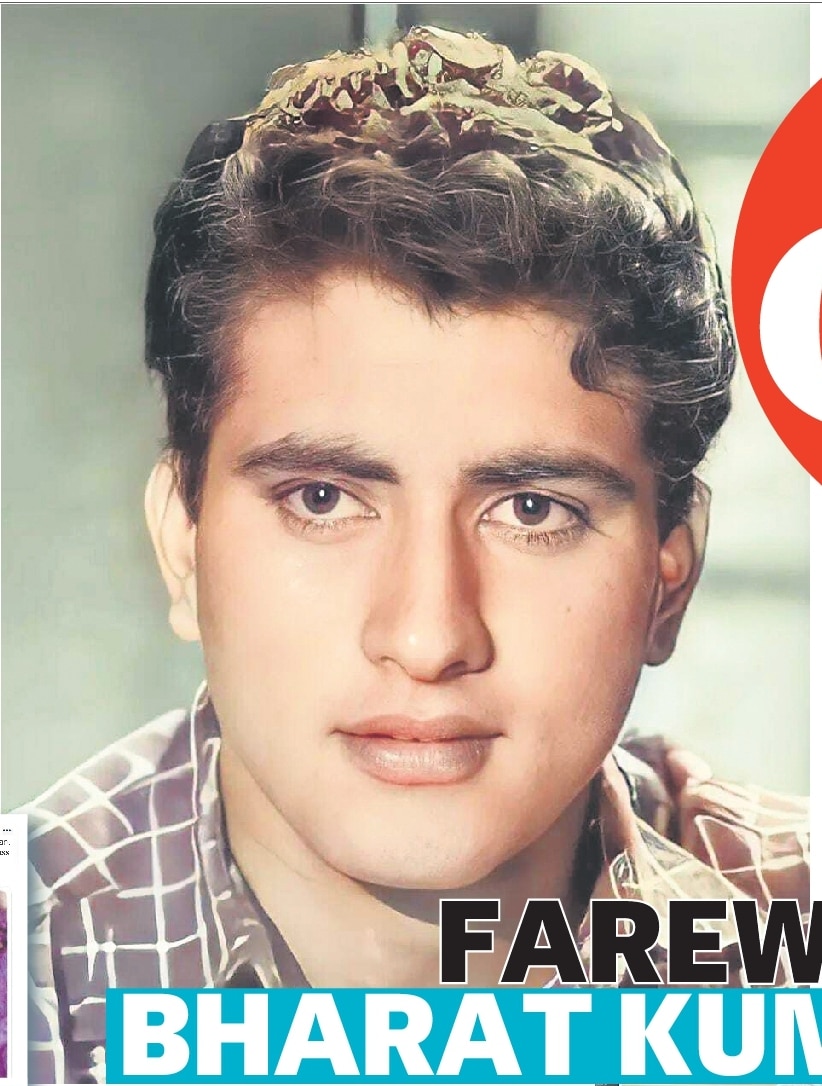
Avijit Ghosh (THE TIMES OF INDIA; April 5, 2025)
Manoj Kumar, who constructed and embodied Hindi cinema's ultimate nation-loving hero, Bharat, in blockbusters such as ‘Upkar' (1967), ‘Roti Kapada Aur Makaan' (1974) and ‘Kranti' (1981), passed away early Friday. He was 87. The actor was bedridden for the last few years battling health issues, his son Kunal Goswami told PTI. He was admitted to hospital for pneumonia some weeks ago.
A recipient of the Dadasaheb Phalke award in 2016, Kumar also starred in a bunch of stylish whodunits, notably ‘Woh Kaun Thi' (1964) and ‘Gumnam' (1965) and successful crime dramas such as ‘Sanyasi' (1975) and ‘Dus Numbri (1976)'. But it was Bharat — the screen name he often took in the films he produced and directed — that defined his image.
Bharat's idea of patriotism evolved over time. He was a nation builder in ‘Upkar' ploughing the fields, battling the enemy outside and personifying Prime Minister Lal Bahadur Shastri's slogan, ‘Jai Jawan, Jai Kisan'. In ‘Purab Aur Paschim' (1970), he was a cultural nationalist defending ‘Bharatiya sanskriti' from the ‘polluting' West while insisting that sari is better than skirt. Bharat rarely touched his heroine even though the movies weren't exactly shy in displaying the female anatomy.
Manoj Kumar constructed Hindi cinema's ultimate nation-loving hero, Bharat— the screen name he often took in the films he produced and directed.
In the 1970s when corruption and joblessness took centre-stage, the unemployed Bharat took on the enemy within, the black marketeers, in ‘Roti Kapada Aur Makaan' (1974), a film that started the multi-starrer trend in Hindi cinema. And in ‘Kranti', he time-travelled to the 19th century to fight brutish colonial masters.
Over the decades, the name, Bharat, blended Kumar's celluloid and private identities, looming large in public consciousness. "Is naam ka bahut bojh hai mujhpe. Zaroorat se zyada zimmedariyan dalta hai (The name burdens me. It puts added pressure and responsibility)," he once said in an interview.
Kumar's personal life was remarkably free from the controversies that gossip mags hungrily fed on in the 1970s and 1980s. Born in 1937 in Abbottabad, a town in north Pakistan, Kumar lost his uncle to Partition violence. At 10, he arrived in the capital, growing up in the refugee colonies of Kingsway Camp and Hudson Line in Delhi. His infant brother, Kuku, too died in the same period. "Bahut rota hua bachpan tha (I had a very sad childhood)," he said in Guftagoo, a Rajya Sabha TV show.
Recalling a moment in Delhi's Tis Hazari hospital during the Partition riots, he said, "When the sirens blared, the doctors and nurses would take shelter in the basement. My mother screamed. Kuku had died. I was angry. I took a lathi, beat up doctors and nurses. Later we immersed him in the Yamuna. As the body sank, I felt I was sinking. My father made me promise that night I will never fight again." The boy kept his word. His father was a poet who was given the pen name "khizr" (the knowledgeable) by eminent poet Allama Iqbal, he said.
Kumar got interested in movies after watching Dilip Kumar in ‘Jugnu' (1947). He even took his celluloid name, Manoj Kumar, after the character played by Dilip Kumar in ‘Shabnam' (1949), an actor who was to influence his style. His real name was Harikrishan Goswami.
A graduate from Delhi's Hindu College, Kumar arrived in Bombay in 1956. In TV shows, he recounted facing abuse, sleeping on railway platforms and getting beaten by cops before making his debut in a small role in director and relative Lekhraj Bhakri's ‘Fashion' (1957). He made his leading man debut in H S Rawail's ‘Kaanch Ki Gudiya' (1961) and survived a series of flops before striking gold in Vijay Bhatt's social drama, ‘Hariyali Aur Raasta' (1962).
Tall, fair and handsome, Kumar became a reliable box-office brand, delivering hits such as ‘Himalaya Ki God Mein' (1965), ‘Sawan Ki Ghata' (1966) and ‘Neel Kamal' (1968), a reincarnation yarn. The engagement with nationalism started with ‘Shaheed' (1965), where he played revolutionary Bhagat Singh. The film received National Award for Best Feature film in Hindi. Made at the request of then PM Shastri, his directorial debut ‘Upkar' (1967), partly shot in a village on the outskirts of Delhi, became a super hit. No song encapsulates rural India's idealized image better than lyricist Gulshan Bawra's ‘Mere desh ki dharti...'
As Kumar's career progressed, he developed a drawl for dialogue delivery; a signature hand movement across the face became more pronounced. Critics scoffed at the mannerisms but fans didn't mind. He also graduated to writing, editing, producing and directing his movies. In the 1980s, he even wrote songs, making him an accomplished all-round talent.
Manoj Kumar's multi-starrer historical ‘Kranti' (1981) was his biggest box-office hit. But thereafter the winners dried up. His final appearance as a leading man was in the vastly outdated ‘Clerk' (1989) which showcased Pakistani stars, the Rampur-born Mohammad Ali and Zeba Ali.
Kumar was married to Shashi, whose mother Savita Behen was a Congress politician of Delhi, who was nominated to Rajya Sabha, recalls Vivek Shukla, a chronicler of the capital. Initially a Congress supporter, Kumar joined the BJP in 2004.
His death on Friday was mourned widely. "He was an icon of Indian cinema, who was particularly remembered for his patriotic zeal, which was also reflected in his films. Manoj-ji's works ignited a spirit of national pride and will continue to inspire generations," posted Prime Minister Narendra Modi on X.
-----------------------------------------
HINDUSTAN TIMES (April 5, 2025)
Legendary actor-filmmaker Manoj Kumar breathed his last on Friday at Kokilaben Dhirubhai Ambani Hospital in Mumbai. He was 87. Manoj was affectionately known as Bharat Kumar for his portrayal of patriotic characters in films such as Shaheed (1965), Upkar (1967) and Purab Aur Paschim (1970). He is survived by his wife Shashi Goswami, and sons Kunal Goswami and Vishal Goswami.
Manoj died due to cardiogenic shock following acute myocardial infarction (heart attack). He was also struggling with decompensated liver cirrhosis for several months, according to PTI.
Born Harikrishan Goswami on July 24, 1937, in Abbottabad (now in Pakistan), Manoj began his career in the late 1950s. He emerged as one of Bollywood’s biggest stars in the 1960s and ’70s .
Apart from his patriotic films, he also has hits such as Hariyali Aur Rasta (1962), Gumnaam (1965), and Do Badan (1966) to his credit.
Manoj was known for his bold stance as an artiste. He sued and won a case against some of the laws imposed by then Prime Minister Indira Gandhi during the Emergency in 1975.
Over the course of his illustrious career, Manoj has received several awards and honours, including the Padma Shri, Dadasaheb Phalke Award, and National Film Award.
Actor Saira Banu, who acted with Manoj in films such as Purab Aur Paschim (1970), says, “He was unwell for a very long time. He was such a dedicated man... In later years, Manoj ji remained very close to us. We were both people of very few words, but we worked comfortably together.”
‘Was at peace with his loved ones’
Manoj’s son Kunal Goswami told ANI, “He was unwell for a long time, but he overcame everything with great intensity. It is God’s grace that he passed away peacefully. He was very happy, though a little unwell due to his age.”
Kunal also confirmed that Manoj’s last rites will be performed at 11 am today at the Pawan Hans crematorium in Vile Parle (Mumbai).
-----------------------------------------
“Veteran actor Shri Manoj Kumarji passed away peacefully early this morning around 3.30, due to age-related health issues. He had been hospitalized for the past few weeks.”
- Dr Santosh Shetty, CEO and Executive Director, Kokilaben Dhirubhai Ambani Hospital
With Pathaan's success, Shah Rukh Khan passes where Amitabh Bachchan and Dilip Kumar did not
8:44 AM
Box Office India Trade Network
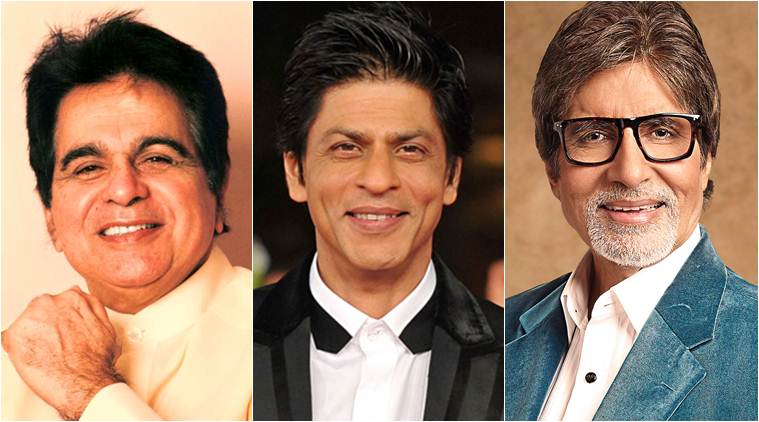
The 100 year plus history of cinema in India has seen around seven genuine superstars or megastars. We say genuine as regional superstars are called superstars today while stars and mini stars also get called superstars; so the word superstar looses value. When historians write about Indian cinema, then it may well be that the names of Dilip Kumar, Amitabh Bachchan and Shah Rukh Khan will be at the top of the pile due to various reasons.
In reality, these things are very region based as X can be the biggest ever in one region and then this X can be number 5 of all time in another region and huge essays can be written who was greatest where and when but that is for another day. However, there is a huge huge similarity in the career of Dilip Kumar, Amitabh Bachchan and Shah Rukh Khan and it becomes even more uncanny that all three are among the biggest superstars if not the biggest India has ever seen.
All the three superstars had a hiatus in their respective careers and not only were they all at a similar age but it was also for a similar period and it looks like Shah Rukh Khan may have passed where the other two legends did not.
Dilip Kumar took a break at the age of 53 post BAIRAAG in 1976. This film is seen as a flop in the industry but as per box office collections, it was a HIT or even SUPERHIT. But prior to this Dilip Kumar had not seen a hit for six years and BAIRAAG was a much delayed release. Som the decision to take a break was probably taken much before the release of BAIRAAG.
BAIRAAG was released in October 1976 and then Dilip Kumar came back with KRANTI in February 1981 which was a break of 52 months. KRANTI broke all first run box office records but Dilip Kumar came back as character artist rather than the lead. Its another matter that he set a precedent that his films become set around this older character rather than leads and many also became huge BLOCKBUSTERS. This sets him apart from all the actors and is basically why he is the greatest ACTOR India has ever seen.
Amitabh Bachchan took a break at the age of 49 post the release of KHUDA GAWAH. This film did not live upto expectations due to the huge costs but was a good grosser and the biggest of that year in some circuits. But generally except for AAJ KA ARJUN, the films of Amitabh Bachchan had not been performing as they should for a few years. KHUDA GAWAH was released in May 1992 and it was break of 60 months as MRITYUDAATA came in May 1997. He did a guest appearance in INSANIYAT in between but that was a long delayed film. Amitabh Bachchan came back as main lead but the film just did not work and nor did others as lead. Hence, he eventually had to shift to character roles. It was still a great career as a character artist and is still going strong today but the sort of films and roles Dilip Kumar got was not there for Amitabh Bachchan.
Shah Rukh Khan took a break at the age of 53 post the release of ZERO and there is not much to say about the fate of this film and also the few films that came before ZERO. ZERO was released in December 2017 and Shah Rukh Khan came back with PATHAAN in January 2023 which was break of 61 months and it has smashed the box office. The difference here is that Shah Rukh Khan has not comeback as a character artist like Dilip Kumar but main lead. And when Amitabh Bachchan did come back as main lead, it led to failure while Shah Rukh Khan has succeeded and how. Basically he has gone to where the legends could not go post the hiatus they all took.
There can be a new chapter of super success written depending on how the story unfolds from here. This is a different Shah Rukh Khan from before just not on screen but as the way things are done also. Shah Rukh Khan was the king of promotion and it was his methods that the rest followed and are still following today. This is while Shah Rukh Khan himself has changed to keeping a low profile which is actually still a must for a genuine superstar or star though many don't see it that way. You see all these actors promoting films with stupid interviews all over the digital space, there are these Instagram videos and shorts or reels or whatever they are called sort of telling the public you can see me on these regularly for free so no need to come and watch my films and the public does as they say. The difference now with SRK maybe is that the message will be that if you want to see me then see me on the big screen and with this scene of exclusivity with the correct product and the sky will be the limit. Both will have to go hand in hand but the potential to create history with this mix is huge.
Also if this is the way SRK goes, then just like he taught the industry about promotion and he may now teach that it is all pretty pointless now and its your film and your exclusivity that urges fans to watch you in the cinema hall. This actually would be far important than any box office history as it will put the film industry on the correct lines.
Dilip Kumar will remain the greatest actor ever of Hindi cinema
8:49 AM

Box Office India Trade Network
One of the greatest legends of Indian cinema, Dilip Kumar, passed away at the age of 98 due to a prolonged illness. Dilip Kumar started his career in just before Independence in 1944 with JWAR BHATA and had a defining career of around 55 years and a film count of only 56 films.
His first film JWAR BHATA released in 1944 and success was not too far away as films like JUGNU (1947) and SHAHEED (1948) scored at the box office after which there was no looking back. Although these things are always arguable, the fact is that Dilip Kumar is the greatest actor that the Indian screen has ever seen. The biggest actors who have come after have imbibed from him and even the actors today who may not even be aware that they are being inspired by Dilip Kumar but who they think they looking up to was in all probability inspired by Dilip Kumar. Basically acting in India all started from this man.
There was a phase in the late 40's and early 50's that his films were working only because the audience was coming to see his acting. These slow films which we can call towards the dark side were working just because of the histrionics of Dilip Kumar as no one before had seen such acting. The masses were lining up in cinemas across India to see films which may not be offering huge entertainment but they did not care as all they wanted to see was the histrionics of Dilip Kumar. This was the period where Dilip Kumar got the tragedy king tag. This has never happened with any other actor as they had to be backed by a genre or more commercial elements to pull through and this holds till today.
These films were becoming HITS due to the histrionics and then there were the BLOCKBUSTER films like AAN, AZAAD, INSANIYAT, NAYA DAUR, MADHUMATI, PAIGHAM and KOHINOOR which were more in the commercial element of those times and smashed box office records. These films created Dilip Kumar the Superstar The likes of AAN, AZAAD and INSANIYAT also set the precedent for that big budget Hindi commercial potboiler which was to dominate Hindi cinema for years and still does.
The peak of the career came in the early 60's with films like MUGHAL-E-AZAM (1960) and GUNGA JUMNA (1961) which created history and remain today among the biggest BLOCKBUSTERS of Hindi cinema. The performance in GUNGA JUMNA is also probably the greatest ever by an actor in India. The workload slowed after that though the big HITS still came with RAM AUR SHYAM (1967) and GOPI (1970) but it was difficult now to fit into that traditional hero format due to age.
Dilip Kumar took a break for a few years and then did something that no actor ever managed to do before or after as he returned as more of a character actor. But this character actor was the main lead of these films and drove those films to huge success. Films like KRANTI (1981), VIDHAATA (1982), KARMA (1986) and SAUDAGAR (1990) all were were BLOCKBUSTER films and all driven by Dilip Kumar despite playing older characters. There were others like DHARAM ADHIKARI and KANOON APNA APNA which also saw average success. This was the part of his illustrious career which sets him apart from all other actors as no one else has managed to get such success as a character artist. It has to be said that you have to be a Dilip Kumar to get such roles without being the hero and there has only been one Dilip Kumar.
Simply put Dilip Kumar will remain the greatest actor ever of Hindi cinema unless we see some miracle over the next 100 years.
Dilip Kumar was the first method actor in world cinema-Javed Akhtar
8:21 AM
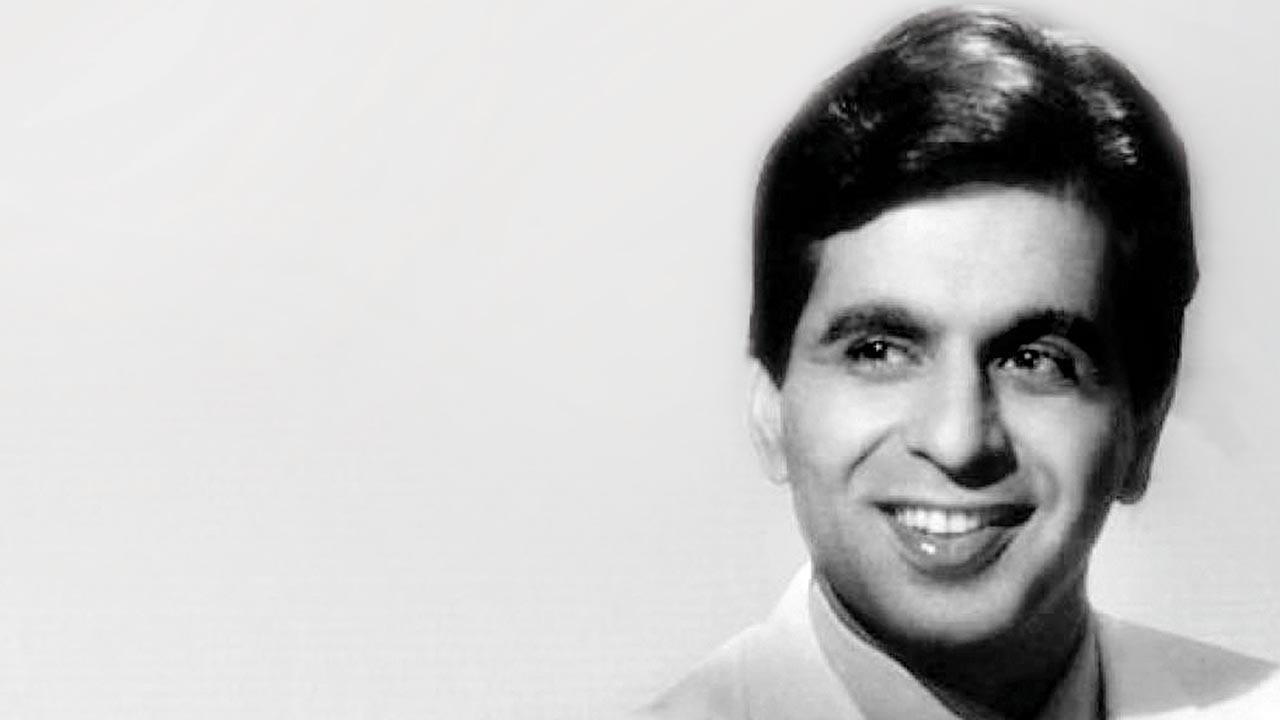
Acclaimed writer, who credits the thespian for his most memorable films, recalls how Kumar introduced melodramatic Bollywood to immersive acting
As told to Upala KBR (MID-DAY; July 8, 2021)
I first saw Dilip saab on screen when I was six or seven years old. My family was pleased that I had made it to the prestigious St Mary’s School in Lucknow, and wanted to treat me. They asked whether I would like to go to the zoo or watch a film, and I chose the latter. That led me to Aan [1952], the first movie I remember watching. Since then, Dilip saab was my favourite as I went on to devour Devdas [1955], Madhumati [1958], Gunga Jumna [1961], and many more films.
Decades later, when I was asked to speak at the release of his autobiography [The Substance And The Shadow], I said that each of us have our mental dictionary, where we conjure our own meanings. To me, the meaning of dignity has always been Dilip saab. He epitomised sophistication and refinement.
He brought new sensibilities [to Indian cinema]; that’s what makes him unforgettable. He found a new language and style — method acting. We know that Russian theatre director-actor Konstantin Stanislavski had invented method acting. I have no idea whether Dilip saab had read about his form of acting, or developed his own style, but [the superstar] was cinema’s first method actor in the world. While Marlon Brando is credited for [introducing] the form, he was six years junior to Dilip saab, in terms of his career. Dilip saab has gone unsung on this count.
Since Salim [Khan, writer] and I began our career in 1971, we were keen to write a film for Dilip saab. Our dream materialised with Ramesh Sippy’s Shakti [1982]. After that, we went on to work with him on Manoj Kumar’s Kranti [1981], Duniya [1984] and Mashaal [1984].
The distinguishing factor about him was that he knew that if the dialogues were powerful, an actor’s portrayal should be understated. [Conversely], in a scene in Paigham [1959], he is telling Vyjayanthimala’s character how he will move cities, regardless of whether he lands a job or not. The dialogues were prosaic, but his delivery made it sound as beautiful as a romantic scene. He would always go beyond the lines and make the scene his own. Also, unlike most actors whose five takes look identical, no two takes of Dilip saab would be similar.
Nobody can romance like him on screen. Most actors are so deeply in love with themselves that even when they look at their heroines, they want to see how they are looking. But when he looked at his heroines, he admired and appreciated them. In that moment, he surrendered [himself] to her, making it look so romantic.
Over the past decades, many actors have followed his style [of method acting]. They have no idea where it has come from. Only a few artistes today have the gravitas and dignity that he did. With [the passing of Dilip saab], an era of sensitivity and culture has ended.
Dilip Kumar's realism and brooding screen presence had a seminal influence on generations of actors to come
8:02 AM

Avijit Ghosh (THE TIMES OF INDIA; July 8, 2021)
Dilip Kumar’s best encapsulated the finest in popular cinema. Secure in his craft, he acted only in 60-odd films in a career spanning more than five decades. Kumar, whose real name was Yusuf Khan, even refused the part that made Omar Sharif a Hollywood star in David Lean’s Lawrence Of Arabia.
His brooding intensity and comic flair influenced Bollywood A-listers such as Rajendra Kumar, Manoj Kumar and Amitabh Bachchan. An obsessive perfectionist, he learnt to play the sitar for a song sequence in Kohinoor. Kumar was so immersed in the self-destructive protagonist of Devdas (1955) that he had to undergo psychiatric counselling. The doctor advised comedies as therapy. And he excelled in them too.
In the pre-independence era, Pramathesh Barua and K L Saigal had swayed a million hearts as Devdas. Yet a generation later Dilip Kumar made the part his own. He induced intensity into loving and losing in a way that pain became indistinguishable from pleasure.
His most-remembered performances had distinct tragic undertones. As a conflicted prince who rebels against his father, the emperor, for the woman he loves, Kumar was starch-perfect with his diction in Mughal-e-Azam. A scene with Madhubala, where he fondles her face with a peacock feather, is iconic for its eroticism.
A notable moment in his career came with Ganga Jumna (1961) where he conveyed the despair of the innocent villager forced to become an outlaw. “To me, it was his ultimate performance,” Amitabh Bachchan told TOI in 1990. Ironically, the Censor Board recommended major cuts to it on grounds of vulgarity and violence. The film was released following Prime Minister Jawaharlal Nehru’s intervention. But the struggle to get it exhibited took its toll on him. He never produced a film again.
Like Raj Kapoor, and Shah Rukh Khan, Kumar’s roots were in Peshawar where his father was a fruit merchant. The family shifted to Deolali near Nasik, and Bombay, in late 1920s.
He loved watching movies. Kumar once said he had watched For Whom the Bell Tolls, starring Ingrid Bergman, 21 times in seven days. Among others, he was influenced by the 1930s Hollywood star, Paul Muni.
A chance meeting in Nainital with Devika Rani, a top star of the 1930s who co-owned Bombay Talkies, led to his debut in Jwar Bhata (1944). He picked the screen name from three options -- Vasudev and Jahangir being the others -- provided by renowned Hindi writer Bhagwati Charan Verma, then associated with the film studio, revealed film historian Sanjit Narwekar in Kumar’s biography, The Last Emperor.
After watching it, Baburao Patel, the much-feared editor of Filmindia, whose reviews could make or mar a film those days, wrote, “Dilip Kumar, the new hero of Bombay Talkies, is an anaemic addition…He looks gaunt and famished and strikes one as a long ill-treated convict who has escaped from a jail…His acting efforts in this picture amount to nil.”
But Kumar improved in Nitin Bose’s Milan (1946), a profitable adaptation of Rabindranath Tagore’s Nouka Doobi. Kumar once said, “I learnt from Nitin Bose the value of silence,” as evident in his signature pauses in later films. His first superhit was the tragic Jugnu (1947), with Noorjehan as leading lady.
Historian Ashok Raj describes the years between Jugnu and Ganga Jumna (1961) as “the classical period” of his career, ranging from tragic love stories (Andaz, Devdas), swashbuckling costume dramas (Azad, Kohinoor) and semi-socialist yarns (Naya Daur, Paigham) to the romantic supernatural (Madhumati), the experimental (Musafir), where he sang his only film song (Laagi nahi chhute), and even a Left-leaning project (Footpath), a proto-Deewar.
After Ganga Jumna, Kumar took a break, acting in only two flops in the next five years. His marriage to Saira Banu in November 1966 -- he was 44, she was 22 -- proved lucky for him. Kumar’s double-role venture, Ram Aur Shyam, celebrated its golden jubilee. But by then middle-age had crawled onto his appearance. In the 1970s, Kumar was largely reduced to a yesteryear star.
The thespian made a stirring return in Kranti (1981) and Shakti (1981).The new Kumar was occasionally over the top. But superhits such as Vidhaata, Karma and Saudagar introduced him to a new generation of film buffs. A secret marriage and divorce to a Hyderabadi socialite, Asma, became fodder for gossip magazines during the same phase. There were other unpleasant memories too when he was targeted for his efforts to bridge ties between India and Pakistan.
Now he is gone. But in every movie rerun, Dilip Kumar will continue to astound and enrich us with his gift to lift a scene with silence and soul.
---------------------------

SUHANA SAFAR
- Born as Yusuf Khan on December 11, 1922. He was born in the same month as Raj Kapoor and in the same place, Peshawar, but was two years elder. Yusuf Khan's father was a fruit merchant
- Before joining films, Yusuf Khan worked in a military canteen at Poona; set up a fruit stall next to it with his employer's permission
- He was interviewed for a film career by Devika Rani, wife of Bombay Talkies boss Himanshu Rai. She asked four questions: "Have you ever acted on the stage?"; 'No madam" was his reply; "Would you like to act in films?"; "Yes madam" he said; "Do you smoke?"; "No madam"; "Can you speak Urdu fluently?" "Yes madam"
- He lost his parents and his disabled brother Ayub Khan in rapid succession. This is believed to have deeply affected him in his youth
- The phase from Devdas to Mughal-e-Azam is considered to be the best in his work
- In 1961, he turned producer with Ganga Jumna
- In 1962, he was offered Lawrence Of Arabia, which he turned down. The role was done by Omar Sharif
- In 1970s, his career took a dip with films like Gopi, Sagina and Bairaag failing at the box office. He took a break for six years and returned with Manoj Kumar’s Kranti in 1981
---------------------------

FAMOUS LINES
- Devdas Kaun kambakth hai jo bardasht karne ke liye peeta hai. Main toh peeta hoon ke bas saans le sakoon
- Saudagar Haq hamesha sar jhukake nahin... sar uthake maanga jaata hain
- Mughal-e-Azam Mera dil bhi aapka koi Hindustan nahi ... jispar aap hukumat karein Shakti Joh log sacchai ki tarafdari ki kasam khate hain... zindagi unke bade kathin imtihaan leti hain
- Vidhaata Jagawar agar zindagi mein bada banna hain... toh chhoti harkate chhod do
- Daag Din mein iski zaroorat hoti hai zaalim raat toh khud ek sharab hoti hai
- Aadmi Zindagi bhar doosron ka boj uthataa raha hoon aur aaj khud ek boj ban gaya hoon
---------------------------
FAMOUS SONGS
- Yahaan badla wafa ka bewafai ke siva kya hai Noorjehan-Rafi duet, composed by Firoz Nizami, was from 1947 hit Jugnu
- Gaaye ja geet milan ke Mela (1948) had great songs by Naushad. This one, sung by Mukesh, was memorable
- Meri kahani bhoolnewale Deedar reinforced the tragedy king image. This Naushad tune was sung by Rafi
- Yeh hawa yeh raat yeh chandni Talat Mehmood’s voice suited the thespian; this one by Sajjad Hussain is a classic from Sangdil (1952)
- Aye mere dil kahin aur chal From Daag (1952), composed by Shankar-Jaikishen and sung by Talat Mehmood
- Hum aaj kahin dil kho baithe Naushad’s score and Mukesh’s sonorous voice from Andaz (1949)
- Suhana safar aur yeh mausam haseen One of Dilip Kumar’s personal favourites, from Madhumati (1958), rendered by Mukesh, scored by Salil Chowdhury
- Nain lad jai hain Dilip Kumar did a fast-paced folk dance for this Ganga Jumna (1961) number. Naushad-Rafi combination again

40 years of Kranti: Analyzing the craze unleashed by this multi-starrer
7:29 AM

Box Office India Trade Network
KARNTI released 40 years ago on this date and remains one of the
greatest films in Hindi cinema where the audience went mad over the film
from the very first show and then the film went on to create history. KARNTI was about revolutionary farmers who take an oath to take on the British Raj. The story was told in an epic way; it was an almost perfect storytelling for the Indian
audience which struck a chord and how. It was also backed up with
blockbuster music and heart wrenching emotions and all this puts it
among the top ten films ever of Hindi cinema. KARNTI is no doubt the
biggest patriotic film ever seen in India with GADAR - EK PREM KATHA being next best.
The film released on 13th February 1981 in Mumbai, Delhi/UP, East
Punjab, CP Berar, CI and Rajasthan to packed houses with a struggle to
find tickets for weeks. The film then released in South a couple of
weeks later while it made its entry into West Bengal and Bihar in April
to an extraordinary response.
The film had a huge cast featuring Dilip Kumar, Manoj Kumar, Shashi
Kapoor, Hema Malini, Shatrughan Sinha and Parveen Babi among others and
was directed by Manoj Kumar who had four huge HITS to his credit. But KARNTI was set to go to another level compared to his earlier films.
At the time of release, it was the fastest earner of all time setting
first run records in practically all circuits barring Mumbai and South.
It was the second highest grossing film ever behind SHOLAY but that is
because no film could come close to the repeat run business of SHOLAY and nor will any film be able to. KARNTI had higher business than SHOLAY if we count first run only.
If we look at it in terms of business today, the film may well be showing
a number of over 600 crore nett or even 700 crore nett. It celebrated a
silver jubilee in 26 centres and even in places like Mirzapur (UP) and
Jungadh (Gujarat) where jubilees were very rare. There are hardly ten
films in history that have celebrated jubilees in over 25 centres.
The craze of the film was such that in places like Delhi, Rajasthan, UP
and Haryana, there were shops selling KARNTI T-Shirts, jackets, vests and
even underwear. The year 1981 was a big one for the industry which saw
some huge BLOCKBUSTERS like NASEEB, LAAWARIS, EK DUUJE KE LIYE, LOVE STORY and MERI AAWAZ SUNO, etc but KRANTI stood apart and was at the top of the pile.
The film in Delhi/UP was so huge that it released with 24 prints and
within a few weeks you would except some of these prints going down into
smaller centres for monetization. But even after ten weeks of release, it
had only hit Delhi city and 19 towns and cities of UP and still over
100 towns and cities were yet to go. The collections in all
major centres of UP were just refusing to drop week after week. The
collections after ten weeks in places like Agra, Gorakhpur and Varanasi
were still competing with new releases.
The first ten week figures in
Delhi/UP are as follows.
Week One - 15,01,254
Week Two - 14,93,362
Week Three - 14,35,710
Week Four - 14,08,561
Week Five - 12,14,008
Week Six - 12,01,502
Week Seven - 11,05,223
Week Eight - 11,39,816
Week Nine - 10,78,713
Week Ten - 10,10,027
TOTAL - 1,25,88,176 (10 weeks)
Week One - 15,01,254
Week Two - 14,93,362
Week Three - 14,35,710
Week Four - 14,08,561
Week Five - 12,14,008
Week Six - 12,01,502
Week Seven - 11,05,223
Week Eight - 11,39,816
Week Nine - 10,78,713
Week Ten - 10,10,027
TOTAL - 1,25,88,176 (10 weeks)
KARNTI grossed 1.25 crore nett in Delhi/UP in ten weeks and then went
on to do over 3 crore nett in its full run. Before HUM AAPKE HAI KOUN came in 1994, there were only three films in history to cross 3
crore nett in Delhi/UP and they were SHOLAY (1975), KRANTI (1981) and
MARD (1985).
Laxmii reiterates the importance of the box office
8:30 AM

Box Office India Trade Network
LAXMII released last week again reiterates the importance of the box
office as without this, there is no judge. The film has faced a double
barrel sword with the negativity in the media and the leftover
negativity on social media for the industry. These things will also
happen for the bigger films as it hardly matters if you are negative for
a LOOTCASE, GUNJAN SAXENA or LUDO as that hardly makes noise and is not
noticed.
The ground realities for the LAXMII are different from what they are made out to be. The film has gone wrong in certain points and it would not have done well in all circuits but its not the worst film ever made and actually would have held some appeal for Maharashtra, Gujarat and CP Berar (Nizam may have done decent also). A Diwali release would have bumped up the audience further as Gujarat is phenomenal on Diwali for this genre and Maharashtra also gets a big boost. North would have been struggle as there its grandness and gloss or relatability which works and here the grandness is not there and a transgender theme takes away all relatability.
The scenario takes us back to last year when another Akshay Kumar starrer HOUSEFULL 4 was lambasted by one and all but the results were totally different as it went on cross 200 crore nett and become the highest grosser of Akshay Kumar. Now LAXMII is not a HOUSEFULL 4 in terms of canvas or entertainment so it would have not reached those levels but its also not a PAD MAN or GOLD to remain on the lower side especially on Diwali.
The facts are that if the Coronavirus pandemic had by chance come last year and cinemas were shut then HOUSEFULL 4 would have been called a disaster or a totally rejected film and the only reason it was not called this is because the box office was there to prove otherwise. Yes there are the phenomenal satellite results which continue even till today but those come at a later date. Forget a HOUSEFULL 4 or LAXMII but imagine if there was no box office for the likes of SHOLAY (1975), KRANTI (1981) or GADAR (2001) which are among the most appreciated Hindi films of all time but what was being said about them was the opposite. The box office set the records straight.
What comes out of the mouth can never be taken seriously and this has been seen in the last few months with what has been said about the industry. The mouth is free and there is no cost to open it no matter how much crap comes out from it but the box office has a cost of a ticket so is the actual reality. Last year a terrible film like SAAND KI AANKH was supposed to give competition to HOUSEFULL 4 as the claim was public reports were good so it should at least trend better. But reviews and public reports are two different things and HOUSEFULL 4 even sustained far better.
This year the campaigning seems to be for another disaster LUDO. The film which will be unwatchable for most is being called a good film and again this is where the box office is needed for the actual facts so the stupidity does not last too long as it will now. Just like LAXMII would not have reached the levels of HOUSEFULL 4 then this LUDO would have struggled to even reach a SAAND KI AANKH.
The fact is that the box office is the ultimate judge as a box office vote is through the pocket and not the mouth.
Manoj Kumar's films have become textbooks for aspiring actors and filmmakers for his innovations-Prem Chopra
8:40 AM

Roshmila Bhattacharya (MUMBAI MIRROR; July 23, 2020)
August 15, 1947, is a red-letter day for us as it marks the birth of independent India. Almost a decade earlier, on July 24, 1937, another Bharat was born, in Abbottabad, a small town in the North-Western Frontier Province, then, a part of this country, now in neighbouring Pakistan. The boy who entered the world with a lusty cry was christened Harikrishna Goswami by his aunt, the name chosen because it carried a little of both parents, Harbans Lal and Krishna Kumari. Today, however, it’s Manoj Kumar rather than Harikrishna Goswami that rings a bell. In fact, thanks to his blockbuster patriotic dramas, the actor-writer-filmmaker has come to be known as Mr Bharat.
Prem Chopra, who worked with him in 13 films, including Shaheed, Upkar, Purab Aur Pachhim and Kranti, remembers Manoj Kumar saab as an all-rounder, who not only played the hero to perfection but also wrote, produced and directed his own films. “He could even operate the camera and edit, with the result that his films have become textbooks for aspiring actors and filmmakers for the innovations he introduced, like one-scene-one-shot at a time when there were no visual effects, and technical gimmickry was limited to trolley and zoom shots. Over the years, he’s become an institution in himself,” he asserts.
While Manoj Kumar saab officially made his debut as a director with Upkar, Prem Chopra saab reveals that even though S Ram Sharma is credited as the director of Shaheed, it was their Bhagat Singh who was taking all the calls, including insisting that none of the ‘prisoners’ could shave. “So, all through the making of the film, 75 per cent of which was filmed at the Ludhiana Central Jail, I sported a beard,” narrates the actor, who played Sukhdev in the desh bhakti film and admits he actually felt like one of the nationalists when marching towards the gallows.
The film premiered in 1965 and Prem Chopra saab remembers that the then Prime Minister Lal Bahadur Shastri, who was the special guest, had warned that he wouldn’t stay longer than 10 minutes. “But he was so mesmerised and moved, he sat right through the film, without even an interval break. Upkar was made on his slogan ‘Jai Jawan, Jai Kisan,’” recounts the actor who played Manoj Kumar saab’s younger brother, Puran, a role with grey shades, which, after the success of the film, brought along a flood of offers. As a result, he could finally give up his job in the circulation department of The Times Of India and become a full-time actor. More than half a century later, he’s still going strong.
Shatrughan Sinha, who played a fiery freedom fighter, Kareem Khan, in another of Manoj Kumar saab’s patriotic drama, Kranti, agrees with Prem Chopra saab that he is a “genius” and not just as an actor, producer, writer and director, he also has a terrific ear for music. “He is a complete artiste, and as a person, always serene. I have never heard him raise his voice at anyone on the set, not even on me even though I was notorious for coming late,” Shatru ji reminisces with a laugh.
Irrespective of when he arrived, Manoj saab would smile amicably at his Bihari Babu and tell him to let him know when he was ready to shoot before going back to his corner to work on his lines and those of others too. Instantly, you are reminded of Shatru ji’s evergreen dialogue from the film, “Apni laashon se hum tarikh ko aabad rakhen, woh ladaai ho ki angrez jise yaad rakhe” that still resonates.
So does Prem Chopra saab’s equally popular line, “Shambhu ka dimaag do dhaari talwar hai.” The actor remembers that back then filmmaking was a group activity and the whole team would sit together to discuss and design. “A character like Shambhu Singh was conceived by Manoj saab, but he gave me complete creative liberty to flesh him out,” he recounts.
Shatru ji remembers the actor-filmmaker, who turns 83 on Friday, approaching him for the role of Kareem Khan and telling him that it wasn’t much in terms of footage, but promising that it would make an impact. And sure enough, he reveals, when late producer-director Manmohan Desai saw Kranti, he called Shatru ji to tell him that he was the best. “It taught me a lesson I will remember all my life, that it’s not the length of the role, but the strength of the role that matters,” he signs off with his signature flourish.

Shaheed team with the then PM; Prem Chopra & Manoj Kumar in Upkar; Shatrughan Sinha in Kranti
Dilip Kumar taught me how to understand philosophy of my film’s story & psychology of my characters-Subhash Ghai
7:06 AM

Dilip Kumar and Shammi Kapoor in Vidhaata
Roshmila Bhattacharya (MUMBAI MIRROR; December 13, 2019)
Dilip Kumar is 97 and I’m reminded of a time when, as a cub reporter, I had watched him from afar, as he lounged in the lawn of his bungalow, recounting his journey to my editor. Then, suave in a suit and a tie, he posed with Filmfare’s Black Lady that he’d bagged for lifetime achievement. My biggest regret is that I didn’t get to interview him. Perhaps that’s why, I keep talking to those who knew the man who made me laugh in my growing up years as he strutted around on my black-and-white TV screen crooning, “Sala Main To Sahab Ban Gaya” in Sagina and weatched my mother swoon as he went careening in a tonga to the tune of “Maang Ke Saath Tumhara”. By the time I met him, he was no longer a dashing Casanova with an errant lock kissing his forehead. But he was still just as charming and made me wonder even more about the man behind the matinee idol.
So, I quizzed a filmmaker who decided to become an actor after watching Dilip saab’s Shaheed and Jugnu, then, went on to co-star with him in Aadmi. While it was being filmed, Manoj Kumar would often borrow from his friend’s wardrobe. In the course of a conversation, he recalled how, whenever Dilip Kumar spotted him in one of his costumes, he would smile and say graciously, “Achche lag rahe ho.”
 Thirteen years after the 1968 film about obsessive love, Manoj saab convinced Dilip saab to end a five-year sabbatical to spearhead his Kranti (right). The historical drama was his most ambitious production, with Manoj saab as its writer, director and actor too. For the first four days at RK Studio, he just sat patiently and watched Dilip saab get into character. Then, he was living Sanga, reeling off one perfect take after another. Having known him closely, Manoj saab understood that his role model was a perfectionist who could not be hurried. But once Dilip saab was ready, the assistants never had to remind the thespian to report for work. He’d be on the sets by 11.15 am at the latest, and leave only after taking permission from his producer-director.
Subhash Ghai who directed Dilip saab in three films—Vidhaata, Karma and Saudagar—informs that the two most influential persons in his life till date were both born on same day, December 11. “One is Osho who taught me how to understand the philosophy of life and the psychology of people and stay happy. The other is the emperor of acting, Dilip Kumar, who taught me how to understand the philosophy of my film’s story and the psychology of my characters,” Subhash ji points out.
The filmmaker goes on to add that during Vidhaata he had no idea that Dilip saab and Shammi Kapoor had a spat decades ago and set up his first scene with the two actors in Agra. “Shammi ji was not happy with the scene shot because he had got intimidated by Dilip saab and expressed his resentment to me in his room. He was shocked when I told him that after the shoot, Dilip saab had told me, ‘Subhash, Shammi’s character seems to be a very interesting part of the film and he is a good actor as well. Please see that you increase his role even at my cost. You will be happy,” reminisces Subhash ji, saying that Shammi ji went on to bag the Filmfare Award for Best Supporting Actor for his performance in the film.
How Manoj Kumar managed to get Dilip Kumar to do the 'bogus' film Kranti
7:50 AM

Roshmila Bhattacharya (MUMBAI MIRROR; February 8, 2018)
By the eighties, with half-a-dozen blockbusters to his credit, actor-filmmaker Manoj Kumar was better known as Mr Bharat, a name he owes to movie moghul Sashadhar Mukherjee who addressed him by it three days after the release of Shaheed. I’ve grown up listening to Shaheed’s patriotic track “Mera Rang De Basanti Chola”, Upkar’s “Mere Desh Ki Dharti” and Purab Aur Paschim’s “Hai Preet Jahan Ki Reet Sada” playing unfailingly every year on Independence Day and Republic Day. However, decades later the actor-filmmaker admitted that when he embarked on his most ambitious film, Kranti, set between 1825 and 1875, and focusing on a Ramgarh-born revolution against British tyranny, he wasn’t sure if there would be many takers for a desh bhakti drama, specially amongst youngsters, three decades after India had won its Independence. Yet, despite his apprehensions, the need to spearhead a kranti in modern times prompted him to put a call through to Dilip Kumar despite knowing that the thespian had not made a movie since Bairaag in 1976.
The Dilip Kumar and Noor Jehan-starrer Jugnu, which opened in 1947, was the first film Manoj Kumar saw as a nine-year-old schoolboy, followed by Ramesh Saigal’s patriotic drama, Shaheed, that released the following year. His screen idol went on to become his co-star in Aadmi, and the actor-filmmaker offered Dilip Kumar the lead role of Sanga aka Kranti in his upcoming film, asking lightly, “Raja sahab, ek bahut bogus kahaani hai aur ek bahut bogus role hai. I know only you can do justice to this role. Will you do it?” Intrigued, Dilip Kumar invited him home for a narration. Manoj Kumar waited till his script was complete, before keeping the appointment and then almost got turned away.
Dilip Kumar’s younger brother was in hospital and the actor wasn’t in the mood for a three-hour narration. Manoj Kumar offered to sketch out his story in two minutes and at the end of 120 seconds, the actor noted, “Hmmm, it’s a very fertile land” and pleased that he’d made an impression, the younger actor-filmmaker replied with a smile, “Then let’s plough it together. Fasal achchi hogi.”
Dilip Kumar came out of a five-year sabbatical to find himself confronting Manoj Kumar, who played his son in the film, on a set designed as a cave. “When he was ready I looked through the camera to gauge how he would capture the shot on celluloid and from what I saw, I knew that I was in the hands of an excellent director,” the thespian had reminisced.
Kranti opened on February 6, 1981. It was one of the costliest films of its time with lavish set-pieces, an A-list star cast which included, besides Dilip Kumar and Manoj Kumar, Shashi Kapoor, Shatrughan Sinha, Hema Malini, Parveen Babi, Sarika, Nirupa Roy, Prem Nath, Prem Chopra, Madan Puri, P Jairaj, Pradeep Kumar and Paintal, high-octane dialogue that had theatres across the country resounding with claps and seeties, blood-splattered action and a hit Laxmikanth-Pyarelal score that included “Chana Jor Garam”, a surprise addition to the desh bhakti playlist.
“Apni Dharti, Apna Hai Gagan, Yeh Mera Hai Mera Hai Vatan, Iss Par Jo Aankh Uthayega, Zinda Dafnaya Jayega,, Mera Chana Hai Apni Marzi Ka. Marzi Ya,Marzi Ka Bhai, Marzi Ka, Yeh Dusman Hai Khudgarzi Ka, Khudgarzi Ka…” Ringing with jingoism, this Kishore Kumar, Mohd. Rafi, Lata Mangeshkar and Nitin Mukesh collaboration became another national favourite with the father-son duo of Dilip Kumar and Manoj Kumar standing with nooses around their necks, staring death in the eye.
“I’d written the song to lighten the grim mood of the film. I ended up giving the ‘chana’ (Indian gram) a patriotic touch with these lines,” Manoj Kumar marvelled years later.
Subscribe to:
Posts (Atom)