Showing posts with label Kareena Kapoor. Show all posts
Showing posts with label Kareena Kapoor. Show all posts
I asked Meghna Gulzar if I had to mimic Kareena Kapoor for Daayra-Parvathy Thiruvothu
4:14 PM
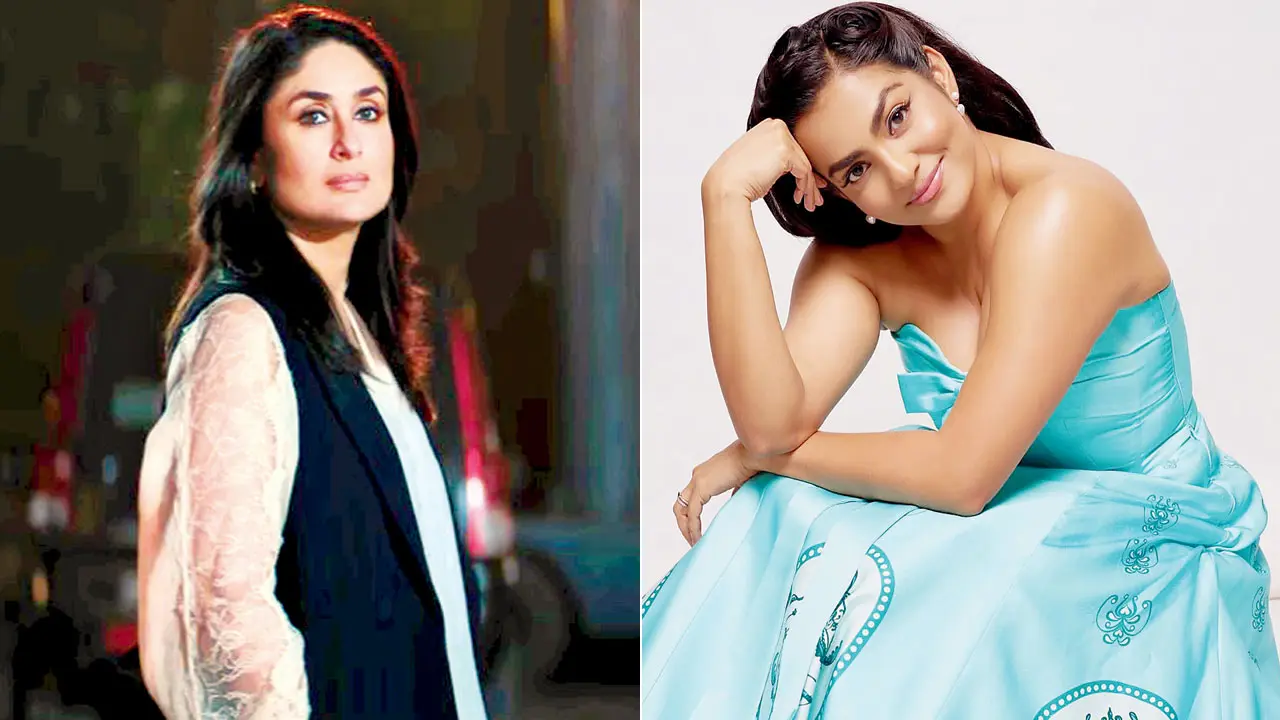
Surprised that Meghna Gulzar wanted her to dub for the Malayalam version of ‘Daayra’, Parvathy Thiruvothu shares how the director advised her against mimicking Kareena Kapoor Khan
Priyanka Sharma (MID-DAY; September 19, 2026)
Yes! That, Parvathy Thiruvothu knew would be her answer, if Meghna Gulzar ever approached her for a project. Sure enough, when she received a call from the filmmaker, the actor jumped off her seat, ready to give her nod. But the minute Thiruvothu heard that Gulzar wanted her to dub for Kareena Kapoor Khan for the Malayalam version of Daayra, she was surprised. “I was spellbound because this offer came from nowhere,” smiled the actor.
According to Thiruvothu, dubbing for oneself is challenging. So, to dub for Kapoor’s Ajooni Kohli — an officer heading a Special Investigation Team that is probing Prithviraj Sukumaran’s character’s handling of a case in Daayra — would be more daunting.
“We may never be able to bring the same voice and texture that we shot with on that day. Many things affect our voice, tenor, and timbre, from the temperature that day to what we ate. It’s almost like you’re mimicking yourself when you’re dubbing. With Kareena, it was a different ballgame. She has owned, chewed, and spat out this magnificent character,” she said.
So, when the actor met Gulzar, she asked what the filmmaker wanted from her voice. The director’s response only made her more excited about the process.
“When I asked Meghna, she said, ‘This is it. Your voice, this is perfect.’ It felt like being chosen by the queen, like the diamond of the season. I asked her, ‘Do I have to try to mimic Kareena or do anything?’ She said, ‘No. What Kareena has done is perfection, now you take it ahead’,” recalled Thiruvothu.
For a movie star, OTT requires a shift in gear-Karisma Kapoor
10:55 AM

Hasti Doshi (BOMBAY TIMES; August 31, 2026)
From a teenage actor finding her way on film sets to an established performer, Karisma Kapoor says her career has been one of constant evolution. In a conversation with Bombay Times, she reflects on growing up in the industry, adapting to new mediums and the role of dance in her life.
‘Being an actor means evolving every day’
After being in the industry for over three decades, Karisma believes an actor’s learning never really stops. “Being an actor means evolving every day. I have not only grown with every film, but every single day. I like to learn and grasp things from various people and various sets. It’s that constant growth that makes you evolve.”
Having started working at a young age, Karisma says much of her growing up happened on sets. “I started very young, in fact, Prem Qaidi released four days before my 17th birthday. So, I’ve literally grown up in the industry. I’ve learned from my experiences, from all the ups and downs. And literally climbed the ladder one step at a time. When you look back and feel that you could have done things differently, it means you’ve grown as an actor.”
‘When you’re doing an episodic show, you need to be on the ball’
Karisma, who in recent times has been part of OTT shows like Mentalhood and Brown, feels each medium comes with its own demands. While she is grateful for the opportunities, she admits that the transition to OTT was challenging initially.
“OTT is very different from filmmaking. If you ask me, it’s pretty tough. Because when you’re doing an episodic show, you need to be on the ball. In one day, you may be shooting scenes from episode one or seven. So, the pace and the way it’s shot is different. For a movie star, OTT requires a shift in gear. Even television is a different ballgame.”
For Karisma, instinct has always mattered more than a carefully mapped-out career. “I’ve always been the kind of person who, if I want to do something, I do it, and if I don’t, I don’t. I’ve never really planned anything in my career. I think I’ve been lucky enough to have had some memorable films and played some amazing characters throughout my career,” says the Raja Hindustani actress.
‘Dance has been an integral part of our lives’
Currently, Karisma is seen judging India's Best Dancer on television. But long before dance became part of her professional identity, the actress says it was something she enjoyed at home. Her memories include dancing with her younger sister, Kareena Kapoor Khan, to songs from the films they watched as kids. “As a child, I was a huge fan of Sridevi. I remember Kareena and I used to dance for our parents to the song Tathaiya Tathaiya, Naino Mein Sapna. Dance has always been important to me.”
Karisma also learnt Kathak as a child and remembers Kareena watching her during her dance classes. “Whenever I practiced with my ghungroos, she loved watching me and listening to the beats. Dance has always been an integral part of our lives, with so many great dancers in the family, including Shammi uncle, Chintu uncle and Shashi uncle, who had their own distinctive styles.”
Animal chal gayi toh chalo sab violence kar lete hain-Kareena Kapoor
10:29 AM

HINDUSTAN TIMES (September 11, 2026)
Kareena Kapoor Khan has questioned Bollywood’s rush to cash in on violence after the success of cousin Ranbir Kapoor’s Animal (2023), saying the industry tends to follow whatever formula is working at the box office.
Speaking during a recent town hall interaction with youth platform Yuvaa, the 45-year-old actor said, “Our audience is smarter than we think. They know exactly when it’s a good film, and they want to watch it. So today it is not just about a young love story. All these things are very dated, ki abhi violence chal rahi hai… ki abhi Animal chal gayi toh chalo sab violence kar lete hain. We are herd mentality; what to say?”
She also said younger viewers were increasingly questioning formula-driven filmmaking. “Now filmmakers cannot go and make a film saying it’s a comedy so people will definitely watch it! Not every film is going to make Rs. 200 crore or Rs. 500 crore. I feel like we are changing it and the audience is helping us.”
Directed by Sandeep Reddy Vanga, Animal starred Ranbir as Ranvijay Singh, whose obsessive relationship with his emotionally distant father, played by Anil Kapoor, drives the violent action drama. The film grossed over Rs. 900 crore worldwide, and a sequel, Animal Park, is in development. Kareena, meanwhile, will next be seen in Daayra.
When I started out, I was about 21 and slightly effeminate with long hair-Saif Ali Khan
9:24 AM

Madhureeta Mukherjee (BOMBAY TIMES; September 9, 2026)
It’s been three decades of Saif Ali Khan — from the charming young star of the ’90s to one of Hindi cinema’s most instinctive and versatile actors. This year, the actor has much to celebrate — Dil Chahta Hai turns 25, Omkara completes 20, and Saif reunites with Akshay Kumar after more than two decades in Priyadarshan’s Haiwaan, which releases on September 11. At 56, there’s plenty to look back on — and Saif has plenty to say. Our guest on the JBL Live Headphones presents Bombay Times Lounge brings his trademark wit, candour and perspective to a conversation spanning films, fame, family and everything in between. Excerpts from the conversation.
Saif, you arrived as a star over three decades ago. At what point in your journey did you feel that you’re becoming the kind of actor that you want to be and that you belong here?
I think I’ve always felt very comfortable here and felt that these are my people. I had a very academic kind of exposure when I was young. My parents sent me to a brilliant school, and they had a very academic career in mind for me. But I felt a little bit strangled by the idea of sitting behind the desk for so long, even though now I love it and I love reading, and I’m trying to reconnect. But deep down, I also realized I belong to a world like this and feel at home here. I don’t know exactly when I started enjoying it so much. I used to hear international actors talk about things like craft, technique and form and I had no idea about it. So, I read a few books, and they spoke to me. I understood what they were saying, and I tried to apply some of it. And some of it worked out quite well. This is such a remarkable profession; the learning is endless. Every now and then, you break a little door open and enter a room. And you’re like, wow, this is possible.
For a long time, you were the quintessential charming guy, the uber cool kind of romantic hero. Did you have to try too hard to break out of that box?
I was very young when I started out. I was about 21 and slightly effeminate with long hair. I wasn’t really an alpha male, macho kind of guy. So, it took a while for me to find a place, but the obvious place was a kind of sweet, chocolatey kind of guy. I enjoyed it very much…it’s nice to make people smile and have a happy energy around me. And you shouldn’t take that for granted, because ultimately, people talk about acting and all that, but the audience has to like you. It’s luck and their acceptance. When I see those old films of mine, I feel happy because I believe I was really honest in them. I think I became a bit grumpy later.
After over two decades, you are reuniting with Akshay Kumar for Haiwaan. Did the two of you slip back into an old rhythm, or did you discover a new one?
Well, it was great working with him again, though the intention of the movie was not to bring us back together. It was a role that Priyan sir (Priyadarshan) was finding hard to cast. He had asked a couple of people. I had confirmed my part, but they needed this dangerous villain. When he narrated it to Akshay, he asked, “Can I do it? I really want to have fun and play a bad guy.” Both Priyan sir and I couldn’t believe it. So, Haiwaan wasn’t designed for Akshay and me. It’s a bonus that we share good chemistry, but the film doesn’t rely on that. In fact, we have very few scenes together.
Earlier, when Akshay and you worked together, like in Main Khiladi Tu Anari, there was almost a neat division: he was the action hero, and you were the charming, cool, slightly irreverent one. Now that has flipped, in fact, he’s on the dark side.
Yes, I was cute and funny, and I think that worked then. Mahesh Bhatt in those days would say, “Together you two make a super person.” I think that is how different body types and different energies mix together. So, there’s a reason why Akshay and I delivered successful films together. I am kicked about finally getting a chance to play a hero in a film with him.
Interestingly, come September 11, it will be like your family film festival – Haiwaan releases on September 11, the following week, Kareena’s Daayra and Kunal Kemmu’s Vibe hits the theatres.
That’s a coincidence and quite interesting. I don’t know how honest I can be. I can give you an anodyne answer and tell you all films should do well, and everyone is so talented. But the actual truth is…everyone’s film should do well, but mine should do slightly better. You know, blood is thicker than water and films are thicker than blood (laughs). All the films are a little different, so let’s hope all of them do well. Kunal is very talented; I loved his trailer. Actually, I only want my wife’s films to run and be super successful. She’s such an amazing actress. A happy wife is the best situation for me, always (laughs). And I believe, in the past two films have run at the same time and done well.
Last year’s stabbing incident in your house, where you were severely injured must have left you and your family completely shaken up. Did you all take a while to move on from it?
We’ve dealt with it remarkably well. I think the person who got most affected was my wife, who is a very sensitive person. It was insane, and I’m still not 100% over it. Even now, if I see a knife, I react. I start thinking about the incident and then, I feel incredibly lucky to have survived it. I can’t believe how lucky I was, because the knife broke. It was the worst knife in the history of knife attacks (laughs!). We’re laughing now, but if he really had a proper Rambo knife, I’d be dead. I was cut everywhere and it didn’t kill me, which is why I can’t get over how lucky I got. But there’s another side to this, which I understand, and I’m not just saying this because I am on camera. I mean, these things happen because of inequality, right? And because someone is looking for money and looking out for himself. I would happily forgive this person also. I don’t think he knew where he was or what he was doing. And if he had known, then it wouldn’t have happened. It was a very unfortunate incident, where I got very lucky and he got unlucky because I think he’s in a lot of trouble.
Do you see life differently after that incident? You have been talking about how short life is and how you want to be present in every moment…
I remember lying in hospital thinking, what I really want to do is have a glass of very good wine with some of my good friends. And that is actually all that matters. Of course, good work matters and these things feel great. But I want to be present and enjoy my life. It would be okay if my life had ended because there was also that feeling. There’s a lot of adrenaline rush at that moment which can, in a way, make you happy. There was a feeling when I was covered in blood… that it’s been a great life and I have had a blast. I just remember thinking that.
Is that really what ran through your mind at that moment?
Yes, yes. I thought about how making Hum Tum was a blast. Travelling to America and doing those shows was the best career I could have. It’s all been great. My kids are amazing. I just want to hold someone’s hand and go. I was okay with that. But what I wasn’t okay with, I think, was to be paralysed. So yes, what has changed about my outlook is that I want to be more present.
On a lighter note, tell me…at 56 what do you care less about?
Well, I would like to say what other people think. But I think I’d say, I would like to care less about competing. I think you’re always a little bit competitive, even though you try not to be or project that you’re not, but you end up being a little of that.
It’s hard to make any film, whether its budget is Rs 20 cr or 200 cr-Meghna Gulzar
11:10 PM

Director Meghna Gulzar returns with an investigative drama, Daayra, starring Kareena Kapoor Khan as a cop. She talks about justice, police brutality, budgets, and the box office
Mohar Basu (MID-DAY; September 6, 2026)
Meghna Gulzar has made a career out of walking into complicated, uncomfortable corners of reality and making visceral cinema of them — be it with her debut movie Filhaal, or her recent works like Talvar, Raazi or Chappak. With her new work Daayra, the upcoming investigative drama headlined by Kareena Kapoor Khan and Prithviraj Sukumaran, she finds herself once again dealing with a story rooted in real incidents and expecting strong reactions in all shapes and forms.
In her first conversation about the film, Gulzar sets the record straight on a question that has inevitably followed Daayra since its posters dropped — is it based on the 2019 Hyderabad gangrape and encounter case and subsequent police encounter? Her answer is unequivocal.
“It is based on true events. It is not a fictional story. But it has been researched and taken from many cases that have happened. It’s not one particular case in one particular town or city. Several incidents like this have occurred across the country and we’ve taken a little bit from everywhere to get a more comprehensive perspective.”
That approach also explains one of the film’s most intriguing creative decisions. Rather than locating Daayra in an identifiable Indian city, Gulzar has created an entirely fictional world for the story to unfold in.
“Apart from that, and because it’s not one particular incident, our entire world where Daayra unfolds is a fictional town in India. So I’m not saying it’s based in Pune or Aurangabad or Nagpur or Bombay or whatever.”
The film, in fact, began much earlier than its eventual production. Gulzar reveals that Junglee Pictures first brought her a 34-page story in 2020. “It grabbed me right at those pages, because it was so compelling and it was also extremely scary. And I could see where I could take the story once I got into writing with my co-writers, Yash and Sima.”
Daayra may draw from incidents that have already happened, but the questions at its heart remain painfully current, particularly at a time when police brutality, encounters and questions around the use of state power continue to provoke fierce public debate. For Gulzar, the way through that minefield was not to make a film that simply takes a position on the police, but one that attempts to understand the people inside the uniform.
“Daayra is basically a line. And what me, everyone on the film, and the story itself tries to explore is there is no right or wrong. It depends on where we are standing, on which side of the line. That defines what our perspective is, right? And so that is actually the fulcrum of what Daayra is about. For me, I think the main thing was showing the human being as well as the police officer. Why does that person make the choices that they make? We decide right or wrong later.”
It is a balancing act Gulzar is particularly conscious of because of the responsibility that comes with making films based on real events. She has been exploring institutions; people and events rooted in reality since Talvar, and says the responsibility begins even before the camera rolls.
“I’ve been doing that since Raazi. So you know that there is a tremendous responsibility that comes your way. Even if there is no uniform, the fact that it is based on true incidents already weighs you down with a sense of responsibility that you cannot be frivolous with it.”
The film has an unexpected cast — Kareena Kapoor Khan and Prithviraj Sukumaran, who were not simply cast for their star value; Gulzar had very specific reasons for wanting each of them.
With Kareena, it was almost a case of perfect timing. Gulzar was looking for someone who could break away from the familiar image of a female police officer in Hindi cinema.
“With Kareena, I think it was a moment of serendipity because I was looking at somebody to play this police officer and yet break the mould of the kind of female police officers we have seen in our film industry. I messaged her and she was like, ‘I was also going to message you that I want to work with you’. That timing was that synchronized.”
Prithviraj, meanwhile, was important for an entirely different reason. Gulzar wanted the casting to be geographically and culturally neutral, in keeping with the fictional setting of the film.
“With Prithvi, what happened was that I knew that I wanted an actor who was not from the Hindi film industry. Because, like I said, this is a film that can happen anywhere in our country. So I don’t want it to be a film about a case that happened in North India or a case that happened in South India.”
She had barely begun the conversation with him when he agreed. “I just told him the story in like 45 minutes and he was like, ‘I’m doing it’. I don’t know how, because I have three films back to back. But I will make time, I will do this’.”
For Gulzar, that early conviction from her actors became a responsibility of its own. “When you start off, when your first step is with so much conviction, and you know that you have that faith of your actors in you, it becomes your armour. And it also then becomes a big responsibility that you cannot let their belief down. You have to redeem their faith. What I did was that I made Prithvi and Kareena like the yin and yang of the film. So, where Prithvi has this inherent seething scowl, Kareena is doing everything and dismantling people and situations with a smile.”
For a filmmaker whose films have often been discussed in terms of their box-office prospects, Daayra also arrives at a time when mainstream Hindi cinema is wrestling with what kind of stories can command a theatrical audience. Raazi made over Rs. 150 crore at the box office. Gulzar, however, refuses to accept that making a film like this is uniquely difficult simply because the theatrical landscape has changed.
“It’s hard to make any film. Whether its budget is Rs 20 crore or its budget is Rs 200 crore. It’s never easy to make a film. The challenges may be different from film to film, but a film is never easy just because it has a big budget. That comes with its own problems.”
She points out that filmmakers have always faced changing commercial realities. “You want it to be successful because it is somebody’s money that has gone into it. Nobody sets out to make a failure of a film. Everybody wants their film to be successful. Every film has a challenge, no matter what the budget of the film is.”
And perhaps that is also why she is unwilling to tell an audience what it should take away from Daayra. Asked what she hopes the film achieves once it reaches theatres, Gulzar declines to prescribe a response.
“I never did that on Talvar also, I never did that on Chhapaak also. If you don’t have an opinion on my film, I have failed as a director because it has not touched you. It has not affected you. The worst thing can be indifference. I would rather that you are opinionated about it, whether that opinion is a positive opinion or a negative opinion. At least you are not indifferent to what we created.”
Prithviraj Sukumaran addresses Jana Gana Mana comparisons with Daayra
9:13 AM

Portraying a cop under investigation in ‘Daayra’, Prithviraj Sukumaran says it’s creatively satisfying to embrace characters that share different values from him and do them justice
Mohar Basu (MID-DAY; September 2, 2026)
A day after the trailer of Daayra dropped, Prithviraj Sukumaran says he is already aware of the comparisons being drawn between the Meghna Gulzar directorial and his own 2022 film Jana Gana Mana. But while the similarities may seem apparent from the trailer, the actor insists that the two films are fundamentally different. For him, the distinction lies in what happens after the central incident.
“You know what, for someone who assumes what this film is about from having seen the trailer, it is understandable that they might think these films are similar. But these films are very different from each other. I think the understandable assumption right now is that Daayra is about an incident. Daayra is not about an incident. Daayra is about what follows after the incident. The incident in itself is nearly a catalyst for the series of events that then form the narrative of the film. In one fashion, Daayra is very much a procedural and two different perspectives about the same procedure. Unlike Jana Gana Mana, it's not really about the incident. And even in terms of tonality, what the film speaks about, what the film is about, these two films are very different from each other.”
The film, which sees Prithviraj as police officer Raman Kumar opposite Kareena Kapoor Khan’s Ajooni Kohli, also presented the actor with a character whose morality he did not necessarily have to share. In fact, that was precisely what attracted him to the part.
“That’s what I enjoy most actually. What really excites me as an actor is to be playing people that I do not agree with fully. And having said that, Raman is not somebody who I disagree with fully either. But what is interesting is also, as an actor, you need to be able to step back and look at the film as a whole. What is it that your character serves within the narration? So with Daayra, basically the filmmaker is presenting a debate and she is presenting both sides of the argument to you. And the film and the filmmaker is merely playing the mediator. I should be fully aware that I am an instrument as an actor to prop up one side of the argument. So even if I do not agree with all that Raman thinks and does, or if I completely agree with all that Ajooni thinks and does, I need to go about Raman’s character arc with complete conviction.”
That conviction, however, came with plenty of questions. Prithviraj admits that he had several arguments with Gulzar during the making of the film, particularly when his understanding of Raman came up against his own instincts.
“There were a lot of questions that I kept asking because there was this constant struggle in your mind as to why would he do that? Why would he say that? Why would he react that way? And the fact is that those arguments come about in your mind because you are at loggerheads with the character. And what really helps you at times like that is that you have a filmmaker, you have a director who is so crystal clear with what the character said, what she wants the actor playing the character to do, that she gives you very specific answers to your questions. And that really helped me. I am sure even Kareena will tell you the same thing, that there was never a single question from an actor on sets to which Meghna did not have a proper, clear answer.”
He credits Gulzar’s meticulous preparation for creating that clarity. The actor, who initially did not think he would be able to accommodate the film in his schedule, says the narration changed his mind.
“When I got a call to meet Meghna Gulzar, I told my manager that I will definitely meet Meghna because I am a big fan of her work, but this is most likely going to be me meeting her in person and very sadly telling her that as much as I would love to work with you, I don't think I am going to be able to do what you want to do right now. But Meghna actually didn’t even start off by asking me about when, what, etc. She just said, ‘I would like to tell you a story,’ and she just gave me a narration even before we started talking about when and how. I had no clue this was what she was making. When she told me the story and what she wanted to say and what she wanted to do with the subject matter, I was like, I really would like to do it. And I told her, right now I don’t know, but I am going to somehow find time to do this film because I think it would be a privilege as an artist to be part of something like this.”
That faith in Gulzar’s process was reinforced once he reached the set. Prithviraj describes her as one of the most studious filmmakers he has worked with, with an unusually elaborate pre-production process.
“Meghna’s test shoots, to quote an example, Meghna’s test shoots are more elaborate than some actual shoots I’ve been part of. Just for a test shoot, I remember we put up a set in Mehboob and we got all the actors in costume and we spent the whole day filming an entire sequence and it was just a test shoot. So I asked her why would you do this, because we anyway have to shoot the scene again, and it’s actually a very important scene in the film. And she had this wonderful answer. She said, ‘I don’t want anybody to feel like it’s their first day at shoot on my first day of shoot.’ I didn’t quite get it then, but then I realized when I actually landed up on day one of shoot that we were all just picking up from where we left off. And it’s that process that helps her finish these films in such tight scheduling. She shoots very, very fast. I don’t even remember a single day where we couldn’t finish our dailies. She has a very specific set of shots and she’s already shot the entire scene with her assistants, and she has screengrabs from the test shoot as a storyboard on a file on location. She’s that studious, and it really, really helps.”
Yet for all the preparation, Gulzar also gave her actors room to bring their own interpretations to the material. Prithviraj says that became one of the most rewarding aspects of working on Daayra.
“My agreement with Meghna was that I’ll do it one way that you want me to and I’ll do it one way that I want to, and she’s indulged me so much with this. Usually what Meghna does is before the actors arrive on set, she will actually play out the scene with her cinematographer so that he will have a rough idea about how the general light-up is. Then she’ll call the actors and make them move through these points that she has choreographed. I remember from day two she said, ‘Okay, with your scenes, I’m not going to do it. I’m just going to wait till you come and then you come and tell me how you want to move around, how you want to do the scene.’ When a filmmaker says that to you, immediately what happens to the equation is you start thinking there is a big responsibility on me now. There’s a big responsibility because the filmmaker is telling me, ‘I’m going to give you my text, I’m going to give you my scene and I’m going to ask you, how do you want to play this? How have you seen this?’ And what that does to you is every day when you go back home, you’re thinking of the next day’s scene because I know tomorrow morning when I go, Meghna is going to ask me where do you think Raman is going to be when he says this. And that sort of makes you such an integral part of the process of the character and the film. That was a joy doing that.”
The experience also speaks to how Prithviraj has evolved as an actor since becoming a filmmaker himself. He says directing has actually made it easier for him to surrender control when he is on another director’s set.
“Ever since I became a director, I’m just very easily able to switch off the filmmaker in me. I have to admit it was a bit of a struggle before that. Till I made my first film, I have had many instances where the filmmaker in me would just keep arguing with what is in my mind and what is being done and all that. But somehow I think ever since I have become a director and I’ve started making films, I now am so comfortable walking onto a set and then completely trusting the other person’s process and telling myself, enjoy the surrender. Just completely surrender as an actor to someone else’s vision, method, process, and your job as an actor is to make sure you facilitate that process. And I’m really comfortable doing that now. It is strange that it should happen after I’ve become a filmmaker, but I think the experience of having directed three films has taught me how to switch that on and off.”
For Prithviraj, surrender does not mean suppressing questions or opinions. It means recognizing that his own interpretation is not necessarily the only correct one. “There have been multiple instances where I’m on set and I feel like this is really not how I expected this film to pan out or this is really not how I expected this scene to be conceived. But I’m also experienced enough now to tell myself that just because this is not what you expected does not mean what is happening is wrong. You are here as an actor. You are here to support and facilitate someone else’s vision. Like I said, I have done this long enough to understand that my way is not the only right way. And there have been times I have gone wrong also. There have been times when I have been on sets and I have thought something is going very wrong and it has come out spectacularly right as well. So it’s the free-falling nature of your business and your work that keeps you going.”
That philosophy appears to have extended to his equation with Kareena. Rather than seeing Raman and Ajooni simply as opposites, Prithviraj views them as fundamentally similar people who have arrived at opposite ends of an argument.
“My view of Ajooni and Raman is that they are actually very similar kind of people but on opposite ends of the argument. Their belief system and their ideology might be very different, but the type of people they are, they are actually quite similar. It’s impossible to shake the belief system they have within them. It’s impossible to shake them and they are so steadfast in their belief and their conviction that the system around them, the society within which they exist, their interpersonal relationships, nothing, they are immune to all that as far as their belief is concerned. So it is so interesting that when you realize there is someone opposite you playing somebody very similar, standing for something so different. And of course, it helps that Kareena Kapoor is a brilliant actor. Daayra has a kind of screenplay where you are reading the script and then you are reading the other person’s scenes and you are hoping, I really wish she does it this way because that would make this scene where I am doing it this way so much more valid. And it is such a joy when you finally discover that the interpretations were so similar. I think it is a masterclass by Meghna on how to handle two actors playing two characters like these because I am sure it has happened because she has fed both Kareena and me exactly what she should. One of the greatest facets of Meghna is how she handles actors and makes sure, without you even knowing, that you end up doing exactly what she wants. I keep teasing her even when she says, ‘No, no, with you, you only do what you want.’ She is just pulling my leg. She is actually making me do what she wants, but she will make you do that in a way where you end up thinking, ‘Oh, I got my way.’”
You could just see that Kareena Kapoor was going to be a superstar-Karisma Kapoor
10:55 AM

On India’s Best Dancer 5, Karisma Kapoor shares how she knew that her sister Kareena Kapoor Khan was destined for stardom
Upala KBR (MID-DAY; August 27, 2026)
Soon after Kareena Kapoor Khan made her acting debut with Refugee (2000), many were certain that she had the makings of a star. Something that her actor-sister Karisma Kapoor knew from their childhood. Karisma, who is among the judges on the fifth season of India's Best Dancer, opened up about Kareena while shooting the reality show’s upcoming episode.
Karisma shared, “It was always clear that she would become an actress and a big star. She had been dancing since childhood. I used to learn dance as well; she would come, sit and watch me. So, that passion was always there.”
Kareena’s desire of seeing herself on the big screen materialized with J P Dutta’s Refugee. Karisma revealed that she visited the set to see her sister’s first close-up shot.
“We went there while the shoot was underway. Kareena’s first close-up was when she lifted her burqa, and you could just see that she was going to be a superstar. The way her eyes express emotions is [unmatched].”
Neetu Kapoor is most fitness-conscious Kapoor, says Armaan Jain
9:58 AM

Armaan Jain; (right) Raj Kapoor with Prithviraj Kapoor. Pics/By Special Arrangement, Instagram, YouTube
Priyanka Sharma (MID-DAY; July 31, 2026)
Some will tell you ghee makes all the difference in their dishes. Others swear by garlic. For Armaan Jain, the star ingredient of his recipes is something intangible — it’s a mindset. “Kanjoosi nahin karne ka. Even if you have Rs 5 in your pocket, feed people dishes worth Rs 10.”
That’s the culture Armaan, Rima Jain’s son and Raj Kapoor’s grandson, grew up imbibing. So, when he decided to turn his passion for feeding people into a business, this became the foundation for The Junglee Kitchen.
Kapoors and food is a love story as old as time. During the pandemic-induced lockdown, in the absence of cooks, Armaan thought of taking over the kitchen and experimenting with the recipes that he was raised with.
He told mid-day, “I didn’t ever imagine it becoming a business. [During the lockdown] I was missing some family recipes. So, I would keep calling up my cook who was on leave. Then, I innovated those recipes. When I fed my family, they liked them.”
That’s how The Junglee Kitchen was born. With the delivery kitchen that began operations out of his home in 2021, Armaan is serving the Kapoor khandaan’s favourite dishes, particularly his legendary grandfather’s, to the city.
The name isn’t exactly what you would associate with the Kapoor family. Is it an ode to his grand uncle, late Shammi Kapoor’s hit Junglee (1961)? Not really. The name, Armaan shared, has two personal meanings attached to it.
“The reason why I thought of the word ‘Junglee’ is because that’s my approach to cooking. I’m not a trained chef; just someone who has been exposed to food since he was five or six. Plus, our food is fiery and spicy,” he smiled, before adding, “One of our hero dishes is called Junglee Maas. It’s a dish the Kapoors have grown up devouring.”
Like Junglee Maas, each dish for Armaan is a walk down memory lane. One that evokes memories of the Kapoor family coming together, trading gossip, laughing, and bonding over food. While the entrepreneur, born in 1990, never got the opportunity to meet his grandfather, he vividly remembers the feast that his maternal grandmother, Krishna Raj Kapoor, would serve for the family. He is now serving that taste of his childhood — whether it’s the Junglee Maas that the Showman of Indian Cinema enjoyed or the dal makhani that his superstar-cousin Kareena Kapoor Khan swears by. The dishes start from Rs 250, going up to Rs 700.
“Whether it was a small get-together or big, Junglee Maas was always there. The table would always be full, with 20 dishes on it. The other fixture was dal. Then two-three sabzis and [multiple] non-veg dishes. I also have strong memories of Punjabi dahi pakoda kadhi,” recalled Armaan.
What is his favourite dish on the menu? “I am a Punjabi who loves comfort food. So, I like my dal makhani. We have always had a Punjabi smoked dal at home. I improvised into a nice slow-cooked dal makhani in the COVID-19 days.”
Going forward, The Junglee Kitchen will include ‘Desi Chinese’ in the menu. That’s almost expected, given how the Kapoor family members have often expressed their love for Chinese food. Armaan added, “I love my Chinese food. The dhaba Chinese — think Chicken lollipops, Chicken Manchurian, and Chilli chicken.”
While he expanded the delivery kitchen’s service to Bengaluru in 2025, the next goal is to make it a pan-India service. He wishes to incorporate flavours of India’s different regions while keeping his family’s recipes in focus. “I have currently four or five outlets. We’re looking to scale these up to about 100 outlets in the next two years, across five-six cities. I have always had people come over to our place to eat. There would be 50 people at a time at my grandmother’s place. So, I had the confidence that I could cook,” he smiled.
Quick Five with Armaan Jain
What was Raj Kapoor’s favourite dish?
Dal. It was a fixture in every meal
What do the Kapoors end their meal with?
Gulab jamun
Who is the most fitness-conscious Kapoor?
Neetu aunty
Who is the worst cook in the family?
All of them just eat; they don’t cook [laughs]
The Kapoor who won’t stop at one dessert?
Karisma Kapoor
Bollywood bets on South heroines amid fading 'bankable' Hindi stars
9:00 AM

Pan-India appeal and freshness of South India’s actresses a big draw for filmmakers
Rajesh N Naidu (THE ECONOMIC TIMES; June 25, 2026)
Mumbai: Well-established heroines based in South Indian film industries with fan followings are being increasingly cast in mainstream Hindi films as Bollywood grapples with a thinning bench of bankable female stars.
Unlike in the past, when south-based actresses entered the Hindi film industry at a very early phase of their acting careers like Vyjayanthimala, Rekha and Hema Malini, in recent years, well-established south-based actresses such as Rashmika Mandanna (Cocktail 2, Animal), Sai Pallavi (Ek Din, Ramayana), Keerthy Suresh (Raftaar), Nayanthara (Jawan, a new untitled film with Salman Khan) and Pooja Hegde (Hai Jawani Toh Ishq Hona Hai) are filling the gap in mainstream heroines in Bollywood, producers, casting directors and distributors told ET.
In the past few years, the pool of dependable and well-established heroines has shrunk. This is a key reason why filmmakers are considering established south-based actresses, casting directors said.
“Today, the pool of established Hindi film heroines is relatively small. Also, accessing this pool can often be a lengthy and complicated process. In contrast, many south-based actresses are highly professional, approachable and easy to collaborate with. Even audiences enjoy seeing fresh on-screen pairings,” said Kunal M Shah, a casting director known for works such as Phule and Bhaukaal.
“For instance, the pairing of actor Salman Khan and actress Nayanthara in one of my upcoming films is creating buzz. Also, Bollywood filmmakers have a much wider and more exciting talent pool to choose from with south-based heroines in contention,” he explained.
“On the one hand, well-established Hindi film actresses such as Kareena Kapoor, Katrina Kaif, Deepika Padukone and Alia Bhatt are entering a different phase of their careers. On the other hand, the frequent failure of films featuring the new crop of very young actresses has proven that they lack striking talent. This has shrunk the pool of mainstream heroines in Bollywood,” observed Shaaminder Malik, a film distributor and trade analyst.
Also, economics favour casting well-established south-based actresses, producers said.
“Established south-based heroines have pan-India appeal thanks to their acceptance among non-south audiences through dubbed films. Casting these actresses in mainstream Bollywood films also boosts collections from their home territories,” said producer Vishesh Agrawal.
Producers also cited factors such as rootedness, freshness and the range of south-based heroines as reasons for their increasing presence in mainstream Bollywood films.
“Today, the industry is compelled to rethink the archetype of a mainstream Bollywood heroine. Audiences are demanding fresher, more rooted and more authentic female leads,” explained Suniel Wadhwa, co-founder and director of Karmic Films.
“Established south-based actresses have been successfully filling this gap with their range and suitability for both rural and urban roles,” he added. “For instance, Rashmika Mandanna looks suitable not only as a village woman in the Pushpa franchise films but also as an urban mainstream heroine in Cocktail 2,” he explained.
Though there is a shift towards casting established south-based heroines, casting directors bemoan the larger problem of a lack of interesting roles being written for heroines.
“Though there is no denying that the new crop of heroines in Bollywood either look very young or lack acting chops. Also, their exposure on social media is relatively higher than that of south-based heroines. But where are the interesting roles for heroines in today’s films?” said a casting director, requesting anonymity.
Kareena Kapoor comes prepared, but respects the process-Upendra Chauhan
9:49 AM

Priyanka Sharma (MID-DAY; June 21, 2026)
Learning on the job, especially from veterans in the industry, is a rite of passage for any actor. Upendra Chauhan, who made his big-screen debut with Meghna Gulzar’s Sam Bahadur (2023), feels fortunate to be back on the filmmaker’s set for the upcoming crime drama Daayra, headlined by Kareena Kapoor Khan and Prithviraj Sukumaran.
Playing a cop alongside Khan in Daayra gave Chauhan the opportunity to observe her professionalism and the ease with which she carries her stardom.
“From our initial readings to being on set, she made an effort to connect as people and not just as co-actors. That helped build a genuine rapport, which was valuable because our characters also share a strong professional relationship within the story,” observes Chauhan.
What struck him most was Khan’s confidence, especially when “she doesn’t make it about herself”.
“She is extremely honest, hardworking, and disciplined. She comes prepared, but respects the process, listens to the director, and remains fully committed to the work,” he shares, adding that he learnt the importance of consistency from her.
All of Imtiaz Ali’s women are mature but have a childish quality to them-Anjana Sukhani
10:01 AM
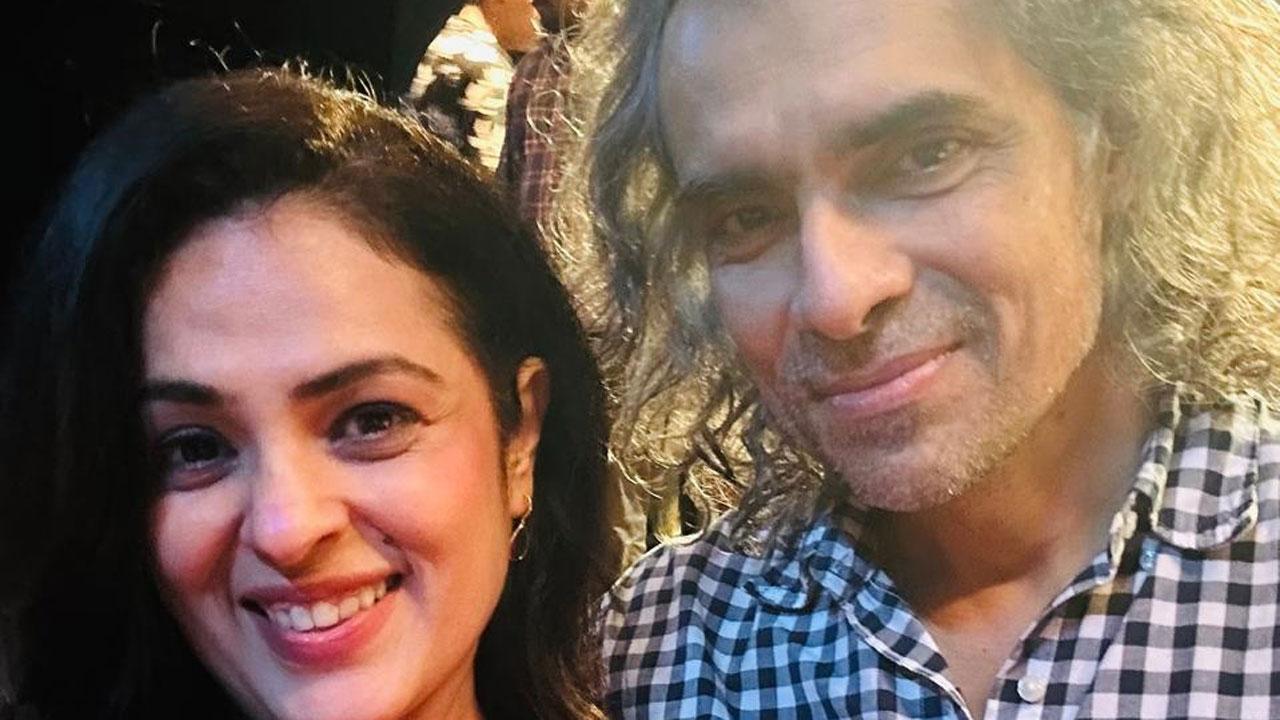
Priyanka Sharma (MID-DAY; June 13, 2026)
“How many actors can really say that I am in an Imtiaz Ali film?” asks Anjana Sukhani, her excitement evident as she speaks to mid-day about Main Vaapas Aaunga. Her journey began with a call inviting her to meet the filmmaker. The role: Naseeruddin Shah’s daughter-in-law and caretaker in the Diljit Dosanjh, Vedang Raina, and Sharvari Wagh-starrer.
“He wanted to see me on camera,” recalls Sukhani, who was first asked to send an introduction video. “When I met him at his office, I think he saw Meher in me. He narrated the part to me. And [I had] no questions. Who am I to say no to Imtiaz?” she says. During their discussions, she realised that Meher shares shades of Geet from Jab We Met (2007).
“Like Geet, [played by Kareena Kapoor Khan] Meher has no filter. I feel all of Imtiaz’s women are mature but have a childish quality to them. She innocently speaks about the wrong things at the most unfavourable time. It’s an endearing character,” says the actor.
Sukhani also cherishes her experience of working alongside Shah. Marvelling at the veteran actor’s commitment, she says, “Every time I did a scene with him, I teared up because of the way he performed. Just watching him perform is a masterclass in itself.”
Her admiration also extends to Dosanjh. “Diljit comes with a lot of sincerity and honesty as an artiste. He knows everybody’s lines, so when I fumbled, he would tell me my line.”
Romcoms started and finished with me-Saif Ali Khan
9:27 AM

Saif Ali Khan says audiences no longer relate to the classic ‘confused privileged guy’ romcom hero, but admits he still has ’one romcom left’ in him
Akash Bhatnagar (HINDUSTAN TIMES; May 20, 2026)
Over a career spanning more than three decades, Saif Ali Khan has explored genres across films and OTT, from intense dramas like recently released Kartavya to beloved romcoms such as Hum Tum (2004) and Salaam Namaste (2005). But the actor now feels Bollywood-style rom-coms may no longer connect with audiences the way they once did. “I loved doing romcoms, but I feel they were like an anomaly in Indian cinema, which might have even started and finished with me in a sense,” Saif says, adding, “Romcoms are a failed experiment, although a beautiful one.”
According to the actor, audiences today struggle to relate to the genre’s classic “confused privileged guy” archetype. “People wonder what his problem is,” he says, adding that such characters no longer feel relevant after a certain age. Laughing, the 55-year-old shares that actor-wife Kareena Kapoor Khan once told him he could no longer convincingly play a confused young man, and joked that actor-son Ibrahim Ali Khan should now take over “the family business”.
Still, Saif says he remains open to returning to romance on screen: “I loved those movies and they mean a lot to me. I’d love to do a love story, or even a comedy that ends in romance. There’s still one romcom left in me.”
The actor also reflected on the growing intensity and violence in modern storytelling, calling it a reflection of the times. “It’s not enough anymore to just tell a story. It has to shake you up, punch you a bit and sometimes even put you off,” he says. Saif believes violence in cinema works only when it serves an emotional purpose. “Even violence is an art form and it has to connect. If it’s just gratuitous, you want to shut your eyes,” he says, adding that audiences today respond to deeper and more intense portrayals than they did a decade ago.
Why are women constantly asked to justify how they look, while men aren't?-Malaika Arora
9:49 AM

Actor-entrepreneur Malaika Arora on shutting down age stereotypes and why men are rarely questioned about their appearance
Sonal Kalra (HINDUSTAN TIMES; May 2, 2026)
Fitness goals, fashion goals… You name any benchmark in showbiz, and chances are Malaika Arora has already achieved it. As the actor approaches three decades in the industry, she continues to remain relevant. This week on The Right Angle with Sonal Kalra, Malaika opens up about why she chose not to pursue full-fledged acting roles, her entrepreneurial journey, and her close-knit girl gang. Excerpts:
Looking the way you have for decades, we are sure there’s a lot of happiness and joy around it. But are there moments when you sit by yourself, and a fear creeps in that age might catch up and things could be different?
Now that’s a double-edged sword. There are days when it does cross my mind, when I do wonder or question the obvious. And then there are days when I don’t. Ultimately, I don’t care because I am doing what I love and I feel like I am in my prime. I am hungry and want to do so much, so it doesn’t really affect me. I feel women are constantly asked questions like, ‘At your prime, you were like this, and now you are at this age, how does it feel? Do you still feel beautiful or desirable?’ Very rarely is a man asked such a question. Women are always subjected to this test of looking a certain way, and we have to constantly justify how we look. People often go, ‘Oh my God, at this age she looks so amazing. Oh my God, at this age she’s so fit.’ Why? I was like this then, I am like this now, and I’ll be like this 20 years hence, because I feel good. As women, we have got to wear that on our sleeves as a badge and enjoy it, and not feel threatened or pressured by what society has to say.
At the end of the day, it’s not just the physical appearance. Yes, that’s what the world sees, but I feel you have to balance it out with how you are feeling mentally and emotionally. What is it that drives you? What is it that pushes you out of bed every single day and makes you go, ‘Go out there and seize the day?’ It’s not that every time I look in the mirror, I am thinking, ‘Oh, wow, I look good.’ I just have to wake up every day and say, ‘Today is a new day, and I want to make the most of it, and build some sort of legacy that I, my child, and family are proud of.’
How does it feel to spend nearly 30 years in the industry? What’s the journey been like?
It has been ‘wow’. That’s exactly how I would say it. For me, it’s been like a Hindi movie for over 30 years. There’s been a little bit of everything — fun, sadness, highs, lows, heartbreak, love, personal upheavals, and professional highs. One has experienced a little of all in these 30 years of being in the business, and it’s been amazing. I have loved every moment and look forward to the next 30 years.
Why would you not consider doing a full-fledged lead role all these years?
I think I am different. I didn’t want to do what everybody is doing; I didn’t want to be put into a box. Somewhere, I just felt maybe I needed to pivot and do something different. I was very lucky to get some amazing offers. People kept asking me why was I not doing them, but I was never really drawn or attracted to it. But I have always said ‘never say never’. Maybe one day I just might turn around and say, ‘I want to do this. Maybe this is my calling.’ Somewhere, I was happy doing what I did. Back then, I wasn’t sure I had the bandwidth to carry an entire film, and being part of something impactful felt amazing. Maybe a part of me chose the easier path, but over time, I realized this is what I truly enjoyed.
You call your life a Bollywood film and handle tough moments with humour. How do you do it?
I would like to say I have the last laugh. People may have an opinion, or they may want to ridicule or pull you down about something. But with all the good, there comes bad. There’s so much love and appreciation, which balances things out. At the end of the day, I am the one who sits and has the last laugh.
You’ve worn many hats — from entrepreneur to running a restaurant, now joined by your son, Arhaan Khan. What drives you to keep pushing as a businesswoman?
Well, I could just sit back and say, ‘I’ve had fun, I’ve been blessed to have that kind of career, and I am financially secure, so I don’t need to do anything beyond that.’ I could put my feet up and say that’s that, but I am not that person. I am greedy and hungry when it comes to work and opportunities. I feel all these opportunities have been given to me, and it is important for me to make the most of it. At some point, I didn’t realize that this was the path I was going to go down. I realized, why not throw myself into the deep end? Right from my first venture in collaboration for fashion, and now, a lot has happened. Each one has been a stepping stone.
Out of all the qualities you have, which one do you think your son has inherited the most?
I think it’s his sense of discipline and work ethic. When it comes to the way he leads his life, he’s very disciplined, he’s conscious and has a certain work ethic — always be on time and do things, which I think he’s got from me.
You receive a lot of love on social media, but it’s also a mixed space where people say whatever they want. Does that affect you in any way?
I have said this dozens of times: you don’t just take it with a pinch of salt, take it with a handful of salt. It is a platform. You are there, and it’s very simple. Either you choose to stay away from it, or you strike a balance. For me, I keep things out that I don’t need to engage with. I use social media purely as something that is good in terms of our work. At the same time, you use it in the right proportion, where you put out however much you want, and people get that much glimpse into your life. Enjoy it, have fun with it, and leave it at that. Don’t take it too seriously or get too bogged down by it. Don’t let it govern your life. You have to draw these lines somewhere, and then you are good.
Your girl gang (Amrita Arora Ladak, Kareena Kapoor Khan and Karisma Kapoor) also gets talked about a lot. In a hypothetical crisis situation, who would you call first?
Family, goes without saying. The girls that we hang out with, they are a phone call away, literally. They are a call away, and I know they will all be there. We stand up for each other and are each other’s support system. There are days where we don’t even connect; we may not talk, but we’ll always be there for each other.
Which actor from the current crop do you admire or really enjoy watching on screen?
I’ve grown up on a staple of Amitabh Bachchan’s films. I have loved his films during my growing-up years, and we keep watching them over and over again. Then, of course, I have always been a Shah Rukh Khan fan. I love his cinema. As you go along, there are so many others who do amazing work and are brilliant actors. But these are the ones I have always been a fan of.
What advice would you give to the people who sometimes feel low?
Being resilient or being able to build a solid inside (inner self) takes a while; it doesn’t happen overnight. There are numerous instances that push you against the wall, where you feel there is no way out. But then you work on yourself. You get strong physically and mentally, and I continue to do that because that’s part of life and learning. There are days where I feel completely bogged down, but I also then dig into my reserves, which are pretty strong, which help me tide over difficult times. If I have to say something, I would always tell people to listen to their body. It may sound silly, but love yourself. As women, we always feel so pressured about so many things. If you are working, there’s always a section of society that will make you feel what you are doing is not good and will tell you, ‘Who’s at home taking care of the kids?’ If you look a certain way, they’ll be like, ‘Isn’t it time for her to give up?’ There’s always something to justify, always a system pushing back. So I just want to say: love yourself.
It’s heartbreaking, but the revival of RK Studios isn’t happening-Kareena Kapoor
9:42 AM

Vinay MR Mishra (BOMBAY TIMES; March 23, 2026)
Twenty-six years into her career, Kareena Kapoor Khan continues to reinvent herself with ease. At a recent event in Mumbai, the actress spoke to us about evolving with the times, balancing food and fitness, how her characters become pop culture icons, and why the revival of Raj Kapoor Studios is not on the cards at this point. Excerpts:
‘Perhaps Lolo and Ranbir should think about RK studios’ revival’
Rumours of cousins Ranbir Kapoor and Karisma Kapoor reviving the iconic Raj Kapoor Studios have been rife, but Kareena sets the record straight.
She clarifies, “That’s just not true. It was even being discussed in our family group, and everyone was like, ‘This isn’t happening.’ I feel people really want it to happen. I feel like Ranbir is focused on acting. He loves acting. I think he’s the best actor in India we have today. So, his focus is on that. It’s heartbreaking, but it’s not happening. Maybe Lolo and Ranbir should think about it because I don’t think I can think like a director or a producer.”
‘I’ve always wanted to do a mini series’
As the conversation flows, the actress, who made her Bollywood debut with Refugee in 2000, talks about reinventing herself.
“There is no sketch, but reinvention is trying to do something different every year. I had never worked with Meghna Gulzar. She’s a wonderful director. Our film (Daayra) is topical, and I’m really looking forward to it. My reinvention will come with my character. I am hoping to do something really different this year, maybe a good show, maybe a miniseries. In fact, I’ve always wanted to do a mini series,” she shares.
‘You have to have your own identity, that’s very important’
Many of the characters she played – like Geet (from Jab We Met) and Poo (from Kabhi Khushi Kabhie Gham) – are pop culture icons, leading to many younger-generation women enacting them.
She says, “I don’t see people intentionally trying to do that, but I feel like Poo and Geet have become such pop culture benchmarks that, in 2026, you’re kind of associating with them. But no one really intentionally wants to (ape them), because you have to have your own identity, and that’s very important.”
Bring up the topic of fashion, and Bebo admits there is pressure every time she steps out. “Of course, there is pressure, but I enjoy fashion, so I enjoy it to my comfort. I don’t like doing things or being fashionable because I will still be uncomfortable. I won’t follow a trend or do something just because it’s cool or looks cool. I’ll first see what I want to do. So, there’s never really any plan to make a fashion statement. I feel when you wear outfits that are wearable, fashion becomes a statement,” she explains.
‘I can feel my body transforming again’
Kareena, who started the size-zero trend in Bollywood, is passionate about her food. She confesses that she still loves her parathas.
“I have a great relationship with food and fitness because I like to eat. I had two parathas today. I have to have my parathas. I like to try different workouts and experiment with them, but my heart crawls back to yoga, because that’s where it lies. In fact, in 2026, I restarted my yoga journey, which I started in 2007 with Tashan. I can feel my body transforming again. I’ve tried a thousand workouts, but I always go back there. So, I’m always going to eat my parathas and continue doing my yoga,” she signs off.
I like to be as real as I can on social media-Kareena Kapoor
9:16 AM

Vinay MR Mishra (MUMBAI MIRROR; March 14, 2026)
Actress Kareena Kapoor Khan’s Instagram posts - whether it’s her no-makeup selfies, a cheeky Saif Ali Khan moment, or adorable glimpses of Jeh and Taimur - often make headlines. While she now enjoys the platform, the actor admits it took some convincing to get there.
Kareena joined Instagram six years ago when she came on board as Puma’s brand ambassador, with the brand keen on her having a social media presence.
“It wasn’t easy to say yes (to the brand), as I wasn’t on Instagram and they were very clear about it. Because the world is going digital and brands want that. It was Covid, so they were very clear that they wanted me on Instagram. So that was why I actually came on Instagram,” she says, adding, “Later on, it kind of all worked out because I actually started enjoying myself. So that was fun. I think a brand has to resonate with the actor — being authentic, being real. Otherwise, a brand can take on 100 ambassadors, even younger people.”
Talking about her association with the brand, she adds, “I’m a mother of two. I’m 46 this year. And it feels great that brands in India are supporting mothers and working women.”
But was it difficult to convince her to come on Instagram? She replies, “It was. Everyone had come on Instagram and I hadn’t. But then I was like, why not? I’ll do it for the brand. But then I started to love posting, and now I’m pretty real on Instagram. I like to post and be as real as I can.”
Sridevi ji was the only actor I called ma’am-Manish Malhotra
9:56 AM

Sonal Kalra (HINDUSTAN TIMES; March 10, 2026)
He put India on the global map with his beautiful creations. But beyond the genius, he’s only human. He carries a heart that misses his near and dear ones, especially the actor who had the biggest influence on him. Designer Manish Malhotra reflects on his bond with late actor Sridevi, which continues through her daughter, actor Janhvi Kapoor. Excerpts from The Right Angle with Sonal Kalra:
You were close to Sridevi. How are you taking her legacy forward by mentoring her daughters, Janhvi and Khushi?
Late photographer Rakesh Shrestha liked my sketches and introduced me to actors for styling them. I went to meet Sridevi for the first time at Mehboob Studio in 1991 and I was a big fan even before I met her. She was in a red outfit and was just going to the set. She was quiet. Then she called me to do a sweater, which was a continuity sweater for Khuda Gawaah (1992). I went to meet her, and somehow we connected.
Then, in 1996, we were in Las Vegas and she told me she was leaving films. She said she worked from the age of four and she wanted her life to carry on. I remember getting a little lump in my throat. I was so attached to her. And in the 15 years when she didn’t work and gave birth to Janhvi and Khushi, I was the one person who was always in touch with her. And I still called her ma’am. I continued my respect and friendship because I think she really contributed to my career. Her death was a big loss to the film industry.
I’m very fond of South Indian food and ma’am would get it to my house. That’s something that Janhvi sweetly does now, which is so nice of her. Every month, she makes it a point to come over, spend time, and get food from her house.
You were present at the first shots of several actresses. Do you think they look at you as a lucky mascot?
I was there at Rani Mukerji’s first shot for Raja Ki Aayegi Baraat (1997), Kareena Kapoor Khan for Kaho Naa... Pyaar Hai (2000; she was the original heroine), Deepika Padukone in Om Shanti Om (2007), Alia Bhatt for Student Of The Year (2012), and Ananya Panday for Student Of The Year 2 (2019). So, I would say I’m the lucky mascot here. I’ve seen them grow and evolve.
In fact, with Kriti Sanon, Bipasha Basu and Lara Dutta, I worked with them before they became actresses, as models. I’ve seen their journeys from being newcomers to being established actors, with some even getting married and becoming mothers! Now we are working with the newer generation.
A lot of female actors have been Manish Malhotra brides. Whose look do you cherish the most?
Kiara Advani and Sidharth Malhotra’s because the entire wedding was done by us. There were discussions about the décor, the surprises entry dance by Kiara, or the Reel that Sidharth did. And I forced them to put it up, saying, ‘Please put up this Reel!’ I am grateful to them for their love and respect. So happy! So I think that is one of my most cherished weddings.
Kareena Kapoor, Ananya Panday back Deepika Padukone’s eight-hour shift demand
10:33 AM

HINDUSTAN TIMES (March 8, 2026)
Actor Deepika Padukone sparked debate last year over eight-hour work shifts after reportedly exiting films like Spirit and the sequel to Kalki 2898 AD (2024). Now, actors Kareena Kapoor Khan and Ananya Panday have defended her stance, saying such conversations with producers are necessary.
Speaking to The Hollywood Reporter India, Kareena said clear communication and planning are key, especially for working mothers. Recalling her time shooting The Buckingham Murders (2024), she shared that she informed producers in advance about returning to her children while her husband, Saif Ali Khan, looked after them. She further spoke about Deepika’s eight-hour shift demand and added that if actors are married, they need a partner who understands, as they cannot both work and leave the children alone.
“I feel like if you are married and have children… You should be able to say this is what I want. I can work this number of hours. I think it’s completely fine to say that way before a film starts,” Kareena said.
Ananya, on the other hand, said, “I have worked with Deepika (in the 2022 film Gehraiyaan), and before she became a mother, there was no such thing like that. She was working, coming to workshops, no complaints and no asking for anything. Now she’s a mother… she needs to be present with her child in the first two years. I think it’s okay to have a conversation with your producer to find a balance.”
It’s very romantic to wake up with a woman this beautiful every day-Saif Ali Khan
10:29 AM

Vinay MR Mishra (BOMBAY TIMES; February 14, 2026)
For close to two decades, Saif Ali Khan and Kareena Kapoor Khan have defined – and defied – what it means to be a Bollywood power couple. Long before social media turned celebrity romance into a spectacle, they wore their love unapologetically, from choosing each other at the peak of their careers to building a family while remaining fiercely individual stars. Popularly christened Saifeena, they became Bollywood’s original ‘it’ couple. Kareena and Saif, who recently visited the Tiffany & Co. boutique in Mumbai, talk to us about quiet celebrations over grand gestures, friendship as the foundation of romance, raising children while protecting their individuality, and why – in a world full of responsibilities – love should never feel like just another mundane thing. Excerpts from the Valentine's Day special interview as followed...
‘If we’re together, unhurried, that’s celebration enough'
To start off, we ask them how they spend their Valentine’s Day. “We don’t plan grand gestures. We watch a movie, stay at home, lounge on the couch, and have a night in with pizza and some great wine or Chinese food,” says Saif. Kareena adds, “If we’re together and unhurried, that’s celebration enough.”
So, is there any Valentine's Day gift that Saif is planning to give Kareena? He replies, “I like to gift her when it feels right. Not just because the calendar says so.” She quickly agrees and adds, “It’s nicer when it comes with a thought behind it.”
‘We didn’t fall in love trying to impress anyone’
Next year marks two decades of them being together. They met on the sets of Tashan - the movie may not have been a success, but it led to a very successful union between the two. “We didn’t fall in love trying to impress anyone. We were working, talking, arguing, laughing and one day it just became obvious. That honesty is still the base of everything,” Saif reminisces. Kareena says, “We chose each other as people first. Everything else came later.”
‘It’s very romantic to wake up with a woman this beautiful every day’
Saif and Kareena have been an inspiration to many when it comes to love. Ask them how they feel about their love story being romanticized by many, and Kareena, in her trademark spunky style, declares, “I’d say the love story is far better in real life.”
Saif, on the other hand, elaborates, “It’s very romantic to wake up with a woman this beautiful every day. But the story has required a lot more than what meets the eye. Relationships are about romance but also about intent. And mostly friendship.”
How does their relationship look to them today? Kareena feels “settled and anchored, in the best way.” To that, Saif says, “I feel chosen every day by a wonderful woman, who is brilliant, beautiful and kind.”
‘Kareena is more romantic’
As Shah Rukh Khan once famously said, ‘Pyaar dosti hai’, for both Saif and Kareena, friendship came before romance, and it continues to define their relationship.
Kareena couldn’t agree more. “Completely! He’s still the person I want to gossip with at the end of the day.”
Saif chimes in, “And she’s the first person I want to share things with, good or bad.” Quiz them on who is more romantic, and Saif promptly responds, “She is!” She laughs and adds, “We both have different styles, but I will take that, I am.”
‘We just get each other without words’
From friends to partners to parents (to Taimur and Jeh), has anything changed? Kareena quickly explains, “What’s changed is perspective. What hasn’t changed is comfort. He is home!” Saif adds, “There’s no pretending. That’s a luxury in itself. The ease of being around someone is the best leisure.”
The two continue to live life on their own terms, in matters of family and love, too. “More than ever. Especially after children. Having Saifu by my side... is my favourite part of everyday life,” Kareena confesses.
Saif explains, “When you’re free with each other, everything else becomes easier. Life is full of chores, love can’t be one of them. We don’t have to explain anything to each other. We just get each other without words.”
Ranveer Singh brings a very different, positive energy-Krystle DSouza
9:34 AM

Actor Krystle DSouza on how she knew Shararat from Dhurandhar would make an impact and her experience being part of a big-ticket film
Vishakha Pandit (HINDUSTAN TIMES; January 8, 2026)
As Dhurandhar completes a month in theatres, actor Krystle DSouza — who features in the song Shararat — is basking in the film’s success, calling the outpouring of appreciation “overwhelming”.
She shares, “Dance is something I enjoy, but I had never done a full-fledged dance number before, especially on such a large platform and for a film of this scale. It tested me as a performer.”
Ask why she chose to do the song despite having limited screen time, and the 35-year-old says, “After spending several years in the industry, it becomes important to constantly challenge yourself and step out of your comfort zone. That’s when I felt this was something I should take up as an actor. Even if it wasn’t much screen time, I knew it would leave a mark.”
Talking about working with actor Ranveer Singh, she says the experience was elevated by his energy: “Ranveer brings a very different, positive energy and makes everyone around him feel comfortable. Shaking a leg with him on stage will always be one of my favourite moments.”
While the song has been a major hit, it has also sparked comparisons, with many viewers praising her co-star Ayesha Khan for her moves on the song. On this, Krystle says, “Whenever two performers are part of the same song, comparisons are bound to happen. For me, I genuinely enjoyed performing, and the feedback has been encouraging.”
She adds, “Some viewers even compared my performance to actor Kareena Kapoor Khan in Dil Mera Muft Ka (Agent Vinod, 2012), which is extremely humbling. I take that as motivation.”
I would love to direct a film starring Kareena Kapoor, Kiara Advani, Alia Bhatt-Chitrangda Singh
2:18 PM

Onkar Kulkarni (BOMBAY TIMES; December 24, 2025)
As more women take on roles as producers and directors, the conversation around the female gaze in storytelling has grown louder. While this shift has opened up more authentic narratives, actor-producer Chitrangda Singh believes that compelling cinema goes beyond gender.
"Women understand women's emotions really well. Having said that, I’m not stuck on that idea. For me, more than being a man or a woman, it has to be a good mind. Sometimes, a man’s perspective on a woman can be more interesting," says the actress, who produced Soorma starring Taapsee Pannu and Diljit Dosanjh.
‘I’d love to direct a film with Kareena, Kiara, Alia and me’
When asked whether she’d be keen to direct a female-led film featuring a strong ensemble cast, Chitrangda said, “Why not? I love Kareena Kapoor — she’s brilliant as an actor. I think Kiara Advani is lovely, and of course, Alia Bhatt. And maybe I’d like to be the fourth girl.”
Pitching a quirky storyline, she shared, “The story should be about us being con women, stuck in LA. We've run out of money and are trying to hustle our way back home. So, we decide to split up for five days, each of us responsible for making a certain amount of money. What happens to each of us in those five days — that’s the story. And the title? I think it should be Last Four Shots."
Subscribe to:
Posts (Atom)