Showing posts with label Kapoor & Sons. Show all posts
Showing posts with label Kapoor & Sons. Show all posts
I remember finishing Kapoor & Sons script with tears in my eyes-Sidharth Malhotra
8:57 AM

Actor Sidharth Malhotra reflects on portraying the layered character of Arjun in the family drama Kapoor & Sons, which marks 10 years of release today
Natasha Coutinho (HINDUSTAN TIMES; March 19, 2026)
Shakun Batra’s 2016 family drama Kapoor & Sons, featuring late veteran Rishi Kapoor alongside Sidharth Malhotra, Fawad Khan, Alia Bhatt, Ratna Pathak Shah, and Rajat Kapoor, clocks 10 years today. Sidharth portrayed Arjun, the younger son and underdog of the family. The character, modelled on Shakun’s relationship with his sister, harboured resentment toward his elder brother, Rahul (played by Fawad), for being the golden child.
Recalling how he came on board, Sidharth tells us, “When I first read the script, I remember finishing it with tears in my eyes. It felt so real, like stepping into a warm, chaotic Punjabi family where every character had a heartbeat. Playing Arjun was special because he was layered, vulnerable and carrying so much inside him.”
The 41-year-old says that this has been a deeply rewarding project. “10 years later, people still talk about the film, the scenes and the family dynamics. Like they’ve lived with these characters themselves. That kind of love is rare, and I feel grateful we got to bring that story to life,” he shares.
Fawad Khan asked me, ‘Is the homosexuality a whisper or a shout?’-Shakun Batra
4:15 PM

Natasha Coutinho (HINDUSTAN TIMES; March 17, 2026)
As Kapoor & Sons clocks 10 years tomorrow, director Shakun Batra reflects on the making of the family drama, starring Rishi Kapoor, Fawad Khan, Sidharth Malhotra, Ratna Pathak Shah, Rajat Kapoor, and Alia Bhatt.
“There was a two-year gap between when it was written and when it finally got made,” Shakun reveals, adding, “Many actors turned it down. Actors were not comfortable playing homosexuals back then. At one point, I thought I’d never get to make it.”
Eventually Fawad came on board after a brief but defining conversation. “He asked me, ‘Is homosexuality a whisper or a shout?’ I told him it’s a whisper and he agreed immediately,” Batra shares, adding, “We didn’t show anything off-putting. The scene where Fawad breaks down in front of Ratna Pathak Shah saying he isn’t the perfect son, I watched it from the lens of an audience, not a filmmaker.”
The filmmaker also fondly recalls working with late veteran Rishi Kapoor. “There wasn’t a single day when Rishi ji and I did not argue on set, but after watching the film he showered me with so much love... His prosthetics were done by Greg Cannom, the Oscar-winning makeup artiste who worked with Brad Pitt in The Curious Case Of Benjamin Button (2008). Even Neetu ji (Kapoor, Rishi’s wife) didn’t recognize him in the get-up.”
Saiyaara’s success proves that Tanishk original songs mein bhi baap hai-Tanishk Bagchi
10:16 AM
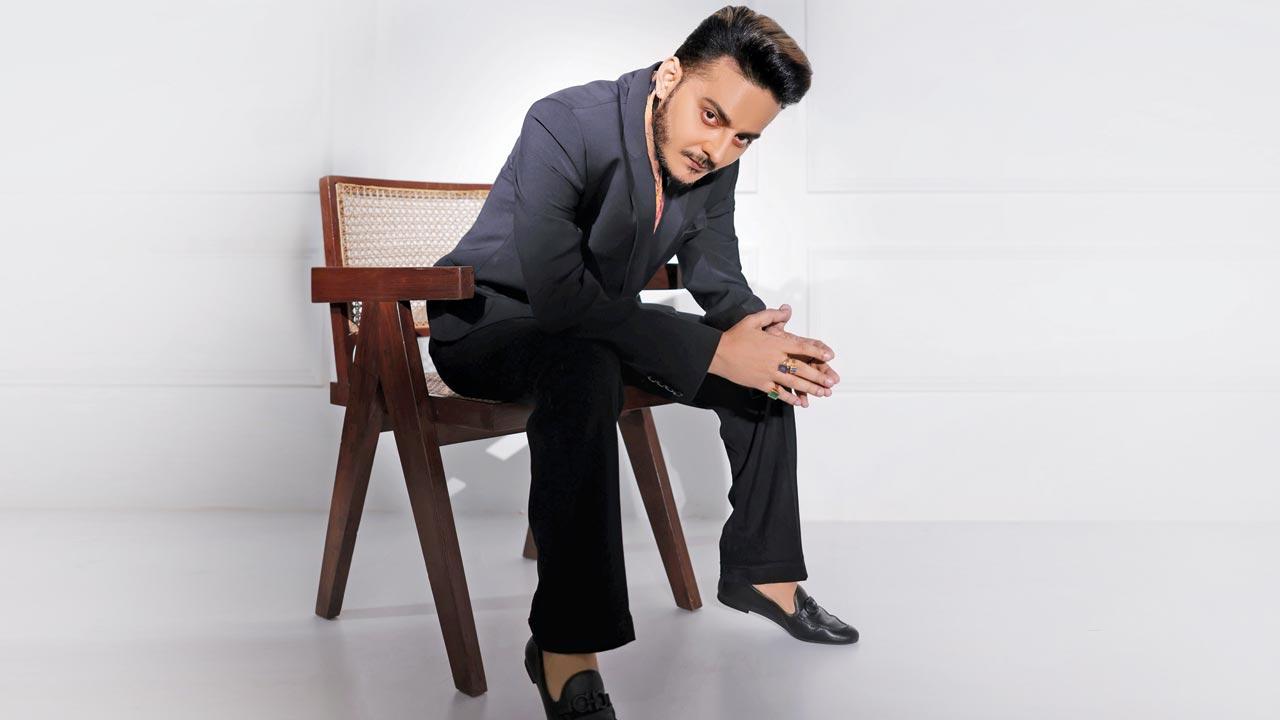
Composer Tanishk Bagchi, the man behind Saiyaara’s hit title track, opens up about being more than a remix machine and discovering his versatility
Priyanka Sharma (MID-DAY; July 28, 2025)
Unless one is living under a rock, there is no chance they wouldn't have heard the Saiyaara title track. Tanishk Bagchi’s composition is everywhere, from radio to YouTube, from the music streaming apps to Instagram Stories. So, we catch up with the man behind the sensation and understand how he composed the song for the Mohit Suri-directed love story. Excerpts from the interview:
Having long been criticized for building a career on remixes, you must be feeling vindicated with the success of Saiyaara’s title track, which is an original song.
It’s not the first time that I’ve composed something original and got rewarded for it. But now I feel that I am a versatile music composer. You can tell by listening to a song that it must be composed by so-and-so composer. But with my songs, you won’t be able to tell if it’s Tanishk’s music or someone else’s because I’m so versatile.
Do you like creating remixes or do so because of market demands?
It’s 100 per cent because of the market demand, survival, and what the director wants. My first preference will be original songs. But there are instances where if I don’t [create a remix], somebody else will. When a work opportunity comes to me, I can’t reject it immediately.
Take us back to the time when director Mohit Suri came to you with Saiyaara...
The past two years [were trying] for me because there were lots of issues in my work and family. At that time, I met Mohit sir and he supported me. I didn’t have anybody to show me the way. So, I started following his vision. He told me that he needed a song for his film. I was working on a single for the last two years with Faheem [Abdullah] and Arslan [Nizami]. When Mohit sir said he needed a song, we had one called Saiyaan Mera, and Arslan had written this line, ‘Saiyaan mera tu rootha nahin hai, mausam zara sa rootha hua hai.’ We completed it and pitched it to Mohit sir. Then Irshad bhai [Kamil] wrote the entire track.
How was it to reunite with Mohit?
With him, there’s always an emotion behind a song. He will never say, ‘We want a promotional track.’ He’s a music-oriented director.
You mentioned that you were going through a lot when Saiyaara happened to you. Are you comfortable talking about it?
After you give a super hit song, there is a lot of competition in the market, and when you say no to certain things, people think, ‘He doesn’t know how to create original music, or he only does recreations.’ This stress would seep into my personal life. Sometimes I used to earn money, at other times I didn’t. There were times when my song would be placed fourth or fifth in an album and it wouldn’t be promoted. I had composed Raataan Lambiyaan [Shershaah] and Bolna [Kapoor & Sons], but people still doubted me.
Producers often seek a hook line, hoping their song will become popular on Instagram Reels. But Saiyaara has busted the myth of hook lines being necessary.
Absolutely! I have never followed a trend. If someone asks me to make a song catering to a 15-second reel, I won’t do it. I will make a four-minute song. After Saiyaara, people are saying, ‘We believe in your original music’.
---------------------------------
Samarth Goyal (HINDUSTAN TIMES; July 28, 2025)
As the popularity of Saiyaara’s soundtrack grows, Tanishk Bagchi feels like he has finally found vindication.
While the composer has delivered some of Bollywood’s biggest hits in the last few years, his success has been overshadowed by the criticism that he is inclined towards recreations.
However, the title track of Mohit Suri’s recently released romantic drama has gone on to shatter records, becoming the first-ever Bollywood song to break into Spotify’s Global Top 5. “People didn’t know the number of good original songs I composed. Par ab logon ko pata chal raha hai ki Tanishk Bagchi original songs mein bhi baap hai,” says the 44-year-old.
He’s loving the appreciation, but Tanishk also admits that this success helped him overcome a mental rut. “For two years, I was very affected by the trolling. Now, I’m happy and at peace,” he says.
As for Saiyaara’s success, the composer reveals, “Despite its new stars, I had hope ki yeh fatega.” The success was made sweeter by the fact that the song doesn’t rely on gimmicks. “There’s pressure to create viral hits. But if a track has soul and emotion, it’ll work, no matter how long it is,” Tanishk ends.
Roshan Mathew reveals he was rejected for a role in Kapoor & Sons
9:24 AM
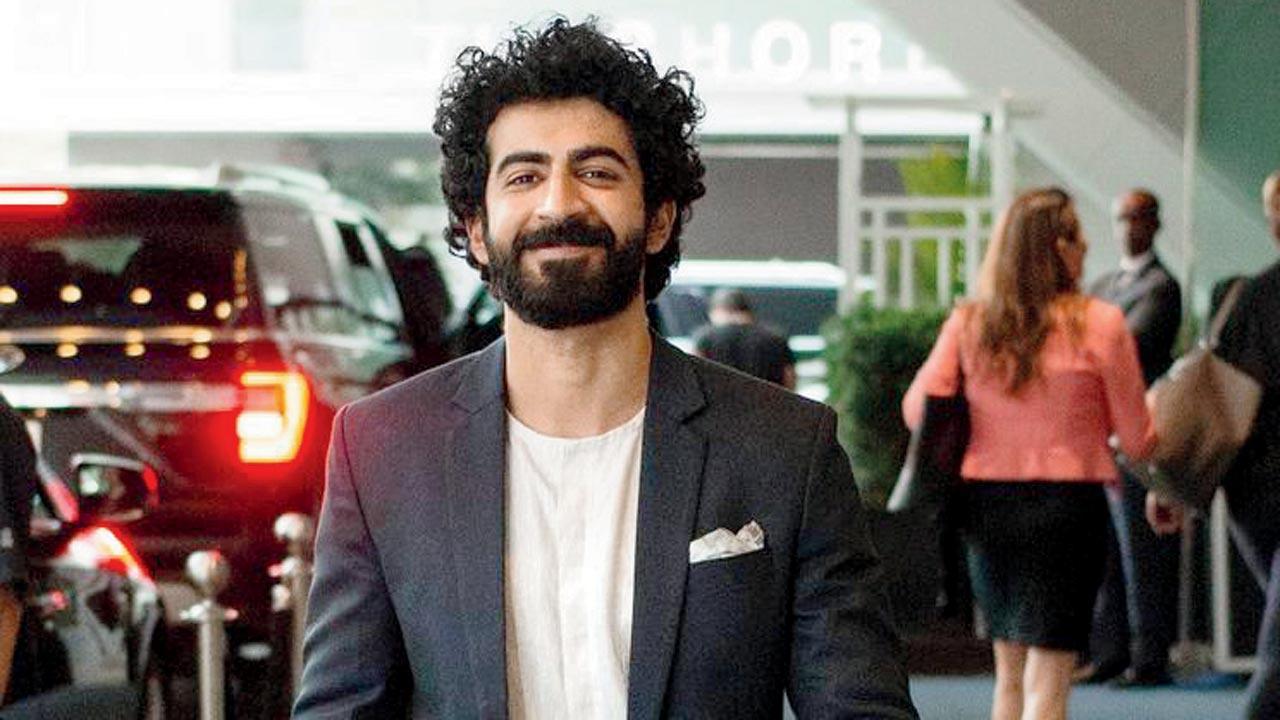
Vinay MR Mishra (BOMBAY TIMES; December 11, 2024)
Roshan Mathew started his career with a Hindi web series, Tanlines, but he is primarily known for his work in Malayalam movies. The actor was recently seen in Ulajh alongside Janhvi Kapoor. Talking about his stint in Hindi movies, Roshan states, “I'm happy with the little bit of work that I've done in Hindi so far. I just want the quality of the experiences to continue. I'm not looking at anything else.”
'Mumbai is where all of it began'
Recalling his early days in this city, Roshan says, “Mumbai is where I started seeing the world out, with all the opportunities out there and all there is to be done as far as acting is concerned. I decided to make a living out of being an actor when I was in Chennai. I came to Mumbai to learn a little bit of theater. When I came here, I met so many actors and creators who were out just actively working every day and thriving. That's what inspired me to stay back. Mumbai is actually where all of it began.”
'It is tough to accept rejection'
Interestingly, not many know that Roshan had auditioned for Kapoor & Sons, for a part that was later played by actor Sukant Goel. “It was a very small character in Kapoor & Sons,” Roshan says.
Ask him if rejections and losing out on that project particularly affected him and he replies, “Obviously it does. It's tough to accept rejection. But people who have been around me have helped a lot. Luckily there's always been one project that has come where I could fully put my energy and attention into, just when I've been at the end of my patience. Rejections aren't easy to take. It will be very easy for me to sit here and say, ‘Struggle is part of the journey’. It is tough when it's happening for sure,” Roshan explains.
'I have my own devised method of filtering out what gets to me'
In the industry when there is so much noise about how one looks, Roshan reveals that he has easily cancelled out that noise. “Either that (noise) hasn't started reaching my ears yet or I have already figured out a way to filter it out,” Roshan says, adding, “I'm not starting off here (in Hindi films). I've been doing films for about like nine years. I have devised my own method of filtering out what gets to me. Just like you pick scripts and everything, you also filter out what needs to be filtered out, whether it is opinions, suggestions, or criticisms. You must regulate your consumption. Maybe I've managed to do that or maybe the noise hasn't reached like deafening levels yet.”
Is Shakun Batra’s series on Ma Anand Sheela shelved? Here’s what he says
8:32 AM

Rishabh Suri (HINDUSTAN TIMES; April 4, 2022)
There was a buzz around director Shakun Batra’s web series on the life of controversial Godman Osho and his disciple, Ma Anand Sheela. Actors Alia Bhatt and Aamir Khan were rumoured to be headlining the project, but the buzz fizzled out soon.
Ask Batra about it, and he says, “The story is very close to my heart. Of late, I didn’t have the time, as I was finishing Gehraiyaan. It’s something I do want to venture back into. I don’t know the timing of it, I don’t know if it’s next or after that, but it’s close to me.”
Like this web series, the 39-year-old’s choice of film subjects has always been offbeat — Ek Main Aur Ekk Tu (2012), Kapoor & Sons (2016), and Gehraiyaan, for instance. Does he ever get advised to make more mainstream films? “The idea is to never make mainstream [films], it’s always about what’s playing on my mind, what I feel and the story I am keen to tell... I am fortunate to have people who support me. Whether a film becomes mainstream or not, that’s something you can never know. A film gets accepted [by the audience] all of a sudden, and that makes it mainstream,” says the director.
He cites the example of Kapoor & Sons, which dealt with subjects like LGBTQI+ and infidelity themes. “It was considered extremely independent, but did much better than some films considered mainstream. So, I think we have to tell interesting stories. The films that I make will never be massy or entirely independent. I exist somewhere in between. With every film, I get surprised, which side the audience will put it on,” he ends.
Family equation provide a great fodder for storytelling. There’s always a past history-Shakun Batra
8:30 AM

Rishabh Suri (HINDUSTAN TIMES; January 31, 2022)
His films, including directorial debut Ek Main Aur Ekk Tu (2012), Kapoor & Sons (2016) and now Gehraiyaan, have all had one thing in common — they revolve around family. And director Shakun Batra explains why the subject is close to his heart: “Family equation — the internal dynamics between people — provide a great fodder for storytelling. There’s always a past history. When you make stories about people who have recently met, there is no history. I’ve always enjoyed characters that share a common past, as it makes for interesting viewing.”
Starring actors Deepika Padukone, Siddhant Chaturvedi, Ananya Panday and Dhairya Karwa, the film was anticipated to release on the big screen. But, the makers decided to go ahead with an OTT release for the project. “I grew up on films I absolutely loved and admired, which made me want to become a filmmaker. I watched all of them on TV, DVDs or laptop. I feel a good story will always connect, regardless of how and where you watch it,” says the 39-year-old.
And the pandemic played a role in this decision, too. “Given the current Coronavirus situation, people need to be safe. I didn’t want to keep holding this film for long. It was ready and I felt the need to put it out. I always set out to make this film for a mature audience, and it’s already there on OTT platforms,” says Batra.
I miss Bollywood. I miss Mumbai, it’s a beautiful city-Fawad Khan
7:39 AM

HINDUSTAN TIMES (December 17, 2021)
It has been a long time since Pakistani actor Fawad Khan has worked in India after appearing in some projects. He admits that he misses working in Bollywood, as he made some great memories there.
He has featured in projects such as Khoobsurat (2014), Kapoor & Sons (2016), and his last Indian release, Ae Dil Hai Mushkil (2016).
In an interview with Film Companion, Khan was asked if he misses Bollywood. “I do. I made some great friends there, and I still keep in touch with them. I miss it. I miss Mumbai, it’s a beautiful city. In fact, all the cities that I have been to, I have had a lovely experience,” he said.
Meanwhile, Khan will also be part of the international series, Ms Marvel. While no information about his role in the show is out yet, his presence in the cast has been confirmed. In the same interview, the actor did talk about his appearance, without revealing much about the show.
“It was good fun. The cast and the people that I worked with, but I’m sorry... I can’t say anything more than that,” said the Humsafar actor.
In a film like Kapoor & Sons, Fawad Khan’s character of a queer person was an important one-Shabana Azmi
8:26 AM

Nuzhat Aziz (BOMBAY TIMES; September 28, 2021)
After more than two decades of the release of Deepa Mehta’s controversial film Fire, actor Shabana Azmi feels that the representation of same-sex relationships in mainstream cinema is finally being dealt with empathy, rather than mockery. From playing a character in a same-sex love film, to essaying a mother who finds it difficult to accept her daughter’s relationship in an upcoming project, she feels that even today, despite the far greater acceptance and awareness of LGBTQIA issues, there is still reluctance and misconstrued notions around the same.
Having recently won the Best Actor for Sheer Qorma at the India International Film Festival at Boston, the versatile actress talks to us about how important it is to showcase the underrepresented LGBTQIA community in mainstream cinema, how dissent is valid in a healthy democracy and what the pandemic has taught her. Excerpts:
Sheer Qorma has been showcased at several festivals and is winning praises and acceptance. Your thoughts on being part of a project that highlights an underrepresented group like the LGBTQIA community in India, especially after the decriminalization of Section 377.
I think that this is a subject whose time came several years ago. If you look at Fire, which was made in 1996, it was a logical extension of that. A film like this is very important because it is done in a very sensitive manner to sensitize people who still have mixed reactions about the topic. I think that Sheer Qorma is an important film, particularly because it has been made by a queer, non-binary filmmaker (Faraz Arif Ansari) and it has been his journey and struggle in being able to come out with it.
Fire released in the 90s and created a controversy because it spoke of same-sex love. How far have we come from then? Do you feel the queer community has greater representation and acceptance in mainstream cinema today?
Certainly, because earlier it was inconceivable that any actor, particularly in mainstream cinema, would agree to play a character from the queer community. But now, although in the beginning it almost happened surreptitiously, the fact is that in a film like Kapoor & Sons, Fawad Khan’s character of a queer person was an important one. So, I think the queer narrative is making its way into mainstream cinema by being dealt with empathy, rather than mockery. This not only leads to acceptance of people with different choices in love, but also gives hope that this acceptance of the “other” will then be extended to communities, nations, gender, race and religion; and that’s what we need. Not just tolerance, but acceptance as well.
Your character in Sheer Qorma is layered.Even though you have accepted your child’s sexual identity, it somewhere rattles you to see them in the same light as your son and his partner. Do we, in some way, cause the damage to our children because of our inability to understand what exists outside of us?
Parents are still in that space where they think ‘Oh my God, I have done something wrong’. Any departure from a social norm is considered wrong and then you either blame yourself, or the other person. So, it requires a sea change of attitude. We are inching towards it. I think one of the most important dialogues in the film is where the mother says: “Yeh khuda ke khilaaf hai” (This is against God). And then her son says, “Magar jinhone inko banaya hai woh bhi toh usi khuda ne banaya hai, ya kisi aur ne?” (But God has created them and they are part of his creations). And that makes the penny drop for her.
This is the point that the actors, filmmaker and writer are making – this is love. People have different kinds and expressions of love – who are we to judge them? It is all this prejudice that keeps surfacing and erupting, not only when it comes to same-sex love, but to anybody who is different from us. You need people in the public eye who have accepted same-sex relationships of their children. Because when you start seeing this being accepted, then people who are less empowered will get the courage to accept it.
Your recent web series, The Empire, was subject to trolling and ran into a controversy because some felt that it glorifies the Mughal ruler Babur…
Political agendas have permeated into every single thing in our society, and you have to negotiate your way through that. You cannot treat every comment and remark as a war. People have a right to express their opinion and dissent is one of the strongest things in a democracy. So, when people have the right, some of them will use it, some will misuse it. When you welcome all the accolades, you also have to accept the brickbats. It’s part of the game.
You recently shot for Jemima Goldsmith’s What’s Love Got to Do With It, along with Emma Thompson. What was the experience like, especially during the lockdown period?
I left on January 3, which was the height of the pandemic, and we completed the film in 38 days. We were in a very tight bubble and the whole crew was tested every single day. We were all very respectful of the bubble and weren’t allowed to meet anybody outside our shooting group. It was bitingly cold, and the outdoor sequences were very hard, but with actors, I think it is just an adrenaline rush that comes up when you are against forces. The film is a lovely rom-com and I think that kept people’s spirits up.
The Coronavirus pandemic has made all of us look at the world differently. Do you think we will see the world in a better light now?
It makes you very sharply aware of the fact that every single person, from the richest to the poorest country, is connected. It is evident now that we have become a global village. For me personally, what it has made me do is distinguish between needs and wants. We have an overdose of everything – clothes, shoes, bags, books - anything that catches our fancy. Throughout the two years of the pandemic, I did not buy a single thing and have always felt the need to curb the material desire.
I didn’t sleep for nights fearing that a cop would show up at the door and shame my parents-Apurva Asrani
8:15 AM

Rishabh Deb (BOMBAY TIMES; June 15, 2021)
For film editor and writer Apurva Asrani, 2020-21 has been a challenging phase. He lost several friends to COVID-19, and his 14-year-old relationship with partner Siddhant Pillai came to an end. Despite all the events that unfolded in the span of a year, he is taking things in his stride and trying to cope. He finds solace in writing new stories, taking long walks on the pristine beaches of Goa, playing with his cats and bonding with family. In a Pride Month special interview, we catch up with the Aligarh writer and editor and speak about self-love, coping with loss and more. Excerpts:
‘FOCUSING ON SELF-LOVE AND BONDING WITH FAMILY’
Mental health and self-care are his top priority and Apurva, who has moved in with his family after decades, is focussing on himself now. He says, “It’s been a difficult time for everyone since COVID-19 struck. I have lost friends, friends have lost loved ones, many are out of work… everyone I know is coping and surviving somehow. Most things are fine for me by the grace of god. Yes, my 14-year relationship ended during this period. But I am taking it in my stride.”
“Writing gives me a lot of clarity and peace. Bonding with my family, my cats, and playing online games; that’s how I am taking care of my mental health,” says the National Award winner. Sharing certain habits that he picked up during the lockdown to take care of himself, Apurva adds, “I have learnt that sometimes not doing anything and chilling is also okay. Living with my parents, for the first time in decades, allowing myself to cry when I’m down, meditating every day, finding joy, reconnecting with old friends that I had lost touch with; these are some of the things that I started doing in the recent past, things that I would normally not do.”
‘GETTING USED TO BEING SINGLE AFTER 14 YEARS’
Though Apurva and Siddhant parted ways, they continue to share mutual respect. “We may have gone separate ways, but he will always be a valuable part of my life,” shares Apurva, adding, “I haven’t been single in 14 years. Just getting used to the fact that I don’t need to seek someone’s approval before making a decision is something new.” After the two parted ways, Apurva moved in with his parents and is spending a lot of time with them. “There are times I miss the companionship, but I also recognise this as a time when I can rebuild myself into a better, more evolved person. My work gets a lot more attention. I am also taking care of my fitness and diet,” he says.
‘TIMES HAVE CHANGED SINCE I CAME OUT’
Apurva, who came out as gay back in 1998, says that life has changed for him ever since he came out. “Honestly, I have celebrated freedom from Section 377 every single day since the 2018 judgement. Earlier, Pride Month used to be more of a protest and visibility month for me. Now, it’s about having discussions with other LGBTQIA+ folks about how we can make life better for ourselves. We are no longer outliers, we are now looking to integrate in the mainstream and carve a legitimate, respectable place for ourselves,” says Apurva.
On how the scenario has changed in the last two decades for people from the community, he shares, “Circa 1998, you hardly read the word gay in the media unless it was referring to a joke, a crime or HIV. There were no respectable gay movies made in India. A little later they started underground parties where you could meet others like yourself, but these parties were fraught with uncertainty because they often got busted by cops. There was this one party I was at, where five police vans filled with armed cops swarmed down on us as if we were terrorists. They then lined us up and made a news cameraman film us. We were detained, our addresses taken, and they threatened to ‘out’ us to our parents. I didn’t sleep for nights fearing that a cop would show up at the door and shame my parents. It is one of the reasons that I began a sort of gay rights advocacy. I knew we deserved respect. The world has changed so much now, more so for the urban people, but at some level also for all LGBTQIA+ folk. We have so many movies, shows, openly gay celebrities, industrialists and even sportspeople to draw inspiration from. There are events, parties, and forums. I’m glad I’m still young enough to enjoy this time.”
‘REPRESENTATION IN CINEMA AND SHOWBIZ HAS EVOLVED’
While a hearing on the pleas regarding recognition of same-sex marriage in India is awaited, Apurva feels that it’s a basic right that should be respected. He quips, “Whether one believes in the institution of marriage or not, all LGBTQIA+ citizens should have the same right to marriage as their heterosexual brethren. By denying us this right, the constitution is not being respected.” And what about him getting married? “I would ask my mother to find a suitable boy to arrange my marriage,” he laughs.
Speaking about queer representation in Indian cinema, Apurva says the industry is doing well on that front. “In just the last five years, we have seen so much quality queer content. Margarita With A Straw, Aligarh, Kapoor & Sons, Made In Heaven, LOEV, Ek Ladki Ko Dekha Toh Aisa Laga, Shubh Mangal Zyada Saavdhan etc; each one is so different from the other and all cater to diverse audiences. We are doing well. In the West, they were at this juncture many years ago, which is why their content today normalises LGBTQIA+ folk. We, as a decriminalised community, are barely three years old. We still have the angst of our closeted lives to purge. We are still building our identity. And our content reflects that,” he opines.
‘NEED MORE AWARENESS ABOUT COUNSELLING’
Highlighting the plight of the community amid the pandemic where many have had to return to their parental homes and deal with families that do not respect their orientation, Apurva says, “Plus, the respite that they may have found by meeting, interacting with people from the LGBTQIA+ community has come to a standstill and they are stuck with people they need to pretend for. It might be a lonely time for them and the implications on their mental health might be far-reaching. We need more awareness about counselling and therapy in the future.

I think I can easily write a book on my experiences, which were quite a roller coaster ride-Arjun Kapoor
8:02 AM

Prashant Singh (HINDUSTAN TIMES; March 12, 2020)
Since his debut with Ishaqzaade in 2012, actor Arjun Kapoor is set to complete eight years in Bollywood this year. And evidently, it has been one roller-coaster ride — professionally and personally. The actor readily admits that “a lot has transpired in the last seven to eight years”.
“I think I have changed. Even my outlook (towards life) has changed. I have seen quite a few things in these seven to eight years. Now, I think I can easily write a book on these experiences, which were quite a roller coaster (ride). The priorities as well as the understanding of life have changed. Now, the blacks and whites have become greys,” says the 34-year-old.
The 2 States (2014) actor quips that initially, “life was all about work” but “now, it’s a bit more about finding the balance”. He says, “Earlier, it was all about doing what you wanted. But now you have to look at the bigger picture. All said and done, I’d like to say the core values remain the same.”
However, that doesn’t mean Kapoor dislikes change. After delving into the historical space with Panipat last year, he is now poised to enter a “lighter” world, thanks to Nikkhil Advani-Kaashvie Nair’s yet-untitled next. “Kaashvie is my first female director and I am very excited. It is a nice, full-on happy family comedy,” says the actor, who will be playing a Sikh character again, after Mubarakan (2017).
“But the film, on its own, is not in the Mubarakan space of comedy. This is more like a slice-of-life drama, which is in a very feel-good, warm space, akin to something like Kapoor & Sons (2016) and Badhaai Ho (2018). I play a sardar who comes back home from America, and (the plot revolves around) what all happens,” he says.
Also, Kapoor is set to work on the Hindi adaptation of the Tamil film Comali (2019). “Yes, that is something we have acquired and are working on. But it’s still getting written as of now. When we get closer to making it, we will figure who the director will be. There are no concrete dates yet,” says the actor, who also has Sandeep Aur Pinky Faraar coming up for release.
Will Shubh Mangal Zyada Saavdhan be the first ever proper LGBT hit film of Bollywood?
2:38 PM

Times are changing and more and more novel and unconventional topics are being tackled in our films. But homosexuality is one such subject where we have slightly lagged behind. Here, we are not talking about caricature gay characters inserted in films for cheap laughs but realistic depiction of such people. Interestingly, Hollywood and many of our web series too are based on this idea. Even regional films on homosexuality have thrived. However, a handful of Hindi films have had protagonists playing gays.
So what’s stopping Bollywood for getting into it full throttle like its contemporaries? The biggest problem is that despite Supreme Court decriminalizing homosexuality and increase in awareness, it’s something that still remains a taboo. And films made on taboo topics can be detrimental. Akshay Kumar’s film on sanitation, Toilet – Ek Prem Katha, worked very well as this was a still a topic that can be discussed. But when he attempted to spread awareness about sanitary pads in Pad Man, the desired result was not achieved. Toilet – Ek Prem Katha earned Rs. 132.07 crore while Pad Man, despite having better word of mouth, could reach only till Rs. 78.22 crore.
Shockingly, none of the LGBT film of Bollywood has even seen a commercial success. Fire was the first such film in this genre. However, it was met with violent protests due to which the film was withdrawn. Sometime later, it was re-released after the Censor Board imposed cuts. Though it ran without any problem, the earnings were paltry.
Then, Split Wide Open, Rahul Bose-starrer, came next in this genre. But it was so niche that it went unnoticed. Karan Razdan’s 2004 flick, Girlfriend, was a story of an obsessive lesbian. It had immediately come after Murder, which popularized the idea of films with intimate scenes. It had loads of steamy and sleazy scenes and hence, it didn’t do much for the LGBT movement. And it was an average grosser at the ticket window.
Many other films then came up but were mostly small-budget. My Brother Nikhil, Onir’s first directorial, came all of a sudden, and as expected sank without a trace. Margarita With A Straw got a bit noticed but didn’t have any commercial trappings. Same happened with Aligarh. Angry Indian Goddesses was a fine piece of cinema and had an unexpected lesbian angle but viewers couldn’t give it a chance because of its very elite feel. Dunno Y Na Jaane Kyun, meanwhile, is considered to be a success story, and even has a sequel. But those who have seen it call it shoddy piece of cinema. And in cinemas, it was a big time disaster.
Karan Johar made two films and both have done a lot to make homosexuality mainstream. His 2008 flick Dostana was an average grosser and many even criticized for being cheap. However, homosexuals call this film a blessing as it at least ignited the conversation. During 10th anniversary of Dostana, prominent LGBTQ rights activist Harrish Iyer had told this writer, “Dostana broke the taboo. It was a landmark film as it mainstreamed the issue. It brought the conversation to the dining table. Dostana almost became a word for gays. People would say ‘Yeh log dono Dostana karte hai’ instead of saying ‘Yeh dono gay hai’!” He futher adds, “Karan Johar has done a lot of service to the homosexual community by bringing the conversation out from the closet into the open.” 8 years later, Karan Johar produced Kapoor & Sons. This was a hit film but homosexuality formed a very small part of the flick.
Last year, a lot of expectations were rested on Ek Ladki Ko Dekha Toh Aisa Laga. It featured a mainstream actor like Sonam K Ahuja in the role of a lesbian. What’s more, her real life father Anil Kapoor played the part of her dad, and there was also Rajkummar Rao and two popular songs too add to the impact. Sadly, the film received mixed response. On top of that, the taboo topic obviously and also the serious nature of the film kept audiences away.
But now, we have a film that can finally emerge as the first box office success in this space - Shubh Mangal Zyada Saavdhan. It stars Ayushmann Khurrana and Jitendra Kumar as the lovers with Neena Gupta, Gajraj Rao, Manu Rishi Chadha and Maanvi Gagroo playing supporting parts. The trailer was unveiled few days back and has been loved for its clever writing and the feel good mood of the film. What’s great is that someone like Ayushmann Khurrana has backed it and that too at this stage of his career. Right now, he’s on a roll and how. He has had 6 back-to-back hits, and it all started with the first part of this film, called Shubh Mangal Saavdhan, which was based on performance anxiety. Ayushmann is known to take up such topics in his films like sperm donation, late pregnancy etc in his films and these movies are family entertainers, without too many embarrassing moments for the traditional audiences.
Due to these reasons, Shubh Mangal Zyada Saavdhan has a very high chance of becoming a hit at the box office. The costs also seem limited and even if it does a business of around Rs. 55-60 crore, it’ll be in the safe zone. One might argue that a value of a film should not be judged by the amount of money it makes. After all, films like My Brother Nikhil, Fire etc also have been significant films of this movement, notwithstanding their box office outcome. But when a film on gays becomes a hit and gets whole-hearted acceptance, it’ll encourage more and more producers and even mainstream actors to back such projects. And this, in turn, will serve the larger cause and bring social acceptance to LGBT in a small but significant way. Hence, here’s hoping that Shubh Mangal Zyada Saavdhan turns out to be a great fare and that it gets the success it deserves!

I have learned more from the films that didn’t go my way-Sidharth Malhotra
8:29 AM

Lasyapriya Sundaram (BOMBAY TIMES; January 2, 2019)
They say that the handsome never go hungry. Sidharth Malhotra has had a tough time at the movies, but he’s kept his chin up and has taken life lessons from the experiences of working in movies like Ittefaq (2017) and Aiyaary (2018). In a heart-to-heart with BT, the young actor talks about dealing with life’s curve balls, his struggling days as a newcomer and how he has tried not to fall into the trappings of the industry. Excerpts...
You were a rank outsider in Bollywood when you made your debut with Student of the Year (2012). Since then, you have been seen in nine films. Looking back, what is your understanding of the film industry? Tell us about some of your learnings and revelations.
I have learned more from the films that didn’t go my way. The ones which didn’t work helped me understand that what works at the script level might not necessarily work on screen. With experience, I have also been able to understand what kind of roles interest me. I like doing roles that challenge my craft. I have always mixed up the roles I have chosen — from playing aggressive characters in Ek Villain (2014) and Brothers (2015) to playing the boy-next-door in Kapoor & Sons (2016). There have been good films and bad films, but growing with each film has been an enriching experience. I have also learned a lot, having worked with a variety of filmmakers. I am still equally excited about every film I embark on, as I have never repeated my roles on screen and that is a tough thing to follow.
You have two big releases in 2019, these roles appealed to you because they made you come out of your comfort zone?
I am currently shooting for Marjavaan and have wrapped up the shoot of Jabariya Jodi. Both these films will see me in avatars that the audience has not seen me in before. In Jabariya Jodi, the audience will see me playing a rustic character for the first time. He is a Patna boy, who carries out pakadua vivaah (forced marriages). I was aware of forced marriages taking place in Bihar. I did my own research on the subject as well and came across a large number of such incidents that also happen in UP. Come to think of it, these are only the cases that were reported. When I heard the story, I was excited about it and took it to Ekta Kapoor (producer), she loved the concept and even added to the humour quotient of the film by bringing in some writers on board. When we narrated the script to Parineeti (Chopra), she loved it and quickly came on board. Marjavaan’s backdrop is the underbelly of Mumbai. It is an intense action film, which revolves around a love story. I haven’t done massy and masala films before, so this was a new experience.
You were supposed to start shooting for the Vikram Batra (Kargil War hero) biopic after Aiyaary. Has there been a change of plans?
Vikram Batra’s family approached me for the film two-and-a-half years back. They wanted to talk about their son and his story. According to them, there was a physical similarity between their son and me. He has a twin brother, who was also actively involved in the process. I met the family and was touched by the story. We didn’t have a bound script because there was a lot that we had to incorporate. He was heroic in his professional as well as his personal life. It took time for the script to be penned and also to rope in a director. South director Vishnuvardhan, who is helming the project, has a lot of experience in the action films genre. I also approached Karan Johar for the film; he bought in to the script and added his own inputs.
Actors, who enter the industry, want to certainly be known as good actors, but they also keenly look forward to their brush with stardom. What were your aspirations and how much of that have you been able to achieve?
I just wanted to get recognised so I could impress the ladies (laughs!). Honestly, the first exciting bit is to be a recognisable face. One hopes that people will watch your film, scream out your dialogues and dance to your songs. I have experienced all of that and I think I have been lucky. I didn’t want to fall into the trap of following a template of what actors have done in the past. One of the biggest challenges for me as a newcomer and as an outsider was to figure out how I could stand out.
You made your debut with a big banner, yet, as an outsider, it must have taken you a while to ease into this space. In this industry, often egos are big and relationships fragile. Did you have to be careful about what you said, or what you didn’t say to the filmi folks?
Yes, initially I was careful about what I said because people in the industry can get easily offended. In my early days, I felt that silence was my best friend, but today, I have spent enough time in the industry and have forged relationships with people. Our friends and colleagues keep changing every few months because we are working on different films, but sometimes you remain friends even after you have wrapped up the shoot of a film. The perception could be that I am quiet, but actually I put my point across to people when I think I need to and people get the message.

Playing a gay or lesbian character on screen is a personal choice and we need good writers to portray characters with different shades. Shakun Batra was trying to make Kapoor & Sons for a year. Many actors were refusing the role, which was eventually played by Fawad. The fact that there was a character who was gay, overshadowed other aspects of the film, which spoke about a dysfunctional family. But that’s how close minded we are about a subject like this. I am aware of certain films being made on that topic in the industry with both male as well as female actors at the centre of it. I am keen to see how the audience responds to it.
The #MeToo movement was a watershed moment this year and led to many well-known names being named and shamed. How did you respond to it?
The #MeToo movement was important to set norms right. Taking advantage of somebody for work or in exchange of work is appalling. The movement has led to a clean-up and it will create a better space for women working in the industry. People will fear being defamed and also fear being in the limelight for the wrong reason. It will stop people from doing this. I am hoping that all the cases that have spoken about are genuine. The ones who have been accused will hopefully learn their lesson. The industry has taken a strong stand against perpetrators of the crime and that’s a welcome move.

I’ve become a victim of perception-Karan Johar
8:50 AM

Nayandeep Rakshit (DNA; February 12, 2018)
It’s hard to ignore Karan Johar. When the filmmaker is not directing movies, he is producing films across various genres, judging a talent show on television, and doling out love advice on the radio. As he manages to sneak out some time from his frenetic schedule, we catch up with him at his plush office. Over the next half hour, Karan discusses how his definition of love has evolved in his films, breaking stereotypes on celluloid and making peace with people not taking him seriously anymore. Read on...
Very few filmmakers like Yash Chopra had their own language of love. You make love stories a certain way. Did you take after him?
I’m not too sure whether I have ever made a film with a certain thought. Eventually, the movies that you write are a reflection of your own emotions, thoughts and ideologies — whether in love or in any other aspect of life. When I penned Kuch Kuch Hota Hai, which was my directorial debut, it was more of an innocent take on a commercial cinema. I was adding all the elements — be it songs, comedy, emotions, manipulations as well as the scale and drama. At the same time, I was trying to be clever and saying things that I felt strongly about at that time, as an innocent bystander at 24. So, I was balancing the mainstream elements of films with my aesthetics and feelings. I believed in things like, ‘Ki hum ek baar jeete hain, ek hi baar marte hain aur pyaar ek hi baar hota hai, shaadi bhi ek hi baar hoti hai.’ Though within the movie, it’s contradictory (smiles). But it was just what I thought. The next story that I wrote was Kal Ho Naa Ho, but it was more about love, loss and living your life to the fullest. The third one was Ae Dil Hai Mushkil (ADHM) which was again a one-sided love story. It’s about what everyone has been through in life. Even I have faced these bouts of unrequited love. I felt it was a relatable and heartfelt film as nobody had taken it as a topic right through. I don’t know if I’m trying to change the language of love but my cinema has certainly evolved as per my life.
Even the definition of love has changed over the years, vis-a-vis your movies...
(Cuts in) So, from innocence, it has gone into a proper evolution to cynical, which is Kabhi Alvida Naa Kehna (KANK) and now, it’s into like abandon.
Is it because your perspective on love, too, has changed over the years?
Yes, it has. And it will always reflect in my films. I went through deep innocence to ‘yaar, nahin hone wala kuch’ to cynicism. Then, it was ‘So what if I didn’t get my love? Let me celebrate the feeling I have,’ which is what ADHM was about.
Talking about KANK, it was a bold move on your part. Do you think it was way ahead of its times?
I don’t agree that films are way ahead of their times. They are just reflections of a filmmaker’s soul at that moment. Today, I don’t feel like I would have wanted to make it. I made it then and I was happy. Yes, people had diverse opinions on the films but who knows, maybe even today people won’t accept a movie like that. After all, it’s not that moralities have changed, just the time has.
Would you attempt at making something like that again given that the audience is accepting different films today?
Is it? Really? (Smiles) I don’t think so. I think we are still very deep-rooted and judgmental about most things. Don’t go by what you read on Twitter or what’s posted on social media about evolution and progression. Even today, we are an exceptionally traditional country and brush emotions under the carpet. We are rather hypocritical by nature when it comes to admitting our flaws. It also comes to a stereotypical version of a perfect household, no matter what the chinks in our armour or grey areas in our life are. I don’t think we’re still ready to accept infidelity, homosexuality, or even anything which we immediately get judgmental about.
The way homosexual characters have been portrayed in your films recently, like Kapoor & Sons (K&S) and Sanjay Leela Bhansali’s Padmaavat, they aren’t caricatures anymore...
I think it’s an extremely bold move by our filmmakers to put it out there. I’m proud of Kapoor & Sons and how Shakun Batra handled the entire story. I think it was told beautifully. But anything in your face, which is extreme like I mentioned, is going to meet with a storm in our enormous teacup. Everyone’s running afraid of putting things out there. Because then they become ‘less commercial’. K&S was also understated for a reason because we were afraid that if it’s too in your face, then it would bother an audience, which I find, is quite unfortunate. I feel as a filmmaker, we must tell stories with abandon. It was liberating for me to direct the first Bombay Talkies short because I spoke about repression in a marriage and homosexuality.
Sometimes, you succumb to societal pressures, get married and end up ruining lives. It was an important story to address. Like the second omnibus film, which I’m making for Ronnie Screwvala, is called Love and Lust. Again for that, a bunch of filmmakers are helming different films on diverse issues. It’s liberating to make such movies in that format. But will one make a multi-star cast big-length feature film on any of these topics? I’m not sure if anybody is interested in it.
So many actors turned down Fawad Khan’s role in K&S. Do you believe it has to do with image?
Yes, I had offered Fawad’s part to six different actors and no one did it. No matter what reasons they gave, I felt they were afraid of playing a homosexual man on screen. Having said that, they had a reason and I didn’t judge them for it.
When an actor refuses a film, do you take it to heart?
No, because I think an actor is a creative entity. Whenever you go onto a film set, you need to have complete love for what you’re about to do. So, if you’re going to succumb to a film because of all the external pressure or strategies, it’s going to affect your performance. I’ve approached many actors a couple of times who have refused, but I would still go back to them if I feel the need. I never take it personally because it’s professional.
But today, you have created a brand of your own and everyone wants to work with you. What’s your first reaction when they decline your offer?
It’s disappointment but never anger. I never hold it against anybody. I think most lead actors in the country have said no to me at some point of time, but eventually, I’ve worked with all of them. When they refused a role, they just didn’t connect to the material at that point.
Everyone expects a certain kind of entertainment from you and your films. Does it bother you?
Absolutely! I think I’m a victim of perception and I pay the price for it as well. It’s unfortunate that just because I’m in your living space on a daily basis, I’m not taken as seriously as I should be and the fault is mine. I’m so accessible, affable and amiable that everybody thinks they can take me for granted — say and do what they want and I’m supposed to take it rightly because I’m this jolly fellow who is happily around. So what should I do? Distance myself from everyone, get stuck up in a room and pretend to be arrogant in order to be taken seriously? I can’t do that because that’s not who I am.
I don’t carry the Karan Johar tag with me anywhere I go. Because it’s not who I was raised to be. I was brought up to be someone who would be loving, accepting, affable and respectful of the environment. I cannot be this uppity filmmaker who just sits on his laurels. If I’m at 300 events in a year and on television, it’s because I like it.
Today, I judge a talent show, I host a talk show and give love advice on a radio show. I don’t mind it. So, are you going to take me less seriously as a filmmaker because I do all this? Then, that’s your problem. Am I going to get upset about it? I used to but now, I take it with a pinch of salt. I don’t get taken as seriously as Sanjay Leela Bhansali or Rajkumar Hirani because they’re intense filmmakers who just do their work and nothing else.
Is it also more about being too honest and unabashed?
No, I don’t think it’s about honesty. It’s about perception and I can play act perception. All I need to do is stop going out of my house for a year, living in my office, screaming about five times a month, going off social media and giving intense close-ups when the paparazzi arrives to click pictures of me in a driving car. Then, I’ll be taken seriously. But if I wear my Gucci jumpers, high heel shiny shoes, and I’m grabbing headlines on Twitter or on the newspaper every day, how will you take me seriously? I’m all over the place and don’t blame anyone for that.
Perhaps, sometimes I don’t take myself so seriously. But at some point, it pinches. I’m like, ‘S**t ya, I have done this. So, give me credit for it.’ But I won’t get it because my last name is Johar!
Chull, Matargashti, Dhingana: When Bollywood songs taught us quirky lingo...
7:43 AM

Purvaja Sawant (BOMBAY TIMES; July 7, 2017)
When Gulzar saab wrote the
lyrics of the song Mere Miyan Gaye England
(Rangoon), perhaps even he didn't realise that the lines 'Udan khatole
mein saiyaan
jo pehli baar ude, aasmaan mein chaand pakad ke jhapp se kood pade' will
pique the curiosity of a whole new generation, who wondered what an 'udan khatola' (flying machine) was! In the recent past, Bollywood
lyricists have caught our attention with not-so-common yet catchy words
and hooks in songs, often making us look up the word on the internet to
know what they mean. Be it OK Jaanu's Kaara Fankaara (hissing sound made
by a snake), Tamasha's Matargashti (strolling about aimlessly), Raees'
Dhingana (joy) or Fitoor's Haminastu (if there's heaven on earth, it's
here), all these sound exotic and add a tadka to the song.
A SEA CHANGE IN LISTENERS' TASTES
Bollywood music has evolved over the years, with musicians experimenting with different sounds, instruments and techniques. According to lyricist Kumaar, one of the reasons why unusual words have made their way into songs is because of the change in audiences' preference. His Kar Gayi Chull from Kapoor & Sons became a chartbuster, and it Bollywoodised the word 'chull'. Kumaar says, “In the 90s, there were a few key words that were present in almost every song - sanam, deewana, jigar, mohabbat, dil etc - because these were a hit with the audiences back then. Now, the trend has changed. Today, listeners expect non-filmi lyrics in Bollywood songs! Earlier, we would be asked 'What is the mukhda of the song?' and now, it's 'What is the hook?' Composers don't want 'used' words. The requirement is for unconventional lyrics. They want catchy lines that will get people instantly hooked to the song.“
Amitabh Bhattacharya, the lyricist behind songs like Raabta and Dhaakad, is of the opinion that Dhaakad, is of the when one comes across a non-familiar word in a song, it automatically automatically piques their interest, especially if they don't know the meaning. “The idea is that people should take the effort to find out the meaning of the word,“ he says. The song writer, who likes using khaalis (pure) Urdu in his songs like Zehnaseeb (Hasee Toh Phasee), believes it works well. He adds, “I think if the word sounds nice to the ears and is meaningful, it should be used in the song.“
DRAWING INSPIRATION FROM INDIA'S HEARTLANDS
Varun Grover, whose 'womaniya' has now become a cult word, says that the inspiration behind some of his unusual lyrics has come from the milieu that the film has been set in. He shares, “For Gangs Of Wasseypur, I decided to use local phrases like 'chhichhaledar' (a mess). Today, many film stories are set outside Mumbai, so there is scope for lyricists to write songs, which draw inspiration from different dialects and regions. Also, there is so much competition. To stay ahead, we need to be on our toes and come up with catchy lyrics. We have to capture the audiences' imagination in just those few words before they change the radio channel! Lyrics need to be flashy, but at the same time, they need to complement the setting and characters of the film.“
Amitabh agrees that it's often the script that demands the use of unconventional words. “When I was writing Dhaakad, I used a word which people in the northern belt were familiar with because the film was based in Haryana. Luckily, pan India, the word isn't common and so, it stood out. As lyricists, our job is to make a song stand out,“ he states.
A SEA CHANGE IN LISTENERS' TASTES
Bollywood music has evolved over the years, with musicians experimenting with different sounds, instruments and techniques. According to lyricist Kumaar, one of the reasons why unusual words have made their way into songs is because of the change in audiences' preference. His Kar Gayi Chull from Kapoor & Sons became a chartbuster, and it Bollywoodised the word 'chull'. Kumaar says, “In the 90s, there were a few key words that were present in almost every song - sanam, deewana, jigar, mohabbat, dil etc - because these were a hit with the audiences back then. Now, the trend has changed. Today, listeners expect non-filmi lyrics in Bollywood songs! Earlier, we would be asked 'What is the mukhda of the song?' and now, it's 'What is the hook?' Composers don't want 'used' words. The requirement is for unconventional lyrics. They want catchy lines that will get people instantly hooked to the song.“
Amitabh Bhattacharya, the lyricist behind songs like Raabta and Dhaakad, is of the opinion that Dhaakad, is of the when one comes across a non-familiar word in a song, it automatically automatically piques their interest, especially if they don't know the meaning. “The idea is that people should take the effort to find out the meaning of the word,“ he says. The song writer, who likes using khaalis (pure) Urdu in his songs like Zehnaseeb (Hasee Toh Phasee), believes it works well. He adds, “I think if the word sounds nice to the ears and is meaningful, it should be used in the song.“
DRAWING INSPIRATION FROM INDIA'S HEARTLANDS
Varun Grover, whose 'womaniya' has now become a cult word, says that the inspiration behind some of his unusual lyrics has come from the milieu that the film has been set in. He shares, “For Gangs Of Wasseypur, I decided to use local phrases like 'chhichhaledar' (a mess). Today, many film stories are set outside Mumbai, so there is scope for lyricists to write songs, which draw inspiration from different dialects and regions. Also, there is so much competition. To stay ahead, we need to be on our toes and come up with catchy lyrics. We have to capture the audiences' imagination in just those few words before they change the radio channel! Lyrics need to be flashy, but at the same time, they need to complement the setting and characters of the film.“
Amitabh agrees that it's often the script that demands the use of unconventional words. “When I was writing Dhaakad, I used a word which people in the northern belt were familiar with because the film was based in Haryana. Luckily, pan India, the word isn't common and so, it stood out. As lyricists, our job is to make a song stand out,“ he states.
A-list stars blatantly refused to play a gay character on screen-Onir
7:44 AM

Nayandeep Rakshit (DNA; July 2, 2017)
After Fawad Khan’s role in Kapoor & Sons and Randeep Hooda’s in Bombay Talkies before that, it may seem like Bollywood has become more receptive to playing homosexuals on screen. However, director Onir staunchly disagrees that much has changed since he made My Brother... Nikhil in 2005. “These films are too few to even count. Bollywood still portrays the LGBT community in the same stereotypical way, and that’s disgusting. It’s so regressive,” says Onir who has no qualms about being open about his sexual preference, and has been fighting to remove the social stigma attached with the LGBT community.
The director, whose Shab with Raveena Tandon will soon release, admits that he went through the same wringer as the makers of Kapoor & Sons did to cast for the role of Rahul Kapoor in the film. Before Fawad was finalised, the part was turned down by as many as six A-listers, including Hrithik Roshan, Saif Ali Khan, and Farhan Akhtar. “For Purab Kohli’s role in My Brother Nikhil, I had approached a few A-list stars who I don’t wish to name. They blatantly refused to play a gay character on screen. This has happened to me, too, so I know. There are very few actors who would be willing to portray such characters on screen. I have immense respect for them. But that again is a rare quality,” he signs off.
Rishi Kapoor to play a sardar once again, in Karan Malhotra's next?
7:49 AM

Sanyukta Iyer (MUMBAI MIRROR; March 27, 2017)
Mirror was the first to
report (December 13, 2016) that Hrithik Roshan was to re-unite with his
Agneepath director Karan Malhotra and
producer Karan Johar for a comedy-drama, which would mark the debut of
Saif Ali Khan's daughter, Sara. Hrithik's was a double role, one of
which would be that of a sardar.
Now, we have learnt that Rishi Kapoor, whose last turn in KJo's Kapoor & Sons won him critical acclaim, will also feature in the film in an important role of a sardar. A look test with the veteran actor in a turban last month had him all excited. Rishi's previous turn as a sardar, in Imtiaz Ali's Saif-Deepika starrer, Love Aaj Kal (2009) was also widely acclaimed.
The film's spokesperson told Mirror, “Yes, Rishi Kapoor was going to play the role of a sardar but the film has been put on hold for the moment, since many details are being worked upon.“
Malhotra, who made his directorial debut with Agneepath, went on to make Brothers, the official remake of Warrior, in 2015, has been working on the script for the last two years. Buzz is, the script is now being reworked because Anees Bazmee's comedy-drama Mubarakan, currently being shot in London, also has two sardars, played by Anil Kapoor and Arjun who has a double role. The similarity has prompted Malhotra to rethink the plot. While Rishi's sardar character may remain, the other actor could lose his turban. Rumour mills have been buzzing that Hrithik has walked out but a source had told Mirror (January 30), that while Sara is no longer a part of the project, Hrithik was scheduled to have one final meeting with the makers in March.
The actor returned from a vacation in Maldives with sons, Hrehaan and Hridhaan, on Sunday.
Now, we have learnt that Rishi Kapoor, whose last turn in KJo's Kapoor & Sons won him critical acclaim, will also feature in the film in an important role of a sardar. A look test with the veteran actor in a turban last month had him all excited. Rishi's previous turn as a sardar, in Imtiaz Ali's Saif-Deepika starrer, Love Aaj Kal (2009) was also widely acclaimed.
The film's spokesperson told Mirror, “Yes, Rishi Kapoor was going to play the role of a sardar but the film has been put on hold for the moment, since many details are being worked upon.“
Malhotra, who made his directorial debut with Agneepath, went on to make Brothers, the official remake of Warrior, in 2015, has been working on the script for the last two years. Buzz is, the script is now being reworked because Anees Bazmee's comedy-drama Mubarakan, currently being shot in London, also has two sardars, played by Anil Kapoor and Arjun who has a double role. The similarity has prompted Malhotra to rethink the plot. While Rishi's sardar character may remain, the other actor could lose his turban. Rumour mills have been buzzing that Hrithik has walked out but a source had told Mirror (January 30), that while Sara is no longer a part of the project, Hrithik was scheduled to have one final meeting with the makers in March.
The actor returned from a vacation in Maldives with sons, Hrehaan and Hridhaan, on Sunday.
14 Lessons Learnt From Bollywood Films In 2016
10:03 AM

Films are often accused of teaching the wrong things to the impressionable minds in society. But we fail to realize that films teach some important lessons too. 2016 came up with some great films that left viewers with a lot and not just entertainment. Here’s the list of such films and the lessons from it:
Chalk N Duster: Remember Your Teachers
We pass out from school and then never look back at our teachers who educated us and played a very important role in our lives. Chalk N Duster tells us to not forget these people of the noble profession, especially when they are not getting deserving pay and their respect in the society is slightly dwindling.
Airlift: Never Give Up
Airlift’s Ranjit Katyal had an impossible task in hand – he had to get back 170,000 Indians from Kuwait, during Saddam Hussein’s invasion. How he tries every trick in the book assertively, insisting the officials, sometimes even smartly getting them to agree to him is something that’s not just entertaining but also enlightening.
Neerja: Darr Ke Aage Jeet Hai
Fear Gave Her Courage: The tagline said it all. Head Purser Neerja Bhanot could have easily chickened out and done nothing as the hijackers’ wreaked havoc. But she refused to be a mute spectator. That doesn’t mean she fought with them. Rather, she took control as much as she can. She saved the American passengers by hiding their passports. And that’s not all. She also took the bold step of walking out of an abusive marriage
Kapoor & Sons: It's All About Understanding Your Children
There are lots of lessons in the film but the most important being that parents should understand where they are going wrong in treating the children, sometimes unintentionally. Ratna Pathak Shah’s quest to ensure that Fawad is a ‘perfect baccha’ turns out to be a sword dangling over his head. Sidharth Malhotra’s unsuccessful attempts in being a writer was also somewhere due to his mother’s action going wrong (for Sidharth but for Fawad, it worked). Even the children however falter and it’s neatly shown and balanced out. The million-dollar lesson of Prem Ratan Dhan Payo, Har family mein problem hai, par woh khushnaseeb hai jinki family hoti hai, suits the film very well.
Ki & Ka: Being A House Hubby Is No Big Deal
The man in the society is pressurized from the start to earn degrees and later, lots of money. After all, who’ll marry him is the argument put forward. But not all men are ambitious. Some simply doesn’t want to work and instead, want to be a homemaker. Ki & Ka tells that it’s completely all right to do so. At a time when gender equality is being practiced and gender roles are being reversed, Ki & Ka couldn’t have come at a better time
Fan: Being Crazily Obsessed With Your Star Is Not Love
The film might not have been loved but the lesson it says makes a lot of sense. There’s no harm in loving a celebrity, putting up his posters and sometimes, even fighting for him on social media. But being obsessed about him/her, stalking the celebrity, going all lengths to meet that person and worse of all, harming that celebrity when he/she doesn’t reciprocate is just not justified. You are not in love then, you need help
Nil Battey Sannata: Beti Bachao, Beti Padhao
A maid’s daughter is not destined to be a maid. Through education, she can become anyone she wants. Nil Battey Sannata is a must for all those who don’t take schooling seriously and feel that it will not help, especially when you have a girl child. The manner in which the mother (Swara Bhaskar) in the film goes to so many lengths to get her daughter (Ria Shukla) pass in Class 10, including become a student herself, is quite heartening and motivating.
Sultan: It’s Never Too Late
When a man in his 40s with a paunch and burdened with guilt can transform himself and fight the world’s most ferocious fighters, what’s stopping you? Sultan Ali Khan gives it all to fight in the championship although he has a reason to do so. But he was passionate enough to give it his 100% and that too at a point where he didn’t really hope for a change. But that’s what life is – it changes for the better when you least expect it
Baar Baar Dekho: Family Is As Important As Work
The film was panned but it tells that one should not be totally consumed by work and ignore our loved ones. In fact, we should be grateful for our family. Jai (Sidharth Malhotra) learns the lesson when he time travels in the future. While he gets a chance to go back in time and correct things before they go wrong, in reality that doesn’t really happen. Hence, a work-life balance is very important and it should be done on an immediate basis
Pink: No Means No
Perhaps the most powerful lesson taught by a film in 2016! The girls in Pink are shown partying, going out late at night, wearing glamorous clothes, befriending men and even going to their hotel rooms. Yet, that doesn’t give a man the right to exploit them especially when they made it clear that they are not interested. Moreover, the prosecutor slyly tries to prove that the girls were offering sex for money. But the defence lawyer (Amitabh Bachchan) beautifully justifies that the woman can be anyone – a friend, girlfriend, wife, family member, colleague or even a sex worker – but if she says No, then it means No. In an industry which has been riddled with the idea that ‘A Girl Saying No Means Yes’, Pink comes and slams all such myths.
M S Dhoni - The Untold Story: Your Favourite Personality Doesn't Solely Deserve All The Credit
We appreciate our favourite sportsperson but don’t realize how many people rallied behind him/her to make him/her successful. M S Dhoni – The Untold Story is a homage to not just Dhoni but his friends, family and all others who realized his potential early on. Imagine if Bannerji sir would not have asked Dhoni to play cricket in school, would he have even realized his potential? Moreover, the manner in which Dhoni’s friends chip in money so that he can make it to Dum Dum airport is quite a touching scene. Another lesson to learn from Dhoni’s TC episode is – if you are not interested in your job, get out of it. Life is too short to be wasted on something you don’t like
Ae Dil Hai Mushkil: Dosti Mein Sukoon Hai
So what if the girl you love doesn’t reciprocate your feelings? Sometimes, you should not run away or declare that you can see her only as your girlfriend. There’s a possibility that you can be her friend as well. It’s difficult but not impossible – after all the person is important, not the kind of relationship you have with her. Ae Dil Hai Mushkil explains this idea beautifully. That it became successful shows that audiences accepted this notion.
Dear Zindagi: Let It Go, Let It Go…
Gauri Shinde’s Dear Zindagi explains how the shocking experiences of childhood can cause problems later in adulthood, especially when its repressed. Kaira (Alia Bhatt) breaks hearts of some genuinely nice men, is confused and shows her weird side by buying a candy floss machine but never using it. It’s only when she lets go of her childhood shocks that she is able to breathe again. Additionally, it also subtly tells how the girl child is still not given her due, even in high class societies. A family friend degrading Kaira at any giving opportunity is absolutely sickening and sadly, very relatable.
Dangal: Girls Can Be As Good Or Better Than Boys
A father has 4 daughters. He stays in Haryana, which has the lowest sex ratio in the country. But the father here is not concerned about marrying them off, dowry etc. Instead, he’s worried about training them well and that too in the sport of wrestling. And voila, his efforts pay off. While daughter wins a silver medal, the one wins gold. Dangal should ideally put an end to all the arguments that women are not as strong as men
Classifications 2016: Only 16 out of 225 films clicked at the box office
2:58 PM
Box Office India Trade Network
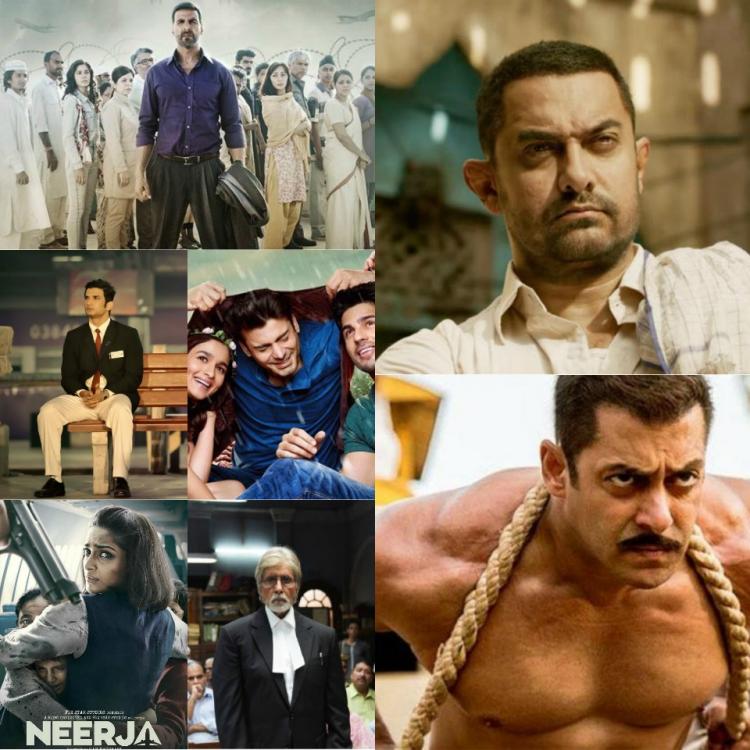
The year has ended on a high note with DANGAL but it has been a poor year overall for Hindi films with footfalls down for the third consecutive year though there may be a little bit of growth in terms of amount collected depending on DANGAL. The year saw a record 225 Hindi releases of which just sixteen proved AVERAGE or better. That is a 7.11% ratio.
There is a huge difference in opinion between what most film makers see as good content and what the audience sees as good content which has seen most big studios shut up shop or stop acquiring as far as Hindi films go. The acquiring stopping may not be a bad thing as it was this that led to bad content flourishing as makers had table profits. So box office results did not matter too much as money was made but somewhere down the line someone is always loosing when a film is rejected by the audience.
There were two good films in 2016 and the numbers say it all with others lagging so far behind that it is not even funny. The business is there as SULTAN and DANGAL have proved and its not come just because of the presence of Salman Khan and Aamir Khan. It makes a difference to have big stars but not that much that every other film remains 200 crore nett below them. Two films easily get over 3 crore footfalls while most others struggle to get even 1 crore footfalls and the ones that do get over 1 crore just about do it. There probably has never been such a big between the top two films and the rest.
The corporates are down and with that television is going to provide the safety net and today some films have bigger recovery from television than theatrical but eventually for this to be maintained results have to be there. Here only HOUSEFULL 3 and BAAGHI after SULTAN actually scored out of the successful films. DANGAL, M S DHONI - THE UNTOLD STORY, AE DIL HAI MUSHKIL and DEAR ZINDAGI results are pending. This means that SULTAN, HOUSEFULL 3 and BAAGHI were the most widely seen films of the year and universally successful. DANGAL will join them no doubt while M S DHONI - THE UNTOLD STORY and AE DIL HAI MUSHKIL might have a chance.
DEAR ZINDAGI is in that KAPOOR & SONS, NEERJA and PINK mould where the story telling style is alien to most of the audience. So they can't connect outside big multiplexes of the 5 metros and hence, results post theatrical and in the long run are going to be bit of a disaster. The year was full of box office disasters with the high profile ones being MIRYZA, ROCK ON 2 and FITOOR. The CLASSIFICATIONS for 2016 are as follows with distributor shares in brackets.
All Time Blockbuster / Blockbuster
1. Dangal (Third Weekend will decide final status)
Blockbuster
2. Sultan (158.50 crore)
Super Hit
3. Rustom (61.55 crore)
4. Airlift (59.65 crore)
Hit
5. M S Dhoni - The Untold Story (60.05 crore)
6. Housefull 3 (54.92 crore)
7. Ae Dil Hai Mushkil (53.19 crore)
8. Baaghi (38.10 crore)
9. Kapoor & Sons (32.35 crore)
10. Neerja (31.92 crore)
11. Pink (29.85 crore)
Semi Hit
12. Dear Zindagi (31.25 crore)
13. Ki & Ka (24.59 crore)
Average
14. Dishoom (33.26 crore)
15. Udta Punjab (27.65 crore)
16. Happy Bhaag Jayegi (12.42 crore)
Below Average
17. Shivaay (42.46 crore)
18. Befikre (29.25 crore)
19. Wazir (19.23 crore)
Awards never mattered to me, but the pride in my parents' eyes is my biggest award-Amaal Mallik
8:26 AM

BOMBAY TIMES (January 1, 2017)
Year 2016 could not have
ended on a bet ter note for Amaal Mallik. For the second time
consecutively, his compositions have featured on Radio Mirchi Top 100
Songs of the Year. After his track Sooraj Dooba Hai (Roy) shot to the
top spot in 2015, hits like Kar Gayi Chull (Kapoor & Sons) further
cemented his position. Both the songs have won the Diamond Discs at the
Mirchi Awards.
At 25, Amaal is the second youngest composer to bag a Filmfare Award with only Rajesh Roshan picking one at 21. He has also bagged accolades at other award ceremonies besides Radio Mirchi Awards, TOIFA and the prestigious Dadasaheb Phalke Academy Award for the Best Music Director. Not just in India, he is also creating waves overseas. Recently, two of his films - Sarbjit and M S Dhoni - The Untold Story - made it the Oscar list. In an interview with BT, the composer charts his success story and what the future holds for him...
You have ended 2016 on a high note...
Yes, many of my songs were received well. Soch Na Sake, Tu Bhoola Jisse, the songs in Sanam Re, Kar Gayi Chull and Buddhu Sa Mann (Kapoor & Sons), Sab Tera, Bol Do Na Zara (Azhar), Salamat (Sarbjit), Kuch Toh Hai, the tracks in M S Dhoni - The Untold Story...the list is long.
It must have been really tough to compose for a films like Airlift and M S Dhoni - The Untold Story, which are rooted in reality...
Certainly so. Airlift was inspired by incidents of the 90s, and I had to travel back to create music belonging to that era, and still make it connect with my generation. On the other hand, composing for M S Dhoni - The Untold Story was a dream come true, as he is the only cricketer whose biopic has been made while he is active in the game. I had composed music for a few commercials featuring Dhoni, but never thought I'd score the entire soundtrack for his film. Dhoni's album is a fine blend of rock and orchestral music. It's not a regular soundtrack and I'm glad I got the chance to do something like this so early on in my career.
You have turned singer, too in Badrinath Ki Dulhania...
A lightly sung scratch by me was loved by Karan Johar and Shashank Khaitan who felt my voice did justice to the song and suited Varun (Dhawan)'s character and his age in the film. The track lists the various reasons a man loses his heart to a woman. Varun will be seen wooing Alia Bhatt in it.
How busy is the next year for you?
I am really excited about Badrinath Ki Dulhania, Noor and Mubarakan. Having said that, I have decided to take it a little easy in 2017. I have released 46 songs in two years and I feel I should now focus on creating even better music. Also, I always look out for that spark in someone's eyes, a need to prove themselves...I am here to support talent, and I will do it in whatever ways I can. I worked hard only to make my parents proud. Awards never mattered to me, but the pride in their eyes is my biggest award.
At 25, Amaal is the second youngest composer to bag a Filmfare Award with only Rajesh Roshan picking one at 21. He has also bagged accolades at other award ceremonies besides Radio Mirchi Awards, TOIFA and the prestigious Dadasaheb Phalke Academy Award for the Best Music Director. Not just in India, he is also creating waves overseas. Recently, two of his films - Sarbjit and M S Dhoni - The Untold Story - made it the Oscar list. In an interview with BT, the composer charts his success story and what the future holds for him...
You have ended 2016 on a high note...
Yes, many of my songs were received well. Soch Na Sake, Tu Bhoola Jisse, the songs in Sanam Re, Kar Gayi Chull and Buddhu Sa Mann (Kapoor & Sons), Sab Tera, Bol Do Na Zara (Azhar), Salamat (Sarbjit), Kuch Toh Hai, the tracks in M S Dhoni - The Untold Story...the list is long.
It must have been really tough to compose for a films like Airlift and M S Dhoni - The Untold Story, which are rooted in reality...
Certainly so. Airlift was inspired by incidents of the 90s, and I had to travel back to create music belonging to that era, and still make it connect with my generation. On the other hand, composing for M S Dhoni - The Untold Story was a dream come true, as he is the only cricketer whose biopic has been made while he is active in the game. I had composed music for a few commercials featuring Dhoni, but never thought I'd score the entire soundtrack for his film. Dhoni's album is a fine blend of rock and orchestral music. It's not a regular soundtrack and I'm glad I got the chance to do something like this so early on in my career.
You have turned singer, too in Badrinath Ki Dulhania...
A lightly sung scratch by me was loved by Karan Johar and Shashank Khaitan who felt my voice did justice to the song and suited Varun (Dhawan)'s character and his age in the film. The track lists the various reasons a man loses his heart to a woman. Varun will be seen wooing Alia Bhatt in it.
How busy is the next year for you?
I am really excited about Badrinath Ki Dulhania, Noor and Mubarakan. Having said that, I have decided to take it a little easy in 2017. I have released 46 songs in two years and I feel I should now focus on creating even better music. Also, I always look out for that spark in someone's eyes, a need to prove themselves...I am here to support talent, and I will do it in whatever ways I can. I worked hard only to make my parents proud. Awards never mattered to me, but the pride in their eyes is my biggest award.

Alia Bhatt & Karan Johar have a cute tu-tu main-main over Ae Dil Hai Mushkil at Filmfare press conference
8:05 AM

MUMBAI MIRROR (December 24, 2016)
At the press conference for the 62nd Jio Filmfare Awards 2017, Alia Bhatt was asked which according to her were the most deserving movies of the year and she rattled off, “Kapoor & Sons, Neerja and Dangal.” Mentor Karan Johar pouted, saying she’d forgotten his directorial Ae Dil Hai Mushkil and she retorted, “Karan I do remember Ae Dil Hai Mushkil and ek tarfa pyaar.”
KJo responded by saying his onesided love is for Alia while hers is for her own film, recalling a moment later that he had produced Kapoor & Sons. Not to be undone, his ‘student’ was quick to point out that she had made a fleeting appearance in his Diwali release.
KJo is hosting the award function on January 14 with his good friend Shah Rukh Khan.
Alia is scheduled to perform at the awards show and said that maybe one day she would host the function as well.
Subscribe to:
Posts (Atom)