Showing posts with label Jisshu Sengupta. Show all posts
Showing posts with label Jisshu Sengupta. Show all posts
Jisshu Sengupta reveals why daughter Sara prefers modelling over acting
10:48 AM

Onkar Kulkarni (MUMBAI MIRROR; February 19, 2026)
Bengali star Jisshu Sengupta’s elder daughter, Sara, is making her mark in the fashion world. She made a stunning debut on the ramp at Dior’s Fall 2023 show in Mumbai. Unlike many star kids who often follow the film route, Sara is determined to carve out her own path.
Her proud father shares, “Sara received a few Hindi film offers. However, she doesn’t want to do films. She wants to focus on modeling. She made her debut with Dior and she did it all by herself. Young kids these days are quite focused and they know what they want.”
‘Sara would rather stick to modeling’
Speaking about the 20-year-old’s decision to avoid films, Jisshu says, “We did a film together called Uma. She was 12 then, and after that she felt films are not her cup of tea. She got a lot of praise, but didn’t enjoy being around so many people or visiting places (during promotions). She said she’d rather stick to modeling.”
‘In terms of business Bengali films have a long way to go’
As an actor and producer, he hopes to expand the reach of Bengali cinema. Reflecting on its current position, he says, “We are winning National Awards at least one every year. But, in terms of business we have a long way to go. We have got lesser halls than even Marathi films or even Punjabi films in that sense. Bengali films only release in Bengal. We have to work on our content. We need to improve and push ourselves.”
He adds, “I have a dream that one day we will make a film in 3 languages — in Bengali and release it in Telugu and in Hindi as well. We will get there. One baby step at a time.”
Check out Kajol's badass avatar in Maharagni
8:14 AM

Directing Kajol in her maiden pan-India film Maharagni, filmmaker Charan on how the actor was thrilled about leading her first actioner in 32-year career
Upala KBR (MID-DAY; July 24, 2024)
Kicking ass on screen can be a thrilling affair. Kajol is discovering it as she shoots Maharagni: Queen of Queens, helmed by Telugu director Charan Tej Uppalapati. In May, the actor had unveiled the film’s teaser that saw her in a fierce avatar as she took on baddies single-handedly. On the surface, Maharagni is a revenge story with the protagonist rising against all odds to claim power. There is more to it, promises Uppalapati. He says that at its core, it is a story of women empowerment, while exploring the parent-child bond.
The director, who kicked off the shoot in Hyderabad in February, shares, “In today’s times, women are an avatar of Goddess Durga, and have the qualities of Lakshmi and Saraswati. Kajol plays Maya, a woman who rises from Dharavi’s slums and becomes one of the most powerful women in Maharashtra. The central theme is about loving your parents. Through the movie, we want to tell the audience to take care of their parents.”
In her three-decade-plus career, Kajol flirted with Tamil movies with Minsara Kanavu (1997) and Velaiilla Pattadhari 2 (2017). Maharagni marks her first pan-India offering, with the director shooting it in Hindi and planning to dub it in Telugu, Tamil, Malayalam and Kannada. Making it an anticipated project is its powerful cast that includes Naseeruddin Shah, Prabhudheva, Samyuktha Menon and Jisshu Sengupta.
“I wanted to tell a story that everyone across India would connect to. So, I [roped in] actors from different states. Kajol ma’am is leading a [mainstream] action entertainer like this for the first time. When I narrated the script to her, she was excited. I am a director from Hyderabad who has come down to Mumbai to do something; it’s only because of Kajol ma’am’s support and guidance that I could do this. Once she gets into the character, she is immersed in it, and is a fabulous actor. She spends time on the sets and lives the character.”
With a chunk of Maharagni shot in Hyderabad, the unit will begin the final schedule in Mumbai next month. Uppalapati is particularly excited about presenting his leading lady in an action avatar for the first time. “Kajol prepped [hard] for the action sequences. For me, action has to make sense and [go beyond] looking good. There should be an emotion behind each action set-piece.”
I told Kajol, ‘I am very nervous.’ She said, ‘Shut up, just shut up!’ That actually broke the ice-Jisshu Sengupta
8:19 AM
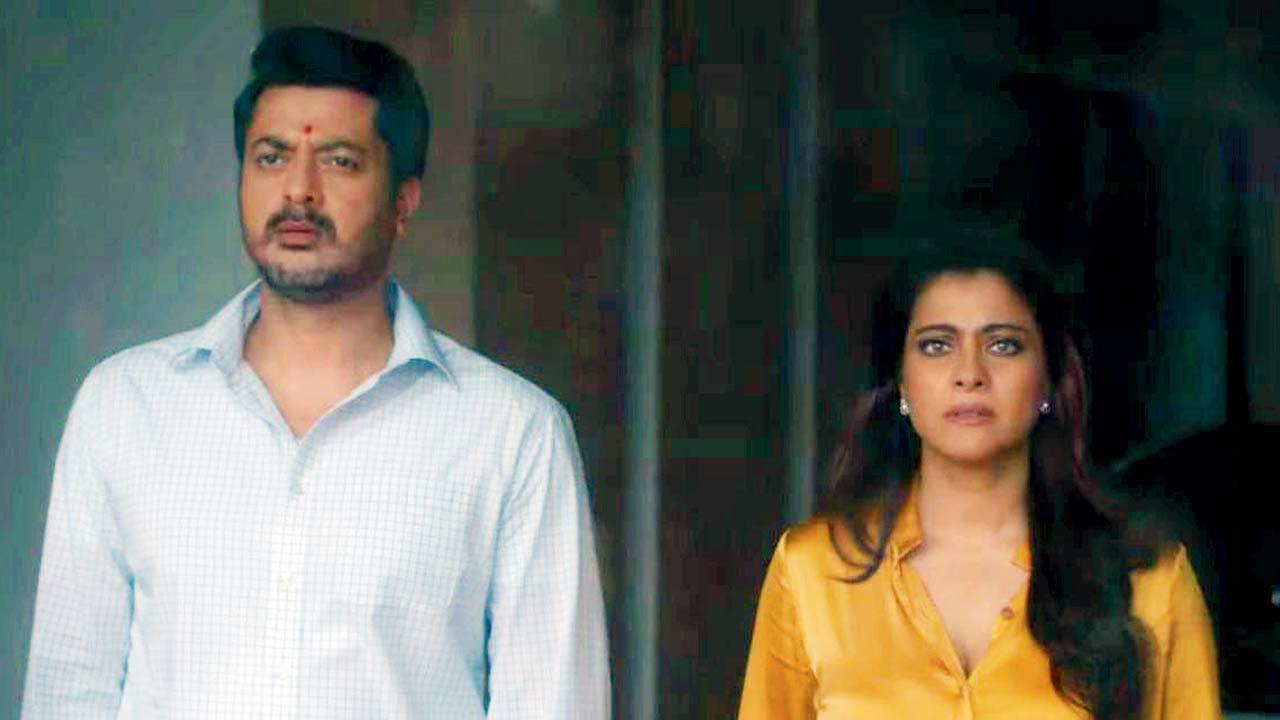
Initially hesitant to play a husband’s role, Jisshu says he came on board The Trial only to share screen space with Kajol
Priyanka Sharma (MID-DAY; July 7, 2023)
Jisshu Sengupta was certain he would not play a husband on screen again. From Rani Mukerji’s Mardaani franchise to Vidya Balan-led Shakuntala Devi (2020), and Criminal Justice: Behind Closed Doors (2020), the actor had essayed the role of the spouse one too many times. But luck had other plans, he realised, when creator-director Suparn S Varma approached him for a part in The Trial.
“When I met Suparn for the show, I didn’t know which role I was about to play. Then he said, ‘Husband!’” he laughs.
In The Trial, which is the Indian adaptation of The Good Wife, Sengupta’s character is put behind bars after his wrongdoings come to light. This compels his wife—essayed by Kajol—to begin her life anew. Early on in the narration, Sengupta understood that his role, with its complexities, was different from the husband roles he had played in the past.
“My character is grey and has got so many layers. I believe there is so much to do with negative shades in a character, something that a positive role [does not offer you].”
That said, it was neither the temptation of the layered part, nor the joy of collaborating with Varma on the Disney+ Hotstar offering that sealed the deal for him. It was, in fact, the prospect of sharing screen space with an actor he has admired for decades that did the trick.
“The moment Suparn mentioned Kajol’s name, I said, ‘Done deal.’ I am a huge fan of her work. Acting opposite her was a dream come true.”
The actor has no qualms admitting that he was a bundle of nerves before their first shot. “On the first day, I told her, ‘I am very nervous.’ She said, ‘Shut up, just shut up!’ That actually broke the ice,” he laughs, before heaping praise on Kajol. “She put me at ease. She doesn’t have the airs of a superstar. Once the camera rolls, Kajol pushes you to be better. Because she is giving her all, you feel like pushing your boundaries.”
Karisma Kapoor gets more and more surprised about herself every day-Abhinay Deo
8:20 AM
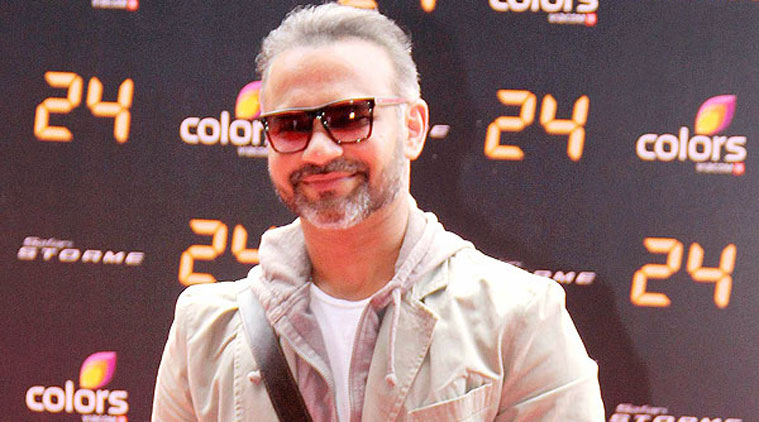
Chandrima Pal (BOMBAY TIMES; May 28, 2022)
It’s been more than a decade since Abhinay Deo gave us the cult hit, Delhi Belly. Since then, the ad filmmaker has been experimenting with genres as diverse as black comedy (Blackmail) and spy thrillers (Force 2), before he got Karisma Kapoor, Helen, Soni Razdan, Jisshu U Sengupta and Surya Sharma in a casting coup of sorts for Brown, a crime drama set in the underbelly of Kolkata.
In between experiencing his first Norwester on the banks of the Hooghly and shooting in the skinny alleys of the city, Abhinay settled down for a free-wheeling chat with us. Excerpts:
How did the idea of doing Brown come about?
We got on to this project a year and a half back. It is a lovely, intense and interesting idea and we decided to put together the story line, get the actors on board and start filming and see where it goes. This story does not have a beginning, middle and end — but it’s a fantastically written character study about broken people in a broken system with all their nuances. It talks about how people are not black and white as generally portrayed in our cinema. It’s a very interesting milieu for me to explore, and that’s where Kolkata comes in as a character in the film.
When shooting in a city of a certain vintage and character, filmmakers often go for familiar frames, visual tropes. For instance, the Victoria Memorial, Howrah bridge, the slatted windows in the old houses. Are you doing things differently?
As a filmmaker, I hate to run with clichés. Our story is about the underbelly of the city and its different layers — not so much the part which the aam janta knows. In the 10 days that we have been shooting there, we have not shot a single monument or tourist spot in the city. That’s how we intend to keep it. We are trying to capture the different textures of Kolkata — from the rich and big Marwari families to the smallest boatman — and the unhurried pace at which everything moves.
With Karisma Kapoor playing a complex central character in your ‘neo noir crime story’, the Mare Of Easttown comes to mind. Is that the space you are looking to explore?
Mare Of Easttown is a great example, but we are also about those dark, intense and jovial vignettes of the Anglo Indians, Biharis, Marwaris, bhodrolok Bengalis — communities that actually bring their cultures into the city and carry the city with them at the same time. The whodunit part is a thread that binds these people together and gives us an opportunity to talk about where they come from, how broken and ‘baggaged’ they are.
For the past few years, there has been a lot of discussion about what works for OTT and what’s made for the big screen experience. Now that both formats are running neck and neck, what is your take on the debate?
I think the new platforms have finally given us an opportunity to tell stories that are not bound by the star system. Imagine trying to do a character study 10 years back! Who would buy that? It is high time we went beyond the 20 people we can count on our fingertips, who you had to approach if you wanted anything to see the light of day. If things did not work out, you tried to get together some people from NSD and show your film on 10 screens.
We had great filmmakers such as Shyam Benegal, Govind Nihalani, Ritwik Ghatak, Mrinal Sen and Satyajit Ray, making documentaries and features with intense character studies. But their work got branded as parallel cinema instead. Imagine what would have happened if they had access to the new mediums and platforms that we do today!
These lines are blurred, the star system is being dismantled. While we have not come to terms with it yet, the process has started. You simply cannot take a big actor and make it work. People have access to so much that they would rather watch something else than any mediocre stuff that comes their way.
Speaking about the star system, OTT has given many stars from the ’90s a chance to reinvent themselves. How has it been working with Karisma Kapoor on her first OTT project?
I think for many of these ’90s actors, initially there’s a sense of shock because of the change that is happening. After that comes the requirement of involvement, which is intense and immense. Earlier films were made differently; your story was written on the sets. Now it is about adapting to a very different way of life and delivering to the brief. And hats off to the way they are reinventing themselves. Initially, we were a bit skeptical and so was Karisma. She was facing the camera after a long time after all. But she has been delivering, and how! In fact, she gets more and more surprised about herself every day and we pat ourselves on our back a little harder for having stuck to our gut feeling about casting her in the project.
And then there’s Helen as well. What was her first day on the set like?
Helen is 80-plus, comes from a completely different era. We had a tough scene where she was supposed to hold her own in a room with many people. We were wondering how it would pan out. But Helen not only held her own, but was spectacular in the way she made her presence felt. But more than the first day of shoot she had a child-like fascination about the very idea of reading from a script — apparently it was her first time! But how absolutely professional she has been and so hard working. In fact, everyone from Soni Razdan to Jisshu to Surya, the young actors from Bengal and Mumbai — for me, it is fun to be able to bring the experience that the seasoned actors bring with them and combine it with contemporary filmmaking style and try to make something out of it.
What happened to Doosra, your film about cricket that was inspired by India’s momentous victory in the NatWest series?
Doosra is part fiction-part documentary about Indian cricket and a young girl. I have pushed my creative boundaries in a completely different direction with the film. Unfortunately, many of the festivals, where we wanted to take the film, did not know how to slot it. And then Covid also delayed the process. But it is too poignant and special a story not to be told and I hope the audiences will be able to see it soon.
Why are Bengali films conspicuous by their absence on OTT platforms?
8:03 AM

Superstar Jisshu Sengupta feels that collaboration is the need of the hour
Once hailed as cinema for the thinking viewer, Bengali films are conspicuous by their absence on OTT platforms. Is it creative drought or failure to market? Or the classic Bengali priggishness?
Mohar Basu (MID-DAY; August 1, 2021)
In the same week that Aditya Vikram Sengupta’s third movie, Once Upon A Time In Calcutta, was selected in the Orizzonti (Horizons) section of the 78th Venice International Film Festival, journalist Rituparna Sengupta tweeted, “Are good Bengali films not being made or are they not being acquired by OTT platforms? Because I see the same things on Netflix and Prime for months and months.”
Despite Srijit Mukherji’s 2020 film Gumnaami earning a National Award recently and Sengupta wooing the international fans with his cinema, it’s fair to say that Bengali cinema hasn’t managed to attract the attention of the OTT audience in India to the degree that Malyalam, Tamil and Telugu movies have.
We pick Aditya Vikram Sengupta’s brain for what the reason could be—creative bankruptcy or an inability to connect with the masses? He ponders a bit before answering. “Are we making good enough cinema? Whether it’s a Malayalam or Telugu film, at the end of the day, the film speaks for itself. If my film is at Venice, it’s because the film fared well. Here’s my analogy — an IIT degree can give us a head start but after that, it boils down to the person [to succeed professionally]. There are no frills needed for a film to work, other than that it has to be a good film.”
He is speaking from experience. Sengupta’s debut film, Labour Of Love, won the FEDEORA award for the best debut at the Festival’s Venice Days section in 2014 and was subsequently acquired by Amazon Prime Video. “Film distribution was the easiest part of my job. Inox gave us a big release and it ran full house for eight weeks. Abhay Deol distributed the film and eventually it went to Prime. The next film, Jonaki, got picked up by Netflix. It got picked up two years after its release, and they said they chose it because they really liked it.”
That said, Sengupta has consciously followed a different monetary model for his films, which doesn’t involve working with traditional production houses of the industry. “My language of work is Bengali but I don’t work in the Bengali film industry. Shooting in Calcutta comes with its challenges. I have realised filmmaking is not just about the money but collaborating with someone who shares your creative vision. Say, SVF [Shree Venkatesh Films] wants to give the money, but what they wish to do with a film is very different from the process I would like to follow.”
A fair chunk of films in the Bengali industry are helmed by SVF, one of the industry’s biggest producers and distributors, who also control and maintain Hoichoi, an exclusive app for Bengali content, that has both originals and acquisitions. This, say some, has created the classic market monopoly problem.
But Shiboprosad Mukherjee, a well-known filmmaker from Bengal, says that this is not quite the hindrance. “SVF are solid producers, distributors, have their own theatrical chain and OTT platform, so, a large number of films made go straight to their platform. In Bengali films, satellite and digital rights are bought in combination. That is the industry model. We, as producers, will sell to whoever gives us the best deal. I don’t feel our content lacks the sting to make it big. The Malayalam industry is buying rights to my films, too. My film Kantho is being remade in Malayalam. Viacom has bought my films Belasheshe and Posto, which is only possible because the films have fared well commercially and have piqued audience interest. Most of my films are on Hotstar and the rest are on Hoichoi. What we probably suffer from is a slack attitude when it comes to wider publicity. None of us are actively seeking the Hindi film audience or fame. The more regional you are, the more global you will be.”
Thankfully, Anindo Banerjee, head of originals at Hoichoi, has a less lofty approach to the challenge. He says that what is viewed as market monopoly is a culturally symbiotic equation. “SVF has been in the business for 25 years and culturally, cinema in Bengal is synonymous with SVF. As far as our app is concerned, it is created for the diaspora and enjoys great reach, both locally and internationally. But we are now, trying to reach the non-Bengali diaspora, and have elaborate plans to achieve this.”
Srijit Mukherji, whose Gumnaami has won him two National Awards, looks at it slightly differently. “If we give content to OTT players, they will market it well. But we, as filmmakers, need to deliver genre-bending, clutter-breaking movies which can capture audience attention across 170 countries. Malayalam films are going through a renaissance where a lot of great filmmakers are making one brilliant film after the other. That’s not happening in Bengali cinema for sure. The Malayalam new wave has people addicted right now. Actors like Fahadh Faasil, Parvathy are creating a following which is hard to replicate,” he says.
Mukherji, fresh after wrapping up Netflix anthology Ray, is now helming Shabaash Mithu, a biopic on star woman cricketer Mithali Raj, starring Taapsee Pannu. “Bengali films are doing well in festivals, and on the awards circuit. But it’s true that OTT platforms don’t acquire a lot of Bengali films. Both Gumnaami and Vinci Da did brilliantly on Amazon Prime. In fact, after the Amazon release of Vinci Da, I was able to sell the rights in Tamil, Telugu, Hindi and Malayalam. But overall, there are lesser Bengali movies on OTT platforms, and perhaps it has to do with the price they offer, which is prohibitive. Hoichoi mops up all Bengali releases and its reach is great in the diaspora, but not enough outside it. Gumnaami’s success is also an aberration. I think the OTT players are waiting for us to prove our universal appeal, before investing in the Bengali film market.”
While Netflix India and Amazon Prime Video declined to comment officially, a member from the acquisition team of the latter told mid-day, “The platform doesn’t have a strong presence in Bengali. In terms of demography, Bengal is not a strong point for the platform. We are still making plans to scale up.”
Another official at Hotstar, however, says that over the last year they have seen a marked rise in viewing of Bengali films on the platform. “We have good pre-existing relations with well-known makers from the region. We will be investing more actively in Bengali content over the days to come. Over and above that, the television serials in Bengali have been widely viewed by people from the diaspora over the last few months since lockdown. Internet viewing has gathered strength.”
Bengali superstar Jisshu Sengupta, who starred in Shakuntala Devi, Thalaivi, and Antim, and acts across Bengali, Hindi and Telugu films, says it’s a misconception that people don’t watch Bengali cinema. “Right now, the Bengali film market is still healing from the pandemic. The last two years have hit us hard and market players like Amazon, Netflix and Hotstar are not coming up with enough content for this language. I think a lack of interest is creating a lack of output. We, as artistes, need to push our boundaries, which artistes like Paoli Dam, Swastika Mukherjee, Parambrata Chattopadhyay and I are trying to do. But wanting to watch Bengali content is eventually the audience’s call.”
Audiences acknowledge glitzy facets of the job-Jisshu Sengupta
8:30 AM

Criminal Justice 2 actor, Bengali star Jisshu announces his memoir; hopes to make readers aware of actors’ struggles, vulnerabilities
Mohar Basu (MID-DAY; March 15, 2021)
It is difficult to make the diverse worlds of Bengali and Hindi film industries converge, but Jisshu Sengupta has successfully straddled them. Where he has shone in Bengali cinema with films like Noukadubi (2011) and Jaatishwar (2014), he has established himself in Hindi showbiz with Piku (2015), Shakuntala Devi (2020) and the recent Criminal Justice 2: Behind Closed Doors. On his 44th birthday today, the actor has announced his autobiography, Abahaman — My Journey So Far. The memoir, slated for an early 2022 release, will be penned by poet, essayist and translator Sandipan Chakraborty.
“I decided on it during the lockdown last year as I felt time is limited, and certain stories need to be told. As I complete 22 years in the entertainment business, I want to narrate my life experiences for the future crop of talent emerging from Bengal,” says the actor.
The book will offer a glimpse into Sengupta’s childhood, his personal life, achievements and anecdotes. But above all, through the memoir, he wishes to focus on the vulnerabilities of an artiste. “There is a lot that goes into the rise and fall of an actor. Audiences tend to acknowledge the glitzy facets of the profession, seldom understanding the humble beginnings. In my initial days, I could have been a silent victim of depression owing to the struggles I faced, but the choices I made [have aided my personal growth]. The book covers my journey, from starting out in a regional film industry to becoming a household name across various film industries, and my learnings.”
Bhumi Pednekar to resume shoot of supernatural thriller Durgavati on September 29, 30
7:48 AM

Himesh Mankad (MUMBAI MIRROR; September 17, 2020)
In January, Bhumi Pednekar started shooting for her supernatural thriller, Durgavati, in Bhopal, with Arshad Warsi and Mahie Gill. They shot for two months at real locations like Moti Mahal, Sadar Manzil, Oriental Institute of Science & Technology, Bhopal’s Old Central Jail, Minto Hall and Poha Bhata village, wrapping up the schedule in March, days before a nationwide lockdown was announced. Mirror has now learnt that the team of this Akshay Kumar, Bhushan Kumar and Vikram Malhotra production is reuniting for a two-day patchwork shoot at Mumbai’s Film City.
Bhumi is currently in Goa, at her village, Pedne, and is expected to be back this week. The film marks the Bollywood debut of director G Ashok. “Work on the sets has begun. Following all SOPs, the team will shoot on September 29 and 30,” revealed a source close to the development.
“Bhumi, along with Jisshu Sengupta, who plays a pivotal role, will be a part of the upcoming schedule. Arshad has wrapped up his work and is on the verge of completing his dubbing. Bhumi and Jisshu, too, have been dubbing for their respective tracks. After this twoday shoot, it will be a film wrap,” the source informed, adding that since there are lots of supernatural elements, two units are remotely working on the post production in Mumbai and Chennai. Bhumi plays an IAS officer who is imprisoned in a haunted house. Details of other characters have been kept under wraps.
I was called an unlucky actor-Jisshu Sengupta
8:27 AM

Nishad Neelambaran (HINDUSTAN TIMES; July 14, 2020)
For actor Jisshu Sengupta, the lockdown “has been both fun and difficult”. The Bengali superstar says the initial days were fun, but he soon started missing action on the sets. “Initially, since I didn’t get a break from work at all, I enjoyed eating and sleeping till late. But after a point I started missing the fun on the sets and the hustle,” he says.
Sengupta, who was a part of Bollywood movies such as Barfi (2012), Piku (2015) and Manikarnika (2019), will next be seen in Mahesh Bhatt’s Sadak 2. Speaking about the recent controversy around the film, he says, “We live in a world where there’s freedom of speech, everyone has an opinion and everyone is entitled to judge. I wonder, is it really fair to judge? Would we like to be judged? The pain is always felt most at the receiving end. And I hope some day these accusations turn into adulation and people see the film as a film.”
The 43-year-old actor, who feels “mental health should be a priority”, says he dealt with “depression, fears and being judged”. “I was called an unlucky actor for the longest time. No one put faith in me, and I had bills to pay and a family to run. Then (late filmmaker) Rituparno Ghosh happened and my life started to seem like it’s coming to track. I just began to find my feet when I lost him. I started drinking and shut myself away from the world.”
Asked about nepotism in the industry, he says, “Of course, there is nepotism, but it exists everywhere. If you’re an actor’s son/daughter/niece/nephew/grandchild, it will be easier to get into films, but only your talent will sustain that for you. There is favouritism and groupism, which needs to be tackled before nepotism.”
There's something about Mahesh Bhatt that made me feel more myself than I have ever felt-Jisshu Sengupta
8:26 AM

Jisshu Sengupta, who is set to star in Shakuntala Devi and Sadak 2, on making a career shift to Bollywood
Mohar Basu (MID-DAY; July 9, 2020)
 Jisshu Sengupta, the blue-eyed boy of the Bengali film industry, has actively made a shift to Bollywood. With two films ready for release — Shakuntala Devi with Vidya Balan and Sadak 2 helmed by Mahesh Bhatt — the actor claims this is the rebirth of his career. "Though I have been doing Hindi films since Shyam Benegal's Bose: The Forgotten Hero [2004], I knew I had to move cities after Manikarnika [2019]. Coming to Mumbai was never on my mind [until then]. Two years ago, I decided to come out of my comfort zone. I am a Lokhandwala lad now!"
Sengupta seems to be at ease with the daunting new phase of his life. "It never came across as a step down. Screen space doesn't determine your merit; performance does. People are familiar with my work in the Bengali films, especially the ones with Rituparno Ghosh," says the actor, adding that his co-star Vidya Balan makes it delightful. "I am a huge fan of Vidya, the actor, but she is an even better human being and colleague on set. She has the knack to break the ice and crack these witty one-liners that put you right at ease. While she has worked with Srijit Mukherji in Begum Jaan [2017], Vidya said she loved me in the original version, Rajkahini [2015]."
Though tight-lipped about the film that premieres on Amazon Prime Video on July 31, Sengupta reveals his decision to come on board. He says, "I loved the character of Shakuntala's husband Paritosh Banerji, and how beautifully he understood his wife. The director [Anu Menon] did a thorough job with the character. I learnt everything about Paritosh from the literature she provided me on him."
But he credits Sadak 2 for helping him come on his own again. "There's something about Mahesh Bhatt that made me feel more myself than I have ever felt. After the death of my mentor-friend Ritu Da, I stopped working for eight months as a part of me had died with him. But when I was on set with Bhatt saab, I felt the actor in me came alive again."'

Vidya Balan and I have beautiful scenes in Shakuntala Devi biopic-Jisshu Sengupta
8:00 AM

Adding a layer of romance to math genius Shakuntala Devi's life, Jisshu Sengupta on playing husband to Vidya Balan in the film
Mohar Basu (MID-DAY; November 11, 2019)
Coming off films like Piku, Mardaani and more recently, Manikarnika - The Queen Of Jhansi, popular Bengali actor Jisshu Sengupta is now set to romance Vidya Balan in the upcoming Shakuntala Devi biopic, headlined by the latter. While inevitably taken by her acting prowess, Sengupta is all praise for Balan's ability to tickle the funny bone. "It's always fun to be around her. She's jovial and makes everyone laugh. We have shot some beautiful scenes together and I am looking forward to the audience to watch them."
Even though Anu Menon's directorial venture on the math wiz will explore her talent with numbers, Sengupta assures us that there's sufficient meat in Devi's love life as well. "Paritosh [Devi's husband and his character] and Shakuntala have beautiful chemistry, and our director has created magic. We did many reading sessions and rehearsed on set. Vidya gives he co-actors sufficient space, and we'd keep improvising our scenes until our director would say, 'Got it!'."
Moving base to Mumbai to focus on Bollywood films, Sengupta says he's looking forward to being part of mainstream cinema. "I just wrapped up Sadak 2, and am reading some scripts, apart from also meeting people [filmmakers]."

Jisshu Sengupta to play Alia Bhatt's father in Sadak 2
7:52 AM

Bengali actor Jisshu Sengupta is back in Bollywood after his last outing, as Gangadhar Rao, Kangana Ranaut’s husband in her Rani Laxmibai period drama
Hiren Kotwani (MUMBAI MIRROR; August 9, 2019)
Bengali actor Jisshu Sengupta will be seen as Alia Bhatt’s father in her upcoming film Sadak 2, which also features Sanjay Dutt, Aditya Roy Kapur and Pooja Bhatt. He is currently shooting for the film in Ooty with Alia and is all praise for his on-screen daughter. “Alia’s passion for her craft is commendable. Her heart is in her work and she is amongst the finest actors we have in Indian cinema today.”
Prod him on his last screen outing, with Kangana Ranaut in Manikarnika - The Queen of Jhansi, and he describes her as a “wonderful actress and a great director” with a “vision which she follows”. Does he think she should continue to dabble in filmmaking, considering her last stint was mired in controversy, and Jisshu says, “As a creative person, I think one should follow one’s heart. If she feels direction is her calling, she should go for it. But Kangana is also a phenomenal actor and she should keep acting too.”
Besides the Alia-starrer, Jisshu is also doing a Telugu film titled Ashwathama. Later this month, he begins work on a new Bengali film. What kind of films does he see himself doing in Hindi cinema in the coming years? “Content-driven, with challenging roles and subjects that excite me as an actor,” he keeps it short and succinct
Jisshu Sengupta roped in as Vidya Balan’s on-screen husband in Shakuntala Devi biopic
8:00 AM
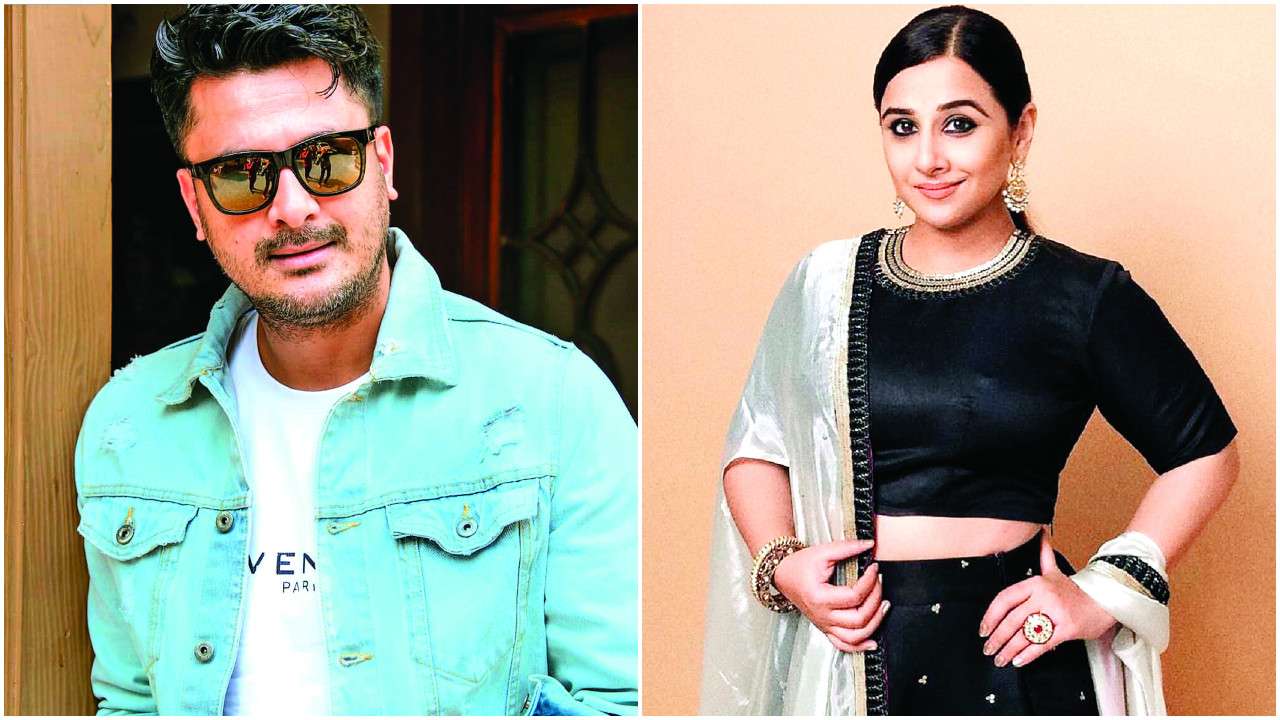
Vinay M R Mishra (DNA; July 31, 2019)
While Vidya Balan is all set to play the mathematics wizard Shakuntala Devi in Anu Menon’s upcoming biopic, the makers have found an actor to play the ‘human computer’s on-screen husband. According to our source, Bengali actor Jisshu Sengupta, has signed on the dotted line.
The insider states, “Jisshu will play Shakuntala’s husband Paritosh Banerji. Since he originally hailed from Kolkata, the makers found the actor perfect to play the role. His character is one of the most integral parts in the narrative.” Paritosh, who was an IAS officer from Kolkata, and Shakuntala were married in the mid-1960s when Devi returned to India from London. They separated in 1979.
The actor will soon kick-start filming. This is not the first time that Paa actress and the Manikarnika - The Queen Of Jhansi actor are sharing the screen space. They were earlier seen in NTR Kathanayakudu, where Jisshu had a cameo.
We called up Jisshu and dropped him a text, but there was no response till the time of going to press.
Zee Media Newsroom
I don’t mind even a 10-minute role, if it’s important to the script-Jisshu Sengupta
2:08 PM

Neha Maheshwri (BOMBAY TIMES; January 25, 2019)
For the Hindi cinema audience, he may be Ileana D’Cruz’s silent-but-determined husband from Barfi!, Rani Mukerji’s supportive husband in Mardaani or Deepika Padukone’s friend-cum-confidante in Piku. But, the truth is, Jisshu Sengupta is one of Bengali cinema’s most popular actors and he’s fast gaining a foothold in Bollywood, too. As he gears up for his next release, Manikarnika — The Queen Of Jhansi, Jisshu tells BT how much critical acclaim matters to him, why we don’t see more Bengali actors in Hindi cinema and much more. Excerpts...
You are known for getting into the skin of every character you play. What sort of effort did it require to step into the shoes of a king, Gangadhar Rao Newalkar?
At one point, I had to say ‘no’ to Manikarnika because the dates were not matching with the Bengali film I was shooting with Srijit Mukherji. However, we managed to work it out, and the next thing I knew, I was on the set wearing the costume in front of the camera. Honestly, I didn’t get much time to prepare for the part. I followed what Krish (the original director) told me and based on whatever I could gather from the Internet. I had learnt horse riding while shooting for a Bengali film earlier and was trained in sword fighting on the set of Manikarnika.
You must have seen the transition as Kangana Ranaut took over the direction duties from Krish. Did the vision for the film change after the change in leadership? Is Kangana a better director or an actor?
No, the vision never changed. Kangana was focused and knew exactly what she wanted, as she was attached with this project since day one. She was associated with it even before Krish came on board, as Kamal Jain (producer) approached her first, before everyone else. She was the best choice to replace Krish, as he got busy with the NTR biopic. She was the only one who could take over and make it happen. However, I believe that Kangana is a great actress. She transforms in front of the camera. So, right now, I would rate her as a better actor than a director.
Is there any difference in working on a film, in which actresses make up the majority of the cast?
I don’t think about these things. I just focus on my character and how pivotal it is to the narrative. I don’t mind even a 10-minute role, if it’s important to the script. Gangadhar played an instrumental role in Rani Lakshmibai’s life. Also, it doesn’t matter if a film is headlined by one woman or 10. I have no problem with that. All I care about is that the audience should remember me for the character I play. I want to be part of content driven films in any language.
Many Bengali filmmakers, actors and actresses have had a lasting legacy in Hindi cinema. But, of late, male stars from Bengal haven’t dabbled with Bollywood at all. What could be the reason for that?
I think nobody from my generation, apart from Param (Parambrata Chatterjee) and I have tried to foray into Hindi films. Also, the movies have come to us, instead of us going out and asking for work. One needs to be in the city and know the right people, but we haven’t done that. You need to reach out to people, something that our generation hasn’t done. They haven’t pushed themselves to grow in Mumbai and do some good work here. Apart from Mithun da (Chakraborty), who shifted to Mumbai because he wanted to work here and made a mark for himself, the rest of us have always been working in Bengali cinema. After him, I guess it’s me who has been pushing myself to work in Bollywood.
There has been a paradigm shift in the kind of cinema you are associating with today, as opposed to your earlier films. A star can take those chances. Is it easy or do you still worry about success and failure of a film?
I am 100-films old. In my heyday, I have done a lot of commercial films, including dancing around the trees with the heroine. But after working with Rituparno Ghosh, my understanding of cinema changed. Whatever good I am doing, it is because of him. If I am being called a good actor, it is only because of him. I was really depressed after he passed away. It’s not that I don’t want to do a commercial film, I'll do it if the role matches my sensibilities. There is no particular reason for the shift and I certainly don’t consider myself a star. I would rather call myself an actor who has become a star, and would appreciate if people called me that, too. We have a lot of superstars, who are not actors, which holds true in every industry. People can become stars with their mannerisms and a few hit films; it’s their luck. Look, this industry is about luck more than talent; it’s 80 percent luck and 20 percent talent. I personally know many fabulous actors in Mumbai, who didn’t get a chance to prove their talent. Besides, the success or failure of a film doesn’t bother me. What bothers me and I get really tense is when the director says, ‘action’. I still get goose-flesh and butterflies in my stomach. It’s like appearing for an examination and I worry more about it than the result, because the latter isn’t in my hand.
What do you enjoy more today — commercial success or critical acclaim?
It goes hand-in-hand. I won’t say the money which my producer is getting isn’t making me happy. Of course, it does and that takes me to my next film. I am also happy that I am being critically appreciated with people talking good things about me. Most of my films in the last six or eight years have been critically acclaimed and have won several awards, but they didn’t make money. I am used to it now. These are films, which have travelled to major film festivals across the globe and I’ve got great reviews. This gives me a kick as an actor and makes me feel that I need to push myself to do better.

Saroj Khan to shoot song for Kangana Ranaut in a day for Manikarnika
8:04 AM

Choreographer to direct a classical number for actress; while another song, featuring Ankita Lokhande, is in the works
Natasha Coutinho (MUMBAI MIRROR; September 12, 2018)
Kangana Ranaut’s Republic Day release, Manikarnika - The Queen of Jhansi, is being majorly reshot with the actress taking over the reins, which has resulted in the budget reportedly ballooning to Rs 70 crore. Now, Mirror has learnt that she is set to shoot for a classical number with onscreen husband Jisshu Sengupta that will be choreographed by Saroj Khan.
“Saroj was brought on board recently for the special number which hints at the romance between Kangana and Jisshu’s characters. While rehearsals have been on since a few weeks now, the team starts shooting the song from September 18 for which a set has been created at Nitin Desai’s studio in Karjat,” a source close to the development informed, adding that the team is faced with the challenge of wrapping up the entire song shoot in just a day.
Mirror had earlier reported (August 20) that with director Krish busy with the NTR biopic, Kangana has taken over the reins to complete the patchwork with writers Vijayendra Prasad and Prasoon Joshi so that their film can keep its Republic Day date with the box-office next year. Soon after, Sonu Sood, who played Sadashiv Narayan Rao in the film, opted out citing unavailability of dates when he was summoned for the patchwork. He was subsequently replaced by Mohd Zeeshan Ayyub. Now, all the portions featuring Sonu and his screen wife, Swati Semwal, will be reshot in the coming days.
Kangana is presently shooting climax scenes with action director Nick Powell which will feature in the film’s upcoming teaser. Reportedly, there are also plans for another song in which Ankita Lokhande’s Jhalkaribai is seen celebrating the queen’s arrival. The song is scheduled to be shot over five days at ND Studio.
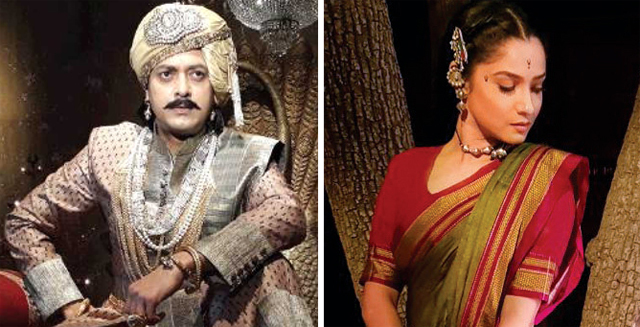
Jisshu Sengupta in the film; Ankita Lokhande as Jhalkaribai
Vidya Balan, Rana Daggubati, Jisshu Sengupta in NTR biopic
8:32 AM

The Krish-directed film being made on the late legend is expected to kick off this month
Avinash Lohana (MUMBAI MIRROR; July 3, 2018)
 Earlier this year, the hugely anticipated biopic on legendary Telugu
actor-turned-politician Nandamuri Taraka Rama Rao (NTR), to be directed
by Krish, was launched by Vice President M Venkaiah Naidu
at the Ramakrishna Studios, Hyderabad. Now, Mirror has learnt that the
film, that has Nandamuri Balakrishna in the titular role, will feature Vidya Balan as NTR’s wife, Basavatarakam (right), who he had married at the age of 20.
Earlier this year, the hugely anticipated biopic on legendary Telugu
actor-turned-politician Nandamuri Taraka Rama Rao (NTR), to be directed
by Krish, was launched by Vice President M Venkaiah Naidu
at the Ramakrishna Studios, Hyderabad. Now, Mirror has learnt that the
film, that has Nandamuri Balakrishna in the titular role, will feature Vidya Balan as NTR’s wife, Basavatarakam (right), who he had married at the age of 20.
 Meanwhile, the film marks the Telugu debut of Bengali actor Jisshu Sengupta as the late filmmaker and Dadasaheb Phalke awardee L V Prasad (right, below), and Rana Daggubati is on board to play Andhra Pradesh Chief Minister Chandrababu Naidu (left, below).
 Vidya
and Rana remained unavailable for comment but Jisshu, who is presently
recuperating after a gall bladder surgery confirmed the news. This will
be his second film with Krish after playing King Gangadhar Rao, Rani
Lakshmibai’s husband, in Manikarnika: The Queen of Jhansi, the upcoming
Hindi film that has Kangana Ranaut in the lead. “As a producer, LV
Prasad ji’s films revolved around catastrophic romances with theatrical
characters and memorable music. As an actor and director, he chose
subjects that were emotional, dramatic and driven by performances. I
have begun my prep for the film as Krish has given me a lot of content
to browse through. This will be my first ever stint in the South
industry and I’m quite excited and nervous at the same time,” Jisshu
said, adding that he has even shot at Prasad Studios and Prasad Film
Labs in Hyderabad.
Vidya
and Rana remained unavailable for comment but Jisshu, who is presently
recuperating after a gall bladder surgery confirmed the news. This will
be his second film with Krish after playing King Gangadhar Rao, Rani
Lakshmibai’s husband, in Manikarnika: The Queen of Jhansi, the upcoming
Hindi film that has Kangana Ranaut in the lead. “As a producer, LV
Prasad ji’s films revolved around catastrophic romances with theatrical
characters and memorable music. As an actor and director, he chose
subjects that were emotional, dramatic and driven by performances. I
have begun my prep for the film as Krish has given me a lot of content
to browse through. This will be my first ever stint in the South
industry and I’m quite excited and nervous at the same time,” Jisshu
said, adding that he has even shot at Prasad Studios and Prasad Film
Labs in Hyderabad.

 “But I never imagined I will get to play a pioneer filmmaker like
him one day. He was the one to introduce NTR in the 1949 Telugu
patriotic film Mana Desam and they were very close. I play a very
important part in the film,” the actor added, further revealing that he
starts shooting for the film on July 6.
“But I never imagined I will get to play a pioneer filmmaker like
him one day. He was the one to introduce NTR in the 1949 Telugu
patriotic film Mana Desam and they were very close. I play a very
important part in the film,” the actor added, further revealing that he
starts shooting for the film on July 6.
As part of his prep, Jisshu is also learning Telugu. “I will reserve one week for extensive language training with my tutor when I reach Hyderabad. I have also told Krish that it would be great if I can meet anyone from Prasad ji’s family,” he informed.
The film marks his first collaboration with Vidya and Rana. “I am not sure about Rana’s part, but I am told that Vidya is playing NTR’s wife. I am looking forward to working with them. I have known Vidya for a while. In fact, she played the lead role in the Hindi version of my Bengali film, Rajkahini,” Jisshu said.
Mahesh Manjrekar's family drama reunites Naseeruddin Shah and Amol Palekar
8:12 AM

Veteran actors were earlier seen in Khamosh and Bhumika; film expected to roll in June
Avinash Lohana (MUMBAI MIRROR; March 21, 2018)
 After the 2017 Marathi comedy, FU: Friendship Unlimited, featuring
Sairat fame actor Akash Thosar, National Award-winning filmmaker Mahesh
Manjrekar is now set to direct his next. He has roped in Naseeruddin
Shah and Amol Palekar for his untitled Hindi film. Confirming the news,
Naseer told Mirror, “Mahesh doesn’t want us to disclose too much about
the plot, so all I can say is that it’s a family drama with a great deal
of intense scenes and a bit of action.”
After the 2017 Marathi comedy, FU: Friendship Unlimited, featuring
Sairat fame actor Akash Thosar, National Award-winning filmmaker Mahesh
Manjrekar is now set to direct his next. He has roped in Naseeruddin
Shah and Amol Palekar for his untitled Hindi film. Confirming the news,
Naseer told Mirror, “Mahesh doesn’t want us to disclose too much about
the plot, so all I can say is that it’s a family drama with a great deal
of intense scenes and a bit of action.”The 67-year-old actor is looking forward to reuniting with Amol with whom he had earlier worked in Shyam Benegal’s 1977 drama Bhumika, broadly based on the memoirs of the well-known Marathi stage and screen actress, Hansa Wadkar. Amol played Keshav Dalvi the much-older, jealous and resentful husband of Smita Patil’s character Usha, while Naseer played Sunil Verma, a nihilistic and self-centred director with whom Usha gets into a relationship. “We didn’t have any scenes together in Bhumika, but we went on to do Khamosh (Vidhu Vinod Chopra’s 1985 murder mystery) and Jalal Agha’s Nirvana with Sarika which was never released,” recalled Naseer who had lent his voice to the male puppet in Palekar’s 2005 directorial, the Shah Rukh Khan-Rani Mukerji starrer Paheli. “Amol hasn’t acted in a while but he had a large fan following and was a very big draw when I was a beginner. After that, his priorities changed I suppose, it’s great to have him back.”
Naseer was last seen in Neeraj Pandey’s Aiyaary, while Amol’s last filmi outing was his 2009 Marathi directorial, Samaantar, with Sharmila Tagore as his costar. He was also seen in the 2015 TV series set against the backdrop of the medical profession, Ek Nayi Ummeed – Roshni. When Mirror contacted Amol, he kept it short, reiterating, “Talk to Mahesh.”
The film is expected to roll in June and will be shot mostly in Mumbai. “Mahesh finds these crazy locations in the interiors of the state which he knows really well and we could go to one of these places,” said Naseer.
Buzz is, Jisshu Sengupta who was last seen in Shoojit Sircar’s Piku, and will play Kangana Ranaut’s royal husband in the upcoming Manikarnika: The Queen of Jhansi is also a part of the cast.
Working with Kangana Ranaut in Manikarnika was brilliant-Jisshu Sengupta
7:51 AM

Avinash Lohana (MUMBAI MIRROR; January 15, 2018)
 After Pradeep Sarkar’s Mardaani with Rani Mukerji and Shoojit Sircar’s
Piku with Deepika Padukone, Bengali actor Jisshu Sengupta is returning
to Bollywood with Krish’s Kangana Ranaut-starrer Manikarnika - The Queen Of Jhansi. The actor plays the king, Gangadhar Rao, Rani Lakshmibai’s
husband, in the film.
After Pradeep Sarkar’s Mardaani with Rani Mukerji and Shoojit Sircar’s
Piku with Deepika Padukone, Bengali actor Jisshu Sengupta is returning
to Bollywood with Krish’s Kangana Ranaut-starrer Manikarnika - The Queen Of Jhansi. The actor plays the king, Gangadhar Rao, Rani Lakshmibai’s
husband, in the film.The 40-year-old actor featured in the first schedule earlier this month and will resume shooting in the next few weeks. “I am doing a period film in Kolkata with Srijit Mukherji in which I play a king too and dates for both the films were clashing. Just when I figured I’d have to let Manikarnika - The Queen of Jhansi go, the makers came back with revised dates and Srijit let me off for a few days from his film so it all worked out,” exults Jisshu, who is equally excited about his “superb look” in the film which has been designed by Neeta Lulla.
As part of his prep, the actor has learnt horse-riding and will start training in sword-fighting in a few days. “While playing a historical figure, one has to understand it well in order to get into character. I read up extensively on Gangadhar Rao online and Krish sir briefed me really well,” Jisshu reveals, adding that the first schedule had him sharing screen space with his onscreen wife. “Working with Kangana has been brilliant!”
But the shoot wasn’t without its share of glitches. “I hurt my knee while shooting for an important sequence and had to be on steroids for three days. On the first day, I thought I wouldn’t be able to shoot at all as an earlier knee problem had flared up as well. Fortunately the on-set doctor’s presence helped and I managed to shoot for four days,” the actor recalls, adding that he is looking for the right script to sign his next Hindi film.
“I am really tied up in Bengal with a lot of films at the moment. But I am going to meet a few people in March,” he signs off.
Kahaani actor Parambrata Chatterjee; Srijit Mukherji in legal soup for derogatory remarks against ex
7:22 AM

Avinash Lohana (MUMBAI MIRROR; February 29, 2016)

 National Award-winning
filmmaker Srijit Mukherji, who is all set to make his Bollywood debut
with Begum Jaan, an adaptation of his Bengali period drama, Rajkahini,
featuring Vidya Balan, finds himself in a legal soup. Srijit hosts a
Bengali talk show, 'Shonge Srijit', and on an episode which aired on
December 21, 2015, had Parambrata Chatterjee and Rudranil Ghosh as his
guests. The two actors, who have dated Rituparna Chowdhry, now the
creative producer of a leading production house, allegedly made some
inappropriate comments about her. Upset, Rituparna has now filed a
private complaint in a Magistrate Court in Kolkata against the guests,
Srijit, the show's producer, Jisshu Sengupta, Colors Bangla, Viacom18
and its CEO, Sudhanshu Vats, alleging defamation and making sexually
coloured remarks.
National Award-winning
filmmaker Srijit Mukherji, who is all set to make his Bollywood debut
with Begum Jaan, an adaptation of his Bengali period drama, Rajkahini,
featuring Vidya Balan, finds himself in a legal soup. Srijit hosts a
Bengali talk show, 'Shonge Srijit', and on an episode which aired on
December 21, 2015, had Parambrata Chatterjee and Rudranil Ghosh as his
guests. The two actors, who have dated Rituparna Chowdhry, now the
creative producer of a leading production house, allegedly made some
inappropriate comments about her. Upset, Rituparna has now filed a
private complaint in a Magistrate Court in Kolkata against the guests,
Srijit, the show's producer, Jisshu Sengupta, Colors Bangla, Viacom18
and its CEO, Sudhanshu Vats, alleging defamation and making sexually
coloured remarks. “Rudranil used a metaphor, likening me to a
playground on which he played in the morning while Parambrata played in
the evening. I'm really hurt by these derogatory statements. I know they
are influential people but I will fight it out, any self-respecting
girl would,“ says Rituparna.
“Rudranil used a metaphor, likening me to a
playground on which he played in the morning while Parambrata played in
the evening. I'm really hurt by these derogatory statements. I know they
are influential people but I will fight it out, any self-respecting
girl would,“ says Rituparna.She doesn't deny being in a relationship with the youth icons and admits that Srijit too has been a dear friend for years. “But this incident shows them up as the kind of human beings they have become,“ she says bitterly.
Her lawyer, L Vishal Kumar, filed the case on Friday at the Chief Judicial Magistrate Alipore in Kolkata. When asked why it had taken her so long to take action, she points out that she had to first convince her middle-class parents. “Also, I had to find a suitable lawyer who could understand and represent me well,“ she informs.
The complaint further alleges that Srijit brought up the topic of her relationship and referred to her through a mannequin on the show. When contacted, the filmmaker admits that he has heard of the case but refuses to comment on it saying the matter is subjudiced. “The court will decide whether what Rudranil and Parambrata said about her is defamatory or not. However, given that I knew them to be good friends, it is unfortunate that Rituparna found the comments to be offensive,“ says Srijit, adding that he had called her before the show seeking her consent.
Rituparna however insists that the nature of the content discussed on the show was never mentioned. On the subject of the mannequin, Srijit points out that it is the format of the show whereby the person being discussed on the show is represented by a mannequin. “That is all Srijit that I did, bring her up Mukherji on the show,“ says the filmmaker in his defence.
Raima Sen to play Suchitra Sen, Jisshu Sengupta to play Uttam Kumar in Nayika
8:54 AM

And why Vidya briefly was associated with the biopic on the Sen matriarch
Subhash K Jha (DNA; June 14, 2015)
 Raima Sen is all set to play her grandmother Suchitra Sen in Bengali director Abhijit Choudhury’s Nayika. Jisshu
Sengupta, who played Deepika Padukone’s best friend in Piku will play
Bengali matinee idol Uttam Kumar and the film will attempt to explore
the relationship between the charismatic pair that worked together in
30-odd films.
Raima Sen is all set to play her grandmother Suchitra Sen in Bengali director Abhijit Choudhury’s Nayika. Jisshu
Sengupta, who played Deepika Padukone’s best friend in Piku will play
Bengali matinee idol Uttam Kumar and the film will attempt to explore
the relationship between the charismatic pair that worked together in
30-odd films.Vidya Balan recently went on record that she was approached for the project and declined it saying Raima would be the right choice to play Suchitra, physically and emotionally.
Says Raima, “The project has been in the pipeline for two years. I was the original choice because of my obvious connect to the character. But the dates kept getting postponed. Then I was asked in January to shoot for it. I couldn’t shoot for it at that time as my dates were blocked for Ishq Kabhi Kariyo Na with Prateik. Meanwhile, I heard Vidya was doing it and then I heard she wasn’t.”
Raima has returned to the project and shooting is expected to commence soon.
Playing Uttam
Jisshu is excited about playing Bengal’s biggest star. He adds, “No one knows the true nature of Uttam Kumar and Suchitra Sen’s friendship. They were not just terrific co-stars they were also very close friends. Uttam Kumar was the only person from the film industry who could call her by her real name, Roma. Theirs was a very complex, very deep bonding. To play Uttam Kumar is a big honour for me.”
Jisshu’s mother-in-law actress Anjana Bhowmick has worked with Uttam Kumar. Jisshu intends to take tips from her on how to play the matinee idol. He says, “I will consult my mother-in-law on the kind of clothes he wore, the way he spoke, etc. But I won’t imitate him. No way! He has a very strong screen image. I’d look caricatural trying to behave like him. My director and have decided that I won’t imitate him and will try to reach his soul, and not his physicality.”
Workshops for Amitabh Bachchan, Irrfan Khan, Deepika Padukone in Piku
8:47 AM

Subhash K Jha (DNA; May 19, 2014)
 Amitabh Bachchan may be by far the most iconic star of our cinema but that doesn’t
stop him from attending rehearsals like a newcomer for Shoojit Sircar’s
Piku where the megastar will share screen space with Irrfan Khan for the
first time.
Amitabh Bachchan may be by far the most iconic star of our cinema but that doesn’t
stop him from attending rehearsals like a newcomer for Shoojit Sircar’s
Piku where the megastar will share screen space with Irrfan Khan for the
first time.Though Irrfan’s schedules too are choc-a-block — he’ll be shooting simultaneously in Mumbai and LA — he too has agreed to participate in the acting workshops for the film. Says a source close to the project, “This is the first time when Irrfan will be sharing screen space with the Big B. He’s understandably excited and challenged. He asked Shoojit to create a comfort level between the two specially since Big B and Irrfan share very intense dramatic sequences in Piku.”
Shoojit says it wasn’t easy getting the four actors to spare time for the workshops. “Bachchan saab, Irrfan, Deepika (Padukone) and Jisshu Sengupta are all extremely busy. But they had absolutely no hesitation in slicing precious meat out of their fat schedules to go through the rehearsals.”
Shoojit believes workshops are specially important in this film. “It is a very real drama, the emotions are not cinematic. The feelings expressed have to be absolutely authentic. Luckily, I’ve actors who are more than willing to surrender completely to the project.They have been told that we cannot start shooting unless we do the workshops. They’re all joining me for workshops for a couple of weeks before we begin shooting at the end of July.”
Subscribe to:
Posts (Atom)