Showing posts with label Jab We Met. Show all posts
Showing posts with label Jab We Met. Show all posts
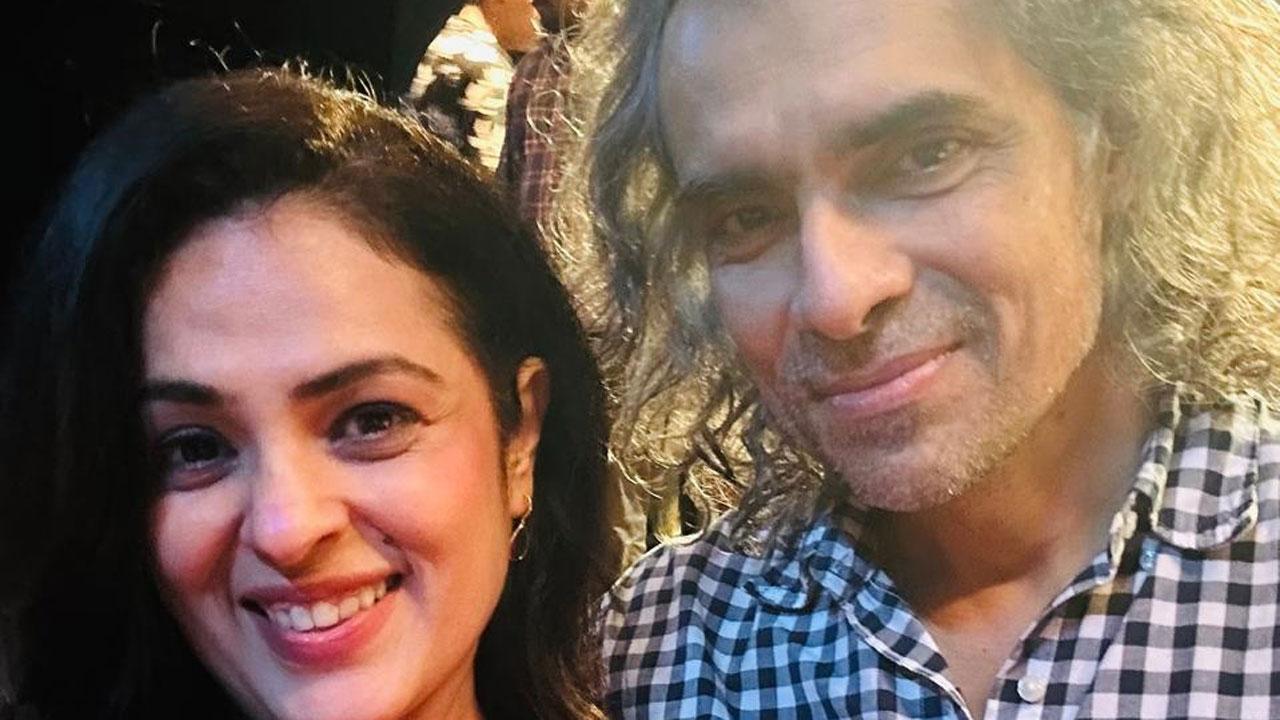
All of Imtiaz Ali’s women are mature but have a childish quality to them-Anjana Sukhani
10:01 AM
Priyanka Sharma (MID-DAY; June 13, 2026)
“How many actors can really say that I am in an Imtiaz Ali film?” asks Anjana Sukhani, her excitement evident as she speaks to mid-day about Main Vaapas Aaunga. Her journey began with a call inviting her to meet the filmmaker. The role: Naseeruddin Shah’s daughter-in-law and caretaker in the Diljit Dosanjh, Vedang Raina, and Sharvari Wagh-starrer.
“He wanted to see me on camera,” recalls Sukhani, who was first asked to send an introduction video. “When I met him at his office, I think he saw Meher in me. He narrated the part to me. And [I had] no questions. Who am I to say no to Imtiaz?” she says. During their discussions, she realised that Meher shares shades of Geet from Jab We Met (2007).
“Like Geet, [played by Kareena Kapoor Khan] Meher has no filter. I feel all of Imtiaz’s women are mature but have a childish quality to them. She innocently speaks about the wrong things at the most unfavourable time. It’s an endearing character,” says the actor.
Sukhani also cherishes her experience of working alongside Shah. Marvelling at the veteran actor’s commitment, she says, “Every time I did a scene with him, I teared up because of the way he performed. Just watching him perform is a masterclass in itself.”
Her admiration also extends to Dosanjh. “Diljit comes with a lot of sincerity and honesty as an artiste. He knows everybody’s lines, so when I fumbled, he would tell me my line.”
There is no love for Pakistan in Main Wapas Aaunga-Imtiaz Ali
10:51 AM

Sonal Kalra (HINDUSTAN TIMES; April 11, 2026)
He’s been in the film industry for almost 20 years now, and people swear by his school of filmmaking. Unrequited, often incomplete love (barring a few exceptions) forms an integral part of his stories. Yet, when you speak to him, he’s all heart. Filmmaker Imtiaz Ali, gearing up for the release of his next film Main Wapas Aaunga, spoke about everything under the sun on The Right Angle with Sonal Kalra. Excerpts:
Do you still get asked about a Jab We Met 2 or Tamasha 2?
I do keep hearing about Rockstar 2 and Jab We Met 2. But especially for Jab We Met (2007), I won’t [make a sequel]. Some things are best left untouched. I don’t want to start from a point of view that this is a money-making plan or a professional move… Good films cannot be made that way. They have to come from a point of, ‘This is a nice story, I want to be in this world’. Love Aaj Kal 2 (2020) bhi toh banayi thi na… woh toh itni achhi nahin gayi.
How did you come up with the title Main Vaapas Aaunga?
When I was in school, I read a poem called The Highwayman, which was very effective. I was thinking this is such a thing to say, that ‘I’ll come to thee by moonlight, though hell should bar the way.’ Then there was a song actually in Khuda Gawah (1992), in which the character of Badshah Khan (Amitabh Bachchan) says, ‘Main vaapas aaunga; main agar mar bhi gaya phir bhi vaapas aaunga’. I remember the impact of that song. Even while shooting this film, I didn’t think that it would be called Main Vaapas Aaunga. There was this scene we were shooting on a moving train. I had briefed Vedang Raina (actor), who is playing Kinu in the film, that he comes and he screams these same words. He’s making this promise to somebody, and it happened to be those words. During the take, I realised that this has to be the title of the film.
Have you received Love Aaj Kal-like comparisons?
I saw some on the internet, but I’m not worried about that at all. This is not two love stories; it is just one story.
You’ve taken two risks—one, telling a romantic story in a time dominated by high-scale violent films, and two, exploring love involving Pakistan when sentiments are sceptical.
There is no love for Pakistan in the film. It’s a very personal story of one person. And it is not casting an allegation. It is not saying anything which is politically one way or the other. Anybody watching the film will not feel slighted by the fact that this is catering to anyone. The second thing is, is there a time for a love story to work? I’ve seen all of my life that any good film, whether it’s violent, bold, romantic or a comedy, is working at any particular time that it’s released. The audience is very strategic in the way that it wants to see films, and if the socio-political climate becomes very intense, maybe comedies will also work very well, and a film which is very intense and bloodthirsty will also work.
Which of your films comes closest to perfection?
Perfection— no! As for things which made me happy, there are certain points in Rockstar (2011) and Amar Singh Chamkila (2024). In Chamkila, there was this portion where we had a beautiful sunset, and somehow, we had time in hand. I don’t know what we were doing, so I just asked Diljit (Dosanjh), ‘Please sit here, and I’ll play the song. You just listen to it and turn and look at the lens when I say.’ That’s the longest take in the film. And I thought, let’s take a chance at Mainu Vida Karo. So then I played it, and he heard it for the first time. Sometimes, you don’t even know why, and it feels nice.
Do you see flaws in any of your past films?
Oh yes, I discover flaws very early. I remember that I saw Socha Na Tha (2005) after many, many years, and then I was laughing along with it, which is not something that ever happened for the first 10-15 years since its release. For a film like Jab Harry Met Sejal (2017), there was something very nice, which did not really turn out nicely. This whole angle of somebody being a womaniser or looking at themselves like an unstable character but having a story behind it… It was very enticing. I feel that even in Love Aaj Kal (2020), there were certain things which were underwhelming. There was a very beautiful thought, but I couldn’t bring it out in the best possible value.
Is a reunion with Ranbir Kapoor (with whom he worked in Rockstar and Tamasha) on the cards?
There is no present plan as such. But hopefully there’ll be something that will have to top the other work that we’ve done.
What’s that one thing about the film industry that you have still not been able to understand in 20 years?
Everyone here is very passionate and always trying to come across as strategic and professional. But I think they’re just a group of passionate drifters. I don’t know how they have so much time to just do gup-shup. When I met (actor) Shah Rukh Khan... he was sitting calmly for 5-6 hours, talking to me. How does he have so much time? It’s the same for all of the Khans, various other producers, directors — whoever you meet. I love that about the film industry. But unfortunately, what happens in the film industry is that with popularity comes power. Each one of them have so many people on their social media… it’s almost unfair. And if somebody has to say something about politics, etc., maybe we are not the most qualified, but we have to be damn careful.
I also feel lucky to be a part of the industry because I didn’t know anybody when I came here. It’s only with the support of these people that I could do anything.
It’s heartbreaking, but the revival of RK Studios isn’t happening-Kareena Kapoor
9:42 AM

Vinay MR Mishra (BOMBAY TIMES; March 23, 2026)
Twenty-six years into her career, Kareena Kapoor Khan continues to reinvent herself with ease. At a recent event in Mumbai, the actress spoke to us about evolving with the times, balancing food and fitness, how her characters become pop culture icons, and why the revival of Raj Kapoor Studios is not on the cards at this point. Excerpts:
‘Perhaps Lolo and Ranbir should think about RK studios’ revival’
Rumours of cousins Ranbir Kapoor and Karisma Kapoor reviving the iconic Raj Kapoor Studios have been rife, but Kareena sets the record straight.
She clarifies, “That’s just not true. It was even being discussed in our family group, and everyone was like, ‘This isn’t happening.’ I feel people really want it to happen. I feel like Ranbir is focused on acting. He loves acting. I think he’s the best actor in India we have today. So, his focus is on that. It’s heartbreaking, but it’s not happening. Maybe Lolo and Ranbir should think about it because I don’t think I can think like a director or a producer.”
‘I’ve always wanted to do a mini series’
As the conversation flows, the actress, who made her Bollywood debut with Refugee in 2000, talks about reinventing herself.
“There is no sketch, but reinvention is trying to do something different every year. I had never worked with Meghna Gulzar. She’s a wonderful director. Our film (Daayra) is topical, and I’m really looking forward to it. My reinvention will come with my character. I am hoping to do something really different this year, maybe a good show, maybe a miniseries. In fact, I’ve always wanted to do a mini series,” she shares.
‘You have to have your own identity, that’s very important’
Many of the characters she played – like Geet (from Jab We Met) and Poo (from Kabhi Khushi Kabhie Gham) – are pop culture icons, leading to many younger-generation women enacting them.
She says, “I don’t see people intentionally trying to do that, but I feel like Poo and Geet have become such pop culture benchmarks that, in 2026, you’re kind of associating with them. But no one really intentionally wants to (ape them), because you have to have your own identity, and that’s very important.”
Bring up the topic of fashion, and Bebo admits there is pressure every time she steps out. “Of course, there is pressure, but I enjoy fashion, so I enjoy it to my comfort. I don’t like doing things or being fashionable because I will still be uncomfortable. I won’t follow a trend or do something just because it’s cool or looks cool. I’ll first see what I want to do. So, there’s never really any plan to make a fashion statement. I feel when you wear outfits that are wearable, fashion becomes a statement,” she explains.
‘I can feel my body transforming again’
Kareena, who started the size-zero trend in Bollywood, is passionate about her food. She confesses that she still loves her parathas.
“I have a great relationship with food and fitness because I like to eat. I had two parathas today. I have to have my parathas. I like to try different workouts and experiment with them, but my heart crawls back to yoga, because that’s where it lies. In fact, in 2026, I restarted my yoga journey, which I started in 2007 with Tashan. I can feel my body transforming again. I’ve tried a thousand workouts, but I always go back there. So, I’m always going to eat my parathas and continue doing my yoga,” she signs off.
Saumya Tandon returns to the big screen with Dhurandhar
10:07 AM

Onkar Kulkarni (MUMBAI MIRROR; November 24, 2025)
Saumya Tandon, who began her acting journey with Aisa Des Hai Mera (2006) before making her Bollywood debut with Jab We Met (2007), is looking forward to the release of Dhurandhar. The actress returns to the big screen with this film after many years.
Speaking about her role, Saumya says, “I can’t reveal much about my character. It’s a small but serious role. I said yes because I’ve always wanted to work with director Aditya Dhar. Sometimes you take up projects simply because you want the opportunity to collaborate with the people involved. It was Mukesh Chhabra who called me and told me that the part is small but I should blindly do it. It's quite an intense part. I am looking different and people haven't seen me doing something like this before.”
What drew her to the film, she explains, is the cast. “I feel Ranveer Singh is the most powerful actor we have in the industry. He’s special and incredibly talented. Honestly, I was a little greedy to work with Akshaye Khanna as well. He has been reinventing himself, and it’s a pleasure to watch him perform. My biggest takeaway is that when you work with talented directors and actors, your own work automatically becomes better. You get inspired just by being around people with such skills.”
Recalling her debut in Jab We Met, Saumya says, “It feels like ages ago. I had met Imtiaz Ali for another project, but he called me for this one instead. I planned to hide behind this small character and learn the ropes. I did it simply because I loved Imtiaz and the way he narrated the story.”
She adds, “After Jab We Met, I got busy hosting on television, and then Bhabi Ji Ghar Par Hai happened. I never planned my career; I was an outsider and simply picked up things that came my way. Even then, I remained choosy, but I worked with what was available to me at the time.”
Analyzing the trend of re-releases: "Films are available for free online, but moviegoers want to see them on big screen"
8:21 AM
Niharika Lal (BOMBAY TIMES; August 31, 2024)
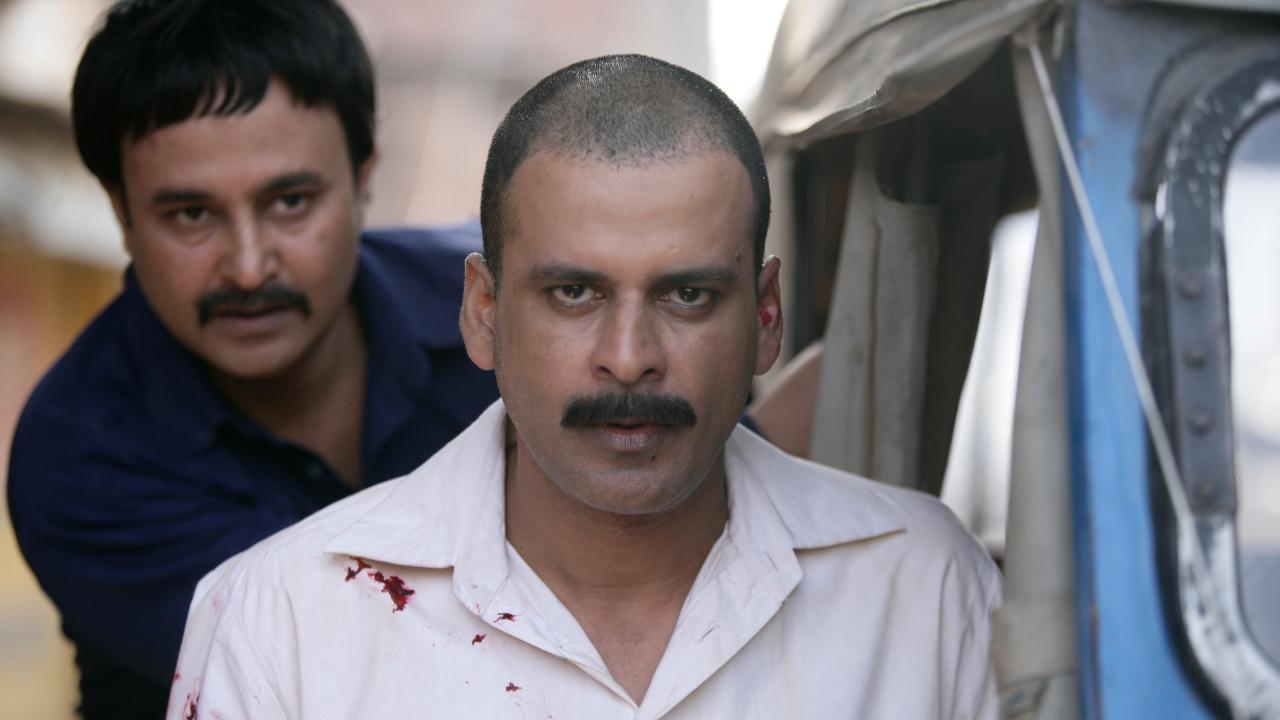
If the recent re-release announcements of Gangs Of Wasseypur and Rehnaa Hai Terre Dil Mein have you rushing to book tickets, you’re not alone. Cine buffs have been in for a treat with theatrical re-releases this year. Whether it’s to mark a film’s anniversary, generate buzz before a sequel, or simply revisit a cinematic hit, actors and filmmakers have been bringing their old films back to the big screen.
Films with a fan following being re-released
Ajay Bijli, MD of PVR INOX, says, “What’s interesting is that these films are available for free online, but moviegoers are still excited to see them on the big screen.”
Amit Sharma, MD, Miraj Cinema, adds, “September only has a couple of Hindi films scheduled for release. This is a major reason why cinemas are opting for re-releases of films with a strong fan following.”
‘The success of re-releases validates that people enjoy the theatrical experience’
Talking about re-releases, Yogesh Raizada, VP of Wave Cinemas, says, “Rereleases majorly work for two reasons – nostalgia for all things related to the 1990s, and a new audience that had only heard about these films but never had the chance to see them on the big screen.”
Kamal Gianchandani, president of MAI (Multiplex Association of India), adds, “The success of the re-releases validates how much people enjoy the theatrical experience. They are willing to come to cinemas despite these films being on TV and streaming platforms.”
A selection of Zoya Akhtar’s films were recently screened as part of her retrospective. Zoya Akhtar had said, “When we spoke about retrospective, there was one aspect of me which was like well, retrospective? Am I kind of done? And another part of me was jumping with joy that these films will be on the big screen again”
Imtiaz Ali’s Laila Majnu, which was first re-released in Srinagar, received an overwhelming response from the audience recently. “It gives us hope that people are coming to cinemas in huge numbers to watch old films,” the director said.
'A 3-4 week re-release calendar for Gangs Of Wasseypur'
Exhibitors say that the whole of September looks very empty and dull, with only a couple of Hindi films scheduled for release this month. This is a major reason why cinemas are opting for re-releases of films with a strong fan following.
Amit Sharma, MD Miraj Cinema says, "Whenever a film is re-released, it takes a little time to grow. People start learning about the film and its re-release. It's in the second and third week when the film starts picking up. So, we are planning a 3-4 week re-release calendar for Gangs of Wasseypur, which makes more sense."
'Playing of these older films in cinemas is a reflection of the fact that these films are doing well'
Kamal Gianchandani, president of MAI (Multiplex Association of India) says, "Some of these films can't even be classified as classics. There are several reasons for this - when these films were originally released, they were ahead of their time, or they simply didn't click with audiences. It's also a validation to how much people enjoy the theatrical experience that they are willing to come to cinemas to watch Rockstar or Jab We Met, despite these films being available on TV channels and streaming platforms. While there are various reasons why these re-releases work, the bottom line is that people are enjoying some of these older films, and it’s our job to bring them to all audiences. If people are enjoying older films in cinemas alongside new releases, then we are happy to offer them to our customers. Playing of these older films in cinemas is a reflection of the fact that these films are doing well."
The fact that Shah Rukh Khan is a humongous star is something I hadn’t made a provision for-Imtiaz Ali
8:19 AM
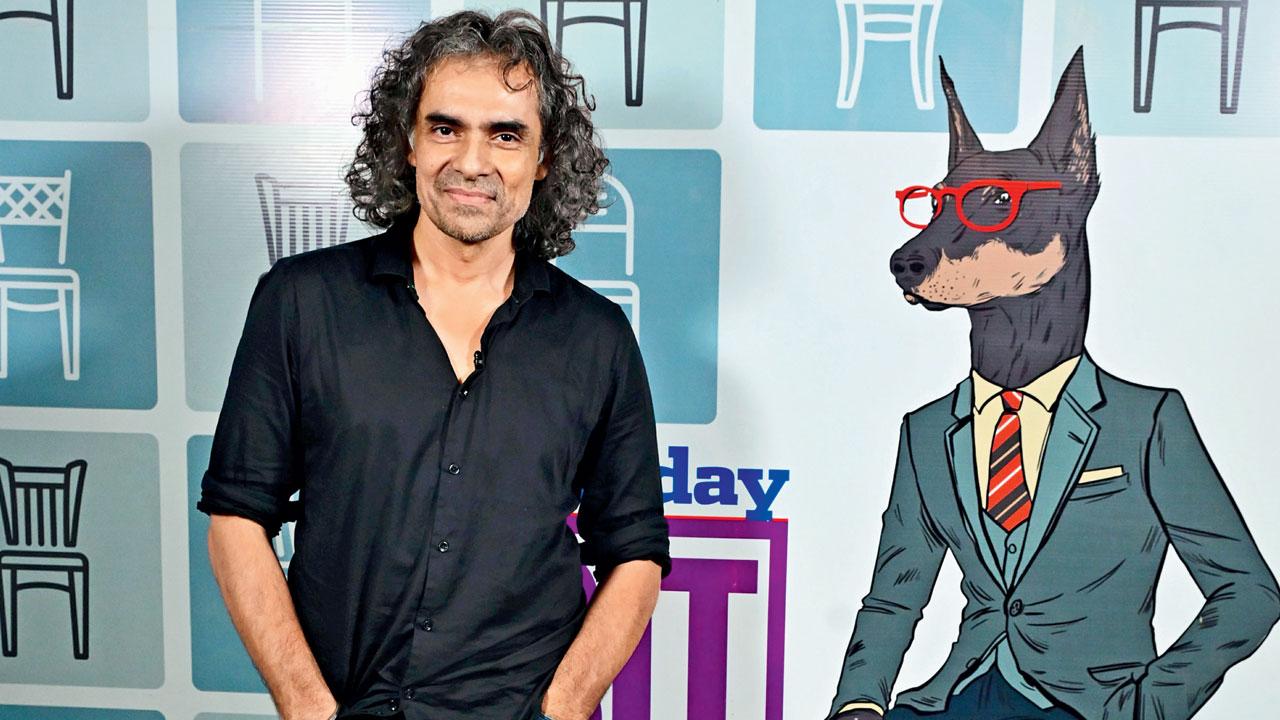
On Mid-day's Sit With Hitlist, Imtiaz Ali goes back in time to share anecdotes from his first film Socha Na Tha, right up to the latest, Amar Singh Chamkila
Mayank Shekhar (MID-DAY; August 17, 2024)
“Whatever you do, sir, just don’t fix the money [for your next film], before calling me,” actor Shahid Kapoor told director Imtiaz Ali, in 2007, when Jab We Met (JWM) had opened “lukewarm” in theatres.
It’s going to become a big film, Shahid suggested to Imtiaz, whispering to him then, “You could charge 2X of what you’re thinking [in lakhs], or you know what? It could even be a crore!”
Imtiaz was set to do Love Aaj Kal (2009). Negotiations were on. He waited it out, upon Shahid’s advice. He says, “It was Dinoo [producer Dinesh Vijan], who suffered! You ask him, he will never forget this. He is like, ‘Sir aapne jo number bola, [the number you quoted], my head hit the roof’. I said, blame Shahid!”
Shahid had recalled to us (on Sit with Hitlist), telling Imtiaz, not to carry a script with the name Geet (working title for JWM), given the heroine’s name on it, when shopping around for the hero!
But it’s actually Shahid, Imtiaz remembers now, who reminded him about the Jab We Met script, in the first place. He’d heard about it from others, while it was being passed around film industry folk.
Shahid had dates available. As did co-star Kareena Kapoor, who was going through the more important size-zero regimen for Tashan (2008), the supposed blockbuster in the making (that she explains in detail, in another episode of Sit with Hitlist).
Both said yes, and Imtiaz had literally a “window of 21 days” to get on shoot, while the screenplay wasn’t absolutely complete, dialogues had yet to be written, let alone pre-production, for locations to be locked, etc.
The script that Imtiaz had gone over to Shahid with is the same one that he met Ranbir Kapoor for, years later. That movie is still to be made—about time, we say! Ranbir took the said script with him to read, but asked Imtiaz about Rockstar (2011), instead.
It’s the story that, once upon a time—right after Imtiaz’s debut, Socha Na Tha (2005)—was to be made with UTV, starring John Abraham in the lead! Nothing came of that Rockstar.
Ranbir, in fact, narrated Imtiaz’s Rockstar story to Imtiaz himself. He’d heard it at a friend’s place, a few days from when they met: “Sir, let’s make that film,” he proposed.
Hearing Ranbir narrate the script, he knew that’s the actor to cast. This is post Ranbir’s debut, i.e. Sanjay Leela Bhansali’s Saawariya (2007), which Imtiaz hadn’t watched still. The reverse-narration was the clincher.
Now, there are wholly savable Word/Finaldraft documents, and the computer, of course. “Despite everything”, Imtiaz admits, he had lost that script.
He rewrote Rockstar, from memory, for Ranbir. “The common thing between Ranbir and [and his wife now] Alia Bhatt is that I met both at a screening,” Imtiaz recalls.
Alia did Highway (2014) with him. She was not the original choice. He had a maturer actor in mind for the role, someone perhaps in her 30s: “Aishwarya Rai, without the make-up, maybe. It was that kinda film.”
While his core crew wasn’t convinced about Alia in Highway, he got her over to the office, to narrate the film to everyone. Done with that, the unit was satisfied.
It’s a hack he’d learnt from Ranbir’s narration of Rockstar. He tried it on Alia. Two unrelated people, “who have a kid together now; how filmy,” Imtiaz laughs.
We remember Alia telling us (on Sit with Hitlist) about how she seduced Imtiaz into casting her in his film (any film)—when she set her eyes on the director, at the screening of Luv Shuv Tey Chicken Khurana (2012).
Which is not how Imtiaz remembers it: “She’s just sweet!”
He handed her a novella-like outline of Highway; called her up later to check on what she felt. He could tell she was petrified. Given that she’s in every scene of the film.
He went over to meet, where dad Mahesh Bhatt was convincing her to go for it: “He’s a nice director.” Alia had said it was simply her dream to work with Imtiaz.
In fact, this profile, heavily excerpted, is almost wholly around anecdotes that other guests on Sit with Hitlist, this conversation series, have narrated, on Imtiaz himself.
The entirely unedited, fun chat, on video, is uploaded online. The other person, who inevitably shows up in most conversations to do with Bombay film talents, who were similarly newbies in the ’90s, is Mahesh Bhatt, aka semi-godman Bhatt Saab!
Imtiaz says, “Bhatt Saab was the first person to offer me to direct a film. He was planning on retiring as a director. He had seen an episode of Imtihaan, a series I was doing for Star Plus. Manoj Bajpayee was in it. He called me up one day, and asked me to meet at his office.”
Imtiaz went over to Bhatt Saab’s workplace—far too packed with people, over a majlis, listening to warm sermons on life, films, the works. Imtiaz was intimated.
From across the floor, Bhatt Saab shouted out to Imtiaz, “I’ve seen the scenes you’ve shot; loved this, didn’t like that, blah blah, blah… You’re directing my next film. Now go, I don’t have time.”
Totally taken aback by what had happened, Imtiaz called Bhatt Saab back, from the pay-phone, downstairs, “‘Sir, I didn’t understand what you said.’ He laughed, and asked me to come back the next morning. That was a movie to do with two musicians. Bhatt Saab was going to write and produce it for Vishesh Films. I hope to make it someday.”
Imtiaz, as is widely known, was born and raised in Jamshedpur, then Bihar, now Jharkhand. You can see his Jamshedpur in Vikramditya Motwane’s Udaan (2010), which is not a happenstance.
As Vikramaditya had told us, he had got Imtiaz to read the script, who asked him to stay over with his family back in his hometown, to get a sense of the setting. It made sense for Udaan to be placed specifically in the steel township of Jamshedpur.
Imtiaz’s younger brother Sajid, a school kid then, used to show Vikramaditya around—who, in turn, felt Sajid would make for the perfect lead actor for Udaan.
The film remained stuck between producers, over years. By which time Sajid had grown up. He debuted as director with the romantic musical, Laila Majnu that, as we speak, six years later, has made a rerelease/comeback into theatres, vastly outpacing collections/footfalls, from when it first opened in 2018.
Vikramaditya and actor Abhay Deol were childhood buddies. Which is how Imtiaz and Vikramaditya met. Abhay, the young Deol in town, was looking to enter films, ideally with fresher ideas/talents.
Imtiaz, who had been working in television—after graduating in advertising, from Mumbai’s Xavier Institute of Communications—went over to Abhay’s place to narrate his script.
Abhay needed a close bouncing-board for a second-opinion. He called his friend Vikramaditya over. Likewise, Imtiaz says, he took his friend Anurag Kashyap along for the meeting.
Such is how Socha Na Tha (2005), both Imtiaz and Abhay’s debut film was born. Whether or not right there, and then, but certainly seeded in the same room.
Imtiaz’s career since has largely been marked by strong romantic films, but all the more associated with Punjab. For the Bombay film industry itself, Punjab, as the prime muse, is hardly a surprise.
Most top Bollywood stars and producers have had their ancestral roots in the land of five rivers. The nostalgia around which—sarson khet, bhangra, giddha, karva chauth—have inevitably showed up in their popular works.
Imtiaz, though, is from Bihar—having also spent seven years of growing up in Patna, where his father was posted. Not that he has an iota of a Bihari accent. Which, he says, is more because of Jamshedpur, which is an altogether cosmopolitan town.
He’s sure to switch into a Bihari twang, while responding to it. In the same way, he says, among Delhi-ites, can go full ‘Delhi’. That’s where he went, to Hindu College, to read English literature. He can similarly react to the Punjab accent.
How come Punjab, though? He wears a kada alright, that was gifted to him, when still in school, and he’d visited Punjab on a holiday then. But, that’s it.
“Punjab began with JWM,” he says. And has, of course, continued with his last film, Amar Singh Chamkila, the most deeply felt, insider’s account of the state, where both compassion and blood flow (always has).
Chamkila is also the most watched Indian film on Netflix.
Imtiaz had first set JWM in Rajasthan. But his feisty, female lead character, Geet, and her words, fitted in more with “Sikhani girls, who I had interacted with a lot in Delhi.”
The train of JWM, hence, moved to Punjab instead. Namely a small-town called Nabha. The locals thereafter guided him towards achieving authenticity. He’s since been drawn to “the land of grace, mysticism and love. All the great lovers in India have been from Punjab.”
Which isn’t to say he hasn’t subverted the setting enough, or gone with clichés of old-world Bollywood altogether. My favourite instance is him placing a Brazilian model, Giselli Monteiro, as a ‘kudi’ from the ancient Punjab pind, in Love Aaj Kal (2009)!
Imtiaz was looking to cast Giselli—visiting India on an assignment—as Saif Ali Khan’s Latin American girlfriend, in the London/modern portions of the pic. Looking at her, his co-producer, Preety Ali, suggested her for “Harleen Kaur [from Brazil] for Punjab!”
He had similarly picked Nargis Fakhri—half Czech, half Pakistani, fully American, from Jackson Heights, Queens, New York City, as a pucca Delhi-ite, from Kashmir, in Rockstar.
He spotted her in an ad, in a fashion magazine. Whether or not that casting convincingly worked out, Imtiaz reasons the idea behind it was to find a “dil todne ki machine [complete heartbreaker]—someone so out of the league, in terms of looks, face, body, even for Ranbir!”
In hindsight, he does feel he could’ve factored in the bit that she was American, into the script. Nargis’s casting was strongly criticised, if you recall, after the release of Rockstar.
Imtiaz defends himself with the same film’s successful rerun in theatres recently: “Nobody expressed a problem with it now.” Nargis’s character Heer is from St Stephen’s, which is the college across the road from Hindu, where Imtiaz went.
I reckon if it’s his most personal film, yet? Imtiaz agrees. More so, for its central question—about whether success, in general, let alone the arts, was possible, without experiencing sufficient turmoil in life.
It’s something Imtiaz had grappled with himself. He says, “During interviews for Chamkila, I realized, even Diljit [Dosanjh, his lead actor] had grappled with the same dilemma: ‘Koi tragedy nahin hai [No tragedy], how will I become a singer?’ And then he says, so nicely, ‘Koi baat nahin, continue karte hain [Never mind, let’s continue]!’”
The other theme that Imtiaz related to most deeply was “illogical attachment” with issues that, otherwise, we have no engagement with, but have empathy for—the fact of ‘Sadda Haq’!
“Even in my own movies, there are moments that move me, but I don’t know where they come from, in terms of a [direct] source. That said, the character, Jordan, is nothing like me. The thoughts are.”
At Hindu College, Imtiaz named and founded Ibtida, its dramatics society, that runs even today. During his time in Delhi, he belonged to what he calls the “Mandi House jhol”.
Meaning, the theatre scene in and around the National School of Drama (NSD), with independent groups, such as Act One, headed by N K Singh, that he was part of—along with the likes of Manoj Bajpayee, Piyush Mishra, Shoojit Sircar, Ashish Vidyarthi, Gajraj Rao, Prashant Narayanan, and the lot.
These are well-known names, and the list grows big enough to avoid recounting—for the number of creative talents, who moved to Bombay, around the same time, from Delhi, to work in the film industry.
Establishing a new filmic voice of sorts—Vishal Bhardwaj, also from Hindu; Tigmanshu Dhulia, from NSD; Kashyap, from Hansraj College; Saurabh Shukla, from next-door Khalsa (the latter two wrote Satya, 1988)…
Imtiaz, 53, says, “Somebody must do a study [on how that came to be]. We were all friends, or friends of friends; often crashing at each other’s homes. This was the generation that was both ‘Sholay’ and ‘Shyam Benegal’.”
Delhi’s Act One had a “sister-concern, with similar values”, Barry John’s Theatre Action Group (TAG), that shared talents, on occasion.
That’s from where emerged Shah Rukh Khan, who had dropped out of the mass communications programme at Jamia, after a successful stint on television in Delhi—establishing himself, soon enough, as the ‘King of Romance’ in Bollywood.
Imtiaz, as a director, broke out with the romantic genre as well. Surely, he would’ve thought of Shah Rukh for his star at some point?
“No, he was too big; never on the anvil. For that matter, even now, I can’t think of Amitabh Bachchan. He’s too big for me. Even Mr Bachchan doesn’t realise how big he is. I have seen people pull out theatre seats, because he’s appeared on the trailer for Geraftaar [1985]!”
Shah Rukh and Imtiaz did team up on a romance together—that’s Jab Harry Met Sejal (JHMS, 2017). It’s a film that, Imtiaz says, pretty much got triggered from a Facebook comment on Tamasha (2015).
Possibly his most polarizing picture—loved to death by many. While some got bored to death as well, questioning the realist basis of the male lead (Ranbir). Which is, to be honest, really their bad. If they didn’t get it, that is.
“Well, there is something snooty about the appreciation for Tamasha. It’s become the club that I never saw myself in. I used to think, I’m a sell-out. So, I just wanted to make an easy, accessible film [with JHMS],” Imtiaz says.
It was the biggest ticket film—genre, star, and director, perfectly in sync. But I don’t think he sees it that way. Again, in hindsight, criticisms or box-office apart, you wonder what he thinks he could’ve done differently with JHMS?
He says, “With theatre, television, and films, I’ve worked the same way. Written a story, and brought it together, through actors. Which is what I did with JHMS. The fact that Shah Rukh is a humongous star is something I hadn’t made a provision for. Because, in life, he’s such an easy and accessible person—he doesn’t give you that impression, either.”
“Of course, there are enough good things in the film, which get lost [when it’s not accepted]. But I could have brought in a flashback, a backstory, and Shah Rukh, as the star, could’ve been used to the best of his strengths.”
Going back to the Delhi crowd that made the ‘new Bollywood’ in the ’90s, as it were—where Imtiaz seems separate from the mainstream-indie, migrant directors, that emerged then, is foremost with music.
He remains among the few realistic, new-age filmmakers, indulging deeply with romance, song picturizations, lip-syncing, adapting soundtrack, as situations, into his scripts. That is, after all, an inherited art-form, syntax, and grammar—threatening to die with later talents.
All of it, he says, comes from growing up in Jamshedpur. If you’ve seen Cinema Paradiso (1988), that’s him—young boy sitting behind the projectionist, switching reels. His family owned Jamshedpur Talkies and Karim Talkies, two local theatres, that he had complete access to.
He says, “I’m inherently drawn to the ‘cinema-ness’ of cinema. The moving melodrama, that actually comes with music—to represent mood, feelings, turns [in the story], or time transition, through montage….
“And I found myself so lucky to be in the company of such crazy and kind musicians [Sandesh Shandilya, A R Rahman], who literally opened their doors for me [to work with them]. I find music composition to be the highest art form.”
In that respect, his strongest collaborator, in terms of writing, might well be the “shayar” Irshad Kamil, from Malerkotla (Punjab), whose lyric is essentially an extension of dialogues, in Imtiaz’s films—they’ve worked on each one together.
Imtiaz found Irshad, through Sandesh. They instantly bonded over the common love for poetry: “In this city [of Bombay], you crave that, and when you find a person like that, you catch that person!”
Speaking of getting caught, the most hilarious anecdote I’d heard about Imtiaz and Irshad was actually about how they were once caught by the police together.
This is on Versova beach, past midnight. Him, Sandesh and Irshad, lost to the world, discussing music (for Socha Na Tha).
“Those days, if we had to meet at night, it had to be outside. Homes were small. People would be sleeping inside.” In comes a cop, wondering what these guys were up to on the desolate beach.
“It was 2 am, but it’s not like we were up to anything nefarious… Irshad said we were making music.” Which is probably the lamest explanation/excuse the beat-cop would’ve heard in his life, over three men, allegedly gallivanting.
Next thing they know, they’ve been put inside a police van. Further, into the police station. They were right in the middle of having arrived at a track, though.
Each time they regrouped, whether in the van, or the police station, they simply carried on with cracking the idea: “Well, we knew, if we get the song right, none of this will matter!”
There is a charming stoicism about Imtiaz. You can sense it in his company. He’s also an engaged conversationalist, never repeating stuff you’ve heard him say before. Totally in the moment; mulling, responding, detaching, yet fully interested.
It’s probably the same way he handles personal fame. I know this from independent sources. As in, friends, who’ve bumped into him at local bars/restaurants in the past. Imtiaz being among the few directors, who’s so public a face.
As he puts it, in another context, quoting Buddha, “Eyes half open, half closed. Half with yourself, half with the world. It’s such day-dreamers, who drift into the film industry. Instead of the other way around. It’s a boon to make a living out of dreaming.”
Even while he was looking to make films, and surely, it’s a struggle for everyone, he says, he was fine, the way he was. “You never really make it, anyway. Manisha Koirala told me once that when she was in Bombay, auditioning for films, that was her life.
“If nothing ever happened, she was still satisfied. Only if she felt dissatisfied [for any other reason], she would have returned, done something else.”
That said, certainly the rigours of film as an industry can get to most—hits, flops, etc. Consider the unusually cold streak that Imtiaz had, JHMS onwards—in particular, Love Aaj Kal (2020), or even stuff helmed as producer, Thai Massage (2022), series such as She (2020), Dr Arora (2022).
Whatever one’s personal opinions on those works, and those are subjective, anyway—they didn’t turn out to be pop-culture moments, or at least haven’t, yet.
And that Chamkila (2024) was, effectively, the comeback, as it were? Does he ever feel that he’s on a rough patch? He says, “Always! Because you’re always engaged, with a certain [new/next] challenge. I’m only worried about that, at any point in time.”
Going by the theme of picking moments from Sit with Hitlist, when guests have brought him up, there is a not-so-positive one, if you may.
“Bring it on, I love negative stuff,” Imtiaz smiles. That’s when his lead actor Sara Ali Khan mentioned to us that she hated herself, in the new Love Aaj Kal! Or, at least, something to the effect.
On the film itself, he says, “You know, my English teacher, Swaroopa Mukherjee told me, when she saw Love Aaj Kal, that it remined her of her English classes.
“She said, ‘There is this strange thing that when you explain things to young people, and ask—have you understood? They say, ‘Yes miss, I’ve understood. But, actually, they haven’t.
They never say—no, I haven’t understood. There was something very sensitive in there, and the youngsters in the film, perhaps, didn’t get what you were trying to say’.”
He adds, “I’m not blaming Sara. The point is that direction is a process of working with an actor. The actor, who has surrendered, is not obliged to understand. They have said the words/lines. I couldn’t get through to the actors, to own the material [in Love Aaj Kal].”
Going beyond stars, it’s my turn now to pose to Imtiaz something that has annoyed people, at large. And that’s do with fans of JWM!
When asked during a recent interview about what he thought might happen to the it-couple, Geet and Aditya, if the film had a sequel? He said, they would be at the divorce-lawyer’s office!
Only fair that I pass on the outrage. Imtiaz laughs, “That interview was before a live audience. I just thought it was a smart thing to say!”
Nope, not letting go that easy. “Well, films have to be dramatic. So—what if, they’re at a divorce-lawyer’s office? That’s the question. Now, if that’s the beginning of the film—the end will be happy, right? You start at a crisis, and come to a solution!” Well saved.
Final question, and this has to do with an old print interview of Imtiaz’s, that’s remained in my head since. Chiefly because there was no follow-up to his answer, and I kept wondering exactly what he meant, when he once said, “Married men are the most ch***** version of themselves!”
Mercifully, he remembers that decade-old interview. He smiles, “There was a context to it. Some of which I’ve forgotten now. All that remained was the headline!”
Go on? “Well, marriage in itself is nothing. Relationship and vibes are important. Anyway, I don’t believe in bracketing relationships. The problem is when people start playing ‘married’. The same thing applies to the wife.
“And then you dumb yourself down, playing ‘rules of the game’. Rather than respect each other, for who you are. That’s when you become a bad version of yourself.”
Okay, explain with an example? “That husband and wife are supposed to do things together. Why? Let’s say, I wanna go on a solo-trip to Jhumritalaiya, or read a book. And she wants to go to Switzerland, or watch a movie.
“You would, if you were friends; so why not? But you’re married people. So, what? And then resentment sets in. You start keeping secrets from the one person, you’ve actually sworn never to keep secrets from.”
Aptly, we’ve ended with precious gyan on love, from Imtiaz. Outside of films, of course. “Disclaimer: Please don’t follow anything I say. I know nothing,” he signs off.
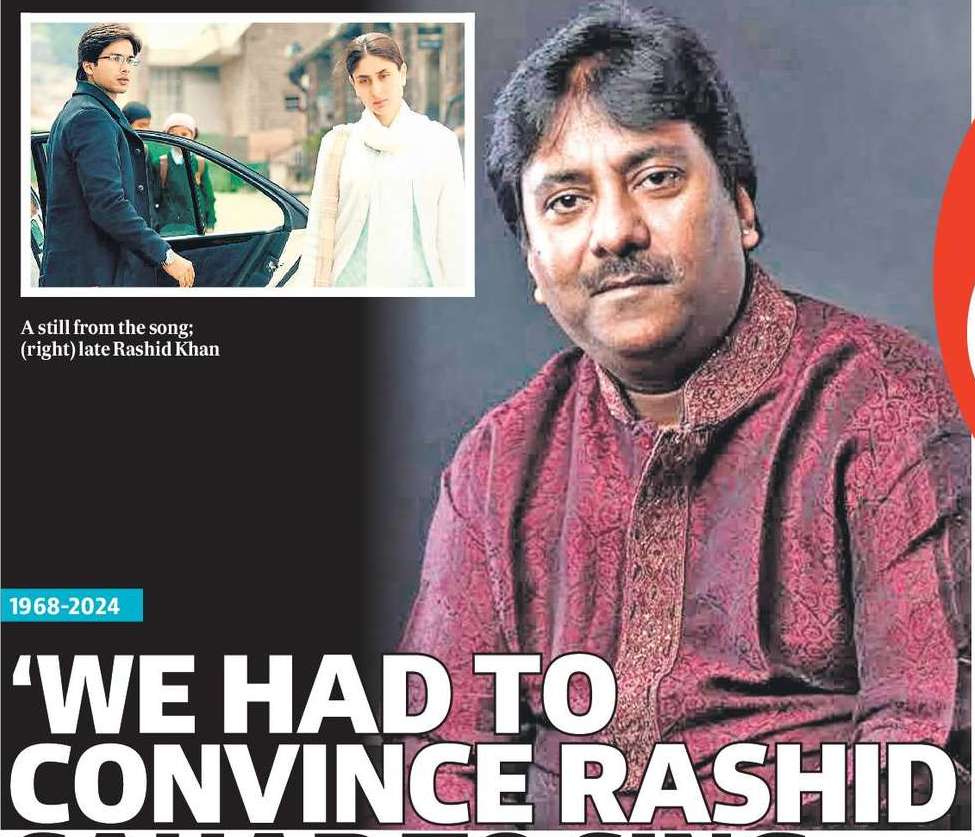
Convincing Ustad Rashid Khan to sing Aaoge Jab Tum wasn’t easy-Imtiaz Ali
8:19 AM
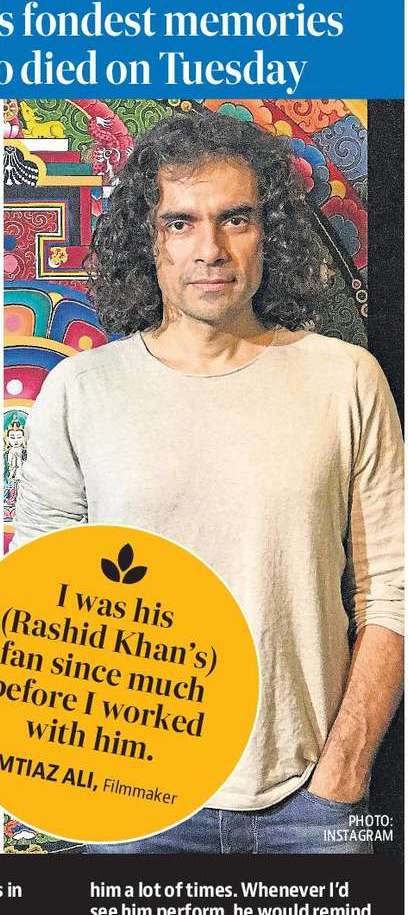
Imtiaz Ali remembers working with the late Ustad Rashid Khan for Jab We Met
Sundas Jawed (BOMBAY TIMES; January 11, 2024)
Ustad Rashid Khan, whose mastery over Indian classical music earned him awards and accolades around the world, became a household name with Jab We Met's iconic song Aaoge Jab Tum. Filmmaker Imtiaz Ali expressed his grief at his demise: “Losing him at this age is unfortunate for all of us. The amount of love, dedication and hours he gave to music is a blessing for all of us.”
Collaborating with the maestro for ‘Aaoge Jab Tum’
It wasn’t easy to convince Ustad Rashid Khan to sing for Jab We Met, recalled Imtiaz. “He was not ready to sing for the film because it is not usual for Ustads to do playback singing. But Sandesh (music director Sandesh Shandilya) was eager to have him on board. He went all the way to Kolkata to invite and convince him,” said Imtiaz, adding, “He finally agreed because he figured out how serious we were about collaborating with him and also the fact that we were big fans of his music. The way he embraced the song is evident in the fact that ‘Aaoge Jab Tum’ is the most famous and well-loved song from the Jab We Met album. Etched in our memories, it will live forever.”
Despite his stature, Ustad Rashid Khan was a keen learner. “During the recording he used to tell us that ‘Don’t treat me like an Ustad, but a newcomer because I am new to this (playback singing),” recalled Imtiaz.
A childhood icon
“I remember going for his classical concerts in Jamshedpur. I was always a big fan of his singing, but after working with him I was enamoured and in awe of him. He had invited me to Kolkata last year for his son’s music event. Although I could not make it to teh concert, it was the last time we spoke,” said Imtiaz.
---------------------------------------
Filmmaker Imtiaz Ali recalls his fondest memories with maestro Rashid Khan, who died on Tuesday
Rishabh Suri (HINDUSTAN TIMES; January 11, 2024)
For 16 years now, Aaoge Jab Tum from Jab We Met has been the undisputed anthem for broken hearts, and director Imtiaz Ali credits Rashid Khan’s soulful voice for making it the classic that it is.
Remembering the late maestro — who died at the age of 55 after a prolonged battle with cancer — Ali tells us, “I was his fan since much before I worked with him. The first time I met him was when I had attended his live recital of the Megh Malhar (a Hindustani classical raga). It started raining when he sang, and the belief is that when someone sings the Malhar well, it rains. That’s my first memory of him.”
Ali’s regard for Khan grew further when they went on to collaborate for Aaoge Jab Tum. “I realised how simple he is. He said, ‘Don’t think of me as a big singer. I am a newcomer who has never sung in a recording, so you have to guide me’,” the 52-year-old recalls, adding, “In fact, we had to convince him to do the song. It wasn’t an instant yes from him. And now, the track is perhaps the most popular one in my repertoire.”
Ali attributes Khan for giving the song a life of its own: “It lives on forever and that is owing to him and what he acquired over years and years of practising in the gharana. That is what brings that larger-than-life quality to his work.”
The filmmaker and the late classical singer would often have conversations about the song. Last year, Khan invited Ali to an event that marked the beginning of his son’s musical journey. “I couldn’t make it, but it was the last time we spoke... I’ll always be grateful to him for Aaoge Jab Tum. It was a blessing for my film,” Ali ends.
Failure has always opened many doors for me-Imtiaz Ali
8:06 AM
Vinay MR Mishra (BOMBAY TIMES; November 4, 2023)
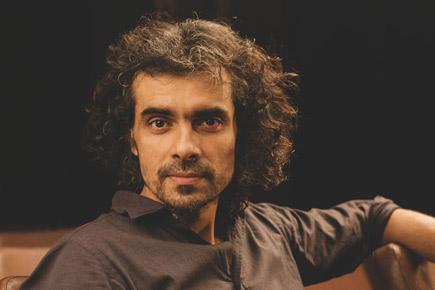
One quick glimpse at filmmaker Imtiaz Ali’s filmography and his romance with locations and landscapes is evident. At the 10th edition of the India International Film Tourism Conclave recently, Imtiaz addressed this romance.
When we caught up with him for a quick chat, he said, “I love travelling. If I am not shooting in a beautiful place, then I feel ‘What a waste!’ and if I am shooting at a beautiful spot, then I wish I wasn’t shooting, then I would have enjoyed this place. So, I am somewhere in between. But I am inspired by places. I feel like a different person when I travel. It is a liberating experience. It reflects in my stories, too.”
Imtiaz’s next is a biopic on Indian singer and musician Amar Singh Chamkila. While the movie awaits its digital release, the filmmaker has finalised two stories. “I have already written a few scripts. There’s something based in the Northeast of India. Then there’s something I have written about Turkey and my travels there. In a way, both are romance, as there is a man and a woman and a lot of that,” he said.
‘The creative aspect of filmmaking will be tested’
While Imtiaz isn’t keen to shed much light on his upcoming movies, these projects would mark the filmmaker’s return to the theatres post-pandemic. “This is a time of great creative unrest. A lot of things that used to work in a certain way earlier, will not work now. The audience, including us, is behaving in a uniquely different way post-COVID, as far as going to the theatres is concerned. The numbers that Pathaan and Jawan have achieved are unimaginable, but then there are also films that the audience doesn’t want to watch and it’s very clear. At this point in time, it is up to the filmmakers. The creative aspect of filmmaking will be tested. We will have to come up with better things,” he admitted.
How does that make the Rockstar director feel? He replied, “It makes me feel invigorated. You have to dive deeper; the jewels are deeper. You cannot gloss over. But that’s the circumstances in which good art emerges, historically. In that way, I feel very encouraged by what is going on.”
‘Most of the things I planned for myself didn’t come true’
Imtiaz’s last two releases, Jab Harry Met Sejal (2017) and Love Aaj Kal (2020) didn’t perform well at the BO. However, the filmmaker believes that failure just opens new doors for him. “Most of the things I planned for myself didn’t come true and they were not good plans. I wanted a job as an advertising copywriter, and I failed at it. I got a job at a film company and I became a director within a year. I could have never imagined becoming a film director, otherwise. Many more cases of such failure have escalated me to a higher level. Failure has always opened many doors for me,” he explained.
Sequel to Jab We Met?
Recently, multiple reports suggested that one of Imtiaz’s most popular films Jab We Met (2007), will soon head for a sequel. While Imtiaz denied the reports earlier, he tells us why he chose to not refute the rumours sooner: “Somebody starts a fire, and it turns into smoke. I knew that it wouldn’t be (true) because I would have had to be involved if there was a Jab We Met sequel. So, these were rumours. The more I would talk to the media and clarify, the bigger the story would become. Sometimes, the best way is silence and in two days if you don’t talk, everyone will know it is not true.”
If Jab We Met was made today, Geet would just go off social media-Imtiaz Ali
8:39 AM

Sundas Jawed (BOMBAY TIMES; August 31, 2023)
Filmmaker, producer, screenwriter Imtiaz Ali was spotted in Kolkata recently with his daughter Ida and took to social media to share pictures of some of their food adventures. In between eating his heart out at pretty cafes and street food joints, the Jab We Met, Rockstar and Tamasha director spoke to us about his definition of love in IG times, the romance of train journeys and more. Read on to know more...
On why Kolkata is his favourite city in India..
I am from Jamshedpur; Calcutta was the first city I came to and still remains my favourite city in the country. I have been in the lanes of Kolkata several times and every time I try to discover at least one or two new places. This time it is a café in Hindustan park which is a beautiful, aesthetic place.
On Kolkata's unique architecture
What I have been seeing from the last few years, the Hindustan Park area is developing nicely in the way it has retained the cultural richness of the architecture. Kolkata is unique in the way it is home to the highest number of skilled artisans for flower decorations, weaving, painting, pandal making and various life arts. Besides some of the best looking buildings, it also has the best food in the country and I try to get here as often as I can.
If Jab We Met was made today..
Jab We met was very edgy in terms of how it was placed with missing trains, runaway bride and a boy and girl sharing a room. At that point of time, it was different, now it wouldn’t be. If the movie is made again, there would be only superficial changes in the story. One thing that would play a big role is social media, So if Geet of present day elopes and goes into hiding, she will be off social media or wouldn’t use her own name on her profile.
On the magic of travel and long-distance trains..
I love travelling and more than seeing beautiful places I have enjoyed the fact that I felt very different every time I went out of my home space. My travel out of Jamshedpur was mostly on train to Kolkata or some other place, but it was a very dreamy kind of world for me where not only was I thinking of different things that I wouldn’t be thinking of in my regular life, but I was also anonymous. So I could give any name any story to myself. Travel and storytelling to me are intrinsically related.
The role of music in his life and movies ..
Of all the things I do as a director, I enjoy shooting with music on set the most. The music directors that I have worked with have been true artistes and they have also been very gracious and generous in allowing me to come into the process of their music making. I owe a great deal to them for the fact that they have provided so much strength to my narrative, especially A R Rahman because he has taken the story forward to another zone with the music that he has provided for Rockstar, Tamasha and Highway.
On his favourite films..
There are parts of movies that I like but I am not my own fan. At one point we have been so engaged with these movies/songs that it doesn’t work for me in terms of entertainment anymore.
Imtiaz's favourite food stops
- Biryani from a renowned Mughlai restaurant in central Kolkata
- Tarun Niketan’s eating house for Bengali cuisine
- Iconic Park Street eatery for cakes: "Ida has been to Kolkata quite a few times and sometimes her birthday cake is ordered from the same Park Street confectionery. Both of us love it."
- Tangra for Chinese
----------------------------------------------
You get the best food in Kolkata at unnamed places and shops. A simple puri bhaji and chai or malai toast, absolutely inexpensive, are a few to name.
I kept thinking, ‘Why did I do Padmaavat?’ I had no perspective-Shahid Kapoor
8:23 AM
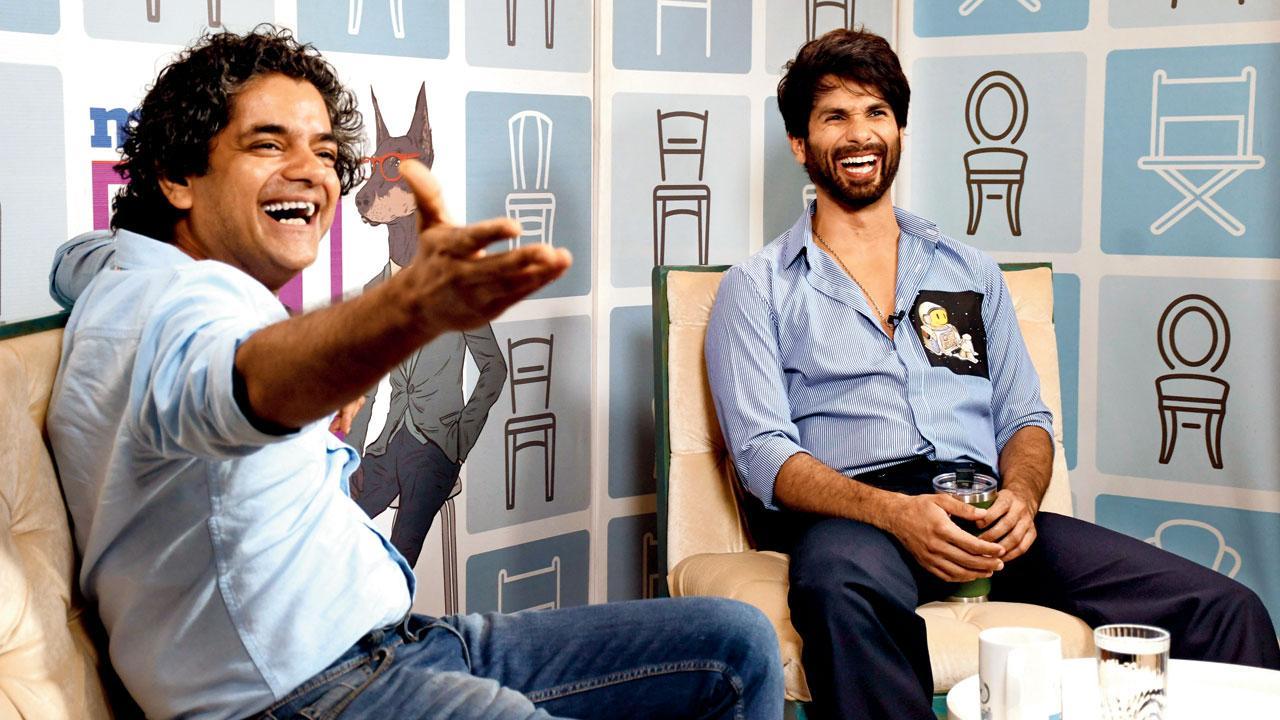
Ishq Vishk to Jab We Met, Kaminey to Kabir Singh—Shahid Kapoor on his 20 years of Bollywood
Mayank Shekhar (MID-DAY; July 8, 2023)
It was around when he was about six or seven, Shahid Kapoor recalls, his father Pankaj Kapur took him out to New Delhi’s popular food joint, Nirula’s, for a meal. Unbeknownst to what would hit them, the two were suddenly surrounded by “a hundred people, who’d picked up gajar [carrots], and were charging at them on their restaurant table—almost like zombies, going, Hehehe…. Gajar khaiye, gajar, hehehe…”
“Par mein bete ke saath pizza kha raha hoon [But I’m having pizza with my son],” Pankaj Kapur shot back. But no avail. The public was, of course, responding to Pankaj Kapur’s iconic role of Detective Karamchand, and his love for gajar, in the 1980s, on Doordarshan.
Father-son had to eventually rush out of Nirula’s. Shahid told his dad, who was visiting him from Bombay then, to never take him out again! “By virtue of distance, the interaction between him and me was anyway limited.”
Shahid’s parents had separated/divorced, when he was quite young. He was then growing up in Delhi, with his mother, Neelima Azeem, and his maternal grandparents, who were both journalists with the Russian publication, Sputnik.
Sasha, that’s the “ghar ka naam” his grandparents gave him—and that his tribe of fans, self-named Shanatics, call Shahid by—is also a common Russian name, he points out.
It was only when he turned 10, that Shahid also moved to Bombay to be with his mom, a trained classical/Kathak dancer, who was looking at a career in acting.
Shahid himself was one of the top dancers at Shiamak Davar’s dance academy—moving up from the back rows, at dance performances, to the front row, and eventually becoming a trainer at the institute, “which is how it works at Shiamak’s school; you have to prove yourself, every step of the way.”
In fact, if you notice closely, you can find Shahid dancing in the group in Subhash Ghai’s Taal (1999), even Yash Chopra’s Dil Toh Paagal Hai (1997). On stage, he was ecstatic to be “moving right behind Aishwarya Rai, Salman Khan, at popular award shows.” By 16, Shahid says, he was already earning enough to manage without pocket money from home, “even help out with the household income.”
A picture, from a trivia night, we show Shahid, is of him with actor Ayesha Takia. They’re both such lovely children, posing with coffee mugs to the TV screen. Shahid and Ayesha were the OG: “I’m a Complan boy, she’s a Complan girl!”
He laughs, “Ayesha was a really big [child] star at the time. We had to wait for her to turn up on the set, while I got my solo shots done!” But these were “one-off appearances on screen, because I was a cute kid, and someone or the other saw and cast me.” His mom was clear she didn’t want him to get full-time with commercial/advertising work still.
Cut to: 2003. Which is when I first met Shahid, seated quietly at the reception area of the mid-day newspaper office, in Lower Parel. A publicist had called to check if I might be free to say hi to a young kid he’d brought along. I was a young recruit/intern type at that office myself.
Having stepped out for a minute as a favour to the publicist, you could see other people quizzically wondering who this boy in their midst was. They had seen him somewhere, just not sure where.
“Back then, before there was social media, it used to take years for you to reach out to people. Now, it can happen in weeks and months,” Shahid recalls. The exact date for that first meet-up is not hard to figure. Shahid says his debut film, as lead, the teenage romcom, Ken Ghosh’s Ishq Vishk, released on May 9, 2003.
On that Friday, he’d excitedly gone over to Bombay’s Sterling cinema to watch himself on the big screen for the first time: “Between noon, and when the film finished, while I had just been around doing nothing, the people’s perception of me had totally changed. Barricades were put up. I was too young, at 23—which from an exposure point of view, is very different from how 23-year-olds are, now. And I thought, oh, wow, is this what stardom is?”
That ‘media round’ must’ve taken place a couple of days after. Which is almost exactly 20 years since, that we’re recording the episode of Sit with Hitlist, at the mid-day office again (this time in Bandra East).
Only that Shahid is full of confident banter that’s hard to reproduce in text—he’s a major Bollywood star (with over 50 releases to his credit). Having been through a “turbulent journey, of ups and downs”, and indeed a cracker, eclectic career—over those two decades.
Starting out as the ‘chocolate boy’ romantic lead (Ishq Vishk to Jab We Met), graduating to a more action/masala hero (Bloody Daddy, his last release), and even layered parts, whether on the big screen (Kaminey to Kabir Singh), or OTT platforms/series (Farzi).
Even at the beginning of his stint, young Shahid never introduced himself as son of the great Pankaj Kapur. We might have seen him differently. It was a conscious, self-respecting call he had taken—of making it on his own.
For four years, Shahid remembers, between age 18 and 22, he’d simply been incessantly screen-testing for parts: “I like the word ‘struggler’, they use [only] for aspiring actors. It’s true. It’s a life full of rejections. Four years means about 1,200 days—and I would have easily given about 200 auditions.”
None of those films apparently made anybody’s career, so he’s glad for it. One of which, Shahid says, he rejected himself—N Chandra’s Style (2001), because he was clear, even at that age, that he would debut only as the solo-lead.
It’s another matter, he says, that once Ishq Vishk did well, commercially—he was considered too young for producers to cast opposite existing, established female leads: “They’d rattle out names of three-four popular, female stars, and say, ‘You’ll look like a kid with them! Where’s your ‘mardaangi’ [manliness]? There was no work for my age-bracket, and for the way I looked.”
Also, he submits, there was a perception in Bollywood at the time, that a star was born, at best, only once every half a decade: “And Hrithik [Roshan] had already become huge [with Kaho Naa... Pyaar Hai] in 2000. Vivek Oberoi quickly followed [with Company] in 2002. So, apparently [by law of averages], I didn’t stand a chance!”
Of course, all these rules are assumptive. They fail in the face of public choice, which is impossible to predict. Another such rule I point out to Shahid is how, when it comes to a loyal female following—the credibility built from a particular film cements it so much for a male lead sometimes, it can easily lead last them a lifetime.
Take Ryan Gosling, for instance. Take The Notebook (2004) out of his filmography. And he wouldn’t garner half the female fans that’s stuck around him since. Likewise, with Shah Rukh Khan, and Dilwale Dulhania Le Jayenge (1995). The connect is irreversible. The persona sustains. I wonder if it’s the same relationship with the female demographic that Shahid attained with Imtiaz Ali’s Jab We Met (2007), first. He says, “I know Jab We Met gets a lot of credit [as it should]. But let’s not forget Vivah [2006]. It was a small-budget film—by the legendary [producers] Barjatyas’ standards.”
“Their [more expensive film, with modern sensibilities] Main Prem Ki Diwani Hoon had just failed. Sooraj [Barjatya] and his father [Raj Kumar Barjatya] were planning to do a movie, with new actors, to test their original, traditional lower middle-class audiences/sensitivities. Vivaah is the last Indian movie to do a ‘silver jubilee’ (25-week run in theatres),” Shahid claims.
Audiences like me, of course, remember him more for Vishal Bhardwaj’s Kaminey (2009)—decidedly from the dark side of the moon, which was as diametrically a U-turn for his onscreen image.
We wonder how different could it be to be on a Barjatya set, over Bhardwaj’s: “Chalk and cheese. Vishal doesn’t like anything sweet. He’d keep asking me to go ‘kamina’. Sooraj would want me to throw way all city [slicker] influences, and be sweet. It’s schizophrenic [to be on both sets]!”
As for Imtiaz Ali, Shahid recalls, “He was a new director, when he came to me. The first thing that struck me was how good-looking he was, himself, [lost] in his dreamy thoughts. Then the fact that he narrated out of a bound script, which wasn’t common. Back then, you heard a 30 to 40-minute narration that the director would then develop, if you said yes [to it].
“The script had ‘Geet’ written on it. I asked him, ‘What does this mean?’ He said that’s the heroine’s name. I told him, ‘The next time you go to a hero—don’t go with a script with the heroine’s name on it!’
The next time, he came to me with the same script, he had ‘The Train’ written on it,” Shahid laughs.
Eventually they settled on Jab We Met, because big daddy Pankaj Kapur came up with the title over dinner: “I was telling him about how I want an English-Hindi mixed title, and what the story was about.
He said, call it Jab We Met.” Which was one of the titles entered into a public poll held by a newspaper. “The other was Bhatinda Express. The third one I don’t recall. People picked Jab We Met!”
As for his female following—evidenced from the fact that this conversation itself is being recorded with an all-women audience—Shahid attributes much to his more recent, by far the biggest hit of his career, Sandeep Reddy Vanga’s Kabir Singh (2019), as well.
The film was a scene-by-scene remake of Arjun Reddy in Telugu, by the same director. So Shahid knew exactly what he was walking into—the part of a drug-addled abusive boyfriend, that remains his most controversial yet. So much so that it’s been four years, and he feels the need to defend it still.
He says, “There were so many people refusing to accept that people are liking the film. I was like, ‘Arey bhai, logon ko acchi lag rahi hai, tum log baithe ho apni [high] chair mein—suggesting, how dare you like the film? Well, accept it.”
He’s also willing to engage on the criticism. Which is perhaps not that people were refusing to acknowledge the commercial numbers/footfalls. But that the film was about the sort of character, who may exist in real life, surely. But who was instead being lauded as a hero of sorts. That was the issue that some people may have had with arguably a misogynist subject.
Shahid disagrees, “Well, Kabir slaps the girl [Kiara Advani]. She slaps him back. But when he slaps her, it is so shocking that it stays with you, and it disturbs you, right? Everything that happens to him after in his life, is a downward spiral. Until the last moment when somehow, the girl agrees to be with him! He is a complete mess. A very cinematic character. It is like Taxi Driver, or Scarface.”
The deranged Travis Bickle (Robert De Niro) in Taxi Driver ultimately kills himself, though. “Kabir Singh is actually about how everyone should get a second chance. In love, who hasn’t messed up? And if you see it, right from the promo—at no point is it being said that he is a great guy.”
“I’m nothing like him. But as an actor, it’s my job to play different characters. You don’t have to like him. You should like my performance. He’s not the hero. He’s the protagonist.”
Which can be said of Shahid’s equally messed up, Punjabi hip-hop star, Tommy Singh, from Abhishek Chaubey’s Udta Punjab (2016). What did he find in common between both the characters?
“Nothing, besides that they are both Singhs,” Shahid laughs. “There is a scene [in Udta Punjab], where Tommy says that he’s never done anything for anyone else. And that he must [for Alia Bhatt’s character]. He’s been completely self-centred. Which is how he’s different from Kabir, who gives it all [for his love]. And she’s nice enough to have him back. Love stories must end with a note of hope.”
The other thing common between Tommy and Kabir is, of course, that they are both substance abusers, isn’t it? “Yes.” Played by an actor, who’s a sworn vegan, and teetotaler! It’s something you don’t associate with movie-stars still. “You can call me boring, I don’t mind,” Shahid smiles.
The other thing unusual for a movie star is getting into an arranged marriage, which is what Shahid made as a life-decision, when he married young Mira Rajput, in 2015.
“Well, if you’d asked me then, I’d have said arranged marriages don’t make sense to me, either. But it happened [organically].” He says they met through family: “We were part of the same spiritual group that I was obviously aware of. She was all of 20 years old. I was 34. I was a little embarrassed [about that].
“But I was really looking for someone who could understand both aspects of my life—the spiritual side, and that I’m an actor [a public figure]. She was genuinely interested in figuring me out as a person. And you can tell, when these things are real. She was not affected [by my profession].”
The first time they got on the phone, Shahid remembers, they spoke for seven hours straight. He knew he’d found the one. He feels the same way about her family, that he treats as his own: “They’re very classy, and sorted people.”
During the two years of the pandemic, Shahid says, he stayed over with his in-laws’ throughout, in a place called Dera, in Punjab: “We had reached there, just three days before the lockdown got announced.”
A few years back, Shahid had recounted to us a trigger point on this aspect of his life. He’d been single for a while. He was returning home, alone, having had won the Filmfare Award for Vishal Bhardwaj’s Haider (2014).
That big night, he slept with his statuette. Acknowledging a thing amiss, that he must do something about: “I felt the need for a companion. But even then, I didn’t know I’d find a perfect life-partner. It’s tough.”
Up until then, you could describe Shahid as ‘seriously monogamous’: “I had always been that guy in my 20s—in long, settled relationships.” The other aspect that early success in showbiz thankfully affords the young is a rich, rockstar life, when you’re merely in the 20s. Sports stars are similarly privileged. I’m sure that must’ve been a legit high, before he decided to proverbially settle down.
“It’s a stupid high,” Shahid explains. “So, I’d go and buy myself a fancy sports car, and then I would feel like, ‘Why did I do this? Now, I am broke, again!’ You’re a little stupid in your 20s—making stupid choices, and then you blame other things. When I look back, I’m like, ‘Okay, I should have made better choices, I would have been more comfortable, yar!’”
Which is to say, “I also didn’t have time for anything—too busy holding on to my position [professionally], working on the set 240 days of the year; let alone promoting my films thereafter.”
How about dating the hottest women in Bollywood, though—surely that’s a great perk of being a star into only life’s second decade, when most others are busy moving up from the low rank/station, attempting a half-decent living!
Shahid isn’t particularly impressed/nostalgic by that reminiscence: “See, at the end of the day, you are dating good-looking women. But you are also considered desirable, and good-looking, right?
“So, it is not something that you are getting three levels above your own league! I mean, there were enough women interested in me as well, right?” Spoken truly with that feisty swag of a 20-something!
Looks apart, going by talent from pedigree alone—as a star performer, doubtlessly, Shahid has picked up his dancing skills from the mother, and acting prowess from the father. He’s quick to point out here,
“I was more happy about getting my hair from my mom, and acting chops from dad! I was like, ‘Dad, I don’t want your hair!’
“He was semi-bald at 30, and he used to keep messing with me saying, ‘I’m an actor, I can play all kinds of characters. Abhi toh tu hero ban gaya hai, agar tere baal udd gaye toh tujhe kaam hi nahi milega [You’ve become a star. Now if you lose your hair, you’ll get no work!].’ He used to mess with me, dude!”
Much as the father and son couldn’t have had a more separate career graph, from the looks of it, Shahid did indeed imbibe the ambition of gaining respect as an actor from Pankaj Kapur. It’s part of his natural training.
“I’d seen all my father’s film, growing up—whether that be Rui Ka Bojh [1997] or Ek Doctor Ki Maut [1990]. Jaane Bhi Do Yaaro [1983] is, of course, one of my favourite films ever.”
The two collaborated most ambitiously as actor-director, in fact. Wherein Pankaj Kapur debuted as filmmaker with Mausam (2011), starring Shahid in the lead. They’d produced the film as well—charting a story as wide in scale as The Gone with the Wind, no less.
This was around the time, Shahid says, that he’d himself gone through a makeover, in terms of how he’d go about his career goals.
“I was done with walking into a set, being given dialogues to perform right there, and carrying on. I wanted to approach films with a sense of commitment, and had chosen to work in one project a year.” Which is the time and energy he spent on Mausam, along with his father, who spent over year and half on it.
“But we realized, that’s not how everyone else works. And so, while the film was in production, others had moved on. We were finding it hard to match dates [with cast/crew]. Even when I saw the film’s final cut, I knew this was not going to land [well]. It wasn’t the film that my father had envisioned.” Mausam bombed at the box-office, causing a career setback for Shahid, to start with.
One of the things, it appears, that Shahid regrets about stardom is the sort of time it takes to finally get a hang of the system: “By the time you know exactly what’s going on, you’ve already lost eight to 10 years. When you come from a [mainstream] film family, on the other hand, you’ve experienced much, up, close and personal, already.” That’s the advantage, he says, his half-brother, young Ishaan Khatter, has.
Having grown up under the wings of Shahid: “He’s watched me and my choices closely, and always had an opinion on it. For instance, he wouldn’t like me in a [Dil Bole] Hadippa, but totally love me in Kaminey. As an elder brother, you sort of become the guy riding the motorcycle, with him on the back seat!”
Having seen all his films, it would be fair to suggest some of Shahid’s early script-sense could be befuddling, at best. For instance, I point out, what could have made him sign up for a pic like Paathshala (2010), that I remember wondering the same, even while watching it: “That was a friend who asked me to give him seven days of my life, and he badly needed it.” All choices have a reason.
Consider Prabhu Dheva’s R… Rajkumar (2013), and Rajkumar Santoshi’s Phata Poster Nikhla Hero (2013), that Shahid hit the screens with, soon after Mausam hadn’t worked, theatrically.
“That was [me seeking] commercial success. If you’re not successful, you actually have no power to make any choices. So, you just have to get successful, first. It’s simple. R… Rajkumar, in fact, did well. And Phata Poster did not.”
From a film industry POV, he looks at movies very differently, Shahid concedes. Namely, you need films of all palette to march on as an industry: “What I don’t get is people who can only make dosas saying, that those who eat burgers, are no good. That’s not how it works. I stay away from such people.”
And it’s not that commercial success, or massive footfalls, is the only criterion, surely. Soon after the release of Sanjay Leela Bhansali’s blockbuster, Padmaavat (2018), there were news reports suggesting Shahid wasn’t pleased with his own presence in the pic, along with Deepika Padukone and Ranveer Singh, who evidently stole the show. Was there any merit to these assertions?
He candidly admits, “It’s true. Everyone was lovely in that film. And I don’t want to get into details. But I kept thinking, ‘Why did I do this film?’ I had no perspective. And I don’t want to blame anybody.”
Which also relates to insecurities that come naturally with an actor’s mercurial job? To take another example of published reports, there was one about how Shahid didn’t get along with co-star Kangana Ranaut, during the making of Vishal Bhardwaj’s Rangoon (2017). True?
“Not true. I got along fine with Kangana. She’s a fine actor.” Long pause. Okay, that is a long pause. “What do I say? You’re not asking me anything else. You’re talking about insecurities, looking in from the outside into an actor’s life. But it may not be [those] insecurities. There are so many things that can be there, if first of all, there is a problem!”
Which is fair. And being a star, as against a professional actor alone, inevitably involves media scrutiny—as part of the job, even if an occupational hazard, on occasion. Surely, over two decades of being right at the centre of Bombay showbiz, has come with its own potholes.
The one story I remember concerning Shahid, and in fact mid-day—shortly after we met first at the newspaper’s office reception—were a series of paparazzi pictures that the tabloid had published in 2004, starring Shahid and his girlfriend then, taken at a Juhu nightclub, Rain.
Those pictures were clicked by a bunch of kids randomly hanging around in the nightclub, with a digital camera. There were no feature-phones with cameras at the time.
Those juvenile delinquents arrived at the mid-day office, demanding Rs 500 for the set of blurry but innocuous images/video of Shahid, kissing, in love, evidently. Unmindful of possible minders around.
I wonder what that did to Shahid, once those pictures appeared, in what became a big, salacious, tabloid story. Which was hardly a big deal though, if you look at it objectively, rather than voyeuristically.
“Of course, it was a big deal. Let’s be honest—putting out pictures like that would get you a lot of eyeballs. That’s the honest truth of it. It’s okay. You know, we all take it with a pinch of salt. But what was your question, again?”
The question was, what did he feel about it, when that happened, then? I don’t think he’s spoken about it in all these years.
“Oh, I was destroyed at the time. I was just 24 years old, a kid. I felt my privacy had been invaded, and I could do nothing to protect it. I was a mess. At that age, especially—because you don’t even know your own feelings. You are figuring out how to be with a girl you are dating. And in the middle of all that, this happens…”
What’s changed with stardom and the media landscape since, of course, is that practically everyone is with a smart phone, making videos, pictures, selfies in public. Shahid, 42, reasons, “Now, you are aware that [a paparazzi snap] like that is 100 percent going to happen. At that time, we were caught off guard by it.
“So, that is like an informed devil, as opposed to an uninformed-devil scenario, then. You at least know, ‘Yeh toh hone wala hi hai. Also, ab toh meri shaadi ho gayi hai, bacche ho gaye hain (Now, I’m married with kids). Nobody is interested in those things about me. They have other 24-year-olds to focus on.”
Jab We Met is ghar ki khichdi, you want to see it again and again. It doesn’t get old-Kareena Kapoor
8:27 AM
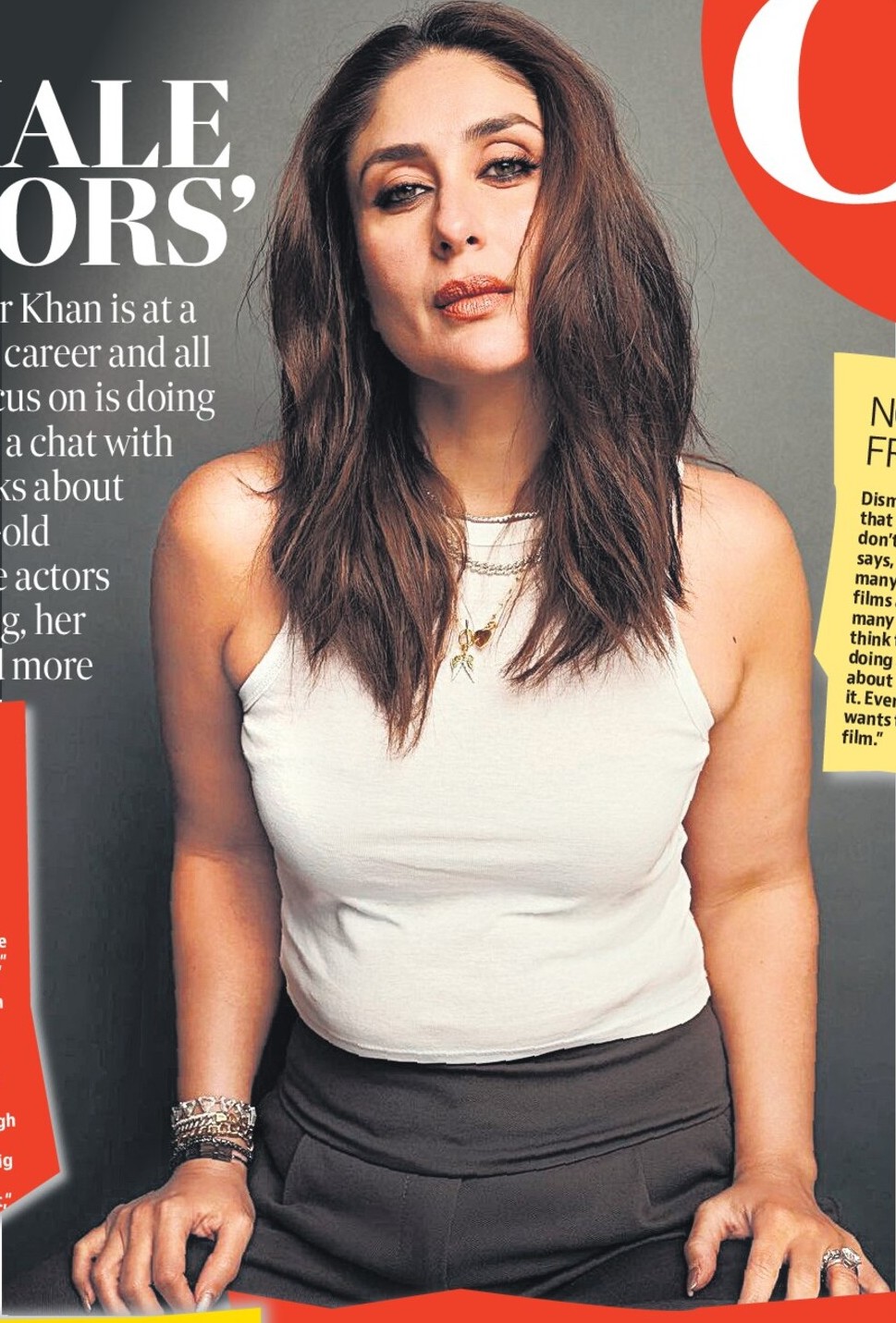
Kareena Kapoor Khan is at a zen stage in her career and all she wants to focus on is doing quality work. In a chat with us, the actor talks about defying the age-old notion of female actors not getting along, her ‘other’ films and more
Rishabh Suri (HINDUSTAN TIMES; June 6, 2023)
‘EXCITED TO WORK WITH TABU’
“Lolo (sister, actor Karisma Kapoor) and Tabu have done some stellar films together. So, I am super excited because I have never worked with her,” says Khan, who will star with actors Tabu and Kriti Sanon in The Crew soon. “All of us working on the film are women, including our producers (Rhea Kapoor and Ektaa Kapoor). These two have always been cool enough to break the mould and do something different. It’s a big screen film and I am pretty sure the audience will love it,” she adds.
NO FRICTION
Dismissing the notion that female actors don’t get along, Khan says, “I have worked in many women-centric films and alongside many female actors. I think today, it’s about doing a good film, not about who or what’s in it. Everybody just wants to do a good film.”
‘JAB WE MET DOESN’T GET OLD’
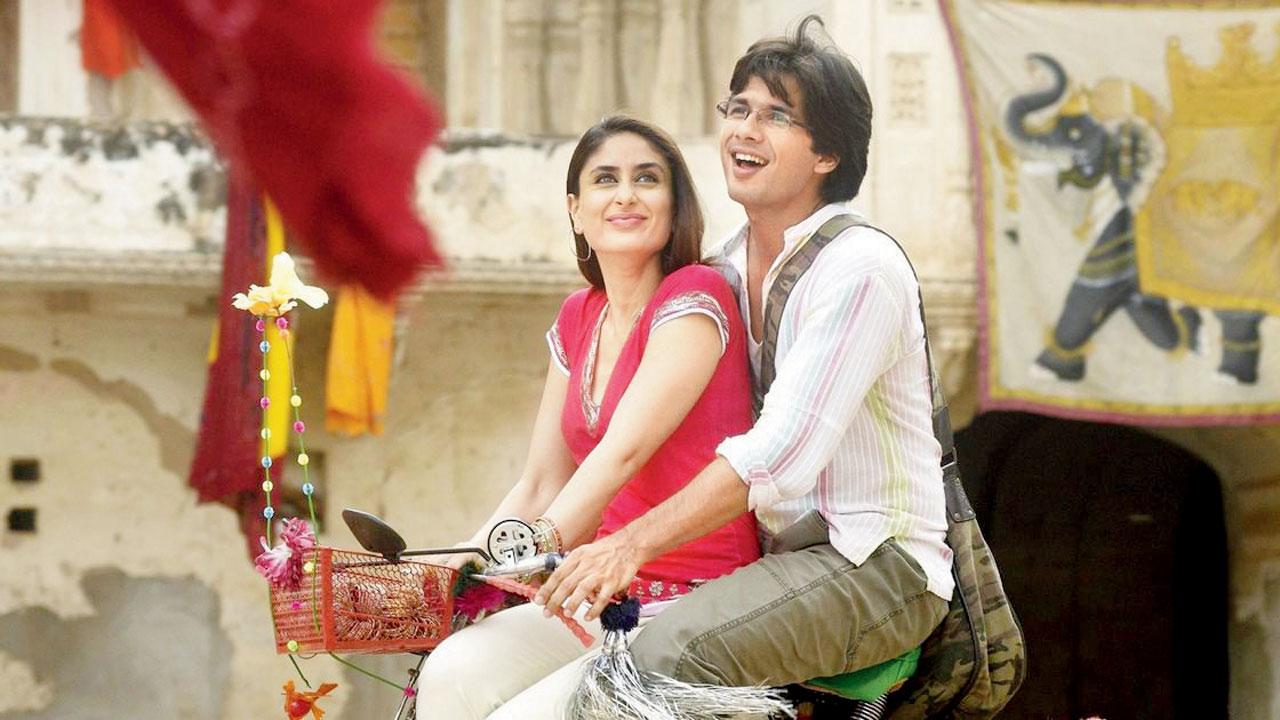
“Of course, Jab We Met (2007) is ghar ki khichdi, you want to see it again and again. It doesn’t get old. That’s a rarity; every time you watch it, it’s like you are watching it for the first time. It’s just the character,” says Khan, referring to the vivacious Geet.
‘TALK ABOUT MY OTHER FILMS TOO!’
Every film Khan does is compared to her iconic performances in Kabhi Khushi Kabhie Gham (2001) and Jab We Met (2007). “They are iconic, I understand. But, I feel like people should talk about [my other films like] Chameli (2003), Yuva (2004), Omkara (2006) and Heroine (2012), too. They are underrated in terms of my performance. Why don’t people talk about that? I am also doing The Devotion Of Suspect X; that’s a very different kind of spectrum for me,” she asserts.
23 years in this industry taught me that nothing lasts forever-Kareena Kapoor
8:02 AM
Debarati S Sen (BOMBAY TIMES; March 24, 2023)
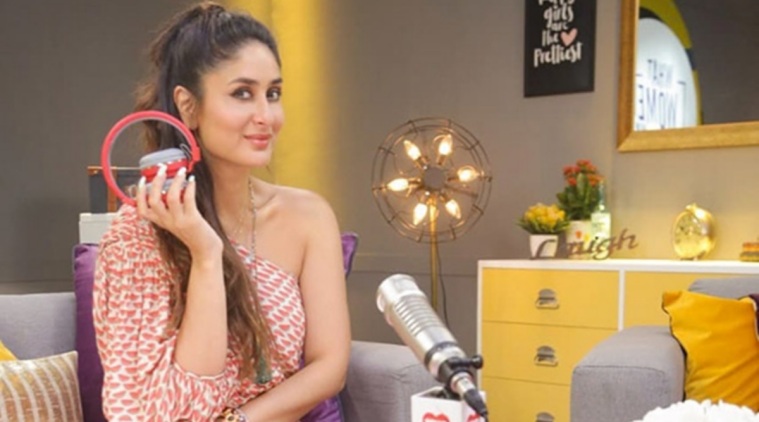
Whatever it is that Kareena Kapoor Khan does, she dives right into it with spontaneity, spunk and confidence. Whether it is a challenging role on screen, hosting a show, or playing super mom to her kids — she gives it all she’s got. In an interview with Bombay Times for What Women Want — Season 4, which streams new episodes on the Mirchi Plus App every Wednesday and on Mirchi Plus’ YouTube channel every Friday at 11 am, the actress talks about what’s new and exciting about this season of the show, completing 23 years in the industry, and how her passion drives her. Excerpts:
This is the fourth season of the show. Tell us about it...
This is the fourth season of What Women Want and it’s an honour and pleasure to be doing this for another season. The audience’s love has made us come back and do this once again.
This time we are looking forward to having a lot of interesting men on our show because we have always had women come and talk about what they want. In this season, we have a lot of men who have come forward and are ready to share their thoughts on different fields. I am looking forward to interviewing all of them.
So, is that what will set this season apart from the rest?
This season will be different. We always choose personalities who have left an impact. The fact is that the digital world has grown and is creating so much content. So, we have influencers and interesting personalities who have made a mark in different industries coming as guests.
After 23 years in the industry, you are choosing different kinds of roles, doing a podcast, trying out newer things and still going strong. What has been your biggest takeaway?
My biggest takeaway is that nothing lasts forever, whether it is success or failure. What really lasts is your goodwill, dedication, the characters to play on screen and the films that you have chosen to do. Basically, what you will be remembered for is whether you were a good artiste or not. It is ultimately all about that. People talk about you in a certain way; I would always want that when people talk about me, they say that I am a lovely person. That should be the primary feeling. That is the feeling you get when you watch my characters like Geet, (Jab We Met) and Poo (Kabhi Khushi Kabhie Gham) because they were loveable characters. So, the key is to give the world lovable characters.
Over the last two decades, your stardom and fan following haven’t relied on the movies you did or how they fared at the box office. You have remained the quintessential Bollywood star. What do you think made the difference?
I think, most importantly, I am honest to my work, to myself, my loved ones and I am honest to the characters that I portray on screen. Somehow, I feel that when we are not being true to our profession and are doing things for the sake of it, people can tell. So, for me it is always like that – whether I am talking to someone, whether I love someone, or I am performing on screen, I do it all very passionately. So, I think that somehow does set me apart, because I am extremely passionate about whatever I do.
Do you think that you have reached a point in your career where box office numbers don’t perturb you?
The box office will always matter, but obviously, I am not competing with anyone. I am in a happy space because I have always chosen to do what I want to do, and I am lucky with that. When I wanted to get married, I did, and it was when no actress was getting married. Today, so many actresses are getting married! It is suddenly cool to be married and working. Earlier, it was about not having children. Then suddenly, it was like…okay you can have a child as well and still be working. I have always done things that I love and believe in.
You are a hands-on mother to Taimur and Jeh, and you are managing your career really well. Do you plan your work around your kids’ schedule?
I think I am very good at time management, and when I know this is what I have to do, then I come to work early so that I can leave early. I like to be at home when my kids are eating their dinner, and that time is my time, and nobody can take that away. Whatever happens, I don’t waver from that, like I will not pick up any calls or be accessible for work because that is not my time for work, it is my time with my family and that is of utmost priority to me always.
There hasn’t been that kind of an iconic film in last 10-15 years, says Kareena Kapoor on Jab We Met
8:33 AM
While she voices Black Widow in Wastelanders, Kareena says she is not drawn to action films
Priyanka Sharma (MID-DAY; February 22, 2023)
Her 22-year career may have given Kareena Kapoor Khan the chance to explore diverse genres, but an action film is starkly missing. The actor seems to have taken baby steps into the genre with the Hindi adaptation of Marvel’s audio series Wastelanders, in which she will voice the character of Black Widow. So, will we see her pack a punch in an action film soon?
“I don’t know why everybody asks me whether I want to do a hardcore action film. I don’t know, maybe some day, but I have never been into action,” the actor says candidly.
The genre that has her heart is romantic comedies. Last week, her much-loved film, Jab We Met (2007), was re-released on the occasion of Valentine’s Day. Kapoor is not surprised by the audience’s sustained love for the movie that saw her opposite Shahid Kapoor.
“There hasn’t been that kind of an iconic film in the last 10 to 15 years,” she exclaims, adding that she would love to return to the genre with an age-appropriate romantic drama. “I would like to do something like The Bridges Of Madison County [1995],” she says.
Expert discuss as Dilwale Dulhania Le Jaayenge, Titanic, Jab We Met, Tamasha re-release
8:12 AM
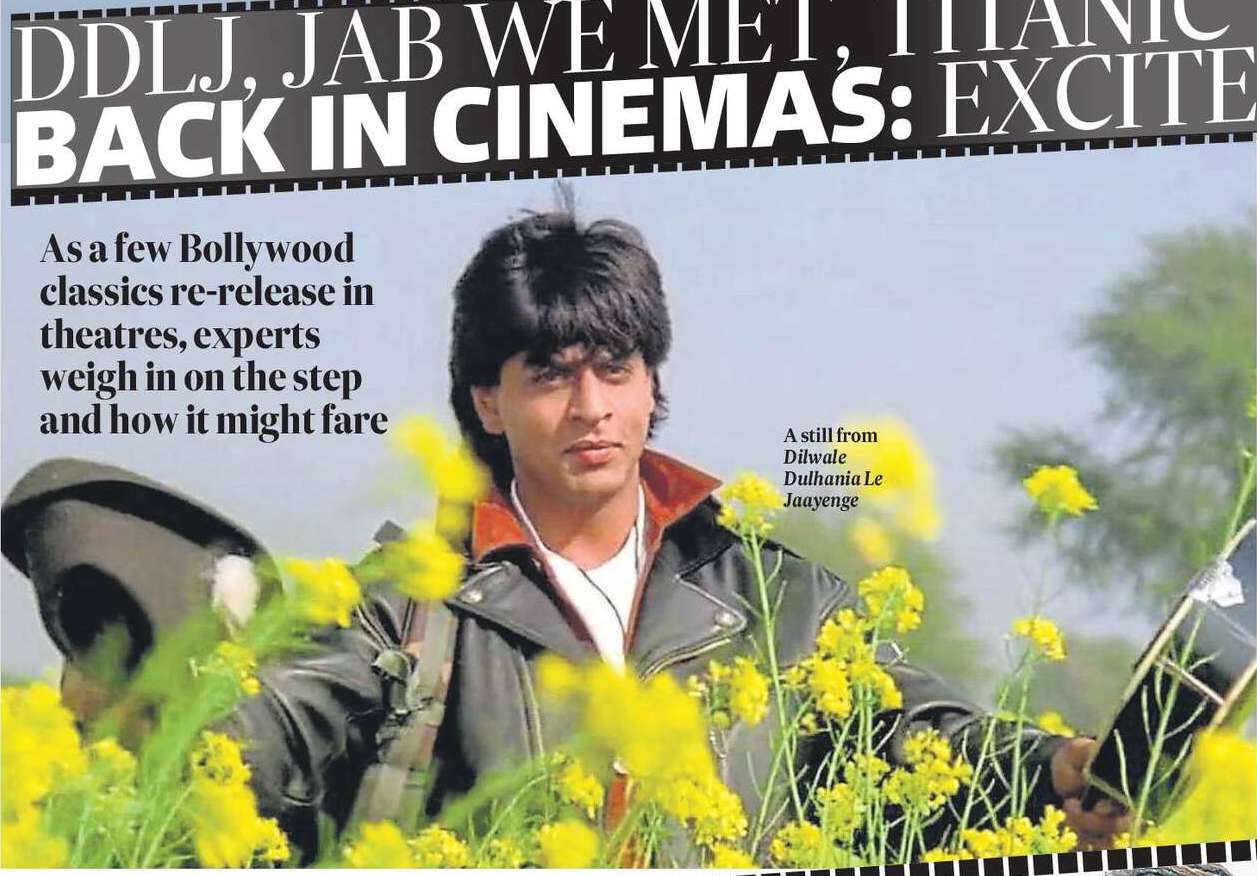
As a few Bollywood classics re-release in theatres, experts weigh in on the step and how it might fare
Rishabh Suri (HINDUSTAN TIMES; February 13, 2023)
Unlike last year, which saw only a few Hindi films rake in the moolah, Bollywood seems to be in an experimental mood this year. While Shah Rukh Khan-starrer Pathaan became a blockbuster without any promotions, another interesting initiative has been old hits such as Dilwale Dulhania Le Jaayenge (1995), Titanic (1997), Jab We Met (2007) and Tamasha (2015) re-releasing across cinemas in India.
What encouraged the backers of these cult titles to release them again? Producer Anand Pandit says, “I don’t know the purpose behind it. I can understand if there’s an occasion like (actor) Amitabh Bachchan ji’s 80th birthday, when his old films released again. Woh baat alag thi. Randomly films ko laana… I don’t know if people will spend Rs. 200 on them.”
It’s worth noting that all the titles that have re-released are romantic films. Trade analyst Taran Adarsh feels they will work: “Love stories will do well this week due to Valentine’s Day. I remember how I wanted to watch Amitabh ji’s films when they re-released, despite having seen them years ago. That craze was still there. There’s no harm in re-releasing them.”
The fact that no new Bollywood release is slated for this Friday may also work in the favour of these films. “Pathaan has also slowed down and there’s a vacuum. So, releasing timeless films again is a good idea,” says Adarsh.
Filmmaker James Cameron’s had re-released Avatar (2009) before Avatar: The Way Of Water hit cinemas last year. Trade expert Atul Mohan says, “Many movie lovers from today’s generation don’t watch these films, thinking yeh films slow hain. Theatre mein films dekhne ka mazaa alag hota hai. Even I will go to watch these films, thinking, ‘I watched them before marriage, now I’ll go with my wife’. I don’t see big numbers coming, but nostalgia trip definitely hoga.”
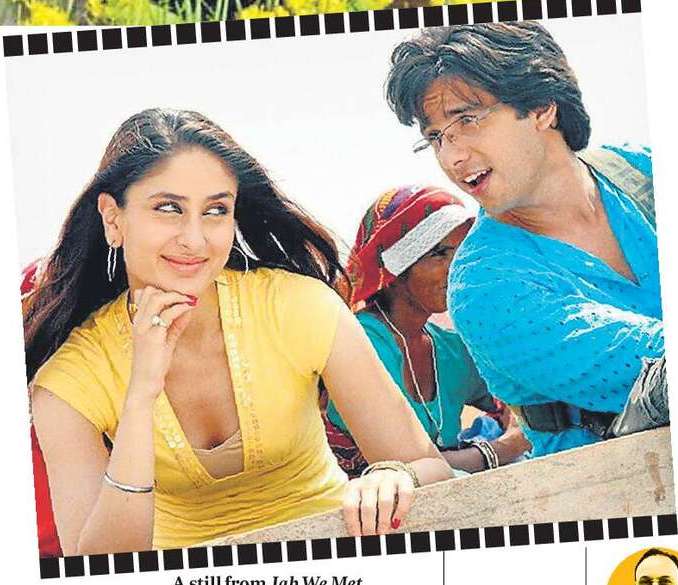
Subscribe to:
Posts (Atom)