Showing posts with label Hum Aapke Hain Koun. Show all posts
Showing posts with label Hum Aapke Hain Koun. Show all posts
Dhurandhar The Revenge fails to top Pushpa 2 - The Rule in 5 circuits; achieves record 4 cr footfalls
10:07 AM

Box Office India Trade Network
DHURANDHAR THE REVENGE has crossed the 1000 crore nett mark and is easily the biggest Hindi grosser ever but in certain markets it sill remains less than PUSHPA 2 - THE RULE despite the all India figure being far higher. DHURANDHAR THE REVENGE has failed to get the highest total in Rajasthan, CP Berar, CI, Bihar and Odisha all ending below PUSHPA 2 - THE RULE. Its a similar story in the state of Gujarat but that comes into Mumbai circuit and overall the collections of DHURANDHAR THE REVENGE are higher in the circuit by more than 10%.
A circuit where DHURANDHAR THE REVENGE did not look like being the biggest was West Bengal but with a prolonged run it has edged past the numbers of JAWAN which was the highest grossing film in this circuit. It was Assam and West Bengal which stopped PUSHPA 2 - THE RULE getting the highest totals in all circuits. For DHURANDHAR THE REVENGE, its the mass circuits which has stopped the film showing complete domination all over. In many of these mass circuits, the figures are higher than PUSHPA 2 - THE RULE in the bigger centers and major multiplexes but its the smaller centers and smaller cinemas be it independent plexes or single screens where it is less.
The last film to have the highest figure in all circuits was BAAHUBALI 2: THE CONCLUSION and before that it was HUM AAPKE HAIN KOUN and SHOLAY. Even GADAR - EK PREM KATHA did not manage as it could not beat HUM AAPKE HAIN KOUN in Maharashtra and parts of the Eastern circuit. It means only 3 films in the last 50 years have seen numbers which have been the highest across all circuits.
DHURANDHAR THE REVENGE has beaten the previous all India total by almost 30% but still some circuits remain less which shows how tough it is and how tastes differ in different circuits. In a circuit like CP Berar, the gap is pretty huge as PUSHPA 2 - THE RULE did 57 crore nett and DHURANDHAR THE REVENGE will do 45 crore nett. In Rajasthan, the gap is lesser with PUSHPA 2 - THE RULE on 47.50 crore and DHURANDHAR THE REVENGE on 46 crore nett.
--------------------------------
DHURANDHAR THE REVENGE is coming to an end of its run and will be finish with 4 crore footfalls apprx. The collections will end with 1005 crore nett and the ATP (Average Ticket Price) will be over INR 300 which has never been seen before. A few years ago BLOCKBUSTERS like PATHAAN, JAWAN and ANIMAL saw an ATP of around 220 and in just three years here is a film with a 35% higher Average Ticket Price.
PUSHPA 2 - THE RULE, released in 2024, had an ATP of 230 and although the multiplexes had comfortably far higher pricing than the likes of ANIMAL and JAWAN, it also had a lot appeal in mass centers which bought the overall ATP down as it should be 10-15% higher than the 2023 films but was only 5% higher. There is a difference of only 10 lakh footfalls between PUSHPA 2 - THE RULE and DHURANDHAR THE REVENGE. However, the box office collection is around 280 crore nett more. PUSHPA 2 - THE RULE had 3.90 crore footfalls.
This is the highest footfall for an original Hindi film since GADAR in 2001 which is a pretty long time to wait for a 4 crore footfall film. The way it was going in the initial few days it looked like even 4.5-5 crore was possible but the mass appeal was not quite there at that insane level. This is not to say the film did not have mass appeal but not to the level of 5 crore footfalls.
This 4 crore footfall mark did look like it would was an impossible task the way business was going post pandemic and more than that the way pricing was going but never say never. It can easily be said that 5 crore is a dream at present and you never know what happens with the right content. The pricing going up and up means footfalls do become tougher though it makes it easier for initial records when the urgency is there.
There may have been no 4 crore footfall film from the Hindi film industry between 2001 and 2026 but there were plenty before 2001 and it maybe around 25-30 films which got over 4 crore. But then, times were different and although there was a lesser population, the craze for films and stars was far higher.
Colleagues, actors fondly remember Satish Shah
8:24 AM

BOMBAY TIMES (October 27, 2025)
Veteran actor Satish Shah, beloved for his roles in Jaane Bhi Do Yaaron (1983), Yeh Jo Hai Zindagi (1984), Sarabhai vs Sarabhai and Main Hoon Na (2004), passed away at his Mumbai residence on Saturday. He was 74. An FTII graduate, Shah began with small yet striking roles in Arvind Desai Ki Ajeeb Dastaan (1978), Gaman (1979) and Umrao Jaan (1981), before becoming a cult favourite as the corrupt D’Mello in Kundan Shah’s Jaane Bhi Do Yaaro . From Kabhi Haan Kabhi Naa (1994) to Kal Ho Naa Ho (2003), Shah’s warmth and comic timing defined an era of Hindi cinema. Tributes have been pouring in from actors and contemporaries who worked with him, celebrating a performer who made laughter timeless.
He used to laugh and make us laugh: Anupam Kher, who worked with Satish Shah in DDLJ, Hum Aapke Hain Koun & Judwaa
Anupam Kher paid tribute to the late actor with an emotional video on Instagram. “What is happening? In the past 3-4 days so many good people have left, that too the ones that have worked with me. Behind this empty smile of mine is a lot of sadness. Satish Shah... I used to say Satish mere Shah (Satish, my king),” he said in the video.
“He was a great friend of mine, it is just shocking. I am revisiting Switzerland where we shot Dilwale Dulhaniya Le Jayenge and I saw the news that Satish Shah is no more. He was in Dilwale and Hum Aapke Hain Koun and in so many more. He used to laugh and make us laugh,” he added.
--------------------------------------------------------
‘We’ve lost a great artiste’
The heavens will be a merrier and a happier place now. Satish ji will make the Gods laugh out loud as they admire their own creation. Thank you for being such a solid wind beneath my wings early on in my career… for constantly believing in me and egging me on – R Madhavan, Shah’s co-star, in 1997 TV show Jamai Raja
--------------------------------------------------------
We’ve lost a great artiste & my dearest friend of over 40 years. It’s hard to believe – I had spoken to him just two days ago. Satish Bhai, you will truly be missed. Your immense contribution to film and television will never be forgotten – Johny Lever
--------------------------------------------------------
‘He made sure the child in him was always alive’
“Loving, full of life and playful just like his popular onscreen character of Indravadan Sarabhai” – that’s how the team of Sarabhai vs Sarabhai remembers Satish Shah, who played the witty patriarch of the South Mumbai family in the show that premiered in 2004.
Sumeet Raghvan said, “It is such a rude shock. He was in and out of hospital, he had kidney issues. He was a fabulous human being and an actor. We all have seen his great body of work. I’ve known him for the last 20 years, he was the real-life Indravadan Sarabhai, a prankster. I would be his partner in crime. Whenever we would chat, he would tell me, ‘Don’t let the child in you die or grow, keep the child alive’. He made sure the child in him was always alive.”
Rajesh Kumar, who portrayed the fan-favourite Rosesh, Indravadan’s younger son, said, “This is the worst hour for me. I still cannot process that Satish ji is no more. All I can say is that I feel I have lost my father. He was a man full of life and humour. He made his name and left a mark as an actor. This is a big, big loss to the industry and us, Sarabhai family.”
Shah’s co-star from Nehle Pe Dehla, Rajesh Puri, who shared a long friendship with Shah and also worked with him in multiple projects, said, “We worked together even before I did Hum Log , collaborating on several TV shows and films. I wonder what happened to him. Earlier, we used to meet a lot when we worked together. It is very unbearable at the moment.”
The veteran actor fondly recalled working with Shah on the show Nehle Pe Dehla (1999–2000), remembering how the late actor would often tease him, and make everyone laugh. “I will really miss him. It was just last week that I was thinking about catching up with him,” he added.
------------------------------------
HINDUSTAN TIMES (October 27, 2025)
The last rites of late actor Satish Shah were conducted in Mumbai on Sunday, a day after he died of renal failure at 74. Earlier, his mortal remains were kept at his residence in Bandra for antim darshan.
Several industry A-listers, friends, and colleagues got together to bid a final farewell to Shah, including Kunal Kohli, Jackie Shroff, Johnny Lever, Aanjjan Srivastav, Poonam Dhillon, Ali Asgar, Tiku Talsania, and Suresh Oberoi.
The cast and crew of his iconic sitcom Sarabhai vs Sarabhai were also present, including Ratna Pathak Shah, Rajesh Kumar, Rupali Ganguly, Sumeet Raghvan, Deven Bhojani, and JD Majethia were also present. Clips of them singing the show’s theme song at the cremation also surfaced on social media.
Kareena Kapoor Khan shared a still of Sarabhai vs Sarabhai, writing, “Rest in glory Satish Shah.”
R Madhavan shared an old photo featuring himself, Satish and Mandira Bedi from their get-together. The three had worked together in the sitcom Ghar Jamai.
Amitabh Bachchan wrote, “Another day another work another quiet... Another one of us passes away... Satish Shah, a young talent, and has left us at a very young age. And these times of the grim... it bodes not well to express in normalcy... but the show must go on... and so it does, as does life.” They starred together in the 2008 film Bhootnath.
Anupam Kher shared an emotional video for Satish after the actor’s “shocking” death. Writing in the caption “Satish mere Shah”, he said in the video, “Kya ho raha hai yeh? Teen-chaar din mein itne acche acche log chale gaye. Kya ho raha hai yeh?”
Sumeet Raghvan wrote, “As the show continues to grow, so does our bond. Whenever we met, we didn’t talk as Sumeet, Rupali or Rajesh. Then, were Sahil, Monisha, Rosesh, Dad, and Mom. That’s how we talk with each other. Today, the head of the Sarabhai family, our most senior member, has left us. Kaafi dinon se woh joojh rahe thhe. Finally, life can be very cruel.”
Farah Khan wrote on Instagram, “Rest in peace dearest, Satish. You were a joy to know and work with. Will miss you sending me memes and jokes every day.”
Johnny Lever said, “Feeling extremely sad to share that we’ve lost a great artist and my dearest friend of over 40 years. It’s hard to believe — I had spoken to him just two days ago.”
Rajesh Kumar reflects, “All I can say is that it feels like I have lost my father.. A man full of life and humour. Challenging everything. His name left his mark as an actor. This is a big, big loss to the industry and the (Sarabhai Vs Sarabhai’s family). Let’s pray for his departed soul and keep him in your prayers.”
Rakesh Bedi remembers Yeh Jo Hai Zindagi co-star: “I’ve known him since 1974, when we joined FTII. We’ve been classmates, flatmates, and have been friends for all these years. I never saw him sulking. He would always talk about things with so much passion and joy, especially his work. Even when he was unwell, the doctor would come, and he’d crack jokes with him. This was the beauty of that man.”
Sholay was like a big and successful startup idea of those days-Rohan Sippy
8:38 AM

Rajesh Naidu (THE ECONOMIC TIMES; September 8, 2025)
Poet and cultural scholar A K Ramanujan in his essay Three Hundred Ramayanas observes: “In India and in Southeast Asia, no one ever reads the Ramayana or the Mahabharata for the first time. The stories are there, 'always already.'” It would not be an unpardonable exaggeration if one uses this insight in the case of one of the greatest films of Hindi cinema: Sholay.
One does not watch Sholay for the first time. One hears, reads, laughs and celebrates Sholay for almost anything—causes, agendas, sarcasm, personal communication and pure entertainment. It is a force which unites the elite with the mainstream and creates cliques even among people who do not share a deep bond. It has created a language of its own in which people speak to communicate the intimate, the profound, the routine and the mundane with absolute precision without losing the context. So, Sholay is a national cinematic language which has remained alive since its release. And it will remain the national cinematic language till the time Hindi cinema is alive.
Recently, Sholay completed fifty years of its release. ET’s Rajesh N Naidu caught up with Rohan Sippy, an accomplished filmmaker himself and son of Sholay’s director Ramesh Sippy, to know his thoughts about the film. Rohan Sippy has directed critically-acclaimed and commercially well-accepted films such as Bluffmaster! and Dum Maaro Dum and web series such as The Office, Sandwiched Forever and Criminal Justice: A Family Matter. He also shared his views about his own works and the current situation of the Hindi film industry. Here are the edited excerpts:
The world is celebrating fifty years of the release of Sholay. What are your thoughts when you look back at the film?
I think it is marvellous how almost everything fell into place for the film. One must consider the time in which the film was made. They were working at a time of political emergency. People were paying income tax, which was as high as 97%. Then, there was entertainment tax which was as high as 177%. This means that doing the movie business itself was challenging and required a daredevil spirit. In this backdrop, there is a director and an able producer who have an ambition to make a film which is larger-than-life than any film made before it.
One can have writers who are at the peak of their powers. One can have a competent producer who had a unique vision, courage and conviction to go into unchartered territory. Yet, one can go wrong and fail. But they all succeeded. This is the most startling part of the story.
One must bear in mind that a lot of technical work of Sholay was done overseas. Technicians were flown to London. Then, there is such a huge cast. It is unimaginable to pull off such a film even today.
It is just the passion to do something special which is palpable in Sholay. They found the right collaborators. They were able to ride out so many challenges on so many different levels. In today’s parlance, going by the sheer confidence and daredevil attitude of the director, Sholay can be considered a Start-up Idea which paid off. A one-in-a-million idea which succeeded. But I don't think one could predict or foresee the kind of success which the film earned over the years. I think this is the case with most great films. A director may have vision, confidence and conviction. But no director can claim to know the recipe of success of a film.
You are closer to the film’s creator than any viewer by the virtue of being his son. There might be stages of your understanding Sholay. You have watched Sholay as a teenager. Then, as a young adolescent. Subsequently, as a well-established filmmaker. As a filmmaker, what have been your key learnings from Sholay?
I first saw Sholay when I was about four years old. It was a magical and overpowering experience. The experience lingered in me for a long time. As a teenager I studied abroad. I showed it to my friends. They also liked it. It has cut across geographies and generations including my daughter and her friends. For me, it is a mystery beyond a point. It has become part of India’s popular mythology. It is like one of our epics.
There are so many lessons within Sholay. Over the years, the film has evolved into a Bible in filmmaking. One comes back to the film for a solution to a writing problem in a script. There are lessons about how to create a world, build characters and focus on certain specific aspects of a scene.
I will give you an example. You look at the introduction of Gabbar Singh in the film. You can study the shot taking one by one and understand how the character is unfolding. There is so much unpredictability in the presentation of Gabbar Singh. You look at where the camera is placed when Gabbar is laughing or where the camera cuts suddenly when Gabbar is in an aggressive mood. Also, the whole drama that unfolds when his gun comes out. The amount of thought which has been poured into these scenes is so awe-inspiring that one does not ever absorb these thoughts in the scene in the first viewing itself. Even the scene where Jaya Bhaduri’s character returns the keys to Jay and Veeru. It is so specific and adds so much emotional depth to the film’s narrative.
Importantly, Sholay’s sound design is another special thing in the film. Many a time, one is tempted to watch the film only for its sound design. You listen to the background sound when Sachin’s dead body is brought back to the village. It is a lesson in bettering your screenplay through an effective sound design.
So, everything from performance to staging scenes to editing them and then, sound design, Sholay has lessons in almost every department of filmmaking.
What are the lessons in filmmaking you have learnt from your father especially in the context of Sholay?
I don't think I have had a sit-down discussion with my father about Sholay. The last thing I want to do is be the millionth person asking him about Sholay. But we discussed a lot about the writing process. From these discussions life lessons would emerge. Lessons about how to take on challenges and keep pushing even when there are a lot of things pushing you back. I learnt that one needs to have conviction in one’s vision and an uncompromising attitude in the pursuit of excellence even when there are easy ways to do things. But the biggest lesson I learnt from the discussions I had with my father is clarity of thought. One needs to have clarity of vision and then pursue it doggedly.
Another thing which I learnt from him is the ambition to be different and not go down a path that either everyone else is going down or something that you have gone down before. You look at his body of work. He has worked in multiple genres. From a love story like Andaz to an out-and-out comedy film like Seeta Aur Geeta to an action adventure like Sholay to a James Bond-kind film Shaan and then again returning to a different kind of love story with Sagar. He also did a different kind of drama version of Mother India in an urban setting through the film Shakti.
This ambition to go out and expand one’s own cinematic language has been a big thing for me. I have followed this in my own way. Apart from Criminal Justice, I did a sitcom like Sandwiched Forever which I shot in a five-camera set up. It was a new learning experience for me.
What was the actual premise with which Ramesh Sippy started Sholay?
My father loved Westerns. He grew up watching them. He also liked horses. Even my grandfather owned racehorses and enjoyed that part of that passion as well. So, my father always thought about this idea of making a film which is close to a western. He always thought: Why cannot we make a film like a western in India? So, I think that was the kernel of the idea of Sholay. Then, I think the discussion with Salim sahab and Javed sahab started. Subsequently, the core story of the film emerged. Then, they bounced the story off with my grandfather. My grandfather instinctively saw potential in the story.
I think at that time there were two films. One was Majboor, a complete script. And the other was this idea of an outdoor western kind of film which will be Sholay. Then this story kept growing big day by day organically. They realized that they would have to fill a big canvas. So, they kept on working because they instinctively knew it was a good idea. I think this is the process by which they end up making the film.
The film’s screenplay was written in sixteen days and in another sixteen days the film’s dialogues were written. So, in a month’s time they had pretty much something very close to the shooting draft and maybe a few scenes here and there were fleshed out later.
There are certain scenes in Sholay which may not be directly connected to the main plot. In that sense, the film's screenplay does not seem tight and a bit scattered. Yet, they are so entertaining that audiences do not realize that they are not adding much to the main plot. What are your thoughts about it?
Those scenes reflect the power of a director who is at the peak of his powers. He was such a daredevil director. He knew that he was taking a little liberty. But he was confident that he will be able to pull it off. It could have been a tighter screenplay. But then the impact would not have been the same. These imperfections and slight diversions make Sholay what it is. These scenes give the film its soul.
Also, there are certain dialogues in Sholay which provide just information. According to you, what elements made these dialogues so iconic?
I think those dialogues are like the cherry on the top of a cake. They sound like a distinct cymbal clash in a beautiful 100-piece orchestra. This is the impact of these dialogues. Everything else is working in a perfect concert. These dialogues make the film memorable. A viewer who comes out of the cinema knows these dialogues. For instance, think about the dialogue: Purey Pachaas Hazaar. It works because there is a lilt to it. In that scene, there is threat, fear and the crescendo of the scene is the dialogue. There is an emotional impact on the audience. I think it was the first time a separate Long Playing (LP) record of dialogues of a film was released. This shows the extent to which the audiences connected with the film. This took the film’s acceptance to another level.
Directing a multi-starrer film could be a challenging thing. There is always a concern about stars not receiving proper footage. According to you, did Ramesh Sippy face any such challenges?
I think my father had earned a reputation as a young, incredibly talented and visionary director before he embarked on the journey of making Sholay. He had delivered two hit films. A lot of actors wanted to work with him. He had developed relationships with big and talented actors such as Sanjeev Kumar ji, Dharmendra ji and Hema Malini ji by this time.
Mr. Bachchan was not in the successful phase of his career. But my father loved him as an actor. My father knew that because he is not at that successful phase it would be easier to handle him than someone who might be at the peak of their power. Then, Jaya ji came on board as she also liked the overall story. There was a certain way in which actors worked that time. They would not just focus on their roles. They would focus on two important things. First: whether they want to be part of a story. And the other is: whether the story of a film was worth telling. This is how actors worked that time. So, it was not a difficult task to bring together these big actors. Also, one needs to bear in mind that the story needed these big stars given its scale. The casting of the film can be summed up as the right person emerging at the right time.
I am sure you have watched films such as Seven Samurai, The Magnificent Seven and similar films which spawned the western genre. How do you assess Sholay when you compare the film with these great western or samurai films?
I think inspiration is always there. One is inspired by others. The great Japanese director Akira Kurosawa was inspired by pulp western books. Then, he in turn inspired American filmmakers. Subsequently, American filmmakers inspired us and others. So, there develops a tribe of storytellers. I think this tribe of storytelling tradition goes back to William Shakespeare. So many of Shakespeare’s stories have geneses or roots in other stories and events. Then, you go back to oral traditions. One picks up from there also. But it is not an easy thing to do.
In Hindi, there is a saying which goes: Nakal Ke Liye Bhi Akal Chahiye (One must possess skills to borrow things and create well and convince others of the originality of one’s creation). One can give the same material to ten people. Nine of these ten people may fail to figure out as to how to use it. But the tenth person will copy certain things from the same material, change some things and present it in such a way that the material would look original. Most of us are like that only. A large part of our learning a language or what constitutes culture is achieved by copying each other only.
So, I think it is not that important whether westerns inspired the people behind Sholay. The world of films is a stream which keeps giving and taking things from one storyteller to another. I think the important thing is the relevance of a story and its ability to connect with audiences. That is the heart of filmmaking.
A lot of acclaimed directors made their great films when they were quite young. Francis Ford Coppola made The Godfather when he was just 32. In fact, Orson Welles who made Citizen Kane at 26, once said ‘ignorance’ in filmmaking was the key thing which worked in his favour. Ramesh Sippy was 28 when he made Sholay. Do you think when a talented director is young enough the ability to do out-of-the-box things is quite high in comparison with a seasoned director who may be set in his or her ways of filmmaking?
Yes, I agree. The spirit of a film reflects the people associated with it. When directors are talented and young, they are not straightjacketed in their worldview. Whether you call it ignorance or confidence, the cowboy mentality that I can do it is always there. This also worked in the case of Sholay. My father and Salim-Javed were like a bunch of cowboys. Even the actors in the film had swagger. The way these people interacted with each other and conducted their lives off screen made them so interesting. It is reflected in the film. One does not see such kind of people today. That is why one does not see that spirit in today’s films.
Which is your favourite character in the film?
I think there are so many memorable characters in the film. People even remember a small character like Samba who had very few dialogues. But I connect the most with Mr Bachchan’s character. One wants to be like the character. He is the coolest thing in the film. It is the most memorable and entertaining character in the film. I like his wit, the way he did his action and the whole emotional arc of the character. The character is very relatable to me.
It is a great tragedy that Sholay did not get many awards. It got the Filmfare Award for Editing only. Do you think it deserved awards in other important departments of filmmaking, especially direction?
It is bizarre to me how a small group of people make a subjective call. In hindsight, it looks ridiculous how such a big film got only one award especially when one considers the fact that the film has stood the test of time. Even after fifty years of its release, we are talking and discussing the film. It shows that the film was quite ahead of its time. It proves Wittgenstein's ruler theory which says a lot about the ruler than the thing which the ruler measures.
As a filmmaker, today when you look at Sholay, do you want to add, edit or delete anything in the film?
If I can go back in time, then I would like to release the uncensored version of the film. There is so much poetry in the way the uncensored version of the film ends. It deals with the idea of revenge in such an interesting manner. It makes the characters realize the futility and hollowness of revenge. In the uncensored version, after killing Gabbar, Thakur goes to Veeru, consoles him and says to him: ‘You lost your best friend. I killed Gabbar. I don’t know whether I have gained anything?’ I think if they had released this uncensored version, then the audiences would have loved the film even more. This is the original version of the film. This idea was used very well at the end of director Shriram Raghavan’s film Badlapur.
Do you think a web series based on Sholay exploring in detail the past of its key characters can be made?
I think it will be fun to look at the film in a web series form. The central mythology of the film could be fun to play around. Yes, a long form storytelling based on the characters of the film will be an interesting thing to explore. One can dig deeper and create more out of the key characters.
Now, let us talk about your work. In its recent research by media and entertainment research firm Ormax Media, Criminal Justice emerged as one of the highly watched original web series. You have directed the last three seasons of the web series. What elements in the series convinced you to be a part of this series?
I had previously worked with Applause Entertainment on some episodes of the Indian version of series The Office. I have long-standing relationships with Sameer Nair and Deepak Segal (producers of Criminal Justice series). In fact, Deepak was the editor of one of my grandfather’s films, Pathar Ke Phool. When I was approached to direct one of the seasons of Criminal Justice, it felt like a natural fit. The first two seasons were produced in the UK. The UK version introduces a new female lawyer character while here we chose to continue with the character Madhav Mishra. It made sense narratively.
Directing a series has been a different experience compared to films. Films typically require more holistic involvement from directors early on. But for a series much of the writing is done before a director's involvement. It is often shaped through discussions with a platform and then a shooting draft is finalized. Our input is focused and more contained compared to the broad scope a film director usually has in films.
One practice that has become a tradition across our projects is conducting table readings with all the actors and key crew members. This process allows everyone to hear the script aloud, which is valuable because television work is oral and visual rather than purely written like a book. Table readings clarify many aspects and generate new ideas. They offer actors insight into their characters' emotional journeys, especially because shooting is fragmented over long periods. I found this collaborative approach particularly effective.
Criminal Justice appealed to me partly because I have not explored the legal genre before. It presented an exciting challenge and an opportunity to discover new creative rules for me. I have directed three seasons. I have seen how the show has evolved into its own format centred on the character Madhav Mishra. The character Madhav Mishra anchors the narrative much like classic legal drama characters.
It has been a rewarding experience to revisit the series multiple times. Each season introduces fresh cases, which helps prevent the show from becoming stale. This mix of familiar characters and engaging new investigations keeps the series relevant to audiences. Overall, the whole journey has been quite gratifying for me.
Are you working on a new film?
I am working on a script. I have been approached by producers for a couple of scripts. But till something is locked, it is impossible to talk about it. But I am trying something in a lighter space.
What is your assessment of the present state of the Hindi film industry?
These are the times of correction. One of the hallmarks of Hindi cinema used to be strong films featuring newcomers. Over the past several years, however, we seem to have moved away from that tradition. I am glad that Yash Raj has embraced it again, and I can already see the benefits. Hopefully, this approach will encourage many more filmmakers to follow suit. It shouldn’t be limited to a single genre either—the larger idea is to back projects with younger actors. After all, the audience largely remains young though we often forget that we have grown older.
Of course, this does not mean films must exclusively feature young actors. But it is important to invite them in and give them space. Saiyaara has done that very effectively, and I hope it sparks fresh excitement among producers and in the market to support such ventures. What is really needed now is new ways of thinking about how to make this happen. If this succeeds, then I hope to see many more such films by the end of the year.
Lastly, what are the challenges in the Hindi film industry? Do you think there is a lack of passion, funding or absence of directors in the right sense of the expression?
I think the expression that sums up the present situation in the Hindi film industry is: Skin in the game. In the earlier time, you had to have skin in the game. A producer was liable. He would put his own cash and credibility on the line. So, in a sense, the risks got evened out. It is not that they weren't failures. A director also realized the risks a producer was taking. A producer knew that he would lose home or office if things go wrong.
Think about the time when Rajshri Productions’ Hum Aapke Hain Koun..! was released. At that time, only mass films were working. But they put everything at stake. They decided that they will not sell the film. They decided to release the film in 36 screens. It was a huge risk. If the film did not work, then they would have incurred losses. They were liable for everything. But it worked. Then, there are instances when producers made mistakes too many times and they knew they were not going to survive.
And this system of having a personal stake worked not just on producers’ level. It worked across the value chain of filmmaking: sub-distributor, distributor, sub-exhibitor and exhibitor. This is how the filmmaking system effectively ran. Today, among other things, this system must sustain for better scope and future of films.
In recent years, the biggest shift which has happened is the people who are authorizing films. They don't have a personal stake or skin in the game in the entire enterprise of filmmaking. They are working for a large studio. And that responsibility which producers and other entities in the value chain of filmmaking shouldered is diffused. So, in that sense, things have changed.
Before multiplexes: What cinema tickets once said about you
7:57 AM

Niharika Lal (BOMBAY TIMES; August 2, 2025)
When Amitabh Bachchan recently shared a ticket from a Sholay screening, what caught attention was the seat classification printed in bold: Special Class. According to film experts, such tickets reflect a long-forgotten language of cinema-going in India. Your seat didn’t just determine your view, it also revealed your social standing. “It wasn’t a standard classification at all cinemas. But the ticket is from Excelsior cinema in Bombay (Mumbai), where the last few rows, separated from the main cluster of seats, were called Special Class,” says film historian Shivendra Singh Dungarpur.
Today, watching a film is a different experience – with recliners, gourmet snacks, and curated drinks, it feels more like a luxe night out. But it wasn’t always this fancy. Experts say old movie tickets act like time capsules, capturing how your seat reflected both access and your place in society.
‘Front bench full hai toh film hit hai – yeh criteria tha hit film ka’
The front bench was as crucial as the director’s name on the poster. “Front bench full hai toh film hit hai – yeh criteria tha hit film ka,” laughs Alok Diesh, a veteran in the cinema business, who was around long before ticketing apps came along. He says that the front bench was rowdy and loud. If those seats – often the cheapest and closest to the screen – were packed, it meant the film had made its way to the masses.
Chaitanya Prasad, a moviegoer in his 60s, recalls, “Balcony seats were always something to envy. It was almost like winning a medal if you got a ticket for the latest release. So, a balcony ticket was just something we could only wish for as students. And some places, like Regal, even had box seats for VIPs.”
“Cinema owner toh DM se bada hota tha!” jokes film distributor Sanjay Ghai. “DM bhi film ki ticket ke liye usi ko phone karta tha. If the show was full, the manager would actually put the phone aside to avoid requests.”
The balcony, the box, and the dress circle
Cine experts say that back in the day, your seat at the movies didn’t just decide your view – it said something about who you were. “In the ’50s and ’60s, men and women wouldn’t sit together. They had separate seats,” says Shivendra Singh Dungarpur. “Then came the idea that families could sit together. Later, the halls were redesigned to include balconies, dress circles, stalls. The stalls were closer to the projection and had a better angle. The dress circle was more separated and above.”
Film historian Gautam Chintamani describes seating at that time as highly stratified. “Roughly 65–80% of a cinema hall consisted of regular seats. Above those, you had the balcony, dress circle, and family boxes – small private enclosures with curtains or side doors. It used to be reserved for VIPs or people who didn’t want to be seen. So the seating reflected that hierarchy,” he says.
From places of leisure to places of luxury – the evolution of cinema seating
Post-Emergency (1975), while film content shifted towards escapism, the kind of audience frequenting cinema halls also changed. A certain segment of society – families and the working-class continued going to theatres. For them, cinema was an escape. You could smoke during interval (inside the cinema), have a cold drink and unwind. Seating reflected this shift, as theatres became places of affordable leisure for the masses.
Technological upkeep of theatres declined in the late 80s. India had 70mm theatres, grand halls with large seating capacities, but over time, infrastructure deteriorated.
Filmmaker Mansoor Khan once mentioned how he visited a theatre to watch Qayamat Se Qayamat Tak (1988) and found the doors didn’t shut completely, allowing light to spill onto the screen, and how 300–400 chairs creaked due to lack of oiling or maintenance. This decline shows the type of audience that still came to theatres – mainly lower and middle classes – while the elite moved towards home entertainment.
A significant shift happened with Hum Aapke Hain Koun..! (1994) . For the first time, a filmmaker gave theatre owners a checklist – unless the cinema had a particular sound system, clean restrooms (especially for women), and quality snacks, the film would not be released. This forced theatres to upgrade their infrastructure.
By late 90s, multiplexes like Priya in Delhi ushered in a new era. With advanced sound, better projection, and more comfortable seating, the expectations around what a cinema experience should feel like changed. By the 2000s, theatres began offering recliners, blankets, and luxury lounges. Cinema-going became an upscale, family-friendly outing.
– Film historian Gautam Chintamani
I cannot have Salman Khan do a film like Hum Aapke Hain Koun again-Sooraj Barjatya
8:44 AM
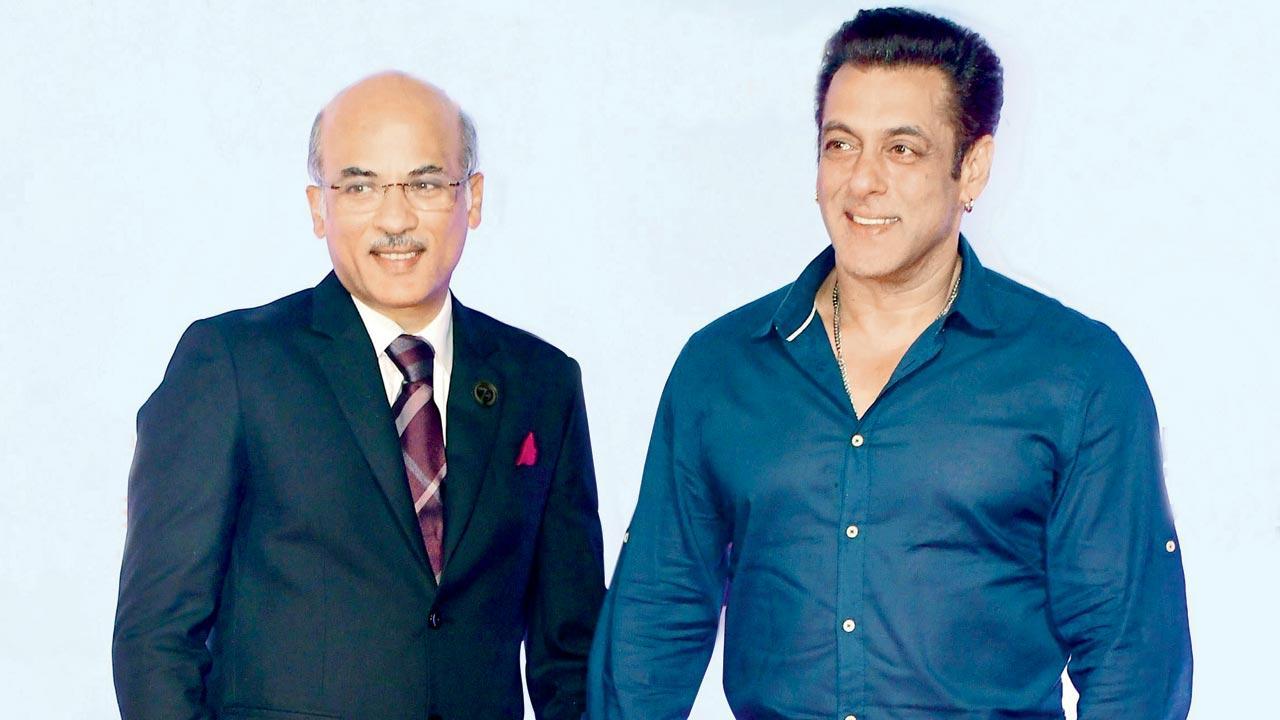
Filmmaker Sooraj Barjatya initially planned to work on Prem Ki Shaadi with Bollywood superstar Salman Khan, but sources claim the project has been put on hold
Letty Mariam Abraham (MID-DAY; February 23, 2025)
Salman Khan and Sooraj Barjatya share a successful partnership, having delivered several hits together. Nearly a decade has passed since their last collaboration, Prem Ratan Dhan Payo (2015). They initially planned to work on Prem Ki Shaadi, but sources claim the project has been put on hold. Instead, Barjatya is now developing another film with Khan.
“The film has been pushed a little because, with Salman, I need a subject that is age-appropriate. The story has to fit him correctly; I cannot have him do [a film like] Hum Aapke Hain Koun [1994] again,” says Barjatya.
He explains that Khan has a vast fan base eager to see him in roles that suit him. “It’s not fair to anyone. I have to showcase a love story that suits him. We have cracked the story. It is taking me some time. Before that, I’ll make another story,” he shares.
Rumours suggest that Barjatya is planning a film with Ayushmann Khurrana. When asked to confirm, he says, “I cannot say anything. I will make the announcement next month.”
Gautam Chintamani on why 1994 was the magical year for Indian cinema
4:52 PM

As told to Niharika Lal (BOMBAY TIMES; December 21, 2024)
What is the first thing that comes to mind when one thinks of the cinema of the year 1994? While you think of 1994’s cinematic legacy, and oh, what a year indeed, ironically, one of the first things that comes to mind is a line from HW Longfellow’s poem, A Psalm of Life – ‘Art is long, and Time is fleeting.’ Think about it – the gap between Hum Aapke Hain Koun..! and today is more than Sholay and Hum Aapke Hain Koun..! One of the reasons that 1994 remains a watershed moment in cinema has to do with the fact that until HAHK, for almost two decades, no other film came close to dethroning the curry-western Sholay that redefined the term ‘box-office success.’
Seen against the releases of 1975, many of 1994’s releases might not have stood the test as well as the former, but with a cult classic such as Andaz Apna Apna, one of the best biopics in the form of Bandit Queen, R D Burman’s swansong 1942: A Love Story, and one of the last paring of the two brightest sparks of parallel cinema, Naseeruddin Shah-Om Puri in Droh Kaal, there is a certain charm nonetheless in the year’s films. It was also the year that Amitabh Bachchan returned briefly to the big screen in Insaniyat after a self-imposed three-year exile.
With Krantiveer, popular Hindi cinema got yet another version of the leading man in Nana Patekar, who combined the Salim-Javedesque angry young man with every man of Basu Chatterjee and Shyam Benegal-Govind Nihalani. With a bevvy of hits between them both — Akshay Kumar (Main Khiladi Tu Anari, Mohra and Yeh Dillagi), and Ajay Devgan, who was yet to lose the ‘a’ in his surname, (Dilwale, Suhaag, Vijaypath) joined the Khans as top box-offices draws and Govinda continued with ‘a-hit-a-year’ delivery scheme in the form of Raja Babu. The year also resonated with the conspicuous absence of Divya Bharti, who had died a year earlier. The success of Mohra, Vijaypath and Laadla, three films that originally featured Divya Bharti, only showed how a promising career was cut short due to her accidental death.
The coincidence of 1994 being equally momentous for Hollywood – with Pulp Fiction, Forrest Gump, and The Shawshank Redemption releasing the same year – often overshadows a more profound truth about Hindi cinema’s paradigm shift. Besides the three standout features, 1994 in a single calendar year witnessed the release of Ace Ventura: Pet Detective, Reality Bites, Four Weddings and a Funeral, The Hudsucker Proxy, The Crow, Little Buddha, Speed, Wolf, True Lies, The Mask, Air Heads, Clear and Present Danger, Natural Born Killers, Quiz Show, Blue Sky, Ed Wood, The River Wild and Bullets Over Broadway. The year’s biggest box office success was Disney’s The Lion King, the last of the great traditional animation films, and even the foreign language film segment was peppered with what are now considered seminal classics.
One of the things that stood out in the films of 1994 was the way they brought a huge segment of viewers lost to video and cable back to the cinemas. With a strong emphasis on ‘family viewing’, Sooraj Barjatya withheld the video release for the first six months after HAHK released and used state-of-the-art technology to keep a check on piracy. Additionally, Rajshri Productions handpicked theatres across the country that had met certain quality standards vis-à-vis sanitation, projection or sound etc. for exhibiting the film. The year’s biggest hit eventually ended up being Hindi cinema’s biggest hit, and Hum Aapke Hain Koun..! continued to hold that distinction till 3 Idiots (2009).
The very next year Dilwale Dulhania Le Jayenge created a divide between not just style or the kind of actors and technicians who worked at either ends, but also a mindset.
Hindi cinema is at another crossroads as we mark thirty years since 1994. What can one say when re-releasing a film from the 1990s generated more enthusiasm than some of the new releases? Ultimately, 1994’s greatest legacy might be how it prepared Hindi cinema for future disruptions. Challenging established norms of distribution, content, and audience engagement created a template for adaptation that continues to serve the industry well.
As we navigate the brave new world of multi-platform content delivery and changing viewer preferences, the lessons of 1994 remain surprisingly relevant. After all, as a 1994 release Andaz Apna Apna taught us – sometimes the best way to predict the future is to invent it.
--------------------------------------------------
The film that gave us iconic lines like Aila! Ooima! and mark idhar hai, has stood the test of time by ‘standing out even today.’ Talking about its timelessness, Amod Sinha, assistant director of Andaz Apna Apna has said, “The film features the most hilarious and iconic fight sequence between Salman Khan and Shakti Kapoor, which was not rehearsed at all. It was a spontaneous decision by the actors. People still remember that scene and talk about it.”
Anna Singh on Hum Aapke Hain Koun clothes: "Rohit Bal, Sandeep Khosla told me, 'What the hell are you doing? This is very gaudy'
4:44 PM

As told to Vinay MR Mishra (BOMBAY TIMES; December 21, 2024)
I remember 30 years ago, the wedding palette was either pink, gold or red. I was sitting with Sooraj Barjatya ji for the wedding looks in Hum Aapke Hain Koun..!, and we said, ‘Maybe we just need to change the projection of this.’ It was a big risk at that point. We kind of changed the whole colour palette and the way people dressed at weddings. Even for the bride, we used an unconventional colour. Then we tried to create embroidery which was original. While we were doing it, we didn’t realise this would become so big.
In those days, there were about 10 of us who were into the fashion scene, including Rohit Bal and Sandeep Khosla. They kept telling me, “This is crazy. What the hell are you doing? This is very gaudy.” I didn’t get the best feedback from my friends in the industry, but we decided to experiment. We put it out there, and then there was no looking back.
I would get calls from local designers asking for the original design. Today, costume designing is becoming extinct because nobody is really building characters except for three or four filmmakers. We used to build a look. We created a universe that was colour-coded and emotionally tuned to what was going on. Today, people are just putting together clothes, and there’s no specialization. So, there’s a big difference. I feel the actresses are not looking to change themselves completely to get into a character.
‘We used to have magical moments every day’
Back then, I’d often be the only girl on the set. Many people would wonder why I wanted to design clothes for films. It would be demoralizing because they implied that you are the wrong person for the wrong job in the wrong place. Then, I met Jackie Shroff and he had a passion for fashion. We started speaking a different language. So, there was this beautiful phase that began. The 90s were the bold years. We used to have magical moments every day. The actors in those days were conventionally good-looking. It was the era of handsome men.
— As told to Vinay MR Mishra
Mujhe OTT ke mercy pe nahi rehna hai-Sohum Shah
7:58 AM

Niharika Lal (BOMBAY TIMES; October 16, 2024)
Sohum Shah, the lead of Tumbbad and Maharani, explains why he decided to produce films. During his recent visit to Delhi, he shared, “Cinema ki ye khaas baat hai ki cinema rahega. Itni aafat aayi - piracy, satellite, OTT sab aa gaya, lekin cinema phir bhi hai. The community-watching experience of cinema cannot be replicated. I will always release my films in cinemas. After all, watching a film in a cinema is where it all started for me.” Excerpts from the conversation.
‘Meri jitni education hui hai, woh cinema se hui hai’
Talking about the impact films had on him and how they shaped his understanding of relationships and life, he says, "Mujhe nahi pata aisi film hoti hai toh aise bhai hote hain ya aise bhai hote hain toh aisi film hoti hai. Hum Aapke Hain Koun! dekh ke mujhe laga rishte aise hone chahiye. Mere bhi ek bade bhai thay, toh mujhe itna pyaar ho gaya unse. Hamari relationship itni majboot ho gayi.”
Talking about the impact films had on him and how they shaped his understanding of relationships and life, he says, "Mujhe nahi pata aisi film hoti hai toh aise bhai hote hain ya aise bhai hote hain toh aisi film hoti hai. Hum Aapke Hain Koun! dekh ke mujhe laga rishte aise hone chahiye. Mere bhi ek bade bhai thay, toh mujhe itna pyaar ho gaya unse. Hamari relationship itni majboot ho gayi.”
Sohum says that in the 90s', travelling to foreign country felt like something unimaginable to him.
He says, "Log panditji ko patri dikha ke puchhte thay videsh yatra ka yog hai kya? Dilwale Duhania Le Jayenge showed me how Europe is, those leather jackets, and that people drink beer in cans. It was a fascinating world. Meri jitni education hui hai, woh cinema se hui hai, aur Aamir Khan saheb mere guru rahe hain."
‘Mujhe OTT ke mercy pe nahi rehna hai’
Sohum says that as a producer, he will never choose to release a film on OTT when he can release it in theatres. He explains, "Mera ye hai ki mujhe OTT ke mercy pe nahi rehna hai. Main wohi filmein banaunga (the kind of films I want to be a part of) aur theatre mein lagaunga. Chalegi toh theek hai, nahi chalegi toh theek hai! Main meri property bech dunga, woh mujhe chalega, lekin mujhe OTT ke mercy pe nahi rehna hai."
What’s behind this love for releasing films in theatres?
He says, "Theatres are the seed that helped us reach this point. We watched those films and had the entire experience of watching them. When we watched films like Hum, I still remember the impact those dialogues had on us. I still remember all those lines."
Enacting a scene from Hum, where Amitabh Bachchan’s character screams Bakhtawar, Sohum asks, "Woh experience kaise laptop pe ya TV pe shift ho sakta hai? Jo shuruaat hui hai, cinema se hi shuruaat hui hai. Woh hamare conscious nahi, subconscious mind mein hai. Hamare blood mein hai!"
‘Tumbbad is my Mughal-e-Azam’
Sohum says that, according to him, Tumbbad is their Mughal-e-Azam. He explains, "Like we’ve heard so many stories about Mughal-e-Azam - that the diamonds were real and how the film was made with so much passion and love and took so long. In the same way, the bus you see in Tumbbad is an actual bus from the 1930s, the locks, the gates, the cinematography. If we missed one monsoon, we’d have to wait another year for rain. We did VFX in Sweden and background work in America. Humne bahut shiddat aur pyaar se banayi hai.”
He says that before they started shooting Tumbbad, there were already over five years of work behind it in terms of locations and sketchboards. "When I heard the script, I always had this trust that the film would reach somewhere. I had this trust because I felt the film was strong and unique."
Sohum elaborates, "Jo maine uss waqt socha tha ki filmon ka ek universe (prequels, sequels) ho sakta hai, woh ab ho raha hai."
Talking about the core of the story, he says, "We all know that greed is bad. But somewhere, we are all consumed by greed. And greed, not just in terms of money, but also jobs, cars, followers, validation- in all aspects, it's greed. If one takes a step back, they'd realize that most of us operate out of greed, and hence, the story of Tumbbad about greed becomes quite relevant."
‘Iss industry mein achha kaam karne wale log hi 8-10 hain’
He shares, "I never wanted to be a producer, I had no interest in becoming one. But the kind of films I want to act in, those films weren’t being made. Achha kaam ho nahi raha hai, iss industry mein achha kaam karne wale log hi 8-10 hain, baaki sab mediocre kaam ho raha hai. So, what do I do? When I don’t get good work, I felt like - all right, then I will make the kind of films I want to work in."
"Aamir Khan's 3 Idiots has had a huge impact on the lives of many people. I’d like to share an incident - once, I went to a doctor who told me she was in depression, but when she watched a Shah Rukh Khan film in the cinema, it helped her sail through. Cinema and stars like Shah Rukh Khan and Aamir Khan have contributed to pop culture in a huge way."
Sohum says that being both a producer and actor helps him understand each role better. He explains, "I don’t like holidays, I don’t like to travel, I don’t want to do anything but work - whether I’m acting or producing. I don’t know how to compartmentalize; balancing is a problem for me. I live in extremes. Mera sab kuch ek hai - actor-producer, sab ek hai."
When I was writing a film for Salman Khan, a voice inside me told me to make Uunchai-Sooraj Barjatya
9:00 AM
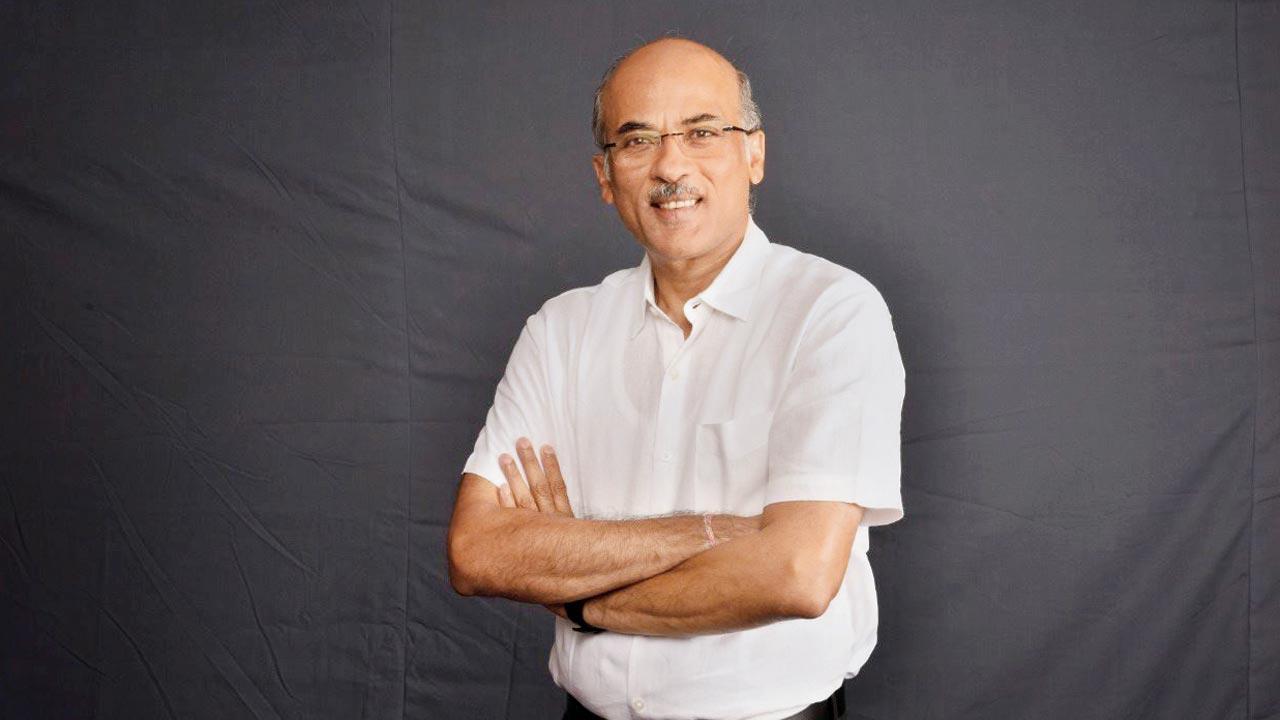
With Uunchai winning two National Awards, Sooraj Barjatya and Neena Gupta share their humble reactions to the recognition
Priyanka Sharma, Upala KBR (MID-DAY; August 18, 2024)
Thirty years ago, filmmaker Sooraj Barjatya and actor Neena Gupta received their first National Award honours for Hum Aapke Hain Koun and Woh Chokri (1994), respectively. On Friday, they received their second National Award, this time for Uunchai (2022)—a film they collaborated on. The relationship drama earned Barjatya the Best Director honour, while Gupta won the Best Supporting Actor award at the 70th National Awards.
The award is particularly special for Barjatya as Uunchai marked his comeback after a seven-year gap. “When I was writing a film for Salman Khan, a voice inside me told me to make Uunchai. I felt it was time to offer movies that [come] from my soul rather than trying to make what sells. Uunchai is the most layered film that I have made. In my films, I usually take up happy moments of life and create a happy [movie] around it. This is the first time that I had a clear story with such strong and layered characters,” he says of the film, which also stars Amitabh Bachchan, Anupam Kher, Boman Irani, Danny Denzongpa, Parineeti Chopra, and Sarika. Barjatya recalls a journalist once telling him that stories of friendship are usually made with youngsters but rarely with older people.
Gupta, who has had an eventful career since 1982, has starred in several unconventional films. She began her second innings in cinema with Amit Sharma’s Badhaai Ho (2018), which catapulted her back into the limelight.
“Uunchai was not just a story of four people. It touched on so many truths and had several layers. [My character] is visiting her daughter’s house for her birthday, but she doesn’t want the mother to be in the presence of her friends. This happens a lot in life,” says the actor. Gupta’s evolution also defies the ageist norms in the industry, which often regards women as dispensable after a certain age. Despite her achievements, the actor remains humble.
She shares, “I feel I should look at myself through other people’s eyes, but I can’t. I believe that if I keep working, I will be rewarded one day. The National Award is a big reward for my work, but that doesn’t get people to queue up to work with me. However, it does earn me a lot of respect.”
Winning the award, Barjatya feels not only humbled but also excited for the next chapter of his career. “When Hum Aapke Hain Koun won the National Award for [Best Popular Film Providing Wholesome Entertainment], the rush and happiness I felt as a young director was crazy. Today, there is a sense of gratitude and calmness. It’s a great honour to be chosen among the best [filmmakers] of our country. It unites our industry because it is a celebration of films made in every language. I feel I have truly climbed Mount Everest today. This immense recognition belongs to my entire team of senior actors and technicians, who braved the pandemic and shot at unheard locations with me. After 35 years, I still feel that I’m not done yet. There are so many more stories to tell,” he smiles.
Hum Aapke Hain Koun started with 32 screens, and everyone said that it was a suicide mission-Komal Nahta
10:47 PM
TOI Entertainment Desk (April 26, 2024)
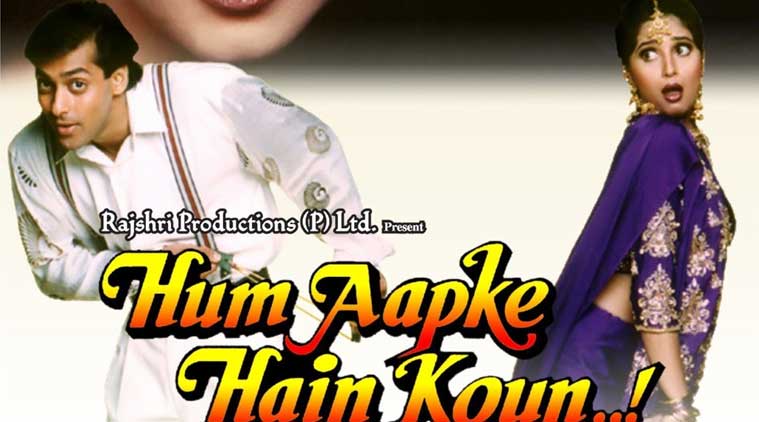
In our exclusive Box Office Nostalgia section, we revisit iconic hits and cult classics which have shaped cinema over the years. This week, we decode the number game behind one of Salman Khan and Madhuri Dixit's biggest hits - Hum Aapke Hain Koun...!
Film: Hum Aapke Hain Koun...!
Release date: August 5, 1994
Star cast: Salman Khan, Madhuri Dixit, Mohnish Bahl, Renuka Shahane, Alok Nath, Reema Lagoo, Anupam Kher, Satish Shah and Himani Shivpuri among others.
Director: Sooraj Barjatya
Hum Aapke Hain Koun...! is unarguably amongst the most ambitious and a game changer film in Indian Cinema. And the film's stupendous success is testimony to its makers' daring courage of conviction. Amongst its many successes, a few notable highlights include changing the way cinema idioms are used, and suddenly, music is taking the film's story forward. The film also revolutionized the way music was recorded for a film. The unusual and innovative marketing and distribution strategy forced the distributors and exhibitors to renovate their theatres. And the film brought the Indians back to the cinema halls – globally - like never before. HAHK also made homely and decent cool once again. While doing all the above, the film also escaped the era's biggest menace – piracy!
Hum Aapke Hain Koun...! was released in cinemas on August 5, 1994, with only 26 prints, and it was stipulated it would be released in only one theatre per city. In Mumbai, the theatre was Liberty; in Delhi, it was Delite. Only those cinema halls across the country equipped with an 'optical stereo system' were allowed to play the film. Exhibitors could choose to upgrade or miss out on being able to screen the film.
Senior trade analyst Komal Nahta reminiscences, "After ages, somebody dared to release a film on limited screens. It started with 32 screens, and everyone said that it was a suicide mission and they would destroy themselves because piracy was at its peak. But Rajshri had faith in their vision. They asked the exhibitors to renovate their theatres, and only then would they give their films for exhibition. They told the theatre owners to create an atmosphere for people to enter the theatres. They had put on lights at Liberty Cinema that would go on when the 'Didi Tera Devar Deewana' song would play."
Liberty Cinema in Mumbai was decorated for the film's grand release and upgraded to become a high-end cinema hall with optical stereo sound to match the film. Film historian Dilip Thakur said, "Before Hum Aapke Hain Koun...!, Liberty used to screen B and C-grade films, and therefore, they needed to facelift the film to bring back the audience to the cinemas."
Director Sooraj Barjatya told Etimes, "We had the biggest premiere at Liberty Cinema. I was shocked because there was no reaction. People were walking out during songs. I was scared. Adi (Aditya Chopra) and Salim Sahab (Salim Khan) had told me that the two-and-a-half songs were my indulgences and that I should cut them. I cut those songs."
The film did not take a flying start, and the initial reaction was mixed. The film was too different from the rest of the fare. The musical format took a while for the public to adjust to, and in the first three weeks of the release, Hum Aapke Hain Kaun got tagged as Chaayageet, the popular music program on Doordarshan.
P S Ramanathan of Rajshri Productions said, "Till the first three weeks, the reception was shaky, and it was only after the 5th week the film's business picked up, and that's when we started releasing the film in mono cinemas also, and it reached about 582 cinemas."
Made on a budget of Rs 6 crore, the film earned around Rs 10 lakh on its opening day and the India Gross collection of the film stands at Rs 117 crore.
Nahta recalls going to the cinema to watch the film and his initial reaction: "After one or two weeks of the film's release, Rajshri Cinema was opened, and we had been invited to the opening. The cinema's manager came to pick us up. I asked him, "What has clicked in the film for the audience? Because people are calling it a wedding tape." He said, “Kaunsi shaadi mein Madhuri naachti hai? Iss mein Madhuri naachi na?"
The film's story moves through music, and the sound needs the highest quality. Until the advent of HAHK, composers recorded music in one sitting, with all musicians performing together. With the young Sooraj at the helm, the music recording method changed forever. Every instrument was recorded separately and mixed for the optical stereo system experience.
And the game changed.
Film historian Dilip Thakur recalled, "The video piracy in the 80s almost ruined the business of cinema, and it was more of action films that were working, and family audiences had stopped going to the cinema, but with Hum Aapke Hain Koun...!, the family returned in a big way."
The world has opened up to the globalization of cinema and began with this film in a big way. While there was reluctance and most action films were working overseas, Hum Aapke Hain Koun...! changed the game, bringing the family audience back into the domestic market. It opened up an Indian diaspora to watch family films, and this film set the trend. They latched on to a movie about Indian traditions and values and celebrated weddings grandly.
Some of the inadvertent results of the film are that weddings in India became larger than life. Sooraj tells us that he wrote what he saw at home. Indian weddings were no longer just ordinary but became big celebrations, and wedding budgets shot up and reflected what one saw in Hum Aapke Hain Koun...!.
The Merchandise business boomed…
After Bobby, which was released in 1972, Hum Aapke Hain Koun...! popularized and was highly successful in attracting the audience to buy merchandise of the film from Madhuri Dixit saree to Tuffy to other accessories and clothes of Salman Khan and posters of the film, Mugs, etc. The film's merchandise is still sold online.
Lyricist Dev Kohli Kohli of ‘Yeh Kaali Kaali Aankhen’ fame passes away
8:12 AM
Avijit Ghosh (THE TIMES OF INDIA; August 27, 2023)
Lyricist Dev Kohli, who started his career with the sensitively-penned contemplative track, ‘Geet gaata hoon main, gungunata hoon main’ (film: ‘Lal Patthar’, 1971) but had to wait for nearly two decades before earning bigger fame and recognition with ‘Maine Pyar Kiya’ (1989) and ‘Hum Aapke Hain Koun!’ (1994), passed away at his Andheri residence on Saturday. He was 81.
“He was in Kokilaben Hospital for almost three months and brought back home ten days ago. He passed away at 4 am,” his spokesperson Pritam Sharma told TOI.
Composers Uttam Singh, Anu Malik and Anand Raaj Anand performed his last rites in Oshiwara. Uttam Singh said, “He was a saintly man — my dear friend of 50 years. I tended to him and took him to hospital over eight years when he underwent multiple surgeries. Our winning partnership in ‘Maine Pyar Kiya’ and ‘Hum Aapke..’ created such evergreen hits.” Singh, Kohli and a third friend Shailesh Sawant met regularly over Sunday meals.
Singh said, “I will miss his friendship. Kohli Sahab had no vices. He did not smoke or drink or attend parties. Over the last 8-10 years, he had stopped working. If anyone urged him to write, he would say he will only do so if Uttam Singh composes the tune!”
The 1990s were the high noon of Kohli’s career. He wrote the floorscorcher, ‘Yeh kaali kaali aankhen’ (music: Anu Malik, singer: Kumar Sanu, film: ‘Baazigar’, 1993) that Shah Rukh Khan and Kaajol jived to with verve and zing. The chartbusting track from the Abbas-Mustan film became a nightclub favourite earning Kohli a Filmfare award nomination for best lyricist. Kohli also received nominations for the title tracks of ‘Maine Pyar Kiya’ and ‘Hum Aapke Hain Koun’.
In all three cases, the award went to other nominees. Born in Rawalpindi (Pakistan) and growing up in Dehradun, Kohli had earlier penned two winners in another Abbas-Mustan suspense-thriller, ‘Khiladi’ (1992), an early Akshay Kumar hit. The songs, composed by Jatin-Lalit were, ‘Wada Raha Sanam’ and ‘Kya Khabar Thi Jaana’.
But the blockbuster success of ‘MPK’ and ‘HAHK’, both Rajshri Productions, propelled Kohli’s career to high gear. ‘Didi Tera Devar Deewana’ from HAHK (music: Raam Laxman, singers: Lata-SPB) was mandatory at every ladies sangeet. He would often collaborate with Anu Malik, in his prime then, churning out popular and populist lines such as ‘Oonchi Hai Building Lift Teri Bandh Hai’ (film: ‘Judwaa’, 1997) or ‘Akela Chal Raha Hoon Ek Gaadi Chahiye’ (film: ‘Mr And Mrs Khiladi’, 1997) that a David Dhawan film demanded. In several Dhawan ventures during this period, Kohli had a song or two. ‘Lift Teri Bandh Hai’ was also reprised in ‘Judwaa 2’ (2017).
Kohli had waited for serious success for a long time although ‘Geet Gaata Hoon’ (singer: Kishore Kumar, music: Shankar-Jaikishan), had happened when he was in his early 20s. It was the only song he wrote in director Sushil Majumdar’s ‘Lal Patthar’, a complex requiem to last-gasp feudalism in early 20th century colonial Bengal. Raaj Kumar and Hema Malini played the lead roles, though, the number was lip synced on screen by a young moustachioed Vinod Mehra.
The lyricist told this reporter in 2012, “The song’s success changed my life. I was immediately interviewed by magazines and on radio. From then on I started getting small films.” Those films include ‘Khoon Khoon’ (1973), which had the evocative bhajan, ‘Maati Ke Jalte Deepak’, ‘Kabhie Ajnabi They’ (1985) which had the melancholic 'Dil Ke Is Dehleez Tak' and several others such as ‘Ek Baar Kaho’. All these films flopped. It was only with ‘Maine Pyar Kiya’ that he vaulted to a bigger league.
(With inputs from Bella Jaisinghani)
-------------------------------------
HINDUSTAN TIMES (August 27, 2023)
Veteran lyricist and poet Dev Kohli, who gained popularity for his work in Salman Khan and Bhagyashree’s Maine Pyar Kiya (1989), died in Mumbai on Saturday. The news was confirmed by Kohli’s spokesperson, who shared that the veteran had been admitted to Kokilaben Ambani Hospital for the last few months and passed away in his sleep. Kohli was 81.
He had written over 100 songs for several Hindi films, including Baazigar (1993), Hum Aapke Hain Koun..! (1994), Musafir (2004), etc. While he was active primarily in the ’90s, the lyricist also worked on several recent films, such as Shootout At Lokhandwala (2007) and Judwaa 2 (2017). In a career that spanned from 1969 to 2013, he collaborated with different generations of composers, from Shankar-Jaikishan to Vishal-Shekhar.
Several celebs took to X to share heartfelt tributes to the artiste. Actor Renuka Shahane shared, “Kaisey bhool paaungi mein baba woh bachpan ki kahaniyaan.”
Singer-music director Shekhar Ravjiani wrote, “Had the honour and privilege of working with #devkohli sahab on Musafir and Taxi 9211 … What a wonderful human being and an extraordinary lyricist .. Thank you for the beautiful songs.”
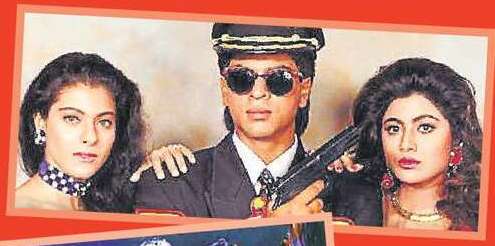
Pathaan is a sensation in Overseas; breaks the record of, Hum Aapke Hain Koun, Kabhi Khushi Kabhie Gham, Padmaavat
8:50 AM

Box Office India Trade Network
The PATHAAN juggernaut continues in overseas markets as collections go over $36.50 milion and it will be comfortably over $40 million before its second week comes to an end. The film is now the highest grossing Hindi film in practically every market. Also outside USA, it is the highest grossing film from INDIA in all main markets.
Like India, the film crossed the business in DANGAL on Saturday to become the top Hindi film with collections around $13.50 million. The top film from India in USA/Canada is BAAHUBALI 2: THE CONCLUSION but that film was released in many formats and did $20 million. This target is a tough one for PATHAAN but its not completely out of the question that it will not reach $20 million.
In United Kingdom, it became the first film to hit the £3 million mark on Saturday. The first million came in 1994 with HUM AAPKE HAIN KOUN and then £2 million was hit with KABHI KHUSHI KABHIE GHAM in early 2002. And now 21 years later, the £3 million mark has been crossed. PATHAAN can go further and maybe even hit £4 million.
Gulf is simply a sensation as the film has a cumulative total of $11 million by its second Saturday and there is plenty more to come. Its the first film to break the $10 million mark in Gulf and has comfortably gone over the Eid 2016 BAJRANGI BHAIJAAN record.
In Australia, the film has cruised past the PADMAAVAT record of $3.1 million and has also smashed the South films like BAAHUBALI 2: THE CONCLUSION and RRR which were released on many formats and grossed around A$3.6m. PATHAAN's total is A$3.9 million and here it will be the first film to cross to $4 million which should be there post its second weekend.
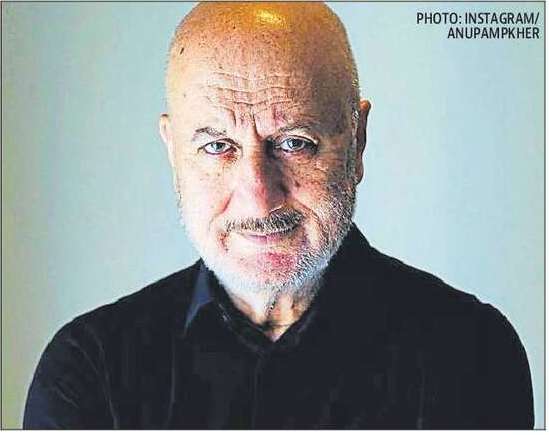
Anupam Kher recalls going bankrupt in 2004; suffering from facial paralysis
7:52 AM
HINDUSTAN TIMES (November 17, 2022)
Actor Anupam Kher believes in his life philosophy: Kuchh bhi ho sakta hai. In a recent interview with HT, he took a walk down memory lane to recall the instances where this thought held true. He said he has been through a lot of struggles — from health scares to financial stress.
“That is my life. I got facial paralysis before a major scene in Hum Aapke Hain Koun..! (1994) and the doctor had asked me to stay at home for two months and cancel the shooting. I went to the sets and finished the shooting the same day,” he told us.
In 2004, the 67-year-old almost went bankrupt “because I am not a business-minded person”.
The Uunchai actor explains, “I am a sum total of my failures. People started calling me thespian, veteran and legend — which meant you should be given a lifetime achievement award and walk into the sunset. But I refused to do that. I went abroad and did an American series. After turning 60, people think about retirement, but I started building my body.”
Men can romance much younger women. But when a woman does it, people have a problem-Madhuri Dixit
8:06 AM

Playing a mom of two in Maja Ma, Madhuri notes that on-screen depiction of mothers is changing, thanks to novel stories on OTT
Uma Ramasubramanian (MID-DAY; October 1, 2022)
She played an actor whose star is on the wane in The Fame Game. In Maja Ma, she essays the role of a homemaker who is the backbone of her family. Distinct as the two characters are, Madhuri Dixit-Nene believes a common thread ties them — their fight to stand their ground in a male-dominated world. She points to her character Pallavi in the upcoming Amazon Prime Video offering to observe that the portrayal of mothers on screen is changing for the better.
“I am also a wife and mother. So, I know Pallavi’s emotions. Maja Ma is a story of empowerment. Be it in cinema or on OTT platforms, today, women are looked at as individuals first; society [comes later]. They come from different walks of life, have different ambitions and their own set of rules,” she beams.
Maja Ma — also starring Gajraj Rao, Rajit Kapur, Ritwik Bhowmik and Barkha Singh in pivotal roles — sees Dixit’s character facing a difficult situation head-on after a mysterious video featuring her goes viral, in the days leading to her son’s wedding. Through the film, director Anand Tiwari showcases how women are constantly judged by society.
“It is a patriarchal society. Women are always judged for everything,” asserts the actor. “[For instance], men can romance much younger women. But when a woman does it, [people say], ‘What does she think she is doing? Why is she doing this?’ Fortunately, things are changing now. In The Fame Game, my character was shown in love with someone younger than her, but nobody questioned it. So, things are [evolving], but we have a long way ahead.”
The past few decades of Hindi cinema were hardly kind to its female characters. Strong women protagonists were the exception rather than the norm. Dixit, however, says that she sought scripts that saw women exercising their agency. “Be it Dil [1990], Hum Aapke Hain Koun [1994], Dil To Pagal Hai [1997] or Pukar [1999], all these women were strong and had something to say in their own way. I always looked for such roles. I like to play a character who has a mind of her own.”
Experts on obsession with on-screen dogs say, "See the bond, not the breed"
8:46 AM
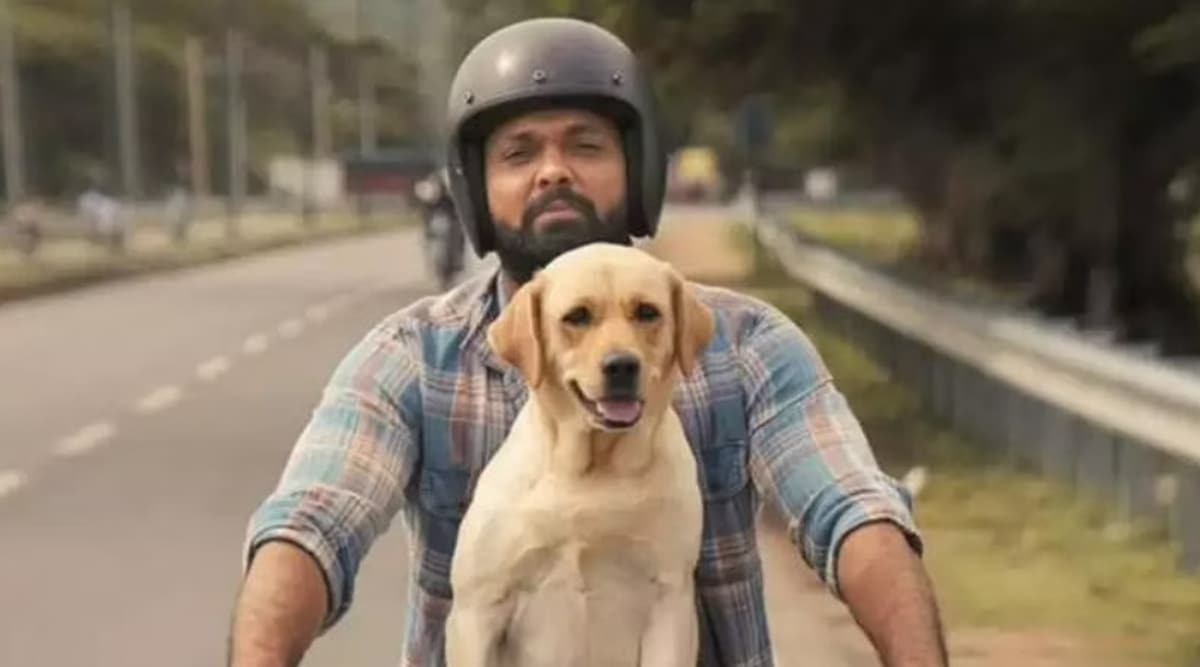
From 777 Charlie to Dil Dhadakne Do’s Pluto Mehra, popular on-screen dog breeds often lead to increase in their demand; Here’s why experts warn against such trends
Riya Sharma (BOMBAY TIMES; June 25, 2022)
Labradors are a popular dog breed in India but recently, its demand has increased even more in some cities, thanks to the recent Kannada film 777 Charlie. Ironically, the film touches upon the issue of unethical breeding and puppy mills and the effect they have on the health and well-being of these dogs.
This is not the first time that a breed has seen a significant rise in its demand after being featured in a film or show. From the Indian spitz Tuffy in Hum Aapke Hain Koun...! to the pug in the Hutch advertisement, the bullmastiff Pluto Mehra in Dil Dhadakne Do and now the Labrador Charlie – pop culture has often made certain breeds popular, leading to a sudden rise in demand.
Animal activists, however, warn that bringing a pet home should not be a short-term plan based on temporary flow of emotions. They say, “Keeping a pet is a responsibility and people should be bringing a pet home only when they are ready for the responsibility. ”

ARE WE CARING ENOUGH FOR THESE BREEDS?: EXPERTS
When Marley & Me released, the demand for Labradors increased significantly. Similarly, when Hutch and Vodafone’s advertisements showed a pug following his human everywhere, the breed witnessed a huge rise in demand. The demand for bullmastiffs also rose to 60% after Dil Dhadakne Do’s release. Recently, activists share that they are now witnessing an increase in the number of calls for Labradors after 777 Charlie, warning that people should not be impacted by the flow of emotions.
Kaveri Rana Bhardwaj, founder, SMART Sanctuary, Canine Paralysis and Rehabilitation Center, explains, “777 Charlie’s director tried to show the bond between the dog and the human but the takeaway for many people was the fawn-coloured Labrador. When Marley & Me released, demand for Labradors in India increased tenfold. We receive abandoned Labradors every week with severe genetic diseases and there is no treatment for it.”
Kaveri adds, “I recently tweeted about a fawn-coloured Labrador that was up for adoption. Someone shared it on WhatsApp groups and mentioned by mistake that it is a female dog. After that, I got 150+ calls post 11 pm and I had to switch my phone off. I never get this kind of response for any breed. It was only later that I realised it was because of 777 Charlie. Shelter homes across the country are witnessing a higher demand for Labradors. My take is, see the bond, not the breed. The bond is ignored, abandonment has not stopped. We are crazy about breeds, but are we caring enough for them?”
Dr Vinod Sharma, Head of Veterinary services at DCC Animal Hospital, points out that he has not yet seen any change in the demand for Labradors because of the movie. “They have always been in demand as they are considered family dogs. People start associating the breed with a movie or an ad. The pug was in huge demand because of the Hutch and Vodafone ad – they remember the breed as the Vodafone dog. People get carried away but they forget that they need to take care of the pet as well.”
He adds that such demand often leads to irregular breeding and people should be considerate of that. “If people start demanding for a breed in huge numbers, breeders will not follow any standard for breeding, which most breeders don’t anyway. This leads to genetic problems in dogs. My advice to people is to not get carried away after watching a movie. Do proper research and know if you have the space and commitment to keep a dog,” he says.
ADOPT FROM SHELTERS, DON’T FUEL COMPANION ANIMAL OVERPOPULATION CRISIS: PETA
Sachin Bangera, Vice President of Celebrity and Public Relations, PETA India, says, “Portrayals of specific dog breeds in films and television shows – including Game Of Thrones (Northern Inuit dogs that look similar to huskies), 101 Dalmatians, Legally Blonde (chihuahua), and Men In Black (pug) – have reportedly caused massive spikes in sales of the featured breeds, and many of these dogs are evidently later left at shelters by their ill-prepared guardians. We encourage people to adopt dogs from an animal shelter or the street and never to buy from breeders, online traders or pet stores, which fuel the companion animal overpopulation crisis.”
Sachin adds that anyone who would purchase a dog after watching a film about a dog who escaped a breeder and became a stray has totally missed the point of 777 Charlie. “When a certain dog breed is highlighted in the media, whether a pug or a Labrador, people flock to purchase that breed while keeping desi dogs languishing in shelters or on the street. Breeders and pet stores, cash in on the demand for specific breeds by forcing female dogs to produce litter after litter until their bodies wear out,” he explains.
RISE IN DEMAND LEADS TO RISE IN POORER BREEDING PRACTICES: EXPERTS
Arpit Mathur, founder and Director of the Perroayuda Welfare Foundation (PWF), an animal welfare NGO based in Delhi, says, “People usually buy breed dogs after getting influenced by pop culture but once they feel that they are unable to take care of them, they abandon them. With the increase in sales, breeders sell puppies without proper nutrition from their mother’s milk. Female dogs are tied and forced to produce more and more puppies irrespective of their health conditions.”
Devanshi Shah, founder of Petkonnect, an online services provider for pets and strays all over India, adds, “About ten years ago, I had a pet which was a breed dog. At the time I was unaware of the poor practices breeders follow in India. My pet’s sudden death opened my eyes to the many gaps in the pet services sector. That is why we encourage a strong dialogue that is pro-adoption, and ask people to not buy from unethical breeders.”
Kaveri Rana Bhardwaj, founder, SMART Sanctuary, Canine Paralysis and Rehabilitation Center says, “I still remember the craze for Indian spitz and Pomeranian after Hum Aapke Hain Koun. . ! Many of them were abandoned later. Such breeds are being destroyed by inbreeding because of high demand from people who do not look beyond the initial craze. Nobody thinks that because of our increased demand, the torture on these dogs would also increase, breeders will resort to irregular breeding and this will result in genetic abnormalities,” she says.
Veterinarian Anand K Pandey adds, “The demand for Labradors now has increased more than 25%. When the demand is huge, people try all options – adoptions, contacting breeders on social media, and also going to the extent of getting dogs from other cities.”
Composer Laxman of Raam-Laxman fame dies
8:01 AM

Chaitanya Deshpande (THE TIMES OF INDIA; May 23, 2021)
Nagpur: Music director Vijay Patil, popularly known as the Laxman of the Raam-Laxman duo, whose frisky tunes enlivened Dada Kondke’s Marathi superhits and the early Salman Khan blockbusters, passed away following a heart attack on Saturday. He was 78.
His chartbusters came in films such as Tarana, Maine Pyar Kiya, Hum Aapke Hain Koun, Patthar Ke Phool and Pandu Havaldar (Marathi).
Among those who mourned his demise on social media were the peerless Lata Mangeshkar and Bollywood star Salman Khan. Production house Rajshri, for whom the music director was a regular, also posted their condolences. “Rajshri will always remember him for his immense contribution to the music industry,” it tweeted.
Apart from Khan, Raam-Laxman’s music also boosted the early career of Mithun Chakraborty films such as Tarana and Hum Se Badhkar Kaun and gave a second wind to S P Balasubrahmanyam as Salman’s playback in late 1980s and early ’90s Bollywood.
The music of Raam-Laxman was based on the basics of orchestra and took the legacy of Laxmikant-Pyarelal forward. Melody, even in foot-tapping numbers, was a special feature of their music. Use of traditional Indian instruments along with the typical orchestra set-up made their songs popular.
Patil, born and brought up in Nagpur, started as a singer and instrumentalist in the city’s popular orchestra groups. Later, he shifted to Mumbai to become a music director. With his friend Surendra ‘Raam’ Kadam, Patil formed a team which was given the sobriquet ‘Raam-Laxman’ by Kondke. It was the well-known Marathi filmmaker-cum-actor who gave them their break in the film industry with ‘Pandu Havaldar’ in 1975.
Even after the death of Kadam, soon after the pair bagged its first Hindi film ‘Agent Vinod’, Patil continued to provide melodies to more than 75 Hindi, Marathi and Bhojpuri films as ‘Raam-Laxman’. Rajshri Productions’ songs in ‘Maine Pyar Kiya’ (Filmfare award), ‘Hum Aapke Hain Koun’ (many awards) and ‘Hum Saath Saath Hain’ proved to be super-duper hits.
‘Lovleena aa gaya main’ from ‘Agent Vinod’ in 1977 and ‘Deva ho deva, Ganapati Deva’ from ‘Humse Badhkar Kaun’ in 1981 stand out in his oeuvre.
Patil composed several chartbusters during the 1980s and 1990s before the advent of Nadeem Shravan and Anu Malik.
Ten years ago, a brain stroke made it difficult for Patil to sing and compose. He shifted to Nagpur and lived with son Amar who too is into music.
Patil kept away from the media and lived a quiet life in the Untkhana area of the city.
Family members said Patil was not a Coronavirus patient and had taken both doses of the vaccine. On Friday night, he complained of chest pain. Before he could be shifted to a hospital, he got a severe cardiac arrest and died at home around 2 am.
People from Nagpur’s music industry were the first to pay tribute to Patil. “He was a dear friend. I will remember his association with Kader Orchestra. When we started a music academy, I had invited him to inaugurate it. Despite being unwell, he came,” said singer M A Kader.
Bharat Ratna Lata Mangeshkar said, “Felt very sad hearing the news about talented and popular composer Raam Laxman ji (Vijay Patil). He was a nice person. Many songs composed by him and sung by me became very popular. My sincere tributes to him.”
In 2018, Raam-Laxman were bestowed the Lata Mangeshkar Puraskar.
----------------------------
BOMBAY TIMES (May 23, 2021)
Music composer Vijay Patil — Laxman of the Raam-Laxman duo — passed away on Saturday at his residence in Nagpur. Patil, 79, suffered a heart attack, his son Amar informed. “He had taken the second dose of Covid-19 vaccine six days ago. There was no problem at that time... But when he came home, he developed weakness. His parameters were dropping. Doctors were attending at home. He passed away at around 2 am on Saturday. He had a cardiac arrest,” Amar said.
Patil, along with his partner Surendra (Raam), had composed music for many Hindi and Marathi films in the past over four decades. Surendra passed away in 1976, but Patil continued to compose under the same name in the memory of his friend. He scored the music for films like Maine Pyar Kiya, Hum Aapke Hain Koun..!, Hum Saath Saath Hain, Agent Vinod, Taraana, 100 Days and Hum Se Badhkar Kaun, among others.
Legendary playback singer Lata Mangeshkar paid tribute to Patil on social media. “Mujhe abhi pata chala ki bahut guni aur lokpriya sangeetkar Ram Laxman ji (Vijay Patil) ji ka swargwas hua. Ye sunke mujhe bahut dukh hua. Wo bahut acche insaan the.Maine unke kai gaane gaaye jo bahut lokpriya hue. Main unko vinamra shraddhanjali arpan karti hun (sic),” she wrote.
Subscribe to:
Posts (Atom)