Showing posts with label Gunjan Saxena. Show all posts

Riva Arora on archiving Instagram posts: "I wanted my social media to reflect who I am today"

Riva Arora (Pic/Instagram)

Neha Maheshwri (MUMBAI MIRROR; June 3, 2026)

At a time when social media following and digital visibility often influence casting conversations, Riva Arora has chosen to reinvent her online presence. The actress recently archived all her old Instagram posts, consciously moving away from lip-sync and creator-driven content to focus entirely on acting as she prepares for the next phase of her career.

Explaining the decision, Riva says, “I think growth sometimes needs a reset. Archiving my posts wasn’t about erasing anything; it was about realigning with who I am today. I started very young, and over time you evolve not just as an artiste, but as a person. I wanted my social media to reflect my current phase, my mindset, and the kind of work I want to be associated with going forward.”

Having started acting at a young age, the actress believes growing up on film sets shaped both her personality and craft. Riva, who has been part of films like Uri: The Surgical Strike, Bharat, Gunjan Saxena: The Kargil Girl and Mard Ko Dard Nahi Hota, says, “It gave me discipline and a natural ease in front of the camera, something I’m really grateful for. I’ve grown up on sets, so they’ve always felt like home. They also taught me how to observe people closely, which has helped me immensely as an actor. One thing that has stayed with me is watching even the most experienced actors continue to learn. That made me realise you can never feel like you ‘know it all’.”

Over the years, Riva has also found herself at the centre of online scrutiny, including discussions around her age. While she acknowledges that public attention can sometimes become overwhelming, the actress says she has learned to focus on constructive criticism while distancing herself from negativity. 

She says, “I try not to let unnecessary noise affect me too much. When you grow up in the public eye, people will always have opinions and assumptions. I value constructive criticism because it helps me grow both as a person and as an actor. But when comments come from a place of trolling or pulling someone down, they do take a toll on one’s mental health. That’s why I focus on protecting my peace and concentrating on my work. Over time, what truly matters is the consistency and sincerity you bring to your craft.”

Now actively auditioning and preparing for her next chapter, Riva says the time away from constantly creating online content helped her refine her craft and gain clarity about the kind of work she wants to pursue.

“This period has been very important for me. It was all about evolving, not stopping. I’ve used this time to work on myself and refine my craft, and I’m now very clear about the kind of characters I want to take on. I’m looking at roles that challenge me, push boundaries and truly showcase me as an actor. Going forward, it’s less about doing more and more about doing better,” she concludes.

No one gives so much izzat to writers, directors as much as Dharma Productions-Somen Mishra

Karan Johar; (right) Somen Mishra has been the bridge between the hustle of Aaram Nagar and the Dharma bubble. Pic/Instagram@somenmishra

Karan Johar might not be happy with Homebound’s box-office performance, but the rumours of Dharma making a loss are fabricated, says Somen Mishra, the man responsible for bringing in such critically acclaimed films under the studio’s banner
Priyanka Sharma (MID-DAY; October 19, 2025)

The year end is usually reserved for reflection. But for filmmaker Karan Johar’s Dharma Productions, casually described as the be and end all of Bollywood, this is the time for redemption.

At least, it seems so, with the acclaim and applause for two of its theatrical releases in the last two month— director Neeraj Ghaywan’s Homebound and filmmaker Shazia Iqbal’s feature debut, Dhadak 2. The architect of Dharma’s redemption arc, however, is not Johar. It’s the man, who is often dubbed as Johar’s right hand, who continues to embody the Aaram Nagar hustle even as he inhabits a designated corner of the swanky Dharma office, is the bridge between independent filmmakers and the Dharma bubble, and an outsider, ironically.

But Somen Mishra hasn’t only helped the company that he has been working with for over seven years now claim some glory, he has also resurrected his own image— of the man who caused the apparent downfall of Dharma. Out of the nine theatrical titles of the production house that Mishra has backed so far, there’s only been one superhit— Good Newwz— a hit in Johar’s directorial venture Rocky Rani Kii Prem Kahaani (2023) and a moderate success with Kesari Chapter 2 (2025). Even Dhadak 2, despite critical acclaim, ended its box office run at a dismal Rs 25 crore (approximately).

Notwithstanding its selection as India’s entry for Oscars 2026, Homebound is also only crawling at the box office. In fact, days after the film’s release, Johar was heard saying on a podcast that he would rethink about producing a film like Homebound because it might not always be profitable. Unsurprisingly, the filmmaker received backlash for his statement, and later had to clarify that he was “exceptionally proud of Homebound.”

“Dharma never loses money on any film because of the kind of budgets we make the films on, the kind of value we get, satellite, OTT, music. So, it rarely happens that we lose money. Most of the number and trade conversations that I have read online (about Dharma’s films) are all false. I've read the numbers of Dhadak 2 and Homebound. They’re completely wrong. They are one of the most tight budgets and very safe films for us,” Mishra tells us. 

Negativity, of course, sells online. More so, if it’s around Dharma Productions. But its isn’t without a reason, with Johar’s reputation as an unrelenting godfather of star kids, which isn’t helped by the failure of films like Naadaniyaan, Sarzameen (both starring Saif Ali Khan and Amrita Singh’s son Ibrahim Ali Khan), Ae Watan Mere Watan with Sara Ali Khan, Jahnvi Kapoor-led Mr And Mrs Mahi and her latest, Sunny Sanskari Ki Tulsi Kumari. The first three, all OTT releases, also had Mishra as a producer.. 

“Gunjan Saxena: The Kargil Girl, on Netflix, was a success for us. Aap Jaisa Koi, which was much appreciated, starred two outsiders (R Madhavan and Fatima Sana Shaikh) and directed by an outsider, Vivek Soni. But Nadaaniyan is talked about more. Negativity in news tracks more. If I troll someone, that will track more than if I praise someone. Otherwise, with so much praise for Homebound, it should have translated much more in the numbers. But it doesn't happen. The flip side is, when something lands, the praise is also humongous, because with Dharma, you will get attention, either way. Initially, it was difficult to understand. But now I understand. I also make all the directors and writers understand that when they’re signing a Dharma film, there will be a lot of attention on them. They should be prepared for that,” he says.

In that context, the praise surrounding Homebound and Dhadak 2 naturally makes Mishra feel vindicated, and the cherry on the top is that both the directors are not only outsiders but also those that the producer always believed in. But Mishra insists it's not his credit to take. 

"I can’t take the whole credit for it. I take some credit for it. It's the directors, writers and their teams, who have made it happen. When I joined Dharma, Karan's point was, 'We do one thing great but we should also do all kinds of things because cinema keeps changing everywhere.’ So, people can abuse us but I know cinema is a long process. Both Dhadak 2 and Homebound we started developing in 2021. On Homebound, three and a half years went into writing. Out of which, around 10 months went into acquiring rights from the New York Times, for which Basharat Peer had written the article on which our film is based. Another challenge was cracking the cast. But everyone on this film took a cut. They knew what we were trying to do. I said this won't be feasible if we don't make it in a certain budget. Janhvi worked for free and even for her staff, she incurred the expense. All the writers took a cut. Dhadak 2 and Homebound are the two of the most tight-budget Dharma films in a long time. I have read some of the budget numbers online which are more than double (of the actual budget). But anybody who sees the film, anybody who knows production will tell you what the numbers are," he smiles.

With Mishra, the otherwise inaccessible umbrella of Johar's company opened to outsider voices like never before -- from Ghaywan, Iqbal, Soni, Vasan Bala, Ishita Moitra, -- the list is long. 

But the bridge between the two sensibilities hasn't always been smooth. With him at the helm of things, he is expected to not only protect the voice of the director and writer, who surrender their trust in him, but also the commercial interests of the company that has hired him. It's surely a delicate balance. For instance, when Dharma decided to remake Pariyerum Perumal (2018) into Dhadak 2, it became a love story. It’s the 'Dharmafication of an anti-caste film', said several of its critics online. Mishra disagrees that he is ever asked to mould a film into the palatable, tried-and-tested template of Dharma.

"When we pitched Dhadak 2, it was pitched in a mainstream space because I feel it's much more difficult to do caste in a mainstream space. If we have to make a film for festivals, then why would we take the whole route of a love story? We aren't forcing the same love story in Homebound because that is a friendship story. But we saw a love story in Dhadak 2. In the original, the female character wasn't strong. But what's the purpose of making the female character strong, if the bonding between the two characters is not strong. So, for us, it was always a love story. Call it by any name. We wanted to go mainstream and the way to go about it was to have a love story. I don't see it as Dharmafication. Otherwise, we would have put a love story in Jigra. I don’t get told by Karan that these elements should be in the film, but we have to be honest to what the story is. There are no songs in Homebound. In fact, we have a film coming up where the filmmaker told us, 'Should we put a song?' and I said, 'Please don't. Otherwise people will say Dharma made you do this'."

Fighting the perception battle for Dharma, online, also seems to be a part of Mishra's job, even though he maintains, "I have gone quiet now." Why wouldn't it be, after all he is the most accessible face of the company, someone the internet has been familiar with for longer than he rose the ranks in the industry, from the time he used to run a popular cinema blog. Fight Club featured everything-- from news to opinions -- about cinema from Mishra and others, many of whom are now part of the industry. He soon emerged as the "daring, opinionated as well as arrogant" cinema guy, who spared nothing and no one. 

Naturally, people expect him to display the same attitude towards whatever is perceived wrong about his company. But defending Dharma is a full time job, he knows. 

"Sometimes I carry this baggage. Like, the other day, somebody said, 'You are not supporting Neeraj Ghaywan. You made the film only to get the festival credit.' I said, 'Okay. You are not the first one to say that. We have worked hard for four years. And how much support did the filmmaker get? You ask him.' But I know you can't fight what people are saying. Do your job because whatever you say will be misconstrued as something else. Someone said, 'You didn't promote Homebound properly. If it were left to me, I would have taken the cast to the village that the story is based in.' Had we done that, we would have been told, 'You are exploiting someone's death. You are greedy.' Only your work can speak, and Dhadak 2 is the best example. Since the day we announced it, my closest friends would tell me, 'Didn't you get any other film to remake?' When they saw the film, they were very moved by it. They said they were proven wrong about it."

Mishra insists his boss gives him a free hand, and this implicit faith is built on the initial successes that the former brought to the company, even if Johar never asked for "blockbusters" from the producer. “That’s the pressure I put on myself. My first few projects, Good Newwz, Lust Stories, Gunjan Saxena and Shershaah worked. So, the moment you initially come and deliver success, the company and the bosses will trust you. You think, 'Okay my job is done, the money thing is done. What else can I do, either get good directors or different voices'."

But faith can also create fear of failure and questions like, 'What will happen to my position in the company if the failure is too big?’ Like a Jigra. Fronted by Dharma's current biggest in-house star, Alia Bhatt, the Vasan Bala-directed action drama tanked at the box office. 

“With success, it helps you to do more things. With failure, which I have learnt from Karan, you move on to the next. Get your learning and move on because you can't do anything about it. I know if it had landed well, it would have opened the door for Vasan, for more filmmakers and more things on a certain budget and scale. I still like the film very much. Vasan's craft is one of the best in terms of the staging and performances. And Alia has put her soul into that film. But even after that, there was so much conversation and dissection that happened. There is no point in doing so much.” 

But does it mean Dharma won’t give another chance to Vasan? we ask him. “No. I can’t say but there have been conversations (with Vasan) about what to do and what not to do (in future). I feel some of the people who have made flop films, have gone on to make great films also. The learning is what and why it didn’t connect with people. But I don't have any fear about what happens to me in the face of a failure because people here are smart enough to know why a project failed. Also, people can see the honesty and integrity in the work. Films might not connect for various reasons. And 90-95 percent of the time, either good or bad, we know it before that. We might say whatever we say, but Karan, me, us, we know," Mishra tells us.

So, did they know that Jigra wouldn't work? “Jigra had a certain cinematic thing which people have to buy into. Those who buy the second half will buy the film. Those who can't buy the second half will not buy the film, which we all of course felt bad about. But Alia had done Raazi, why would she do another thriller? People said, this or that should have happened in the film. For me, the highlight was that 40-minute action sequence. A lot of people might not like that or might get thrown off by that. But for me, that was the highlight. Those were the concerns that if people like it, then it will land. If people don't get into that, it won't land.”

Hits and flops aside, Mishra is here for a larger cause, he emphasizes. Which is to open doors for people, like how they were opened for him— a man with no connection to the movies and also the city. "I remember Nikhil Mehrotra, whom we got to write Gunjan Saxena, jokingly told me, ‘Yahan per toh darwaze hi itne bade hain.’ So, I said, ‘Don’t worry, I am here. Talk to me.’ My idea is to make people feel safe. We aren’t mafia, we are good people. We are good to writers and directors. No one gives so much izzat to them as much we do.”

And money? “That too, ask anyone. A writer told me, ‘I got a call from Dharma asking me to send them my invoice. It has never happened before with me.”

And what about him? Is he still angry and arrogant? Mishra laughs out loud. "I was never arrogant. Online what you write, people read it in a different tone. Like someone asked a question and I replied, 'This is such a dumb question,' so this person said, 'You are calling me dumb.' But I don't think I was ever arrogant. Also, because of the blog, there was a persona that people believed. But online, you create a character. When people meet me, they say, 'You are much nicer than what you are online.'"

"Lakshya was an accurate depiction of army life; Hrithik Roshan’s haircut was exactly how it is in the forces"

Farhan Akhtar's directorial Lakshya starring Hrithik Roshan and Preity Zinta clocks 21 years

Niharika Lal (BOMBAY TIMES; July 26, 2025)

​For 26 years, July 26 has been observed as Kargil Vijay Diwas, commemorating India’s victory in the Kargil War. In 1999, TV brought the war into the living room with 24 hour news cycles. At the time, realtime footage left little room for films to fill in the blanks. With time, filmmakers began exploring the Kargil narrative. The early 2000s saw a number of films – LOC Kargil (2003), Dhoop (2003) and Lakshya (2004). In recent years, Gunjan Saxena: The Kargil Girl (2020) and Shershaah (2021) attempted to show the war on screen. If TV captured Kargil as it happened, cinema stepped in to memorialize it, say cinema experts.

“That emotional connection created by films is very real,” says Major Sandeep Sangwan (Retd). “They help citizens understand and appreciate what the Army does, especially those who may never see it firsthand.”

‘Emotional storytelling is key for war films’
A film distributor recalls that when LOC Kargil and Lakshya had released, these films inspired many young people to join the forces. He says, “It’s not important to have 200 films (on the subject). What’s important is to have authentic films that tell the story of the Kargil war and inspire youngsters.”

Retired Major Sandeep Sangwan believes realism alone doesn’t move people. “If a film only talks about an operation without showing what the soldiers are feeling, it won’t stay with the audience. Emotional storytelling is key. That’s why you’ll always notice a personal angle in good war films – the family waiting back home, the camaraderie among soldiers.”

‘LOC, Lakshya, and Shershaah left a mark’
Major (Retd) Sandeep Sangwan, who now consults on military operations for films, names three films when it comes to cinematic depictions of the Kargil War – LOC Kargil (2003), Lakshya (2004), and Shershaah (2021). “Most of the war heroes were part of LOC Kargil, whether it’s Lt Balwan Singh (now Colonel), Capt Sachin Nimbalkar (now Colonel), or Capt Vikram Batra, who of course became known as Shershaah – the Tiger of Kargil. Since 8-10 operations were packed into one film, it became hard for audiences to register everything, but it is one of the most remarkable films on Kargil war,” he says.

Written by Javed Akhtar, Lakshya zeroed in on one officer’s journey. “It followed one operation, and one officer – right from his Academy days to getting selected, and eventually leading the operation. That’s why Lakshya stayed in people’s memory. It was focused and emotionally engaging,” says the Army veteran.

As director Farhan Akhtar, recalled on the film’s 20th anniversary, “Javed Akhtar had mentioned that he was working on a story about a young boy who joins the Army – not just in terms of calling, but also finding a true calling in life and truly understanding who he is through that process. That was the core of the film.”

‘Stories of officers who made sacrifices during Operation Safed Sagar need to be told’
Brigadier Gautam Ganguly, SM, VSM (Retd) says that stories from Operation Safed Sagar – the Indian Air Force’s (IAF) codename for its air operations during the Kargil War – should also be turned into cinematic projects.

“The Indian Air Force didn’t get as much recognition for its operations, which it conducted during the Kargil War. The stories of the officers who made immense sacrifices and displayed acts of bravery need to be told. Our younger generation must know these stories. After Operation Sindoor, people became more aware of the IAF’s operations – but back then, when the Indian Air Force didn’t even have precision-guided ammunition, the way they carried out their missions is an untold story of courage.”

I think OTT platforms are ideal for Kargil war stories: Gautam Chintamani
Film historian Gautam Chintamani feels sometimes when you’re too close to history, you don’t know how to chronicle it. He says, “That’s been the challenge with depicting the Kargil War. It was India’s first war in the age of 24/7 media – broadcast live into our homes. But strangely, despite its gravity, the seriousness of the Kargil war was often diluted in how it was reported and remembered. I still remember how bizarre it felt – India was playing a cricket series against Pakistan, while the same news channels were reporting sensitive details about troop movements during the war. In some ways, people didn’t fully register what we were fighting for.”

He continues, “Now, 25 years have passed. And a huge percentage of India’s population is under 25 – which means for them, Kargil is history. For those of us who lived through it, it was current affairs. So now is the right time to re-examine and retell these stories. The first big film on Kargil was J P Dutta’s LOC Kargil. Initially, J P saab wasn’t keen on making a film so soon after Border (1997), especially since the war was so fresh. But he met many families, widows and parents who’d lost sons – and that moved him deeply. That’s when he decided to make the film. But I’ve always felt that LOC... would’ve worked better as a series. A two-hour or-four-part miniseries would have allowed the individual stories of courage to breathe. In the film, because of its length and scale, many heroes ended up being unintentionally sidelined. I think OTT platforms are ideal for Kargil war stories. Now, with the benefit of time and long-form storytelling, we have a chance to do justice to Kargil in a more layered, meaningful way.”

Real soldiers were cast in Lakshya
On the 20th anniversary of Lakshya, Farhan had said, “There is a simple thing that anybody who is not from the Indian Army doesn’t know – soldiers do not kneel. Getting down on your knees is not considered right – they either lie down or stand. These kinds of things were learning for us.”

The production team even collaborated with the Army to include real soldiers in the film. “As far as weapons were concerned, the Indian Army did provide us weapons, which were then modified to fire blanks. This was handled by production and leads from the Army,” Farhan said.

‘There’s a surge of interest for such films now’
Mohommed Ali Shah, a former Army Major, who has acted in films like Haider (2014) and Bajrangi Bhaijaan (2015), believes there could be more films on Kargil war. He says. “There’s already been a surge of interest in the last few years with films like Gunjan Saxena and Shershaah. Lakshya stood out for its realism. To a huge extent, it was an accurate depiction of Army life – even Hrithik Roshan’s haircut was exactly how it is in the forces... Whether we fully agree with it or not, films leave an impact. And indeed, for a number of people, these films are how they remember Kargil War.”

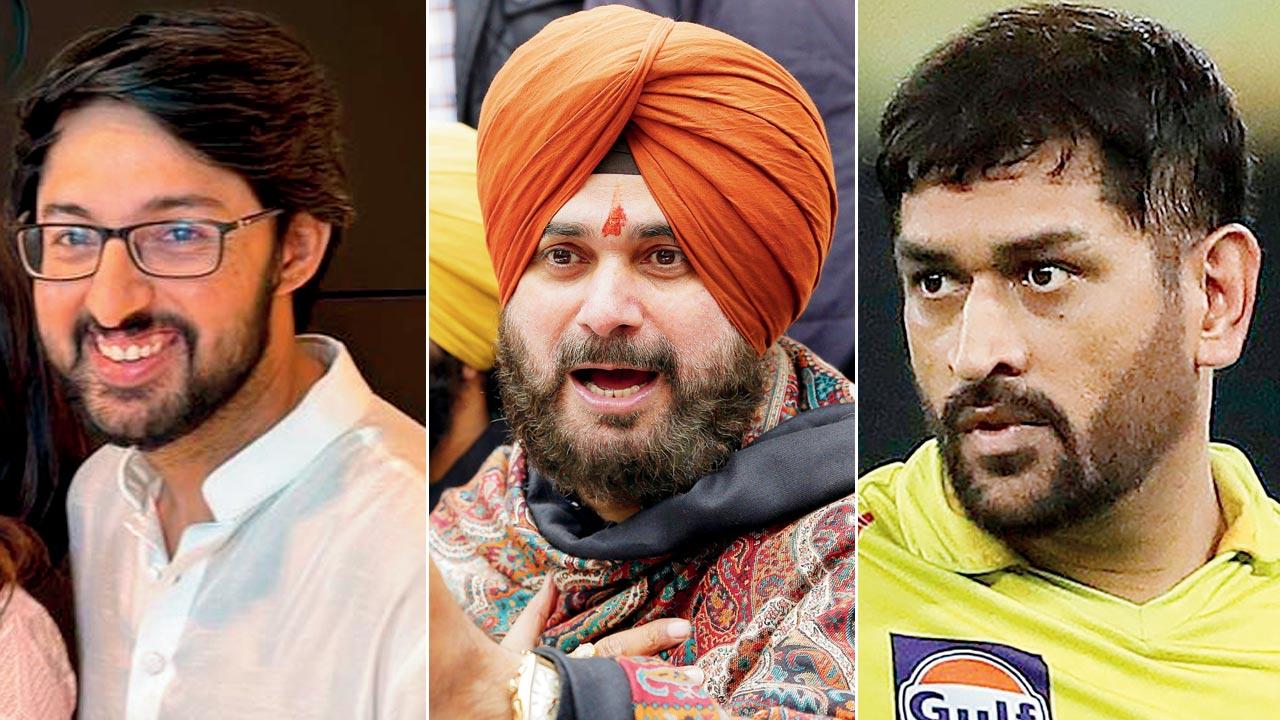
Mr & Mrs Mahi's title comes from Navjot Singh Sidhu and his wife sharing same name-Sharan Sharma

Sharan Sharma, Navjot Singh Sidhu and MS Dhoni

Mr & Mrs Mahi director recalls borrowing inspiration from Sidhu and seeking Dhoni’s approval on the title, as he makes a love story set against backdrop of cricket
Mohar Basu (MID-DAY; June 1, 2024)

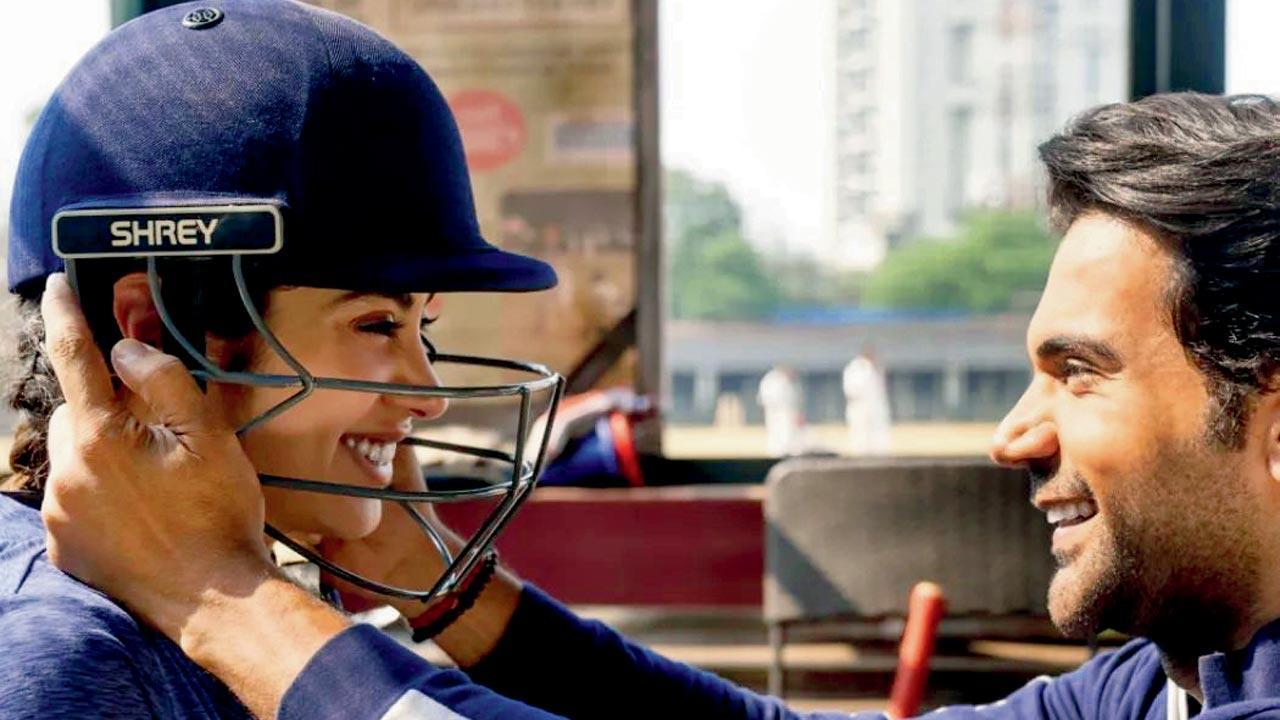
What if a woman marries into a family who encourages her dream? Out of this thought was born Mr & Mrs Mahi, the Rajkummar Rao and Janhvi Kapoor-starrer that opened to audiences yesterday.

Director Sharan Sharma says, “Usually, films focus on the achiever’s glory, but we wanted to navigate the journey of the support system around him/her. I found the idea of love [blossoming] in an arranged marriage endearing. These two have nothing in common and find their connection in cricket.”

The director and his writing partner Nikhil Mehrotra built the two Mahis—Mahima, a doctor whose talent for cricket is spotted by her failed cricketer-husband Mahendra. The story was anchored by two of Sharma’s favourite actors.

“Raj can be called a gift to cinema, given his promise towards his craft. When we started writing, we didn’t have names in mind. But Raj was a natural choice by the time we finished writing it. He is an evolved actor; he knows how to [explore] the psyche of a man who is weighed down by the insecurities of the world, and goes above and beyond to support his wife.”

After his maiden directorial venture Gunjan Saxena: The Kargil Girl (2020), Sharma went back to Kapoor. To him, she was a natural fit for the role. “I wrote Mahima from the interpretation I had of the Janhvi I knew back then. She was an innocent, sweet puppy who followed people in her life until she found her voice. She brought that vulnerability. I needed an actor who would work hard and that’s her biggest virtue. She gave it her all, and became a cricketer from a person who knew nothing about the sport. I felt their chemistry while shooting—they were two goofy children playing in the park.” 

Going by the title, the movie feels like a hat-tip to Mahendra Singh Dhoni. There’s more to it, says the director. “I’m a huge Dhoni fan, not just of his cricket, but his worldview. The film has a lot of his ideologies because they spoke to me. But the title comes from the endearing story about Navjot Singh Sidhu and his wife [Navjot Kaur Sidhu] sharing the same name. Once we came up with the title, we reached out to Dhoni for a go-ahead, and he responded with a yes quickly. I hope someday he will watch my movie.”

Mr & Mrs Mahi director Sharan Sharma: ‘Title comes from Sidhu and his wife sharing same name’

I am not tagged just as an OTT actor now-Pankaj Tripathi

‘I’m no more tagged as an OTT actor’
Navya Kharbanda (HINDUSTAN TIMES; February 19, 2024)

Actor Pankaj Tripathi, popular for playing crime lord Kaleen Bhaiya in the web series Mirzapur, is happy about breaking free from the OTT-actor stereotype after the pandemic.

“When cinemas were shut during the pandemic, Mirzapur rose in popularity. In fact, many of my films, such as Gunjan Saxena: The Kargil Girl, Ludo (2020), Mimi and Kaagaz (2021), were super successful on OTT. Though they were made for theatres, we had no other option but to release them on streaming platforms because of the lockdown,” says Tripathi, illustrating that this led to him getting labelled as an ‘OTT actor’.

“They would have worked well had they been released in theatres, too. However, I agree that I do have a lot of presence across streaming platforms. I often find myself in the most-watched category,” the 46-year-old admits.

Having said that, the actor’s assertion that he’s not just an OTT actor, is backed by his upcoming projects, which transcend the digital medium. “I was a part of OMG 2 and Fukrey 3 in 2023, and will be seen in Metro...In Dino. So, ab normal ho gaya hai. I am not tagged just as an OTT actor now,” he declares.

Tripathi, who recently headlined the streaming movie Kadak Singh, says his approach to picking projects isn’t really about the medium. “Main soch kar balance nahin karta har platform ke projects. I have so many franchises continuing, so I am just working on them. I go with the flow while choosing projects,” says the actor, who is gearing up for Stree 2.

Moreover, with the gradual return of normalcy and theatres seeing crowds returning, Tripathi stays optimistic about big screen projects. “The films that are releasing now have the ability to attract audiences to the theatres,” he wraps up.

‘Uri’ effect? Bollywood full of josh for military movies

‘Uri’ effect? Bollywood full   of josh for military movies

Wartime stories and biopics of heroes are the new favourite with filmmakers, many of whom are trying to make them more authentic with real weapons and research
Himanshi Dhawan (THE TIMES OF INDIA; January 28, 2024)

Bollywood is going to war! Well, not literally but visually. Don’t get us wrong. The staple Bollywood masala hero must still overcome insurmountable challenges, romance the girl and win in the end. But if a hero can also fly a plane, shoot enemies of the country, survive a couple of bullets, there is a better chance of box office success.

No wonder filmmakers have dusted off archival material to bring old war stories to celluloid — the 1971 war with Pakistan is a hot favourite. ‘Fighter’, starring Bollywood biggies Hrithik Roshan and Deepika Padukone who play fighter pilots in the Indian Air Force, released this week, and there are more such military-themed movies in the pipeline.

‘Ekkis’ by director Sriram Raghavan— slated for a 2025 release — is based on the youngest Param Vir Chakra awardee Lt Arun Ketrapal who lost his life during the 1971 war. Director Aanand L Rai has announced ‘Gorkha’ on Gorkha regiment’s Maj Gen Ian Cardozo and the pivotal role he played in the 1971 war, while Tamil director Rajkumar Periyasamy has begun shooting for a film on Major Mukund Varadarajan who killed three terrorists in J&K’s Shopian district and was awarded the Ashok Chakra posthumously.

‘Fighter’ co-producer and filmmaker Ramon Chibb has announced a film on Narendra ‘Bull’ Kumar recently. Col Kumar, who was awarded the Padma Shri, carried out multiple expeditions in the Siachen glacier area in the late 1970s and early 1980s which laid the basis for the Army’s success in Operation Meghdoot.

Last year, there were three Bollywood films on the armed forces, including the Sam Bahadur biopic starring Vicky Kaushal, and ‘Pippa’ that was released on OTT featuring Ishaan Khatter and ‘Tejas’ that showcased Kangana Ranaut as a woman fighter pilot helming a military spy operation. The first two received critical acclaim for their portrayal of the military. ‘Major’m based on NSG commando Sandeep Unnikrishnan’s bravery during the 26/11 Mumbai terror attacks, was released in 2022.

Military historian AVM Arjun Subramaniam says military movies have been an influential genre in the West that India is catching up to. “Indian filmmakers had it tough in terms of authentic research and access to material and people. Now, there are more sources of information, more books, and more articulate officers. Also, the defence establishment has realised that this is an effective form of outreach to show how the military that embodies the values of inclusiveness, secularism and multiculturalism has contributed to democracy.”

Subramaniam, who was advisor for ‘Sam Bahadur’, says it is amongst the few military biopic made after Independence and a good indicator of how nascent the genre is in India.

Many took their cue from the resounding success of ‘Uri: The Surgical Strike’ in 2019. “How’s the josh?” a dialogue by Vicky Kaushal’s character captured the public imagination. In 2021, ‘Shershaah’, based on Captain Vikram Batra who lost his life during the 1999 Kargil war, was also a success. ‘LOC Kargil’, ‘Lakshya’ and ‘Gunjan Saxena: The Kargil Girl’ have been some of the other films on the subject.

Chibb, who wrote the story for ‘Fighter’ besides co-producing it, says that there is a marked change in how Bollywood approaches the subject. For starters, it’s ditching the earlier clichés of bandook and badi mooch. “Filmmakers are more sensitive to historical facts and are veering towards realism whether it is action, operational details or equipment. Earlier, there were times when the film would carry the wrong medals, uniform and weaponry,” he says.

Cringe-worthy scenes like an army officer wearing police medals, or a 25 or 26-year-old being portrayed at a senior position like a Lt General that takes 25 years of service come to mind. Chibb says ‘Fighter’, which has extensive aerial manoeuvres and authentic weaponry and equipment, will hopefully show the way.

Chibb says that he would watch Hollywood films like ‘Guns of Navarone’ and ‘Top Gun’ and find that ‘cool’ quotient missing in Bollywood films. He singles out ‘Vijeta’ (1982) and ‘Prahar’ (1991) as exceptions and close to authentic. “The industry has realized that military stories lend themselves to the screen: they have action, mystery and drama. When big stars are willing to play the characters, it makes a huge difference. It raises awareness about the military and increases recruitment,” he says.

After the controversy sparked by the release of ‘Gunjan Saxena’, where the military felt that facts had been distorted to show the air force as gender biased, it mandated that scripts would be cleared by the Additional Directorate General of Public Information (ADGPI). ADGPI can also recommend defence consultants for projects.

“The military has also opened access to cantonment areas, equipment and even using real soldiers that adds authenticity to the film,” says Major Sandeep Sangwan who was a defence consultant for ‘Pippa’. The movie was shot at the Armoured Corps School and Centre in Ahmednagar, Maharashtra. In ‘Sam Bahadur’, Kaushal was allowed access to not only Field Marshal Sam Maneckshaw’s car but also his driver for the film scenes.

Filmmakers might have upped the standard with research, but critics say many of them still border on jingoism. Unlike films like ‘Dunkirk’ that examine military strategies or ‘American Sniper’ that explores PTSD in soldiers, most Bollywood films do not look at layered characters.

Subramaniam says, “Our DNA is not structured for an open investigation or learning from mistakes. Issues of national security are cloaked in secrecy. The public does not easily understand these matters.” This reflects in the paucity of books or availability of declassified archival material on the battles India has lost. Indian filmmakers also succumb to the temptation of adding romance and songs.

The military is one of the few institutions for which public support transcends regional and communal loyalties and that means serious moolah, an opportunity that Bollywood is gunning for.

‘Uri’ effect? Bollywood full   of josh for military movies

It comes naturally that women in my films have agency-Karan Johar

It comes naturally  that women in  my films have  agency: KJo
Niharika Lal (BOMBAY TIMES; November 23, 2023)

In recent decades, films with female leads have performed well at the box office. Yet, there has been an assumption that producers do not support female-led films, and that they are generally less successful. During a recent session at IFFI, Karan Johar spoke about how gender is not a criterion for judging a story.

‘I’LL CONTINUE TO TELL STORIES OF WOMEN’
“Telling the story of a female comes naturally to me. I’m not even thinking that it is something great I’m doing; it is something that comes naturally, whether it was Raazi, Gunjan Saxena, Ae Watan Mere Watan, or the short films I have directed like Bombay Talkies. It comes naturally that women in my films have agency. These are natural, organic decisions that come from the roots of my upbringing, and I will continue to tell those stories.”

‘ONLY FOLLOW THE CONVICTION OF STORYTELLING’
Talking about box office performances of female-led films, Karan pointed out how cinemas were written off, yet both cinemas and OTT have maintained their strong positions. Giving the example of 12th Fail, he added, “It was being said that small films would not be able to attract a theater audience, but look at the performance of 12th Fail. So, one can’t follow any trend, and the only trend that one should follow is the conviction of storytelling.”

‘FILMS MADE IN ALL LANGUAGES ARE OUTSTANDING’
Responding to a query on why he doesn’t make films in other Indian languages, Karan said that the language he is comfortable telling a story in is Hindi, as it’s the language he was raised in. However, he added that he is a fan of all Indian language films.

“I was one of the first people to introduce Baahubali to the Hindis-peaking audience of this country. I believe that films made in (all) languages, whether it’s Kannada, Malayalam, Telugu or Tamil are outstanding. Thanks to streaming platforms, we can now see these movies and fall in love with the power of these stories. I’m blown away by the impact of Mani Ratnam’s PS-I and PS-II films, by KGF which has opened doors for Kannada cinema, and equally by mainstream films like Pushpa or RRR. So much is happening in Hindi cinema, but at the same time, so much is happening in Indian cinema, and we should be proud members of Indian cinema.”

It comes naturally  that women in  my films have  agency: KJo

I feel I am good at falling in love-Janhvi Kapoor

Janhvi Kapoor wants out of the singles’ club

After headlining solo outings Mili and Good Luck Jerry this year, Kapoor says she is eager to be part of a romantic drama
Uma Ramasubramanian (MID-DAY; November 24, 2022)

Her debut film Dhadak (2018) may have been an intense love story, but then on, Janhvi Kapoor has been primarily shouldering varied dramas — from a biopic in Gunjan Saxena: The Kargil Girl (2020) to a black comedy in Good Luck Jerry, and the survival thriller, Mili. While the films have given her creative satisfaction, she is now itching to experience the frothy world of romantic dramas.

“I miss it, I am dying to do an out-and-out love story. I want to romance someone [on screen]. I feel I am good at falling in love,” she laughs.

Guess the actor will have to wait a while before her wish is realised, because up next, she has the comedy-drama, Mr & Mrs Mahi. Reuniting with Rajkummar Rao after their horror comedy Roohi (2021) has been a pleasure for Kapoor.

“He is one of the finest actors in the country, and I am honoured to get the opportunity to work with him. This film is special to us because its heart is in the right place. The aspiration is to be as good as him, as an actor.”

Besides the Sharan Sharma-directed venture, Kapoor has Bawaal that sees her team up with Varun Dhawan.

I have studied for my history exam by watching every World War II film-Janhvi Kapoor

I FEEL THE
PRESSURE
OF PLAYING
TITULAR
ROLES SO
EARLY

While it wasn’t a conscious decision to take up such parts, Janhvi Kapoor is grateful that the makers believed in her
Rishabh Suri (HINDUSTAN TIMES; August 8, 2022)

In just a four-year-long career in Bollywood, actor Janhvi Kapoor has played titular roles in three films already: Gunjan Saxena: The Kargil Girl (2020), Roohi (2021), and the recently released Good Luck Jerry. Her next film, Mili, is also headlined by her. Shouldering a film as the lead, that too this early in her career, isn’t an easy task, and the 25-year-old admits to feeling the pressure: “Because many people, like you, keep reminding me of it (laughs).”

She shares, “This (taking up titular roles) was not a conscious decision. I was very lucky to get a film like Gunjan… and have Karan (Johar; producer) sir, Gunjan (Saxena; Kargil veteran) ma’am, Sharan (Sharma; director) believe in me enough to give me that film. After Ghost Stories (2020), too, I began getting a lot of scripts that allowed me to be the titular character. I feel fortunate to have been able to play these roles in these films.”

Her life-long passion for films could also be the reason why she is up for such challenges. She says, “My education in life has been through films. While this isn’t something I advocate, I skipped my school to watch movies. I have studied for my history exam by watching every World War II film... Mumma (late actor Sridevi) always used to say that I am such a dramebaaz with nakhras. At the back of my mind, I always felt like it was my calling, and I can’t imagine doing anything other than this.”

Scam 1992 is a rare show where each and every department of the show was excellent-Pratik Gandhi


As Scam 1992 sweeps the mid-day and Radio City Hitlist OTT Awards with five wins, breakout star of 2020 Pratik Gandhi on the series that changed it all for him
Uma Ramasubramanian (MID-DAY; February 26, 2021)

Let’s take a moment and flash back to 2020: When we weren’t talking about the surging COVID-19 cases or the vaccine, we were discussing how we devoured Scam 1992: The Harshad Mehta Story in one sitting. Or dissecting the plot twist in Aarya. With all of us confined to our homes for the better part of last year, web series and OTT films became our only source of entertainment, the calm to the chaotic reality.  

Naturally, when mid-day and Radio City Hitlist OTT Awards returned with its second edition, fans from across the country voted to make their favourites known, loud and clear. Hansal Mehta’s Scam 1992 was the big winner with five trophies under its belt. If Pratik Gandhi and Shreya Dhanwanthary won the top acting honours in the Series category, the Sony LIV offering also walked away with gongs for Best Series, Best Series (Drama) and Best Ensemble Cast.

Gandhi was arguably the breakout talent of 2020, mesmerising everyone with his Harshad Mehta act in the drama. Thrilled to have bagged the Best Actor (Series) award, he acknowledges that the raging success of the show is a once-in-a-lifetime phenomenon. “This is a rare show where each and every department of the show was excellent. Tomorrow, if we collaborate again, I don’t know whether we will be able to recreate the magic.” 

With roots in theatre, Gandhi had graduated to Gujarati cinema before landing bit roles in Hindi movies. Now, as all eyes are on him, he says he is only getting started — Bollywood has already come knocking at his door. “I have been offered mainstream Bollywood films. I am a greedy actor, and I am looking forward to exploring different formats of entertainment. I will try to strike a balance between Bollywood, regional films and web series,” he says, before adding that he won’t forget his first love. “Theatre helps me hone my craft. Nothing gives me the amount of satisfaction that theatre does. So, I will never give up on that.”

The other winners include Kunal Kemmu, who was adjudged the Best Actor: Film (Male) for Lootcase, and Janhvi Kapoor, who bagged the trophy for her act in Gunjan Saxena: The Kargil Girl. “Just to see my name in the nomination list was a big deal to me. I would like to thank everyone for voting for me. It means that you guys enjoyed my film,” Kapoor, who played the nuanced role of an  Indian Air Force officer in the film, tells mid-day. The film awards rounded up with Serious Men being adjudged the Best Direct-to-web film. Netflix’s Mismatched and Voot Select’s Asur won the Best Series: Comedy and Thriller respectively. 

Meanwhile, on Gandhi’s plate is the big-ticket venture, Woh Ladki Hain Kahaan? opposite Taapsee Pannu. “I am also planning to open a play. I will have to prioritise things — earlier, I could do three regional films, but now I will probably be able to do only one.”

And the award goes to...

Best Series: Scam 1992 (SonyLIV)

Best Series (Romance/Comedy): Mismatched (Netflix)

Best Series (Drama): Scam 1992 (SonyLIV)

Best Series (Thriller): Asur (Voot Select)

Best Direct-to-web Film (Hindi): Serious Men (Netflix)

Best Direct-to-web Film (Other Indian languages): Soorarai Pottru (Amazon Prime Video)

Best Actor – Series (Male): Pratik Gandhi (Scam 1992)

Best Actor – Series (Female): Shreya Dhanwanthary (Scam 1992)

Best Supporting Actor – Series (Male): Barun Sobti (Asur)

Best Supporting Actor – Series (Female): Anupria Goenka (Criminal Justice 2)

Best Actor – Film (Male): Kunal Kemmu (Lootcase)

Best Actor – Film (Female): Janhvi Kapoor (Gunjan Saxena: The Kargil Girl)

Best Supporting Actor – Film (Male): Pankaj Tripathi (Gunjan Saxena)

Best Supporting Actor – Film (Female): Indira Tiwari (Serious Men)

Best Ensemble Cast (Series): Scam 1992 (SonyLIV)

Best Series – Non-fiction: The Fabulous Lives Of Bollywood Wives (Netflix)

Best Web Platform (User Experience): Amazon Prime Video

As much as I am overwhelmed, I am also worried that I shouldn't get typecast-Pankaj Tripathi


With two Best Supporting Actor nominations for Gunjan Saxena and Criminal Justice 2 in mid-day and Radio City Hitlist OTT Awards, Pankaj says web gave him his due
Uma Ramasubramanian (MID-DAY; January 28, 2021)

"Subscribe to any OTT platform, and you will find me," laughs Pankaj Tripathi, undoubtedly the star of 2020. It was almost as if the actor could do no wrong last year, as he appeared in Gunjan Saxena: The Kargil Girl, Ludo, Mirzapur 2 and Criminal Justice: Behind Closed Doors, shining brighter in every subsequent outing. No wonder then, he has bagged two nominations in the Best Supporting Actor category — Film and Series — for his performances in Gunjan Saxena and Criminal Justice 2 respectively at the upcoming mid-day and Radio City Hitlist OTT Awards.   

Even as he has become a force to reckon with in the Hindi film industry, Tripathi says that digital entertainment gave him his due. "I have been doing Hindi movies for years, but I was never put on posters of Hindi films. OTT platforms did that for me. [The makers] of web series didn't think twice about my worth as an actor before putting me on the posters. That means a lot to me. When digital entertainment started off in India, it didn't have stars. So, the [creators] decided to rope in talented actors and make them stars."

In the Janhvi Kapoor-led film, Tripathi was endearing as the doting father who makes his daughter believe that no dream is beyond her reach. But it is the down-on-his-luck lawyer Madhav Mishra of the Disney+ Hotstar legal drama that the actor holds dearest.

"If I were not an actor, I would be a lot like Madhav Mishra in real life. He is under-confident but wise and sharp. Playing Madhav brings me joy," says the actor. Tripathi has a promising 2021, with big-ticket projects '83 and Mumbai Saga in his kitty. But he is aware that with success, comes responsibility. "There was a time when I didn't have movie offers. Today, my calendar is packed. As much as I am overwhelmed, I am also worried that I shouldn't get typecast. I make a constant effort to add layers to my character. If I don't make my character edgy or funny, why will people watch me?" 

Did You Know?
After watching Gunjan Saxena, Boney Kapoor messaged Tripathi saying, "You are a better father to Janhvi than me".

Cast your vote for the Hitlist OTT Awards
- Pankaj Tripathi has been nominated in the Best Supporting Actor (Male): Series category for Criminal Justice: Behind Closed Doors.

The other nominees are:  
- Abhishek Banerjee: Paatal Lok (Amazon Prime Video)
- Amit Sadh: Breathe: Into The Shadows (Amazon Prime Video)
- Atul Kulkarni: Bandish Bandits (Amazon Prime Video)
- Barun Sobti: Asur (Voot Select)
- Raghubir Yadav: Panchayat (Amazon Prime Video)

- The actor has also been nominated in the Best Supporting Actor (Male): Film category for Gunjan Saxena: The Kargil Girl

The other nominees are:
- Rajat Kapoor: Kadakh (Sony Liv)
- Rajkummar Rao: Ludo (Netflix)
- Rahul Bose: Bulbbul (Netflix)
- Shreedhar Dubey: Raat Akeli Hai (Netflix)
- Vijay Raaz: Lootcase (Disney+Hotstar)

- Log on to www.hitlistottawards.com to cast your vote.

- You can also vote via SMS. Send HITLIST <space> category name <space> your choice (a/b/c as on the website) to 57575.

- Voting lines close on February 9

Gunjan Saxena made me aware of my strengths, weaknesses-Janhvi Kapoor


Earning Best Actor (Film) nomination at mid-day and Radio City Hitlist OTT Awards for Gunjan Saxena, Janhvi on bringing IAF pilot's journey to screen
Mohar Basu (MID-DAY; January 26, 2021)

Janhvi Kapoor played the titular role in Gunjan Saxena: The Kargil Girl with resilience, mirroring the steely resolve of its real-life heroine. The actor, nominated in the Best Actor (Film) category of the upcoming mid-day and Radio City Hitlist OTT Awards, says the Sharan Sharma-directed venture was a personally rewarding journey. “The film made me aware of my strengths and weaknesses. It wasn’t an action thriller; it [was nothing like] a conventional film of this genre. But it had a lot of heart,” she says.   

Rising above jingoism, the film beautifully brought forth a different connotation of patriotism. In a scene, Gunjan tells her father that flying a plane is her only ambition, and wonders whether she may be deceiving her country by using the Armed Forces as a means to fulfil the dream. Her father explains that sincerity is the first step towards serving the nation. “It was the last [scene] we worked on. The scene doesn’t condemn [chest-thumping] nationalist sentiment, but shows other forms of patriotism. It encapsulates the film’s spirit. We had multiple versions of the sequence, but nothing captured Gunjan ma’am’s love for the country as beautifully as this did. After watching the film, she said, ‘You’ve said everything I wish I could say.’”

The movie invited the wrath of the Indian Air Force (IAF), which claimed that it showed them in  poor light. Kapoor acknowledges that the backlash affected her “deeply”. “Throughout the promotions, we acknowledged that Gunjan ma’am got the opportunity to serve in the IAF because of their [willingness]. They took a progressive step by recruiting women. We never wished to offend anyone. Some people didn’t get Gunjan or her spirit because they are victims of their conditioning. I am glad the film sparked a conversation [about women joining the IAF].”

Did you know?
The film marks the directorial debut of Sharan Sharma, who was the creative director of Yeh Jawaani Hai Deewani (2013).

Cast your vote for the Hitlist OTT Awards
- Janhvi Kapoor has been nominated in the Best Actor (Female): Film category for Gunjan Saxena: The Kargil Girl.

The other nominees are:
- Radhika Apte: Raat Akeli Hai (Netflix)
- Saiyami Kher: Choked: Paisa Bolta Hai (Netflix)
- Tillotama Shome: Chintu Ka Birthday (Zee5)
- Tripti Dimri: Bulbbul (Netflix)
- Vidya Balan: Shakuntala Devi (Amazon Prime Video)

- Log on to www.hitlistottawards.com to cast your vote.

- You can also vote via SMS. Send HITLIST <space> category name <space> your choice (a/b/c as on the website) to 57575.

- Voting lines close on February 9.

Khuda Haafiz is decent on satellite; Gunjan Saxena mediocre; Sholay is INSANE

Khuda Haafiz Movie Review: Vidyut Jammwal Slows Down To Match The Drift Of This Thriller
Box Office India Trade Network

KHUDA HAAFIZ which was released on Disney+ Hotstar in August and was one of the very few OTT successes of the year along with LAXMII, COOLIE NO 1 and DIL BECHARA. It has reiterated with success on satellite as it racked up almost 55 lakh impressions. It's success is not at the level of COMMANDO 3 which also featured the same actor Vidyut Jammwal but 10 lakh views on OTT on release and 55 lakh impressions on satellite release are decent results especially in this horrible year.

GUNJAN SAXENA - THE KARGIL GIRL which also released in August on Netflix in had mediocre results on satellite as it recorded 31.5 lakh impressions on release. This is 42% less than KHUDA HAAFIZ. Although its actually better than DIL BECHARA, but that's not saying much as DIL BECHARA was not much of a film and its OTT success was mainly as the release was post the death of its lead actor Sushant Singh Rajput. The numbers of GUNJAN SAXENA - THE KARGIL GIRL on satellite means its pretty much lights out for the film in the long run.

The biggest BLOCKBUSTER ever in Indian cinema SHOLAY (1975) again showed the force it is still today as it racked up almost 45 lakh impressions. This is 45 years after release and the audience still cant get enough of the epic. Its the greatest example of critics mouth saying one thing and the paying public doing exactly the opposite. The pocket never lies but words coming out of mouths of critics are usually lack of knowledge on films or lies and there is no bigger proof of that than SHOLAY.

The Santa in my life are actually both my parents-Janhvi Kapoor

The actor talks about having a professionally amazing 2020, Christmas and the Santa(s) in her life
Rishabh Suri (HINDUSTAN TIMES; December 25, 2020)

She’s fun, driven, and is making her presence felt in the industry one film at a time. After making a successful debut in Bollywood with Dhadak (2018), actor Janhvi Kapoor surprised everyone with a web anthology, Ghost Stories. And then came Gunjan Saxena — The Kargil Girl, which was appreciated by audiences and critics alike. Lined up next for the actor are biggies such as Dostana 2, Takht and RoohiAfzana. Christmas this time is a merrier and sweeter affair for this 23-year-old. We get talking about the year so far and the festival:

The year 2020 was like Santa giving you your presents early, with both Ghost Stories and Gunjan Saxena garnering appreciation. How would you sum it up?
It was a huge learning experience for me. Rather than the outcome of these projects, it’s in the experience of making them, and getting the opportunity to shoot. There’s Dostana 2 and Takht next... a lot of work happening. To be able to do that is the best phase in my life. Working with different stars and characters has been fruitful.

Were you prepared for a direct to OTT release of Gunjan, since theatres had shut down due to the Coronavirus crisis?
I wasn’t, as while making it we didn’t anticipate an OTT release at all. But given the circumstances, it has really taught me the power and reach of OTT. In this scenario, it’s been a blessing. The idea of making a film is for it to reach audiences For that, I am thankful that at least, my work reached them, and my hard work was appreciated.

What’s your fondest childhood memory of Christmas?
I used to be obsessed with Christmas as a child. I remember, in school, we always had this carnival that the students would put together. It would be in the middle of our school turf. My best friend and I would always bully each other. On one Christmas, I had cut his hair earlier in the day to irritate him, so he threw me in the inflatable pool right in the middle of the Christmas carnival, in front of everyone! Then we got into a lot of trouble. But that was always a thing to look forward to.

Who would you call the Santa in your life? What’s the best present you got from them?
The Santa in my life are actually both my parents (Boney Kapoor and late Sridevi). They have given me a lot of love, support, encouragement, and reassurance. Those are the best gifts. They have equipped me and Khushi (sister) with a lot of security, and love, enough for us to never harbour bitter feelings.

What gift are you wishing for from Santa this time?
Work! Lots and lots of amazing work, and opportunities to learn. I want more work.

OTT releases find place in Oscar entry selection

Oscar Statuette. Pic/AFP
Priyanka Dasgupta (BOMBAY TIMES; November 22, 2020)

Kolkata: No film may have released in most of 2020, but India will still send an entry for the Academy Awards. This is the first year that a good number of OTT releases will be among the 27 films that are currently being viewed online by jury members who will select the Indian entry to the Oscars.

Last year, Zoya Akhtar’s ‘Gully Boy’ was selected as India’s Oscar entry. This year, the jury is being chaired by director Rahul Rawail. According to a source, some of the Hindi films submitted for consideration are ‘Sir’, ‘Shikara’, ‘Gunjan Saxena’, ‘Shakuntala Devi’, ‘Bahattar Hoorain’, ‘Malang’, ‘Chhalaang’, ‘Gulabo Sitabo’, ‘Chhapaak’, ‘Bhonsle’, ‘AK vs AK’, ‘Kaamyaab’, ‘Serious Men’, ‘Bulbbul’, ‘I Pad’, ‘Atkan Chatkan’ and ‘Chintu Ka Birthday’.

Of these, ‘Gunjan Saxena’, ‘Serious Men’, ‘Shakuntala Devi’, ‘Bulbbul’, ‘Gulabo Sitabo’, ‘Chintu Ka Birthday’ and ‘Bhonsle’ have already been released on OTT platforms. Three Marathi films —‘Chippa’, ‘The Disciple’ and ‘Bittersweet’— and two Malayalam movies, ‘Moothon’ and ‘Jallikattu’, are also in contention. Not a single Bengali film is in the race this year, though last year ‘Nagarkirtan’, ‘Tarikh-A Timeline’ and ‘Konttho’ were considered.

Director Nila Madha Panda’s Odia film, ‘Yesterday’s Past’ (‘Kalira Atita’) has been submitted. “It is almost like a silent film about a man and the sea. The film is based on the vanishing villages by the sea,” Panda said.

‘Bittersweet’ director Ananth Narayan Mahadevan said it was important that the film representing a country ticked all the important boxes for an Oscar shortlist. The film had an original subject that had never been explored on the Indian screen. It is on how woman sugarcane-cutters in India are “advised” to undergo hysterectomy to save four working days a month that they may lose to the menstrual cycle.

“It is rooted in its country of origin, is about human rights, tells an emotionally charged story and has an international appeal — these are all requisite boxes for an Oscar jury. It will be a privilege to represent the country with such content that received rave reviews at Busan International Film Festival,” Mahadevan said.

I guarantee that for the next year, I’ll not play a gangster-Pankaj Tripathi


Pankaj Tripathi is enjoying a long break and won’t resume shooting till January
Akash Bhatnagar (MUMBAI MIRROR; November 16, 2020)

Pankaj Tripathi is basking in all the compliments he is getting for his performance as Sattu Bhai, a local gangster, in Ludo. “I just surrendered to Dada (Anurag Basu) who did all the work. He is a magician. I am in a state of zen; these things don’t affect me much,” he says, adding that his journey with Anurag is far from over.

Even though he is the link between the four stories in the film, Pankaj didn’t know anything about them while he was shooting. “I was only told the reason these characters were coming to meet me,” he shares, revealing that Ishtiyak Khan who played the inspector and Bhanu Uday as Bhanu, were his batchmates at the National School of Drama. “My one shot with both of them was nostalgic.”

Before the release of Ludo, the actor sneaked off on a road trip to Goa with his wife and daughter. They left on November 6 and returned on Friday, just in time to celebrate Diwali in the city. “It had been seven months since I stepped out of the house. Even though we live in a peaceful area in Mumbai, we needed a small outing to get some fresh air and relax in a different environment. Also, to catch up on my sleep,” he chuckles.

Some believe that Pankaj is doing too many roles in the crime space and even the actor acknowledges it. “I agree that I’ve done several gangster roles. But in Gunjan Saxena, I was an army veteran and a father, and it was different. The audience was still reeling from my gangster turn in Mirzapur when Ludo came along. I’m seen so frequently on screen now that people get confused, there is so much to remember,” he laughs, adding that in his upcoming films, he’s playing a lawyer, a cricket team manager and a layman fighting for his rights. “I guarantee that for the next year, I will not play a gangster.”

Even after such diverse roles, Pankaj reveals that his most enjoyable role is yet to come. “I can’t describe it but I am still searching for it,” muses one of the busiest actors in recent times, admitting that the lockdown was a welcome break. “I was overworked and didn’t even realise it. I got a lot of offers in the span of two-three years and just kept taking them all. It was because I have a background in theatre that I didn’t burn out. Even during these eight months of lockdown I have had three releases, and Mimi, '83 and Kaagaz are releasing next year so even 2021 is pretty much locked from January to November,” he informs, adding that he is enjoying the break and is not at all eager to get back to work just yet. “I will resume shooting in 2021. I still have a lot of sleep to catch up on. Also, I want to visit my parents in my village as I haven’t been there for a long time due to Coronavirus. I will anyway be in auto pilot mode from January.”

Main chahta hoon ki har pita Gunjan Saxena ke pita jaisa ho-Pankaj Tripathi

Etti Bali (HINDUSTAN TIMES; October 11, 2020)

On International Day of the Girl Child today, we speak to Pankaj Tripathi, who received accolades from all quarters of his endearing portrayal of Flight Lieutenant Gunjan Saxena’s father in her biopic, starring Janhvi Kapoor.

He says that while reading the script he resonated with the character’s thought process, and that obliterated any and all hesitation. “Script padhte hue mujhe lagaa tha ki main ladkiyo ke liye aisi hi duniya chahta hoon. I felt as if those thoughts which I was reading on paper were my own. Main chahta hoon ki har pita Gunjan Saxena ke pita jaisa ho,” he says.

This year’s theme is ‘My voice, our equal future’, and reinforcing this message, Tripathi says that change needs to begin at home. Elaborating with an example, he says, “Ghar pe agar papa ko paani chahiye hota hai, toh voh kehte hain Pinky paani laa do; Rahul baitha hoga sofe pe usse nahi bolenge. Now this will lead to Rahul believing that Pinky’s duty is to only fetch water. This kind of thinking is ingrained in us.”

Tripathi, who has a teenage daughter with his wife, Mridula Tripathi, believes that it is very important to have a democratic approach in raising kids.

“I always tell my daughter that we can only guide you from our experience. The day you become an adult, you will explore the world and live your life on your own terms. I can only give her guidance. Agar aap unhe freedom dete hain aur ek democratic mahaul dete hain, toh voh kuch gadbad kaam nahi karengi,” he says. Having been a professional sportsman, the only constant advice he gives his daughter is to take up sports of any kind.

The Sacred Games actor stresses the importance to accept change and to leave behind a better world. “Sab log chahte hain ki duniya ko thoda aur sundar banaa de. Fir bhi samasyaaein reh jaati hain. But through cinema and stories, we can evolve and make this change possible. We need to be ready to understand the thought behind any new development, instead of rejecting it immediately,” says the 44-year old actor.

The desire for a male child is a dark secret that our society tries its best to hide. Dismissing this mindset, Tripathi says that there is nothing a girl can’t do. “Ladkiya kya nahi kar rahi hain aaj. Yeh soch bilkul uchit nahi hai. It is wrong to think like this. Women are far more evolved than men,” he signs off.

Fenil's Bollywood Talk # 640

HOW FILMS DISAPPEAR FROM PUBLIC MEMORY IN NO TIME THANKS TO OTT!

When films release in cinemas, the entire promotional exercise and even the situation naturally used to be such that those films would get talked about for a couple of weeks at least post its arrival in cinemas. Pre-release, the buzz would be maximum thanks to elaborate publicity strategy. Even if promotion was minimal, there used to be a discussion about the films on social media and even offline. Once the film would release, the promotions from the part of the producer used to reduce. But the reviews, daily box office reports etc used to keep the film in news or at least in discussion among netizens.

Today, with theatres shut and many films releasing directly on streaming platforms, the scenario has altered drastically. The films make minimal noise when the trailer is out. The promotions are limited because the producers don’t feel the need as they have already got the money from the OTT giant. This was not the case earlier when the makers went with the belief the more you promote, the more the chances of film catching the attention of the viewers and the more the chances of it becoming a box office success. And once the film releases on OTT, there’s a bit of noise surrounding it because of the reviews and moviegoers sharing their views. However, in 3 or 4 days, the movie gets forgotten, as if it’s wiped off from public memory!

The first major release on OTT was Gulabo Sitabo, starring Ayushmann Khurrana and Amitabh Bachchan. It was released on Friday June 12 and it hardly made waves on day 1 and day 2. On day 3, it was totally forgotten as the same day, Sushant Singh Rajput passed away and it dominated the headlines (and still continues to do so). Hence, a benefit of doubt was given to it. But the same happened with the other films as well. On July 31, 3 films released on different platforms – Shakuntala Devi, Lootcase and Raat Akeli Hai. All three were acclaimed but got discussed just for 48 or at best 72 hours.

August 12 saw the release of Gunjan Saxena – The Kargil Girl, starring Janhvi Kapoor. It is the story of India’s first woman combat pilot and it got into controversy because of the portrayal of Indian Air Force. This is the only film that was discussed for more than 3 days and that too due to these issues. Again, a week later, it faded into oblivion. Same with Sadak 2. It was in the news as its trailer got the most number of dislikes on YouTube. The film was widely panned and usually such films do stay relevant for being trashy. Sadak 2 proved to be an exception.

In case of films which don’t face a controversy, the condition is horrible. Khuda Haafiz, an actioner starring Vidyut Jammwal, got praise from critics. But it just didn’t make any sort of noise. It may have got viewership but it’s sad such a nice film was ignored on social media. If it had been released in cinemas, this wouldn’t have been the case. A similar example is of Dolly Kitty Aur Woh Chamakte Sitare. It stars Konkona Sen Sharma and Bhumi Pednekar and is directed by Alankrita Srivastava of Lipstick Under My Burkha fame. This flick raises some important issues of patriarchy, feminism, a woman trapped in unsatisfied marriage, cross dressing etc. There’s no doubt it would have stirred a huge discussion if it was a theatrical release, notwithstanding its box office fate. But it was released online and didn’t really have the traction it deserved. It’s not even uncommon to see many moviegoers not even being aware that Dolly Kitty Aur Woh Chamakte Sitare and Khuda Haafiz have even been released.

The upcoming few months will see the release of big films online like Laxmmi Bomb, Coolie No 1 and Bhuj – The Pride Of India, starring biggest of names in the star cast. It remains to be seen if these films also get royally ignored or do they manage to be talked about for at least a week after it’s digital release.

OTT releases back in theatres: A viable option?


We ask experts about the feasibility of OTT-to-theatre releases
Rishabh Suri (HINDUSTAN TIMES; August 27, 2020)

When will theatres reopen is the big question on everyone’s mind in the film industry. Shoots have resumed, actors are ready, but what about the venue that showcases their work? Many filmmakers have opted to release their ready films on OTT platforms instead — Gulabo Sitabo, Shakuntala Devi, Gunjan Saxena - The Kargil Girl, to name a few. While speculation is rife that September might see theatres getting back to business, makers are likely to remain apprehensive about theatrical releases, considering the audience might be scared to venture out. Could these OTT releases be used again to test waters?

Divided opinions
Shibasish Sarkar, CEO, Reliance Entertainment, says it depends on the choice of the platforms. “When a producer has sold the rights of his movies, they lie with the OTT platforms. If they want to release, they may... Unless it’s not in the contract, it’s not the producer’s choice,” he tells us.

Earlier this year, Baaghi 3 had just released when the Coronavirus outbreak hit the country and theatres had to be closed. Actor Tiger Shroff had told us then that they were hoping to come back to theatres, even after it came on an OTT platform. “The bigger picture is the safety of people... Let’s see once the situation settles; perhaps we may re-release,” he had said.

Meanwhile, producer Anand Pandit, who has decided to release his film The Big Bull on OTT, says he is up for re-release of such films theatrically. “Why not? It depends on the contract you have, and also whether it’s viable... But you have to do your analysis. If your films is more B- and C- centric, single screen type, then it is a good thing to consider; they might not have seen it on OTT,” he reasons, adding, “Producers could also buy back the rights, but not at the same price.”

Director Tigmanshu Dhulia, whose film Yaara released directly on a digital platform recently, says chances look slim. “It depends on when theatres will open, and how much content is there to exhibit... There might be some chance of these OTT films releasing, but it’s slim. So much money will have to be put on marketing,” he says.

Theatre owners, on the other hand, are apprehensive if OTT-to-theatre releases would work. Manoj Desai, executive director of G7 Multiplex and Maratha Mandir cinema, Mumbai, says, “If people are getting to watch films in their bedrooms, why would they come to theatres? The public won’t come to theatres in the beginning when theatres reopen as everyone is scared. Also, we don’t know what kind of [social distancing] guidelines we’d get, like seat people keeping one vacant in between. How will a couple sit? They would prefer to watch it comfortably on digital... I have three theatres with a capacity for 1,000 people; it will come down to 450. How will I accommodate everyone? I will have to incur charges on air conditioning and maintenance, too.”

Presenting lockdown list - Dil Bechara, Special Ops emerge most popular film and show

Dil Bechara had reportedly registered 95 million viewers in the first 24 hours of release
As stay-at-home period runs into its sixth month, viewership tracking firm reveals Dil Bechara, Special Ops have emerged most popular film and show
Mohar Basu (MID-DAY; August 26, 2020)

Gulabo SitaboIn a domino effect of sorts, the Coronavirus lockdown caused a shift in the entertainment consumption patterns of the Indian population. A country that has had more than its fill of dramas about shape-shifting serpents and family feuds turned to digital entertainment, thus discovering the grim journey of Hathoda Tyagi or rooting for Sushmita Sen as the unlikely queen of a drug cartel. As we enter the sixth month of lockdown, it is only fitting to determine which series and direct-to-web releases grabbed maximum eyeballs and dominated the mainstream consciousness.

Special Ops dropped online a week before the nationwide lockdown was imposed;Refusing to divulge numbers, Shailesh Kapoor, CEO, Ormax Media, reveals that direct-to-web releases, though a recent phenomenon in the Hindi film industry, found an eager audience. "Dil Bechara has been the top film by a wide margin, followed by Gulabo Sitabo, Extraction, Shakuntala Devi and Gunjan Saxena: The Kargil Girl, in that order. These are based on estimates," he says. The results are arrived at basis the social media buzz generated by each offering, its reach and appeal.

Even as Paatal Lok captured the imagination of the country post its May 15 release and Jitendra Kumar sealed his position as an Internet star with the endearing Panchayat, Kapoor reveals that it is, in fact, an espionage thriller that tops the list of the most-watched Indian web series. "Disney+ Hotstar's Special Ops fared the best. Amazon Prime's Paatal Lok comes second, followed by Voot Select's Asur." Amazon Prime's Panchayat and Disney+ Hotstar's Aarya round off the top five shows.

He observes that TV consumption increased by 40 per cent during the lockdown, with viewers tuning in to news on a daily basis. The top five television offerings between April and June, when old shows were being rerun, were Ramayan (Doordarshan), Mahabharat (Doordarshan), Taarak Mehta Ka Ooltah Chashmah (Sony SAB), Mahabharat (Star Plus) and Shri Krishna (DD). "With fresh episodes being aired from July, Kundali Bhagya has become the most-watched show followed by Taarak Mehta..., Anupamaa, The Kapil Sharma Show and India's Best Dancer."

Extraction round off top three films