Showing posts with label Guneet Monga. Show all posts
Showing posts with label Guneet Monga. Show all posts
If I was part of Manjummel Boys, we could have taken it international-Guneet Monga
9:16 AM

Natasha Coutinho (HINDUSTAN TIMES; July 12, 2026)
Two-time Academy award winning filmmaker Guneet Monga Kapoor says that while she is happy to back Hindi and English films, her long-term vision is to work across Indian languages and take their stories to a global audience.
“I’m in the midst of closing a Marathi film and I want to work in every language. The idea is to double down on storytelling, as it is our superpower. Talent like actors and directors are also our superpower and so are the budgets, and our languages. I have the understanding of how to take movies and expand the footprint of an IP,” she tells us.
She adds that the true strength of the industry lies in collaboration. “If you see international films, you have five producers backing a single project, we should all collaborate back home too,” says Guneet.
Despite her international success, the producer says she isn’t slowing down until she achieves her biggest ambition: “That’s my $2 billion box office film and I feel it will be a regional film, it will be an offbeat genre and it will break out internationally.”
She adds that India is yet to have its “own Obsession moment”, referring to the horror film that grossed more than 540 times its budget. “We have amazing filmmakers and talent. I feel like If i was part of Manjummel Boys (2024), we could have taken it international and it would have broken out around the world. What’s holding us back?”, she shares.
Papa ne bahut dabang upbringing ki hai meri-Guneet Monga
9:35 AM

Anshul Chaturvedi (BOMBAY TIMES; June 21, 2026)
“Ek kahani batati hoon papa ki,” Guneet Monga Kapoor says, and one memory quickly blends into many: A gold kada sold to send her to America, a Maths teacher reprimanded, a crashed car replaced with a shrug. All adding up to a sequence of memories that left her with a simple, unwavering conviction: That she was gifted, special, and capable of anything.
“Tum kuch bhi kar sakte ho”, he told her. She not just believes it, she lives it. He may not be there anymore, and yet she says she feels his presence, the presence of both parents she lost in her twenties, even more intensely, more closely, now. The pampered daughter who was so pampered that she just does not understand a scarcity mindset - “Nahi hain paise? Aa jayenge!” – tells us how papa shaped her heart, her mind, her self-belief, and her professional success.
‘Mann mat maarna kabhi’
Aisi-aisi cheezein sikhayi hain unhone mujhe... Ki kabhi agar paise khatm ho rahe ho na life mein, toh saare kharch dena, bachana mat! Mann nahi maarna. He actually sat me down and told me, ‘Tumhare paas itni education hai, tum kuch bhi kar sakte ho. You’re very empowered. Tum kabhi bhi sadak par nahi soge. Tumhare sar pe hamesha chhat hogi. You will be able to fend for yourself. You will be able to do that much. Toh tum mann mat maarna kabhi.’
That stayed with me. That taught me abundance. My relationship with money was never of scarcity. And that is why I could do whatever I did. My mindset is very different. Main bachane mein believe hi nahi karti hoon. (I spend) every penny on the screen. Producer ka ek mindset hai ki cash de rahe hain toh thoda kam de dete hain — woh hai hi nahi (mera). That mindset took us forward. Kahin na kahin woh bachpan se ek alag mahaul hai mera, which was my dad’s mindset.
‘Life mein peechhe jana hi nahi hai’
Unko second-hand gaadiyon ka bahut shauq tha. Dire needs hain yahan par life mein, par show-off khatm nahi hona chahiye hum sardaron ka. Abundance mindset wahin se aaya hai.
Main jab 18 ki hui toh mujhe aise slow-motion mein aake chaabi laake di, aur bole, ‘Ye teri gaadi hai ab se’.
Suraj Kund mein khaali maidaan tha wahan main gaadi chalati thi. Unka sapna tha ki main Himalayan rally mein jaoon. Toh mujhe bachpan se bahut achhi gaadi chalani aati hai.
When he was teaching me to drive, I asked to learn how to reverse. He said, ‘Kyun? Zaroorat hi nahi nahi hai. Life mein peechhe jana hi nahi hai. Tere ko reverse karne ki zaroorat nahi hai’. He would say, ‘Bahar nikal (from the car), log khade ho jayenge tere liye karne ke liye. Hamesha kisi se karwa liyo. Seekhne ki zaroorat nahi hai.’
Main abhi bhi reverse se pareshan hoon. Thoda bahut aata hai. Abhi bhi jitni confident main gaadi chalane mein hoon utni confident main reverse mein nahi hoon.
‘When the teacher said, call your father, maine kaha done! Mother mat bolna, Papa ko toh main set kar lungi!’
I was a prefect in school, so I used to do a lot of extra co-curricular activities. And I had Commerce with Maths, since my parents thought ki Maths nahi loge toh naukri nahi lagegi. I used to do a lot of cool things in school, but I started failing in Maths in 11-12th. The Maths teacher came to the class and said, ‘Hum aapko Board mein baithne nahi de sakte. You’ll fail in Maths and school ka naam kharab kar doge. Tumhara dhyaan bas ye environmental mein hai’... Main roz Sheila Dikshit ke paas chali jaati thi school uniform mein ki land chahiye, paudhe chahiye – aise kuch-kuch maangti rehti thi. Bahut dabang life jeeyi hai maine apne school mein. I did one project in school that won the first prize in a competition in Hawaii. Woh mera pehla business plan tha.
Anyway, so the teacher told me – ‘Call your father!’ Jaise hi bola father, maine kaha done! Mother mat bolna bas! Papa ko toh main set kar lungi. Hamari chalti rehti thi. Hamara bahut beautiful ek relation tha.
He met my father the next day. When he came to class after that, he said, ‘Guneet Monga, stand up. I like your father!” I wondered ki aisa kya bol diya unhone?
Ghar jaake, I asked my father. Unhone kaha, ‘Woh laga hua tha ki aapki beti ki toh back aa jayegi, isko nahi baithne de sakte. Usko samajh nahi aa raha, woh bahut hi weak hai. Toh maine keh diya – ‘My daughter is very intelligent. You don’t know how to teach. You’re teaching 60 kids, you are not giving her attention. She is very intelligent! You tell me what you need, usko kaun si tution chahiye? You spend extra hours with her.’
Ohohoho! I scored a 70 in that exam!!
Toh ye jo faith se main jeeyi hoon na...
'Meri beti jayegi America!’
In one parents-teachers meeting at my school, it was announced that they are planning a trip to America, and will take six students.
Ab unko (father) akad - meri beti jayegi America. I was 12-13. Paise nahi hai hamare paas bilkul bhi. Lekin school mein bol aaye meri beti jayegi America!
Phir teachers meri jaan khane lag gaye - paise do. Uss time one lakh dena tha. Paise hai nahi, classic overcommitment! Ab nahi hai paise toh kya karein!
So he sold his sone ka kada, which I did not know at the time. Unhone apna kada becha jo unko shaadi mein mila tha mummy se, aur mujhe America bhej diya. Ek mahina extra ruki with extended family, akele wapis aayi. That gave me independence.
Jab college mein gayi aur jab papa ka kaam chalne lag gaya aur unki kuch deals hone lag gayi property mein, he made sone ka kada - one for him and one for me. Tab se pehna hua hai maine.
‘I kept crashing cars, and instead of daant, all he wanted to tell me was that darna nahi hai life mein’
Once in college, when it was raining, my car got stuck. Main race (accelerator) di ja rahi hoon, mujhe pata hi nahi tha reverse karna hota hai aisi situation mein – kyunki he never taught me to reverse. Fir gaadi jump maar ke seedha ped mein. Esteem ban gayi 800.
Toh papa ko phone kiya aur kaha college aa jao, wahan kaand ho gaya bada wala. Pin-drop silence. Aise 50 bachche side pe khade hain ki daant padegi! Sab ka dil baitha hua hai, aur humein laga gaadi phat jayegi. Papa ne mujhe CNG waali gaadi di hui thi.
Papa aaye, ek chakkar lagaya gaadi ka. Mere haath-paon phool rahe thay from shock of the accident. Meri taraf dekha aur kaha, ‘Ye wala ped kyun choose kiya?’
Maine bola, mujhe abhi comedy nahi karni! You have to do better parenting. I used to keep telling him that you have to be a better parent. Kehte hain – ‘galti teri nahi hai. Maine tujhe reverse nahi sikhaya’.
Another time, I had an Indica and Noida wala expressway naya-naya khula tha – eight-lane express highway. Usmein main kar rahi thi racing. I was very overconfident when it came to cars, kyunki main bachpan se chala rahi thi. Bahut dabang upbringing ki hai unhone meri.
Hum 6-7 dost bhare hain gaadi mein – ek ke upar ek – aur hum 120-130 speed pe race laga rahe hain. Maine sharp turn le liya, and usmein gaadi skid hui aur bajti hui, scratch hote-hote, tyre phat gaye, out of control chali gayi. And so that car – that new Indica – was destroyed from one side. A new car!
I was shivering. Phir papa ko phone kiya: ‘10 minute mein aa raha hoon’. Main ro rahi thi ki mujhe gaadi nahi chalani. Toh papa ne kaha – ‘Isse yahin chhor, chal nayi gaadi lekar aayenge’. Nayi gaadi nikali hai unhone agle din!
And what was the point of it? Darr nahi baithna chahiye. Darna nahi hai life mein. Aise kahan milte hain log? No schooling, no screaming. That allowed me to hold my own in many rooms. As a very young person also, I have been in rooms (where there were people who were) very rich, very powerful, very wealthy decision-makers and I’ve been able to hold my own because of my dad.
‘Unhi ko toh dikhana tha sab kuch… Unhi ko toh visibility, validation (deni thi) – ki main Monga sahab ki beti hoon’
He would say, ‘Tujhe pata hi nahi tu kitni special hai. Tu jiske saath kaam karegi, teri wajah se unki dukaan chalegi. Never think that somebody is doing something for you.’ So, ye unhone meri DNA shape ki hui hai – ki sab achha hai, mere paas bahut paise hain, main bahut abundant hoon.
Where does this come from? Jab kuch bhi nahi tha tab bhi mujhe lagta tha ki main sab kuch kar sakti hoon. Ki of course, mujhe koi mana nahi karega. Mujhe koi mana kar hi nahi sakta! Mera kaam ho jayega – ye bachpan se soch hai meri. Of course, main America jaungi. Of course, main email likhungi aur woh reply karenge. Of course, my film will do better. Abhi aapko samajh nahi aa rahi, duniya ko samajh aayegi. Of course, main paise raise kar lungi.
Toh woh maine kabhi doubt hi nahi kiya. That conviction comes from my dad. He made me feel that I am very special and I am gifted, and I am intelligent and I am bright.
So, that was a big hit when he left. Unhi ko toh dikhana tha sab kuch. Unhi ko badi gaadiyan lekar deni thi. Bada ghar lekar dena tha. Unhi ko toh visibility, validation (deni thi) – ki main Monga sahab ki beti hoon.
I’ve never felt like somebody who used to stay in a Rs. 5,000 rent ka ghar. I have always felt like a queen, as a princess – I have everything. Mujhe kabhi scarcity mehsoos nahi hui.
There’s an Italian film – Life Is Beautiful (1997). It won several Oscars. It is my favourite film in the whole world. The backdrop is World War 2, but it is a father-son story. The father tells the son that it’s a game – the way he explains what’s happening – tank aa raha hai and he has to hide from it. My dad is like that in my life. I just relate to it so much. Ki wahan duniya jal rahi hai, lekin I’m wearing rose-tinted glasses and living life.
The only Indian producer to hold an Oscar has certainly held her own in the biggest rooms. But then, papa had said, right, that darna nahi hai life mein, of course, tera kaam ho jayega?
I’ve realized that Cannes is often misunderstood as a place of screenings, red carpets, and parties-Guneet Monga
9:44 AM
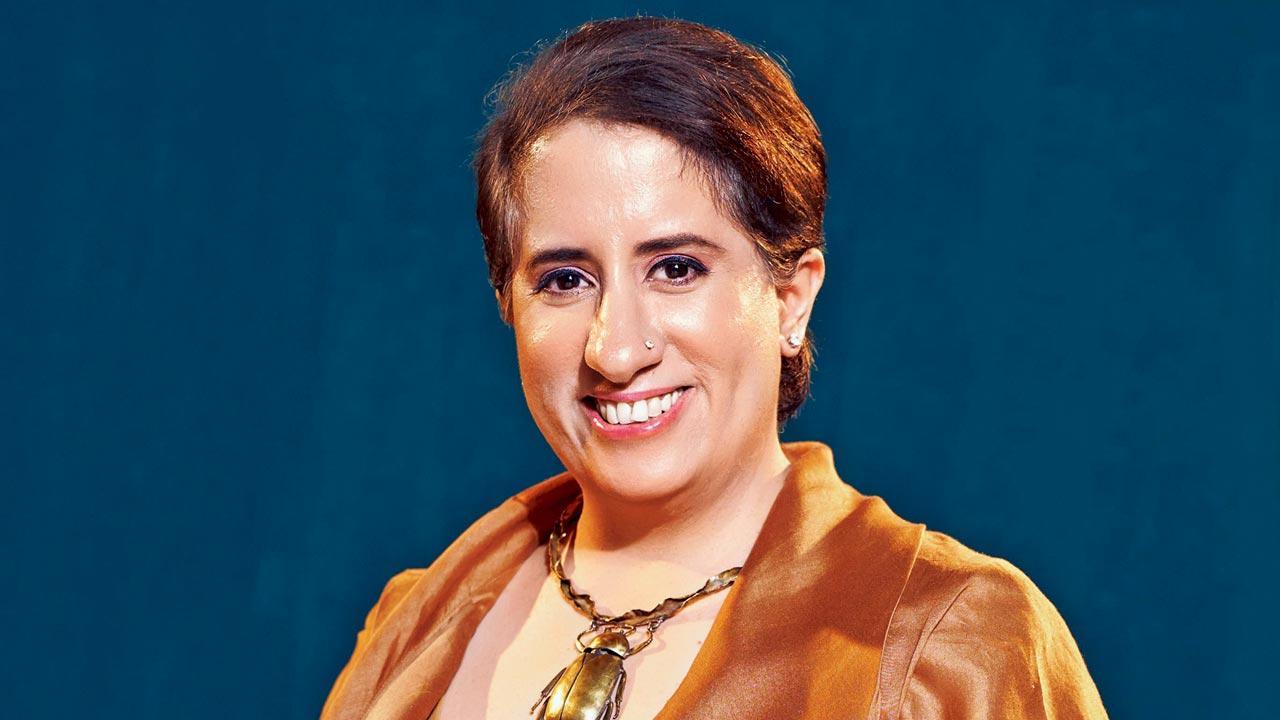
Guneet Monga (BOMBAY TIMES; June 12, 2026)
For those who’ve never been to Cannes, let me paint a picture with a familiar reference from home. Imagine a road by the beach in Juhu or Versova, Mumbai, a long stretch buzzing with activity. Now imagine that same road transformed into the epicentre of the global film industry for ten days. At Cannes, you walk constantly, between screenings, meetings, markets, and events. It’s a fitting metaphor for the journey itself: you walk for years, building relationships and credibility, so that one day your films can run.
That’s Cannes. It’s a place where filmmakers, producers, distributors, sales agents, festival programmers, financiers, and industry stalwarts from across the world converge in one compact space. You’re not just there to pitch your project; you’re there to shape its future, finding collaborators, planning its festival journey, discovering opportunities, and building connections that can last a lifetime.
Few places bring together so much cinematic ambition, talent, and possibility under one roof, or rather, along one strip of land.
This year marked my 15th year attending Cannes. As I walked through the city, I found myself revisiting the places that have defined my journey there, the cafes where deals were first discussed, the meeting spots that led to lasting collaborations, and the theatres that hosted premieres of films that went on to become milestones in Indian cinema, including The Lunchbox, Gangs Of Wasseypur, and Masaan.
For almost two decades in the film industry, I’ve lived by instinct, courage, and a lot of hustle. Finding my way through spaces I had once only dreamed of entering, and slowly realizing that sometimes the most powerful thing you can do is stop waiting for a seat at the table and build your own. That idea stayed with me for years. I’ve learned that talent was never the problem for women in cinema. Access was. Networks were. Exposure was.
Perhaps the most meaningful shift has been moving from navigating these rooms myself to helping others enter them. Through Women in Film India, we’ve been building bridges between Indian women filmmakers and the global film ecosystem, supporting three women at Cannes last year and four this year, creating opportunities for the kind of access and networks that can change the trajectory of a career.
This year, for the first time, two Indian women, out of just ten participants selected globally, were chosen to attend the impACT Lab at the Marché du Film in Cannes. Through a nationwide search conducted by Women in Film India, we were proud to support their journey to Cannes. In addition, two more Indian women producers were selected to participate in the prestigious Producers Network programme, further strengthening the presence of Indian women filmmakers and producers on one of the world’s most influential film industry platforms.
Not as guests, and definitely not as plus-ones. They walked in as scholars, selected through a national open call, evaluated by an industry jury, and sent there with the specific purpose of learning how the global film market actually works. They sat in rooms alongside filmmakers from across the world, participating in conversations that most Indian filmmakers never get access to at all.
That is the Cannes I come to every year. The one in the photographs is a different place entirely.
Over the years, I’ve realized that Cannes is often misunderstood as a place of screenings, red carpets, and parties. While all of that exists, the real value of Cannes lies elsewhere. It lies in the possibility of a conversation.
It is one of the few places in the world where every stakeholder in the film ecosystem comes together in one concentrated space. What matters is having the courage to walk up to someone, introduce yourself, share an idea, and begin a conversation. A single meeting can lead to a co-production partner, a festival strategy, financing support, international distribution, or a creative collaborator who stays with your project for years.
For independent filmmakers, especially, Cannes opens doors that may otherwise remain inaccessible. It is a place where films find advocates, where international partnerships are formed, and where entire futures can be shaped through a chance introduction. The connections you make there often outlast the festival itself and continue to influence your work for years to come.
The festival may command the headlines, but the market is where possibilities are created and where films truly begin their journey into the world.
India makes more films than almost any other country on earth, and yet our presence in these rooms remains disproportionately small. The reason is structural. Cannes operates on relationships built over years, on institutional backing, and on a deep understanding of how the global film ecosystem functions.
Think about what it takes to build that kind of presence. France has spent decades negotiating bilateral co-production treaties, funding international distribution, and maintaining a permanent infrastructure at Cannes that works on behalf of its filmmakers every single year.
If India is serious about strengthening its place in these global conversations, there is much to learn from countries that have approached international markets strategically. South Korea offers the clearest example. At this year’s Cannes, the Korean Film Council’s KO-PICK programme placed Korean producers directly within the Producers Network, backed by government funding, structured market access, and long-term international relationships. This is the result of decades of strategic investment, not just in producing films, but in ensuring those films have pathways to travel, find partners, and compete globally.
The lesson is not that India should replicate Korea’s model exactly, but that global success is rarely accidental. It is built through sustained participation, institutional support, and a commitment to creating opportunities for filmmakers beyond national borders. India’s support for independent cinema on the international stage is still evolving, but if we want our stories to travel further, we must invest not only in making films but also in building the networks, partnerships, and market presence that allow them to thrive internationally.
Co-productions fundamentally expand what is possible for a film. They unlock access to international financing, public funds, distribution networks, and long-term partnerships that are often unavailable to purely domestic productions. For a country with extraordinary stories and filmmaking talent, India’s next challenge is building the infrastructure around that talent, the market relationships, institutional support, and global presence that enable films to travel. Every producer who enters spaces like the impACT Lab or the Producers Network contributes to building that ecosystem, one conversation, partnership, and opportunity at a time.
The future of Indian cinema on the global stage will require filmmakers and producers to view Cannes not as a destination, but as an ongoing investment in their work. It means saving up to be there year after year, preparing months in advance, setting up meetings before boarding a flight, attending networking events with purpose, following up relentlessly, and understanding what international partners, programmers, and financiers are looking for rather than simply asking them to look at our projects. The opportunity is already there. The stories are certainly there. The talent has never been in question. What remains is our willingness as an industry to engage with the global ecosystem strategically, patiently, and collectively. If we do that consistently, the next decade of Indian cinema will not just be about taking films to the world, it will be about helping shape the future of world cinema itself.
And then there is the magic of Cannes that no schedule can account for. One of our scholars casually ran into Pedro Almodóvar. I found myself crossing paths with Pan Nalin, whom I had interned with nearly twenty years ago. That’s the thing about Cannes: every step of the way, you run into people you’ve admired for years, and people who may become part of your journey in the years ahead. The distance between a chance encounter and a life-changing opportunity can sometimes be just a few steps. At Cannes, you never really know what might happen next, and that’s precisely what keeps people coming back.
Cannes is like the stock exchange of global cinema-Guneet Monga
9:14 AM
While the glamorous red carpet and the race for the prestigious Palme d’Or dominate public perception, that’s not why most people travel to the Cannes Film Festival. In fact, in the words of Guneet Monga, Cannes is “like the stock exchange of global cinema.”
At the heart of this film fest is the Marché du Film, the business arm of the Festival de Cannes, a market designed exclusively for global film professionals – including buyers, sales agents, producers, and financiers – to gather to present upcoming projects, negotiate distribution rights, and initiate co-productions.
From festival to blockbuster
But does a festival run translate to commercial success? Absolutely. Just look at The Lunchbox (2013). As the film’s producer, Guneet used the Cannes Producers Network breakfasts to secure an international co-production. That exposure didn’t just fund the film; it created a global marketplace. The Lunchbox is a blueprint for how standard market access at Cannes can catapult a localized Indian story onto the global stage.
Annually, the Marché du Film unites more than 15,000 industry professionals from over 140 countries under one roof. It acts as a launchpad where nearly 4,000 films and early-stage projects take center stage. Industry insiders can explore an unparalleled variety of content, with over 1,200 screenings – ranging from highly anticipated blockbusters to hidden documentary gems – running across 31 premium screening rooms.
What really happens at Marche du Film
Guneet Monga explains, “Some films at Cannes are literally here to be sold. At Marché du Film, market screenings happen where filmmakers, producers, studios, streamers, distributors and buyers from across the world make multimillion-dollar decisions.”
One such success story is Parasite (2019). Long before it made Oscars history, Bong Joon-ho’s masterpiece sparked an absolute frenzy at the Marché du Film. Neon snapped up the North American rights early on, while international sales agents carved out record-breaking territorial distribution deals across Europe, Asia, and Latin America. The massive baseline of guaranteed global theatrical distribution secured at the market laid the groundwork for its historic box office and award-season run.
Todd Haynes’ dark comedy-drama May December (2023) became one of the buzziest market titles in recent years. Following its screening, Netflix swooped in with an $11 million domestic rights deal for North America.
Payal Kapadia’s All We Imagine As Light (2024) is arguably one of the most brilliant and textbook examples of how the Cannes ecosystem – from early-stage market incubation to competitive screening and subsequent global distribution – can completely manufacture an international arthouse phenomenon. Before it made history as the first Indian film in 30 years to compete for the Palme d’Or, ultimately winning the prestigious Grand Prix, its entire existence was stitched together by European coproduction markets and Cannes-associated incubation pipelines.
I have never had a 100 crore film. But I am among the most successful producers-Guneet Monga
5:07 PM

Anshul Chaturvedi (BOMBAY TIMES; April 23, 2026)
The focus on cinema is often divided between the flamboyance of the faces we see on screen and the creative minds behind it – the directors, the lyricists, screenwriters, musicians, cinematographers, etc. But the credit that rolls out last – that of the producer – is not usually as fascinating for those of us who write on, or read about, the world of cinema. Logistics, finance, permissions – where’s the romance or the flamboyance in that, eh?
Guneet Monga, as the only Indian producer so far, to hold an Oscar in her firm grip, forces you to rethink that. The self-taught go-getter of a girl who left Delhi for Bombay, heartbroken, in her early 20s, having lost both parents. The hustler par excellence who feels she just took ahead the school prefect confidence. The daughter who today feels she is closer than ever to her parents, who attributes all her swag and her mindset of abundance to the core beliefs that her dad instilled in her. The production geek who understands the global business of cinema and thinks India has barely scratched the surface. The daughter-in-law who today wants to spoil her mother-in-law in the way she couldn’t spoil her mother. Guneet’s trajectory and life are as filmy as it gets. Read on:
Describe your learning curve to becoming the first Indian Oscar-winning producer.
I began working in films very, very early. Meri pehli internship thi 2004 mein with Anureeta Sehgal, joh meri best friend ki mother hain, for Valley Of Flowers. It was a Pan Nalin (whose Chhello Show went to Oscar) film. Subsequently, poora liaison ka kaam main karti thi. End to end – from equipment to ministry. I built a bond with American, French, Italian producers. I used to get Rs. 2 lakh per week at that time in dollars. Logistics did not scare me. Maybe because I was a prefect in school – we used to put up large scale events and wohi core of leadership ban gaya tha.
I was flown to Ladakh for my first film. It was August 15, 2004. Meri life ka itna bada high tha. But I had just spent a couple of days when I got a call ki mummy ko cancer nikla. And so, the very next day, I had to come back. Maybe, if I had stayed for that shoot, had been on set, my life journey would have been in another direction. But because I came back and then I handled all the logistics of the film from Delhi, it kind of defined my life, I constantly took on producer roles.
My mother passed away in 2008. It was a four-year journey. I was with her throughout. She was pushing me to go to Bombay. My friends were all in FTII, SRFTI, Jamia for post-graduation. Mujhe lekin course nahi karna tha, mujhe paise kamane thay, ghar khareedna tha parents ke liye. They were living in a rented place (after having to leave father’s family house in very difficult circumstances).
I learnt on the job. I did a lot of freelance international work. I was also a location scout; I was hired for one year by the producer of The Lord Of The Rings, Tim Sanders. I had to go pan-India and find locations for a sci-fi film that was supposed to star Johnny Depp. That film never happened. But it built me many contacts. I became somebody who was a very integral part of any film setting up in India. I was often the first one hired and then the line producers.
I worked on a Canadian TV film, Murder Unveiled, directed by Vic Sarin. After wrapping that film, Vic Sarin landed back in Delhi to work on a project of his own – Partition. He asked me to run the film as his line producer and assistant. Sarin empowered me to take charge. I learned a lot.
After post-graduation, my friends were moving to Bombay, and my mother also wanted me to go. So I went, but har weekend flight le ke ghar aati thi kyunki main dollars mein weekly kamati thi. I did this for one year. And then she got better and life was good.
The cancer relapsed in 2008. And it got very bad. She passed away in July. I had barely come to grips with that when, very unexpectedly, dad had a sudden heart attack in February 2009. And so I lost them both in six months.
When she was dying, my mother used to talk to me, she also knew Dad was very unwell. She would say tu kya karegi humare baad, tu maasi ke paas chali jaana. And I would say bakwaas mat karo, kuch hoga hi nahi. I was delusional.
My maasi herself lost her 21-year-old son three months after my mom’s death. So it was July, my mom; November, my cousin; February, my father. My maasi went into depression. Mummy ka grand plan tha ki maasi will be your guardian after we are no more, but that never happened.
How did you recover?
I have lived through so much personal tragedy in my twenties, so much. Insaan khatam ho sakta hai uss se. But it was my dad’s resilience and joy that kept me going. Money has come to me easily; kabhi paise ke liye kaam nahi kiya, kabhi nahi. I have never negotiated and I have always gotten in abundance, because it is my dad’s mindset. Main apne kaam se bahut pyaar karti hoon, toh mujhe kaam karna hai. Paisa, they will manage, the universe will manage.
Tabhi main itne logon ki anxiety handle kar paati thi as a producer kyunki mujhe anxiety nahi hoti thi... because of my dad.
Then I moved to Bombay and sought work. I just had to stay occupied to keep my mental sanity. I was interviewed by Ekta Kapoor for Balaji. They asked me what I was expecting and I said it doesn’t matter, give me Rs. 25,000, I just need to keep busy. They were very surprised but didn’t say anything. But when the first cheque came, it was for Rs. 1,25,000.
And then, I worked with Anurag Kashyap. I went to school basically working with Kashyap. Six years, I was his producing partner. Gangs Of Wasseypur, Shaitan, Shahid... Bahut saari filmein banayi with AKFPL (Anurag Kashyap’s production house). I learnt how you make a good script better. How do you add value on content? What is good writing, what is good material, what do you take back, how do you impact?
Kashyap said meri picturien international hain, so yeh meri life ka mission ho gaya – to find international platforms for them. Main 40-40 ghante ki flight lekar kahin bhi pahuch jaati thi to pitch for a film. I have lived in Paris with no money in Pan Nalin’s house for almost a month to be able to pitch my films, get sales agents, build the word – and then they got selected in Cannes. That is the role of a producer, Kashyap used to tell me. So, I was like okay, I’ll do it. Like that, karte karte bahut travel kiya, har film festival gayi.
Today I stand at a career where I have had 9 film premieres at Cannes, 16-17 films in Toronto, 3-4 in Sundance, 4 in Venice, 4 Oscar nominations for my films, 2 wins. And this whole international vocabulary that I built was because Kashyap used to tell me to go out and figure how we can sell our films. In my 20s, I was able to do that.
Jab The Lunchbox release ki Karan Johar ne, and following him, I learnt marketing. Suddenly I became an intern. I have a beautiful relationship with Karan. He is a friend, a mentor; he does not even realize ki itna kuch life lesson sikha ke chala jaata hai. He is one person who has never made me feel like I am young. He has treated me like an equal. Karan is an absolute cinephile. I feel he has a talk show and an image in the janta, but like Kashyap, he is an absolute cinephile. Knows about history of cinema like no one else. When you travel, you understand how films are distributed around the world. And it is amazing. And we have not even scratched the surface of it.
Why would you say that? We read about record-breaking overseas collections fairly often, don’t we?
The numbers are not comparable. In 2000, Crouching Tiger Hidden Dragon made like 300 million dollars. Humne 30 million nahi cross kiye hain. Abhi Dhurandhar ke kya latest stats hue honge – 30-35 million. Aur usse pehle everything is about 24 million. We have not cracked global distribution – because global distribution is above 100 million, 200 million, 300 million. There is a conscious effort in how distribution is done. Hum log sirf diaspora ko distribute karte hain.
So now I am a producing geek. I know so much about global business, about worldwide business. I have innovated distribution in The Lunchbox and in Kill. Kill became Lionsgate’s first-ever acquisition for India. Sony Pictures Classic had bought The Lunchbox. These are not diaspora sales. These are all A-list sales. Kill released in a thousand screens in US. These are all huge things in our industry to pull off. John Wick’s director Chad Stahelski has acquired the remake of Kill.
These are the things I have done, I have been able to propel IPs on, and that is my joy as a producer. We got invested in by Jio in February, so I have built a production company of value that got invested in. They took 50% of Sikhya and so, we were able to encash these years of mehnat. To be able to make that level of business where you are doing a merger with a company... and I feel I just got started at 42.
Doubts, criticism, pressure?
Gurbani mein Kabir ji ke kuch dohe hain jinko sun kar mere dwar khul gaye. A lot of things about criticism, about what someone said, who is unhappy with you, who you have to impress – it stopped affecting me. A lot of brain cells get damaged in sorting ki saamne wala kya bol raha hai. So it was actually taking your own power back from the world and being sure of what you are doing. And you need that, because we are in such a subjective industry. When you are making a film, har koi aa kar bolta hai ki bakwaas hai. Ya log kehte hain ‘mujhe samajh aa gayi, pata nahi logo ko aayegi ki nahi’ – this is classic. Art is so subjective. And then today, validation lies only in the box office.
As in crossing 100 crores, and so on?
To be honest, I have never had a 100 crore film. But I am among the most successful producers. In India, if you have a 100 crore film, you have validation. But if I have made a film in 15 crore and I have made 30 crore from it, I am very high ROI and I am very successful. Aur maine yeh therapy mein bhi seekha. Otherwise, you make it to the front pages basis this. Jisne 100 cr kamaya woh accha hai. Jisne 500 cr kamaya woh bahut hi acchha hai. Acche bure mein farak aaj hum paison se dekh rahe hain... Where have we led ourselves?
Mere saath to aaj tak aisa hua nahi. Hoga ek din, main banana chahti hoon ek film jo itne paise kamaye. Lekin mera jitna access tha maine uss dayere mein kaam kiya. Mera access first-time directors thay. Mera access younger actors hai. I work with people who want to work with me. So I have never waited in the line for validation or for bigger access – ki yeh actor yes bolega tabhi yeh picture banegi.
Does production need you to be hardheaded as a professional, distinct from the clearly sentimental, emotional individual persona?
No, I am not hardheaded. I am just clear. I’ve learnt to have clear conversations. Because we are dealing with bad situations all the time. We are dealing with unfulfilled dreams all the time. When you are making a film, aap ka director, aap ka actor, kuch bhi bol sakta hai. You are constantly dealing with expectation management.
I have never been fascinated by vanity. And that comes from my dad. Because I have been able to hold my own. ‘This is how we will shoot. This is how we will do it. This is what you will expect. This the time it will start, this is the time it will end’ – very clear conversations. I have just decided to be clear. Because we are always negotiating.
But when you take off the producer’s cap, are you not inherently a much more sentimental, softer person?
Yeah, yeah... even at work. I am from the heart. But the brain is practical, towards the money. That combination makes me a good producer, I believe. Because you need a lot of empathy to be a producer.
Itne gaane nahi afford kar sakte... uski shoot nahi afford kar sakte... yeh nahi kar sakte.. itne halls mein release ho jaaye... articles chhap jaayein... sab ko sab kuch chahiye hota hai. Everyday is expectation management. Every day!
I pray for clarity. I only pray for clarity. Otherwise, there is no end. Your skill set is specific to the cinema industry, but at the core of what you do is the approach, the self-belief, for which you give all credit to your father. Your differentiator, to me, is your execution and mindset. Yes, it is the execution.
But you see, when someone like that, like my father, says ki aap kabhi bhookhe nai soge, bindaas raho – toh bahut stress khatam ho jaata hai. Aisi-aisi cheezein sikhai hain na papa ne mere... Ki kabhi paise khatam ho rahe ho na, toh saare kharch kar dena. Bachana mat. Mann nahi maarna. Kyunki maine tumhe itna padhaya hai. Tum kuch bhi kar sakte ho. You will be able to fend for yourself.
That taught me abundance. That taught me my relation with money – it was never of scarcity. And that is why I could do what I did. My mindset is very different. Every penny on the screen – it should be the best version.
That mindset took us forward. Producer ka ek mindset ho jata hai – jo de rahe ho, thoda kam de do, thoda kam spend kar do. Woh hai hi nai, bachapan se hai hi nai. (Pauses) Bas yeh regret raha hai... Mummy kabhi India se bahar nahi gayi thi. Unko duniya dikhani thi. Venice film festival mein mujhe kamra mila thaa joh samundar pe khulta thaa. And I was asking myself, main yeh kya duniya dekh rahi hoon? And my parents can’t see it.
That is my angst. Which will always stay.
PART 2:
The story of Say Salaam India: Rs. 75 lakh, 27 volunteers on bikes, and 350 shows
Guneet started her journey as a production coordinator in Delhi for many international films before turning producer. She recounts the story of one of her initial films that tested her commitment to the profession and her level of hustling
Maine Delhi mein bahut international films ki thi. Mere neighbour, Kamlesh Aggarwal, ek din aaye with a business idea: ‘Newborn babies ki videos bana kar parents ko bechenge.’ I asked him, aap kitne paise lagana chahte ho ismein? He said 50 lakh. I said, bahut waahiyat idea hai. Instead, aap mujhe 50 lakh de do, main Bombay ja kar film banaungi. I was 22-23, and had only seen Bombay on a school trip.
Since I used to work on international films in Delhi, I knew the light vendors in Bombay – at that time Delhi didn’t have the big lights, toh main Bombay se mangwati thi. So the light vendors, gaffers – woh sab mere dost thay.
I started asking them, kisi writer–director ko jante ho? Mere paas 50 lakh hai, main film banana chahti hoon. Food court mein meri ye meetings hoti thi. Unhone mujhe kuch ADs, writers, directors se milwaya. Some thought they could con me. But I was like – ‘No. I’m from Delhi. I know better.’ (Laughs) Dilli ka khoon hai. Jugaad 101.
Then I met the wonderful Subhash Kapoor, who is also from Delhi. He has now made films and shows like Jolly LLB, Maharani. Unki pehli film thi – Say Salaam India. He told me the story – it was a classic underdog story. Very Jo Jeeta Wohi Sikandar. This was in 2006 and 2007 mein World Cup tha. We were thinking hum kitne amazing hai, 2006 mein film bana kar 2007 mein World Cup ke dauran release karenge.
So I had 50 lakh, Subhash ji had 50 lakh. The film’s budget was 1.5 crore, so we both raised 25 lakh each. We made the film with Milind Soman, Sanjay Suri, Shweta Nigam – lots of amazing actors. That was my first feature film as a producer. We were also able to raise marketing money because there was a lot of surrogate marketing with World Cup.
Then in the Group stage India lost the first match. People were furious, matlab putle jalne lag gaye. But in the next match they made some 420 runs. They were our heroes again. Meanwhile, my movie was ready for release. Humein kaha ja raha hai – dekho, India pe 2,000 crore lage hain toh haarega nahin. Adlabs came on board to market and distribute the film. Ek independent filmmaker ke liye bahut badi baat thi. Then came the third deciding match to go to the next round – there was so much hype, people were doing hawan, etc. My film was supposed to release the next Friday. And India loses. Phir se putle jal rahe hain. Dil toot gaya hamare desh ka.
Then the cinema halls started calling – ‘Ye dabbe (film reels) wapis le lo, purani picture de do. Agar abhi cricket ki baat kar di na toh log theatre jala denge’.
And I was in shock. I was like – main producer kaise banungi main agar ye paise wapis nahi kar sakti! And, I had actually taken a job for Ghajini. It was very exciting for a young producer. But I had to leave it. I told the producer that I have to go figure out my film. Mujhe paise recover karne hain.
And I came back to Delhi. I went to my school – Bluebells. They used to sometimes take kids for movie screenings for Rs. 50 per student. I told my principal, ‘I have made this beautiful film and it’s for children. Would you please do a paid show with students?’ And she said yes. Then I went to Sapna Cinema, which was behind my house and asked how much do they make from the morning 9 am show. They said Rs. 3,000-5,000. I booked the hall for Rs. 10,000, a 1000 students came to watch the film and the teachers gave me Rs. 50,000 – Rs. 10,000 went to the hall and 40,000 mere. This was the first paid show.
And kids loved the film. I heard a thousand kids jump and celebrate and laugh. And I remember – my parents standing there with a 1000 chocolates – Rs. 5 wali. The principal had great feedback and I asked her for a letter of appreciation. I took it straight to DPS RK Puram – 25,000 kids. The minute DPS RK Puram got on (board), all the DPS of the city got on (board).
And it got overwhelming for me. It took a week to crack one school. So, I went to my college to get student volunteers. I told my principal that I will get all volunteers internship letters from Adlabs studio. So I got interns for the next 2–2.5 months – 27 boys on bikes. They’d all come to my house in the morning, mummy aloo parantha banati thi, then they would go to different schools. There was one day when there were 50 shows in Delhi simultaneously.
Then I went to the offices of Lintas, and told then I have so many shows happening, I will give you the interval, you can bring brands in. Those brands gave me Rs. 10,000 per show. So, per show I increased my revenue. I had my volunteers stand in front of every screening with the audio CDs – Rs. 10 cost, we sold them for Rs. 25 each.
Aise karte-karte 350 shows kiye and we recovered all the money. We did shows in Sonipat, Panipat, Karnal, Chandigarh – school after school. It took nine months of my life. But I gave the money back to Kamlesh ji.
And I became a producer.
--------------------------------------------------
"The journey of a producer is so different and so difficult. I’ll not want to water it down. It is very difficult. Things take two-three years. There is no instant gratification. You are not making a reel. Three years is a long gestation period"
- Guneet Monga
Ayushmann Khurrana-Sara Ali Khan's spy comedy nears completion; makers shoots a patriotic song
10:28 AM

Sources say Ayushmann Khurrana and Sara Ali Khan’s spy comedy, which was stalled earlier, is nearing completion; leads recently shot an Independence Day celebration song
Upala KBR (MID-DAY; March 13, 2026)
In January, mid-day reported that Ayushmann Khurrana and Sara Ali Khan’s yet-untitled spy comedy was in limbo ever since the first schedule was concluded in 2024 (Intermission comes before the film, Jan 20). Things appear to have swiftly progressed on the Karan Johar and Guneet Monga production in the last two months. It has been learnt that the leads shot an extensive schedule in Mumbai in February, including a massive song sequence.
Originally, first-time director Aakash Kaushik wanted to film the song, titled ‘Jai Hind’, in real locations in Delhi and Mumbai. However, when that didn’t materialize, the makers decided to shoot it on a set at Madh Island in Mumbai.
A source told mid-day, “‘Jai Hind’ is set against the Independence Day celebration that happens in Delhi. More than 700 dancers and junior artistes were roped in for the song that depicts the Independence Day parade. Karan and Guneet felt that a colourful, patriotic song, mounted on a grand scale, would add to the spy comedy’s appeal. It appears at a critical juncture in the movie. Ayushmann and Sara shot the track in two days.”
We’ve heard that the unit has an end-credit number to be filmed before Kaushik can call it a wrap on the project. The makers are apparently eyeing a mid-2026 release.
Film studios see M&A wave as Reliance picks up stake in Guneet Monga's Sikhya Entertainment
10:10 AM

Javed Farooqui & Rajesh N Naidu (THE ECONOMIC TIMES; February 4, 2026)
Mergers and acquisitions (M&A) in the film studio business are expected to be a key theme in 2026, with Reliance Industries Limited (RIL) emerging as the latest player to scale up its presence by acquiring a majority stake in Sikhya Entertainment, the production house behind the Oscar-winning documentary film The Elephant Whisperers.
RIL, through its wholly owned subsidiary Reliance Strategic Business Ventures Limited, has acquired a 50.1% stake in Sikhya Entertainment for Rs 150 crore. The acquisition strengthens Jio Studios and deepens Reliance’s footprint in the media and entertainment space. RIL is also the majority owner of JioStar, India’s largest media and entertainment company.
As part of the partnership, Jio Studios will jointly own the intellectual property rights of future films and web series developed under the collaboration. Sikhya Entertainment is known for critically acclaimed films such as The Lunchbox, Masaan, Haraamkhor and Jugnu.
The transaction adds to a growing list of consolidation moves in the Indian film industry. Late last year, Universal Music Group acquired a 30% stake in Ritesh Sidhwani and Farhan Akhtar-promoted Excel Entertainment at an enterprise valuation of Rs 2,400 crore.
Earlier, RP-Sanjiv Goenka Group-owned Saregama invested Rs 325 crore in Sanjay Leela Bhansali’s Bhansali Productions. In 2024, Adar Poonawalla acquired a 50% stake in Karan Johar’s Dharma Productions, while in 2022, Nepean Capital bought a 50% stake in Maddock Films at an undisclosed valuation.
Industry experts say these deals reflect accelerating consolidation, as large corporations back proven creative studios to secure scale, talent and intellectual property. According to Sacnilk, total India gross box office collections in 2025 stood at Rs 13,415.21 crore across 1,572 films, while total India net collections were Rs 11,371.82 crore during the year.
“There has been a flurry of deals in this sector over the last year or so, with four transactions in the movie production space. This reflects heightened equity activity and highlights both the potential and growth opportunity within the industry,” said Nitin Menon, managing partner at NV Capital.
“Overall, these developments have strengthened sector sentiment and supported the broader growth of the film industry, while enhancing domestic and international recognition in terms of capital formation,” he added.
Anushree Rauta, equity partner and head of the media, entertainment and gaming practice at ANM Global, expects more such deals in the coming years. “Equity participation allows for deeper control over content strategy, rights exploitation and global monetisation. We are likely to see more studio, platform and music label-led strategic equity partnerships as companies move upstream to secure proven creative pipelines,” she said.
She added that such transactions require nuanced governance, particularly around multi-layered IP ownership, greenlighting authority, creative control and future exit rights. The acquisition of a majority stake also marks a shift from transaction-led content deals to long-term strategic ownership.
“A majority acquisition of this nature reflects a move towards long-term strategic ownership. For boutique production houses like Sikhya, the success of the partnership will hinge on preserving creative autonomy while leveraging institutional capital and distribution at scale.”
One of the clear advantages of this investment is that Jio Studios seals its presence across the spectrum of film-making—mainstream (big-budget, mid-budget) to indie films (passion projects of independent filmmakers made on shoe-string budgets). The studio has widely been associated with mainstream big-to-mid-budget films such as Dhurandhar, Stree, Mrs and Laapataa Ladies.
“Sikhya Entertainment is known for mid-sized indie films. So, one should look at the deal from that point of view. Jio Studios is already known for producing big-to-mid-budget films,” said Rahul Merchant, Partner, Mayavi Entertainment and a veteran who has been distributing indie films for more than twelve years in India.
Besides this, Jio Studios benefit from hard-earned experience of Guneet Monga and Achin Jain, founders of Sikhya Entertainment, in making strong in-roads into the global film distribution market.
“Both Guneet and Achin have in-depth understanding of the global markets. Therefore, this deal is likely to create path-breaking content which will travel across the diaspora audiences and get them more excited about Indian content,” added Merchant of Mayavi Entertainment
Concurring with this view, Utpal Acharya, chief executive officer of Content Engineers, said, “With Sikhya Entertainment’s creative strengths and Jio Studios’ scale, the partnership is well placed to contribute to meaningful growth in both cinema and series, rooted in India and aimed at global markets. I have personally witnessed Guneet’s journey in the Indian film space, and she truly deserves this.”
The Oscar Hustle: Calculations, campaigns and crores
9:40 AM

Niharika Lal (BOMBAY TIMES; January 21, 2026)
Insiders once associated with Harvey Weinstein have famously described Oscar campaigning as a “blood sport.” For Indian films, which largely compete in the International Feature Film category, entering this arena is a daunting challenge. The goal might be simple but what’s difficult to achieve is ensuring Academy members actually watch the film. As voters are not required to see every submission, visibility is everything, but it comes at a high price.
Karan Johar, who has backed the Oscar-shortlisted Homebound, recently highlighted the staggering financial and logistical hurdles involved, describing the campaign process as a “bottomless pit.” So what does it take to ace the Oscar campaign?
‘It’s about positioning the film in the minds of Academy members’
It’s the season of the Oscars – or rather, the season of the Oscar campaign trail. PR firms are hired. Strategists are deployed. Social media campaigns are organized. Several people work their phones to drum up support.
And it costs a lot. By some estimates, an Oscar campaign may cost even more than making the film.
Dheer Momaya, producer of Chhello Show, which was India’s official entry for Oscars and won shortlist nomination, says, “Running an Oscar campaign is one of the most challenging and misunderstood parts of filmmaking. People often call it lobbying, but it’s really about positioning a film in the minds of Academy members and, most importantly, getting them to actually watch it and vote for it.”
He explains, “That requires a sophisticated strategy and usually multiple publicist separately for North America, UK and Europe, each organising high-profile screenings at premium venues. In Los Angeles alone a single screening at places like the Ross House can cost $50–60,000, the Four Seasons around $30–40,000, and then there are events at Soho House in London or MoMA in New York. Beyond screenings, there is an enormous advertising push. Full-page ads in the LA Times, The New York Times, Variety and The Hollywood Reporter, and often billboards on Sunset Boulevard targeted directly at voters.”
‘AN OSCAR WIN UNLOCKS LONG-TERM VALUE FOR THE IP AND GLOBAL VISIBILITY.’
The campaign run can be one expensive marathon for the film. “It’s not unusual for the campaign to cost more than the film itself,” shares Dheer, adding, “Neon reportedly spent around $20 million on Anora when the film cost about $5–6 million, and Apple invested a similar amount for CODA. Distributors do this because an Oscar win unlocks long-term value for the IP and global visibility. Each branch of the Academy, directors, writers, editors has to be engaged separately, especially when competing in multiple categories. I saw this firsthand with Last Film Show; we were up against Netflix titles like Bardo and All Quiet On The Western Front, with campaigns well over $10 million, flying teams across continents for Q&As from Tokyo to Los Angeles. It’s exhilarating, but it’s also an expensive marathon few people truly see from the outside.”
So many expensive campaigns (including Paheli, Gully Boy, Peepli Live/Taare Zameen Par, all from huge banners) did not make it, even though they spent money. Producers say that however, it’s not just about the money, the film has to actually resonate with the academy voter base.
You don’t have to rely on screenings. What you rely on is the buzz: Kiran Rao
Screenings are crucial for the buzz they create, far beyond just getting eyes on the screen, said Kiran Rao in an interview last year. “Everyone’s films are now online. You don’t have to rely on screenings. What you rely on is the buzz. The multitude of online viewing options means it’s still easy for some films to be overlooked. The sound surrounding it has to be pretty loud. Back then, screenings were the only option, and you relied on word-of-mouth to get people to come. You do screenings regardless of the fact that your film is available online,” she explains.
Oscars are an American awards, you have to work with American distributors: Guneet Monga
Guneet Monga explained to us in 2023 when The Elephant Whisperers won the Oscar for Best Documentary Short Film, “I’ve been trying to articulate and explain for so many years that you have to get into that country’s distribution. It’s important to select films with US distribution because hum log jo wahan ja kar campaign karte hain, at that time, we have like 40 or 30 days for the campaign. In 30 days, you can’t learn the market and ace it, right? Woh campaign khatam ho jata hai, and by the end, every filmmaker is like achha, ab humein samajh aaya karna kya hai. It’s basically American awards, so you have to work with American distributors. It’s the core of it. Lagaan got nominated (for the Best Foreign Language Film at the 74th Academy Awards) because Sony Pictures Classics did the campaign with Aamir. And The Lunchbox would have been nominated agar India select karta, the film would have gone far. And if we do good campaigns, hum paanch saal mein nominate bhi ho jayenge, jeet bhi jayenge. But as of now, we don’t do good campaigns. With Period: End of Sentence and The Elephant Whisperers, we had an American distributor.”
Main work is to get the members of the Foreign Language committee to watch: Aamir Khan
Ensuring that your film doesn’t get overlooked is key, said Aamir in an interview last year. “There are separate committees for the foreign language category and for the documentary category. The (Academy’s) entire membership doesn’t get involved. Roughly 600 to 800 people sign up to watch these films and then vote. Your main work is to get the members of the Foreign Language committee to watch your film. Given that voters are only required to watch 80% of the submissions, ensuring your film doesn’t get overlooked is a critical part of the process,” he explained.
How strategists pitch films for Oscars
- Awards campaigns often rely heavily on statistics and timing narratives rather than just performances or films. Negative narratives are also a part of the strategies
- As The New York Times notes, narratives don’t always work, but the right one can overpower a bad film.
- Strong personal or comeback narratives can outweigh weak or poorly reviewed films, as seen with Brendan Fraser’s nomination for The Whale.
Who runs Oscar campaigns
Oscar campaigns are often run by professional strategists. In Hollywood, sometimes their work starts a year before the award ceremony. These strategists advise where a film should premiere, what should be the campaign platform.
According to an NYT report, "Sometimes several strategists work on a single film, and the war room of an Oscars campaign can grow to be as many as 10 or 20 people.”
Karan Johar sets the record straight on Ayushmann Khurrana-Sara Ali Khan film
3:30 PM

Rishabh Suri (HINDUSTAN TIMES; January 22, 2026)
Tuesday’s rumour mill had its newest target: Ayushmann Khurrana and Sara Ali Khan’s upcoming untitled action-comedy, with reports claiming the film had hit a production roadblock after beginning shoot in 2024, and that its release plans were now uncertain. However, filmmaker Karan Johar has firmly denied the claims in an exclusive chat with HT City.
As per buzz, the shoot of the film, backed by Dharma Productions and filmmaker Guneet Monga Kapoor’s Sikhya Entertainment, had been stuck for a while, with the release allegedly pushed beyond its initial 2026 plan. There was also speculation around whether the project would head to theatres or take the OTT route.
Reacting to the chatter, Johar dismisses it outright: “This is not true. We have 10 days of shoot left, and we are releasing the film theatrically in 2026.”
Director Aakash Kaushik also maintains that the project is very much on track and nearing completion.
Shooting of Ayushmann Khurrana, Sara Ali Khan's action comedy has been halted since 2024; release in limbo
8:54 AM

Sources say Ayushmann Khurrana and Sara Ali Khan-led action comedy’s shoot has been halted since late 2024, owing to uncertainty over its release model
Priyanka Sharma (MID-DAY; January 20, 2026)
Had things gone as planned, Ayushmann Khurrana and Sara Ali Khan would have been gearing up for the release of their yet-untitled action comedy now. Instead, mid-day has learnt that the film, co-produced by Karan Johar and Guneet Monga Kapoor, has been in limbo since its first schedule concluded in late 2024.
A source shared, “It is a quirky, fun story. Everything was on track when the team began shooting the first schedule mid-2024 in Manali, Himachal Pradesh. But after that, the movie, which was to release in the first half of 2026, has been stuck for over a year. The actors and the crew are keen to resume filming, but there’s no clarity on when the project will return to floors.”
So, what exactly is blocking debutant Aakash Kaushik’s directorial venture? Another insider revealed that the makers are apparently indecisive about the release model of the film, which was initially conceived of as a theatrical offering.
“There have been discussions about whether it should take the web route and be released as an OTT original. The talks have been going on for months, while the shoot has been on hold,” said the insider.
The world wants to see how India lives, moves and dances-Guneet Monga
9:20 AM
Shreya Varanasi (BOMBAY TIMES; July 31, 2025)
When The Elephant Whisperers made history at the Oscars 2023, it wasn’t just a proud moment for Guneet Monga — it was a milestone for Indian storytelling. Sharing the spotlight with Naatu Naatu’s big win that same night, Guneet remembers being awed by the impact of Telugu cinema on the global stage.
In a chat with Hyderabad Times, the producer, who was in town for the ‘Golden Lens’ symposium hosted by YFLO, opened up about her journey, the growing resonance of local stories, and her admiration for Tollywood. “I’m a big fan and would love to produce a Telugu film someday, if the stars align,” she said. “I’m always thinking about how I can add value to a project, and if there’s a meaningful way to contribute, I’d be more than happy to be involved.”
‘RRR is one of the best examples of how local stories resonate globally’
For Guneet, the success of Indian films on the world stage boils down to authenticity. “RRR is one of the best examples of how a deeply local story can have global resonance. Whether it’s Baahubali or RRR, our culture, language, and music captivate audiences around the world.”
It’s not just the big, grand spectacles that travel well. Films like The Lunchbox, Masaan, and The Elephant Whisperers also struck a chord globally because they’re rooted, real, and unmistakably Indian, she reckons. “These are the stories the world wants. People may not travel here, but they’re deeply curious about India, our culture, our people, and even our dances.”
‘My memories of Hyderabad are all about great food and vibrant places’
Guneet finds something enchanting about Hyderabad every time she visits. “My memories of Hyderabad are all about great food and vibrant places. And what really fascinates me is the number of lehenga stores! I always find myself looking at those big wedding wear storefronts, they’re everywhere.” There’s one Hyderabad staple she’s looking to discover more of though. “A really good biryani! I don’t have a go-to spot yet, but I’d love to try one.”
‘Many films have left an impact on me’
Whether it’s the timeless charm of Bollywood or the quiet brilliance of international indies, Guneet draws inspiration from across the spectrum. “My first memory of cinema was watching Dilwale Dulhania Le Jayenge. I was completely obsessed with the love story and the romance,” she recalls, adding, “And then I remember watching Boyhood on a flight, it completely blew my mind. I couldn’t stop thinking about how someone could film for so many years (the film was shot across 12 years from 2002–2013) and piece it together. That kind of ambitious storytelling inspires me.”
‘Portrayal of women is something I deeply care about’
Known for championing strong women-centric narratives, Guneet believes the strength of a woman’s portrayal lies in thoughtful writing, not just lead roles. “One of the films I’m proud to have produced is Soorarai Pottru. Though it was Suriya sir’s film, Aparna Balamurali’s character sparked meaningful conversation,” she says, adding, “In The Elephant Whisperers, Bellie stood out so beautifully, just like Huma Qureshi did in Gangs Of Wasseypur.”
For her, what matters most is depth. “Even submissive characters must have redemption. The portrayal of women is something I deeply care about as a producer.”
‘I fall in love with scripts that move or challenge me’
Reflecting on her journey post-Oscar, Guneet said the recognition has opened doors and pushed her to dream bigger. “It expanded what’s possible for me as a filmmaker,” she said. But for her, it’s never about chasing a trend. “I fall in love with scripts that move or challenge me,” she added. Among the stories she’s hoping to bring to the screen someday is a full-fledged female-led action film. “I think we’re ready for that, and I’d love to be part of making it happen.”
‘We’re building a space for women in cinema to connect, be heard & create change’
At the ‘Golden Lens’ symposium hosted by YFLO, Guneet struck a chord with an audience of over 200 with a nearly two-hour-long conversation as candidly she spoke about the highs and heartbreaks of her journey. “Life gave me 10 ‘Nos’ before a single ‘Yes’, but I chose to celebrate every ‘No.’ Because each one took me a step closer,” she said, drawing applause.
She also spoke passionately about the Women in Film – India Chapter, part of the global WIF network. “Less than 10% of Indian film directors are women. That reality deeply concerns me,” she said, adding, “Through this chapter, we want to build a space where women in cinema can connect, be heard, and create lasting change.”
Shweta Tripathi launches her production house Bandarful
9:35 AM

Mohar Basu (MID-DAY; July 26, 2025)
Ten years ago, as Shweta Tripathi starred in Masaan (2015), she saw how the film propelled the careers of many, including that of director Neeraj Ghaywan, actors Vicky Kaushal, Richa Chadha, and her. As the acclaimed film completed a decade on July 24, Tripathi felt ready to launch her own production house, Bandarful. It’s more than a business move; she says the decision comes from the desire to create a space where talent meets opportunity.
“Right from the beginning, I’ve had support from people like Guneet Monga [Kapoor], Anurag Kashyap, and Karan Johar. I never felt like an outsider. I’m happy that filmmakers took a chance on me. They saw beyond the stereotypes and noticed the talent in me. Now, I want to see that in others and give them a platform,” says the new producer.
Often, we wait for others to drive change, notes the actor. By launching the production house, she wanted to take the lead in ushering in new talent. “There are so many talented people. If I have the resources, at least I will be able to provide them with an opportunity. It’s easy to point fingers at others for not supporting such talents, but we first need to ask ourselves: What am I doing for them? That was the original thought behind launching this venture.”
Bandarful’s first film, featuring Tillotama Shome, is in pre-production. Revealing that she has begun casting for her next, Tripathi says she wants to tell stories with like-minded people. “It’s about collaborating with people who care about art and about making a difference.”
Mid-Day Exclusive: The Lunchbox director Ritesh Batra returns with a cross-border love story
8:33 AM

The Lunchbox director Ritesh Batra is reportedly set to reunite with Guneet Monga for a cross-cultural love story led by an Indian actor and an international star
Priyanka Sharma (MID-DAY; June 28, 2025)
Those who have missed Ritesh Batra’s moving love stories on screen are in for good news. mid-day has learnt that six years after his last offering Photograph (2019), the director is ready to call action on his next. Sources tell us that Batra is exploring a tender love story, something that has become his signature in the last 12 years, and will take it on floors in September.
“Ritesh spent a considerable time writing this big romance. The film is in final prep mode,” says an insider. After giving us rooted Indian romantic dramas in The Lunchbox (2013) and Photograph, and international stories in Our Souls at Night (2017) and The Sense Of An Ending (2017), this time around, the director has envisioned a cross-cultural love story with a mix of Indian and international cast.
“It’s a mature romance between an Indian man and a foreigner. It’s the kind of sensitive drama about love and loss that Ritesh has come to be known for,” a source shares. The cast has been locked.
The project will see him reuniting with Guneet Monga Kapoor, who was one of the producers of The Lunchbox. She serves as one of the producers on the international co-production.
From 9 pm to 12:30 am and from 5 am to 9 am, I am pushing Anuja-Guneet Monga
8:46 AM

With Anuja shortlisted for the 2025 Oscars, executive producer Guneet Monga on how she is raising funds to ensure that the short film makes it to the nominations
Mohar Basu (MID-DAY; December 29, 2024)
Guneet Monga Kapoor couldn’t have asked for a better end to 2024. Last week, Anuja, a short film on which she serves as the executive producer, made it to the Oscars 2025 shortlist for Best Live Action Short Film. Adam J Graves’ directorial venture explores the harsh reality of child labour in New Delhi. Recalling their association with the project, Achint Jain, Monga’s business partner, starts, “Anuja is not something we greenlit. Adam and Suchitra [Mattai] are first-time filmmakers, and they reached out to us ki ab kahan jayein.”
That is where Monga and Jain stepped in. As executive producers, they raised money and drove the publicity campaign. Monga says, “There was a lot of fundraising, much more than the budget of the film.” But she understands that the bigger journey starts now. How does Monga, who has two Academy wins to her name, plan to ensure the short film earns a place in the nominations?
“Now that it’s shortlisted, we’re working on its future. From 9 pm to 12.30 am, and in the mornings, from 5 am to 9 am, I am making calls, talking to people, pushing Anuja, writing to people, [figuring] the next layer of funding and how we can take it forward, figuring out distribution and which platform to take it to. All our years of experience comes handy on the journey of a short film. We’re really pushing forward to get to the next round. [We’re keeping our] fingers crossed that we get to the nomination.”
The year 2024 was unbelievable for her. We tell her she has a surplus problem between the Oscar shortlist, Yo Yo Honey Singh: Famous, her latest documentary on Honey Singh and the love she garnered earlier in the year for Kill.
“Both Kill and Gyaarah Gyaarah have been so rewarding. They were our big projects this year. With Kill, we just wanted to make an extreme action film. You get these comments along the way: ‘Kaun dekhega? Kaise karenge?’ But we stuck to making it in its purest form. Be it The Lunchbox [2013], Masaan [2015], or The Elephant Whisperers [2022], the idea is just to tell the best story.”
Now, they are looking ahead with confidence and hope. Their next is a film with Ayushmann Khurrana and Sara Ali Khan. Monga says, “We will make a big announcement in January too. India is back with single producers, the producers who have stood the test of time. It’s the time [for] producers to take the call and have faith in their vision. I genuinely feel producers’ work is underestimated here. But now is the time for producers to resurface.”
Shahana Goswami on Oscar-shortlisted film Santosh: "I have a gut feeling we’ll make it to the nomination"
8:10 AM

As Santosh makes it to the 2025 Oscars shortlist, Shahana Goswami says the film made the cut without an aggressive campaign; executive producer Guneet Monga thrilled as Anuja contends for Best Live Action Short Film
Priyanka Sharma, Mohar Basu (MID-DAY; December 19, 2024)
Tuesday night brought a mixed bag of emotions for Indian film artistes as the Academy of Motion Pictures Arts and Sciences announced its shortlists in various categories. While Kiran Rao’s feminist dramedy Laapataa Ladies, which was India’s official entry to the 2025 Oscars, wasn’t shortlisted for the Best International Feature Film, UK’s entry Santosh made it to the coveted list. When mid-day reached out to Shahana Goswami, who leads the British-India co-production, her joy knew no bounds. “From 85 films to now 15,” she exclaimed, at the start of our chat.
For the leading actor, what makes this achievement particularly special is that the makers of the police procedural thriller—helmed by Sandhya Suri, and also starring Sunita Rajwar—didn’t have an aggressive Oscar campaign.
“We didn’t have crazy showcasing of the film all over the world during this period. I think people chanced upon it and were curious to watch. Many people messaged me that they watched the film as a part of the Academy screeners,” said Goswami.
Had the team anticipated making the cut? In Goswami’s words, the team members were on different paths between “hoping, dreaming, and not thinking much about it.” But now that their labour of love has reached the first goalpost, the actor is feeling optimistic.
She said, “I have a gut feeling that we will make it to the nomination. I know it’s a long shot because only five are selected from these great 15 films. It will be a tough call, and I am okay for me to be wrong.”
The competition will heat up in the next 30 days, as all the shortlisted movies will be promoted aggressively by way of screenings and press events before the Academy announces its nominations on January 17.
When asked about the way ahead for Santosh, Goswami said the producers are figuring it out. “None of us has a sense of the process immediately after this. I am not sure whether there will be more screenings, or the team will fly to Los Angeles. Right now, I am just celebrating this moment.”
Anushka Shah, CEO and Founder, Civic Studios, which presented Santosh in the UK, said it is gratifying that a film that sheds light on the Indian police system is having its moment in the spotlight.
“Santosh is a story that delves into the complexities of India’s police system, a relic of its colonial past. Sandhya Suri has struck a perfect balance between addressing these social issues and delivering a gripping cinematic experience. We’re proud to support such a significant story and ensure it reaches global audiences,” she said.
-------------------------------------------
India had another reason to cheer as Guneet Monga Kapoor’s Anuja found a place in the Live Action Short Film shortlist, and director Smriti Mundhra’s I Am Ready, Warden, was among those contending for the Best Documentary Short Film. Anuja, starring Sajda Pathan and Ananya Shanbag, tells the story of two sisters trapped in the harsh reality of child labour in New Delhi. Monga, who brought home the Oscar in 2023 for The Elephant Whisperers, hopes to recreate the magic with the Adam J Graves-directed short film.
“Being shortlisted for the Oscars is a moment of profound pride and joy. At its heart, Anuja celebrates the unyielding hope and resilience of the human spirit, reminding us of the power of love, connection, and determination. As an executive producer, it has been a privilege to contribute to the campaign. Being acknowledged at this level is both humbling and encouraging, reaffirming our belief in the importance of sharing stories that matter,” she said.
For Graves, the short film has already found its biggest reward. He elaborated, “The performances by Sajda and Ananya are extraordinary, and knowing that Anuja has moved the audience while spotlighting the critical issue of child labour is the most gratifying reward.”
-------------------------------------------
Yashika Mathur (HINDUSTAN TIMES; December 19, 2024)
Actor Shahana Goswami‘s film Santosh, has inched closer to being nominated for the International Feature Film category in the 2025 Academy Awards. She says, “I feel really happy, proud and encouraged by this selection. It’s a moment of celebration for (director) Sandhya Suri [and] for all of us.”
While it was the official entry from the UK, Goswami feels that India should be proud of this milestone, regardless: “I don’t believe in the segregation of ‘This is mine and that is yours’. There is a huge Indian team involved and... the story is still rooted in India. The country has every reason to be proud as well.”
Now shortlisted, the film will compete with 14 other films to get an Oscar nomination. And the 38-year-old is optimistic about their chances: “I am very happy if it plays out that way and if it doesn’t, then it’s okay. But I do have a gut feeling about the film going through the nominations.”
Prasar Bharti asked me to censor a clip of a BJP MLA saying that he backs child marriage-Vijayeta Kumar
8:45 AM

As Kicking Balls premières on Prasar Bharati’s OTT platform, director Vijayeta Kumar on how streamers turned down her child marriage docu despite Oscar winner Guneet Monga backing it
Mohar Basu (MID-DAY; December 10, 2024)
Director Vijayeta Kumar’s Kicking Balls recently premièred on Prasar Bharati’s newly launched OTT platform, Waves. But releasing the documentary—which explores how certain Rajasthan villages are combating child marriage by training girls in football—was tough despite Oscar winner Guneet Monga Kapoor backing it, says the director. It all started in 2017 when Kumar saw a football camp in Ajmer while passing by her school one day.
“I saw many girls playing football. I was impressed by the NGO [Mahila Jan Adhikar] working with these girls. I pitched the docu’s concept to Guneet; this was when she had just won the Oscar for Period: End of Sentence [2018]. Then Ashvini [Yardi, producer] came on board because she champions this cause. I was lucky funding-wise, but after that, it was very hard to get [it released] despite Guneet’s Oscar and all the connections. The mainstream platforms didn’t want documentaries,” she recalls.
In 2024, after three years of pitching the project to OTT giants, the docu finally found a home in Prasar Bharati. But Kumar says it was greenlit only after a few cuts. “They asked us to censor a couple of things, [including] a clip of a BJP MLA saying that he backs child marriage,” she reveals.
Kicking Balls chronicles how Rajasthan’s young girls use football as a tool to build their confidence and reclaim their agency, to raise their voice against child marriage. Having spent years researching the subject, Kumar says the social evil continues in 2024 due to economic strain.
“Poverty is the root cause. We have a girl, Anu, in the film. Her parents have nine daughters and then one son. In her community, the tradition is that if an elderly person dies, they have to give a feast to the village. So, they think, we are spending money on this, let’s just marry off some of the girls at the same event. So, poverty is one of the biggest reasons for it.”
Our films don't do good campaigns for Oscars-Guneet Monga
8:30 AM
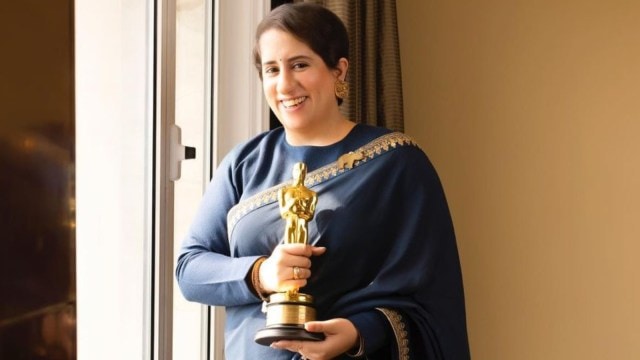
Niharika Lal (BOMBAY TIMES; September 20, 2024)
With The Elephant Whisperers and Period: End of Sentence, Guneet Monga has two Oscar winning productions to her name. In a recent chat with us, the filmmaker reveals what it takes for an Indian film to succeed at the Academy awards.
“It’s important to select films with US distribution,” she reveals, adding, “The top 10 distributors will handle distribution to their theatres, manage press and leverage their relationship with the media. It’s important to work with the people who have the know-how since they have been doing this for the last 70 years.”
Guneet recently adapted Gyaarah Gyaarah from the Korean series Signal. For her last film Kill, she brought in Se-yeong Oh, the fight choreographer from South Korean director Bong Joon Ho’s Snowpiercer. Given her experience and insight into how Korean films work, what does she believe Indian dramas and films can learn to achieve a similar breakthrough?
She says, “I’m a huge fan of Korean cinema, whether it’s their series or films, there’s so much innovation. I don’t think India lacks talent. We have the talent and the know-how. It’s just a matter of time and consistency. I think that we need to open up our international channels. Korean cinema travels through festivals, engaging in conversations with buyers. Kill was able to do that, to the point where we sold a remake to the John Wick team.”
She adds, “So, there are two key aspects: first, the story you’re telling, and second, the business of the film – how far can you take it? Did you open it at Cannes, and from there, did you have a conversation about worldwide distribution? That kind of innovation in the business needs to happen at scale.”
We need to open our films to int’l channels
Every year, when the Academy Awards are announced, the question is: when will Indian films secure their place at the Oscars? So, what does India need to do to see more of its films recognized at the Oscars?
Guneet shares, “I’ve been trying to articulate and explain for so many years that you have to get into that country’s distribution. Jab hum log jo wahan ja kar campaign karte hain, at that time, we have like 40 or 30 days. In 30 days, you can’t learn the market and ace it, right? It’s basically American awards, so you have to work with American distributors. It’s the core of it.”
She adds, “Lagaan got nominated (for the Best Foreign Language Film at the 74th Academy Awards) because Sony Pictures Classics did the campaign with Aamir. And The Lunchbox would have been nominated agar India select karta, the film would have gone far. And if we do good campaigns, hum paanch saal mein nominate bhi ho jayenge, jeet bhi jayenge.” But as of now, we don’t do good campaigns.”
‘My focus is on building labs for mid-career women’
At Cannes this year, it was announced that Guneet will head the initiative WIF: India, part of the global WIFTI (Women In Film & Television International). Talking about it, she says, “I’m learning from the chapters around the world. I’m very invested in women in mid-career because they take breaks due to pregnancy, shaadi, and there’s always a bit of a career break. Then they find it very hard to come back – to be able to make a film, to get back into the circuit of things. So, a large part of my conversation is about building labs for mid-career women. To make their careers so shiny that producers will want to reach out to them and say, ‘Oh, aap ne ye wala programme kiya hai, so we want you to make a film for us.”
I have been a victim of being young in many powerful rooms-Guneet Monga
7:56 AM

Akash Bhatnagar (HINDUSTAN TIMES; September 4, 2024)
The findings of the Hema Committee report about the sexual harassment and power nexus in the Malayalam film industry has started a conversation about the safety of women in the film industry. Producer Guneet Monga Kapoor lauds the efforts by women in the Malayalam film industry and is glad that there is a conversation of having a new workplace policy.
“It sends a very strong message across industries. It is something that is led by the women of Malayalam cinema against all odds, against getting blocked from work or getting discriminated against.”
Ask the 40-year-old if she ever had an unpleasant experience while working, and she says, “I have been a victim of being young in many powerful rooms. I was in my late 20s during Gangs Of Wasseypur (2012). I’ve battled that by showing up in a saree and colouring my hair white, just wanting to look older. Internationally, too, I’ve faced discrimination for my colour and the way I speak. How do you even articulate patriarchy or any sort of assumption of power, be it money, gender, race or language barriers? At the end of the day, for me, it’s been one step forward by just getting my work done, showing up to a bully, calling it out, sending an email and walking away from uncomfortable environments.”
Ayushmann Khurrana exits director Meghna Gulzar’s next with Kareena Kapoor
7:22 AM
Ayushmann exits director Meghna’s next with Kareena; sources say actor unable to allot dates as he has two films, music tour lined up
Mohar Basu (MID-DAY; August 3, 2024)
In June, news broke that Kareena Kapoor Khan and Ayushmann Khurrana were being brought together by filmmaker Meghna Gulzar for a hard-hitting drama, based on the 2019 Hyderabad rape and murder case (Fresh jodi, June 18). There was much interest around the project as fans were curious to see the new on-screen pair. However, now, mid-day has exclusively learnt that the leading man has stepped back from the project.
What brought on this decision? From what we hear, a scheduling conflict. It turns out Khurrana has two major projects this year, which has made it difficult for him to fit this film in his date diary.
Sources tell us that Gulzar is planning to kick off her project, reportedly titled Daayra, by the year-end. That clashes with Khurrana’s plans, as he also has a music tour lined up in November.
A source says, “Ayushmann’s music tour is already announced, and it includes multiple performances across major US cities. Plus, besides Border 2, he has committed to two movies, one with Karan Johar and Guneet Monga Kapoor, and another with Maddock Films. The dates are currently being negotiated for all the projects, but Meghna’s movie is not on his list.”
The production team has been informed, and Gulzar is said to be scouting for a suitable replacement.
Subscribe to:
Posts (Atom)