Showing posts with label Govind Nihalani. Show all posts
Showing posts with label Govind Nihalani. Show all posts
Remembering Tamas: A lesson in history for the ‘reasonable and strong-minded’
10:16 AM

Arushi Jain (BOMBAY TIMES; August 14, 2026)
As India observes Partition Horrors Remembrance Day, Govind Nihalani’s Tamas remains a searing depiction of Partition. First telecast on Doordarshan in 1988, the six-part adaptation of Bhisham Sahni’s novel tells the story of the violence and upheaval that accompanied the splitting of a nation into two. Nearly four decades later, its questions around history, memory and intolerance remain relevant. While Nihalani has maintained that a work like Tamas is not easy to make today, late actor Om Puri believed it would remain relevant for generations.
‘Those who forget their history are condemned to repeat it’
Adapted from Bhisham Sahni’s 1973 novel of the same name, which won the Sahitya Akademi Award in 1975, Tamas brought together a formidable cast of Om Puri, Amrish Puri, A K Hangal, Pankaj Kapur, Dina Pathak and Surekha Sikri. Sahni himself was closely involved with the series, though certain details were altered to create a more compelling screenplay.
Every episode started with a reminder: “Those who forget their history are condemned to repeat it.” The series unfolded in a fictional Punjab town, beginning with a pig carcass left on the doorsteps of a mosque, an act that sparks riots. From there, it traced how rumours snowballed into violence, how neighbours turned into enemies, and how women took their own lives to escape dishonour.
Years later, at a 2011 event, Om Puri explained why Tamas remained relevant: “A film like this should be shown to every community. This is a work of art which should be shown to every child, and it will be relevant for generations to come.”
Govind Nihalani had a story, but no money to make it
Making Tamas was not easy. Born in Karachi, Nihalani had long been intrigued by the Partition, but the courage to take it on as the subject of a film came only after he stumbled upon Bhisham Sahni’s novel. “I first saw the book at a store in Mandi House. I didn’t know the writer or what it was about, I just read the title and liked it. I still remember the first sentence – it read – ‘Aale mein rakhe diye ne ek jhapki lee’. And as I finished the first paragraph, I said to myself, ‘This is it. I am going to work on it.’ But I had no money to make the film,” he recalled in a 2017 interview with Delhi Times.
The same year, he met then Prime Minister Indira Gandhi during the International Film Festival of India (IFFI) in Delhi. During their two-minute conversation, Nihalani asked if the government would support a film on Partition. She told him, “It will all depend on the political condition of the country when you make the film.”
Nihalani soon realized that turning Tamas into a film would be a herculean task, particularly when it came to finding the money. He eventually found Lalit Bijlani of Blaze Films, who had produced Shyam Benegal’s Ankur (1974), willing to back the project. Nihalani had warned Bijlani that the film could be controversial, but he went ahead nevertheless.
His apprehensions proved right when Tamas ran into controversy after its 1988 Doordarshan telecast, with Nihalani facing threats and court cases. Yet, the film has endured as one of the finest works on Partition.
‘Making Tamas was an act of faith’
“When Partition happened, I was a little kid, but my first memory of fear, panic and blood comes from that period. My family migrated from Karachi and we settled down in Rajasthan. I was very emotional while making this film,” Nihalani had said in a 2013 interview.
That personal connection also shaped the making of Tamas. “Making Tamas was an act of faith,” Nihalani had remarked. He said he was fortunate to find some of the finest artistes for the project, “I was just lucky.”
'Some roles change your life’
For the actors, too, the series was transformative. Ila Arun, speaking at a 2011 event marking its DVD release, had said, “I didn’t know the pain of Partition until I played Lalaji’s wife. I understood what the Partition took away from people. After working on Tamas, I learnt a lot about humanity and Hindu-Muslim friendship.”
Deepa Sahi had also echoed the sentiment: “Some roles change your life and Tamas is one of those. I can write a book on my experiences from the Tamas shoot.”
Amrish Puri, though wary of overexposure on television, agreed to play an elderly Sikh community leader at Nihalani’s insistence. “It really was an agonizing role in Tamas. I was very selective about television appearances and accepted this for the sake of personal associations. When Govind wished to cast me, I didn’t allow stardom to affect my decision,” he recalled in his autobiography.
Tamas takes us to a historical past – unpleasant at times, but revealing and instructive
The Supreme Court in its 1988 judgment
Om Puri, who played the tanner Nathu, believed the show carried a larger lesson. “It is a reminder of the price we pay if we divide on the basis of communities,” he had said at the 2011 event. To look the part, he shed further kilos despite already being lean.
Tamas went on to win three National Awards – for Nihalani (Nargis Dutt Award for Best Feature Film on National Integration), Surekha Sikri (Best Supporting Actress), and music director Vanraj Bhatia (Best Music Direction). The series is currently streaming on YouTube.
‘Tamas is not entertainment. It is history’
The telecast was followed by legal battles. On January 21, 1988, a writ petition led to a Bombay High Court stay on further telecast of the serial. But two days later, on January 23, a division bench of the Bombay High Court, comprising Justices Bakhtawar Lentin and Sujata Manohar, overturned it after watching all six episodes in one day. The court famously declared: “Tamas is not entertainment. It is history. And you cannot wish away history simply by brushing it under the carpet.”
The controversy didn’t end there. There were protests, demonstrations, and Nihalani received threatening calls and needed police protection. The case reached the Supreme Court, where Soli Sorabjee, India’s former Attorney General, argued on Nihalani’s behalf that free speech could not be judged by the standards of a fanatic. On February 1, 1988, the Supreme Court upheld the High Court’s decision, ruling that Tamas must be seen through the eyes of “reasonable, strong-minded” citizens.
The court added that the HC judges who had seen the film had come to the conclusion that “the average person will learn from the mistakes of the past and realise the machinations of the fundamentalists and will not perhaps commit those mistakes again.”
An India Today report from the time had quoted Nihalani as saying, “We are becoming polarized as a society and strong consciousness is needed among people so that the saner elements in each community see this pattern.”
Ironically, the controversy also boosted sales of Bhisham Sahni’s novel. By the time the final episode aired on February 13, 1988, Tamas became both a cultural flashpoint and an important case on free speech.

Amrish Puri featured as elderly Sikh community leader Teja Singh
Everyone told me he was a famous director, but that I should work with someone like Shyam Benegal-Mita Vasisht
4:47 PM
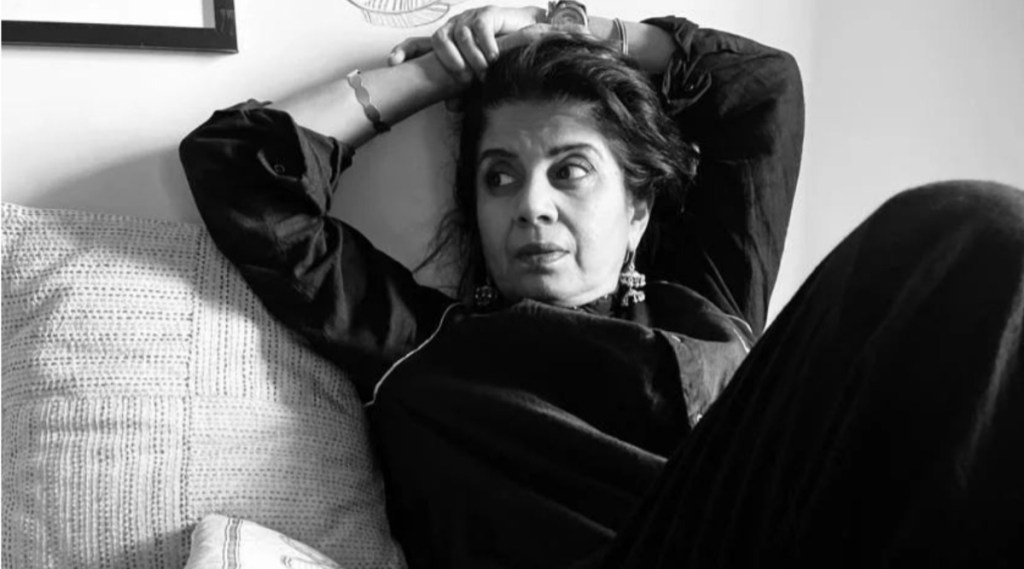
Veteran actress Mita Vasisht revisits the lessons she learned from filmmaker Mani Kaul, ahead of her feature’s Mumbai premiere
Soniya Pondcar (MUMBAI MIRROR; July 15, 2026)
It is easy to forget that before she became a familiar face across television, theatre and cinema, Mita Vasisht was simply another young actor fresh out of the National School of Drama, hoping for the role that would change everything. That opportunity came after her striking turn in Kumar Shahani’s 1986 short Var Var Vari caught the attention of Mani Kaul who, by then, had already secured his place among the defining voices of India’s New Wave cinema with films such as Uski Roti, Ashadh Ka Ek Din and Duvidha.
Kaul would go on to become her mentor, teacher and, ultimately, a lifelong guide. “It was after he saw Kumar Shahani’s film that he decided to offer me Siddheshwari,” Vasisht recalls, referring to the docu-feature on the Thumri artist that turned her from a budding actress into an arthouse regular.
“I hadn’t seen any of his films. I didn’t know who he was; I was just a young actress at the time. Everyone told me he was a famous director, but that I should work with someone like Shyam Benegal instead, to win National Awards. For some reason, though, I was drawn to him.”
Thirty-seven years after that breakthrough, Vasisht has chosen to honour the man who shaped her craft. Her film, Mani Kaul And That Thing Called The Actor, celebrates his mind. After a screening at the Film and Television Institute of India, Pune, on June 6, the anniversary of Kaul’s death, Vasisht brings the film to Third Bell Studios, Versova, on July 16.
An artistic paradox
Kaul was a man of many quirks, and one shaped the very title of Vasisht’s film: his distrust of trained actors. “He disliked trained actors,” she laughs. “I had trained for four years at NSD, and before that at the Department of Indian Theatre in Chandigarh. Yet he cast me in the lead role. I later realized he wanted to challenge me, to help me break free of every convention I had learned.”
This insistence, Vasisht discovered, was Kaul’s way of letting an audience find its own emotional response rather than have one imposed on it. “We were taught us things connected to acting: painting, sculpture, music, poetry,” she says.
“Most people considered him a non-actor director, but I found him deeply connected to the craft, with no patience for loud, outward performance.”
Real and reel
Capturing the life of such an unconventional figure proved a creative challenge. Vasisht refuses to call her project a documentary, preferring the term “fiction feature”. “It follows an actress and a young musician who travel through a director’s mind while they prepare for Siddheshwari,” she explains.
“The film moves before and after that making of the film, and deconstructs the process of its own making.” Vasisht wanted to present the auteur’s psyche, beyond the reach of a conventional biopic.
“I don’t know if Kaul ever wanted to be an actor. He thought he might, but he never appeared in a film beyond his diploma projects.”
After FTII, Kaul turned to direction and produced his acclaimed debut Uski Roti at twenty-five, “an extraordinary film by any measure.”
Both sides of the lens
“I studied Kaul closely and noted everything he told the cinematographer or the costume designer. Few realise how much work goes into a single moment on camera,” says Vasisht. Aside from him, though, she credits directors like Shahani and Govind Nihalani for her path into filmmaking.
“I observe directors very closely to see what they’re searching for. What they ask for isn’t always what they’re actually trying to achieve.”
The film is, in many ways, less a tribute than that conversation continued across time. Vasisht hopes it will introduce a new generation to not just Kaul but to ideas that remain as radical today as they were nearly four decades ago.
I was typecast as a commercial actor during my prime-Deepak Tijori
9:41 AM

Ancela Jamindar (BOMBAY TIMES; July 26, 2025)
Deepak Tijori, who was in Ahmedabad recently for the muhurat of Get Set Go, is excited about doing a Gujarati film after a long time. The Jo Jeeta Wohi Sikandar actor shares, “I did a Gujarati film (Hun Tu Ne Ramtudi) more than two decades ago. I have been watching Gujarati films and fortunately, things have changed for the better and interesting concepts are being explored. I was offered a couple of other films prior to Get Set Go, but I felt I should explore this one. Ahmedabad has changed a lot over the years, but I have always enjoyed coming here. The city has a rich culture, with the right blend of modernity, and I love the people. Whenever I am here, I never miss eating dal dhokli, which is among my favourite dishes.”
‘After almost 20 years, I am reinventing myself’
Talking about how he was stereotyped as an actor, he says, “I always wanted to do contemporary films which were out of the box, but I was typecast as a commercial actor during my prime. I grew up watching actors like Naseer sahab (Naseeruddin Shah) and Om Puri sahab, and I had a theatre background. Once, I met Govind Nihalani and asked if I could work in his films. He told me that I could never work with him as I was recognised as a highly commercial actor. This had such a big impact on me that I never approached any makers of art films, as I didn’t know how to change this perception.”
He adds, “Now, after almost 20 years, I am reinventing myself with a new look in Veena Bakshi’s Ittarr. I always wanted to do such films, the kind that Irrfan did. Once, I even met Irrfan to discuss a film on these lines, but unfortunately, it was too late. Now, I am getting opportunities to experiment. I want to do roles which suit my age and have depth. I would love to do a sequel of Jo Jeeta Wohi Sikandar with Aamir (Khan). It should be a continuation of the story. May be, we can play headmasters of rival schools.”
‘After the slump, I’m now ready with interesting films’
Recently, he was nominated for the Best Actor award at the Independent Short Awards, Los Angeles, for his short film Echoes of Us. He shares, “I wrote and acted in it as I wanted to explore something beyond stereotypical roles like playing a father or other supporting roles. I wrote this movie in English as I did not want to limit it to regional languages, as it then gets considered in the foreign language category at international film festivals, thus limiting the scope. This movie received laurels at film festivals, and I was excited to be nominated for the Best Actor award.”
While he has also directed and produced films, he says, “My passion has always been acting. But I took a step back intentionally as I was swayed into the wrong kinds of roles. I put myself in a bracket where producers did not bank on me. Once, when Bhatt sahab (Mahesh Bhatt) tried to offer me a lead role, producers said that I can’t be a hero. I idolized Sanjeev Kumar and dreamt of the kind of roles he played in films like Trishul and Sholay. After the slump, I’m now ready with interesting films. I hope directors offer me more character roles suitable for my age. I don’t want to play just a father.”
Asked about his thoughts on the OTT boom, he shares, “OTT is a haven for hidden talents and artistes who never got recognition. There are many stories that can’t be told on the big screen due to time limits, and OTT doesn’t have this constraint. It has its pros and cons. Audiences now know that even if they don’t watch a film in theatres, they can watch it on OTT after a month.”
‘I fully support Deepika Padukone’s demand for an eight-hour workday’
Recently, Deepak had supported Deepika Padukone’s decision to opt out of Sandeep Reddy Vanga’s next film due to a disagreement over working hours. He says, “I fully support her demand for an eight-hour workday because she wanted to spend time with her child. She has worked in 12-hour shifts in the past. It (working hours) should be one’s individual decision and she shouldn’t suffer because she is a mother. While there are factors like budget, time, and availability constraints, I feel these things can be managed. Earlier, actresses had to give up acting after marriage or having kids, but the industry has evolved, and we need to be more progressive.”
It was Kareena who recommended me for Dev-Fardeen Khan
10:54 AM

BOMBAY TIMES (June 14, 2024)
Fardeen Khan took a trip down memory lane as his film Dev completed 20 years recently and also reminisced the memories from the sets. Directed by Govind Nihalani, the film also featured Amitabh Bachchan and Kareena Kapoor Khan.
The No Entry actor took to Instagram to share a clip featuring scenes from the film and wrote, “20 years of Dev. It was my third film with Kareena (the two also worked together in Fida and Khushi) and it was she who recommended me for the role, and I will always be grateful to her for that. Being signed by Govind Nihalani for a film with legends like Amitabh Bachchan and Om Puri was a huge endorsement for any actor. Govindji was highly respected and was known for his careful direction and powerful storytelling.”
He added, “This role gave me the chance to work on a film that was relevant and meaningful, which was rare at the time. But the greatest take away for me from Dev was getting to share the screen with Amit ji, an actor I idolize. His life and most amazing career have had a profound influence on Indian cinema and has left an indelible mark on not just me, but on every Indian. It was a once-in-a-lifetime opportunity, a true honour and an absolute privilege to work with him, making it one of the highlights of my career (sic).”
Manthan did brilliantly in Gujarat because its largest audience was also the film’s producers-Shyam Benegal
10:43 PM

Shyam Benegal shares how Manthan was brought to life and how Dr Verghese Kurian made it happen
Shyam Benegal (THE ECONOMIC TIMES; September 10, 2012 | Republished in BOMBAY TIMES; April 26, 2024)
I used to work for an ad agency that advertised Amul products. And Amul launched its first product, milk food for babies. Dr Kurien had this idea to launch this baby food with buffalo milk, which nobody believed could be done. Of course, it worked wonderfully.
Then came the iconic butter which we used to advertise and I used to write for that. But the milk revolution was yet to take place in its entirety.
Now came NDDB, post the then Prime Minister Lal Bahadur Shastri’s visit to Anand. Shastri asked Dr Kurien to replicate his model but he refused to move to Delhi saying, Delhi didn’t have farmers, only bureaucrats!
Around 1972-73, I got to make two of the three documentaries on Operation Flood, called Operation Flood I and II, which led to the White Revolution – all because of Dr Kurien and his rural marketing initiative IRMA, which was a pioneering institute. While doing these documentaries, I used to travel around the whole country and I came across many beautiful places. And I said to Dr Kurien that these documentaries will be seen largely by those who have already been converted to the cause. What about the larger public? He agreed with me but said that there was no money (for a large project). Dr Kurien never allowed anyone to spend any money that he didn’t get value from.
So he asked me, how much do you need? I said Rs. 10 lakh. He did a headcount and said, if I collect Rs. 2 from each member, we can make the film.
He did not take any money from the farmers. He told the collection centres that when they come for their daily morning and evening collection, ask them not to take Rs. 2 and instead they can all be producers of a film!
Then came Vijay Tendulkar who was blown away by the cooperative and wrote several scripts. I chose one and that’s how Manthan was made.
Dr Kurien released the film first in Gujarat before its all India release. The film did brilliantly because its largest audience was also the film’s producers! Everyday, we had this incredible sight of truckloads of people coming in from all over to see the film.
The film’s success gave Dr Kurien another idea. To use the film to woo other parts of the country into the movement. So prints of 16 mm would be used by spearhead teams to persuade farmers to create cooperatives of their own. Like in Manthan, a vet, a milk technician and a fodder specialist who can explain the value of cross breeding would go and help set up cooperatives. That is how this man made India the largest milk producing nation in the world. Quite an extraordinary man.
There are very few stories like him and the only other person I can think of like him is MS Swaminathan.
When Dr Kurien said: “I am a milkman, I am a servant of the farmers,” it was not just rhetoric. He meant it. He never suffered fools. He would never stand for any obtuse ways, if he could help it he never went to Delhi.
He was a delightful, marvellous man with a great sense of humour. I enjoyed his company and we had lots to talk about.
I am lucky to have met him because of Sylvester D’Cunha and Usha Kartak who were hands on. When I left for filmmaking, I made several other documentaries for him. Films for farmers.
A Movie Pure as Milk
Dr Kurien never complimented anyone! But I took the film to the UN that helped the UNDP to use the film for other countries, like a few in Latin America, to set up similar cooperatives.
Rajiv Gandhi asked Dr Kurien for a print of Manthan, which he gifted to the Soviet Union. Dr Kurien was both a leader and the backbone of the movement. I have never known someone with so much integrity like he said at an award function last year, "If I am proud of anything it’s my integrity."
He was a man who took people with him. He made money for the farmers. He took just Re 1 as salary from NDDB and took his salary from Amul right till the end. He should be the person every Indian wants to be like, especially in the material world we live in.
(As told to Nandini Raghavendra)

Shyam Benegal's restored Manthan selected for Cannes screening
10:40 PM

Niharika Lal (BOMBAY TIMES; April 24, 2024)
The restored version of Shyam Benegal’s 1976 film Manthan will be screened at Cannes in the Cannes Classics section this year. Naseeruddin Shah, who began his career with Benegal’s 1975 film Nishant (which was in the competition at Cannes), and played the role of Bhola in Manthan, will present the film on the red carpet at the festival.
Manthan reminds the world of the power of cinema: Benegal
“I was absolutely delighted when Shivendra told me that Film Heritage Foundation was going to restore Manthan in collaboration with the Gujarat Milk Marketing Federation Ltd. Manthan is a film that is very close to my heart as it was funded by 500,000 farmers and was instrumental in the growth of an extraordinary cooperative movement that was aimed at breaking the shackles of economic inequality and caste discrimination whilst empowering the farmers. It will remind the world of the power of cinema as a vehicle of change and also the legacy of the great Verghese Kurien, the Father of the White Revolution.
Govind Nihalani and I have been following the progress of the restoration closely and I am amazed by the meticulous approach to the restoration. It is wonderful to see the film come back to life almost like we made it yesterday.
Film Heritage Foundation has been doing remarkable work in film restoration. Not only are they beautifully restoring films from every region of India, but bringing them back to the public at festivals and screenings around the world in a way that showcases our unique film heritage to contemporary global audiences.”
I am so happy to hear that the restoration of the film will be premiered at the Cannes Film Festival this year: Govind Nihalani
“It is remarkable that Film Heritage Foundation is restoring Manthan nearly fifty years since it was made. Being involved in the restoration has been an emotional experience. It has taken me back to 1976 when the entire unit lived like a family in the village of Sanganva in Gujarat for 45 days during which the film was shot. The shooting was challenging because we had to use a patchwork of different film stock – Eastman and Gevacolor besides Kodak, 35 mm for the film and 16 mm for the film within the film. I began my career as a cinematographer with Shyam Benegal first shooting ad films and then his early feature films. We’ve had an immensely creatively satisfying relationship over the years as Shyam involves you as a partner in the creative process of the film and not just as a cameraman. I am so happy to hear that the restoration of the film will be premiered at the Cannes Film Festival this year.”
I will be at Cannes to present Manthan: Naseeruddin Shah
“I started my career as an actor with Nishant followed by Manthan, both directed by Shyam Benegal. Manthan was a runaway success when it released almost 50 years ago and it is a film that is remembered even today. I remember that during the shooting of Manthan; I lived in the hut, learnt to make cow dung cakes and milk a buffalo. I would carry the buckets and serve the milk to the unit to get the physicality of the character. I am so glad that Film Heritage Foundation has restored this remarkable film and that this small film made with the support of the farmers has been restored with so much love and care. It is thanks to the persistence, hard work and efforts of Film Heritage Foundation that the film will be premiered in its second life, as it deserves to be, at the Cannes Film Festival and I am so glad that I will be there to present it myself.”
The restoration of a Shyam Benegal film has been on Film Heritage Foundation’s wish list for years: Shivendra Singh Dungarpur
“I am so delighted that Film Heritage Foundation will have a red-carpet world premiere of another one of our restorations of an Indian classic at the Cannes Film Festival for the third year in a row after Thamp in 2022 and Ishanou in 2023. The restoration of a Shyam Benegal film has been on Film Heritage Foundation’s wish list for years as he is one of India’s most venerated filmmakers whose early films were iconic in India’s Parallel Cinema movement. Manthan is not only one of his finest films from that time, but also the story behind it was so unique – that 500,000 farmers contributed Rs. 2/- towards the making of the film that told the story of the birth of the milk cooperative movement while touching on so many issues like caste, class, gender and economic discrimination. The film was integral to spreading the message of the benefits of the cooperative movement to farmers across the country and a vital part of building the movement and the storied brand.
The restoration process has been an incredible experience, especially working so closely with Shyam Benegal and Govind Nihalani to painstakingly bring the film back to life. Almost half a century later, the power of the narrative and the compelling performances of the actors, especially Smita Patil, remains undiminished. I wish she was here to see the beauty of the restoration.”
THE RESTORATION PROCESS
Film Heritage Foundation used the best surviving elements for the restoration – the original camera negative and the 35 mm print preserved at the NFDC – NFAI. Unfortunately, the sound negative was not available. We digitized the sound from the 35 mm print preserved at Film Heritage Foundation. The film elements were repaired by the Film Heritage Foundation conservators and the scanning was done in Prasad Lab in Chennai We found that due to the deterioration of the print, there were vertical green lines on many parts of the film. While the scanning and digital clean-up was done at Prasad under the supervision of L’Immagine Ritrovata in Bologna, the grading, sound restoration and mastering was done at the lab in Bologna. Both Shyam Benegal and Govind Nihalani, the cinematographer of the film, have been involved in the restoration of the film.
I met Yash Chopra, Subhash Ghai, Chetan Anand, Govind Nihalani, but nobody gave me work-Pavan Malhotra
8:27 AM

Soumitra Das (AHMEDABAD TIMES; February 15, 2023)
Be it plays, TV shows like Nukkad, acclaimed movies like Bagh Bahadur, Pardes, Black Friday and Rustom, or OTT projects, Pavan Raj Malhotra has aced every medium in his nearly four-decade long career. The veteran actor, who was in Ahmedabad to attend the Karnavati Literature and Film Festival 2023 as a speaker, was at his candid best during the session and spoke at length about his journey in showbiz. Excerpts:
‘I NEVER THOUGHT I WOULD BECOME SO SUCCESSFUL AFTER COMING TO MUMBAI’
I used to do a lot of theatre, but I never thought that I would get a chance to do films. I would think, Mumbai mein kaun mujhe kaam dega? My dad would always tell me, ‘Theatre kar ke kuch nahi hone wala, you must join our family business.’
In Mumbai, right from Yash Chopra, Subhash Ghai and Chetan Anand to Govind Nihalani, I met all big directors, but nobody gave me work. But eventually, I worked with many of them and I have learnt that jo aap ke hisse mein hoga, woh aap ko right time pe milega. Most of the work I did after that fell into my lap. I never thought that I would become so successful and I am grateful for all the love I have received.
Also, one important lesson that I have learnt over the years is that no matter how successful you become, you must remain grounded. The beauty of our profession is that it always keeps you on your toes and every role comes with a new challenge. There’s no such thing as going beyond the script, sab kuch script mein hi hota hai.
Also, it’s always a delight to work with filmmakers who have an eye for talent. For instance, who other than Satyajit Ray could have thought of Amjad Khan as Wajid Ali Shah in Shatranj Ke Khilari, especially after he had played Gabbar? I am also happy to see realistic cinema getting its due. So, the exposure that OTT has ensured for our audience has brought about a welcome change.
Hemant Chaturvedi's upcoming documentary is about the prominent cinematographers of the bygone era
8:28 AM
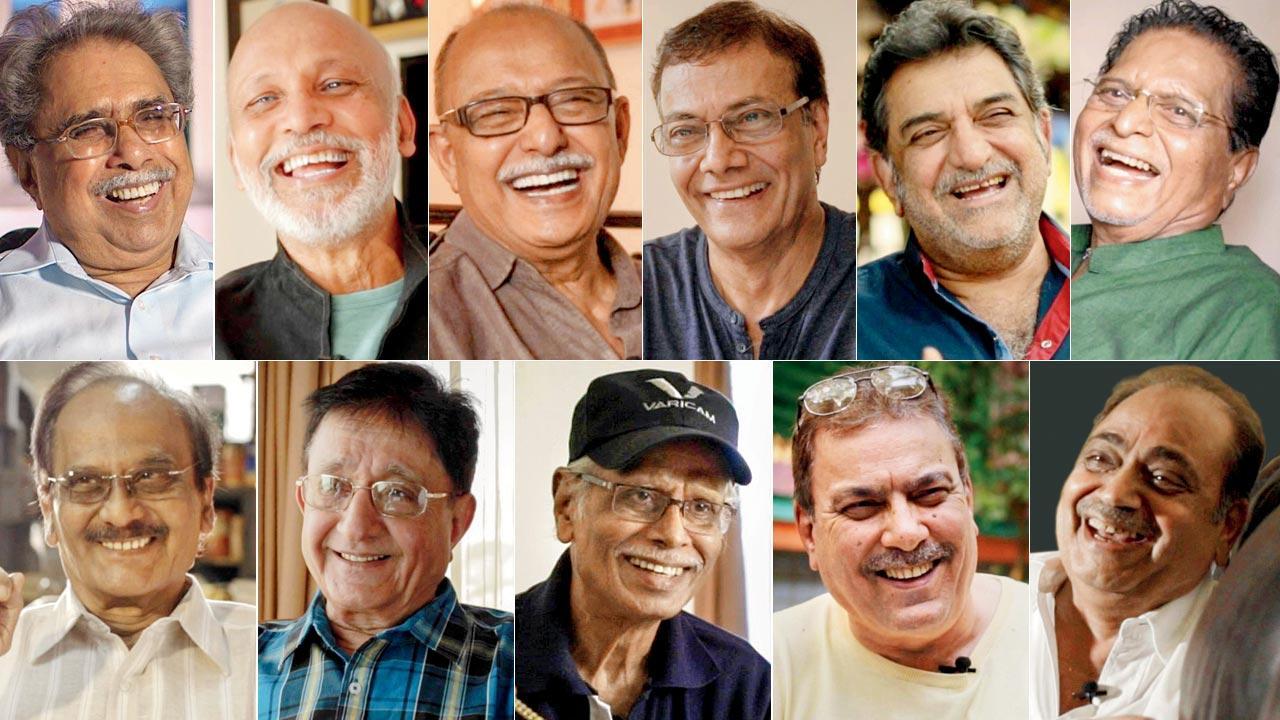
Peter Pereira, A K Bir, Barun Mukherjee, Jehangir Choudhury, Baba Azmi, Ishwar Bidri, Kamalakar Rao, Pravin Bhatt, Dilip Dutta, Nadeem Khan and Sunil Sharma, who all feature in the documentary. Pics Courtesy/Hemant Chaturvedi
Leaving the movies as a disillusioned cinematographer, Hemant Chaturvedi attempts to find answers among the veterans of his fraternity in a new documentary
Jane Borges (MID-DAY; January 16, 2022)
Cinematographer Hemant Chaturvedi’s “peculiar relationship” with his profession began somewhere post 2000, when he made his transition from television to the movies. This was the time when Chaturvedi had, unbeknownst to himself, become a tour de force, spearheading projects, which would set the tone for new age storytelling in Bollywood. There was Ram Gopal Varma’s Company (2002), followed that same year by Vishal Bhardwaj’s children’s horror comedy Makdee and Maqbool (2004). Aparna Sen’s critically-acclaimed National Award-winning 15 Park Avenue (2006), which explored the relationship between a young woman suffering from schizophrenia and her divorced sister, came soon after.
Despite such an enviable oeuvre that only grew with time, Chaturvedi’s relationship with cinematography became more and more complicated. “That eventually culminated in me taking a decision to move on,” he shares. “I realised that the nature of the beast was such that it went against my fundamental [values], and that I was not going to change. I, for some reason, came to be known as the enfant terrible of cinematography.”
Looking back, he thinks such a narrative suited many in an industry that was becoming cut-throat. “And so, for someone like me, who was not a competitive person, work became scarce,” he adds. “I remember having to wait for two or three years for my next offer. This was absurd. It’s a horrible feeling to wait for your next job—never knowing when it’s going to come to you. You end up not doing so many other good things, because you do not want to start that in case something else turns up.”
After a lot deliberation, Chaturvedi decided to call it quits in 2015—the poor box-office run of the Akshay Kumar and Sidharth Malhotra-starrer Brothers, produced by Dharma Productions, cemented this decision.
The disillusionment notwithstanding, Chaturvedi, who by then had begun experimenting with still photography, continued to have several unanswered questions about his profession, which he had dedicated nearly three decades of his life to. “I couldn’t understand how [when] someone worked with so much commitment, passion and honesty, what is that one thing that takes away the joy of being successful and engaging in better work.”
It’s around this time that he embarked on a documentary project, which would take him more than six years to realise. “In the late 1980s, when I was working as an apprentice, I had reached out to many senior cinematographers for work,” says Chaturvedi.
Jehangir Choudhury, whom he had met in 1985, while assisting on a Merchant Ivory production, was the first real inspiration. “I was still studying at St Xavier’s College [Mumbai] then… Seeing him create all this magic from behind the lens, got me really excited,” he recalls.
After returning from Jamia Millia Islamia with a mass communications degree, he tried meeting many of these cinematographers again. “But none of them had the space to hire me as an assistant. Govind Nihalani had accepted my request [in 1991], but just two weeks before the start of the film, I got a call saying that he was giving the opportunity to [playwright] Vijay Tendulkar’s son. I missed out on that, too.”
But, this was also the era of the television boom, and Chaturvedi eased into it seamlessly. “I ended up being a 100 per cent self-taught cinematographer. I had no choice, but to teach myself.”
His only regret was that he couldn’t work with any of them. The opportunity to understand their body of work only came only after he made the switch in his career. “I thought why not reconnect with these people whom I had come to admire, speak to them about their journeys, compare it with my own, and see what emerges from these conversations, which would answer every query that I ever had. I was hoping that it would help me understand the purpose of my own life.”
Between December 2015 and January 2016, Chaturvedi met with 14 elderly veteran cinematographers, including S M Anwar, Dilip Dutta, Pravin Bhatt, Kamalakar Rao, Baba Azmi, R M Rao, Ishwar Bidri, A K Bir, Nadeem Khan, Sunil Sharma, Barun Mukherjee, Peter Pereira, as well as Nihalani and Choudhury, doing extensive video interviews on his DSLR, and gathering nearly 40 hours’ worth of footage.
The videos, which sat in his hard-drive for the longest time, are now part of a soon-to-release documentary titled Chhayaankan: The Management Of Shadows.
“All of them had a very interesting trajectory. Some of them had cautiously withdrawn and given up, some had moved on to do other things, some were still doing the odd shoots here and there, while a few were in a state of denial that their career was over. This acceptance or change in their fate had an effect on their personalities, of course,” he says.
Chaturvedi doesn’t have a real excuse for delaying the documentary, except that he got busy with his other projects. “But in December 2020, when I heard that Ishwar Bidri passed away [at 88], and that Nadeem Khan was in coma for the longest time, I felt this huge sense of guilt. I realised that if this film wasn’t seen by the people [who were cast] in it, it would be a matter of tremendous shame,” adds Chaturvedi, who had spent a significant part of 2019 and 2020, including the lockdown, travelling the length and breadth of the country, documenting single-screen theatres.
Though he had a “gigantic inventory of unfinished work, this one took priority” and in June 2021, Chaturvedi began work on editing the film, shuttling between Mumbai and Pune, where his editor Suchitra Sathe, an alumnus and faculty member of the Film and Television Institute of India (FTII) was based.
While revisiting the original videos, he realised that the film, which has been pared down to 138 minutes, is not just about the journey of these cinematographers in the movies, but also their personal stories, pet peeves and relationship with the crew they worked with. “Now, I feel I know them more intimately, and I am losing them one after the other… just knowing that has been emotionally draining. I also often wonder had I ever got to work with any of these people, would my work have been different in any way?”
Between the 14 of them, they’ve shot nearly 750 films and 10,000 commercials. “That is the kind of span one had in that era. It’s just astounding to see how much work they did then. Pravin Bhatt alone has shot 120 feature films. He started in the black and white era, and ended with his son Vikram Bhatt’s film around eight years ago. Then there is R M Rao who has shot 4,000 commercials; there was a period between the 1960s and ’70s, when if you went to the theatre, you’d only see commercials shot by Rao on screen,” says Chaturvedi.
He says that the reason why many of them managed to hold on to their careers was because it was “an era of very long relationships”. “People would work together for much longer, and there was a certain loyalty and camaraderie then, which kind of eroded in the mid-1990s, when there were just too many people and too much work.”
One of the issues that he has dealt with in the film is the period when the film industry’s visual standards, he feels, had “dropped to zero”. “Most of the scenes would be shot in these bungalows with the curtains drawn. The only difference between a day and night scene, would be if the decorative lamps on the set were switched on or off… it was as bizarre as that,” he shares, explaining that this trend was observed after the studio system fell apart. “When that happened, actors started signing on multiple films, and because they didn’t have the time to come for shoots, a movie would take years to complete. A producer, who couldn’t keep a set standing for that long, would then move the shoot to a bungalow. That’s how these started becoming popular.” Some cinematographers submitted to the circumstances.
Among the more interesting journeys was that of Anwar, who is now in his 80s. “Anwar saab had a diploma in radio from an institute in Pune, and had been working for a Parsi company, where his job was to clean sockets and cables. Later, he was shunted to the camera department of the same company. His work got him to Bombay where he joined as a camera attendant at Eagle Films for a salary of Rs. 25 per month,” says Chaturvedi. Anwar was spotted accidentally by renowned cinematographer Dwarka Divecha, who asked him to do close-ups of a fight sequence they were shooting. On seeing the rushes, an impressed Divecha called on Anwar, only to learn that he had perfected his camera skills shooting birds on the terrace. Anwar went on to work as camera operator for Sholay, before helming Ramesh Sippy’s Shaan (1980).
Chaturvedi is planning to showcase his film in the festival circuit soon. He is also hoping to hold a private screening for cinematographers, especially those who have made it to the film. Each of the interviews is being edited as a standalone interview, which he intends to upload on YouTube. “I wanted to say how tortured I feel, sometimes, because I missed so many people who passed away in the last seven to 10 years prior to 2015, when I filmed these interviews… I wish someone before me had thought of this and documented so many people, who are gone forever. [Having said that] I want this to be a joyous celebration of people from an era where they were overachievers and under publicised, unlike our era of underachievers, over publicised.”
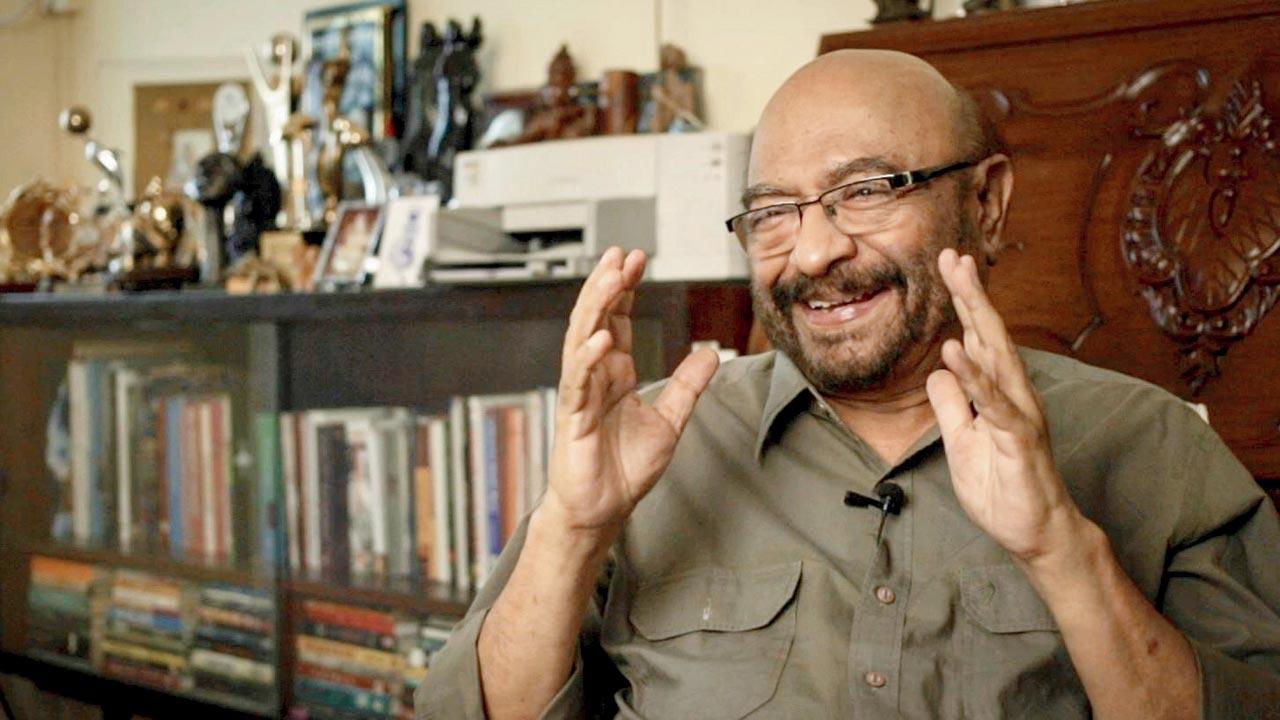
Director-cinematographer Govind Nihalani, whom Chaturvedi missed an opportunity to work with in 1991, is also part of the film
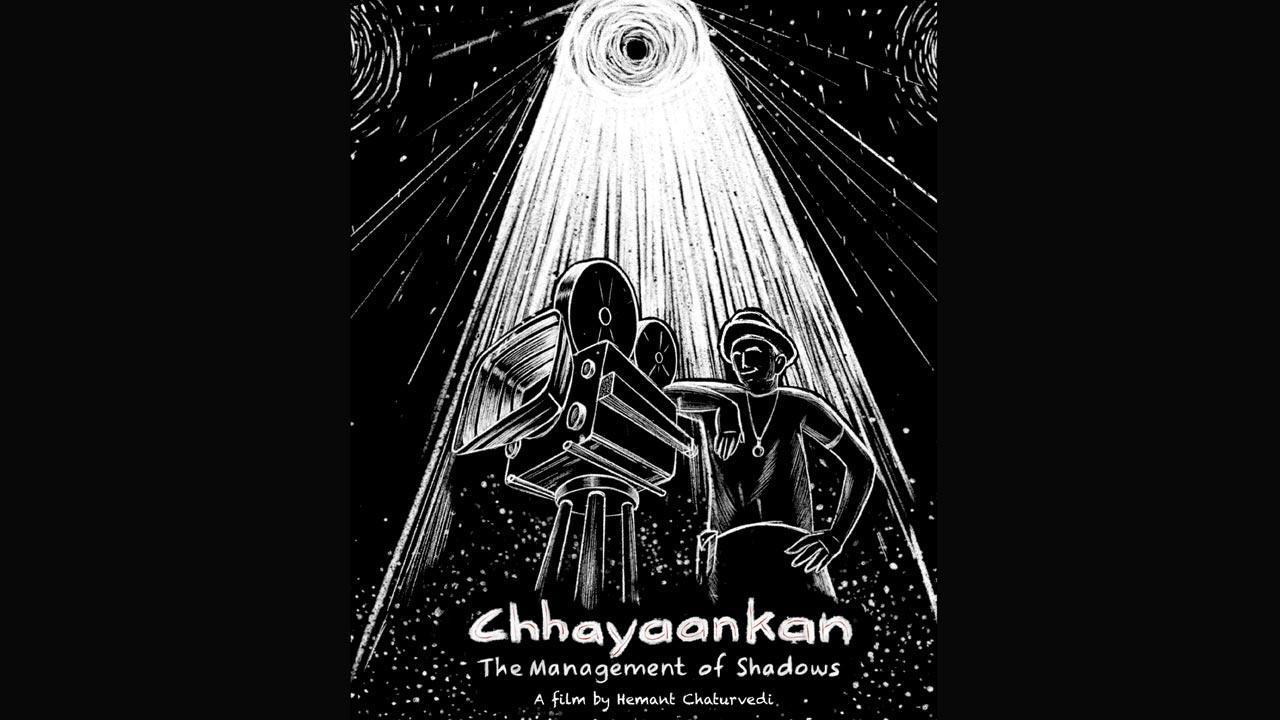
The poster of the documentary, Chhayaankan: The Management Of Shadows
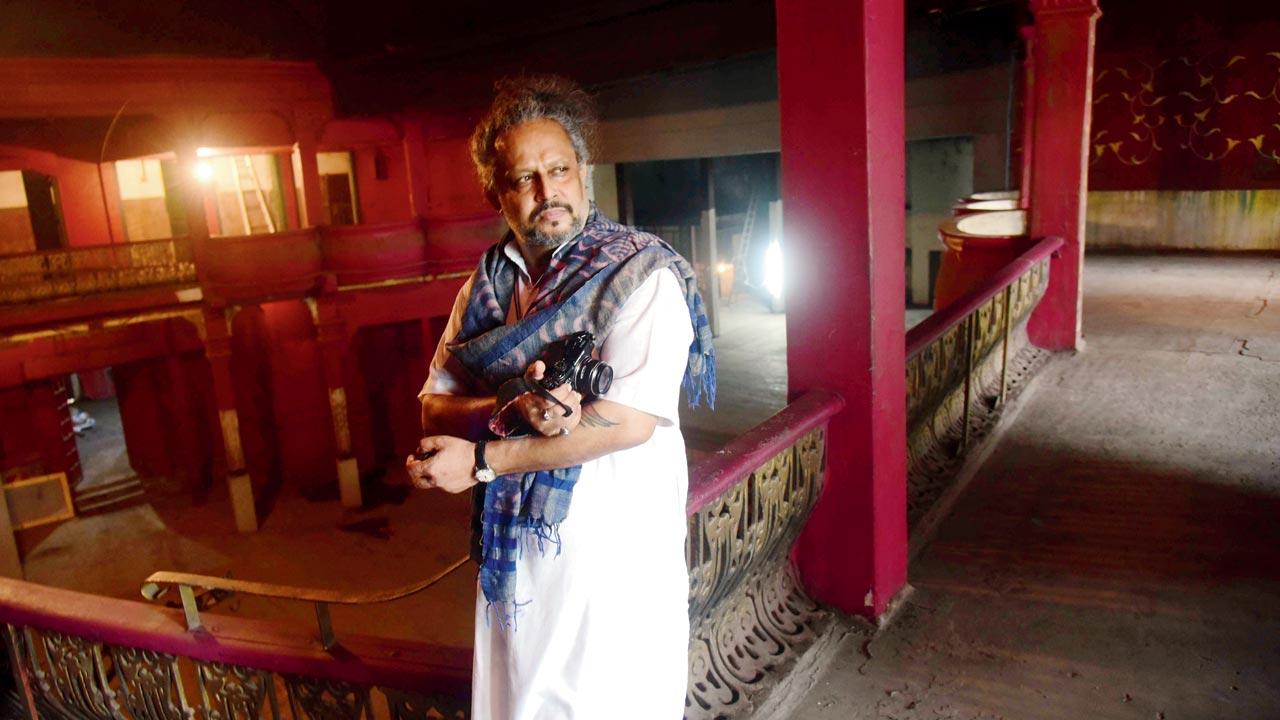
Photographer Hemant Chaturvedi recorded the interviews between December 2015 and January 2016, editing the film only last year. Pic/Suresh Karkera
Surekha Sikri didn’t bring any kind of artificial technique to creating a character-Govind Nihalani
8:20 AM
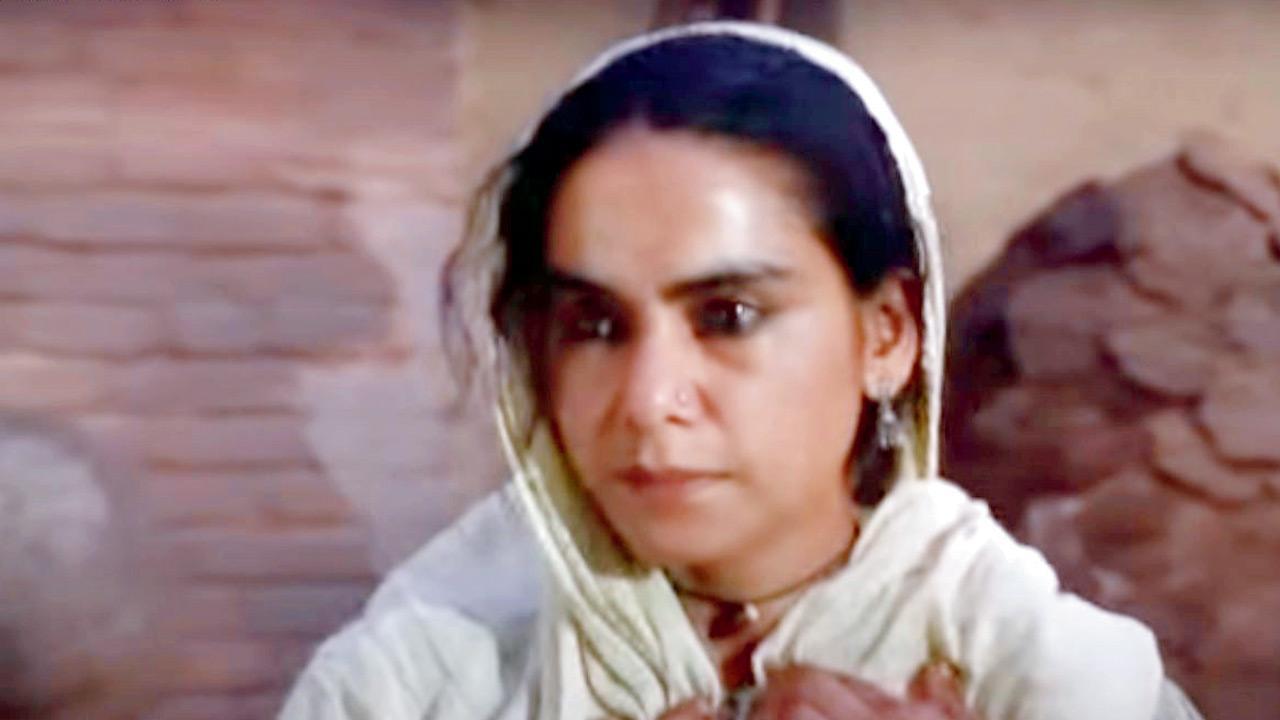
Surekha Sikri played Rajo in this Govind Nihalani creation
Filmmaker Govind Nihalani on roping in the senior actor for 'Tamas', which garnered her a National Award
Govind Nihalani (MID-DAY; July 17, 2021)
Surekha [Sikri] was a student of the National School of Drama. I knew of her when she was doing theatre in Delhi. I liked her stage performances immensely. When I was working on [my television-film] Tamas [based on the Hindi novel of the same name by Bhisham Sahni in 1988], she had just come to Mumbai. Surekha Sikri was my first choice to play the character of Rajo and I am glad she accepted it. It rightly garnered her the National Award for Best Supporting Actress.
Rajo [her character in Tamas] was a Muslim woman hailing from a simple background, stuck between her hot-headed son and God-fearing and honest husband. Once explained, Surekha would grasp the graph of the character [with ease]. She was a natural actor, who put in a lot of hard work into her performances, but you would never know that watching her act so effortlessly on screen. What touched me the most about her portrayal is the simplicity with which she played the role.
There are some things about every actor that a director identifies with, which help create a good working relationship. One of the things about Surekha was that she was a warm-hearted human being and that translated on-screen. It became part of her personality and all the characters she ever played on stage and in cinema; there was little artifice about that. Surekha didn’t bring any kind of artificial technique to creating a character. You just felt the empathy in her approach.
We also worked together in another film called Deham [2001] — a modern Indian sci-fi film written by Manjula Padmanabhan, based on her play Harvest. It was starkly different from her character in Tamas. Surekha played a difficult and controlling mother-in-law to her family. I trust my actors and their approach to acting. [Even in Deham], she approached her character with utmost honesty.
As told to Upala KBR
Noted works
Kissa Kursi Ka (1979): She made her debut with this political satire based on Indira Gandhi and Sanjay Gandhi, where she played a negative character, Meera.
Tamas (1986): Based on the Hindi novel by actor-writer Bhisham Sahni, the film garnered her, her first National Award for Best Supporting Actress.
Mammo (1994): She played grandmother Fayyazi to a young Amit Phalke in this Shyam Benegal creation. The film was the first part in the trilogy, which was later followed by Sardari Begum (1996) and Zubeidaa (2001). Surekha received her second National Award with this outing.
Zubeidaa (2001): Sikri reprised her role of Fayyazi in Shyam Benegal’s third instalment, which also featured Karisma Kapoor.
Balika Vadhu (2008-2016): The actor played the character of Dadisa for eight years and won the Best Negative Lead gong at the Indian Telly Awards.
Badhaai Ho (2018): She received her last National Award for this Ayushmann Khurrana-starrer.
Five filmmakers come together to interpret the COVID pandemic
8:34 AM

Anubhav Sinha, Sudhir Mishra, Hansal Mehta, Ketan Mehta and Subhash Kapoor are planning an anthology film based on stories and experiences from the Coronavirus pandemic
Anshul Chaturvedi (BOMBAY TIMES; July 26, 2020)
For Indian cinema, the anthology — a collection of short films with a similar subject — as a collaborative project with multiple filmmakers has now become a relatively familiar concept. This is courtesy the OTT space, which has been host to several popular ones, stitching together tales on a variety of topics, ranging from stories of lust to stories of ghosts.
For the big screen, however, this remains unfamiliar territory. In 2013, we saw Bombay Talkies, an anthology that had four short films, directed by Dibakar Banerjee, Karan Johar, Zoya Akhtar and Anurag Kashyap, to celebrate the 100th year of Indian cinema. However, when the sequel for it, Lust Stories, with the same directors, came out in 2018, it released on OTT and not in theatres. All subsequent anthologies have also released on OTT platforms. Before this, there have been films like Darna Zaroori Hai (2006) and Dus Kahaniyaan (2007) with each story being helmed by a different director.
Does that make Bombay Talkies Bollywood’s last big screen collaborative anthology? Perhaps not, if something being planned by five directors presently works out — a project that may release sometime around April 2021.
Anubhav Sinha, Sudhir Mishra, Hansal Mehta, Ketan Mehta and Subhash Kapoor are working on making an anthology focused on the subject that we are living through presently — the experiences of life amidst the COVID-19 pandemic.
“This is such an interesting time, you know — even though I realise interesting may not be the best word,” explains Anubhav, who is informally spearheading the collective effort. “Sudhir bhai’s driver had contracted COVID and he was unable to get a bed — and we were making all sorts of phone calls just to get him a hospital bed. Uss raat mere dimaag mein aaya ki humein usko document karna chahiye. And what better way to do it than different filmmakers looking at different things? Sudhir bhai ke pitaji ki death hui COVID period mein. We lost Irrfan — aur hum Irrfan ke janaaze par bhi nahi jaa paye. Nikloon ki nahi nikloon… Tigmanshu ko police se jhagda karna pada – he said main toh jaaonga, bhai hai mera!”
He adds, “Yeh saari cheezein disturbing thi. Mujhe laga inko record karna chahiye. Maine phir baat kari sab doston se — and they all said haan yaar karte hain. And that’s how the idea behind it began to formalise. This seemed like a good collaboration for all of us. There’s one story by Subhash, one by Hansal, one by Sudhir bhai, one probably by Ketan. These are filmmakers that I believe that the socalled ‘Bollywood’ has largely ignored.”
Ketan Mehta? It’s been a while since we saw his work. How did he get persuaded?
Anubhav pauses to make an impassioned point. “The corporate world doesn’t know who Ketan Mehta is. Unhone Mirch Masala ka naam hi nahi suna, dekhna toh chhor do! I saw it a month back. Log mujhe bolte hain ki Anubhav makes feminist cinema, etc etc. I say look at Mirch Masala — that’s what a film is! Thappad is not a film — Mirch Masala is a film! If I had any power, I would be chasing Ketan Mehta to make films all the time. I heard this story once about (Akira) Kurosawa not making a film for many years and (Quentin) Tarantino met him and asked him about it — and he said, I don’t have funds. And Tarantino called up the studio and said, ‘Hey, Kurosawa doesn’t have money to make a film — produce one!’ And then Kurosawa made his next film. This is an authentic story I believe... Today Ketan is not making films. Govind Nihalani is not making films — arrey yaar Ardh Satya banai thi unhone! Sharam karo, doob maro, iss sheher mein Govind Nihalani ko film banane ko nahi mil raha hai!”
Angry point made, Anubhav returns to the original topic. “Sudhir Mishra and Ketan Mehta are the stalwarts here — jinka cinema dekh kar hum ne picture banana seekha hai. Then the three of us, aaj ke — myself, Hansal and Subhash Kapoor.”
Anubhav adds, “So, it will be an interesting bunch of names, to tell stories of an interesting time in our lives. Yeh meri neeyat thi when I thought of the directors. I would have wanted (Anurag) Kashyap to also be part of this, but he is starting a big project so he couldn’t join us.”
The pandemic stories, essentially, then? “Yes. We will all interpret this period — starting February/March 2020 — and we will all tell a story from it.” And the sub-stories? “Hansal’s story is quite comic and quite tragic. Sudhir bhai’s is political, quite political. Subhash’s is also political, but in a different way. I am still struggling with my story — I want to tell an atmospheric story, which is about fear. I live on the 20th floor and I can see a very large expanse of Mumbai from my window. It has suddenly started looking like a deserted, dead city. And Ketan is saying ‘main dekh ke batata hoon’ (laughs).”
Hansal Mehta adds that he was very excited about the idea and is ready to begin shoot. “We have been meeting virtually very often during this lockdown. In one of our virtual parties Anubhav came up with this idea of chronicling this extraordinary time in history through this anthology of short films. I jumped at the idea. I think I was the first among our entire group to submit a script! I’m ready to begin shooting next week. It will be exciting to have like-minded directors with diverse styles tell their stories.”
Sharing why telling these stories is important, Subhash says, “The world has not seen anything like this ever before, it’s crucial to chronicle this period and explore stories around, I look forward to this journey with like-minded friends.”
“Reflections during the COVID time” is how Sudhir Mishra puts it. “It is not just ki chalo anthology banate hain and this is a good topic,” he explains. “It has developed organically. We talk a lot. We are envious of each other in the right ways. We have some sort of loose federation of common interest. This developed like that — and we said, let’s do this together.”
“We will all hopefully be able to start shooting by November,” says Sudhir, “If someone has to shoot indoors, then that is easier. But if the story demands outdoor shots, crowds — which you assume a political story will — then we have to see by what time that becomes possible.”
Ananth Mahadevan's soon-to-be published book to narrate stories behind milestone TV shows
8:36 AM

Filmmaker Ananth Mahadevan’s soon-to-be-published book, Once Upon A Prime, takes us through milestone shows of Indian TV
MUMBAI MIRROR (April 29, 2020)

How Kishore came to sing for Yeh Jo Hai Zindagi
 The title refrain of Yeh Jo Hai Zindagi is still high on the television memory charts. When pop star Ajit Singh composed it, S S Oberoi blew a bugle, “lets get Kishore Kumar to sing it!” Kumar, the maverick actor-singer-composer, had not stepped out of the movie circuit before. In his legendary style, without batting an eyelid, he rattled off a figure of 18,000 rupees, the fees he charged for a film song. Oberoi didn’t blink either. He could see the song playing on television every week. Over 52 episodes it would amortize to less than 4,000 rupees a week. And so, Kishore Kumar sang for television.
When Colonel Kapoor ran behind ‘Fauji’ Shah Rukh Khan with a stone
He (Director Colonel Raj Kumar Kapoor) first ran into the 23-year-old lad named Shah Rukh Khan at Gulmohar Park in New Delhi. Kapoor’s brother-in-law auditioned him along with a bunch of others, and let them loose on the training ground. The Colonel put them through a grind unfamiliar to them. Not surprisingly three of them dropped out with a curt “we haven’t come here to join the army”. Only Khan kept up with Kapoor.
It ended in a sparring match with both donning boxing gloves. “I goaded him to hit me and he finally did. I could sense his aggressive nature. It was a presence that the camera loved. My Abhimanyu Rai was born, though honestly, I hadn’t penciled him in for the part. He was a bit of a bum though, turning up late for shoots. Once I ran behind him with a stone and that put an end to his punctuality ills.”
The other ‘bums’ weren’t a piece of cake either. The Colonel had recruited a barber on the set to clip their Samson locks. Yet the cadets continued to sport long hair. “I later discovered that they were bribing the barber,” he says. Corruption had seeped into the ‘army’, courtesy the civilians.

Govind Nihalani asked Indira Gandhi for government support for Tamas
Tamas lay untouched in Nihalani’s (director Govind Nihalani) room for more than a week. He preferred to read it when he had sufficient time out from filming. When he did get down to reading it, every sentence struck him not as words, but images. Something told him ‘this is it’. He decided that he wanted to do it, but didn’t have a clue how to go about it.
It was around that time that Nihalani’s searing human drama, his first film, Aakrosh (The Cry of the Wounded) was selected in the Indian Panorama section of the International Film Festival of India, held that year in Delhi. The directors of the films screened were invited for a tête-à-tête with then Prime Minister Indira Gandhi. An evening with Gandhi, however, turned into a rationed two minutes with each person.
Nihalani who was deeply under the influence of the book came straight to the point. “Madam, if a serious film were to be made on the Partition, would the government extend support?” “What do you mean by government support?” she enquired.” “The National Film Development Corporation, for instance. Regular producers do not fund this kind of film.” Gandhi instantly asked him when he wanted to make it. “It is a sensitive film. It will all depend on the political situation at that time.”
Nihalani realised that her sharp mind had taken cognizance of the Hindu-Muslim elements in the story. The communalism in the film and the country would not be without repercussions. “I realised I was sitting on a potent subject. I was certain as hell that I wanted to make the film.”
Why the Big B was apprehensive about KBC
Amitabh Bachchan’s participation in (Kaun Banega Crorepati) evoked the expected skepticism. I was privy to groups turning into all-knowing prophets of doom: “What works in formula films will not work on TV”, “Imagine diminishing his status to that of a television host”, “Did he need this at this stage of his career?”… Strangely, Bachchan himself echoed some of the sentiments “Yes, I was most apprehensive about the idea of going on to the ‘small screen’, as were most of my family members. I felt that the uncertainty of my ability to pull off something like this, was weighing more than the actual danger of reducing my size from 70mm to 21 inches. But as is with most pioneering efforts, since there were no yardsticks or examples to use for reference, I merely took the decision, and the plunge. I have never thought of myself as being in possession of any stature or for that matter being some kind of a star. I looked upon this as another job to be done and that is how I approached Kaun Banega Crorepati.”

All of us remembered Kundan Shah a lot that day-Sudhir Mishra
7:57 AM

Clockwise from left: Ketan Mehta, Saeed Mirza, Pankaj Parashar, Sudhir Mishra, Amit Khanna, Govind Nihalani, Manmohan Shetty and Vinay Shukla; Kundan Shah (inset)
Sudhir Mishra who met his filmmaker pals for lunch, reveals that middle of the road cinema, FTII and their late friend who made Jaane Bhi Do Yaaro dominated the conversation
Avinash Lohana (MUMBAI MIRROR; August 23, 2019)
 Filmmakers Saeed Akhtar Mirza, Sudhir Mishra, Ketan Mehta, Pankaj Parashar, Amit Khanna, Manmohan Shetty, Govind Nihalani and Vinay Shukla met for lunch at a suburban restaurant recently, and Sudhir quipped afterwards, “Hum zinda hain, hum aur filmein banaenge! Anybody have a problem with that?” Soon, Nikkhil Advani, Goldie Behl and Tigmanshu Dhulia were enquiring if they could assist Sudhir and friends. The lunch was Amit’s idea and lasted for three hours. “All of us have worked together. We spoke about films and old times,” Sudhir tells Mirror.
The topics of discussion included their days at Film and Television Institute of India (FTII). “Ketan, Pankaj, Vinay and Saeed studied at the institute and I consider myself an unofficial student as I stayed on the premises with my brother (Sudhanshu) for three years and have worked with many FTII graduates. Even today, I narrate all my scripts to Saeed, Ketan and Amit,” the filmmaker confides.
At another point, Saeed reminded Sudhir that he had fallen off the roof while working on Saeed’s Mohan Joshi Hazir Ho. “Today, you have 20 people for one job, back then, we did everything alone. On Kundan’s (Shah) Jaane Bhi Do Yaaro, I was the writer, assistant, peon and even assistant editor. I am not saying that today’s filmmakers aren’t passionate, but we were mad and still are,” Sudhir exclaimes.
He points out that Govind’s Ardh Satya ran for 25 weeks in Mumbai and Om Puri was a star. And Jaane Bhi Do Yaaro ran for 56 weeks in Delhi. “So, when people say that the audience has changed and become more accepting, it is an insult to the audience of the time of Ardh Satya. Today, many middle-of-the-road films are influenced by Hrishikesh Mukherjee, Basu Chatterjee and Basu Bhattacharya; that genre worked then and still does. Independent cinema didn’t begin today, it began with Guru Dutt,” Sudhir asserts.
Kundan Shah, who passed away in 2017, was a big part of the conversation. “All of us remembered him a lot that day. Saeed is writing a book which is a kind of a conversation with Kundan. We worked for three days at a stretch during Jaane... actors slept wherever they could and I’d wake them when they were needed for a shot. Those were the times,” Sudhir concludes.
Bhimsain Khurana turned everything into a magical experience-Zarina Wahab
7:48 AM

Bhimsain
Khurana’s Gharonda heroine Zarina Wahab and close friend Govind
Nihalani remember the celebrated animator-filmmaker who breathed his
last on Tuesday in Mumbai
Sanyukta Iyer (MUMBAI MIRROR; April 19, 2018)
Bhimsain Khurana, hailed as the father of Indian animation alongside mentor Ram Mohan, passed away at age 81 on Tuesday night at a Juhu hospital following renal failure. He is survived by wife Neelam and sons Himaanshu and Kireet.
A versatile artiste who enriched television and films with his contribution, Bhimsain was the force behind the world of animation during the golden era of Doordarshan, including the memorable ditty, “Ek Chidiya, Anek Chidiyaan,” from the animation film Ek Anek Ekta, which he made with Vijaya Mulay in 1974.
In 1976, he made his feature film debut with Gharaonda, which featured Zarina Wahab, Amol Palekar and Shriram Lagoo with a screenplay by Gulzar. It is considered a seminal work in middle-of-the-road cinema of the ’70s.
Born in 1936 in Multan (modern-day Pakistan), Bhimsain obtained his diploma in Fine Arts and Classical Music from the Lucknow University. In 1970, he made his directorial debut with his first animation short, The Climb, which bagged him the Silver Hugo Award at the Chicago Film Festival.
Zarina Wahab: ‘I was offered Dooriyaan too’
Bhimsain ji was a nice, warm person but he didn’t talk much. His interactions with me were limited to instructions on dialogue delivery. He wanted to keep Gharaonda as authentic as possible so we shot in the homes of several people, including his Mahim residence too. We also shot in a chawl and on the streets of the city.
Since he was both the producer and the director, he had divided shots strategically in his head so that we could wrap up the film in 22-23 days. Back then, we had no idea it would turn out to be such a milestone. A film like Gharaonda comes once in a blue moon. It is priceless!
We all took a pay cut to ensure the film was made well and released properly. Everything just fell into place, including Gulzar saab’s lyrics and the late Jaidevji’s compositions. “Ek Akela Is Shahar Mein” and “Do Deewane Shahar Mein” are still hummed.
Bhimsain ji offered me a role in his second directorial, Dooriyaan, but I was committed elsewhere and couldn’t find the time. The family drama released in 1979, and eventually featured Sharmila Tagoreji and Uttam Kumar ji as a married couple.
He didn’t want to make too many feature films and both of us went our separate ways after Gharaonda. Unfortunately, that’s the way the film industry functions. I wish I had stayed in touch. He gave me one of my career’s best performances. I will always remember Gharaonda with much fondness. Bhimsainji turned everything into a magical experience.
Govind Nihalani: ‘He won many National Awards’
I am terribly sad to learn about Bhimsain’s demise. I knew him for a long time and even though we never ended up working together, we remained close friends. The filmmaker-animator Ram Mohan and he worked together for quite a few years and then Bhimsain went independent. He was a fine gentleman and was completely dedicated to improving the standards of animation films in India. He also began developing television content on his own and soon ventured into filmmaking with Gharaonda, which is his most famous work even today. The film worked very well with the audience and even though Bhimsain only made two-three more features in his career, his work won him many National Awards.
There were very few professionals working in the animation space when he started his own production company. I got to know his older son, Keerit Khurana, closely when he took charge of his father’s production house and made Toonpur Ka Superhero (2010) and later, Chhota Birbal (2014), the first animation character to ever be licensed in India.
Bhimsain Khurana, hailed as the father of Indian animation alongside mentor Ram Mohan, passed away at age 81 on Tuesday night at a Juhu hospital following renal failure. He is survived by wife Neelam and sons Himaanshu and Kireet.
A versatile artiste who enriched television and films with his contribution, Bhimsain was the force behind the world of animation during the golden era of Doordarshan, including the memorable ditty, “Ek Chidiya, Anek Chidiyaan,” from the animation film Ek Anek Ekta, which he made with Vijaya Mulay in 1974.
In 1976, he made his feature film debut with Gharaonda, which featured Zarina Wahab, Amol Palekar and Shriram Lagoo with a screenplay by Gulzar. It is considered a seminal work in middle-of-the-road cinema of the ’70s.
Born in 1936 in Multan (modern-day Pakistan), Bhimsain obtained his diploma in Fine Arts and Classical Music from the Lucknow University. In 1970, he made his directorial debut with his first animation short, The Climb, which bagged him the Silver Hugo Award at the Chicago Film Festival.
Zarina Wahab: ‘I was offered Dooriyaan too’
Bhimsain ji was a nice, warm person but he didn’t talk much. His interactions with me were limited to instructions on dialogue delivery. He wanted to keep Gharaonda as authentic as possible so we shot in the homes of several people, including his Mahim residence too. We also shot in a chawl and on the streets of the city.
Since he was both the producer and the director, he had divided shots strategically in his head so that we could wrap up the film in 22-23 days. Back then, we had no idea it would turn out to be such a milestone. A film like Gharaonda comes once in a blue moon. It is priceless!
We all took a pay cut to ensure the film was made well and released properly. Everything just fell into place, including Gulzar saab’s lyrics and the late Jaidevji’s compositions. “Ek Akela Is Shahar Mein” and “Do Deewane Shahar Mein” are still hummed.
Bhimsain ji offered me a role in his second directorial, Dooriyaan, but I was committed elsewhere and couldn’t find the time. The family drama released in 1979, and eventually featured Sharmila Tagoreji and Uttam Kumar ji as a married couple.
He didn’t want to make too many feature films and both of us went our separate ways after Gharaonda. Unfortunately, that’s the way the film industry functions. I wish I had stayed in touch. He gave me one of my career’s best performances. I will always remember Gharaonda with much fondness. Bhimsainji turned everything into a magical experience.
Govind Nihalani: ‘He won many National Awards’
I am terribly sad to learn about Bhimsain’s demise. I knew him for a long time and even though we never ended up working together, we remained close friends. The filmmaker-animator Ram Mohan and he worked together for quite a few years and then Bhimsain went independent. He was a fine gentleman and was completely dedicated to improving the standards of animation films in India. He also began developing television content on his own and soon ventured into filmmaking with Gharaonda, which is his most famous work even today. The film worked very well with the audience and even though Bhimsain only made two-three more features in his career, his work won him many National Awards.
There were very few professionals working in the animation space when he started his own production company. I got to know his older son, Keerit Khurana, closely when he took charge of his father’s production house and made Toonpur Ka Superhero (2010) and later, Chhota Birbal (2014), the first animation character to ever be licensed in India.
I was a full-on gunda. I have been behind bars — twice inside a lock up-Ajay Devgn
8:19 AM

In this edition of Sit with Hitlist, Ajay Devgn speaks about being forced into his debut at 18, the bad actor that Mahesh Bhatt is, the freak manner in which Company happened, and much more
Mayank Shekhar (MID-DAY; March 14, 2018)
As actor Ajay Devgn sits with hitlist over a unique conversation that deep-dives into his mind, life, and times — meaning 27 years of continued Bollywood stardom — the story that piques our interest most is from about a decade-and-half ago. It's set in Diu, where journalists had once travelled to cover Devgn's film shoot — a song sequence with Ameesha Patel, on a sea-side fort. The much loved, old-world publicist in safari-suit, Rajendra Rao (now no more), was to take care of reporters, except he needed some taking care of himself. The airline had misplaced his bag at Mumbai airport, which he kept complaining about, Devgn recalls, as if some catastrophe had struck him.
While the shoot was on though, Diu's superintendent of police (SP) entered the location, looking for Rao. Rao's bag had in fact been traced back in Mumbai, but with bags of cocaine, the SP said — instantly accosting Rao to the cop station. Several hours passed, with Rao trying to reach out to journalists (such as me in the lot), if anyone could help. There was much tension in the air. While frisking, we heard, cops had even discovered a packet of coke in his pocket.
Eventually, around late evening, Rao finally returned to the shoot; howling, almost. The arrest, he said (much to everyone's relief) was actually a prank played by Ajay Devgn on him. Many years later, Devgn laughs, "At some point, I'd dipped my fingers into Rao's pocket to get paan masala he used to chew, and slipped in a sachet of salt, that the cops (in on the joke) tasted, and confirmed was coke. Eventually, when the SP felt Rao might get a heart attack, he asked me to let him go!" It's only fair we start the conversation with:
The above was a prank that could've gone wrong. Is there a prank you've played on a set that went horribly awry?
Years ago, there was this actor, who had just gotten married, and brought along his wife along for an outdoor shoot. The girl was from outside the [film] industry — a simple girl, from a small town. We used to shoot at night. She would obviously meet her husband in the mornings. We would keep feeding the wife that her husband is having an affair. And that, in the night, he goes off somewhere. There are no night shoots! I'd tell her that I return to my room at 10.30 [pm]. She'd tell me that she's heard all about [my pranks]. That she trusts her husband. This carried on for eight days. On the ninth day, we woke up and learnt that she had actually taken pills, had to be rushed to the hospital. She'd been fighting with her husband over this, throughout, checking with him on what the hell he'd been up to!
That's crazy! I've heard you say that after being convinced by a script, if things aren't going right [with a film], you realise it on the first day you land on the set. Is that when you start playing pranks?
No, that's when I stop playing pranks [on the set]. As people say, you still have to go on [with the shoot]. But, you really can't [be having as much fun], then I can't even play pranks.
But you can really tell on Day One that things aren't working?
This has happened [with me] with a lot of films. By the evening of first day, I've called my office, and said, "Gadbad ho gayi!" When you read a script, you start imagining your own film — the idea is nice, so this is how [you presume] the director will visualise it. You become over-intelligent. When you reach the set, you realise that he [the director] is not looking at the film the way you are. You try to rationalise, or talk to them. Either they understand, or they don't know what the hell you're talking about! Then, you give up.
Back when you were shooting the [rather tough] remake of I Am Sam — Main Aisa Hi Hoon (2005) — I'm told that's exactly what you were telling your close friends: "Idhar kuch nahin hone wala". True?
I won't take names. But you do get to know [at the beginning of a shoot].

More recently, did you get to know that about Action Jackson (2014)?
You can't ask me [to name] names! But yes, with Action Jackson, we didn't have a script. I don't blame anybody for Action Jackson. We'd put up a set, and then we got to know that the film's script is quite similar to Aamir's [Khan] Dhoom 3 (2013). So we were like, let's not start shooting, and work on the script again. In about a month, they worked on another script, and I said, this [new script] isn't happening [working] either. So he [Prabhudheva, director] said, "Trust me, we are under pressure." The set had been put up. Eventually, I had to give in. We got into the film knowing that it wasn't perfect.
As for scripts, you couldn't have asked for something better than [Ram Gopal Varma Ki] Aag (2007), no? It was Sholay (1975), after all!
Yes, Aag was something that took one a lot of time to realise it's going downhill. Everybody had their individual [separate] scenes [being shot]: mine, Amit ji's [Amitabh Bachchan]…. You had no idea what the others were doing, and hoped that it [the scenes] would connect well. But things didn't fall into place.
Back in the '90s though, you did so many films at one go...
That was the system earlier. We'd sign films, just go ahead, and do them. [As a result], even the films then would take two-three years to finish. That was not only the actor's fault. The producers also enjoyed that [timeline]. Their kitchen used to run [smoothly] as long as their film was on [floors]. Their instalment [from the investors] would come before the beginning of a schedule. So they would not be in a hurry, if say [moneywise], for the next six months, if they were sorted. Once a film is complete, they would have to start a new one, which isn't easy. So they used to stretch [the schedules]. The whole system was warped. Eventually, the [producers'] association came up with a law, that actors can't do more than 11 films at a time! You can imagine how many we were doing [at a time].
What's the maximum number of films that you've done at one time?
Must be 15 or 16. We would do three shifts, which is [effectively] three hours of work on one film [in a day]. Toh jo jeans pehni hai subah, wahi teenon ki teenon film mein; kaun change karega yaar? (The pair of jeans I'd start my day's first shoot in, I'd end up wearing for all three films' shoots; who's going to change?). Those days, there would be no place to change on an outdoor shoot. You just had to go [to the set], and start work.
So you did Jaan (1996), Jung (1996), Jigar (1992), Diljale (1996), Dilwale (1992)… Do you think films get lost in that quantum, any that you may want people to watch now?
There are lots. Some that you've mentioned, for instance. Dilwale was actually a very good film. Did very well too. But if you're talking about a specific film that they [audiences] should revisit, then there's Zakhm (1998), which got appreciated a lot. Did decently well. Not great, because those kinds of films didn't really do that well then. And, honestly, in the '90s, I must've been the only actor who started doing what is now no more called parallel cinema — Zakhm, Thakshak (1999), Raincoat (2004), nobody used to touch those films. I never bothered about risks. My mindset has always been towards good cinema. I also learnt a lot from directors. [Director] K Vishawanath, for instance, I think, is one of the best actors in the country. He would perform every line for you with four different expressions. Aisa lagta tha ki inhone toh kar diya; ab hum kya karenge?

But Zakhm, you mention quite often.
That is also because of Bhatt saab [Mahesh Bhatt]. The way he would narrate a scene was just amazing. Vishawanath ji was a great actor, but Bhatt saab is a bad actor — but he can make his actors act, that's his beauty. He would talk about the scenes, [I would absorb], and we would shoot, that's how Zakhm got made. [Likewise] thank God, I worked with Govind Nihalani.
Thakshak is one of your most underrated films. Everyone should revisit it, no?
Yes. In my case, these films came at a right time. Govind ji was just too good. I can never forget this story from the sets — it's a scene, where my father is lying dead, murdered, and my character comes home. Govind ji wants me to emote completely, but says he doesn't want to see any tears: "I want to see the pain in the eyes, but my hero will never cry." He believes in it. In all his films, heroes have never had tears. It's very tough to do this. Otherwise, glycerine lagaya aur ho gaya!
You've spoken about your craft before, and it's simply that two-three minutes before a shot, you just get into the role. When you worked on three films a day, going from one set to another, you'd have no choice, right?
I'm doing one film at a time right now. I still don't know how to 'get' into a role. Even if I sit down and say, "Let me work hard on my acting", it doesn't happen. This is how I am. I can do it only spontaneously. My directors know that I will not be able to do a rehearsal, or remember my lines there. I cannot. It's just that when the camera starts rolling, you start feeling and thinking like the character. And that's my only preparation — to know what my character will do, or behave, in a situation. That's the only system I follow. In between shots, as soon as it's a cut, we have fun, even when the most emotional scenes are happening.
Let's take Ram Gopal Varma's Company, and Rajkumar Santoshi's The Legend Of Bhagat Singh, both released in 2002. Two roles — Malik, and Bhagat Singh — couldn't be more distinct from each other. You could spontaneously switch…
I also had good directors. I'll give it to them. I like to follow my directors, and if I enjoy working with them, I want to trust them. Talking about Ramu, he recently sent me a message: "Hi, need to talk to you. This is Ramu of Aag fame." I replied, "I don't know Ramu of Aag fame. I know Ramu from Company. Are you the same?" He said, "Yes." You know how I did Company? It'll help you understand what Ramu is, or was, and can be again. He came down to my office to narrate a script, which I heard and [found it] very nice. He wanted to start the film the next year, which worked fine, because I didn't have dates, and he was doing some other film called Company. Next morning, he called to say there was something urgent to talk about, came over again, and said, "When I was narrating to you yesterday, I wasn't there mentally. The way you were sitting, listening, I could only see Malik. Will you hear [the script of] Company?" That's how Company happened.
Let's go back further to 1991. Akshay Kumar told us this story on Sit With Hitlist, about a film — the music sessions of which he'd sat on, he was packing for the first day's shoot, when he was told that he wasn't in the film anymore. You shot for the film the next morning instead: Phool Aur Kaante, your acting debut.
I don't know what really happened there. Akshay and I have never spoken on this. I was told something else. And there are always multiple versions. When I was signed on, I was told that Akshay was supposed to do Phool Aur Kaante, but he's signed up for a bigger film, so he isn't doing it anymore. I don't know which version is true, and I didn't even know Akshay back then.

What was your story leading up to the debut? Struggling, as it were, for long?
I never had to struggle. Work hard, sure, but never struggle as such. I was in [Mithibai] college, and early on, realised I loved making films. I was 8 or 9, when I started helping my father with editing movies; and action were the most difficult sequences to edit back then. By 12-13, I had started making my own films. My father had bought me a camera. I used to do a lot of special effects, create my own sets, by the time I was 15. Later, he would even send me to shoot for certain portions [like in Rekha's film Madam X, 1994]. Once, while I was shooting at home on a Sunday, Shekhar Kapur dropped by, saw me take some shots — [I had] created a crane shot by taking the camera up at a certain angle, which he thought was quite innovative — and he had me over as his assistant [in Dushmani, and a few commercials]. I was also enjoying college, after which I would go and work with Shekhar. One fine evening, I came home to find [director] Sandesh Kohli sitting with dad. My father had always wanted me to be an actor, train in action. He told me that Kohli ji was doing a film [Phool Aur Kaante] and he wanted me to be in it. My first reaction was, "Are you mad? I am 18, enjoying life." I flatly refused it. This was in October, 1990. By November, I was shooting — practically pushed into it. I did my debut film with the attitude that if it works, good. I will work very hard. But if it doesn't work, I won't roam around with a portfolio. I'll go back to filmmaking. But the film worked. Ever since, there hasn't been any time to sit and think.
Take us through your iconic introduction shot [the leg split between two running motorbikes]. You didn't just show up for that scene!
I was always training in action, so that's how it happened. My dad would send me to acting classes, which I would mostly bunk; but action, I genuinely enjoyed. He had his team of fighters, who were fun to hang out with. I would wake up and train with them daily. Kohli ji and my father had planned that introduction [scene]. There were no cables, or CGI. It was tough and dangerous. I didn't know how it would happen. In that moment, it just worked out! A lot of such historic moments have no story behind them: Sab galti se ho jaata hai!
Let's look at a pantheon of Bollywood's top stars: Mr Bachchan's mother was an actor [on stage]; Shah Rukh Khan's father had auditioned for Mughal-e-Azam (1960); Salman's father was in Bollywood to be an actor…
Even my father. When he came from Punjab, he wanted to be an actor; but he ended up being a fighter. Maybe that's why he wanted me to be an actor. My father was very close to Manoj (Kumar) saab, and was also second unit director with him. Manoj saab gave dad his first break as an action director.
That's a recurring story with big stars, isn't it? [As second generation], they were essentially fulfilling their parents' dreams?
Yes, but I don't think any of us were doing it [with the idea of] trying to fulfill our parents' dreams. If they wanted us to do that, of course, we would. But at 18-19, none of us cared much. Like I said, I was forced into it.
Were you a gunda in college?
Full-on. I have been behind bars — twice inside a lock-up; even sneaked out my father's gun. And guys, that's illegal.
Also, why did you change your name from Vishal [that you were born with] to Ajay [for the screen]?
I'll tell you why. In 1991, a couple of actors with the name Vishal were being launched. One of them was Manoj (Kumar) saab's son. There was major confusion. One of us had to change our name. So I did!

It's also interesting to understand how your love for films has kept you driven [in the industry] all these years.
If people ask me what I would do if not in the movies, I have no answer. I don't know anything, besides movies. I am also in other businesses [solar power, theatres], only because of what I have learnt from the movies [business].
And because you have a lot of money now.
Yes, to invest. You can hire people, because you have the money.
From what we hear, you are the only Bollywood star to own a private jet.
That's not entirely correct. I did buy one. But the deal didn't go through. I didn't take the delivery eventually.
Speaking of business, 10 years ago, India had around 12,000 cinema screens, which has now dropped to 8,000. Clearly, the crucial place where you can show cinema in itself is disappearing.
No, I don't see a dip. Earlier to see a certain amount of business, a film would've to run for 25 weeks. Today, that gets covered within three days. We don't need more theatres.
You clearly do. You'd filed a case against Yash Raj Films, when Son Of Sardaar (2012) was releasing, on the sharing of screens with Jab Tak Hai Jaan (2012).
Maybe the number of screens is a problem, but it is nobody's fault. There are only 52 weeks. Of which there are many weeks when a film can't be released. With the number of films releasing on the rise, clashes are bound to happen.
Another aspect from back in the day was the conspicuous split between classes [multiplexes] and masses [single screens]...
That's surely narrowing. Because people are also sitting up, saying, "Arey waisa thodi hota hai [questioning the logic of movies]."
I remember travelling in the interiors of India once, noticing the poster of your madcap comedy All The Best (2009), except everyone was holding guns!
When a film starred me, it had to be an action film. That has changed a lot now. Distributors in the interiors, back then, would even put a bikini-clad woman's picture on the poster of Hum Aapke Hai Koun (1994), to sell tickets.
Although times have changed, you are clearly hopeful of the future of films.
I am not someone who feels big screens won't exist in the future. But people also need to know what they are making. Digital is making the content-game tougher. There are great small films, but I look at them and say I can watch them at home. Then there are movies made for theatres — the big screen experiences! Which is why Baahubali (2015) was a game-changer, and it could happen because there were men who had the vision, and they saw it through till the end, without thinking about how much money they could have made in the years they put into one project. They didn't think: What if it doesn't work?
You seem positive enough about the future to have invested in the theatre business yourself.
We've started a chain of theatres, already have about 27 screens, and are looking at 100-150 screens all over India, which has a big population. But there are more screens in Andheri than some major Indian cities. So I can't grow my theatre business by opening one more in Andheri. I have one in Raebareli. That place doesn't have any theatres. There are places in India where people travel for almost 60 kilometres to watch movies. Theatres in these towns shut down due to certain issues. I have taken over some of them, to convert them into multiplexes, providing a basic and decent hall, so I can maintain a good ticket rate. I have to go to places where audiences are there, but theatres aren't. Only then will footfalls grow. Apart from that, we will expand to big cities, where we think we can bring in audiences.

As for future, you have two kids. You're a second generation actor. Your wife [Kajol] is a third generation actor, after Shobhna Samarth, and Tanuja. Raising children in such a family, is it almost obvious that the kids will enter showbiz? Do you even imagine them as doctors, engineers instead?
My daughter is in the ninth grade, in Singapore right now. It was too early to let her go away, but she wanted to, and she is happy. She never talks about being an actress. Right now, she is contemplating law. My son is seven, really can't say anything about him.
Speaking of family: How did you and Kajol meet?
On a set. It's a very boring story. Actually, there is no story. I was the quiet one. She thought I was a snob. At first, we would hardly talk, but gradually started talking, and that's how it began.
That's it?
There was no proposal! We became friends, and then realised we are seeing each other. One day, we decided to get married. I didn't want to make a big issue out of my marriage. So, I came out of my bedroom, got married on my terrace, went back to my bedroom!
While male actors of the '90s still dominate the scene, actresses who started out during your time, like your best friend Tabu, a powerful actor, seems to be grappling with problem of ageism.
No, she [Tabu] isn't. She has done roles that even young actors won't get to. I can come on record and say this, because she is a friend of mine, that she is mad. She just doesn't choose films, and likes to sit at home. She is choosy, which is also good. But I don't think there is any lack of work for her.
Tabu's example aside, would ageism not be true for other actresses still?
Not anymore. Things are changing. I'm sure in the '90s, we (male actors) would have been struggling at 48 or 49 [years of age]. That system has changed.
But [even at late 40s, early 50s], all you guys look incredibly young, as against say, Rishi Kapoor, in his 40s during the '90s, in lead roles…
I think they just never bothered to take care of themselves. Who used to work out at that point of time? I don't think Chintu ji [Rishi Kapoor] or anybody ever worked out. They had an attitude like, shooting kiya, khaya, piya… They enjoyed life, which was also good. We have started becoming careful — proper diet, hitting the gym. I guess that's the difference. Also, there was lack of education about maintaining a physical regimen back then.
So you don't go out, or drink anymore?
I am not the person who ever went out often. I drink every day. But I also work out. For the last 25-30 years, there hasn't been a day, when I have not had a drink.
Interview transcribed by Sonia Lulla, Mohar Basu and Sonil Dedhia
Subscribe to:
Posts (Atom)