Showing posts with label Gajraj Rao. Show all posts
Showing posts with label Gajraj Rao. Show all posts
Boman Irani may join Rajkummar Rao in Sourav Ganguly biopic
4:30 PM

Ruman Ganguly (BOMBAY TIMES; March 2, 2026)
Casting discussions are intensifying for Vikramaditya Motwane’s upcoming biopic on former India captain Sourav Ganguly, with multiple roles still being finalized just weeks before the film goes on floors – an unusually tight timeline for a project of this scale. According to a source close to the production, Boman Irani is reportedly being considered to portray Ganguly’s father, Chandi Ganguly – though discussions are still ongoing. Casting for the role of Snehasish Ganguly – Sourav Ganguly’s elder brother and a former cricketer – remains under discussion, with no actor finalized so far. The film is scheduled to begin shooting in Kolkata from March 16.
Meanwhile, Gajraj Rao is being considered to play former BCCI president Jagmohan Dalmiya. “Gajraj Rao delivered a remarkable performance in Maidaan (2024), and the production house is keen to bring him on board,” a source said, adding that the casting process is still underway.
Tollywood actress Aparajita Adhya is being considered for the role of Ganguly’s mother. Several other Bengali actors, including Abir Chatterjee, Rudranil Ghosh and Saswata Chatterjee, were considered for roles during the casting process, but factors such as look tests and date availability created hurdles, the source said. Casting for dancer and choreographer Dona Ganguly is yet to be finalized.
The biopic is expected to be shot across Kolkata, London and Mumbai over a 40-day schedule. Vikramaditya Motwane recently visited Kolkata with his team for a recce, including a visit to Eden Gardens, as pre-production gathers momentum ahead of the shoot schedule.
Rajkummar Rao to visit Eden Gardens, Ganguly’s former training centre
Rajkummar Rao, who will portray Sourav Ganguly in the biopic, is expected to undergo immersive preparation ahead of filming. Sources say he may spend time in Behala – the Kolkata neighbourhood where Ganguly grew up – and visit Eden Gardens, along with the coaching centre where he trained, to study the cricketer’s on- and off-field persona.
--------------------------------------------------------
Sourav Ganguly met Rajkummar Rao in Mumbai recently. Since everything in the film revolves around the cricketer, his consent is necessary at every step of the film’s production – A source close to production
Lights, mic, action: How Bollywood, television stars are turning voice actors in the age of podcasts
4:43 PM
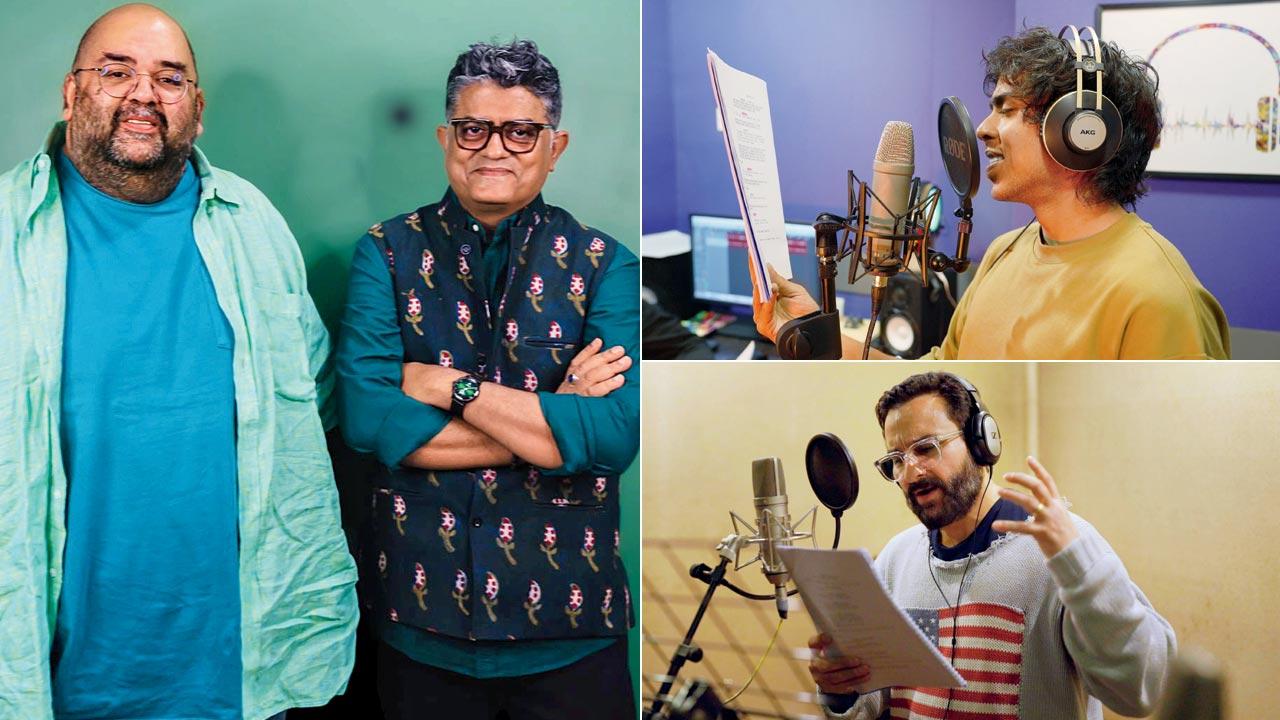
Actor Gajraj Rao decided to give podcasting a shot after Amit Doshi, Head, IVM Podcasts-Pratilipi, shared his vision for Chitthiyaan, a fiction anthology; BAFTA-nominated actor Adarsh Gourav recording for Desi Down Under, an Audible original coming-of-age series, also voiced by Prajakta Koli and Taaruk Raina; Marvel’s Wastelanders: Star-Lord, which released in June, sees Saif Ali Khan make his audio debut as superhero Peter Quill
You loved them on screen, now get used to hearing them on your phone. Bollywood and television’s darlings are turning voice actors, as fiction podcasts see bullish trend, making the business of listening fiercely competitive
Jane Borges (MID-DAY; September 24, 2023)
When audiobook giant Audible marked its entry into the country in November 2018, it did so in the most filmy-way possible—The bestselling non-fiction title, Mafia Queens of Mumbai: Stories of Women from the Ganglands, which it chose to lead with in its Indian audiobook roster, was recorded by actors Rajkummar Rao, Radhika Apte and Kalki Koechlin. It was, in a way, a sign of things to come.
Five years on, audio platforms have started creating original fiction and podcast content keeping stars in mind.
Since the beginning of this year, Audible has launched a robust slate of original fiction titles, helmed by some of the biggest names in the movie business. In February, the platform announced an association with Marvel Entertainment to bring a Hindi Audible series, Marvel’s Wastelanders, with a star-studded cast that includes Saif Ali Khan, Kareena Kapoor Khan, Jaideep Ahlawat, Sharad Kelkar, Masaba Gupta, Prajakta Koli and Mithila Palkar.
“Following this, we dropped Social Distancing, written by Chetan Bhagat and voiced by Neha Dhupia and Angad Bedi. Desi Down Under was another coming-of-age series voiced by Prajakta Koli, Taaruk Raina and Adarsh Gourav that explores cross-border storytelling,” shares Karen Appathurai Wiggins, VP and Head of Content, APAC, Audible, in an email interview.
Some of the other popular titles from the last few years include Kaali Awaazein by Amitabh Bachchan, who incidentally started his career with the All India Radio; The Sandman: Act I in Hindi, voiced by Tabu, Vijay Varma, Manoj Bajpayee, Adarsh Gourav, Kubbra Sait, Sushant Divgikar, Tillotama Shome, and Neeraj Kabi; Baby Doll starring Richa Chadha and Jaideep Ahlawat; and Sasuraal Wonder Phool helmed by Sanya Malhotra and Varun Sharma.
For an industry that’s still nascent and growing, adding actors to the mix has been good for being heard. For instance, Wiggins explains that in bringing a global franchise such as Marvel in Hindi, and with a localized star cast, the goal was to reach wider audiences.
“Since we wanted to bring these stories in Hindi, it became evident that we had to work with top-tier talent. Our aim was to ensure that the actors fully embody their respective characters and infuse their distinct personalities to bring these characters to life in a compelling way,” she says.
Late last month, IVM Podcasts’ announced its first-ever Hindi audio fiction anthology, Chitthiyaan, led by actor Gajraj Rao. Rao plays Prasad Joshi, who retires after serving in Indian Postal Services for 40 years. A box of undelivered letters that he receives from the post office, which coincides with his son’s decision to switch careers, sets Joshi on a completely different path.
“I’ve been an avid podcast listener for three to four years; my interest actually grew during the COVID-19 pandemic,” shares the actor.
Despite this, Rao admits being reluctant when approached for Chitthiyaan. “It was an entirely uncharted territory for me. It felt like stepping into a new realm,” he says, Amit Doshi, Head, IVM Podcasts-Pratilipi and the show’s director, Safura Ubaid, eased him into the process. “Their passion and enthusiasm were contagious, and I felt compelled to take the leap.”
There were different challenges. “Podcasting and traditional filmmaking are distinct in several ways,” says Rao. “In podcasting, the script takes centre-stage. The responsibility of conveying the narrative falls heavily on the words and sound design, as there are no visuals to rely upon. It’s a medium that demands a deep appreciation for the art of storytelling through the auditory senses.
“I came to realise the intricacies involved in maintaining the audience’s engagement without visual aids. It’s about finding that delicate balance between delivering a compelling story while ensuring that the content remains intellectually stimulating.”
Doshi says IVM has always “believed in the power of audio fiction”. If the podcasting network took this long it was because, “we were looking for the right project with the right script and the right cast. Everything came together beautifully for this project.” An actor like Rao helming their fiction debut, Doshi says, has given them the much-needed boost. “Gajraj is phenomenal. His performance was incredible. Working with talent like that forced our entire team to raise the bar.”
For actors Aahana Kumra and Gaurav Chopra, who’ve voiced Hindi thriller podcasts I Hear You (Spotify) and Murder (Storytel) respectively, it was curiosity about the medium that lured them. “It was quite overwhelming,” confesses Kumra.
“I had never acted in front of a mic. This is nothing like dubbing. But when I started, I genuinely started enjoying it.”
As an actor, Kumra says, good work is usually hard to come by. “Podcast fiction has allowed me to discover different opportunities.” It also takes away from the obsession of how you look on camera. “For a change, I focused on how I sounded,” she says.
Chopra, who is the official Hindi voice for Thor (from the Avengers), says the opportunity came naturally because of his other audio work. “I tend to be a bit choosy about [audio] projects,” he says over a phone call.
“It’s something I do on the side, but still an extension of what I do as an actor. I still need to act when I am trying to recreate something for the audio medium… say, a scene where I am jumping or lifting something heavy. Because the medium is growing, it’s also interesting.”
Actor, model, anchor Suchitra Pillai, who was part of the Audible Hindi Original Chillahat, a story about a tragically orphaned heiress, shares this sentiment: “Yes, I definitely see myself exploring the medium in the future.” She recalls playing Sita in BBC Radio 4’s The Ramayana (1994), a 14-part series. “To be able to emote, tell a story, and keep listeners glued to their headphones helps actors push their craft,” she says, “and that’s why it makes it more interesting. It’s about getting things across just with your voice.”
With more people today turning to podcasting, she feels this is a good time for actors to experiment in the space. “For any artiste, especially an audio artiste, the only way is up right now.”
But podcasting is not everyone’s cup of tea, feels actor-director Mantra Mugdh, who runs the production house MantraMugdh and has collaborated on several audio podcasts—he is also artistic director of Marvel’s Wastelanders.
While he has noticed previously sceptical actors taking to the medium, audio OTT requires a bit of unlearning and learning. “This is a blind man’s television,” he says, “Your voice paints pictures on the canvas of the listeners’ minds. Most actors use multiple tools to convey their emotions, and the majority of those are related to the body. In audio dramas, all of these are useless. The eyes, the physique, the clothes, the style, the make-up—all go out of the window. All you have is your voice. And that’s where the magic lies. Of course, it is an added advantage if you are a celebrity. People might visit your show following a star, but they will stay only if the story is gripping enough and the performances are honest.”
While many believe that the audio market is currently saturated, Wiggins points to a FICCI-EY study, Audio OTT market size forecast in India FY 2021-2030, which “states that the market is expected to grow up to $1.1 billion in the next four years and up to $2.5 billion by the end of the financial year 2030”.
“In 2022, we saw a 39 per cent increase in paid member listening hours for our service in India and exponential growth in our free tier,” he says, “Given the popularity of our titles, we are bullish that this will continue. The recent success of our titles, such as Marvel’s Wastelanders: Star-Lord, stands testament to this upward trajectory… We anticipate this to continue as people increasingly take to audio-first services for entertainment, relaxation.”
Rohan Nayak, co-Founder of Pocket FM, a global audio series platform, references a survey conducted among 9,616 Internet users in India. “It unveiled some intriguing trends in audio content consumption preferences,” he shares over email. “The dominant format turned out to be audio series, with 41 per cent of respondents indicating a preference for it. Music came in a close second at 29 per cent, while audiobooks and podcasts were favoured by 20 per cent and 10 per cent, respectively.”
Rising screen fatigue, he says, has contributed to its popularity. “The audio series concept is in an experimental phase, and we anticipate a wave of innovations in the near future.” At present, Pocket FM has more than 15 series that have garnered over 100 million plays, with another 15-20 series surpassing 50 million plays. Nayak says that instead of cherry-picking from the existing bundle of movie actors, who are also stellar voice artistes, Pocket FM has been looking at bringing new talent to the fore. “At the heart of our thriving audio series library is our vibrant creator community, which comprises both talented writers and voice actors,” he says, “Our mission is clear: To identify, nurture, and elevate new artistes and writers, transforming them into audio celebrities in their own right.”
Mugdh doesn’t feel that actors are stealing jobs away from existing voice artistes. What, he feels, it will do is make the space more competitive and democratic. “Voice artistes are industry veterans, and visual actors will have to strive to bring out their ‘sound’ performance to find a way into the listeners’ hearts through their ears, and carve out their place. Mind you, the voice industry has a massive following, and listeners are accustomed to a certain level of performance. If you fall short, be ready for criticism.”
With inputs by Hiren Kotwani
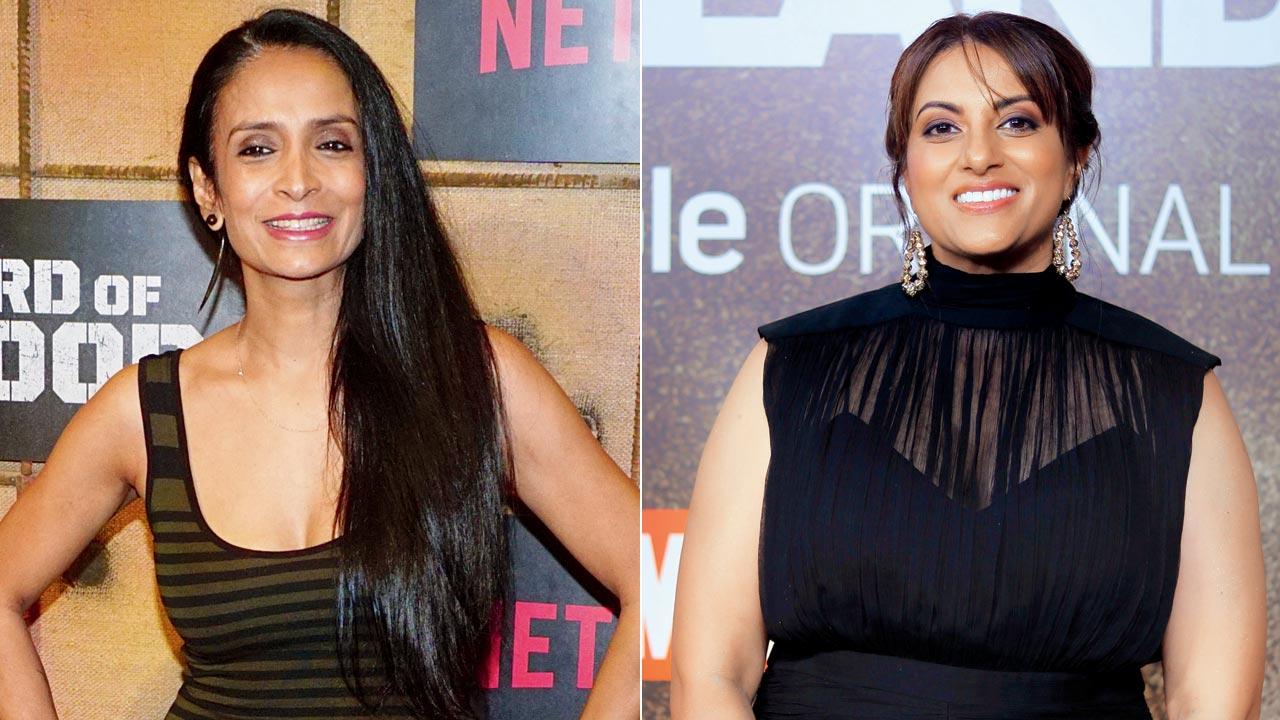
Suchitra Pillai and Karen Appathurai Wiggins
Receiving letters from others brings me immense joy-Gajraj Rao
8:03 AM
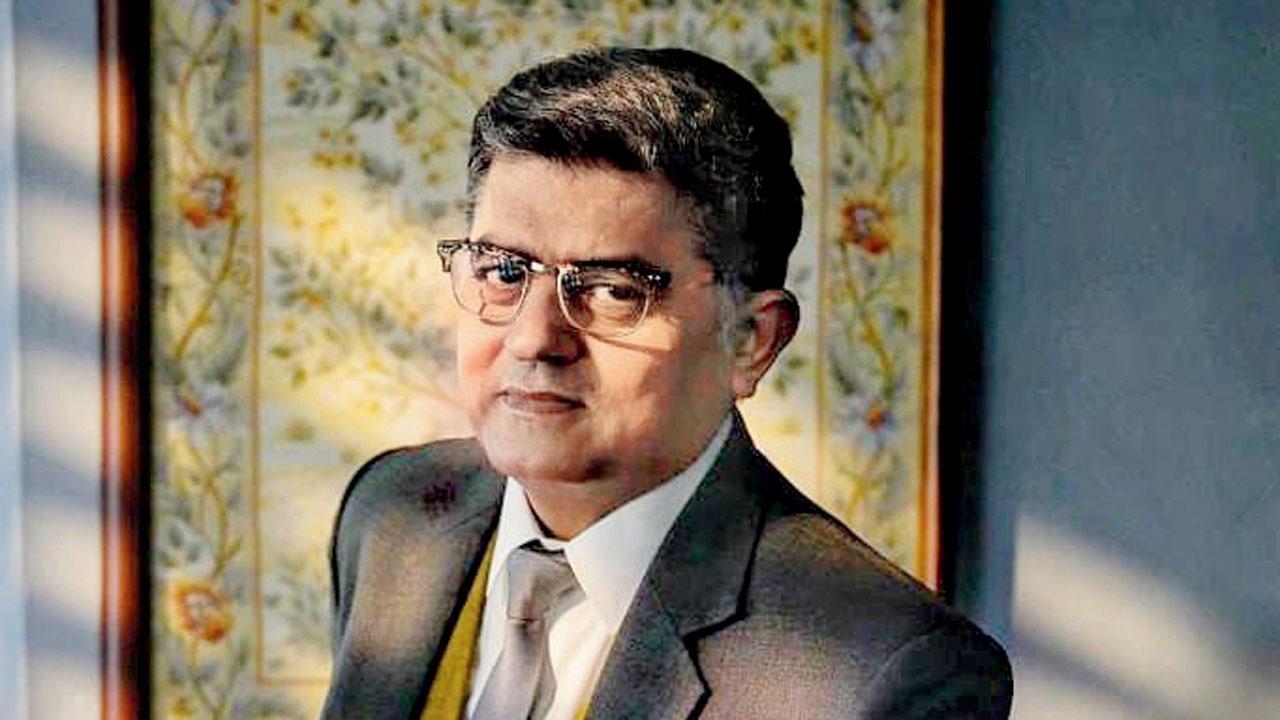
Gajraj Rao says his maiden podcast Chitthiyaan resonated with him as he swears by the forgotten art of writing letters
Hiren Kotwani (MID-DAY; September 21, 2023)
After a long day of shooting as he travels home, negotiating Mumbai’s bumper-to-bumper traffic, Gajraj Rao almost always tunes into a podcast. Over the past four years, he has become an avid fan of them. So, one would assume that he jumped at the idea of exploring podcasts with Chitthiyaan. Far from that, reveals the senior actor. “I was initially unsure about stepping into this new realm,” he admits.
But when IVM Podcasts-Pratilipi head Amit Doshi and director Safura Ubaid narrated the story to Rao, he knew he had to voice the project. Chitthiyaan tells the story of retired postmaster Prasad Joshi, who chances upon a box of undelivered letters while preparing for his wedding anniversary celebration.
“Chitthiyaan is a soulful project for me because, at one point in my life, I used to write letters. Even today, on special occasions or when I feel the need to express my emotions, I write them. Receiving letters from others brings me immense joy,” smiles the actor, who was recently seen in Satyaprem Ki Katha.
Facing the camera comes easy to Rao who has a three-decade acting career behind him. But trying his hand at a podcast was a different ballgame. He says that before recording the six episodes in April and May, he prepped extensively—from practicing vocal exercises to doing rehearsals with other cast members.
“In a podcast, your most influential instrument is your voice. While I had prior experience recording for advertisements, narrating a story in this long-format medium presented a novel challenge. The responsibility of conveying the narrative falls heavily on the words and sound design, as there are no visuals to rely upon.”
I insist for scripts in Devanagari as I think in Hindi-Gajraj Rao
8:29 AM
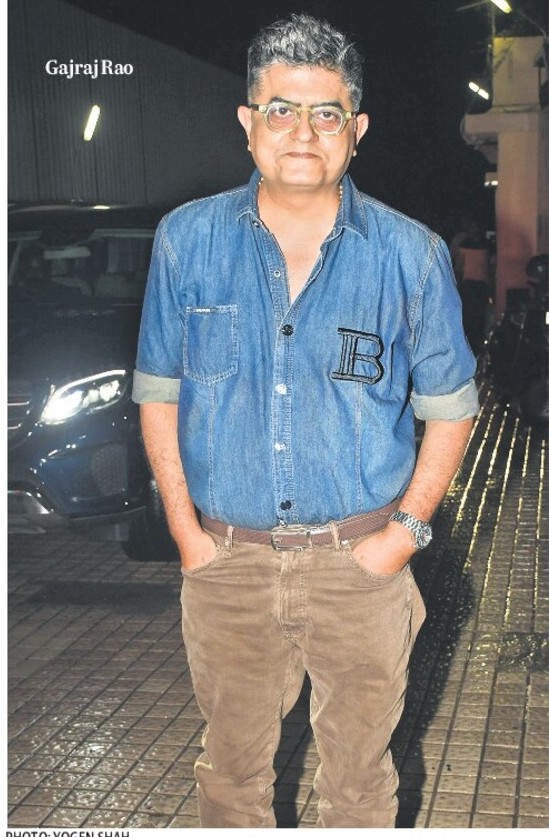
Syeda Eba Fatima (HINDUSTAN TIMES; September 14, 2023)
There was once a time when Gajraj Rao was a bit underconfident as he lacked proficiency in English. But, after he began working in theatre, things changed. “People like (actors) Ashish Vidyarthi, NK Sharma and Shefali Bhushan were proficient in English, but they did not make it their weapon... Mere andar jo khauf tha aur sharam thi angrezi zubaan ko lekar, wo kam ho gayi,” he tells us on the occasion of Hindi Diwas, today.
Cut to the present day, Rao gets scripts in Hindi itself. “[When I started out in films] I began insisting on scripts in Devanagari and people were kind enough to accommodate my request. I think in Hindi, so I like scripts to be in that language,” says the Satyaprem Ki Katha actor.
He admits not knowing English was considered a drawback at one time, but he is happy to see things have change. “Over the past 10-15 years, I have noticed a change, a growing acceptance within society, which is something I truly value. Even at present, I am filming for a web show in Jhansi (Uttar Pradesh) and the script is delivered to me daily in Devanagari. Bhasha ko lekar elitism nahin raha ab, jo 25-30 saal pehle tha,” reveals the 52-year-old, who released his first Hindi podcast recently.
Personally, too, there is no discomfort he faces in speaking in Hindi. “Whether it is a narration or a conversation with a filmmaker, I speak in Hindi, even if the other party speaks in English. Also, during interviews, I make an effort to respond in Hindi,” says the actor, adding, “Language should be a bridge, not a barrier.”
I struggled for 25 years, slept hungry-Gajraj Rao
3:13 PM
HINDUSTAN TIMES (July 13, 2023)
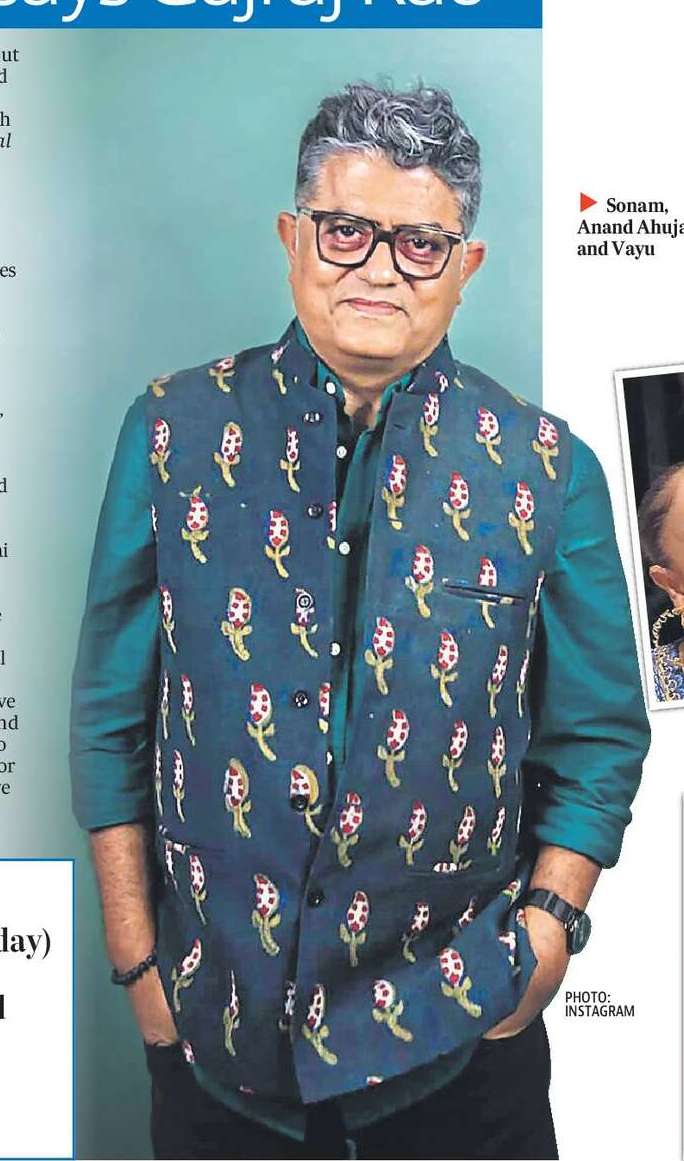
Actor Gajraj Rao made his debut with Bandit Queen (1994), and today, he has craved a niche with his performances in films such as Badhaai Ho (2018), Shubh Mangal Zyada Saavdhan (2020) and the recently released Satyaprem Ki Katha. But it hasn’t been an easy journey for the 52-year-old. Recently, he recalled his tough times in a Varun Duggi podcast and narrated his conversation with a casting director, who asked him to charge less as the project needed only “20 days work”.
Rao said he wasn’t charging for those 20 days, but for all the years of “homework” he did to reach this stage of his career. “The fee I charge is for all those days when I worked hard and survived on 20 cups of tea, slept hungry, listened to abuse and walked on foot from South Mumbai to Andheri,” he said.
Rao added that he did different jobs without any guidance: “At one point, my financial situation was very difficult. I like having financial security now, because I’ve worked hard for 25-30 years. I like expensive phones, travelling business class and staying in nice hotels, and I have no shame in admitting this. I want it for myself and my family. I want to give them the best of everything.”
Is it fair to sacrifice talented artistes at the altar of shoddy scripts?
8:20 AM

Talented actors are trolled and criticized for taking certain roles, but is it right to question only the performances?
Syeda Eba Fatima (HINDUSTAN TIMES; June 8, 2023)
Sometimes, poor scripts are elevated by great performances. But, what do you expect when best of actors are given sketchy characters in a badly written story? Case in point: Gajraj Rao in Bholaa, Sanjay Mishra in Jogira Sara Ra Ra and more. Such actors, known for their versatility, were reduced to frivolous characters in certain projects, which left their fans, and audience at large, disappointed. The bigger question is: Is it fair to sacrifice talented artistes at the altar of shoddy scripts? Industry experts help us decode.
Actors state their reasons
‘FOCUS ON WHAT’S GOOD FOR ME’
Gajraj Rao says he’s “very selective” with picking films, thus he doesn’t regret taking up any role. “If I start getting bothered by what people like to see, I won’t be able to survive in this industry. I feel, you’re the best judge of your work, so I only focus on what I think is good for me,” he says.
‘CAN ONLY DO WHAT’S OFFERED’
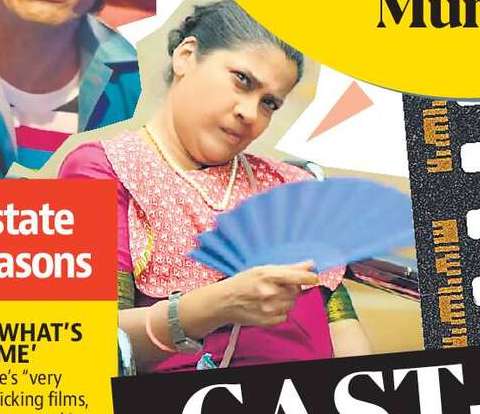
Renuka Shahane was highly criticized for Govinda Naam Mera (2022), but she doesn’t take “vague opinions” seriously. “If you tell me that this role wasn’t good enough for me, it does not make sense to me. How is it going to change anything for me? I can only do what’s being offered.”
‘HAVE TO PUT BREAD ON THE TABLE’
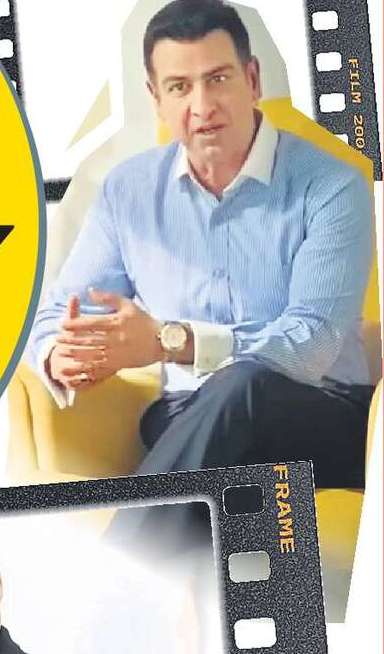
Ronit Roy, who played Kartik Aaryan’s father in Shehzada, opines that decisions are often determined by several factors. “I have to create a balance between the films I like and projects that will facilitate putting bread on the table. I never feel short-changed because I sign the film knowing what my role is,” he says.

‘MAIN KYUN NA KARUN?’
Siddharth Jadhav was brutally trolled for his cringe acting in Rohit Shetty’s Cirkus (2022). He admits that sometimes actors sign up a film only to collaborate with a director and banner. “Kabhi kabhi achche logon ke saath kaam karna bhi impactful hota hai. That’s why I took up Cirkus and Radhe (2021), which had Salman Khan in the lead and was directed by Prabhudheva,” he says.
There are several factors at play, say trade experts
‘NOT THE ACTOR’S FAULT’
Taran Adarsh feels that actors’ judgement can in no way be blamed for a script misfire. “Actors very well know what they are signing up for. Nobody is cheating or lying to them or making false promises. This used to happen earlier when there was no hard bound script, but that’s not the case anymore,” he says.
LOST IN TRANSITION
Atul Mohan explains how at times, the character’s strength gets lost in script-to-screen transition. ”Paper par jo hota hai, wo bahut exciting hota hai. I’ve been part of so many narrations where the director described a character in such a way that any actor would get convinced. But it did not translate well in the final outcome.”
Badhaai Ho: Character actors turn leading lights of Hindi cinema
8:31 AM

Mature actors playing central roles in movies and web series and raking in big bucks amid transformation in cinema, plots and audience taste
Shephali Bhatt (THE ECONOMIC TIMES; April 10, 2023)
Mumbai: Gajraj Rao is in disbelief. The 50-something actor of Badhaai Ho (2018) fame is finally getting to play leading roles of his liking in films and web series after spending three decades in the industry. What’s more, he’s able to charge a fee on his own terms, with negligible resistance from producers of the Hindi film industry, the largest in the country by audience size – over 520 million.
“A decade ago, if someone told me they had written a role for me, I would have thought they were mocking me,” said Rao, who is also an ad film director. Today, he has headlined movies like Thai Massage (2022), which reportedly trended on Netflix India in the first spot during the second week of January this year. “I was emailed the entire script of Bholaa (2023) even though I had only a guest appearance in the recently released movie. Earlier, people only sent the pages that carried my scene,” the actor said.
For someone who admits to having spent 25 of his 30 years in cinema doing minor roles for little-to-no money, these changes are rather significant. “I never thought I’d get to see days like these,” he said.
Senior character actors such as Rao, who had been relegated to the supporting cast for most of their careers, are having their moment in the spotlight — well into their 40s and 50s. The likes of Neena Gupta, Shefali Shah, Pankaj Tripathi, Jaideep Ahlawat, Sanjay Mishra and Manoj Bajpayee are playing central roles in movies and web series, the preserve of younger artistes thus far. Further, most of these mature actors are charging 10 times the fee they were able to command less than five years ago.
“There’s been an exponential change in their fee structure, with many of these senior actors’ pay going from Rs 25-30 lakh to Rs 1-4 crores per project within the last four to five years,” said a producer closely associated with movies and shows featuring senior character actors in lead roles.
To put it in perspective, “their current fee is commensurate with what most mid to top-tier female lead actors are making,” said a celebrity manager who prefers not to be named.
A middle-aged character actor was offered Rs 2 crores for playing the lead in a web series, said a producer in the know, on the condition of anonymity. “When the show gained popularity, the actor is known to have charged Rs 15 crores for the second season,” the person said. “He may get up to Rs 35 crores if the platform renews the show for a third season.”
The last figure is comparable to what one popular lead male actor in his early 30s is charging after delivering one of the biggest box office hits (in Hindi) of 2022, added the producer quoted above.
OTT AVENUES
Senior character actors took centre stage in movies for a brief period in the aughts as well, said trade analyst Atul Mohan — Anupam Kher and Boman Irani starred in Khosla Ka Ghosla (2006), Vinay Pathak in Bheja Fry (2007) and Dasvidaniya (2008), and Anupam Kher and Naseeruddin Shah in A Wednesday! (2008). “But it did not become a regular practice as the box office was still star driven,” Mohan said.
A decade later, that changed with the advent of over-the-top (OTT) content platforms. “So, even a story like Uunchai (2022) that is centred around the senior demographic — featuring Amitabh Bachchan, Anupam Kher and Boman Irani — turned profitable for the makers despite faring average at the box office because it made good money from ancillary sales, that is, platform licensing rights,” Mohan said.
The proliferation of streaming platforms has de-homogenized the audience and reduced the box office pressure that had turned “filmmaking into gambling, where you only want to bet on the winning horse,” Rao said.
Initially, Badhaai Ho — the story of a middle-aged couple getting pregnant and dealing with the consequent disapproval of a conservative society — was “supposed to be told from the parents’ point of view,” recalled Priti Shahani, founder of Tusk Tale Films, who was heading Junglee Pictures (one of the producers of the movie) at the time.
“It was rewritten from the point of view of the son because otherwise, casting the parents was becoming a challenge,” she said. “Once Ayushmann Khurrana was locked in for the son’s part, it gave us the freedom to cast the parents.”
But then the audience started noticing and appreciating the characters of Rao and Gupta in Badhaai Ho , or that of Tripathi in Bareilly Ki Barfi (2017) who then went on to play central roles in web series like Mirzapur and Criminal Justice, and Ahlawat in Raazi (2018), who headlined web series Paatal Lok. “Since OTT platforms do not have the theatrical pressure but do need recognizable talent to drive not only subscriptions but also engagement, these actors started getting the weightage they had been missing all this while,” said Shahani.
[Disclaimer: Junglee Pictures is the movie studio division of The Times of India Group, which also publishes The Economic Times. Bareilly Ki Barfi and Raazi were also co-produced by this division.]
Pooja Kohli Taneja, managing director at FilmKaravan, cannot be happier about this shift. “As a producer, I have also faced the pressure of recovering money at the box office,” said the executive producer of the international Emmy Award-winning web series, Delhi Crime. “If I had a dollar for every time someone suggested I get an A-list actress to play the cop… But with platforms, you work within a budget instead of worrying about the theatrical collection.”
Gajraj Rao confirms he’s venturing into direction of a film with elements of humour
8:28 AM
Hiren Kotwani (MID-DAY; November 13, 2022)
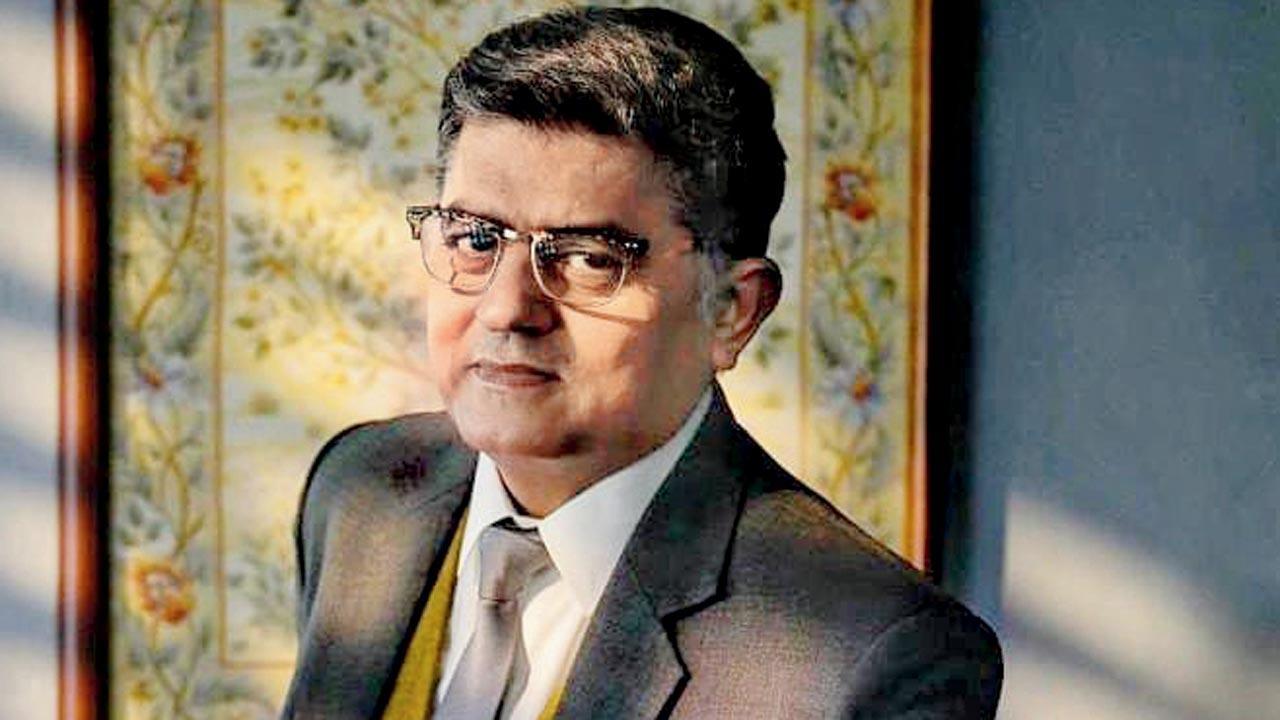
After earning acclaim for his roles in films like Badhaai Ho and Maja Maa, Gajraj Rao is set to test his skills as a director. “I’m currently working on two scripts. There is so much content available for the audience right now that making something new and interesting is a challenge. I should be able to finalise the screenplay by mid-2023 to begin shooting by the end of the year. If all goes well, I should be able to release it in 2024,” says the actor-director.
Of interest to him are slice-of-life films, real-life stories, and humourous movies. “So, the scripts I’m working on will be relatable to the audience, and will also have a good dose of comedy.”
Prod him on the desire to take on a new role when he has been flourishing as an actor, and he says, “One of the things the pandemic taught us is to not have rigid opinions. Whatever comes our way, we must learn to [accept it]. Now, I’m shooting Satyaprem Ki Katha. Since I am aware of my shooting schedule, I plan my ad film shoots on the days I am not working.”
Even though Ayushmann Khurrana is younger than me, his choices inspire me-Gajraj Rao
8:14 AM
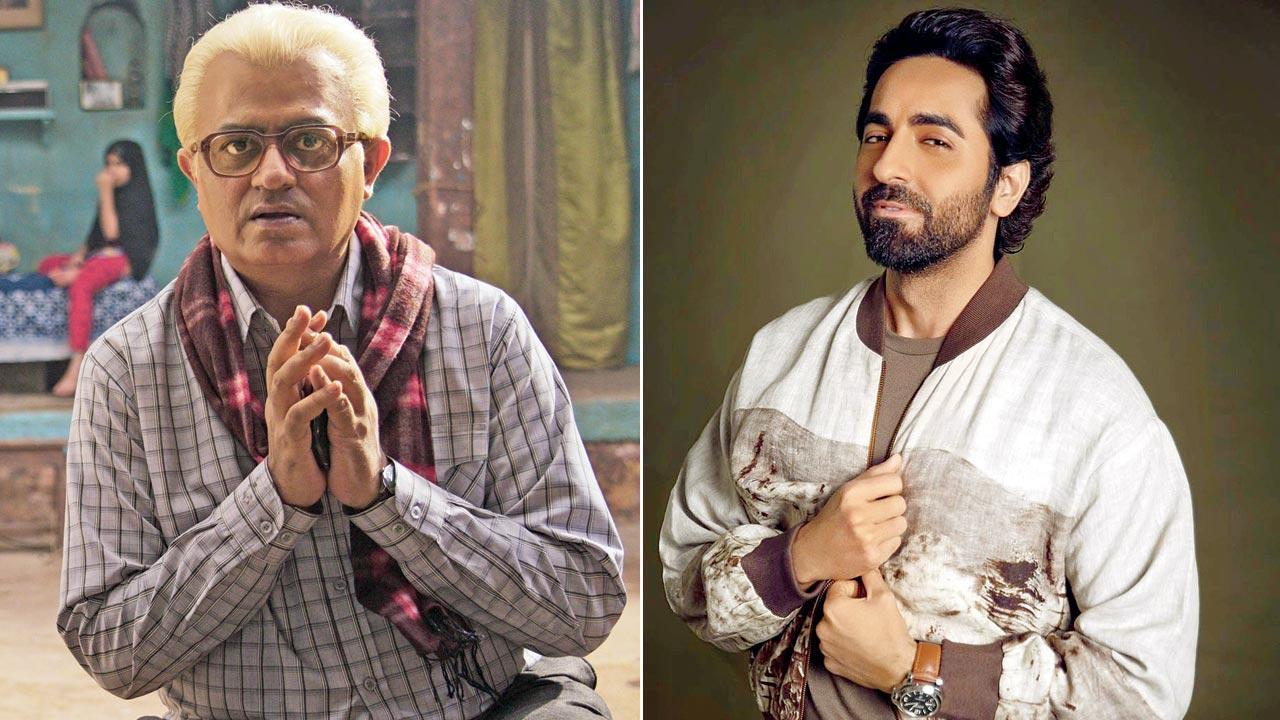
Even as he refutes talk that erectile dysfunction drama Thai Massage is similar to Khurrana’s Shubh Mangal Saavdhan, Gajraj applauds actor’s selection of scripts
Hiren Kotwani (MID-DAY; November 9, 2022)
The past few years have marked a turnaround for Gajraj Rao, as he was a part of fascinating offerings, including Badhaai Ho (2018) and Shubh Mangal Zyada Saavdhan (2020). In his upcoming movie Thai Massage, the senior actor plays 70-year-old Atmaram Dubey, who suffers from erectile dysfunction. The theme might be strikingly similar to that of Ayushmann Khurrana-led Shubh Mangal Saavdhan (2017), but Rao insists the commonalities end there.
“Atmaram has led most of his life for others. There comes a time when he feels lonely and [wants to explore his] desires,” he says. The story follows the protagonist as he shares his dilemma with Santulan Kumar, essayed by Divyenndu.
Handling the delicate subject is no cakewalk. The senior actor says director Mangesh Hadawale’s sensitivity shines through in the film’s treatment. “If you’ve seen Mangesh’s Marathi film, Tingya (2008), you will know his sensibilities are right. There is nothing cheap in our narrative.”
The Imtiaz Ali-produced film will lock horns with Amitabh Bachchan, Anupam Kher, Boman Irani and Neena Gupta-starrer Uunchai. Interestingly, both films focus on the joys and sorrows of old age. “I hope the audiences appreciate both films,” smiles Rao.
It’s evident that he is enjoying the current phase, picking and choosing from the novel stories that are being told. In some ways, he says that Badhaai Ho co-star Khurrana’s choices influence him.
“Ayushmann could have it easy, opting for the routine commercial fare. But he takes risks with newer subjects, knowing that perhaps four or five out of the 10 films may not achieve commercial success. Even though he is younger than me, his choices inspire me.”
Gajraj Rao says Thai Massage addresses a serious issue faced by 20-30% of world population
8:27 AM
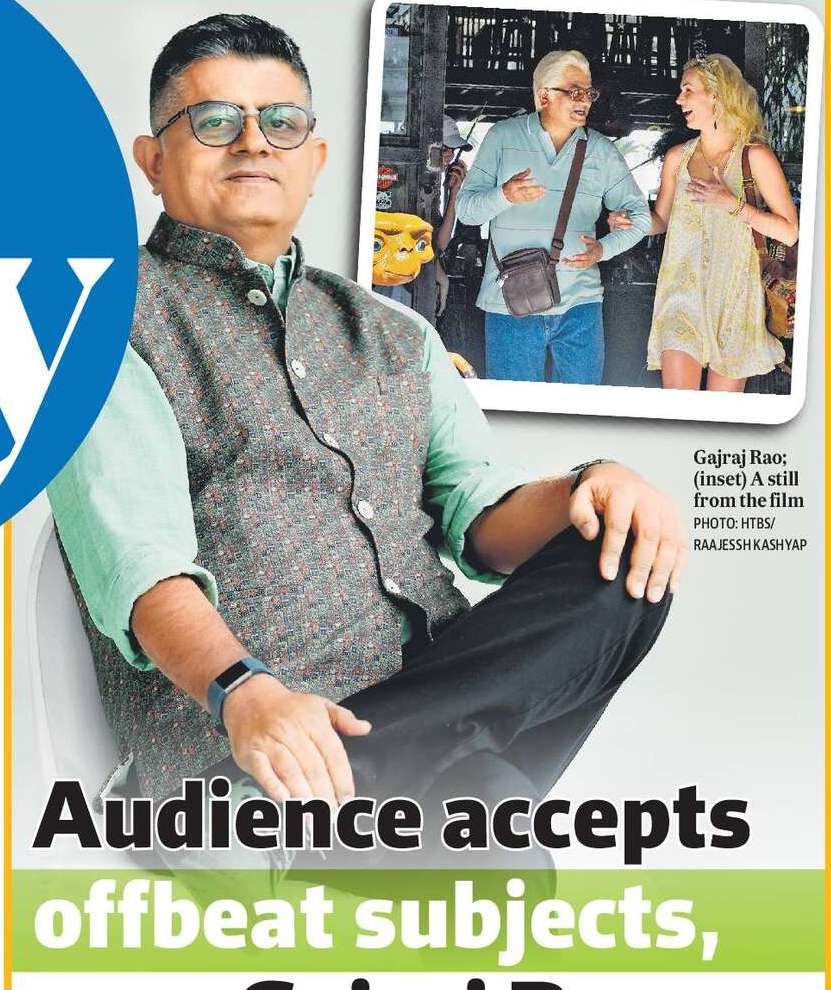
Syeda Eba Fatima (HINDUSTAN TIMES; November 8, 2022)
Through his films, actor Gajraj Rao has been addressing some delicate, but significant topics. And this time, it is erectile dysfunction in filmmaker Imtiaz Ali’s upcoming film, Thai Massage. While many appreciate the actor’s script choices, Rao reveals that he’s often been asked to rethink. “Some people said, ‘Kyun bana rahe ho yeh sab [films], kahan hota hai aisa?’ But I feel happy to see how there’s acceptance from the larger section of the audience,” he says.
He adds that audiences now accept offbeat subjects. “They may not always relate to what’s shown in a film, or approve of a subject, but are still giving us the space to experiment. They are treating it like a story that needs to be told,” Rao says.
The 51-year-old highlights how this Mangesh Hadawale directorial is neither preachy, nor slapstick while addressing the serious issue that “nearly 20% to 30% of the world population is facing”.
The actor says, “I found out that at least 20 to 30-crore Indians are dealing with it, which is a huge number. Making the situation worse are the misconceptions around it, which have never been cleared due to the lack of discourse around the subject. That’s why it was important to address this issue. And we have done it in a light-hearted way,” says the Badhaai Ho (2018) actor.
Rao points out that erectile dysfunction is just one aspect of the film. It also deals with old age loneliness. “When I read the script, the most interesting part was that it’s the story of a lonely 70-year-old who has made sacrifices all his life and is now looking for companionship,” he ends.
With other stars, their entourage can be overwhelming, but Madhuri Dixit's team is like a fly on the wall-Gajraj Rao
8:21 AM
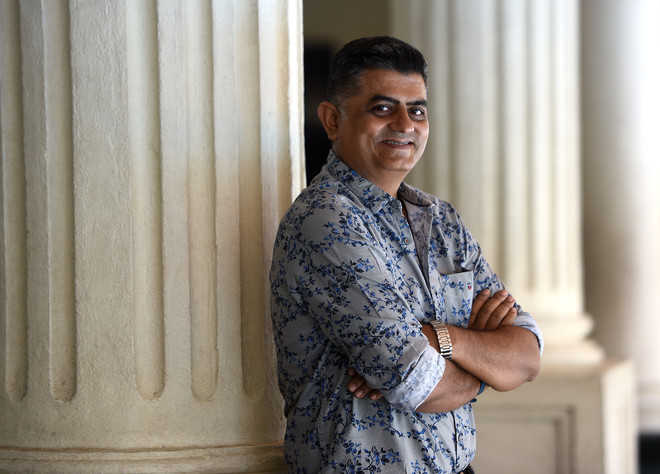
Renuka Vyavahare (BOMBAY TIMES; October 7, 2022)
Badhaai Ho transformed the course of Gajraj Rao’s career. Ever since, the actor has been impressing us with his immense talent. He now stars alongside Madhuri Dixit in Anand Tiwari’s film Maja Ma, which is now streaming on Amazon Prime Video. In a candid chat, he talks about his journey, the zone of cinema he belongs to, and his motivation to work in Maja Ma — Madhuri Dixit. Excerpts:
What about Maja Ma appealed to you the most?
It’s a family drama and though the colours and spirit have a Gujarati vibe, it isn’t stereotypical or language-centric. The name Madhuri Dixit was enough for me to do this film. The greatest motivation was her presence in the film. Unko itna dekha hua hai, unko itna admire karte hai, so to be able to work with her and be offered an important part alongside her was a big deal for me. I am from Delhi, and since the time I was doing theatre there, I remember flocking to cinemas to watch her movies like Hum Aapke Hain Koun and Prahaar. I feel Madhuri ji’s journey is reminiscent of Rekha ji as both were able to strike a fine balance between stylized commercial cinema and hard-hitting films (like Mrityudand). The way they smoothly switched their persona for different kinds of cinema was admirable.
Did you ever think that one day you would be paired opposite Madhuri Dixit on screen?
I never thought it was possible. When Anand Tiwari first offered the role to me, I thought it must be some part, but when I read the script, I figured it was Madhuri ji’s husband’s role! My friends in the US couldn’t believe it. They called to ask, “Gajju, are you sure that you have been paired alongside Madhuri Dixit as her husband? You are her hero!” I told them it’s not a hero-heroine story. It’s a family story. I don’t belong to the Shah Rukh Khan, Anil Kapoor hero zone. You need a certain talent and traits for those roles, and I don’t have it. I can act a little, and I am glad I got this part. I come from a theatre background, and the universe I belonged to only permitted me to admire someone like her from a distance.
Being such a talented actor, why did you feel that working with someone like Madhuri was a long shot?
Agar aap gully cricket khelte ho with a tennis ball, and someone tells you, ‘Gajraj, now you get to play a proper match with Sachin Tendulkar at the Wankhede Stadium’, this was that feeling. Madhuri ji is to films what Tendulkar is to cricket. They both have excelled in their craft. The experience of working with her and being around her for promotions surpassed my expectations. When she enters a set, she ceases to be Madhuri Dixit. On set, she was Pallavi Patel (her character in Maja Ma). She is aligned with her character on and off the camera.
Are you glad that cinema is finally moving away from the typical hero-heroine subjects to character driven stories like Maja Ma?
Event films, like Baahubali, demand larger-than-life characters because they are made on a certain scale. I like what Tom Cruise, Shah Rukh Khan or Tiger Shroff bring to the table. You need that hero-like charisma for these big-ticket entertainers, and we need such stories, too, because they are aspirational. Aap hero ko filmon se hata nahi sakte because real life mein hero bahut kam hote hai. Like a parallel universe, two kinds of cinema can co-exist. Amitabh Bachchan ruled as a superstar, but at the same time, there was also Amol Palekar who the common man could identify with. Rekha ji did potboilers, but also did Umrao Jaan. There is space for both kinds of cinema.
Has OTT changed the game for actors, and would you say that the medium is more age and gender inclusive?
OTT has democratized things because there is no Friday pressure. Theatres need big faces for big openings. Audience shaayad Gajraj Rao, Ritwik Bhowmik, ya Srishti Shrivastava ke naam pe theatre mein nahi jayegi. Niche audience aayegi, but most may not turn up. So, theatres need actors who are talented and have certain stardom. OTT doesn’t have those restrictions, so you can tell a story freely. You can cast actors strictly on the basis of their acting calibre and not stardom. The script is the new hero on the web because people have the power of a remote. It’s a golden period for actors and technicians. Look at Raveena Tandon, Sushmita Sen and Juhi Chawla…they are doing such good work on OTT. Maybe it was difficult to write relevant parts for them in commercial cinema due to box office demands. Good writers are now in demand because they have that freedom.
The story of Maja Ma revolves around a family. What was the mood like on set?
The bonding and interaction between the family members in the film — Madhuri ji, Ritwik and Srishti (who play out children) and me is incredible. There was warmth, love and laughter on set. No one rushed home once the shoot was over. We played antakshari and dumb charades, and huge credit goes to MD for bringing that energy on set. With other stars, their entourage can be overwhelming, but her team is like a fly on the wall. They’d quietly sit in the corner. Unlike many successful stars, she doesn’t wear her superstar status on her sleeve. Working with her felt like a beautiful dream.
It was so difficult to keep a straight face while enacting certain scenes with Gajraj Rao-Madhuri Dixit
8:18 AM
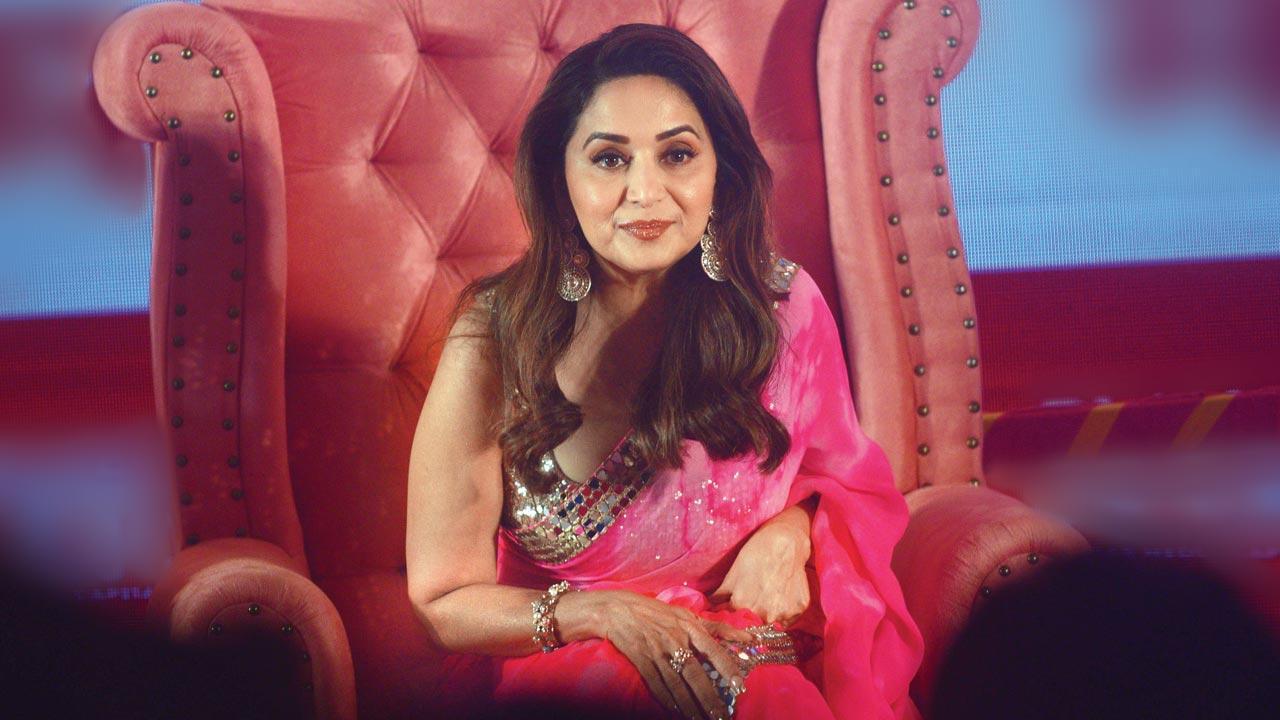
Neha Maheshwri (BOMBAY TIMES; October 4, 2022)
Time stands still when it comes to Madhuri Dixit. Even today, she makes you go dhak-dhak each time she appears on the screen, her latest being, Maja Ma. Ahead of the premiere of the film on October 6 on Prime Video, the beautiful actress talks about what piqued her interest in the story, her desire to push the envelope with every project, and how the OTT boom has changed the game for actors. Excerpts…
Maja Ma is your first film in the OTT domain. What about the script appealed to you?
The film is set in a colourful festive season with the quintessential Indian wedding as the backdrop. It’s a story of a perfectly imperfect family, centred around Pallavi Patel, who is a doting mother and a perfect wife. She is someone the community looks up to, but somewhere she begins to lose her identity as can be seen in the trailer. She says, ‘Main ek maa hoon, ek biwi hoon, lekin uske alaawa bhi mera wajood hai’. It’s a beautiful, warm, and funny film, but with a message told in a simple and non-preachy manner.
Tell us about your interaction with the cast. Your co-star Gajraj Rao seems to be in awe of you and has mentioned that he would change his name to Anil Kapoor just to work with you. How does it feel to have so many admirers wherever you go?
The entire cast bonded like a family on the first day itself and the love reflects in the film. Even though there were emotional scenes, we enjoyed each other’s company. There was a lot of appreciation for each other and Gajraj ji especially. He is also a director with a string of commercials to his credit. I remember once after I completed a scene, I was confused about whether I got it right. I wanted to ask Anand (the director), but he was busy on the phone. Gajraj ji saw my face, came up to me, and said, ‘Bohot achha tha’. So, his attention to detail is admirable and his comic timing is terrific. One look at his face and you want to laugh. It was so difficult to keep a straight face while enacting certain scenes with him. I literally had to sing a sad song in my head or else, I would have burst out laughing!
We also have these bright young actors (Ritwik Bhowmik, Barkha Singh and Srishti Shrivastava) who are so good. Of course, Anand (Tiwari, the director), who is also an actor, producer Amritpal Singh Bindra, and the Leo Media Collective team make everything on the set so easy and comfortable. It was a cohesive unit. We shot during COVID, but we made sure to protect each other.
After watching the promo, one realises that apart from complex dynamics in human relationships, the film also touches upon how a couple’s sex life changes after marriage. How important is it to be open about such topics and have a more sensitised approach?
It’s very important to talk about love and relationships with friends, your husband and your family without feeling uncomfortable. It’s important to keep an open dialogue because without that, it is difficult to maintain joy and relationships in family or in life. Communication is important for any relationship to thrive.
You have an enviable body of work. What continues to drive you as an actor and draws you to a script?
By taking up challenging roles and going with my gut. I played a different character in my first web series, which dropped earlier this year. It’s the same with Maja Ma. I have to challenge myself with every role I select. That’s what I am trying to do. When you take on something challenging, it keeps you on your toes and pushes you to walk that extra mile. I also love exploring different art forms other than acting and dancing. I tried singing because I love it. What’s important to me basically is to be serious about my craft, but have fun while I am at it as well.
The garba track, Boom Padi in Maja Ma, has become quite a rage and has everyone grooving to it this festive season. Dance has been a huge part of your career and you are still called the queen of dance in Bollywood. How important is dance in your life?
Dance for me is like breathing. It’s a very spiritual thing. Even now, if I want to work out, I dance, so it’s an extremely important part of my life. It makes me feel happy and connected with the universe. Everybody should try dancing, it changes not only your body but mind, soul... everything! There is a lot of beauty in it and there is a lot of joy you get from it.
You played strong characters even when it was believed there was a dearth of strong characters for actresses compared to their male counterparts. Now, you have forayed into OTT. Do you think that the medium has opened a floodgate of opportunities?
Absolutely. You have a series being carried by actresses at the centre of it. I would say that life imitates art and art imitates life. There are all kinds of people and not just youngsters who make up society and life. There are many age groups that have stories to be told and that’s what is happening on OTT. Brilliant actors, who were struggling to find their place in cinema, are getting to show their talent on the web because there is space for everyday people and relatable characters. That’s the one thing I find really great about OTT is that everyone is getting to showcase their talent, which is amazing.
You had entered the film industry at a time when opportunities were directly proportional to your stardom. The focus, today, is shifting from stars to actors. You’ve been a superstar for decades. How does it feel to be working in an era when the concept of superstardom is fast changing?
Talent has always been important. Talent nahi hoga toh how can you even make it on screen? You had to be talented, but you had to be a star as well. If you think about it, cinema was the only source of entertainment at that time. We didn’t have so many channels and OTT platforms. Today, there are stars everywhere, be it on Instagram, Twitter, OTT, or TV. If you are a star today, you have to manage your social media as well. Back then, stars had to have a certain mysteriousness around them. But today, they want to know all about you. So, things have changed and you have to adapt to changing times.
Life mein dhakke bahut khaye hain-Gajraj Rao
9:33 AM

Vinay MR Mishra (HINDUSTAN TIMES; September 24, 2022)
It was in 1994 that actor Gajraj Rao made his film debut, with Shekhar Kapur’s Bandit Queen. But, not many know that before his stint in films, he has worked at a tailoring shop, a stationery shop and even wrote for Hindustan Times, back in 1989.
“[Life mein] Dhakke bahut khaye hain maine,” he tells us, adding, “I didn’t have a well-planned life, because the financial situation at home wasn’t great. These jobs have taught me a lot. Badi mushkil zindagi thi meri, but I had the fire in me to do something and give my family a good life.”
Originally from Delhi, Rao would often visit Mumbai to find work. Recalling his early days, he says: “I was staying at my friend’s place for a month and was writing a script. That time, paise khatam ho gaye mere. I went from Andheri to Worli to narrate the script, only to be rejected. Jeb mein kul milake 5-6 rupaye the. I didn’t know what to do with it. Should I take a train back home, should I eat... Mujhe pure umeed thi ki meri script approve ho jayegi and I’ll get an advance. Wo jo [din] tha na... Aankhon mein pani aa gaya [sochke] ki main karunga kya.”
Rao shares that he borrowed Rs. 500 from his friend to return to Delhi. “It was a big amount back then. Sharmindagi bhi ho rahi thi mujhe ki ye situation aa gayi aur mujhe ye sab karna pad raha hai. But, it was an important learning that I shouldn’t fall for anyone’s promises. The producer who called me said chinta mat karo, even if the script doesn’t work, but he didn’t stick to his words,” says the Badhaai Ho (2018) actor.
Rao, who’ll soon make his teleplay debut with Akarsh Khurrana’s Gunehgaar, is grateful for his journey. “When I used to get small parts, I’d see more talented actors get nothing. But, I wanted to keep myself financially sound. I decided acting ka shauk tab pura karo jab jeb mein paise ho aur udhaar na lena pade,” he says.
Manoj Bajpayee and I were not insecure about each other. He is my senior-Gajraj Rao
8:11 AM
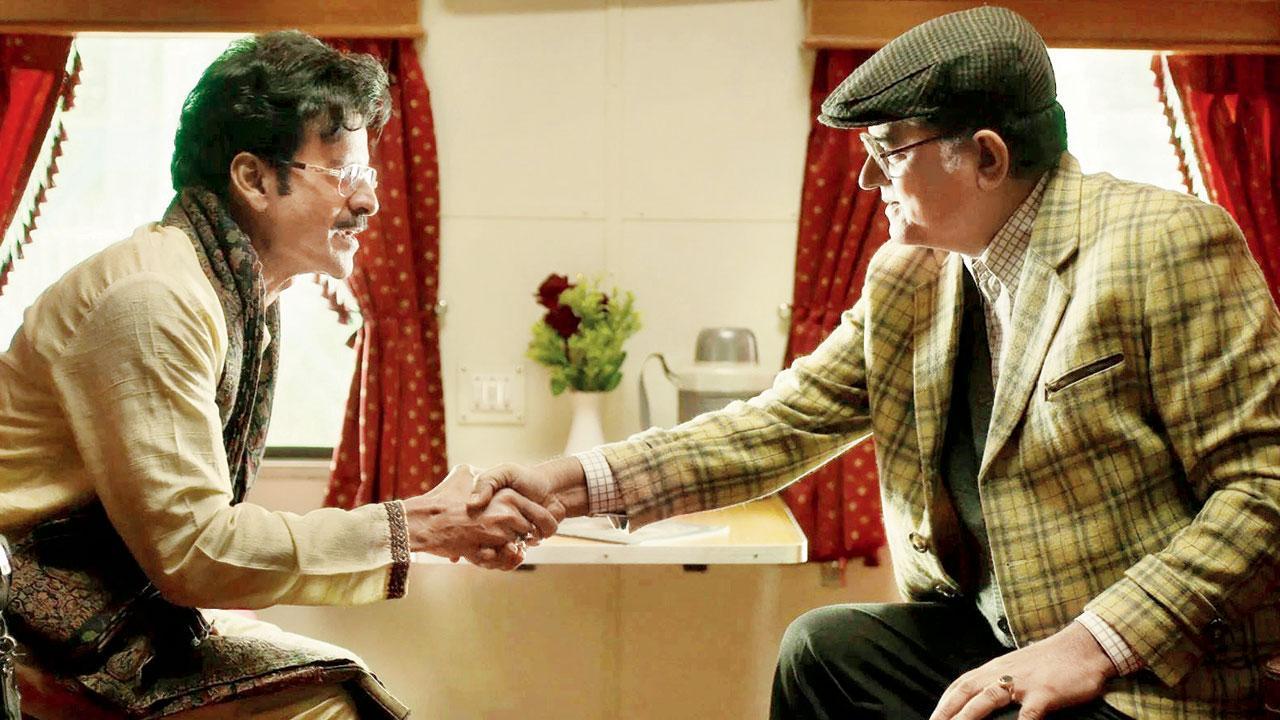
Gajraj, who has bagged a Best Supporting Actor nomination in Hitlist OTT Awards for Ray, says chemistry with Manoj elevated his act
Uma Ramasubramanian (MID-DAY; March 10, 2022)
Hungama Hai Kyon Barpa is one of those rare examples where different elements — from the imaginative art design to Abhishek Chaubey’s direction — came together to make a well-crafted short film. The cherry on top was Manoj Bajpayee and Gajraj Rao’s performances. Having bagged a spot in the Best Supporting Actor (Male): Series category of the mid-day and Radio City Hitlist OTT Awards, Rao credits his performance to his easy chemistry with co-star. He has the perfect analogy to describe their chemistry:
“It was like seeing Sunil Gavaskar and [the late] Chetan Chauhan play after ages. [They] knew exactly when to take a run. Likewise, when you are well-tuned with your co-actor, you know exactly what to do in a scene.”
The segment from Netflix’s Ray is based on the legendary filmmaker-writer’s short story, Barin Bhowmicker Byaram. Setting the adaptation in the world of Urdu poetry and ghazals, Chaubey told the story of kleptomaniac Musafir Ali (Bajpayee), who bumps into Rao’s Aslam Baig on a train journey, only to realise that he had stolen an expensive watch from Baig years ago.
“Manoj and I were not insecure about each other. He is my senior in terms of his body of work. But I am grateful that he was so open and allowed me to flourish. Sometimes, [the director] would call for cut and we would get back to the scene after two hours. It’s possible to maintain that emotion and rhythm only if there is harmony between the two actors. Also, we did a lot of rehearsals,” recounts Rao.
The senior actor has been on a roll post Badhaai Ho (2018), bagging prominent parts. Asked whether he is enjoying the current phase of his career, he says, “After waiting for years, now I have got this opportunity. It has a lot to do with destiny, and I want to make the most of the opportunities coming my way.”
Cast your vote for the Hitlist OTT Awards
Gajraj Rao has been nominated in the Best Supporting Actor (Male): Series category for Hungama Hai Kyon Barpa, Ray.
The other nominees are:
- Aftab Shivdasani (Special Ops 1.5)
- Amit Sial (Maharani)
- Dino Morea (The Empire)
- Pavan Malhotra (Grahan)
- Sharib Hashmi (The Family Man S02)
- Sunil Grover (Tandav)
- Vaibhav Raj Gupta (Gullak S02)
Log on to www.radiocity.in/hitlistawards to cast your vote.
You can also vote via SMS. Send HITLIST <space> category name <space> your choice (a/b/c as on the website) to 57575.
Voting lines close on March 18.
There's no need for financial assistance, says Surekha Sikri's manager Vivek Sidhwani
8:23 AM

Surekha Sikri's manager clears the air after rumours suggest veteran's family needs monetary aid to cover her medical expenses
Uma Ramasubramanian (MID-DAY; September 10, 2020)
 A day after she suffered a brain stroke, veteran actor Surekha Sikri, 75, continues to be closely monitored in the intensive care unit (ICU) of Criticare Hospital in Juhu. Soon after the news of her ill-health spread, it was reported that her family was in need of financial aid following the nurse's allusion that the actor could not be admitted in any other hospital due to the exorbitant fees.
However, talking to mid-day, Sikri's long-time manager Vivek Sidhwani put the rumours to rest. "That was incorrectly put out in the press. Surekha ji has her own finances and the family, including her son, is by her side. There is no need for financial assistance for now," said Sidhwani.
On Tuesday, several industry folk, including Sonu Sood, Badhaai Ho director Amit Ravindernath Sharma and co-actor Gajraj Rao, came forward to lend a helping hand to the actor. "Many of her well-wishers, colleagues and filmmakers were kind enough to offer financial assistance. They have been informed that the family is taking care of everything and giving her the best possible treatment. We would like to acknowledge everyone who reached out to us," added the manager.
Sikri, who became a household name after her Dadisa act in popular television show Balika Vadhu, bagged her third National Award last year for Badhaai Ho (2018). She was last seen in Zoya Akhtar's segment in the Netflix anthology, Ghost Stories.
For Lootcase, I wanted a kind of humour which was accessible yet intelligent-Rajesh Krishnan
8:51 AM

Nishad Neelambaran (HINDUSTAN TIMES; August 16, 2020)
 For many, a movie with a plot that revolves around a bag full of money might sound too cliché. However, what the makers do with the plot and how they tell a story with it is what makes the difference. And one such film is Lootcase. Directed by debutant Rajesh Krishnan, the film stars Kunal Kemmu and Rasika Dugal in lead roles. The film also features Gajraj Rao, Ranvir Shorey and Vijay Raaz in pivotal roles.
Speaking about his debut film, which recently released on an OTT platform, Krishnan says, “Lootcase has a certain simplicity to it. When you do ad films for 20 years, you learn to be simple rather than complex.” He further adds, “The whole attempt was to keep things as simple as we could and get into a kind of humour which is accessible but, at the same time, intelligent. I’ve grown up watching Malayalam films, and they are shining example of how movies have to be made.”
Lootcase was compared to a Nepalese film Jatra, which released in 2016. So, did this make Krishnan nervous about taking up this project? “We had written the story some time in 2014. If you search for ‘films with bag full of money’, you will find about 40 movies. Somebody getting a bag full of money is a very middle-class thought. It is as clichéd as you can get,” he shares, adding, “Fundamentally, we saw a photo of a rickshaw driver in a newspaper, who had returned a bag to his passenger. We saw the driver’s face, and it was almost like he was sorry to return it without checking what was inside the bag. That is when we started to think about it, and when it was pitched to Kapil Sawant (co-writer), he said, ‘Aisa idea maine suna hai’. I said let’s push and see. You will fail at the max; let’s fail for free.”
Krishnan, who is also the director at Soda Films, is very particular about his cast. Even if it is for an ad shoot, he has managed to work with the right people for a project. He admits that he knew who they wanted to cast for this movie. “The casting team has done a fantastic job here. They actually did the difficult task. I practically had worked with 90% of this crew in some commercial or the other. In advertising world, the look is far more important than performance. There is literally no time for an actor to go out there and express, and that is where the casting team came into play. We did extensive casting except for Gajraj. Back in 2014, we knew we wanted the role of MLA Patil to be played by him,” the director reveals.
Ask him if he would continue to make ad films despite his commercial break, and he says, “Advertising is like Ranji Trophy, where you keep honing your skills. An ad film set is not any different from a feature film set. I would never give up ad films.”
Even if it took long, I am glad that today people recognise me-Gajraj Rao
8:18 AM

Kavita Awaasthi (HINDUSTAN TIMES; July 20, 2020)
The Badhaai Ho (2018) actor Gajraj Rao feels fortunate to have “the privilege of choice when it comes to zeroing in on a future project”. “I have reached a certain stage in my career wherein I don’t have to take up a project only for the financial reasons, if I’m not satisfied with it,” he says. Staying at home for the last three months were “a bit tough initially”, but he says these are extraordinary circumstances and we are all in this together.
The actor has been discussing a few projects while waiting for the release of Lootcase, a film co-starring Kunal Kemmu and Rasika Duggal. It is a “special project” for him as it has been directed by his colleague from advertising world, Rajesh Krishnan.
There have been conversations about character actors and second leads not getting enough importance in films or during promotions. Ask Rao, about the same and he says, “In any wedding, the spotlight is always on the bride and groom. It is indeed true that sometimes, some actors do not get their due, but I always try and seek inspiration from these stories and work harder in my performances. If your performance has that spark, people will definitely notice and remember you. It doesn’t matter how long it has taken, what matters is the recognition from the audience for my work and the effort that has gone into it. Even if it took long, I am glad that today people recognize me.”
He continues, “The love and appreciation I got for Badhaai Ho was almost surreal, but if I do not keep improving upon my craft and churn out better performances, I’m bound to be forgotten. I won’t have any reasons to complain either. I have to stay grounded and keep toiling everyday, so that my craft becomes better, and there are no two ways about it. Sincerity will always shine through. Tareefon se ghar nahin chalta, mehnat se chalta hai.”
When my parents saw me on TV, they were assured of my skills-Jitendra Kumar
8:47 AM

The actor on his journey from IIT to sketch comedies to riding the digital wave
Kunal Guha (MUMBAI MIRROR; July 5, 2020)
When Jitendra Kumar essayed a gay character in Shubh Mangal Zyada Saavdhan earlier this year, many found the actor’s choice rather bold. But the 29-year-old, who shot to fame with digital sketch comedies and series such as Pitchers, Bachelors, Kota Factory and Cheesecake, felt the film qualified as “important content”.
“I hope such stories, and the intention with which they were made, reach a larger audience,” says Kumar, who admits that his two lockdown releases, Panchayat and Chaman Bahaar, were both banking on the Ayushmann-starrer to elevate him to a household name despite his big screen debut with Gone Kesh last year. “When you’re starting out, you sometimes can’t refuse work because you have to survive. But I’ve learnt that if you focus, and are patient, you can find recognition and also get the roles that you believe in.” Considering the actor has recently become a digital sensation, keeping at it, perhaps, pays handsomely.
During the Coronavirus lockdown, Kumar, unlike many, hasn’t rekindled his culinary passion, but has been just “cooking for survival”. “I am very lazy, so I knead aata for two or three days at a go, and can make two rotis in one minute,” says the actor, who takes pride in whipping up dal tadka, egg curry, aloo shimla mirch and bhindi. Kumar credits his survival skills to his days in the NCC camps he attended in school, where he also learnt to cook on an open fire pit.
Surprisingly, Kumar’s formative years in Rajasthan’s Khairthal were singularly insular and his access to the world of entertainment was largely restricted to the small screen. “My childhood was all about cricket, cooking and studies. We usually watched Doordarshan, but during summer breaks, we would have a dish installed, and watch whatever played on the cable channels,” he says. “Back then, I never thought that I would ever become an actor or even visit Mumbai.”
A civil engineer from IIT Kharagpur, Kumar shares that he was initially drawn to acting while participating in college plays. “In IIT, we’re told to keep up with extracurriculars, so I took to the stage.” It is here that Kumar also met his college senior Biswapati Sarkar — someone who he would later collaborate with — who went from helming college plays to writing sketches for TVF, a digital content outfit, which began producing content for YouTube in the early days of web streaming in India.
Kumar remembers diving into the digital scene just after college, in 2012, spreading himself thin by straddling acting, numerous production jobs and assisting gigs. “Initially, I was unsure if this was my calling, so I gave it up in three months and took up a job with a construction company in Bangalore.” But nine months on, Kumar knew that he wasn’t cut out for civil engineering either. This is when one of his older sketches Munna Jazbaati dropped online and was received well... just enough to nudge him to face the camera again.
It helped that apart from numerous digital skits, he also bagged the show Change Aayega, Hum Laayenge (Bindaas), which was also sufficient to convince his parents of his career choice. “When they saw me on TV, they were assured of my skills,” he says. “Since my father is also a civil engineer, he understood that if I wasn’t interested in it, I wouldn’t do a good job.”
That Kumar joined the digital wave just before it became a rage also helped him get a firm foothold in the medium. “I literally saw digital content grow. And when Permanent Roommates became a hit, it changed the rules of the game and, in a way, helped establish the burgeoning industry.” The IIT-ian only featured in one episode of the show, but was convinced of its potential and reach by the overwhelming response the show garnered.
Today, Kumar feels blessed for having shared the screen with masters of the craft such as Raghubir Yadav and Gajraj Rao and feels that he’s picked up a lot from closely following their process. “When you see such actors approach a certain character through their iterations with writers and filmmakers, you learn about the different ways of internalising a character,” says the actor, who also credits acting workshops for sharpening his craft. “I am yet to develop the instinct of an actor, but that will come with time too, I hope.”
People aren’t bad... Woh ‘log kya kahenge’ se darte hain-Gajraj Rao and Neena Gupta
8:56 PM

Riya Sharma and Abhimanyu Mathur (BOMBAY TIMES; February 21, 2020)
 One of the most striking features of 2018’s National Award-winning film Badhaai Ho was the chemistry between Neena Gupta and Gajraj Rao. As we meet the actors and the two begin the interview with a ‘pehle aap, nahi pehle aap’, that same chemistry is evident in real life, too. They are promoting their second collaboration — Shubh Mangal Zyada Saavdhan — which brings the duo back to the genre of a family entertainer about an unconventional subject, a homosexual son. In a candid chat with us, they talk about being the ‘poster couple’ for unconventional films, their evolving personal equation, and how and why mothers and fathers are different. Excerpts:
In the trailer, Neena’s character says to your character (Gajraj), “ Main maa hoon. Maa ke paas dil hota hai”, in a way suggesting that a mom would obviously react to the news of her son coming out differently than a dad. Do you think there is a difference?
Gajraj: I feel mothers are more accommodating towards their kids’ so-called mistakes or things that are considered to be mistakes by our society. Fathers, on the other hand, are considered as cold-hearted, but that is not always the case. In our society, fathers – or boys in general — are told “don’t be a girl” since their childhood. They say “mard ban!” so he has to play the role of the mard in school, college and office. But his emotions are the same as that of a mother and that is what Shankar Tripathi (his character in the film) is trying to say when he asks, “Tumhare paas dil hai toh main kya battery se chalta hoon?” I don’t think any dialogue writer has ever written a more interesting dialogue than this for a middle-class father in Hindi cinema.
Neena: As a mother, I feel that he is heartless, aur inhe sirf gussa karna aata hai. Maar diya, dant diya aur kaha, ‘Jao, so jao’. I also do that half the time, but I am also soft.
Going by the trailer, your character does not approve of the same-sex relationship of her son, but she accepts it eventually. Does the movie show the typical mindset of parents living in a small city, or does it challenge the mindset that one can’t move away from the stereotypical approach?
Neena: 99.9% moms aisi hi hoti hain and they will react like this if they get to know that their son or daughter is gay. Years of conservative thinking can’t be changed in two minutes. Kids should also understand that they need to give time to their parents. Jaise pataate hain na inter-caste marriage ke liye dheere-dheere waise hi karna chahiye kyunki hum toh waise hi rahenge.
There is no reference point to play a father whose son is gay. Last reference that we have from Hindi cinema was Kirron Kher’s character in Dostana. As you said, fathers think that I am a ‘mard’ so I want my son to also be the same mard. So, do you think there is more shock for a father when his son comes out because our society has this notion that being gay means not being masculine enough?
Gajraj: Absolutely. That is almost not a concept here. They feel, ‘humare yahan gays nahin hote’. For an Indian father, their son cannot be gay. This is not a problem of the Indian or South Asian society; it is actually the problem of patriarchy. It took years to end the inhuman practice of Sati so this will also take time. It’s not like people will watch this movie on Friday and then on Monday, ladke ko ladke wale dekhne aa jayenge. But it will at least start a conversation because I don’t think people are bad. Log ‘log kya kahenge’ ke concept se darte hain.
So, what was your prep for this role? Did you meet people or read stories about people coming out?
Neena: I am a typical mother. So I did not need any preparation because I am playing a typical middle-class mother. It is a typical mother’s reaction and it could also be to things like inter-caste or inter-religion marriage.
Gajraj: I belong to Rajasthan and I have relatives there who strongly believe in traditions. Like the concept of a girl going out of the house and working is alien to many in those places. So I have references of lots of people I’ve have met over the years at family functions. They are not bad people, it’s just that their thinking is different.
The two of you are being cast together again after Badhaai Ho. While the roles in the film may be different, you are once again in a film about an unconventional subject. What do you think makes you the ideal choice for such subjects?
Gajraj: Hum log filmi nahin hain. The USP of Badhaai Ho was that our lines were not the typical dialogues we see in commercial films. We are relatable.
Neena: We are real.
Gajraj: When people meet us, me or Neena ji, they have a smile on their face, not hesitation. I met a senior citizen in the hotel and he promptly said, “Young man, let’s take a picture.” Aise treat kiya jaise apna banda hai. So that way, you can say that Badhaai Ho was a turning point for us, in terms of the roles we are being offered both together and individually, too.
Neena: Aur ek naturalness hai.
How has the personal equation between the two of you evolved?
Neena: We pull each other’s leg, get angry, have tiffs. We have a large gang of friends who go out regularly. We have become like a family.
Gajraj sir and Neena ji are the most loved on screen parents today-Ayushmann Khurrana
8:11 AM

As he reunites with Neena-Gajraj in Shubh Mangal Zyada Saavdhan, Ayushmann Khurrana on how duo essays starkly different roles from Badhaai Ho.
Mohar Basu (MID-DAY; February 1, 2020)
 Besides showing us the beauty of autumn romance, Badhaai Ho (2018) helped Bollywood rediscover the talent of senior actors Neena Gupta and Gajraj Rao. As Ayushmann Khurrana reunites with them in Shubh Mangal Zyada Saavdhan, the actor says he couldn't have wished for better co-stars. "Gajraj sir and Neena ji are the most loved on-screen parents for audiences today. I was thrilled when I got to know that I am collaborating with them again on Shubh Mangal Zyada Saavdhan. This time, however, our relationship is a little different," he chuckles.
If they played doting parents to him in the 2018 comedy, Gupta and Rao will be seen as his nemesis in the upcoming same-sex relationship drama. The senior actors, who have slipped into the roles of Jitendra Kumar's parents in the upcoming film, will be seen fiercely opposing the union of their on-screen son with his love interest, essayed by Khurrana.
"Gajraj sir is hilarious as the antagonist in my love life. We both are at loggerheads in the film, making for some of the most memorable scenes," says Khurrana, adding that Gupta's perfect comic timing only adds to the movie's flavour. "They are a riot together on screen."
Subscribe to:
Posts (Atom)