Showing posts with label Dil Se. Show all posts
Showing posts with label Dil Se. Show all posts
After Kya Kehna, I was told my career is over, but I’ve always done my own thing-Preity Zinta
9:48 AM

Madhureeta Mukherjee (BOMBAY TIMES; October 3, 2026)
From trusting her instincts to choosing the filmmakers she wanted to work with, Preity Zinta has rarely been one to follow the rulebook. On the Bombay Times Lounge, she looks back at the choices, lessons and experiences that have shaped her journey — from Dil Se and Veer-Zaara to the films she picks today. Here’s a glimpse into her candid reflections, some cherished memories and a little PZ wisdom.
‘After Kya Kehna, I was told my career is over, but I’ve always done my own thing’
TaIking about trusting her instincts over industry expectations, Preity says, “I was choosy from the start. Now there are so many more stories to tell, and OTT has a big role to play. I started with Kya Kehna and then I did Dil Se, where I had a 15-minute role. Everyone told me, ‘Your career is over. Pehle toh aap pregnant teenager ka role kar rahe ho and now this small part’. People will always want you to come across a certain way, hence, it’s very important that you cut the noise out and do what you want to do. I wanted to work with Mani Ratnam sir, Shah Rukh Khan and Manisha Koirala, so I did Dil Se. I’ve never followed what should be done, I have always done my own thing. I believe that if you find success, then it’s great. If you face failure, then you only learn from it.”
Preity on the lessons she learnt while working with filmmakers like Yash Chopra, Mani Ratnam and Karan Johar
If you’re really feeling something, then it translates. If you’re trying too hard to do a scene or manufacture an emotion, even that will show. In commercial Hindi movies especially, you are shooting something, and suddenly, you have to break into a song. And because I never went to a formal acting school, I wanted to understand the reason behind certain things. The directors used to tell me, ‘It’s not how you look when you do a scene, it’s how you feel when you do a scene’. If you feel it, it’s there. Film is a director’s medium, so over the years I have learned that when in doubt, just follow the director blindly.
Preity on how her priorities have evolved
Now I’m more instinctive when it comes to my career choices. I try to live in the present. They say, ‘Yesterday is gone, tomorrow is the future, today is a gift’. That’s why we call it the present. For me, it is about what I’m feeling currently. I recently did a film called Batwara 1947, which was very intense, and Vibe was a huge contrast. Also, whatever work I do, has to be worth my time. You have different expectations at different times in your life. When I started out, it was about survival. I had to earn that respect. Now, it is not about survival, but about how I am creatively feeling about a role. I have to leave my kids behind when I come to shoot here, so it has to be worth my time.
Preity on the one movie set she’d love to revisit
Veer-Zaara, any day. I remember when I first met Yash Chopra, I said, ‘Good evening, Mr. Chopra’. And he said, ‘Mr. Chopra? Where have you come from?’ He was so wonderful and he went on to treat me like his daughter. He would feed me such good food on set when we were shooting in Punjab and other locations. After that movie, he never called me Preity, he always called me Zaara.
Which of your characters would thrive on Instagram?
Madam H from Vibe.
Which of your characters would be totally cancelled?
Sonia from Armaan. She’s so politically incorrect that she’d be totally cancelled.
Who would make a better cricket commentator from Bollywood - Shah Rukh Khan or Saif Ali Khan?
That’s a tough one. Shah Rukh in the first half and Saif after the break. They both would be very good.
Films should have rich classical music, why dumb things down?-A R Rahman
8:29 AM

Niharika Lal (BOMBAY TIMES; December 4, 2023)
Wrapped in their jackets and shawls, Delhiites turned up to hear AR Rahman talk about storytelling, films and music at the Kathakar festival in Sunder Nursery on Friday evening. Rahman received so much love from the Delhi audience that they didn’t want to let him go, with Rahman saying, “I love you guys so much. I will come back again.” Rahman shared some insightful and straightforward comments on the music scenario in India.
‘WHY DO YOU WANT TO DUMB IT DOWN FOR THE AUDIENCE?’
Rahman shared that these days, filmmakers often want to oversimplify things. In reference to Gulzar’s comment that Rahman and Mani Ratnam didn’t interfere with excessive Urdu usage in songs in Dil Se.., he said, “That’s how it should be. It happens a lot these days – you dumb things down. ‘No, no, people are not going to understand that. Make it simple. Don’t do this and don’t do that.’ A poet or lyricist has a responsibility to the audience. Why do you want to dumb it down? Okay, you can dumb down one song, but not all songs. I feel like film music should have rich classical music – thumris, khayals. If you want one item song, it’s fine, do it. But for the rest of the stuff, let it live and breathe. Why can’t you figure out a way that the screenplay doesn’t make it boring? That’s the question I keep asking people.”
‘HATRED COMES WHEN ONE FAILS TO UNDERSTAND THE HUMANITY BEHIND ANY CULTURE’
Speaking about the films he wrote and directed, such as Le Musk and 99 Songs, Rahman said, “I’m slowly getting into storytelling. If people don’t have their own narratives, their narratives are just taken over. It is important to tell beautiful stories so that people can understand each other and different cultures. Hatred comes when you don’t understand the humanity behind any culture.”
When the host of the evening Mohit Chauhan asked Rahman how he identifies himself with music, Rahman responded, “That’s the question I’m asking myself. I’m still discovering myself. Long ago, my agent asked me, ‘How do I pitch you to people? You’re like a supermarket – you’re doing classical, Indian folk, film songs.’ But I love all kinds of music. I respect all cultures and people, and I never make fun of anything. I go deeper, and I find the truth in it.”
Recently, Rahman’s rendition of a poem by Bengali poet Kazi Nazrul Islam for the film Pippa was in the news after the poet’s family said that the new version distorted the original tune and rhythm. Without mentioning the song, Rahman said at the event, “Sometimes I get it, and sometimes I get caught in embarrassing situations, like the one last month. There are no bad intentions; there is no disrespect to anyone.”
‘YOU CAN’T MISS NIZAMUDDIN DARGAH IN DELHI’
“In Delhi, you can’t miss Nizamuddin sahab Dargah. For the song Kun Faya Kun (from Rockstar), Imtiaz Ali ji called me and asked ‘Can you add the word Nizamuddin in it?’ And I was like of course! It was not there initially; it was not meant to be there. It’s beyond religion and beyond everything. The President of Berklee (College of Music) told me, ‘One song of yours that I love is Kun Faya Kun.’ I don’t know what he understood about that song. Inherently, there is something in it.”
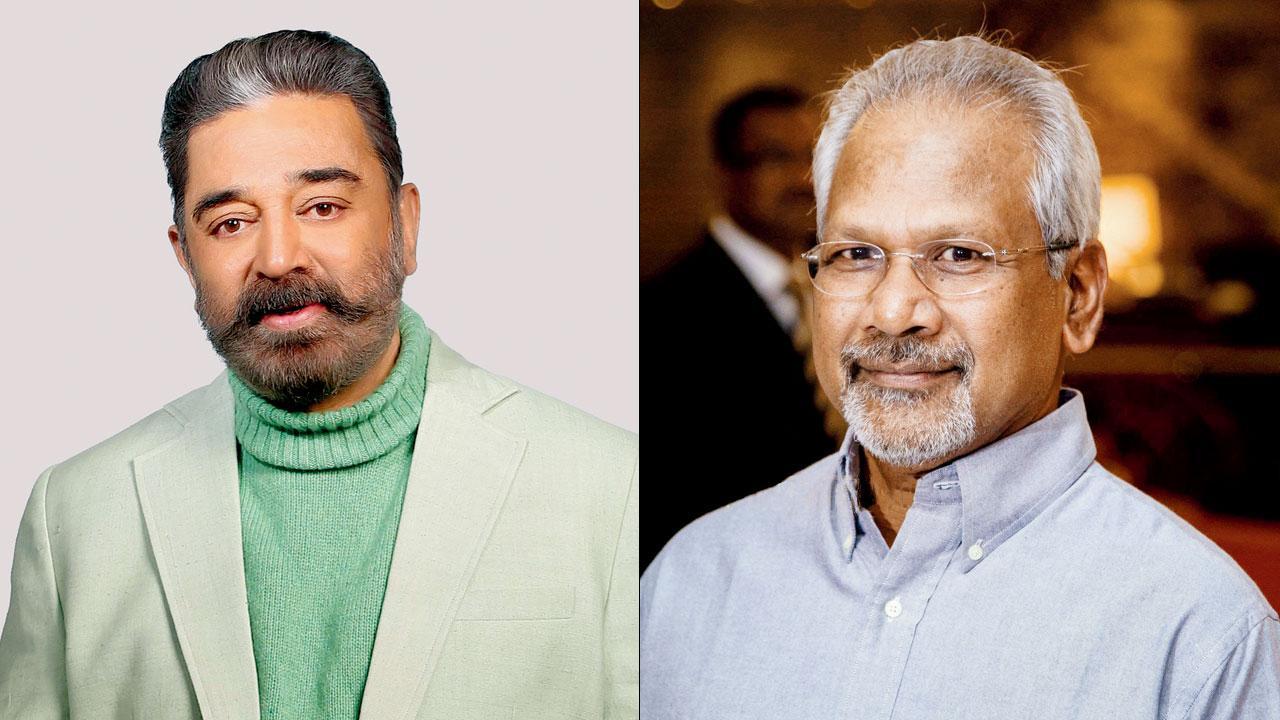
Shah Rukh Khan’s Dil Se character was not just an All India Radio reporter, he was everyone’s voice-Mani Ratnam
9:54 AM
Anees Bazmee backs out of Nawaz’s next; filmmaker wants to ‘focus on other projects’
Renuka Vyavahare (BOMBAY TIMES; October 30, 2023)
An entire screen was jam-packed as cinephiles strived to bag a seat for MAMI Mumbai Film Festival 2023’s first masterclass that saw Mani Ratnam in conversation with Imtiaz Ali. It was a heart-toheart chat with some savage one-liners from Ratnam. Excerpts from the conversation:
‘DIL SE WAS A SOCIAL COMMENTARY’
Talking about Dil Se, he said, “Dil Se was made around India’s 50 years of Independence. It was a reminder that not all corners of the country are liberated as one would like to believe. Shah Rukh Khan’s character was not just an All India Radio reporter, he was everyone’s voice.”
‘MAKING RAAVAN AS A BILINGUAL FILM WAS A MISTAKE’
Ratnam made Raavan (2010) in two languages at a time, not many attempted to do so. The director, however, admitted that it wasn’t the right decision. “Making Raavan as a bilingual film was a mistake. It was a burden because I was literally making two films at a time, and neither the Hindi nor the Tamil audience could completely relate to it. It was a case of neither here nor there,” he said.
‘AS A STORYTELLER, YOU REALISE YOU’RE A SCAVENGER’
Elaborating on filmmakers’ constant hunt for great stories and subjects, Ratnam explains, “As a storyteller, you realise that you’re a scavenger. Even when tragedy strikes, you’re looking for stories and opportunities. I remember witnessing a blast from a close distance, and the first thing that struck me wasn’t the tragedy alone but even the technique. In films, we show that blasts generally happen from a distance, but that isn’t the case.”
‘I DON’T WANT OBEDIENCE FROM MY ACTORS, I EXPECT CONTRIBUTION’
The director, known for his unique vision and extracting the best out of his actors, had an interesting take on teamwork. He revealed, “I don’t want obedience from my actors, I expect contribution. I can always tell you what I want, but what more can you bring to the table? I like actors who give you that little more.” When asked what happens in case of a massive difference of opinion, Ratnam teased, “Then I tell them who’s the boss (laughs)!” Citing examples, he said, “Shah Rukh Khan and Rajinikanth often joked about this. They would say, ‘We can tell you what we feel, but you won’t accept it. This is your film, isn’t it?’”
‘SOMETIMES I WONDER IF I AM A ONE-TRICK PONY’
Despite having made acclaimed films, the director feels that there is still an element of self-doubt. He revealed, “Sometimes I wonder if I am a one-trick pony. I always thought of myself as a fraud director. When I did my first film, I didn’t know how to shoot. I had to pretend that I knew. I remember Kamal Haasan telling me this when I pitched my first film to him. He said, ‘Don’t aim at the heart, aim at the gut and you will make it.’ Haasan suggested that I need to make something that a lot of people can identify with, and how you communicate with the audience is important.”
‘AS AN AUDIENCE, I AM EVOLVED; AS A FILMMAKER, I AM NOT!’
Ratnam says, “My assistant directors don’t hesitate to tell me if something doesn’t thrill them. The day they find mistakes in my work, I know they are potential filmmakers. I used to criticise films when I didn’t even know how to make one. Finding fault is important. As an audience, I am evolved. As a filmmaker, I am not! There is nothing in this art form that can be called perfect. I don’t watch my films after they are released. I can’t take it. I only see the errors and I cringe.”
Shaad Ali & I sat on the train together while I choreographed Chhaiyya Chhaiyya-Farah Khan
8:12 AM

After a cameo in Masaba Masaba, Farah Khan faces the camera again for director-friend Shaad Ali's desi adaptation of Call My Agent
Upala KBR (MID-DAY; November 10, 2020)
If her cameos and appearances on chat shows are any indication, Farah Khan is a riot on screen. Understandably then, months after she faced the camera for Masaba Masaba, the choreographer-director has taken her place under the arc lights again for Shaad Ali's Indian adaptation of Call My Agent.
Though she has not seen the original French workplace comedy, Khan says that all it took was a call from Ali for her to come on board. "I am doing the cameo only for Shaad. I have known him since he was Mani sir's [Ratnam] assistant in Dil Se [1998]; we sat on the train together while I choreographed Chhaiyya Chhaiyya. We went on to work on many of Mani sir's movies. I remember we used to be the only Hindi-speaking people in a Tamil crew," she laughs as she walks down memory lane.
The adaptation — featuring Rajat Kapoor, Soni Razdan, Aahana Kumra and Ayush Mehra as four talent managers — will have real-life celebrities in each episode. While Khan played a snooty director in the Netflix show featuring Masaba and Neena Gupta, her role in the latest outing is closer to her off-screen avatar. "I play myself in this web series. The role reflects who I am, complete with my sarcastic one-liners. Sarika and Akshara Haasan shot for the episode with me."
Whenever she is on set, one can be assured of her famous home-cooked biryani. "I had carried a big pot of mutton biryani; the team was thrilled," she laughs. Though originally planned as a two-day shoot, she wrapped up her portion within a day, and headed to the Bigg Boss shoot on Monday.
Does corporatization in Bollywood control creativity?
8:37 AM

Rishabh Suri (HINDUSTAN TIMES; August 26, 2020)
 On Saturday, filmmaker Shekhar Kapur tweeted about his film Dil Se… completing 22 years, hinting a change that has swept Bollywood for the worse. He wrote,“25 yrs ago Mani Ratnam, Ram Gopal Varma and I predicted that soon our creativity will be controlled by big corporations, if directors ourselves don’t get together to counter that corporate power. Dil Se was the first of that collaboration. Unfortunately, the last..”
So, What is this corporate culture he referred to? Is it still prevalent? If yes, how much of it controls the industry?
 Onir, who has directed films such as My Brother Nikhil and I Am, explains, “Earlier, it was an organic process between a director and a producer. Now a whole lot of people, not filmmakers, are supposed to understand. For example, when you go to a restaurant, and decide you want to eat Punjabi food, but when you go to someone’s house, the cook feeds you, not what you order, with love. Filmmakers earlier made films with love and told the story they wanted to tell. Right now, the platform figures if this is a story it wants to tell. Their creative teams will say ‘this is not what we are looking for’,” he explains.
Elaborating more, Madhur Bhandarkar tells us, “It was there earlier, too, when a person would say ‘iss film mein item song daal do, film dry hai, comedy scene daal do’. Since the corporate culture came in, a lot of people have this focus group which assesses the film, gauges the script, shows the film to a test audience, which is not necessarily 100% right. There is no doctrine of making hit or great cinema.”

Onir adds that what Kapur must have meant is that populism is not the best way of nurturing creativity. He says, “Right now, platforms look at who the star is, and the other is of course content, depending on who gets the eyeballs. Today, when you speak of the best Indian films such as Guru Dutt’s Pyaasa (1957), all were flops during their time, but they got made because people believed.”
Trade expert Atul Mohan says, “We have 15-20 companies functioning in corporate style.”
But Basu says that “new filmmakers and directors do face interference as studios always see the return on investment” but “it’s a business. It has made things more organised”.
Shah Rukh Khan remembers his traumatic Agra journey on the sets of Dance+ 5
8:20 AM

Akash Bhatnagar (MUMBAI MIRROR; January 21, 2020)
It’s been over a year and except for a special appearance for Karan Johar’s Brahmastra, Shah Rukh Khan has been away from the arclights. But on Monday, he turned up at Filmistan Studio to shoot a Republic Day episode for Remo D’souza’s dance reality show Dance+ 5. He arrived at around 4.30 pm and shot for almost six hours. Reminiscing about his first visit to the Agra's Taj Mahal on his first salary, a princely Rs 50, SRK revealed that all the money was spent on his train ticket, leaving him with just enough for a glass of pink lassi. “A bee fell into it, but I still drank it and puked all through my return journey,” he admitted sheepishly, going on to pose in front of the Taj Mahal on the set, saying he has never got a picture clicked with it in the backdrop for real.
On the show, the actor got a 20 minutes tribute from the contestants and the captains, Punit Pathak, Dharmesh Yelande, Karishma Chavan and Suresh Mukund, who danced to his chartbusers, “I Am The Best” (Phir Bhi Dil Hai Hindustani), “Yeh Dil Deewana” (Pardes), “Chaiyya Chaiyya” (Dil Se), the title tracks of Baadshah, Kuch Kuch Hota Hai and Jab Tak Hai Jaan and “Chammak Challo” (Ra.One) among others. An emotional Shah Rukh reacted to it, saying, “When I am 95, I will still be dancing on 'Chaiyya Chaiyya', atop a train and in a wheelchair. And yes, I will take Remo along.”
If films can be censored, why can’t songs?-Sukhwinder Singh
7:49 AM

Singer Sukhwinder Singh appeals to lyricists to refrain from using expletives in songs; adds that the music industry is his family and he would never want anything bad to happen to it
Nikita Deb (HINDUSTAN TIMES; November 24, 2019)
One of the most popular singers of Bollywood, Sukhwinder Singh, has been enthralling audiences for almost three decades. With superhit songs such as Chaiyya Chaiyya (Dil Se; 1998), Mitwa (Lagaan: Once Upon a Time in India; 2001), Bunty Aur Babli (Bunty Aur Babli; 2005), it wouldn’t be wrong to say that Sukhwinder was ruling the music scene then. But even now, the singer doesn’t miss a chance to mesmerise his listeners. With his latest hits, Isaaqbaazi (Zero; 2018), Kar Har Maidan Fateh (Sanju; 2018), and more recently, Chammo from Housefull 4, Sukhwinder seems to be as relevant as ever. The singer talks to us about his near 30-year-old career, if he would ever sing a remix, and how he keeps reinventing himself. Excerpts:
Your recent release in Housefull 4, has over 15 million views on YouTube…
Film kaafi badnaam ho rahi thi (laughs), but when I watched it, mujhe toh bada mazaa aaya. Every song that I sing cannot be a great one, but a lot of my songs are hits and even superhits. Every song can’t win an Oscar, right?
The film didn’t get great reviews. Do you think the reviews of a film affect the music, too?
Nowadays, a few people have turned social media into a tamasha and not a resource. Social media is a great resource where you can say anything independently and freely, dil khol ke. But you can’t say anything without limits. You can’t abuse or use bad words. There are a lot of people who feel that they should do something new, so they resort to doing negative things. I am not saying that Housefull 4 Mughal-e-Azam (1960) ke level ki bani hai or Sanju ke level ki hai. But when I went to watch the film, there were barely any seats available, which clearly means that the film did good business. The makers put in a lot of effort, too, and the canvas is also big.
After so many years of being in the business, how do you keep reinventing yourself?
For that, you need to actually avoid a lot of things. Humare film industry mein kitna glamour hai and some of our activities are very aggressive. But the most important thing about the film and music industry is the creativity. Along with that, there are a lot of different branches of it. There is aggression, insecurity, greed and impatience but all of them live under the same roof of creativity. I tried to find consistency in this. I started working on that. Even before Chaiyya Chaiyya released, I had started following this pattern. When I was in England and my albums would come out, I always looked for that consistency. I was always very aware of aggression, insecurity and everything else. After Chaiyaa Chaiyya, I waited for about 70 to 80 days for my next song. Along with Om Shanti Om (2007) came Chak De! India in the same year, but I sang only three songs in that year. Most of those songs were nominated at award functions. Many people said I was very picky and I was also appreciated, but I remained quiet. And that ended up suiting me a lot. My last song was Kar Har Maidan Fateh, and after a year I sang for Housefull 4. But I am relaxed and now, I am waiting for three or four good movies to come my way. I want to sing more. I have three to four more good movies with good songs coming out. I don’t really ask the names of movies when I get offers. I concentrate on the content of the song. I am really satisfied right now.
What is your take on the trend of remixes that has become ever so popular now?
I’ve always had one big problem with this trend — original composers not being credited for their songs. So, whenever I was asked to speak about it, even during my concerts in India or abroad, I would always bring up this topic. I have been speaking about this for seven to eight years now. Thankfully, this issue has now been solved. Another thing, that really bothers me, is the usage of vulgar and bad words in songs. I feel that is really wrong. I have always maintained that if films can be censored, why can’t songs? People keep saying why do I keep involving myself in these battles, but to them I say, ‘the music industry is my family. And I can’t see wrong things happening in my family’.
As far as singing a remix is concerned, I would love to sing a remake of a Kishore Kumar song because he was my favourite (artiste). But one thing is for sure — when I sing a remix, it won’t be like the usual songs. It will be very special.
During Chaiyya Chaiyya shoot, they looped a rope around my waist and tied it to the train-Malaika Arora
8:13 AM

Akash Bhatnagar (BOMBAY TIMES; July 20, 2019)
 Malaika Arora recently stepped into Dance India Dance 7 filling in for friend Kareena Kapoor, the regular judge on the Zee TV show. After watching a performance on her Dil Se song “Chaiyya Chaiyya”, she turned nostalgic, admitting she’d been really nervous during the shoot.
“With Shah Rukh Khan, Mani Ratnam sir (director) and Santosh Sivan (cinematographer) who have achieved so much around, I felt really small,” she reminisces. “But thanks to the love of the team, I did not miss my family.”
Speaking about the challenges she faced dancing on a moving train, she admits she fell several times, swaying right and left due to the wind. “To avoid this, they looped a rope around my waist and tied it to the train. When I removed it, I had deep cuts which were bleeding. But then, everyone took good care of me, someone pressing my feet and someone else feeding me,” she says completing her trip down memory lane by going “Chaiyya Chaiyya” again.
When Aamir Khan cost Sukhwinder Singh a film
7:47 AM

Akash Bhatnagar (MUMBAI MIRROR; July 5, 2019)
 Chaiyya Chaiyya singer Sukhwinder Singh while on The Kapil Sharma Show, informed that his musical career had kicked off not with the Dil Se chartbuster which had Shah Rukh Khan serenading Malaika Arora atop a train, but with an accidental song, “Eid Aayi, Mera Yaar Nai Aaya”. He then revealed that he likes recording songs in dim light as it cools his mind, allowing him to focus on the lyrics. Interestingly, this made him lose out on a film when Aamir Khan, on learning about Sukhwinder’s quirk, challenged him to sing a song in dim light, with the incentive that he could record a song for him if he didn’t falter. Unfortunately, luck wasn’t on his side. “I couldn’t do it at first go and lost the chance to do a film with Aamir,” he rues.
Sukhwinder also spoke about his admiration for his “Jai Ho” composer A R Rahman and how his habit of working late into the night made him ignore the maestro for a year. “But then, I ended up working with him for five years. One day, I curiously asked him the reason behind his nocturnal work habits and he said that he likes to explore his creativity in the silence of the night,” he recounted, adding proudly that he is the only one who can make the maestro laugh with his Punjabi jokes translated in English. He then got Archana Puran Singh emotional with his rendition of the Punjabi song “Saada Chidiya Na Chaamba”. As she teared up, he admitted to his crush on her, ending things on a lighter note.
Shah Rukh had this stupid belief that if he works on the year's first day, he'll work throughout the year-Kajol
8:20 AM

26 years in films, Bollywood's fourth-generation actor walks down memory lane
Mayank Shekhar (MID-DAY; September 15, 2018)
We watch her every couple of years or so on screen (her next film, Pradeep Sarkar's Helicopter Eela is round the corner). Over a career spanning 26 years, she's done 38 movies, a rather restricted filmography - if you compare, say, to young Taapsee Pannu, 29, who already has 37 credits on her IMDb profile.
Full-time mom, wife - that films come naturally to her is a given. She is the fourth generation female actor in her family (from mother Tanuja's side). We'd traced her fascinatingly inter-generational paternal roots in Bollywood, on Sit with Hitlist, with actor Rani Mukerji. But Mukerji is her second-cousin. We start this interview therefore with:
Who is Mayuri?
She is my mama's [Jaideep Samarth's] daughter. We lived with my mama and mami for a long time. So I've grown up with Mayuri, and her sister Madhura. They are Townies [from South Mumbai]. You might just know them. So be careful with what you say.

Kajol gets chatty at the latest edition of Sit with Hitlist
We spoke to your first director Rahul Rawail (Bekhudi, 1992) earlier, to trace your journey into films. He told us he first saw you at Gautam Rajadhyaksha's photo studio. Rajadhyaksha had written the script for Bekhudi. They were looking to cast the female lead. Mayuri was therefore at the studio for a photo session. You were accompanying her. But Rawail looked, and decided to cast you instead!
Yes, pretty much, that's how I joined films. It was just a question of right place, right time, and right people. Mayuri was supposed to get her pictures clicked. I went over to hold her hand. She wanted to get into films. I'd seen my mom, and how hard she worked. I didn't want to work that hard.
So we were sitting around, talking. Gautam was like, "Why don't you get your pictures clicked as well? Mickey (Contractor) is there to do your makeup." Mickey and I got along the minute we met. He, like Gautam, adopted me. And Rahul uncle saw the photographs, and offered me a film.
I'd like to add that Mayuri went on to do an ad. And she didn't like it at all. She came back from the shoot and said, "I'm so not getting into this." On the other hand, I shot for the film, and had a great time.
When offered the role, you apparently said, "Hey, I don't mind"?
Well, I had two months' summer vacation in college. I was told we would shoot in Canada, and a little bit in Bombay, as per my college schedule. I said, "Cool, I don't mind!"
"I don't mind" is a pretty easy way to get into any profession, no?
Yes, but I didn't think of it as a decision. It was just a try - a sample sachet, almost, that you get at a shop. I remember my dad saying, "Ek bar chuna lag gaya toh lag gaya. Nikalne wala nahin hai. Toh soch lo. (Once you wear the paint, it never goes off)." I said, "What nonsense. What difference does it make if I do a film, or not." But, I loved/enjoyed my film. And the next one came along, and then I questioned whether college was worth it - might as well go along with this; that's exactly what I did.

The other thing Rawail told us is how you fell off the first floor during your shoot, and became (temporarily) blind!
Yes, we - Rinku, the first AD, who's Rahul uncle's niece - literally tumbled down the slippery stairs from the mess-hall after dinner. We were doing something like 18 hours (shift) a day; obviously not in the best frame of mind. Fortunately, I fell on top of Rinku. She really got hurt.
What he said was that she actually fell on you. You went in the emergency room, came out half hour later, perfectly fine, while Rinku was being wheeled out!
Yes, she did come out in a wheelchair. I couldn't see a thing. Everything was just white. I probably had a concussion. So here we were in a foreign country, with these two young girls in emergency room. Rahul uncle must have thrown a sh** fit, wondering what's going to happen to his film.
And to you?
No, he must have thought about his film first, for sure.
During Kuch Kuch Hota Hai (KKHH), you similarly fell off a cycle, and (temporarily) lost your memory?
I've got a hard head; what to do? It keeps hitting, and nothing happens permanently. I think my morbid sense of humour comes from that! My mom tells me about how, as a kid, I would keep falling, and that it didn't matter. I'm sturdy that way.
Getting back to the accidental beginnings of your career; and a whole bunch of movies thereafter. You talk about being your harshest critic. We all have an opinion on what your best films have been. Is there any performance that you remember to be your worst?
I don't know if I've had a 'worst performance', touchwood. I've been pretty honest to my work throughout, whether I've believed in them, or not. There's always been a standard.
A basic minimum, you mean? How about your under-rated best then?
I've had a basic standard, yes. And it goes far above sometimes, and remains at that level most of the time. I think one of my best performances was in a film called Udhaar Ki Zindagi (1994), which I loved. But it didn't do very well at the box-office. It took so much out of me that I actually reached a crisis point, and told my mom, "I'm not doing movies anymore, which require me to cry, or do anything very heavy. I want to play an ornament, have three scenes, four songs. That's it. I'm just drained." After that, I signed on Hulchul, Gunda Raj, even Karan Arjun, for that matter. While shooting with Shah Rukh for Baazigar, I remember him telling me: "You know, babe, you've got to learn how to act. This honesty won't take you very far. You've got to learn the technique of acting as well."
You mean an element of detachment?
No, just technique - to not put 100 per cent of yourself into every shot. You have to learn how to pull back, and use your technique instead. That's what's going to help me in the long run. And I was like, "I'm doing alright so far, no? Why do you want to unnecessarily jinx it? Shoot is going well. Stop getting so detailed about it!"
But when Udhaar Ki Zindagi actually happened, I remember going back to what he had said, and thinking, "Sh**, he was right." That's when my process of learning started - on how to do things in a not-so-instinctive manner, but in a predictable, and thought-out manner instead.
Surprising that you had to learn this by yourself (or from Shah Rukh). Your mum had been an actor for years. As had your aunt, Nutan, for that matter.
But I wasn't one to go on sets. Also my mum, especially, kept work out of the house. At home, more than work, we'd discuss people. She'd talk about Raj Kapoor, and the people she had worked, or was working with - never the actual work itself. That's also something Ajay (Devgn) and I follow at home. Work is just something we do; we don't sit and analyse it.
Glad you mentioned Raj Kapoor. For, your family (from mother's side) is the female equivalent to Kapoor clan. Your great-grandmother, grandmother, mother, and now you, all have been actors. Can you take us through that (piece of history), starting with Rattan Bai, your great-grandmother, who became an actor at 40, only two years before your grandmother?
Honestly, I won't be able to take you through that, because I knew them as just my great-grandmother, grandmother, and mother. And they were amazing women. I didn't pay as much attention to what they did on screen, as what they did off it.
My mumma, as I would call my great-grandmother, was this awesome, strong, lucid, intelligent woman, even at the age of 80. She was 86, when she died. I was 11 or 12 then. I was closest to her. She barely ever left the house, but always knew what was happening in the kitchen, and in everybody's lives.
Then there was my grandmother (Shobhana Samarth) - again a very driven, practical, and strong personality. She was all about what works, and what doesn't. And I had my mother (Tanuja), who I really respect for the way she's handled her life, and the strength she exudes to stand up and say, "So far, no further." As for what she wants to do, she's ready to stand up and say, "Okay, I'm ready to face the consequences, and make my own path."
Give us an example?
It's a silly example, but so typically her. I saw her picture once and said, "Mom, you wore a lungi to a party?" She was like, "So cool it was. I had them stitched myself. They were stylish, super-comfortable, the slits were…." And I couldn't get over the fact that she wore a lungi to a party!
She did things her way. Automatically, when you see that, there's a much stronger learning experience than her telling me so. My mom, for instance, had a bad habit of abusing. She had the best gaalis ever, and she was known for them. On set, people would actually poke her till she turned around and delivered her famous gaalis. And then they'd be like, 'Haan, ab din achcha chalega!"
One day, she told us, 'You can't say sh**." I went, "But you abuse all the time." She was like, "Okay, I won't do it from now." And she gave it up. She put a swear-jar at home, put money every time she abused by mistake. That was another fabulous learning experience. She could have easily said, "Listen to me, because I tell you so," which are the most famous mother-words ever.
Every time I had a question as a child, she either had an answer for it, or went outside and found one that was acceptable to me. Even the fact of her marriage with my father - I remember asking, "Why can't you and dad be together?" She said, "As adults, we're better people, when we're not with each other!" And I said, "Okay, that makes sense." So she had an answer for every question, about the meaning of life, or death, when my relatives were passing away.
What did she tell you about death?
To never be scared. That the body gets old, but soul is eternal. Of course, one has to trade up for a better packaging, a newer version.

The actor gifts a goodie bag to her fan and mid-day reader
You also had an extremely strong grandmother. She in fact directed your mother's first film, Hamari Beti.
I remember her as a firebrand. She was 65 and would drive up to my boarding school in Panchgani once a month, in her battered Ambassador car, Friday evenings, and take me for my dental check-up to Pune, drop me off to school on Sunday, and drive back to Bombay the same day. My mother was busy working. She took care of me in every way she could. She was driving till she was 85, in this bright blue Maruti 800 in Lonavala. She had six dogs, big house, and lived all by herself. She would drive to the market, get groceries. She was known as the Queen of Lonavala. These are the independent women I have seen all my life. And they never spoke about women's empowerment.
So that's about the Samarth-Mukerji family. By the way, is there a reason why you don't keep a surname?
I was too confused about whether it should be Mukerji (from father's side), or Samarth-Mukerji. I told dad, let's not keep a surname. Just Kajol is good, because I didn't want anyone to associate anything with me. I knew there would be huge expectations: Tanuja's daughter, Shobhana Samarth's granddaughter. My father's side has an entirely separate lineage. Everyone in film industry either knew me, or were related to me!
So what's your name on the passport?
Kajol Devgn, after marriage; before that, it was Kajol Mukerji.
Stepping back to your career, you've had definitive milestones. The most recent one, last year, was when you did your second Tamil film (VIP 2) since Minsara Kanavu (Sapnay, 1997). Is it true that Hindi film actors down South rattle one, two, three, four, instead of actual dialogue; and get away with it?
You can, probably. But I didn't want to, even when I did Sapnay. An actor always takes pride in their performance. You have to live up to that standard. Dhanush and Soundarya (in VIP 2) helped me manage my lines, and rehearse well. First three days were tough. He (Dhanush) was prompting from one end, and I was saying lines at the other, whilst trying to keep the look right. Soon, I got into a rhythm. There was a pattern, and I was beginning to understand a bit of what I was saying. My pronunciation was pretty good too. I am good with reproducing sounds. Okay, that sounds really wrong! It just got easier with time.
What are the languages you know? Which one do you think in?
I think in English. I speak English, Hindi, Marathi, and can understand Bengali.
A reason I bring up your South film is because few weeks ago marked 20 years of Mani Ratnam's Dil Se. And you had turned down that film. Why?
Because the dates were not working out. I did (want to work with Mani Ratnam), and God willing, will. We are both active in movies. I had signed on KKHH. Karan had SRK's dates, and he would have had to cancel the schedule, because he had bulk-dates from everyone. Karan was very generous to suggest, "Go! You are getting a chance to work with Mani Ratnam. Who am I??" I didn't feel it was the right thing to do.
So the story goes that Mani Ratnam called you up, and you thought it was a crank call?
I put up a retro-picture on my Instagram (recently), sitting on a car bonnet, which is when Mani Ratnam called, and I thought Shah Rukh was pulling a fast one. I laughed and put the phone down. Then Shah Rukh called to say, "Baby, it's really him. He's trying to call you!" I was like, "Oh damn!" It was a rocky start!
That's 1998. You do KKHH. In 1999, you get married. By 2001, it's clear you won't have as many releases in a year?
I took that call in 1999 itself. People said I was at the peak of my career. But I have never understood what peak is. I was just exhausted by the pace of doing four films a year - running from Hyderabad, Bombay, Panchgani, to Switzerland, London. That's not life. It's 'gadha-mazdoori' (donkey-work). I wanted to get married. It was the right age. I had been working for 10 years. It was the right thing to do.
You decided to become seriously choosy?
I was picky, always. And then came a time when I didn't want to do more than one, max two, films in a year. I wanted to take it easy, chill, take a six-month break. It gave me perspective and thus earned me more appreciation.
You had a five-year break after Toonpur Ka Superhero (2010). What made you pick Dilwale (2015), of all films, to return with?
I loved my character in the film: her graph, and how she was portrayed. There was an unexpected twist in the plot. It was a full-blown love story, but I was sold on that scene where she tries to kill him (love-interest). I also did the film, because of the way it was going to be put together.
Do you remember films you've said no to, and not because of dates?
Lots! For me, it has not always been about the script so much. There are other factors too, besides script: good director, producer; in that order. I have to like people I work with, to be in a place where I say, this is not working, let's redo it. A good film is not possible if there is no communication between departments. To have the freedom to talk [to colleagues] necessarily enhances work.
Speaking of people, there's Karan Johar you've evidently loved working with. Why did you say no to Kabhi Alvida Naa Kehna [KANK]?
He wanted to shoot KANK in New York for 90 days. I said I can't. My husband would leave me, if I decided to go off for three months, leaving my little daughter alone. Karan sweetly let me pass, and made the film he wanted to.
Also, it doesn't matter how many films you do in a year. In Mumbai, at least, there's always one running at a theatre: Dilwale Dulhania Le Jayenge (DDLJ), no? Have you thought about why it still strikes a chord across generations?
It is now like a family heirloom. People pass it on (over generations). I meet people who watched it, when they got married. It was also the first film they showed their kids. Good films are timeless. They are about what they make you feel. DDLJ still makes you cry; and will continue to work.
Did any of you predict/know about its likely impact?
Not even Adi [director Aditya Chopra]. We didn't even know if it would do well. All Adi kept saying was, "Mujhe hit picture banani hai." It was his takia-kalam (standard refrain). He thought, with DDLJ, he was making a cool version of a 'tapori' film, shot in tabelas and mountain tops with chiffon sarees, in snow-banks.

There's also the trivia about Adi Chopra originally looking to cast Tom Cruise in DDLJ!
He did want that. That's a wish list. Every director has one. After that we come back to earth. We are like, "Apne desh ke hero ko lete hain! (Let's take a local hero)." In his head, he probably had Tom Cruise, with Meg Ryan (starring) opposite. I doubt Meg would have a 'Bauji' in her life (laughs).
In many ways, the film also spoke about how you can turn around people's thoughts, and judgments.
I like the fact that it was not about rebelling, which is synonymous with youth. It talked about respecting a parent's love. Raj has this scene where he clearly says it's unfair to take away one's daughter in such a manner. It went against what the youth was saying then. Which was the twist in that tale.
There is also that larger romantic film idea of soul-mate. It's worked over generations. You've been married for 19 years; do you believe in the idea?
I was lucky to have found someone I love. And I do believe in soul-mates, who you may not always instantly recognise. They are found over time. It starts with a connection. One day, you turn around, and the veil comes off. You realise he was the one all along. Sometimes it may take a month to realise this, sometimes 40 years!
How long did it take you?
Three hours! We were shooting (the film Hulchul) in an ugly garage. He was sitting on an ugly chair, far away, smoking. I was bitching about him not being friendly at all. We started shooting. I had to slap him. He had to dramatically hold my hand. I knew there was something.
To trace your real-life romance, we basically have to watch (Anees Bazmee's) Hulchul (1995) and find the moment where Ajay Devgn stops you from slapping!
And at that moment, there was a voice in my head saying that this person is going to be really important [in my life]. It was an instinct. I was already going around with someone else. So was he. We were just acquaintances sitting on the chair beside each other, working on the same film. Of course we finished the film, and signed up another one, three months later. That was the phase where I didn't want to do anything in a film. So I did Gunda Raj (1995) with him. Towards the end of that shoot, our relationship began.
That's for personal life. Speaking of profession, how did you and (your top on-screen partner) Shah Rukh Khan meet; did you have a hunch you were going to become the 'it' couple?
We met on the sets of Baazigar (1993). Like the rest of the unit, he was so hung-over. It was January 1.
Why would you work on January 1?
Because Shah Rukh had this stupid belief that if he works on the year's first day, he would (get to) work throughout the year! So we land up on the sets. [Directors] Abbas bhai, Mustan bhai, and I are the only people sober, and happy to work. Everybody else is like, "Let's just do easy shots, with minimum dialogue. Don't drag chairs loudly, or push the table hard!" That was the vibe on the set.
I was completely oblivious to the fact that it's January 1. For me, it was just another day. And as you must have noticed, I do not speak at a regular tone. If I have to make my point, the volume gets louder. So I was howling, shouting in Marathi, which was an alien language to him [Shah Rukh]. His make-up man was Maharashtrian. I was bitching to him about what kind of a boss he had - sitting in a corner, head down, completely morose. Shah Rukh was giving me stares that clearly meant, "Somebody shut her up!" I was putting him through maximum torture. Later we sat down, and I was like, "Hi, how are you?" He told me, "Don't you ever stop talking?" And I was like, "Why should I stop talking? I have to speak the lines - check this long [piece of] paper. Let's start rehearsing." Then, of course, he started talking as well. And once Shah Rukh starts, it is difficult to wind him [down]!
If he wasn't an actor, Shah Rukh could have easily been a spiritual guru, with all the gyaan on life!
Love guru (laughs).
From what I hear, if one met you in the '90s, they'd be scared to even interview you, if you agreed to be interviewed at all!
You should be scared today as well. I am much older (laughs).
As public figures, do you sense that contrast between you and SRK?
Yes, I do. But it didn't make much of a difference. There's a strange bonding-experience you have when you are working with a person for so long. Of course I was [aloof], and I am [like that] even today - very guarded about my privacy. I am not social. I don't attend parties. I don't drink, and so I find it difficult to go to the bar, and ask for coffee. But over time, we [Shah Rukh and I] became friends. And we've known each other for really long, which counts for itself.
Have you ever been able to decode the on-screen chemistry?
I've never tried. I don't know what works. I feel it has a lot to do with our on-screen history - the fact that we both chose some good films together, and few of them happened to be love stories. When you see love stories succeed, [as an audience] you tend to believe that when the couple comes back [on screen], they will fall in love again. We have put that myth into everybody's heads! Honestly, I would like to believe that we are good actors (laughs)!
How important is it for you to like your co-star?
It's important, but not necessary. I think a good actor can fake it, and a lot of the time, does. I also think that when there is somebody that you like in front of you, it's much easier [to fake it].
For instance, in Helicopter Eela, Riddhi [Sen; my co-star] is a well brought-up boy, and he plays my son. So there is [already] a lot of body-language between us that would have been missing, if he had been an obnoxious kid.
There are YouTube jokes on your uni-brow. Can you laugh at yourself, and enjoy such things? [Audience]
I don't know the joke, but if there are, then kudos. Honestly, I don't think it's worth the trouble [going through them]. I am glad that it [uni-brow] has become a statement, and that I don't have to go through the hassle of getting rid of it. I'm okay with it.
But that's what a whole lot of people back then and even now think of you - someone who doesn't give a damn. And that is cool, by definition. But few years back, one noticed, you began caring about how you dress up, for instance. Was that a conscious call?
Yes, it was; and that was only for one reason. My daughter was born. I wasn't working. I was just thinking once about whether I like black, or white, or red. I didn't have an opinion on the subject, despite being one of the most opinionated people around. I didn't know whether I wanted to wear a jeans, or skirt. If I thought about these things, there would just be a big blur. So I set about finding what my opinion was. And, yes, there was a lot of trial and error. I guess a lot of people go through this during their teens. I never did, as I always had someone standing with a hanger, telling me what to wear. I wasn't given a choice, and even if I had been, I wouldn't know how to express it. So I sat down, and realised that it isn't rocket-science. People far dumber than me have been successful [at it].
Your husband mentioned on Sit With Hitlist that he didn't really have an acting process. He comes on set, say his line, and it's done. What about you? [Audience]
No, I don't do any great preparation. So far I haven't had any role out of my [comfort] zone. In my head, I have a graph that I want the character to follow, and I keep building on it. With scenes, I keep an eye on where it falls on the film's timeline.
Did Dushman [1998] take a mental toll on you? [Audience]
It was a tough film. I had initially refused it, when Pooja [Bhatt] and Tanuja [Chandra] came to me. I wasn't comfortable shooting a rape scene. I thought it would take a toll on me, physically. Both of them sat me down, said that being women, they would shoot it aesthetically. That it wouldn't look gory. They promised to shoot with a body-double, which they did; interspersed with one close-up of mine.
Would that be a rare dark film of yours?
Yes. I haven't done too many. Rather, I haven't gone to the dark side yet (laughs). Trust me, it is more difficult to make people laugh than cry. Every actor will tell you that. Also, I don't agree with films that have no hope in the end, and everybody dies. That's not who I am, and it's not the message I want to send across. As actors, I believe we have a superpower to make people feel, and I don't want people to feel that. I'd love to do action, or thriller, but there should be a happy ending, like Mills and Boon!
Which of your characters have you been closest to: Simran [DDLJ] or Anjali [KKHH]? [Audience]
I don't identify with Simran, probably because I didn't have her kind of parents. I can't relate to giving up everything just for a principle. Yes, I did a very good job with the character, but I think I'm more like Anjali, or [Sanjana] in Pyar Toh Hona Hi Tha (1998).
[Final question] Why is your Twitter handle kajol@UN?
Originally the Twitter handle was made for when I was going to speak at the United Nations [on child welfare]. Then it got just too famous to bring it back to Kajol!
(Transcribed by Mohar Basu, Sonil Dedhia and Sonia Lulla)

Shah Rukh Khan, Sushant Singh Rajput shake a leg for Farah Khan's Lip Sing Battle
7:14 AM

The actor-duo shot for a Diwali special with tennis ace Sania Mirza recently
Natasha Coutinho (MUMBAI MIRROR; October 20, 2017)
Mirror had earlier reported (October 12) about Shah Rukh Khan, Sushant Singh Rajput and tennis ace Sania Mirza teaming up for the Diwali special episode of the singing reality show, Lip Sing Battle. SRK, who was shooting for Aanand L Rai’s dwarf film, took some hours off to make it to Farah Khan’s show on Tuesday.
A source from the sets reveals that Sushant danced on “Ruk Ja Ae Dil Deewane” from Dilwale Dulhania Le Jayenge, which was choreographed by Farah back in 1995. The performance also included all of Shah Rukh’s iconic dialogues and scenes. “The highlight was Sushant running behind a train, recreating the famous DDLJ climax, and SRK entering through a train. It was an unexpected moment and the crowd went crazy,” the source added.
Sushant, who has earned his stripes as a dancer, was so overwhelmed to have his icon dancing with him, that he forgot some of his steps mid-performance. Shah Rukh, who’d rehearsed his act for only a few hours, joked that he felt the pressure to match Sushant’s dancing skills. The duo rounded off their joint TV turns with the King Khan’s charttopper, “Chaiyya Chaiyya” from Dil Se.
Sania also gushed through her performance with the Khan. The actor serenaded her to the tunes of the romantic “Gerua” from Dilwale.
“Shah Rukh was shooting in Bandra for his film and hopped over to Andheri to shoot for my show. He returned to Mehboob Studio to film till the next morning. It reminded me of Om Shanti Om, when stars kept appearing from different places,” Farah says.
I enjoy literature and Gulzar saab enjoys a bit of nonsense-Shaad Ali
7:26 AM

Shaad Ali on his long association with veteran lyricist-poet Gulzar and why his film on field hockey player Sandeep Singh is the 'strongest, toughest and biggest' story he's worked on
Avinash Lohana (MUMBAI MIRROR; September 29, 2017)
Shaad Ali hadn’t even heard of field hockey player, former India captain and Arjuna awardee Sandeep Singh, when Sneha Rajani and Chitrangda Singh approached him last year to make a film on his life. “I was shocked and embarrassed and instantly realized that I needed to make this film so everyone gets to know his story,” the filmmaker informs, adding that he started prep exactly a year ago.
By his own admission, it is the strongest, toughest and the best story he has worked on so far. “There is also an additional responsibility as it’s based on a real person who has been on a national duty all his life. But all of it also makes it an exciting challenge to dive into,” Shaad says, adding that he wanted his actors, Diljit Dosanjh in the titular role and Taapsee Pannu as another hockey player and his love interest, to be as true as the characters they took on. “It was important to have a real Sardar and Sardarni. In fact, they have just come back into my lives as Judwaa 2 is releasing and Diljit has finished shooting for a film. We will now begin prep with hockey trainings, readings and workshops before shooting kicks off in the last week of October.”
Besides marking a departure from love stories, the biopic will also be a reunion for the filmmaker with veteran lyricist Gulzar, who has penned lyrics for all his five directorials —from Saathiya to OK Jaanu. “I went for a narration without an appointment and he was moved to tears. It’s not a song-and-dance film so the music had to be woven into it in a certain way. The film belongs to hockey and Punjab. There is also a love story thrown in, patriotism, pain, so it was important to invent a new language, which is not pure Punjabi or Urdu. We took some time to create that flavour. It will give the songs a universal feel but at the same time is rooted in Punjab,” Shaad explains.
The filmmaker vividly remembers his first meeting with Gulzar, which was at the legendary poet-lyricist’s Pali Hill office. He had gone there to narrate Mani Ratnam’s Manisha Koirala and Shah Rukh Khan-starrer 1998 film, Dil Se, on which he was an assistant director.
“Gulzar saab was dressed in his signature crisp white kurta pyjama and was very warm to all of us. I remember that he connected with the story more when he learnt that Manisha Koirala’s character had the same name as his daughter, Meghna,” Shaad recalls, adding that he met the veteran for a second time when he took A R Rahman along to meet him. “It led to the creation of 'Chaiyya Chaiyya'.”
The duo lost touch after that, reconnecting only when Shaad approached Gulzar again, requesting him to write dialogues for his directorial debut, the Rani Mukerji and Vivek Oberoi-starrer 2002 romantic-drama, Saathiya. “At the time, he wasn’t writing for anybody else but made an exception for me. I have had an unconditional relationship with him ever since,” he says, adding that it’s more like a father-son equation. “Also, we have a similar sense of humour. He knows that I appreciate language and a little bit of literature, while I know that he appreciates a little bit of nonsense. Toh thodi non-sense baton pe humari bonding ho jaati hai,” he says as he chuckles at the memory of their shared comfort zone. “We also fight but not as much as we used to earlier. He understands me more and knows where I am coming from. Now, we might fight on nitty-gritty’s but fundamentally we are on the same page. Woh kehte hain ki laadla hai toh mere se jhagdega aur thappad bhi khayega,” says Shaad.
On the matter of another reunion, with composer trio Shankar-Ehsaan-Loy for the fourth time after Bunty Aur Babli, Jhoom Barabar Jhoom and Kill Dil, he opines, “They are the Amar Akbar Anthony of my life. Woh toh anhoni ko honi aur honi ko anahoni karne wale log hain,” he signs off on that optimistic note.

Check out Tiger Shroff-Shraddha Kapoor's Jiya Jale moment in Baaghi
7:54 AM

Sonil Dedhia (BOMBAY TIMES; April 20, 2016)
Kerala not only beckons
tourists but also filmmakers who like to capture its pristine beauty on
celluloid. The latest movie to be shot here is Tiger Shroff-Shraddha
Kapoor's rebellious love story, Baaghi. Director Sabbir Khan felt the
lush greenery served as the ideal backdrop for a romantic number
featuring the lead pair. He said, “When
I was doing the recce, I remembered how Mani Ratnam had shot the track
Jiya Jale for his film Dil Se (1998) against the backwaters. My crew was
thrilled when I shared the idea with them and we shot the song, Girl I Need You, at the same location. We even recreated lead stars' looks for
Tiger and Shraddha.“
Shah Rukh Khan threatened to dance on top of the engine room-Farah Khan
7:53 AM

Roshmila Bhattacharya (MUMBAI MIRROR; August 4, 2015)
It's
been 17 years since Shah Rukh Khan danced on top of a moving train in
Dil Se.. and Chaiyya Chaiyya still gives one a high. The song's
choreographer, Farah Khan, reveals that the reason they did that was
because they didn't get permission to shoot at the Ooty railway station.
The authorities decided, at the nth hour, that they couldn't block the yard for a film shoot for five days and director Mani Ratnam called Farah to enquire if they could shoot on top of the train. "Without thinking I told him it was a fab idea, little realising what I was getting into," she admits.
Fortunately for Farah, a strike in Chennai meant unexpected breathing space for composer AR Rahman who was at his peak then. He finished this song for Dil Se.. and sent it across so Farah could rehearse her moves.
The feisty dance director had already told her 'hero', Shah Rukh Khan, that there would be no compromises because of the location. He would have to jump, prance, go down on his knees, do everything that would be expected of him at ground level. "Shah Rukh was game, promising that he'd kill it for any other actor. He was enthusiastic and super energetic, refusing to wear a safety harness and even threatening to dance on top of the engine room till I pointed out that the gushing steam would burn him. As it is, at the end of each day, we'd be covered in soot, with pieces of coal clogging our noses, ears and stuck to our hair," Farah reminisces.
The only problem was that SRK didn't have a dancing partner. Shilpa Shirodkar had said no, so also Shilpa Shetty who was scared of heights. Even a South Indian heroine whom Mani had approached had refused him. It was make-up wizard, Mickey Contractor, who suggested Malaika Arora's name to Farah when they were shooting for Kuch Kuch Hota Hai.
"I knew Malaika who was dating Arbaaz Khan. We'd hang out together but I didn't know she could dance. Mickey assured me that she could and three days before the shoot, she flew down to Ooty and we rehearsed in the banquet hall of Mithun's (Chakraborty) hotel, Monarch. But there was no time to practise on top of the train. On the first day it was hit-and-miss but by the second day, we were quite comfortable on the roof, drinking tea, eating breakfast, doing everything other than relieving ourselves," laughs Farah.
They wrapped up the song in four-and-a-half-days, travelling to and fro Ooty to Coonoor, from 7 am to 6 pm. The train would stop at Ooty station for five minutes during which they had to load everything and everyone. Later, it would stop again for the ritual of passing the keys. That apart, they were in motion through the day.
"If the train slowed, it got really jerky up on the roof. It had to run at a speed of 40 km per hour for it to be stable. It was a dangerous ride, with sheer drops on each side. When I'm asked what precautions I took, I say that I took extra dancers along in case some fell off. Fortunately, no one did," she says with a relieved chuckle, happily sharing her success with Rahman and Gulzar who gave her a fabulous song even though they had to constantly call up Javed Akhtar to ask what certain words meant.
Farah admits that when they were shooting it, she knew Chaiyya Chaiyya was something special and was disappointed when the film flopped. But despite the box-office failure, it went on to become a cult song and became Farah's calling card. She relived the experience years later by getting a train on stage for the Bombay Dreams cast to do a Chaiyya Chaiyya.
"A Swedish film, Dancer In The Dark, shot on top of a train too but with 72 cameras placed en route. We had a camera set on a crane on the roof and took 360 degrees shots with steady cams which had my assistant and me diving under a blanket as there was nowhere else to hide," she flashbacks.
For its novelty and the challenges it presented, Chaiyya Chaiyya tops Farah's list, more so when she learnt that after the film's release, some viewers would stray into the auditorium just before the song came on, dance to its beats, then walk out. "In the interiors, I'm told, that some theatre owners attached it to the end of the film so instead of a depressing human bomb explosion the film had a happy ending," she signs off.
The authorities decided, at the nth hour, that they couldn't block the yard for a film shoot for five days and director Mani Ratnam called Farah to enquire if they could shoot on top of the train. "Without thinking I told him it was a fab idea, little realising what I was getting into," she admits.
Fortunately for Farah, a strike in Chennai meant unexpected breathing space for composer AR Rahman who was at his peak then. He finished this song for Dil Se.. and sent it across so Farah could rehearse her moves.
The feisty dance director had already told her 'hero', Shah Rukh Khan, that there would be no compromises because of the location. He would have to jump, prance, go down on his knees, do everything that would be expected of him at ground level. "Shah Rukh was game, promising that he'd kill it for any other actor. He was enthusiastic and super energetic, refusing to wear a safety harness and even threatening to dance on top of the engine room till I pointed out that the gushing steam would burn him. As it is, at the end of each day, we'd be covered in soot, with pieces of coal clogging our noses, ears and stuck to our hair," Farah reminisces.
The only problem was that SRK didn't have a dancing partner. Shilpa Shirodkar had said no, so also Shilpa Shetty who was scared of heights. Even a South Indian heroine whom Mani had approached had refused him. It was make-up wizard, Mickey Contractor, who suggested Malaika Arora's name to Farah when they were shooting for Kuch Kuch Hota Hai.
"I knew Malaika who was dating Arbaaz Khan. We'd hang out together but I didn't know she could dance. Mickey assured me that she could and three days before the shoot, she flew down to Ooty and we rehearsed in the banquet hall of Mithun's (Chakraborty) hotel, Monarch. But there was no time to practise on top of the train. On the first day it was hit-and-miss but by the second day, we were quite comfortable on the roof, drinking tea, eating breakfast, doing everything other than relieving ourselves," laughs Farah.
They wrapped up the song in four-and-a-half-days, travelling to and fro Ooty to Coonoor, from 7 am to 6 pm. The train would stop at Ooty station for five minutes during which they had to load everything and everyone. Later, it would stop again for the ritual of passing the keys. That apart, they were in motion through the day.
"If the train slowed, it got really jerky up on the roof. It had to run at a speed of 40 km per hour for it to be stable. It was a dangerous ride, with sheer drops on each side. When I'm asked what precautions I took, I say that I took extra dancers along in case some fell off. Fortunately, no one did," she says with a relieved chuckle, happily sharing her success with Rahman and Gulzar who gave her a fabulous song even though they had to constantly call up Javed Akhtar to ask what certain words meant.
Farah admits that when they were shooting it, she knew Chaiyya Chaiyya was something special and was disappointed when the film flopped. But despite the box-office failure, it went on to become a cult song and became Farah's calling card. She relived the experience years later by getting a train on stage for the Bombay Dreams cast to do a Chaiyya Chaiyya.
"A Swedish film, Dancer In The Dark, shot on top of a train too but with 72 cameras placed en route. We had a camera set on a crane on the roof and took 360 degrees shots with steady cams which had my assistant and me diving under a blanket as there was nowhere else to hide," she flashbacks.
For its novelty and the challenges it presented, Chaiyya Chaiyya tops Farah's list, more so when she learnt that after the film's release, some viewers would stray into the auditorium just before the song came on, dance to its beats, then walk out. "In the interiors, I'm told, that some theatre owners attached it to the end of the film so instead of a depressing human bomb explosion the film had a happy ending," she signs off.
While Shah Rukh does work with perfection, Salman does it with masti-Sukhwinder Singh
8:27 AM

Priya Gupta (BOMBAY TIMES; August 29, 2014)
Sukhwinder Singh, 43, is a
Shiv Bhakt, who seems to be waiting for his Salman bhai to get married.
He believes that you can entertain only with happiness and not with
hesitation that will come into you if you are competitive. While yoga
has calmed him down completely, he is still a late lateef. His latest
song Bismil from Vishal Bhardwaj's Haider again is distinctive of
Sukhwinder's style and is beautiful. Over an hour-long conversation at
his house over parathas and maa ki dal, he talks to Bombay Times about
his guru AR Rahman, his respect for Salman and why he could never have a
big bank balance. Excerpts:
Let's talk about your childhood?
I was born in Amristar. When I was five, I saw a dream. There was a white palace, where all the people were made up of milk and looked white, the grass was white, clouds were white. Only I was in colour and wanted to get into this palace, when my dream broke. I opened my eyes and was shocked to hear a song that was very soothing with my entire concentration there. I suddenly became aware that the song was not playing, but I myself was singing it as it was coming from my throat. I was not exposed to any music till then and did not even know what name to give it. I would get up every morning and hum and I started listening to music instead of playing with toys and flying kites. I started visiting and living in dargahs, as there was music there from where I imbibed Sufism.While growing up, I got the feeling that I had somewhere entered the white palace and that the palace itself was Maa Saraswati. We lived a comfortable happy life, but I lost both my parents when I was nine. I became a single child and was brought up by Maa Saraswati and never felt that I was alone. There were some people who found talent in me and they took me to Leicester in London to make me a singer and study there, but I was always made only for music and was only interested in that. I loved it there, as London showered so much music on me and I cut my first album when I was about 13. I composed the song Tutak Tutak Tutiya at 13 that was sung by Malkit Singh that became a big hit. I then came to India and made my first album Munda Southall Da that sold over 1.7 crore cassettes. I then joined Laxmikant-Pyarelalji but after Laxmiji died, I went to Punjab to study music. By this time, I had no connection with my family and was on my own there. I also got interested in 100 metre running, apart from music. I started preparing for Olympics and would practise running from 8 at night to 5.30 in the morning, after which I would do riyaz on my tanpura for two hours. My interest in classical music took over everything and I decided finally to come back to Mumbai to become a music director.
How did Chaiyya Chaiyya happen?
I struggled for many years till AR Rahman's Bombay released. I made CDs out of my music and gave it to all his musicians hoping that they would make him hear my voice. Someone did, and he called me to Chennai. That day, he was also waiting for a writer and he thought I was the writer. He saw me and said, 'You have come?' He introduced me to Govind Nihalani, who narrated a situation to me. I wrote Mujhe Rang De the song and he was impressed. I then confessed to Rahman that I was actually not a writer, but was a singer and that I would like to sing what I had written for him as against reciting it. He asked me, 'You sing?' I said jokingly, 'Yes, I am Sukhwinder Singh.' I sang just two lines and Rahman held my hand and took me towards the steps of his dargah in his house. His dargah is divine and I later came to know that he reads his namaaz there and also sometimes, goes to sleep there on his mother's lap. That night he told me, 'Come and relax here and take rest.' He had found something in me. He asked me to stay there and I sang my childhood Thaiya Thaiya song. He took me to Mani Ratnam in his car and said, 'He is the voice of India and he will sing for your film Dil Se.' and I sang Chaiyya Chaiyya.
What is Rahman like?
Rahman set up a studio for me in Mumbai that was financed by Jhamu Sughand, as Rahman used to compose for all his films. I asked Rahman, 'You consider me a singer, then why are you making this studio?' And he said, 'You are a music director. Whenever I am working with you, I feel that two composers are working on the song.' Rahman is a very genuine person. Jai Ho just created unnecessary conflict. If he did not want to take me to the Oscars, then the day the song got nominated, he would not have called me and congratulated me saying, 'Hi Sukhi, your song has been nominated. We will go and perform together.' After that, I did not get a call and I did not ask and till today I have never asked. But why should I be upset when my Godfather, my guru and my teacher was on stage? I need to be happy. For me, my passion and profession have come together. While the passion came through my dream, Rahman gave me my professional platform. He does not have either jealousy or competition inside him and he is the only one, who will give top breaks to absolutely fresh people. After knowing Rahman for many years, he confided in me in a rare moment that he is blessed and that some divine power follows him all the time. He told me, 'There is a soul that travels with me all the time showering ideas on me.' There are 2-3 hours at night during which you should not even touch Rahman. His sun rises at midnight. After Jai Ho, he became scared of coming in front of the media as he was being questioned and he was not having an answer. Then three years later, his silence broke and he called me one day out of the blue and said, 'Come Bhopal. We have a show tomorrow.' I said, 'Okay.' I jokingly said I will come in my swimming suit.
Talk about yourself?
As a child, I was blessed by a peer sahab in Jalandhar. I was bowing in reverence, when he threw a coin at me and I stood up. He told one of his students, 'I have given him a coin as money will never accumulate with him but will never finish either.' Ek fakir baba ka zubaan pe aana aur Saraswati ka zubaan pe aana, suna hai ki barabar hota hai. What he said has turned out to be completely true in my life. My other name is Help Centre. 25% of whatever money I make goes to the leprosy centre. I land up helping anyone who calls me for help as a result of which my bank balance has never crossed more than 10 lakhs ever. I used to stay in a rented place and have just shifted to my own house only two years back, for which I pay an EMI. I have seen many Diwalis, where even being a Sukhwinder Singh I have been at home with just Rs 500 or 1000. I can satisfy my needs with even Rs 20 in a day. I enjoy all kinds of colours in my life. I am also a flirt and romantic, but meri aakhein tarasti rehti hain ki kisi ko zaroorat toh nahi hai kisi cheese ki.
You have worked with both Salman and Shah Rukh a lot. Talk about them?
Both do their work with complete honesty. While Shah Rukh does it with perfection, Salman does it with masti. Salman woh aadmi hai ki kahi mil jaye toh main uske pair chhoo loon. If there would be five people from the industry who are desireless, Salman will be one of them. Look at his fitness. Just to meet people's expectation from him, he is ready to do all kinds of things and make so many sacrifices. He is naughty, and the most handsome guy. But dil ka darvesh hai where he feels that if he speaks the truth then it will reach his fans. He is not at all aggressive when it comes to his career and he works with so much sukoon. I know of thousands of people whom he has helped.
Any plans of marriage?
I want to get married now. I am attracted to a few girls but I don't have a person in front of me. Rahman in my Bhopal show asked me, 'Where is the tiny Sukhwinder? I really want to see him.' I also got that feeling. But girls don't take me seriously as I am a big flirt. I was such a good flirt but us par bhi nazar lag gayi hai. Everyone has the right to have a wish and I don't know why, but I want to get married to a village girl.
What makes you a Shiv Bhakt?
I pray to him in every breath. When you are a Shiv Bhakt, one you become extremely romantic and second you don't have any hatred towards anyone. Actually, I am not his bhakt. I am his chamcha.
Let's talk about your childhood?
I was born in Amristar. When I was five, I saw a dream. There was a white palace, where all the people were made up of milk and looked white, the grass was white, clouds were white. Only I was in colour and wanted to get into this palace, when my dream broke. I opened my eyes and was shocked to hear a song that was very soothing with my entire concentration there. I suddenly became aware that the song was not playing, but I myself was singing it as it was coming from my throat. I was not exposed to any music till then and did not even know what name to give it. I would get up every morning and hum and I started listening to music instead of playing with toys and flying kites. I started visiting and living in dargahs, as there was music there from where I imbibed Sufism.While growing up, I got the feeling that I had somewhere entered the white palace and that the palace itself was Maa Saraswati. We lived a comfortable happy life, but I lost both my parents when I was nine. I became a single child and was brought up by Maa Saraswati and never felt that I was alone. There were some people who found talent in me and they took me to Leicester in London to make me a singer and study there, but I was always made only for music and was only interested in that. I loved it there, as London showered so much music on me and I cut my first album when I was about 13. I composed the song Tutak Tutak Tutiya at 13 that was sung by Malkit Singh that became a big hit. I then came to India and made my first album Munda Southall Da that sold over 1.7 crore cassettes. I then joined Laxmikant-Pyarelalji but after Laxmiji died, I went to Punjab to study music. By this time, I had no connection with my family and was on my own there. I also got interested in 100 metre running, apart from music. I started preparing for Olympics and would practise running from 8 at night to 5.30 in the morning, after which I would do riyaz on my tanpura for two hours. My interest in classical music took over everything and I decided finally to come back to Mumbai to become a music director.
How did Chaiyya Chaiyya happen?
I struggled for many years till AR Rahman's Bombay released. I made CDs out of my music and gave it to all his musicians hoping that they would make him hear my voice. Someone did, and he called me to Chennai. That day, he was also waiting for a writer and he thought I was the writer. He saw me and said, 'You have come?' He introduced me to Govind Nihalani, who narrated a situation to me. I wrote Mujhe Rang De the song and he was impressed. I then confessed to Rahman that I was actually not a writer, but was a singer and that I would like to sing what I had written for him as against reciting it. He asked me, 'You sing?' I said jokingly, 'Yes, I am Sukhwinder Singh.' I sang just two lines and Rahman held my hand and took me towards the steps of his dargah in his house. His dargah is divine and I later came to know that he reads his namaaz there and also sometimes, goes to sleep there on his mother's lap. That night he told me, 'Come and relax here and take rest.' He had found something in me. He asked me to stay there and I sang my childhood Thaiya Thaiya song. He took me to Mani Ratnam in his car and said, 'He is the voice of India and he will sing for your film Dil Se.' and I sang Chaiyya Chaiyya.
What is Rahman like?
Rahman set up a studio for me in Mumbai that was financed by Jhamu Sughand, as Rahman used to compose for all his films. I asked Rahman, 'You consider me a singer, then why are you making this studio?' And he said, 'You are a music director. Whenever I am working with you, I feel that two composers are working on the song.' Rahman is a very genuine person. Jai Ho just created unnecessary conflict. If he did not want to take me to the Oscars, then the day the song got nominated, he would not have called me and congratulated me saying, 'Hi Sukhi, your song has been nominated. We will go and perform together.' After that, I did not get a call and I did not ask and till today I have never asked. But why should I be upset when my Godfather, my guru and my teacher was on stage? I need to be happy. For me, my passion and profession have come together. While the passion came through my dream, Rahman gave me my professional platform. He does not have either jealousy or competition inside him and he is the only one, who will give top breaks to absolutely fresh people. After knowing Rahman for many years, he confided in me in a rare moment that he is blessed and that some divine power follows him all the time. He told me, 'There is a soul that travels with me all the time showering ideas on me.' There are 2-3 hours at night during which you should not even touch Rahman. His sun rises at midnight. After Jai Ho, he became scared of coming in front of the media as he was being questioned and he was not having an answer. Then three years later, his silence broke and he called me one day out of the blue and said, 'Come Bhopal. We have a show tomorrow.' I said, 'Okay.' I jokingly said I will come in my swimming suit.
Talk about yourself?
As a child, I was blessed by a peer sahab in Jalandhar. I was bowing in reverence, when he threw a coin at me and I stood up. He told one of his students, 'I have given him a coin as money will never accumulate with him but will never finish either.' Ek fakir baba ka zubaan pe aana aur Saraswati ka zubaan pe aana, suna hai ki barabar hota hai. What he said has turned out to be completely true in my life. My other name is Help Centre. 25% of whatever money I make goes to the leprosy centre. I land up helping anyone who calls me for help as a result of which my bank balance has never crossed more than 10 lakhs ever. I used to stay in a rented place and have just shifted to my own house only two years back, for which I pay an EMI. I have seen many Diwalis, where even being a Sukhwinder Singh I have been at home with just Rs 500 or 1000. I can satisfy my needs with even Rs 20 in a day. I enjoy all kinds of colours in my life. I am also a flirt and romantic, but meri aakhein tarasti rehti hain ki kisi ko zaroorat toh nahi hai kisi cheese ki.
You have worked with both Salman and Shah Rukh a lot. Talk about them?
Both do their work with complete honesty. While Shah Rukh does it with perfection, Salman does it with masti. Salman woh aadmi hai ki kahi mil jaye toh main uske pair chhoo loon. If there would be five people from the industry who are desireless, Salman will be one of them. Look at his fitness. Just to meet people's expectation from him, he is ready to do all kinds of things and make so many sacrifices. He is naughty, and the most handsome guy. But dil ka darvesh hai where he feels that if he speaks the truth then it will reach his fans. He is not at all aggressive when it comes to his career and he works with so much sukoon. I know of thousands of people whom he has helped.
Any plans of marriage?
I want to get married now. I am attracted to a few girls but I don't have a person in front of me. Rahman in my Bhopal show asked me, 'Where is the tiny Sukhwinder? I really want to see him.' I also got that feeling. But girls don't take me seriously as I am a big flirt. I was such a good flirt but us par bhi nazar lag gayi hai. Everyone has the right to have a wish and I don't know why, but I want to get married to a village girl.
What makes you a Shiv Bhakt?
I pray to him in every breath. When you are a Shiv Bhakt, one you become extremely romantic and second you don't have any hatred towards anyone. Actually, I am not his bhakt. I am his chamcha.

Many artistes from the North-East show promise in Bollywood
7:51 AM

Shaheen Parkar (MID-DAY; August 27, 2014)
The upcoming Priyanka Chopra-starrer Mary Kom, based on the boxing champ, has put the spotlight on the North- East and its presence in Bollywood. Several local actors have been roped in to play supporting roles in the film. There may not be too many Hindi films releasing in many states in the region, or as many actors, musicians, filmmakers from the region that have made — or are trying to make — an impact on the big screen.
Finding a foothold
Adil Hussain, who is from Goalpara in Assam, essayed the role of Sridevi’s husband in English Vinglish (2012).
Patralekhaa (top), who was seen in Hansal Mehta’s Citylights earlier this year with beau Rajkummar Rao as her co- star, is from Shillong in Meghalaya.

Geetanjali Thapa won the National Film Award for Best Actress ( 2013) for her performance in Liar’s Dice. She is from Sikkim and began her glamour innings after winning a beauty pageant in Guwahati, Assam.
Veteran actor Danny Dengzongpa is also from Sikkim.

B-Town singers Zubeen Garg is from Jorhat, Assam, while Papon (above) is from Guwahati in Assam.

Model Monikangana Dutta, who hails from Guwahati, starred in Sanjay Leela Bhansali’s film Guzaarish (2010) playing the character of Hrithik Roshan’s ex-flame.
Meanwhile, Reema Debnath from Agartala in Tripura featured in the Salman Khan-starrer Bodyguard.
The outsiders
Shah Rukh Khan- starrer Chak De India! (2007), for one, showcased Mary Ralte (Kimi Laldawla) from Mizoram and Molly Zimik (Masochon Zimik) from Manipur — in the film, both are treated as ‘foreigners’ in the Indian women’s hockey team. Being looked upon as outsiders is something that they are used to. When told that they are from the North- East, it is as if they belong to another territory.
For some artistes like Patralekhaa, it is a sense of déjà vu. Says the actress, “I am always asked such questions and I do not want to say anything more on that front. I am from Shillong in Meghalaya and my parents still live there.”
While Monikangana who disappeared from Bollywood after Guzaarish says, “People always ask me where my folks stay. I always tell them I am from Guwahati and my family is based there.” Incidentally, Monikangana has gone back to studies while there is a project in the pipeline.

Playing the part
Adil Hussan began his career with theatre and stand- up comedy, and eventually landed in Bollywood with roles in films such as Ishqiya (2010) and Agent Vinod (2012). He was also seen in Life of Pi ( 2012) and The Reluctant Fundamentalist (2012). The actor feels that these are roles that suit his salt-and-pepper look, as he “ detests dyeing his hair.”
The Seven Sister states (read: Arunachal Pradesh, Assam, Meghalaya, Manipur, Mizoram, Nagaland and Tripura), are often referred to as ‘Paradise Unexplored’. If the talent in Bollywood is anything to go by, this holds true as B-town doesn’t seem to have tapped the North-East’s full potential.
Known filmmakers from the region include Jahnu Barua, whose 2006 film Maine Gandhi Ko Nahin Mara had Anupam Kher and Urmila Matondkar; Utpal Borpujari; and singers like the late Bhupen Hazarika.
Filmmaker Kalpana Lajmi shot her Naseeruddin Shah-Shabana Azmi starrer Ek Pal (1986) in Shillong in Meghalaya and Jorhat in Assam. Her Raveena Tandon-starrer Daman was shot in Guwahati in Assam. She says, “Where a filmmaker wants to shoot is a personal choice. But to be honest, Bollywood rarely makes films with a realistic backdrop. If the reason is inadequate infrastructure, that is the case across the country.
You realise this as soon as you move out of Mumbai. A lot of Assamese films are made and shot in the region.”
Filmmaker Rakesh Roshan shot the Madhuri Dixit-Shah Rukh Khan starrer, Koyla ( 1997), in Arunachal Pradesh. He filmed a song against the backdrop of Shungetser Lake in Arunachal Pradesh’s Tawang, that is known for its stunning visuals. Mani Ratnam’s 1998 film Dil Se had ULFA’s Assam liberation struggle form its backdrop.
Now with the release of Mary Kom, the North-East will hopefully have a bigger presence in Bollywood.
'Tu galat SRK ke saath chali gayi'-Shah Rukh Khan to Vidya Balan
9:00 AM

Renuka Vyavahare (BOMBAY TIMES; February 17, 2014)
Vidya Balan unabashedly admits that she finds Shah Rukh Khan very charming. Says she, “Amongst the married men, Shah Rukh is so charming.” She adds, “He’s not been a co-star but there’s something about Shah Rukh. Also, he and my husband Siddharth Roy Kapur have the same initials and I get away with a lot because of that. When I went for the screening of Kabhi Alvida Naa Kehna and he puts out his arms in the song Mitwa, for a minute I saw myself running to him! I remember I was young when the television show Fauji released but I knew my sister and her friends were crazy about him. At that point, I was going through the I-don’t-like-boys phase, so I didn’t like him. I actually fell in love with him when I saw Dil Se and that’s not a film, a lot of people mention in context to SRK.” The actress is sure SRK knows about her liking for him. “Of course, he knows. I think he has read about it and he keeps saying, ‘Tu galat SRK ke saath chali gayi’, to which I say, ‘Par aap toh kahaan ghaas daal rahe the’. All of this is a joke,” she concludes laughing.
A list of injuries suffered by Shah Rukh Khan till date
8:18 AM

Mehul S Thakkar (MUMBAI MIRROR; February 22, 2014)
 Shah
Rukh Khan recently suffered a major blow while shooting for Happy New
Year which led to a head injury, a fractured shoulder getting and a torn
knee patella tissue. It’s not the first time that the actor has been
injured during a shoot. Known to perform daredevil stunts himself,
injuries haven't stopped him, they have only pushed him to work harder. A
source close to the actor tells Mirror that everytime he has injured
himself, he has returned to the sets in a week or at best, in 10 days.
And this has often resulted in having to undergo more surgeries later.
Shah
Rukh Khan recently suffered a major blow while shooting for Happy New
Year which led to a head injury, a fractured shoulder getting and a torn
knee patella tissue. It’s not the first time that the actor has been
injured during a shoot. Known to perform daredevil stunts himself,
injuries haven't stopped him, they have only pushed him to work harder. A
source close to the actor tells Mirror that everytime he has injured
himself, he has returned to the sets in a week or at best, in 10 days.
And this has often resulted in having to undergo more surgeries later. EXPERT SPEAK
 Physiotherapist
Dr Aijaz Ashai says, “I'm sure Shah Rukh is exercising regularly. He
needs to work on building muscle around joints and increase the
endurance of muscle fibre. He also needs to rest for a while so an
injury can heal. He has a flexible body and many people guiding him.
Physiotherapist
Dr Aijaz Ashai says, “I'm sure Shah Rukh is exercising regularly. He
needs to work on building muscle around joints and increase the
endurance of muscle fibre. He also needs to rest for a while so an
injury can heal. He has a flexible body and many people guiding him. 1996 - INJURY NO 1 (Body Part –Ribs)
One of Shah Rukh's first injuries was in the 90s when he fractured three ribs while shooting English Babu Desi Mem. But he was back on his feet in a jiffy, shooting for his next, Trimurti.
1997 - INJURY NO 2 (Body Part – Knee)
 Shah Rukh broke his knee during an action sequence in
Koyla. Since they were in Arunachal Pradesh, he continued shooting so
Rakesh Roshan would not undergo losses. He required a surgery later.
Shah Rukh broke his knee during an action sequence in
Koyla. Since they were in Arunachal Pradesh, he continued shooting so
Rakesh Roshan would not undergo losses. He required a surgery later.  1998 - INJURY NO 3 (Body
Part – Right Toe)
1998 - INJURY NO 3 (Body
Part – Right Toe)In 1998, while shooting for Mani Ratnam’s Dil Se, he injured his right toe during a sequence that required him to jump.
1998 - INJURY NO 4 (Body Part--Chest)
 While shooting for Duplicate, a costume that Shah Rukh was
wearing resulted in a big cut on his chest. He needed multiple
stitches.
While shooting for Duplicate, a costume that Shah Rukh was
wearing resulted in a big cut on his chest. He needed multiple
stitches.  2001 - INJURY NO 5 (Body Part – Right Ankle)
 Shah Rukh broke his right ankle in 2001 while shooting for his movie One 2 Ka 4.

While shooting an action sequence for Shakti -- The Power, he suffered a back injury. The diagnosis said prolapsed disc. In 2003, while filming Chalte Chalte and just before he started Kal Ho Naa Ho, he had to undergo surgery.
 2010 - INJURY NO 7 (Body Part -- Left Shoulder)
 He broke it while shooting a cameo in Dulha Mil Gaya.
2010 - INJURY NO 8 (Body Part-- Left shoulder)
 Pain intensified during My Name is Khan. Another surgery.
 2011 - INJURY NO 9 (Body Part-- Right Shoulder)
 Hurt it again during Ra.One and had to undergo a major surgery.
 2013 - INJURY NO 10 (Body Part -- Right Shoulder)
During Chennai Express, the pain aggravated requiring another surgery.
 2014 - INJURY NO 11
  A door fell on his head during Happy New Year resulting in a fractured shoulder and torn knee patella tissue.
Subscribe to:
Posts (Atom)