Showing posts with label Dev Kohli. Show all posts
Showing posts with label Dev Kohli. Show all posts
Shailendra's 100th birth anniversary: As a Dalit, he had a first-hand experience of misery and caste discrimination-Sheoraj Singh
8:36 AM

Shailendra (left) and music director Roshan. The two collaborated for the songs in films like Soorat Aur Seerat (1966). (Below) The song Awara hoon from the film Awara was a worldwide hit
Avijit Ghosh (THE TIMES OF INDIA; August 30, 2023)
For decades, Awara Hoon (film: Awara, 1951) was a passport to warmth for any Indian visiting the USSR, Turkey, Egypt, China and parts of Africa. The best-selling track even finds mention in dissident Soviet writer Aleksandr Solzhenitsyn’s novel, Cancer Ward (1966). And Mera Joota Hai Japani (film: Shree 420, 1955) makes appearances in films as diverse as Mississippi Masala (1991) and Deadpool (2016). The lyrics of Shailendra, whose birth centenary falls today, could remarkably create the universal from the local and the personal.
Shailendra’s life was his poetry’s wellspring. His roots lay in Dhuspur village near Bihar’s Arrah town. But he was born in Rawalpindi (now in Pakistan), where his father worked as a contractor. When his father fell ill, the family fell on hard times and shifted to Mathura where they would subsist on “a meal a day and a beedi at night,” says the preface of Andar Ki Aag (2013), a book on his previously unpublished poems.
The experience finds expression in the slum dweller song of Shree 420, ‘Bhookh ne hai bade pyaar se pala’. (hunger raised me with love). Only someone who had experienced hunger could dream of roti (bread) as he does in Ujala (1959): ‘Chulha hai thanda bada aur pet mein aag hai/Garma garam roti kitna hasi khwab hai’ (The hearth is cold and my stomach rages with hunger/To dream of bread is so beautiful).
The book also talks about Shailendra’s real name (Shankardas Rao), his Dalit background and the caste slurs he faced playing hockey (‘Ab yeh log bhi khel khelenge’ (Now even these people will play the game) making him give up the sport.
Writer Sheoraj Singh “Bechain” says that during the Progressive Artistes era in the 1940s, many writers wrote on the oppressed. “But as a Dalit, Shailendra had a first-hand experience of misery and caste discrimination. Distress isn’t just economic but also social and cultural,” says Bechain, a Dalit, and author of the acclaimed biography, ‘Mera Bachpan Mere Kandhon Par’.
Shailendra left Mathura for Bombay where he worked in the railways and became part of the Left-cultural forum, IPTA. The story of Raj Kapoor being impressed by his poem ‘Jalta Hai Punjab’, asking him to write in his films, Shailendra’s initial reluctance, and then later writing the last two songs of ‘Barsaat’ (1949) because he needed the money has been written before. In time, he would become a regular in films of Kapoor and Bimal Roy; his lyrics seamlessly fitting into their socially-conscious narratives.
A running thread in Shailendra’s celluloid verse is his empathy with the disadvantaged. “Staying within the matrix of the film’s script and the character’s needs, he commented on society and politics of the times. And he spoke up for the last human who’s uncared for by the government, the society and everyone else,” says radio personality Yunus Khan, who is writing a book analysing Shailendra’s poetry.
Lyricist Raj Shekhar (Tanu Weds Manu) adds to the view saying while many lyricists wrote emphatically about the marginalised, one can see a distance between the writer and those being written about. “But when you listen to Shailendra, you feel that distance has been dissolved. He seems to be one of them. And that’s because he is writing from lived-in experience,” he says.
In times when poets were often prisoners of pompous words that evaded ordinary people, Shailendra was accessible even to the rural illiterate. And yet as the late songwriter Dev Kohli once said, “Like the dohas (couplet) that Kabir wrote, he could encapsulate a world in a few words.”
‘Sajan Re Jhoot Mat Molo Khuda Ke Paas Jaana Hai’ (film: ‘Teesri Kasam’, 1966) is simple yet profound. ‘Aa Chalke Tujhe Main Lele Chaloon’ (film: ‘Door Gagan Ki Chhaon Mein’, 1964) imagines a world without discord (‘Jahan Bair Na Ho’) and hope much like John Lennon’s ‘Imagine’ (1971). That he could also write, ‘Chahe Koi Mujhe Junglee Kahein’ (film: ‘Junglee’, 1961) or the fun tracks of ‘Half-Ticket’ (1962) is a tribute to his versatility.
Shailendra produced ‘Teesri Kasam’. The Basu Bhattacharya-directed film, now hailed as a classic, flopped then. The poet passed away the same year. But even today much of his poetry remains quotable and relevant, none more than the line from ‘Jis Desh Mein Ganga Behti Hai’ (1960): ‘Mil jul ke raho aur pyaar karo, ek cheez yahi jo rehti hai’ (Stay together in harmony, love each other, this is all that lives in the end). As Bechain says, “His poetry rises above caste and religion, and seeks to establish a bond between humans.”
---------------------------------------
Indrajeet Singh (THE TIMES OF INDIA; August 30, 2023)
Released in India in 1951, ‘Awara’ was first shown in Russia in September, 1954. The film was dubbed in Russian but the songs remained in Hindi. The title song became an anthem of Indian culture and friendship for Russians. Tagore, Premchand, Kabir are also very popular in translation. But Shailendra’s songs were embraced by Russians in their original form. I have lived in Moscow for six years and a witness to the immense popularity of Raj Kapoor and Shailendra.
I was told by a Russian scholar of Hindi, E Chelishev, in 2003 that he had edited a collection of poems, ‘Poets of India,’ in Russian way back in 1958. The collection also included two poems by Shailendra: ‘Janmabhoomi’ and ‘15 August.’
When Shailendra visited Moscow in March 1962, he was very happy to learn that two of his poems had been translated into Russian. Shailendra was fond of the great Russian poet Pushkin. There was a similarity between the two. Both were great poets of love and revolution. Both died at a relatively young age. Raj Kapoor used to address Shailendra as Pushkin.
The author’s monograph, Bharatiya Sahitya ke Nirmata: Shailendra, will be out Saturday
---------------------------------------
Avijit Ghosh (THE TIMES OF INDIA; August 30, 2023)
Shailendra also performed cameos in a few films such as ‘Boot Polish’ (1954) and ‘Musafir’ (1957). In ‘Boot Polish’, he lip syncs a folk song he wrote, ‘Chali kaun se desh’ (singers: Talat Mehmood and Asha Bhonsle, music: Shankar-Jaikishan). Indeed, he was a master at writing songs flavoured with folk.
Sahitya Akademi recipient poet Anamika says that Shailendra was especially sensitive to soundscapes and was all ears for the chitchat on the footpaths and the folksongs floating in the villages of Bihar, Punjab and Maharashtra. “This is what gives his lyrics an epical dimension and makes him a popular writer of chorus,” she says.
Anamika also points out Shailendra’s sensitivity to “the push and joy of women’s language especially in the folkloric mode and the subversive quality of their humour which hoots out and titillates in the same go”. ‘Paan khaye saiyan hamaar, (film: Teesri Kasam) is a case in point.
Shailendra’s some other note worthy folk songs include ‘Ho daiya re daiya chadh gayo papi bichhua’ (film: ‘Madhumati’, 1957) and ‘Lali lali doliya pe laali re dulhaniya’ (film: Teesri Kasam). He also wrote the songs of the first Bhojpuri film, ‘Ganga Maiya Tohe Piyari Chadhaibo’, 1962), including the classic, ‘Sonwa ke pinjra mein’ (singer: Mohd Rafi, composer: Chitragupt).

Lyricist Dev Kohli Kohli of ‘Yeh Kaali Kaali Aankhen’ fame passes away
8:12 AM
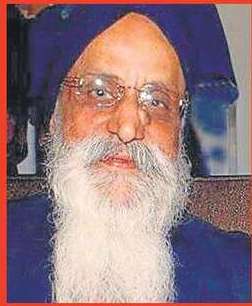
Avijit Ghosh (THE TIMES OF INDIA; August 27, 2023)
Lyricist Dev Kohli, who started his career with the sensitively-penned contemplative track, ‘Geet gaata hoon main, gungunata hoon main’ (film: ‘Lal Patthar’, 1971) but had to wait for nearly two decades before earning bigger fame and recognition with ‘Maine Pyar Kiya’ (1989) and ‘Hum Aapke Hain Koun!’ (1994), passed away at his Andheri residence on Saturday. He was 81.
“He was in Kokilaben Hospital for almost three months and brought back home ten days ago. He passed away at 4 am,” his spokesperson Pritam Sharma told TOI.
Composers Uttam Singh, Anu Malik and Anand Raaj Anand performed his last rites in Oshiwara. Uttam Singh said, “He was a saintly man — my dear friend of 50 years. I tended to him and took him to hospital over eight years when he underwent multiple surgeries. Our winning partnership in ‘Maine Pyar Kiya’ and ‘Hum Aapke..’ created such evergreen hits.” Singh, Kohli and a third friend Shailesh Sawant met regularly over Sunday meals.
Singh said, “I will miss his friendship. Kohli Sahab had no vices. He did not smoke or drink or attend parties. Over the last 8-10 years, he had stopped working. If anyone urged him to write, he would say he will only do so if Uttam Singh composes the tune!”
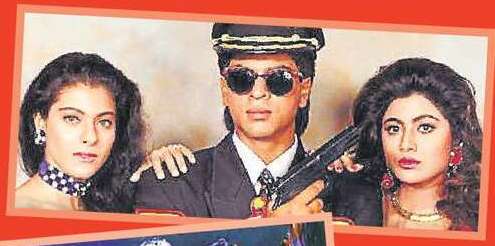
The 1990s were the high noon of Kohli’s career. He wrote the floorscorcher, ‘Yeh kaali kaali aankhen’ (music: Anu Malik, singer: Kumar Sanu, film: ‘Baazigar’, 1993) that Shah Rukh Khan and Kaajol jived to with verve and zing. The chartbusting track from the Abbas-Mustan film became a nightclub favourite earning Kohli a Filmfare award nomination for best lyricist. Kohli also received nominations for the title tracks of ‘Maine Pyar Kiya’ and ‘Hum Aapke Hain Koun’.
In all three cases, the award went to other nominees. Born in Rawalpindi (Pakistan) and growing up in Dehradun, Kohli had earlier penned two winners in another Abbas-Mustan suspense-thriller, ‘Khiladi’ (1992), an early Akshay Kumar hit. The songs, composed by Jatin-Lalit were, ‘Wada Raha Sanam’ and ‘Kya Khabar Thi Jaana’.
But the blockbuster success of ‘MPK’ and ‘HAHK’, both Rajshri Productions, propelled Kohli’s career to high gear. ‘Didi Tera Devar Deewana’ from HAHK (music: Raam Laxman, singers: Lata-SPB) was mandatory at every ladies sangeet. He would often collaborate with Anu Malik, in his prime then, churning out popular and populist lines such as ‘Oonchi Hai Building Lift Teri Bandh Hai’ (film: ‘Judwaa’, 1997) or ‘Akela Chal Raha Hoon Ek Gaadi Chahiye’ (film: ‘Mr And Mrs Khiladi’, 1997) that a David Dhawan film demanded. In several Dhawan ventures during this period, Kohli had a song or two. ‘Lift Teri Bandh Hai’ was also reprised in ‘Judwaa 2’ (2017).
Kohli had waited for serious success for a long time although ‘Geet Gaata Hoon’ (singer: Kishore Kumar, music: Shankar-Jaikishan), had happened when he was in his early 20s. It was the only song he wrote in director Sushil Majumdar’s ‘Lal Patthar’, a complex requiem to last-gasp feudalism in early 20th century colonial Bengal. Raaj Kumar and Hema Malini played the lead roles, though, the number was lip synced on screen by a young moustachioed Vinod Mehra.
The lyricist told this reporter in 2012, “The song’s success changed my life. I was immediately interviewed by magazines and on radio. From then on I started getting small films.” Those films include ‘Khoon Khoon’ (1973), which had the evocative bhajan, ‘Maati Ke Jalte Deepak’, ‘Kabhie Ajnabi They’ (1985) which had the melancholic 'Dil Ke Is Dehleez Tak' and several others such as ‘Ek Baar Kaho’. All these films flopped. It was only with ‘Maine Pyar Kiya’ that he vaulted to a bigger league.
(With inputs from Bella Jaisinghani)
-------------------------------------
HINDUSTAN TIMES (August 27, 2023)
Veteran lyricist and poet Dev Kohli, who gained popularity for his work in Salman Khan and Bhagyashree’s Maine Pyar Kiya (1989), died in Mumbai on Saturday. The news was confirmed by Kohli’s spokesperson, who shared that the veteran had been admitted to Kokilaben Ambani Hospital for the last few months and passed away in his sleep. Kohli was 81.
He had written over 100 songs for several Hindi films, including Baazigar (1993), Hum Aapke Hain Koun..! (1994), Musafir (2004), etc. While he was active primarily in the ’90s, the lyricist also worked on several recent films, such as Shootout At Lokhandwala (2007) and Judwaa 2 (2017). In a career that spanned from 1969 to 2013, he collaborated with different generations of composers, from Shankar-Jaikishan to Vishal-Shekhar.
Several celebs took to X to share heartfelt tributes to the artiste. Actor Renuka Shahane shared, “Kaisey bhool paaungi mein baba woh bachpan ki kahaniyaan.”
Singer-music director Shekhar Ravjiani wrote, “Had the honour and privilege of working with #devkohli sahab on Musafir and Taxi 9211 … What a wonderful human being and an extraordinary lyricist .. Thank you for the beautiful songs.”
25 Years of Major Saab: Sona Sona was an impactful inclusion in my song list for concerts-Sonu Nigam
8:46 AM
Soumya Vajpayee (HINDUSTAN TIMES; June 26, 2023)
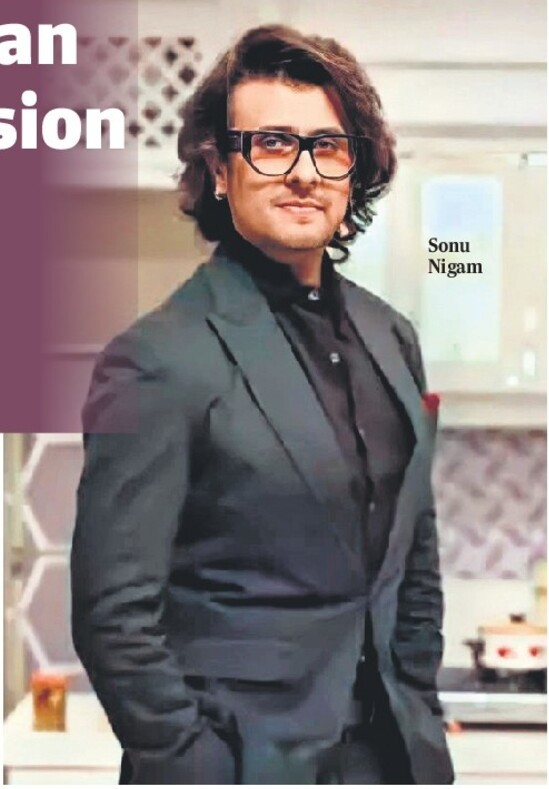
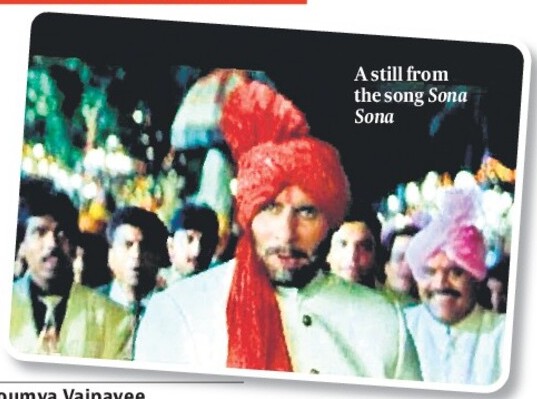
Besides actor Amitabh Bachchan’s iconic dance steps, the song Sona Sona from Major Saab (1998) is remembered by music aficionados for its playback. As Major Saab clocks 25 years, singer Sonu Nigam talks about the cult song, which also featured vocals by singers Sudesh Bhosle and Jaspinder Narula. “I didn’t have a lot of songs at that time so Sona Sona was a very impactful inclusion in my song list for concerts,” shares Nigam.
The singer recalls being in the studio when the track, composed by late music director Aadesh Shrivastava, was played to Bachchan.
“Aadesh bhai shared a very informal and personal relationship with Bachchan sahab. They both spoke throughout in a very funny and strange nasal tone and I was awestruck,” says Nigam, adding, “I was asked to open the song before Sudesh ji took over for Bachchan sahab. The atmosphere was festive. I remember I had pointed out to Dev Kohli ji (lyricist) that he was using the words Peg Patiala again in this song, as I had just sung a song written by him for Anand-Milind (composer duo) and the words were Roop Tera Hai Kudiye Peg Patiale Da. He then replaced it with Ye Ishq Piya La.”
Subscribe to:
Posts (Atom)