Showing posts with label Dev Anand. Show all posts
Showing posts with label Dev Anand. Show all posts
World knew him as Dev Anand’s son. I knew him as Suneil sir, says Chargesheet actor Anish Vikramaditya
4:35 PM

Tanvi J Trivedi (MUMBAI MIRROR; August 3, 2026)
Actor-filmmaker Suneil Anand, who passed away on July 26 at the age of 70 following a heart attack in London, leaves behind not just the legacy of being Dev Anand’s son, but also memories of a man who was remembered for his humility and compassion. Actor Anish Vikramaditya, who shared an 18-year friendship with Suneil Anand, said, “The world knew him as Dev Anand’s son. I knew him as Suneil sir.”
The two first met in 2008 during the making of Dev Anand’s film Chargesheet, where Anish played the hero.
He shared, “There was absolutely no trace of arrogance despite belonging to one of Indian cinema’s most respected families. Suniel sir treated everyone — from technicians to senior industry personalities — with the same respect.”
Anish also credits Suneil with giving him an identity that remains one of the proudest moments of his career. “It was during Chargesheet that he suggested the screen name ‘Anish Vikramaditya’ for me, and Dev Sahab approved it. That remains one of the greatest honours of my life.”
Their last conversation took place on June 30, when Suneil spoke enthusiastically about his upcoming film Vagator Mixer. “‘I am just completing it and I am coming back. I have made a great film,’ he told me. We didn’t speak after that,” said Anish.
According to Anish, Suneil’s greatest quality was his integrity. “I personally saw influential people make him lucrative offers, but if something went against his principles, he simply refused. No amount of money or influence could make him compromise his values.”
One of Anish’s most cherished memories is watching Suneil care for his father, during the Chargesheet schedule in Mahabaleshwar. “He personally ensured Dev Sahab took his medicines on time and looked after every small detail himself. Those responsibilities could have been delegated, but he did everything out of love.”
The last photograph they took together has now become one of Anish’s most treasured possessions. “Outside his Pali Hill residence, beside the Padma Bhushan Dev Anand Road sign, I requested Suneil sir for the photographs, as we were standing beside the Padma Bhushan Dev Anand Road sign, which was very meaningful to both of us. With his characteristic warmth, he kindly took my phone and clicked a few individual photographs of me before we took our selfie together. I never imagined it would become our last photograph.”
Dev Anand’s son, Suneil, passes away in London
9:15 AM

Avijit Ghosh (THE TIMES OF INDIA; July 29, 2026)
Actor Suneil Anand, fondly launched into the Hindi film world by his father Dev Anand in ‘Anand Aur Anand’ (1984), passed away following a heart attack in London. He was 70.
“We are comforted by the outpouring of love, prayers, and support, for which we are truly grateful. We kindly request privacy as we navigate this difficult time together,” his niece, Gina Narang, said in a statement on Tuesday. Incidentally, Dev Anand also died in the same city in 2011.
“Suneil didn’t seem ambitious. But he was extremely sincere towards his work. He was also very respectful towards senior actors,” recalled Raj Babbar, who worked with him in the film.
“My sincere condolences to his mother,” he added. Suneil's mother, Kalpana Kartik, a film star in the 1950s, is 94.
The 1980s saw a bunch of star sons being launched in style such as Kumar Gaurav, Sunny Deol and Sanjay Dutt. Suneil also made a carefully-crafted debut with much fanfare. He had learnt kung-fu in Hong Kong and displayed a felicity with dance moves as well as action scenes in ‘Anand Aur Anand’.
The film’s bouncy tracks, composed by R D Burman, proved to be popular. “Mr Ratan Tata who headed CBS Records at the time took keen interest in its (music) launch,” Suneil told this reporter in an email interview in 2020. But the film didn’t work.
Suneil also played the lead in the smartly lensed ‘Car Thief’ (1986), opposite Vijeta Pandit. He also starred in ‘Main Tere Liye’ (1988), directed by uncle Vijay Anand. A martial arts aficionado, he directed, ‘Master’ (2001), where the fights were choreographed by Hong Kong masters. None of these films succeeded at the box-office. Suneil had been working on a movie, Vagator Mixer for some years.
In his autobiography, ‘Romancing With Life’, Dev Anand provides a vivid account of how he was over the moon on hearing the news of his son’s birth. He was shooting for ‘Paying Guest’ for director Subodh Mukerji and enacting a drunken scene when the news arrived from a nursing home in Zurich. “I was in such high spirits that I gave a brilliant shot, probably my best in the film,” writes the star of superhits films such as CID, Johny Mera Naam and many more.
Shortly, Dev Anand and his wife Kalpana were invited to the Karlovy Vary film festival in (then) Czechoslovakia. The actor writes that an 86-year-old delegate and Suneil, then just two weeks old, were photographed together by the local press. The front page of a local newspaper carried the photo with the caption, “The oldest and the youngest delegates.”
In one of the chapters in the autobiography, Dev emotionally talks about flying out to Washington to meet Suneil who was studying there in a university. The Evergreen star writes how they embraced with moist eyes, how Suneil showed him around the campus, offered him a guided car tour of the US capital and helped him buy sunglasses. “These were great fatherly moments for me after the brutally harsh working schedule I had thrown myself into all these years, that kept me away from my family,” he says.
With Suneil's passing another chapter from the famed film family comes to a close.
Asha Bhosle, ‘I will only do Mai if Padmini is in it’-Padmini Kolhapure
8:20 AM

Natasha Coutinho (HINDUSTAN TIMES; April 14, 2026)
Actor Padmini Kolhapure’s association with late singer Asha Bhosle goes beyond films; it is rooted in family. The two, who worked together in Mai (2013) — Bhosle’s acting debut at 79 — are connected through Padmini’s father, late Pandharinath Kolhapure, a first cousin of Bhosle and her sister, late singer Lata Mangeshkar.
“She introduced me to (late actor) Dev Anand, because of which I landed my debut Ishk Ishk Ishk (1974). I called her Asha atya [father’s sister in Marathi]. As a child, I remember her coming home every Diwali with a bag full of gifts,” she shares.
Talking about Bhosle’s decision to take on Mai, the 60-year-old reveals, “I remember her saying, ‘I will only do the film if Padmini is in it’.”
She also lists some of her favourite songs sung by Bhosle that were picturised on her. “Kabhi Kisiko Muqammal Jahan Nahi Milta (Ahista Ahista, 1981), Puchho Na Yaar Kya Hua (Zamaane Ko Dikhana Hai, 1981), Anari Ka Khelna (Woh 7 Din, 1983), and so many more,” she says.
Kolhapure fondly recalls more intimate memories: “On her last birthday, she gifted Poonam (Dhillon, actor-politician) and me saris from her personal collection. Her favourite dish was Mooga Mole Randai, a Saraswat dish from the coastal regions of Goa, Karwar and Mangalore. She especially loved the one my father would prepare.”
Priyadarshan to release his memoir with his 100th film, which reunites him with Mohanlal
3:15 PM

Currently writing his memoir, Priyadarshan plans to coincide its release with his 100th movie that will reunite him with his first hero, Mohanlal
Upala KBR (MID-DAY; January 24, 2026)
We suspect Priyadarshan has 30 hours in a day. In 2025, the filmmaker wrapped up two movies, Bhooth Bangla and Haiwaan. Now, he has revealed to mid-day that he also squeezed in the time to write his autobiography. The filmmaker plans to release his memoir in 2027, coinciding with a career landmark.
“I am writing, shooting, and writing again. I have completed my 97th movie, Haiwaan, starring Saif Ali Khan and Akshay Kumar. The 98th will be with Pankaj Tripathi, Annu Kapoor, and Saurabh Shukla. I want to complete my memoir by 2027 as I should wrap up my 100th film by then,” he told us over a call.
The star of the yet-untitled autobiography will obviously be Priyadarshan and his rich career spanning over four decades. That said, another superstar, Mohanlal, will take pride of place in the book. After all, the Malayalam actor had fronted his directorial debut, Poochakkoru Mookkuthi (1984), and in a serendipitous turn of events, he will lead the director’s 100th outing too. The decades in between have seen the two friends collaborate multiple times.
Priyadarshan elaborated, “Mohanlal was the hero of my first film. I want to end my book with the last chapter on him. I think it’s the first time in the history of Indian cinema that an actor, who did a director’s first film, is also the hero of his 100th.”
Looking back at his life, the memoir will span his childhood, his entry into films as a screenwriter, and his rise as a director with three National Film Awards and multiple hits to credit. “I started my career at 19; I wrote my first Malayalam movie Kuyiline Thedi [1983]. Before that, I was a ghost writer for a couple of films,” he recalled.
“The book will also cover everyone I have worked with or met — from R D Burman to Rajesh Khanna, from Dev Anand to Akshay Kumar and Rajinikanth. I have met so many legends in the last 40 years.”
Kamini Kaushal, leading lady in first hits of Dilip Kumar and Dev Anand, passes away
8:35 AM
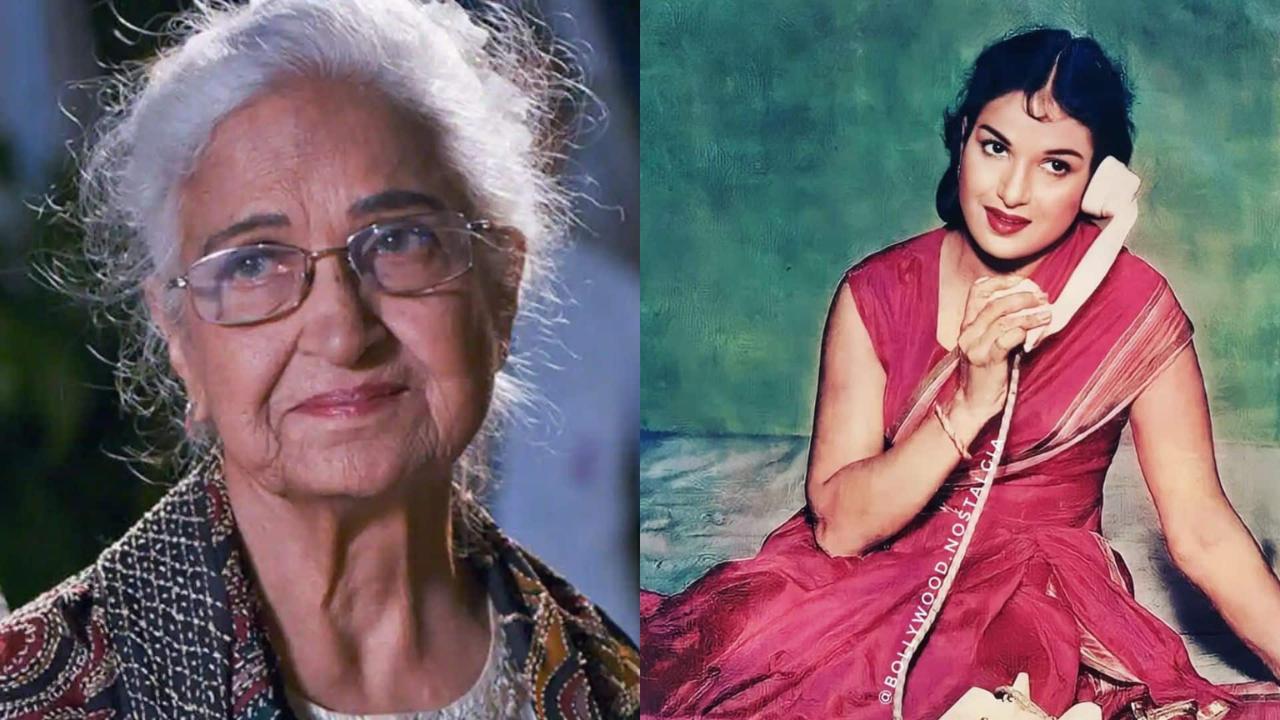
Avijit Ghosh (THE TIMES OF INDIA; November 14, 2025)
Kamini Kaushal, who made her film debut in Chetan Anand’s classic ‘Neecha Nagar’ (1946), who sparkled as the leading lady in the first box-office hits of Dilip Kumar (‘Nadiya Ke Par’, 1948) and Dev Anand (‘Ziddi’, 1948), and who enjoyed a fruitful second innings as character actor in films such as ‘Upkar’ (1967) and ‘Do Raaste’ (1970), passed away at her Mumbai residence late Thursday night. She was 98. The news was confirmed by Sajan Narain, a close friend of the family, to news agency PTI.
Like the leading character of her last film, ‘Laal Singh Chaddha’ (2022), Lahore-born Kaushal’s career too was marked by her presence in significant moments of film history. ‘Neecha Nagar’ was a Grand Prix winner at Cannes. Raj Kapoor also acted with her in his second film, ‘Jail Yatra’ (1947).
Kaushal was the first heroine with whom Dilip Kumar formed a winning pair. ‘Shaheed’ (1948), ‘Shabnam’ (1949) and ‘Arzoo’ (1950), being three other films. In the opening credits, she was billed above Kumar in all these films, which underscores her seniority and star value at the time.
Director Bimal Roy’s ‘Biraj Bahu’ (1954), based on Saratchandra’s 19th century novel, was the high noon of her acting career. Kaushal was pitch-perfect in the title role capturing the tone and tang of a rural Bengal homemaker whose life unspools from idyllic to calamitous.
The Times of India described her performance as “dignified, refined, sympathetic, beautiful, rounded to the last nuance and shade and tone of expression, a histrionic gem of flawless perfection, the finest of her career.” It fetched her Filmfare’s best actress award.
Her second innings as a supporting actor began with Manoj Kumar’s ‘Shaheed’ (1965), where she played his mother. She became a regular in his positive nationalism films. ‘Upkar’ (1967) offered her the stand-out part of a widow torn between two sons with opposing approaches to life. Another notable role came in Raj Khosla’s superhit family drama, ‘Do Raaste’ (1969), where she played an amiable bhabhi who tries her best to keep the family from falling apart. In Ravi Tandon’s ‘Anhonee’ (1970), Kaushal delivered a deliciously wicked surprise to her fans playing the devious and plotting stepmother willing to kill for money.
Life dealt her unkind cuts. Born on Feb 24, 1927, Uma (her real name) lost her renowned botanist father, Shiv Ram Kashyap, when only 7. The five siblings -- two brothers and three sisters -- were brought up by her mother. Undeterred, she graduated from Lahore’s Kinnaird College displaying a flair for sport and plays.
Then Kaushal’s elder sister died in a motor crash and she “came to Bombay to nurse her two little nieces and her brother-in-law BS Sood who had been seriously injured. She decided to look after him as a wife for the rest of her life” wrote Sushila B Rani in the book, Stars of the Indian Screen (1952). Sood was an officer with Bombay Port Trust.
At this stage, she was offered ‘Neecha Nagar’ by Chetan Anand, who named her Kamini Kaushal. In 1954, she also acted and produced ‘Chalis Baba Ek Chor’, a comedy with a bunch of kids that flopped.
Kaushal participated actively in public life and freely spoke her mind. While inaugurating a women’s section of the Indo-Soviet Cultural Society in Bombay in 1958, she underlined the need to build closer understanding between the peoples of India and the Soviet Union. “Cinema was never my be-all and end-all,” she told TOI in 2008.
In 1969, G D Khosla committee’s report on Film Censorship spoke up in favour of celluloid kissing which created a strong conservative backlash. Kaushal supported the report. “A kissing sequence done gracefully would be a good substitute for blaring erotic songs,” she said at a Lions Club function in Delhi that year.
Making puppets was a passion in her late life. She was also an active chairperson for the Children’s Film Society of India. Kaushal floored everyone with her spirit, elegance and self-deprecating humour while delivering the Filmfare Lifetime Achievement award acceptance speech in 2015. “Ours was a quieter period…may be our eyes spoke more than our bodies,” she said. The audience connected and clapped.
But there was also a tinge of sadness. “I am missing our gang today. Most of them are gone. Just not fair. I feel very lonely here today. All of them are disappearing and going away one by one. Which breaks your heart…,” she said. Everyone stood up when she finished her speech.
Now Kamini Kaushal has joined her gang.
Mogambo’s tailor, netas’ favourite: Meet the dressmaker of icons
3:13 PM

Madhav Agasti has stitched clothes for Amrish Puri, Bal Thackeray, Pranab Mukherjee, Narasimha Rao, L K Advani…. He’s been a friend of Sanjeev Kumar, Dev Anand, Mehmood. Farooq Abdullah discovered his tailoring skills in 1984 and never left him. After 50 years, Agasti is still going strong and is full of stories of the people he met and dressed
Sharmila Ganesan (THE TIMES OF INDIA; August 31, 2025)
Madhav Agasti’s mobile rings as we step into his tailoring shop in Bandra. “Farooq Abdullah,” Agasti tells his son, Shantanu, before answering. The first time he had met Abdullah, then the chief minister of Jammu & Kashmir, was in 1984. Agasti was at the Delhi airport, and so were Abdullah and Congress’s NKP Salve. Salve was in a bandhgala and Abdullah had admired the cut. And that is how the serendipitous meeting took place. Spotting Agasti, Salve introduced him to Abdullah. Then things moved fast. Agasti requested Abdullah to accompany him to the VIP lounge. Out came Agasti’s measuring tape — he always carries one — and the measurements were done. What followed a few days later was an impeccable sherwani. Abdullah was impressed. He ordered a suit next, then a pathani, followed by a safari suit. “He remains my client to this day,” says Agasti.
Agasti’s 76 now. And had invited Abdullah to his Andheri home for Ganeshotsav. But Abdullah called because he thought he would not be able to make it. But he’s promised to be back soon for new measurements.
Nagpur To Bombay, Via Calcutta
Agasti’s father was a bhikshuk in Nagpur, a wandering monk who stitched coats for a lawyer named Shewde. Agasti’s ambitions were likely sparked by his father’s skills. He left Nagpur for Calcutta, a young man in his early 20s. He found himself a job as a “cutter” in the city. Then he travelled to Moradabad to learn how to stitch sherwanis and then to Mhow, a cantonment town in MP, to study how to make military uniforms. He travelled back to Calcutta, and, this time, landed a job at a tailoring counter because he could speak English.
In 1973, he moved to Bombay. “I was smoking outside Citylight Cinema in Mahim when I noticed a man with scissor marks on his hand, the hallmark of an assistant tailor. He worked at Super Tailors, dressmakers to Hindi film actors,” recalls Agasti. Soon enough, Agasti landed himself a job there.
A door had opened for him. But what worked wonders was his learning from Mhow; 14 years later, that would catapult him to even higher tailoring fame. He stitched the military uniforms for the 1973 film, ‘Dhund’. And Danny Dengzongpa, who played the role of a cruel, wheelchair bound husband of Zeenat Aman in the film, loved the tailoring.
Agasti had been noticed. His star was on the rise. Plus, his Nagpur-honed Hindi was good, and so was his Marathi. He quickly began to acquire admirers.
Actor Sunil Dutt was the first to suggest that he strike out on his own. “There were no Maharashtrians in tailoring then,” Agasti says. He set up a small shop in Dadar in 1975. Word spread fast. Soon, ministers Vilasrao Deshmukh (“he loved safari suits”), Gopinath Munde, Pramod Mahajan (“he wore kurtas without pockets”), Sharad Pawar and Lal Krishna Advani (“three-button jackets”) were clients.
Through lawyer Shirish Gupte and theatre veteran Mohan Wagh, he met Bal Thackeray in 1981. “Balasaheb asked me to design clothes in such a manner that his legs wouldn’t show in photographs,” says Agasti. He crafted a white kurta-pyjama that became the late Shiv Sena chief’s signature look. “I got him a shawl from Kashmir. He mostly preferred white and off-white,” adds Agasti, himself in off-white shirt and pants today “because this way, I don’t have to worry about combinations”. Thackeray nicknamed him “Rajshimpi” (politicians’ tailor).
Mogambo… Khush Hua
But you could also call Agasti a film stars’ tailor. Last month, he received the Bharat Gaurav Award at the UK Parliament in London for designing Amrish ‘Mogambo’ Puri’s unforgettable costume in the 1987 blockbuster, Mr India, and also Bal Thackeray’s signature kurta-shawl look.
He is now preparing for the release of his memoir, ‘Stitching Stardom’. The book traces his journey of image-making across comedians and chief ministers, prime ministers and presidents. Much has changed in tailoring — technology, speed, the churn of fast fashion — and much hasn’t. “Earlier it was about who you knew,” says Agasti. “Now it’s word of mouth.”
As tea is served for unannounced guests — BJP’s Raghunath Kulkarni and former national secretary Sunil Deodhar have arrived in the shop — the septuagenarian darzee holds forth on his craft, his clients, and his takeaways from 50 years of dressing up the who’s who.
“Contrary to perception,” he says, “politicians are the easiest clients and the best paymasters.” Many believed his “lucky hand” made their measurements special. As he reminisces about designing costumes for five villains in Anil Kapoor’s ‘Ram Lakhan’, his eyes settle on the crisp shirt Kulkarni is wearing. “The linen suits you,” Agasti says. “It’s linen?” asks Kulkarni. “Yes, and the American cut sits well,” replies Agasti, seated in the shop he opened in Bandra in Nov 1985, its launch postponed by 15 days to mourn the death of his friend Sanjeev Kumar.
Dev Anand would sneak in through the back door, head bobbing, calling out: “ Ey Madhav, kya banaya hai mere liye?” while Sunil Dutt preferred the front, greeting him warmly as “Madhav Seth”. He even kept a special stool for Mehmood, who would arrive most evenings, leaving the tailors in stitches with his antics.
But the costume that cemented his name in Bollywood lore was Mogambo’s in Mr India. The now-iconic piece with its high-collared military cut and gold trimmings was meant to project both colonial grandeur and zamindar-like menace. Puri, who exclaimed “Mogambo… khush hua” on seeing it (here, in the Bandra shop), wore it with relish. “I worked with him from his first film till his last. After he passed away in 2005, I slowly stepped away from films,” says Agasti, who found the era of menacing villains fading from the silver screen. Soon, it was in politics, rather than films, that his reputation as a tailor of image flourished.
A Politicians’ Tailor
From the dhoti-kurta and Jodhpurs era to the rise of the suit-boot and back, Agasti has seen political sartorialism in India come full circle. Various chief ministers, prime ministers and presidents — including Pranab Mukherjee — have taken oath in his creations. The busy Narasimha Rao would often be exercising on his stationary bike at 6 am when Agasti would get an appointment with the silk-jacket-favouring polymath.
Someday soon, he hopes to tailor PM Narendra Modi’s clothes. “I’m a big fan of Narendra Modi ji,” he says. “He dresses sharply, always to suit the occasion.”
Today, as he marks half a century in the trade, the shop is lined with mementoes. Pride of place goes to a cap gifted by former Army Chief Manoj Mukund Naravane upon retirement. “Clothes make the person,” says Kulkarni. “By that measure, he (Agasti) is a personality builder.”
Deodhar sizes him up as a “self-made man with networking skills and a sharp memory,” adding one enduring quality: “He calls himself a tailor with pride at a time when many look down on the profession. And… he always has a measuring tape handy.”
Sachin Pilgaonkar on 60 years in cinema: "I have reached the interval stage"
8:16 AM

Natasha Coutinho (BOMBAY TIMES; November 13, 2024)
Sachin Pilgaonkar (67) completes 60 years in films this year. The actor, director and producer started acting as a child at the age of five and went on to feature in over 65 films before starring in films like Sholay and Satte Pe Satta as a grown-up. The veteran actor says there’s much more to come and he has only reached the “interval stage” of his career.
‘I was the first child artiste to win the President’s Award’
Talking about his early days as a child artiste, Sachin fondly recalls, “I received the National Award for Best Child Artiste at the age of five (for Marathi film Ha Maza Marg Ekla), from the hands of Dr Sarvepalli Radhakrishnan the second president of India, in the presence of Pandit Jawaharlal Nehru. Back then, it was known as President’s Awards and the child artiste category did not exist, so I was the first to win it. My mother had stitched a sherwani with mojri for the event and as I was leaving after receiving my award, Pandit ji called me, made me sit on his lap, took the rose from his coat and placed it on my sherwani. My mother was keen that I have a 9 to 5 job, but this event changed her thought process. Eventually, I went on to work in more than 65 films as a child.”
‘I learnt self-love from Dev Anand’
Sachin cherishes the close association that he shared with Dev Anand. He says, “Dev Anand with whom I worked a lot, loved himself and would address himself by his name Dev, while explaining a scene. The first time it happened, I asked him, 'Who is playing Dev?' He looked at me for a few seconds before announcing he was referring to himself and I apologized. He told me that I reminded him of his younger brother Goldie, who he was very close to. I played his younger brother in his debut directorial Prem Pujari. Apart from working with Dev saab, I feel fortunate to have been part of cult films like Sholay, Satte Pe Satta, Nadiya Ke Paar, Geet Gaata Chal and more.”
‘As a director, I treat my actors the way I wanted to be treated on set as a young actor’
Talking about the life lessons that he has learnt in all these years, he says, “At 24, I became a director in Marathi cinema. Today, my actors receive their cheque from me (not my managers) even before they have taken off their makeup on the final day of shoot. The reason is, that’s how I wanted to be treated when I was younger, but it wouldn’t happen. I celebrate the birthdays of my crew - from the light man to the actors because no one celebrated my birthday on the sets."
‘Shriya was our lucky charm since day one’
“The day Shriya was born, I was shooting for my Marathi directorial Atmavishwas, in Mumbai’s Shivaji Park. The previous night the doctor informed us Supriya would have to deliver the baby the next evening because of some complications. Co-incidentally, the hospital was on the same street as my shooting location. I was arranging the shot in the afternoon when a friend informed me that I’ve become father to a baby girl and I rushed to the hospital. The same evening, we received the news that I had received the Maharashtra State Award for Best Director for Ashi Hi Banwa Banwi and Supriya had won the award for Best Actress for Maza Pati Karodpati. Today, Shriya has made her own space in the industry and I am proud of her. As a family, we are very tight and they have always been my pillar of strength.”
‘Meena Kumari introduced me to Urdu’
The actor, who shared screen space with Meena Kumari in the film Majhli Didi, says, “Meena aapa imbibed Urdu into my life and today, it is part of my system. Having command over a language gives you immense confidence, it changes your body language and approach to your work. I couldn’t speak English back then, but a friend helped me by conversing and that’s how I learnt the language. Today, I visit colleges to give lectures on career building, but I consider myself a student. My pseudonym is Shafaq, and I write and recite Urdu poetry, and have shared the stage with the likes of Wasim Barelvi and Javed Akhtar.”
Winning Nach Baliye with Surpiya at the age of 48
Supriya (Pilgaonkar) and I are total opposites, but I never tried to change her because I married her for what she is. We were approached for Nach Baliye (2005) because the channel needed a senior couple and they didn’t even know if we could dance. The intention was not to win. We would be happy even if we survived six episodes, but we ended up winning the show. Choreographer Saroj Khan, who was a judge on the show, used to say, “No matter what, the Shammi Kapoor within you will never leave your body.”
Goldie and Dev Anand’s cinema has this spirit of survival-Tanuja Chaturvedi
8:58 AM
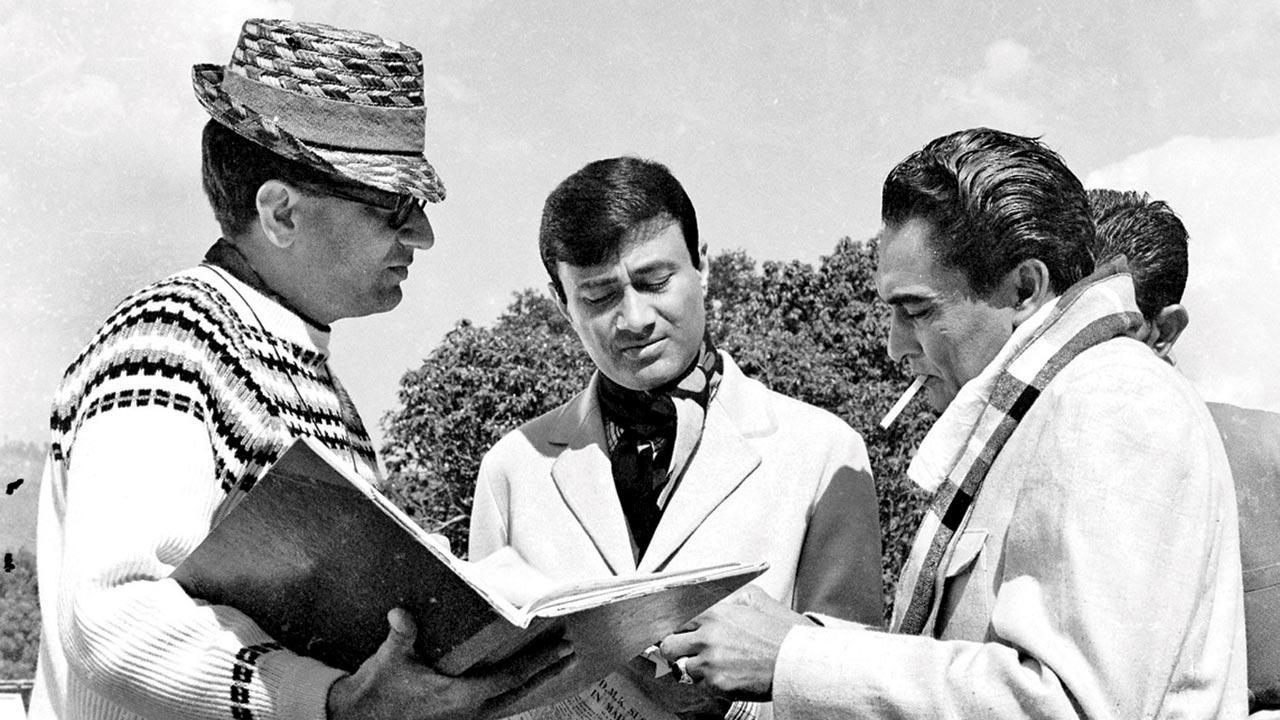
Goldie Anand explains a scene to Ashok Kumar and Dev Anand on the set of Jewel Thief in Gangtok. Pic Courtesy/Bloomsbury Publishing
A new book discusses the fascinating bond of the Navketan siblings, whose creative journeys were inextricably linked over eight movies
Sucheta Chakraborty (MID-DAY; August 18, 2024)
In Hum Dono: The Dev and Goldie Story (Bloomsbury India), Tanuja Chaturvedi who has worked in radio, theatre, film and television in varying capacities as an actor, producer, director, editor and teacher, writes how in 1988 after graduating from FTII, she dialled, on a sudden whim, a number off the film directory. “I asked for Dev sahab and heard the famous drawl, ‘Dev here,’” she writes. And just like that, she was invited to meet Hindi cinema’s famous evergreen hero at his Anand Recording Studio in Pali Hill. Thus, began the author’s abiding affiliation with the Anand brothers which finds its culmination in the book.
From Vijay Anand’s experimentation with film time in Kala Bazar to why Ashok Kumar went MIA during the shoot of Jewel Thief, Hum Dono bustles with anecdotes and analysis as an insider delves deep into some of the duo’s most memorable collaborations. Edited excerpts from the interview
Tell us about the experience of putting this book together. I understand that you drew from the material that you acquired during your research for a film on Navketan around 1990 which ultimately fell through...
This being Dev sahab’s centenary year is an unexpected miracle for me. I never planned a book to meet this momentous occasion. Goldie and Dev sahab’s cinema has this spirit of survival. That longevity is what I wanted to celebrate. The early research was very exciting for me because I had access to the Anands and met people I never even dreamt of meeting, like Pancham da. The interactions were very intense. Then I segued into working with Dev sahab and that relationship continued. But the stirrings of the book were always inside me. It was a generational transference of fandom starting with my mother, who was his die-hard fan, and my brothers, who took me for his black-and-white reruns. Dev Anand’s never-say-die spirit, his optimism and his charm used to just leap out at us. His spirit attracted us kids who weren’t even born when he started making films. Plus, he was very westernized, he was hip and cool. He was like us. I met him as a five-year-old. He had picked me up at the premiere of Pyaar Mohabbat in Delhi and I never let him forget that! He was almost like a father figure to me. I argued with him a lot and I used to get away with a lot as well.
With Goldie sahab, the interest began during our student days at FTII as we began studying his almost invisible craft. There was nothing that he did not excel in—screenplay, dialogues, editing, direction. And he was a self-taught maverick. He owes nothing to cinema that came before him. He is so original. He is a genius and we have not celebrated our geniuses enough. When I was invited to teach film appreciation at Whistling Woods International, the standard practice is to start with Pather Panchali but I decided to begin with Johny Mera Naam. I saw the craft work, the story’s magic work, the breathless narration work. So, this [admiration that I had] got confirmed. It was all inside me and it actually took me just a month to write the first draft of the book. It just came pouring out—there wasn’t any sort of consciousness.
You write about the Goldie-Dev partnership as belonging in the tradition of great director-actor collaborations like Kurosawa and Mifune or Wong Kar Wai and Tony Leung. In case of Goldie and Dev, what do you think each brought to the equation?
They were extremely individualistic people. Goldie Sahab was very goal-oriented, which you have to be if you are a director of a film. Dev Sahab was process-oriented which is why his career is very different. It just lasts. It just goes on. He just loved the fact that he was making films. He was like as Mani Kaul said “swaant sukh ke liye banata hoon (the joy of creation which is its own end)”. But they were completely intertwined in the creative process from the get go. They understood each other, shared the same ethics, the same gene pool. They had common values, were both educated, well-read people. They were intellectuals, passionately fond of knowing what was happening in the world. There were some buttons as an actor that got pushed and there was a coming together of energy, an osmosis, a collision, a cohesiveness when they worked together. If Dev Anand became Goldie Anand’s alter ego on screen, then Dev Anand’s own philosophy of life imbued Goldie Anand’s cinema.
But they also had creative differences. During the shoot of Nau Do Gyarah, for instance, Goldie insisted on stretching the climax which brought him into conflict with the team. He turned five minutes of real time and stretched it into ten minutes of film time. In the climax, the villain gives the hero five minutes to get the police cleared out of the area. At stake is the heroine’s life; she is held hostage and drugged. Goldie wished to expand this time to make each character’s tension mount. He edited the film for 13 continuous days, sleeping overnight at the editing room. He got into battles with the editor Dharam Vir who was unsure if the stretched-out climax would work. Dev was appealed to reason with Goldie. He tried but Goldie was very sure and wouldn’t budge. Finally, at the mixing stage, the sound recordist also expressed uncertainty over whether the long climax would hold the audience’s attention. Finally, Goldie asked them to run his version once. If the audience booed, then from the next show on, the shorter, edited version could be played. But he was so frustrated that he did not even attend the film’s première, reaching at the end of the film’s first showing. He saw that the climax had audiences spellbound, breathless and rooting for the lead actors. Goldie’s gamble worked.
At the same time, Goldie knew how to control Dev sahab. A director needs to push Dev sahab in directions he felt uncomfortable with. You need a person who will be able to say no. You need a person who will be able to orchestrate performances. He was also intuitive about when to liberate the actor. If you see the song ‘Khoya khoya chand’, it’s about the exuberance of falling in love so he just lets Dev sahab loose. But when you see ‘Tere Mere Sapne’ from Guide, which is only three shots, it is shot in the magic hour with the light fading and you’ve got a five to 10-minute window to shoot the whole song which involves complex camera work, framing, focus points, lip sync and expressions. And that’s also the key song for the film. Their synergy and deep understanding of each other is evident in ‘Pal bhar ke liye’ where the camera and Dev dance in tandem.
Which is your favourite film by the duo and why?
My favourite will always be Guide because it is a very difficult film to make. It’s about so many things—it’s a love story, about a woman finding her strength through her passion, about a guide who loses his own path and falls abysmally. There’s something fascinating that happens in every viewing I’ve had with Guide [like with students at the Xavier Institute of Communications, Mumbai]. The film starts, Raju (Dev) gets out of jail. And then the flashback from Rosie’s (Waheeda) point of view starts, which is the whole body of the film, more than two hours encompassing the love which blossoms, the love which decays, the death of love itself. By the time you have been taken through this entire emotional journey, you are so engrossed that you have forgotten how the film begun. The film is actually working on two completely different planes. And that is the brilliant part. Raju’s awakening, his enlightenment is why the film resonates with us. To seek for the meaning of life is ingrained in the DNA of the people of this country, and that is reflected in the film.
If there was one thing you could say you learnt from each of the Anands, what would they be?
From Chetan Anand, I would say his imagination, rigour and his image-making—the way he uses colour palettes in films. So, if you see Kudrat, it’s how he makes the two characters dress in complementary colours as they’re coming closer, or what he and Jal Mistry did to the colour palette of Heer Raanjha. He had an experimental, vivid kind of an imagination. From Dev Sahab, I think I learnt passion, I learnt complete dedication and immersion. It was literally the Gita saying about how you have the right to work, but for the work’s sake only and the desire for the fruits of work must never be your motive in working. That was possibly the spirit behind even writing the book because when I wrote, I didn’t even know a publisher. It was just that it was a work which was fulfilling me. It was a work which I was giving everything to, believing that this love will reach the readers because it was coming from a place of love. From Goldie Sahab, I think I have learnt everything about cinema. He made films within the matrix of Hindi mainstream yet each of his films is intensely personal—they are experimentations with cinema time, explorations of themes of redemption, man-woman relationships in all their hues, and even appeals to our neighbouring countries to live in harmony with us. That’s the big learning—that you can communicate something personal in the free-flowing format of mainstream film.
---------------------------------------
EXTRACT: How Vijay convinced Dev to make Nau Do Gyrah
Chetan was the patriarch of the Anand family’s creative experiment, Navketan. All creative calls were run by him. On the sets of Funtoosh, when he fell ill during the shoot, he gave Goldie the responsibility of a song picturisation. Dev was uncertain; Goldie was very young. Yet, keeping his doubts aside Dev gave Goldie a chance. Goldie picturised his first song for Hindi cinema with pizzazz, surprising now a rather pleased Dev. The song was ‘Ae Meri Topi Palat Ke Aa’. Interestingly, though the credit titles read S D Burman this tune was composed by yet another young prodigy, R D Burman.
Once again Dev discovered that Goldie’s script was yet to see the light of day. This time he heard good things about the script from his House No. 44 director Mandi Burman. Dev asked Goldie for the script. Goldie was insistent; only he would give a narration.
So, on a drive to Mahabaleshwar, ensconced between Dev and his sister-in-law Kalpana Kartik, cameraman V Ratra seated next to the driver, Goldie narrated the detailed script of Nau Do Gyarah. By the time they reached Mahabaleshwar Goldie was reading the last page of his twister climax.
After finishing, he waited. Silence. No reaction. The car entered Fredrick Hotel, Dev’s favourite haunt in Mahabaleshwar. The lamps aligned on the pathway here are shaped like the logo which appears before the early Navketan films. Life imitating art?
Dev got out of the car and instantly booked a trunk call to his Bombay office. He asked his production manager to delay the film they were to start and announced that he had selected the next film by Navketan, Nau Do Gyarah, to be directed by Vijay Anand. A floor at Kardar Studios was booked for ten days. Goldie’s first venture was on the roll.
Excerpted with permission from Tanuja Chaturvedi’s Hum Dono: The Dev and Goldie Story published by Bloomsbury India
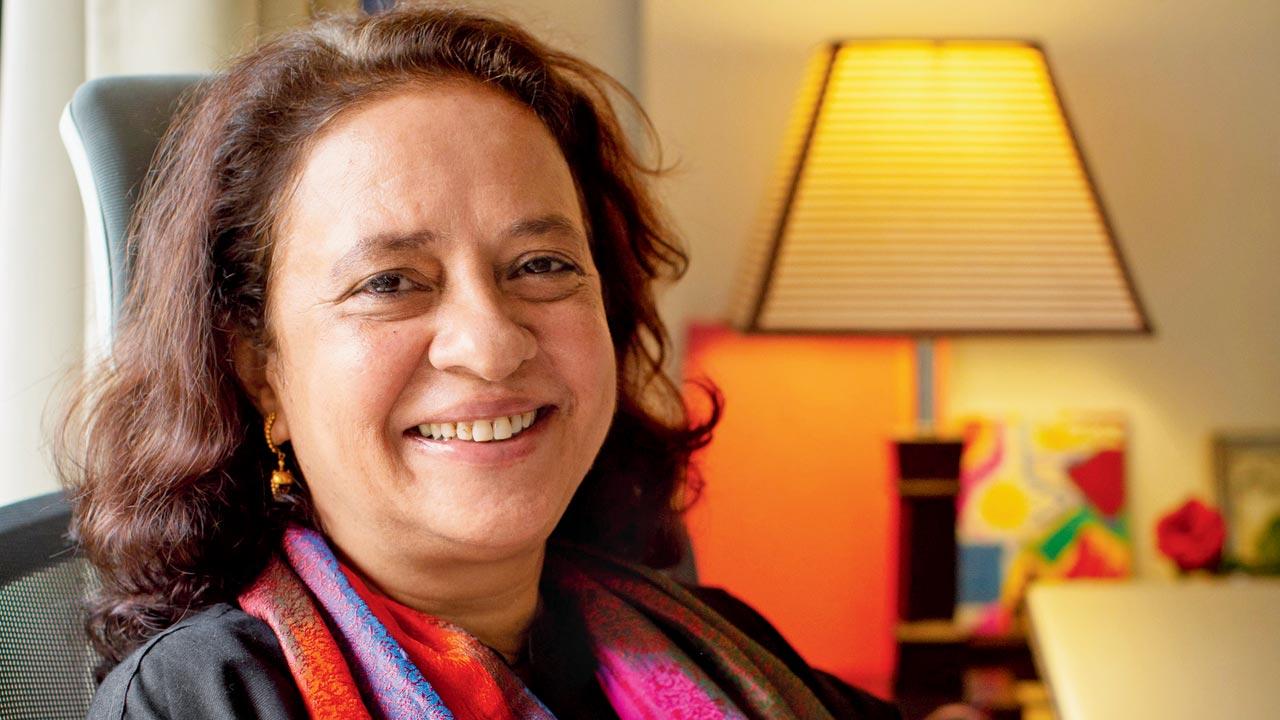
Tanuja Chaturvedi
Sometimes, men just need to look like men, and not a statement-Akshay Kumar
7:51 AM
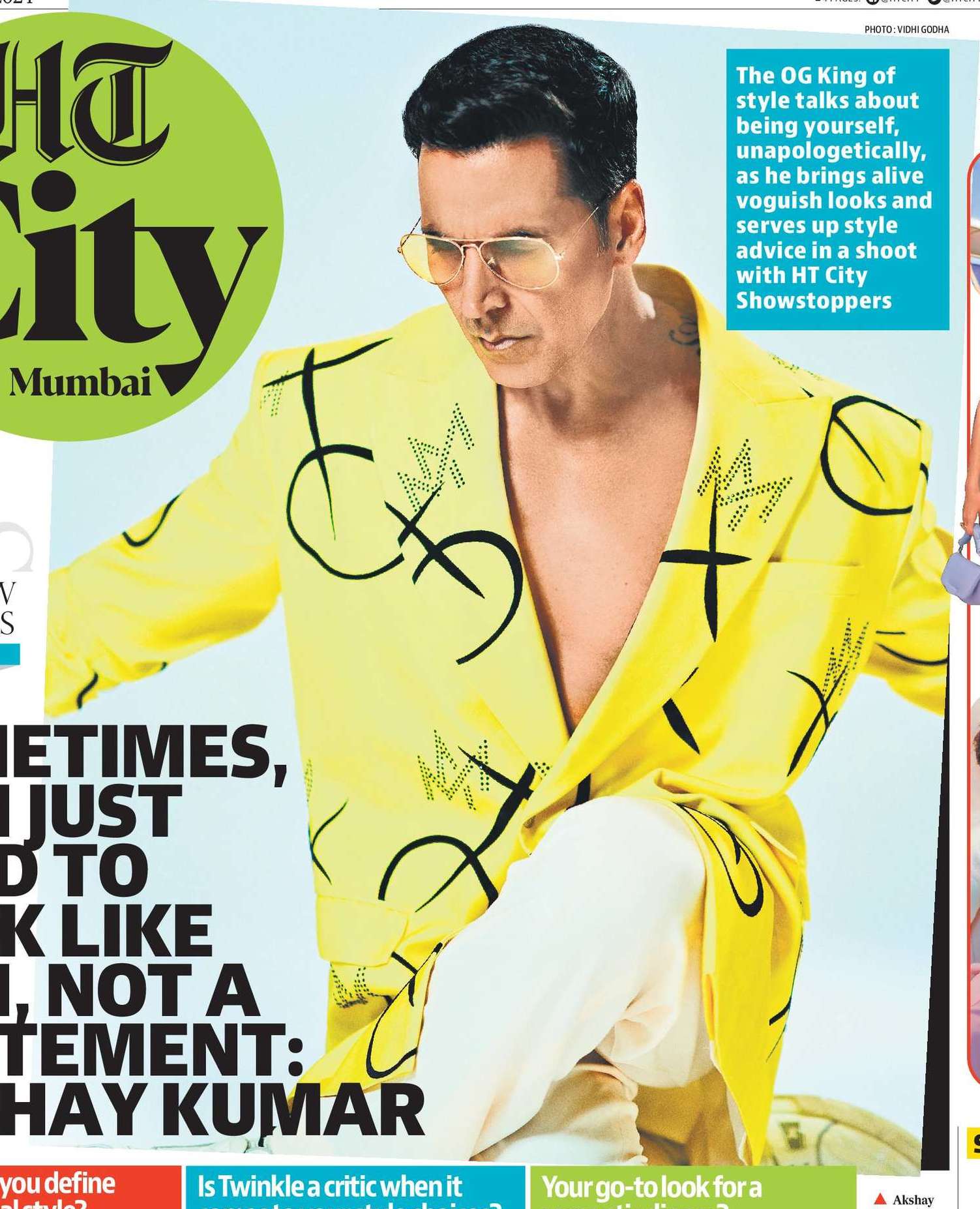
The OG King of style talks about being yourself, unapologetically, as he brings alive some vougish looks, shooting for HT City Showstoppers; We got actor Akshay Kumar talking about rocking pink, trends that should go out the window, style that needs to come back — and what helps him look great inside out
Shara Ashraf Prayag and Akshay Kaushal (HINDUSTAN TIMES; May 26, 2024)
From absolutely rocking unbuttoned dungarees in the ’90s to flaunting pink pants on the most serious occasions, Akshay Kumar has always been a trendsetter. We chatted the actor up on his fashion choices, channeling stress to look great from the inside out, and more. Excerpts:
Very few can rock pink the way you do. Thoughts on men wearing pink?
I love pink — especially baby pink. For some of my favourite looks and moments in life, I was wearing pink. Well, I even interviewed the Prime Minister of India while wearing pink pants! Though if it was up to my wife, she’d burn all my pink tracks and onesies even if she thinks I look cute in them (laughs). I agree, not everyone can pull it off, but men should definitely feel like they can, for there are no limits on colour when it comes to fashion.
Any style advice for your fans?
Style should be personal — it can reflect your mood, culture, personality, uniqueness. You don’t need to follow the crowd; fashion and style exist because people aren’t afraid to push the norm. What you wear outside of school or work, should represent your own character and allow you to express yourself.
Fashion icons from history whose look you admire?
When I started out, I liked how (actor and martial arts icon) Bruce Lee wore high Chinese collared jackets, so I wore a lot of Chinese collar shirts and jackets. They always made me feel traditional to my sport, and smart on stage. But other than that, I’ve never really followed a fashion icon. I was always into sports, films and music, so people like David Beckham (footballer), Freddie Mercury (musician) and Dev Anand (actor) caught my eye because of what they did on and off the field or stage. I wear what interests me.
You have taken good care of your skin and it glows. What is the secret?
Nature, laughing and turning stress into motivation. I use natural soaps and oils on my face and body. For 30 years, my makeup dada has made me home-made almond oil and mustard oil that I use every day. No smoking, alcohol, or chemicals — and laugh every minute of the day that you can. Smile lines and expressions are what make people beautiful.
One trend that you can’t bear to see anymore?
Maybe jeggings on men, or jeans that are so tight they look like leggings. I feel we need to bring back the baggy fit for a while just to change guys’ wardrobes up a bit. When tapered fits came in, every item of men’s clothing became tight, from jeans to chinos to track pants. The fashion brigade forgot about comfort and breathability.
One fashion trend from the ’90s that you think should make a comeback?
For me, it’ll always be loose white T-shirts and shirts, with high-waisted, loose-fitting jeans and high-top trainers. But I reckon dungarees should make a comeback, too. A bit of The FreshPrince of Bel-Air should always be on the horizon.
Is Twinkle a critic when it comes to your style choices?
Of course! I feel it’s all wives’ duty to critique their husbands’ wardrobe choices; it’s what makes them happy. Yes, she most definitely has a say when we’re dressing for an event together. On my own, she doesn’t mind what I look like, but for when we’re together, she’d rather I didn’t wear my trusty track pants and training T-shirts. I can’t blame her, though!
Your go-to look for a romantic dinner?
Whatever my wife decides. Sometimes, she asks me to surprise her, but she doesn’t like ridiculously expensive, over-the-top, trying-too-hard outfits. So, shirt and pants is my go-to, but Tina has always liked me in white shirt and denim jeans or black pants. You can’t go wrong with simple and chic — sometimes, men just need to look like men, and not a statement.
How would you define your personal style?
Nowadays, comfortable and relatable. Some celebrities can definitely dress to impress, but one wouldn’t want to walk the streets in it — or pee or sit or even take a nap in what they’re wearing. I have enjoyed fashion a lot over the decades, but I’m happy being comfortable and ready for a game of cricket or volleyball at any given moment...
Creative director: Shara Ashraf Prayag
Photos: Vidhi Godha
Styling: Sameer Kataria
Makeup: Kin Chang Thui
Location: JW Marriott, Mumbai
Production: Akshay Kaushal, Shweta Sunny
Creative director: Shara Ashraf Prayag
Photos: Vidhi Godha
Styling: Sameer Kataria
Makeup: Kin Chang Thui
Hair: Shivcharan Geloth
Location: JW Marriott, Mumbai
Production: Akshay Kaushal, Shweta Sunny
When they grow up, I want my grandchildren to visit the museum and look at these photos of my films-Waheeda Rehman
2:52 PM

The saree she wore to her first premiere, albums documenting her journey in cinema – Waheeda Rehman has donated all of this and more to Film Heritage Foundation for preservation. While handing over the priceless memorabilia, the veteran star says, “Achanak yeh (photos) dekhte hue laga uss time kaise films banti thi...”
Niharika Lal (BOMBAY TIMES; March 14, 2024)
Last year, when the Film Heritage Foundation (FHF) organised a screening of the restored print of Guide, Waheeda Rehman wondered, “But will people come to watch a film that was made 60 years ago?” To her utter surprise, not only was the screening a houseful one, the audience watched the entire film in rapt attention. Six months later, the veteran actress invited FHF archivists to her home to donate some of her precious memories, tracing her journey in cinema, so that the foundation could preserve them for posterity.
Among the items she handed over to the foundation was the saree she wore to her first film, CID’s (1956) premiere, some trophies, and photo albums documenting all the behind-the-scenes action from her memorable films like Kaagaz Ke Phool (1959), Chaudhvin Ka Chand (1960) and Bees Saal Baad (1962).
‘I hope this inspires others from the film frat to donate materials for preservation’
Speaking to us about Waheeda Rehman’s priceless donations, Shivendra Singh Dungarpur, Founder and Director of the Film Heritage Foundation, said, “It was a very emotional moment for me when she donated her precious personal memorabilia to the Film Heritage Foundation and entrusted us with its care and preservation for posterity. I am so proud that she chose us as her memory keepers. I hope that it will inspire others from the film fraternity to recognise the importance of our film heritage and donate their material to be preserved for posterity.”
60 years have passed, but I’ve kept the albums safe: Waheeda Rehman
When we met the veteran actress at her sea-facing abode in Mumbai, she was in a nostalgic frame of mind. Sifting through a stack of albums, Waheeda Rehman shares, “Maine mehsoos kiya ke jab hum personal photographs rakhte hain, woh kharab ho jati hain phir bada afsos hota hai. Maine socha FHF photos safely rahenge museum mein. Apne se lagaav aur obsession hota hai toh rakh lete hain magar uski dekh-bhaal nahi kar paate hain, aata bhi nahi hai. We don’t know how to preserve pictures. But now these photos will be safe. People who love films may like to visit and look at these albums sometime. When they grow up, I want my grandchildren to visit the museum and look at these photos of my films.”
As for how she acquired these photos, she said, “I used to request directors to give me working stills – the behind-the-scenes shots. I wanted them to share the shots in which the director is directing. Main kehti thi ‘woh sab leke dijiye aap’. There are so many albums. Sixty years have passed, but I have kept them safe. Sometimes, when I get into the mood, I clean the albums and dust them off.”
‘MUJHE PHOTOGRAPHY KA BAHUT SHAUQ HAI’
Waheeda Rehman has always been interested in photography. She shares she likes taking photos of birds, animals, landscapes, and people. About her safari sojourns, the actress says, “Mujhe photography ka bahut shauq hai. Our group is made up of like-minded people who love photography. Most of them are professional photographers. I have been going on these trips for 10 years now. I capture a lot of candid moments. I have visited almost all jungle safari destinations in India – only Gir is left. I have also travelled abroad for safari trips. One of my favourite places is Namibia – it was so beautiful, with sand dunes touching the Mediterranean Sea and waves”
‘I was always particular about what I’d wear’
Waheeda Rehman says, “It’s great to look glamorous, depending upon the character and situation. But just to reveal (your skin) for no reason, I don’t like it. People who do it, if they are comfortable and like it, it’s fine. But personally, I don’t like it. In Amrapali (1966), what Vyjayanthimala was wearing, that’s what people used to wear 2,500 years back. There used to be no top per se – it was all covered with pearls. I was always shy and particular about what I would wear and how I would wear it. There is a scene in Kala Bazar (1960) where Dev (Anand) goes to get flowers for me, and he slips of a cliff and I take out my saree and use it as a rope to save him when no one hears me calling for help. Maine Vijay Anand ko kaha, ‘Yeh toh main nahi karungi. Woh bhi outdoor mein!’ Toh woh bole, ‘Yahan maqsad figure dikhane ka nahi hai, yahan kisi ki jaan bachane ka hai.’ Mera kehne ka matlab hai ki jo marzi costume pehen lijiye – bikini pehen lijiye, swimming costume pehen lijiye magar dikhane ke liye matt peheniye.”
And how did directors during that era react to her views on costumes for her characters? She says, “With time, as I spent more years in the industry and became a top heroine, I managed to convince the directors, and they used to say, ‘Yes, you have a point.’”
‘Meri apni film maine kabhi theatre mein jakar nahi dekhi’
Last year, during the 100 years of Dev Anand celebration, Waheeda Rehman attended the screening of Guide. She said, “Tajjub bhi hota hai ki itni purani filmein log itni dilchaspi ke saath chupchaap dhyaan se dekhte hain; toh lagta hai kahin kuch achha hi kiya hai. What I really liked was that all those people in the cinema hall were silently watching the film. Kabhi beech mein gaane aate thay toh maine bahut saari taaliyaan bhi suni. Mujhe achha laga.”
However, the actress shares she has seen a few of her films in theatres. She adds, “Meri apni film maine kabhi theatre mein jakar nahi dekhi. Abhi bahut barson ke baad main Guide ki screening mein gayi thi aur meri beti Kashvi bhi mere saath thi to maine kaha usko, ‘Beta, aapko nahi dekhne ka dil karta hai toh aap keh do, hum chale jayenge. She was like, ‘What are you talking?’” (Laughs).
‘There are so many female directors, it’s wonderful’
“I really like it when women directors approach me. Two girls once came looking for me for the film Skater Girl (2021). It was a small role. I thought both these girls are struggling, and it’s not a big contribution, so I should do it. Now, there are so many female directors, which is wonderful. I feel sometimes, the sensitivity with which a female director perceives a scene, that’s something only a female director can do. Like in English Vinglish, the way her husband talks to her – it’s not mean, but jaise biwi ko jhadak diya – woh sab auratein zyada behtar samajh paati hain. Aaj kal kaafi achhe directors hain jaise Gauri Shinde. I also like Farah Khan’s films – in commercial cinema, the masala Manmohan Desai type films she makes. Commercial success toh bahut zaroori hai. Then there’s Zoya Akhtar and Kiran Rao.”
Lights, camera, rewind: Why old classics are new stars of cinema
8:44 AM

Reruns began as a way to lure audiences back into theatres after the pandemic, but have now taken a life of their own
Shruti Sonal (THE TIMES OF INDIA; October 15, 2023)
Twenty-two-year-old sociology graduate and theatre artist Darshana Choudhary had grown up listening to old Hindi songs, courtesy of her parents. One of the albums that played the most in her house was ‘Guide’, which had gems such as ‘Tere mere sapne ab ek rang hain’ and ‘Aaj phir jeene ki tamanna hai’. However, despite her fascination with the album, Choudhary had never watched the 1965 film. So, when it was announced that the film would be screened across multiple theatres in India to commemorate Dev Anand’s 100th birth anniversary, along with ‘CID’, ‘Jewel Thief’ and ‘Johnny Mera Naam’, she booked tickets instantly.
“I realised that such movies require the audience to surrender to them. I couldn’t do that on YouTube,” says Choudhary.
Like her, many young and old moviegoers across the country are filling up theatres to catch a rerun of films first released years ago. Like Dev Anand, similar screenings in PVRs and single screens have been held by the Film Heritage Foundation (FHF) to commemorate iconic films of superstar Amitabh Bachchan and Dilip Kumar. To celebrate his 45 years in Bollywood, director Vidhu Vinod Chopra’s best films hit the big screen on Friday.
Shivendra Singh Dungarpur, archivist and founder of FHF, is leading this initiative. “My dream was to make classics accessible to the public, and not just restrict them to film festivals. Most of these films are available on OTT platforms but I always felt that the films made with so much effort are our heritage, and deserve to be screened on the big screen,” says Dungarpur.
Ahead of Big B’s 80th birthday last year, Singh reached out to PVR, producers, and the actor himself, to figure out a way to screen films such as ‘Deewaar’, ‘Don’, and ‘Mili’. Most of the responses were skeptical, he says, including that of Bachchan, who very politely asked why people would pay to see such old films in the theatre again?
However, FHF’s persistence paid off and some exhibitors agreed to screen the films across three days in October. The event was a huge success, with most shows sold out. It was followed by similar screenings to pay tribute to Dilip Kumar in December last year, and then Dev Anand this September. The ticket prices ranged from Rs 100-150, and the posters were redesigned to appeal to the young and old.
The trend began last year, when theatres were struggling to bring back audiences after the pandemic, but has now taken a life of its own. “For Mr Bachchan’s films, we had screenings in 17 cities. For Dilip Kumar, it increased to 27 cities, and for Dev saab, we were able to reach 30 cities and 58 cinemas!” says Singh, with pride.
From big production houses such as Yash Raj Films bringing back their biggest romantic hits for Valentine’s Week this year to small-budget films with a cult following, there’s room for multiple genres and stories today. Among the upcoming releases is Kamal Hassan’s 1987 silent black comedy ‘Pushpak’.
Director and writer Pawan Kumar’s landmark Kannada film ‘Lucia’ was re-released in September, ten years after its initial run at the box office. This small-budget debut venture has been lauded by fans and critics for its alternate style of filmmaking. However, the director never thought that he’d see people buying tickets for it again. “Even at a time when shows of a big film like ‘Jawan’ were running housefull, people agreed to give a few screens to us. I took my daughter to see the film; she was not even born when it was first released,” Kumar says.
It’s the coming together of commerce, nostalgia, and heritage. Above all, it’s an excellent way to reach two generations, says Vebhuti Duggal, film studies professor at Delhi’s Ambedkar University. “For the generation that has seen the films and stars on screen, rewatching them with their family holds value and nostalgia. Then, there’s a generation that has only watched them on television or on YouTube, and has been curious to see them on the big screen,” she says.
Film producers and multiplexes are also waking up to the commercial value of classic films, like music labels did decades ago. “When the trend of remixing old songs or creating new renditions became popular, music labels such as HMV and T-Series remastered old tracks, and re-released them online, via cassettes, and vinyls,” she says.
For PVR Pictures’ chief executive Kamal Gianchandani, the trend is a sign of the value that the moviegoing experience holds even today. “It’s a big validation of theatres because all these films are freely available on so many platforms, and yet people choose to buy tickets. It also makes business sense because on a long-term basis, this is helping us get new customers. And as for those ones who already come to the cinema, this is helping us increase their frequency,” he says.
Beyond the commerce, Durganpur says the films are also helping drive conversations around the importance of preserving film heritage. More and more youngsters are attending workshops to know more about the process, and flocking to see screenings of rare prints of black and white films such as Kamal Amrohi’s Mahal (1949).
Choudhary says that a crucial part of the experience of watching old movies in a theatre is a sense of community. “We are together to celebrate a film that we love.”
I was very close to Dev Anand saab and he would call me Mumzee-Mumtaz
8:07 AM
Onkar Kulkarni (BOMBAY TIMES; October 13, 2023)
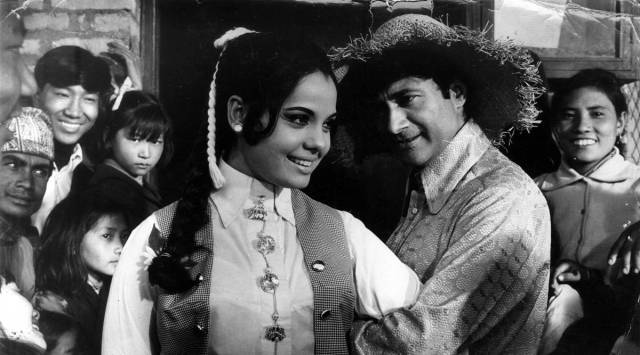
“Dev saab introduced a style, which nobody could and can match up to,” says veteran actress Mumtaz, who worked with him in two renowned films Tere Mere Sapne (1971) and Hare Rama Hare Krishna (1971).
Last month, on the birth centenary of the evergreen actor (September 26), reminiscing fond memories of him, she shared, “Jis tarah se woh bhaagte the, apna sar hilate the… I don’t even think people of this generation can carry off his style and gestures along with their acting. He had his individuality and people accepted that and showered him with love.”
The actress’ first film featured them as husband and wife, but when Dev Anand approached her for his second venture, she had some reservations. She recounts, “He had come home to meet me for Hare Rama Hare Krishna and narrated the story. He wanted me to play his sister in that film. I thought after playing a married couple, if we play brother-sister in our second film, won’t it look odd? So, I refused to play his sister and offered to play his heroine instead. He insisted that the sister had a bigger role, and that I can’t miss it. I was hell bent because Tere Mere Sapne mein logon ne hamari jodi ko, hamare scenes aur songs ko kaafi pasand kiya tha. He got my point and was very grateful to let me choose the part that I wanted to play in the film.”
About her personal equation with the legendary actor, Mumtaz shares, “Dev saab was very fond of me. I was very close to Dev saab and he would call me Mumzee. On set, he used to always call me to select his scarf. He would say, ‘Mumzee, come here.’ I would go to his make-up room where there would be six-seven scarves laid out and he would ask me to pick one for the scene. I would feel a sense of pride seeing Dev saab give importance to my choice.”
Mumtaz has stayed away from the limelight for decades now, but she looks beautiful and fit and, and gives Dev Anand credit for inspiring her. “He would always say, age is just a number and that one should look after themselves… apna khayal rakho aur achche lago, yeh mujhe Dev saab ne sikhaya hai,” she says.
When Dev Anand passed away in London on December 3, 2011, Mumtaz (who lives there) refused to see him one last time. “Afsos ki baat yeh hai ki main jahan rehti hoon – Mayfair, London mein – wahi kuch doori pe unka hotel tha jahan unki death hui thi. I remember people coming home and asking me to see him one last time, but I refused. I loved him too much to see him that way. I wanted him in my heart and mind as the evergreen Dev saab. Unhe waisa dekhna mujhse nahi bardasht hota.”
My grey roles blurred the line between heroine and vamp-Zeenat Aman
8:10 AM

Niharika Lal (BOMBAY TIMES; October 8, 2023)
Zeenat Aman recently spoke at an event titled ‘Zeenat Aman Rewind To Don’ and recalled how she had put a lot of herself into the role of Roma, and how Dev Anand supported her career. She collaborated with the Film Heritage Foundation for the event, which was attended by hundreds of cinegoers. During an in-conversation session with FHF director Shivendra Singh Dungarpur before the screening, she discussed her journey.
‘I WAS VERY EXCITED FOR DON’
Recalling how she got the role in Don, Zeenat said, “We were shooting for a film called Roti Kapada Aur Makaan. Nariman A Irani was the camera person. Chandra Barot was the chief assistant director. Of course, Amit (Amitabh Bachchan) ji and I were in that. And at some point, I didn’t know what all was happening behind the scenes and what their financial situation was, I was just not aware. They approached me, and they said that they were planning a project called Don and there was a role (for me). I just said, ‘Chandra, I want to do something. I don’t want to be – gaana gaaye, chale gaye.’ He said, ‘Don’t worry. We will involve you in all the action, drama, and everything.’ So I was very excited.”
“The costume and that attitude (in Don) – I discussed it with my director and just wore it. There was a lot of me in that. Roma is a legend... Junglee Billi”
‘PRODUCERS STARTED TO CAST ME IN GREY ROLES’
Shivendra asked, “You had a definite impact on the characterisation of the heroine in Hindi cinema, and you formed a new form of sexual politics. How would you look at that?” Zeenat interrupted and said, “A new form of what?”
Shivendra continued, “A new form of feminism, let me put it that way.”
Zeenat laughed and said, “See, it was not my intent. It was not my design. In my first film (Hare Rama Hare Krishna), I had been accepted as a bad girl with a heart of gold. She had a reason to be who she was. So producers started casting me in films like that, with a lot of grey shades. The line between heroine and vamp was blurred a little bit, otherwise, it was very clearcut. Either you were good or you were bad.”
‘ON SOCIAL MEDIA, YOU CAN PUT FORTH YOUR REALITY THE WAY IT IS’
“I find that when you have a platform where you can speak your own truth and people can hear your voice directly from you and not from people’s perception of you and your reality, and you can put forth your reality the way it is. I have been overwhelmed with the love that I have received.”
------------------------------------------------
“Dum Maro Dum is a song that has stood the test of time. I recently learned that there was a survey, and Dum Maro Dum is the number one song in the history of Indian cinema. Dev saheb is my mentor. Because of Hare Rama Hare Krishna I became accepted in Hindi cinema. If it were not for Dev saheb, I would never have had a meteoric rise in the cinema business”

Zeenat Aman, the original junglee billi, says that Don's Roma is a legend
8:35 AM

At a screening of her film Don, Zeenat Aman shared anecdotes from her early career and her views on Don 3
Rishabh Suri (HINDUSTAN TIMES; October 1, 2023)
A night of nostalgia unfolded at the Regal Theatre in Mumbai as actor Zeenat Aman graced the special screening of her classic film Don (1978). The event brought together fans, young and old, who eagerly sought her autographs.
In an engaging conversation with filmmaker Shivendra Singh Dungarpur, the 71-year-old reminisced about her early days in showbiz, starting with her first shot for O P Ralhan’s Hulchul in 1971: “I walked onto the sets, and it was so grey, drab. I looked at OP and said, ‘Sir, where is the glamour?’ He said, ‘Babusha, you are supposed to be the glamour!’”
The evening couldn’t pass without a question about the much-anticipated Don 3. Aman, who played the iconic character Roma in the original, stated, “Roma is a legend. Junglee billi!”
The actor also took a moment to pay tribute to actor-director Dev Anand, whose 100th birth anniversary was celebrated recently. “He was my mentor. If it wasn’t for Dev sahab, I wouldn’t have had such a meteoric rise in the business,” she shared.
Dev Anand told me, 'If you want to do more films, you will have to shoot at night'-Waheeda Rehman
8:24 AM

On the sidelines of a special film festival to mark Dev Anand’s 100th birth anniversary, Waheeda Rehman remembers some of the moments she shared with the legendary actor
Waheeda Rehman (BOMBAY TIMES; September 26, 2023)
I met Dev saab on the sets of C.I.D. I was a fan, but never in my wildest dreams thought that I will be working with him in my first Hindi film. He never made me feel like ki main newcomer hoon aur woh established star hain. He made me feel so comfortable aur naturally woh ek understanding thi, toh humne ek ke baad ek saat (seven) picturein ki. And the best was of course, (Guide) saari duniya janti hai. He was so charming and decent. Kabhi kisi ki burai nahi karte thay.
Once he told me, “Waheeda kabhi fikr mat karo ki picture chalegi ya nahi chalegi kyunki ye jo zindagi ki slate hai, uspe tumhara mera naam toh likh diya gaya hai, toh woh koi mita nahi sakta. Toh aap kabhi socha mat karo. Picture nahi chali (toh) nahi chali. Chhor do. Aage dekho kya karna hai.” He was very charming. Jaise charming dikhte thay waise charming insaan thay. Bahut achhe insaan thay.
‘HE MADE ME SO COMFORTABLE ON THE SETS OF CID’
On the second day of the shoot I called him Dev saab, and he said no. Toh maine kaha achha Mr Anand? And he was like – ‘No, no, no, no.’ Maine puchha, phir kya bulaoon? Toh kehne lage Dev. Maine kaha aap mere se bade hain aur itne bade star hain, main kaise aapko Dev bulaoon. Ye hamare culture mein, hamari tameez mein nahi hai.’ He then explained, ‘Dekho agar koi saab kehta hai toh mujhe lagta hai ki main school teacher hoon. I don’t get that feeling that you are my colleague’. So, in the whole industry, he was the only hero jinse main first name basis pe baat karti thi.
C.I.D. ke liye hum Churchgate station pe raat ko shooting karne gaye thay. Raj Khosla took special permission for it. We both had to get into a running train. I was very nervous. Dusra shot hone tak raat mein mujhe neend aa jaati thi toh main so jaati thi do baje tak. So Dev asked me, ‘You want to do more pictures?’ It was my first film, so I said, ‘Haan karna toh hai’. To which he replied, ‘Then you will have to shoot at night’. Like a fool I asked ‘Par raat mein kyun kar rahe hain. Din mein kyun nahi kar rahe?’ Toh kehne lage, ‘Public khatm ho jayegi tabhi toh hamare liye permission milegi!’
It was really good and fun. It was so comfortable working with him, very casual, very charming.
‘I WAS A PART OF GUIDE ONLY BECAUSE OF DEV’
Meri kismat achhi thi aur Dev ne soch liya tha ki Guide mein Rosie ka role main hi karungi. That made me very happy and confident. I told him, ‘Ismein aap jo marzi scene cut karo, magar mera koi bhi dance cut nahi hoga’. It was the only film where I had got the chance to dance.
I was in Guide only because of Dev. He was the producer and he had given me the contract pehle se. Unfortunately, the directors Chetan Anand and Tad Danielewski (for the US version), they didn’t want me. I told Dev ‘Aapke dono directors mujhe nahi pasand kar rahe. Problem ho jayegi. Aap kisi aur ko le lijiye.’ He said, ‘Are you crazy? Meri marzi hai main kise loon. I am the producer. What makes you think like that?’ I told him to ask his publicist and friend Amarjeet. He confirmed it. Tad also said there’s going to be a very hot love scene. When I told Dev, he said, ‘You know I won’t do a scene like that. Tumko darane ki koshish kar rahe hain.’
Finally, although Tad stayed (for the US version, which didn’t have Waheeda), Vijay Anand aa gaye (in place of Chetan Anand for the Indian version).
— As told to Niharika Lal
WHY WAHEEDA DIDN’T ATTEND THE COLOUR PREMIERE OF HUM DONO
I don’t remember when I met him for the last time. When he did Hum Dono in colour (in 2011), toh uska premiere hone wala tha. Both the leading ladies of the film – Nanda and Sadhana – didn’t come for it. He had called me for the premiere, but when I found out both the leading ladies are not coming I asked ‘Fir main kaise jaungi? It will look like I’m taking away their (credit). It’s bad manners.’ Toh Dev kehne lage ‘You are a part of Navketan (his production house). You are not an outsider’. I said, ‘It is very sweet of you, but public kahegi ki na Sadhna hai, na Nanda hai, ye Waheeda beech mein kya kar rahi hai? Galat lagta hai na.’
‘Tum mera dil dukha rahi ho’ (Dev said), and I replied, ‘I’m sorry. Tell them kuch bhi kar ke aaye. Unke bagair main nahi aa sakti’.

Dev Anand insisted only I will play the role of Rosie in Guide-Waheeda Rehman
8:22 AM

Dev and Waheeda in Prem Pujari, his directorial debut
Waheeda Rehman, who paired with the debonair star in classics such as CID, Kala Bazar, Baat Ek Raat Ki and Guide, remembers the actor whose birth centenary falls on Sept 26
As told to Shruti Sonal (THE TIMES OF INDIA; September 24, 2023)
When I was first signed to star opposite Dev, I had no idea that I would be working with him. Those days we got to know about our costars at the last moment. When I went on the sets of CID, director Raj Khosla introduced me to the whole unit. When I saw Dev, I was surprised and shocked. I went up to him and said “Dev saab, it’s an honour to meet you.”
He replied, “Tum mujhe Dev saab nahi kahogi (You can’t call me Dev saab).” I told him that I was a newcomer, and he was a big star, so how could I call him by his first name? But he insisted. He explained very calmly that if someone uses words like ‘saab’ or ‘sir’, a distance is created and he doesn’t feel comfortable. As a result, he became the only person in the industry whom I called by name. Everyone else was “ji”, “saab”, and “sir”. He was just Dev for me.
Guide was made in Hindi and English. Vijay Anand directed the Hindi version; Tad Danielewski, the English. Both didn’t want to work with me. However, Dev insisted that only Waheeda will do the role. I told him not to force the directors. But he stood by me, and insisted that as the producer, he would take the call. I blushed when he told me that ever since reading the book by R K Narayan, he had only imagined me playing Rosie. I was taken aback when he told me that he knew that if problems arise, I would stand by him. That’s what happened.
There was a lot of chaos as we were shooting simultaneously in Hindi and English. Ego clashes between the two directors hampered the shoot. Dev was very upset and worried. A lot of time was being wasted. One day, he suggested that we should first shoot in Hindi, then in English. He asked me for additional dates and I agreed without a second thought. “See, I knew you’d stand by me,” he replied.
During that era, there were three big stars: Dev, Raj Kapoor, and Dilip Kumar. All were very talented, but there was something different about him. He was not condescending. He insisted on working with new directors and crew, and made everyone comfortable. He was a charming actor and a charming human being. He was also a decent flirt. Dev was always the most well-dressed person on the set. He had so much energy mentally and physically. If his clothes would get drenched in sweat or get soiled, he would run to his room, change, and then come back to take a shot. I used to joke, and call him an ‘Eveready Battery’, always charged. Dev also had an ear for good music and was very particular about the songs in his films. If he didn’t like a song, he would even tell (Sachin Dev) Burman da, “Dada, maza nahi aaya! Kuch aur banaiye.”
As I become older, it sometimes becomes difficult to recall the details of the time I spent with him. What I remember the most, however, is how broad-minded and progressive Dev was in his thinking. Also, he didn’t stick to the formulaic films or typical love stories that were being made in that time. He wanted every film of his to be different from the other. He had the guts to make Guide, which had a very bold subject. More than a love story, it was about three people who want to make something of their life. The characters were grey, and made unconventional choices. It was different, yet at the same time, very true to life and the people we see around us even today.
I am sure wherever he is, he is happy that his work is being honoured and remembered even today.
-----------------------------------------------------------
Pocket picked at Delhi premiere, but Jewel Thief kept quiet
A pickpocket pinched Dev Anand’s purse, robbing him of Rs 15,000 during the premiere of Jewel Thief (1967) at a New Delhi theatre. Adjusted for inflation, that roughly amounts to Rs 7.5 lakh today.
“I flew all the way from Darjeeling to Delhi to attend the premiere at the Odeon Cinema. The crowds were jumping up and down with delirious joy as I alighted from the car outside the theatres,” the actor writes in his autobiography, Romancing with Life.
“Suddenly a hand brushed my hip pocket. I checked for my purse, and found it missing. But I did not react, for the euphoria of the moment was too immense to cry over a meagre sum of Rs 15,000, lost in the enormous wave of goodwill and popularity,” he writes.
“Stardom cannot be earned or bought at a price. I let the pickpocket dance away in joy with my cash-filled purse,” Anand concludes.
Interestingly, Dev Anand had played a pickpocket in the film, Pocket Maar (1956).
Nostalgia drives re-releases of classics and popular movies
8:17 AM

Niharika Lal (BOMBAY TIMES; September 23, 2023)
When veteran actress Waheeda Rehman heard that four classics of Dev Anand, including Guide which also featured her, were being re-released, she wondered if moviegoers would be interested in watching 60–70-year-old films in cinemas. She was surprised to know that the shows of these films C.I.D. (1956), Guide (1965), Jewel Thief (1967) and Johny Mera Naam (1970), which will happen over this weekend as part of Dev Anand’s birth centenary celebrations, had been sold out.
"Restored and remastered films provide a higher-quality viewing experience. Post the pandemic younger audiences are going out for movies while the older audience has stayed away. Re-release of classic titles has enabled us to bring back this audience to cinemas."
- Gautam Dutta, Co-CEO, PVR INOX Limited
---------------------------------------------------------
“These special screenings offer a chance to relive iconic moments and share the magic of timeless films with a new generation of cinema enthusiasts. The response to re-releases has been overwhelming."
- Devang Sampat, CEO Cinepolis India
---------------------------------------------------------
"When I recently met Waheeda ji to invite her to the Dev Anand film festival, she was shocked to discover that there is a huge craze among people for these classics. She couldn't believe that the shows of these re-releases were mostly sold-out."
- Shivendra Singh Dungarpur, film archivist and director of Film Heritage Foundation
SOME MAJOR RE-RELEASES IN THE RECENT PAST
- Khalnayak, on completion of 30 years of the film
- Koi Mil Gaya, to celebrate its 20th anniversary
- RRR, before the Academy Awards ceremony
- Avatar, before the release of Avatar 2 Gadar, before the release of Gadar 2
- Dilwale Dulhania Le Jayenge, to celebrate Shah Rukh Khan’s birthday
‘Re-releases offer youngsters a chance to discover classics’
A part from the Dev Anand films, Kamal Haasan’s 1987 film Pushpak is set to be re-released in theatres soon. Exhibitors say that in the last year, several films have been re-released to celebrate actors’ birth anniversaries, film anniversaries, and even to hype some upcoming sequels. Industry insiders say that the reason why there’s such a huge demand for these films is because “re-releases give young moviegoers a chance to discover classics on the big screen and evoke nostalgia in the older generation”.
SPECIAL FESTS TO SCREEN OLDER FILMS VALENTINE’S WEEK FILM FESTIVAL
Movies like Titanic (English), Dilwale Dulhania Le Jayenge (Hindi), Ticket to Paradise (English), Ved (Marathi), Geetha Govindam (Telugu), Vinnaithaandi Varuvaayaa (Tamil), Hridayam (Malayalam), Googly (Kannada), Love Ni Bhavai (Gujarati) were re-released as part of the festival in multiple cities
DILIP KUMAR HERO OF HEROES
To mark Dilip Kumar’s birth centenary, Aan (1952), Devdas (1955), Ram Aur Shyam (1967) and Shakti (1982) were released in 31 cinemas in 21 cities
CHRISTOPHER NOLAN FESTIVAL
Interstellar, Inception, The Dark Knight and Dunkirk were re-released ahead of Oppenheimer’s release date
SUPERSTAR RAJINIKANTH BIRTHDAY SPECIAL
It was held in Chennai and Coimbatore last year with shows of Baba (2002), Sivaji: The Boss (2007), 2.0 (2018) and Darbar (2020)
BACHCHAN BACK TO THE BEGINNING
To celebrate Amitabh Bachchan’s 80th birthday, a film festival was organized in 17 cities where Kaala Patthar, Kaalia, Kabhi Kabhie, Namak Halaal, Abhimaan, Don and Deewaar were screened
HT City Exclusive: Dev Anand’s home to be turned into a 22-floor tower
8:38 AM
Syeda Eba Fatima (HINDUSTAN TIMES; September 19, 2023)
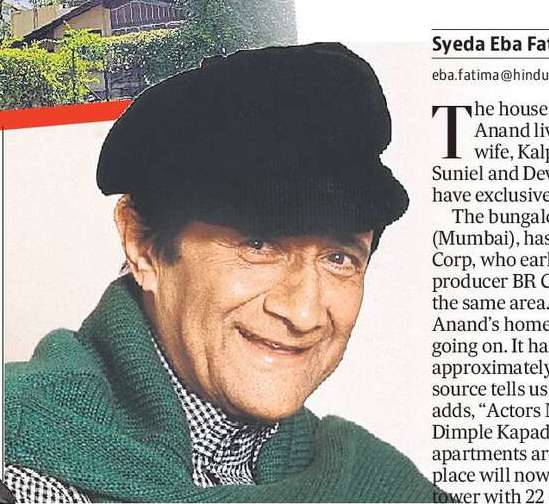
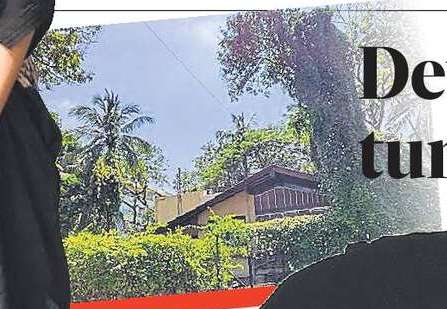
The house in which late actor Dev Anand lived for 40 years with his wife, Kalpana Kartik, children Suneil and Devina, has been sold, we have exclusively learnt.
The bungalow, located in Juhu (Mumbai), has been sold to K Raheja Corp, who earlier purchased director-producer B R Chopra’s family home in the same area. “The deal for Dev Anand’s home is done and paperwork is going on. It has been sold for approximately Rs. 350-400 crore,” a source tells us.
To this, another source adds, “Actors Madhuri Dixit Nene and Dimple Kapadia once lived in the apartments around the bungalow. The place will now be replaced by a tall tower with 22 floors.”
The sources further tell us that the house is being sold as there is no one to look after it: “His son Suneil stays in the US and daughter Devina lives in Ooty with her mother. There is no one in Mumbai to take care of the property and hence, they have taken the decision to sell off the bungalow. In fact, they even sold off their property in Panvel for the same reason.”
The source adds that the veteran artiste’s studio was sold 10 years ago and the proceeds were used to buy three apartments, one each for his wife, son and daughter. “For the Juhu property too, everyone will get a share,” the insider shares.
In an interview he gave in the 2000s, Anand — who would’ve turned 100 on September 26 this year — had said that he decided to build a house in Juhu in 1950 as he fell in love with its “total wilderness”.
Dev Anand classics to return to the big screen
9:33 AM
)
Niharika Lal (BOMBAY TIMES; September 11, 2023)
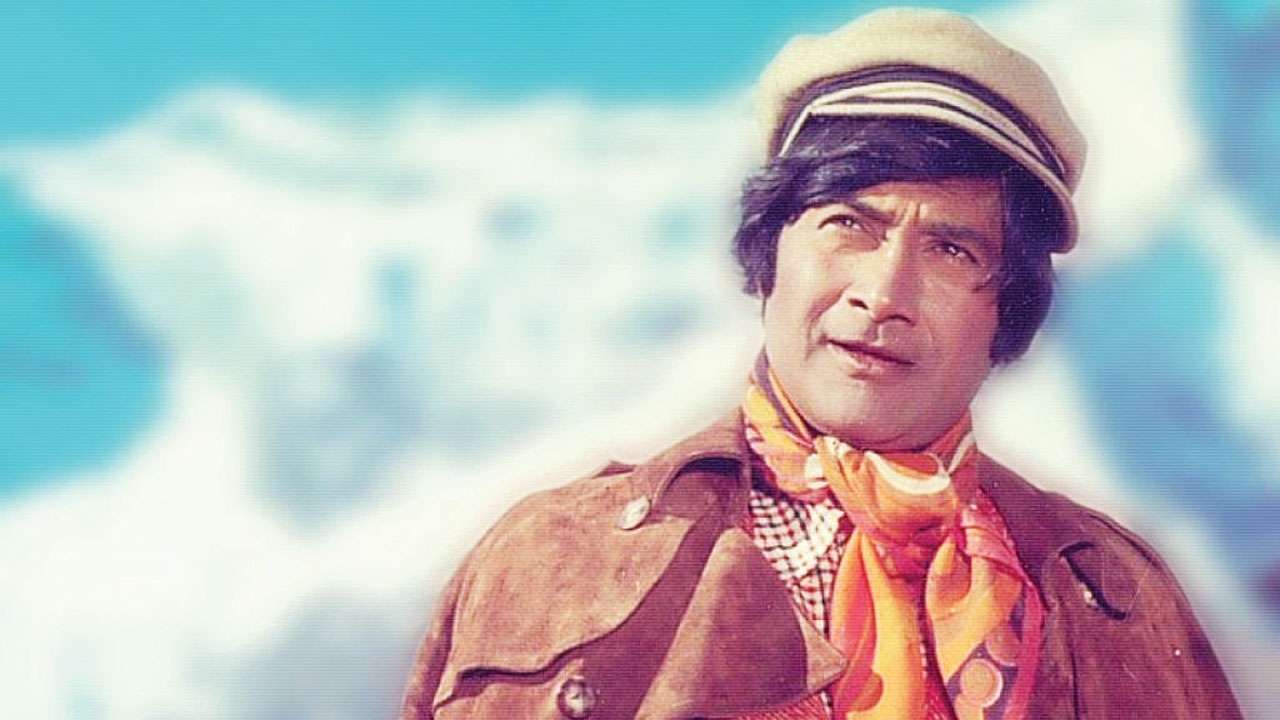
To celebrate Dev Anand’s birth centenary, the Film Heritage Foundation (FHF) has curated a film festival for his fans, titled ‘Dev Anand@100 – Forever Young’, that will bring the superstar’s iconic films back to the big screen. The two-day film festival will be held on Sept 23 and 24 in 30 cities. These films have been selected by the Film Heritage Foundation (FHF) in collaboration with the NFDC (National Film Development Corporation of India) and NFAI (National Film Archive of India) which restored these films. I&B and FHF officials say that the idea behind this festival is to reintroduce Dev Anand’s films to a new generation and rekindle nostalgia for those who love his films.
WHAT’S HAPPENING
After ‘Bachchan Back to the Beginning’ and ‘Dilip Kumar – Hero of Heroes’ last year, exhibitors along with Film Heritage Foundation and National Film Development Corporation, are organizing a film fest to mark Dev Anand’s birth centenary on Sept 23 & 24.
‘We are grateful that Dev saab’s films are preserved & restored’
The films have been chosen to introduce the new generation to unforgettable Dev Anand characters – Inspector Shekhar in the thriller C.I.D., Raju, the tour guide, in Guide, Vinay/Amar in the spy thriller Jewel Thief and Johny Mera Naam’s Johny.
‘I WOULD JUMP THE BOUNDARY WALLS OF COLLEGE TO WATCH DEV SAAB’S FILMS’
‘As Dev saab turns 100 this year, I still remember how his attitude and singular style in his performances would get us out of our hostel beds in the middle of the night, jump the boundary walls of the college to the nearest film theatre repeatedly, just to witness the magic of his charm and energy. And on our way back we would sing along with his songs, his deliveries of dialogue and create this wonderful world he had structured for us to be remembered forever.’
— Amitabh Bachchan
The NFDC-NFAI is leaving no effort spared to ensure that these films are presented in the best possible way
It is important for the public to witness Dev Anand on the big screen once again, just as they did during his heyday decades ago. The NFDC-NFAI is leaving no effort spared to ensure that these films are presented in the best possible way, with hundreds of restoration artists technicians, graders, DOPs, sound engineers and archivists, spread across multiple cities, are hard at work to once again bring these films to life. The restoration of the films is being undertaken as part of the National Film Heritage Mission and funded by the Ministry of Information and Broadcasting.
-Prithul Kumar, MD NFDC and Joint Secretary (Films)
‘THERE CAN NEVER BE ANOTHER DEV ANAND’
‘I’m delighted that the festival will open with Johny Mera Naam, the first film I worked on with him. He was already a megastar when I was cast in this film, but he never made me feel like a newcomer. Afterward, we worked on several films that became big hits. His unique and inimitable style was a delight to watch, not only for the audience but also for me. I have very fond memories of Dev saheb. There can never be another Dev Anand’
— Hema Malini
‘LEARNED SO MUCH FROM DEV SAAB’
‘I grew up watching Dev Anand’s films. I have admired Dev saab since my childhood; he was my hero and mentor. He gave me my first break with Swami Dada (1982), and I was fortunate to work with him on several films. His energy surpassed even the youngest person on the set. I learned so much from him, and I am grateful that his films are preserved and restored so that young actors today can continue to learn and appreciate the work of a legend’
— Jackie Shroff
‘DAD STILL REMAINS THE EVERGREEN ROMANTIC SUPERSTAR’
As we celebrate his centennial, I’d like to say that dad’s movies were decades ahead of their time. I’m confident that the fest will be a huge success, and newer audiences will rediscover the youthful magic of my father – who will forever stay young on screen
— Suneil Anand, Dev Anand’s son
Subscribe to:
Posts (Atom)