Showing posts with label Dangal. Show all posts
Showing posts with label Dangal. Show all posts
Ramayana set to bring Bollywood back to China after years, promotions to begin in September
9:21 AM

Mohar Basu (MID-DAY; July 13, 2026)
Nearly a decade after Aamir Khan’s ‘Dangal’ showed that Indian cinema could take China by storm, another ambitious Hindi film is eyeing the world’s second largest theatrical market. Sources have informed mid-day that director Nitesh Tiwari and producer Namit Malhotra are exploring a promotional campaign for ‘Ramayana: Part 1’ in China ahead of the magnum opus’s release. This signals renewed efforts to tap into a market that has largely remained shut to Bollywood since 2020.
According to sources, discussions are underway with Chinese exhibitors and distributors for a four-day promotional tour led by Ranbir Kapoor, Yash, and Sai Pallavi.
A source revealed, “The tentative itinerary includes a press event and screening at the Pingyao International Film Festival on September 24, followed by a multi-city promotional run during China’s Golden Week beginning October 1.”
The plan is awaiting approvals and has yet to be finalized.
China’s potential addition to the promotion and release plans further indicates how Malhotra and Tiwari intend to take ‘Ramayana’ — touted as the biggest film in Indian cinema — on a global stage.
mid-day reached out to the film’s production team, which didn’t respond till press time.
Top 10 overseas grossers - Dhurandhar The Revenge sits between Pathaan, Jawan
9:13 AM

Box Office India Trade Network
DHURANDHAR THE REVENGE has emerged the second highest grossing Hindi film ever after PATHAAN as it collects $47 million plus and this includes Nepal as the general figures from the overseas distributors will not include this. The collections without Nepal are $46.375 million till date. The film has finished a little short of PATHAAN but with a Gulf release, it would have been way ahead. In terms of INR, it is the highest ever due to the ever weakening Rupee. It has a gross of 438 crore compared to the 396 crore of PATHAAN.
It would have become the first film to cross $50 million and maybe even $60 million. Its hard to judge how much Gulf would have done. JAWAN is best with $17.70 million and if we take that figure, it would be $65 million for DHURANDHAR THE REVENGE but its an unknown how much it would have done in Gulf. You can probably say $10 million was certain and $20 million was potential as the Muslim crowd may have been compensated by the South Indian crowd like its happened in UK but this is an unknown and will remain that way.
JAWAN would be in second place if we count the collections from the regional versions but that's going away from the Hindi film and in that way there are many films which got a Far East release which are ahead with Dangal on top at $233.80 million. The Far East countries may well be showing a Hindi subtitled or dubbed version but generally its not the same as the original Hindi film. In this way DHURANDHAR THE REVENGE is the eighth highest grossing film overseas.
The business of DHURANDHAR THE REVENGE easily puts that $50 million target up for grabs for the original film and there are a couple of big films later on this year which can target that figure.
The top ten grossers Overseas for original Hindi films are as follows.
1. Pathaan -$48,500,000
2. Dhurandhar The Revenge - $47,100,000
3. Jawan - $46,800,000
4. Dhrandhar - $32,00,0000
5. Dangal -$30,700,000
6. Padmaavat - $29,140,000
7. Bajrangi Bhaijaan - $28,640,000
8. Dhoom 3 - $28,330,000
9. Animal - $27,210,000
10. Dilwale - $26,580,000
There was a phase where I did some really questionable work-Darsheel Safary
2:47 PM

Onkar Kulkarni (BOMBAY TIMES; May 19, 2026)
Nearly two decades after Taare Zameen Par made him one of the most memorable child actors in Indian cinema, Darsheel Safary is still closely associated with the film that touched millions. But the actor says he is not trying to run away from that image — he is simply waiting for the next role that can leave a similar impact.
Speaking about growing up in the shadow of an iconic debut, the 29-year-old says the audience’s perception will only change with the kind of work he chooses.
“I don’t know what people think. It’s about the work that I bring to the table — that is what the reaction depends on, frankly,” he says. “Taare Zameen Par is that kind of film from which it will be difficult to break away naturally. Even today, people talk about it and there are discussions around it.”
Rather than distancing himself from the film, Darsheel says he sees it as the foundation of his journey. “Now that I’ve grown up, I’m looking at another such project for myself — something that makes me memorable for the next 20 years. It’s not about people not being able to break out of that image, it’s about what you are giving and what you’re getting back in return.”
The actor, who has been busy with theatre, says every former child artiste eventually waits for that one defining role that changes how audiences see them.
Referring to actors like Fatima Sana Shaikh and Sara Arjun, he says, “They gave their Dangals, they gave their Dhurandhars afterwards. Back then, they were familiar faces — you knew they existed. But when they came out with that one project, everything changed.”
Darsheel, who will soon be seen in an international project with Priya Mani Raj, also reveals that the past few years have been transformative. “It’s been an introspective journey. I’ve tried to understand why I want to be an actor. There was a phase where I did some really questionable work. But then I started working with filmmakers like Suparn Varma, Anand Mahadevan, Abhinay Deo and Subhash Kapoor. I was also busy with theatre. The closer I got to myself, the closer I got to acting.”
Dhurandhar The Revenge marching towards beating Dangal to become India’s highest grosser
9:20 AM

With Dhurandhar 2 raking in Rs 440 cr over the opening weekend, trade says the film may beat Dangal to become Indian cinema’s highest grosser
Priyanka Sharma (MID-DAY; March 23, 2026)
Expectedly, ‘Dhurandhar The Revenge’ has taken the box office by storm. By the evening of March 22, the Ranveer Singh-starrer collected about Rs 440 crore, including its paid previews, in the domestic market. The film’s run is far from done. According to trade analyst Taran Adarsh, director Aditya Dhar’s action drama could cross the Rs. 1000 crore mark in domestic collections.
“Like the first part, ‘Dhurandhar 2’ has come like a tsunami. I am confident it will cross Rs 1000 crore in the domestic market. Many theatres are facing capacity issues where there are more people to watch the film [than shows]. The demand will spill over to Monday,” Adarsh told mid-day.
Given its unstoppable run, trade is buzzing with speculation that the movie could beat the worldwide collection of Aamir Khan’s ‘Dangal’ (2016) to become the biggest grosser of Indian cinema. “It cannot be ruled out right now,” said Adarsh.
However, sections of the audience have criticized the movie’s propagandist nature. Some also felt that it ran too long at three-hour-55-minutes.
About the polarizing reactions, exhibitor and trade analyst Akshaye Rathi said, “Whether it’s ‘Dhurandhar’, ‘Animal’ [2023], or ‘The Kashmir Files’ [2022], they wouldn’t have done that kind of business had those polarizing opinions not come into play. The more [the opinions are] polarized, the more it creates a debate and generates curiosity among people to see what the hype is all about.”
Top 10 films in Mysore circuit: Dhurandhar beats Jawan by a huge margin
10:18 AM

Box Office India Trade Network
DHURANDHAR has smashed records in Mysore by crazy margins as the film stands at around 69 crore nett which is 20 crore nett more than JAWAN, the previous record holder. JAWAN itself set a record by a considerable margin. Not only that, the film will be beating all the the local Kannada films released in 2025 apart from two of them and here its Mysore for us and Karnataka for them which includes all of the state while for us, some of the state goes into Mumbai circuit.
The circuit has shown immense growth post pandemic and this is reflected by the fact that a film like FIGHTER gets 20 crore nett in the circuit and stands just outside the top ten which is more than films like SANJU and SULTAN from before the pandemic. Actors like Aamir Khan, Shah Rukh Khan and Hrithik Roshan are stronger in this circuit and this could be another reason why FIGHTER did well here also but no doubt the circuit has grown.
If we count all films including the South ones, then this Mysore collection will be just outside the top ten but if we add the numbers of North Karnataka, which is in Mumbai circuit, then the film will be among the top ten grossing films in the state. Now with the second part this figure could go even higher and if the does three times DANGAL, its pretty much unthinkable as that film was considered insane in the circuit pre pandemic and now here is a film which may do three times the business.
The top ten grossers in Mysore are as follows.
1. Dhurandhar - 69,00,00,000 apprx
2. Jawan - 48,24,00,000
3. Animal - 36,69,00,000
4. Pathaan - 35,77,00,000
5. Stree 2 - 33,08,00,000
6. Chhaava - 31,00,00,000
7. Dangal - 27,81,00,000
8. Uri - 25,00,00,000
9. Padmaavat - 23,87,00,000
10. PK - 23,85,50,000
Our house help watches Korean TV shows dubbed in Marathi-Siddharth Roy Kapur
9:53 AM

As filmmakers across Asia, Africa and the Arab world rethink their place in global cinema, one question looms large: how do you build the kind of cultural wave South Korea sent sweeping across the world?
Anand Holla (MUMBAI MIRROR; November 30, 2025)
As filmmakers across Asia, Africa and the Arab world rethink their place in global cinema, one question looms large: how do you build the kind of cultural wave South Korea sent sweeping across the world?
It’s the longest-running, cross-cultural magnum opus in the world of cinema, and its story has only just begun. For nearly three decades, films from the Global South have continued to reshape the future of cinema. Today, more than ever before, stories, talent and financing from the Global South are overhauling the global film ecosystem. And the most potent force driving this shift is not technology, budgets, or marketing — it’s authentic, culturally rooted storytelling.
Earlier this week, in Qatar, during the Doha Film Festival, this idea dominated a fascinating industry panel discussion featuring creators and producers from across the Global South. Invited to speak at the event, seasoned producer Siddharth Roy Kapur told Mumbai Mirror, “What Hollywood has managed to achieve over the last 100 years, and South Korea over the last 25, is to reach out to the world with their soft power. Both the government policy and the creative forces worked together to push out Hallyu,” he said.
Hallyu: a real superhit formula
Also known as the Korean Wave, Hallyu refers to the global spread of South Korea’s popular culture — films, K-pop, K-dramas, beauty and food. Korean cultural exports has evolved into a multi-billion-dollar global industry, supported by a mix of state-led strategy and a creative sector willing to take daring, stylistic leaps.
Yet the panelists agreed that numbers alone don’t explain Hallyu’s force. It’s the connection. “Our house help watches Korean TV shows dubbed in Marathi. Now that could be time spent watching a Marathi show,” Kapur said. “So, clearly something somewhere has resonated with the audience on a very deep level. We need to understand what that is and be able to do that with our own entertainment as well.”
The takeaway wasn’t that countries should copy Korea’s model, but that audiences worldwide are ready, even hungry, for stories that feel specific rather than generic. Kapur’s own film Dangal, for instance, became a phenomenon in China, earning over $200 million because Chinese families saw their own struggles in that story about Indian wrestlers.
The film RRR spawned fan clubs from Tokyo to Los Angeles without changing a frame for foreign viewers. K-dramas like Extraordinary Attorney Woo topped charts across Asia, Latin America and the Middle East despite being rooted in Korean legal and social structures. Nigerian film The Black Book entered Netflix’s global Top 5 in 42 countries. Japanese anime films like Suzume and Demon Slayer set records in India and Brazil even though their logic, pacing and spirituality come straight from Shinto folklore. The pattern is undeniable: people want texture. Meaning. A point of view. Besides, when stories travel, they rewrite boundaries.
“Chinese girls were taking their parents to watch Dangal,” Kapur said. “Sometimes we are blind to the commonalities between cultures which some stories are able to bring out.”
The real bottleneck, thus, isn’t talent or audience demand. It’s money. Around the world, the stories with the most cultural potential are often the least funded, which keeps entire regions from playing on the global stage. South Korea’s government, for instance, has long supported storytelling through film. In fact, just this year, the Korean Film Council (KOFIC) launched an initiative to revive mid-budget Korean films. The scheme allocates around KRW 10 billion (Rs 61 Cr) to back films with budgets between KRW 2–8 billion ((Rs12 Cr to Rs 49 Cr). Selected projects can receive grants of up to 30% of their production costs. All of this is aimed at restoring the industry’s “backbone.”
Financing: the largest hurdle
Saleem Albeik, a Palestinian film critic, novelist and cultural editor based in Paris, spoke plainly about structural obstacles. “Arab cinema mostly relies on European funding, often from France and Germany. This means limitations on the scope of the narrative. In the long run, say, over a decade, this controlled framework plays a big part in shaping what constitutes Arab cinema,” he said.
Kapur, on the other hand, spoke of the challenges faced by films that have an “Currently, the ambition in the cinema from South India is very high. Their commercial yet inventive storytelling approach is commendable. They are also taking big, bold risks because of individual financiers who are willing to take a punt on those ideas unlike in the Hindi film industry, where the financing has become very structured,” he said.
Albeik believes the way forward lies in South–South partnerships. “It’s easier to retain an authentic voice and nuance for an Egyptian film when the funding or a co-production is sourced from the Global South, like from India, Brazil, or South Africa, which share similarities on issues like socio-political tensions or poverty. There is a mutual understanding untouched by any colonial past between them, and therefore no power dynamic,” he said.
Qatar’s launch of its Film Committee signals a wider regional push. In recent years, countries from Saudi Arabia to Kenya and Indonesia have expanded film commissions, rebates and co-production programmes to build local industries with global reach.
Africa’s rising wave
If any region embodies this transition, it is Africa. Nigerian media mogul Mo Abudu, who launched the $50 million Afro Film Fund last year, spoke passionately about the stakes. “The global gatekeepers and studios don’t seem to fully realize the potential of great storytelling that they can possibly tap into from our continent,” she said. “They should think of Africa not as a charity case, but as a business case, because Africa has the youngest population globally (70 percent are under the age of 30), which means an audience and a workforce that can spend.”
Africa’s demographic weight is impossible to ignore. With a population nearing 1.5 billion in 2025 and booming streaming markets in Nigeria, Kenya, Ghana and South Africa, production and investment have surged. Abudu believes the world has barely begun to tap the continent’s narrative wealth. “We have 3,000 ethnic groups. We have 250 tribes in Nigeria alone. Be it a movie about a wedding, a funeral, a heist, or any universal theme, the specificity of our society and culture that shines through is what makes the audience experience our stories like they have never before,” she said.
India’s inflection point
In India, the diversity of filmmaking voices could inspire far richer storytelling — provided it isn’t flattened into a Bollywood-versus-regional binary. “We must take a few chances on films that haven’t been made before and help the films that have the ability to travel to do so,” Kapur said. RRR, after all, proved how quickly a local film can become a global phenomenon.
“When RRR dropped on Netflix around the world, the film had exhausted its South Asian diaspora audience overseas but generated a renewed interest from a crossover audience that started to trip out on this incredible, larger-than-life, Indian film,” said Kapur. “The next Squid Game or Parasite is going to come from somewhere. It should come from India.”
I am loyal to cinema first, and then to theatres-Aamir Khan
9:20 AM

Madhureeta Mukherjee (BOMBAY TIMES; August 11, 2025)
Breaking the mould is second nature to him. Now, in a bold move that challenges the norms of a largely risk-averse industry, Aamir Khan has chosen the pay-per-view model on his YouTube channel for his latest film, Sitaare Zameen Par (SZP), which had released in theatres in June. This aligns with his decades-long pattern of being a disruptor – as an actor and filmmaker. In this freewheeling conversation with us, the superstar talks about access, affordability and the future of cinema beyond theatres. Aamir also confesses that he’s not fearless, unlike what most would assume, and tells us why, at 60, comfort is not an option — “ab comfort hai hi nahi, toh kuch karna padega.” Read on...
How do you think the pay-per-view model gives more power and choice to both the audience and the producer?
You are aware that we are able to reach only 2-3% of our population in the theatrical business, and this is for the biggest hit. For a film like Sitaare Zameen Par, around one crore people would have watched it by the end of its theatrical run. In the absence of enough theatres being built, this model is perhaps the only way to reach the vast majority of India, especially with rising internet penetration. In one stroke, this solves that problem for everyone. It’s great for filmmakers because it strengthens them and empowers them to make better films.
To be able to watch a movie, access and affordability are key. Was this model born out of that philosophy – to make both these points a reality?
Today, cinemas in India, and here I am talking about the multiplexes, are trying to give a unique experience, but that costs money. So, over the years, theatres have evolved from the time when I started out with Qayamat Se Qayamat Tak (QSQT). Back then, the average ticket price was Rs 10. Today, the ticket prices are not affordable for a large section of society. And multiplexes, because of the high cost and heavy investment (in terms of rent, etc), have also started catering to an audience who can afford to come there. So, who will cater to the masses? This model caters straight to the masses.
Continue…
In every press conference prior to my film’s release in the past 10 years, I would be asked, ‘Aap filmbana rahe ho, jo masses hai woh kaise dekhenge?’ The answer to this and the pricing of tickets is not in my hands. I can’t tell theatre owners who have invested a lot of money to go into a loss. If this model works, it will dramatically change the way we distribute films. From an economical point of view, I had strong OTT offers for SZP, if I were to accept that, it would have been a safe bet. I chose not to. I would rather earn Rs 100 from each Indian who watches my movie. Also, this is a great opportunity for younger filmmakers who are trying to break in and don’t get a chance to showcase their work. It will give creative voices more freedom. It will give them the freedom to price their content the way they want to.
You are a theatre loyalist and have spoken about ‘protecting our theatres’. What are some ways exhibitors and filmmakers can work together to reimagine cinema-going as a more inclusive, feasible experience?
Let me clarify, my loyalty is to cinema. Cinemas came first, then theatres came to serve cinema. Earlier, there was no theatre. Cinema dikhaneke liye pardah laga dete the, and it would be shown through a projector. Phir tent aaya, wahan dikhate the. Then permanent theatres came about. Cinema is what I am protecting, and emotionally, I am very tied to theatres. I believe that the theatrical experience cannot be replaced by anything else. When you are sitting in that dark space with 300 people around you, it’s a group experience where you laugh and cheer together. Imagine watching Lagaan, where the whole theatre is cheering...abhi woh experience aapko ghar pe baithke apne family ke saath bhi nahin milega. I am loyal to cinema first, and then to theatres, clearly in that order. To answer your question, I think first of all, we need more theatres. In districts where there is no single screen, not even a single theatre, we should at least have one theatre. India needs many more theatres, but they should be economical theatres.
Do you believe that, at some point, the theatrical business will start thriving again?
Yes, of course. I really hope so.
Do you think that, as makers, focusing on tier-2 and tier-3 cities is key, as therein lies the scope for theatrical recovery in India?
Absolutely! I believe that we need theatres in tier-2 and tier-3 cities. The tier-2 cities have theatres, but as we go deeper, we don’t. I also feel that it’s not that people want to watch only action films in theatres – that was the feeling for some time. If that were the case, SZP wouldn’t have done well, and Saiyaara wouldn’t have been such a success. These are phases that keep coming and going. When I did Ghajini, everyone told me that you are doing an action film at a time when this genre was not working. It worked. I think audiences are interested in watching films irrespective of the genre.
So, the genre of your film and how it fits with current trends and mood doesn’t concern you?
No, it doesn’t. Stories that inspire me and affect me the most are what I gravitate towards.
You’ve consistently been a disruptor — as an actor and a filmmaker. In an industry that often plays it safe, where does this creative fearlessness come from?
No, no, there is a lot of fear. There is fear every time I am doing a film, and unfortunately, my choices are also unusual, but I can’t help but make them. When I was doing Dangal, I felt that dus saal baad karte hain, abhi mein itna mota, buddha dikh raha hoon. Just before that, I had done PK and Dhoom 3. People thought I am 30-35, they didn’t know I am 55. I thought yeh film karoonga toh meri asliyat saamne aa jayegi (laughs). It was in my blood; I had to do it. I am not a fearless person. Before the release, you can’t assume the film will work, at least my films. There were exceptions like Ghajini and Dhoom 3, where you could say yeh kuch toh karegi. But with the unusual ones, it’s difficult to tell. I go with my instinct and my heart. So, I am not thinking about what the audience wants to see. I am thinking mujhe kya banana hai.
There’s still this restless energy about you. Does that fuel your creativity?
I suppose so. If the status quo is comfortable, I have no problem with it. But when it’s not, then I want to do something to correct it. I am comfortable about being comfortable, but ab comfort hai hi nahi, toh kuch karna padega, haath pair marna padega, because in today’s times it is difficult for creative people to make what they want to make. Unless you have a subscription model pre-sale, you can’t greenlight a project. That’s not a comfortable situation to be in for creative people.
Knowing the kind of connection and influence you have with audiences across generations, do you feel a certain sense of responsibility when you take on a film?
I do feel a sense of responsibility, so I don’t do films that propagate any thoughts, views or ethos which are not mine. At the same time, I also believe in having my freedom as an artiste, as that’s how I always operated from the beginning. I have selected films that I wanted to do. Some of them worked, some didn’t. Fortunately, most of them did. I have tried not to take the unnecessary load, ki meri har film 300, 500 ya 600 crore banayegi. I am not chasing that. Mujhe Talaash ki script pasand aayi aur mujhe pata tha yeh 500 crore ki film nahin hai, yeh 200 crore ki bhi nahin hai. In fact, I remember telling the team that I believe the film will do about 70 crores. It went on to do 95 crores. I did the film as I loved the story. Just because I knew it wouldn’t break my Ghajini record, didn’t mean I wouldn’t do it. I can’t think like that. This comes from my excitement as an artiste, and also because I can’t keep doing the same kind of films again and again; I don’t know how to do that.
You said that you feel a sense of fear every time you embark on something new. Can you recall what you felt on the first day first show of QSQT?
I still remember that moment – I remember the premiere show of the film. My uncle (Nasir Hussain) had booked the balcony, and the stall was for the paid audience for the first day, 6 pm show. And Shammi (Kapoor) uncle had come, in fact, he was the only star my uncle had called from the film industry. I remember walking into the film with no one recognizing me, and when the film got over and I walked out, I was mobbed.
When Akshay Kumar learnt about Dharma, he asked me why I didn’t pitch it to him-Amit Rai
11:00 AM

Priyanka Sharma (MID-DAY; July 16, 2025)
Where are the films for kids? That question haunted director Amit Rai for years. It has resulted in Dharma, his upcoming drama that tells the story of a child and a dog.
“Every country makes films for kids. They are our future generations. But the condition is pathetic here. It has been 10 years since we last watched a film for kids. In my opinion, Dangal [2016] or even Sultan [2016] is a film for kids; they aren’t only enjoyable but also allow kids to imbibe values of gender equality and love for sports. But we have failed to make such movies,” laments the director.
As he set out to explore the genre, Rai found a generous collaborator in Pankaj Tripathi, the leading man of his last film OMG 2 (2023). The actor wasn’t on his mind at all as Dharma’s protagonist is a child, played by Maahi Rai.
“I went to meet him and his wife after they had a [personal] tragedy. While sitting with him, I saw how his dog clung to him. So, I mentioned that I had written Dharma. He liked the story. Then over dinner one night, I gave him the full narration and he said, ‘It’s a wonderful story. Plus, you’re shooting in Bihar. I’d like to be a part of it’.”
The filmmaker, however, wasn’t sure whether Tripathi was serious. That is, until the actor asked for the script two months later. “I offered him the role of a teacher, which is very important. I kept asking him about the commercials. But he never talked about it. He never said, ‘This will be my remuneration’.”
Another former collaborator of Rai shared similar enthusiasm regarding Dharma — Akshay Kumar. The director says he was touched by the superstar’s interest. “Very few stars are interested in the story above anything else. Akshay Kumar is one of them. When he learnt about Dharma, he asked me why I didn’t pitch it to him. He said, ‘You saw that my dog passed away recently. I know that sentiment. You should have narrated it to me once.’ I told him that the film wasn’t star-driven. So, I didn’t think a superstar would say yes to it.”
Dangal writer Nikhil Mehrotra to turn director with Mona Singh-starrer
3:54 PM

Mohar Basu (MID-DAY; April 30, 2025)
Direction is a natural progression for many screenwriters. Writer Nikhil Mehrotra, who has penned Dangal (2016), Chhichhore (2019) and Gunjan Saxena: The Kargil Girl (2020), is now taking his place behind the camera. It has been learnt that he will make his directorial debut with a slice-of-life film led by Mona Singh.
A source close to the development reveals, “Nikhil has been toying with the idea of directing for a while. After years of writing emotionally rich stories, he felt that his latest script was personal enough to take the leap.”
Set to go on floors in May, the film will be primarily shot in suburban Mumbai. Singh, who shone in Made In Heaven 2 (2023) and Kaala Paani (2023), was reportedly Mehrotra’s first choice.
The source adds, “She instantly connected with the script and decided to kick this off after she wrapped the second season of Kohrra, and Aryan Khan’s web series.”
We reached out to Mehrotra, who didn’t respond till press time.
Shah Rukh Khan, Aamir, Hrithik Roshan experiment within boundaries of mainstream entertainment-Ashutosh Gowariker
8:09 AM
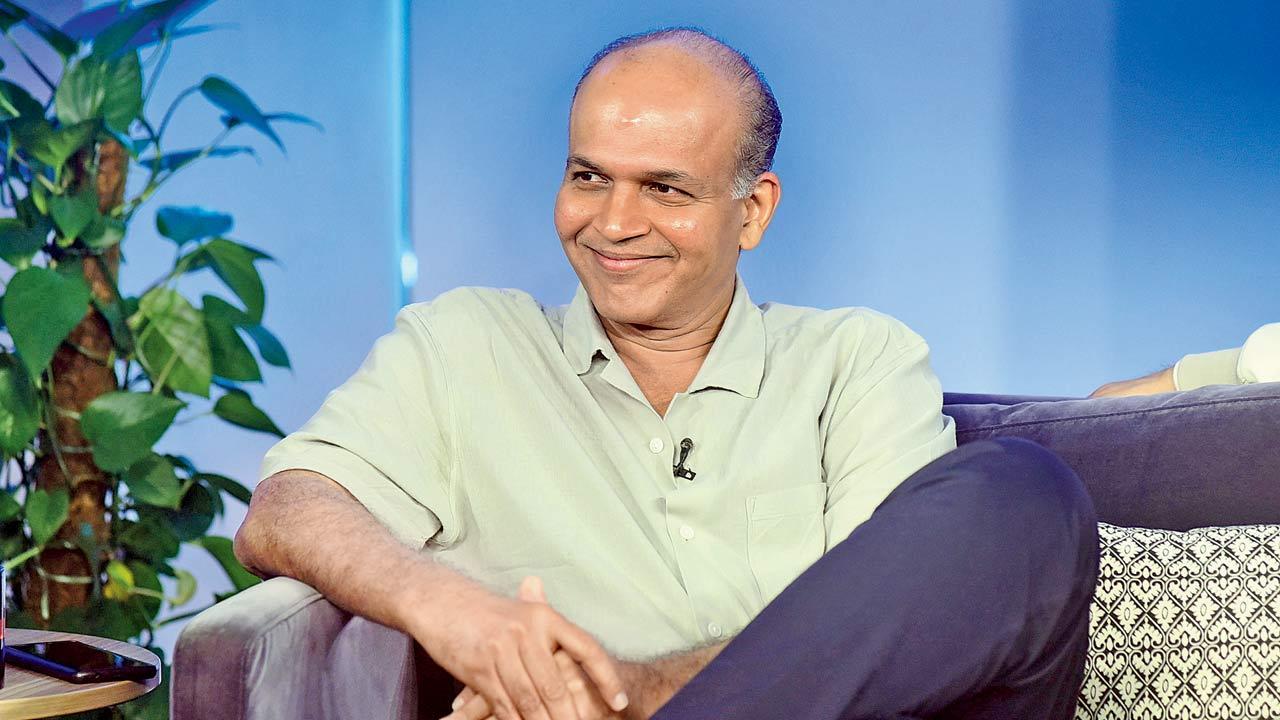
With this year marking 20 years since he launched his film production stable with Swades, filmmaker Ashutosh Gowariker discusses exploring other avenues, including the web space, television shows, and documentaries
Priyanka Sharma (MID-DAY; December 17, 2024)
It may have been 20 years since the release of the cult classic, Swades, but, filmmaker Ashutosh Gowariker feels it was only yesterday that he launched his production house with the Shah Rukh Khan-starrer. Arguably, Gowariker’s perception may not be completely flawed, given that the patriotic offering that holds a mirror to society, has been kept alive in the minds of people several years after it left cinema halls.
The filmmaker understands why Swades—a film that deals with the themes of class and caste divide—has lived far beyond its years. “It gives us the status quo; the point zero. It [shows us] where we need to hit reset. When people tell me that Swades continues to be appreciated, it makes me happy and sad. I am happy that the work is being appreciated, but sad because it implies that nothing has changed. I don’t know if matters have become worse. The divide between urban and rural [India] has increased. We look at the technological [advancement] in cities and think we are progressing. But, it is a mirage. Of course, the heartland also has all the amenities. But have we progressed in our way of thinking? I don’t think so. The change is still happening. And more work needs to be done on that front,” he explains.
Meanwhile, Gowariker has a lot of work on his plate too. As his production house crosses the milestone mark, he is eager to turn his attention to new ventures. Sure, venturing into web shows may seem to be the most natural progression in this day and age, but the filmmaker is also keen to explore other avenues.
“We want to also make television shows, documentaries and audiobooks. We want to cover the entire entertainment gamut. We are developing stories in the OTT space, which is a great addition to our business, because my films are long, and if I have a long story to tell, I can do so in the form of a web series.”
However, fans of the filmmaker who have been eager to watch his opulent productions play out on the big screen need not be disappointed. “I have finished my [movie] script. We are currently casting for it,” says the director, who last helmed the 2019 historical, Panipat.
Ask him if he intends to reunite with his friends and collaborators, including Shah Rukh, Aamir Khan and Hrithik Roshan, all of whom Gowariker has delivered memorable films with, and he says, “[Only] if I have the right script.”
He adds, “The theme has to come to me first. [I will approach them] if they suit the part. All three of them have one common trait—the willingness to experiment within the set boundaries of mainstream entertainment. That is why Dangal, Dear Zindagi and Super 30 [were successful]. They are willing to put themselves out of their comfort zone for a film, but, it needs to have the structure of a mainstream movie.”
Stree 2 is second biggest grosser ever in CI after Baahubali 2; crosses Gadar 2
8:24 AM
Box Office India Trade Network
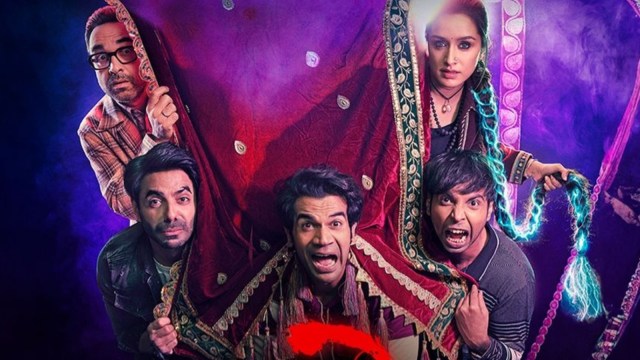
STREE 2 has emerged the second biggest grosser ever in CI and the third film to cross the 20 crore nett mark after BAAHUBALI 2: THE CONLCUSION and GADAR 2. The circuit is a mass barometer and figures never lie. With the three films on top and the gap to the rest, it pretty much shows which films have had biggest mass penetration in the last ten years or so.
The word mass is used a lot today with all these South films being called MASS films but you do not become a mass just because the hero is beating 50 goons or what down south they call elevation scenes with the entry of the hero. Films like THE GREATEST OF ALL TIME and DEVARA are called MASS films due to the elements but they hardly get reach outside their own states. A mass film is always about REACH and in India if you cant reach the heavy populated areas, you are NOT a mass film as you not reaching the masses.
STREE 2 may not have the elements of what is seen as a mass film but the fact is the film is a bigger mass film than even the likes of ANIMAL, JAWAN and PATHAAN as it has easily smashed the numbers of these films in the heavy populated states which indicates better satellite than these films in the long run also. BAAHUBALI 2: THE CONLCUSION remains the biggest film in CI but GADAR 2 would have comfortably beaten it if it had better ticket pricing and that is not taking the clash into as consideration as OMG 2 would not be a much of a factor here.
Taking GADAR 2 comfortably crossing 25 crore nett with better pricing means that PUSHPA 2 - THE RULE can actually target the 30 crore nett mark in this circuit if the film is as good as the trailer. This figures is almost double of ANIMAL and more than double of PATHAAN and JAWAN. The numbers can get higher and higher in this circuit when films have real reach.
The top ten grossers in CI of all time are as follows.
1. Baahubali 2: The Conclusion - 24,51,00,000
2. Stree 2 - 22,88,00,000
3. Gadar 2 - 22,62,00,000
4. Animal - 17,98,50,000
5. KGF - Chapter 2 - 16,08,50,000
6. Jawan - 14,84,50,000
7. Pathaan - 14,19,50,000
8. Dangal - 14,18,00,000
9. Tiger Zinda Hai - 12,83,50,000
10. PK - 12,59,00,000
I understood the power of namaste in Punjab-Aamir Khan
8:10 AM

BOMBAY TIMES (April 30, 2024)
Aamir Khan shared some anecdotes from his shoot for Dangal at a recent talk show and revealed how he learnt the power of namaste.
He said, “We shot for Rang De Basanti in Punjab, and I really loved it there. For the Dangal shoot, it was a small village we were shooting in. When I used to reach there at around 5 or 6 in the morning, as my car entered, people would stand outside their homes just to welcome me with folded hands and ‘Sat Sri Akaal.’ They used to wait to welcome me.”
He added, “I belong to a Muslim family, I am not used to folding my hands in namaste. I’m used to raising my hand (gesturing adaab) and bowing my head. After spending those two and a half months in Punjab, I understood the power of ‘namaste.’ It’s a wonderful emotion.”
Kill Joy: Licensing issues disrupt digital content consumption
8:23 AM

From songs that stop playing to shows that refuse to stream, licensing issues are disrupting content consumption in social media and streaming platforms
Shephali Bhatt (THE ECONOMIC TIMES; March 31, 2024)
Paromita Deb Areng is frustrated with the content consumption experience on digital platforms. Recently, someone told her that the sound in one of her Instagram Reels was not working. Areng, a beauty products consultant from Pune, had used a trending audio clip from Instagram’s music library to enhance her video’s reach.
“Instagram offered to replace the now unavailable song on the app, but the new audio failed to update as well,” says the 43-year-old. Muting audio ended up silencing her voice in the video, thus impeding its reach. Areng says this problem isn’t unique; many creators are avoiding library audio for this reason.
Her frustration extends to streaming services. Unable to find older Korean dramas on Netflix, she subscribed to another streaming service, Viki, only to find those shows “unavailable in our region”. She was surprised to encounter geo-restrictions especially since the Korean government declared India the biggest market for Korean content last year.
Areng has since come to understand that these issues are due to complications in licensing agreements with content producers that grant platforms the right to publish content they do not own. However, that awareness doesn’t necessarily ease her exasperation.
"You feel short-changed because you are willing to pay to consume content legitimately and yet are being forced to look for alternatives that often expose your system to security risks.” She makes a valid argument. At least 46% users of virtual private network (VPN) globally opt for it to access streaming services, and 26% do it specifically to access region-locked entertainment, as per a report from Forbes Advisor published in August 2023.
Eight years ago, when global streaming services like Netflix and Amazon Prime Video arrived in India, they promised access to a vast and continuously expanding content library. The “digital video-on-demand” branding created an unrealistic expectation that the content would be universally and permanently available. Over the years, snippets from popular international shows circulating on social media have only fuelled the craving for diverse content.
Ironically, this very desire has now shattered the illusion of seamless access as licensing-led curbs increasingly constrain users trying to watch anything and everything in the cloud. Similarly, music’s pivotal role in social media content has inadvertently exposed people to the vagaries of licensing disputes in the music industry, which end up restricting the use of songs on platforms like Spotify and Instagram.
OTT BORDERS
As a result, a growing number of users are expressing disgruntlement with their consumption experience. “It’s annoying that I can’t do a Prime Video Watch Party with my friends in India even when I’m in the country, just because I have a US-registered Prime account,” says Anmol M, a 27-year-old software engineer based in San Francisco.
In the US, he watches Koffee With Karan on Hulu because Hotstar isn’t available there. However, the show airs on Hulu a day later, he says, by which time his friends back home have already seen and made memes out of it. A decade ago, when Anmol moved overseas, there wasn’t a lot of content from India that he followed. “Very little existed in the first place,” he says. But now, he experiences FOMO for Indian content.
Some Indians abroad, like Soumya Wadhwa, compile a list of shows to watch during visits back to India due to this fear of missing out. “I like how western content is concentrated on certain platforms in India,” says the 32-year-old finance professional from Vancouver.
“Shows like Friends and Schitt’s Creek (a Canadian show) are available on Netflix India but not on Netflix Canada,” she adds. During her last trip to India, she found Hindi-dubbed K-dramas on Netflix. She prefers the quality of Hindi dubbing over English, but Netflix Canada doesn’t have a Hindi audio option.
India doesn’t necessarily have easy access to every popular western title. Ask film critic Sucharita Tyagi, who moved from India to the US last year. When discussing a movie, show, or even an audiobook, she says, “I have to first ensure that it is available in India.” For instance, Oscar-nominated May December never hit Netflix India, despite its many trailers announcing Netflix as the film’s digital home in North America.
“I always check with my India team which Hulu titles are streaming on Hotstar,” says Tyagi. She recently discovered that the audiobook for Killers Of the Flower Moon—which inspired the 2023 Martin Scorsese movie—is strangely available in French, German and Italian on Audible India, but not in English.
Stranger still is the case of Mysteries And Feluda. It’s a locally produced animated series based on the tales of Feluda—a fictional detective conceived by writer-director Satyajit Ray– that is available on Prime Video but not accessible to Indian viewers.
In an email response, a Prime Video spokesperson tells ET, “We make our locally licensed Indian films available in 240+ countries and territories. While there could be some exceptions where certain rights/territories could be carved out by the licensors in case of licensed content, it’s our constant endeavour to provide customers across locales, great content in their preferred languages.”
Netflix and Disney+ Hotstar declined to comment while ET’s emailed queries to Jio Cinema and Viki did not elicit a response.
IT’S BUSINESS
Why do platforms operate like this, you ask? The short answer: It’s nothing personal, just business. “Around 80% of content rights, excluding those of major studios and their projects, are handled by sales agents,” says G K Tirunavukarasu, CEO of ProducerBazaar, a content IP rights exchange marketplace.
“Producers distribute their movies through these brokers, who then allocate different licences to several players in different territories for varying prices. It’s more beneficial for them to sell individual rights rather than in bulk.”
Dealing with content in both domestic and international markets involves at least 40 IP rights, including gaming rights, dialect rights, sequel rights, among others. “If the producer isn’t clued in to who is acquiring which rights where, it can lead to chaos [read: legal notices and lawsuits] due to the legalities of adhering to each contract,” adds Tirunavukarasu.
Entertainment lawyer Priyanka Khimani highlights how new services often are either clueless or feign ignorance about content licensing costs. She cites homegrown short video platforms from the post-TikTok ban era, some of whom neglected music licensing payments until labels took legal action.
In 2023, Spotify paid $9 billion to music labels and publishers in licensing fees, according to its annual report, “Loud&Clear”. Khimani, who specializes in media rights, says much of the behind-the-scenes efforts contributing to this figure often escape the general audience.
“Disputes between artists, labels and third parties cause delays in closing deals, which could potentially result in takedowns and song unavailability on platforms like Spotify and Instagram. Failure to arrive at a deal can result in catalogues being taken down from a platform, like it happened with Universal Music Group that has removed almost its entire catalogue from TikTok recently,” she adds.
An instance of content licensing issue that can escape the viewer is the use of third-party music in films and OTT shows. For instance, in Season 3 of an ALTT show, Dil Hi Toh Hai (2020), several Sony Music tracks that were featured prominently in some episodes initially, seem to have been replaced with instrumental music, even though the characters are still lip-syncing to songs like “Hawayein’’ and “Say Shava Shava”. This could have happened due to a gap in coverage of rights or changes to ownership of the music. Emails to ALTT, formerly ALT Balaji, and Sony Music did not elicit a response till press time.
Negotiations for music licensing occur across platforms and labels in various territories, with no standardized rates, relying solely on relationships and track record. “It’s truly the Wild West,” says Khimani.
Instagram has now started flagging audio affected by licensing changes. In an email, a Meta spokesperson tells ET, “We have deals across the music community in more than 150 countries.... However, our partnerships are always subject to change and our library of licensed music may shift as a result.”
Movies are shifting platforms, too. Streaming rights for new movies are typically for three-five years. So, crime thriller Andhadhun (2018) shifted from Netflix to Prime Video recently.
The 2016 Aamir Khan-starrer Dangal, which was on Netflix India initially, can now only be rented on Prime Video and Apple TV (or bought on the latter).
The latest content-licensing contracts are now allocating different language/ dubbed versions to different platforms. Hanuman, the Telugu blockbuster from January and one of the highest grossing movies of the year so far, has been released in Hindi on Jio Cinema while the original Telugu version has gone to ZEE5. By April 5, its Tamil, Kannada and Malayalam dubbed versions will be on Disney+Hotstar.
K Niranjan Reddy, producer of the film, says, “Each platform offers various subscription tiers in India and globally, potentially expanding our audience. It’s promising; we will see how the strategy unfolds. It’s a valuable learning experience for me.” Last week, Reddy closed a contract for the film’s Japanese dub with English subtitles through a local vendor in Japan, he tells ET from the US.
This constant movement of content across platforms renders Google searches for locating content unreliable and time-consuming, says Basreena Basheer, a product manager at a B2B media & security firm in Bengaluru. However, she defends platforms’ decisions to not disclose reasons for content unavailability: “Many avoid mentioning geo-restrictions to discourage VPN use, given the abundance of online guides on circumventing geo-blocking.” Reasons for unavailability typically tend to be vague to avoid direct mention of any regulatory role (if applicable) in geo-restriction, she adds.
Streaming platforms are increasingly focusing on expanding their original content library to avoid licensing hassles. However, licensed content remains vital for growth; 45% of Netflix watch-time in H1 2023 was dedicated to licensed content, per the company’s engagement report. Some players are trying to find ways to improve communication around licensing woes.
Viki has an option to petition to get a show in your region. Netflix has introduced the ‘Leaving Soon’ tag for short-lived titles. “Perhaps, an ‘Available from’ tag to provide a tentative timeframe for accessing content could help. I’d be thrilled if there are categories like ‘Available after general elections’, for instance,” says Basheer, only half-jokingly.
Baahubali 2 is the top grosser in Mumbai circuit by a margin
10:10 AM

Box Office India Trade Network
BAAHUBALI 2: THE CONLCUSION still remains the top grossing film in Mumbai circuit and that too by a distance. In fact the top two films in the circuits are from South with KGF - CHAPTER 2 holding second spot. GADAR 2 would have been ahead of KGF - CHAPTER 2 if it had a solo release and pricing of the other blockbusters of 2023 but even with that it would not have reached the BAAHUBALI numbers.
If we take original Hindi content then its TANHAJI: THE UNSUNG WARRIOR leading in Maharashtra and GADAR 2 in Gujarat. Despite these huge grossers in 2023, the circuit generally was an underperformer but things look better now. There are chances that 200 crore nett can be hit in the circuit and the best shot at that will be PUSHPA 2 - THE RULE if the film has the merits of PUSHPA: THE RISE - PART 01.
Actually the films that can set huge numbers in this circuit in 2024 are both scheduled for a clash in August. Both PUSHPA 2 - THE RULE and SINGHAM AGAIN are at the moment set for an August 15th release date and both teams are adamant at the moment. So much work is left on both films that its a race against time and normally time wins in these scenarios. Both these films, if they work, will outperform in Mumbai and at the end of 2024, both will be among the top three.
The release date is outstanding with Independence Day on Thursday, Rakhsha Bandhan on Monday and then Janmashtami on second Monday. Gowever unlikely it looks at the moment, it would be great for the box office if one of the films could come as otherwise the period will not get the huge numbers it should.
The top ten grossers in Mumbai circuit at present are as follows. The only other film outside the list below to cross 100 crore nett is SANJU.
1. Baahubali 2: The Conclusion - 1,82,56,00,000
2. KGF - Chapter 2 - 1,45,45,00,000
3. Gadar 2 - 1,43,98,00,000
4. Tanhaji: The Unsung Warrior - 1,43,85,00,000
5. Jawan - 1,40,05,50,000
6. Animal - 1,36,84,00,000
7. Pathaan - 1,35,82,00,000
8. Dangal - 1,04,26,00,000
9. PK - 1,04,21,50,000
10. Tiger Zinda Hai - 1,03,40,50,000
I study for at least five hours every day-Harshvardhan Rane
8:16 AM

Neha Maheshwri (BOMBAY TIMES; March 18, 2024)
Art, we know, has the power to inspire and transform people. In Harshvardhan Rane’s case, it motivated him to pursue an old but cherished dream – to continue his studies! The actor, who had put his education on hold to pursue a career in showbiz, has enrolled in a Psychology (Honours) programme. He says, “After I became an actor, I felt I had achieved whatever I wanted to, but the desire to finish my education remained unfulfilled. So last year, when I found some free time after completing all my work commitments, I decided to become a student again.”
Interestingly, his character in ‘Dange’ inspired him to choose psychology. He elaborates, “I have always been interested in human behaviour. As actors, too, we have to delve into the minds of various characters. My interest in psychology deepened during the shoot of a film, as the character I played required me to do a lot of research on the subject. I was so engrossed that I was certain that if I pursued graduation, it would be in psychology.”
Harshvardhan is as committed a student as he is an actor. “It’s been seven months since I enrolled for this long-distance course, and I study for at least five hours every day. The exams are scheduled for June. My current syllabus is all about Biopsychology – the human body, neurons, sections of the brain, and reflexes. Let’s see what’s in store in the second and the third year,” he shares excitedly.
How does he find the time to study during gruelling shoot schedules? “I utilize every spare minute; for example, I study in between shots, while waiting in the vanity van. Instead of spending time on social media, clicking pictures, and chatting, I try to learn a new chapter every day. Even when I am travelling for the promotions of my films, I call my tutor on the way. So, if you spot me with my headphones on, please understand that I am listening to lectures (smiles). In short, whenever I get an opportunity, I pick my book or listen to online lectures. In fact, I have started loving Mumbai’s traffic, as it gives me more time to study. Toh mujhe traffic se bohot pyaar ho gaya hai (laughs!). I revise even at the gym,” he answers.
The ‘Haseen Dillruba’ actor says that his life experiences have enhanced his perspective as a student of Psychology and vice-versa.
“Dono cheezon ne ek doosre ko help kiya hai. I ran away from home at the age of 16. I didn’t read books, I read people. Studying and analysing human behaviour and understanding what leads them to behave a certain way…logon ko padhna hi mera survival ka ek tareeka tha. That has made me extremely observant. This helps me in my performance, and now in my studies,” he signs off.
I was stuck in the rut of overthinking after Dhobi Ghat-Kiran Rao
9:31 AM

S Farah Rizvi (HINDUSTAN TIMES; March 18, 2024)
Kiran Rao’s Laapataa Ladies has received rave reviews. The project marks the filmmaker’s comeback as a director after over a decade, with her last project being Dhobi Ghat (2011). Explaining the long gap, Rao says, “It’s said that second project is the hardest for a filmmaker or an actor. Pehli film toh ban jaati hai, the real struggle lies when you work on the second one. The pressure builds up due to the expectations people have of you, which doesn’t apply in case of your debut project. I was stuck in the rut of overthinking after Dhobi Ghat.”
The Laal Singh Chaddha (2022) producer adds that focusing on personal life also kept her busy. “I had my son (Azad Rao Khan) around the same time (he was born in December 2011). So, all my focus was on my child. But, I did whatever I could on the work front. I was associated with films like Dangal (2016) and Secret Superstar (2017), among other projects. So, it’s not that I was totally out of work all these years,” says the 50-year-old.
Rao recalls zeroing in on the story of Laapataa Ladies two years ago. “I have been struggling to write something unique. I have been on a writing spree and have folders full of stories. I am quite hard on myself as a creative person and very conscious of what I associate with,” says Rao.
Ask about her upcoming projects, and she says, “Comedy is my favourite genre, so maybe a romantic comedy next.”
Suhani Bhatnagar, who played Aamir Khan's daughter in Dangal, passes away
10:45 AM

THE TIMES OF INDIA (February 18, 2024)
New Delhi: Suhani Bhatnagar, 19, who played the role of young Babita Phogat in Aamir Khan-starrer wrestling movie ‘Dangal’, died in AIIMS, Delhi, on Friday after an adverse reaction to medication during her treatment.
According to hospital sources, she was admitted on February 7. A resident of Faridabad, she was suffering from dermatomyositis, a rare disease that causes muscle inflammation and skin rash, and died due to septic shock.
The teen actor became a prominent face after appearing in the 2016 film about a wrestler who mentors his two daughters to success.
---------------------------------
New Delhi: Suhani Bhatnagar (19), child actor of ‘Dangal’ fame who died in New Delhi on Saturday, was suffering from a rare condition known as dermatomyositis, said her father Puneet.
Two months ago, a red spot had formed on her hand. They felt that their daughter was suffering from an allergy after which they got her treated at several hospitals in Faridabad, but none could diagnose the disease. When her condition started worsening, she was admitted to AIIMS in Delhi for treatment on Tuesday, but even there her condition did not improve and slowly her body started filling with liquid.
According to family members, she was given steroids—the only treatment for her condition, which weakened her immunity. She contracted an infection in the hospital, her lungs weakened, making it difficult for her to breathe.
While Suhani’s co-star Zaira had publicly announced her decision to quit the film industry in June 2019, Suhani took a break from the industry to focus on her studies. Suhani was pursuing a course in mass communication and journalism. After completing her studies she wanted to work in films. She was camera-friendly from her childhood days, according to her family.
Saddened by her death, ‘Dangal’ director Nitesh Tiwari said, “Suhani’s passing away is absolutely shocking and heartbreaking. She was such a happy soul, so full of life. My deepest condolences to her family.”
A note posted by Dangal co-actor Aamir Khan’s production house on Instagram said, “We are deeply saddened to hear about our Suhani passing away. Our heartfelt condolences to her mother Pooja ji, and the entire family. Such a talented young girl, such a team player, Dangal would have been incomplete without Suhani.”
People have come up to me and said that I look like Priyanka Gandhi and Katrina Kaif-Fatima Sana Shaikh
8:40 AM

Sugandha Rawal (HINDUSTAN TIMES; December 13, 2023)
An old picture of actor Fatima Sana Shaikh where she has an uncanny resemblance with cricketer Shubman Gill from her breakthrough role as wrestler Geeta Phogat from Dangal (2016) is doing the rounds on the internet. “Gill is a good-looking guy”, says Shaikh, who is happy to join in on the fun and doesn’t mind the comparison.
The 31-year-old confesses that when her friends saw the posts online, they tagged her and made a lot of fun of her. “Yes, I saw the post. There is a resemblance and I can’t even deny it. All my friends tagged me on it. I was not spared. It was so funny,” she jokes, adding, “Mereko bura nahi laga. There was nothing wrong in it,” she says.
The actor, who was recently seen alongside actor Vicky Kaushal in Sam Bahadur, says she has been compared to many famous people in her life. “People have come up to me and said that I look like (politician) Priyanka Gandhi and (actor) Katrina Kaif. I think, everybody has around 10 doppelgangers in the whole world, so, I’m not surprised I look like different people. Sometimes I joke, ‘Main toh bachi hi nahin’,” she tells us.
For Shaikh, this picture going viral seven years after the film came out, is special as it proves the audience still remembers her performance and her role from the movie. “Imagine, people have such vivid memories about my character from Dangal. It is so strong that they were able to instantly point out the similarity, I was happy about it,” she ends.

Shah Rukh Khan told me, ‘Dil ki suno, dimaag ki nahi,’ and that stayed with me-Sanya Malhotra
7:57 AM

Renuka Vyavahare (BOMBAY TIMES; November 4, 2023)
Sanya Malhotra was recently seen in Shah Rukh Khan’s Jawan, which she says is the “biggest film in her filmography”, and the actress started her career with Aamir Khan’s Dangal. Having worked with the two superstars, she tells us about the traits that she finds similar among these two Khans.
“I feel very lucky to have films like Dangal and Jawanin my career. Both Babita (Dangal) and Eeram (Jawan) are strong characters. Dangal led the foundation and conditioned me as an actor. I have worked very hard for all the films that I have been a part of in the past seven years since,” she says.
Speaking of the Khans, Sanya revealed, “They are both very passionate. The love they have for people and the way they make you feel comfortable is what is common between them. Not once did Shah Rukh sir make me feel like I was working with a superstar during Jawan. He is very easy-going. He once told me not to overthink things. He sensed that I am an overthinker, as I was nervous while working with stalwarts. I used to veil it, but he could see through me. He told me, ‘Dil ki suno, dimaag ki nahi,’ and that stayed with me. It teaches you to always be in the present. In acting, when you follow this, you can live a character fully.”
Sanya adds that she was happiest when she got to shake a leg with SRK in Zinda Banda. “When that happened, I couldn’t wait to call my mom and tell her about it. The whole thing was a surreal feeling. I love dancing and I got a chance to do it with my favourite person! He was so dedicated. He didn’t take a breather and it was very hot in Chennai while shooting it. I manifested working with SRK and that happened. I have also been manifesting a dance film with Shahid Kapoor and Vicky Kaushal. They are good dancers. Let’s see how that goes,” she said.
Gujarati theatre has a massive fan following and given an opportunity, I’d like to do a Gujarati play-Sanya Malhotra
8:24 AM

Yesha Bhatt (BOMBAY TIMES; October 24, 2023)
Sanya Malhotra, who’s currently riding high on the success of Jawan in which she starred with Shah Rukh Khan, is now “looking forward to working with the third Khan”, Salman, (she made her debut in Dangal, starring Aamir Khan). “I hope and pray that it happens soon,” she laughs. On a recent trip to Ahmedabad, Sanya spoke to us about festive fashion and how she loves binging on festive food.
‘I don’t feel guilty about binging during festivals’
Sanya, who loves dressing up for every occasion, says she doesn’t need a festival or reason to put on her best attire and some jhumkas and bangles.
She says, “When it comes to festivals, I am quite a Dilliwali. I love dressing up, wearing a beautiful saree, and gajra.”
Sanya shares, “I am very comfortable in sarees and kurta suits, so I often go for a bun. That’ll be my go-to festive look. As far as dressing up is concerned, even if I am sitting at home doing nothing, I love to dress up.”
And what about festive binging? Given that actresses need to stay in shape, does she have cheat meals during the festive season? Sanya, who is a self-confessed foodie, says, “Food for me is fuel, it makes me very happy. I don’t feel guilty about eating anything or even binging. I eat everything that I feel like eating, so there are no restrictions for me as such, not even during the festive season.”
‘Would love to venture into Gujarati theatre someday’
Earlier this year, the Telugu period classic RRR shone at the Oscars, and now the Malayalam film 2018 being India’s nomination for the Oscars for 2024, has Sanya thought of foraying into regional cinema? “I love being in front of the camera, I love acting and being on set. I just love being part of great films and yes, someday I might even do regional films. Speaking of regional content, Gujarati theatre is doing extremely well and is commercially viable. I have seen Gujarati plays enjoying immense popularity even in Mumbai. I do not know Gujarati, but I think it won’t be difficult for me to learn it. Gujarati theatre has a massive fan following and given an opportunity, I’d like to do a Gujarati play.”
‘Want to explore Ahmedabad as a tourist’
Ask her if she has gone around the World Heritage City, gorged on some Gujarati delicacies or tried the thaali, and the Pagglait actress says, “Whenever I have come to Ahmedabad, I have had packed schedules and haven’t been able to explore the city (as a tourist) yet. I hope to do that sometime later this year when I return to the city to buy clothes and jewellery for my sister, who’s getting married.”
Subscribe to:
Posts (Atom)