Showing posts with label Cheeni Kum. Show all posts
Showing posts with label Cheeni Kum. Show all posts
I told Akshay Kumar that though he was the hero of Pad Man, the actual hero was a sanitary pad-R Balki
9:47 PM

Renuka Vyavahare (BOMBAY TIMES; March 5, 2024)
The Fifth anniversary of the National Museum of Indian Cinema (NMIC) in Mumbai was graced by the presence of notable dignitaries, including the Consul General of the Republic of Belarus, Aliksandr Matsukou, and Consul of Belarus, Anton Pashkov. The day saw an array of events including a guided tour for visually impaired students from The Happy Home & School for the Blind as well an enriching masterclass by acclaimed director R Balki, in conversation with D Ramakrishnan (GM NFDC).
Following the insightful conversation, cinema enthusiasts enjoyed the screening of R Balki's 'Ghoomer’. The highlight of the event was Balki’s unabashed take on content clutter, not undermining one’s talent and his penchant for addressing social issues without resorting to social messaging. Over the course of the two-hour session the Cheeni Kum director shared some wonderful insights, funny anecdotes and inspiring words for aspiring actors and filmmakers. Excerpts…
‘You can’t learn the art of scripting’
I don’t think there is a better film school than going to the set and working with several filmmakers. You learn about life. I was fortunate that I was able to get these experiences, so I didn’t feel the need to do a film school. It’s not that I did it without knowledge, I gained the knowledge. If you can go to a film school, you might probably learn things faster than I did but what you can’t learn is the art of scripting. Scripting doesn’t happen by going to a scripting school because there are a hundredth ways in which you can communicate a story.
‘If you are confident about yourself, you will celebrate your enemy’
Cinema is a tool to express a thought or a story that you have. Nobody is going to see the scale or grandeur of your movie if your story doesn’t touch them, isn’t relatable or doesn’t make them think. I prefer the term engaged, over entertained. There has to be an emotional connect. I don’t want people to be bored or switched off or be distracted while watching a film. Entertainment can be mistaken for laughing, dancing, jumping. People want to be engaged while watching a film.
When I did the Surf Excel commercial, people told me, ‘Everyone’s preaching hygiene and you are saying get dirty (daag acche hai)’! I feel if you are confident about yourself, you will celebrate your enemy. If you have the ability to defend yourself and remove the stains, why would you curse the stains? I am confident enough to celebrate my enemy which is dirt here so come get dirty. I believe cinema is also like that.
Thought behind the role reversal in Paa
I remember I had gone to Amitabh Bachchan ji’s house during Cheeni Kum. Abhishek was there with him, and he was saying some extremely wise things, which is rare (smiles). He is usually the one who cracks jokes. Amit ji was pulling his leg by saying ridiculous things. They were completely opposite to their (father-son) character. I looked at them and said, “who is whose dad!” That thought stayed with me. I knew I wanted to make a film where I will reverse their roles. That’s how Paa happened.
I don’t have a single social cause bone in my body
Terms like ‘meaningful messaging’ scare me. If you want to look for meaning in life, go to a meditation app. Why watch a film? You need to be clear about your ambition from the beginning. My thoughts in cinema have been far more frivolous than my thoughts in ads. I always think cinema is serious so why not start with a frivolous thought? Even in Pad Man, my thought was not to convey a social cause. I don’t have a single social cause bone in my body. The film did a lot for menstrual hygiene and awareness, but I didn’t make it for that. I got to make a commercial feature film where the hero of the film was a sanitary napkin. I told Akshay Kumar that though he was the hero of the film, the actual hero was a sanitary pad.
A filmmaker needs to be honest. I am not here to change the world. I am here to explore an idea that doesn’t destroy the world and gives me happiness. Even a Ghoomer wasn’t about showcasing the infallible spirit of a woman who loses her right hand in an accident and learns to bowl with her left. That’s a cinematic given. People tend to glorify anything that’s social as inspirational. It is an inspiring film; yes, but what’s the speciality in this inspiration? What new can you bring to the table is the trick. I believe when you are down and out you tend to be most creative. The biggest joy in Ghoomer was discovering that new bowling delivery in cricket.
‘I love the arrogance of artists who have faith in their abilities’
I don’t agree with this notion that everyone must work for the film and no individual should want his/her talent to stand out because filmmaking is a group work. I like working with a cinematographer like P C Sreeram because he is a rebel who likes to show off. How can you be a craftsman if you don’t want to show your craft off? How can you hire the best man for the job and tell him to listen to you and expect him to curb his instincts for the sake of the story? The story is not driving him. It’s driving the film. I love the arrogance of artists who have faith in their abilities and put their craft first. As long as your craft doesn’t destroy me, please show off your craft. As a director if I ask you to not show off your talent then I am the devil. I am killing your abilities. I love people who are determined to show their abilities. I want people to notice a cinematographer, music director, choreographer, sound-production designer for the right reasons. If people remember you for the wrong reason, then you are doing a shoddy job. You can’t expect the artists to be submerged in the film. If you look at The Godfather, it works because everybody is showing off and delivers their best. That’s why I like working with P C Sreeram sir and Ilaiyaraaja sir. They are gifted with originality, and they know it. Cinema is all about 'look at me'. When anyone says we need to work as a team and the cause is bigger than individuality, that’s the biggest bull s***. Only when all eleven players try to play their best, will a cricket team succeed.
OTT has lovely stories about common people
The presentation is a bit understated and subtle but OTT has some lovely stories about common people. I want these films to cut the walk though. I see content where people just keep walking endlessly long after the scene is over. Cut the walk! Someone is standing on a terrace and watching people aimlessly, thinking. Some filmmakers believe this creates an atmosphere. I get it and it’s their presentation but cut it faster.

Amitabh Bachchan’s 81st birthday: Child actors share their best memories
8:32 AM
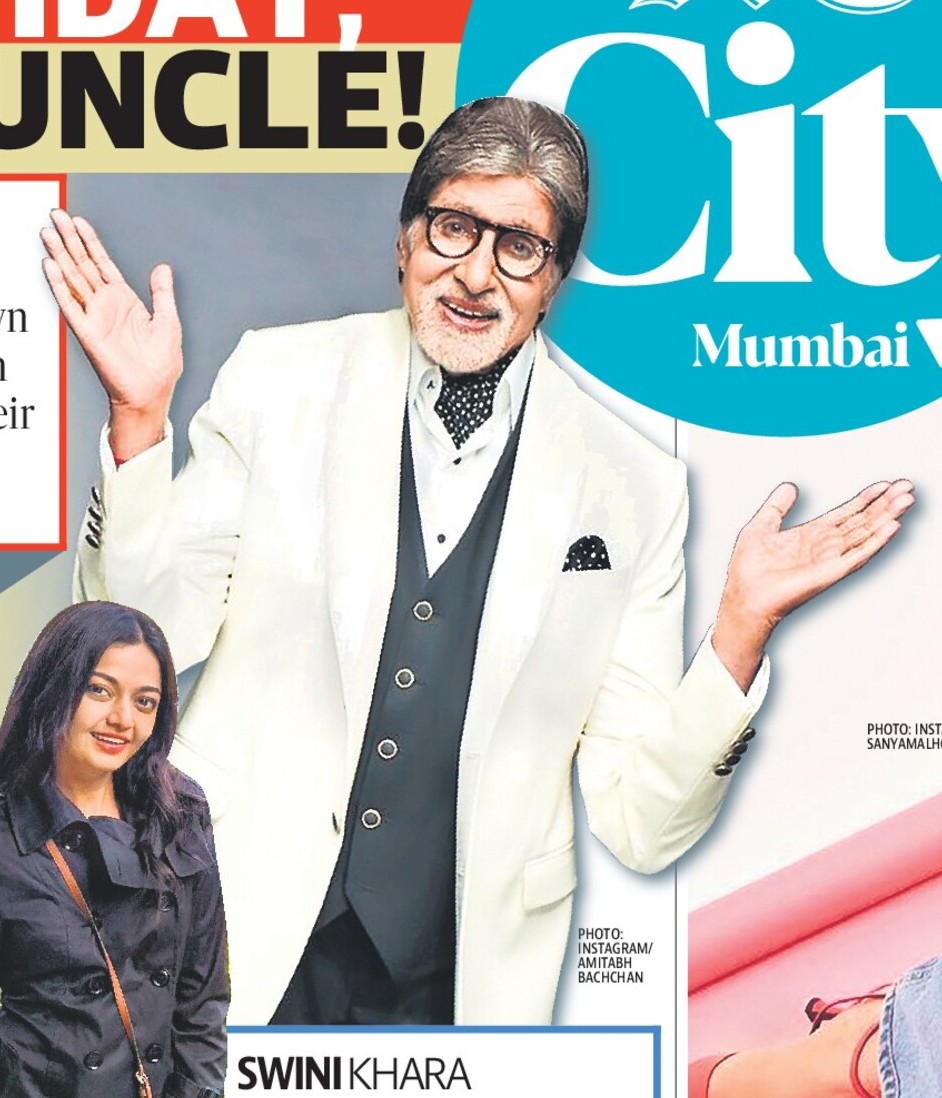
On Amitabh Bachchan’s 81st birthday today, Rishabh Suri tracks down child stars who acted with the legend. They share their best memories with the Shehenshah of cinema
Rishabh Suri (HINDUSTAN TIMES; October 11, 2023)
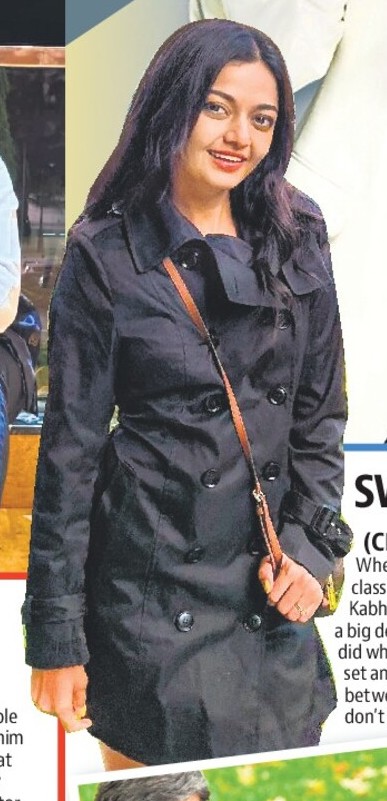
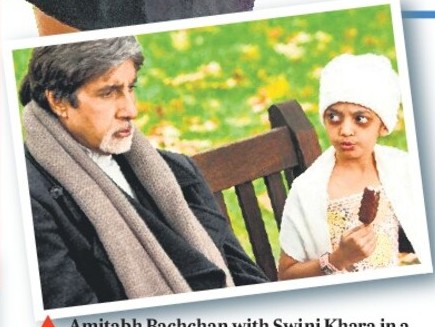
SWINI KHARA (CHEENI KUM, 2007)
When I first met him on set, I wasn’t aware of his classics Sholay (1975) or Shahenshah (1988), but I loved Kabhi Khushi Kabhie Gham (2001). I didn’t realise what a big deal it was while shooting with him as a kid, but I did when I grew up. Back then, I would play with him on set and he taught me how to deliver my dialogues between takes. I fell out of touch with him as, at 25, I don’t work in the industry. I wish him a happy birthday!
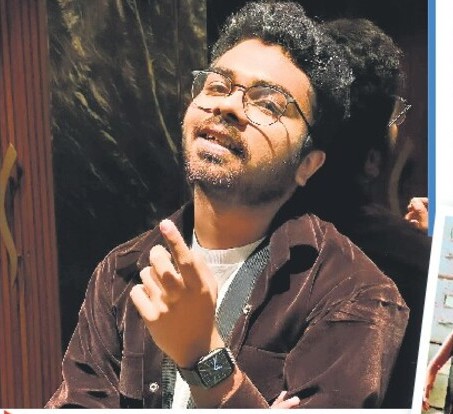
PARTH BHALERAO (BHOOTHNATH RETURNS, 2014)
Before I met Amit sir for the first time, I was scared if I would be able to even act or not. I had gone to meet him with director Nitesh (Tiwari) sir, and touched his feet. He told me, ‘Arre tum toh champion ho, mere bagal mein baitho’. He was like a friend to me throughout the shoot and matched my energy. Once, while waiting for a shot, I was drinking milk and had to leave it midway. Amit sir said, ‘Arre Nitesh, jaldi karo, inka doodh thanda ho raha hai’ (laughs). As a 23-year-old, I am still in touch with him. Since shooting for the film, I have met him twice. He told me to stay in touch and let him known whenever I was in Mumbai. He watched my film Killa (2014) and told me he loved it. Like always, I will wish him on his birthday.
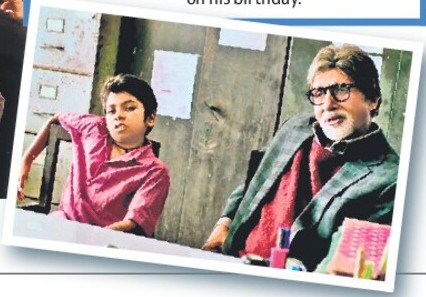
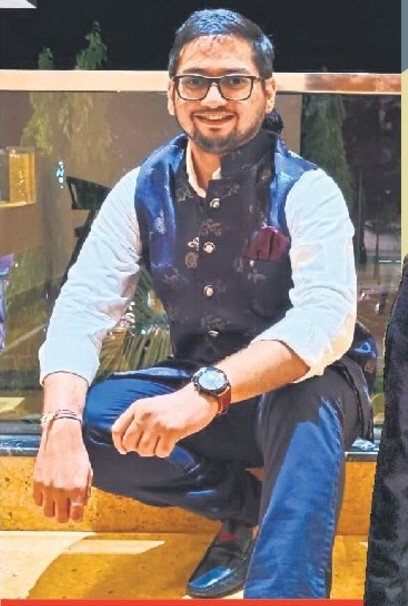
SMIT SHETH (Aankhen, 2002; BAGHBAN, 2003)
Amitabh sir is a mega star but was a humble person to work with. After working with him in Aankhen and Baghban, I then met him at the premiere of Khelein Hum Jee Jaan Sey (2010), where I acted alongside his son, actor Abhishek Bachchan. He quickly recognised me. The one thing I remember is that he would sit on three chairs stacked on top of each other as he was very tall. He also had a nice collection of SUVs. I am not 29 and I stopped acted in 2010 took a career deviation. I wish Amitabh sir good health and more success.
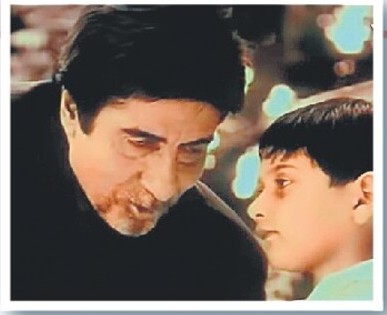
We are looking at a winter wedding-Swini Khara
8:12 AM

Rishabh Suri (HINDUSTAN TIMES; March 3, 2023)
Actor Swini Khara, who won hearts as actor Amitabh Bachchan’s nine-year-old neighbour in Cheeni Kum (2007), is now engaged. The 24-year-old took to Instagram on Wednesday to share dreamy pictures from her engagement to Urvish Desai.
Revealing that it was an arranged match, the Baa Bahoo Aur Baby actor tells us, “I met Urvish a few months ago. My parents had been searching [for a match]. When I met him, we clicked immediately as we are very similar in nature. We spoke for a few months and decided to take the leap only after we got to know each other well. He’s a gem of a person.”
The wedding is set for later this year: “We want a winter wedding, but the dates aren’t finalized yet.”
On the work front, Khara, who was last seen in the 2016 film M S Dhoni - The Untold Story, has “moved away slightly from acting”. Currently working at a law firm, she tells us, “After studying law in Hyderabad for four years, I was abroad for an exchange programme and returned only in 2021. [Before that], I had left acting because I had to pay attention to my studies.”
And while she is still offered films and shows, Khara is “happy” with the career switch. “Earlier, I wanted to give priority to university. Now, it’s law... But, if I do come across interesting scripts, I will try to go ahead with them,” she ends.
Happy 80th Birthday Amitabh Bachchan: Filmmakers revisit their journey with the superstar
8:17 AM
Eight decades of Amitabh Bachchan! In retro mode, filmmakers talk to us, revisiting their journey with the superstar and what makes the association so special on his 80th birthday
Rachana Dubey (BOMBAY TIMES; October 11, 2022)
For as long as one can remember, Amitabh Bachchan has adorned the big and small screens around us. Whether he’s the angry young man, the revenge-seeking common man, the disciplinarian father, the army officer, the lovable father who is as vocal about his motions as his emotions, or the cool and affable TV show host — there’s no role that the actor hasn’t played with utmost ease and relatability. One might fall short of words to describe the phenomenon that is Amitabh Bachchan, but he never falls short of impressing his audience with one solid act after another.
On his 80th birthday, filmmakers from different time zones in his life talk about what truly makes him the BIG B!
Amitabh beats all descriptions and measures of success: Ramesh Sippy
My introduction to Amitabh Bachchan was his performance in N C Sippy and Hrishikesh Mukherjee’s Anand. One immediately noticed him, despite the towering presence of the nation’s then heartthrob, Rajesh Khanna. There was something so honest about him that he drew your attention, effortlessly. You couldn’t miss that he was a natural at what he did. Then, I saw Mehmood’s Bombay To Goa where he was the complete opposite of his character in Anand. When Salim-Javed suggested his name for Jay in Sholay, my attention was immediately drawn to the memory of these two films and his roles in them.
He was almost the last one to be cast in Sholay. I didn’t want a big star; I had plenty already and handling so many people is a task, but when I heard Javed Akhtar talking about his work in Zanjeer, I decided to cast him. The industry had almost cast him out at that time; as he had a few failures behind him. But I think I was lucky to have nabbed him at the right time.
Sholay started our association. His role in Sholay was also not one that needed overplay. It was boisterous in parts. Of course, after his huge success, he became a one-man show who could do anything and everything so well. It became more and more difficult to capture him in something less. Zanjeer, Deewaar and Sholay just ensured there was no looking back for him. And his legendary run was not something anyone could have pre-empted; no one had thought, and no one could have
guessed he will rule this industry for 50 years. I am no exception to that.
Amitabh continued to grow. How tall can a man grow? Amitabh beats all descriptions and measures of success. The credit for that goes entirely to him. I was fortunate to have been on the National Awards jury twice, in 2010-11 and 2016. His performance in Paa was so incredible and totally different from what one expects of him. I had to give it to him. It was outstanding and rare. He won another one for Piku where his role as Bhashkor Bannerjee was so brilliant. Of course, the directors in both cases are fantastic, too. So, over years, you may keep feeling what’s left for him to do, and there is always going to be something more. There is no end to Amitabh Bachchan. He is forever!
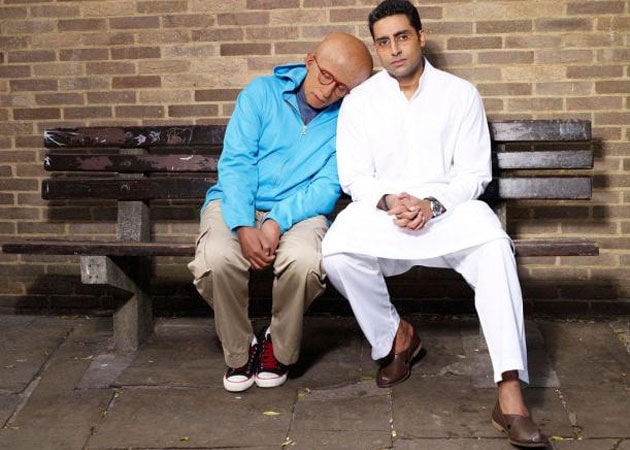
I love the mystique and enigma that Amitabh Bachchan is, and I don’t want that shattered: R Balki
I thought of a film for Amit ji when I made Cheeni Kum. I cast the story for him. It was the other way around. It wasn’t an older man falling in love with a younger woman. It was a story that wouldn’t work without Amitabh Bachchan and Tabu. He’s not an old man; he’s Amitabh Bachchan.
He comes packaged with his trademark sarcasm, wit and poker-faced rudeness — that’s just a perfect blend. My equation with Mr Bachchan has been exactly the same from day one till now. Even today, if I have an idea, I message him and if he likes it, I write it out for him. I love the mystique and enigma that he is, and I don’t want that shattered. I don’t want to analyze it. Being nervous around him just breaks that enigma. So, I have never been nervous in front of him and he, too, has made me so comfortable. He is an aspiration for everyone, and my relationship with him is that of a huge fan and a person who is aware of what I like about him.
It’s surreal that I have worked with him. I remember when we were making Paa, we both were convinced about the film. Abhishek and Vidya needed convincing. Even when Mr Bachchan says the deepest of things, he has still eyes and a still face which is the power of a great actor. People don’t often understand that when you act, you don’t have to make it loud and evident. Mr Bachchan doesn’t, and that’s his superpower!
His values are will remain so. They are in his DNA: Nitesh Tiwari
Over the years, I’ve worked with Mr Bachchan at different levels. The first time I had a chance to watch him up close was when I gate-crashed his ad shoot (made by my then company). I wasn’t part of the process then, but I have been such a fan since childhood that I couldn’t resist being on that set and silently observing him. I came home so happy that day. Then came the Kaun Banega Crorepati campaign where I interacted with him one-on-one. I usually don’t get nervous, but I was meeting my childhood hero and working with him was something else.
Over the years, I worked with him very closely and got to know him more closely. In my movie Bhoothnath Returns, he was the central character. Today, I can say that our relationship is a bit more than professional. His values are intact, and they will remain so. They’re in his DNA. His punctuality, discipline, hard work and dedication are unmatched. As an artiste, you know how big he is and yet, he is willing to understand and give his best for your vision.
Anyone who has worked with Amitabh Bachchan will agree that he’s like an addiction: Rajkumar Santoshi
Describing Amit ji as an actor is like sooraj ko deepak dikhana. Words will always fall short. In my opinion and understanding of him, he’s a better human being than an actor. He’s par excellence in his field but he’s a far, far nicer human being. He respects everyone’s time. That’s the reason he’s never late. Waqt aur insaan dono ki kadar hai unko. He never wants anyone to bear losses. And with him in the team, people automatically fall in line. Koi kitna bhi experienced ya naya ho, he treats everyone like his teachers. He listens intently and tries every possible method to give the director what he’s looking for. He has no ego and no hassles.
Whenever he enters a set, he has that little naughty smile and he jokes around and has fun with everyone. We filmed Khakee and Family together. We had shot Power for seven days and then I regret not being able to complete it. But anyone who has worked with Amitabh Bachchan will agree that he’s like an addiction, he just spoils you for life. If you don’t work with him, you feel something is just missing. But working with him is also a responsibility; as you have to justify his presence in a movie. On his 80th birthday, I just wish he continues his run till beyond 100 years.
If Amitabh Bachchan skipped a word, Zohra Sehgal would ask for a “cut” and sternly tell him he forgot his dialogue-R Balki
8:01 AM

Roshmila Bhattacharya (MUMBAI MIRROR; May 23, 2020)
 He doesn’t have a sweet tooth and even likes his coffee without sugar. “Cheeni kum” is a constant refrain for writer-filmmaker R Balki and an apt title for his directorial debut as, he points out, it was “a very romantic but sarcastic love story, without mush or meetha, without anyone uttering the words ‘I love you’ even once”.
In fact, that was the line the director used to pitch his first film to the then 64-year-old Amitabh Bachchan, his leading man of choice. To Balki’s delight, the Big B responded shortly, “write it”, and once it was fleshed out as a script, reacted with a “let’s do it”. Even Tabu, whom Balki had sounded out when she was in Los Angeles, jumped on board as soon as she returned and they’d met for the narration. She played Nina Verma, 30 years younger than Amitji’s Buddhadeb Gupta, the grouchy chef-owner of London’s best Indian restaurant. Their summer-winter romance was what made Cheeni Kum daringly new back in 2007.
Interestingly, its writer-director doesn’t consider the film particularly brave because, for him, the age difference was but just a number. “I wanted to make a film with Amitabh Bachchan, who may have been a little older by then, but, in my mind, he was still ‘the’ Amitabh Bachchan. For me, it was not the love story of an older man and a young woman, but the story of Amitabh Bachchan and Tabu who I had in mind while writing,” says Balki, recalling that at the film’s first screening at London’s Empire Cinema near the famous Leicester Square, an audience of 2000 was screaming for the Big B like they used to back in the ’80s.
Why Tabu, you wonder, and Balki explains, “It was always Tabu because she is the quintessential Indian woman — soft, feminine, conservative in her appearance, yet progressive and mature in thought— a perfect match for this caustic bachelor as she replies to his poker-faced remarks with an easy smile.”
Balki also roped in Zohra Sehgal to play Bachchan’s always-hectoring 85-year-old mother, Paresh Rawal as Tabu’s tetchy father who learns, to his shock, that his son-in-law-to-be is six years older than him, and Swini Khara as Sexy, his nine-year-old buddy neighbour. “Like Tabu’s Nina, Zohra ji’s character, too, was not intimidated by her son, neither in reel life nor in real. She knew all her lines, and Amit ji’s, too. If he skipped a word, she would ask for a 'cut' and sternly tell him he forgot his dialogue,” the director chuckles at the memory.
Balki adds that every day, the veteran actress would have a drink before calling it a night, admonishing them for being too exhausted to join her and declaring that they wouldn’t live long. “She was fantastic, so spirited, coming to shoot that scene at the Qutub Minar in 44 degrees centrigrade in a wheelchair on her 94th birthday, then, standing up and walking for the camera,” he marvels.
He’s equally gung-ho about li’l Swini, who came from a conservative household in Mumbai, but had the quiet confidence to pick up the British accent of a girl born and brought up in the UK, and dub her lines herself. “Like her character, Sexy, she was a surprise, and like the other ladies, wasn’t overwhelmed by Amitabh Bachchan.”
Paresh was equally quick to sign up, telling Balki excitedly, “I want to do this film, tell me when we shoot”, brought his phenomenal comic-timing to the sets. “His interactions with Amit ji were as hilarious for the team as they were for the audience.”
Given the perfectionist he is, did Amit ji pick up any culinary skills to play the chef? “Amitabh Bachchan takes just five minutes to learn anything, and he has seen enough chefs in his life, to play one. The first scene required him to fume at his chefs and he did it with a lot of fire. I asked for one more take… Then another. ‘What do you want me to do, not express my anger?’ he shot back and I nodded,” recounts Balki, and in an instant, his ‘hero’ knew what was required. “He faced the camera, stood quietly, and with one steely glance made his displeasure clear. After that, never again did he show any anger on camera, and shots were okayed in one-two takes.”
Balki remembers that the day they were shooting the now famous scene (August 27, 2006), when en route to Nina’s apartment for an intimate dinner, Buddha stops at the drugstore and blushingly asks for a condom, they learnt Hrishikesh Mukherjee, one of Amit ji’s favourite directors with whom he had a long and personal connect, had passed away. “Amit ji was distraught, but professional. He went to a corner, composed himself, returned to face the camera, gave the perfect shot, then, vanished. That’s what makes him the Amitabh Bachchan,” Balki concludes.
When the son wears the father’s shoes, they become friends-Amitabh Bachchan
8:44 AM

Madhureeta Mukherjee (BOMBAY TIMES; April 29, 2018)
He’s 76 and not out. And the way he’s batting in every inning, for a long time, he will be on the field, sportingly. And what’s striking is that, after a 49-year-long career, Amitabh Bachchan still has the gusto of a young actor and the curiosity of a newcomer. That’s what makes him a master of his craft and keeps him ahead of the curve. For the past 10 years, he’s been enthusiastically writing a blog every day, and his colossal following on social media is something that few can boast of. In his upcoming film 102 Not Out directed by Umesh Shukla, he plays a 102-year-old spirited father to Rishi Kapoor, in a unique story that’s based on a Gujarati play. In a quick chat with BT, he shares his past experience of working with his 95-year-old co-actor Zohra Sehgal, he tells us what he appreciates most about Rishi Kapoor and how he feels he’s a friend to his children. Read on…
What was your first reaction on knowing that director Umesh Shukla was keen to cast you as a 102-year-old man? He told us that you didn’t take more than 10 minutes to agree to do the film. Have you met people of that age?
Yes, I agreed immediately. It was an unusual concept where a 102-year-old father wants to send his 75-year-old son to an old age home. There are more elements to the story, but this point itself was so attractive. I have met people of that age. In my film Cheeni Kum directed by R Balki, the lady who played my mom’s role, the late Zohra Sehgal, was 95 years old. She was a renowned theatre artiste and I knew her sister (Mumtaz) and her from years ago. On set, she was incredibly vibrant and more excited than all of us. As soon as we would pack up, she would ask, “Where is my drink?” When the film was over, she told me, “Amitabh, you owe me some champagne.” When Umesh was discussing the character with me, the brief he gave me was that he didn’t want him to be depicted as a frail old man with a walking stick and a trembling voice. This film is based on a Gujarati play where the same characters (played by Rishi Kapoor and Big B) were staged by actors in their 30s.
So, did you draw references for your part from what you fondly remember of Zohra Sehgal’s persona?
Well, some things always stay with you. Zohra Sehgal and her sister were prominent theatre artistes. They were all associated with Prithvi Theatre. Back then, Prithviraj ji (Prithviraj Kapoor) was associated with all these talented theatre artistes and my family’s association with him is from that time. Whenever he came to Allahabad, my babuji (Harivansh Rai Bachchan) and he would spend time together and sometimes, the entire troupe would come over to our house. After the play would get over, Prithviraj ji would call my father across and they would have poetry sessions. We would all go and watch his plays; Zohra ji was a part of that era. She was always so full of life that you couldn’t ever tell just how old she was.
The song Badumbaaa was your idea and execution, too. What inspired you to create a song for this movie?
During the last schedule, when we were shooting on the balcony, it started raining and we had to stop our shoot. At that point, I thought that we should have a song that’s full of life, which would serve as an attraction for the audience. I told Umesh, ‘Let me create something and if you like it, we will see what we can do with it’. I have always been a great fan of Caribbean, Rhumba and Samba, so I composed something, put music to it and sang it. I called two of my young friends, Rohan and Vinayak, who are music directors in their own right. They assisted me, as I can’t understand the technology that is used now. They added the sound to it and we recorded it. Badumbaaa is something I just invented on Twitter, because every time there is some achievement or moment of rejoicing, for instance, when India wins a match, how do you express your joy? So, Badumbaaa is a form of expression. We got Amitabh Bhattacharya to write the song, and I asked him if we could include the word Badumbaaa in the structure of the song. He was able to do that. In the song, Zumba, Zumba are his words, but Badumbaaa is mine (smiles).
Rishi Kapoor and you have starred in several films before this, you first worked together 44 years ago in Kabhi Kabhie (1976), and after that, in Amar Akbar Anthony, Naseeb, Coolie and Ajooba. What was the feeling of sharing screen space with him after 27 years?
We are professionals and artistes. We love our job and the movie that we are doing. Our job on the set is to accomplish what we are asked to do. And if we know the actors personally and if we have worked with them before, there is a sense of comfort. So, having worked with him in so many films before, there is no question of not feeling comfortable. Apart from that, it is not like we were meeting after 27 years. We live in the same city and we are in the same profession. For us, it was like another working day.
Any aspect of Rishi Kapoor as an actor that you distinctly remember from the older days?
He is a tremendous artiste. One thing I appreciate the most about him is that I have never seen any other artiste lip sync a song the way he does, he is brilliant at it. You can actually feel that he is singing the song. It is very difficult to do, as half the time, we are trying to remember our steps and the lyrics, and we forget about focusing on our facial expressions. Chintu ji is immaculate at lip-synching. And Ranbir (Kapoor) does it the same way; when he sings a song, you can’t find a fault in it.
At 76, you have a glorious career to boast of and a great innings ahead. You have also have stayed relevant with the times, whether it is your presence and impact on social media, or the kind of films you choose to do. Has it been a conscious effort to stay ahead of the curve?
Ten years ago, someone told me to write a blog. I wrote a line and I got a response. I wrote four lines and got some more responses. Ever since then, I have been writing my blog every day, without a miss.
Does writing give you a deep sense of fulfillment?
It gives me an opportunity to connect with my fans who I now call EF (Extended Family). Earlier, they didn’t know me, and I didn’t know them. They didn’t even know each other. Through the blog, the EF community knows each other personally, they even travel from different parts of the country and meet each other. The EF of that city accommodates those visiting in their homes. It is impossible to respond to each and everyone on my blog and Twitter timeline, but yes, I read their responses and it is interesting because you get another view point of yourself. Everything is not always good and flowery on social media; there is abuse, negativity and criticism, too. I think if you are in a medium like this, you have to be mature enough to deal with it. I absorb all that. Some of the criticism and feedback are valuable and I acknowledge them. I try and rectify myself if I have made a mistake. So yes, there is negativity and one must accept it. I don’t block or delete any one. I have some brilliant minds who write on my blog, who do great analysis of the work that I do, and I often share that with my directors. We often incorporate their ideas, too.
At your age, you could probably feel physically restrained to do some roles, but do you ever feel emotionally or mentally fatigued to get into a character and give it your best?
No, why should I? If it’s going to be exhausting, then I wouldn’t be working in the film in the first place. Once I have committed to a film, I have no reason to behave like that. Why should my passion change or lessen over the years, it’s my job. It’s my profession and I have been in it for so long. If I have taken up a job, I’m obliged to give it my best shot.
You play a 102-year-old father in the film. In real life, did your role as a father change as your children grew older?
I think the relationship any father shares with his children is an individual choice. Every father behaves in a particular manner with his children. I feel like I am a friend to my children. Well, of course, you will have to ask them whether I am a friend to them or not, but I talk frankly and freely to them. We discuss subjects and attitudes which are young, old, and topics connected with my work. I ask them about the current music scene, where they went out and all that. There’s an old saying…When the son wears the father’s shoes, they become friends.

I didn't understand what I was doing in Maachis. I couldn't understand anything-Tabu
8:16 AM

Known to be reticent, naturally shying away from public glare, one of India's finest film actors opens up on her sabbaticals, cinema, and the showbiz sense of humour
Mayank Shekhar (MID-DAY; January 31, 2018)
It's rather easy to hold a free-wheeling conversation with Tabu. Here's why. She's been around for over three decades, having done over 80 films, which would mean, a fair number of post-release rounds of press interviews across news/entertainment media. And yet, it's incredible how little we know about her. The mystique, aura, whether planned or not, remains. And we can actually begin the chat with the most basic query, on her name. Hence the first question, and similar ones that follow!
Excerpts from the conversation
You're Tabassum Fatima Hashmi, which is a beautiful name. How and why did you choose to call yourself Tabu in the first place?
It's my pet name.
Sure, but it's like Govinda calling himself Chi Chi on screen.
Tabu works though, you think? When I was working on my first film, as a child artiste [in Hum Naujawan, 1985], Dev [Anand] Saab thought Tabu was beautiful too, and that I should adopt it as my screen name, and that just never changed. Nobody had ever called me Tabassum, except for my teachers and school friends. And I came to Bombay right after school.
A common perception is that you started out as an outsider [from Hyderabad] to showbiz, Bombay. Goldie Anand's wife was your mom's friend. Shabana Azmi is your aunt [mum's first cousin]. You've worked with Dev Anand. Shekhar Kapur wished to cast you as a debuting lead [Shekhar himself is Dev Anand's nephew]. Clearly you're an insider!
That's right. I think the impression of me being an 'outsider' comes from the fact that I never intended to be in the movies. I showed up here by circumstance, accident, you can say. I went back to school after finishing my first film, and I never wanted to come back.
Were you holidaying in Bombay when you got your first part?
We used to come every summer for our holidays, because my mum's older brother, Ishaan Arya, was a DoP, he shot Garm Hava [1973], Bazaar [1982]. I grew up with his sons Sameer and Sagar, we were like siblings. My sister [Farah] and I were at Dev Saab's office, where he was taking a screen test, and because he thought she was so beautiful, he took her screen test as well. I did the movie. We forgot her screen test. She was 16.
And one day, we got a call from Yash Chopra. He told my mother about wanting to cast my sister [for the film Faasle, 1985], since Dev Saab had showed him her screen test. My mum didn't know who Yash Chopra was, she checked with my aunt [Shabana], everyone was really excited. This is how my sister and mom moved to Bombay, and I was too attached to Hyderabad and my school, so I stayed back with my aunt for three years. By then my sister had done a thousand films, and become a big star. And due to my sister, there was natural curiosity in the industry if I'd like to act in films too.
Shekhar [Kapur] Uncle saw me, said I had to debut in [his film] Prem, which I said no to. He insisted that I do just this one film, and that he would then send me abroad for further studies. Which never happened. In fact, I did the film, and he ran away [from the project].

That was a massive debut.
Yeah, it was huge.
Rather early in your career Gulzar called you a combination of Nutan, Meena Kumari and Nargis! Anyone would fall off their chair hearing that.
(Long pause) I don't know what to say, I try and see it from the outside, and then hope to do my job well.
And ideally stay from the traps of showbiz?
My life is [in the] showbiz, it isn't so separate from my work. Yet, regardless of my profession, I would still remain the same person — someone whose internal life, is distinct from the madness outside. And I've always been like this, through school, college. It takes me a long time to open up with people, media, work-associates… It's just a personality type. I don't have the bandwidth to be out there, be everything, to everyone.
You're more the 'board-game night with close friends' kinda person?
I do that. I essentially like being with people I can laugh a lot with. And people in the movies [unlike in many other professions] generally have a sense of humour. There's a common thread of jokes that exist in the film industry, with a very specific language.

Give us an example.
"'Cut to' usne aise bol diya." "Maine aise bola aur woh 'stop block' mein gayab ho gaya!" This is still '90s, but there are really specific terms. "Arrey yar, yeh toh bahut bada twist aa gaya teri kahani mein!" "Yar, kya 'game' kiya usne girlfriend ki life mein!" "Uski band baj gayi…"
What I find amazing is how film critics go gaga analyzing your performances, sub-text in your work, etc. But when you're asked about films that you loved doing, you say Saajan Chale Sasural [1996], Biwi No. 1 [1999], and in a recent interview you said Jaal: The Trap [2003]. Have not even seen Jaal: The Trap, what's this finest movie you've ever made?
(Laughs) Don't exaggerate, I didn't say Jaal: The Trap was the finest film ever! I think it was a great role for me to do, back in 2000, so early in my career, nobody had cast me like that. Mere role mein twist aa gaya! You just haven't seen the movie, and so you don't know. Didn't it look like I was having fun in Biwi No. 1?
In Saajan Chale Sasural, the audience had fun, I had fun, the producers made money, it was a fun experience! It was a treat to watch Govinda take a scene to other levels. On paper, it would look like, okay, this is what's going to happen, and it's funny. But you would never be able to imagine the flavour Govinda would bring to a scene, turning it into something so tasty. And that's his forté.
I know someone who hung out with you on the sets of Chandni Bar [2001]. What amazed him is that he'd be chatting with you, you'd go off, do an intense scene, and just come back to continue the chat. Does that switching on-off come naturally to you?
Gulzar Saab also used to say the same thing. Actually, I don't know, I've really not been able to decode the process of acting. I've tried. I still don't think I'd be able to articulate it [the process] into a few lines or paragraph. At all times, there have been too many factors determining what I was doing, or how I was doing it — the inspirations, people I was surrounded by, what kind of access I had regarding a role. I also don't think you can carry around what you've given in a shot, because there's a finish point with 'cut', and a beginning with 'action'. And I don't know what happens between the 'action' and 'cut'. It's just in front of the camera, after which the moment is over.

Do you rehearse for that moment though?
The lines and movement, of course, you have to rehearse. But I really don't know what'll happen in the 'take'. Even the director might give you different instructions in subsequent takes. I remember Ang [Lee] doing that [for Life Of Pi, 2012]. He would try the same shot with different interpretations to arrive at what he wants from a scene. For different actors, different kinds of briefs work. I don't know what kind of actor I am. Only someone who's observed me may be able to answer this. Also I've come to the conclusion that there is no right or wrong way of doing anything in life — as people as well, we're evolving. In action sequences, you obviously have to rehearse a lot. You can't just show up and slap someone. Otherwise, sometimes you just lose it when you rehearse a lot, and at other times, you can only get it right once you rehearse a lot.

Can you recall a character that you rehearsed extensively for?
You're taking my exam.
Okay, did you rehearse a lot for Ashima's role in The Namesake [2006]?
We just had one reading in New York. I got into the film just two weeks before the shoot's start, which took me by surprise, and I was so not prepared for it. To my advantage, I had already done a film in Bangla [Abar Aranye, 2003], with Gautam [Ghose] Da, which I had dubbed myself. I had a certain understanding of the culture, people, and place — that really helped a lot during The Namesake. I also had a lot of friends to refer to, especially since there was no dubbing involved. The dialect was Bengali accented English specific to someone, who's lived in New York from 1977-2005!
But The Namesake was an experience that changed a lot in me. There are milestones that you can look back on, and this film would be one of them. I was in America and didn't know anyone except Irrfan [Khan]. The entire unit was American — no one making any filmy jokes! I lived in an apartment in New York, and the first 10 days were devastating. It was cold, snowing, my sisters were in California and Chicago, and I would call them and cry, because I could not get my favourite brand of corn flakes in the supermarket. I would ask them: How come the tea doesn't taste like in California? This was my struggle.
Those are serious first world problems. We feel sorry for you.
No, I thought it would've been better if I could bring my team along. But once we started shoot, came into a routine, it turned out to be the most valuable experience of my life. I made friends. We worked five days a week. I also learnt the way America approaches cinema, acting, style of shooting, contracts. The Screen Actors' Guild [reps] would come and check on us. I still get residuals from The Namesake, almost twice or thrice a year, in dollars!
Every time we watch The Namesake on TV, something goes in your pocket.
Yes, you are paying me. That's the way it should be, and I really respect that.
What are the other milestones you can think of?
From the beginning? Then it has to be Maachis [1996], Astitva [2000], Hu Tu Tu [1999], Chandni Bar [2001], and The Namesake, because of geographical exploration. Then Life Of Pi, and Cheeni Kum [2007], in a very nice way.
You've said that of all the characters, the one in Cheeni Kum has been the closest to you. What do you mean by that?
That is one character that I can identify with, in the sense that I could be that person.
Means you could fall for Amitabh Bachchan?
Of course. That is why I did the movie! I could totally fall for somebody like that, but has to be exactly like him. I could totally understand my character's headspace, and I guess that's why R Balki wrote the film keeping me in mind. Coming back to milestones: Haider [2014], and Maqbool [2003], definitely.
The first milestone for you, one imagines, would be Maachis, and your association with Gulzar. The two of you share a fabulous relationship. How did you first meet?
I still don't know what made him [Gulzar] cast me in Maachis, and I still ask him that. At the time, my song, Ruk Ruk Ruk [from Vijaypath, 1994] and trailers of Pehla Pehla Pyar were on air — full-on dancing. But he still does not answer my question. It is now that I understand that the director, and the cinematographer, has a completely different perspective on an actor. They have an eye.
Vishal [Bhardwaj] has had the ability to see me in a very different light. I was caught off guard, when he approached me with Maqbool. It was like a drug to feel that someone looks at you like that. He could see the deep layers of madness, sexuality, lust. I felt completely bare with him. With Maqbool and Haider, I saw and met myself in so many different ways than I had ever known.
So Gulzar saw you in the promos of Pehla Pehla Pyar and called you up?
He called up Shabana aunty. I said, of course, I'd give anything to be a part of his film. He's made films like Mausam [1975] and Angoor [1982] in which his characters are so real, and still they are the leads. So I went to meet him at his house. I always narrate this incident, as it is the strongest memory that I have: So he had a cold, and he kept sniffing into his handkerchief, I went and sat. We both just sat for an hour. And I was thinking, "Kya bolenge yeh mujhe. Main kya jawaab doongi [What'll he say]." I was completely tongue-tied.
He's sitting across you, sniffing, and you are just sitting too. I'm sure he must be reading something.
I think he was writing something, and I kept waiting. After an hour, I said, "Achha Gulzar saab." And he was like, "Achha thik hai." It was his way of saying that you are doing the film. Two-three days later, he handed me the script, which was such an 'Oh My God' moment. It was the first time I was holding a script.
First time holding a script. What are you saying?
Yes, after Prem.
Vijaypath didn't have a script? They just told you, 'Aap madam udhar se ayenge, or Ruk Ruk Ruk karenge'?
Aise dance karne ka, aur romace karne ka. I was like, "Yay, very good. Feels nice to dress up. Ajay Devgn is my friend [Laughs]. Outdoor main mazaa karenge [will have fun]. Pehla Pehla Pyar was shot in Switzerland, so I was jumping with joy.
You're not making this up.
No, I was just too happy to be on sets. Chintu ji [Rishi Kapoor] would offer me chocolate. Later he would instruct, "Seedhe khade reh [stand straight]!" But then Gulzaar Saab happened. So he read the script to Chandrachur Singh, and me. I didn't understand what I was doing in the film. I couldn't understand anything.
Were you intimidated?
The subject was so heavy, and deeply political, which you would get now. You can figure what the film meant to him, and what it was saying. Gulzaar Saab was obviously there like a father-figure, and he made it feel like a picnic. Then of course, my relationship with Gulzar Saab impacted me the most in life. I found a home in him. He's somebody completely divorced from the craziness and predictability of the movie industry. He also encouraged me to write. He would give me blank notebooks, and after few months would ask me if the book was over.
What kind of writing?
Observations, encounters, experiences, and I would read to him. And he'd say, "Bohot achhe beta!" That meant everything to me.
In that sense, you'd say Maachis probably turned around how you perceived show-business in the first place. If we see your films before that, you really wanted to go to Switzerland, and have fun.
I still want to go to Switzerland. I think when you experience everything, you can enjoy everything. You can't do that if you are putting yourself out there for one kind of experience alone. It's going to exhaust you, and burn you out.
Is that why you take long sabbaticals?
This line is always thrown at me as an accusation. It's a good thing though. I recommend it.
Is there another sabbatical coming up?
No. There's so much time between films that I don't have to consciously take a sabbatical. Anyway, films are so spaced out these days — nobody does 10, five, or even two films at a time.
But you've done that. In 1996, if I'm not mistaken, you had eight releases.
Yes, [I was doing] three shifts a day. I once had four releases on the same day. It was crazy, but it was the way it was. Also, you're much younger and you have much more enthusiasm, and energy, to be everywhere, doing all that a young girl loves — wearing good clothes, romancing, acting.
What are the biggest changes you've seen in showbiz since the time you entered?
Social media. That's the biggest change.
Can't imagine you being active on social media.
I'm on Instagram. You don't have to engage, opine, listen, and it doesn't take up that much time. Another change is that everything, except the actual shoot, has become a project. It's not just about the film, or the product anymore. The quality of preparation you put in post-shoot, and everything else, has also come into focus. So you don't know where your actual energies are getting distributed.
Speaking of distributing energies, there was a time that you took a really long break to learn Spanish. Were you able to master it?
That was over 10 years ago, in 2004. I planned to finish everything in a year-and-half, and not work for a year — just not do movies for some time. But no, I've forgotten Spanish. [It's] Only when I go to California and order food in a restaurant that I get to practice it.
How many languages do you know?
Telugu. I can speak Marathi; little bit of Tamil, and Malayalam. And Bengali, fluently.
For people who love your work, and have only seen your Hindi movies — could you recommend some of your non-Hindi films [a retrospective if you may]?
Ninne Pelladata [1996, Telugu], Kandukondain Kandukondain [2000, Tamil], Iruvar [1997, Tamil], Kaalapani [1996, Malayalam], Rakkilipattu [2007, Malayalam], Andarivaadu [2005, Telugu], Abar Aranye [2003, Bengali].
Audience Questions:
Did you plan how you wish to chalk out your career — follow a serious film with a light-hearted one?
I don't think my generation of actors was the planning type. Because so much was happening, I was just doing what I wanted to do — sometimes because the money is good, or the role is great. I did Aamdani Atthani Kharcha Rupaiyaa [2001], for instance, especially because Raghavendra Rao was making it. That was my second film with him. I consider him my guru. My first film, Coolie No 1, was with him. I learnt stuff from him — that you should have your own house, own money. Be careful with your time. Always be punctual. Do your work, and not think about anything else. He's taught me so many things about conduct: Always walk properly, dress well, look nice, and beautiful. Sleep on time. Enjoy life. Also he packs up at 5.30 pm, and would take us on picnics in Singapore!
Now we know how you can be cajoled into signing up for a film. Picnic pe chalte hai, picture banayenge!
Shopping karenge. Mall mein jayenge.
I was thinking about Drishyam [2015]. There was such a brilliant shift in your character — you had to be tough, still looking for your missing son.
I must say Drishyam is one of the most difficult characters I have done in recent times. I knew it was difficult for me to crack, because of the conflict in her personalities. She had to be this person [strict cop], and yet the vulnerable mother. And there was a danger of her becoming completely dark and negative. Which of course was not required, because you also have to see the vulnerability. I don't think I've played somebody like her — so strong and correct. As an audience also you're conflicted between wanting to hate her, but also understanding the pain. I don't know how I did the role, but it was a journey.
-Transcribed by Mohar Basu, Sonil Dedhia and Sonia Lulla

I am not afraid of people anymore-Tabu
8:17 AM

The reticent Tabu opens up about her career choices
Sonil Dedhia (MID-DAY; November 9, 2017)
We don't see you often on screen. Are the roles coming your way not good enough?
There are roles coming my way and I have got the best of offers over the years. The people I work with should be established filmmakers and I should cherish the acting experience. I don’t choose films for great roles. I have done fewer films because often what I am offered is something I do not want to do. My approach to selecting films is different.
What do you think before signing a film? Mujhe paisa mil raha hai ki nahi [laughs].
Mujhe paisa mil raha hai ki nahi [laughs]
Is money your priority?
It is, but on a serious note, I should like what is being offered. Otherwise, even if you are paying me any amount, I won’t be a part of it. Also, as you grow in your career, you start being fearless; experience teaches you to test new waters and not be scared.
What have you have become fearless about?
I am not afraid of people anymore. I don’t think too much because I know I can handle most situations. I am not affected by things anymore and I can tackle situations in a better way. I have also started experimenting with the kind of roles that I do. Haider was a risk-taking character, but people today remember me as Ghazala [her character’s name] and not as Shahid Kapoor’s mother.
In most of the films that you have done, invariably the onus lies on you because of the characters that you have played.
That’s why I did Golmaal Again [laughs], there was no added responsibility. Most of the other cast members have been a part of the franchise since its inception. I was like a guest, who would go on the set, enjoy the privileges and make new friends.
Does it get exhausting when you play emotionally draining characters?
There is a huge part of myself when I am playing these characters, especially when I am going through their emotional journey. Films like Drishyam, Hu Tu Tu, Astitva, Maqbool, Chandni Bar and The Namesake took a part of me. Acting is a crazy profession. It takes a toll on every one, that’s why logon ko actors pagal lagte hai. Mentally and emotionally we have to get into a particular zone, come out of it and keep doing it. Most of the time, I can switch off once the camera is off because as an actor when I wrap up a film, I want my responsibility to end there. I don’t like to be accountable because it takes away the joy of my process. I am engaged in the film and the character and that is my journey. I have found my space and I am fortunate that the audience has never rejected me. This is the reason I am still here or else I would have run away long back. Mujhe ek mauka chaiye bhaagne ka [laughs].
You must have been approached with the same kind of roles throughout your career.
Yes, but I have rejected them because I don’t want to be part of a formula. I don’t want to be boring. The films that I mentioned earlier were not done thinking that I will become the poster girl for intense characters. It is the people around you that make you conscious. They started advising me about what I should do and what not. Agar mera ek role hit ho jaata, toh bolte the yehi karo, career ke liye achha hai. But I didn’t take it seriously and did what I felt like.
In the ’90s what was your thought process while choosing films?
I just wanted to look good, wear good clothes, sing songs, dance and romance the heroes [laughs]. Then how did you pick up some powerful roles early in your career? Over a period of time you also want to express yourself. I was subliminally looking for a platform to showcase my talent. I was excited when films like Kaala Paani, Maachis and Chandni Bar came my way. It was like I had found something that I really wanted to do. I am lucky that these films came to me. I was also ready for it. I am always thankful to all the directors who trusted me that I could pull off such roles. I bonded with the people who were involved in making these films. The sheer fact that I have been able to portray various emotions in the characters that I have done is a huge high for me.
Do you ever sit back and watch your films and cringe on some of the roles that you’ve done?
No, never. I don’t dislike any of the films that I have done. Every project has a journey and I never went in it with a plan. But sometimes when I see myself on TV and I am like, ‘Did I do this? Aisa bhi acting karti thi main’ [laughs]. Despite being a part of cinema, I am a non-cinema person. I grew up in Hyderabad and there was a lot of importance towards academics. My sister [Farha] was a movie buff, but I never liked watching films. I had no intention of being an actor. Everything in my life happened by chance, so I don’t assess my work so. It may come across that I have done a lot of thinking because of the films that I have done, but that’s not the case.
If you had to pick one favourite film of yours, which one would it be?
Itna difficult question [thinks]. Hu Tu Tu was a complex role for me and Cheeni Kum’s character is close to my heart. I don’t know if anyone has watched Jaal: The Trap but that is one of my favourite roles [laughs]. I am sure a lot of people will feel it’s an unusual choice but I enjoyed doing the film.
Is there a director who you can never say no to?
Vishal [Bhardwaj] is someone who I can collaborate on any film because I trust him implicitly. I heard two scenes of Haider and said yes to the film. Even if he had not narrated me the script, I would have done it. I know that he would come to me only if it is worth my time.
Have you ever done a film, just to be a part of it?
I think I can say that about Life Of Pi. The character did so much justice to me that it wasn’t like that I did it just because I wanted to work with Ang Lee. When I saw his film, Crouching Tiger Hidden Dragon. I was stunned. I wanted to meet him. So when I got an email from his team that he wanted to meet me I started dancing [laughs]. It turned out to be one of the most loved films of my career.
Would you like to do more films in the West?
I think I have done two of Hollywood’s better movies [The Namesake and Life Of Pi] and both of them happened without any agents or me trying hard. I don’t really like to run or pursue anything until it happens organically. I’m sure Hollywood se bhi offers aayenge.
Writing is a lovely holiday-R Balki
2:15 PM

Having ended his advertising innings, R Balki shares how some of his best work was actually his worst
Kunal Guha (MUMBAI MIRROR; August 14, 2016)
Sipping on coffee at his Khar office, adman and filmmaker R Balki has a visibly relaxed aura. It's been less than a week that he officially announced his exit from MullenLowe Lintas Group, where he held the position of chairman and chief creative officer. "Ever since Joe (Joseph George) was made CEO, two and a half years ago, I had discussed about quitting and we have been planning this transition," he says. Having been with the agency for 22 years, preceded by a seven-year-stint with Mudra, the maker of films like Cheeni Kum and Paa now wants to become a full-time filmmaker. "Ever since Cheeni Kum, I had asked Lowe for a contract of nine months, so I could make a film every year in the remaining three months." The plan, however, didn't work, as his second film Paa materialised after a gap of three years. Having juggled his job and films in the last decade, Balki admits that he joined advertising by accident. "I got into advertising thinking I was joining films. When Mudra first advertised for trainees, I thought it was Ramesh Sippy's company, as the same logo used to come at the end of every Buniyaad episode."
Balki admits to being a passionate film buff. "I always knew I would make a film. When people asked how, I'd tell them, 'I will be walking on M G Road (in Bengaluru, where he hails from) one day and someone will hand me a suitcase containing one crore rupees'." His "blind and foolish theory" came true when he joined advertising. "Because people have brand problems and I have stories to tell. So, the M G Road theory actually happened to me in advertising," he smiles, admitting that his film career wouldn't have taken off if he hadn't carved a name in advertising. "Anybody can think of an idea, but when you're in advertising, you're a vending machine, doing it everyday. They will insert a coin and an imaginary bottle has to come out. That discipline of living happily with insecurity, not knowing about your next idea, is what advertising teaches you," says the 52-year-old.
Though many of his ideas elevated products to brands, he admits to have sometimes disappointed himself. "While working on a commercial for a car brand, we were briefed with only photographs and not the actual car. In the pictures, it looked like a wagon kind of thing, like two cars in one. So, we signed Amitabh and Abhishek Bachchan, assuming the car could accommodate both easily. We didn't see the actual car till we were in Lonavala for the shoot. When the car arrived, Mr Bachchan screamed, 'Abhishek, what's that thing!' The vehicle was nothing like the picture. It was my biggest mistake, not seeing the product before working on the creative. I wanted to cancel it, but it was only 10 days away from the launch. The ad turned out fine, but I still regret it."
Balki shares that there are a few ideas he regrets and "always feels it could've been done better". "When I had just joined Lintas, we worked on an ad for Pepsodent, which had a guy playing a ghatam and another playing with his teeth, finally the ghatam breaks, but the teeth don't. This commercial won many awards and was hailed as a creative piece of work but it was a completely wrong brand idea. Colgate was the brand associated with strong teeth, while Pepsodent had a different brand image," he reveals.
Running over an idea for the second time, Balki feels, can "make even a good idea seem like the worst". "This is why I switch off the TV when I see my film playing. I will find some fault in its execution and squirm, thinking, 'how could I have written that or shot it like that'."
Today, Balki wants to invest all the time he can, in writing — a process he admits to enjoy thoroughly. He hopes he can make a film a year. Being a labour-intensive job, "doing anything else would be near impossible". "Writing is a lovely holiday. On a vacation, the most difficult thing to do is to figure out what to do. If you know, you're writing, it's the best vacation. Unless, if you're watching cricket or Wimbledon."
Whole crux of Ki And Ka is captured in that one cameo of Amitabh Bachchan-R Balki
9:07 AM

Filmmaker R Balki discusses breaking stereotypes with his new film, the success of his simple cinematic formula and why he doesn't ask wife Gauri Shinde for advice
Sanyukta Iyer (MUMBAI MIRROR; February 7, 2016)
Seated in his favourite lazy boy, a pillow supporting his lower back, R Balki doesn't look like he has been bed-ridden for the past two days. We introduce him to his fan Ishaan Gupta, a branding maverick, entrepreneur and film buff, who is all geared up to ask the filmmaker enough questions to last half an hour. And as the Mirror photographer captures them in conversation, Balki has only one request: "Please make sure my large tummy isn't in the frame..."
Gupta has spent the previous night watching Balki's directorial debut Cheeni Kum from 2007 for the umpteenth time. He begins the interview by asking Balki to reveal his recipe for unravelling magic on the big screen. The ad guru and filmmaker replies that he owes his mind set and approach to cinema to his parents, who have gifted him an "absolutely normal life". "There was not one blip — I never felt poor or rich or hungry or extreme sorrow. So in my films, I don't have that personal angst to draw from, so I always have to imagine it. I was never beaten or unloved, so I do not feed off from my unhappiness. I owe my films to the normalcy of my life," he says.
Gupta is keen to know more about Balki's ad days. "Advertising was always my way of telling stories. I grew up in Bangalore and moved to Mumbai in 1999 and have been telling stories here ever since," Balki smiles.
"One day, my partner and I were working on a Lifebuoy advert and I went for a loo break, when a great idea struck me. I messaged the idea to Amitji (Amitabh Bachchan), with whom I had worked on a couple of ads and he sent me 'hmm' in response," he laughs. When that 'great idea' translated into Cheeni Kum, both Bachchan Sr and Tabu agreed to do the movie. Balki scripted each scene, keeping the two actors in mind.
Balki's love for Bachchan is no secret. "Can you tell us a bit about the special love and close bond that you share with Amitabh Bachchan? He's been a part of all your films," asks Gupta. "Every time my father, who doesn't stay with me, watches Paa, he sheds a tear and gives me a call. Your stories don't have extravagant sets and locations but they have Mr Bachchan."
The question makes Balki's eyes twinkle. "I am a huge fan of Big B," he replies. "He is the epitome of great acting and is the greatest star of all time. I wish I could get ideas for him all my life, but that's not possible because he has done it all."
Balki confides that his April Fool's day release Ki and Ka will feature not only Big B but Jaya Bachchan as well, in a special appearance. "Big B is a key part of Ki And Ka because the whole crux of the film is captured in that one cameo," Balki says.
Ki and Ka has already generated interest through it's poster featuring Arjun Kapoor and Kareena Kapoor Khan — Arjun plays a stay-at-home husband, while Kareena plays his wife, a chic corporate woman and the family's breadwinner. Balki explains that he didn't want to meet real-life house-husbands to understand what their lives were like. "I did not want reality. I wanted the film to be aspirational — in the sense, I wanted people to look at the big screen and say, 'I want that life'."
Gupta asks him about the filmmaking process, which Balki describes as laborious and time-consuming, leaving him with little to no time for anything else.
"Filmmakers are in it for the money. Some want fame, while others want to collaborate with actors. I do it for the idea that I have. I want to tell a story which, to the best of my knowledge, hasn't been seen or heard before," he smiles.
At the end of the day, he tells Gupta, no filmmaker is completely satisfied with his-end product. "Economics overtakes the film... Today, nobody has the luxury of shooting for an entire year. By the end of the 50th day, I get tired and bored and usually press the breaks. Every director is disappointed at the end of a film."
Gupta asks him what he loves about making movies. Though he enjoys film editing, he is quick to add that he abhors anything that calls for an attention to details — be it pre-production, or touching up his final product. "All that's kich-pich — the thousand meetings, the clothes and the co-ordination. Advertising should have taught me better," he laughs.
Many of Balki's films feature child actors, although he doesn't have children of his own. "I love kids as long as they're somebody else's," he guffaws. "This is also a dialogue by Arjun Kapoor who plays the 'ladka' in my film." He continues to explain, "I believe that growing up is a facade," he continues. "I think people are forced to say and do the right thing..."
Prod him about seeking advice from the women in his life, especially his wife, filmmaker Gauri Shinde, and Balki laughs. "I have only questioned the men," he exclaims. "Women have an opinion on everything after the task has been completed. Gauri often does that ... she says 'This is wrong, that is wrong'..."
Calling the Ayushmann Khurrana-Bhumi Pednekar-starrer Dum Laga Ke Haisha one of his favourite films of 2015, Balki explains that he derives maximum relief from his films when no one loses money. "Reduce budgets and be the small chasing the big. Like Tanu Weds Manu Returns did. I always want to retain my license to make movies and don't want anyone to face loses," he signs off with a smile.
Paresh Rawal thinks I'm too good for small roles-Swaroop Sampat
7:54 AM

Former Miss India Swaroop Sampat returns after a sabbatical as Kareena Kapoor's chic and modern mom in R Balki's romcom Ki and Ka
Sanyukta Iyer (MUMBAI MIRROR; August 11, 2015)
 Swaroop Sampat had accompanied her husband, Paresh Rawal, to London for
the shoot of R Balki's Amitabh Bachchan and Tabu-starrer, Cheeni Kum in
2007. She had grown close to both, the director and his wife, Gauri
Shinde then, so when Balki approached her to play Kareena Kapoor's cool
and chic mother in his upcoming romcom, Ki and Ka, she readily agreed.
"No, this is not my comeback film and I'll not be doing back-to-back
character roles," she is quick to clarify. "I know this role is not
going to get me an Oscar, I'm only doing the film because I'm very fond
of Balki. He and Gauri are family."
Swaroop Sampat had accompanied her husband, Paresh Rawal, to London for
the shoot of R Balki's Amitabh Bachchan and Tabu-starrer, Cheeni Kum in
2007. She had grown close to both, the director and his wife, Gauri
Shinde then, so when Balki approached her to play Kareena Kapoor's cool
and chic mother in his upcoming romcom, Ki and Ka, she readily agreed.
"No, this is not my comeback film and I'll not be doing back-to-back
character roles," she is quick to clarify. "I know this role is not
going to get me an Oscar, I'm only doing the film because I'm very fond
of Balki. He and Gauri are family." The 56-year-old-actress, who is returning after a long sabbatical, began shooting at a Mumbai studio, this week. She admits that even though she's a chilled-out mom, herself, to 26-year-old Aniruddh and 23-year-old Aditya, her reel avatar is very different. "Kareena and Arjun (Kapoor) are lovely. All my scenes are with them. I'm having fun, dressed up nattily in classy suits and dresses designed by Manish Malhotra," she laughs.
However, she admits that hubby Paresh would have preferred to see his wife return with a significant lead role, rather than a special appearance. "He thinks I'm a fabulous actress, too good for small roles. But it's a Catch-22 situation. While I enjoy being on the sets, acting is a lot of work. This 15-day schedule is perfectly timed. It didn't require any changes in my schedule and travel plans," she points out.
Swaroop quit movies after marriage, turning down countless offers, because she didn't want to leave her kids alone at home and was too young to play a mom for reel. "Paresh was busy with his films and I started working towards a PhD in Education. At one point, my children and I were studying simultaneously. Now that they are grown up, I can make time for one movie," she says, admitting that when she's in the classroom, she tells herself this is where she belongs. "But this week, when I faced the camera after years, I told myself that this is where I'm meant to be. I love being an actress, but it is only one facet of who I am." Aniruddh is working with Naseeruddin Shah's theatre group while Aditya is doing a screenplay and playwriting course in New York. "Paresh and I are proud of our sons' decisions to enter the industry. Films are dinnertable conversations," she says. "We decode Hitchcock films over weekends."
Earlier this year Swaroop was nominated to the Central Advisory Board of Education. She heads the governing council for Save The Girls and has trained two-and-a-half lakh teachers through a satellite-training program. She has also catered to marginalised girls from the remote villages of Iqbalgarh and Jafrabad in Gujarat. "I love it when my girls say that ma'am was a Miss India or when people spot me at the airport and want a picture with the Yeh Jo Hai Zindagi actress," she beams.
Any regrets about quitting at her peak? "No, given a choice, I'd do the same thing again. Movies made me who I am and I'll never look back," she says.
Amitabh Bachchan is unbelievable. Very nice and he is wonderful-Ilaiyaraaja
7:51 AM

Priya Gupta (BOMBAY TIMES; January 19, 2015)
Ilaiyaraaja, 70, has given
music to a 1000 films. He is emotional, sensitive and deeply
religious. He may not cry as much himself, but he knows how to make his
audiences weep, listening to his music. He is simple but very bright,
naughty but very disciplined, old and traditional looking but very
modern-minded and liberal in his music. For his fans, he is not just a
legend, he is like God. There is a famous story about him that may
explain this to you. There was a time when films in Tamil cinema would
sell as they had Ilaiyaraaja music. So, right from early morning 7, when
Ilaiyaraaja starts working, there would be top directors waiting in
queue to get their songs recorded. So, he would oblige them in a way
that each of them got a song, so, he would compose a song for one of
them in the morning and one in the evening. And so, outside his studio,
there are a number of trees and each tree is named after one of the
directors that would be waiting to get his music composed. While his
studio is based inside the iconic Prasad Studios in Chennai, it is known
as Ilaiyaraaja's studio as he has composed all his music, right from
the beginning, out there. I was told that he usually does not meet the
media and certainly not for long. I was lucky as I not only got to meet
him, but also have my favourite South Indian filter coffee with him.
Excerpts from my conversation:
R Balki has done all his three films Cheeni Kum, Paa and now Shamitabh with you. He considers you God in music. What makes you work with him?
He is a very good fan of mine. He knows all my compositions and he will always ask for the old hits only. That is something I don't like. When he came for Cheeni Kum, he asked me for the song on which he had grown up in Bangalore. It's a Kannada film song that he is very fond of. I told him, 'You can use that song and can put the name of any music director. Why should I repeat myself ?' He said, 'Sir, in North India, no one knows about this tune, so I want to give it to them.' His reason was quite alright, so, I accepted. Now, of course, in Shamitabh all the compositions are original.
Sir, you have composed for Amitabh Bachchan earlier in Cheeni Kum and now in Shamitabh. Talk about him?
He is unbelievable. Very nice and he is wonderful. He is a very good singer and I have heard him singing before I composed for him. Balki made me listen to that. His singing is very nice and he keeps his sur in mind. I composed Piddly for him, which he sang in a sur to get the feel and I reworked it basis that.
Does it impact you if a big star is singing your song?
Whoever sings the song, should be good. In the case of Shamitabh, it goes with the story that Amitji is singing the song in his voice, so, we requested him to sing and he sang wonderfully.
Amongst all the stars who have sung for you, who is the most sureela star?
Kamal Haasan. It's very difficult to sing in sur whoever it is. Today, we can do anything with any voice as we have instruments that can correct many things, but earlier in the era of Lataji (Lata Mangeshkar), Ashaji (Asha Bhosle) and Rafi sahab (Mohammed Rafi), they would rehearse for hours together and then come and finish the song in five minutes. Today, it can take days. That was the era of music.
Do you find anybody within the young singers who is potentially the level of some of the biggest singing legends?
A real composer doesn't depend on the singers. My song anybody sings should get popular.
 Talk about working with Kamal Haasan?
He is a very good singer and has a very good voice. His grasping is fantastic, be it the scene or music. He would crack jokes on the set while the director would be arranging things to take the shots, but as soon as his call comes and the director would say action, he is unbelievable.
You have also worked with Rajinikanth?
He is a wonderful director. He is a fantastic screenplay writer. He is actually very good at that also, but his career is totally different. I once said to him, 'Why don't you write a script for yourself ? You can write so well.' He said, 'Swamy , that is different Swamy.'
What do you like about yourself the most?
I hate myself for taking this birth. I don't like this janam at all. To take this birth, I would have committed so many sins in my previous birth. So, how to make it alright. That's what I am working for. That's why I have taken birth to make corrections on my previous mistakes.
Who are you most attached to?
All my children.
What is Yuvan Shankar Raja like?
He is very good. He is doing wonderful music. Yuvan has some kind of mischievousness in him. I too am childlike and am more naughty than Yuvan. Sir, no one will imagine you as being naughty. Once I was playing the guitar as a part of the orchestra of another music director. One of the players was my friend, who was playing the mandolin and me the guitar in the same microphone. The music director kept both our notations in front of us and we are both reading that. Before the take, I asked my friend, 'Which one should I play?' So, my friend said, 'Play whichever, as whatever you play, this music director won't be able to find out if you played the wrong one as he can't make out.' Another time, we were playing for another big music director who had repeated composing his song that he had composed long back and yet he had taken three months to compose it. I was assisting him and also playing the guitar with him. So, when the other musicians asked me why it took so long for him to compose this song as it was a repeat of his earlier song, I said, 'It took him time as he had to select which song of his he should repeat'. Like that I was naughty.
 How do you feel when you sing for your sons Yuvan Shankar Raja or Karthik Raja who are today big composers themselves?
Very nice. Yuvan will teach the song to me. And I will say, 'Why Yuvan, this is not my pitch?' He will say, 'Come on, dad. Sing.' It feels nice. Karthik never leaves me. He will make very difficult phrases for me and will insist that I have to sing it in my voice.
Yuvan once told me that your favourite is Karthik and he was his mother's favourite.
Nothing like that. They are both my favourites. Yuvan's mother always encouraged him, so, he feels like that and misses her a lot.
You are known to be very short tempered. Is that true?
Yes. But it has already come down. In the beginning, if the orchestra made mistakes, I would shout at them, send them out. But after 80s, I have become normal and never shout and have started keeping silence. It's a miracle how I changed.
Are you competitive?
I never get jealous. I used to compare my songs with songs of other previous composers. Why can't I make this kind of music? If I heard Beethoven or Mozart or Tchaikovsky or Elgar, I would think of why I could not make what they had made.
How do you feel when people treat you like God?
I am not very serious about these things. People call Sachin Tendulkar as God. Like that, for them I am God also, what's the difference. I don't give importance to that. We are bringing down God and making him very cheap.
 How did you come into music?
I am completely illiterate but my elder brother, who was about 10 years older to me, is a singer. Through him only I got inspired and came to know about ragas and other things. When he bought this harmonium in 1960, he never allowed me to touch this as I was a small boy then. If I would touch it, he would beat me in my hand with a thick stick. So, in his absence, I would take the harmonium and practise and that's how I learnt.
Talk about your parents?
I was nine when my father died. My mother died later when I was 40 due to brain haemorrhage. I had become a music director by then. But even then, my father always said to my mother, 'You will see how these boys will come up in life.' My father is now like a swamiji for me. He is like an idol in a temple for me. When my father was alive, we were struggling for food in Chennai, but we were still so happy.
You lost your wife two years back. Do you miss her?
I am now very much worried for my children. In my life, I didn't spend time with my wife, my family or children. I was only making music past 30 years or more. But the very best thing about them was that they never complained about me that I didn't spend time with them or didn't take care of them. Everything my wife took care of, so, I was able to do this.
Do you regret not having given them enough time?
No, because they understand. If they complained against me, then I would have.
Sir, what do you look forward to doing after making music for 1000 films?
I never took my life in my hand. It just happened. Now also whatever happens, let it happen. I am not expecting anything.
R Balki has done all his three films Cheeni Kum, Paa and now Shamitabh with you. He considers you God in music. What makes you work with him?
He is a very good fan of mine. He knows all my compositions and he will always ask for the old hits only. That is something I don't like. When he came for Cheeni Kum, he asked me for the song on which he had grown up in Bangalore. It's a Kannada film song that he is very fond of. I told him, 'You can use that song and can put the name of any music director. Why should I repeat myself ?' He said, 'Sir, in North India, no one knows about this tune, so I want to give it to them.' His reason was quite alright, so, I accepted. Now, of course, in Shamitabh all the compositions are original.
Sir, you have composed for Amitabh Bachchan earlier in Cheeni Kum and now in Shamitabh. Talk about him?
He is unbelievable. Very nice and he is wonderful. He is a very good singer and I have heard him singing before I composed for him. Balki made me listen to that. His singing is very nice and he keeps his sur in mind. I composed Piddly for him, which he sang in a sur to get the feel and I reworked it basis that.
Does it impact you if a big star is singing your song?
Whoever sings the song, should be good. In the case of Shamitabh, it goes with the story that Amitji is singing the song in his voice, so, we requested him to sing and he sang wonderfully.
Amongst all the stars who have sung for you, who is the most sureela star?
Kamal Haasan. It's very difficult to sing in sur whoever it is. Today, we can do anything with any voice as we have instruments that can correct many things, but earlier in the era of Lataji (Lata Mangeshkar), Ashaji (Asha Bhosle) and Rafi sahab (Mohammed Rafi), they would rehearse for hours together and then come and finish the song in five minutes. Today, it can take days. That was the era of music.
Do you find anybody within the young singers who is potentially the level of some of the biggest singing legends?
A real composer doesn't depend on the singers. My song anybody sings should get popular.
Talk about working with Kamal Haasan?He is a very good singer and has a very good voice. His grasping is fantastic, be it the scene or music. He would crack jokes on the set while the director would be arranging things to take the shots, but as soon as his call comes and the director would say action, he is unbelievable.
You have also worked with Rajinikanth?
He is a wonderful director. He is a fantastic screenplay writer. He is actually very good at that also, but his career is totally different. I once said to him, 'Why don't you write a script for yourself ? You can write so well.' He said, 'Swamy , that is different Swamy.'
What do you like about yourself the most?
I hate myself for taking this birth. I don't like this janam at all. To take this birth, I would have committed so many sins in my previous birth. So, how to make it alright. That's what I am working for. That's why I have taken birth to make corrections on my previous mistakes.
Who are you most attached to?
All my children.
What is Yuvan Shankar Raja like?
He is very good. He is doing wonderful music. Yuvan has some kind of mischievousness in him. I too am childlike and am more naughty than Yuvan. Sir, no one will imagine you as being naughty. Once I was playing the guitar as a part of the orchestra of another music director. One of the players was my friend, who was playing the mandolin and me the guitar in the same microphone. The music director kept both our notations in front of us and we are both reading that. Before the take, I asked my friend, 'Which one should I play?' So, my friend said, 'Play whichever, as whatever you play, this music director won't be able to find out if you played the wrong one as he can't make out.' Another time, we were playing for another big music director who had repeated composing his song that he had composed long back and yet he had taken three months to compose it. I was assisting him and also playing the guitar with him. So, when the other musicians asked me why it took so long for him to compose this song as it was a repeat of his earlier song, I said, 'It took him time as he had to select which song of his he should repeat'. Like that I was naughty.
How do you feel when you sing for your sons Yuvan Shankar Raja or Karthik Raja who are today big composers themselves?Very nice. Yuvan will teach the song to me. And I will say, 'Why Yuvan, this is not my pitch?' He will say, 'Come on, dad. Sing.' It feels nice. Karthik never leaves me. He will make very difficult phrases for me and will insist that I have to sing it in my voice.
Yuvan once told me that your favourite is Karthik and he was his mother's favourite.
Nothing like that. They are both my favourites. Yuvan's mother always encouraged him, so, he feels like that and misses her a lot.
You are known to be very short tempered. Is that true?
Yes. But it has already come down. In the beginning, if the orchestra made mistakes, I would shout at them, send them out. But after 80s, I have become normal and never shout and have started keeping silence. It's a miracle how I changed.
Are you competitive?
I never get jealous. I used to compare my songs with songs of other previous composers. Why can't I make this kind of music? If I heard Beethoven or Mozart or Tchaikovsky or Elgar, I would think of why I could not make what they had made.
How do you feel when people treat you like God?
I am not very serious about these things. People call Sachin Tendulkar as God. Like that, for them I am God also, what's the difference. I don't give importance to that. We are bringing down God and making him very cheap.
I am completely illiterate but my elder brother, who was about 10 years older to me, is a singer. Through him only I got inspired and came to know about ragas and other things. When he bought this harmonium in 1960, he never allowed me to touch this as I was a small boy then. If I would touch it, he would beat me in my hand with a thick stick. So, in his absence, I would take the harmonium and practise and that's how I learnt.
Talk about your parents?
I was nine when my father died. My mother died later when I was 40 due to brain haemorrhage. I had become a music director by then. But even then, my father always said to my mother, 'You will see how these boys will come up in life.' My father is now like a swamiji for me. He is like an idol in a temple for me. When my father was alive, we were struggling for food in Chennai, but we were still so happy.
You lost your wife two years back. Do you miss her?
I am now very much worried for my children. In my life, I didn't spend time with my wife, my family or children. I was only making music past 30 years or more. But the very best thing about them was that they never complained about me that I didn't spend time with them or didn't take care of them. Everything my wife took care of, so, I was able to do this.
Do you regret not having given them enough time?
No, because they understand. If they complained against me, then I would have.
Sir, what do you look forward to doing after making music for 1000 films?
I never took my life in my hand. It just happened. Now also whatever happens, let it happen. I am not expecting anything.

Subscribe to:
Posts (Atom)