Showing posts with label Bellbottom. Show all posts

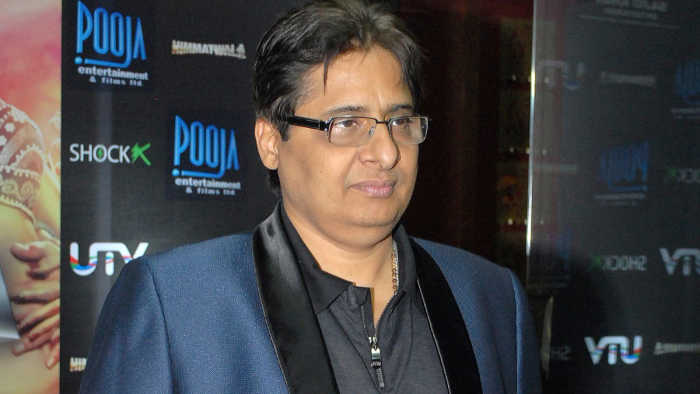
Wild swings in Vashu Bhagnani stock raise eyebrows


Shares tank 36% in a month after 1,168% gain in the past one year amid rumours of financial stress
Kairavi Lukka (HINDUSTAN TIMES; July 2, 2024)

The sharp swings in the share price of a Mumbai-based film production company in the past month has raised eyebrows on Dalal Street. In the previous six trading sessions, Vashu Bhagnani Industries, formerly known as Pooja Entertainment, has been locked in the daily lowest tradable limit on the BSE, declining nearly 36% in this period following news reports that the company was under financial stress.

Shares of the company, owned by veteran film producer Vashu Bhagnani, have rallied 1,168% in the past one year, and 355% so far in 2024, taking the company's market cap from Rs. 82 crore a year ago to over Rs. 1,000 crore now.

The stock closed at Rs. 298.85 on Monday, 5% lower - the lowest tradable limit in the trading session. The recent losing spree in the shares has continued even after the company, in a stock exchange disclosure, denied news reports that said the entity sold off its office building, laid off staff and is seeing delay in salary payments.

Before the news surfaced on June 24, shares of Vashu Bhagnani Industries had almost doubled in just one month, from Rs. 209 on May 24 to Rs. 410.

"Pooja Entertainment is a classic example of a share doing better than the market but without any fundamentals," said Arun Kejriwal, founder, KRIS, a Mumbai-based investment consultancy firm. "Such price movements make one believe that it is not natural but artificial."

The company's consolidated profit for FY24 stood at Rs. 8 crore as against Rs. 2.86 crore the previous year. Consolidated revenues were at Rs. 58.07 crore during the year as against Rs. 46.6 crore in the previous year.

Film trade analysts claim the company's recent movies have not been profitable. "We have not seen Pooja Entertainment's movies do well in the last 23 years. The production house's last hit movie was in 2001 named 'Mujhe Kuchh Kehna Hai'; and ever since then, all their movies have tanked," said Komal Nahata, a trade analyst.

"Recent releases like Bade Miyan Chotte Miyan, Mission Raniganj, and Bellbottom have also failed to break this streak and were box office flops."

I didn’t come here to play a doll. I came here to be an actor-Huma Qureshi

Huma Qureshi

Rachana Dubey (BOMBAY TIMES; July 1, 2022)

Huma Qureshi recently clocked a decade in Bollywood. She had stepped into the industry with Gangs of Wasseypur – Part 1, which had released in June 2012. Today, even as she’s busy completing movies and shows at breakneck speed, she believes she has learned to strike the perfect work-life balance. In a conversation with BT, she talks about working non-stop and how the narrative for women and women-led stories has changed in the industry in the decade that she has been a part of this field. Excerpts:

The last two years have turned out to be interesting for you career-wise. At a time when there was so much uncertainty around us, you shot for a couple of projects between the two lockdowns. You were seen in Bellbottom and Zac Snyder’s Army Of The Dead and were appreciated for your performance in the web show Maharani. How do you plan to sustain that momentum for the rest of this year?
Opportunities and hopes come at the most unlikely times and from the most unheard of places. The two years, 2020 and 2021, were the pandemic years in public memory. Theatrical releases had virtually stopped and content on the OTT platforms was dictating the entertainment space. In that phase, I was clear that I won’t let this bog me down. I wanted to go out there and put out something great for people to see. When Bellbottom came to me, I eagerly took it up because it was the first film that went on floors post the global slowdown. The part was great, and it was an experience worth the risk we took. Subhash Kapoor’s narration for his web show (Maharani) had blown me away. I was certain that I wanted to do it. We shot it between two lockdowns amid so much uncertainty. What if this was my last piece of work? That thought ignited an entirely different passion in me. It liberated me in so many ways. And that is the thought with which I have surged into 2022. I’m trying out newer things, playing characters that are completely different from who I am.

You recently completed a decade in Bollywood. In these years, you have seldom played the conventional heroine — something that wasn’t the norm when you started out. What do you think helped you get this far?
I just do things that I naturally gravitate towards. At the outset, I didn’t have the luxury of choosing projects, neither was I launched on a grand scale nor have directors chasing me. I went through an entirely different journey where I auditioned to get work, I got replaced on numerous occasions and went through a grind, something that I wear like a badge of honour. I am proud of everything I endured to get this far. All that I have today has been earned with a lot of hard work and patience. It didn’t come to me. If you find my repertoire full of unconventional projects, it’s also because those were the choices I made from all that came my way. It was about choosing a role where I could not really see myself easily. I have never tried playing myself. The greatest compliment for me was to be told that I played an uneducated Bihari housewife like I belonged there, although I am a South Delhi girl. That is the fun of being an actor. I didn’t come here to play a doll. I came here to be an actor. I will do what it takes to play a part effectively. In the last year alone, I have worked with different directors and in content across various genres. Do I love songs and dances? Yes, I do, but I don’t want to do just that. I have a lot more to offer that goes beyond it. I don’t know what the new conventional norms are, but with our choices, if we have been able to redefine how a woman should be seen in a movie, we’re getting somewhere and exploring so many of her other facets.

A decade ago, it was a big deal for a heroine to shoulder a film on her own. Today, plenty of leading ladies, including yourself, are carrying films as well as web shows on their own. That’s a huge transition, don’t you think?
Yes, and it hasn’t come in easily. I can talk for myself. After I worked with Deepa Mehta on the show Leila, my perspective changed in a big way. It was such a turning point. Khoon chakh liya maine! The joy of leading a project is scary and empowering in the same breath. And she gave me that. Deepa made me believe that I can carry an entire show and be in every frame without boring the audience. She made me believe that I had it in me. When an opportunity presents itself, you rise to the occasion. The show opened doors for me to work with Hollywood bigwigs like Zack Snyder. It got me several good projects. Maharani was one of them. I am now leading a lot of stories which have a female perspective. This is Huma Qureshi 2.0. I want to call it that without sounding vain about it. I am not the same person I was back in the day. I am trying to do things differently. As an actor, the more fearless you get, the more this industry and the audience rewards you. I like reading and watching content. A few years ago, people had an issue with the phrase, web-series. I had seen that not only was it brimming with international talent, but it was also gearing up to take India by storm. The writing and the production standards were superlative. These are opportunities that have to be grabbed when they come to you. Doing my first show has hence, been a big turning point. Sometimes, merely doing things you like can have a domino effect on your life. It benefitted me in a big way.

Lastly, the film industry in India is gradually moving towards becoming one cohesive workspace that ropes in talent from film industries across the country. As someone who has worked in two films down South, do you find a change in the manner in which people now perceive actors who work across industries?
I think the change here is phenomenal. People have realised that there is a lot to learn from them. Industries like Tamil and Telugu are not talking down to their audience. In fact, they are pushing their boundaries. The stories are contextual, they pride themselves in the cultural references, they are deeply personal, nuanced and have a massive scale. The southern industries have done this repeatedly. The way things are going, multilingual projects are the in thing. For every actor and talent involved, the audience base increases. I feel thrilled that I did my second Tamil film, Valimai. I have learned so much by sharing screen space with Thala Ajith and Rajinikanth sir. Not just as an actor, but also as an audience member, I am excited about these big pan-India films. Why should we have so many boundaries within our country anyway? We need to shake things up a bit in these seminal times.

'83 is the top overseas grosser of 2021; beats Sooryavanshi

sooryavanshi 83 release
Box Office India Trade Network

The Overseas market was dull in 2021 like the Indian market as only '83 and SOORYAVANSHI managed to collect well but this is two films doing well as compared to one in India. The standout performance was SOORYAVANSHI although '83 collected a little more that came over the Christmas and New Year period which is easily the most lucrative period for the box office in Overseas with a prolonged holiday period. 

Also SOORYAVANSHI was that film for the mass circuits like Maharashtra, Gujarat and CP, CI. So an $8 million plus overseas total is actually more impressive than its India business. SOORYAVANSHI became the second highest Akshay Kumar grosser in Overseas after GOOD NEWWZ but that was a more overseas friendly film and released over the New Year period.

The rest fared poorly though TADAP surprised in United Kingdom as it beat the likes of BELLBOTTOM, ANTIM and CHANDIGARH KARE AASHIQUI. Overall TADAP could not do much in Overseas but UK has done pretty well as it has collected £187k till date and is still running after 9 weeks of release. It might add another £3-5k and a £190k final total which is not much less than films like BALA and DE DE PYAAR DE which released pre-Covid in 2019.

The top ten grossers Overseas ins 2019 are as follows.
1. 83 - $8.5 million (expected)
2. Sooryavanshi - $8.35 million
3. Bellbottom - $1.92 million
4. Antim - The Final Truth - $1.8 million
5. Chandigarh Kare Aashiqui - $1,060,000
6. Bunty Aur Babli 2 - $1,000,000
7. Tadap - $620,000
8. Mumbai Saga - $470,000
9. Thalaivii - $380,000
10. Chehre - $320,000

Sooryavanshi is the only hit of 2021, the worst year ever for the industry

Sooryavanshi Box Office Collection Day 2: Akshay Kumar's Film Crosses Rs 50 Crore Mark
Box Office India Trade Network

The year 2021 was the worst ever seen in history for the Hindi film industry with SOORYAVANSHI being the only HIT film and no other successes. There were BLOCKBUSTER films like SPIDER-MAN: NO WAY HOME and PUSHPA: THE RISE - PART 01 but they were from Hollywood and the Telugu film industry respectively. 

There were 57 releases from the Hindi film industry in 2021 compared to 59 releases in 2020 and the 57 films cumulated around 490 crore nett while in 2020 it was 745 crore nett from the 59 releases. The disaster year was due to the Coronavirus pandemic but also the films that did releases at the fag end of 2021 were not up to the mark.

The year was so bad that becoming a FLOP was actually a minor achievement. SOORYAVANSHI was a HIT while ANTIM, TADAP and ROOHI were the flop films and every other single film was a DISASTER. The problem with these films was they did okay for a week or so but could not do anything after. The saving grace was the revenue from digital rights which meant that despite very poor theatrical results, the losses were not huge. 83 lost a record amount of money while SATYAMEVA JAYATE 2 also lost a reasonable amount but most others got away with it.

There were releases like BELLBOTTOM which had high costs and CHANDIGARH KARE AASHIQUI which had reasonably high costs but did not suffer much due to good prices for digital. This is despite very poor theatrical performance. Going forward things will get better as Covid now looks behind us though you can never be 100% sure.

It will probably take time to get back to pre-Covid levels as the content has to adjust to the new box office scenario post pandemic. The larger Hindi film audience is in the states and not in the metros while most films were targetting metros pre-Covid. The footfalls were dropping pre-Covid and a change in content was going to be needed anyway to hold footfalls and all Covid-19 has done is accelerated this need for change.

The classifications for 2021 is as follows.

All Time Blockbuster
-

Super Blockbuster
-

Blockbuster
-

Super Hit
-

Hit
Sooryavanshi

Semi Hit
-

Average
-

Below Average
-

Flop
Antim - The Final Truth
Tadap
Roohi

Disaster
The Rest (53 films)

For Ganapath, we created a much stricter bio-bubble; Bellbottom experience came in handy-Jackky Bhagnani

Jackky Bhagnani: We created a much stricter bio-bubble

Maker of Tiger-Kriti’s Ganapath on how the team escaped UK’s Omicron case surge by creating stricter bio-bubble and following safety norms
Upala KBR (MID-DAY; January 13, 2022)

The team of Ganapath returned to India last week after wrapping up an extensive schedule in London. Producer Jackky Bhagnani admits that filming the Tiger Shroff and Kriti Sanon-led actioner was far from easy as cases of the Omicron variant surged across the United Kingdom in December. “The first few weeks [of the shoot] were brilliant,” says the producer, who took the project on floors in October.

“But in the last two weeks, cases of the Omicron variant started to spread like wildfire. We created a much stricter bio-bubble to ensure there were no disruptions in our schedule.”

Bhagnani, whose Bellbottom was among the first few Bollywood films to roll after the first wave of the Coronavirus pandemic in 2020, put his learnings from the project to good use here. While regular sanitisation of the sets has become par for the course, the team was tested every three days and masks were reintroduced. Additionally, the makers ensured that the local unit hands were put up with the rest of the team, thus minimising the interaction with the outside world.

“We completed the shoot with utmost precaution, and safety measures in place. Our experience of shooting Bellbottom in [Scotland and London] came in handy. As a producer, it was important to keep everyone motivated and not let the news of the new variant bog people down,” says Bhagnani, relieved that the foreign leg of Vikas Bahl’s directorial venture was completed on time, without a single case being reported on the set.

A lot of people are still not on OTT-Vaani Kapoor


Vaani Kapoor believes that the reach of theatres continues to be wider than that of web platforms
Rishabh Suri (HINDUSTAN TIMES; January 12, 2022)

Vaani Kapoor is basking in the appreciation for her performance in her latest big-screen outing Chandigarh Kare Aashiqui (2021). And she is happy to have reached a stage where her acting chops are recognised, as until now, she was slotted into the ‘rom-com actor’ and ‘good dancer’ categories.

“People would say, ‘You dance really well’. And I would be like, ‘I also act’. Maybe I don’t get those meaty parts enough to showcase [my acting skills]. Of course it’s also the director (Abhishek Kapoor) who has presented me in a certain way, and it worked,” she says.

The actor feels that there is also a change in how we look at female actors, but it’s not enough just yet. “With the emergence of women-driven films, women get good parts to play. But audiences need to give such films a chance and give it enough so that the box-office numbers don’t look shabby, for the makers to have the courage to make more films which are driven by women, or give them meatier parts,” elaborates Vaani, who has Shamshera lined up for a release this year.

While the situation is uncertain yet again due to the surge in Coronavirus cases, she is happy that both her films last year — BellBottom and Chandigarh... — opened in theatres, and not on OTT. Supporting theatrical releases, she mentions, “I am happy that the film released in theatres, because I feel it reaches a larger audience. A lot of people are still not on OTT.”

The 33-year-old also doesn’t miss mentioning how the theatrical experience is vastly different from the streaming one. “It (watching movies in theatres) is a community experience. My father doesn’t step out usually because of Covid worries and his ailments. But he went to a theatre in Delhi for my film. He said he loved the whole experience. He also loved the film, but he liked the experience of watching it with friends and family,” she concludes.

I hate the goddamn camera-Mamik Singh


After a starry debut, Mamik Singh reveals why he stayed away from taking up too many projects
Sugandha Rawal (HINDUSTAN TIMES; October 23, 2021)

Actor Mamik Singh, who managed to make his mark with his debut film, Jo Jeeta Wohi Sikandar (1992), soon disappeared from the silver screen, leaving his fans disappointed. While the actor did appear in a couple of TV shows, films and web series, his aversion to camera has always kept him away from taking up bigger roles. Opening up about his career, Singh tells us, “What I am doing now, or have done in the past is not something I am up to in life these days.”

Though the actor was offered several roles, he chose to do projects only if he felt like it. The 58-year-old explains, “Beech beech mein log mujhe bulate rehte hain, and people do come to me with offers saying, ‘sir aap aa jao, yeh karlo ya woh karlo’. And based on my mood, I go and do the projects.”

After his debut, the actor starred in TV shows such as Saahil, Maal Hai To Taal Hai, Aa Gale Lag Jaa, and Ssshhhh...Koi Hai. He was also a part of web shows such as Rangmanch, Scam 1992 – The Harshad Mehta Story and Who’s Your Daddy Season 2. But Singh insists that it isn’t his story anymore. He says, “I have been there, done that. Now, it is not my story.”

When asked why he feels that way, the actor is quick to reply, “Mere ko na phele shauk tha, na aaj shauk hai. I am not even interested in telling people about my upcoming projects. I never intended to do that when I started my career, and that is true even today. I was a very reluctant actor. I hate the goddamn camera.”

He asserts that if it wasn’t for his aversion, he would have done “150 films by now”. So how did he decide to be a part of actor Akshay Kumar’s BellBottom. He reveals, “The director (Ranjit M Tewari) came to me to play the role of Kumar’s brother. After some time, I agreed to be part of the film and left for Scotland with the team.”

However, the actor was miffed when many of his parts got chopped off during editing. “All the scenes about the relationship between the brothers didn’t make it to the final cut. I spoke with the director, asking him why he brought me to Scotland for such a small role,” he quips.

Now, Singh wants to shift his focus entirely and work for the greater good. “I am working on two things — an enterprise which will help animal and towards education, so everyone gets a fair chance to get ahead in life,” he signs off.


Fenil's Bollywood Talk # 696

CINEMA HALLS TO FINALLY OPEN IN MAHARASHTRA THIS FRIDAY!

The day is finally around the corner. Two days from now, on October 22, theatres will finally be allowed to resume operations in the crucial state of Maharashtra. We have spoken in this column about how the Maharashtra government has been quite unfair to the film industry. The state contributes nearly 30% of all India business. Hence, without Maharashtra, it was not practical to release a Hindi film. It was no surprise that only 3 major Bollywood films released post the second lockdown – Bellbottom, Chehre and Thalaivii. The first two announced the release dates with the hope that Maharashtra would open up by August 15.

What shocked many was that the cases have been declining steadily almost everywhere in Maharashtra since June. The same month, the government announced a very practical plan of starting theatres and other businesses in cities or districts with least positivity rate. As a result, cinema halls opened in some towns for a few weeks. But this plan was taken back after fears of Delta Plus. Meanwhile, from July onwards, theatres were allowed to open in several states. By mid-August, except for Maharashtra, Kerala and some minor states, cinemas were operational all over the country.

The industry sadly was too scared to openly speak about their anger. Nevertheless, they continued having meetings with the government. Finally, on September 25, chief minister Uddhav Thackeray agreed to open cinemas but from October 22. The industry was overjoyed. However, a few wondered why can’t the theatres start immediately. Also, there were fears that the government might push this date if the cases increase due to the festivals. Moreover, cinema hall owners were also worried that if the government doesn’t allow shows at night, then it can affect the business. The last bit worried the producers too.

But fortunately, the cases reduced instead of increasing. The government didn’t play any mischief and cinemas are opening on October 22 as scheduled. And earlier this week, it allowed restaurants to operate till 12 midnight and shops and malls till 11:00 pm. This made it clear that there’ll be no night curfew and that theatres can play night shows.

Since cinema halls were open in other states, a lot of Hollywood films were released and some of them even did well. Most of these films would make it to cinemas in Maharashtra from October 22. These include Venom: Let There Be Carnage, No Time To Die, Shang-Chi And The Legend Of The Ten Rings, Free Guy and Jungle Cruise. Bellbottom, Chehre, Thalaivii and a small Hindi film starring Faisal Khan, Faactory, will arrive in cinemas too. Then regional films like Doctor (Tamil), Love Story (Telugu), Honsla Rakh (Punjabi) and Qismat 2 (Punjabi) would be screened in select multiplexes.

Two Hindi films would release tomorrow across India, and also in Maharashtra. One is Bhavai, starring Scam 1992 star Pratik Gandhi. It was earlier titled Raavan Leela but its title was changed due to protests. Despite this controversy and Pratik Gandhi’s presence, there’s no excitement. The other Hindi film is Babloo Bachelor, starring Sharman Joshi and Pooja Chopra. Its trailer was poor and it’ll sink without a trace.

Finally, two Hollywood films are also arriving in cinemas tomorrow. While The Last Duel would release across India, the much awaited film Dune would release everywhere except Maharashtra. This is because it won’t get sufficient IMAX and 4DX screens in the state as these screens will be taken over by films like Venom: Let There Be Carnage, No Time To Die and Shang-Chi And The Legend Of The Ten Rings. Hence, Dune will be available in Maharashtra from October 29.

Hence, as one can see, there are plenty of options for cinemagoers from tomorrow. Most of the films sadly won’t get sufficient footfalls but a lot of hope is riding on Venom: Let There Be Carnage as it released just last week elsewhere and did great business.

Fenil's Bollywood Talk # 692

WILL MAHARASHTRA CINEMAS OPEN SOON?

The flow of Hindi film releases has once again stopped. Bellbottom kickstarted the movie-watching season followed by Chehre and Thalaivii. The reason why no more films are releasing is because the crucial state of Maharashtra is still shut. What’s shocking is how the industry is silent. The losses are mounting and survival has become difficult for the theatre owners in the state. Yet, except for some token gestures and pleas to open cinemas, the exhibition and production sector isn’t doing much. Away from the limelight, the industry stakeholders have met the Maharashtra government officials and have requested them to allow the reopening of cinema halls. But unlike shop owners and the restaurant industry that did public protests and put immense pressure on the government, the conduct of the film industry, in comparison, is lacklustre.

However, since the past few days, some murmurs are going around in the industry and trade that cinema halls would finally be allowed to reopen in Maharashtra. While some predict that it’ll happen in the first week of October, some have claimed it can happen as early as next week.

The Ganesh Chaturthi festival was celebrated from September 10 to September 19 in Maharashtra. Though the government put a lot of restrictions on the celebration, people were still free to go to each other’s houses and even travel out of town. Some experts predicted that the cases would increase once the festival ends. However, till now, there has been no major upsurge in cases. Hence, the buzz is that once the state government realizes that the cases are in control, they’ll allow the theatres to restart by next week or a week later.

On the other hand, the skeptics don’t want to keep any hope. They argue that even in August, Maharashtra health minister Rajesh Tope had assured that the theatres will open soon. But that didn’t happen. In June’s first week, the government introduced a level-based reopening model. As per this strategy, the cities and districts with the least cases were put in Level 1 category and these places were allowed to open theatres. As a result, theatres had opened in Malegaon and Aurangabad. But in 20 days, this level-based formula was thrown out of the window due to fears of the Delta Plus variant. Many were shocked how this level-based model, which seemed very sensible and practical, was abruptly ended within a couple of weeks.

Hence, the government can’t be trusted. There’s a possibility that cinemas might not open in October. The government didn’t give any reason why it didn’t open theatres in September and even the industry got too scared to speak about it openly. Also, in September first week, a newspaper article in The Times Of India had reported that the government is looking at opening drama theatres first, in the first week of November, and then they’ll decide on the theatres and multiplexes! If this is what the government implements, the industry would lose out on the Dussehra holiday (October 15) as well as the Diwali holiday (November 5). This would prove catastrophic and one can only hope that the theatres open as soon as possible.

Bellbottom earned a lot of love and respect for fronting the return of cinemas-Akshay Kumar

Akshay Kumar: Film earned respect for fronting return of cinemas

As Bellbottom drops online a month after its theatrical run, Akshay says audience and industry’s love has validated his call of big-screen-first
Uma Ramasubramanian (MID-DAY; September 21, 2021)

He is one of the most business-savvy actors in Bollywood. But business wasn’t Akshay Kumar’s top priority when he sought a theatrical run for Bellbottom. The superstar chose to back a larger cause instead — the revival of cinemas. In his books, the goodwill thus earned far outweighs the financial success of a film. Today, he is content in having made the right decision; after earning a respectable amount at the box office, Bell Bottom opened to positive reviews on Amazon Prime Video last week.

“The appreciation that it is garnering, makes all the hard work seem worthwhile,” begins the actor. The Ranjit M Tewari-directed spy thriller hit the marquee in mid-August amid the theatre shutdown in Maharashtra. “I was a bit disheartened because theatres hadn’t opened up everywhere, despite the 50 per cent occupancy rule. But I believe every film has its own destiny. Bellbottom earned a lot of love and respect from the audiences as well as the industry for fronting the return of cinemas.”

Kumar had a taste of a digital premiere last year with Laxmii (2020). How does he view the OTT boom of the past one-and-a-half years? “Many films are opting for a direct-to-OTT release, so platforms are getting new films in their catalogue. Content creators have an avenue to showcase their work, in spite of Covid-19 restrictions. So, it is a win-win situation for both,” he states.

That said, Kumar and the makers of Sooryavanshi are determined to take the cinema-first route for the cop caper. It has been a long wait for Rohit Shetty’s directorial venture to hit the screens, but the actor is unperturbed. “There’s no point in being distressed. I have left the decision to Rohit and Reliance [Entertainment]. It’s as much their film as it is mine. I’m sure whatever decision they take, will be in the best interest of the film.”

Meanwhile, the actor will keep doing what he does best — churn out stories he believes in. The pandemic couldn’t slow him down as he shot for Bellbottom, Atrangi Re, Bachchan Pandey and Raksha Bandhan. “By nature, I am someone who can’t sit idle. If my shoot gets cancelled for some reason, I schedule a meeting or a narration. Also, because of my habit of waking up early, I have the added advantage of packing in more things in a day.”

Filmmakers don’t want their films to release unless they can in Maharashtra-Komal Nahta

Vishnu Vardhan Induri: People unwilling to return to theatres

Despite recent offerings faring well, filmmakers unwilling to release movies in limited theatres; Hollywood offerings make the most of lack of competition
Mohar Basu, Uma Ramasubramanian (MID-DAY; September 18, 2021)

Not too long ago, Akshay Kumar was hailed by industry folk for leading from the front and facilitating a theatrical release of his film, Bellbottom. However, despite a notable collection of Rs 30-crore — collected from theatres across India, where a 50 per cent occupancy clause was in place — the development hasn’t encouraged other filmmakers to follow suit.

Mid-day has it that the recently released offerings have been unable to recover costs. Kumar’s Bellbottom, which also began airing on Amazon Prime Video this week, earned about Rs 30-crore, but trade pundit Atul Mohan puts the predicted figure of a pre-pandemic film of this nature at Rs 150-crore. 

“Roughly, 30 per cent of the national box office [collection] comes from Maharashtra, 20 per cent of which comes from Mumbai and Thane alone. Mumbai is where buzz around a film is generated. Because the centre is shut, exhibitors are not particularly interested in [showcasing] films. Bellbottom, Chehre and Thalaivii are doing [well], but the industry isn’t picking up pace. Among the factors contributing to this failure are the ticket prices, which are too high for a post-pandemic era. There’s also a great deal of fear among viewers, who are willing to wait for an OTT release that follows within weeks.”

When establishing how the film’s subject affects its collection, Kangana Ranaut’s Thalaivii serves as an ideal case in point. The film’s primary market was South India. Rs 3.85 crores of the Rs 5 crores generated by the film, he says, came from this market.

Producer Vishnu Vardhan Induri says that while he didn’t expect promising collections from a theatrical release, the film warranted a big-screen airing. “People are unwilling to return to theatres. Our focus was still trained on the digital and satellite platforms. Kangana has a huge fan base, and many people would have watched it, had it aired in Mumbai. We were not expecting great collections. We knew it was not going to screen in multiplexes.”

The development has taken a toll on Bollywood. With news of a third wave intensifying, and city cases averaging 500 a day, cinema halls are not expected to open soon. Trade sources set the expected date in November, ahead of Diwali.

Trade analyst Komal Nahta says, “Filmmakers don’t want their films to release unless they can in Maharashtra. There is no Hindi film screening in the forthcoming fortnight.”

Hollywood flicks, in the interim, are making the most of the lack of competition. Daniel Craig’s much-awaited No Time To Die is set to hit screens on September 30, with The Boss Baby: Family Business, House Of Gucci and Resident Evil: Welcome To Raccoon City following in the weeks that will follow. It is believed that the first Hindi film will be Tadap, in December.

Fenil's Bollywood Talk # 691

FLOW OF HINDI RELEASES STOPS ONCE AGAIN; HOLLYWOOD AND REGIONAL CINEMA TO DOMINATE

The Akshay Kumar-starrer Bellbottom was released in cinemas on August 19 and it was the first Hindi film since April 2021 to arrive on the big screen. Its release date was announced when cinemas are opening up in many states. It was assumed that the crucial state of Maharashtra, which contributes 30% of the revenue, would also open up by August 19. Sadly, it didn’t and it affected Bellbottom’s performance. Chehre arrived next, on August 26 and it was also released with the idea that Maharashtra would have opened up by then. Finally came Thalaivii on September 10. Its release was planned at a time when it became clear that Maharashtra is not opening up. Yet, the Kangana Ranaut starrer released since it is also releasing in Tamil version and the state of Tamil Nadu has allowed theatres to resume operation.

Sadly, all three films have flopped at the box office. Bellbottom was expected to collect at least Rs. 50-60 crore but its lifetime will now be around Rs. 30 crore. Chehre won’t be able to even cross the Rs. 5 crore mark while Thalaivii won’t go beyond Rs. 7-8 crore. The word of mouth of all three films was positive but these films were not properly marketed. Also, audiences were not excited to see it.

On the other hand, a Hollywood film, Shang-Chi And The Legend Of The Ten Rings, had a surprise opening and is about to reach the Rs. 30 crore lifetime. The two Punjabi films, Puaada and Chal Mera Putt 2, have done extraordinary business. However, the industry has chosen to ignore this part. They have focused only on the dismal performance of the three Hindi films and have decided to not release any major film till Maharashtra is open.

As a result, for the next three weeks at least, no significant Hindi film is releasing on the big screen. The Hollywood films and regional films will now dominate cinemas for a while. Tomorrow, three Hollywood films will release – Free Guy, Don’t Breathe 2 and Old. The first two has a slight chance of pulling audiences. Shang-Chi And The Legend Of The Ten Rings will continue to dominate the business in the coming week too. The next week will see the release of Qismat 2, the sequel of a super-hit Punjabi film Qismat, and the Hollywood entertainer, Jungle Cruise, starring Dwayne Johnson. Finally, on September 30, the James Bond film, No Time To Die, will finally arrive in cinemas and its expected to do huge business in India.

Shamshera makers want theatres to be completely open so everyone can have a spectacular theatrical experience-Vaani Kapoor


Vaani Kapoor talks about how her work helped her sail through the ‘stay at home’ phase — the toughest period of her life
Juhi Chakraborty (HINDUSTAN TIMES; September 14, 2021)

The past two years have been challenging, confesses actor Vaani Kapoor, who shares that the phase where she had to stay at home and not step out for work was, by far, the toughest period of her life. “I was feeling trapped in the house like so many others,” she says.

The actor adds that she missed being on a film set and, in general, her overall work, and her happiness resumed when she resumed her work. Kapoor, who completed two films — BellBottom and Chandigarh Kare Aashiqui — amid the Coronavirus pandemic, tells us that she “was waiting for cases to go down”.

“Ours is a job that can’t happen over a video call,” shares the actor.

With filming currently in full swing and the final products slowly making their way to the cinemas, the 33-year-old only hopes that the worst is over. “We all, kind of, skipped two years of our lives and now we are finally hoping that we can live normal lives [going forward], of course, by taking all precautions. It has been hard for us (movie industry) as it has been for everyone else,” she adds.

Kapoor says that she was among the fortunate ones who had kept working despite the pandemic. “I was lucky enough to shoot two films at a time when everybody else had to wait it out and be home.I am aware of that and grateful for it. I ended up shooting two films back-to-back amid the pandemic. I was the busiest. I have never shot films back-to-back [in the past]. I am grateful that I had work. I could keep myself distracted,” the actor shares.

While her film BellBottom has made its way to the cinemas, Kapoor has two more projects waiting in line — Chandigarh Kare Aashiqui and Shamshera.

Ask her the status of the release of these two films and she tells us, “I don’t know when they will be coming out. I know that Shamshera makers would want theatres to be completely open so everyone can watch it there because it [would make for a] spectacular theatrical experience. They are making that decision. It is very hard on producers with money and financial aspects [involved]. I hope all the films that are awaiting their releases are out soon,” concludes the actor.

Akshay Kumar’s BellBottom has spelled cheer, say cinema hall owners


Sugandha Rawal (HINDUSTAN TIMES; September 1, 2021)

Considering the theatres are still running in limited capacity, or even shut in some places, the release of Akshay Kumar’s BellBottom was a huge risk. However, the gamble has paid off well, with the film spinning the box-office wheel in the right direction, paving the path for big screen revival.

As the first big Hindi film to release theatrically after the pandemic slump, it has brought hope and confidence among theatre owners. “This step by Akshay Kumar, (producers) Vashu and Jackky Bhagnani will be seen as a groundbreaking one. It helped revive the cinema exhibition business. The film is holding strong in the second week,” shares Kamal Gianchandani, CEO of PVR Pictures and president of the Multiplex Association of India (MAI).

Theatre owners were eagerly waiting for the magic of the big screen to be back. “We’re glad that Akshay kicked off this recovery process. We hope that the momentum built by the fantastic response to BellBottom would mark the onset of our revival,” asserts Rajender Singh Jyala, chief programming officer, INOX Leisure Ltd.

Co-starring Vaani Kapoor, Lara Dutta Bhupathi and Huma S Qureshi, the Ranjit M Tewari directorial, produced by Pooja Entertainment, released on August 19. BellBottom is inching close to ₹30 crore in India, with business growing overseas as well, especially in the UK and North America.

Trade expert Joginder Tuteja hails the team for their decision to look at the larger picture of course correction, instead of profits. “The film comes with a potential to cross ₹150 crore, and the producers knew that they wouldn’t be able to reach that mark with all the restrictions. Yet, they took the risk,” he says.

BellBottom’s growing collections are likely to encourage other production houses and exhibitors as well. “When good content comes to a cinema hall, collections follow. The film’s second Sunday collection was the same as the first Sunday. It instills confidence in the exhibition sector,” says Devang Sampat, CEO, Cinepolis.

The success of the film is also trickling down to single screens, too. Raj Kumar Mehrotra, general manager at Delhi’s Delite Cinema, shares, “The film had packed shows this weekend. All the safety precautions are being followed.” Officials from Rajmandir Cinema, Jaipur, thanked the team on Twitter for choosing a big-screen release.

In South India, trade guru Sreedhar Pillai from Chennai tells us, “The film had houseful shows in the first week itself. Akshay Kumar ne bahut confidence se apni film theatres ko di. It’s a great beginning.”

Now, theatre owners in Maharashtra are waiting for the green signal to bring life back into cinema halls. “Looking at this success story, we want theatres to open in our state as well,” says Arvind Chaphalkar from Pune’s City Pride multiplexes. Manoj Desai, executive director of Mumbai’s G7 Multiplex (Gaiety Galaxy) and Maratha Mandir Cinema, adds, “Hum bol bol ke thak chuke hain. We hope we’re allowed to open with 50% capacity.”

THEATRE EMPLOYEES REJOICE
Alongside cinema owners, even the employees are happy with the positivity that BellBottom has brought about. Galib Khan, ticket counter official, JP Cinemas, Madhya Pradesh, says, “Kaam ki bahut shortage chal rahi thi. Now, with BellBottom reviving business, we can expect regular income.”

Satish Gole, cinema manager at a single-screen theatre in Delhi, says, that it’s because of the efforts of the film’s team that people aren’t hesitant to step out of their home to watch a film on the big screen now. “It’s a good sign for the theatres and company, which helps us, the employees, as well,” he says.

Despite lucrative offers from digital platforms, we are looking at releasing Jogira Sara Ra Ra in theatres-Kushan Nandy


Despite offers from two leading OTT platforms, Jogira Sara Ra Ra director Nandy says team has unanimously decided on big-screen release of Nawazuddin-starrer
Upala KBR (MID-DAY; August 31, 2021)

Slowly but surely, actors are returning to the big screen. After Akshay Kumar’s Bellbottom managed a respectable figure at the box-office, it has boosted the confidence of filmmakers to take the leap of faith. Among them is Kushan Nandy, whose Jogira Sara Ra Ra is nearing completion.

The director says the Nawazuddin Siddiqui-led film is set to be theatre-bound despite some OTT platforms vying for its premiere rights. Sources say that Netflix India and Amazon Prime Video had initiated talks with the makers over a month ago.

“We have got quite a few lucrative offers from digital platforms, but we are looking only at theatres. Jogira Sara Ra Ra is a fun, four-ticket film that families [will enjoy] on the big screen. Nawaz, producer Naeem Siddiqui, creative producer Kiran Shroff and I discussed it at length, and unanimously agreed on it. We are confident about the film doing well in cinemas — that’s the first and foremost reason we don’t want to take the OTT route,” says the director, who has reunited with Siddiqui after Babumoshai Bandookbaaz (2017).

He acknowledges that Bellbottom’s performance has strengthened their resolve further. “Kudos to Akshay Kumar, Vashu Bhagnani [producer] and their team for taking this step! It’s a courageous call and shows us the way forward.”

Luckily, the makers of Jogira Sara Ra Ra — also featuring Neha Sharma — have the advantage of time. While the director completed the talkie portions in April, two songs have yet to be shot. Nandy hopes that by the time he calls it a wrap on the slice-of-life movie, the situation will have further improved. 

“We will shoot Nawaz’s song by the end of September, and the other, with Neha, in early October at a Mumbai set. The post-production and background mixing are underway,” says the filmmaker, hoping to reach the finish line soon. The makers will zero in on a release date after the songs are shot.

All of Bollywood is sitting in Mumbai, so it feels like we are being victimized-Anand Pandit


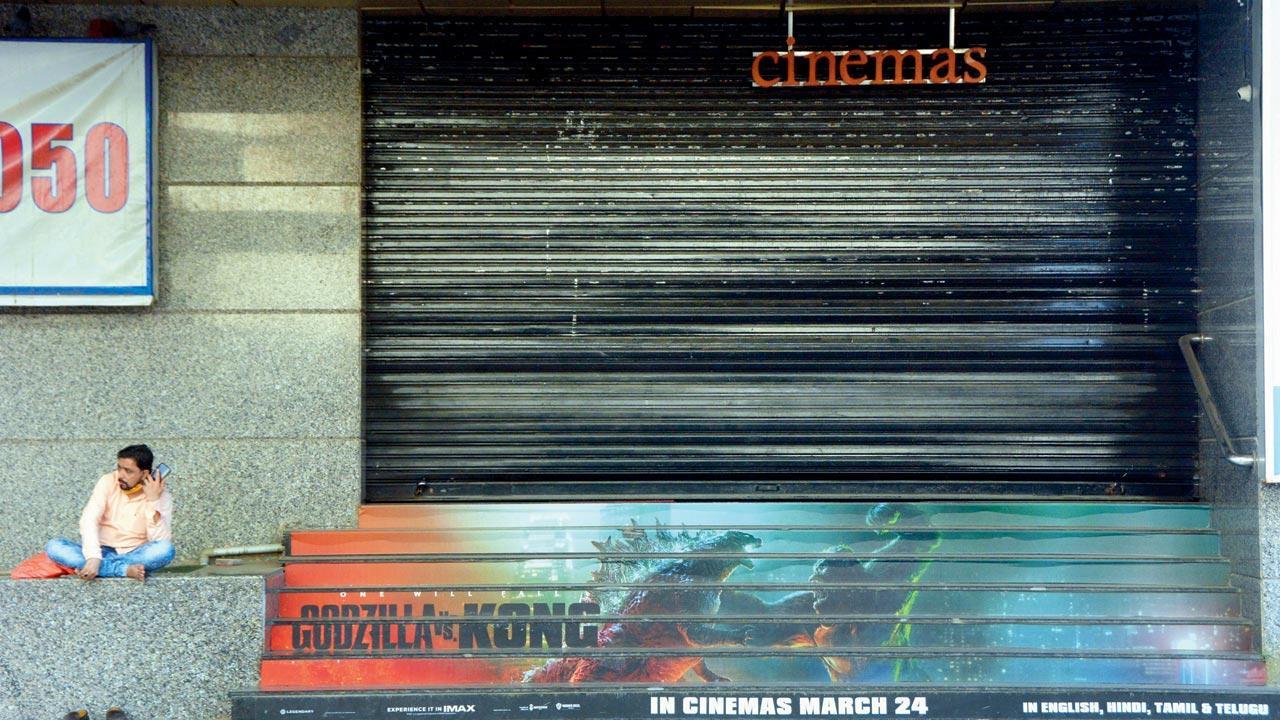
PVR ECX, a multiplex at Citi Mall, Andheri West, has remained shut since the first week of April 2021. Theatres across Maharashtra have been kept out of the state government’s unlock plans, until further orders. Pic/Satej Shinde

With Bellbottom and Chehre makers taking leap of faith to release their films in theatres despite 50 per cent occupancy cap and Maharashtra lockdown, industry says it may be time to show pluck. As one maker puts it, after all, we make movies for theatres. They survive, we survive
Jane Borges (MID-DAY; August 29, 2021)

In December 2020, over two months after the Centre had given its nod for movie theatres to reopen, theatres in Andhra Pradesh and Telangana were still relying heavily on Hollywood productions like Christopher Nolan’s Tenet to revive from the losses the industry had suffered due to the extended Coronavirus lockdown. A surprise Christmas Day release, Solo Brathuke So Better, a romantic comedy starring Sai Dharam Tej, nephew of film actor-politician Chiranjeevi, proved to be a glimmer of hope. 

Hyderabad-based Balgovind Raj Tadla, partner at two single screen cinemas, Sudarshan and Devi, says the crowd’s reaction almost felt like a “revenge-response to COVID-19”. “The movie garnered a lot of media attention,” he recalls.

It also set the stage for three big January 2021 releases, Red, Krack and the Telugu-dubbed Tamil film Master that had superstar Vijay in the lead. All three did phenomenally well with Krack leading the race. But it was Uppena, another romantic drama, which stole the show, collecting over Rs. 150 crore when it released in theatres in Telugu-speaking regions in February, followed closely by Jathi Ratnalu.

Tadla, who is also joint secretary of the Telangana State Film Chamber of Commerce, says this is when film producers and exhibitors predicted an upward swing. But, the second wave that swept the country soon after, came as a huge blow. “At this point, only 10 per cent of the big ticket films had been released. The rest were still waiting it out. [Actor] Pawan Kalyan’s Vakeel Saab was going to be the next big release. It hit theatres on April 9, but despite someone like Pawan in the lead, people didn’t turn up at the theatres.”

Another dry spell due to the more devastating second wave, put theatres out of business again, before cinema halls started opening up by end of July. “I would say that we are still in the first 20 minutes of the film. We are yet to get into the story. It will take another 20 days for us to see where this goes. It should pick up, unless of course, COVID haunts us again.”

The confidence the film industry in the South has shown right from the beginning of the unlock phase has been unparalleled, considering its more popular sibling, Bollywood, has been holding its cards close to its chest, daring only a few odd releases since March 2020. This changed last week, when Akshay Kumar’s spy thriller Bellbottom released in theatres across India. The film hit the screens on August 19 and at the end of the first weekend, it had made around Rs. 15 crore gross in India. It became the first superstar-backed Bollywood film to be released in the pandemic. According to news reports, the movie will release on OTT in September. 

Amitabh Bachchan and Emraan Hashmi’s Chehre, which released last Friday, is the next big ticket film to have hit the screens. What makes these new releases significant is that, in a first, they won’t be screened in Maharashtra due to Coronavirus pandemic restrictions, which is home to the heart of Bollywood, and contributes a lion’s share of the box office revenue.

Film exhibitor Vishek Chauhan, who is based out of Bihar’s Purnea, where he runs Roopbani, the oldest single-screen theatre in the district, says releasing Bellbottom, in such a climate, was “a very gutsy move” by the makers, producers and Akshay Kumar, as well.  “Maharashtra is more than 25 per cent of Bollywood’s market. So, effectively they were left with just 75 per cent of the market to begin with. Out of this, Kerala, Tamil Nadu and Assam theatres are still shut. That means the producers lost another five per cent. Add the 50 per cent occupancy cap, and curfew and other restrictions in some select cities and districts, and that left them with just 25 to 30 per cent [of their targeted audience],” says Chauhan, adding, “One might say that they didn’t make enough at the box office. But, for us that Rs 13-15 crore was pure gold. It has helped get the audiences back, and is now enabling cinemas to plan ahead.”

Though Bellbottom producer Jackky Bhagnani was unavailable for comment, Chehre producer Anand Pandit reiterates why production houses need to show more chutzpah. The film, directed by Rumy Jafry, was originally slated for release in July 2020. With cases peaking in March this year, it was pushed to August. “The narrative, storyline, and cast [of the film] lent themselves to the big screen. Watching it on the iPad or smart phone wouldn’t have justified the experience that we were trying to create for our viewers. I didn’t want to throw away such a film for Rs. 5-10 crore more [on OTT],” explains Pandit.

He says that filmmakers and producers shouldn’t forget that it’s the theatre industry that made Bollywood what it is today. “They have been by our side for the last 70-odd years. At one point, theatre was the only avenue to release films. Today, because of the pandemic, there are over 10 lakh people, connected to the business, struggling to keep afloat. Many have even lost their livelihoods. I think, those who can, should come out and extend their support by releasing their films in theatres.”

Not all risks are worth taking. Director Sanjay Gupta says he learnt it the hard way. Gupta’s Mumbai Saga featuring an ensemble cast of John Abraham, Emraan Hashmi, Kajal Aggarwal, and Prateik Babbar, made it to the big screen on March 19 this year. “We announced the release just a month prior, in February. At the time, the cases were down, and the second wave was nowhere around the corner. We were confident about our film, and also the fact that people would return to the theatres. Looking back, I think we were probably over-confident about the public’s mood,” he says.

When the film released, the second wave had just about begun. “We hadn’t expected COVID-19 cases to rise exponentially. A lot of theatres had opened just to screen our film. It was too late for us to back out by then.”

Having said that, Gupta feels that some measures need to be taken to ensure that the theatre chain survives. “Ultimately, we make movies for theatres. And if they survive, we survive. Most cinema halls have been shut for over a year-and-a-half. At some point, we need to resume. That’s the sentiment with which we had gone ahead. Unfortunately, it didn’t work out, and we suffered.”

According to box office numbers available on bollywoodhungama.com, the movie, which had a production budget of Rs 50 crore, made a gross of Rs 19.68 crore in India and Rs 2.61 crore overseas; its worldwide gross collection was estimated at Rs 22.29 crore. The movie later released on Amazon Prime.

Chauhan says now that most theatres are open, they’d need movies to keep the business going. Post Chehre, there will be a long gap. Kangana Ranaut’s Tamil political drama Thalaivii, based on the life of J Jayalalithaa, will arrive in theatres only on September 10. Bollywood is yet to make further announcements of any new releases. A few odd Hollywood films can help theatres tide through the lean phase, but what after that, asks Chahaun.

Sony Pictures Films India has announced its Hollywood line-up, with Don’t Breathe 2 releasing on September 17, and Spider-Man: No Way Home on December 17. There are a slew of Bollywood films that are ready, but a decision on their release hasn’t been taken for now.

Vivek Krishnani, managing director, Sony Pictures Films India, says that in the last few years the entire “content fabric” has changed. “There are only certain kinds of films, which drive people to the theatres. And this kind of content has to tick off certain boxes. First, it has to have mass appeal. Next, it has to be good enough for people to leave their houses, get into their cars, go to the cinema, find parking, and buy tickets. During the pandemic, we’ve noticed that people have started evaluating their own approach of going to the cinema, and that’s probably because of the kind of exposure they have had to diverse content on OTT. If they are going to be taking the effort to come to a movie theatre, they need to be rewarded for that effort with content that is different and exciting enough, and which they cannot get on the smaller screen. This [consumer behaviour] has forced us to rethink our own creative strategies,” he says, while discussing what parameters they consider, when choosing which film goes for OTT, and which film should wait it out for the big screen.

He alludes to the record turnout that the Tamil film Master saw, when it released on January 13. “People went into the cinema in a big way. Our release Godzilla vs. Kong also had a humongous box office earning, despite releasing in March. What we have seen is that when theatres are open, and the right content comes along, there is but a natural tendency for people to go into cinemas and consume this content. It’s held true in the past, and I don’t see why it won’t in the future.”

Krishnani, however, isn’t sure about the hybrid model, which is being widely discussed ever since Salman Khan’s Radhe released simultaneously across multiple platforms, including theatres outside of India, and via pay-per-view. The film’s collection in India till July 13 was at Rs 1.85 lakh, as it was released on the big screen only in three cinemas, that too in the state of Tripura, bollywoodhungama.com reported. 

“A hybrid model is where the movie runs in theatres and is also being offered as a premium video on demand (VOD). The VOD usually comes at a very expensive price point. This model hasn’t been embraced in India yet. And I think, the jury is already out on what it does to the theatrical revenue. Another issue is that in India, we aren’t used to paying for a one-time watch; we’d rather opt for subscriptions.”

There’s also the issue of piracy, which Krishnani, admits has spiralled with the OTT boom, thus, bringing about newer challenges for content creators. Delaying Hollywood releases in India doesn’t make sense for a similar reason, as most films have already released globally, and pirated content then becomes available online.  

“The truth is that there has been a sharp increase in content consumption [during the pandemic], and that’s because accessibility has increased. Though [OTT] subscriptions have grown, it is but obvious that there’s an audience that’s not paying for this. We do not have metrics to prove this, but this is something we have been able to infer,” says Krishnani.  

Sony Pictures Films India is waiting to release Major, a Telugu and Hindi co-production, which is based on the life of Major Sandeep Unnikrishnan, who was martyred in the 26/11 attack at the Taj Mahal Palace Hotel. “It’s a cinematic experience, because of the story, visuals, and the emotions it draws. I think it is important for stories like this one to be seen in a theatre.”

What’s then, holding back producers and filmmakers from releasing these films?

Shibasish Sarkar, Group CEO, Reliance Entertainment, says that the opening of theatres in Maharashtra will be key to deciding the future of big releases. “The situation is still quite uncertain. While theatres in a majority of the states have opened up, it’s not the case with Maharashtra, which is 25-30 per cent of our market [depending on the film]. At least for pan-India, Hindi films, it is quite a challenge to go ahead and release a film, without Maharashtra. So, while I think we will see a few-odd [Hindi] releases in the coming months, a majority of them are going to wait it out for Mumbai and the rest of Maharashtra to open.”

The release of Kabir Khan’s biographical sports film '83, starring Ranveer Singh in the lead, which has been co-distributed by Reliance Entertainment, has been postponed thrice already. “It was first set to release on April 10, 2020, then we had planned a December Christmas release last year, before pushing it to June 4 of this year. Right now, we are clear that we won’t make any announcement, until and unless there is a semblance of normalcy,” he says, adding, “When I say normalcy, the basic expectation would be that Maharashtra opens up. Only if that happens, can we even have a discussion. Otherwise, there will be no point in doing this exercise all over again. For us, it doesn’t make sense, creatively or business-wise, to ignore 30 per cent of our market.”  Director Rohit Shetty’s Sooryavanshi, starring Akshay Kumar, is also hanging in the balance for the same reason.

Pandit feels that by keeping theatres in Maharashtra shut, the state government is depriving “cinema owners the opportunity to revive their businesses”. “All of Bollywood is sitting in Mumbai, so it feels like we are being victimized. The [state] should, [on the contrary] be supporting the industry,” says Pandit.

Tadla, whose theatres in Hyderabad have been open for nearly a month now, however, has seen a worrying trend of late. Bell Bottom got a luke warm response in his city. “Suddenly, it feels like the audience has lost the habit of movie-watching. I think the second wave was damaging, and that has made people more cautious and wary. We [cinema-owners] are obviously concerned. There was a time, when, even if a movie wasn’t good, it would run for about four weeks at least.”

The digital boom, he feels, has made the audience less tolerant. Today, the fate of a film is sealed is one weekend.

Fenil's Bollywood Talk # 688

BELLBOTTOM FAILS TO SET THE BOX OFFICE ON FIRE; PRESSURE BUILDS ON CHEHRE

The first big Hindi film post pandemic, Bellbottom, finally released in cinemas last week, on Thursday, August 19. The crucial state of Maharashtra has been shut and hence, nobody expected huge numbers. The expectation was that it should open at around Rs. 5 crore. Shockingly, it took an opening of just Rs. 2.75 crore. Friday collections were the same while it collected Rs. 3 crore on Saturday. On Sunday, the film showed growth and earned Rs. 4.50 crore. The Monday collections were around Rs. 1.80 crore. The first week collections are expected to be under Rs. 20 crore and that’s not a good number even for its weekend collections, despite the absence of Maharashtra.

So what went wrong with Bellbottom? When a film is about to be released, the makers first need to create awareness. Viewers need to know that a particular film is releasing, that too in cinemas. And then they need to generate excitement. In the case of Bellbottom, the makers failed on both these fronts. On social media, they made noise but that’s not enough. On ground, many didn’t know Bellbottom is releasing, that too in theatres. A lot of exhibitors and single screen owners confirmed that viewers were unaware of its release on the big screen. Even when it came to creating excitement, the makers didn’t go all the way. The trailer was good but for many, it was not that appealing. Songs help a lot in adding to the buzz. But Bellbottom's songs were forgettable. Akshay’s earlier film in this space, Airlift, had benefited as it had hit songs like ‘Soch Na Sake’ and ‘Dil Cheez Tujhe Dedi’. A hit soundtrack was missing here. Moreover, Akshay Kumar and his team barely did any television show appearances, something that works big time nowadays. They gave minimal interviews.

The underperformance of Bellbottom has given a much needed lesson to the filmmakers. Make sure the awareness of your film reaches to the lowest common denominator and that social media won’t do that for you. Sadly, the fear in the industry is that the debacle of Bellbottom would be used as an excuse by the filmmakers to further opt for the digital route to release their films. They’ll argue that viewers are scared to come to cinemas. They’ll ignore the fact that people are going to overcrowded restaurants and flights, which they wouldn’t have done if they were scared of the virus. The filmmakers will ignore certain trends in Bellbottom’s performance, that it grew well in Gujarat and other cities on Sunday. They’ll also ignore how the Punjabi film Puaada, released a week before Bellbottom, is doing extraordinary business.

Meanwhile, tomorrow, another Hindi film, Chehre, is up for release. It was initially scheduled to release on April 9, 2021 but was postponed due to the second wave. The trade is obviously scared about its fate because this is a much smaller film than Bellbottom. Hence, if Bellbottom couldn’t open well, what can one hope from Chehre? This thriller stars Amitabh Bachchan, Emraan Hashmi, Annu Kapoor, Dhritiman Chatterjee, Raghubir Yadav and Krystle DSouza. It also stars Rhea Chakraborty but she was shown just for a few seconds in the trailer. She is not giving any interviews as it can go against the film. Shockingly, Emraan has given very few interviews while Amitabh hasn’t till Tuesday August 24. The awareness for Chehre’s release, hence, is negligible. The opening will be less than Rs. 1 crore. One hopes it's around Rs. 50 lakhs as anything less than that would be very disastrous.

Chal Mera Putt 2 to start strong


Box Office India Trade Network

There will be another Punjabi film CHAL MERA PUTT 2 that will take a strong opening this week. The market in Punjab got going with PUAADA and even BELLBOTTOM had healthy collections in the first weekend. Now its likely CHAL MERA PUTT 2 will have even better collections as there are more properties in operation and the makers are paying print costs and agreeing to the terms of non multiplex chains and single screens.

CHAL MERA PUTT 2 released just before the lockdown and was doing strong business as it collected almost 3 crore nett in just 2 proper full days and another day when most properties shut up shop. The makers have waited since March 2020 to release in the theatres and it is sure to see results.

The barometer chain for business of Punjabi films, PVR, sold 1492 tickets as per close of business on Tuesday. PUAADA at the same time was 1095 though PVR has more operational properties now including very key properties like PVR Mohali and PVR Pavilion in Ludhiana which between them have added 315 tickets alone. 

In Chandigarh last week BELLBOTTOM collected 6.87 lakh on day one and CHAL MERA PUTT 2 should easily surpass the 10 lakh nett mark. The film can surpass the 75 lakh nett mark in East Punjab on release which would be a huge number. The film does have an issue with censors as the makers shot extra footage to make the film fresher but the censors in India did not pass as the film has Pakistani artistes. Sadly these things exist for cinema and sport only in India while many other trade dealings continue with Pakistan as normal.

The Overseas will see the new film and collections will be excellent with out performance in UK pretty much certain. The Pakistani artsites here are a huge plus as the Pakistan audience will come out for this Indian Punjabi film. The film is getting an advance in certain London cinemas where most Punjabi films will not even release and if they do it will be a show here or there while this film gets many shows and even the biggest screens. Australia and New Zealand will be a huge loss due to Coronavirus lockdown.  

The key reason for the turnout for PUAADA and CHAL MERA PUTT 2 as soon as cinemas opened is that both are starcast mass entertainers. Eventually where the numbers go depend on how good a film is but if you offer entertainment with some face value then the public is always going to give it a chance.

Trade says reopening of Maharashtra theatres crucial to industry bouncing back


With Bellbottom taking the first step towards reviving cinemas, trade says reopening of Maharashtra theatres crucial to industry bouncing back
Uma Ramasubramanian, Mohar Basu (MID-DAY; August 26, 2021)

Akshay Kumar did the heavy-lifting by releasing Bellbottom in theatres, thus taking the lead in reviving the exhibition sector. Exhibitor Akshaye Rathi says that the thriller had all the makings of a blockbuster had it not been for the theatre shutdown in Maharashtra. “As a market, Maharashtra contributes significantly to the collections. Bellbottom’s motive was to give movie halls [a boost], and it has delivered successfully on that count,” he says.

However, Rathi notes that the jumpstart provided by a single release is not enough to salvage the exhibition sector’s losses that have been mounting since the second lockdown in April. Especially when the state government continues to play the waiting game as far as the reopening of cinemas is concerned.

“Two [big] markets are shut — Kerala and Maharashtra. The first [is reasonable] given the high cases in the state. But in Maharashtra, restaurants, schools, and local trains have reopened. Cinema owners are feeling singled out. One can’t dismiss the feeling that the state government has no interest in the entertainment sector,” he emphasises.

Manoj Desai, executive director, G7 Cinemas, rues that the community is reeling under the pressure of property taxes and lack of rebates. “It has been so long that our shutters have been downed. We are facing huge losses.”

Encouraged by the brave step taken by the Bell Bottom team, Amitabh Bachchan’s Chehre and Kangana Ranaut’s Thalaivii have queued up for a big-screen release. Kunal Sawhney, senior vice president, operations, Carnival Cinemas, is hopeful that movie halls in the state will be up and running next week. “Many movies are lined up, but the makers have not confirmed because theatre occupancy pan-India is restricted to 50 per cent, and Maharashtra theatres are not [operational]. If the state government gives a green signal, the official announcements will follow.”

Right now, it is not about the collections; it is about getting the audience back to theatres, says Bellbottom director Ranjit M Tewari


Akshay Kumar paves the way as Bollywood’s first theatrical release since second lockdown Bellbottom earns Rs 9 cr in three days; trade hopes more movies follow suit
Mohar Basu, Uma Ramasubramanian (MID-DAY; August 23, 2021)

Someone had to make a start after the slump that cinemas have been in since the second lockdown in April. In this case, Akshay Kumar did. Last week, Bellbottom became the first Bollywood film since April to pursue a theatrical release. All eyes have since been on the thriller to gauge if more movies can take the big-screen route.

With Mumbai and certain parts of Maharashtra yet to reopen their movie halls, Bell Bottom’s first weekend collections are understandably underwhelming. But trade analyst Taran Adarsh points out that in the current scenario, business is not the top priority, changing behaviour patterns is. “Hats off to Akshay and Vashu [Bhagnani, producer] for showing the confidence to release the film amid the pandemic! It will now need a continuous [supply of] fresh content, like Sooryavanshi, '83 and Thalaivi. The next big film is Amitabh Bachchan’s Chehre. It will take time for people to return to theatres because it’s no longer a habit,” says Adarsh.

He adds that the Ranjit M Tewari directorial venture has collected approximately nine crore in the first three days — a respectable figure, given the constraints. “We lost 30 per cent of the revenue from Maharashtra. Plus, there are restrictions in terms of show limitations. In a normal scenario, Akshay’s films earn around Rs 13 to 14 crore per day. But right now, it is not about the collections; it is about getting the audience back to theatres."

Trade analyst Ramesh Bala doesn’t share Adarsh’s optimistic view. “The film has performed below expectations. People aren’t going back to movie halls, or have assumed it will drop on an OTT platform soon,” he says, noting that the lack of urgency to watch a film is a sign of the changed viewing pattern. “The lack of results shouldn’t deter other directors. With KGF: Chapter 2 postponed to April 2022, filmmakers are waiting for the market to recover so that they can make the most of their projects.”