Showing posts with label Batti Gul Meter Chalu. Show all posts
Showing posts with label Batti Gul Meter Chalu. Show all posts
28 yrs on, CRPF revives movie hall in terror-hit Anantnag
2:33 PM

EC Has Spread LS Election To ‘Turbulent’ Seat Over Three Days
Rohan Dua & Aarti Tikoo Singh | TNN (THE TIMES OF INDIA; March 15, 2019)
Anantnag: Inside the forbidding iron gates manned by CRPF jawans, on a screen a little way in, Shahid Kapoor arrives on a motorcycle to woo ladylove Shradha Kapoor with song and dance, to loud whistles and cheers in the packed cinema hall here.
Twenty-eight years on, this lively scene returned to one of the Valley’s most turbulent areas of south Kashmir, allegedly a “safe haven” of more than “200-odd terrorists from Pakistan” and local militants, reportedly why the Lok Sabha election to this seat has been spread over three days: April 23, 29 and May 6.
On March 6, CRPF revived the 70mm screen in its office at the 40 Battalion headquarters which was reduced to rubble in a grenade attack in 1991. The building was a commercial property which was converted into a cinema hall, Heaven, by local businessmen in 1989.
“It’s an emotional comeback for the theatre. Heaven is synonymous with Kashmir and appropriately named by its owners. It was in a shambles for 30 years. We went around Delhi looking for a screen, Dolby speakers, film rights and projectors last year. We cleaned up the doors and made way for the same lights, re-painted the ticket window. That’s the film poster of Batti Gul Meter Chalu,” says Ashu Shukla, commandant, 40 Battalion, CRPF. “The movie was a hit here,” he grins.
The last movie screened here was Amitabh Bachchan-starrer Kaalia in 1991, which still ignites the love for Bollywood among locals. The theatre has been opened to civilians; the seating capacity, including balcony seats, is 525.
“We have done our bit to revive the cinema hall to give force personnel an evening of enjoyment but also an avenue for locals, especially younger generation, that such a culture existed,” said Shukla.
For the first few weeks, the CRPF has decided to screen the movie “on the house” but later may keep the rates very nominal, not beyond Rs 30-Rs 50. “We must have this continue for a long time. I’ve already seen Paltan and Batti Gul twice here,” Khaleel, who works in the neighbourhood said.
Operational concerns and routine encounters have pegged back the plans to screen the movie daily and restrict it for a weekly screening. A board with the Indian tricolour flags welcomes the moviegoers. “Reopening of Heaven Cinema hall, Ashajipora, Anantnag. Celebrating 50 years of 40 Battalion 1988-2018”.
On days when the theatre is closed for civilians, there is always a hark back to Border, Uri.
I don’t want to be replaceable-Yami Gautam
9:38 PM

Deepali Singh (DNA; December 28, 2018)
A few years ago, before the release of Vicky Donor, we had met Yami Gautam for a chat. The debutante not only offered us a cup of coffee but also ensured that our photographer standing outside the café, scouting for a location to shoot her pictures, had one too. Such gestures always leave a lasting impression. When we reminded her of the same recently, she laughed and said, “Would you like a cup of coffee? What about your photographer?”
In her own words, she’s the ‘quintessential girl-next-door’. So, when one heard her say the line, ‘Zyada naatak kiya na, toh tere akhrot tere moonh se baahar nikal doongi’, in the trailer of Uri: The Surgical Strike, one couldn’t help but ask how she felt mouthing it.
The actress, who plays an intelligence officer working in the National Security Agency (NSA) in the Aditya Dhar-directorial, said with a laugh, “It didn’t feel like a big deal because I was just doing my job. The director wanted to keep it as real and authentic as possible. I didn’t know this dialogue will catch on so much. I saw some memes that people are sharing and they are quite funny.” She spoke to After Hrs about why the film means so much to her. Excerpts...
What are the kind of reactions you have received for the trailer of Uri?
The reactions have been positive. What’s special about Uri is the fact that the response that we are getting, be it from the industry or people or the media, is all heartfelt. Someone asked me, ‘How are you managing to look and sound so upbeat after a long day of promotions?’ Honestly, this is the only thing that keeps us going. I’m excited only because I’m proud to talk about Uri.
How was it to work with Vicky Kaushal?
There’s no doubt that he’s a fantastic actor, but being a good performer and being a good co-actor can be two different things. He’s both. There are some co-stars who, you know are watching out for you. You can trust them without feeling fear or inhibitions. For instance, if there is a scene where he has done well and I felt I haven’t, I would expect him to say, ‘Yami, do you want to do it this way?’ That’s what action and reaction is. He’s really spontaneous, but he comes well-prepared, too.
We haven’t had many women playing intelligence officers in Hindi films. What sort of preparation went into the role?
I didn’t have any references for my character. When we were doing workshops with Atul Mongia, I asked him what I could do. He told me that he can suggest movies where women have played intelligence officers, which honestly, are not many. But he added — you wouldn’t get it from anywhere but within yourself.
When you get such a role, you always get into that mode where you think you’re going to deliver a dialogue in a certain way or play that character in a particular manner, but you don’t have to do anything artificial — especially in NSA. They have to be the most believable people. It was about understanding the layers of the character. I might be saying a line but there is a whole range of complex emotions inside my head. How do you hold it? Holding it and yet expressing, is something I learnt while filming Uri.
Looking at your recent films, including Batti Gul Meter Chalu (BGMC), it seems like you have been picking up content-driven roles...
Absolutely. I want to be seen in films or play characters where you can see only me. I don’t want to be replaceable. Though that may not be the case in every instance, that’s my attempt. It might take more time, but that’s alright. The only way I can give a voice to my choice is through the kind of projects I do. If your film doesn’t do well, especially when you’re trying to make it on your own, opportunities may get a little restricted. Whatever choices you make will be out of the options that you have at that point of time. You should do what appeals to your sensibilities and you feel is going to help you stay relevant. You have to find your own space. If it takes a longer time and a lot of effort, that’s alright.
Is that why you did BGMC?
In the film, I played a character, that people had not seen me before. I want to do roles that challenge me as an actor and take me out of my comfort zone.
Does the length of your role matter?
Of course, you want to be on screen as much as possible. But when your vision is bigger, then these things seem inconsequential. People may question it saying, ‘Arey, why did she do such a small role?’ I don’t have an image. I’m the quintessential girl-next-door and will never run away from it. But as an actor, I need to add dimensions to myself.
The only release you had this year was BGMC. Were you disappointed when it didn’t do well?
I wasn’t heavily disappointed because I was already shooting Uri, which is a very special film for me. It’s when you don’t give your 100 per cent to the film or don’t have a good time working on it that leaves a bitter taste in your mouth but that wasn’t the case. I had a great time working with Shree sir (director Shree Narayan Singh) and Shahid Kapoor. When I saw the film at a private screening, I was kind of prepared in my heart for that kind of response, so I wasn’t exactly shocked.
What’s in the pipeline?
I am reading something. As I said, the attempt is to do something different again.
Varun Dhawan is a superb dancer and knew that I could not fall short-Shraddha Kapoor
8:20 AM

As told to Natasha Coutinho (MUMBAI MIRROR; October 29, 2018)
 I love that as an actress I get to play different people in every film,
travel to places across the country and the world and learn a lot of
things along the way. There’s so much work that goes on behind the
scenes to make a film, and then, over a weekend, its fate is declared.
It may not always be a hit or even get noticed, but I reiterate, it’s a
lot of hard grind.
Currently, I’m training for the biopic on badminton champ Saina Nehwal. I begin my training at 6 am with my coach Eshan Naqvi who is also my co star in the film. He’s a fantastic being, a professional shuttler himself and has been helping me pick up the game quickly. I’ll continue practice even after the film wraps up. I enjoy the sport and being a morning person, I like waking up at 5 am. This way I maximize my day.
One of my biggest challenges was Remo D’Souza’s ABCD sequel. I started prep around five months before the film went on floors since I had to match steps with professional dancers. Even my co-star Varun Dhawan is a superb dancer and knew that I could not fall short. I trained in Krumping, B-Boying, Hip-hop and a lot of other contemporary dance forms and was happy the effort translated well on screen.
One film that got me really excited about the prep was Ek Villain, also featuring Sidharth Malhotra and Riteish Deshmukh, because I had to learn how to ride a Bullet. The team had arranged for biking lessons and though it took me some time to learn how to ride, once I did I was very comfortable on the mean machine and even did my own stunts in the scene where my character Aisha is thrown out of the window. Despite the fact that I was in a harness, it was something new and exciting. I also performed some daredevil stunts for Baaghi with Tiger Shroff.
I played a fashion designer in Batti Gul Meter Chalu and to carry off the role convincingly, I learnt from the film’s stylist how to take measurements. I enjoy doodling and that came in handy while making sketches. One of my closest friends is a designer, so it was nice to get his sensibility though my character, Lalita Nautiyal, had no sense of coordinating her look even though she believes, she is pretty cool and hip. It was fun experimenting with quirky looks and learning to speak the Kumaoni dialect of Uttarakhand where the story unfolds. We did lots of readings with our writers and the focus during the shoot, was to get the lingo and the accent right.
 For Haider (left) too, another film with Shahid set in Kashmir, I had to
work on my accent. Also, there’s a scene in the film where I had to knit
while speaking my lines. Vishal (Bhardwaj) sir was very particular that
I should know how to knit so I would look comfortable holding the
needles and handling the wool. So, before we started shooting, I
actually got a teacher who would come home every day and teach me how to
knit.
More recently, for the Haseena Parkar biopic, since I had to play a much older woman, I had to wear a body suit and had silicone prosthetics in my mouth. It took me around 45 minutes every day to get into my get-up and once I did, it was difficult to talk.
Flashbacking to the Aashiqui sequel, my character Aarohi, moved to Mumbai from Goa so I had to understand and relate to her small-town upbringing. She’s a singer and though I didn’t sing for that film, since I love music it helped me relate to her. I remember my first meeting with Mohit (director Mohit Suri). I had oil in my hair and was wearing glasses. And it was this girl-next-door look that bagged me the film. He felt I was perfect for the part after seeing me so casually dressed in person.
Before I wind up, I have to point out that prep is not just about physical transformation and learning new skills. You also need to relate to a character at an emotional level. For Luv Ka The End that released in 2011, I was playing a heartbroken young girl who is out to seek revenge. And believe me, that was one tough prep.

The actress with Sidharth Malhotra in Ek Villain; in Aashiqui 2 (right)
(Crisp) Movie Review: BATTI GUL METER CHALU by FENIL SETA
8:19 AM

Batti Gul Meter Chalu rests on Shahid Kapoor's shoulders majorly. The actor is in a great form and delivers a fantastic performance. His comic timing is brilliant and he elevates many scenes with his antics. Sadly, the film on the whole is strictly average and suffers from flawed writing and direction. The basic premise is very relatable and also important. However, the film is needlessly long at 161 minutes and it takes a lot of time to arrive at the principle point. There’s no doubt that a few scenes are very well handled and make an impact. But these are far and few between. It also has a Jolly LLB hangover and that also goes against the film. Besides Shahid, Divyenndu gives a fine performance while Shraddha Kapoor goes overboard in the initial scenes. But in the second half, she is fine. Yami Gautam has a very late entry and is quite decent. Samir Soni looks haggard and seems like he was made to act at gunpoint! All in all, it’s an average fare and worth watching only for Shahid Kapoor!
My rating - ** ½ out of 5!
After watching Batti Gul Meter Chalu, no one will take electricity bills lightly-Vipul Rawal
7:58 AM

Rachana Dubey (BOMBAY TIMES; September 22, 2018)
Conceptualising a film is not as easy as one thinks it is. Ask writer Vipul Rawal, a former naval official, who started working on the concept of Batti Gul Meter Chalu back in 2009. The film, which released yesterday, revolves around the issue of electricity theft and the way a common man struggles to find a solution to the problem. If you’re wondering why it took so long in the making, and what drove an ex-defence personnel to craft a film like this, check out the excerpts from our conversation with Vipul...
What drove you to conceptualise a film on electricity theft and a commoner’s battle against it?
The journey began in 2009. A friend of mine, also a social worker, was visiting my house. He showed me an electricity bill, which ran into seven columns before arriving at the final figure, which was faulty. That triggered the writer in me. At that time, my friend was fighting a corporation for faulty electricity charges. I started attending court hearings with him, and during the course of that, I started wondering what a person would really do if he is not happy with the electricity services he’s receiving. I then joined consumer groups with my friend, which aided my research. So, I spent a lot of time between 2009 and 2016, putting the script together.
It was your fifth draft that clicked with the makers, and the film made a decade-long journey before releasing in cinemas. Did you get anxious at any point?
Iqbal was rejected by 17 producers before getting made. It was my first film and I never lost faith. Rustom changed hands several times. It started with Abbas Mustan, went to John Abraham and eventually, Neeraj Pandey made it. I don’t compromise on the subject matter of my films. When I approach producers, I go with a bound 120-page draft, not a concept note. In fact, if my films take less than five years in the making now, I actually start feeling that something is amiss. I sold a script to John Mathew Matthan six years ago and it has still not been made. The basic rule of the game is that you have to be patient. It’s not a 100-metre race that wraps up fast. It’s a marathon that takes long before it draws to a close.
Considering that Batti Gul Meter Chalu was written by you, could you tell us why Sidharth and Garima share the writing credit with you?
I gave the bound script to Prernaa Arora, and Shree Narayan Singh came on board to direct it. While I had set the movie in Mumbai, they felt that moving the narrative to a small town in Uttarakhand would make it more palatable for the audience. Since I got busy with other scripts, Sidharth-Garima were roped in to rewrite the script accordingly. I understand that filmmaking is a director’s medium and the director will bring in his sensibilities and understanding of the subject for sure. So, while they retained my core concept, research and characters, everything else was redone.
As a former navy official, you could lend authenticity to the script of Rustom and the characters you crafted. Where did you find inspiration for Shahid Kapoor’s character in Batti Gul Meter Chalu?
Shahid’s character also emanated from my own experiences. I once battled a company that manufactures alcohol. I bought two bottles of beer and one of them had pieces of glass in it. I demanded compensation and moved court. It was resolved in two months, but in the interim, the company tried every trick in the book to procure the bottle from me. I could decipher their moves and was always one step ahead. I learnt that if you can anticipate what their moves are, you can get what you deserve even from gigantic companies. I also learnt that you shouldn’t trust anything on face value. This experience, coupled with my imagination as a writer, helped me create a grey character for Shahid, which is interesting and has layers.
What do you think the audience will take away from Batti Gul Meter Chalu?
Every time I met someone with the script of this film, they’d dig out a copy of their electricity bill to see whether they were also being fleeced. It triggered a thought. I’ve seen millionaires worrying about faulty electricity bills. The middle class suffers even more. After watching this film, no one will take their electricity bills lightly.
Fenil's Bollywood Talk # 535
9:42 AM

AFTER 2 DRY FRIDAYS, WILL THE AUDIENCE COME TO CINEMAS IN HORDES FOR BATTI GUL METER CHALU?
The last 2 Fridays have been disappointing for Hindi films, box office wise. Last Friday was slightly better than the previous one with Manmarziyaan putting up respectable numbers. But yet, it has been an underperformer. This Friday will see the release of 3 films, out of which the first one has potential. My analysis:
BATTI GUL METER CHALU: It stars Shahid Kapoor, Shraddha Kapoor, Yami Gautam and Divyendu Sharma and is directed by Toilet – Ek Prem Katha director Shree Narayan Singh. The film talks about the problem of electricity theft and inflated electricity bills which is quite common in rural areas. The trailer is hard-hitting and has some light, funny moments as well. It seems to be in the zone of Jolly LLB. The locales of Tehri are very well shot. Songs have got noticed but haven’t worked big time as such. The buzz is also limited and the film can open in the Rs. 5-6 crore range. The figure might go higher if the word of mouth is too positive. If this film gets a good response, it can have a healthy run at the box office. Sui Dhaaga, which releases next week, is a big release and it’ll surely dent into its collections in Week 2. But if Week 1 figure is good, then Batti Gul Meter Chalu can sustain in the forthcoming weeks as well!
MANTO: It is based on the life of controversial writer Saadat Hasan Manto. It marks the return of director Nandita Das after Firaaq which released almost 9 years ago. Nawazuddin Siddiqui stars in the leading role in this film which also features Rasika Dugal, Tahir Raj Bhasin. Rishi Kapoor, Javed Akhtar, Neeraj Kabi etc feature in cameos. The trailer of the film has been liked and the film has done the rounds of several film festivals. However, it looks too niche. The opening day figures can be very low, in the Rs. 1-1.50 crore range. A good word of mouth will help the film to sustain in the urban high-end multiplexes.
ISHQERIA: It stars Neil Nitin Mukesh and Richa Chadha and is directed by Prerna Wadhawan. The film went on the floors almost 5-6 years ago and came to a standstill when Prerna’s father and the film’s producer Ravi Wadhawan passed away in a road mishap. Due to the delays and rising costs, the promotions are low-key. Sadly, the buzz is negligible for the film and many are not even aware that this film is releasing. Also, the theatrical trailer is badly cut and doesn’t look great. The opening hence can be disastrous, in the range of Rs. 30-40 lakhs.
WHICH FILM WOULD YOU LIKE TO SEE AND WHY? DO LET ME KNOW!
I’m not overtly emotionally driven anymore-Shahid Kapoor
8:16 AM
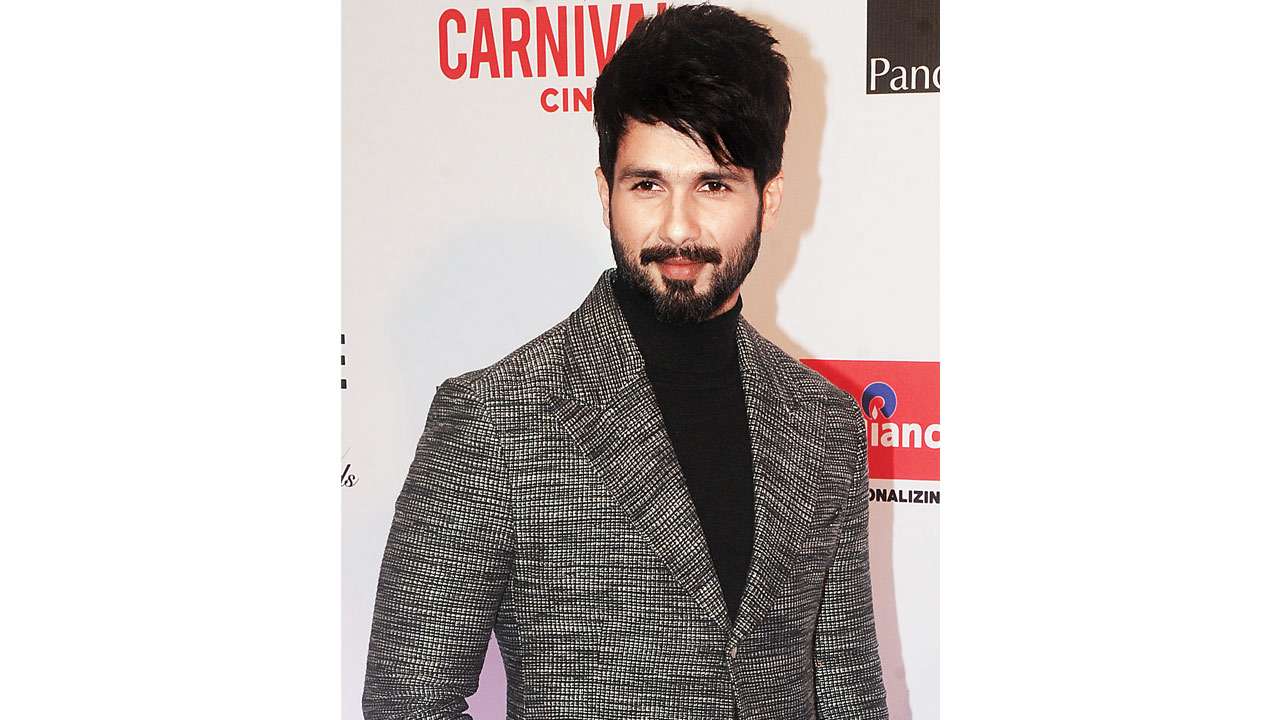
Nayandeep Rakshit (DNA; September 20, 2018)
My meeting with Shahid Kapoor was long overdue. But due to his frenetic schedule, it kept getting delayed. Finally, when we decided to catch up, the Bollywood star got candid about how his life has been witness to paradigm shifts since he started his career in 2003 and how he has finally learnt from his mistakes. Excerpts...
Over the last 15 years, there have been several changes in the industry. How did you adjust to them?
The major change is yet to take place. This is just a precursor to something big that is about to happen. That’s what my instinct tells me. I feel the current generation, and the ones to come, think differently from actors who have been here for 25-30 years. Even I am someone like that since I have witnessed the transformation. Some things are positive, some are unclear, while others are worrisome. But the change doesn’t only have to do with films; it’s about all mediums of storytelling. Today, television and web have turned out to be huge platforms and the reach is humongous. The way films are being made and consumed makes a lot of difference. People can either go to theatres or wait for the movie to come on cable or online. The important thing is to be open to change and be ready to discover yourself without any set rules as we’re in a transitional phase right now.
In what ways do you think you’ve changed as a person?
I’m not someone with a preconceived notion about what I want to do. I did that for a certain amount of time in my career. But in the last four-five years — maybe because I have more experience and I am now at peace with myself — I’ve a sense of detachment. I’m not overtly emotionally driven anymore. When you’re extremely emotional without any perspective, you tend to have a narrow-minded vision. I’ve made so many mistakes and have got it wrong more than right, but when I look back, I realise that it helps me to understand things better today. There were many times when I thought I knew what I was doing, but I had no clue at all (laughs). My understanding of relationships, equations and human beings have taught me a lot. Cinema is a representation of life and eventually, your choices are also a reflection of things you connect to.
You have been pitted against actors of different ages. Did that ever get to you?
It did put a lot of pressure initially because you tend to take these things too seriously. But over a period of time, you understand that a headline cannot define who you are. If you start taking them seriously, it messes with your head. It’s important to have a reality check. I neither had anyone to advise me nor have I’ve ever stuck to any camp. Having a larger world view of what’s happening in the fraternity is important, but what’s most required is not to compete with anybody. As long as you can peak and surprise yourself, it should give you a sense of achievement. It has to be personal because otherwise, you are only busy following someone else’s trajectory. Once you stop catching up with those who have already found themselves, you will end up finding yourself. Once you do that, people’s relationship with you will be based on the fact that you give them something that nobody else can. Just find your voice without worrying whether yours is louder than someone else’s or not.
So, you’ve never competed with anyone?
In the first 10 years, I was competing with anybody and everybody (laughs). Competitiveness is good, but to get personal about it isn’t constructive. You can’t singularly think of two names and feel that you need to get past them. These are unhealthy thoughts. I also believe that good work comes from a good place, not from jealousy, angst or revenge. These are good emotions to portray on screen but not to drive yourself.
You have done films with YRF (Dil Bole Hadippa, Badmaash Company) and Dharma Productions (Shaandaar). Do you think your life would have been different if you were part of their clout?
Maybe, I would have made a few more correct choices, but how would I become who I’m today? Whatever I’m as a creative being or personally is a sum total of my experiences. I hold on to my individuality strongly. I’ve done some good work and I’m around, so I’m proud of that. I’m confident that there’s also a kind of work that people are expecting from me. That makes my journey unique. Even though those phases when I felt lost might have been tough, I feel they helped me become who I am.
Your career has been quite inconsistent. Is that something you are consciously trying to change now?
No, I’m instinctive about my choices. I know what not to do now. Sometimes, the first thing that comes to your mind is the truest thing. I have started listening to that. Previously, I wasn’t confident, calm or self-assured enough to connect with that voice deep within. Now, if that says, ‘Why are you doing this?’, I won’t do it.
Have you ever been hit by stardom?
Of course. Who hasn’t? They are lying. There are times when you’re living in a bubble. But it’s important to know that you’re going to get hit by it many times. At the end of the day, everybody is human and we are all going to go in and out of phases —there will be times when you feel like a star but you slowly learn not to be so reactive.
Do you remember the last time you behaved starry?
It’s been a while (smiles). Shaadi ke baad toh main domesticated ho gaya hoon (laughs). I don’t feel like a star, I feel like a labourer. When there are good people around who are interested in you for who you are, you behave normally. There are just days when Mira (Rajput) or my manager would tell me, ‘Why are you behaving like this? Stop it.’
When a film doesn’t go as planned while the shoot itself, do you change your attitude?
All of us actually start living in denial after a while. When you are working so hard on a film and you get this feeling that ‘Samajh mein nahin aa raha hai ki kya ban raha hai, nobody takes it to heart’. Once you are participating in something, you have to give your best and hope for it to do well. By the time a movie is ready, you get a sense of what’s going to happen. And of course, it affects me if it’s not according to my expectations. It’s like a bad relationship — it leaves a void inside you. Sometimes, cinema gives you more than what you thought of, sometimes they leave you with nothing.
Batti Gul Meter Chalu is starkly different from Padmaavat...
Right after Padmaavat where I played such a restrained, controlled part, I was bursting to do a character who is grey, loud and boisterous. So it was a great flip for me to go from Rawal Ratan Singh to this kapti lawyer. I had thoroughly enjoyed Toilet - Ek Prem Katha and the way director Shree Narayan Singh handled the issue of open defecation. He understands the world of small towns and knows how to represent it. Trust me, this is one movie which I’m extremely confident of. There are no doubts whatsoever (laughs).
This job is so sparkly and bright that we tend to forget the simple things that matter the most-Shahid Kapoor
8:21 AM

Madhureeta Mukherjee (BOMBAY TIMES; September 19, 2018)
The sun is shining on Shahid Kapoor, powered by the brilliance of over a thousand flashbulbs. Earlier this year, with the epic saga Padmaavat, he proved that he can pull off playing a royal Rajput with as much panache as his lovable, riotous Romeo roles. While he likes all that’s shiny, bright and beautiful in our cinema, he also believes that we need to show our real stories, however ugly and heartbreaking they might be. The actor, who is all set for the release of Batti Gul Meter Chalu, directed by Shree Narayan Singh, talks to BT about being rooted to reality through cinema, how the razzle- dazzle of the job can be distracting and what truly lights up his life is his wonderful, rock-solid family. Read on…
Recently, we’ve seen a spurt of films based on socially relevant issues being backed by filmmakers. More often than not, we see celebrities fear speaking out aloud, because there are thousands of detractors waiting to shun them. As an actor, do you think that such films give you a chance to express and vocalise your views on subjects that need to be addressed?
I am extremely happy that the audience is appreciating and backing films which talk about real issues. There was a time, about ten years back, when I felt lost. I would wonder what is going on with the audience. I couldn’t relate to them because they wanted to watch films where I would be dancing on mountain tops, and films that have nothing to do with reality. About 90% of the stories that came to me were about make-believe worlds. I was like…great, I can do this, but we’re talking about cinema here, which is a medium that can represent life and tell stories that are inspiring and eye-opening. I am thrilled that in the last five or six years, our audience has become keen to see stories about us.
I think we are getting closer and finally opening up to talking about ourselves instead of living in denial and saying, ‘Everything is okay!’ No, everything is not okay and sometimes, we need to talk about that, too. I have done two films in the past, Haider (2014) and Udta Punjab (2016), both were dark subjects, but stories that needed to be told. One threw light upon human rights issues in a state like Jammu & Kashmir; the other was about the drug-problem in Punjab. I believe that we can make the best films and deliver the finest performances when we represent our own culture. Hollywood tells stories about other countries, because their cultural heritage is not as vast as ours. We have history to talk about. We have a lot to say which lies within our culture, our people and our language. This is who we are and today, our cinema is beautifully portraying that.
You’ve done Udta Punjab, which dealt with the drug menace prevalent in the state of Punjab, but that’s a topic that is easily relatable for urban audiences and youngsters alike. But, a subject based on faulty electricity bills, power shortage and administrative corruption could be something that urbanites can’t quite comprehend. Did the process of making this film make you more socially aware and responsible?
This film was initially titled Roshan and it was based in Mumbai. The script was with me while I was shooting for Padmaavat. I didn’t read it then, because the moment I get into one character, I can’t focus on anything else. I know it’s a terrible thing and it’s not very practical, but that’s how I am. Mira (my wife) chanced upon it and she told me, ‘This is an idea that you won’t understand because you are a star who lives in Mumbai, and you haven’t faced power-cut issues, but it is a massive problem for the common man in various parts of our country.’ After getting that brief lecture from my wife, I was compelled to read the script. Then, I met Shree Narayan Singh (who directed Toilet - Ek Prem Katha), and writers Siddharth Singh and Garima Wahal, who turned it around completely. The interesting thing that happened with the film is that we took the story into the heartland of the country. Here, we are dealing with the issue of electricity being a fundamental human right. There is a huge problem with the division of electricity. Those who have it, get it at their disposal while the rest don’t even have the basic amenities. I think people in bigger cities need to be mindful about how they use electricity. There is a line in the film which says that if all the malls and showrooms in Delhi switched off their electricity during the night, at least 30 to 40 villages in a state like Uttarakhand can get electricity for a week. There are more than 32 million villages in India that don’t even have a single bulb. And that is their fundamental right, which they are denied. Another issue that we are dealing with in the film is the fact that, ever since the privatisation of electricity happened, people are dealing with problems of faulty bills. This is one issue that everybody in the country can relate to. The voices of so many people are not being heard. Who will these people go to? I think that thought woke me up and I said, ‘Yeh issue pe film banni hi chahiye.’ Shree makes films that are warm, personal, entertaining and they make you laugh. At the same time, it talks about issues that are relevant, so this my favourite kind of cinema. Also, I was dying for a release after Padmaavat. I felt so claustrophobic with that character, because there was so little that was actually said and so much that had to be felt. So, when I heard about this character named Sushil Kumar Panth, I was like, ‘Give this to me!’ I was waiting for a character that allowed me to go out there and explode with verbosity and all the normal complexities that a mind goes through.
You mentioned how Mira was instrumental in you reading the script of Batti Gul…. Is she very involved in your choice of films?
Our relationship is like how two friends or two roomies are. We share our lives. There is no structured plan, that if I am hearing a narration, she has to be involved. We eventually share our thoughts on everything. I can depend on her. She comes from such a different place, so often when she tells me something I don’t get it at all, or I’ll be like… ‘Whoa, I never saw that coming’. Most of the time, we have a different take on the same thing. I believe that’s the best part, and that keeps our relationship interesting.
 Your brother, Ishaan, made an impressive debut with Beyond The Clouds and followed that up with a big banner film, Dhadak. Both the choices were unconventional for a newcomer. What is your take on the kind of work he is doing?
I thought Ishaan was exceptional in Beyond The Clouds. He made a great choice in working with Majid Majidi (Iranian filmmaker) and he is fortunate that he got that opportunity. I am very happy with the kind of work that he is doing and I believe he is very good at what he does.
In an interview with BT, talking to us about you, Ishaan said, “He is like a sage sometimes. He has a philosophical side to him that a lot of people are not exposed to, where he says things like, ‘ Beta, come let me tell you about life’. So, he imparts a lot of wisdom and shares his experience.” He also added that when the two of you argue, you end it with ‘Vadda Kaun?’ Tell us about your relationship with him. Are you constantly playing the role of a big bro in his life?
Well, that vadda kaun? (Who’s the elder one?)’ bit stopped happening some years ago. Honestly, there is a 14-year age difference between us. So, for the first 10 to 15 years of my life, Ishaan was like my kid. I had more fraternal feelings towards him than sibling like feelings. But I think that in the last three or four years, he has become independent and he’s been taking his own decisions. He has a mind of his own and I think that’s great. I only try to remind him about things he hasn’t experienced. Starting out as an actor with a big production house, and being a part of two prominent films, I think there is a lot of life that he hasn’t seen yet. I keep reminding him about that, because he got here this way and I got here another way. My path was longer and I had no idea about which way it would turn. To get to my first film was a totally different journey. He’s got really nice people around him and he’s got opportunities early in his life. The part that I am happy about is that he is really good at what he does. At times, you get work as an actor, but you are unprepared. There are some lovely, wonderful people who shouldn’t have been actors. The chance was available and they tried it, but it didn’t happen for them. But Ishaan was ready and I am very proud of him. Also, mom (Neelima Azim) and I are very relieved. We’re like, phew, it’s done! Generally, there is a difference of two or three years between siblings, so parents wait for five or seven years before they see their children settled. In this case, it is a 15-year-gap. My mom says, ‘Ishaan is just starting now and it will take more or less 15 years to see him settled’. But she is extremely happy that I am settled and Ishaan is also on his way now.
With two people so passionate about cinema, what are conversations at home like? Are there arguments about choice of movies, roles, actors’ et al?
Ishaan is more of a talker than I am and he has a strong point of view on everything. My thoughts are generally floating in my head. We love talking about films, but lately, given both our work schedules, we don’t meet as often, and when we do, we talk mostly about the kids, mom and home stuff. Nowadays, conversations amongst all of us are mostly about family, which I think is priority. I have been in the industry for 15 years and I’ve come to learn that everything is temporary, it comes and goes. But family, friends and love is what is most important. This job distracts you from the things that matter the most to you, as it’s a very noisy profession. Everything is so sparkly and bright that you tend to forget about the simple things that won’t jump for your attention. But those are the ones that matter the most. So, I feel that ghar pe hain toh ghar ki baat karenge. Also, I am quite a homebody. Thanks to my wife, I step out of the house. Otherwise, I would be sitting at home and fading in and out of my dream world.
Right after the release of Batti Gul..., you move on to Arjun Reddy (remake of a Telugu hit) which is an intense story about a man who is madly in love with a woman, and how it drives him towards self-destruction and his journey thereon? You have never played such an obsessive lover before, what drew you to this one?
The original film was unlike any love story I have seen before. I think the tonality and the sensibility of the film is very different from most mainstream films that we have seen. Arjun Reddy is a real and raw love story and I was very surprised by the director’s (Sandeep Vanga) take on it. It’s an edgy film which makes you go through a gamut of emotions, which you may have never felt. I will start shooting for it a week after Batti Gul… and it is going to be tough, because we just had a baby boy (Zain). So, I will be in papa-mode and shooting a film where I am in a messed-up, dark, psychotic lover mode. So, I have to be a sweet dad, and then quickly go back to shooting this intense character. I will have to keep shifting between these two parallel worlds and find a time machine to travel between the unrelated universes (laughs!).

I’m very secure about myself, so I had no qualms about working with Shraddha Kapoor-Yami Gautam
8:00 AM

Pallabi Purkayastha (BOMBAY TIMES; September 18, 2018)
After exploring contrasting characters in Kaabil and Sarkar 3 last year, Yami Gautam is now gearing up for the release of her upcoming social drama, Batti Gul Meter Chalu, directed by Shree Narayan Singh, which deals with the issue of power theft. In an interview with BT, the actress talks about her headstrong character Gulnaar in the film, the camaraderie that she shares with her co-stars and how she is unfazed about sharing screen time with Shraddha Kapoor. Excerpts...
In Batti Gul Meter Chalu, you essay the role of a lawyer, who is pitted against Shahid Kapoor’s character, who is fighting against power theft in a town of Uttarakhand. What prompted you to take up this character?
I have two main reasons for taking up the role. The first one is a bit personal — I hail from a small town in Himachal Pradesh and was raised in Chandigarh, so, I am well-aware of these problems and how they affect the common man. The story isn’t just about getting excessively billed; I may have that kind of money, but it is unfair. Also, what if I don’t have the money to pay for something that I have not consumed? This has not happened to me or my family, but we have heard about such things. So, when I read the script, it took me back to my childhood. Secondly, Shree sir’s (the director) previous film, Toilet - Ek Prem Katha also revolved around a relevant social issue, but at the same time, it was entertaining and had humour. It’s the same with Batti… My character Gulnaar is strong, confident and speaks her mind. I know that my character has an impact on the story. The film is about three friends, but it finally ends up as a courtroom drama and that’s where Gulnaar is prominent and relevant.
This is the first time you’re working with Shahid Kapoor and Shraddha Kapoor. Did you guys have any ice breaking session prior to the commencement of your shoot?
I don’t think you have to try and be friends with anyone. When I met Hrithik (Roshan) for the first time, before the shoot of Kaabil, you know what I told him? ‘Hi! I am Yami and I am nervous’. I was just being true to myself. When I spoke to Shahid, Shraddha and Shree sir, I was just being myself and meant what I said and that’s it; nothing else was required. I don’t think you have to be ‘friends’ to work with someone. Of course, we all were very friendly and had our shares of laughter and giggles. They were all too sweet to me and it was almost like welcoming a new member into the family. We were on the same page and had mutual admiration, in terms of our work, so we never felt the need to have an icebreaking session. I think there was no ice only (laughs!).
An actor like Shahid generally comes prepared on the set. Does his level of involvement in his role push you to up your game and perform better?
Towards the end of our shoot, Shahid told me, ‘You came really prepped’ and I said ‘Yeah, I had to, because you guys had already started shooting and you all knew each other from before’. I remember once I was rehearsing my lines for a scene in which he wasn’t there and he asked me, ‘What are you doing?’ I replied that I was rehearsing, to which he said, ‘Come, I will be the other character’. He is a very supportive co-star.

Yes, we are not living under a tyrant and that’s what a democracy in the real sense means. You are putting across your point and you have the right to your speech and expression. Cinema is a very powerful medium and it’s not about attacking someone, it is about making people aware. It is very easy to attack someone, but how will it benefit the common man who is not aware of these things? It started with Vicky Donor, which was sort of a cult film in itself. It had a path-breaking script, which made people aware, but it didn’t attack anyone. Films like Pad Man, Toilet - Ek Prem Katha and Batti Gul Meter Chalu resonate with the audience. They are entertaining, too; it’s not like they are being preachy and trying to give you some ‘gyaan’.
There’s a perception that actresses are uncomfortable sharing screen time with their contemporaries. In Batti, you are doing just that with Shraddha Kapoor. Were you apprehensive about the length of your role or the fact that it is a two-heroine movie?
I don’t mean to sound condescending, but I think it is a very outdated thought. We are living in a modern era, so, we have to also think in a modern way. Your work speaks for yourself and it’s important that you don’t walk into a set or sign a film keeping these things in mind. And that’s only possible when you are secure as a person. I am very secure about myself. So, there were no qualms or apprehensions of any sort. Shraddha has a very good part in the film and both our roles are sharply defined. She has done her best and even I have tried to do justice to my role. So, there is no overlap of interest or intentions. I don’t think it is healthy for any actor to enter a set with that thought. A film is always made with ‘we’ and it’s never made with ‘me’; that’s something I learnt from Kaabil (smiles).
You have just wrapped up Uri with Vicky Kaushal, which is based on the 2016 militant attacks. Do you think, in the recent past, there have been many films in Bollywood with a central or an underlying theme of patriotism?
Uri is not a fictional story. It is something that has happened for real and marks one of the most important events in the history of the Indian Army. It was a very crucial operation. So, it is not just a story, it is something that we all must know. And I am not saying this because I am a part of Uri, but as an Indian. Wouldn’t you like to know what had actually happened and what it takes to step into the shoes of a soldier? I don’t think even a 100 films can do justice to their dedication towards the nation.

Shahid Kapoor is very supportive as a co star-Yami Gautam
7:58 AM

Chaya Unnikrishnan (DNA; September 18, 2018)
Ever since her debut in Vicky Donor (2012), Yami Gautam has seen a lot of ups and downs in her career. Her films like Sanam Re and Junooniyat (both of which released in 2016) tanked at the box office, but others like Badlapur (2015) with Varun Dhawan won acclaim and Kaabil (2017) with Hrithik Roshan fared well at the box office. “Success and failure are part and parcel of life,” says the pretty actress.
Now, Yami will be seen as an independent career woman in her two upcoming films — Batti Gul Meter Chalu (BGMC) and Uri. While she portrays a lawyer in the former, which deals with the issue of electricity theft in rural India, she essays the role of an intelligence officer in the latter. Here, Yami tells us why she has no qualms about playing small but significant roles on screen, what prompted her to take up BGMC and more.
BGMC is top-lined by Shahid Kapoor and Shraddha Kapoor. Knowing that, what prompted you to do this film?
I think this is a dated concept that if I don’t have two or three songs in the movie, why should I do it? If you think in those terms, you cannot work. Times are changing and what’s important is what you are adding to the film. I play a lawyer in BGMC, which is a first for me. My character is that of a strong girl, who does what she feels is right and gives him (Shahid Kapoor’s character) back at the same level. Also, I had two strong reasons for doing this film.
What are they?
I was born in a small town in Himachal Pradesh and raised in Chandigarh. So, I was aware of this particular problem (theft of electricity). I have heard of some people being billed high. It’s not about it being unfair, it’s about not having the money to pay. The awareness of this grassroot problem was one reason to do the film. The other was Shree sir (director, Shree Narayan Singh). His Toilet - Ek Prem Katha dealt with a social issue, but it wasn’t preachy. He made it funny and engaging. It’s the same with Batti... It’s a social drama but it has humour. Shree sir has opened a whole new world of Uttarakhand and captured that flavour beautifully because he is from there. Also, as I said, I have never played a lawyer before and in college, I was studying law (laughs). I know BGMC is the story of three friends but it boils down to the courtroom drama and that’s where Gulnaar, my character comes in. I know the impact and prominence my character holds.
What kind of prep did you do for your role?
I didn’t watch many films (courtroom dramas), in fact not even one. For Kaabil (in which she played a visually-impaired girl) I had done that because the prep was different. For Batti... I decided to have a practical approach. I went to the Bombay High Court, sat quietly during a session and spoke to the lawyers later. I asked them is it the way it is usually shown in our films and they laughed. They said movies tend to depict a lot of drama which doesn’t happen in reality, but it’s there to some extent in lower courts. There is also some tongue-in-cheek humour that goes on. That’s why in the trailer you see me giving facts and figures while Shahid replies with cheeky answers. What I learnt from the court session was to have clarity of speech and confidence.
How was it working with Shahid Kapoor?
Shahid is one of the best actors I have seen and he’s given some really good performances. He is very supportive as a co-star. The sync and synergy you need for a one-on-one argument where the director doesn’t want to cut, but wants you to go on can happen only if your co-star is supportive. Also, you don’t want to over rehearse because you need the spontaneity intact. When I saw Shahid on sets, I realised how he gave all those performances in films like Haider, Kaminey and Udta Punjab in which he was so intense. One day, I was reading some lines for a scene which did not feature him. But he asked me what I was doing and said, ‘Come, I will rehearse with you.’ That was really sweet of him. A good co-actor is someone who enhances your performance. And that only happens when the focus is not on yourself, but what is working for the scene. This is something that I learnt from Hrithik (Roshan).
Please continue...
There would be scenes (in Kaabil) where he delivered a perfect shot, but maybe I could have done a little better. He would say, ‘Yami, you want to try that again? What if you did it this way... it will look nicer’ and we would go for another take. Being selfless sounds easy, but one must try and achieve it.
Your next film, Uri, also has you playing a professional..
Yes! The film is about the surgical strike, and it is very special for me not only as an actor, but also as a person because all of us should know what had happened and what it takes to be in their (soldiers’) shoes.
You went in for a makeover for the film.
That was the director's call. When we were discussing the look, he said I should have shorter hair. I thought he wanted it shorter by one or two inches. However, when he shared the reference, I was shocked. He told me he didn’t see the character taking much time in vanity. She has so many important things to do that her hair cannot be curled, permed or textured. He told me I needed to have a sharp look, so I said let’s do it. But when I sat on the chair, I asked the hairstylist if I could take a second. She said there was no time and cut it!
There was a phase when your movies like Sanam Re and Junooniyat did not do well. How did you cope with it?
Success and failure are both part and parcel of life. We, as actors, are accustomed to it and learn to handle it over a period of time. I have no regrets about what happened. I have always focussed on what comes ahead and I’m glad I have learnt from what has happened. Now, I pick projects that I’m passionate about and look forward to them.
I’ve never focused on the results-Shraddha Kapoor
8:29 AM

Hiren Kotwani (DNA; September 17, 2018)
The spark in Shraddha Kapoor’s eyes is unmistakable. The actress is justifiably upbeat because she is fresh off the back of her superhit outing Stree and has Batti Gul Meter Chalu (BGMC), which releases this Friday. “For every film I do, I focus on giving it my 110 per cent and hope people will go to watch it and be entertained,’’ the light-eyed beauty says when we catch up with her for a tête-à-tête. She also tells us about her upcoming films, sweating it out for her turn as Saina Nehwal in the national badminton champ’s on-screen memoir, rumours of a link-up with photographer Rohan Shrestha, and more. Excerpts...
The success of Stree must have come as a career boost after your films last year didn’t fare too well...
I’ve never focussed on the results. Hits and misses are not in your hands. When a movie succeeds, it feels great. At the same time, I can’t be complacent about it. I have to keep working hard and do the best I can. I find it shocking yet amazing that Stree has become a blockbuster. I had hoped for it to do well, but didn’t know it would be such a huge hit.
Your next release is BGMC. What was your first reaction to the script?
My first reaction was, ‘Wow!’ The content is so special. It’s a well-written story on a prevalent issue about how power companies can affect big as well as smaller towns. This is the first time I’ve been offered something with a social connect. I had loved Shree Narayan Singh’s Toilet - Ek Prem Katha, which conveyed an important message in an entertaining manner without being preachy.
How was it working with Shahid Kapoor again after Haider?
It was a great experience — especially on something that is so different from our first film together. Haider was an adaptation of William Shakespeare’s play, while this is a socially-relevant subject. It was great to explore this genre with Shahid. Having worked with him in the past, there was a comfort level that helped us essay our parts effortlessly.
Tell us about your experience of shooting in a small town like Tehri where the comforts you’re used to are not available easily.
As a matter of fact, I don’t want things to be available easily. I also need a good dose of nature every now and then to keep me calm. Uttarakhand is such a fabulous place that you feel you’re in heaven because there are no crowds, traffic and constant honking. I didn’t want the shoot to end. I just wanted to stay there and disconnect from everything. After the shoot or on a day off, I would sit in my balcony and lose myself to nature for hours. Even as a shot would be readied, I would take off to look around. I felt I needed it.
What was your greatest takeaway from a socially-relevant film like Batti Gul Meter Chalu (BGMC)?
As an actor, I felt it was a great opportunity to be a part of a film that can stimulate Indians’ thinking about issues in the country today. If people connect with this movie, it will make a big difference.
What scope does your Lalita 'Nauti' Nautiyal have in a story that revolves around Shahid's character?
BGMC is as much the story of the two friends as it is of Shahid’s Sushil Kumar Pant and how an important issue affects one of them. Lalita has a strong conscience from the beginning, she never approves Sushil’s ways or the fact that he is a kapti lawyer. She stands for what she believes is right and wants to fight for justice for their friend.
You also have Saaho with Baahubali star Prabhas coming up...
It’s also my first bilingual project. It’s a challenging film because, after every scene in Hindi, I have to do it in Telugu, which I have never spoken before. I would spend hours mugging my lines. It’s amazing working with a director and a team who are so passionate about cinema. I haven’t done a movie or a role like this before. And, of course, working with Prabhas is a great experience.
One hasn’t heard much about the biopic on Saina Nehwal since its announcement. What’s happening on that front?
It’s going on floors this month and I’m eagerly waiting to put my best foot forward. I feel badminton is the second most difficult sport after basketball. It’s a huge challenge to play the sport professionally, like Saina. When you see her in action on the court, she is in a fast forward mode. It’s an extremely rigorous and exhausting task and I’m giving it all I can.
Usually, actors working in onscreen memoirs only focus on that project. Did prepping for this one get tougher since you had alluring subjects like Stree and BGMC?
There are no rules for prepping for a bio. Every actor has their own way of working. You know the director’s vision and you have to come up with the best possible way to do justice to it. Since last year, I’ve been practising badminton off and on. Even on days that I wasn’t shooting, I would train in the mornings.
According to the grapevine, photographer Rohan Shrestha is the man in your life. Is that true?
I’m not bothered by link-up rumours. It’s the part and parcel of being an actor. I’m happy focussing on acting. It would be a cliché to say that I’m married to my work and films. I will just say that I don’t want to speak about my personal life.
If Batti Gul Meter Chalu hadn’t started rolling again, I would have slipped into depression-Shree Narayan Singh
8:28 AM

Director Shree Narayan Singh rewinds to the time his upcoming film, Batti Gul Meter Chalu came to a standstill and the lessons he has learnt from that phase
Rachana Dubey (BOMBAY TIMES; September 17, 2018)
In less than a week, Batti Gul Meter Chalu (BGMC), starring Shahid Kapoor, Shraddha Kapoor and Yami Gautam, will be out in cinema halls. The film has seen a rather tumultuous journey to get this far. The shoot came to a screeching halt in just a few weeks of it going on the floors in February this year. Reason: reports attributed it to a lack of finance and other complications. The shoot didn’t commence until the beginning of June. Precious time and actors’ dates were lost in the interim. Director Shree Narayan Singh’s hopes dwindled with every passing day, until the issues were resolved and the shooting was reinstated.
Recalling the phase, the two-film old director says, “I am emotionally attached to my work. If the film hadn’t started rolling again, I would have slipped into depression. Those three months when we couldn’t shoot, Shahid and I would talk to each other every day; we would share our anxieties and worries over the film. Each time we saw an article or heard something from here and there, we made it a point to call each other. That phase strengthened the bond I share with him. My wife, on the other hand, stopped asking me questions because she realised I might flare up if prodded too much. I almost stopped talking to everyone at home. I couldn’t sleep and would just spend the nights sitting in the puja room of my house, hoping for a miracle. Ek time aisa aa gaya ki main socha suicide kar loon. But when we started shooting again, things slowly returned to normal. The project was salvaged in time. I just think that no one ever starts a film to bring it to a halt midway. Circumstances were such ki jo hua, uska bill phat gaya hamari film pe.”
Shree now looks at the entire episode as a learning experience. Ask him to elaborate on the ‘lesson’, and he says, “I picked up the dos and don’ts of this business. Main toh uss zamane ka aadmi hoon jiske liye film sarvopari hoti hai, paperwork etc bas naam ki cheezein hain. But today, I’ve learnt that whenever you get into co-productions, you have to first get your money in. Dosti aur emotions mein aake I didn’t give credence to paperwork. But now I know that I have to keep my emotions at bay and get everything in writing. I will work by the book and not repeat these mistakes.”
The director admits to spending sleepless nights even now, albeit with a difference — and that is because he’s adding finishing touches to his film. Shree, once an IAS aspirant, hasn’t gone home for days, trying to complete the last leg of post-production. When asked what draws him to socially-relevant subjects, given that both his films — BGMC and Toilet - Ek Prem Katha — are set in small-town India and have underlined important issues, he says, “I belong to Balrampur, Uttar Pradesh. People living in metros are not aware of half the issues that people like me have faced while living in a small town. Sheheron mein logon ko nahi pata ki ghar mein 15-18 ghanta bijli nahin hona kya hota hai. I know what it is to virtually survive without electricity in the middle of summer. I’ve seen how difficult life can be for women, whose houses don’t have toilets. So, when someone narrates a story like Batti Gul Meter Chalu or Toilet - Ek Prem Katha, I get drawn to it. I feel that I’ll be able to put my heart into films like these.”
Shree may not be the first filmmaker to attempt socially-relevant films, but he has contributed to making contemporary Hindi cinema more socially aware. Bring this up and he says, “Earlier, people had set their minds on a particular kind of films, but today, they watch different stuff. With A-list actors also happy to work in films that have an underlying theme or have something more to offer, it increases the reach of such stories. When big stars like Akshay Kumar or Shahid Kapoor say something, people pay more heed and become aware of small town India and its problems. As a filmmaker, you feel you have done something for society while trying to entertain.”

I would like to dabble in characters with grey shades-Shraddha Kapoor
8:37 AM

Lasyapriya Sundaram (BOMBAY TIMES; September 16, 2018)
Shraddha Kapoor’s last film was horror comedy, a genre that’s very rarely seen in Bollywood. Her next, Batti Gul Meter Chalu (BGMC), is again a lighthearted film with a strong social message. In a candid chat with BT, the actress talks about how hits and misses at the box office don’t affect her choice of films, her penchant for roles that are a departure from her glamorous image and the strangest reasons behind her casting in some films. Excerpts...
Just like your previous film, BGMC is also set in a small town. What convinced you that you fit the part?
Shree sir (Narayan Singh, the director) felt that I fit the character and offered the film to me. Siddharth and Garima narrated the script to me and I was bowled over by its content. BGMC was offered to me before Stree. The former was shot quickly, but the latter was shot over a few months. Very rarely, do you get films back-to-back with good content.
For Stree specifically, I remember meeting Dinesh Vijan (producer) on a flight once and while conversing, he observed that I was a bit off. He also said that while talking about one particular thing, I would suddenly start talking about something else. That’s when he offered me the film and said that I would totally fit the bill as the character in the film is a bit abrupt about things. You can never really pin down the reason why somebody offers you a particular role. Mohit Suri offered me Aashiqui 2 because the first time I met him, I had oil in my hair and I was wearing spectacles. That look stuck with him and that’s why he cast me in his film.
Some of the roles that you play are a departure from your glamorous image. Is it tougher to play these roles or do you see it as a challenge to play someone who is not like you?
I am trying to discover who I am and that itself is a never-ending process. There are so many roles that are completely different from what I am as a person and I try not to let my real persona take over the character I am playing. My character in BGMC is someone who is loud, animated and a chatter-box. I am not like that at all. I have wanted to be all these different people and that’s why I have always wanted to be an actor. It is a cathartic process. Having said that, it’s also a huge responsibility as films educate, stimulate and entertain people.
As an actor, do you also feel responsible to break away from the perceived image of a star and try out darker characters or roles with grey shades?
The world we live in consists of the good, bad and the ugly. As an actor, I would also like to dabble in characters that have shades of grey. And what I mean by responsibility is that, I should give my best to the role I am essaying.
You are constantly pitted against your contemporary Alia Bhatt. Do you choose films keeping in mind the films your contemporaries are choosing to do?
I don’t know anything about the business of cinema; I choose to do films on the basis of how I react to the script. Comparisons with my contemporaries are bound to happen and it is not something that I can control.
You have received a lot of criticism for your last film Haseena Parkar. Did that affect you?
After a film releases, my main concern is what the audiences thought about it. Haseena Parkar didn’t do well at the box office, which means that people didn’t go to the theatres to see it. I think the audiences didn’t connect with the film or the character that I played. Whether a film does well or not, I think I should keep evolving as an actor. The fact that a particular film didn’t do well, didn’t change the way I choose my films. In this profession, hits and misses happen, that’s not in my control.
You come from a family of actors, which includes your father, Shakti Kapoor and aunt, Padmini Kolhapure. How have they influenced you?
I have always been close to my aunts because I have grown up in my nana’s house. In fact, my home is very close to my nana’s house. I am very close to my family — either I am on the set or at home with them. My aunt and my father are always there to guide me, but free-thinking has always been encouraged at home. In fact, huge credit goes to my aunt and my dad for some of the biggest decisions that I have made in my life. It’s not like they strategised on my behalf. They have also always told me to do things that I feel are right. They’ve always said that I have to make my own mistakes and learn from them. I am not dependent on them while making my choices.
After BGMC, you have the Saina Nehwal biopic and Saaho opposite Prabhas. Both require extensive research and homework. How are you prepping up for them?
I have already clocked 40 classes of badminton in preparation for the Saina Nehwal biopic. It’s a really tough sport, but I am enjoying myself. To get an insight into the life of a sportsperson is fascinating. Saina’s journey in itself is so interesting — right from her misses to her injuries and victories. I can relate to her journey in big way, because I have gone through similar experiences in a different field. Despite everything, she has not let her focus shift and that’s what’s truly inspiring. Saaho is broken up into a number of schedules and I am going to be shooting for it in parts. Also, I am speaking in Hindi as well as in Telugu because it is my first bi-lingual film. For the Telugu dialogues, I memorise them and need no prompting. My director has still not made the final decision on whether I will have to dub for the film or not. But he does tell me that I sound like a local person and that makes me happy.

I have been writing songs for a while now. I also enjoy setting them to music-Shraddha Kapoor
8:12 AM

Shraddha Kapoor on blowing off steam with music and doodles, and taking 6am badminton lessons every day for the Saina biopic
Natasha Coutinho (MUMBAI MIRROR; September 12, 2018)
Shraddha Kapoor has been prepping extensively to play Saina Nehwal in Amole Gupte’s biopic on the ace shuttler, which is expected to kick off by the month-end. “I’ve been attending badminton classes daily at 6 am. My coach, Eshan Naqvi, is a young guy but there’s so much to learn from him. He is an amazing coach,” she asserts, adding the badminton portions will be shot only early next year by which time she hopes to be ready with her game.
Meanwhile, she’s gearing up for her next, Shree Narayan Singh’s social drama, Batti Gul Meter Chalu, which is about electricity theft and startling bills. For small-town girl Lalita Nautiyal aka Nauti, who is a fashion designer, Shraddha had to get down to the basics, learning how to take measurements from her stylist. “Nauti has a quirky style of dressing and blue streaks in her hair. She thinks she knows how to put together an outfit, but she doesn’t actually. But she is a feisty girl who stands up for her beliefs and even calls out Shahid’s (Kapoor, co-star) lawyer for his ‘kapti kameena’ ways,” the actress tells Mirror.
Shraddha reunited with Shahid four years after Vishal Bhardwaj’s Haider and agrees there’s a certain comfort in working with a familiar face. “It’s always easier to work with someone you know from before. Shahid has been around for a while and he’s one of the finest actors we have,” she asserts.
Speaking of enjoyable experiences, shooting in Tehri in Uttarakhand, was a treat too, despite the lack of facilities one takes for granted in metros. “I enjoy being in smaller towns because there’s no rush for anything. It’s calming and gives you a sense of peace. I would wander off in-between shots and look at the trees...” Shraddha reminisces, glad that all the payment issues under former producer Prernaa Arora have been sorted with Bhushan Kumar on board and the film is finally releasing.
Meanwhile, her Prabhas co-starrer Saaho, for which she has been shooting in Hyderabad, has kept her on her toes. It’s her first action film, but she’s taken the challenge head-on. “The action director takes me through every scene. Since it’s a Hindi-Telugu bilingual, another first for me, it feels like I am shooting for two films simultaneously,” she remarks, adding that she’d love to do a Marathi film now to explore her roots inherited from her mother, Shivangi.
Talking about family, the Kapoors recently acquired a holiday home in Goa, but the actress rues she hasn’t found time yet to check out the place. “For now, dad (actor Shakti Kapoor), mom and my brother Siddhanth are looking into everything to do with the new home,” she sighs.
She may be inundated with work, but Shraddha has found just the thing to blow off steam. “I have been writing songs for a while now. I also enjoy setting them to music on the keyboard. I am also an occasional doodler,” she informs. When asked of plans to showcase her creative streak, Shraddha says she’d rather focus on acting for now.
Jasmine is not happening in the near future-Shree Narayan Singh
7:57 AM

Mohar Basu (MID-DAY; September 11, 2018)
Since early this year, rumours were rife that Aishwarya Rai Bachchan had given her nod to Jasmine, which revolves around a surrogate mother’s bond with her child. However, in May, Rai clarified that she had asked for changes in the script, basis which she would greenlight the project. In the latest development, mid-day has learnt that the film, which was to mark the directorial debut of writer duo Siddharth Singh and Garima Wahal, has been put on hold.
Producer Shree Narayan Singh reveals that though he is willing to bankroll the drama, things haven’t fallen into place. “Things were going downhill from the start — actors were announced before the script was ready. Then Siddharth-Garima got busy with Batti Gul Meter Chalu [that Singh has directed]. As a result, Jasmine kept getting pushed. The film is not happening in the near future.”
Buzz suggests that the decision comes in the wake of reports that Karan Johar’s Good News is based on a similar subject. “This subject can be approached from multiple angles,” says Singh, who is currently busy with Batti Gul Meter Chalu that revolves around electricity theft.

Batti Gul Meter Chalu writer Vipul K Rawal to make a film titled Shree Narayan Ki Batti Gul
8:09 AM

Irked by director Shree Narayan Singh's refusal to credit him for Batti Gul Meter Chalu story, writer to make film on the ongoing spat
Sonil Dedhia (MID-DAY; September 10, 2018)

"I am thankful to Shree Narayan. It is because of him that I have come up with a fantastic script. The title of my film is Shree Narayan Ki Batti Gul; I have already zeroed in on the cast. We plan to roll soon. This is the best way to expose his wrongdoings," says Rawal, irked that Singh has credited Siddharth Singh and Garima Wahal as the film's writers in the trailer as well as in his multiple interviews.
Rawal had approached SWA in June when he found his name missing from the credits of the film's teaser. The SWA had then ordered that the credit for story, screenplay and dialogues be equally shared between Siddharth, Garima and him.
"I have a written copy from Bhushan Kumar [producer] that says that I will be given equal credit. We had agreed that the poster and trailer will run the credit as 'Based on a story by Vipul Rawal'. But Shree Narayan is creating issues. I wrote the screenplay and submitted the fifth draft to him," he says, adding that the director had then wanted some modifications and employed writer duo Siddharth-Garima to make the necessary amendments. "They have retained my story."
Singh said, "Shahid and I had liked Vipul's story, but we weren't happy with the culmination of the screenplay. Vipul asked us to go ahead with the story. Garima-Siddharth then wrote it for us. We have credited him for the concept, and the duo for story and screenplay."
Earlier I was just the cute factor, but that is not how I want my life to be defined-Shahid Kapoor
8:37 AM

After being referred to as the chocolate boy on screen, Shahid Kapoor, who recently turned father for the second time, says that he doesn't wish to be known for just his 'cute' looks and how films like Batti Gul Meter Chalu help broaden his horizon
Sonil Dedhia (MID-DAY; September 9, 2018)
What about the storyline of Batti Gul Meter Chalu convinced you to come on board?
When I came on board for Batti Gul Meter Chalu, the story was completely different. While the core plot revolved around the electricity issue, it was based in Mumbai and my character was different. I felt the story had a lot of potential. Mira [Rajput, wife] also told me how electricity is a real issue in smaller cities and how as privileged actors we've not seen the half of it; that convinced me. I met Shee Narayan Singh [director] before the release of Toilet - Ek Prem Katha and he said the story needs to be told from a small town. Writers Siddharth Singh and Garima Wahal [writers] along with Shree researched and decided to do the film in Uttrakhand.
Actors are choosing issue-based films these days, but not many take a stand on problems in the society. Why do you think that is?
I believe it has a lot to do with fear, which is sad. People who can create a difference shy away from addressing issues on a larger platform because the repercussions can be fatal. The sensible thing to do is convey the message through your work. I have never been overtly expressive about my views because I don't want to engage in controversies, and that is not because I became an actor.
Batti Gul Meter Chalu landed in issues with the producers. Did it affect your mind?
My take on roadblocks is that they can either take you low or high. I have learned to overcome it irrespective of how long it takes. My outlook towards life is: regardless of how hard it gets I need to give my best. Whatever happened during the course of this film, it was just another roadblock which needed to be overcome. I feel good things come late in life and some things are worth the wait.
You have been part of the industry for 15 years. Has the process changed for you?
I was less sure of myself before. I would latch on to things that came naturally to me, but that somehow did not work. I needed to take a different approach. Rather than taking the conventional offers, I am trying to experience my work and express myself honestly.
Is doing one film a year part of the change that you adopted?
That just happened organically. Working on two films, with varied characters and appearances at the same time wasn't something I wanted to indulge in. I didn't want to just stand in front of the camera because it was convenient when the director and writers have worked so hard. By the end of the film, you often feel that you've not explored the character to its full potential. I have now started enjoying the process. In order to stay relevant in this field, you need to explore and experiment with the roles you get.
Was it difficult for you to stay relevant?
I became relevant after seven to eight years into my career. Earlier, I was just the cute factor, but that is not how I want my life to be defined. When my children ask me what I do for a living or why I am popular, I don't want to say, 'because I look cute or that girls find my hair and cheeks adorable'. I don't want the journey of my life to be that limited.
Why didn't you alter your image as the 'chocolate boy' earlier?
I couldn't relate to the roles that came my way when I entered the industry. There weren't many opportunities to explore unconventional roles. I felt lost and wasn't myself. Only five types of films were being made then, and no one wanted to do anything different. For some people, that period is nostalgic; I was terrified. Things have changed for the better in the last five years. Today, I feel like the saltwater fish that is finally in the sea.
Prep for Arjun Reddy
Shahid Kapoor, who is prepping for the remake of Telugu film Arjun Reddy, has been sporting a facial fuzz of late. The actor says that while a lot of actors opt for wig and make-up he prefers to keep it natural. "I have always had issues with sticking something to my face," he says. Kapoor adds that he has yet to achieve the complete look for the film, "We were supposed to start shooting last month but the fuzz is taking its time."

Use of pahari language was done to add the required flavour-Shree Narayan Singh
8:04 AM

Batti Gul Meter Chalu director defends decision amidst criticism that use of Kumaoni and Garhwali has rendered film incomprehensible
Upala KBR (MID-DAY; September 6, 2018)
Nabbing the pahari languages of Kumaoni and Garhwali may not have been an easy feet for Batti Gul Meter Chalu actors Shraddha Kapoor and Shahid Kapoor. However, understanding it seems to be a tougher feat for cinephiles.Criticism against the inability to decipher what the duo says in the film were made on social media after the trailer was unveiled last month. However, director Shree Narayan Singh tells mid-day that the usage of the language was essential to maintain authenticity in communication. “When you watch movies in regional languages like Marathi and Punjabi, you understand it because you’ve heard them before. But, you have never heard these languages, so, you may find it difficult to understand. Yet, our film is a Bollywood film; one created in Hindi. We have only used two to three words like takiya kalaam, bal and thehra from other languages. This was done to add the required flavour,” Singh says.
He adds that in order to ensure that the dialects are used appropriately, writers Siddharth and Garima travelled to Tehri Garhwal in Uttarakhand and resided there for a while. “Even if you do not understand a word in the film, you will definitely get the context,” he promises of his venture, which was primarily shot in Tehri, Dehradun and Rishikesh.
Singh adds that his actors worked hard to nab the dialect, especially since a professional was not employed. “With the help of the writers, Shahid and Shraddha were coached on sets. In fact, even for their appearances, I had told the stylist that they shouldn’t look out of place. They look significantly different in the film; a far cry from the way they do [off screen].”
Shahid Kapoor gifts his makeshift gym to Tehri hotel?
7:53 AM

Natasha Coutinho (MUMBAI MIRROR; September 3, 2018)
Shahid Kapoor, who shot his last film, Shree Narayan Singh’s social-drama Batti Gul Meter Chalu, in Tehri with leading lady Shraddha Kapoor, has gifted his makeshift gym to the hotel where they stayed during their shoot in Uttrakhand earlier this year. Unlike the usual practice of staying in five-star hotels while on location, the team put up at a quaint hotel with the bare necessities and no luxuries during their stay in the Garhwal district.
A source associated with the film reveals that Shahid who is a fitness freak needs to workout every day. “As this small hotel had no fitness facilities, he set up his own gym on the premises. His instructor had taken a lot of expensive equipment from Mumbai and set them up in a room. Besides Shahid, other actors and crew members also made good use of this ‘gym’. A day before they packed up, the hotel guys requested Shahid to leave his gym equipment behind for them and other guests and he agreed instantly knowing his gift would help the establishment,” adds the source. Interestingly, while on location and owing to limited sources of recreation, Shahid would also go for fishing in-between breaks from work and gym sessions.
I have two releases in September, Batti Gul Meter Chalu and my baby-Shahid Kapoor
8:18 AM

Meena Iyer (DNA; August 27, 2018)
A lean and super-fit Shahid Kapoor bounces (yes, bounces) into his office dressed, in a pair of black shorts co-ordinated with a stylish black tee. He gracefully accepts the compliments he receives for his athletic avatar. Chomping on a meal of boiled veggies, he sighs and adds, “This is what you have to eat to stay fit.”
Well, we know. But we’re not here to talk about his food. The agenda for our meeting is his career, his second baby and his next release Batti Gul Meter Chalu (BGMC), all of which is being animatedly discussed at this juncture. Over to Sasha:
What kind of feedback are you getting for BGMC?
BGMC is the kind of movie that is significant to people who live beyond Mumbai. So, the reaction of those around me isn’t relevant. The reason we made this film is because there is a certain section of the junta beyond your regular metropolis, who face a shortage of electricity. When I met director Shree Narayan Singh, I learnt from him that he comes from that world and is familiar with the real issues that people in such places face. So, he’s able to tell stories in a real manner. For example, I didn’t know the problem of sanitation in our country until I saw the trailer of Shree’s previous work, Toilet - Ek Prem Katha (TEPK). He didn’t want to set BGMC in a city, but in a place where the issue was more relevant. And until I heard this script, I didn’t know how grave the problem of electricity or the lack of it was. Around 32 million people don’t have a single light bulb in their homes. When I learnt about this, it came as a huge shock to me.
You play a lawyer in the film. Are you scrupulous or unscrupulous?
In the beginning, I’m a kapti (unscrupulous) lawyer who is only interested in making moolah. Most often, he’s only interested in doing out-of-court settlements and earning a quick buck. Then something happens to his friend and he realises that he should do something about the problem that is being faced by many. Then, I become a conscientious guy who decides to fight for people.
You speak differently, too...
The shooting of this film was a learning process. The dialogues revealed so many facts and figures that I realised lack of electricity is a widespread problem. My effort while doing this movie was to be nothing like myself (a city person), but reach the grassroot reality. While practising the line that mentions ‘facts and figures’, I used to say ‘phacts’ just like the locals there would pronounce the word. Mira (my wife) would ask me, ‘Are you sure about the character you are playing?’ And I would tell her that where this man comes from, the language he speaks, this is how it is. In Mumbai, if the power goes off for an hour, we wonder what is happening. On the other hand, there are places where people can’t afford or are not getting electricity at all. It’s a widespread problem that needs to be addressed.
Coming back to my first question, what kind of reactions did the trailer get?
We’ve got nice reactions. It’s a well-cut trailer, it’s funny, there is entertainment, love, friends, drama, strong dialect and an issue that is genuine. In today’s times, that is exciting. People want to get a feel of different parts of the country. This entire generation is in the process of discovering our roots. Most of the films you see being made and appreciated these days are grounded in reality, whether relationship-based or issue-oriented. BGMC falls in that category. This is interesting for me, coming next after Padmaavat, in which I played royalty. Also, I’ve never portrayed a character on screen that’s so local and raw.
While shooting for this film you regularly posted pictures of Tehri on social media.
BGMC is close to my heart. It was stalled for about a month and it took a while to get it back on track. The director and I are passionate about this project as it’s a story we want to tell and a film that we believe in. We had a lot of fun becoming these people and going to new places. New Tehri, where we shot, is a three-hour drive from Dehradun. It’s a quaint little town in the middle of Uttarakhand. I kept posting pictures online daily because every morning was so beautiful out there that I wanted to share it. I hadn’t heard about the place before, many people are not even aware about it, but it deserves to be visited. It has major electricity issues. Places that are higher in altitude have a lot of basic problems, like water can’t be drawn from the lake without power. Plus, it’s very cold there, minus two and three degree Celsius in the night. We were staying in one of the local hotels, so there was no internal heating or hot water. Once you are in bed, you feel the cold weather outside. I had three heaters, yet I was freaking out. I’m someone who follows a healthy diet, but the next day I would often say, ‘Give me chai, give me pakoras...’
Tackling issues through films is becoming a way of life for you, right?
I closely felt the world the film is set in. I’ve done two movies that are real and rooted. Haider, which was set in a conflicted state like Kashmir, was about a person’s emotions and the issues that he grapples with, though the core was Shakespearean. Then, Udta Punjab was about the drug problem in Punjab. Both films gave me immense love from the people we made them for because we told their stories without fictionalising them. When the trailer of TEPK came, I realised how grave an issue open defecation was. It enlightens you about things you’re not aware about. I’m fortunate that directors like Shree, Vishal (Bhardwaj) and Abhishek (Chaubey) as well as writers like Siddharth-Garima go to these places and want to tell stories that need to be told. Shree and Sidharth-Garima didn’t want to make BGMC into a documentary, they wanted to tell the story through all the gamut of emotions that they want you to feel. It’s not a personal story, but it’s woven like that... the journey may be personal, but it’s about a pertinent issue that many people in the country are facing.
For instance, I saw a video on YouTube about a sabziwala having committed suicide because his electricity bill was too high and the private company refused to admit that it could be a problem at their end. So yes, the film addresses real issues. I want to see how it turns out and how people react after watching it.
This year began on a big note for you, with a huge hit like Padmaavat.
BGMC is about an issue, Padmaavat had become an issue.
So, career-wise, are you happy and secure?
I’ve got two releases in September; Batti Gul... and my baby (smiles). I hope I’m geared up. It’s the second baby for us, and this is my 32nd or 33rd film. It’s daunting because so much is happening.
You are in a unique position. Hrithik Roshan, John Abraham and Abhishek Bachchan came before you and Ranbir Kapoor, Ranveer Singh and Arjun Kapoor came after you.
I’m like Ajay Devgn, who entered the industry in Phool Aur Kaante (1991) with his legs astride two motorcycles, doing the perfect split. So I’ve got one leg in the slightly older generation and other one with the slightly younger generation. I often wonder where do I go (laughs).
You’ve got a diverse range of subjects like the Arjun Reddy remake that is action-packed.
Yes. There’s also a sports biopic that I’ll be doing with Raja Krishna Menon (of Airlift and Chef fame).
Are you happy with the way things are going?
Yes, two significant developments are happening at this stage. One is the creative growth and the other is the reach. It’s important to balance that. I don’t want to do films that have a wide reach but don’t give me any creative satisfaction. I want to tell stories, discover myself as an actor and reach out to as wide an audience as possible. I don’t want to limit myself to any space. The idea is to find new characters to play and new stories to tell. BGMC could have been made offbeat like Haider, but when a film is so pure, it limits its reach. It’s something we wanted to take to a wider audience, because that’s what you need to do if you want cinema to grow in the right direction.
Mira told me you have to make it happen. In TEPK, the hero gets married to a cow because he’s so scared of his father. In BGMC, my character is a harami. I asked Shree if there could be thoda gaana, thoda dance.. and he was like ‘Yes, the character is enjoying himself’. Thoda masti and fun toh chahiye, sirf issue issue karenge toh film serious ho jayegi. This character plays it on the front foot. After a controlled and restrained Rawal Ratan Singh in Padmaavat, this is in your face, a badtameez kind of guy.
This sees you and Shraddha team up again, a tried-and-tested pair after Haider.
The good thing is that people saw us together and liked us. I hope we will be lucky the second time as well. This film gives us more scope than Haider because that had a different set of dynamics. Shraddha has a wonderful energy, we were comfortable and had fun doing the songs. Moreover, she is looking good in the film. She is playing an interesting character.
You told us how Mira asked you about the dialect when you’d practise your lines at home. What did she have to say about the trailer?
She loved the trailer. She had loved the script, too. She had read it before me as I was busy shooting. Later, she insisted that I go through it. She told me, ‘You’re a star, so maybe you don’t know. But I’m from Delhi and electricity is a big issue on that side. You have to do this film.’ Earlier, the movie was supposed to be set in a city. Later, even though it was set in a small town and the script was rewritten, the core idea remained the same. It was about a flawed guy who chooses to fight against electricity theft, high bills and privatisation. Electricity doesn’t reach places that need it the most like schools and hospitals. So, it’s a grassroot-level subject. Mira told me you have to make it happen.
Subscribe to:
Posts (Atom)