Showing posts with label Badlapur. Show all posts
Showing posts with label Badlapur. Show all posts
My mother said, 'Do your part so well that people take notice of you, even among the biggest stars'-Divya Dutta
8:55 AM

Preeti Atulkar (BOMBAY TIMES; July 15, 2024)
Divya Dutta confesses that being an actor is no easy feat. “This is a kind of profession where every day you dig a well. You have to keep up and keep working hard. It's not like, aaj toh mujhe saare critics ne keh diya ki showstealer ho tum, toh ho gayi meri zindagi set," shares Divya. In an interaction, the Dhaakad actress speaks about the importance of women having the freedom to make choices and applauds the changing portrayal of female characters onscreen. Excerpts from a chat:
‘Female characters are depicted with more depth across different age brackets’
Divya feels that female characters are becoming more relatable and multi-dimensional, resonating with viewers at a deeper level. "The shift in audiences' preferences can be attributed to the rise of OTT platforms. Gone are the days when women were confined to singing songs as the leading ladies or playing characters like the hero's mother,” she says, adding, “Nowadays, there is more depth to our roles, irrespective of the age-bracket. They are far more layered and relatable. You're not just a goody-two-shoes or a vamp. And I guess it's a beautiful time to be writing characters and for actors to perform them."
On getting the kind of roles she wants, Divya says, “I took up smaller roles at one point in my career and made my presence felt. Now, I am happy that roles are now being written for me.”
'People should get the opportunity to live without regrets'
A strong advocate of feminism, Divya says it’s all about the freedom to make your own choices. "It’s not about saying I am better," she shares, adding, "Aapko haq hona chahiye ki aap apni zindagi ki choices decide kar sake. I was lucky that my mother stood by me. I feel people should get opportunities to live without regrets and I feel fortunate to be able to make my own choices. Even if they turn out to be mistakes; they are mine."
She recalls, "After Veer-Zaara, I was getting similar roles. After Bhaag Milkha Bhaag, I was offered sisterly roles. Things changed with Badlapur, which got me back to being a commercial actress. So, my journey has been a fun ride."
The actress adds, "Earlier, filmmakers would acknowledge my talent but cast someone else in their projects. After I won the National Award for Irada (2017), I started being looked at as an actor with gravitas."
On being sceptical about playing Shabbo in Veer-Zaara...
Divya, who completes 30 years in showbiz this year, shares that her first tryst with fame came from Veer-Zaara (2004). The actress shares that she had reservations about playing a supporting role. "When I was approached for this movie, I felt that my dream of wearing chiffon saris and dancing in the Alps would finally come true. However, during the script narration, Aditya and Yash Chopra revealed that I would be portraying Shabbo, a friend of Zaara (played by Preity Zinta). I was a bit sceptical. I thought if I played a friend’s role in a Yash Chopra film, then everyone’s going to offer me a friend’s role only. Adi probably read my face and said, 'You will be remembered for this role'. Also, when I confided in my mother, she told me, 'Do your part so well that people take notice of you, even among the biggest stars'. And that's exactly what happened."
I want to write and direct a project-Radhika Apte
8:12 AM
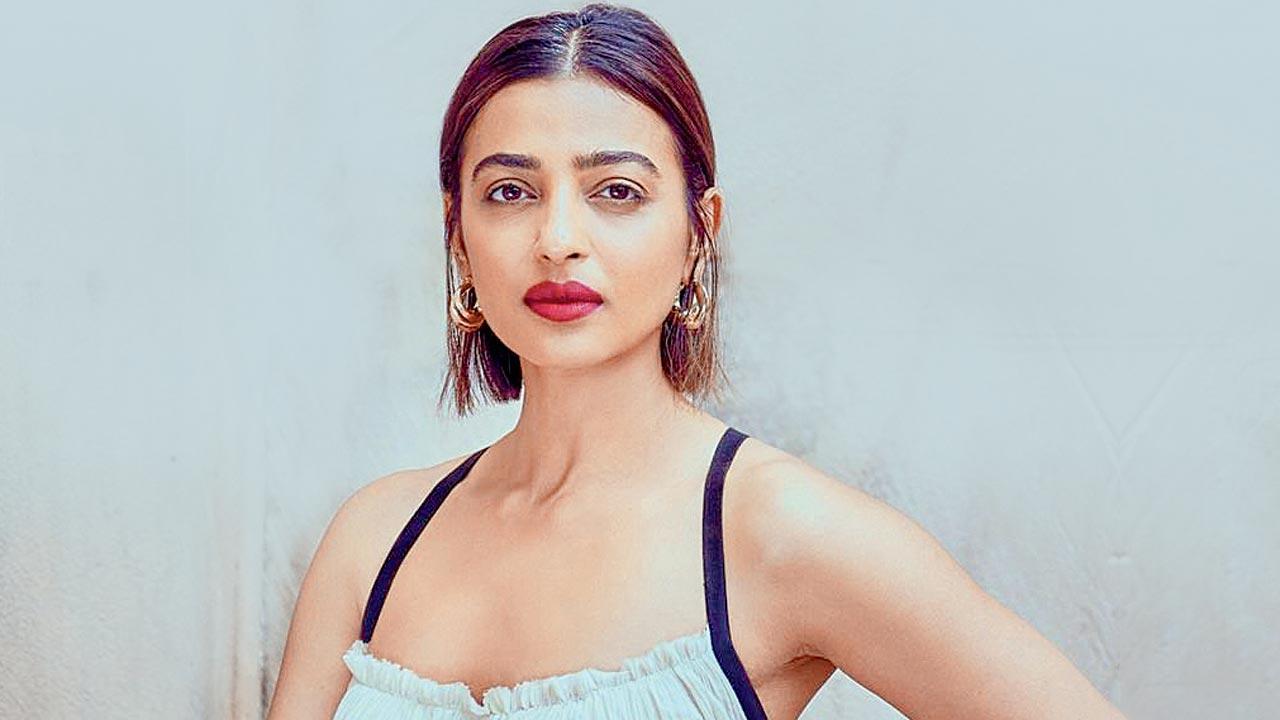
Pandemic-induced forced sabbatical compels Radhika to re-evaluate her film choices; actor reveals she has been studying script writing since three years
Priyanka Sharma (MID-DAY; December 26, 2022)
As doors of movie sets remained shut during the pandemic, Radhika Apte says she opened up to her purpose of being an actor. “I didn’t come here to be a star. I came here because I really liked to perform,” she says, confessing to becoming a victim of the rat’s race, and losing sight of her purpose over her career spanning 15 years.
“Every freelance industry is a vulnerable place. You get insecure and agree to do work because sitting idle becomes difficult. The thought of not working is scary. But, the pandemic was an eye-opener,” says Apte, who now wishes to give her nod to projects that genuinely excite her.
When she encounters dry spells, she says she will turn to her new-found passion – writing. The actor has been studying scriptwriting for three years, and plans to write and direct projects in the future. “Studying scriptwriting is making me extremely happy. I am not very good at it yet. I have been learning from a few script editors and writers because I want to make something. I want to write and direct a project,” she says, adding that her new endeavour shouldn’t be perceived as a career transition. “I don’t want to give up acting. It is my first love.”
A dearth of offers that were worthy of her attention prompted her move. “This industry does stereotype people. I was [seen as an actor who could only play] a village girl for a long time, after Rakht Charitra and Shor In The City. Nobody would cast me in an urban role. Now, I am told that I have become too urban to be considered for certain roles. After Badlapur, I started getting offers for thrillers alone.”
Comedy, she says, is a genre that excites her, but her tendency to “speak my mind” has bracketed her as a “serious person”. “Actually, I am not someone who talks seriously. I like to have fun, and am not the kind of person that people think I am. I have explored comedy in theatre, but have never been offered a comic film.”
As someone who refuses to distance her personal life from her professional one, she perceives her film offerings as opportunities to grow as an individual as well, instead of merely considering them for financial gains. “I am young. These are my best years, so, I want to avail every chance to learn.”
If you look at the animals in The Jungle Book and in Bhediya, you will say that ours is as good-Dinesh Vijan
8:05 AM

Madhureeta Mukherjee (BOMBAY TIMES; November 22, 2022)
We have seen filmmakers create a whole universe with action, cops, comedy, even superheroes. But in our cinema and in today’s times, creating a horror comedy universe is rare, and let’s say, not a job for the weak-hearted. There in comes Dinesh Vijan, who leads Maddock Films, a place which he says, ‘Is a home for anyone who wants to tell a story, no matter where you come from’. After Stree and Roohi, he’s all set to release Bhediya in theatres on November 25 — a creature comedy starring Varun Dhawan and Kriti Sanon, directed by Amar Kaushik that is also backed by Jio Studios. Dinesh passionately talks to us about what drives him, how we need to unearth great stories from within us, and what made him pave new roads, and sometimes take the forests less travelled. Read on...
It’s hard enough to land a good comedy with the audience, and blending it with horror and thrill, and also building a universe around it with a string of movies, is tricky and needs a lot of conviction and courage. What pushed you in this direction?
Honestly, I have never looked at any film that I have made as a risk. When I made Hindi Medium, some people told me it was a risk, and before that, it was Badlapur. When you hear a concept from a director or writer, your first thought has to be, ‘I can’t not make this film’, and that’s what drives me to make it. Instinct is everything for me. If there is a voice from inside that tells me that I should make a film, I do it. After being in the business for 18 years, our strength is that we don’t take ourselves seriously. We don’t think we know it all. We believe that we have to constantly learn and evolve.
You have made films like Cocktail and Agent Vinod that are urban and contemporary, and also Love Aaj Kal (which, of course, did go into retro mode). And then, you gradually started moving towards stories that were very different in tonality and texture — more rooted in our culture and shot in small towns. Did you observe the audiences changing tastes for content before making that shift, or was this something that happened organically?
Agent Vinod taught me how to make Badlapur. I learnt what went wrong and how to correct it with director Sriram Raghvan (who directed both). Agent Vinod and Raabta (directed by me) have taught me more than all my films. If you are willing to learn, failure teaches you much more. In fact, Raabta taught me that trends had changed. Through the making of Love Aaj Kal, I was learning how to be a producer. I think that Saif (Ali Khan) and I made a pretty good debut production. Sometimes, it takes about ten years to find your voice and understand what satisfies you. Hindi Medium was a game changer for us. Badlapur and Hindi Medium made me realise that if you have a pure story, strong writing, the right man to direct the film (it’s not necessary that he has to be the best in the business) and good actors — you will hit home.
Most of your films are set in small towns, including Bhediya (shot in Arunachal Pradesh’s Ziro in Lower Subansiri, Sagalee in Papum Pare and Pakke-Kessang district). Do you believe that smaller towns are a hotbed for greater, rarer and untold stories which can emerge from only there?
A while back, we were aspiring to make films that were more like the West and I feel that around 2015 that changed. With Badlapur and Hindi Medium, even I realised that the power has moved as much to small towns, as the people there are actually going to the theatres a lot more. I looked inwardly and found a treasure. There are so many stories buried in these towns and cities. My dad always made me travel a lot and would tell me that, ‘You must know your country’. I owe a lot to him. Most people in the cities don’t know what the rest of India is. Your instinct as a filmmaker also comes with the life that you have lived. Amar Kaushik happens to be a Forest Ranger’s son, so like I said, it is about getting the right man to direct your film.
You made Badlapur with Varun Dhawan, and in a recent interview with us, he said, “When I asked Dino ki tu hamesha mere paas itna teda story kyon leke aata hai, he told me ki ussi mein hi mazaa hai. I want to put you in an uncomfortable zone.”
I think that’s when they are at their best. I have been telling Varun that this is his 2.0 version. He has given his blood and sweat to this film. Now when I see the film, I can’t imagine any one other than him in this part.
Would you say that Bhediya has been the most challenging film of your career — in terms of scale, subject, VFX, shoot, etc?
It’s the best film I have produced. With Bhediya, our instinct said yes, but we also knew that if we didn’t create a wolf that is of international standard, this film won’t work. And I can tell you that if you look at the animals in The Jungle Book and ours, you will say that ours is as good. When you see the film, you will feel like we have not used VFX, it looks real. We went to one of the best VFX companies in the world and made the film in a record time of about 18-20 months. And also, it’s about what the film leaves you with at the end. There are few films that talk about conservation. This is a film that you would want your kids and young adults to watch. I think what Indians now want are films emerging from their culture, but made at par with international standards. And they want it to be affordable in the theatres. If we can achieve that, we are home.
In recent times, there has been a lot of doubt and skepticism in the industry about what will work on the big screen. Maybe there isn’t one right answer, but do you believe that every theatrical release will need to be a visual spectacle to get the numbers? Or does great content minus the visual impact, too, have the power to bring back larger volumes to the theatres?
The world is gravitating towards the first statement you made. Do I completely believe in it? Maybe we will have more clarity in the next twelve months, but as we are talking about it, we have made one (spectacle film). However, we also have a variety of other kinds of films coming up. We have to accept that the digital medium is a reality because most people are in relationships with their phones. We need to understand the screen size, as your film will get consumed on all mediums, so we have to make films keeping that in mind. My first love is theatricals, and we make films for the big screen, but we can’t ignore other mediums. The West is largely in the spectacle kind of cinema space. I feel we need to pull up our socks and deliver high quality films. The film has to completely engage you, which most our films haven’t been doing lately. You need to have an experience — whatever that might be. Today, if you ask me whether a Hindi Medium would still do well, I would say, yes, it would. If I give you a really good comedy with a high concept, will you watch it in the theatre? I think you will. Bhool Bhulaiyaa 2 wasn’t a spectacle film, but it’s done such good numbers.
In the last two years, like many businesses, the film industry, too, has had to navigate through a lot of uncertainty. Was it all a huge learning experience for you as a filmmaker and a phase that changed your outlook and perspective?
Even pre-COVID, I was telling my friends that there is going to be a huge change in our cinema. I am happy that we instinctively made Bhediya, which will hopefully keep us relevant. Today, we have to fight to be relevant and win back the audience’s confidence. We have to achieve these two things. We are competing with the West, but we have to look at what we have. If we look deep inside, look at our culture and find those stories, we are going to be able to create that experience for them. And that is their own experience; it’s not America saving the world. It’s none of that. And it begins with writing. We have to reward our writers. My writers are empowered, they have a say and I believe in them. And we (Maddock Films) are a home for anyone who wants to tell a story, no matter where you come from. I was like that, as I don’t come from a film family. I am the first-generation coming into this industry, and all my directors are too. I want my directors to feel that they have got the best wingman in me and that I completely have their back.

Kavish Majumdar is the one who pushes me to do Badlapur and October-Varun Dhawan
8:28 AM

On Friendship Day, the two reveal how they’ve got each other’s backs for two decades and counting
Rishabh Suri (HINDUSTAN TIMES; August 1, 2021)
He calls Varun ‘badarva’, and not many people know about their bond. Actors Kavish Majumdar and Varun Dhawan have been friends for over two decades. Dhawan calls Majumdar the “funniest person in the room”, and says he wants to make a show on him. On Friendship Day today, we get talking to both in an exclusive conversation:
When did the two of you meet for the first time? What’s the first memory you have of each other?
Varun: Meeting Kavish is a story in itself. He had done a play called Little Boy Blue, at Prithvi Theatre in Mumbai. I had gone to see it along with a friend. We were 12. I loved the play, and thought, ‘This guy is damn good’. We never spoke, but ended up meeting in H R College (Mumbai) in 2003.
Kavish: I met him in the corridors of college, Varun was standing alone, going through his phone. I went up to him and said, ‘Hi Varun, we had met at that time’. Then there was a Goa trip we went on with friends by train for a good 10 days. We came back and stayed in touch.
Not many know about the bond you share, we don’t see any pics on social media, too.
Varun: That’s because Kavish isn’t very fond of social media. He hates it when I put any of his stuff online, so I respect that. Otherwise, we pretty much speak every day. He’s one of my closest friends, plus he loves cinema being an actor himself.
Which of Varun’s films is your favourite?
Kavish: Student Of The Year (2012), he killed it in his first film. After that, Main Tera Hero (2014), Judwaa 2 (2017). I loved him in Coolie No 1 (2020), he’s the best at those films.
Varun: He’s saying this, but he’s the one who pushes me to do Badlapur (2015) and October (2018).
What’s that one thing about each other that no one else knows?
Varun: We can’t say it (laughs). We don’t have any secrets with each other. His favourite actor is Baba (Sanjay Dutt), so we make him enact Raghu from Vaastav, the 50-tola dialogue.
Kavish: In a party, we don’t talk as much, we start acting and dancing.
Varun got married in January. What was his bachelor’s party like?
Kavish: He was working until before the marriage, and then there was the pandemic. We couldn’t plan anything. I was just told to be free on those dates.
Who between Natasha and Kavish would you call your best friend, Varun?
Varun: (laughs) You can’t choose like that! Kavish is a person who Natasha has accepted in my life, she knows he is going to be a part of it no matter what.
How is Varun as a friend, Kavish?
Kavish: He has always been there. Sometimes, when I’m not able to call, he’s the first to call and ask, ‘Where have you been’. He’s the one who makes plans. In the pandemic, too, he looked out for me.

We all have one such story in our life that underlines our imperfections-Dinesh Vijan
8:29 AM

Rachana Dubey (BOMBAY TIMES; November 5, 2019)
Dinesh Vijan has always believed in backing content that he is convinced about without fearing failure. “Raabta (2017) and Agent Vinod (2012) taught me to look at cinema differently,” he says. Ahead of the release of his production, Bala, he spoke to BT about picking the right content, reuniting with three directors he had started his Bollywood journey with, and the unforgettable lessons he has learnt along the way. Excerpts:
After Luka Chuppi, Arjun Patiala and Made In China, Bala, which hits the theatres this week, will be your fourth release as a producer this year. How would you describe the year, which has been hectic, challenging and fast-paced?
This has been a year of lessons, an enhanced understanding of the work we do and stability. I’ve managed to line up my films for the next year — the ones that go on floors and ones that release. I can’t wait for 2020 because there is a lot of action ahead. I’m reuniting with Imtiaz Ali, Homi Adajania and Sriram Raghavan, with whom I had worked at the beginning of my journey as a filmmaker. I remember learning so much from Imtiaz when he was making Love Aaj Kal (2009). The year ahead is more packed than this one. With everything that I have learnt, particularly from my failures, I’m more than geared up for the next year.
What about your plans to direct? You wanted to start something this year...
In the next two years, I have over ten films slated to release and around five or six big films to roll out. I can’t take my attention away from that right now. As a filmmaker, my biggest learnings came from Agent Vinod (2012) and Raabta (2017), which taught me just how fast the audience is changing. I learnt the art of making films like Badlapur (2015) and Stree (2018) from these. Failures teach you more than success. Today, as a filmmaker, I go by my gut instinct. I have to know the emotional arc of a story and see if it works for an audience.
While this year has been one of mixed results for you, what are your expectations from Bala? Do you feel nervous before the release of a film?
No, I don’t. I am not nervous because I make the films that I truly believe in. Take Bala for instance, I truly love it for what it stands for. So far, with most of our films, you take something home after the viewing experience. This time, you might also leave a little bit of you behind in the cinemas. I am extremely proud of this film because it will establish an unreal sort of a connection with you as an audience.
A film on similar lines opened a week prior to Bala. Does that bother you?
I’ve not commented on this matter so far because when the dust settles, people are smart enough to see things for themselves. People are going to say all kinds of things. Yes, the lead characters in both films are bald, but I know that my film is different. In Bala, there’s nothing similar to the south Indian film (on which Ujda Chaman was based). My company has stood for positive and original content. We’ve stuck to our date for Bala, and we’re confident about our film. I’m known to thrive on my sense of originality.
When you announced your film about a year ago, what had drawn you to the subject at that time?
The film is not so much about balding. It’s actually about the fact that we all have something we don’t like about ourselves. It could be size, weight, height, hair or skin colour. The idea is to love yourself for who you are, because it’s foolish to expect other people to love this perfect, superficial version of you. Amar Kaushik (director) was the best person to make this subject, which will appeal to the simplest, yet the most complicated Indian. The reason I kept quiet all this while was because, I didn’t want to corrupt the experience that Bala, as a film, offers.
Talking of imperfections, are you conscious of any of own?
I don’t observe myself so much; I am not even on social media. I remember when I was in class four, I shot up (in height), and suddenly, I was the tallest in my class. I developed a hunch because I became conscious of my height. Of course, eventually, my height became my strength. I’ve realised that anything different is always frowned upon and that has to do with the way we are conditioned. With Bala, we want to initiate a change there. That is the aspect I related to the most. We all have one such story in our life that underlines our imperfections or what we see as our imperfections. Bala will make you love yourself.
As a producer, you’ve refrained from backing anything formulaic. At the outset, you were doing something different from the rest of the industry. Did people also frown at your choices of films and the direction you were heading in?
I don’t know about that because we were busy making films. We’ve always backed stories that we firmly believe in. We’ve forged some extremely fruitful equations with filmmakers like Imtiaz Ali, Sriram Raghavan and Homi Adajania. As a company that arrived out of nowhere, we have never feared failures. We never take our audience for granted and never hide things or mislead them. Yes, when you make five films, you will go right and wrong with some of them. But why make a film that you don’t believe in? I’ve always wanted the directors of my films to get their vision right; we can work around the rest. After making Agent Vinod, Sriram made Badlapur and then AndhaDhun; he’s come into his own and is now making Ekkees with us. Fortunately, I’ve always found like-minded people to work with, whose love for cinema is greater than everything else. The intent is always to make the best possible film with the material at hand.

Natasha Dalal is my rock, the stabilising factor in my life-Varun Dhawan
9:02 AM

Actor Varun Dhawan on his girlfriend, and chemistries on and off screen
Jitesh Pillaai (TIMES LIFE; June 2, 2019)
 Did October influence you with regard to relationships?
It moved me as far as relationships are concerned. It made me realise you never know what’s going to happen next.
The grapevine suggests that you’re getting married to Natasha Dalal this year.
It’s not going to happen this year. I’m not saying I won’t get married but it’s not this soon. If I’m doing all these movies, I need to find the right time for that.
Natasha’s often spotted with your parents. She seems to have become part of the family…
She and I went to school together. So, she knows my parents since ages. She’s been attending functions with my parents before also but it wasn’t photographed then.
What does she add to your life?
She’s my rock, she’s my anchor. She’s the stabilising factor in my life. It’s pretty much like family.
What kind of a boyfriend are you?
In the last couple of years, I’ve been really good. I’ve understood what it’s like to be in a relationship and the whole love vibe. I’m enjoying it. I’m having a great time.
How were you before?
I was much younger na. So, I didn’t understand it completely. But now I’m probably enjoying it more than her. The one who experiences it knows how it feels.
Being the hero of the masses – is that your dream?
Yes. That’s been my aim since the start of my career. I do mass entertainers to please my audience. Having said that, I love my films – Badlapur, October and Sui Dhaaga: Made In India. They taught me a lot. They helped me get in touch with things I feared I’d lose.
Alia Bhatt and you share unbelievable chemistry...
There’s definitely some magic and we both know that. That’s the reason we keep coming back and working together. Otherwise, I can’t work with anyone so many times. We get along as people. Our passions are the same. We both are competitive with each other. As passionately as we care for each other, we fight also. But what’s great is that ours is an honest relationship. It’s not a fake one like, ‘Okay, pack up. See you tomorrow.’ Or ‘How am I looking? Oh very pretty’. Instead, with us, it’s like if you’re not looking good, you’re not looking good and if you’re looking good, you’re looking good.
Is there any film you wish you should have done?
I loved Stree and its concept. I loved what Rajkummar Rao did in the climax because generally everyone thinks of him as a serious actor. I’m happy for him.
Apparently, you were offered 21 crores for Street Dancer 3D. How important is market value for you?
Actually, it’s more than that. The money is coming and it’s good. Though you don’t need that much money to live. Main kya karunga usska?
Do you want a marriage like that of your parents?
One person’s marriage cannot be like that of the other. It has to be in accordance to who you are as a person. What’s on my mind right now is my niece (Rohit and Jaanvi Dhawan’s daughter). I saw her after a while. She pulled my T-shirt and recognised me. I got so excited. I want to go and play with her now.
You would probably make for a fantastic father in the future…
That I don’t know. But I’m a superb chachu right now. You’ve no idea how my family is tripping over her. People just melt when they see her. She’s ruling us.
Colaba's Mukesh Mills may open for film shoots again
8:29 AM

The location where Amitabh Bachchan shook a leg to Jumma Chumma De De was shut last month after BMC found it dilapidated; owners want ‘safe’ portions to be opened
Chaitanya Marpakwar (MUMBAI MIRROR; May 12, 2019)
Colaba’s Mukesh Mill, a popular film shoot location that had been shut last month, might soon open for business.
Last month, the BMC had shut down the premises after declaring the structures dilapidated and unsafe for shooting. The A ward office issued a note, asking the owners to conduct a fresh audit of all structures on the10-acre mill land and to stay shut until then.
Formally owned by East African Hardware Ltd’s Muljibhai Madhvani, the plot was later taken over by TCI Industries Ltd.
In a letter dated April 30, the owners told the BMC that they had carried out a structural audit and found that only some of the structures inside were dilapidated. Pointing out that the unsafe structures were located near the seaside and not close to the open ground, they requested that the remaining portions be opened for shoots.
Hinting that it’s willing to meet halfway, the civic body directed the mill owners to demolish the dangerous structures before being granted permission for film shoots. “We have received a report from the owners. The structural audit has been carried out by Mahimtura Consultants Pvt Ltd. They have claimed that only a handful of structures are dilapidated, while most of the mill structures are in good condition. But we have asked them to first demolish the dangerous structures before allowing any film shooting,” said Kiran Dighavkar, assistant municipal commissioner of A Ward. “We can’t take any risk. For us, the entire mill is one structure. So we can only allow any kind of shooting once the dangerous structures are demolished.”
Officials said that the mill, located on a sea-facing plot at Colaba’s N A Sawant Marg, was originally set up before Independence. “At that time, this was probably the only mill in south Mumbai. The mill itself had a large private dock. There, bales of cotton and load yards of finished cloth were unloaded. They were then transferred to large vessels and exported,” an official said.
BMC officials said that the mill became defunct in the 1980s and soon became Bollywood’s favourite spot to shoot climaxes, action sequences and songs. It has been featured in close to 50 Bollywood films since the 1980s. The popular song Jumma Chumma De De from Hum (1991), featuring actor Amitabh Bachchan, was shot there, as were portions of films like Lukka Chuppi, Heropanti, Raaz, Jee Karda and Badlapur in recent times. Many advertisements, too, have been shot there.

If it wasn’t for Natasha Dalal, I wouldn’t be here in my life-Varun Dhawan
8:15 AM

Madhureeta Mukherjee (BOMBAY TIMES; April 15, 2019)
It is interesting discussing movies with Varun Dhawan, and insightful, too. His eyes light up as he talks about the nuances and nitty-gritties of being in front of the camera, and he could go and on with gusto. With the same passion, he tells you about all that goes on behind the camera, and we don’t mean the goss and fluff. We mean the real stuff — the dynamics of movie machinery, the trade, ticket sales, et al. He calls this his madness, his “obsession with the movies”. And he’s like this in real life, too, with all relationships of the heart. He is either all there, or it’s nothing at all. His choice of films has often surprised many, but for the box office (BO), he’s been a delight. With his next, the multi-starrer Kalank coming up for release, Varun talks about the actors he is rooting for, the kind of filmmakers he’s drawn to and about all the madness around and inside him. Read on…
While talking to us recently, Sanjay Dutt expressed that he was thrilled to be part of a multi-starrer like Kalank, but he also said that he hoped the younger generation did more such films, just the way the actors of his generation did...
Well, I don’t scream about it from rooftops, but if you count the number of double-hero films I have been part of, not many have done that. I started with a two-hero film, Student Of The Year (2012); after that, I did films like Dilwale (2015), Dishoom (2016) and now, Kalank. Even ABCD 2 (2015), was like a multi-starrer, though I was heading the cast. So is my upcoming film Street Dancer 3D. It all depends on who you are working with. Also, I am a very secure actor. In fact, I think people bring insecurities in actors.
The corporates, the PR machinery and some of the people that surround them bring about insecurities in them. I am working with good people and those who I have a good tuning with. That time is gone when an actor will refuse a good multi-starrer, unless he is doing a film where a story needs a single hero. As an actor, I am communicating with the audience, nothing else.
You are teaming up with the young bunch of your generation (Alia Bhatt, Sonakshi Sinha, Aditya Roy Kapur and Kunal Kemmu). Of the cast, Aditya is a man of few words, he’s the quieter one, at least when compared to you. Even during the promotions of the film, he seemed happy to throw in just a few lines and let you take the lead…
He is one of the craziest people I have met, but above all, he is a lovely human being. I have spent so much time with Adi (Aditya) on this film, I am really rooting for him. In Kalank, you will see a huge change in him. He is one of the USPs of the film. I loved working with Kunal, too. Sometimes, you get to work with someone you are a fan of, main uska fan hoon, right from the days he did films like Hum Hai Rahi Pyaar Ke (1993) and Raja Hindustani (1996). To pakau him, I would keep asking… ‘Aamir (Khan) ke saath scene kiya tha, kaisa laga tha, bol na?’ He would turn around and say, ‘Yaar, mein toh bachcha tha, socha hi nahi tha yeh sab’. I would love to work more with Kunal and Adi.
When you did Shoojit Sircar’s October last year, you had said that, at the stage of your career you were in, you needed a film like that. Did the film help your career in the way you desired it would?
When I discuss my films with anyone, including people from the media, two of my films always get mentioned — October and Badlapur (2015). Let me put it like this — even today, I get a message a day for October, so I think I am still collecting royalty on that film. It looks like I will be doing that for a long time, and for an actor, it means a lot.
But after back-to-back hits, October was one film that didn’t make such a mark at the BO. How did you react to that?
Yes, it didn’t work in comparison to other films. If I weren’t born in this digital generation, I would have probably been devastated. But I belong to a generation where there is a massive influence of digital content, and as much as it breaks my heart to say this, there is a parallel audience. I did October for that audience and like I said before, for me, saari audience meri hai. Main kisi ko nahin chhodunga. The haters, lovers, trollers, believers and non-believers — all are mine. I want the audience that watches movies online, I want the audience that watches all Hindi films, whether they are from A, B,C, D centres, it doesn’t matter. Sab mere hai kyunki main unka hoon.
So, with experience, have you become more realistic about what works, what doesn’t, and what the audience expects from you?
I have always been realistic. But if you are asking... does it shake my confidence if a film does not do well at the BO, yes, it does, to a certain extent. That is the honest truth. You tend to think, ‘Yaar maine Judwaa 2 (2017) ki thi, which made an ‘x’ amount, Badrinath Ki Dulhania (2017) did well, too. So, why didn’t this work? When I did Humpty Sharma Ki Dulhania (2104), it did very well. Following that, I also did Badlapur, an A-rated film, which also had an audience, even if it was a smaller number. Earlier, I would see films in terms of BO, now I see films in terms of footfalls. I don’t know how much people will understand the economics of films, but the way I think we should view it is — what are the number of people we are getting into theatres to watch our movie? You can price your tickets very high and still make big numbers, and that money won’t come to me as an actor. So, my concern as an actor should be… how many people have watched my film in the theatres? My footfalls have been good and encouraging, but now I want to increase my footfalls.
You have always made keen observations about the movie trade, the workings of the industry, and all that happens behind the scenes. Would you say that when you are part of a project, you are involved in it, in ways beyond being in front of the camera?
I am interested in every aspect of filmmaking and film viewing — I am interested in the projection of screens, in sound quality in theatres, the VFX, mixing and anything that comes with the territory. That is my level of obsession with movies, and that is how much I love this world of cinema. This is also the reason why I love working with Abhishek Varman (director of Kalank). The kind of love he has for his film, is madness. I think woh print leke jayega theatre mein and he will tell people, ‘Roko, roko, thoda yeh sound badane do, yeh correction karne do’. He is that crazy. I love him because he is a mad genius.
You are doing the sequel to the Govinda-Karisma Kapoor-starrer Coolie No 1, which was directed by your father in the 90s. It is interesting to note that when you did your second film Main Tera Hero (2014),some people said that you were making the worst choice by doing a comedy like that (often branded as ‘uncool’). Then, you did Judwaa 2, and that worked at the BO,too. In one of our previous interviews, you said, ‘If I am told not to do a certain kind of film, I feel compelled to do it’. I guess, you are proving that…
It’s about making people laugh, entertaining them and not taking yourself too seriously. I think serious people also want to laugh; and it is my job as an actor to make them laugh. They can pelt stones at me and mock me, but when I am being a comedian on screen, let me tell you... that it is the hardest job. I think being a stand-up comedian is a tough and lonely place to be in. You are alone on a stage and everyone is looking at you to judge you, while all you are trying to do is basically, make them laugh! I know I can do comedy, hence I go ahead and do it.
So, when you are offered a script, do you categorise it thinking... ‘Is this story massy enough, will it appeal to the rest? Is it for the multiplex audience, or will it also work in a single-screen?’ Do all these variables largely influence your choice of films?
Massy films, classy films… sab ek hi hai. Khane ke liye sabko do waqt ki roti chahiye aur sone ke liye bistar chahiye. The heart of the story has to appeal to everyone. I have been brought up with certain luxuries, but such movies (comedies) appeal to me, so I don’t know why it won’t appeal to someone else like me, or people from similar backgrounds. In all my movies, I am playing characters who are fascinating and have stories which are unbelievable. I am not showing you a regular story. I am putting out a dream, which is unbelievable. While growing up, I would enjoy reading Shah Rukh Khan’s interviews, and I loved one thing that I read in his interview from long ago. He said, ‘I love selling dreams to common people. That’s what I was’. I truly believe that we are all selling dreams to people. Actors like SRK, Salman Khan, Akshay Kumar, Sunny Deol….they were my heroes while growing up. I have seen all their films in the theatre, single-screen ke stall mein baith ke dekha hai maine unke movies. I saw a film called Aan: Men At Work in Chandan theatre in 2004, because it had a huge line-up of actors (Akshay Kumar, Suniel Shetty, Jackie Shroff and many more) and I wanted to see a multi-starrer. That’s why my perspective on cinema is broad as I have seen all kinds of movies. The reason why so many stories set in the heartland of our country is working is that people are relating and connecting with them. I have very interesting conversations with some of my producers like Dinesh Vijan, Bhushan Kumar and of course, Karan Johar. It is interesting when you realise that Karan Johar is the massiest amongst all of them. He made Kabhi Khushi Kabhie Gham (2001), and that is a full-on massy film. Look at the emotion and drama; a rich man marries a poor girl, and goes against his family. His brother grows up and reunites the family. This is what we call massy. Karan is one of the massiest directors we have had. He has grown up consuming such cinema; it doesn’t matter that he grew up in Malabar Hill (South Mumbai). What I am trying to say is that, it doesn’t matter where the audience comes from; the story has to connect with them. Kalank is like that, it is a full-on massy film. It’s a larger-than-life presentation, as that’s the vision of the director, but that doesn’t mean it is not massy.
Moving on, is marriage on the cards, now that you have finally admitted to being in a relationship?
Marriage is not on the cards anytime soon, but I will say that I am in a very good space in my relationship. She (Natasha Dalal) had my back throughout. It’s been hard for her, but she has always been there for me, standing by my side. If it wasn’t for her, I wouldn’t be here in my life.
You had said in an interview, ‘With love, you have to be all there, or it is not love’. So, we are guessing, you are all there and this is it…
I think love is madness. People in general are not easy to deal with; every person comes with his or her own craziness. When you are in love, you are allowing that person to see all of that and be a part of it. Your partner has to really love you to let you be crazy and even enjoy that part of your life. That’s what happens in Kalank too. With Roop (Alia’s character) and Zafar (Varun’s character), it is eternal love. Sometimes, you fall in love with the wrong person, but you still love them madly. Why? You know that yeh galat hai mere liye and all the signs tell you that ki yeh insaan galat hai, and that it will all go downhill from here. But you still go down that path. That is what love does, you can’t help it. What is love, without the madness?

Shoojit Sircar, Ali Abbas Zafar, Anees Bazmee, Sriram Raghavan on why they return to the same place to shoot
8:19 AM

Four directors, who have set their last few films in their favourite cities, tell Mirror why they find themselves returning there every time they have a new story to tell
Natasha Coutinho (MUMBAI MIRROR; February 15, 2019)
 SHOOJIT SIRCAR: ‘Everyone in Delhi is a character’
Location: Delhi
Films: October, Pink, Piku, Vicky Donor
 Delhi is my favourite city because I did my schooling and college there, and also theatre. I know the streets, the people and the food. Chhole bhature and kulche are the first things my team gets for me every time I am there.
Everyone in Delhi is a character; they can be a part of every film. I’m comfortable with the milieu and the characters inhabiting it mirror the messages of my films. Vicky Donor was set in Daryaganj while Piku was in CR Park where I’ve lived. Pink reflected it’s dark side and the location was a character with an identity. October was set in the hotel industry there where I’d worked. I know the winters in Delhi quite well. There is no commercial reason for setting my stories in the Capital, it’s just for sentimental reasons… Out of love for my memories.

SRIRAM RAGHAVAN: ‘I wanted to capture bits of Pune which would completely change soon’
Location: Pune
Films: Andhadhun, Badlapur, Johnny Gaddaar
 The first film I shot in Pune was for my FTII diploma film, a fantasy titled The Eight Column Affair, which was set in the popular local newspaper Maharashtra Herald and was shot in various locations, including MG Road (Main Street), St Vincent’s High School, the Kirkee War Memorial and the Herald’s press. I did my schooling and college in Pune. As a kid, I watched as many movies as I could, and have fond memories of cinemas like the West End, The Empire and Natraj, among others. It’s a beautiful city, and much easier and convenient to shoot in than Mumbai.
Geographically, Pune has helped me with scripts of my last few directorials, Johnny Gaddaar (2007) and Badlapur. Badlapur is an actual place between Pune and Mumbai. And while Andhadhun could have been shot anywhere, I wanted to capture a bit of the Pune which would completely change soon.
I shot parts of Andhadhun in the theatre Rahul 70MM, where I’ve seen classics like Jaws and Enter The Dragon, for cheap thrills.
The old Westend Cinema near Main Street was a wonderful theatre too. It had cane armchairs and a soda fountain. The theatre is long gone, and a hotel stands in its place now. We shot the interval scene of Badlapur in that very hotel.

ALI ABBAS ZAFAR: ‘I remember complete chaos when we shot in Old Delhi’
Location: Delhi
Films: Sultan, Tiger Zinda Hai, Mere Brother Ki Dulhan

 The most important aspect about Delhi is natural and architectural beauty. I did my college there so my characters subconsciously land in Delhi. It is also because every location in a film is also a character.
I shot my first film, Mere Brother Ki Dulhan, with Katrina Kaif and Imran Khan there. After that I went on to shoot at similar locations for Sultan, Tiger Zinda Hai and now Bharat. During Mere Brother Ki Dulhan, we were shooting in Old Delhi and I remember complete chaos when it came to security because 5000 people landed on the set. We had to lock the premises and couldn’t get out for a long time.
ANEES BAZMEE: ‘Makes sense commercially as we get subsidies’
Location: London
Films: Pagalpanti, Mubarakan
 Whenever I visited London, I’ve loved the place and the weather. I have a lot of friends there who keep sending me food so there’s an emotional connect too. It also makes sense commercially as we get subsidies to shoot there. Besides, things just align whenever I’m shooting there.
We started shooting Mubarakan in February, when it is terribly cold. I shot outdoors at night for the first two days. It was difficult but we pulled through before moving indoors.
Pagalpanti will start on Sunday with a night schedule close to Carlton Gardens in Westminster. In the film, the jungle is supposed to be haunted, leaving the actors terrified of ghosts. We will also be filming at Allerton Towers, a 35-acre park in South Liverpool, as also Leeds, besides London. It is a 60-day schedule. I couldn’t to be back in my favourite city.

Sriram Raghavan traces his journey from Ek Hasina Thi to Andhadhun
8:16 AM

Sriram Raghavan on why he would rather go by his intuition than follow instruction when it comes to making movies
Roshmila Bhattacharya (MUMBAI MIRROR; January 14, 2019)
 This year, Sriram Raghavan intrigued, impressed and earned himself a box-office hit while breaking every established convention of commercial cinema. But then, the director who 14 years ago, exploded on the scene with the neo-noir thriller, Ek Hasina Thi, has never believed in playing safe and AndhaDhun, his fifth film only took him and Hindi cinema further down the experimental route. As 2018, winds to a close, Sriram retraces his journey…
AndhaDhun (2018)
When we started the film, we had two choices for the end—One was a rather sad one where the diabolical Simi has blinded Akash forever and the other was a simplistic one whereby he gets his eyes back. Sanjay (Routray) and I eventually opted to keep it ambiguous. Our studio partner was understandably worried about whether it would work from the box-office point out view. AndhaDhun was an experimental for an Indian film but not too expensive, so I was left alone. I admit the move could have backfired and am super thrilled people talked about and debated it, came back to watch the film and embraced it.
By now everyone knows Ayushmann Khurrana was not my first choice. I had narrated to a couple of actors and even tried a few newcomers when he texted me and I met him out of courtesy. I was narrating the story to him, looking for a viewer feedback when slowly, his palpable excitement made me see him in the role. He offered to audition, and I gave him two scenes: One when he’s actually blind and one where he is play-acting. They were easy to write and hard to play. He brought in his natural style and given the kind of roles he’s played, the darkness was implied which made it better. Ayushmann and Tabu are both the killers of the film.
Tabu I’d invited to a trial screening of Badlapur even though I didn’t know her. She came and liked the film which encouraged me to narrate AndhaDhun to her. It made her laugh—I don’t know whether she was laughing at the story or with it, but I enjoyed her laughter and given that she can carry off both comedy and intensity with effortless ease, she was the perfect Simi.
Her husband, Pramod Sinha, could have easily been a jeweller or a businessman but I thought why not an actor, who, like Amol Palekar, had perhaps moved to Pune after retirement but still enjoyed watching his old films. I thought of Anil Dhawan because he’s Varun’s uncle and from the institute. Also, I remember my mom telling me I couldn’t watch his Chetna, a really bold adult movie in the ’70s. Getting Anil Dhawan gave us a chance to experiment with the music, give it a yesteryear feel. I had initially planned not to have songs but I was told that was crazy, and since I like piano songs like Dev Anand’s “Khwab Ho Tum” I gave in despite my inhibitions since I had a legitimate reason to use them tantalisingly, as inserts between songs. It wasn’t your usual commercial stuff but Amit Trivedi’s music does grow on most people.
Thanks to AndhaDhun I ended the year on a high, and now while scripting a biggie with Dinesh Vijan, a biopic on second lieutenant Arun Khetarpal, who died at 21 in the 1971 Indo-Pak war and was awarded the Param Vir Chakra posthumously, I’m also looking at two-three other stories. I don’t want to wait three years for a release, I wish to come out with one next year, it’s one way of avoiding jury duty for film awards.

Badlapur (2015)
After Agent Vinod while reading a lot of books, I came across this story whose basic synopsis was one-third of what you see in Badlapur. Expecting a revenge drama like Ghayal, I stopped reading mid-way, and tried to invent my own scenario of what happened 15 years later. I came up with some rather trite answers and then went back to reading it and it left me deeply affected despite being a much darker story.
A lot of people told me not to experiment with it, even Sanjay (Routray) found it too dark. Fortunately, Dino (Dinesh Vijan) loved it and was ready to produce it if I promised not to dilute it. Badlapur was my first box-office hit, but some people didn’t get the point and found it misogynist while some well-known critics were skeptical. I’m glad the film provoked some thought.
For me the high was the casting. Nawazuddin Siddiqui got a role with a hero’s arc because as the film progresses, you start liking Liak Tungekar because, in his own way, he’s a pure soul. Varun’s Raghav was the big dare. I had thought he’d want to play Nawaz’s role but he took on the challenge of Raghav and since people saw him as a hero, his presence added to the shock value of this anti-revenge movie.

Agent Vinod (2012)
This was perhaps my most ambitious film and since I love spy thrillers, I tried a mix of everything but fell between two streams. In retrospect I think I should have put my foot down on occasions. After Agent Vinod I understood what Billy Wilder meant when he said, “Trust your instinct. Your mistakes might as well be your own, instead of someone else’s.”
Saif was the best thing about the film and I feel doubly bad for having let him down. I guess going by the first trailer, people expected a desi Bond—haraami, lots of fun and definitely not celibate. Our film got a little too serious after a point and as a critic pointed out, was too intelligent for dumb audiences and too dumb for the intelligent. I’ve to make another spy film to get it right.

Johnny Gaddaar (2007)
I used to watch the Barry Norman Show on BBC and in one episode saw a clip of Quentin Tarantino’s Reservoir Dogs. Instantly hooked, I traced a VHS in a Colaba video library, saw it a few times and decided I wanted to make a film like this. The basic plot of Johnny Gaddaar, was drawn from different sources, including James Hadley Chase novels and French noir, but the treatment was mine.
For the character of Seshu (Sheshadri) I wanted Dharamendra. He’d quit films and was an MP from Bikaner, still I visited him with my producer Pooja Shetty, sure he’d say “No.” But mid-way through, he got very excited and I wondered how to tell him he’d get killed in the next scene. Working with him was my biggest take-away from the film which also introduced Neil Nitin Mukesh whom I met by chance at Jhamu Sughand’s office. Jhamu told me he’d screen-tested for Anurag. I narrated him the story and he was fascinated. I warned him it wasn’t a traditional hero launch, but he still wanted to do it. It was great for me because Neil came with no set image and that added to the intrigue.
Ek Hasina Thi (2004)
 After I passed out of FTII, my first professional assignment was a docu-drama on Raman Raghav for a video magazine showcasing interesting cases of cops. We had a budget lesser than that for TV but with Raghuvir Yadav leading the gang, we went out and shot it like a film in actual locations, including one in Jogeshwari where the serial killer of the ’60s had actually made his weapons. The magazine shut down soon after and the docu-drama was never released but became a show reel for me.
Anurag (Kashyap) showed it to Ramu (Ram Gopal Varma) who wondered why I wasn’t making movies. When I told him that apart from his films, I didn’t like too many, he asked me to write a script for him. We’d work on an idea for a few weeks, then, Ramu would move to something else.
During this time, he offered me Shool. I had issues with the second half while he was convinced with what he had. So that didn’t work out. Then, we started collaborating on Daya, an ironic title given that it was on encounter cops. I’d been working on that script for a few months when Ramu started Company and decided to put this on hold given the sensitive subject. My face fell and to appease me, he gave me another script. It was written like a novella, but I liked that it was a romance, crime saga and a jail drama all rolled in one.
We shot Ek Hasina Thi at David Sassoon School, Thane jail and even created our own jail at Natraj Studio. The climax with all those rats is still talked about. We had two-three huge junglee rats which were secured, the rest were white mice dyed black with toothpowder. Urmila (Matondkar), a fantastic actress and very sporting, even swatted one of the mice at the interval point. There’s also a shot of a rat running up Saif’s (Ali Khan) trouser leg but that was a wound-up mechanical toy!
Saif was our first choice for Karan Singh Rathod but he was in the Dil Chahta Hai happy space and wary, convinced his fans would hate him as this charmingly diabolical Charles Sobhraj-kind of character. But once he came on board, he was brilliant and gave us a taste of the Saif who nailed it as Omkara’s Langda Tyagi.

Pooja Ladha Surti turned the cat into a performer in AndhaDhun-Sriram Raghavan
10:56 PM

For Pooja Ladha Surti, also Sriram Raghavan's 'man Friday', the key to a great movie is to observe everything, and forget nothing
Aastha Atray Banan (MID-DAY; December 9, 2018)
 "In the first scene of Andhadhun, a cat is seen running, keeping in line with the music being played in the background. Now, the cat doesn't know what it's doing, but because Pooja has edited the scene in a certain way, it feels like the cat is reacting to the music. She has turned the cat into a performer," says the film's director Sriram Raghavan of Pooja Ladha Surti.
"She also has great patience and a memory that's unbeatable. She will say later 'that expression from that scene was so good', and you are [left] amazed." No wonder then that Raghavan calls Surti, a writer and editor, his 'man Friday' and has now been working with her since his debut, the 2004 film Ek Hasina Thi.
Surti, whose collaboration with Raghavan, as a writer and editor, has been the most extensive with movies like Andhadhun (one of the year's biggest hits, which centres around a blind man, portrayed by Ayushmann Khurrana, who gets stuck in the middle of a murder scene), Johnny Gaddaar (2007) and Badlapur (2015), has also worked on movies like Phobia (2016) and Agent Vinod (2012).
As we soon find out, Surti is known for her keen eye, and the layers she brings to the movie, whether it's through her writing or editing. Her work usually starts with co-writing, then watching, observing as the movie is shot, and translating those perceptions into delivering an edit that, as Phobia director Pavan Kripalani put it, "makes even the worst scene, good, always keeping the story first."
But, for Surti, writing movies, and editing them, happened just by being at the right place at the right time, and noticing the right things. The 47-year-old, who was born in Jamnagar, in Gujarat, but grew up in Mumbai after her family shifted to tend to her ailing grandfather, knew from the beginning that movies were her first love.
In 1975, she saw Sholay, her first movie at a cinema hall, but it was a while before she abandoned her hopes to be an airhostess (because she wanted to travel), for a career in the media. "I read a lot of books and watched a lot of movies as I studied at St Xavier's [Dhobi Talao], and then joined a TV channel, and life changed when I met Ram Gopal Varma to interview him for the channel."
 He asked her if she would write with him, and if she had any ideas of a film with a woman hero, and as luck would have it, she did. The avid reader of many a James Hadley Chase, gave him the first draft of Ek Hasina Thi (a movie about a woman conned by her lover and how she then turns the tables on him), and it was then that he brought in Raghavan.
"RGV and Urmila [Matondkar, who starred in the movie], liked it, but Sriram said 'let's start at the beginning' and asked questions like 'what is she feeling now?'. What Sriram and I do is we talk a lot, almost distilling the idea threadbare, which is what we did with Ek Hasina... Then the editor of the movie fell sick, so I decided to step in, despite having no prior experience. I enjoyed it, so when Johnny happened, I asked Sriram right at the beginning if I could edit it."
Raghavan tells us, "I had been ribbing her all of Ek Hasina... saying 'you should be an editor', so when she asked, I said ok, it's a small movie, let's try this. What works with Pooja is how well she connects with the material. She is usually there for the whole length of the shoot, and even has great sense of music and sound. So, in the end when she edits, she can just bring it all together that much better."
Surti knows that watching the shoot and taking it all in is the most important part of it all. "Sometimes an actor may think a shot is great, but it just doesn't fit. Sometimes I start from scene 17, because I know that that scene will change the pace," says Surti, who counts Aandhi ("not a thriller"), Mad Max-Fury Road, Shutter Island, Munich, Pulp Fiction, Parinda and Satya as some of her favourite films.
 For Kripalani, who Surti worked on Phobia with, she is the backbone of it all. The movie, which starred Radhika Apte (left) in the lead, was about a woman suffering from agoraphobia after being molested. "What I didn't have was the maturity to add layers to the characters. But Pooja knows how to do that. She didn't make the women, good and the men, bad. She knows everyone is grey, and that's because she is extremely perceptive and writes characters that are real," he says.
Apte, who has acted in many of Surti's projects, agrees with Kripalani. "Pooja can find balance in character, without judgment. There are many things I can't see as an actor, but she makes me see them, and then makes me take that risk. She takes risks all the time, and is so inspiring for me. I don't think any movie would have turned out the way it had to if she wasn't on set every day. She is part of all decision-making processes and improvisations at every single level."
For now, the PD James lover is writing a web series and working on two more film ideas with Raghavan. Her free time, she spends time with her husband and 11-year-old son and tries to have a life outside the film world.
"It's a great thing to do what you love, though I definitely want to make more money. But then, I guess, I need to work more!" she laughs. Ask her what she prefers, editing or writing, and she chuckles, "Editing puts a smile on my face, and writing drives me crazy. At this point, I am just happy the movies have done well, and it's making me feel all warm and fuzzy.

Pooja with Tabu, who starred in Andhadhun, and Sriram Raghavan
They said I had put on a lot of weight and kicked me out-Radhika Apte
5:00 PM

Radhika Apte on the struggles she faced en route to stardom and why she doesn’t mind being rejected for multiple international projects
Kunal Guha (MUMBAI MIRROR; November 29, 2018)
When we meet Radhika Apte at her boho-chic apartment in Andheri, she insists on sitting on the floor next to a low table. No, she hasn’t adopted Japanese living. “I’ve got a terrible back from scuba-diving,” she smiles. With six releases — Pad Man, Andhadhun, Bazaar, Lust Stories, Ghoul and Sacred Games — on the big and handheld screens in 2018, a couple of international projects—The Wedding Guest and an untitled World War II spy thriller —in the kitty and a presence in six film industries (Hindi, Tamil, Telugu, Malayalam, Bengali and Marathi), she couldn’t have asked for more. While the 33-year-old actress has found her feet over time, only a few years ago, she says, “things were quite different”. “The kind of roles I am being offered right now, I would have never rejected four years ago,” she admits. But rejecting films is something she can afford to do at present because “aspirations change over time”.
So, today, Radhika passes on projects that “repeat a character” she has essayed before and sometimes, because “it just makes no sense”. “Somebody messaged me two days ago and said he has written a film for me and the subject is feminism, how do you respond to that?” she asks, baffled. Now, she weighs projects based on “how much they excite or inspire”. “There’s no right or wrong but what you do has a consequence and you have to be prepared to face it. You think you know how things will work out, but you actually don’t,” she points out.
Her instinctive choices did pay off in Andhadhun, pegged as the sleeper hit of the year, which she considered “even though it wasn’t a meaty role or one that was relevant to the plot”. “I just love working with Sriram (Raghavan) and he gives me that inspiration,” she reasons. Radhika also credits Sriram’s Badlapur for accelerating her career: “It got me noticed by the industry which is the most important thing and it takes a long time for most.” Having dabbled in diverse onscreen avatars and being paired as a strong female lead opposite the biggest stars across industries, such as Rajinikanth (Kabaali) and Akhshay Kumar (Pad Man), she credits her decision to go against the grain for her success. “People say ‘don’t get married, ‘don’t do regional cinema’, ‘don’t do short films or digital’ but I did it all,” she says, adding that filmmakers now weigh an actor’s commercial viability before considering them.
The Fergusson College graduate who grew up in Pune on a heavy dose of Aamir Khan, Shah Rukh Khan, Madhuri Dixit and Juhi Chawla, says she wanted to act even as a child. But following a few theatre gigs when she landed up in Mumbai, she “couldn’t cope with the pressure and not knowing where to go for work, didn’t help”. “I did a play called Bombay Black (2008) for Anahita Uberoi who paid me Rs 3000 per show which was an insane amount then. I knew even if I did a couple of shows in a month, it would be good money,” says Radhika who shared an apartment with two others in Andheri’s Shastri Nagar at the time. Her screen debut Vaah Life Ho Toh Aisi barely created a stir. And it was Raj Nidimoru’s Shor In The City that gave Bollywood biggies a taste of Radhika’s abilities. “You will laugh if I tell you how much they paid me,” reminisces the actress who wasn’t even allowed to read the script before she was cast.
This was also her first brush with the PR machinery surrounding a release. “They encouraged news pieces that suggested that Tusshar (Kapoor) and I were dating. I was studying in London so I laughed it off,” says Radhika, who had taken a student loan and a break from acting to study contemporary dance from Trinity Laban. Incidentally, when she was in London, Rakht Charitra was dubbed in Tamil and Telugu and offers for South Indian films began trickling in. This was lucky because “the student loan had to be paid”. She also remembers being offered “something very massive” at the time. “They (the producers) had liked my work in Antaheen and told me the script was written for me,” she flashbacks, but when she returned from a backpacking trip to actually sign the agreement, the offer was withdrawn. “They said I had put on a lot of weight and I was kicked out. I told them that I had two months before the shoot to lose the weight but they were panicking and didn’t want to wait.”
Given the nature of the industry, she knows too well that being dropped from a project often has little to do with ability. “I still get rejected often but you get used to it, in a good way. Your anger fades and you realise that nothing is personal.”
Radhika moved to Mumbai in 2014, the decision prompted by then boyfriend and now husband, musician Benedict Taylor, because “he had some friends in the city”. In fact, films like Rakht Charitra and Shor In The City were shot during fly-by visits to Mumbai. “I remember Atul Kulkarni told me that if I had to make it, I had to make Bombay my home and not return to Pune every weekend,” she smiles. But moving to Mumbai didn’t instantly translate in offers and “there was no work in the first year”. Even the projects that excited her, didn’t materialise. “Hunterrr got cancelled a day before the shoot because the producers ran away. I remember going with Gulshan (Devaiah) to cheer up Harsh (director Harshavardhan Kulkarni).” The film eventually got backing when “some friends came together to pool in funds”. An odd offer that she let go then was for a film starring Kunal Kapoor. “I did Kaun Kitne Paani Mein with Kunal. Before it released, someone called me to brief me on another film that he was attached to. Half way through the brief, I learnt that I was being considered for the part of Kunal’s onscreen mother. I didn’t know what to say, I told them, I recently played his onscreen girlfriend. They were surprised,” she laughs.
But things have taken a turn for the better now. Her latest, Michael Winterbottom’s The Wedding Guest, co-starring Dev Patel, screened at the Toronto Film Festival this year. “It got mixed reviews but Michael’s films are like that.” She shares that she bagged the role even though the filmmaker hadn’t seen any of her work. “I had met his producer for another film where I didn’t make the cut but he auditioned me again and cast me here,” she informs. Even her forthcoming untitled spy thriller backed by Lydia Dean Pilcher, the producer of films such as The Talented Mr. Ripley and Queen of Katwe, was accidental. “Lydia was in the jury at Tribeca (Film Festival) where I won Best Actress for Anurag’s (Kashyap) Madly. A year on, when she began work on her next, she cast me in it.”
Apart from connecting with influential agents in the West, Radhika feels bagging that big-ticket Hollywood blockbuster is often a matter of likeness. “You’re very lucky when you look like the person they are looking for. A friend of mine recently got cast for a big international project and the makers don’t think that she is the best actress for the part but she resembles the person they are making a film on,” she says, admitting that at the moment, she’s “getting rejected left, right and centre for all the foreign projects” but is happy because she’s “still being considered for auditions”.
I do not take any credit for Varun’s success-David Dhawan
8:28 AM

Varun and David Dhawan got up, close and personal in an entertaining masterclass at the 49th edition of IFFI
Flexcia Dsouza (BOMBAY TIMES; November 26, 2018)
Father-son duo, David and Varun Dhawan came together for a masterclass at the on-going International Film Festival of India (IFFI) in Goa yesterday. Looking dapper in a white tee and jacket ensemble, Varun was welcomed by a swarm of fans waiting for him at the Kala Academy. They even queued up for selfies, while the song, ‘Tera Hero Idhar Hai’ (Main Tera Hero, 2014) blarred in the background.
The young actor later began the masterclass by apologising for rescheduling the session to accommodate the shooting of Kalank. The session brought out the camaraderie Varun shares with his filmmaker father, David at home and on sets. In an hour-long chat, they spilled out secrets about each other, and entertained the packed house.
Recalling the beginning of his journey as a filmmaker, David said, “Saaransh, Naam, Love Story — I have worked with so many different filmmakers as an editor. Overall, I must have edited 65 films or more in my career. Editing helps you handle stars well. It has been a great job, which gave me the confidence to become a director as I could direct my actors accordingly. Sometimes, I could let actors do what they wanted because I knew which portions had to be snipped. This tool comes in handy even while writing the screenplay. My guru was Manmohan Desai and I have made films for him. He had once told me, ‘Chalti gaadi ka bonnet nahi kholna kabhi.’ I continued to make films that worked in my favour.”
While his father started out being an editor, Varun wanted to own a channel as a kid, host a talk show, and be a standup comedian. He told the audience, “I was obsessed with people like Jim Carrey, Eddie Murphy, Robin Williams, Govinda and Mehmood saab, who could do spot improvisations and pull off comedy instantly. I would find people like them very talented. I would also find similar people in groups of regular friends who could entertain, make others laugh. I wanted to be that person jo group ki jaan bane, sab ko hansaye…”
David admitted that his son, a reigning star, had never told him that he harboured the dream to face the camera. The director said, “He shocked me. We had thought we will get him a job in a bank. His mother was also okay with the idea. All of a sudden he became an assistant director. He didn’t tell me about that either. He had auditioned for Dhobi Ghat. I didn’t want him to start off with a film like that. I screamed at him. Eventually, Karan Johar decided to cast him in Student Of The Year. I told Varun, ‘Bas badhiya hai yeh. Kandhe pe pair rakh aur kood jaa.’ I directed him in the second film he did. Today, I don’t take any credit for my son’s success. He has been a one-man-show.”
Varun added that although he has worked in commercial films and was even launched with one, his mind always leaned to realistic cinema. He summed up, “I was into films like Black Friday and Sriram Raghavan’s films. I would have given an arm to be launched by Anurag Kashyap, but no one was taking me seriously. I didn’t even get the part in Dhobi Ghat. My father loved Badlapur, but he was worried about me when I took up the film. He wasn’t too keen that I take up that film, but today, he thinks differently.”
After the masterclass, the father-duo were spotted at a Goan speciality restaurant in Panjim. They had company in his Badlapur director Sriram Raghavan and writer Rumi Jaffery. The quartet feasted on lobster and a red snapper, before indulging in an exquisite seafood platter.
Ayushmann Khurrana felt very strongly that we should not have an open ending-Sriram Raghavan
8:19 AM

Rachana Dubey (BOMBAY TIMES; November 10, 2018)
Five weeks after its release, AndhaDhun continues to draw footfall at cinema halls. The film, which was appreciated by the audience and the critics, broke all the stereotypes — there were no racy songs, star cameos or predictable patterns. Its makers, Ajit Andhare, COO, Viacom 18 Studios, and director Sriram Raghavan, discuss what worked in its favour and tell us about the road map ahead. Excerpts:
 There is nothing that can help one strike a formula for success. AndhaDhun is an example of that. Today, how would you encapsulate your journey with this film?
Ajit Andhare: For me, the journey began when the story was narrated to me. There’s hardly anything conventional about it and that’s what struck me. Also, it was in tune with the core belief of the studio, as we have always tried to back subjects that break stereotypes. The story was perfect. Right at the outset, we chiselled out elements that were not holding up to the rest of the narrative. We had many discussions, deliberations and debates. The team enjoyed working with Sriram (Raghavan) and Pooja (Ladha Surti, writer), because he was open-minded, unlike most directors with a creative reputation. That allowed us to explore possibilities, and so, we could strike a balance between a perfect end and saying what we have to say, stylishly.
Sriram Raghavan: Badlapur was my first film that did well, commercially. People have also watched the other films that I have made, but they didn’t bring in the footfall. I had been nurturing AndhaDhun’s idea from the time I worked on Badlapur and it was drawn out of a short film. We started work on it after Kaabil released, because we wanted to see if that film has any element similar to ours. The teams from Viacom 18 would come and see chunks of the edit and their feedback helped me gauge what worked and what left people flummoxed. My working style is democratic and I want people to be honest with me. Reputation makes everyone agree with your point, which is dangerous for any filmmaker. Once the trailer was appreciated, I tried to go into zen mode. I am used to the fact that my films rarely bring in numbers. So, this time too, I wasn’t sure how many people will turn up to watch the film. But the response was beyond expectations.
The audience has been trying to interpret whether Ayushmann Khurrana’s character was really visually challenged. Was this an ending you always wanted, or was it chosen during the course of making the film?
Sriram: The sooner you arrive at the ending, the easier it gets to put the rest of the narrative in place. So, while developing the film, we thought that it might be a great idea to leave the loops open — let people analyse whether he really had an impaired vision. Ayushmann felt very strongly that we should not have an open ending, because everyone has that little worry — will people accept this. Eventually, we decided to go with an ambiguous ending.
Ajit: I think it’s still debatable whether it was an open ending or not. Ayushmann’s character hits the can, so there are multiple interpretations there. While narrating a plot, there are points that you don’t go too deep into — for instance, what happened to Simi when she was in the car or to Manohar who was stuck in the lift. While the story conveyed something, the audience very happily has come up with their own readings — someone wrote on social media that maybe he gets Manohar’s eyes. We didn’t even think of this ending, which is fabulous because the audience now owns this film and has given it newer dimensions.
Who or what would you credit for the audience’s changing taste in cinema?
Ajit: The multiplexes have facilitated this. The shackles of distribution have also opened up because we have more screens for different films to play simultaneously. The audience, thanks to the digital boom, has been exposed to the finest in international entertainment, which has opened up their minds. As a studio, that encourages us to make genre-breaking content which tempts the audience. What worked brilliantly for AndhaDhun is the fact that it has a distinct layer of comedy running through a dark film. People have seldom felt morbid while still laughing. Now, you have to look for strange concoctions.
Sriram: My cast didn’t have the typical face value, but they are fantastic actors, which worked well with the characters. Someone told me that the music doesn’t work, but I could not have inserted a Punjabi dance number in the film. So, adding elements while staying true to the subject is very important. There are all kinds of rules made on the basis of previous successes, but we just don’t know what works.
Lastly, what’s next on the cards?
Sriram: Of course, we will collaborate on more films, but we are not talking about AndhaDhun 2 just yet. I won’t say never, but we’re yet to find that right story to team up for, again.
Ajit: Our film is doing brisk business. We’ve put the film in theatres for the visually challenged, which is an achievement. There are queries from different languages for the film to be remade. China has shown interest in the film as well. So, it will take us a while to shift our attention to our next project together right away.

If I am given an ultimatum by producers, I bid them goodbye-Sriram Raghavan
7:59 AM

Lasyapriya Sundaram (BOMBAY TIMES; September 29, 2018)
Sriram Raghavan tells stories which are intense, dark and edgy. But with his latest film, AndhaDhun, the director reveals that there are also elements of fun. In a freewheeling chat with Bombay Times, he talks about how he has never had trouble getting a producer for his films and why he doesn’t think about the commercial viability of actors while casting them in a film. Excerpts...
All your films like Ek Hasina Thi (2004), Johnny Gaddaar (2007), Agent Vinod (2012) and Badlapur (2015) delve into the darker side of the human psyche. Are you intrigued by it?
As a filmmaker, I tilt towards stories which are crime-led. I can’t think of any psychological reason as to why I tend to tell these stories. Right from childhood, I have enjoyed films which belong to the thriller genre. As a kid, I would read novels written by Agatha Christie and James Hadley Chase. Also, in these films, you get a chance to live vicariously through someone else’s chaos. You feel safe that it’s not happening to you and yet, you go through the adventure and can experience the thrill.
Don’t you ever feel the need to take a break from such dark subjects?
Well, I wanted to make a less intense film after a dark revenge drama like Badlapur. AndhaDhun is a thriller on the lines of Johnny Gaddar. It’s a fun film in the macabre sense of the word. It also has moments of wickedness and brutality.
You won a National award for your diploma film, The Eight Column Affair (1986),which was edited by your batchmate Rajkumar Hirani. However, you directed your first feature film, Ek Hasina Thi, 18 years later. What took you so long?
It’s a long journey in which very little happened (laughs!). I made The Eight Column Affair in the late 1980s. After that, I worked with ISRO (Indian Space Research Organisation) for a couple of years as part of their Developmental Educational and Communication Unit, and made documentaries for children in the rural areas. They had a great library and I made use of that. After that, I came to Mumbai and this was a time when the satellite TV invasion had not happened. I wanted to make films, but the films being made in the 1990s were not my kind. I couldn’t break in, and even if I did manage to get a foothold, I didn’t know what I would make. I didn’t enjoy what was being made and what I enjoyed was a result of my education at the Film and Television Institute of India (FTII). Having seen a whole lot of great cinema, I didn’t know how I could make the films that I wanted to make. At that time, I made a docu-drama called Raman Raghav, which starred Raghuvir Yadav. Though the film never released, I had something to show people in the film industry. After that, I made Ek Hasina Thi.
Were you always fixated with being a filmmaker in Bollywood? Or, did you have other plans, too?
People don’t know what filmmaking is even after they have made ten films (laughs!). Even I didn’t know what filmmaking really was, but I knew that I wanted to be a part of this world, because I was not particularly good at anything else. I assisted the late Mukul Anand for a while and then I joined FTII, and that’s where I started enjoying the process of learning the craft. My parents were huge film buffs, but as kids, we were allowed to watch only films like Born Free and Ben Hur.
In fourteen years as a filmmaker, why have you directed only five films?
It’s not something that I orchestrated. My second film Johnny Gaddaar got delayed because of financial reasons. The film was taken over by another production house, and in the process, we lost a year. With Agent Vinod, there was a lot of chaos with schedules and the film took a year-and-a-half to shoot. Badlapur was the only film which was wrapped up in nine months. I have never had the problem of finding a producer for my films. In fact, Badlapur was the first film when I saw box-office success. I often got offers to remake films, but that didn’t interest me. I have no interest in remaking a film in Hindi which has already been made in the south. I prefer adapting from a book than a movie. My problem has always been about ensuring that I have a solid story to tell. In that sense, I am choosy about the stories that I want to tell.
You have worked with a plethora of stars including Dharmendra, Urmila Matondkar, Saif Ali Khan, Kareena Kapoor Khan and Varun Dhawan. Do you think about and focus on the commercial viability of an actor while choosing the cast for your projects?
The commercial viability of an actor doesn’t matter to me when I am writing the film, but it does to everyone else around (laughs!). The producers will say that a particular actor’s last film did only a certain amount of business, but according to me, that’s utter nonsense.
As a creative person, how do you navigate this tricky territory because the studio is after all producing the movie?
The studio producing a film also believes in good cinema and wants the best for the film, but according to their wisdom. The trailer of Andhadhun, which everyone has liked, has its own story. According to me, it was the story of a blind man and I said there should only be sounds in the trailer and no visuals. The studio was shocked. They had a particular trailer in mind and I had another. I understood their point of view and they understood mine. After heated discussions, we decided on this particular trailer. I didn’t want to give away too many things about the film in the trailer and they understood my point of view.
Have you ever had to compromise as a filmmaker because the studio was not willing to go ahead with your creative take on a film? We often hear studios say that there is not point producing a film which only the makers will want to watch.
That is a constant argument. The studio might be right at times, because filmmakers also tend to be indulgent. I have not faced a situation where I have been given an ultimatum by the producers. If I am given an ultimatum, then I will bid the producers goodbye.

Subscribe to:
Posts (Atom)