Showing posts with label Baazigar. Show all posts
Showing posts with label Baazigar. Show all posts
This new book explores Shah Rukh Khan's fandom
3:01 PM
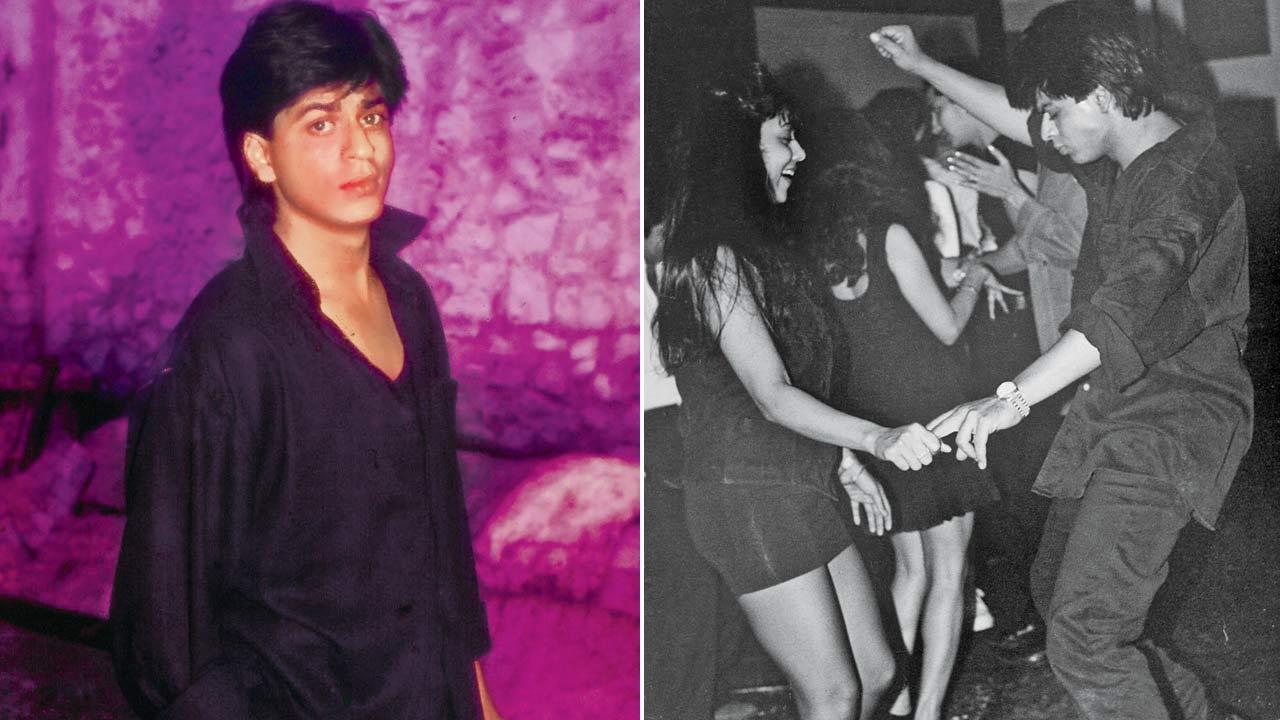
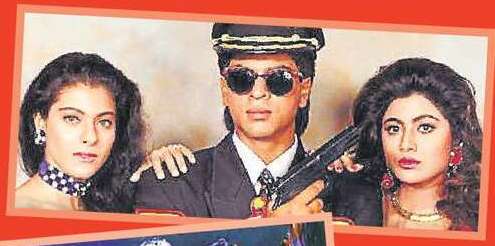
Shah Rukh Khan; (right) Dancing through life: Shah Rukh and Gauri show young love’s got rhythm
A new book aims to encapsulate what actor Shah Rukh Khan means to his fans. This extract talks about an early hit, Fauji, and how it heralded the birth of the superstar we know, and love, even now
Mohar Basu (MID-DAY; November 10, 2024)
Shah Rukh’s breakthrough in television came with Fauji, helmed by the jovial Colonel Raj Kapoor, who appeared on Jeena Isi Ka Naam Hai to talk about the actor.
Speaking about Colonel Kapoor, Shah Rukh said, “I never thought I could act on screen. Let me share a story: After my father passed away, my mother and I were searching for a house to rent. When we found one, my mother insisted that I see it first before confirming. When asked where I was, she replied, “He’s off acting.”
Kapoor’s son-in-law Kamal Dewan suggested I go to him, who was directing a serial. That’s how Fauji, which was aired in 1989 and had thirteen episodes, came to be.
Fauji served as Kapoor’s homage to the Indian Army, presenting a realistic portrayal of cadet life as young men trained to become commandos. Shah Rukh was already acting in another serial titled Dil Dariya at that time and shot for Fauji during lunch breaks—such shooting schedules were common for actors then who worked on multiple projects at the same time. The audition for Fauji involved a rigorous physical test, including a 1.5-mile run at dawn, followed by an impromptu boxing match. Shah Rukh impressed with his discipline, by not giving up on the race even when many co-auditioners dropped out. He was initially designated to land a smaller role while Kapoor’s son Bobby was to play one of the leads, Abhimanyu. But Bobby, who was already the cameraman, had to bow out.
It’s the way of this industry, as Karan Johar points out in Zoya Akhtar’s debut movie Luck By Chance: “Industry mein outsiders aise hi toh aatey hai. Koi alag tarah ka role likhta hai, koi badaa star nahi karta hai and finally ek naye ladke ko break mil jata hai [This is how outsiders get into the film industry. Someone writes a different sort of a role, big stars refuse to do it and then finally a newbie gets his break]. Zanjeer was turned down by seven actors before a struggling star, Amitabh Bachchan, picked it up.”
Shah Rukh has been destiny’s child in that sense, or probably was always at the right place at the right time. His two big Bollywood hits, Darr and Baazigar, landed in his kitty just like that.
How Shah Rukh landed Fauji, over and above the rigour he showed, is funny, to say the least. At the launch of Samar Khan’s and Sonali Kokra’s book SRK: 25 Years of a Life, he recounted, “I went there, I auditioned and he gave me a sweet role—in the whole Fauji serial, the Colonel orders me to go and count the crows on the tree. I would run and say, ‘There are four crows’. This was my role in the whole serial. I thought this was so strange… How could I tell my family that this was my role? … I did that and it was one of the nicest roles, and they’ve all loved me like a family. I am not saying this with false humility, but maybe the goodness I have at this age is because of the wonderful men and women I’ve met in my life.”
Amina Shervani, who wrote and acted in Fauji (as Kiran Kochar), said that for its time, Fauji was an extremely expensive show to make. It cost nearly Rs 2 lakh per episode to shoot. It was facing a four-year delay in its pilot launch. The Fauji team rallied in 1988 to ensure an early release the following year. They obtained permissions from the Ministry of Defence, Doordarshan and the Army headquarters. Despite challenges, the dedicated team pooled their talents and resources to bring the series to fruition.
In an interview to The Print, Shervani said, “I remember the Army was supposed to give us sten guns and other equipment to use, but they didn’t let us touch anything. So I flirted with a commando to steal a broken, defunct sten gun, and made a mould of it. We made twelve aluminium moulds that looked quite real. And one day, I was carrying them back from the studio in an auto, and the cops stopped me, and there I was—with twelve real-looking guns. Fortunately, we had done films for Delhi Police before that, so the police commissioner knew what we were really doing.”
This was the late 1980s and the turmoil in Punjab meant that procuring materials such as fuel for the demolition and explosion scenes was difficult, as the authorities had put strict rules in place. And so, for the scenes in the show, these had to be sourced from Shah Rukh’s mother, who owned a kerosene company. Dynamite was acquired through connections with friends who had contracts for stone and mica mining in the Aravallis, allowing the team to create their own explosives.
One would think these would be the biggest challenges in the making, but the real hurdle was getting Shah Rukh to cut his hair. Shervani said, ‘”Shah Rukh just wouldn’t cut his hair. He would keep smoking, and his mother would be worried that nothing would come of his passion for theatre.”
When Fauji was aired, it resonated with people in a big way. Shah Rukh’s charm captivated viewers, propelling him to the forefront of the show. His character, Abhimanyu, became central to the story, showcasing Shah Rukh’s knack for both romance and action. This was the first time he started becoming a household name. One of the many fans of Shah Rukh from that era is my own mother, Ellora Basu. When I first told her I am working on this book, she recounted to me how her love for Shah Rukh dates back to the late 1980s.
“Watching Fauji was like witnessing the birth of a superstar. Shah Rukh Khan’s charm as Abhimanyu Rai was not to be missed, and we knew he was destined for greatness from the very first day the show aired.”
As a child of that time, she told me how there was a general sense of fatigue with the trope of the ‘Angry Young Man’ that ruled movies and television then. “I wasn’t interested in television until Fauji came along. That was a young show. It had stories that my siblings and I could relate to. The show brought in young people to television viewing. A large part of our love was because of Shah Rukh. He was always a sincere actor, but more than anything else, he had the ability to charm you. It could be called screen presence, but in his unique goofy, boy-next-door way, he was someone you’d want to root for in a story. That’s the sign of a hero!”
Extracted with permission from Shah Rukh Khan: Legend, Icon, Star by Mohar Basu, HarperCollins India
----------------------------------------------------
‘Even at his worst, he finds it in himself to be a kind person’
Author and mid-day writer Mohar Basu says that the book, Shah Rukh Khan: Legend, Icon, Star, came into existence because they wanted to view Shah Rukh and his influence on cinema, culture and community from a third eye perspective including the lens of his fans. We spoke to her about what inspired her most as she wrote the book, and how she managed to write it as a detached writer, and not die-hard fan.
Excerpts from an interview.
What anecdote about SRK inspired you the most personally after writing this book?
There are a lot of absolutely fantastic stories about Shah Rukh, and a great selection of these has made it to the book. But the one that stuck with me was this story about Shah Rukh rushing back to India after his wife had a miscarriage while he was in New York shooting for Pardes. To get home quickly, he flew from LA to New York and then caught an Air India flight to India. There was rush and confusion at the airport and a fan persistently followed him for an autograph, despite seeing him flummoxed. When he finally reached his gate, he realised the lady actually was Akshay Kumar’s fan and thought he was Akshay. He didn’t want to break her heart so quickly signed an autograph as “Akshay Kumar”. This story shows what makes him as loved as he is. Even at his worst, he finds it in himself to be a kind person.
As a journalist, writing about fans and a star, what were some things you were careful about—so that it didn’t end up pandering to a star, but spoke of something deeper?
The relationship that fans have with the star they love has been a point of academic research. We all know how powerful and dynamic fandoms are. The approach we had decided early on in the project was to view Shah Rukh and his influence on cinema, culture and community from a third eye perspective including the lens of his fans. Why do people love him so much for so long is a question that was repeatedly asked at every step along the way. My editor at HarperCollins India, Bushra Ahmed, in fact, kept reminding me that fan psyche was at the forefront of this book. This is why we decided to write an entire chapter about why people love and desire him and tackled every aspect of it. Most interviews were done for this chapter because everyone found different things that drew them to him. Married women loved his love story, younger women saw him as a benchmark of what they seek from a man they are in a relationship with, some love the fact that he is a great father and everyone finds themselves drawn to him because he is respectful. The men loved his ability to work hard. The approach was pretty sociological. Some amount of my own training as a journalist and my education in sociology came in handy. We have tried to create a multi-layered, non-lateral narrative which I hope best portrays the power that SRK holds. The love for Shah Rukh runs deep and his charm is an added bonus.
What’s something your book has that you don’t think has been ever addressed about SRK before?
The impact of Shah Rukh Khan on community and culture, not just cinema, is at the heart of this book. The broad highlights of his life are well-known but this book looks deeper into the phenomenon that is SRK. For instance, take my favourite SRK film—Chak De India. The finest sports film India has ever made. And why has that movie been hard to top? It blended in entertainment and social themes perfectly. No other film has been able to reflect how diverse the country is and then SRK says that iconic dialogue— “Mujhe states ke naam na sunai dete hai, na dikhai dete hai. Bas ek mulk ka naam sunai deta hai.” Or more recently, a film like Dear Zindagi. A fan spoke about how she had always felt different and knew she wasn’t okay but Dr Jug made her to check in to therapy and she is better because of it. We often discuss how stars, especially in a country like India, actually impact real lives and how fans look up to them to inform their own perspectives. This book attempts to do show you how Shah Rukh Khan goes beyond being just a superstar.
Pankaj Udhas was my first choice for Kitaben Bahut Si-Anu Malik
10:43 AM
Rishabh Suri (HINDUSTAN TIMES; February 28, 2024)
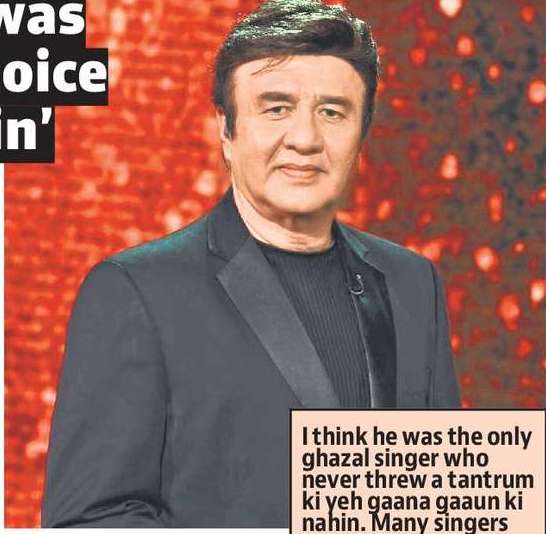
Anu Malik’s first hit song, Kitaben Bahut Si (Baazigar; 1993), was originally sung by Pankaj Udhas. While the makers ultimately decided to go with singer Vinod Rathod’s version, the composer maintains that the late ghazal maestro was his first choice.
“I had chosen Pankaj ji for Kitabein. I asked him, ‘Sir aap gaaoge?’ and he very sweetly agreed. When I played it, he said, ‘The lyrics are by Zafar Gorakhpuri (poet), how did you turn a ghazal into a commercial song?’ I was taken aback by the compliment. He gave me a hug and said I would go places,” recalls the musician. “He was a star then, and he was a star when he died,” says Malik.
Having worked closely with the ghazal legend, Malik is yet to come to terms with the loss. He says, “I am anguished just like everyone else. 72 is too early an age to go.”
The humility and honesty with which Udhas operated reflected in his music. Ask the 63-year-old how the singer reacted when Rathod’s version was picked for Baazigar, and he says, “I had told him, ‘Pankaj ji, main ek album kar raha hoon because I have no work. If the song is picked for the film, a different voice will be used. He simply said, ‘Kya farak padta hai?’ He was completely okay with it.”
Calling Udhas “soft-spoken like late Mohammed Rafi sahab”, the composer adds that the music legend was open to singing any kind of song: “I think he was the only ghazal singer who never threw a tantrum ki yeh gaana gaaun ki nahin. Many singers just refuse to sing a track if it doesn’t fit their format. But, Pankaj ji could sing any song well.”
Rohit Shetty treated my character in Indian Police Force without gender bias-Shilpa Shetty
8:39 AM
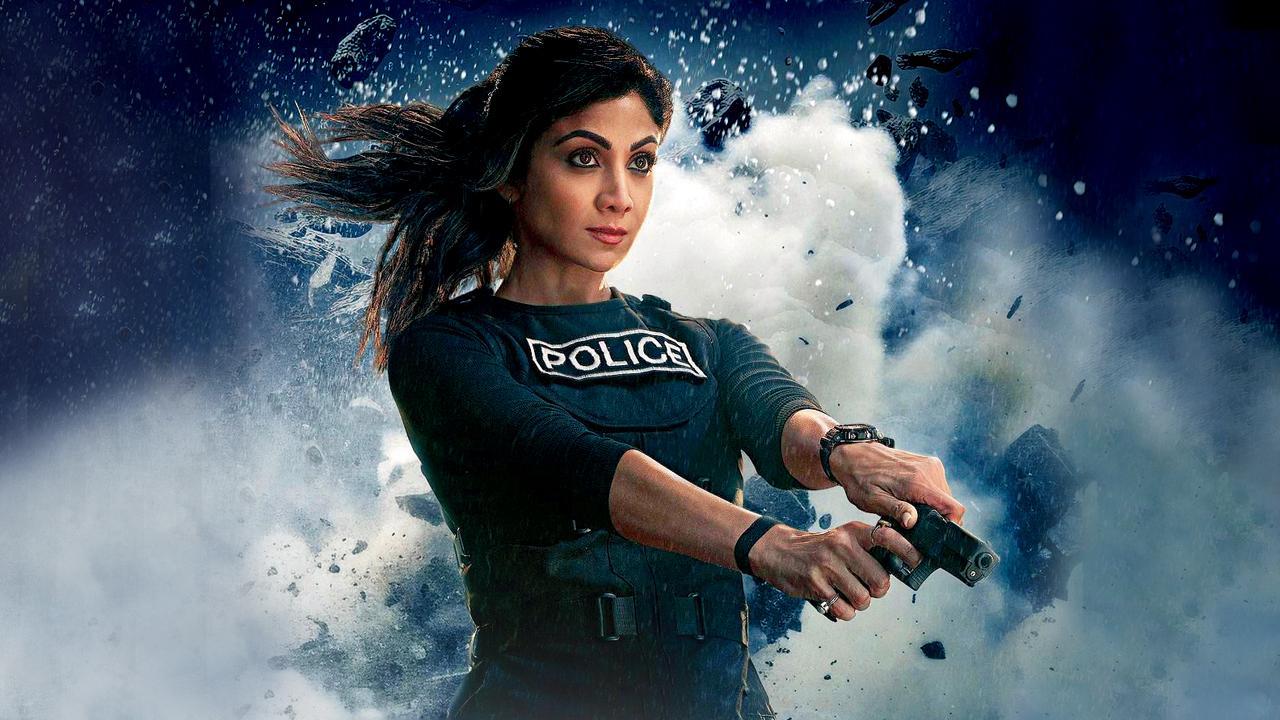
Playing the first female police officer in Rohit’s cop universe, Shilpa on how the filmmaker crafted her role as a powerful and ‘badass’ woman in a man’s world
Mohar Basu (MID-DAY; January 19, 2024)
Reinvention is the key to her 31-year career, believes Shilpa Shetty Kundra. She advises to change with the changing times. “I have done television, YouTube, radio, started my own app, and invested in Bastian. A web series was the next medium to connect with the audience,” says the actor as she makes her web series debut with Rohit Shetty’s Indian Police Force. And she has a fierce avatar to boot. Shilpa plays Tara Shetty, a no-nonsense cop in the Sidharth Malhotra and Vivek Oberoi-starrer.
“This is the best debut I could have thought of. It’s a Rohit Shetty [show]. I am a Shetty playing a Shetty in another Shetty’s world.”
The actor plays the first female cop in Rohit’s elaborate cop-verse. The role brings with it pride and responsibility that as a woman in a man’s world, she is paving the way for her female peers. “I have to give credit to Rohit. He had an image for the character and he treated it like that, without gender bias. Even during an altercation scene with Sidharth, my character doesn’t scream; she goes for him with power and punch. Initially, I was unable to do this series because of dates. But I moved things around because I couldn’t have passed it up. Tara Shetty is a badass, speaks her mind, and is a woman in power. She is called Selfish Shetty in the series.”
For Shilpa, Tara is the goal she didn’t know she had when she, at 17, turned actor to make some pocket money. The actor, who debuted with Baazigar (1993), remembers, “I was a middle-class girl looking to earn a salary. I wasn’t looking for parts, and did whatever came to me. I made pocket money that was bigger than my pocket. My understanding of acting came only after 10-12 films. I learnt what not to do seeing the bad work I did in the first five years.” Today, she is proud at how far she has come.
Portraying Tara is a turning point for her as the character holds her own in a male bastion. “I have a hunger in my belly for such roles. Now, I have the maturity to play this character. I want people to know that now Shilpa Shetty talks business and when she does a project, it’s gonna be good!”
Lyricist Dev Kohli Kohli of ‘Yeh Kaali Kaali Aankhen’ fame passes away
8:12 AM
Avijit Ghosh (THE TIMES OF INDIA; August 27, 2023)
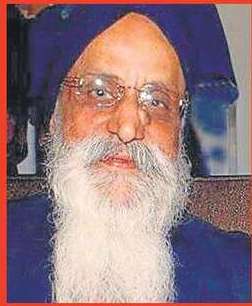
Lyricist Dev Kohli, who started his career with the sensitively-penned contemplative track, ‘Geet gaata hoon main, gungunata hoon main’ (film: ‘Lal Patthar’, 1971) but had to wait for nearly two decades before earning bigger fame and recognition with ‘Maine Pyar Kiya’ (1989) and ‘Hum Aapke Hain Koun!’ (1994), passed away at his Andheri residence on Saturday. He was 81.
“He was in Kokilaben Hospital for almost three months and brought back home ten days ago. He passed away at 4 am,” his spokesperson Pritam Sharma told TOI.
Composers Uttam Singh, Anu Malik and Anand Raaj Anand performed his last rites in Oshiwara. Uttam Singh said, “He was a saintly man — my dear friend of 50 years. I tended to him and took him to hospital over eight years when he underwent multiple surgeries. Our winning partnership in ‘Maine Pyar Kiya’ and ‘Hum Aapke..’ created such evergreen hits.” Singh, Kohli and a third friend Shailesh Sawant met regularly over Sunday meals.
Singh said, “I will miss his friendship. Kohli Sahab had no vices. He did not smoke or drink or attend parties. Over the last 8-10 years, he had stopped working. If anyone urged him to write, he would say he will only do so if Uttam Singh composes the tune!”
The 1990s were the high noon of Kohli’s career. He wrote the floorscorcher, ‘Yeh kaali kaali aankhen’ (music: Anu Malik, singer: Kumar Sanu, film: ‘Baazigar’, 1993) that Shah Rukh Khan and Kaajol jived to with verve and zing. The chartbusting track from the Abbas-Mustan film became a nightclub favourite earning Kohli a Filmfare award nomination for best lyricist. Kohli also received nominations for the title tracks of ‘Maine Pyar Kiya’ and ‘Hum Aapke Hain Koun’.
In all three cases, the award went to other nominees. Born in Rawalpindi (Pakistan) and growing up in Dehradun, Kohli had earlier penned two winners in another Abbas-Mustan suspense-thriller, ‘Khiladi’ (1992), an early Akshay Kumar hit. The songs, composed by Jatin-Lalit were, ‘Wada Raha Sanam’ and ‘Kya Khabar Thi Jaana’.
But the blockbuster success of ‘MPK’ and ‘HAHK’, both Rajshri Productions, propelled Kohli’s career to high gear. ‘Didi Tera Devar Deewana’ from HAHK (music: Raam Laxman, singers: Lata-SPB) was mandatory at every ladies sangeet. He would often collaborate with Anu Malik, in his prime then, churning out popular and populist lines such as ‘Oonchi Hai Building Lift Teri Bandh Hai’ (film: ‘Judwaa’, 1997) or ‘Akela Chal Raha Hoon Ek Gaadi Chahiye’ (film: ‘Mr And Mrs Khiladi’, 1997) that a David Dhawan film demanded. In several Dhawan ventures during this period, Kohli had a song or two. ‘Lift Teri Bandh Hai’ was also reprised in ‘Judwaa 2’ (2017).
Kohli had waited for serious success for a long time although ‘Geet Gaata Hoon’ (singer: Kishore Kumar, music: Shankar-Jaikishan), had happened when he was in his early 20s. It was the only song he wrote in director Sushil Majumdar’s ‘Lal Patthar’, a complex requiem to last-gasp feudalism in early 20th century colonial Bengal. Raaj Kumar and Hema Malini played the lead roles, though, the number was lip synced on screen by a young moustachioed Vinod Mehra.
The lyricist told this reporter in 2012, “The song’s success changed my life. I was immediately interviewed by magazines and on radio. From then on I started getting small films.” Those films include ‘Khoon Khoon’ (1973), which had the evocative bhajan, ‘Maati Ke Jalte Deepak’, ‘Kabhie Ajnabi They’ (1985) which had the melancholic 'Dil Ke Is Dehleez Tak' and several others such as ‘Ek Baar Kaho’. All these films flopped. It was only with ‘Maine Pyar Kiya’ that he vaulted to a bigger league.
(With inputs from Bella Jaisinghani)
-------------------------------------
HINDUSTAN TIMES (August 27, 2023)
Veteran lyricist and poet Dev Kohli, who gained popularity for his work in Salman Khan and Bhagyashree’s Maine Pyar Kiya (1989), died in Mumbai on Saturday. The news was confirmed by Kohli’s spokesperson, who shared that the veteran had been admitted to Kokilaben Ambani Hospital for the last few months and passed away in his sleep. Kohli was 81.
He had written over 100 songs for several Hindi films, including Baazigar (1993), Hum Aapke Hain Koun..! (1994), Musafir (2004), etc. While he was active primarily in the ’90s, the lyricist also worked on several recent films, such as Shootout At Lokhandwala (2007) and Judwaa 2 (2017). In a career that spanned from 1969 to 2013, he collaborated with different generations of composers, from Shankar-Jaikishan to Vishal-Shekhar.
Several celebs took to X to share heartfelt tributes to the artiste. Actor Renuka Shahane shared, “Kaisey bhool paaungi mein baba woh bachpan ki kahaniyaan.”
Singer-music director Shekhar Ravjiani wrote, “Had the honour and privilege of working with #devkohli sahab on Musafir and Taxi 9211 … What a wonderful human being and an extraordinary lyricist .. Thank you for the beautiful songs.”
Agar kabhi Shah Rukh Khan mujhse mile, main toh ro doonga, says his lookalike Suraj Kumar
8:22 AM

Syeda Eba Fatima (HINDUSTAN TIMES; June 9, 2023)
Shah Rukh Khan’s doppelgänger, Suraj Kumar, had the time of his life when he was papped at India Gate in Delhi recently and his pictures went viral. Talking to us, the 22-year-old, who would instantly remind you of SRK from the 90s, can’t contain his excitement as he says, “I often go to India Gate to shoot videos. That’s my go-to spot to make reels. I love enact his scenes from movies Baazigar and Darr (both 1993).”
An ardent SRK fan, Kumar loves to watch his “older films such as Raju Ban Gaya Gentleman, Deewana, Chamatkar (all 1992) and Maya Memsaab (1993)”. He adds, “His style was unmatched. Unke bolne ka tareeka, baal, dance, haklaana... you don’t get to see all that in his newer films.”
Kumar, however, reveals that the response and love he has been receiving at the moment wasn’t the case a few years back. “Initially, when I used to behave like Shah Rukh in public places, people would laugh at me. After my videos went viral, they started recognizing what I do. Now, people take selfies with me and say, ‘Aap 90s ke Shah Rukh lagte ho’.
Who is Suraj?
Hailing from Jharkhand, Suraj left his home six years ago with a dream to meet SRK and become an actor. Currently living in Delhi, he says, “My family never supported me. Toh apne papa ki pocket se paise chori karke main Mumbai chala gaya. I wanted to become an actor like SRK.” He adds, “I’d go to Mannat daily, but I’ve never met him. Agar kabhi SRK mujhse mile, main toh ro doonga.”
Kumar has finally bagged a film, “which stars (actor) Pulkit Samrat. Mera sapna poora ho gaya”.
If we shun cinema that doesn’t fit into one’s definition of morality, we’ll have to snub The Godfather, Darr...-Vikrant Massey
8:21 AM

Titas Chowdhury (HINDUSTAN TIMES; July 13, 2021)
Haseen Dillruba has won rave reviews for its representation of the complexities of human relationships, but some sections of the audience have slammed the film for glorifying toxic relationships. However, its leading actor Vikrant Massey remains unperturbed.
“I believe I’m an honest libertarian and it’s my responsibility to not shun any voice,” he says and asserts he’d rather focus on adulation coming his way. “There’s no right or wrong in any form of art. I’d want to request anyone unable to recognise a film as a piece of art to get off from their position of privilege and visit three-tier cities, towns and villages in our country. It’s easy to hold an expensive phone and voice out your opinion on social media.”
The Ginny Weds Sunny (2020) actor rues the burden of morality which actors and filmmakers are expected to carry. “People shouldn’t carry their baggage of morality when watching a film or reading a book,” Massey says and cautions, “If we talk about shunning cinema that doesn’t fit into one’s definition of morality, we’ll have to snub classics such as The Godfather series, Braveheart (1995), Baazigar and Darr (both 1993), as well.”
I was just 17; had never even hugged a boy before this, says Shilpa Shetty about her first day at shoot on Baazigar sets
8:23 AM

As told to Ankita Chaurasia (MUMBAI MIRROR; August 20, 2020)
The first film I shot for was Gaata Rahe Mera Dil. Ronit Roy, who was a big name at the time after Jaan Tere Naam, and his brother Rohit, were my co-stars and I had shot for my introduction scene with the latter. The makers had announced my debut with a huge close-up picture in a trade paper. But the film never saw the light of the day. However, my picture got noticed and landed me Baazigar opposite Shah Rukh Khan, who I had been a fan of since his Fauji days.
The first time I faced the camera was for the song, “Aye Mere Humsafar”. Other unit members had all carried duvet covers and bedsheets from their hotel rooms to the location. It was eight degrees in Igatpuri and I was shivering in a flimsy salwar kameez because I had no idea it was going to get so cold.
I was just 17 then, straight out of college, and though a lot of boys liked me, I hadn’t even hugged one before. I was really innocent, but luckily, the song required me to look nervous, so it worked.
I didn’t even know how to lip-sync and was standing with my back to the camera for my first scene. Rekha Chinni Prakash, the choreographer, kept screaming “Cut” and telling me my hair was obstructing the shot. Thank God for Shah Rukh, who took me aside and told me that the camera is my audience so even though I was giving beautiful expressions, no one could see. That bit of advice has stayed with me.
Honestly, I didn’t think I would last this long. Looking back, I think I got the hang of acting only after Dhadkan. Working with (director) Dharmesh Darshan and then, Revathi in Phir Milenge made me fall in love with cinema and the art of acting. Before that, I was just having fun. And had started commanding a high price from my second film itself. After the Main Khiladi Tu Anari chartbuster, “Churake Dil Mera”, I hit the jackpot. I didn’t come from a filmy background, so it was all about buying a car and a bigger house. Thankfully, the audience was much more forgiving back then. When I see my hair and makeup in old movies, I want to hide under the chair.

I played a tree, and just stared at Sanjay Dutt in awe for the two hours I was on stage-Varun Sharma
8:07 AM

The actor who’s winning hearts with his latest comic turn, on childhood idols, rejections and how he reinevents his game
Kunal Guha (MUMBAI MIRROR; September 22, 2019)
Twenty-nine-year-old Varun Sharma shot to fame almost instantly, when he made his debut in the film Fukrey in 2013. So persuasive was his portrayal of the obnoxious prankster Choocha, that the name became synonymous with the actor. But Sharma’s latest turn in Nitesh Tiwari’s Chhichhore promises to change that. “People already call me ‘Sexa’ wherever I go,” says Sharma, who sees it as a measure of the popularity of his latest avatar — a guy obsessed with porn.
His enthusiasm is justified. After all, it’s all he ever wanted. “I spoke with a lisp when I was young,” says Sharma, and describes how he’d stand on his bed and belt out “Yeh Tali Tali Aakhen” from his favourite film, Baazigar. “Years later, when I got to work with Abbas Mustan (in Kis Kisko Pyaar Karoon) and Shah Rukh sir and Kajol ma’am (in Dilwale), it felt like life had come full circle.”
Born in Jalandhar, Sharma’s earliest memories of regaling an audience go back to his formative years. “Chabilal bhaiya”, who would drive him to his boarding school in Sanawar, HP, served as captive audience and Sharma entertained him with dialogues from his favourite films. Incidentally, school was also where his decision to turn to the profession came to be cemented. “Sanjay Dutt sir, who is an alumnus of my school, was the chief guest at a play once, and I signed up just for a chance to see him,” says Sharma. This was a big deal because Dutt’s 1997 film Daud was the first movie Sharma ever watched on the big screen at Jalandhar’s Lal Ratan Cinema. “I played a tree, and just stared at him [Dutt] in awe for the two hours I was on stage,” Sharma recalls.
Later, while pursuing a Bachelors in Chandigarh, Sharma began collaborating with Punjab University students on theatre productions. “Surprisingly, not once did I attempt comedy then,” says Sharma, who worked on Anton Chekhov’s plays, and even played Ashwathama in Andha Yug.
Moving to Mumbai nine years ago, Sharma began assisting casting director Nandini Shrikent, taking on movies such as Talaash, Ek Main Aur Ek Tu and Student Of The Year. But the ambition to act wasn’t shelved. “I used to audition whenever I could,” says Sharma, who credits his assisting gig for fine-tuning his craft. “When I’d audition 400 people for a part, I would learn as many ways to perform the same role.”
Yet, for all that learning, landing an acting job, even a commercial, seemed a distant dream. “I even got rejected from a shopping network,” says the actor, who was once told off because he didn’t look “upmarket” enough. “I was like ‘Main gora hoon, and my mummy says I am handsome’,” he laughs.
But Sharma was conscious that he wasn’t cut out to play the quintessential Bollywood hero. “My friends would tell me ‘Pehle body bana, phir audition pe ja’. But I felt if I wasted time on my physique, I would miss out on auditions.”
Three years later, he was signed for Fukrey. “I remember that day.” His eyes light up with the memory. “I called my mother to tell her that I would be working with the makers of Dil Chahta Hain, Rock On and Zindagi Na Milegi Dobara — and they’re saying I will be on the poster.” His mother went quiet for a minute, Sharma remembers. “That’s when I realised, a lot can be said through silence.”
The success of that film ensured Sharma wouldn’t have to hustle any more. “During my first script narration, a comedy, I broke into tears,” Sharma recalls. “When the director asked me what was wrong, I told him that it was the first time someone was actually asking me to be a part of a project.”
A dozen films later, some feel Sharma has gotten typecast. “If I seem repetitive, it may be because I become too attached to characters and need to work harder,” he defends himself “In Mumbai, one is constantly surrounded by shoptalk and this can get to you,” he says. To break away, after his first few films, Sharma spent a month in Goa, waiting tables at a friend’s bar. “The customers were mostly Russian so no one recognised me. And the experience helped me to reinvent my game.” For his next secret sabbatical, Sharma plans to take up a short-term course with a university overseas. “I want to study during the day, and spend my evenings working as a cashier in a department store or as an attendant at a petrol pump,” he says. “This could be a Pardes or Aa Ab Laut Chalen hangover.”
My only attempt was to match Govinda's energy-Varun Sharma
8:03 AM

As told to Himesh Mankad (MUMBAI MIRROR; June 24, 2019)
I had wanted to get into films ever since I watched Shah Rukh Khan in Baazigar. After finishing school, I went to a film institute in Chandigarh and started working in theatre. My first acting experience was performing in front of a live audience and that gave me a lot of confidence. It also helped as while acting in films, you are surrounded by a lot of unknown people who watch you perform.
For my role as Choocha in Fukrey, I followed a pattern by touching base with people who are like him in real life. I would stand outside schools and colleges in Delhi to observe the mannerisms of the kids. I never interacted with them, as I wanted to have an independent take on the character, however I did incorporate the nuances I had picked up.
Working with Govinda in FryDay was the most enriching experience. Here, the process wasn’t to prepare before shooting, but to learn while enacting a scene with him. He has a flair for comedies, and my only attempt was to match his energy. I explored a different zone of comedy with him.
 My upcoming film Arjun Patiala is the most interesting character that I have found after Choocha. It’s a buddy cop film with Diljit Dosanjh and Kriti Sanon which will make you laugh and cry at the same time. As I play a Punjabi cop in it, I spoke to a lot of policemen residing in small villages. There is a different shade of comedy in this film, which I was able to imbibe only after interacting with real people. It is important to not lose touch with the ground reality as real-life experiences come in handy when playing rooted characters.
Whenever I get the chance, I hang out with my non-filmy friends and visit different locations in India to interact with people. This gives me a different perspective on life, which I can incorporate when acting in films. I feel fortunate to have got the chance to explore different characters and work with talented directors who have helped me add a different arc to all my characters.
I would love to romance Vatsal Seth on screen, but I have always liked him in negative roles-Ishita Dutta
7:58 AM

Neha Maheshwri (BOMBAY TIMES; April 24, 2019)
 Ishita Dutta is often asked questions about her actress sister Tanushree Dutta, who took Bollywood by storm by initiating the #MeToo campaign in India, last year. While Ishita doesn’t mind fielding queries about her sister, she also wants the focus to be on her work. The actress is now set to return to daily soap three years after Rishton Ka Saudagar – Baazigar ended. She has been roped in to play the heroine in the second season of Kasam Tere Pyaar Ki.
She says, “I am excited about returning to the daily soap genre after three years. I also feel the pressure because the first season of the show did well. My responsibility is to make sure that people like my character just as they liked the previous characters. I play Palak, who is is a girl of today. She is a go-getter and looks for solutions rather than sulking over problems. She is independent, smart, intelligent and full of life. She is very much like me.”
The actress is balancing two mediums — TV and films. Ask her about the three year break from television and she replies, “I bagged the film, Firangi, after Baazigar wrapped up. I couldn’t commit myself to a TV show due to my films. TV takes up all your time, and you can’t do anything else when you are shooting for a show.”
In between, she was seen with her real husband, actor Vatsal Sheth, in the supernatural show, Kaun Hai. Ishita and Vatsal — her co-actor in Baazigar — tied the knot last year. Talking about her experience of working with him after marriage, she says, “I was very excited about working with Vatsal again in Kaun Hai. I have always shared a great comfort level with him, right from the look test for Baazigar, which is when I first met him. We hit it off instantly and would have a lot of fun during the shoot. We would chat a lot and that’s how we got to know each other. Of course, it was better when I worked with him on Kaun Hai, as he was my husband. We would travel together and the conversation changed. Initially, it was more as friends, and now it was more about khaane mein kya bann raha hai, ghar par kaun aa raha hai and shoot par kaise jaana hai.”
She adds, “It was my first experience with the supernatural genre and it was great fun. I would definitely be interested in taking up a show in the genre. The audience is lapping up such shows.”
Interestingly, both Baazigar and Kaun Hai featured Vatsal in a negative role. Ishita says, “I would love to do a show with him, in which I get to romance him on screen. But I have always liked him in negative roles. I think he does it well.”
The actress says that life has changed post marriage. She says, “I keep telling my mother that after marriage, I appreciate her so much more. I have realised the effort that it takes to run a home. Now that I will start shooting on a daily basis, I need to plan everything in advance. I think it will be require a bit of adjustment, but I am excited about being back to a daily soap. It’s a blessing to have a partner, who understands me so well, and is supportive.”
Shah Rukh had this stupid belief that if he works on the year's first day, he'll work throughout the year-Kajol
8:20 AM

26 years in films, Bollywood's fourth-generation actor walks down memory lane
Mayank Shekhar (MID-DAY; September 15, 2018)
We watch her every couple of years or so on screen (her next film, Pradeep Sarkar's Helicopter Eela is round the corner). Over a career spanning 26 years, she's done 38 movies, a rather restricted filmography - if you compare, say, to young Taapsee Pannu, 29, who already has 37 credits on her IMDb profile.
Full-time mom, wife - that films come naturally to her is a given. She is the fourth generation female actor in her family (from mother Tanuja's side). We'd traced her fascinatingly inter-generational paternal roots in Bollywood, on Sit with Hitlist, with actor Rani Mukerji. But Mukerji is her second-cousin. We start this interview therefore with:
Who is Mayuri?
She is my mama's [Jaideep Samarth's] daughter. We lived with my mama and mami for a long time. So I've grown up with Mayuri, and her sister Madhura. They are Townies [from South Mumbai]. You might just know them. So be careful with what you say.

Kajol gets chatty at the latest edition of Sit with Hitlist
We spoke to your first director Rahul Rawail (Bekhudi, 1992) earlier, to trace your journey into films. He told us he first saw you at Gautam Rajadhyaksha's photo studio. Rajadhyaksha had written the script for Bekhudi. They were looking to cast the female lead. Mayuri was therefore at the studio for a photo session. You were accompanying her. But Rawail looked, and decided to cast you instead!
Yes, pretty much, that's how I joined films. It was just a question of right place, right time, and right people. Mayuri was supposed to get her pictures clicked. I went over to hold her hand. She wanted to get into films. I'd seen my mom, and how hard she worked. I didn't want to work that hard.
So we were sitting around, talking. Gautam was like, "Why don't you get your pictures clicked as well? Mickey (Contractor) is there to do your makeup." Mickey and I got along the minute we met. He, like Gautam, adopted me. And Rahul uncle saw the photographs, and offered me a film.
I'd like to add that Mayuri went on to do an ad. And she didn't like it at all. She came back from the shoot and said, "I'm so not getting into this." On the other hand, I shot for the film, and had a great time.
When offered the role, you apparently said, "Hey, I don't mind"?
Well, I had two months' summer vacation in college. I was told we would shoot in Canada, and a little bit in Bombay, as per my college schedule. I said, "Cool, I don't mind!"
"I don't mind" is a pretty easy way to get into any profession, no?
Yes, but I didn't think of it as a decision. It was just a try - a sample sachet, almost, that you get at a shop. I remember my dad saying, "Ek bar chuna lag gaya toh lag gaya. Nikalne wala nahin hai. Toh soch lo. (Once you wear the paint, it never goes off)." I said, "What nonsense. What difference does it make if I do a film, or not." But, I loved/enjoyed my film. And the next one came along, and then I questioned whether college was worth it - might as well go along with this; that's exactly what I did.

The other thing Rawail told us is how you fell off the first floor during your shoot, and became (temporarily) blind!
Yes, we - Rinku, the first AD, who's Rahul uncle's niece - literally tumbled down the slippery stairs from the mess-hall after dinner. We were doing something like 18 hours (shift) a day; obviously not in the best frame of mind. Fortunately, I fell on top of Rinku. She really got hurt.
What he said was that she actually fell on you. You went in the emergency room, came out half hour later, perfectly fine, while Rinku was being wheeled out!
Yes, she did come out in a wheelchair. I couldn't see a thing. Everything was just white. I probably had a concussion. So here we were in a foreign country, with these two young girls in emergency room. Rahul uncle must have thrown a sh** fit, wondering what's going to happen to his film.
And to you?
No, he must have thought about his film first, for sure.
During Kuch Kuch Hota Hai (KKHH), you similarly fell off a cycle, and (temporarily) lost your memory?
I've got a hard head; what to do? It keeps hitting, and nothing happens permanently. I think my morbid sense of humour comes from that! My mom tells me about how, as a kid, I would keep falling, and that it didn't matter. I'm sturdy that way.
Getting back to the accidental beginnings of your career; and a whole bunch of movies thereafter. You talk about being your harshest critic. We all have an opinion on what your best films have been. Is there any performance that you remember to be your worst?
I don't know if I've had a 'worst performance', touchwood. I've been pretty honest to my work throughout, whether I've believed in them, or not. There's always been a standard.
A basic minimum, you mean? How about your under-rated best then?
I've had a basic standard, yes. And it goes far above sometimes, and remains at that level most of the time. I think one of my best performances was in a film called Udhaar Ki Zindagi (1994), which I loved. But it didn't do very well at the box-office. It took so much out of me that I actually reached a crisis point, and told my mom, "I'm not doing movies anymore, which require me to cry, or do anything very heavy. I want to play an ornament, have three scenes, four songs. That's it. I'm just drained." After that, I signed on Hulchul, Gunda Raj, even Karan Arjun, for that matter. While shooting with Shah Rukh for Baazigar, I remember him telling me: "You know, babe, you've got to learn how to act. This honesty won't take you very far. You've got to learn the technique of acting as well."
You mean an element of detachment?
No, just technique - to not put 100 per cent of yourself into every shot. You have to learn how to pull back, and use your technique instead. That's what's going to help me in the long run. And I was like, "I'm doing alright so far, no? Why do you want to unnecessarily jinx it? Shoot is going well. Stop getting so detailed about it!"
But when Udhaar Ki Zindagi actually happened, I remember going back to what he had said, and thinking, "Sh**, he was right." That's when my process of learning started - on how to do things in a not-so-instinctive manner, but in a predictable, and thought-out manner instead.
Surprising that you had to learn this by yourself (or from Shah Rukh). Your mum had been an actor for years. As had your aunt, Nutan, for that matter.
But I wasn't one to go on sets. Also my mum, especially, kept work out of the house. At home, more than work, we'd discuss people. She'd talk about Raj Kapoor, and the people she had worked, or was working with - never the actual work itself. That's also something Ajay (Devgn) and I follow at home. Work is just something we do; we don't sit and analyse it.
Glad you mentioned Raj Kapoor. For, your family (from mother's side) is the female equivalent to Kapoor clan. Your great-grandmother, grandmother, mother, and now you, all have been actors. Can you take us through that (piece of history), starting with Rattan Bai, your great-grandmother, who became an actor at 40, only two years before your grandmother?
Honestly, I won't be able to take you through that, because I knew them as just my great-grandmother, grandmother, and mother. And they were amazing women. I didn't pay as much attention to what they did on screen, as what they did off it.
My mumma, as I would call my great-grandmother, was this awesome, strong, lucid, intelligent woman, even at the age of 80. She was 86, when she died. I was 11 or 12 then. I was closest to her. She barely ever left the house, but always knew what was happening in the kitchen, and in everybody's lives.
Then there was my grandmother (Shobhana Samarth) - again a very driven, practical, and strong personality. She was all about what works, and what doesn't. And I had my mother (Tanuja), who I really respect for the way she's handled her life, and the strength she exudes to stand up and say, "So far, no further." As for what she wants to do, she's ready to stand up and say, "Okay, I'm ready to face the consequences, and make my own path."
Give us an example?
It's a silly example, but so typically her. I saw her picture once and said, "Mom, you wore a lungi to a party?" She was like, "So cool it was. I had them stitched myself. They were stylish, super-comfortable, the slits were…." And I couldn't get over the fact that she wore a lungi to a party!
She did things her way. Automatically, when you see that, there's a much stronger learning experience than her telling me so. My mom, for instance, had a bad habit of abusing. She had the best gaalis ever, and she was known for them. On set, people would actually poke her till she turned around and delivered her famous gaalis. And then they'd be like, 'Haan, ab din achcha chalega!"
One day, she told us, 'You can't say sh**." I went, "But you abuse all the time." She was like, "Okay, I won't do it from now." And she gave it up. She put a swear-jar at home, put money every time she abused by mistake. That was another fabulous learning experience. She could have easily said, "Listen to me, because I tell you so," which are the most famous mother-words ever.
Every time I had a question as a child, she either had an answer for it, or went outside and found one that was acceptable to me. Even the fact of her marriage with my father - I remember asking, "Why can't you and dad be together?" She said, "As adults, we're better people, when we're not with each other!" And I said, "Okay, that makes sense." So she had an answer for every question, about the meaning of life, or death, when my relatives were passing away.
What did she tell you about death?
To never be scared. That the body gets old, but soul is eternal. Of course, one has to trade up for a better packaging, a newer version.

The actor gifts a goodie bag to her fan and mid-day reader
You also had an extremely strong grandmother. She in fact directed your mother's first film, Hamari Beti.
I remember her as a firebrand. She was 65 and would drive up to my boarding school in Panchgani once a month, in her battered Ambassador car, Friday evenings, and take me for my dental check-up to Pune, drop me off to school on Sunday, and drive back to Bombay the same day. My mother was busy working. She took care of me in every way she could. She was driving till she was 85, in this bright blue Maruti 800 in Lonavala. She had six dogs, big house, and lived all by herself. She would drive to the market, get groceries. She was known as the Queen of Lonavala. These are the independent women I have seen all my life. And they never spoke about women's empowerment.
So that's about the Samarth-Mukerji family. By the way, is there a reason why you don't keep a surname?
I was too confused about whether it should be Mukerji (from father's side), or Samarth-Mukerji. I told dad, let's not keep a surname. Just Kajol is good, because I didn't want anyone to associate anything with me. I knew there would be huge expectations: Tanuja's daughter, Shobhana Samarth's granddaughter. My father's side has an entirely separate lineage. Everyone in film industry either knew me, or were related to me!
So what's your name on the passport?
Kajol Devgn, after marriage; before that, it was Kajol Mukerji.
Stepping back to your career, you've had definitive milestones. The most recent one, last year, was when you did your second Tamil film (VIP 2) since Minsara Kanavu (Sapnay, 1997). Is it true that Hindi film actors down South rattle one, two, three, four, instead of actual dialogue; and get away with it?
You can, probably. But I didn't want to, even when I did Sapnay. An actor always takes pride in their performance. You have to live up to that standard. Dhanush and Soundarya (in VIP 2) helped me manage my lines, and rehearse well. First three days were tough. He (Dhanush) was prompting from one end, and I was saying lines at the other, whilst trying to keep the look right. Soon, I got into a rhythm. There was a pattern, and I was beginning to understand a bit of what I was saying. My pronunciation was pretty good too. I am good with reproducing sounds. Okay, that sounds really wrong! It just got easier with time.
What are the languages you know? Which one do you think in?
I think in English. I speak English, Hindi, Marathi, and can understand Bengali.
A reason I bring up your South film is because few weeks ago marked 20 years of Mani Ratnam's Dil Se. And you had turned down that film. Why?
Because the dates were not working out. I did (want to work with Mani Ratnam), and God willing, will. We are both active in movies. I had signed on KKHH. Karan had SRK's dates, and he would have had to cancel the schedule, because he had bulk-dates from everyone. Karan was very generous to suggest, "Go! You are getting a chance to work with Mani Ratnam. Who am I??" I didn't feel it was the right thing to do.
So the story goes that Mani Ratnam called you up, and you thought it was a crank call?
I put up a retro-picture on my Instagram (recently), sitting on a car bonnet, which is when Mani Ratnam called, and I thought Shah Rukh was pulling a fast one. I laughed and put the phone down. Then Shah Rukh called to say, "Baby, it's really him. He's trying to call you!" I was like, "Oh damn!" It was a rocky start!
That's 1998. You do KKHH. In 1999, you get married. By 2001, it's clear you won't have as many releases in a year?
I took that call in 1999 itself. People said I was at the peak of my career. But I have never understood what peak is. I was just exhausted by the pace of doing four films a year - running from Hyderabad, Bombay, Panchgani, to Switzerland, London. That's not life. It's 'gadha-mazdoori' (donkey-work). I wanted to get married. It was the right age. I had been working for 10 years. It was the right thing to do.
You decided to become seriously choosy?
I was picky, always. And then came a time when I didn't want to do more than one, max two, films in a year. I wanted to take it easy, chill, take a six-month break. It gave me perspective and thus earned me more appreciation.
You had a five-year break after Toonpur Ka Superhero (2010). What made you pick Dilwale (2015), of all films, to return with?
I loved my character in the film: her graph, and how she was portrayed. There was an unexpected twist in the plot. It was a full-blown love story, but I was sold on that scene where she tries to kill him (love-interest). I also did the film, because of the way it was going to be put together.
Do you remember films you've said no to, and not because of dates?
Lots! For me, it has not always been about the script so much. There are other factors too, besides script: good director, producer; in that order. I have to like people I work with, to be in a place where I say, this is not working, let's redo it. A good film is not possible if there is no communication between departments. To have the freedom to talk [to colleagues] necessarily enhances work.
Speaking of people, there's Karan Johar you've evidently loved working with. Why did you say no to Kabhi Alvida Naa Kehna [KANK]?
He wanted to shoot KANK in New York for 90 days. I said I can't. My husband would leave me, if I decided to go off for three months, leaving my little daughter alone. Karan sweetly let me pass, and made the film he wanted to.
Also, it doesn't matter how many films you do in a year. In Mumbai, at least, there's always one running at a theatre: Dilwale Dulhania Le Jayenge (DDLJ), no? Have you thought about why it still strikes a chord across generations?
It is now like a family heirloom. People pass it on (over generations). I meet people who watched it, when they got married. It was also the first film they showed their kids. Good films are timeless. They are about what they make you feel. DDLJ still makes you cry; and will continue to work.
Did any of you predict/know about its likely impact?
Not even Adi [director Aditya Chopra]. We didn't even know if it would do well. All Adi kept saying was, "Mujhe hit picture banani hai." It was his takia-kalam (standard refrain). He thought, with DDLJ, he was making a cool version of a 'tapori' film, shot in tabelas and mountain tops with chiffon sarees, in snow-banks.

There's also the trivia about Adi Chopra originally looking to cast Tom Cruise in DDLJ!
He did want that. That's a wish list. Every director has one. After that we come back to earth. We are like, "Apne desh ke hero ko lete hain! (Let's take a local hero)." In his head, he probably had Tom Cruise, with Meg Ryan (starring) opposite. I doubt Meg would have a 'Bauji' in her life (laughs).
In many ways, the film also spoke about how you can turn around people's thoughts, and judgments.
I like the fact that it was not about rebelling, which is synonymous with youth. It talked about respecting a parent's love. Raj has this scene where he clearly says it's unfair to take away one's daughter in such a manner. It went against what the youth was saying then. Which was the twist in that tale.
There is also that larger romantic film idea of soul-mate. It's worked over generations. You've been married for 19 years; do you believe in the idea?
I was lucky to have found someone I love. And I do believe in soul-mates, who you may not always instantly recognise. They are found over time. It starts with a connection. One day, you turn around, and the veil comes off. You realise he was the one all along. Sometimes it may take a month to realise this, sometimes 40 years!
How long did it take you?
Three hours! We were shooting (the film Hulchul) in an ugly garage. He was sitting on an ugly chair, far away, smoking. I was bitching about him not being friendly at all. We started shooting. I had to slap him. He had to dramatically hold my hand. I knew there was something.
To trace your real-life romance, we basically have to watch (Anees Bazmee's) Hulchul (1995) and find the moment where Ajay Devgn stops you from slapping!
And at that moment, there was a voice in my head saying that this person is going to be really important [in my life]. It was an instinct. I was already going around with someone else. So was he. We were just acquaintances sitting on the chair beside each other, working on the same film. Of course we finished the film, and signed up another one, three months later. That was the phase where I didn't want to do anything in a film. So I did Gunda Raj (1995) with him. Towards the end of that shoot, our relationship began.
That's for personal life. Speaking of profession, how did you and (your top on-screen partner) Shah Rukh Khan meet; did you have a hunch you were going to become the 'it' couple?
We met on the sets of Baazigar (1993). Like the rest of the unit, he was so hung-over. It was January 1.
Why would you work on January 1?
Because Shah Rukh had this stupid belief that if he works on the year's first day, he would (get to) work throughout the year! So we land up on the sets. [Directors] Abbas bhai, Mustan bhai, and I are the only people sober, and happy to work. Everybody else is like, "Let's just do easy shots, with minimum dialogue. Don't drag chairs loudly, or push the table hard!" That was the vibe on the set.
I was completely oblivious to the fact that it's January 1. For me, it was just another day. And as you must have noticed, I do not speak at a regular tone. If I have to make my point, the volume gets louder. So I was howling, shouting in Marathi, which was an alien language to him [Shah Rukh]. His make-up man was Maharashtrian. I was bitching to him about what kind of a boss he had - sitting in a corner, head down, completely morose. Shah Rukh was giving me stares that clearly meant, "Somebody shut her up!" I was putting him through maximum torture. Later we sat down, and I was like, "Hi, how are you?" He told me, "Don't you ever stop talking?" And I was like, "Why should I stop talking? I have to speak the lines - check this long [piece of] paper. Let's start rehearsing." Then, of course, he started talking as well. And once Shah Rukh starts, it is difficult to wind him [down]!
If he wasn't an actor, Shah Rukh could have easily been a spiritual guru, with all the gyaan on life!
Love guru (laughs).
From what I hear, if one met you in the '90s, they'd be scared to even interview you, if you agreed to be interviewed at all!
You should be scared today as well. I am much older (laughs).
As public figures, do you sense that contrast between you and SRK?
Yes, I do. But it didn't make much of a difference. There's a strange bonding-experience you have when you are working with a person for so long. Of course I was [aloof], and I am [like that] even today - very guarded about my privacy. I am not social. I don't attend parties. I don't drink, and so I find it difficult to go to the bar, and ask for coffee. But over time, we [Shah Rukh and I] became friends. And we've known each other for really long, which counts for itself.
Have you ever been able to decode the on-screen chemistry?
I've never tried. I don't know what works. I feel it has a lot to do with our on-screen history - the fact that we both chose some good films together, and few of them happened to be love stories. When you see love stories succeed, [as an audience] you tend to believe that when the couple comes back [on screen], they will fall in love again. We have put that myth into everybody's heads! Honestly, I would like to believe that we are good actors (laughs)!
How important is it for you to like your co-star?
It's important, but not necessary. I think a good actor can fake it, and a lot of the time, does. I also think that when there is somebody that you like in front of you, it's much easier [to fake it].
For instance, in Helicopter Eela, Riddhi [Sen; my co-star] is a well brought-up boy, and he plays my son. So there is [already] a lot of body-language between us that would have been missing, if he had been an obnoxious kid.
There are YouTube jokes on your uni-brow. Can you laugh at yourself, and enjoy such things? [Audience]
I don't know the joke, but if there are, then kudos. Honestly, I don't think it's worth the trouble [going through them]. I am glad that it [uni-brow] has become a statement, and that I don't have to go through the hassle of getting rid of it. I'm okay with it.
But that's what a whole lot of people back then and even now think of you - someone who doesn't give a damn. And that is cool, by definition. But few years back, one noticed, you began caring about how you dress up, for instance. Was that a conscious call?
Yes, it was; and that was only for one reason. My daughter was born. I wasn't working. I was just thinking once about whether I like black, or white, or red. I didn't have an opinion on the subject, despite being one of the most opinionated people around. I didn't know whether I wanted to wear a jeans, or skirt. If I thought about these things, there would just be a big blur. So I set about finding what my opinion was. And, yes, there was a lot of trial and error. I guess a lot of people go through this during their teens. I never did, as I always had someone standing with a hanger, telling me what to wear. I wasn't given a choice, and even if I had been, I wouldn't know how to express it. So I sat down, and realised that it isn't rocket-science. People far dumber than me have been successful [at it].
Your husband mentioned on Sit With Hitlist that he didn't really have an acting process. He comes on set, say his line, and it's done. What about you? [Audience]
No, I don't do any great preparation. So far I haven't had any role out of my [comfort] zone. In my head, I have a graph that I want the character to follow, and I keep building on it. With scenes, I keep an eye on where it falls on the film's timeline.
Did Dushman [1998] take a mental toll on you? [Audience]
It was a tough film. I had initially refused it, when Pooja [Bhatt] and Tanuja [Chandra] came to me. I wasn't comfortable shooting a rape scene. I thought it would take a toll on me, physically. Both of them sat me down, said that being women, they would shoot it aesthetically. That it wouldn't look gory. They promised to shoot with a body-double, which they did; interspersed with one close-up of mine.
Would that be a rare dark film of yours?
Yes. I haven't done too many. Rather, I haven't gone to the dark side yet (laughs). Trust me, it is more difficult to make people laugh than cry. Every actor will tell you that. Also, I don't agree with films that have no hope in the end, and everybody dies. That's not who I am, and it's not the message I want to send across. As actors, I believe we have a superpower to make people feel, and I don't want people to feel that. I'd love to do action, or thriller, but there should be a happy ending, like Mills and Boon!
Which of your characters have you been closest to: Simran [DDLJ] or Anjali [KKHH]? [Audience]
I don't identify with Simran, probably because I didn't have her kind of parents. I can't relate to giving up everything just for a principle. Yes, I did a very good job with the character, but I think I'm more like Anjali, or [Sanjana] in Pyar Toh Hona Hi Tha (1998).
[Final question] Why is your Twitter handle kajol@UN?
Originally the Twitter handle was made for when I was going to speak at the United Nations [on child welfare]. Then it got just too famous to bring it back to Kajol!
(Transcribed by Mohar Basu, Sonil Dedhia and Sonia Lulla)

I might get shot someday, as I say some honest things-Shilpa Shetty
7:55 AM

Recalling a quarter century in showbiz, the Baazigar heroine, now new-media star, opens up on films, food, fashion, fitness
Mayank Shekhar (MID-DAY; May 27, 2018)
To start right from the beginning, you literally stooped to conquer with your debut, Baazigar (1993), falling off a terrace, and rising as a star. Take us through that iconic scene. Hear there was no body-double, VFX, you actually hung there for three hours in a harness?
It was the whole shift, not just three hours! The only time they got me down was during lunch-break. We shot that sequence, the same way, over four days. And we shot it several times. Back then, we had no technology — just getting a hang of even the green [chroma] screen. They shot me falling with the harness on, and with the camera on top, and there was a building cut-out, which was moving. The harness marks are still there on my belly bone. They left deep cuts, as they were not sponged. I am just happy, I was okay. Being new, I didn't know any better.
You were 17, that's almost child labour!
Which is what I am saying. When you are young and don't know much, you are open to experimenting. I had no idea why I was in the movies. I was offered a role, and I did it. Because there was so much effort put into that sequence, I guess it stood out.
But Bazigaar was not your first film. There's one called Gaata Rahe Mera Dil, a love-triangle, with Rohit and Ronit Roy. Were they playing brothers in the movie?
No! And I want to kill you for bringing this up. It's my deep-dark secret. It was my first film. Fortunately, or unfortunately, it didn't happen.
Why unfortunately?
Because the financers ran out of money, and I don't think I would have become this big a star, given Baazigar was a platinum-jubilee hit. And nothing succeeds like success! Gaata Rahe Mera Dil was supposed to be directed by Dilip Naik, who was earlier an assistant to Yash ji [Yash Chopra]. He saw me at an agency, where I was giving a screen test.
You were already modelling then?
Yes, I had finished school, and someone had clicked my photographs. It was completely random. I had to no inkling of what I was doing in the industry, or how I got here. It was all chalked out by God. At that time, Jaan Tere Naam had released, Ronit Roy was really big, with his famous song, Yeh Akkha India Jaanta Hai. So I was like, "Woah! I am going to work with Ronit Roy." The script was centred on the girl, who falls in love with this guy, who dies. She loses hope, and someone who looks like him, comes into her life. The guy gets killed because of [his love for] music...
Sounds like Kaho Naa Pyaar Hai to me.
No, it wasn't. I'm not getting into details.
Why, someone else will steal that script?
No! So, anyway, someone at Venus [production company], which was auditioning for Baazigar, saw my pictures in a full-page ad, in a trade paper [announcing my debut]. Sridevi ji was supposed to play a double-role in Baazigar initially, because that is how the original film [A Kiss Before Dying] is [supposed to be].
Apparently when Abbas-Mustan told you Baazigar was a remake of A Kiss Before Dying, the first thing you said was you're not going to kiss in the movie!
Yes. I was really dumb [laughs]. I told them clearly that I won't kiss in the movie. I haven't kissed on-screen. That was always my condition.
But it was a rule with a lot of people then. Salman (Khan) still doesn't.
Yes. Shah Rukh Khan kisses?
Yes.
Earlier even he had this condition in his contracts. I got away with it. Imagine if I was in the industry now!
The other thing you had an issue with, you've mentioned, is with Hindi. Odd, since you grew up in Chembur, no?
I could speak Tulu well, having spent a lot of time with my grandmother in Mumbai. We would speak English at home. I spoke Hindi on the 'katta' at Poddar College, for half a year that I went to college. I am also a college dropout, if you remember. And the Hindi was all, "Aata hai, mereko, tereko…" My grammar was rubbish. In Bazigaar I would get my lines in my small make-up room in Film City. I would write those lines in English [Roman script] first. After, "Start sound, action," the camera would roll at a volume 10 time louder than usual, and I would forget all my lines. I remember Shah Rukh telling me, "Just perform for the audience. Forget that the camera is staring at you. Just do it as if no one [around] is watching." This was of great help.
So you went back to college after Baazigar?
My father had put just one condition — that I complete my education. He wanted me to join his business. We made pilfer-proof caps for medicine bottles. It was interesting, but not something I wanted to pursue. So after Bazigaar released, I'd go to college, and there would be a traffic jam. Even dad realised that it'd be difficult for me to keep up with the curriculum.
You do Bazigaar, then Main Khiladi Tu Anari (1994), which is just as huge. Seems like Vivek Oberoi's career to me: Company, then Saathiya, and then a bunch of films that few talk about. True?
[Laughs]. But, you know, strangely, a lot of songs from all the films that we don't remember are big hits, even today. That's the funny thing about my filmography. People don't remember the movies. But they do recall the terrible songs!
Why terrible, they were hits!
They were really terrible. Like I remember this song, Tak Taka Tak [Zameer], and then we had Barana De [Insaaf]. They were hilarious. But I was getting paid. I'd do my job, and get out. With due respect, I really think I am blessed.
You made a massive comeback with Dhadkan (2000), which is considered a landmark, in terms of commerce, yes, but you were also taken seriously as an actor.
Yes, before Dhadkan, I was doing only glamorous roles; and in the '90s, the film industry was predominantly male-dominated. It still is, but is gradually changing. At that time even the heroines didn't care. We were paid, and it was fewer days of work on a film. We did three shifts. It worked out well. Dhadkan took five years to make. By which time I had been totally written off. Akshay [Kumar] had had some major flops. Suniel [Shetty] also had had terrible flops. So, all three big flop-actors were in one movie. The film got shelved. Dharmesh [Darshan] started working on Mela, with bigger stars. His point was, "Itne saare flop actors ko kaun jayega theatre main dekhne!" I went begging to Dharmesh's mom, told her my life has come to a standstill — why doesn't her son want to make this film? I've never narrated this incident before. So, she later spoke to Dharmesh, and told him, "Kisi ki haai nahi leni chaihye. Movie ko complete kar de." Dharmesh finished Dhadkan. Mela flopped. Our film became a big hit, because of the songs, or my prayers. That's life.
The songs are still huge.
Yes, they still play at weddings.
But looking at your career in terms of pure performance, Phir Milenge (2004), stands out, right? Strong role, non-mainstream film, much loved.
For sure. I give a lot of credit to [director] Revathy. She made me believe that people love you for who you are, and the character you project. And not the make-up you wear. I was playing someone detected HIV positive, and I decided to use a bit of concealer and kajal. She said, you can't do this! When I shed my inhibitions, I felt like a new person. But there was a film called Rishtey [2002], where I had put it far more effort, which was, again, a huge flop. I played a Koli woman, worked on my dialect, spoke in Marathi, with a twang. There were long dialogues, and the very first scene that [director] Indra Kumar shot was the confrontation scene, the climax, between Karisma [Kapoor] and me. I was supposed to slap her, she pushes me. How am I going to do this? I got nominated for the part, but didn't win any awards. That was the most difficult role of my career.
Shouldn't the toughest part be playing yourself in [the reality show] Big Brother, being locked for three months, in the UK (2007)? You'd seen the show before? What made you do it?
I had watched the show, yes, but didn't know what I was getting myself into. My career was going through a lull. So was I, personally. When they offered me the money they did, and said I just had to play myself — firstly, I had no idea why they wanted me. After I came out of the house I realised there is a huge Indian diaspora they were catering to.
And you were the only foreigner in the house.
Yes, feeling like an alien. It was the first time I had been abroad alone, left to fend for myself. I was used to walking with an entourage. Here, I was a glorified maid — cooking, cleaning, since no one else [in the house] was interested. To top that, everyone would complain. It was a thankless job. They spoke about how I was eating with my hands, bitched me out. One had no idea how people were perceiving you from outside. Suddenly, in the second week, I saw helicopters circling the house, shutters were coming down. The scale on which they were shooting was really huge.
Looking back, what did it teach you?
Firstly, it makes you brain-dead. For three and half weeks, I always felt that I would get eliminated. I was praying to get out. After a fortnight, I realised something was happening. I was being treated badly. But I never put it down to racism. I just felt like the girls were very insecure.
But the racism row became huge, even discussed in the British parliament. What was it like living through that?
After I came out, they first took me to a psychiatrist. I was mentally scarred [laughs]. The one thing I remember vividly was that I had forgotten how to use a phone, or type messages. [As for public response] I had children and old ladies come up to me and cry. At some point they had faced racism. They could associate me with their experiences. A lady told me, "After Gandhi ji, if there is any Indian that people will know by name, it's Shilpa Shetty." That was a big compliment. But it was a scary and unnerving experience at the human level. So when I met Gordon Brown, he apologised; Tony Blair did the same. Every time I met someone, they would apologize, saying, "We aren't like this. It is terrible what you went through." They felt huge guilt. Today, if you ask me to be part of Big Brother, my answer would be no.
But what do you make of that kind of fame: it's overnight, and disappears overnight, too? Did that happen?
There was a lot I did there [in the UK] for almost a year and half. I got married after, so I didn't want to do anything. I was offered [BBC's] EastEnders. But anywhere you want to make a base, you have to make that country your own, and I wasn't willing to do that. I didn't do it for marriage, wouldn't for work.
Is that where you met your husband (Raj Kundra)? How did that happen?
A month after Big Brother, Raj was introduced to me through a common friend. Anybody who becomes famous there, can have a perfume [brand of their own]. And guess what, it even does well [laughs]. So Raj knew the owners of my perfume company. I had a firm doing the deal, but Raj offered me triple the money. He had a soft spot for me. And I was like, "He's such a cute guy!" So I did the deal, and that's how we met.
Another unique facet of your public life is that after a stint on films, TV, you're the first Indian celebrity to get on YouTube, starting out with fitness stuff. Would that be correct?
I'll tell you why there are no celebrities on YouTube. Because it doesn't make you any money [laughs]. People go there to become celebrities. I am a little cracked that way. But I've always been this person. I did a Yoga DVD 13 years ago! I used to be a state-level volleyball player even before I joined movies, and probably the only actress who would go to the gym. The hero would be shocked to find me there. Primarily, I wanted to bring about awareness towards health. It started out in a small way. I spent money from my pocket to shoot videos for YouTube, so people could get back to home-style cooking. I wanted to inculcate habits on how, when, and how much to eat. This whole influx of junk food joints makes me really sad. I've lost a couple of people who were really close, many in my circle are suffering from cancer, and immunity disorders. All this boils down to one thing: our lifestyle, and eating habits. I might get shot someday, as I say some honest things.
Why would you get shot?
Because these huge conglomerates are not happy. As celebrities we are at a blessed position. People take us seriously. So why not make use of that voice with something as important as health?
I know you talk strongly against aerated drinks. Ever asked your contemporary movie-stars to stop endorsing them?
It's not my place. But as celebrities we have great power. Aerated drinks are the worst things to have happened to this generation. My son has never tasted them. He is six, and has actually given up refined sugar. He calls it poison. They say sugar is more addictive, if not as addictive, as cocaine. If you don't encourage your children to smoke, drink, why would you let them have aerated drinks?
Popular diet regimens/fads keep changing every few months. What do you personally advocate?
To keep it simple. Go back to how people ate 70 years ago.
But people were dying damn young 70 years ago!
Maybe you're talking about open-heart surgeries, and advances in medicine. But look at the quality of life they led. And look at ours. Fine, we are living up to 70 years, but with diabetes, and many other illnesses. And I don't want to sound preachy. But if there is a change that has to happen, it is the current generation that we need to target. That's my idea behind getting on social media.
Many would aspire to have a body shape like yours, a lot of which is also determined by genetics, do you think?
You can literally reverse a bad deck of genes, with a good lifestyle. I put on 32 kilograms after my child was born. I just let myself go. I was having a baby really late, and this became my alibi. But I have changed my lifestyle, and with that I don't mean I am not eating. I have a tablespoon of ghee with my lunch. I don't eat after 8 pm. If Raj is late, he has dinner alone! If you are fit and happy, you can be a catalyst in making others happy.
I haven't seen your Yoga videos, but I did see you do Yoga with Baba Ramdev. Honestly, if I become the finest practitioner of Yoga in the world, is Baba Ramdev the best I can look like?
What if I tell you that he's someone who's suffered paralysis, and got out of it with Yoga? He's such a fit man. He was able to single-handedly encourage people to take it up. Only old people used to do Yoga before. The younger generation would hit the gym, or do other workouts: Pilates, etc. Yoga has suddenly got its importance back.
You think the West, especially coastal US, taking to Yoga made it hip back here as well?
That could be one of the reasons. In India, for sure, it was Babaji, though. I give him that credit. As for younger generation, I'd also take some of the credit, for making it look cool! On a serious note, because you brought it up, I don't know why we tend to ape the West so much. The power of Indian food is unbelievable. And while we're copying the West, it's funny that as an antithesis, the West is copying us — using coconut oil, clarified butter, which is ghee...
We touched on food, films, fitness. On fashion, I'm told, you don't wear animal prints anymore. Why? That was your thing!
It was my thing. But then you grow up, and move on. And it's not like I don't wear animal prints. Dolce & Gabbana used it for years, Gucci brought it back. Animal prints will never get out of style. But, I'm slowly turning into a yogini [laughs]. I just want to wear white kurtas, jeans. Just keep it simple. But then, I feel, no one will click my photos then, or they'll grill me on social media!
Final question: One thing I wanted to ask you about was the concept of the 'Bollywood mom', who'd always be with heroines at work, back in the day. True for several female stars, including you. What's it like being at work with your mom?
She was my reality check. Now you have several cameras shooting you, and a video-assist, where you can check the shots. My mom was my video-assist in those days. After the shot, I'd look at her behind the camera, for an okay.
Not the director?
If the director said OK, and she'd go [expresses poor take], I'd be like, "One more!" [laughs]. I'm sure it wasn't easy on her. We didn't have vans. We could be shooting on the road; she'd just take a chair, and sit there. She really made sacrifices; she was just 40 at the time.
Were you living her dream in some way?
I still am. This is the most beautiful life. It's been a rocky journey, a great roller-coaster ride. My manager is sitting on my head, going, "You need to do a film!" I don't have the time. So yeah, I will just take it as it comes.
(Transcribed by Sonil Dedhia, Sonia Lulla, Mohar Basu)

Shilpa Shetty in conversation at mid-day office. Pic/Sayyed Sameer Abedi
During the recce for Baazigar, we stayed at Gauri's house; Shah Rukh Khan played guide - Abbas-Mustan
8:13 AM

Roshmila Bhattacharya (MUMBAI MIRROR; November 2, 2017)
Bollywood’s Badshah turns 52 today, and, as he gets ready to celebrate the big day, let us flashback to the nineties to photographer Rakesh Shrestha’s studio where Shah Rukh Khan, suave in a tuxedo, is posing for his first Filmfare cover. The cover line, ‘Great Gambler’, was a salute to a 28-year-old actor who had made the cash counters ring with an audacious killer act in Abbas-Mustan’s chiller thriller Baazigar.
Twenty four years later, Abbas admits to having taken the film to Anil Kapoor first. He was filming brother Boney’s Roop Ki Rani Choron Ka Raja at Famous Studio, and while he didn’t say a “straight no”, his reluctance to accept a negative role was apparent. Then, it was onward and forward to scriptwriter Salim Khan who liked the story but pointed out that his son Salman was shooting for Sooraj Barjatya’s family entertainer Hum Aapke Hain Kaun!, and it would not be prudent for him to break his accepted image.
“That’s when we thought of Shah Rukh bhai whose Deewana we’d liked. We wanted our team of writers (Robin Bhatt, Akash Khurana and Javed Siddiqui) to narrate the plot to him, but he insisted we do it as he wanted to see the directors’ vision unfold. As soon as the narration ended, he announced that he was doing the film and started performing certain scenes for us in different ways,” Abbas reminisces.
SRK’s infectious enthusiasm didn’t end there. He accompanied the duo to Delhi on a recce. He played tourist guide and took them to farmhouses and other prospective locations. “We stayed at Gauri’s house, her parents and mamaji were very hospitable, and Shah Rukh bhai himself was always attentive,” says Mustan. When they returned to the capital to shoot “Chhupana Bhi Nahin Aata”, he got his friends to swing by to make the engagement scene a crowded affair.
Not many remember this song, but “Yeh Kaali Kaali Aankhein” continues to play in the collective memory. It was picturised over seven nights as choreographer Saroj Khan was committed to a shoot in Hyderabad. She’d wrap up her work there, take the 7pm flight and drive straight to the set where Shah Rukh would be rehearsing with her assistant, Ahmed Khan. They’d start around 9 pm and work through the night before Saroj air-dashed back.
Mustan, going on to recall how after they’d canned the title track in Mauritius, his ‘baazigar’ dragged every technician out of his bed and into the swimming pool at around 3am. “We were woken up and told to come to the reception to receive an urgent call from Mumbai. We rushed down only to be dunked in the pool. Sarojji, who was passing by, didn’t wait to be pushed in, she jumped in herself and the impromptu pool party continued till 6 am,” he says.
Spirits dampened when, at a screening organised for distributors, many tried to persuade producer Ratan Jain to release the film with the alternative ending which had Shah Rukh being taken away by the cops rather than being impaled by an iron rod and dying in his mother’s lap. “But we were adamant he had to die given that he had taken innocent lives,” says Abbas, remembering how nervous they were in the bus to Metro theatre for the premiere. “It was only at the end when Yashji (Yash Chopra) sitting in the row ahead turned to hug us, saying ‘Kamaal ki film banaye hai’ and Shah Rukh bhai reciprocated the gesture, that we started breathing.”
Baazigar fetched Shah Rukh the Filmfare Award for Best Actor and on the way home, with producers Ratan and Ganesh Jain and composer Anu Malik, another winner, he dropped by Abbas-Mustan’s apartment to give them a jaddu ki jhappi. “It was the month of Ramzan and though he came around 5 am, 5,000-odd people had gathered downstairs and he waved to them from the balcony. Even today, people point to our home, saying this was where Abbas-Mustan had once lived and where their baazigar had come visiting,” says Mustan.
Shah Rukh Khan re-enacts his most famous scenes and dialogues for Fan
8:09 AM

Nayandeep Rakshit (DNA; November 6, 2015)
The second teaser for Fan and Shah Rukh Khan’s Gaurav
Chandana avatar is now out there. The theatrical trailer will be
unveiled only in January, which introduces the character of superstar
Aryan Khanna.
Although we now know that SRK’s playing Aryan and not himself in the film, some montage shots from the teaser do feature some of the iconic scenes from his movies or shots from few of his tell-all interviews. But there’s more than meets the eye.
Reveals SRK, “There are dialogues from my previous films which we have revisited in this film. We have reshot all the clips again as Aryan Khanna. Maneesh ne phir se woh recreate kiya hai.”
What are the dialogues? Without revealing too much, SRK does give out one which they have recreated in Fan. “There’s one from Baazigar, the one where I say, ‘15 saal se jo khoon mere ma ke ankhon mein aansu banke behta raha...’. But we haven’t taken Baazigar clips and simply reshot them. So the dialogues are still the same. I have only said it once again in this film.”
But redoing those scenes weren’t a cakewalk for him. He replies, “I had to say those lines again as the superstar in Fan. So we were shooting when Maneesh and the entire team said ‘Waisa nahi kiya jaisa aap karte ho’. So I said I know how it’s done because I have done it previously too. But Maneesh told me, ‘Woh Shah Rukh Khan waali baat nahi aayi. Aapki ankhon mein woh nahi aaya hai jo tab aaya tha’. So for me, it became very difficult to play both the roles.”
He adds, “I always tell people that there will be five films which I will show my kids after 20 years and Fan will be one of those films. I don’t know about the genre, the box office returns but for me, as an actor, I am very proud of this film.”
Subscribe to:
Posts (Atom)