Showing posts with label Baahubali. Show all posts
Showing posts with label Baahubali. Show all posts
Its going to be a tough road ahead for films from the South
3:13 PM

Box Office India Trade Network
The past few years has seen films from the South score and even break records which was a rarity earlier but it has been presented as some sort of dominating wave which has left Hindi cinema behind which is very far from the truth. Whatever the struggles of Hindi films, it will remain the biggest film industry in the country simply because of the POTENTIAL audience it has in sheer numbers. Its a different matter that this potential audience has not been reached generally over the last few decades or so.
This so called pan India thing is just not there, no matter how much the media shouts as the majority of these so called pan India films bite the dust. But the ones which get though are talked about. It is going to be even tougher now for this South content as generally its built on sequels. The first film gets appreciation and then the second one gets the numbers but this game is just not valid for South films but all films.
The sequel thing will run its course as it cannot go on forever due to over supply be it from Hindi cinema or South. Hollywood has already seen this happen. There was this South wave in the 80's but it was slightly different as it was banners and directors from the South making films in Hindi with Hindi film stars and it lasted 3-4 years before normal service was resumed. Also that was actually a wave while the present is more media made.
The problem the South films will face are expectations because of this media made wave and their huge budgets and how they open when they are not sequels. The wider audience responds when its a sequel to an appreciated film but outside that, its just a few areas where there is a ready audience.
Below are the opening day collections of South films in Hindi when not sequels and they pretty much say it all with just a handful which can be called good opening and mainly Prabhas starrers who has a following in certain Hindi belts. There are not many films to get even 5 crore nett till date and it will be similar films going forward which history shows is always dwindling returns. The road is only going to be tougher from here.
1. Saaho - 25,82,00,000
2. Kalki 2898 AD - 20,86,00,000
3. RRR - 19,38,00,000
4. Salaar - 15,73,00,000
5. Devara - 7,13,00,000
6. Game Changer - 6,83,00,000
7. The RajaSaab - 5,03,00,000
8. Baahubali: The Beginning - 4,92,00,000
9. Coolie - 4,14,00,000
10. Radhe Shyam - 4,09,00,000
Anti-heroes are fine, but heroes ab rakshas ki tarah lagtey hain-Tigmanshu Dhulia
10:54 AM

Filmmaker Tigmanshu Dhulia criticizes the violence, hyper-muscular heroes, and demon-like characters in today’s action films
Deep Saxena (HINDUSTAN TIMES; December 3, 2025)
Filmmaker Tigmanshu Dhulia has major problems with the violence, bloodshed, hyper-musculinity and rough anti-hero looks of actors in most action-packed films today. Calling out heroes wearing demon-like looks in superhit films, he is surprised that they are doing well at the box office.
“The problem with today’s films, which are being made in abundance and are being loved by the audience, is with the angry characters! These KGFs, Kantaras and all show too much violence and bloodshed. This maar-kaat started with Baahubali (2015) and is just growing,” says Tigmanshu. He adds, “Bematlab ki maar-kaat rahe hain, khoon baha rahe hain! And, in a series, such films are coming and are being liked by the audience.”
Trying to decode their appeal, he says, “Probably, there is an anger in society and people are not able to vent it out, so they are maybe connecting with these films and liking them. I don’t understand the DNA of such films, but personally, I don’t like it at all.”
The filmmaker adds, “Anti-heroes are fine, but heroes ab rakshas ki tarah lagtey hain and youngsters like it and follow the trend. With such long hair and beards, they just look like rakshas we have seen in Ramayana and Mahabharata. Pata nahi kya ho raha hai!”
On the sidelines, when asked about skipping films like Animal (2023) —which has been singled out for its violence and other factors—he says, “Yes, that is also true and I don’t agree with certain things, but overall I liked the film!”
The filmmaker clarifies that his films, too, are alpha male films but exist within a framework of morality. “Yes, my films are typically alpha male films, and I admit that I can’t make (Sanjay Leela) Bhansali-type films! But, they draw a moral line – they won’t tease a girl, and if they do wrong, it will be for a bigger cause.”
He explains, “My characters are in search of freedom, and they question the authorities. Probably, that has come from the fact that Allahabadis (people from Prayagraj, Uttar Pradesh) don’t fear anybody, and that is a unique character of the people of the city. Since I was a kid, I have liked action, cowboy-type films, and that reflects in my characters, be it Haasil (2003), Paan Singh Tomar (2012) and others.”
The world wants to see how India lives, moves and dances-Guneet Monga
9:20 AM
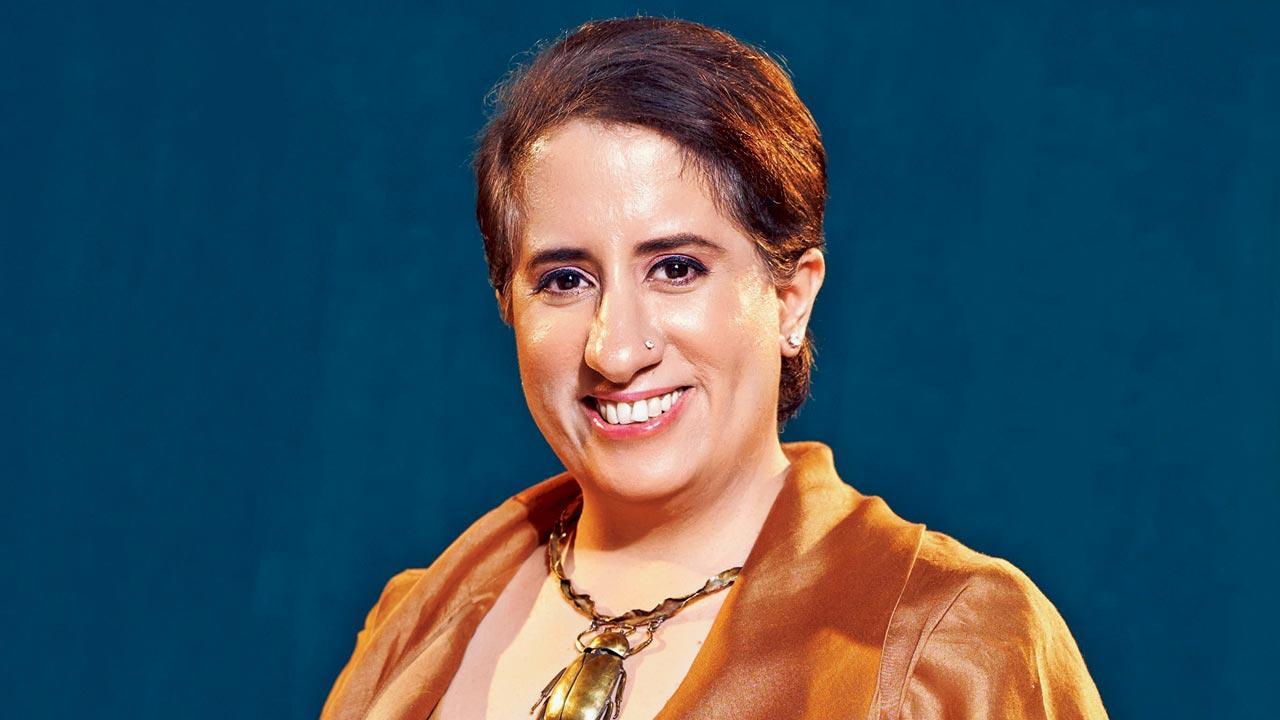
Shreya Varanasi (BOMBAY TIMES; July 31, 2025)
When The Elephant Whisperers made history at the Oscars 2023, it wasn’t just a proud moment for Guneet Monga — it was a milestone for Indian storytelling. Sharing the spotlight with Naatu Naatu’s big win that same night, Guneet remembers being awed by the impact of Telugu cinema on the global stage.
In a chat with Hyderabad Times, the producer, who was in town for the ‘Golden Lens’ symposium hosted by YFLO, opened up about her journey, the growing resonance of local stories, and her admiration for Tollywood. “I’m a big fan and would love to produce a Telugu film someday, if the stars align,” she said. “I’m always thinking about how I can add value to a project, and if there’s a meaningful way to contribute, I’d be more than happy to be involved.”
‘RRR is one of the best examples of how local stories resonate globally’
For Guneet, the success of Indian films on the world stage boils down to authenticity. “RRR is one of the best examples of how a deeply local story can have global resonance. Whether it’s Baahubali or RRR, our culture, language, and music captivate audiences around the world.”
It’s not just the big, grand spectacles that travel well. Films like The Lunchbox, Masaan, and The Elephant Whisperers also struck a chord globally because they’re rooted, real, and unmistakably Indian, she reckons. “These are the stories the world wants. People may not travel here, but they’re deeply curious about India, our culture, our people, and even our dances.”
‘My memories of Hyderabad are all about great food and vibrant places’
Guneet finds something enchanting about Hyderabad every time she visits. “My memories of Hyderabad are all about great food and vibrant places. And what really fascinates me is the number of lehenga stores! I always find myself looking at those big wedding wear storefronts, they’re everywhere.” There’s one Hyderabad staple she’s looking to discover more of though. “A really good biryani! I don’t have a go-to spot yet, but I’d love to try one.”
‘Many films have left an impact on me’
Whether it’s the timeless charm of Bollywood or the quiet brilliance of international indies, Guneet draws inspiration from across the spectrum. “My first memory of cinema was watching Dilwale Dulhania Le Jayenge. I was completely obsessed with the love story and the romance,” she recalls, adding, “And then I remember watching Boyhood on a flight, it completely blew my mind. I couldn’t stop thinking about how someone could film for so many years (the film was shot across 12 years from 2002–2013) and piece it together. That kind of ambitious storytelling inspires me.”
‘Portrayal of women is something I deeply care about’
Known for championing strong women-centric narratives, Guneet believes the strength of a woman’s portrayal lies in thoughtful writing, not just lead roles. “One of the films I’m proud to have produced is Soorarai Pottru. Though it was Suriya sir’s film, Aparna Balamurali’s character sparked meaningful conversation,” she says, adding, “In The Elephant Whisperers, Bellie stood out so beautifully, just like Huma Qureshi did in Gangs Of Wasseypur.”
For her, what matters most is depth. “Even submissive characters must have redemption. The portrayal of women is something I deeply care about as a producer.”
‘I fall in love with scripts that move or challenge me’
Reflecting on her journey post-Oscar, Guneet said the recognition has opened doors and pushed her to dream bigger. “It expanded what’s possible for me as a filmmaker,” she said. But for her, it’s never about chasing a trend. “I fall in love with scripts that move or challenge me,” she added. Among the stories she’s hoping to bring to the screen someday is a full-fledged female-led action film. “I think we’re ready for that, and I’d love to be part of making it happen.”
‘We’re building a space for women in cinema to connect, be heard & create change’
At the ‘Golden Lens’ symposium hosted by YFLO, Guneet struck a chord with an audience of over 200 with a nearly two-hour-long conversation as candidly she spoke about the highs and heartbreaks of her journey. “Life gave me 10 ‘Nos’ before a single ‘Yes’, but I chose to celebrate every ‘No.’ Because each one took me a step closer,” she said, drawing applause.
She also spoke passionately about the Women in Film – India Chapter, part of the global WIF network. “Less than 10% of Indian film directors are women. That reality deeply concerns me,” she said, adding, “Through this chapter, we want to build a space where women in cinema can connect, be heard, and create lasting change.”
Pay disparity’s cause is that male actors have 50 year careers-Nidhhi Agerwal
8:16 AM

Dismissing talk that Bollywood’s leading ladies explore south cinema for better pay, Nidhhi Agerwal says heroines unable to command the same stardom and remuneration as heroes due to their short careers
Komal RJ Panchal (MID-DAY; April 16, 2025)
Munna Michael (2017) may not have given Nidhhi Agerwal a blockbuster debut in Bollywood, but she has since built a strong career in Tamil and Telugu cinema. The actor, who is now looking forward to the release of Hari Hara Veera Mallu, is pleased at how a shift to Telugu cinema has benefited her immensely.
“It has been an amazing learning because I’m getting to play roles that I could only dream of, in Telugu films.”
With many of Bollywood’s leading ladies—from Priyanka Chopra to Deepika Padukone and Kiara Advani—being south-bound recently, there has been a discourse about how they take home fatter pay cheques in regional cinema compared to Bollywood. Mention this to Agerwal, and she asserts that her decision was not influenced by monetary gains.
“I chose to be a part of the Telugu film industry before Baahubali [2015] released. I’m not doing it as a calculated move,” she explains, before adding, “It’s not like you’ll get paid more in Telugu and less in Hindi. You get the pay depending on the production.”
Gender pay gap has been an ongoing discourse in Bollywood, with many female actors questioning the practice. But Agerwal believes pay disparity has another aspect of gender at play.
“I don’t know if it’s about gender. The root cause is that male actors have 50-year careers. They work till they are 50-55, even 70! So, they have a huge following. But women are not given that much time to establish themselves. They are labelled a certain way after they turn 30-32. If a heroine and a hero are given the same opportunity, they’d get the same opening and nobody would mind paying them the same amount.”
I have a very Benjamin Button case-Tamannaah Bhatia
8:26 AM

Actor Tamannaah Bhatia reflects on her journey in showbiz and the accompanying ‘Benjamin Button’ case
Rishabh Suri (HINDUSTAN TIMES; March 25, 2025)
At just 13, Tamannaah Bhatia stepped into the world of cinema. By 15, her debut film Chand Sa Roshan Chehra (2005) had hit the screens. Now, as she celebrates two decades in the industry, the 35-year-old actor reflects on her journey, growth, and the wisdom she gained along the way.
“I was giving my Class 10 board exams when my first film released,” she recalls, adding, “I have a very Benjamin Button case — not in how I look, but from an emotional and mental POV. At that age, I thought I knew everything, like a mini dadi maa. Watching my old interviews now is quite funny!”
Tamannaah’s maturity helped her hold her own in an industry where she often worked with co-stars twice her age. “I always worked with people 20 years older than me, be it directors, actors, producers. It is not easy to take this field on and navigate it if you have zero backing or support,” she recalls. However, her biggest support system was her family. “My parents never treated me as a child,” she says.
Over the years, she has mastered the craft and built an enviable career. From the Baahubali films to her latest song Aaj Ki Raat in Stree 2 (2024), she has continued to evolve. But which project was the biggest turning point? “Baahubali was the beginning of me understanding my strengths. I’m a simple person, but being simple doesn’t make you ordinary. That’s become my life’s motto. I have always had high goals. Commercially I had been paired with all leading actors, and done female-led films, too. I wanted to push the envelope, and then OTT happened.”
On the personal front, Tamannaah has been making headlines for her rumoured breakup with actor Vijay Varma. However, she has yet to comment on the speculation.
Numbers shouldn’t be the driving force behind sequels-Prithviraj Sukumaran
8:35 AM
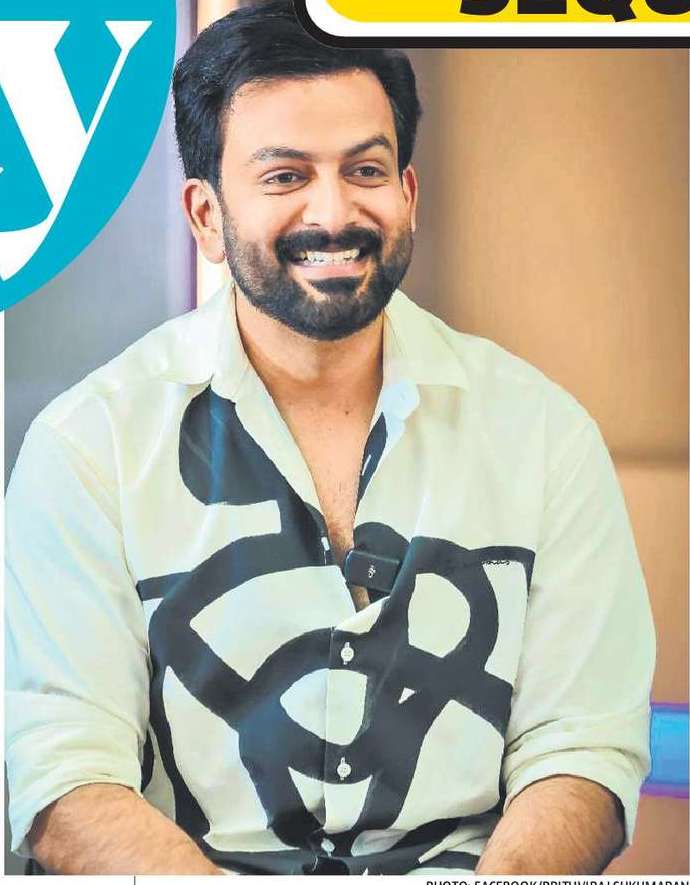
Prithviraj Sukumaran decodes the rising trend of franchise films and sequels
Mugdha Kapoor (HINDUSTAN TIMES; February 3, 2025)
With franchise films and sequels becoming a dominant force in Indian film industry, the trend is expected to continue this year, too. Prithviraj Sukumaran, who is gearing up for his directorial venture L2: Empuraan, a sequel to his 2019 film Lucifer, says the growing success of sequels is driven largely by numbers.
“The trend is popular because it makes business sense,” says the actor-director, adding, “Let’s say, a director makes a film and it becomes a huge success. If you make your next film and you say it belongs to that universe or it’s a continuation of that story, the interest spikes. Even the streaming platforms think, ‘Oh, we need to have that film because it’s from the same series’.”
However, Prithviraj emphasizes that the business aspect “shouldn’t be the driving force behind doing this (taking a franchise forward). It should only happen if your story needs to be told across so many films”. He credits the trend to the Baahubali franchise. “It was a very honest part one and part two. You realize that the story really needed two films. That should be the driving force,” Prithviraj signs off.
Rana Daggubati shares how his illness made him a ‘mean person’
8:59 AM
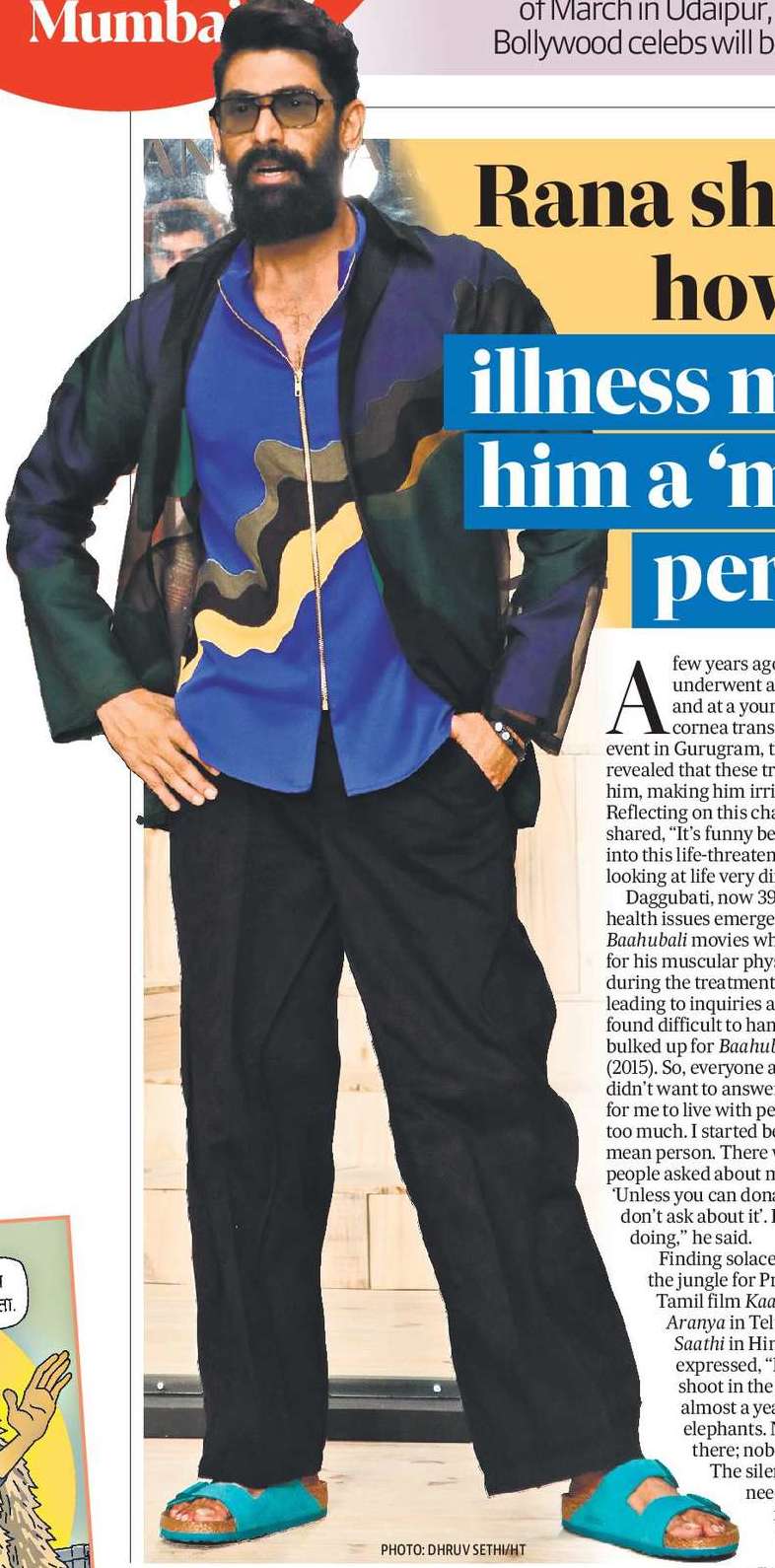
HINDUSTAN TIMES (February 29, 2024)
Afew years ago, Rana Daggubati underwent a kidney transplant, and at a young age, he also had a cornea transplant. Speaking at an event in Gurugram, the actor-producer revealed that these treatments took a toll on him, making him irritable and mean.
Reflecting on this challenging phase, he shared, “It’s funny because once you get into this life-threatening zone, you start looking at life very differently.”
Daggubati, now 39, disclosed that his health issues emerged after the release of Baahubali movies where he gained acclaim for his muscular physique. However, during the treatment, he lost weight, leading to inquiries about his health that he found difficult to handle.
“Everyone saw me bulked up for Baahubali: The Beginning (2015). So, everyone asked if I was ill, and I didn’t want to answer them. It was harder for me to live with people in the city; it was too much. I started becoming a slightly mean person. There was a point when if people asked about my health, I said, ‘Unless you can donate a kidney or an eye, don’t ask about it’. I didn’t like what I was doing,” he said.
Finding solace during the shoot in the jungle for Prabhu Solomon’s 2021 Tamil film Kaadan (released as Aranya in Telugu and Haathi Mere Saathi in Hindi), Daggubati expressed, “I got the chance to shoot in the jungle; I was there for almost a year. I shot with elephants. Nobody judged me there; nobody cared if I was sick. The silence there is what I needed in my life. Nature is a greater healer than anything else.”
Prabhas never had any hang ups about someone else lending a voice to his Salaar character-Sharad Kelkar
8:17 AM
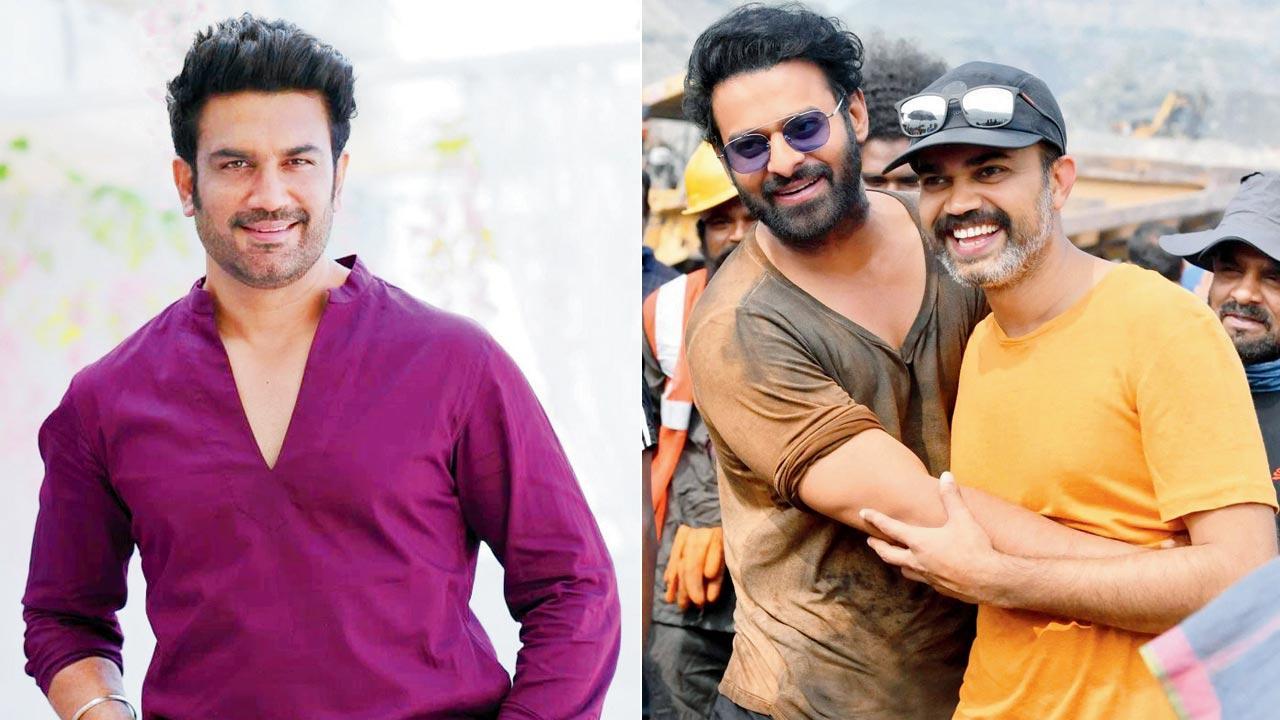
Lending his voice to Prabhas in Salaar’s Hindi adaptation, Sharad Kelkar says the audience deserves quality
Priyanka Sharma (MID-DAY; December 24, 2023)
To Prabhas’ Hindi audience, Sharad Kelkar has grown to be his cinematic voice. The actor first dubbed for Prabhas in Baahubali (2015). Since then, he has lent voice to Hindi versions of several Prabhas-led films, including the recent, Salaar. Thrilled with the response to Prashanth Neel’s directed venture, Kelkar says he enjoys dubbing for Prabhas because of his gracious nature.
“Despite being such a big star, he never had any hangups about someone else lending a voice to his character. Prabhas always looks at the bigger picture; he wants the final product to look and sound good. That’s such an admirable quality,” says the actor, who was also the voice of Telugu star Nani in Dasara’s Hindi version.
This was the first time that Kelkar was working on a project with the KGF franchise director. Crediting the precision of the director, he says, “Prashanth is hardworking. He observes every detail of the film and has clarity in his work. He communicates exactly what he wants from his actors, [even if they think otherwise]. I love that about him. I have seen the same thing in S S Rajamouli sir.”
Having much experience in lending voice to south actors, Kelkar says that several makers undermine the importance of good dubbing. “The dubbed version should sound authentic; it can’t exist for the sake of it. People watching dubbed versions deserve a quality experience,” expresses the actor, who had initially rejected the offer to dub for Nani as he believed his voice wouldn’t suit the actor.
“I agreed because the makers told me that his character would be drunk throughout the film, and usually when you are inebriated, you sound huskier than usual. I always maintain that kind of discretion,” he explains.
Indian cinema’s history can be arguably defined as pre- and post-Baahubali, says The Legend Of Hanuman creator Sharad Devarajan
4:07 PM
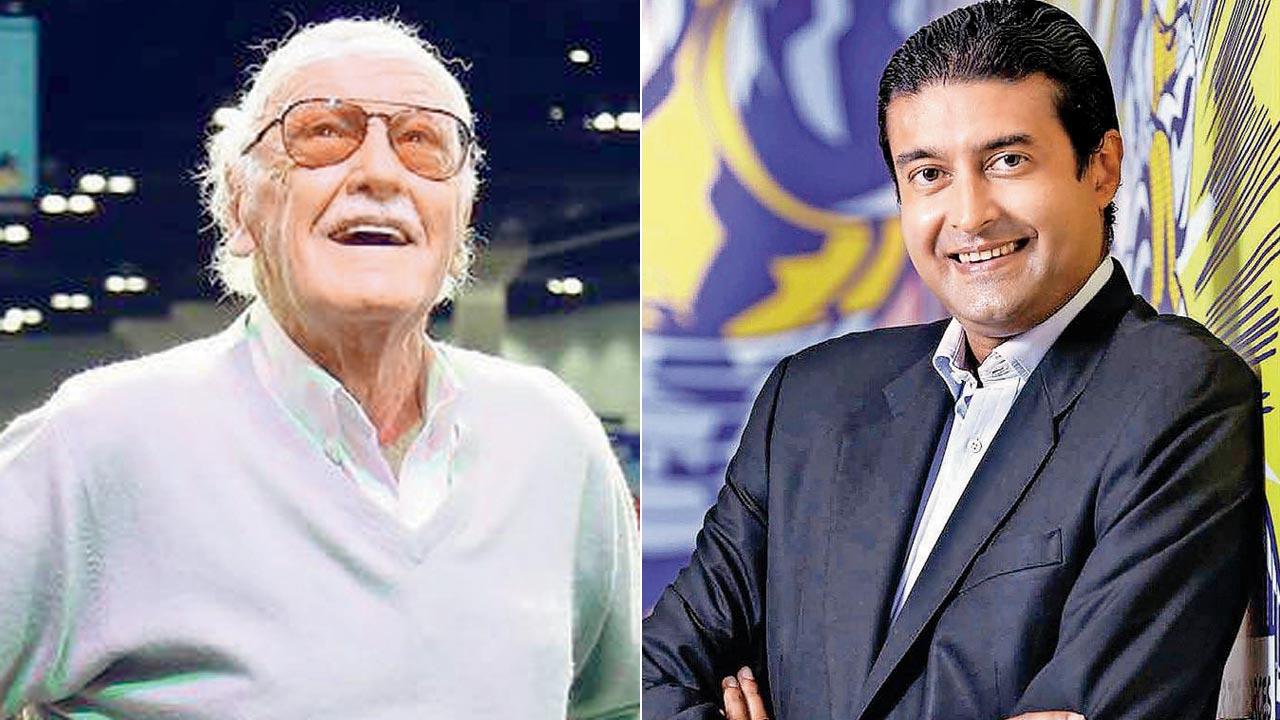
With mythological offerings often accused of hurting religious sentiments, The Legend Of Hanuman creator says treating stories with reverence and revisiting original texts are key
Priyanka Sharma (MID-DAY; December 20, 2023)
Making an offering based on mythological characters is tricky in India today. Of late, there have been many examples of people taking offence over representation of mythological figures on screen, citing religious sentiments. As he awaits the release of The Legend Of Hanuman’s third season, creator Sharad Devarajan says it is imperative to treat such stories with reverence.
“As creators, we make sure our intention is to show reverence for these stories. Here, our pursuit was to be respectful to the original mythological characters, and to Hanuman’s heroism. Also, we have a mythology advisor and experts who work with me and the writing team. They revisit texts, review everything to ensure we get the storytelling right,” he says.
The third season, which features Sharad Kelkar’s voice for Lord Hanuman, will stream on Disney+ Hotstar in January. Devarajan, who worked with the late Marvel comic creator Stan Lee for 20 years, says his mentor’s advice aided him in creating the show. “Stan was one of the greatest creators in the world. He told me, ‘You should never create a story that’s driven by market forces, or one that ticks the boxes for the audience. You should create a story from the heart.’”
While Indian animation has yet to see its watershed moment, Devarajan says the world has woken up to Indian stories, thanks to RRR (2022) filmmaker S S Rajamouli. “Indian cinema’s history can be arguably defined as pre- and post-Baahubali because it [took the world] to a different type of cinema—it was wondrous, larger-than-life and rooted in a unique Indian story. RRR too benefitted from that. Rajamouli understands the value of world-building.”
RRR’s success showcases South Indian cinema’s global appeal-Prabhas
4:01 PM

Neha Maheshwri (BOMBAY TIMES; December 21, 2023)
Prabhas’s larger-than-life screen persona ensures that the films he takes up gain momentum of their own. The latest is Prashanth Neel’s multilingual film ‘Salaar: Part 1 – Ceasefire’, where he shares the screen with acclaimed actor-director Prithviraj Sukumaran The two portray characters bound by a strong brotherly connection in a film that boasts of high-octane action, which is often the highlight of films headlined by Prabhas.
In an interview with BT, the actor, known to be a man of few words, talks about his latest venture, which releases on Friday.
‘Camaraderie with Prithviraj and Prashant has added to the magic of ‘Salaar’’
Prabhas attributes more than one reason that sets this film apart from other movies of the same genre. He shares, “‘Salaar’ explores a powerful brotherly bond between Prithviraj and me, set against an intense action and emotionally driven backdrop. The storyline is captivating, distinctly blending action and emotions, which sets it apart in this genre. However, one of the highlights of the experience for me was the off-screen bonding with Prithviraj and Prashanth, which was fantastic. It has also contributed positively to the on-screen chemistry and our overall camaraderie. It has been a fulfilling experience working with them.”
‘The role didn’t require a major physical transformation’
Given the kind of characters Prabhas takes on as an actor, there is often a demand for physical transformations as well as mental prep, but with ‘Salaar’, he chose to be more specific. Elaborating on the preparation he undertook for the film this time, he says, “While working on this role, the emphasis was more on physical preparation with muscle building. It didn’t require a major transformation, but the effort involved a dedicated fitness routine and emotional nuances to bring authenticity to the character.”
‘If the audience likes what they see, our job is done’
The trailer of ‘Salaar’ generated a massive response, heightening the expectations surrounding the film. The actor, however, seems to appear calm amidst the excitement around the release. Ask him if the pressure of the audience’s expectations gets a bit much to handle, and he says, “I like to focus on the positives, and in this case, it is the love and support of my fans. If they like what they see, our job is done. Handling the pressure of a larger-than-life image involves a balance of staying true to my craft and choosing projects that challenge me. In fact, apart from the substance in the script, it is the audience’s expectations that drive my choices in choosing a project.”
‘It’s gratifying to see the emergence of pan-India cinema since ‘Baahubali’’
Everyone has been raving about the emergence of pan-India cinema, a trend that technically took off with the record-breaking ‘Baahubali’ films (2015 and 2017), which was also instrumental in making Prabhas a pan-India star. The actor is elated by the rise of collaborative projects between various film industries in the country. “Witnessing the emergence of pan-India cinema since ‘Baahubali’ is gratifying. It also feels like a significant moment to be part of this transition, fostering a healthy exchange of culture and stories and contributing to the collaborative growth of both industries,” he explains.
‘Oscar for ‘RRR’ is a testament to South Indian cinema’s global appeal’
South Indian cinema is making significant strides, not only nationally but also internationally. Prabhas feels that this kind of recognition is positive for the growth of Indian cinema. “The growing national and international recognition of South Indian cinema, exemplified by the recent Oscar win for ‘RRR’, is a testament to its global appeal. It’s a positive trend that showcases the industry’s creative prowess and potential on a broader stage,” he says.
I credit Karan Johar (for having a foresight) way back in 2011-Prithviraj Sukumaran
8:37 AM

Rishabh Suri (HINDUSTAN TIMES; December 13, 2023)
Actor-filmmaker Prithviraj Sukumaran, noted for his roles spanning over 100 movies across languages, shares his perspective on the phenomenon of pan-Indian films. “You don’t set out to make a ‘pan-Indian film’ — you can only choose a subject you are excited about, make a film that justifies what’s on paper, and lose control once it releases,” says Sukumaran, who also has experience distributing Kannada hits like KGF - Chapter 2 and Kantara (both 2022) in Kerala.
Pointing towards directors such as S S Rajamouli and Prashanth Neel, architects of grand-scale projects such as RRR (2022)and upcoming Salaar (starring Sukumaran and Prabhas, which will be available in five languages), the actor adds, “They have set a dangerous precedent because people at corporate are thinking, ‘How do we make this film pan-Indian — you cannot! It was not just because Baahubali or KGF had a plethora of actors from various languages that they struck a chord, as we also have Kantara [that did well].”
Here, he acknowledges the foresight of an individual in the Hindi film industry who predicted this ‘pan-India’ craze long before it materialized: “I got a call from (filmmaker) Karan Johar in 2011, and he pitched this film called Bombay Talkies to me. Unfortunately, I couldn’t do it at that point because of commitments. I said, ‘It’s your film; you could have cast anyone from Hindi films!’ He replied, ‘At some point, Prithviraj, it will have to start happening.’ I credit him with saying that way back in 2011.”
By, India will be seen in same league as the UK and USA in filmmaking-Karan Johar
8:27 AM

HINDUSTAN TIMES (December 11, 2023)
With the success of films such as Pathaan, Gadar 2, Tiger 3, Jawan and now, Animal, Bollywood seems to have found its footing at the box office after the pandemic. It’s also interesting to note that the majority of these films are high on action, which the audience has embraced as pointed out by filmmaker Karan Johar, who spoke at the Federation of Indian Chambers of Commerce and Industry (FICCI) Annual Convention and 96th Annual General Meeting in Delhi.
He adds, “The recent success of various movies in last few years has broken the Indian cinema myth that we are a nation which [only] makes love stories. By the year 2025, India will be seen in [the] same league as the UK and USA in filmmaking. With internal crossover in Indian cinema from the South [film industry] to Hindi, international buyers [are] looking at buying Indian films.”
Referring to the constant north versus south debate, Johar, who is the presenter for the Hindi version of the pan-India Baahubali franchise, says, “After the success of Baahubali: The Beginning (2015) and RRR (2022), the divide between Hindi and the South is over. It is time to celebrate the success and power of Indian cinema.”
Lauding the advent of OTT that has helped Indian films reach a wider audience, the 51-year-old says, “There are stories... from [different] parts of India that are beautiful and should be viewed by audiences. The world needs to wake up to Indian stories and storytelling.”
It comes naturally that women in my films have agency-Karan Johar
5:40 AM

Niharika Lal (BOMBAY TIMES; November 23, 2023)
In recent decades, films with female leads have performed well at the box office. Yet, there has been an assumption that producers do not support female-led films, and that they are generally less successful. During a recent session at IFFI, Karan Johar spoke about how gender is not a criterion for judging a story.
‘I’LL CONTINUE TO TELL STORIES OF WOMEN’
“Telling the story of a female comes naturally to me. I’m not even thinking that it is something great I’m doing; it is something that comes naturally, whether it was Raazi, Gunjan Saxena, Ae Watan Mere Watan, or the short films I have directed like Bombay Talkies. It comes naturally that women in my films have agency. These are natural, organic decisions that come from the roots of my upbringing, and I will continue to tell those stories.”
‘ONLY FOLLOW THE CONVICTION OF STORYTELLING’
Talking about box office performances of female-led films, Karan pointed out how cinemas were written off, yet both cinemas and OTT have maintained their strong positions. Giving the example of 12th Fail, he added, “It was being said that small films would not be able to attract a theater audience, but look at the performance of 12th Fail. So, one can’t follow any trend, and the only trend that one should follow is the conviction of storytelling.”
‘FILMS MADE IN ALL LANGUAGES ARE OUTSTANDING’
Responding to a query on why he doesn’t make films in other Indian languages, Karan said that the language he is comfortable telling a story in is Hindi, as it’s the language he was raised in. However, he added that he is a fan of all Indian language films.
“I was one of the first people to introduce Baahubali to the Hindis-peaking audience of this country. I believe that films made in (all) languages, whether it’s Kannada, Malayalam, Telugu or Tamil are outstanding. Thanks to streaming platforms, we can now see these movies and fall in love with the power of these stories. I’m blown away by the impact of Mani Ratnam’s PS-I and PS-II films, by KGF which has opened doors for Kannada cinema, and equally by mainstream films like Pushpa or RRR. So much is happening in Hindi cinema, but at the same time, so much is happening in Indian cinema, and we should be proud members of Indian cinema.”

Movies glorifying stalking as wooing tend to do extremely well-Kiran Rao
11:10 PM

Niharika Lal (BOMBAY TIMES; November 11, 2023)
During a recent session, filmmaker Kiran Rao discussed the on-ground scenario of women working in films, expressing surprise at the revelation that less than 1% of screenwriters are female. She added that she finds it a cliché that merely having more women in such positions will bring about substantial change, but perception-wise and perspective-wise, it certainly helps to have more women directors.
‘WE ARE AN INDUSTRY WHERE EVERYTHING IS MEASURED BY BUMS ON SEATS’
A recent research report by the Tata Institute of Social Sciences revealed that on and off screen women and queer representation in box-office hits remains largely stereotypical.
Kiran noted how the report mentions “stalking as one of the most glorified forms of wooing a woman (in films) and films like that do exceedingly well.”
She cited Kabir Singh as an example and added, “Another very big film, which I find fascinating, was Bahubali 1 (Baahubali : The Beginning). It started off with this exciting fight sequence, where this woman is leaping from tree to tree, and she is a warrior. But the hero delicately strips her of her agency and makes her just a fantastic romantic interest. I find it fascinating. It is (one of) the biggest films of Indian cinema.”
Pointing out that despite conveying such a message, the film was a success, she said, “We are also an industry, (where) everything is measured by bums on seats. Everyone only looks at what’s your box-office (collection), and here you are with films which are doing exceedingly well with this kind of messaging.”
‘NEED MORE WOMEN HANDLING ROLES CONSIDERED DIFFICULT TRADITIONALLY’
Talking about having more women in the film business Kiran said, “It’s a bit of a cliché to think that women coming into all these positions will change a lot of things. Honestly, gender sensitization across the board will help all of us, not just the numbers of women. But perception-wise and perspective-wise, it certainly helps to have more women directors, more women producers, and more women screenwriters. And we need to see more women handling positions that would traditionally be considered difficult roles, as women can take positions and deliver.”
Kiran added that she has been seeing a lot of change. “For instance, many of our OTTs are headed by women. Now, we see a lot of women in production roles, and producers say that they trust women more to do production roles. Even in real terms, women will ensure a safe environment, and that people are taken care of, working hours are more reasonable, especially when they are working with children and differently-abled people. Women directors and producers, I’m hoping, will have their radar on.”
‘IF YOU WANT TO CHANGE PEOPLE’S POINT OF VIEW YOU CAN’T ALIENATE THEM’
Talking about her film Laapataa Ladies, which was screened at the Toronto International Film Festival this year, Kiran said that the idea was to speak to an audience that doesn’t want to discuss it. Giving an example, she said, “Even while doing Satyamev Jayate, we discussed that we are dealing with things that are so sensitive and touchy, and you still want to open up a little space in people’s perception. You want to change people’s point of view a little somewhere, and you can’t do that by alienating them. That’s something I take pretty seriously. How do you communicate to a mass that sees things entirely differently? How do we include them?
To generate more content, OTT must not compromise on quality-Sharad Kelkar
8:38 AM

Shruti Jambhekar (BOMBAY TIMES; July 19, 2023)
Sharad Kelkar, who moved from TV to Bollywood and OTT, says he didn’t mind the “struggle” and “enjoyed every bit of that process” because it made him a better actor. Currently juggling OTT and films, Sharad has a tight schedule and says he feels “guilty about not being able to strike a work-life balance. I have been giving work too much priority, so now I am trying to break this pattern and spend quality time with my family at home and by frequently taking vacays together”.
We caught up with the actor who’s in Ahmedabad to shoot an OTT project. Excerpts:
‘Ahmedabad has been special to me’
While doing my MBA in 2001, I lived in Ahmedabad for a few months and did my summer internship programme in the city. As a marketing student, I explored Ahmedabad to the fullest. I stayed opposite Darpana Academy and would have most of my meals at Natrani. I hope I can go there this time too. I have watched many movies here - Lagaan, Dil Chahta Hai, Aks - the multiplexes were awesome. A small town boy like me (he is from Gwalior) had only gone to cinemas that had chairs without proper leather cover, multiplexes were a novelty for me! Ahmedabad is a beautiful, vibrant city.
‘I never feel overworked even while juggling mediums’
I have been juggling OTT, Bollywood and dubbing assignments for a while; I didn’t find it challenging. Acting has always been my passion, so anything associated with it makes me happy. I never feel overworked and even my struggle period had its own charm. When you love something, everything associated with it feels good.
‘OTT has redefined the entertainment industry’
OTT has redefined the entertainment industry and there are both positives and negatives. I can see some wonderful storytelling, more opportunities for actors and technical professionals, actors doing some fabulous work. My only word of caution–to generate more content, OTT must not compromise on quality. The magic of watching movies in a theatre is getting impacted with content readily available on OTT platforms.
‘I need something really interesting and finite to take up a TV show’
TV (Aakrosh, CID, Saat Phere, Uttaran and Koi Laut Ke Aaya Hai) gave me a lot of popularity but with my current schedule, I don’t think I will be able to give that kind of time to a TV show. Currently, TV shows are too run-of-the-mill and don’t excite me. I need something really interesting and finite if I do TV. Hollywood actors do movies and even TV, in India TV content does not offer enough creative challenges and even TRPs of the shows are dipping every year.
‘I am glad I have been appreciated for my dubbing’
I don’t treat voice acting (he dubbed for Prabhas in Baahubali and Adipurush) as a challenge. I find it a lot similar to acting. If someone observed me during a dubbing session, they would have seen me emoting scenes with hand gestures and facial expressions as per the requirement of the scene. I am glad I have been appreciated for my dubbing.
‘Hopefully, I will do a Gujarati film soon’
Regional cinema is emerging as a force to reckon with. South filmmakers handle their work with conviction and know how to turn a story into a visual treat. Even Marathi movies have good stories, but they lack the star power and strong marketing which south films have. I have been hearing good things about Gujarati movies, especially in the NRI circle. I was even offered a Gujarati film a few years back, but the schedules didn’t match. Hopefully, I will do one soon.
Trade experts discuss the ‘pan-India film’ obsession
8:25 AM
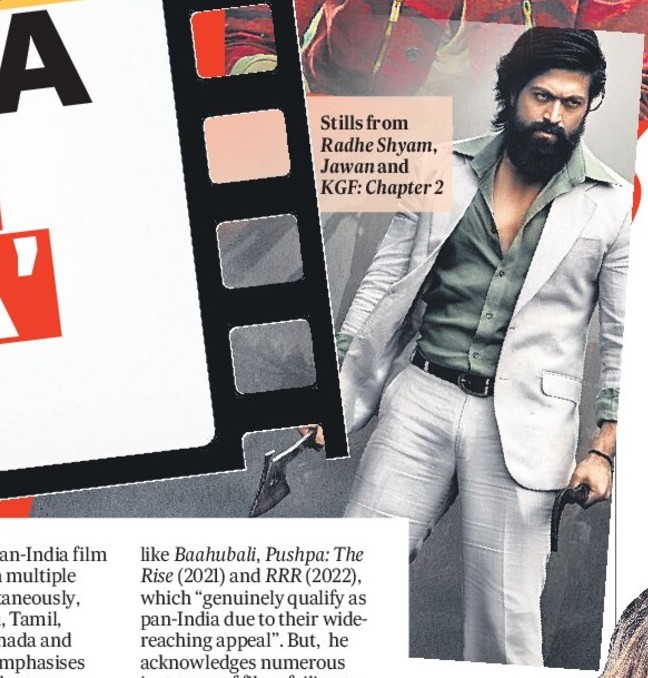
Ultimately, the success of a pan-India film lies in its content and ability to resonate with audiences, say experts
Rishabh Suri (HINDUSTAN TIMES; July 11, 2023)
In 2015, a cinematic storm named Baahubali swept India, forever changing the landscape of Indian cinema. The film’s success showcased the immense potential held by movies from the Telugu, Tamil, Kannada and Malayalam industries, collectively known as the South belt. This awakening gave birth to the ‘pan-India film’ obsession, as the industry recognized the vast opportunities that lay within these multi-lingual projects.
However, amid the excitement, questions arise about what truly constitutes a ‘pan-India’ film and whether the term has been exhausted.
DUBBED FILM DEBATE
Atul Mohan, trade expert, clarifies that “a pan-India film is one released in multiple languages simultaneously, including Telugu, Tamil, Malayalam, Kannada and Hindi”. He also emphasizes that labelling a film as pan-India should be reserved for projects that “genuinely resonate with audiences upon their release, rather than pre-emptively declaring them as such”.
He adds, “Makers just think now ‘bada budget, ek North, ek South ka actor aur action film, isko pan-India bol ke bechte hain’. But aise nahin hota, content bhi toh ho!”
LOW SUCCESS RATES
Trade analyst Taran Adarsh notes that the “allure of the larger audience and potential higher returns drives many producers to take the risk” and feels that “the term has indeed been overused”. He cites the undeniable successes of films like Baahubali, Pushpa: The Rise - Part 01 (2021) and RRR (2022), which “genuinely qualify as pan-India due to their wide-reaching appeal”. But, he acknowledges numerous instances of films failing to make an impact also exist, such as Liger, Vikrant Rona (both 2022), Kabzaa and Adipurush.
CONVERGENCE OF ALL INDUSTRIES INTO ONE
In recent times, several Hindi film actors have appeared in Telugu, Tamil and Kannada films. The inclusion of Ajay Devgn and Alia Bhatt in RRR is seen by some as a strategy to cater to the northern audience. Similarly, Nagarjuna starred in Brahmastra and Prabhas portrayed Lord Ram in Adipurush.
Raveena Tandon, who acted in KGF - Chapter 2, says, “All our industries are converging into one big force. When I was done with KGF 2 and shooting for another film in Rajasthan, people came up to me and said ‘KGF KGF’, I was surprised people in that state enjoyed a Kannada film.”
Actor Shilpa Shetty Kundra, who stars in KD - The Devil, notes, “People enjoy the sensibilities of south films and coming together of a Hindi cast with that of films from Tamil, Telugu and Kannada.”
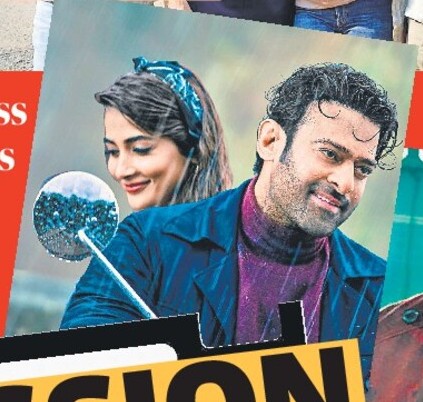
I don’t have any kind of hidden agenda-S S Rajamouli
8:25 AM

HINDUSTAN TIMES (March 2, 2023)
Director S S Rajamouli is a fan of all things larger-than-life, and that comes across in his work as well, be it the Baahubali franchise or his award-winning outing, RRR (2022). The filmmaker has now said that his films are made for those “willing to spend their hard-earned money” on a ticket. In his interview with AFP, he also clarified that when he makes movies, he does not have “any kind of hidden agenda”.
“Any extreme point of view, I oppose. I don’t have any kind of hidden agenda. I make films for people who are willing to pay their hard-earned money [to buy] a film ticket. I like to entertain them, make them feel dramatic about the characters, the situations, have a good time, go back and live their lives,” he said.
Rajamouli’s RRR has been receiving acclaim worldwide. Its story revolves around the lives of two freedom fighters, Alluri Seetharama Raju (played by Ram Charan) and Komaram Bheem (played by Jr NTR).
“When I’m going to a movie, I would like to see larger-than-life characters, situations and larger-than-life drama. And that’s what I like to make, too. Nothing holds the heroes back in delivering their action sequences. We are breaking ground, but I think we are in a very, very initial stage. If you see (South) Korea, for example, the kind of inroads that they have made... We should aspire to do that, all Indian filmmakers.”
2022: A record-breaking year for south cinema on all counts
8:22 AM

From the highest revenue earned at the box office to global glory – it was a record-breaking year for south cinema on all counts
Sridevi S and Neeshita Nyayapati (BOMBAY TIMES; December 29, 2022)
The year 2022 truly belongs to the south Indian film industry, with two films raking in over Rs. 1,000 crores, and quite a few inching towards the Rs. 500 crores mark. It was undoubtedly a landmark year, with the south industry even overshadowing its Bollywood counterparts. Add to this the fact that these south films have and still are continuing to break records, and garnering accolades not just pan-India but globally.
The latest being RRR that has earned itself two nominations at the Golden Globes and made it to the Oscar nominations shortlist. KGF - Chapter 2, RRR, Vikram and Ponniyin Selvan - Part 1 (PS-I) were also the most watched movies at cinemas this year, with the highest number of tickets sold, according to an entertainment ticketing company’s report, with KGF - Chapter 2 selling most tickets on the weekend as compared to any other film.
This is a trend that’s been a long time coming. In 2021, south Indian cinema generated three times the box office revenues of Hindi films, with a total of Rs. 2,400 crores, according to the March
2022 EY-FICCI report. Many trace the origins to the post-Baahubali phenomena, when Prabhas became a nationwide sensation following the release of the film in 2017. This was followed by the post-OTT boom in consumption of content across the nation.
While it’s natural to pit south cinema’s success against Bollywood’s many dismal outings at the box office in 2022, KGF star Yash feels otherwise. “Don’t disrespect Bollywood for this one year where south films have performed better,” the superstar said recently, adding, “This is just a phase. Bollywood has taught us so much. It is time to forget the north-south divide and respect all film industries. Instead of fighting about which industry is great, one should make good films, have good infrastructure, build good theatres. That is when the world will truly appreciate and say, ‘India has arrived’.”
Several trade experts have labelled the rise of south cinema as ‘the post-Baahubali phenomenon’. S S Rajamouli – who directed the two Baahubali installments, that released in 2015 and 2017 – said in an interview that Hindi films had stopped catering to the mass audience, who started watching dubbed south films online. “Unknowingly, we were building a big fan base for action films for a long time. And when Baahubali landed, everything exploded.”

2022: NO MORE WOODS?
The rising popularity of south cinema has made Bollywood move beyond its comfort zone and blend in with regional languages. The biggest examples being Salman Khan’s Telugu debut with Chiranjeevi’s GodFather, and Sanjay Dutt and Raveena Tandon’s Kannada debut with KGF - Chapter 2 in 2022. Will this be the end of the ‘woods’ and the beginning of the Indian film industry?

IF ALL OF US GET TOGETHER, WE CAN CROSS 3,000 – 4,000 CR TOO: SALMAN KHAN
Both Bollywood and southern film industries can benefit from the cross-pollination of talents. People want to go to Hollywood, I want to go south. The thing is once you start working together, just imagine the numbers we will all have… If all of us get together, we can cross 3,000-4,000 crore.
GLAD TO SEE OUR CINEMA IS NOW GLOBAL, NOT JUST PAN-INDIAN: NAGARJUNA
There have been no language barriers for me since 1990 and I’ve always wanted to work in good films irrespective of language. It also used to be the norm for actors to settle across various film industries, even if they weren’t born there. I’m glad to see that cinema has now gone back to not just become pan-India but also global. There’s no need for there to be a divide.
NOT A FAN OF WOODS, CALL IT INDIAN CINEMA: ALLU ARJUN
I am personally not a big fan of words like Tollywood or Kollywood or Jollywood or Bollywood. This wood...that wood...no. I would love to call it all Indian cinema.

What’s behind South Indian cinema’s new pan-India appeal?
8:22 AM

The Winning Formula Is Simple: Get A Good Story, Don’t Squander Your Budget On Star Fees, Make Sure To Pour Money Into Production Instead
D Govardan (THE TIMES OF INDIA; September 11, 2022)
It began with Baahubali: The Beginning. A South movie that set cash registers jingling across India. ‘Pan-India’ became a mantra for many movie production houses in the South. The chatter is now about Mani Ratnam’s PS-1, set to hit theatres across India on September 30. Supposedly a pan-India film with a big star cast and a huge budget, it will be the latest to be put to test north of the Vindhyas.
Plenty have failed that test. Many pan-India South movies can’t survive the first weekend, as happened with The Legend, a ‘pan-India Tamil film’ produced by a retail chain owner, who also played the lead. It bombed pan-India. The point is, as Bollywood has had to learn, a pan-India hit is not a replicable formula. Content is the king. If the audience loves the content, then and only then do big budgets and grand scale make a difference.
Three Flops For Every Hit
For every big pan-India success from the South, at least three movies with similar ambitions sink. Telugu film Pushpa: The Rise - Part 01 did well, but several other attempts by Telugu producers didn’t. While Aamir Khan’s Laal Singh Chaddha flopped across language markets, a small budget Telugu film, Karthikeya 2, is making serious money from its dubbed Hindi release.
PS:1 was initially not planned as a pan-India film. “You do not make a pan-India film. In Hollywood, a Tom Cruise film is not made keeping in mind how it will be received in Japan or Chile. PS-1 is an Indian story and people across India will connect with the film,” says Siva Ananth, executive producer, Madras Talkies, which is producing the film in collaboration with Lyca Productions.
50:50 Economics of Tollywood
As is frequently not understood north of the Vindhyas, the South is not a homogenous entity. The same holds for the movie business. The Telugu movie industry plays the pan-India, big-budget game much better than its Tamil counterpart. The secret is economics.
Telugu stars take only 10-20% of their remuneration as advance and the rest when the film is ready for release. This helps producers pump in more money for content, resulting in a bigger and better product for sale – Bahubali 1 & 2, RRR, and Pushpa: The Rise - Part 01, to name the best-known examples.
“Generally, Telugu films follow the 50:50 rule, with one half going for the star cast and the other into film production. With richer production, Telugu films have created a huge overseas market, especially in the US, and it helps producers to remain in the safe zone,” says Murali Krishnam Raju, CEO, Sinivali Network LLP, a company that helps producers monetize their movies.
With most leading producers flush with their own funds, they limit their borrowings in the open market and opt for only low-interest financing.
Star-Struck, High-Risk Tamil Industry
It is just the opposite in Tamil films. “The stars here take a minimum of 50% advance and give dates after a year. Stars account for 60-75% of the project cost and very little goes into production. The production cost of even a big movie by Vijay, who has overtaken Rajinikanth in box office revenue, isn’t more than Rs 50 crore. If the producer claims he spent Rs 200 crore, then it means Rs 150 crore had gone to the star cast and lead technicians. Hence, when Vijay’s Beast or Rajinikanth’s Annaatthe flops, it hurts big time,” said a Tamil film industry veteran, who did not wish to be named.
Except for big production houses like Sun Pictures, AGS and Lyca, most Tamil movie producers depend on private financing for almost 90% of a movie’s cost. With OTT, satellite, overseas and Hindi markets, and other rights together fetching not more than 50% of the cost, the producer is at risk for the remaining 50% at the point of a movie’s release. And even if the movie does well, the producer gets to take home very little, as payment of high interest to private financiers eats away a major chunk of the profits.
Malayalam, Kannada Movies Dial Down Risk
Malayalam films are safer, with the production cost of most films featuring leading stars falling in the Rs 6-14 crore range, barring an odd Mohanlal film that could cost up to Rs 25-30 crore.
With OTT and satellite rights fetching up to 70% of the production cost, most producers recover their investment and sustain themselves in the long run.
KGF, however, helped rewrite the Kannada film industry’s economics. A typical Kannada film could be produced at about Rs 20-25 crore and sold for about Rs 25-30 crore, thereby making a reasonable profit. But KGF was different.
“Right from the beginning, we were confident not only about the script but also that the sequel would do better than the first part. Hence, we set aside a budget that was three times a normal Kannada movie’s production cost and spent more on the film’s marketing to take the first part to a larger audience. For the sequel, we spent tenfold to make it look grander. The results are there for everyone to see,” says Chaluve Gowda, partner, Hombale Films, which made KGF-1 and KGF-2. So, if a pan-India South movie succeeds it’s because of the story and the script – not because of the stars and the budget.
Blockbuster films from the South release across India simultaneously; experts talk about why this is a good thing
8:48 AM
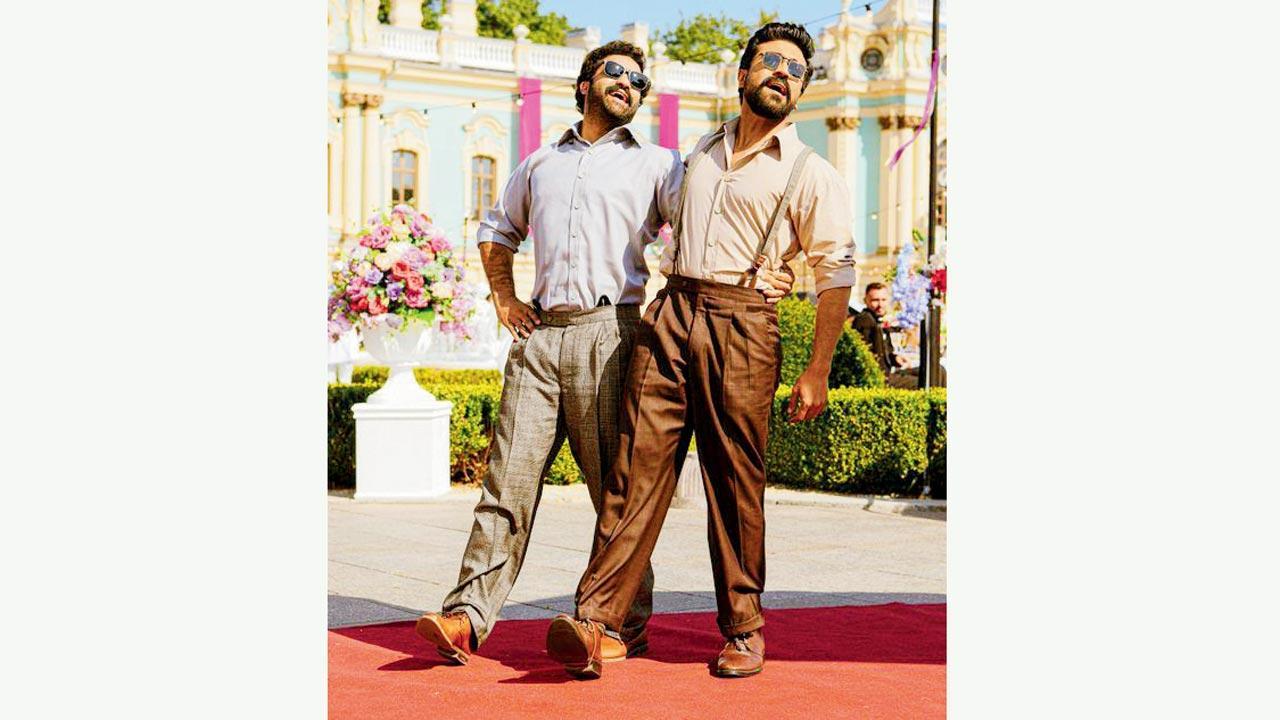
Heena Khandelwal (MID-DAY; July 31, 2022)
The concept of a pan-India film release isn’t new, say most film trade analysts and exhibitors. Mani Ratnam did it with 'Roja' (1992) and 'Bombay' (1995)—both Tamil films dubbed into Hindi and received well in North India. 'Hum', did it even earlier, in 1991. The movie starred superstars from both ends of the country—Amitabh Bachchan and Rajinikanth—and became one of the highest grossers of the year. Then 'Baahubali', both 'The Beginning' (2015) and 'The Conclusion' (2017), changed the game.
“It was a huge success,” says film trade analyst Komal Nahta. “Even today, 'Baahubali' is the highest-grossing Hindi film even though it is a dubbed one. No original Hindi film has been able to outdo it. Every South Indian producer wants to get on this bandwagon because the costing is minimal. You just have to record Hindi songs and dub the dialogues; nobody is spending Rs. 5 crores on promotions in the Hindi market. And if the film clicks, it is a huge profit margin.”
Calling 'Baahubali' a wake-up call for South Indian filmmakers, film trade expert and exhibitor Vishek Chauhan notes that the problem was that they assumed the market was saturated. It was further maxed out by increasing ticket prices to compensate the stars’ fee, which Chauhan says, is “huge, almost at par with Bollywood”.
“But Baahubali’s success showed them a huge market,” he says, “Plus, Bollywood had stopped catering to the masses for a few years, and was looking only at the niche and elite market. This allowed South Indian films a backdoor entry. YouTube and Satellite TV is full of dubbed South Indian films, which has made actors from the South—Allu Arjun, Ram Charan, Vijay Sethupathi, and others—a household name in the North. With 'Baahubali', they uncovered their clout and muscle at the box office and flexed it with both the instalments of 'KGF' [2018 and 2022], Saaho [2019] and 'RRR' [2022]. 'Pushpa: The Rise' [2021] was like a bolt from the blue. Even Vikrant Rona’s opening is surprisingly good.”
Film exhibitor Akshaye Rathi agrees: “It was an absolute misconception that people weren’t looking for mass entertainment. A huge chunk of the audience doesn’t have too many avenues for outdoor recreation. While a certain section can go to a nice restaurant or to watch a play, for the audience at large, cinema is the only leisure activity with friends and family. In tier 2 and tier 3 cities, the prevalent recreational activity is going to movies. This section is about 75-80 per cent of India’s population. Filmmakers have been depriving them of an appealing genre of entertainment. And, now that we are giving it to them, they are lapping it up in big numbers. We have seen that with 'Sooryavanshi' [2021], 'Pushpa', 'KGF', 'RRR', and even 'Bhool Bhulaiyaa 2'.”
To him, it makes economic sense for a filmmaker to look at the whole country as the market, considering India has fewer screens per million (between 8 to 10 screens, against USA’s 124).
“If we further divide deployment of content on the basis of language, we limit the potential of our business,” Rathi says “OTT has enabled access to so much diverse content so suddenly that the audience is familiar with content made in any state. That’s why crossing this bridge has become easier.”
What does this mean for Bollywood? Stop taking the audience for granted, echoes everyone. “Going to a theatre is an expensive affair in terms of money and time, so the audience wants value for money,” notes Chauhan, adding that post the pandemic, only films that appeal universally do well in theatres.
“COVID-19 changed the market entirely—a shift that would have taken place over a decade, happened in two years. The audience is not shy to explore a different genre, hero, language, or market. OTT has made the film business a level-playing field. Even in Hollywood, only big hero films do well theatrically; others are coming to OTT.”
“This [South Indian films releasing across India] helps us up the bar for storytelling and technology. 'Baahubali', 'KGF', 'RRR', are all technologically extraordinary. I hope the upcoming films—'Brahmastra', 'Pathaan' and 'Tiger 3'—do well, considering they have similar grandeur and ambition. In a way, it made us realise that commercial cinema remains intact,” says film director and writer Milap Zaveri, adding, “At some point, commercial cinema was looked down upon by critics and elite people in cities like Mumbai. So films were made keeping critics in mind and high end multiplexes. Somewhere along the way, we stopped catering to the masses. Every commercial film may not work, but one failure shouldn’t stop us from doing it again. Even in the South, after RRR, Ram Charan released Acharya [2022], which didn’t do well; but that doesn’t stop the others because that’s the base of their industry. This pan-India release phenomenon is a wake-up call. Post pandemic, if people invest time and money in a film, they expect a spectacle. Even Hollywood is ruling the roost with the Marvel series.”
Interestingly, the OTT space remains unfazed, says Sidharth Jain, former creative head for Hotstar and founder of The Story Ink, the largest book-to-screen adaptation platform. “Bollywood is making the classic mistake of copying content from the South again,” he says. “Instead, they should understand that the audience wants to watch compelling stories, and that films that do well don’t follow a trend. OTT has always offered a buffet, so there is no threat to one particular kind of content. But yes, they are commissioning more series for the Southern market.”
Subscribe to:
Posts (Atom)