Showing posts with label Ashim Ahluwalia. Show all posts
Showing posts with label Ashim Ahluwalia. Show all posts
Two Mumbai film projectionists among nine shortlisted for prestigious prize organized by Film Heritage Foundation
8:36 AM

Mohammed Aslam Fakih, 75
Two City Technicians Among Nine Shortlisted For Prestigious Prize
Sharmila Ganesan (THE TIMES OF INDIA; July 23, 2023)
In place of a recent Tom Cruise, a not-so-recent Abhishek Bachchan is strutting towards us. Two hours before the day's first show of 'Mission Impossible: Dead Reckoning', the sole screen at Regal Cinema is playing a grainy trailer of the 2012 action flick 'Players'. It's the only thing Mohammed Aslam Fakih has on 35mm that makes Simplex X-L whirr to life. Like a vintage car, the tall, retired six-decade-old analogue projector makes a comforting old sound each time its 75-year-old "mechanic" Aslam Fakih loops the film reel through its top and bottom rollers, animating the gears, soundhead and other parts whose names he didn't know when he first entered Regal's flip-switch-filled projection room as an apprentice on Independence Day in 1970.
"I miss using my limbs," smiles the analogue-watch-sporting projectionist even as both man and machine gear up for a special evening in the push-button digital age.
On July 26, just before Simplex X-L projects legendary director Kamal Amrohi's 1949 spine-tingler 'Mahal' on to Regal's screen part of Film Heritage Foundation's (FHF) film projection in practice workshop, the spotlight would be trained on Aslam Fakih instead of the other way around. The 75-year-old SSC pass Richard Burton fanboy -- who has spent half a century spanning Alfred Hitchcock to Christopher Nolan working at Regal -- is among nine faceless projectionists from across the country who have been nominated for a unique lifetime achievement award. Organized by FHF to honour the unsung technicians who have wound, rewound, oiled and toiled behind rays of light in cinemas for decades, the first-of-its-kind ceremony--which will see chief guest Naseeruddin Shah presenting a cash prize of Rs 50,000 each to three long-haul projectionists -- includes names such as Tardeo's 62-year-old Dara Mistry, the long-defunct New Empire's happy-go-lucky former projectionist, and Kolkata's Sukumar Ghosh.
The idea came from Shivendra Singh Dungarpur of FHF who would keep looking over his shoulder at the rays of light coming from the projection room as a child while bingeing back-to-back movies with his grandma, Usha Rani, in the stalls of a Patna cinema hall. Much like the young protagonist of the Italian classic 'Cinema Paradiso', Dungarpur was spellbound watching the projectionist at work during curiosity-induced interval-time trips to the projector room where he would sometimes see a man rushing in to grab a few cans of print and race off with them to another cinema on his bicycle.
"Till the early 2000s, you couldn’t screen a film on celluloid without a projectionist," says Dungarpur, who will never forget Khogse, a projectionist at Pune's FTII whose "projection was perfect when he was drunk" and M K Bangarappa aka Bangari who had screened films like Bergman’s 'Persona' and Kurosawa’s 'Rashomon' for the villagers in Karnataka's remote Heggodu village.
Keen to give them their due, FHF ran a social media campaign calling for nominations from around the country. Those who wished to nominate a projectionist had to download a form, fill in the details of the projectionist, how long and where he had worked and why they were nominating him. FHF then set up a selection committee comprising cinematographer and photographer Hemant Chaturvedi who has been travelling all over India for the last few years photographing single screen cinemas, acclaimed filmmaker Ashim Ahluwalia and Roosi Modi, the owner of close to 70 cinemas across India including Mumbai's Strand, Excelsior and New Empire who started as a projectionist himself. Spanning Kolkata to Kerala, the shortlisted nominees include National Film Archive of India's P A Salam and Lakhan Lal Yadav of Raipur's Raj Talkies who have spent five decades projecting celluloid.
For 62-year-old nominee Dara Mistry - a Girgaon bachelor whose earthy tongue pronounces Sean Connery as Shane Connery - the evening will mark his first time inside a single screen since Parsi New Year of 2014. Half an hour past that March midnight before Navroz, the gates that this doorkeeper-turned-projectionist used to open for a living had closed permanently. Mistry stepped out of Fort's New Empire theatre after the last show of 'The Pirates Of The Caribbean' to a notice announcing the closure of the century-old cinema inside which he had operated a projector called Century for 33 years. "That was 'the end'," laughs Mistry, now a Rs 12000-a-month-earning catering shop hand who sometimes watches old Dharmendra or Dileep Kumar starrers on his touchscreen phone after retiring to his projector-room-sized rental home.
"I can't afford to catch movies outside anymore," says Mistry, who became an office boy following the shutdown of New Empire.
"I had no experience in electricals. I learnt to check the fuse on the job," says Mistry.

Dara Mistry, 62
Those who express reservations about showing children in such light should Google ‘Delhi school scandals’-Ashim Ahluwalia
9:28 AM
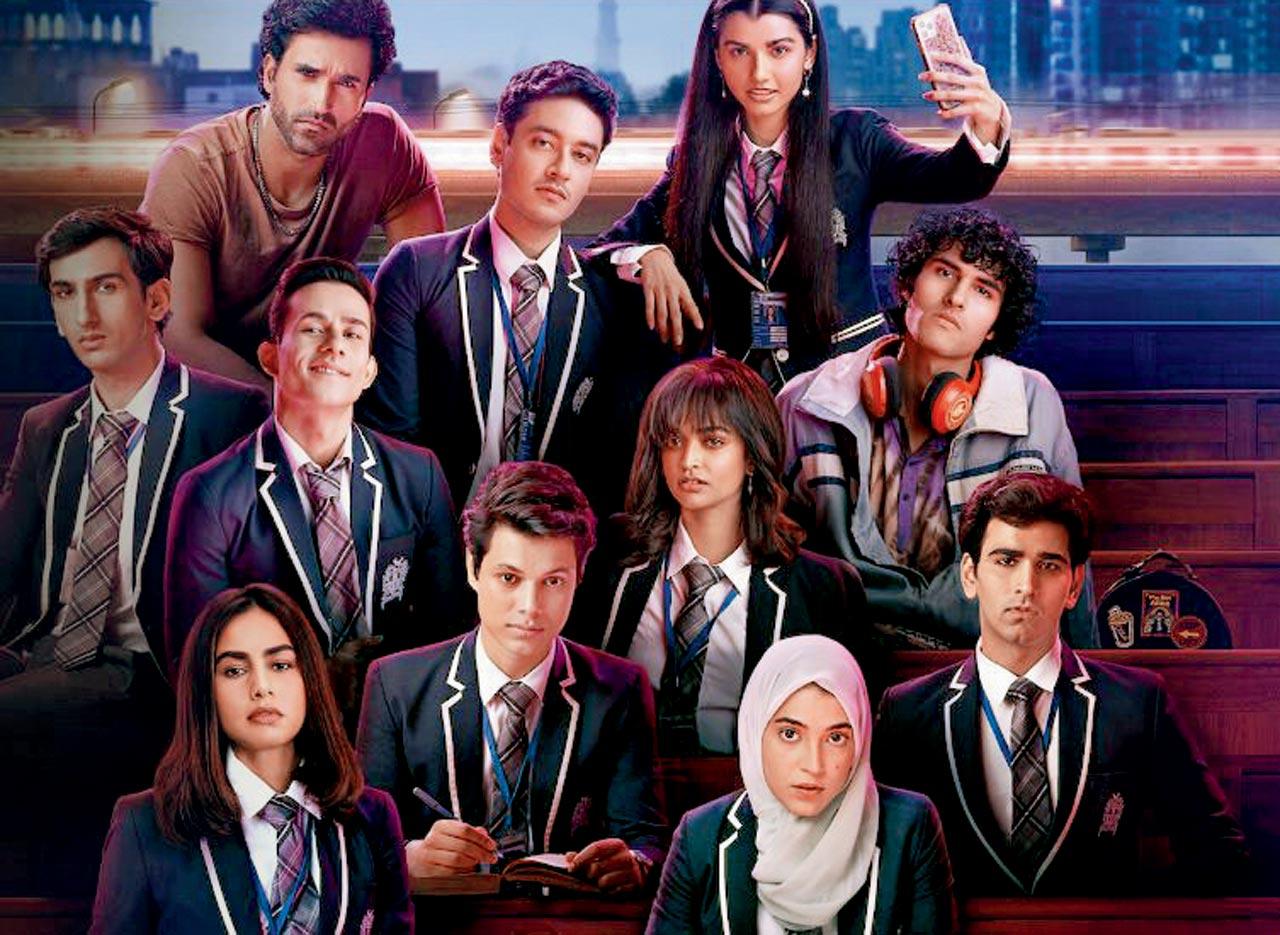
The makers of a new OTT offering—Ashim Ahluwalia and Kersi Khambatta—on how they manoeuver through the rugged and controversial terrain of caste and class through young eyes
Yusra Husain (MID-DAY; February 12, 2023)
Love it, like it, or find it overloaded with themes layered like Medusa’s tresses, but you cannot miss the new series on Netflix, Class.
On a weekday, we sat down for a chat with showrunner Ashim Ahluwalia and screenplay writer Kersi Khambatta about the eight-episode murder mystery revolving around the lives of young adults in Delhi, and it smoothly transitioned into a conversation about caste nuances, class privilege and character representations. An adaptation of the Spanish show, Elite, Class is a story of three students from poor backgrounds, who get into an uber-rich school on scholarship, and their interaction with the other students.
Ahluwalia says he never set out to adapt Elite, nor had he watched it until requested to. “Class represents India right now. I was keen to make something around rebellious teenagers,” says the maker of Miss Lovely, “because I was one. Even though the Spanish original is glossier, I found the characters and situations intriguing and decided to stick with the plotline, almost like a novel source, and create a more realistic Indian version.” Peppered with his own childhood experiences in Mumbai, Ahluwalia says the screen depiction of rich kids and their parents is not far from reality.
“In a metropolis,” says the National award-winning director, “we all come across spoiled, wealthy children. Some people might express reservations about showing children in such light; I’d ask them to Google ‘Delhi school scandals’. Everything is out there—MMS scandals, brats running people over and getting away with it, even rape threats. Perhaps our version is softer.”
“There was no time for soft touch, over thinking, or over justification of character motives,” interjects Khambatta, “We wanted to hit hard, get the message across, keep the pace and all the fluff away.”
The message is quite clear, really. “Caste, class, religious and financial disparity is out there in the real world; there’s no denying it,” says Ahluwalia, adding, “We didn’t want to be preachy. You can be pro one community and anti another, pro gay or not, but our audience can have their own point of view. We are not telling anyone how to think, just showing a multilayered world that exists.”
Khambatta’s filmography includes Being Cyrus and Finding Fanny—both with friend Homi Adajania—with them alternating the roles of director and writer. “You open the newspaper and these issues [caste, religious and gender discrimination] are in there,” is his perspective, “It is what some Indians deal with every day, and while most shows have only skirted the issues in an effort to be politically correct, we wanted to hold up a mirror to society.”
Discarding the accepted pattern of a one-theme show, the makers say theirs isn’t about “homophobia, Islamophobia, Dalit rights etc, but just about a bunch of kids and what they deal with every day”. It’s the several Indias within one India.
And while Khambatta is less hopeful about change, Ahluwalia believes the good and bad co-exist. “The fact that we have such a show running,” he points out, “and that conversations around caste and religion can take place, is encouraging in itself. I don’t think this would have been possible 20 years ago.”
Joking about the realism of their characters, Ahluwalia says that a number of his acquaintances have wondered whether the characters or situations are based on them. He laughs it off. “The original show did not have the parent angle,” he says, “I introduced it considering that if the children are this wild, what would the parents be like? Many [viewers] have appreciated this aspect.”
Both makers are aware of the responsibility of how sex is shown on screen, and the role social media plays. “In India,” says Ahluwalia, “most works depicting sexuality are voyeuristic. The same goes for some western shows, where people fast forward to the scenes of nudity, sex and skin. We wanted to deal with sexuality through the eyes of the characters and the narrative. Teens experiment and grow through such acts into adults, but we didn’t want to exploit these [to grab eyeballs].”
Khambatta has the last word: “The younger generation is all about the Internet; their acceptance in society and insecurities are all driven online. The Internet has given people a voice beyond control. Social media explosion should reflect in every show now because it is a part of all our lives, and more so for teens, who practically live online for most of their waking hours.”
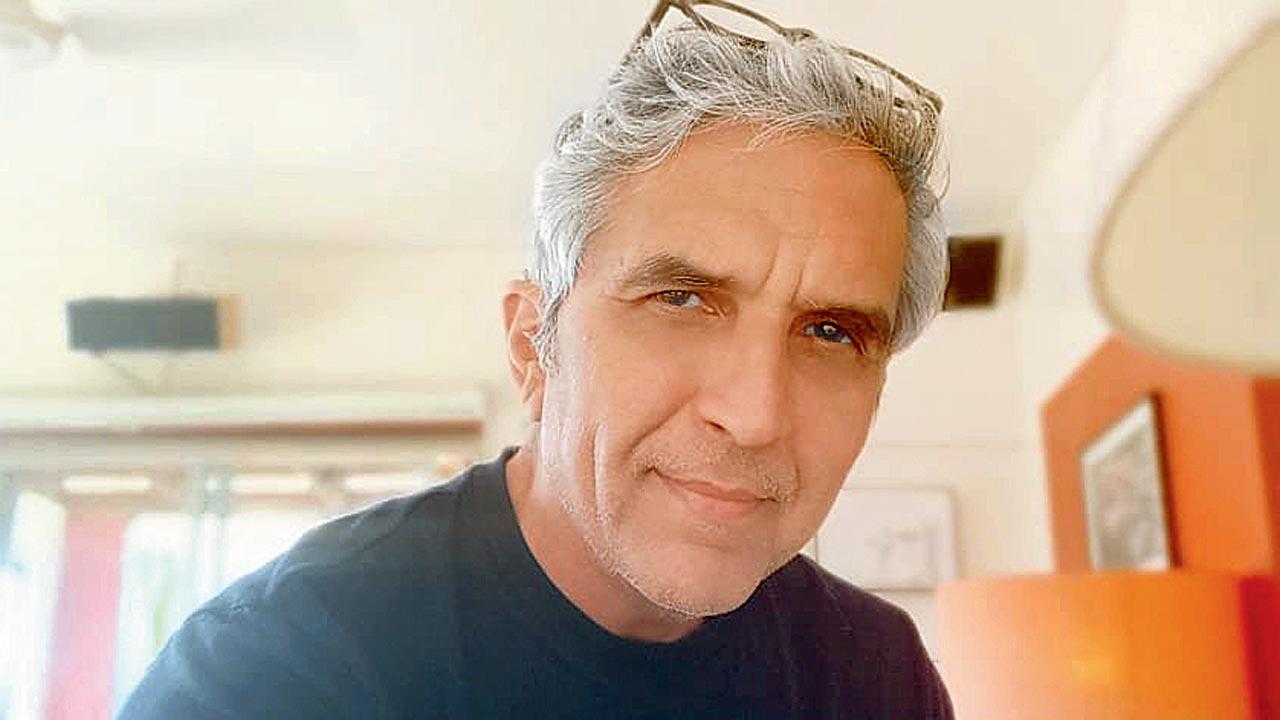
Kersi Khambatta, writer-director
Raees, Daddy: What makes gangster films so appealing to our filmmakers?
8:11 AM

Dhaval Roy (DNA; September 2, 2017)
With the release of the political crime drama Daddy, once again the underbelly of society finds space on the big screen. Daddy is the biopic of the gangster-turned-politician Arun Gawli, starring Arjun Rampal in the titular role. Bollywood has, over the decades, seen many such films like Parinda (1989), Agneepath (1990), Satya (1998), Vaastav (1999), Company (2002), Sarkar (2005), to more recently Once Upon a Time in Mumbaai (2010), its sequel, and Raees (2017). The bedraggled underworld has consistently found favour with filmmakers and audiences alike. A peek into the world of grime and crime, and why gangster films are so popular.
Mumbai mafia
As much as the person, it’s the story behind him that’s interesting for the filmmakers. Especially real life stories. For director Milan Luthria, Once Upon A Time in Mumbaai and its sequel Once Upon A Time In Mumbai Dobaara were not just supposedly based on Haji Mastan and Dawood Ibrahim, they were also about how the gangsters entered the world of crime. Milan says he found it interesting “They used the sea to their advantage and how smuggling began, about protection, extortion, gambling, and bootlegging.” Rahul Dholakia, who directed Raees, wanted to make something on prohibition and therefore the film happened. The underbelly has always been an integral part of Mumbai and it has always inspired writers and makers. “People want to know the behind-the-scenes and the stories of this side of the city,” says Madhur Bhandarkar, whose National Award-winning film, Chandni Bar dealt with gangsters, too along with bar girls.
Badass is good
The authority these gangsters exude makes them captivating for filmmakers and audiences alike. “Whether it’s Godfather, Untouchables, or Indian films, gangsters have always been fascinating because of their power and romanticism,” Rahul says. Milan adds, “There’s something about being bad that everyone likes. The risk they are willing to take, and the unexpected things they do are appealing.”
Normal is boring
Through every underworld era that we have lived, says Rahul, the gangsters have been formidable personalities. “Gangsters have seemed larger-than-life, very giving, and at the same time, ruthless. They have always been mysterious and hence fascinating.”
Rags to riches
Not just in films, mobsters always have big cars, moolah, glamorous girls and guns. No wonder, the anti-hero is as popular as the hero. Milan says, “The viewer sees these characters as powerful, charismatic, surrounded by hot women and having a lavish lifestyle.” They are sort of a role model because they live life on the edge. Most gangster films are about an underdog reaching the top by any means possible. “Everyone loves a ‘rags to riches’ story. For that matter, even dacoit stories have been successful,” Milan adds. Just like Gawli became a local Robin Hood from a humble background.
Glorifying criminals?
While more and more top actors like Shah Rukh Khan, Sanjay Dutt or Ajay Devgn have played gangsters in films, and now Arjun Rampal in Daddy, these films don’t glorify the baddies. Milan argues, “A filmmaker is not socially committed to doing everything right but to making a good movie.” Rahul adds, “When we made Raees, we made a conscious effort not to glorify the gangster. In the end, he does die at the hands of the cop.” Daddy director Ashim Ahluwalia has gone on record to say that they are not white washing Gawli’s character in the film.
South industry people are obsessed with fair skin; Bollywood is obsessed with skinny women-Aishwarya Rajesh
7:53 AM

Tanvi Trivedi (BOMBAY TIMES; September 2, 2017)
Aishwarya Rajesh is all set
to make her Bollywood debut with the Arjun Rampal-starrer Daddy. The
Tamil actress, who won accolades for her performance in National
Award-winning drama Kaaka Muttai, opens up about entering B-Town, her
meeting with Arun Gawli's wife Asha (who she plays on screen) and the
colour bias down South. Excerpts...
Why did you choose a gangster biopic to make your Bollywood debut?
In South too, I got recognized for my work in offbeat films. I prefer performance-oriented roles to just being a glamour girl. So, Daddy is the kind of film I wanted to make my Bollywood debut with.
So, how did you land the role of Asha Gawli?
They had a completely different cast in mind before they started shooting for the film. But as luck would have it, one of the ADs saw Kaaka Muttai and told Arjun (Rampal) about my performance in the film. Arjun then called up to ask if I could speak Hindi and I replied in the negative. Though Arjun dropped the idea of casting me, the AD sent me a small script and asked me to audition for the role. After my audition, Arjun called to say that he wanted me in the film.
What is the kind of preparation that went into playing Asha Gawli?
Honestly, I had no idea about Arun Gawli or his wife before I was offered the film. But later, I started doing research on her. When Ashim Ahluwalia (director) showed me her pictures, I realised that Asha Gawli is even more powerful than her husband. People were more scared of her than Arun Gawli. I met Gawli's daughters and they felt that I looked perfect for the role. My character arc spans about 40 years in the film, so I've used prosthetic make-up. Also, after working with Arjun, I feel more confident about speaking in Hindi.
Did you get a chance to meet the real Asha Gawli?
I was in for a surprise when I met her, as I was told that she was quite reserved. However, I found her to be quite sophisticated. When I asked her about my performance, she said, 'It was fine. You looked good'.
Do you feel that gangster biopics end up glorifying the gangsters?
We fail to understand that these gangsters have a human side, too. If Arun Gawli is called 'Daddy', there must be a reason for it. The film is all about exploring the individual and his journey rather than glorifying it.
You started your career as a TV anchor before moving on to films. Was TV a stepping stone into movies?
It's not easy to become an actress. When I participated in reality shows, people told me that I could never become an actress. They told me that I am dusky and do not have what it takes to be an actress. In South, people are very obsessed with fair skin. The hero can be dark, but actresses have to be fair-skinned. I did many small-budget films after my TV stint and they all flopped. People were not ready to accept me. It's only after Kaaka Muttai that people started appreciating me.
Do you feel that the situation is different in Bollywood?
People like dusky women in Bollywood, but there is another obsession that is prevalent here - skinny women. You have to be a size-zero to be in Hindi films. I never want to be a size zero and I can't be one as I can't stop eating. Also, you don't get too many opportunities in Bollywood, if you don't come from a film background. Or else, you will have to be an outstanding performer like Kangana Ranaut.
You share your name with another Bollywood actress (Aishwarya Rai Bachchan)...
Yes, I did think of changing my name because of that. Initially, I felt that I will never be remembered as I share my name with someone so beautiful and talented. But now I have given up on the idea.
Why did you choose a gangster biopic to make your Bollywood debut?
In South too, I got recognized for my work in offbeat films. I prefer performance-oriented roles to just being a glamour girl. So, Daddy is the kind of film I wanted to make my Bollywood debut with.
So, how did you land the role of Asha Gawli?
They had a completely different cast in mind before they started shooting for the film. But as luck would have it, one of the ADs saw Kaaka Muttai and told Arjun (Rampal) about my performance in the film. Arjun then called up to ask if I could speak Hindi and I replied in the negative. Though Arjun dropped the idea of casting me, the AD sent me a small script and asked me to audition for the role. After my audition, Arjun called to say that he wanted me in the film.
What is the kind of preparation that went into playing Asha Gawli?
Honestly, I had no idea about Arun Gawli or his wife before I was offered the film. But later, I started doing research on her. When Ashim Ahluwalia (director) showed me her pictures, I realised that Asha Gawli is even more powerful than her husband. People were more scared of her than Arun Gawli. I met Gawli's daughters and they felt that I looked perfect for the role. My character arc spans about 40 years in the film, so I've used prosthetic make-up. Also, after working with Arjun, I feel more confident about speaking in Hindi.
Did you get a chance to meet the real Asha Gawli?
I was in for a surprise when I met her, as I was told that she was quite reserved. However, I found her to be quite sophisticated. When I asked her about my performance, she said, 'It was fine. You looked good'.
Do you feel that gangster biopics end up glorifying the gangsters?
We fail to understand that these gangsters have a human side, too. If Arun Gawli is called 'Daddy', there must be a reason for it. The film is all about exploring the individual and his journey rather than glorifying it.
You started your career as a TV anchor before moving on to films. Was TV a stepping stone into movies?
It's not easy to become an actress. When I participated in reality shows, people told me that I could never become an actress. They told me that I am dusky and do not have what it takes to be an actress. In South, people are very obsessed with fair skin. The hero can be dark, but actresses have to be fair-skinned. I did many small-budget films after my TV stint and they all flopped. People were not ready to accept me. It's only after Kaaka Muttai that people started appreciating me.
Do you feel that the situation is different in Bollywood?
People like dusky women in Bollywood, but there is another obsession that is prevalent here - skinny women. You have to be a size-zero to be in Hindi films. I never want to be a size zero and I can't be one as I can't stop eating. Also, you don't get too many opportunities in Bollywood, if you don't come from a film background. Or else, you will have to be an outstanding performer like Kangana Ranaut.
You share your name with another Bollywood actress (Aishwarya Rai Bachchan)...
Yes, I did think of changing my name because of that. Initially, I felt that I will never be remembered as I share my name with someone so beautiful and talented. But now I have given up on the idea.

I am drawn to characters who live on the margins of society and don't play by the rules-Ashim Ahluwalia
7:46 AM

Lasyapriya Sundaram (BOMBAY TIMES; September 1, 2017)
Filmmaker Ashim Ahluwalia
doesn't like playing by the rules. While his second feature film Daddy
chronicles the life of gangster-turned-politician Arun Gawli, his
narrative style, the filmmaker insists, is not borrowed from Bollywood.
He admits that stories about people who live on the fringes of society
excite him. Also, he is happy that the Hindi film industry has got a new
lease of life thanks to the independent filmmakers, who introduce new
styles of storytelling. Excerpts from our conversation with him...
Your debut feature film Miss Lovely was about the soft-porn industry in Mumbai, while Daddy tells the story of a gangster-turned-politician. Both the movies delve into the underbelly of the city. Are you particularly drawn to these narratives?
I am drawn to characters who live on the margins of society. I feel that I am on the margins of the industry and so, I like characters who don't belong and are outsiders. Be it a gangster like Gawli, a C-grade actor or a producer making something in the middle of nowhere - when they don't belong is when they are free. You see them for who they because they don't conform. I like characters who don't play by the rules.
You don't play by the rules either, when it comes to your style of filmmaking. Which section of the audience are you targetting with a biopic on a gangster like Arun Gawli?
I think of people I know when I think of the audience. That could be my driver, who knows about Gawli. Or, it could be a friend who is a cinephile. It could even be somebody who is really into Bollywood and watches every single release. I don't think you can make a film keeping box-office collections as the primary objective. People who make a film keeping that in mind often fail. I have never felt that anything I have made has lost money. When a producer says, 'Get me a star and I will give you the money to make the film', it still doesn't guarantee box-office success. Films should engage emotionally and can't be made with a calculator. So, my logic is you are better off with me because you will make a cheaper film and get back your returns faster.
You also don't want to adhere to the norms of filmmaking that are prevalent in Bollywood and yet, you are working with a mainstream actor like Arjun Rampal. Isn't that contradictory? Then, how would you slot a film like Daddy?
My films are difficult to slot. Miss Lovely went to the Cannes Film Festival, so technically, it was an art-house movie though the narrative was about the B-grade film industry. My first documentary was about call-centre about call-centre employees, but it was shot like a sci-fi movie. I take to these hybrid forms. I don't want to be slotted as a Bollywood director, an art-house director or an independent director. The best response I got for the Daddy trailer was, 'There is so much of you in this'. I take that as a huge compliment because I can retain 'me' in my films. Arjun knew what he was getting into, as we had shot a commercial together. I don't mince my words. I find filmmaking in Bollywood to be plain lazy. The industry assumes that since everybody is used to a certain format, one can continue doing that. While working on Daddy, my question to Arjun was, 'Will I have the freedom to direct it the way I want and will you back me up?' I told him that if he wants to protect this project and doesn't want to get typecast again, he needs to co-produce the film. I have a clear image about how a space, environment or a city looks. When you are making a movie like Daddy, you know that it has to be shot in central Mumbai. If I am making a film on Arun Gawli, I can't have him wearing branded clothes. Arjun agreed with me. It's not a normal gangster movie from Bollywood. I wanted to shoot with a 27-year old French Canadian female director of photography had, who never shot in India before. I was convinced that she was right for the movie. These decisions would have had other producer balking. Filmmaking is not my bread and butter, I do commercials for that. When I am making a film, I want it to be my take.

Though you don't want to be slotted, your films are essentially seen as off-beat. How do you respond to the mainstream industry calling independent films pretentious?
Well, it's an invalidated statement for me. Independent cinema is the reason why Bollywood has become more interesting, it was dying otherwise. An actor like Nawazuddin Siddiqui has infused new life into Bollywood. Many of the current directors have also come from the independent space. There is a certain synergy between the two spaces, it's not a case of one versus the other. Christopher Nolan's first project was a black and white film, which premiered at Sundance. He is now making the Batman series; he is mainstream Hollywood now.
Where do you go from here? Clearly, you won't be helming a Bollywood fantasy drama anytime soon?
The concept of Bollywood itself is undergoing change. I hated the films of the 1990s not because they were bad films, but because they didn't allow me to make the kind of films that I wanted to make. But times are slowly changing and even the most traditional producer might call you today and say, 'I want something different'.
Ram Gopal Varma is like the 'Godfather' of the gangster sagas in Hindi cinema. What is your take on his style of filmmaking when it comes to this particular genre?
I am not even a fan of The Godfather or Ram Gopal Varma. I prefer the Italian mafia films from the 1970s, which is what Francis Ford Coppola ripped off. We are obsessed with The Godfather, and I have never understood why because that's not the only film made in that genre. Satya was an interesting film because the environment and the actors were real and that was very refreshing. That is closer to the kind of cinema I love. Though it's very filmy, it was radical in what it did for the genre within the paradigms of Hindi cinema.
Your debut feature film Miss Lovely was about the soft-porn industry in Mumbai, while Daddy tells the story of a gangster-turned-politician. Both the movies delve into the underbelly of the city. Are you particularly drawn to these narratives?
I am drawn to characters who live on the margins of society. I feel that I am on the margins of the industry and so, I like characters who don't belong and are outsiders. Be it a gangster like Gawli, a C-grade actor or a producer making something in the middle of nowhere - when they don't belong is when they are free. You see them for who they because they don't conform. I like characters who don't play by the rules.
You don't play by the rules either, when it comes to your style of filmmaking. Which section of the audience are you targetting with a biopic on a gangster like Arun Gawli?
I think of people I know when I think of the audience. That could be my driver, who knows about Gawli. Or, it could be a friend who is a cinephile. It could even be somebody who is really into Bollywood and watches every single release. I don't think you can make a film keeping box-office collections as the primary objective. People who make a film keeping that in mind often fail. I have never felt that anything I have made has lost money. When a producer says, 'Get me a star and I will give you the money to make the film', it still doesn't guarantee box-office success. Films should engage emotionally and can't be made with a calculator. So, my logic is you are better off with me because you will make a cheaper film and get back your returns faster.
You also don't want to adhere to the norms of filmmaking that are prevalent in Bollywood and yet, you are working with a mainstream actor like Arjun Rampal. Isn't that contradictory? Then, how would you slot a film like Daddy?
My films are difficult to slot. Miss Lovely went to the Cannes Film Festival, so technically, it was an art-house movie though the narrative was about the B-grade film industry. My first documentary was about call-centre about call-centre employees, but it was shot like a sci-fi movie. I take to these hybrid forms. I don't want to be slotted as a Bollywood director, an art-house director or an independent director. The best response I got for the Daddy trailer was, 'There is so much of you in this'. I take that as a huge compliment because I can retain 'me' in my films. Arjun knew what he was getting into, as we had shot a commercial together. I don't mince my words. I find filmmaking in Bollywood to be plain lazy. The industry assumes that since everybody is used to a certain format, one can continue doing that. While working on Daddy, my question to Arjun was, 'Will I have the freedom to direct it the way I want and will you back me up?' I told him that if he wants to protect this project and doesn't want to get typecast again, he needs to co-produce the film. I have a clear image about how a space, environment or a city looks. When you are making a movie like Daddy, you know that it has to be shot in central Mumbai. If I am making a film on Arun Gawli, I can't have him wearing branded clothes. Arjun agreed with me. It's not a normal gangster movie from Bollywood. I wanted to shoot with a 27-year old French Canadian female director of photography had, who never shot in India before. I was convinced that she was right for the movie. These decisions would have had other producer balking. Filmmaking is not my bread and butter, I do commercials for that. When I am making a film, I want it to be my take.
Though you don't want to be slotted, your films are essentially seen as off-beat. How do you respond to the mainstream industry calling independent films pretentious?
Well, it's an invalidated statement for me. Independent cinema is the reason why Bollywood has become more interesting, it was dying otherwise. An actor like Nawazuddin Siddiqui has infused new life into Bollywood. Many of the current directors have also come from the independent space. There is a certain synergy between the two spaces, it's not a case of one versus the other. Christopher Nolan's first project was a black and white film, which premiered at Sundance. He is now making the Batman series; he is mainstream Hollywood now.
Where do you go from here? Clearly, you won't be helming a Bollywood fantasy drama anytime soon?
The concept of Bollywood itself is undergoing change. I hated the films of the 1990s not because they were bad films, but because they didn't allow me to make the kind of films that I wanted to make. But times are slowly changing and even the most traditional producer might call you today and say, 'I want something different'.
Ram Gopal Varma is like the 'Godfather' of the gangster sagas in Hindi cinema. What is your take on his style of filmmaking when it comes to this particular genre?
I am not even a fan of The Godfather or Ram Gopal Varma. I prefer the Italian mafia films from the 1970s, which is what Francis Ford Coppola ripped off. We are obsessed with The Godfather, and I have never understood why because that's not the only film made in that genre. Satya was an interesting film because the environment and the actors were real and that was very refreshing. That is closer to the kind of cinema I love. Though it's very filmy, it was radical in what it did for the genre within the paradigms of Hindi cinema.

Arjun Rampal's nose, forehead came from Italy-Ashim Ahluwalia
7:33 AM

Ashim Ahluwalia on what it took for Arjun Rampal to accurately portray gangster-turned-politician Arun Gawli in his new film
Kunal Guha (MUMBAI MIRROR; August 23, 2017)
Director of Daddy, a biopic on gangster and former MLA Arun Gawli, Ashim Ahluwalia remembers the first time he met the convicted felon in Dagdi Chawl. “I was late for the meeting so no one introduced me. He (Gawli) was seated with a few older gang members and was speaking to Arjun (Rampal) with a few cops lurking around awkwardly,” remembers Ashim, who realised that Gawli seemed a bit disturbed by his presence. Eventually, he turned to Ashim and voiced his concern, “Taping kar raha hain kya?” This is when the filmmaker was officially introduced. “He is so used to watching the door, he’s always got eyes at the back of his head,” says Ashim, who found this “on-edge” temperament an asset to drafting his onscreen avatar. The interaction also revealed that Gawli wasn’t a “proactive don”, but an “observant and reticent one”. “First thing I told Arjun was, you’re not going to be delivering monologues or speeches here. This is a guy who watches from the shadows and you can’t fathom him, he’s impenetrable,” says the filmmaker, who made Miss Lovely in 2012.
 Since the film is based on a living convict and the repercussions of
inaccurate portrayal could influence a possible appeal, it makes Ashim’s
job a tough one. But he’s determined. “I’m not doing a propaganda film.
If I were to make a film on Arun Gawli and just show him as a social
worker, it would seem unnatural. I don’t want to judge his life, I only
want to observe what it means to have a vile life for 40 years and
whatever the circumstances may be,” says Ashim, who has consciously
ensured the film doesn’t paint Gawli as an aspirational hero. “Based on
who you speak with, the story will be different. If it’s his mother, she
will tell you how he grew up in poverty and that he was just
unfortunate.”
Since the film is based on a living convict and the repercussions of
inaccurate portrayal could influence a possible appeal, it makes Ashim’s
job a tough one. But he’s determined. “I’m not doing a propaganda film.
If I were to make a film on Arun Gawli and just show him as a social
worker, it would seem unnatural. I don’t want to judge his life, I only
want to observe what it means to have a vile life for 40 years and
whatever the circumstances may be,” says Ashim, who has consciously
ensured the film doesn’t paint Gawli as an aspirational hero. “Based on
who you speak with, the story will be different. If it’s his mother, she
will tell you how he grew up in poverty and that he was just
unfortunate.”That the biopic was initially backed by a set of producers with a more conventional approach to filmmaking made Ashim an unlikely choice and he agreed only with conditions. “They wanted me to include item songs, cast A-listers and recommended someone for the part of Asha Gawli, who actually looked Norwegian. But I wanted it to be about just Gawli, there’s enough masala there. You don’t need to put him in a Dolce and Gabbana suit. I’ve already had to work with Arjun, who doesn’t look Maharashtrian,” he laughs. Eventually, the promoters backed out and Arjun Rampal agreed to produce the film.
Once on board, Ashim wanted to be immersed in Gawli’s world and interviewed him, his family, former gang members, those from opposing gangs, cops who hated him and even those who loved him. “What fascinated me was the protocol gangsters followed at the time. For instance, on religious holidays, there would be a ceasefire. Then, it was understood that you don’t kill someone who is next of kin or close family. Also, during festivals, members of warring gangs would invite each other into their homes and would sit down over a lavish spread and try to sort out their differences. If it ended badly, they would be back to killing each other on the streets the next day. This was just like how kingdoms functioned, there was so much etiquette,” says Ashim.
That Daddy covers the 62-year-old’s life from various perspectives and spans across decades required depicting Mumbai in the ’80s and Gawli in his youth. Armed with a file photo from Agripada Police Station, shot in 1979 when he was first picked up, Ashim learnt that Gawli, unlike the white kurta-topi wearing politician, “used to be a man who wore shirts with long collars and even flaunted a cool hairstyle”. “Arjun just had to get a prosthetic nose to get the look right. So we got him a nose, cheek and forehead from Italy, based on the archival photographs.” But the transformation also had to be internal and Arjun had to mirror Gawli’s body language. Picking up from video interviews and personal meetings helped, but there was a bit of hesitance. “I’d never seen a film of Arjun’s, except parts of Rock On, when we began working. We got along following a commercial we shot together. He had a paranoia about me that ‘Is this guy going to be super arthouse’ and I was worried that ‘Is he going to turn hero on me’. But when I told him that he was going to wear clothes that I bought from Mahim for Rs 200 and sweat in prosthetic makeup for 14 hours a day, he just said, ‘OK let’s do it’ and then I was assured,” says the filmmaker, who feels his lead has “not had great roles written for him” in the past.
Shot in locations in Kamathipura and also “in parts of Mazagaon, Cotton Green and Sewri in the Eastern belt of Mumbai — the last vestiges of erstwhile Bombay”, Ashim was particular about locations. “I have grown up in Bombay and have seen how police stations, dance bars etc looked like in the ’80s. These are spaces that most Bollywood movies get wrong.” But Ashim’s concerns with Hindi films also strays into storytelling. “Gangsters don’t have families in our films. They only have families when they have to get shot. But here we have a life in crime of a family man in the midst of a gang war.”
Arun Gawli's daughter Geeta requests Arjun Rampal to postpone the release of Daddy to September 8
7:36 AM

Rachana Dubey (BOMBAY TIMES; July 4, 2017)
In an unprecedented move,
the makers of Daddy have been requested to shift the film's release from
July 21 to September 8. And this request comes from none other than the
original Daddy's (gangster-turned-politician Arun Gawli) daughter, Geeta
Gawli. The reason? We'll tell you. According to Geeta, there's a
possibility that Gawli could be out on parole in September and she
believes that it'll be a great time to release the film.
Talking about her meeting with Arjun, who plays the title role and is
also the producer of the film, she says, “I am excited about the movie
and I feel that it'll be special to have it release when my daddy is out
on parole. I am really hoping that he gets parole in
September, as I want the world to know the real daddy.“
Geeta also feels that it will be auspicious to release the movie in the middle of the Ganesh festival - an event that has been very close to her father's heart. She adds, “Arjun and Ashim (Ahluwalia, director) have shown every aspect of our father's life in the film. Over the last three years, Arjun has really understood my father and I respect the fact that he has kept our feelings in mind while portraying him on screen.“
Geeta also feels that it will be auspicious to release the movie in the middle of the Ganesh festival - an event that has been very close to her father's heart. She adds, “Arjun and Ashim (Ahluwalia, director) have shown every aspect of our father's life in the film. Over the last three years, Arjun has really understood my father and I respect the fact that he has kept our feelings in mind while portraying him on screen.“
Arun Gawli doesn't make excuses for his life-Ashim Ahluwalia
7:49 AM

Arjun Rampal and Ashim Ahluwalia hope that their biopic on gangster Arun Gawli will make you ask the question: who is the real criminal?
Aastha Atray Banan (MID-DAY; June 25, 2017)
"I think the reason this movie happened is because it was three very 'direct' people sitting down and saying, let's plan what we need to do," says director Ashim Ahluwalia, whose biopic on Arun Gawli, Daddy, releases next month. "Gawli is a very direct man - he doesn't make excuses for his life or the way he led it. We asked him, 'can we show you smoking a chillum?', and he said, of course, everyone knows," he says. Actor Arjun Rampal, who plays the character of the father-figure gangster has a more philosophical explanation, "When I sit here, answering your questions, I have certain walls. Think about someone like Gawli, the life he has lived and then imagine the walls he may have built around him. It takes a lot to let go of those and say, 'ok, this is what I want to say'. I think that kind of confidence only comes with complete acceptance. It shows you about circumstance and situations and how those can sometimes make a man a murderer."
We are sitting with Rampal and Ahluwalia at the former's office in Khar. Rampal, who has also produced the movie, is in work mode, calling out directions to his team, sorting out promotions and social media interactions. Ahluwalia is more reticent, even shy of posing for pictures. But, they both are on the same page when it comes to the motive of making the movie on Gawli. "I had always wanted to make a gangster movie, much like Goodfellas, the kind Martin Scorsese makes, and, when someone once suggested I should play Gawli, I started researching him," says Rampal.
Gawli, once a gangster, now politician, was part of the Byculla Company, a criminal gang led by Rama Naik and Babu Reshim, operating in central Mumbai in the 80s. After Naik was killed in a police encounter, Gawli took charge and began operating the gang from his home at Dagdi Chawl. Under his tutelage, the gang got involved in gang wars with Dawood's D-company. He later entered politics and started his own party, but in 2012, was sent to jail for the murder of Shiv Sena leader Kamlakar Jamsandekar. Once Rampal wrote the movie, he got Ahluwalia, whom he had worked with on an advertisement, on board. "For me, the question to ask was - who is the real criminal? Is it the gangster who is asked to clear a land, or the politician who asks for this clearing, or the rich mill owner? Everyone was complicit in this affair," says Ahluwalia, to which Rampal adds, "They start seeing this as their job, and they have their own guidelines, so it becomes a question of 'if I don't kill him, he will kill me'. But Gawli, who was called Daddy, also had a very human side to him. Most gangsters do good for their community, because they want to encourage the loyalty of people. When he comes out on parole, people throng to ask him how he is."
The first order of the day after getting the screenplay in order was to get Rampal to look exactly like Gawli. The lanky actor may be towering over his real-life counterpart, but for both Ahluwalia and Rampal, the trick was in getting the spirit of the person in question right. "I told Arjun to slouch in the frames, a trait Gawli has to not be noticed. But it wasn't really about the height, it was about getting the spirit down pat." Rampal, who sat for six hours at a stretch to get the prosthetics on, was clear that if he didn't pass the look test, he would still make the movie, albeit with a different actor. "But then, I think I got it spot on!" Ahluwalia, who says he was alien to the ways of Bollywood, and had expected Rampal to play the typical hero on set, was pleasantly surprised when he didn't. "He was ready to give it all, and go the extra mile. And I put him through all the rigours, which he went through willingly!"
Right now, as the movie gets ready for release, both director and actor have very different takes on what they want the audience to take away once they walk out of the theatre. "I don't think of the audience, just because I don't want to lose my original intent of making the movie, not that I don't respect them. I just don't want to second guess my process and not make it how I like it." Rampal on the other hand says, this is the most important movie he may have ever done. "I feel refreshed after doing it, as it was so different for me from the usual Bollywood stuff. I just hope the audience feels the same, too."

I started Arun Gawli's biopic Daddy without his permission-Arjun Rampal
7:54 AM

Actor-producer Arjun Rampal opens up about his reel and real life tryst with Arun Gawli
Meena Iyer (MUMBAI MIRROR; June 23, 2017)
One hears that you were planning a biopic on another gangster when you switched to doing one on Arun Gawli…
Yes, three years ago, director Ashim Ahluwalia and I were planning a film on another don when some guys approached me to play Arun Gawli. They assured me that they had the rights and showed me some computer images which brought out the likeness between us. But the script was terrible, one of those completely fictitious accounts with none of the ‘realness’ of a biopic. I didn’t want to be this guy in a white-kurta pyjama and cap, climbing cables. Even the dialogues were filmi!
If everything was out of sync, how come you still stepped in?
I started reading up on Gawli and found the material engrossing. The man had seen it all, his story spanned decades and I was hooked! What caught my imagination was that people call him “Daddy”. Usually they refer to a don as ‘bhai’ or ‘don’. I realised that although dreaded, he had another side which intrigued me.
Buzz is, you rewrote the script?
I locked myself up in a hotel for two months and put a structure to the story and sent it to Ashim. Both of us then co-wrote the script. Somewhere along the way, the guys who’d approached me earlier didn’t have the rights so the project fizzled out. By then I’d done so much work on the script that I decided to produce it and approached his family, convincing them to give their nod. After that, I met the big man himself and got his blessings.
Tell us about your first interaction with Gawli.
I met him when he was out on parole. The first few times, he was slightly sceptical and I understood that he’s reserved because of his colourful past. For him to accept that someone would be playing him in a film took some adjustment. Also, his story will be out while he’s still living.
What’s your take on him?
He’s not flamboyant, doesn’t go to dance bars and blow up money on bar girls and mistresses. He’s spent half his life in jail but is a Godfearing, family man. At home, there are photographs of Gods everywhere, he is always praying. He commands respect, thousands come to visit him when he’s on parole, yet he’s also dreaded. Mostly, he is quiet, well-mannered and soft-spoken, but you know he’s walked the dark side. After a few meetings, he started opening up to me. I assured him it wouldn’t be a propaganda story, I wanted to tell it the way it is, in a realistic manner. His consent convinced me this was a man with self-confidence. He is the only guy who stood up to Dawood Ibrahim.
You started shooting before he had given his consent, why?
We didn’t have a signed agreement but I’d spoken to his family. By the time he came out on parole, we’d finished one schedule. He was taken aback, wondering how I’d started without his official permission. I pointed out he’d verbally committed to me. He said, “Haan maine toh tujhe zabaan di thi.”
Why did you lock yourself away for a year-and-a-half?
You have to invest a lot to roles like this and Ashim made everything so realistic that during the duration of the shoot, I was living in a different world. Characters like this isolate you and when I was shooting, I rarely wanted to be around people. Even now, I’m tempted to tell someone in Gawli’s style, “Tujhe aake chamkaoon kya?”
Arun Gawli inspires Arjun Rampal to co-write the script of Daddy
7:38 AM

Sonil Dedhia (MID-DAY; June 20, 2017)
With a spell of duds at the box office, Arjun Rampal is placing all his bets on his upcoming film, Daddy, a biopic on gangster-politician Arun Gawli. Besides co-producing the project, Rampal has also forayed into scriptwriting with this movie. He has been credited for co-writing the screenplay along with director Ashim Ahluwalia.
Explaining the new role, Rampal says, “Three years ago, someone approached me to play Gawli. I was taken aback because I didn’t understand how they thought I’d fit the bill. They gave me a script that was far removed from Gawli's actual life. So, I refused to do it. But the idea stayed with me and I began researching about him. I was intrigued that he is called ‘Daddy’ and not ‘Bhai’ or ‘Dada’. I started meeting people who knew him and decided to put pen and paper together. I locked myself in a hotel room for almost two months and started writing.”
Rampal isn’t new to writing although he has done it in personal capacity, writing poetry and short stories. “This was a completely different experience; it was the first time I wrote a screenplay. I had to make sure that it didn’t turn out to be a propaganda film, where we showed him as a good samaritan, neither could he have been an out-and-out anti hero.”
Rampal is planning to organise a screening for the residents of Byculla’s Dagdi Chawl, Gawli’s stronghold and a gated community where his family continues to live. It was from here that a mill worker transformed into a member of the local mafia, and finally a politician in the 1990s. “We are still a month away from the release. I plan to show them the film, which is based on a man they love and admire,” he says.
Miss Lovely director's new short film is the remake of a lost classic
10:54 AM

Miss Lovely director Ashim Alhuwalia’s new short is a remake of artist Akbar Padamsee’s experimental film that was lost 45 years ago
Aastha Atray Banan (MID-DAY; August 7, 2016)
"When Akbar’s (Padamsee) Syzygy was shown to an audience in 1969, after much reluctance, it was introduced to the audience by the Films Division as a film they may need an asprin to watch,” says filmmaker Ashim Alhuwalia, who we know as the man behind 2014’s stellar Miss Lovely. “He was so dejected that he didn’t even bother showing his other movie, Events In A Cloud Chamber. When he told me about the two, I knew I needed to do something with this." Padamsee had sent a print of Events In A Cloud Chamber to an art expo in Delhi which eventually lost it. Already embarrassed by it, Padamsee never bothered to retrieve it.
What 44-year-old Alhuwalia has done with his version is recreate the experimental film in collaboration with the 89-year-old legendary artist and art gallery Jhaveri Contemporary. The film will premiere at the 73rd Venice Film Festival at the end of this month.
“A friend introduced me to Padamsee. She was writing about his film works, which I had never heard about before. He said I have stopped painting, but I miss working with films, and maybe we could make something together, just for fun. I didn't have a project in mind then but I then started thinking about this lost film. I thought it would be interesting to rebuild it through memory and also form a inter-generational bond between me and him to create a language, which becomes historically interesting,” says Alhuwalia as we chat over lunch at a South Mumbai café. Padamsee's movie also released a time where it had no context, as very few people were doing this type of thing. “It's a film about ageing. It's about us filming the remake. Talk to him about his film work, and he seemed embarrassed.”
Originally, the movie was shot like a painting — a static landscape with different pieces shot separately and superimposed on each other and shot with a 16mm Bolex camera. The six-minute film featured a single image of a dreamlike terrain, inspired by one of Padamsee's own oil paintings, and he experimented with a new technique of superimposing shapes formed with stencils and a carousel projector. “He did all of that again. He would get up and cut out shapes — for example one of a moon — and then paint different slides and shoot it through those slides. He is inspiring in his will to work every day — someone who is just not jaded and still so positive. I was left wondering, would I be like that at 89?” smiles Alhuwalia.
The film is made up of conversations between Padamsee and Alhuwalia, and snippets of home movies that Alhuwalia's father shot in the 60s, and is eerie and ghostlike. “But it's a ghost story of sorts, about a story that was lost,” he says. “It's been cathartic for both of us - for him, it's about when to let go. And for me, it was about chronicling the last of his generation. And also about knowing that this generation is not pioneering anything. It was already done by greats like him. This is about memory, dying, ageing… it's a very vulnerable portrait.”
Alhuwalia, who is also working on a biopic on Arun Gawli's life called Daddy starring Arjun Rampal, is excited that a film that had no plan, and was so small and handmade has managed to find a life outside. “At the end of the movie I recreated my version of Cloud Chamber and I asked Akbar 'is this anything like the original film', and he just said, 'I don't remember, I don't remember. And I thought that was beautiful.”

Arun Gawli biopic waiting for the rains to get over before it wraps up
8:27 AM

Natasha Coutinho (MUMBAI MIRROR; July 22, 2016)
Mirror had earlier reported that the shoot of Arjun Rampal's Arun Gawli biopic Daddy was on, full swing in the city after the actor wrapped up Kahaani 2. A major portion of the film was shot on a closely guarded set in Andheri's Versova village as the makers wanted to keep Arjun's look under wraps. In June, they moved outdoor, across SoBo, for the action sequences. The film was to wrap up in June but now we hear director Ashim Ahluwalia has pushed the last leg of the shoot to September.
A source close to the development says, "Since it's inspired by the real life story of Arun Gawli, Ashim wants it to be presented right and not attract any controversy or any trouble from the Censor Board. So he is reworking a part of the script before he kicks off the last schedule. The dates are yet to be finalised and the team is now on a break."
The director when contacted admitted that the shoot has been pushed forward to September but offered another reason for the interruption. "The film is almost complete. But the last schedule which will only require 10 days needs to be filmed post monsoon. So, it's not really been delayed. Since we will be shooting outdoors we don't want to be interrupted by the rains," he reasons.
And so await September, for the don to rise again!
Miss Lovely director's next is film adaptation of gay love story, The Boyfriend
7:40 AM

Ashim Ahluwalia to direct the screen adaptation of writer and gay activist R Raj Rao's novel, The Boyfriend
Ankur Pathak (MUMBAI MIRROR; November 25, 2014)
His neo noir thriller, Miss Lovely, which explored the sleazy world of Mumbai's C-grade cinema, made it to Cannes Film Festival's Un Certain Regard section in 2012. Now, director Ashim Ahluwalia is adapting writer and noted gay activist, R Raj Rao's novel, The Boyfriend.
According to sources, the film will explore the class and caste dynamics in a relationship and will be a 'faithful' adaptation of the book which revolves around a love affair between a middle-aged male journalist and a young Dalit boy. The novel is set mostly in Mumbai and has strong traces of dark humor--a trait Ahluwalia wants to retain. Interestingly, Hansal Mehta, who directed Citylights early this year, is also working on a homosexual love story, which will feature Manoj Bajpayee and Rajkummar Rao.
According to a source, the casting for Ahluwalia's film is underway. "There will be more clarity on it early next year. The screenplay is currently being polished at the Screenwriter's Lab while talks with a French production house are nearing closure".
When Mirror contacted Ahluwalia, he confirmed the news but refused to divulge any details about the project.
Mumbai Film Festival might not happen this year after the main sponsor pulls out
7:53 AM

Uncertainty shrouds the 16th edition of Mumbai Film Festival, as the main sponsor pulls out
Shakti Shetty (MID-DAY; September 1, 2014)
For a city that homes one of the biggest film industries on the planet, it’s quite ironical that its premier film festival is facing an existential crisis.
Mumbai Film Festival (MFF), organised by Mumbai Academy of Moving Image (MAMI), is scheduled to run from October 14 to October 21. However, that seems uncertain given the event hasn’t attracted any major sponsor for the first time since the turn of the century.
Reliance Entertainment backed the annual event for five straight years before deciding to pull the plug last year citing lack of profit. As a result, the celebrated film fest is struggling to raise an estimated amount of Rs 5 crore that is required for the function to take place. And so far, the crowdfunding measures have attracted an encouraging response from celebs and cinephiles on social media. But still, it’s a long journey ahead and time is running out.

Last year, the festival showcased over 200 films from more than 65 countries. In 2012, Anand Gandhi’s Ship of Theseus was screened at the festival, making its debut in the country. Later, it was not only shown but was also internationally feted at several film festivals. In fact, the directorial debut finally earned a commercial release last year. No wonder Gandhi is saddened by his favourite film festival’s current state of affairs. “It’s really hurtful. I don’t understand how the corporate structure doesn’t fit in with cinema in a country like ours where everybody likes to watch movies. To me, Reliance backing off is bottomline shameful. The company is way too big to say that it’s not making profit with the film festival,” adds the director.
Gandhi has a point because in the West, corporate involvement in international film festivals is commonplace. The mantra is simple: the corporate world can do with some visibility that cinema tends to offer on a plate.
Blame game
Regardless, it’s difficult to blame any one party for the issue. The argument doing the rounds is how the Hindi film industry, which boasts of Rs 100 crore blockbusters, can do a lot more to sustain a cultural event. Moreover, Rs 5 crore seems like a meager amount when you look at the extravagance that Bollywood is so used to. But then, the other side of argument is it’s not incumbent on film studios to help run a film festival.
The United States of America, which boasts of the most number of film festivals in the world, sticks to the corporate structure. However, organisers are generally headed by independent bodies — not film studios — who have the final say in everything, from which films are to be screened to who is going to win the awards.
Speaking of awards, out of its estimated budget, Mumbai Film Festival spent about a crore on handing out prize money to the competition winners.
Putting value
Filmmaker Rohan Sippy is a self-confessed fan of the Mumbai Film Festival. He fondly remembers the inaugural year of the fest. Back then, he assisted his father, filmmaker Ramesh Sippy, with the first edition. And he too disapproves of the dismal situation. “In an ideal world, sponsors would be queuing up considering the pull movies have in our day-to-day life. Unfortunately, that’s not happening.”
Early bloomers
To put it succinctly, the Mumbai Film Festival is not just about providing a week-long visual treat for the aam janta. Many a times, Indian filmmakers, whose works are appreciated worldwide, get a chance to showcase the same to the local crowd. For instance, Ashim Ahluwalia’s Miss Lovely won multiple awards, including Best Film in the India Gold category at the 14th Mumbai Film Festival. This happened a few months after his film was screened at the Cannes Film Festival.
Ashim talks about what might be the crux of the financial problem: “Whether it’s Cannes or Venice, money is a major ingredient but at the same time, patience is a priceless commodity, too. We ought to have patrons because it’s not just cinema we are talking about here. Culture is also a matter of concern, isn’t it? The corporate world doesn’t seem to understand this.”
Support base
Last year, The Lunchbox made a lot of headlines not only in India but also in foreign shores. Interestingly, the celebrated movie wasn’t screened at the Mumbai Film Festival.
However, the film’s leading actress, Nimrat Kaur, has been an regular attendee of the festival for quite some time now. “If it weren’t for this film festival, I would have missed out on some really good uncensored films. Of course, in today’s age, one can download to watch these acclaimed films but what can replace the thrill of watching them on the big screen?” asks the actress.

Regional fare
Some of the finest regional films have been showcased and appreciated at this fest. Last year, the Marathi feature film, Fandry, received a lot of accolades for its grim but honest portrayal of class divide. It was screened for the first time in India at this fest; later on, it won an award in the international film category as well. The film’s ensuing journey culminated with the film earning a commercial release this year on Valentine’s Day.
 Director Nagraj Manjule is hopeful that the 16th edition goes ahead as
per plan and manages to run with as fewer glitches. “Regional cinema
can flourish thanks to festivals such as these — it’s a boon, especially
for regional filmmakers. They watch and inculcate values and lessons
that will shape their thinking as filmmakers.”
Director Nagraj Manjule is hopeful that the 16th edition goes ahead as
per plan and manages to run with as fewer glitches. “Regional cinema
can flourish thanks to festivals such as these — it’s a boon, especially
for regional filmmakers. They watch and inculcate values and lessons
that will shape their thinking as filmmakers.”Umesh Kulkarni (right), whose films, Vihir (2009) and Deool (2011), were screened at the festival, agrees. “I hope the film festival goes ahead. It’d be a huge loss to the society; it’s not just about money. A festival nourishes both filmmakers as well as the audiences and you can’t put a price tag to that accomplishment,” he points out.
History repeats itself?
In 1998, the second edition of the festival couldn’t take place due to lack of funds. However, the event took place the following year and hasn’t skipped a single year since. “I hope they manage to pull it off this year. To me, it is more about the cultural pluses than the commercial minuses. The event needs patrons and sponsors, and if it works out, well and good. If they don’t, they should at least aim at coming back with a bang next year,” says filmmaker Rohan Sippy.
Do B-Town filmmakers really benefit from the Cannes Film Festival?
9:27 AM

From left: Actor Lalit Behl, Ranveer Shorey, YRF’s Avtar Panesar, director Kanu Behl, actor Shashank Arora and Guneet Monga at a photo call for their film, Titli, at the ongoing Cannes Film Festival. Titli is the only Indian film in contention for an award at the fest. Pic/PTI - See more at: http://www.mid-day.com/articles/do-b-town-filmmakers-really-benefit-from-the-cannes-film-festival/15321174#sthash.6z1M1UlI.dpuf
From
left: Actor Lalit Behl, Ranveer Shorey, YRF’s Avtar Panesar, director
Kanu Behl, actor Shashank Arora and Guneet Monga at a photo call for
their film, Titli, at the ongoing Cannes Film Festival. Titli is the
only Indian film in contention for an award at the fest. Pic/PTI - See
more at:
http://www.mid-day.com/articles/do-b-town-filmmakers-really-benefit-from-the-cannes-film-festival/15321174#sthash.6z1M1UlI.dpuf
Even though half of Bollywood ends up at Cannes Film Festival every year, the returns from the film festival are said to be disturbingly low. Is the festival bringing good returns or is it just a matter of prestige to be there?
Shakti Shetty (MID-DAY; May 23, 2014)
At the Cannes film festival that is currently
underway, red carpet appearances by Indian beauties once again grabbed
the headlines. Like every year, there has been a steady stream of
delegates from B-Town who find themselves at the French Riviera — where
they pose for pictures, if nothing else. This has been so because Cannes
is not just about competition; the festival offers scope for exploring
new markets and that’s a race our industrywallahs don’t wish to be left
behind in. The fact remains that it has been more than six decades since
an Indian film bagged the top honour there.
All of which begs the question: is all the brouhaha worth it in the end? Do filmmakers get decent returns after spending huge amounts on exhibiting their films at the festival in the non-competitive categories? Turns out the answers are not really straightforward. But there is an underlying hope to do better, regardless of the film’s fate.

Indian premieres
Dibakar Banerjee, co-producer of Titli, the only Indian feature film in contention for an award this year, doesn’t sound worried about the film’s business prospects — at least for now. “Films and their market are interlinked and festivals act as a medium between the two. That’s also why we thought Titli should premiere at Cannes. We feel that it’s the best possible launch pad for the film. It is in the competitive category so obviously, it’s going to attract the best possible distributors.”
The competition category does get more eyeballs although Indian films have peripheral channels too. Like setting up stalls at the festival and hoping to find interested parties and territories. That’s one of the reasons why run-of-the-mill films like Shortcut Romeo, Kites and Hissss manage to get screened.

Making waves
Not very long ago, there was a stigma attached to the film fest circuit. But there’s no doubt that now there’s a sudden rise in Hindi films being screened at film festivals.
Ashim Ahluwalia’s Miss Lovely — which was screened at Cannes in 2012 — followed a slightly different route. Although the film hardly created waves upon its release in India, he managed to sell its theatrical rights in many territories, including the US, where the film will release on June 20, 2014. The film was also sold to distributors in Europe, including France and Eastern Europe as well as Latin America. Thanks to it screening at Cannes, Fortissimo Films sold the film in new markets such as Japan and Taiwan.
Ask him whether the hype about Cannes is for real and Ahluwalia chooses to play it safe. “I can’t comment on other films, but having Miss Lovely in the official competition category at Cannes was helped boost my film’s international sales. I would say that it was an essential platform for my film.”

Last year, DAR Motion Pictures, with films like The Lunchbox, Ugly and Monsoon Shootout, attended Cannes. All three ventures were premiered at the event although none were slated to win a major award. In such a scenario, business must be the motive, right? Wrong. According to Vivek Rangachari, producer at DAR, it’s too early to discuss profits. “It will take years before we talk about money. We have a long way to go before we stand shoulder to shoulder with international films. It won’t happen overnight anyway. Cannes might look like a glitzy event but it’s all about business. And that happens in the background with the sales agents, distributors and publicists from across the globe at work,” says Rangachari.
Wider reach
Director Anand Gandhi of The Ship of Theseus fame is currently working on his second cinematic venture, Tumbad. Interestingly, Ruchi Bhimani, the film’s producer, is at Cannes and she has an agenda on her mind; she’s scouting for suitable co-producers for the film. “The whole industry lands up there. The curiosity surrounding Indian films is recent and it has to be generated regularly because of the opportunities that lie ahead. It’s the same old question: How am I going to make my next film? Who’s going to watch it and how will I reach out to more people in different territories? Once you find people willing to back you, money is going to follow,” says Gandhi.
Obscure figures
Having shown three films at Cannes, including Bombay Talkies, Ugly and The Lunchbox, Anurag Kashyap is another regular at Cannes. He’s clearly in favour of the current trend. He believes that the event does help cinema — both art house as well as the commercial variety. “I don’t think the Cannes film festival is overrated. For instance, I don’t think people had any idea about how much business The Lunchbox did. Let me tell you that it’s much more than our mainstream films.”
Indeed, the latest buzz says that it has replaced Indonesian blockbuster The Raid 2 as the most profitable non-American film in the USA. But at the same time, getting the exact box office figures for this Ritesh Batra film has become quite a task.
Kashyap explains that when you sell a film’s worldwide rights to a distribution company, the company will exploit the film’s potential and they aren’t transparent about its collections. So we don’t get to read the exact figures. There are many companies that have their own overseas distribution houses. Why are they running them if these films are not making any money overseas? The answer is pretty simple. "They make money but they just don’t report the figures,” he says.
All about the business
Trade analyst Komal Nahta says that when production houses or filmmakers set up stalls at Cannes in a bid to lure international distributors, they end up shelling out a hefty sum of money. “It’s more of an investment for the future. If a film sells well, great. If not, it’s a loss for the makers. But that’s what this business is all about — it’s a gamble,” he says.
Then again, not all Indian films manage to get to Cannes, despite many makers trying their best to showcase their work there. Director Ajay Bahl knows a thing or two about it. His film, BA Pass, missed the deadline for Cannes last year. He eventually released the film in India instead of waiting for one more year. “Getting selected in the competitive categories is the way to go for any film — be it Indian or international. Setting up a stall to sell a film in international territories, on the other hand, could be a cumbersome task,” he says.
(with inputs from Asira Tarannum)

All of which begs the question: is all the brouhaha worth it in the end? Do filmmakers get decent returns after spending huge amounts on exhibiting their films at the festival in the non-competitive categories? Turns out the answers are not really straightforward. But there is an underlying hope to do better, regardless of the film’s fate.
Indian premieres
Dibakar Banerjee, co-producer of Titli, the only Indian feature film in contention for an award this year, doesn’t sound worried about the film’s business prospects — at least for now. “Films and their market are interlinked and festivals act as a medium between the two. That’s also why we thought Titli should premiere at Cannes. We feel that it’s the best possible launch pad for the film. It is in the competitive category so obviously, it’s going to attract the best possible distributors.”
The competition category does get more eyeballs although Indian films have peripheral channels too. Like setting up stalls at the festival and hoping to find interested parties and territories. That’s one of the reasons why run-of-the-mill films like Shortcut Romeo, Kites and Hissss manage to get screened.
Making waves
Not very long ago, there was a stigma attached to the film fest circuit. But there’s no doubt that now there’s a sudden rise in Hindi films being screened at film festivals.
Ashim Ahluwalia’s Miss Lovely — which was screened at Cannes in 2012 — followed a slightly different route. Although the film hardly created waves upon its release in India, he managed to sell its theatrical rights in many territories, including the US, where the film will release on June 20, 2014. The film was also sold to distributors in Europe, including France and Eastern Europe as well as Latin America. Thanks to it screening at Cannes, Fortissimo Films sold the film in new markets such as Japan and Taiwan.
Ask him whether the hype about Cannes is for real and Ahluwalia chooses to play it safe. “I can’t comment on other films, but having Miss Lovely in the official competition category at Cannes was helped boost my film’s international sales. I would say that it was an essential platform for my film.”
Last year, DAR Motion Pictures, with films like The Lunchbox, Ugly and Monsoon Shootout, attended Cannes. All three ventures were premiered at the event although none were slated to win a major award. In such a scenario, business must be the motive, right? Wrong. According to Vivek Rangachari, producer at DAR, it’s too early to discuss profits. “It will take years before we talk about money. We have a long way to go before we stand shoulder to shoulder with international films. It won’t happen overnight anyway. Cannes might look like a glitzy event but it’s all about business. And that happens in the background with the sales agents, distributors and publicists from across the globe at work,” says Rangachari.
Wider reach
Director Anand Gandhi of The Ship of Theseus fame is currently working on his second cinematic venture, Tumbad. Interestingly, Ruchi Bhimani, the film’s producer, is at Cannes and she has an agenda on her mind; she’s scouting for suitable co-producers for the film. “The whole industry lands up there. The curiosity surrounding Indian films is recent and it has to be generated regularly because of the opportunities that lie ahead. It’s the same old question: How am I going to make my next film? Who’s going to watch it and how will I reach out to more people in different territories? Once you find people willing to back you, money is going to follow,” says Gandhi.
Obscure figures
Having shown three films at Cannes, including Bombay Talkies, Ugly and The Lunchbox, Anurag Kashyap is another regular at Cannes. He’s clearly in favour of the current trend. He believes that the event does help cinema — both art house as well as the commercial variety. “I don’t think the Cannes film festival is overrated. For instance, I don’t think people had any idea about how much business The Lunchbox did. Let me tell you that it’s much more than our mainstream films.”
Indeed, the latest buzz says that it has replaced Indonesian blockbuster The Raid 2 as the most profitable non-American film in the USA. But at the same time, getting the exact box office figures for this Ritesh Batra film has become quite a task.
Kashyap explains that when you sell a film’s worldwide rights to a distribution company, the company will exploit the film’s potential and they aren’t transparent about its collections. So we don’t get to read the exact figures. There are many companies that have their own overseas distribution houses. Why are they running them if these films are not making any money overseas? The answer is pretty simple. "They make money but they just don’t report the figures,” he says.
All about the business
Trade analyst Komal Nahta says that when production houses or filmmakers set up stalls at Cannes in a bid to lure international distributors, they end up shelling out a hefty sum of money. “It’s more of an investment for the future. If a film sells well, great. If not, it’s a loss for the makers. But that’s what this business is all about — it’s a gamble,” he says.
Then again, not all Indian films manage to get to Cannes, despite many makers trying their best to showcase their work there. Director Ajay Bahl knows a thing or two about it. His film, BA Pass, missed the deadline for Cannes last year. He eventually released the film in India instead of waiting for one more year. “Getting selected in the competitive categories is the way to go for any film — be it Indian or international. Setting up a stall to sell a film in international territories, on the other hand, could be a cumbersome task,” he says.
(with inputs from Asira Tarannum)
If
one had to consider box office collections, admission and screen counts
across the world, only India has not been able to win top honours at
Cannes over the past five years. - See more at:
http://www.mid-day.com/articles/do-b-town-filmmakers-really-benefit-from-the-cannes-film-festival/15321174#sthash.6z1M1UlI.dpuf
Miss Lovely director to make a superhero film on Bahadur
7:47 AM
Subhash K Jha (DNA; February 7, 2014)
 From a film about sex sleaze scandal and self-degradation in the
horror-porn industry to an out-and-out fantasy about a super-hero, Ashim
Ahluwalia the director of the much-lauded Miss Lovely is moving on.
From a film about sex sleaze scandal and self-degradation in the
horror-porn industry to an out-and-out fantasy about a super-hero, Ashim
Ahluwalia the director of the much-lauded Miss Lovely is moving on.
He is all set to do a movie version of the super-hero character Bahadur created by Abid Surti for Indrajal comics. Unlike superhero films like Ra.One and Krrish, Bahadur won’t emulate Hollywood’s superhero formula but forge its own identity.
 Says Ashim. “It will be very different -
an Indrajal comic book character – which is interesting and I can relate
to.” the avant-garde director says, “When Sanjay Leela Bhansali’s
Devdas was screened at the Midnight Section of Cannes many years ago, a
section of the international press mistook it for a parody. I don’t
think with the newer Hindi films coming out now, we are in the same
situation. A film like Miss Lovely will now release in France, Japan and
in the US in April. That’s a huge shift – and it will be amazing that
they will get to see “our” India and not just the Slumdog Millionaire
version.”
Says Ashim. “It will be very different -
an Indrajal comic book character – which is interesting and I can relate
to.” the avant-garde director says, “When Sanjay Leela Bhansali’s
Devdas was screened at the Midnight Section of Cannes many years ago, a
section of the international press mistook it for a parody. I don’t
think with the newer Hindi films coming out now, we are in the same
situation. A film like Miss Lovely will now release in France, Japan and
in the US in April. That’s a huge shift – and it will be amazing that
they will get to see “our” India and not just the Slumdog Millionaire
version.”
Incidentally every prominent actress from Mallika Sherawat to Mugdha Godse turned down the film. Laughs Ashim, “Most of them were outraged or scandalized because they thought it was an actual C grade film. They couldn’t understand the idea the the film could be “set” in the C grade industry without actually being a sleaze film itself. One actress even threatened to lodge an FIR against us.” Surely, they are all regretting their decision now.
 From a film about sex sleaze scandal and self-degradation in the
horror-porn industry to an out-and-out fantasy about a super-hero, Ashim
Ahluwalia the director of the much-lauded Miss Lovely is moving on.
From a film about sex sleaze scandal and self-degradation in the
horror-porn industry to an out-and-out fantasy about a super-hero, Ashim
Ahluwalia the director of the much-lauded Miss Lovely is moving on.He is all set to do a movie version of the super-hero character Bahadur created by Abid Surti for Indrajal comics. Unlike superhero films like Ra.One and Krrish, Bahadur won’t emulate Hollywood’s superhero formula but forge its own identity.
 Says Ashim. “It will be very different -
an Indrajal comic book character – which is interesting and I can relate
to.” the avant-garde director says, “When Sanjay Leela Bhansali’s
Devdas was screened at the Midnight Section of Cannes many years ago, a
section of the international press mistook it for a parody. I don’t
think with the newer Hindi films coming out now, we are in the same
situation. A film like Miss Lovely will now release in France, Japan and
in the US in April. That’s a huge shift – and it will be amazing that
they will get to see “our” India and not just the Slumdog Millionaire
version.”
Says Ashim. “It will be very different -
an Indrajal comic book character – which is interesting and I can relate
to.” the avant-garde director says, “When Sanjay Leela Bhansali’s
Devdas was screened at the Midnight Section of Cannes many years ago, a
section of the international press mistook it for a parody. I don’t
think with the newer Hindi films coming out now, we are in the same
situation. A film like Miss Lovely will now release in France, Japan and
in the US in April. That’s a huge shift – and it will be amazing that
they will get to see “our” India and not just the Slumdog Millionaire
version.”Incidentally every prominent actress from Mallika Sherawat to Mugdha Godse turned down the film. Laughs Ashim, “Most of them were outraged or scandalized because they thought it was an actual C grade film. They couldn’t understand the idea the the film could be “set” in the C grade industry without actually being a sleaze film itself. One actress even threatened to lodge an FIR against us.” Surely, they are all regretting their decision now.
Nawazuddin Siddiqui-Niharika Singh get intimate in Miss Lovely
7:45 AM

Parag Maniar (BOMBAY TIMES; January 6, 2014)
In his upcoming film Miss Lovely, Nawazuddin Siddiqui will be seen sharing his first on-screen kiss with Niharika Singh. Interestingly, even when shooting began, the actor was unaware of the kissing scene. The fact that Niharika is a former beauty queen — she was Miss India Earth (2005) — made him feel even more apprehensive.
Says he, “Though the director Ashim Ahluwalia had already briefed Niharika about the kissing scene, I was told only on the day of the shoot. I was nervous as I had never done this kind of a scene before. I smoke and wondered how the smell of cigarettes would go down with her. I desperately started looking for a breath freshener, but the unit members did not have one. Somehow, Niharika got to know about it and just before the shot, she handed me a mouth-freshener. We then went about doing the scene smoothly.”
Miss Lovely, by Future East and Fortissimo Films, and produced by Shumona Goel, releases January 17.
Subscribe to:
Posts (Atom)