Showing posts with label Anil Thadani. Show all posts
Showing posts with label Anil Thadani. Show all posts
Haldiram provided Rs 1.25 cr towards P&A, reveals Hanuman Ansh producer Namrata Singh
5:01 PM

Rajesh Naidu (THE ECONOMIC TIMES; October 16, 2026)
In 2026, a film which has debunked many myths around Hindi cinema is Hanuman Ansh. Myths such as increasing aversion among audiences to watch films in theatres, only stars can pull audiences to theatres and small films can not get space in theatres have been broken by the film. Made on a modest budget of less than Rs. 3 crore, the film collected close to Rs. 340 crore (net collection) at the box office (the film is still running in theatres).
ET spoke with one of the producers of the film Namrata G Singh tounderstand the story behind the making of this great blockbuster.
One of the favourite expressions of Singh is Intellectual Property (IP). This expression does not seem out of context or radical. It is in sync with times. IP does not just mean business control. It means creative control. It means preserving the purity of a vision and achieving it. The underlying current throughout the conversation is she is particularly focused on preserving the purity and sanctity of her approach to her creative ventures.
Singh is one of the biggest proponents of adapting, sharing and spreading the Indian experience to the world. This is because this is where lies the foundation of her personality. She wants to share Indian stories rooted in spirituality and the wisdom contained in it. In this interview, Singh also explains how the Genz audiences view spirituality in today’s uncertain times. She also shares how she along with her collaborators overcame the challenges involved in making Hanuman Ansh. Edited excerpts:
Could you talk about the IP studio SacredIP Trans Media Tech?
SacredIP Trans Media Tech aims to take Indian cultural stories to audiences around the world. I grew up reading Amar Chitra Katha comics and spiritual books published by Gita Press. I also once ran a comic-book company called Division 91. My inspiration comes less from the West and more from our own stories, cultural milieu and emotional vocabulary. All of these are reflected in the Navarasas.
The question for me has always been how to take these stories to a global audience. A story can be told through cinema, animation or any other format. Since 2017, I have been actively exploring how to build and reimagine businesses around Indian stories for the global market. My role is to protect intellectual properties (IPs), nurture them, and keep them relevant across formats and generations. I believe Indian stories are global assets. We have a responsibility to keep them alive for successive generations.
Some of the early IPs I developed included The Sufi Route. I collaborated with music director A R Rahman and Shital Bhatia of Friday Filmworks on the IP. Launched in 2017, these were music and event-based IPs. Building intellectual property has been a key thing for me. I worked in various capacities in big media and entertainment companies such as YRF (Yash Raj Films) and Sony. These experiences taught me how to develop and own an IP.
How did you apply these experiences to the film Hanuman Ansh?
My approach is rooted in the belief that creative works require an understanding of emotion and psychology. Owning IP allows you to carry a particular sensibility to audiences across generations. Regardless of a consumer’s age, you must think long-term. You must consider how a story can evolve across different formats. This is an approach found greater visibility in the success of Hanuman Ansh.
I have been a devotee of Neem Karoli Maharaj. Even our film’s director Vishal Chaturvedi is Neem Karoli Maharaj’s devotee. So, our shared devotion to Maharaj ji was the driving force behind the film. Vishal has been Maharaj ji’s devotee for twenty years. I have been a devotee for fourteen years. On my birthday last year, we realized that Maharaj Ji was a common thread between us. We simply asked ourselves what we could do. Then, we mutually decided to tell Maharaj ji’s story. We did not initially decide to make a film.
As we explored the idea, we realized that Maharaj Ji was such a cosmic, larger-than-life figure that cinema was a natural medium for telling his story. We also felt that his story was, in essence, a Ram Katha. It should first reach devotees who could experience it together in groups. These were instinctive and deeply human decisions. At every stage, our intention was to do justice to the story and share it with people. We were guided by that purpose and not by an industry report, an Excel sheet or a numerical model.
Could you talk about the challenges in the making of the film?
We intended to tell a small story and take it to people who love Maharaj ji. In our minds, it was a relatively modest undertaking. However, the process of bringing it to life was extremely difficult. One of the biggest challenges was the production and financing structure. We received what I would call ‘slave contracts’ from prospective co-producers. We were looking for funding. Contracts offered to us were structured as co-production agreements rather than intellectual property (IP) agreements. The industry people do not have sufficient understanding of IP ownership in the way we were trying to approach it. So, I kept asserting that I was an IP owner and that my co-founder, Swambu, owned the IP associated with Hanuman Ansh. This included authorship, ownership and the broader structure required to protect the property. We were offered co-production agreements in which we were expected to effectively give away our rights for a relatively small amount.
These arrangements did not consider the sensitivity of our story, the need to protect its creative integrity, or the emotional and psychological connection to the lived reality of Maharaj ji. I realized that although we often describe ourselves as creative people, we are essentially operating in a trading environment. For authentic storytellers, this transactional mentality can be deeply disappointing. It takes a toll because you are trying to tell a story in a particular way but the people negotiating with you do not necessarily understand or respect that intention.
Vishal and I, as co-founders, understood the film and its sensibilities best. However, our understanding was not given the required importance. This is because Vishal had not directed a film before. Even I had no experience in producing a film. We secured financing through two individuals who also came on board as producers. Ragini Sona supported the production. Anupriya A Nagar, the daughter of the UK-based financier Anshul Nagar, financed the post-production. Their support was important. Today, the film’s IP is fully secured by us.
Are there plans to release the film in other languages and formats?
Yes, we are now expanding the property into other formats. We are working with influencer-investor Vishal Gondal, who built fitness technology company GOQii, on a game called Hanuman Kavach. Vishal is also a Hanuman bhakt. We are developing accessibility features so that the film can be experienced by people who are deaf or hard of hearing. We are also working on different language versions. We do not yet have an English version. We would also like to develop a Sanskrit version of the film. There are also discussions around the animated version of the film. We are also thinking about the live music of the film. These things were possible because we never approached the film as a project. We saw it as an intellectual property through which Maharaj ji’s energy could be carried across formats and age groups. Our responsibility is to preserve that essence. If we can keep it intact, everything else will take care of itself.
Who owns Holy Cow Home Production?
Holy Cow Home Productions is Vishal's (the film’s director Vishal Chaturvedi) company. It is one of the production companies which produced Hanuman Ansh apart from Swambhu Media Network. Swambhu Media Network was founded by Vishal and I. Swambhu Media Network owns the Hanuman Ansh IP. The ownership and authorship of Hanuman Ansh reside within a private limited company because we always envisioned this as a long-term undertaking.
How did you plan to distribute the film and reach as many audiences as possible?
We created this film because we believed there was no other story in the world that explored Maharaj ji's childhood in this way. We understood that it would be a slow burn. We knew audiences will discover the film over time. Even if the film were made available on YouTube across many languages, it could generate revenue over a lifetime. Most people do not think that far ahead. However, for us, this film enterprise was never simply about money. If I want someone in Korea to watch the film, they should be able to watch it dubbed in Korean. Since we did not have the resources upfront, we had to plan for the long term. Many of our decisions were shaped by those constraints.
So far, most of the revenues have gone to distributors and exhibitors. We have yet to explore OTT, satellite television and other distribution avenues. But we were always clear that this was a timeless film that people would continue to watch digitally for generations, across languages and cultural contexts. Our responsibility is to make it accessible to them. Theatrical release was the first step. The non-theatrical distribution will be the second. We also intend to explore different language versions. Besides this, we also intend to explore digital distribution through subscription-based and transactional video-on-demand models.
Do you have any non-traditional ways of making the film available to its audiences?
Yes. Today, a fundamental question for us is: Why should content creators always depend on platforms and intermediaries rather than develop direct-to-audience models?
Therefore, group viewing is another possibility we are exploring for a film like this. All these possibilities were part of the film's DNA because we approached it through the lens of intellectual property (IPs) and not merely as a film. The film was the first step.
We also want to collaborate with some of the best talent in the world. We intend to collaborate with best animators, game designers, non-theatrical technology specialists and direct-to-audience experts. Each of these represents a distinct area of work. For instance, artificial intelligence has not yet been developed with an understanding of the Navarasas and their application to Indian storytelling. Much of the existing AI ecosystem has been shaped by Western perspectives. We lack sufficiently Indianized AI systems that can understand and work with these emotional frameworks. We want to explore this in the context of our film.
If we are talking about an Indian film rooted in our identity and taking stories of our saints to audiences around the world, we should be thinking on a much larger scale and for the long-term. Traders tend to look at a five-to-ten-year horizon rather than in terms of perpetuity, legacy and long-term value of intellectual property.
Could you talk about other producers? How did they come on board?
One of the film’s producers Ragini Sona is Vishal’s friend. They have known each for a long time. They used to recite the Hanuman Chalisa together as part of a Hanuman club they ran. So, when we needed funding, Vishal approached her. She is an experienced producer. Her insights were valuable. When nobody else was willing to invest, Ragini offered to contribute Rs. 50 lakh on the condition that someone else matched the amount. When no one came forward, I invested Rs. 50 lakh from my mutual fund savings. That is how we managed to complete production.
We needed additional funding for post-production. That is when Anupriya Nagar came on board as an investor.
We had a shareholders' agreement. The arrangement was structured around the four of us with each holding a 25% share in the IP along with a three-year lock-in period and other agreed terms.
What was the total budget of the film?
The film was made at a total cost of Rs 1.7 crore. Haldiram provided Rs 1.25 crore towards prints and advertising (P&A) as part of the co-production arrangement. Of the P&A budget, we spent approximately Rs. 65–70 lakh on marketing with the remaining amount going towards the release. We wanted to ensure that the film remained in theatres for three weeks, which involved an additional expenditure of over Rs. 40 lakh. The overall expenditure, including production and P&A, was approximately Rs. 2.95 crore or close to Rs. 3 crore.
Now let us talk about the film. How did you develop the film’s structure?
One of the biggest challenges in telling Maharaj ji’s story is how to portray his leelas. How do you represent these experiences without reducing them to miracles? We wanted to avoid presenting the story simply through the lens of miracles. For us, it is fundamentally about faith. The film has clearly been made with conviction, faith and good intentions. It does not feel as though it was created to cash in on or exploit someone else’s faith. That sincerity comes through.
When we set out to make the film, we had one simple principle: Maharaj ji’s story could only be told through the experiences of his devotees. The nine stories in the film are real. We brought them together within a particular narrative structure and gave the film a central idea.
What was the central idea of the film?
The film’s central idea is an exploration of the Hanuman Chalisa and its Ashta Siddhis (eight powers). We were telling the story of a man who became a saint over time while remaining a grihastha saint. These were our guiding principles: the Ashta Siddhis, the interpretation of the Hanuman Chalisa, his identity as a householder saint, and his journey from the age of 11 until 1942. We had conceived the project as a trilogy from the beginning. The first film tells this part of his journey, the second was intended to explore Kainchi, and the third would focus on a foreign devotee. Ultimately, you are telling a story that you have lived. I could not make a compelling film about Guru’s love if I did not have personal experiences.
Our primary focus was the bhaav or the underlying emotion and essence. His personality emerged well through the storytelling. He is not portrayed to be a perfect man. He is as flawed as any of us. He left home after his mother’s death. He discovered his sanskaras. He became a saint. And then, he married, had children, served as the mukhiya of his village, and built 108 temples during his lifetime. He undertook significant work in the external world. In his internal world, his life remained centred on the constant chant of “Ram Ram,” Ultimately, we wanted to draw attention to that inner experience—to what is happening within him as a person.
What was your approach towards achieving these lived experiences?
For me, storytelling is an act of transferring empathy. That transfer becomes difficult when you have not experienced or understood the reality you are trying to portray. This is also why I see the film as an intellectual property rather than merely a film. I cannot sell my sensibility. I can curate it, protect it and bring it into the world through different forms of storytelling.
Vishal and I are fortunate that we lead relatively simple lives and do not place too much importance on status or material possessions. That gives us the freedom to make certain choices. Once you become preoccupied with money and status, your cost of living rises, and you may begin making compromises that are not true to your work or your larger body of work.
What people may not fully recognize when they assess the film is how the film beautifully marries emotional quality with artistic and technical elements. The bhaava (rasa or emotion) we have drawn upon is Shanta Rasa (the film’s dominant emotional experience: Peace). One experiences peace and tranquillity when one watches the film. These qualities are increasingly absent from today’s world. The feeling of peace that the film evokes can be powerful precisely because it is so uncommon. People have experienced Shanti (peace) through the film.
Throughout the conversation, you have been talking about IPs. It is very evident now. Funders are focusing on IPs which have built-in audiences. The recent Hollywood film Backrooms is a key example. Did you follow a similar approach?
Our response and approach naturally reflect our devotion towards Maharaj ji. Even though I am excited about the possibility of making a trilogy around Maharaj ji, it is not the sentiment that governs our intentions. We made this film with a particular vow and intention. I want to preserve that spirit. Ultimately, we cannot allow these conversations to become transactional or exploitative. Figures such as Maharaj Ji and other saints are not commodities. These are matters of values and responsibility. As storytellers, we are not merely creating content. We are also infusing values through the stories we choose to tell.
How did you navigate the challenge of dealing with exhibitors especially when the film has no known names? How do you convince them?
I didn't convince them. We showed the film to only two people before its release: Anil Thadani (one of the biggest film distributors in India) and Mayank Shroff (head, film programming from Cinepolis). Ultimately, we chose Cinepolis because the terms they offered made the most sense for us.
Vishal and I had initially imagined it as a small film intended primarily for tier-2 and tier-3 cities and rural India. We were not looking to release it exclusively in expensive cinemas. We wanted people to be able to watch it in smaller theatres with tickets priced at around Rs. 100 without feeling that they needed to belong to a particular economic class or dress a certain way to enter a cinema.
Cinepolis had a presence in the kinds of locations we wanted to reach. This was an important consideration. Our devotees come from different economic backgrounds. We did not want the cost of a ticket or the environment of a cinema to become a barrier in their experience of the film. We wanted to create a space where they could recite the Hanuman Chalisa and keep Maharaj Ji on a seat as a mark of devotion. We felt that Cinepolis understood and respected that sensibility.
Even PVR has been one of our strongest supporters. PVR's CSR division subsequently supported us by providing discounted tickets and food for underprivileged children, including children with cancer. We remain grateful for that support.
What convinced Mayank Shroff to back the film?
Apart from the film’s merits, we also benefited from the fact that Mayank is a fellow devotee of Maharaj ji. We didn't really have to sell it.
Today, we are seeing a lot of faith-based films being made. Do you think there is a section among Gen Z audiences which is returning to our roots or has become interested in spirituality? Bhajan clubbing is a case in the point.
I do not necessarily see this as a return to our roots. We need to understand that today there are three generations living alongside one another. Also, nearly 70% of India’s population is below the age of 30. Today, we are consuming spirituality through our phones. Earlier, one would get spiritual knowledge or understanding primarily through a temple visit, a book, a religious scholar or the wisdom passed down by our grandparents.
For younger people, this accessibility can spark curiosity and encourage them to explore these subjects more deeply. They do not necessarily accept every subjective experience at face value. They look for objectivity within subjectivity. Spirituality is inherently subjective. The sheer volume of information now available allows people to explore the relationship between science and spirituality.
I often describe the three generations in this way: our parents were thinkers and doers; we are thinker-doers; and the generation after us is a generation of imagination. I believe this younger generation is increasingly drawn to India's eternal beings: deities, spiritual teachers, gurus or saints.
But there are many young people in the audience who have liked the simplicity of the film. They are neither followers nor devotees. How do you respond to that?
Yes. Today, I think the pursuit of external markers of success—whether becoming a CEO, a footballer or achieving fame and wealth—is not necessarily bringing people peace. Many are experiencing anxiety, depression and other mental health challenges. They are beginning to question whether these conventional aspirations can provide the fulfilment they seek. This generation is therefore realigning itself with fundamental human values. The stories that resonate with them increasingly revolve around human endeavours. Cinema, which once focused on narratives at the scale of entire population, is now also exploring stories at a deeply human level.
Maharaj ji's story is an example of this kind of connection. It allows people to engage with his life and experiences at a personal level. The story has a global relevance because its appeal is human rather than geographically or culturally restricted. Not everyone can travel to Vrindavan or live in a temple town, so people are looking for other ways to experience spirituality and connect with these traditions.
I believe this generation is increasingly interested in contributing to society rather than pursuing only individual success. They have grown up with relatively greater access to basic needs such as food, clothing and shelter. Many are now asking what they can do with the opportunities available to them. If they choose to pursue something, they want it to have meaning. Today’s young generation is a generation of imagination. They are increasingly drawn to human endeavour and fundamental values. There is a common thread that connects us all: we are looking for peace of mind, meaning and purpose. I think this explains the growing interest among younger people in practices such as bhajan clubbing. We have grown up listening to kirtans and attending Satsangs, but this generation is finding its own way of engaging with these traditions.
I disagree with the idea that people turn to spirituality only when they are broken or looking for solace or an escape from their problems. I think that is a limited understanding of spirituality. Spiritual practices and rituals offer us a moment to pause in a world where we are constantly bombarded with information. Our minds are burdened by cognitive overload.
When you stand in a temple or participate in bhajan clubbing, your senses align with something deeper and greater than yourself. There is a certain loss of the individual self as you move from an ‘I’ to a ‘we’. That experience can make you feel good because it connects you to a shared sense of humanity. Any sensory experience that brings you closer to that common humanity is good for the soul. It reminds you that you are not merely a human being but a spiritual being having a human experience.
Our spiritual traditions are deeply rooted in respecting people for who they are rather than expecting everyone to be alike. We are not meant to be cookie-cutter versions of one another. The current young generation is discerning. This generation can see through performance, pretence and public relations. If you offer young people something genuinely positive, they will recognize its value and embrace it. They do not necessarily need to be experiencing a problem to appreciate what spirituality has to offer. We should give this generation credit for its ability to distinguish what is meaningful from what is merely performative. Ultimately, much of the film’s success can be attributed to the growing word-of-mouth communications and recommendations.
Dhurandhar makes some movie makers nervous about 'Toxic' March
11:29 PM

About five movies, scheduled for release next month, are being postponed as Dhurandhar 2 and Toxic are set to hit theatres
Rajesh Naidu (THE ECONOMIC TIMES; February 20, 2026)
Mumbai: The release of at least five films in Hindi and southern languages scheduled for March has been postponed to avoid a clash with two big-budget movies that are set to hit the screens next month-Dhurandhar The Revenge and Toxic. These films include Sunny Deol's Gabru, Ram Charan's Peddi, Ayushmann Khuraana's Pati Patni Aur Woh Do and Adivi Sesh's Dacoit: A Love Story.
"The makers want to avoid competition given the high audience interest in Dhurandhar 2 and Toxic," said film distributor and trade analyst Shaaminder Malik.
Ranveer Singh's Dhurandhar 2 and Toxic starring Yash-both scheduled for release on March 19-are expected to draw huge audiences, trade experts said. This could cause fewer footfalls in theatres for other films.
"There is high audience interest for both films. They stand a fair chance of faring equally well," said Bhuvnesh Mendiratta, managing director at multiplex chain Miraj Cinemas. "Dhurandhar 2 is riding on the stupendous success of its original. Toxic is set to capitalize on actor's Yash stardom, his legacy of pan-India success and the film's genre itself."
These movies are also likely to benefit from the long festival weekend of Eid and Gudi Padwa, he said, predicting: "Cumulatively, these films could record net collecting amounting to at least Rs. 1,500 crore." Trade analysts do not foresee any negative impact of this clash on either film, citing instances of two big films releasing on the same day doing well.
"There are careful considerations behind these releases. I don't think Dhurandhar 2 will eat into Toxic's collections," said producer and film business expert Girish Johar.
Films like Gadar and Lagaan (2001), as well as Welcome and Taare Zameen Par (2007), which had been released on the same dates, had done equally well, he pointed out. "I estimate that cumulatively both films will collect Rs. 300 crore on the opening weekend itself. Even though both films belong to the same genre, I think the reasons to watch them in theatres are materially different," Johar said.
According to film trade analysts, Geetu Mohandas-directed Toxic is estimated to be made on a budget of Rs. 500-600 crore. A key reason for such a high budget is the makers have shot the film in Kannada and English, and dubbed it in Hindi, Telugu, Tamil and other languages, said exhibitors.
The combined budget of director Aditya Dhar's Dhurandhar and Dhurandhar 2 is estimated to be Rs. 350-400 crore, said trade analysts.
Though audience interest is high, exhibitors face the challenge of accommodating shows of both films in the first week. "Both films have strong distributors. Anil Thadani's AA Films, which will also distribute Ramayana, is distributing Toxic. PVR Inox will distribute Dhurandhar 2 in four major markets. Given these facts, exhibitors will face the challenge of accommodating shows of both films in the first week," said Malik, the film distributor and trade analyst.
"But by the second week it is the audience's preference which will dictate the programming clearly."
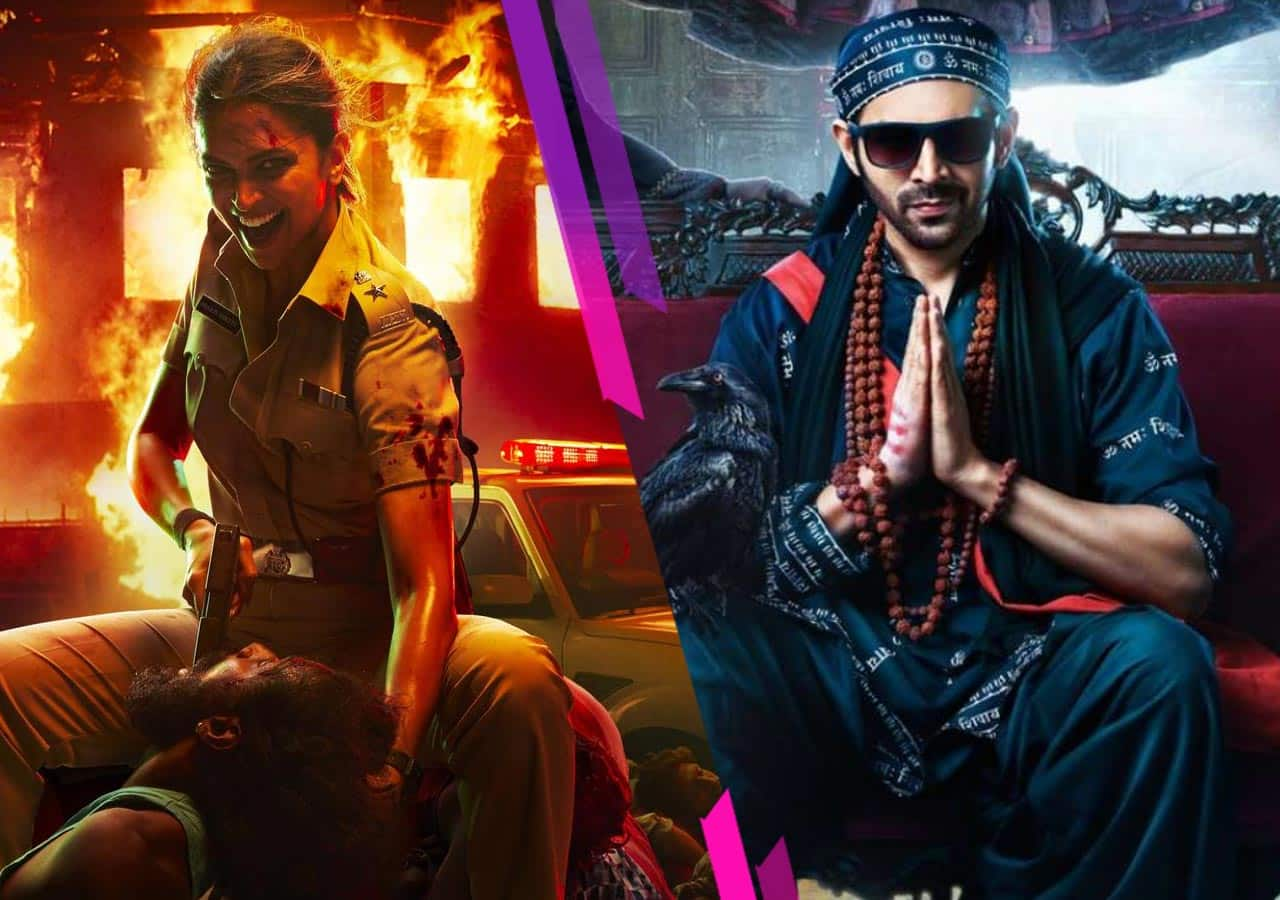
Singham Again vs Bhool Bhulaiyaa 3: Cinema owners feel the heat ahead of big Diwali releases
2:32 PM
Rajesh Naidu (THE ECONOMIC TIMES; October 13, 2024)
Singham Again and Bhool Bhulaiyaa 3 have fired up the Hindi-language film industry ahead of their Diwali release. But even as the response to the trailers of the two mega productions portends fireworks at the box-office, with some estimates suggesting potential collection of around Rs 1,000 crore, cinema owners are facing intense pressure from distributors for more shows and screens for the respective films, said industry executives.
Cinema owners in not just metros but also tier-2 and tier-3 cities across the country find themselves in a bind over the competing big-budget films, they said.
“Single-screen theatre owners are facing a tough dilemma when it comes to allocating shows between these two films,” said Anil Bohra, owner of City Light, a single-screen theatre in Palanpur, Gujarat. He added that the potential for these films to generate strong box-office business could be diminished due to their release on the same day.
Echoing concern, Brijesh Tandon, a film exhibitor from the Delhi and Uttar Pradesh regions, said, “Both films look promising and could be big money-spinners. However, I believe the clash could have been avoided. Releasing them separately would have been better, as business will inevitably get divided with both films competing on the same day.”
According to the 2024 FICCI-EY media and entertainment report, India has a total of 9,742 cinema screens. Trade analysts estimate that 25-26% of these are multiplex screens, while the majority are single screens.
Singham Again is being distributed by PVR Inox Pictures.
PVR Inox is the distribution arm of multiplex firm PVR Inox, which operates 1,747 screens across the country.
Meanwhile, Bhool Bhulaiyaa 3 is being distributed by AA Films, owned by Anil Thadani, one of the most successful pan-India distributors. “Multiplexes with at least five screens can easily allocate sufficient space and showtimes to both films. Distributors of these two films are unlikely to suffer significant losses in multiplexes,” said a person, who did not wish to be identified.
“Single-screen cinema owners, however, will face intense pressure from distributors of both films.”
Independent film distributor and trade analyst Shaaminder Malik said, “Exhibitors cannot afford to upset distributors of both films. If Singham Again has big stars and a big studio attached to it, then one cannot underestimate Anil Thadani, who is distributing Bhool Bhulaiyaa 3. He has a long-established record, brand name and quite a standing in the industry.”
He added that exhibitors are aware that these distributors and studios can distribute and produce around a dozen films a year. Nitin Datar, president of the Cinema Owners and Exhibitors Association of India, said he was optimistic despite the tension between the exhibitors and distributors. “Single-screen owners will certainly feel significant pressure from distributors,” he said. “However, this will likely be a weekend issue. By Monday, November 4, after Diwali, it will be clear which film gets more shows and screens, as the audience’s verdict will be reflected in the box-office collections.”
Trade analysts said the running time of the two films — Singham Again (about three hours) and Bhool Bhulaiya 3 (around two hours and 40 minutes) — would also play a role in how many shows and screens they get. However, expectations from both films are high, they said, as these films don’t face competition from another big-budget production for at least a month.
Is Bollywood in panic mode after the failure of big-budget films?
8:39 AM

Astronomical star fees, lack of promotion or wrong timing of release – industry experts discuss what’s led to the recent box office disasters
Vinay MR Mishra (BOMBAY TIMES; May 8, 2024)
The dismal performance of the two big Eid releases has left the industry stunned once again. Akshay Kumar and Tiger Shroff-led Bade Miyan Chote Miyan (BMCM) and Ajay Devgn’s Maidaan were released on Eid. Maidaan’s budget was approximately Rs. 250 crore, while BMCM was mounted at Rs. 350 crore. So far, Maidaan’s collections stand at Rs. 48.85 crore and BMCM Rs. 64 crore (India nett).
Reportedly, G7, a popular theatre chain in Mumbai, was temporarily shut down for renovation due to poor footfalls. Even the medium-budget movies that were released post-Eid, Do Aur Do Pyaar and Love Sex Aur Dhokha 2, didn’t leave an impact at the box office.
In the first quarter of 2024, the total collection of all Hindi movies released was approximately Rs. 700 crore, with only the Hrithik Roshan-Deepika Padukone-led Fighter (Rs. 212 crore India nett) being the tentpole film that was released between January and March.
Distributor Anil Thadani says, “Everything was correct with BMCM, but we are yet to figure out what went wrong. We don’t know what will work. We are living in an unknown territory.”
According to industry experts, while the film business is largely unpredictable, there are certain measures that can be taken to help the current crisis.
Pump up promotions in the right direction
The industry is witnessing another trend of minimal promotions with the hope of maximum impact. It worked for Shah Rukh Khan during Pathaan and Jawan as the films went on to become huge successes. However, when other films adopted that policy, it didn’t quite work out.
“Publicity is very important for movies. Otherwise, your films won’t run. These days stars don’t do any promotions, they only stick to social media. Back in the days, people would do so many newspaper interviews,” says Manoj Desai, Executive director of G7 (Gaiety-Galaxy) and Maratha Mandir. For Crew, its promotional songs drew the audience’s interest, which other films could not achieve.
Trade analyst Komal Nahta adds, “Actors don’t do interviews, they don’t make appearances, they don’t go to the malls, and they have even stopped promoting their films on television. Many people watch television, and if they don’t see ads, the audience is not even aware that a film is releasing.”
Film exhibitor Akshaye Rathi shares, “More than lack of promotional activities, it’s the direction of the promotional activities that matters. We should not just make the audience aware, but also have them excited and compel them to buy tickets. For that, the vanilla template for marketing and PR that’s being followed needs to be reworked.”
Pick the right release window
“The critics and audiences praised Maidaan for its superior content. Despite its quality production and storyline, Maidaan encountered significant challenges in its marketing efforts. There was minimal ground-level marketing, and the film’s release was postponed multiple times, which is what probably diminished audience’s interest and anticipation. These marketing missteps contributed significantly to its disappointing box office returns,” says Amit Sharma, MD, Miraj Entertainment.
Taran adds, “Maidaan shouldn’t have been an Eid release. People want to watch a masala movie on such occasions and not something serious.”
‘Failure of BMCM and Maidaan has affected the trade badly’
Film trade analyst Komal Nahta explains, “The underperformance of both these films has been a shocker. The budgets were so high that their failure meant a major setback for the industry. Exhibitors are in panic mode.”
Renegotiate stars’ fees
According to a media report, Akshay Kumar charged Rs. 80 crores, while Tiger Shroff commanded a fee of Rs. 40-45 crores for Ali Abbas Zafar’s directorial BMCM. Komal Nahta says, “If the budget is going to be Rs. 350 crores, out of which Rs. 150 or 200 crores are paid to the actors, it is nonsense. People are eventually going to see the content. Yes, stars do add value, but if the content is not up to the mark and the films are costly, they will only take the movie down.”
Akshaye Rathi suggests a better pay model. He explains, “Given the uncertainty that the box office has thrown at all of us, irrespective of who the star is, what the size and scale and production values are, I think purely for the sake of sustainability and survival, stars need to work on a revenue sharing model.”
Taran Adarsh, adds, "The fees of actors and paraphernalia around them should be curtailed. Actors should do revenue sharing in today’s times. Tab maalum hoga how much pull the actor has, aur doodh ka doodh aur paani ka paani hoga."

When I got married, Pooja and Chhaya were the ones who sat in the car and led me to the mandap-Raveena Tandon
8:41 AM

Raveena Tandon with her daughters Pooja, Rasha, Chhaya, her son-inlaw, grandsons Rudra and Jaydon and son Ranbirvardhan (clockwise from left)
Raveena Tandon is known for her effortless acting, comic timing and sizzling moves in songs like ‘Tip tip barsa paani’ and ‘Tu cheez badi...’ But few know this ’90s star was just 21 when she adopted two adolescent girls to give them a better life even though many warned her that no man would want to marry a woman with this ‘baggage’. The 48-year-old National award winner spoke to Neha Bhayana about her ‘brats’, becoming a grandma and much more
Neha Bhayana (THE TIMES OF INDIA; October 22, 2023)
What made you decide to adopt two girls when you were just 21? Did your parents support your decision?
My mom has always been my inspiration. She worked with a lot of NGOs and charities. Through my childhood, I saw her contribute to orphanages in and around Mumbai. I often accompanied her on visits too. I think children absorb a lot of what their parents do and how they are, and that’s why I tell people that they can be the biggest example for their children. I think that’s what my parents were for me. They were my true inspiration. They never said ‘no’ to anyone who needed help. My girls, Pooja and Chhaya, were born in front of me. They were my cousin’s children, and after their mum had passed away, I had a meeting with my cousins. I told them I am willing to become their legal guardian and take over completely as they were not being brought up the way they should be. I used to hear stories of them not being treated well and that broke my heart because I was already working for so many orphanages and charities, and this was a case close to home and I was so helpless. The minute their father gave me permission to become their legal guardian, I immediately got them home. Since that day, they have been my best friends and complete support system. That’s what I keep telling them every day, that now they have to look after me.
Initially, you had kept the adoption a secret to avoid gossip. How did you deal with the situation?
Well, at that time (in 1995) adoption by single parents was not legally allowed so I became my children’s legal guardian. I am very grateful I did this because more than anything else, I feel proud of my achievement when I see my girls. Many people were apprehensive about my decision and had discouraged me when I was planning to take the girls’ responsibility. They said no one would want to marry a woman with this ‘baggage.’ But I always believed that whoever truly loves me will love and respect me for what I have done. If he loves me, he would also love my family, my girls and my dog. We come as a package deal. God has been kind and Anil (Thadani) is the best thing that could have ever happened to me. I remember, when I got married, Pooja and Chhaya were the ones who sat in the car and led me to the mandap. And when I got the chance to walk them down the aisle, it was such a special feeling.
You became a grandmother by your mid-40s. How do you look back at your journey?
When I had taken in my girls, I was 21, and my eldest was 11. We actually just have a 10-year gap between us. They are more like friends but technically, I am a mom-like figure to them and grandmom to their babies. Pooja’s son was born in South Africa. Unfortunately, I couldn’t be there for the delivery. But Chhaya’s son Rudra was born in front of me in the operation theatre. I was filming it, and I cannot tell you what a magical experience it was. I could not exactly see my own delivery with Rasha and Ranbirvardhan but I could capture Rudra’s very first breath.
Do your husband and biological children share a good rapport with Pooja and Chhaya?
Anil has been a father figure in the lives of Pooja and Chhaya. He still advises them on investment and banking matters. They also share a very close bond with my younger children, Rasha and Ranbirvardhan. It was uncanny to see the girls bringing up Rasha-Ranbir (before they got married and moved out) and now their own kids the way I brought them up. When they visit us, we are all one big happy family. It is wonderful to see the three generations — the girls, Rasha-Ranbir and then their two sons — spending time together.
When and how did you explain to Rasha and Ranbirvardhan that their older sisters are adopted?
I told Rasha and Ranbir when they were old enough to understand.
Do you meet Pooja, Chaaya and your grandkids often?
I am constantly in touch with Pooja and Chhaya. We have a WhatsApp group called ‘Brats’ which has all my children. The name is such because all four are my brats. I am so proud of Pooja and Chhaya. They are successful, young women and doing everything on their own. My heart bursts with pride when I think about them.
You took a long break after the birth of Rasha and Ranbir. In 2015, you had said (in an interview) that you are happy being a mom and that you don’t want to make a comeback. What made you return to the sets?
Honestly, when Rasha and Ranbir were born, I took an intentional decision to not take on any work for a while because I really wanted to enjoy my pregnancies, watch my children grow and be there for them every moment, whether it was their first word, the first time they stood up, their first tooth coming out and falling off. Besides, at that point, I was not being offered any interesting films. I was happiest playing the role of mom. I always knew that I would start working again when they grew up and when I got something really good and solid, I would probably say ‘yes’. But I think it was actually Rasha who encouraged me. She said, ‘You know, mom, now you should start taking work regularly and not just depend on our holidays or the time when you get off from us to go back to work.’ Both Anil and I have been hands-on parents and we have enjoyed our family life and our family time, and we enjoy doing that now as well. When I started getting interesting roles, I thought why not surprise my fans.
As a mommy to three girls, what do you feel about the son preference that persists in our country?
I would like all parents to give their daughters an edge over their sons, to make up for all the years that girls have been treated as less than boys by our society.
You one said in an interview that you were born to be a mother. What made you feel that way?
I feel this need to nurture, pamper and take care of someone or something all the time. I think I have had this maternal streak since childhood. So, whether it is my kids or a puppy from the street or an injured bird, I always have my hands full. My husband laughs at me and says that I was born to be a mother. My friends and my kids also tease me about this. My parents, children, family, my pets, and my passion for rescuing stray animals are all very important to me.
Are you a strict or soft mom?
As a mother, it’s my responsibility to guide my kids and tell them how far they can go. There should be rules and guidelines for the kids. Plus, they should know their limits.
What values did you try to teach your children?
I am a hands-on mum and I have tried to pass on the values I learnt from my mother to my kids. In fact, I call myself a student and learn from my kids. In teaching them about everything from good manners to achieving goals and the power of giving, I find myself growing with them. I am the student, not the teacher I had thought myself to be. My children have taught me so much about love, life, and forgiveness.
Rasha is gearing up for her debut film. Does Ranbirvardhan too hope to enter Bollywood?
Rasha has always been into performing arts at school. She has just begun her journey and I am excited to see what’s to unfold. Ranbirvardhan is 16 and in school. He is also a chess player. In 2012, at the age of five, he became the youngest chess player to compete with masterminds at the National Chess Championship in Delhi. If Ranbirvardhan wants to join the film industry, it will be his call. I will not stop him but will just warn him that it is a very challenging field so he will have to prepare for it.
Romantic monsoon songs will never lose their charm-Raveena Tandon
8:25 AM

Tanvi Trivedi (BOMBAY TIMES; July 28, 2023)
The OG Tip Tip girl Raveena Tandon loves Mumbai ki baarish. Dressed in a yellow sari, the actress recreates a moment from her iconic number in Mohra for the Bombay Times lens. Talking about her love for monsoon, she shares that, as a kid, she would go to the terrace of her building with her brother and enjoy the rain in their swimsuits.
‘Monsoon is my favourite season’
Raveena says, “Those days were fun. We used to stay in Juhu facing the beach, and our building terrace would get filled with knee-deep water. My brother and I would dive in wearing our swimsuits. Then, we would go to Juhu Beach, build sandcastles and wait for the rainwater to sweep them away. We played lagori and football at the beach.”
She adds, “I used to study at Jamnabai Narsee School, and when the low-lying area would get flooded, our parents would come and fetch us, and we could go home early. On weekends, we would travel to Mahabaleshwar and Khandala with our parents. Monsoon has always been my favourite season.”
‘My kids love to get drenched in the rain’
Ask Raveena if she continues to romance the rains even now, and she says, “Anil (Thadani, her husband) is not very fond of long drives or going out during the rains. He loves to sit on the home terrace and enjoy a cup of hot coffee or tea.”
Now, even the actress enjoys spending time at home during the rain. “My home is very green. I have chiku, coconut and mango trees in my home, which look beautiful in this season. My kids love to step out and get drenched in the rain. We also do rainwater harvesting at our home,” she shares.
‘I had a fever when I shot for Tip Tip Barsa Paani’
Remind her about the iconic song Tip Tip Barsa Paani track from the film Mohra (1994), and Raveena recalls how she shot the song in chilled water on the sets. “I remember shooting for that song wearing a yellow saree and, on the sets, they used chilled tanker water. I had a fever and had shot for the song despite that. At that time, it was all about how work came first. Also, I was always sure that I would never wear transparent or translucent clothes in my films. And romance in films, I feel, is always about expression than anything else.”
Sharing how monsoon songs will never lose their connect with masses, she said, "We make different kinds of films now, but, romantic monsoon songs in films are eternal and will never lose their charm.”
The actress adds, "When it rains, I run away to my farm or a village or go for a trek. Recently, I had gone to Tadoba and the forest looked stunning. The forests and the forts in Maharashtra look stunning in this weather."

My husband often teases me saying, ‘If you get another pet, then it’s either me or them’-Raveena Tandon
8:08 AM

The actress talks about the need to rescue abandoned animals, give them a home and also shares stories of her own pets
Tanvi Trivedi (BOMBAY TIMES; April 11, 2023)
There are pet lovers everywhere around us, but in the past few years, rescue and adoption of native pets from the streets and animal shelters has seen a rise, as people have grown to understand how important it is to give these animals a loving family and a home. Raveena Tandon, who is an environmental activist and a fervent supporter of animal rights, has led this trend by rescuing many animals and providing them shelter either at her home or her farmhouse. On Pet Day today, the actress shares with us her personal stories of rescuing animals and how she’s been an ardent animal lover since childhood.

‘MY RESCUED CAT, PUMA IS NOW FOUR YEARS OLD’
Recalling the time when she brought home a little kitten for the first time, the actress says, “I remember I was just three or four years old and had rescued a kitten and brought her home.”
Raveena says, “Now after 30-40 years, I rescued a kitten (four years ago) who was crossing the road and was almost going to die under the wheels of a vehicle. I brought her home and named her Puma. She is now four-years-old.”
‘EVERYONE LOOKS AFTER PEDIGREE PETS, BUT IT IS IMPORTANT TO GIVE A HOME TO INDIES’
The actress, who was recently awarded the Padma Shri, stresses on the need to adopt pets over shopping or going to a breeder for one. Currently, she has adopted and rescued four dogs and three cats. Out of these rescued pets, a dog named Cuddle and a cat named Puma live with the actress in her home in Mumbai along with her other pets, while the rest live on her farm. She also has three Mini Pomeranians and a Husky. Earlier, the actress had another pet, Chotu, a visually impaired rescued Indie dog, who passed away in March 2021.
“Looking after the welfare of animals and having pets are two different things. It is important to understand that adopting an Indie is far more important than specialty breeds multiplying and all of us buying them. Everyone looks after pedigree pets, but it is important to give a home to these Indies who need protection and shelter. At my farm, one of the rescued dogs, Lilie, is a tripod, (she has three legs) and it is lovely playing with her,” she says.
‘WE ADOPTED 15 PUPS WHILE SHOOTING IN HIMACHAL PRADESH’
Raveena looks out for abandoned pets everywhere – whether it is the bylanes of Mumbai, or faraway shooting locations. She picked up a pup from a drain in Himachal Pradesh while shooting for the web series Aranyak.
She shares, “We adopted 15 pups when we were shooting in Kullu Manali and Dalhousie, and a few were adopted by my colleagues from the team. Being passionate about animal welfare is one thing, but you need to be compassionate to rescue animals and give them a loving home.”

‘STERILISING OF ANIMALS ON THE STREET IS THE NEED OF THE HOUR’
Stressing on the need to sterilize animals, the actress adds, “People feel that it is good karma to feed Indies on the road, but I feel that money should be used to sterilize them. It is the need of the hour. There is a woman in our society, who starts fighting when the BMC (Brihanmumbai Municipal Corporation) comes to sterilize these dogs on the road, but people don’t understand that these animals multiply and then they are ill-treated by people or they meet with accidents on the road.”
‘PETS ARE THE BEST COMPANIONS, IN MANY WAYS, BETTER THAN HUMANS’
The actress reveals how over the years her love for animals has only grown. “I can’t wait to get home to my pets or spend a weekend on my farm with them. I agree it is not easy to have so many pets. My husband (producer, Anil Thadani) often teases me saying, ‘If you get another one, then it’s either me or them,’ but my children and my mother enjoy spending time with them. Everyone knows how your pets are the best companions and, in many ways, better than humans. There is no comparison!”
RAVEENA’S PETS
In the past few years, the actress has rescued a baby bat, who had fallen on her home terrace, three owls, who literally flew into her home, and a monkey.

Raveena shared this throwback picture as a toddler when she had rescued a kitten. Cut to four years ago, she rescued Puma, who now lives with her
Ram Gopal Varma told me, ‘I can only picture you dancing to Ankhiyon Se Goli Maare’-Raveena Tandon
8:15 AM

As she is honoured with Padma Shri for her 32-year contribution to arts, Raveena recounts how she challenged glam-doll stereotype to front hard-hitting films
Upala KBR (MID-DAY; January 30, 2023)
When Raveena Tandon heard that she had been conferred the Padma Shri, the fourth-highest civilian award given by the Indian government, her first reaction was not joy. Instead, she double-checked whether the news was true. “After the news sank in, I missed my dad [producer Ravi Tandon]. I felt that he was my guiding angel all through last year, as I won [multiple] awards. I felt overwhelmed and got teary-eyed after I heard I got the Padma Shri,” she begins.
The mood is naturally joyous at home. The actor says that husband Anil Thadani and son Ranbir Vardhan are one-upping each other in their bid to attend the ceremony with her in Delhi. She laughs, “Both are getting their suits ready, and telling one another that the other is not going with me.”
For the actor, the recognition comes after a 32-year run in the industry. While her filmography today boasts movies from mainstream and independent cinema, Tandon admits that at the time, it wasn’t easy to shed her glamorous image and bag author-backed roles in Shool (1999), Daman (2001), and Satta (2003).
“It was a conscious decision to step into arthouse cinema while doing commercial films with song-and-dance. [At the time], I felt stagnated and wondered how long I could keep doing these glamorous roles wearing stylish outfits. I had to push the boundaries of acting. Initially, it was tough to go beyond my glamorous image. I had to convince directors to cast me. When I wanted to do Shool, director E Niwas wanted to cast me, but producer Ram Gopal Varma wasn’t convinced. He told me, ‘I can only picture you dancing to Ankhiyon Se Goli Maare.’ [Eventually], when I was doing a poster shoot for Shool, Ramu walked past me. [I had transformed for the role] and he couldn’t recognize me.”
Movies aside, Tandon has become the first delegate from the entertainment industry to participate in W20 India, the arm of G20 that focuses on gender equality and women’s economic empowerment. Representing 675 million Indian women is an honour, says the National Award-winning actor.
“Having this summit is a fantastic opportunity to empower women and provide them with more rights for their social and economic participation. We want to bring to the fore the achievements of women delegates, and the issues that have been plaguing them in professional and social sectors.”
There needs to a political will to save this planet-Raveena Tandon
8:37 AM

The actor and environmentalist emphasises on the importance of recycling and making organic products an integral part of our lifestyle
Titas Chowdhury (HINDUSTAN TIMES; June 5, 2021)
“I’m currently in my gaaon ka ghar which is situated in the interiors of Maharashtra,” says Raveena Tandon. Away from the concrete jungle, she is spending her time cycling around her rural neighbourhood, enjoying the fresh air and engaging in plastic clean-up drives. She believes that it’s her responsibility to educate the village locals about the perils of plastic.
“Slowly and steadily, we need to make people aware about the destructive nature of plastic and the trouble it is causing to our environment and oceans. We’ve reached a dangerous place and we need to conserve whatever little is left of the nature,” she says.
Tandon shares that the past few years saw her shifting to a more eco-friendly way of living: “Both here and in Mumbai, we’ve shifted to solar power. We’ve also created separate tanks for rain water harvesting. We use that water to water plants. Anil (Thadani; husband) and I carpool most of the times. If we have to go in and around the vicinity, we use the same car. And this Environment Day, I’ve ordered about a thousand plants and I’ll be doing a drive in and around my gaaon ka ghar. ”
Stressing on the importance of recycling and the need to opt for organic food items, the Shab (2017) actor says, “I try and recycle almost about everything, right from old chairs to newspapers. In our home in Mumbai, we’ve gone as organic as possible. From vegetables and fruits to shampoos, soaps and linen, my entire family has begun using organic products.”
Tandon rues the lack of political will which is stopping environmental conservation from being a part of the mainstream discourse. “There is a need for development but it has to go hand in hand with conservation. Wherever there is a forest area and wildlife, we need to leave that place alone. We need to convert barren lands into green lands and then make commercial areas around that place. There needs to a political will to save this planet. One must also teach our future generations to protect the planet from the harm that we have already done,” she ends.
As you grow older, you get more comfortable in your own skin-Raveena Tandon
7:56 AM

Tanvi Trivedi (BOMBAY TIMES; October 29, 2020)
Popularly known as the Shehar Ki Ladki of the 90s, Raveena Tandon, who turned a year older recently, celebrated her birthday with some colleagues in Dalhousie. The actress is currently shooting for a project in the hill station. In a chat with BT, she talks about her quiet birthday celebration, making movies in the new normal and how swiftly cinema and content are adapting to the times. Read on:
Hollywood actress Susan Sarandon said, “I look forward to being older, when what you look like becomes less and less an issue and what you are is the point.” Do you identify with the thought?
I have never worried about the way I look. I believe in keeping myself mentally strong, physically fit and constantly being on the move. I have always felt confident and it’s rightly said that as you grow older, you become more comfortable in your own skin. You don’t care about what anyone is going to think about what you’re wearing or how you are looking. This year has been a tough one for everyone, so obviously, my birthday was different, too. I was away from my family, but work is my passion and I am happy I spent my birthday shooting in Dalhousie.
How have you adapted to the new normal, personally and professionally?
While one needs to be cautious, I was never reluctant to step out for work in the current situation. I was waiting to get back on the set and shoot. It is a little risky, but when precautions are taken, you feel safe. Eventually, we do have to accept the new normal. One has to learn to adapt, accept and push oneself to move ahead.
As an actress, who has had a career spanning 29 years, do you feel there are more avenues and author-backed roles for senior actors now?
Our film industry has become more progressive and stronger in comparison to the past. We are all getting a lot more experimental now, especially with the introduction of other alternative platforms. I think cinema has broadened its horizon. There was a taboo around 15 years ago that a married actress would not get meaty roles. It’s passé now because if you’re talented and a valued actor then you get good roles.
Over the past few years, Bollywood had gradually veered towards more content-rich films. Post the pandemic, do you feel that the focus will be even more on cinema that’s high on content?
One can’t help but agree that nothing works better than formula films. Yes, content is definitely the king and our audience is really smart today, considering they can sense what a film is all about by watching the trailer. However, at the same time, they do want to watch movies that entertain them. I don’t see formula films becoming fewer, because at the end of the day it is all about entertainment. Meanwhile, experimental content has been viewed a lot during lockdown months. It’s definitely going to be a great time for cinema in the future.
On the personal front, what do you and your husband Anil Thadani enjoy doing together? What are your common pursuits?
This year, we haven’t travelled at all. Otherwise, Anil and I love travelling and discovering new places. Our travel revolves around wildlife and history. I love a place for its rich culture, heritage and history. I’m a wildlife buff, so I enjoy wildlife photography. Recently, I had an exhibition of my pictures, the proceeds from which were given to a forest. We also enjoy beaches and exotic places when we holiday together.
Abusing the planet has made it hard for us to step out-Raveena Tandon
8:23 AM

Rishabh Suri (HINDUSTAN TIMES; March 27, 2020)
Being a celebrity, there’s always the onus on one to set an example for others. And even though the lockdown across India took place only recently to curb the spread of Coronavirus, Raveena Tandon says she has always been practising a hygiene routine.
She took to Instagram to show how when she was travelling by train before Holi this month, she made sure to disinfect her cabin herself. “This whole thing about not shaking hands has come about now. I’ve been practising it since a long time now. In fact, my husband (Anil Thadani, distributor) used to make fun of me. I would never shake hands with people because sometimes, some have clammy hands. We are celebs, so a lot of people want to, but you don’t know where it has been. I have been doing Namaste for seven-eight years now, especially since my children were born. Anyone coming from outside and wanting to hold them would have to use a sanitiser first,” says Tandon, adding how “we have abused this planet so much, that we can’t even step out of our homes. Also, so many maids and drivers, have lost their jobs. I’ve been requesting people to not lay them off as they depend on their salaries.”
The 45-year-old specially adds that misinformation being spread about linking the Covid-19 disease to pet animals was wrong, as some people began to abandon them. “I put up an Instagram post too about animals not being responsible for Covid-19,” says Tandon.
Apart from this, the actor’s professional and travel commitments too have got impacted because of the situation. “I was supposed to be shooting in mid-April, but it has been pushed, and rightfully so. Everything should be. Luckily, we finished KGF 2’s schedule in February. I was supposed to go skiing in March to Verbier, Switzerland, and it got cancelled. We used to go every year. And one thing about hospitality in India. I have friends in the hotel industry, most of them in India have refunded most of their clients! But when Switzerland shut down, they didn’t refund. The only thing we were refunded for was cancellation as our flights were via Italy. Indians think by the heart,” she says.
As a mother, Tandon believes that this extended holiday period for her kids - Ranbir and Rasha should be fruitful. “We have got great stuff planned, like movie evenings, I am showing them all the Hindi classics. Apart from books such as Anne Frank. I am also making them watch documentaries on varied things. Otherwise, it’s always school, homework and repeat,” she signs off.
Mumbai theatres hike fares by an average 20 per cent for Bharat
9:03 AM

Despite the suggestion of Salman Khan keeping Bharat ticket rates to the minimum, city theatres hike fares by an average 20 per cent
Sonil Dedhia (MID-DAY; June 3, 2019)
A recent report suggesting that Salman Khan had refrained from hiking the ticket price of his Eid release, Bharat, seemed to be much in sync with the actor's traditional practice of sweeping in at eleventh hour with a welcome announcement. But, a lot seems to have been lost in translation, with ticket prices across the city indicating that the drama will be priced at a higher rate than usual.
At odds with rumours that the minimal fare was touted to be bhai's eidi to his followers, prices at select cinema houses seem to have been hiked by an average 20 per cent. Mahim's Citylight cinema, which sold tickets of recent releases De De Pyaar De and India's Most Wanted at Rs 200, has set the Ali Abbas Zafar-directed venture at a rate of Rs 250. At Lower Parel's PVR Luxe, theatre owners are drawing Rs 1,800 per ticket. Prices at Juhu and Wadala theatres too sit at an increased fare.
Trade expert Amod Mehra suggests that the limited hype surrounding the film has edged producers to up the per-ticket fare. "Bharat will see a five-day opening weekend. The producers want to take advantage of it, especially because the buzz isn't strong. Also, an aim to break previous box-office records is always a reason to increase prices," he says. As cinephiles wriggle their way into the festive week today, Mehra admits that advance bookings for the film don't look promising, just yet. "I hope it picks up over the next two days. With big-ticket films not performing well enough, the audience has grown cautious."
At odds with Mehra's stance, trade expert Amul Mohan isn't bothered by the rates. He says that as far as a film's release goes, the actor's word isn't binding. "The distributors and exhibitors are actually aware of the pricing." Producer Atul Agnihotri says he wasn't aware of the development. "I can only get clarity after speaking to [distributor] Anil Thadani."
Thadani, on his part, reiterates that upping prices during festive periods is a regular practice.
Bollywood producers gearing up to join forces with Ronnie Screwvala?
8:40 AM

Rachana Dubey (BOMBAY TIMES; March 28, 2019)
 If murmurs in the Bollywood power blocs are anything to go by, heads of top studios, production companies and distributors are expected to hold a closed-door meeting today at the Indian Motion Pictures Producers’ Association (IMPPA) office. While it’s said that there are several issues on their agenda, one of the key reasons is Ronnie Screwvala’s battle against multiplex giants and the Multiplex Association of India.
Two weeks ago, Ronnie filed a complaint that highlights five grey areas in the film distribution and exhibition business, before the Competition Commission of India (CCI). While the petition rued the payment of Virtual Print Fee (VPF) to multiplex chains, it also highlighted the fact that the audience is forced to watch excessive amount of ads between films. Another point put forth by Ronnie was that foreign studios are exempted from the payment of VPF, which gives them an edge over domestic films.
 Over the last 48 hours, Ronnie has been getting support from other filmmakers like Hansal Mehta, Dinesh Vijan, Ramesh Taurani and Anand Pandit, along with several independent voices on social media applauding his effort. Now, BT has it that various heads of filmmaking companies like Disney/Fox Star, Viacom 18, JIO Studios, T-Series, Zee Studios and Dharma Productions, distributor Anil Thadani, producer Siddharth Roy Kapur (President of the Producers Guild Of India) and producer Mukesh Bhatt (a longtime office-bearer at the Guild) are expected to meet to discuss ways of joining Ronnie’s existing complaint with CCI. Buzz is that some of them want to be appended as a party to the complaint.
We didn’t get a response from Mukesh and Sidharth till we went to press.
Baahubali 2 promo to be out with Shah Rukh Khan's Raees?
8:18 AM

Nayandeep Rakshit (DNA; January 6, 2017)
Baahubali 2 is all set for a grand release on April 28, 2017. With four months left to go, the makers haven’t unveiled anything except two motion posters and a VR video from the sets.
But that is set to change. A source from the trade reveals, “The Baahubali 2 teaser will be launched around January 23-24. It will be attached to the prints of Shah Rukh Khan’s Raees, which releases worldwide on January 25.”
This sounds logical because both Raees and Baahubali 2 have one thing in common. The trade source adds, “Anil Thadani is distributing both the films. He has even got into a barter deal with most single screens where he’s decided to sell Baahubali 2 to those screens only if they take up Raees as well. That is helping the SRk-starrer action flick also, given that it’s clashing with Hrithik Roshan’s Kaabil. So Baahubali 2 teaser coming out with Shah Rukh’s Raees is a well-planned idea.”
Hollywood sequels score over Bollywood sequels in 2016
8:13 AM

Rachana Dubey (BOMBAY TIMES; December 12, 2016)
For both Bollywood and
Hollywood, 2016 has been a year of sequels and franchises. While
Hollywood had over a dozen franchise sequels releasing in India this
year, Bollywood, too, had its share of notable ones. Jason Bourne, The
Conjuring 2, Kung Fu Panda 3, London Has Fallen, Finding Dory, Inferno,
X-Men: Apocalypse, Captain America: Civil War and Underworld: Blood Wars
are just some of the titles from the West.
Kyaa Kool Hain Hum 3, Ghayal Once Again, Tere Bin Laden: Dead or Alive, 1920 London, Jai GangaaJal, Housefull 3, Great Grand Masti, Raaz: Reboot, Rock On 2, Tum Bin 2, Force 2 and Kahaani 2 represented the desi stable. The trade report card suggests that Hollywood sequels franchise movies have outdone the fare from Bollywood. While only Housefull 3 became a hit like the previous outings in the series, Jai GangaaJal and Kyaa Kool Hain Hum 3 recovered the production cost, but didn't set the cash registers ringing exactly. GangaaJal, spearheaded by Ajay Devgn in the lead role, back in the day was critically and commercially acclaimed. Also, the previous films in the Kyaa Kool Hain Hum series were notches higher in terms of comic value and audience footfall.

Raaz: Reboot and Rock On 2 remained on the other extreme, failing to draw the audiences. Though trade circuit indicates there wasn't enough pre-release buzz about Rock On 2, demonetization seemed to only add to their woes. Force 2, which came a week later, managed to register decent numbers during the cash crunch phase. Of this year's Bollywood sequels, Great Grand Masti suffered the biggest jolt, with the censor copy leaking few days before its theatrical release. As for their off-shore competitors, films like The Conjuring 2, X-Men Apocalypse and Captain America: Civil War had an impressive run at the box office here.
Independent distributor Amod Mehra insists that the reason Indian sequels and franchise movies haven't really kicked a storm is the lack of a great story to take the baton ahead. “We're only learning half the lesson from the West. They make a sequel or continue a franchise only when they have something worth telling. But we seem to be making them irrespective of whether we have a great story or a solid reason to do what we're doing. The reason why films like Rock On 2 and Tum Bin 2 didn't impress is that they lacked a strong story. The audience also feels cheated because our producers here often confuse a sequel with a franchise,“ he rues.
The trend of sequels-franchises in Bollywood, in recent memory, began with Sridevi's Naagin and Nigahein. The latter tanked. Cut to the beginning of the new millennium; Raaz and Raaz 2 opened the floodgate for Bollywood producers all over again. The films, in their genre, brought in a lot of promise. The first three films in the franchise hit the bullseye at the box office too.
 From the way it appears,
Bollywood can't quite give up its fascination with sequels and
franchises. In 2017, the industry has an impressive list like Baaghi 2,
Judwaa 2, Jolly LLB 2, Commando 2, Sarkar 3, Baahubali 2, Hate Story 4,
Aankhen 2, 2.0 (sequel to Robot) and Golmaal Again lined up. Hollywood
will throw in titles like XXX: The Return Of Xander Cage, Resident Evil:
Final Chapter, Fast And Furious 8, Pirates Of The Caribbean: Dead Men
Tell No Tales, Spider-Man: Homecoming and Smurfs: The Lost Village.
The competition will only get stiffer.
Distributor Anil Thadani believes that a good film, timed well, will work wonders at the box office. For instance, Rock On 2, he says, did take a beating also because of the demonetization drive. “Most sequels have worked. At least, they have recovered costs. Whether a sequel or a franchise works or not depends on the film itself. For the last month alone, I'd give the Hindi releases a benefit of doubt. But Hollywood content in general has been great on quality. And the results are visible in their box office numbers. The films, when dubbed in regional languages, have an even bigger audience base. Its budget, production quality, scale and the overall output are much better than our films,“ he says.
 Vivek Krishnani, who heads
the Hollywood studio in India that helmed The Angry Birds Movie,
believes that a sequel or a franchise works when it offers a fresh story
or a point of view with familiar characters, a technique that Hollywood
has more or less mastered. “Some Hollywood sequels work in India
because they are visually appealing. Indian actors dub parts of these
films, which makes them even more attractive. In the past, Indian films
like Tanu Weds Manu Returns and the Dhoom franchise worked because they
had familiar characters in a different, challenging environment. A
sequel's success depends on how the story is being taken forward and
whether it is more entertaining than the prequel. This logic applies to
films all over the world.“
Having said that, what cannot be missed is that like Bollywood, even Hollywood sequels haven't had a 100 per cent track record. Independence Day: Resurgence and Jack Reacher: Never Go Back, for instance, were box office downers. Producer Vipul Amrutlal Shah believes that though the trend of making sequels and franchises is catching on in India, it is going through its initial teething issues. “We scaled up Force 2 and it worked despite the demonetization drive. Maybe we need to get our sequels on floors sooner and also up the quality of the content with each film in the franchise,“ he avers.
Sunil Bansal, a distributor from Rajasthan, points out that Hollywood franchises or sequels largely work because they find takers among young Indians, who are huge in number. Year after year, the anticipation for Hollywood sequels and franchises has only swollen in India. Franchises like Paranormal Activity, Hangover and Austin Powers among others have a huge fan following and people earmark their release dates. Irrespective of how they fare abroad, these films have a loyal fan following in the country. “I've generally seen youngsters thronging cinemas when a big Hollywood franchise releases. The overall quality of our films has also dipped. We need to first work on that and then work on sequels and franchises. In the current year, Hollywood has only done 20 per cent better than us. The number could have been higher had the demonetisation drive not affected cinema-goers. We must also not forget that they have some exceptionally big franchises and sequels lined up for next year.We need to pull up our socks,“ he sums up.
Kyaa Kool Hain Hum 3, Ghayal Once Again, Tere Bin Laden: Dead or Alive, 1920 London, Jai GangaaJal, Housefull 3, Great Grand Masti, Raaz: Reboot, Rock On 2, Tum Bin 2, Force 2 and Kahaani 2 represented the desi stable. The trade report card suggests that Hollywood sequels franchise movies have outdone the fare from Bollywood. While only Housefull 3 became a hit like the previous outings in the series, Jai GangaaJal and Kyaa Kool Hain Hum 3 recovered the production cost, but didn't set the cash registers ringing exactly. GangaaJal, spearheaded by Ajay Devgn in the lead role, back in the day was critically and commercially acclaimed. Also, the previous films in the Kyaa Kool Hain Hum series were notches higher in terms of comic value and audience footfall.
Raaz: Reboot and Rock On 2 remained on the other extreme, failing to draw the audiences. Though trade circuit indicates there wasn't enough pre-release buzz about Rock On 2, demonetization seemed to only add to their woes. Force 2, which came a week later, managed to register decent numbers during the cash crunch phase. Of this year's Bollywood sequels, Great Grand Masti suffered the biggest jolt, with the censor copy leaking few days before its theatrical release. As for their off-shore competitors, films like The Conjuring 2, X-Men Apocalypse and Captain America: Civil War had an impressive run at the box office here.
Independent distributor Amod Mehra insists that the reason Indian sequels and franchise movies haven't really kicked a storm is the lack of a great story to take the baton ahead. “We're only learning half the lesson from the West. They make a sequel or continue a franchise only when they have something worth telling. But we seem to be making them irrespective of whether we have a great story or a solid reason to do what we're doing. The reason why films like Rock On 2 and Tum Bin 2 didn't impress is that they lacked a strong story. The audience also feels cheated because our producers here often confuse a sequel with a franchise,“ he rues.
The trend of sequels-franchises in Bollywood, in recent memory, began with Sridevi's Naagin and Nigahein. The latter tanked. Cut to the beginning of the new millennium; Raaz and Raaz 2 opened the floodgate for Bollywood producers all over again. The films, in their genre, brought in a lot of promise. The first three films in the franchise hit the bullseye at the box office too.
From the way it appears,
Bollywood can't quite give up its fascination with sequels and
franchises. In 2017, the industry has an impressive list like Baaghi 2,
Judwaa 2, Jolly LLB 2, Commando 2, Sarkar 3, Baahubali 2, Hate Story 4,
Aankhen 2, 2.0 (sequel to Robot) and Golmaal Again lined up. Hollywood
will throw in titles like XXX: The Return Of Xander Cage, Resident Evil:
Final Chapter, Fast And Furious 8, Pirates Of The Caribbean: Dead Men
Tell No Tales, Spider-Man: Homecoming and Smurfs: The Lost Village.
The competition will only get stiffer.Distributor Anil Thadani believes that a good film, timed well, will work wonders at the box office. For instance, Rock On 2, he says, did take a beating also because of the demonetization drive. “Most sequels have worked. At least, they have recovered costs. Whether a sequel or a franchise works or not depends on the film itself. For the last month alone, I'd give the Hindi releases a benefit of doubt. But Hollywood content in general has been great on quality. And the results are visible in their box office numbers. The films, when dubbed in regional languages, have an even bigger audience base. Its budget, production quality, scale and the overall output are much better than our films,“ he says.
Vivek Krishnani, who heads
the Hollywood studio in India that helmed The Angry Birds Movie,
believes that a sequel or a franchise works when it offers a fresh story
or a point of view with familiar characters, a technique that Hollywood
has more or less mastered. “Some Hollywood sequels work in India
because they are visually appealing. Indian actors dub parts of these
films, which makes them even more attractive. In the past, Indian films
like Tanu Weds Manu Returns and the Dhoom franchise worked because they
had familiar characters in a different, challenging environment. A
sequel's success depends on how the story is being taken forward and
whether it is more entertaining than the prequel. This logic applies to
films all over the world.“Having said that, what cannot be missed is that like Bollywood, even Hollywood sequels haven't had a 100 per cent track record. Independence Day: Resurgence and Jack Reacher: Never Go Back, for instance, were box office downers. Producer Vipul Amrutlal Shah believes that though the trend of making sequels and franchises is catching on in India, it is going through its initial teething issues. “We scaled up Force 2 and it worked despite the demonetization drive. Maybe we need to get our sequels on floors sooner and also up the quality of the content with each film in the franchise,“ he avers.
Sunil Bansal, a distributor from Rajasthan, points out that Hollywood franchises or sequels largely work because they find takers among young Indians, who are huge in number. Year after year, the anticipation for Hollywood sequels and franchises has only swollen in India. Franchises like Paranormal Activity, Hangover and Austin Powers among others have a huge fan following and people earmark their release dates. Irrespective of how they fare abroad, these films have a loyal fan following in the country. “I've generally seen youngsters thronging cinemas when a big Hollywood franchise releases. The overall quality of our films has also dipped. We need to first work on that and then work on sequels and franchises. In the current year, Hollywood has only done 20 per cent better than us. The number could have been higher had the demonetisation drive not affected cinema-goers. We must also not forget that they have some exceptionally big franchises and sequels lined up for next year.We need to pull up our socks,“ he sums up.

Aamir Khan, Karan Johar, Siddharth Roy Kapur, Ronnie Screwvala to come together to make films?
8:15 AM

DNA (September 23, 2016)
Some of the topmost producers in B-Town are planning
to come under a joint umbrella to produce, direct, market, promote and
distribute their films. Buzz is that Aamir Khan, Karan Johar, Siddharth
Roy Kapur, Ronnie Screwwala, Anil Thadani are coming under one company
for film, distribution, marketing, production, digital, movie theatres
and producing television content.
Says a source, “It’s all very hush-hush till now and everything is in the planning and conceptualizing stages. The five have been regularly meeting at each other’s home to discuss the project. It will be one production house (of the five) under one banner — and will cover everything from pre and post production work, direction and launching of projects to marketing, publicity, promotion and distribution. The plan is to also produce quality television content.”
According to the source, “These five heads of business are some of the finest creative and business minds in the film industry and each brings his own unique expertise in his field to the table — Karan for direction, Aamir for his marketing skills and star power, Siddharth and Ronnie are good with the business side, while Anil is unmatched in distribution. They even plan to have their own theatrical chains across the country.”
The source adds that all the talks are being conducted with the utmost secrecy because Ronnie is under contract to UTV not to do anything with entertainment for the next five years. “They plan to make the announcement around December 2016- January 2017. An IPO will also happen with the announcements of Shhuddhi and Shiddat where they are expected to raise money to fund their ventures. Till they are ready, there will be a spate of denials coming from everybody.”
Karan Johar helps Shah Rukh Khan's film Raees get best deal?
11:41 AM

Upala KBR (DNA; September 11, 2016)
Karan Johar and Shah Rukh Khan are always there for each other in personal and professional matters. Recently, KJo played a part in procuring the best deal for the distribution of SRK’s Raees. Says a source, “Karan’s production company had not just presented Baahubali, but even bought the Hindi rights for the film. When SRK, Riteish and Farhan locked Anil Thadani as the distributor for Raees, Karan told Shah Rukh how to get the best deal from single-screen owners. Anil owns the distribution rights of Baahubali 2 and Mirzya so he made the single-theatre owners sign a three-film deal that he would give them these films only if they gave him maximum screens for Raees too. Now, for exhibitors, Baahubali 2 is one of the hottest releases of 2017 so they had no choice but to agree.”
But one producer who will suffer because of this is Rakesh Roshan, whose Kaabil starring Hrithik Roshan releases on the same day. The source adds, “The film will suffer badly if it doesn’t have any single-screen theatres in Mumbai. Ironically, in Hrithik’s Mohenjo Daro vs Akshay Kumar’s Rustom clash, Roshan Jr had the upper hand as UTV had ensured maximum single-screen theatres during that time.” But that didn’t help the film. And Rustom made more money despite lesser theatres. Content rules.
Aamir Khan, Karan Johar, Siddharth Roy Kapur come together to break ‘multiplex monopoly’?
8:04 AM

Subhash K Jha (DNA; February 6, 2016)
This is going to be the greatest merger-saga of Bollywood in recent times. Producer-director and owner of Dharma Productions Karan Johar is all set to join hands with Aamir Khan, Ronnie Screwvala (former founder of UTV) , leading Mumbai distributor Anil Thadani and Siddharth Roy Kapur of UTV-Disney Films to combat what is secretly being referred to as the “multiplex monopoly”.
An insider reveals, “The idea behind the conglomerate being formed by these five seasoned entrepreneurs is to combat the monopolistic stronghold of the big multiplexes that virtually lay down ground rules about the terms and conditions for the release of films. The merger will endeavour to break the multiplex monopoly, bring the smaller multiplex chains into the picture, construct new theatres, create a financially feasible alternate outlet chain to the big multiplex chains.”
The quintet has already worked out all the nitty-gritty of the partnership. A formal announcement will be made at “an appropriate time”.
Ek Villain distributor to file police complaint after single screens reported false collections
8:40 AM

Vickey Lalwani (MUMBAI MIRROR; July 4, 2014)
Single screens in
Maharashtra outside Mumbai have been manipulating collections of Ek
Villain, showing only 20 per cent of the real figure, claims the film's
distributor Anil Thadani. When some theatres in UP and Bihar also
started to report low numbers, the distributor decided to investigate
the matter. He swung into action and caught the offenders red-handed.

When contacted, Thadani said: “We were not convinced about the collection figures reported from some of the centres outside the city. The film is done well across India, yet from certain some pockets, the box-office returns were far less than what we expected. So I sent my men to the theatres to check and my suspicion proved right."
Mirror also has it that the producer of Ek Villain, Ekta Kapoor, pulled the film out from these theatres on Thursday morning. While Ekta endorsed the story, Tanuj Garg (CEO of Balaji Motion Pictures) told Mirror, “We stand by the decision taken by our distributor. If someone is misreporting collections, there is no reason for us to continue screening our film in that theatre."
Talking about the racket, leading distributor Hemant Shah said: “Frankly, I am not surprised. This practice is rampant in single screens. Multiplexes cannot indulge in any hanky-panky because the computerised booking system records the number of tickets sold."
“Thadani's team may soon file a police complaint in this regard," said a source close to the film.
Subscribe to:
Posts (Atom)