Showing posts with label Amit Kumar. Show all posts
Showing posts with label Amit Kumar. Show all posts
You can’t recreate Kishore Kumar, only celebrate him, say Amit Kumar and Sumeet Kumar
2:41 PM

Debarati S Sen (BOMBAY TIMES; August 4, 2026)
As music lovers celebrate Kishore Kumar’s 97th birth anniversary today, his sons Amit Kumar and Sumeet Kumar reflect on the singer’s enduring legacy after recently paying tribute to him through a special charity concert for cancer patients. In a conversation with Bombay Times, the two speak about the timeless appeal of Kishore Kumar’s songs, and why staying true to his individuality matters more than trying to imitate him. Excerpts...
Your father continues to inspire generations of singers and music lovers’ decades after his passing. What do you think is the secret behind Kishore Kumar's timeless appeal, especially among today's younger audiences?
Amit Kumar: I believe the timeless appeal of my father, Kishore Kumar, lies in the honesty and emotional depth with which he approached his music. He never restricted himself to a particular style or generation. Whether it was romance, joy, heartbreak, or humour, he sang every emotion with remarkable authenticity. His voice had a unique ability to connect directly with the listener's heart. I think today's younger generation continues to relate to his songs because emotions are universal and timeless. His music remains as fresh and relevant today as it was decades ago.
You've spent your life both as Kishore Kumar's son and as an accomplished singer in your own right. When you perform his songs at tribute concerts like this, do you approach them as a son reliving memories or as an artist interpreting a musical classic?
Amit Kumar: It is always a deeply emotional experience for me. I approach his songs both as a son carrying precious memories of my father and as a singer who has immense respect for the artist he was. Every time I sing his songs, I feel a sense of nostalgia, but at the same time, I understand the responsibility of presenting them with sincerity and respect. I do not try to imitate him; instead, I try to preserve the spirit and emotion of his music while allowing my own voice and interpretation to come through. For me, performing his songs is a beautiful way of keeping his memory and musical legacy alive.
Audiences often remember Kishore Kumar for his playful personality and effortless singing. What is one lesser-known quality about him that you wish more people knew?
Amit Kumar: Beyond his extraordinary talent and his well-known sense of humour, my father was a deeply sensitive and emotional person. He had a very strong sense of individuality and was someone who valued simplicity and authenticity. He was also extremely passionate about creativity and believed in doing things in his own unique way. People often remember his laughter and playful nature, but there was a very thoughtful and sensitive side to him as well. I feel that this depth of emotion is one of the reasons why his voice continues to touch people's hearts even today.
If Kishore Kumar were watching today's music industry with streaming platforms, AI-generated music, and changing listening habits how do you think he would have responded to this new era?
Sumeet Kumar: My father was always a very curious and creative person who embraced new ideas in his own unique way. I believe he would have been fascinated by the technological advancements taking place in music today. At the same time, he would have strongly believed that technology can support creativity, but it can never replace genuine emotion and human expression. He would probably have explored these new platforms with his characteristic originality and sense of humour, while continuing to believe that music must come from the heart and connect with the soul of the listener.
As someone carrying forward your father's musical legacy, how do you balance preserving his iconic style while creating your own identity as a performer?
Sumeet Kumar: Carrying forward my father's legacy is both an honour and a great responsibility. I believe that preserving his legacy does not mean simply imitating him; it means respecting the values, emotions, and musical spirit that made his work timeless. I try to present his songs with the same sincerity and love while bringing my own personality and interpretation to every performance. My father has been my greatest inspiration, but I also believe that every artist must find their own voice. My endeavour is to celebrate his timeless music while continuing to grow and establish my own identity as a performer.
256 hours, 131 artisans: All about Aamir Khan’s wedding ring to Gauri Spratt
3:16 PM

Adrija Dey (HINDUSTAN TIMES; July 10, 2026)
Actor Aamir Khan and Gauri Spratt kept their July 5 wedding intimate, but the bride’s ring came with a royal story. Crafted by jewellery brand QWEEN, the bespoke wedding ring features a rare Madagascar ruby set in a crown-inspired gold design.
Sharing details of the piece, QWEEN co-founder Amit Kumar tells us, “It took more than three months to source the ruby,” adding that the ring required over 256 hours of craftsmanship by 131 pairs of artisans. Describing the gemstone as exceptionally rare, he says, “This is a Madagascar ruby, which is rarer than one in a million. The wedding ring is designed to look, quite literally, like royalty.”
Kumar adds that the intention was to create “something that did not look as if it had been picked off a shelf”, but rather an heirloom piece that could be passed down through generations. The cabochon-cut ruby is housed in a crown-like gold setting, with handcrafted detailing inspired by royal jewellery traditions. “The ruby is held by a scalloped gold gallery that echoes the shape of an actual crown,” he says.
If you make a hundred songs, at least one will be a hit. That can be profitable for you-Sanjay Tandon
8:59 AM
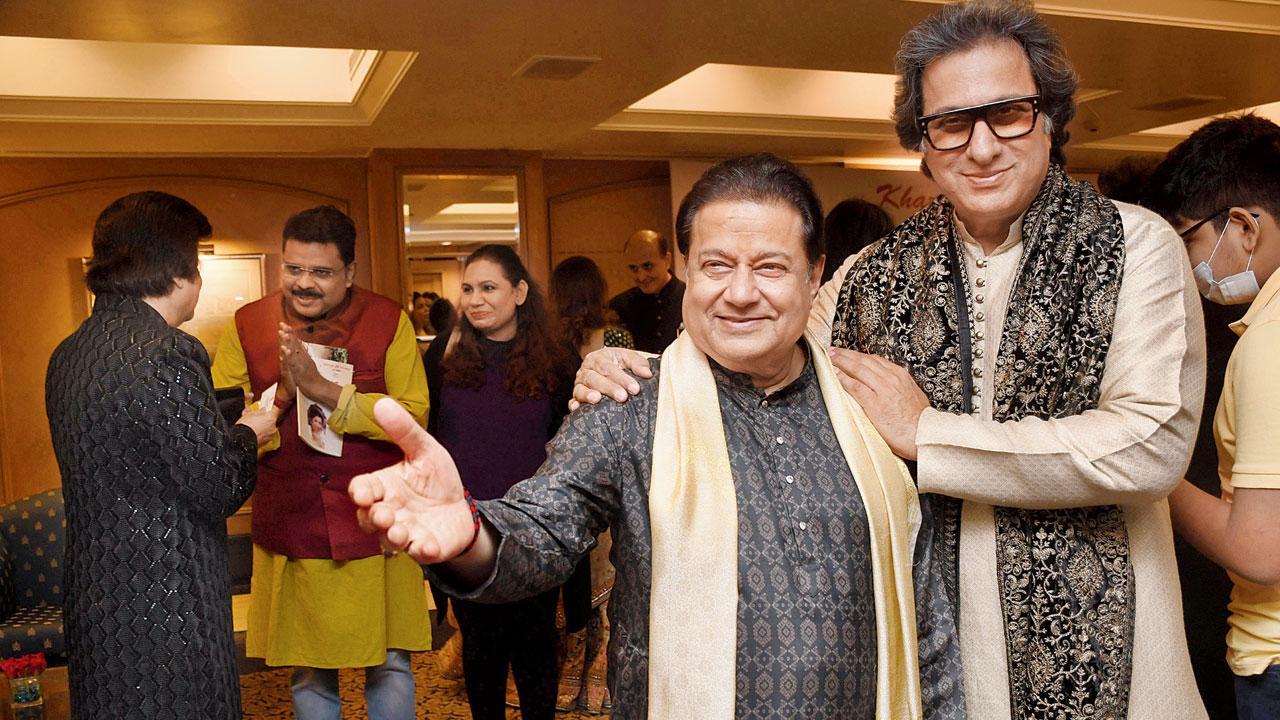
Jalota and Aziz
As they unravel the process of acquiring royalties, ISAMRA bosses Jalota, Aziz, and Tandon on why artistes should make “as much music as possible” to safeguard their futures
Parth Srivastava (MID-DAY; July 15, 2024)
Established in 2013, the Indian Singers and Musicians Rights Association (ISAMRA) has been spearheading the fight for monetary benefits for musicians in the film industry. Navigating the workings of music labels and associations to ensure that artistes earn their due royalties, the board of directors tells mid-day that they have worked towards tweaking laws that do not favour those who do the leg work.
The organization's CEO, Sanjay Tandon, says that in this day and age, “being aware of your rights” is imperative. “As a collecting body, we collect royalties on behalf of artistes, and subsequently pay them. Only in the recent past have musicians raised questions on these aspects, and our organization is working as the middleman to facilitate this exchange [of money],” he says.
A discussion on royalty becomes important in a world that’s increasingly dependent on artificial intelligence. With voice samples of artistes being fed to software that subsequently generates a new song in the desired voice, we ask Tandon if the rights of musicians are indeed protected.
“As of now, if people are using AI to create content for social media, we aren’t taking any steps. However, if they [are deriving monetary benefits by] uploading it on YouTube or other similar platforms, we are imposing copyright strikes.”
Chairman Anup Jalota, who has leveraged his stature to push for reforms in royalty distribution, has been instrumental in shaping policies that favour fair compensation. “Singers and musicians have always been under the hand of [music] publishers. We ensure that if a member’s song is played, either digitally or on the radio, they are compensated. However, if the song is never played, we cannot pay them,” says Jalota.
In a bid to put money into the hands of musicians, Tandon thus encourages singers to “sing as many songs as possible”. “Make as many compositions as you can. If you make a hundred songs, at least one will be a hit. And that can be profitable for you.”
At a time when reworking old ditties has become the norm in the industry, Jalota says “the original artiste always gets a share of the royalties”. “Even after the artiste’s demise, their children continue to benefit. For example, the royalties of Kishore Kumar are received by his son, Amit Kumar.”
Ghazal maestro Talat Aziz, who has also been associated with ISAMRA, says artistes must “understand the concept of distribution in music”. His efforts have been pivotal in addressing issues faced by musicians, particularly those working to further the classical music scene. “Those who understand the process can be empowered enough to demand fair compensation. This will help establish standardised practices for royalty distribution.”
Music and laws
- While the use of AI for entertainment purposes is not being objected to, ISAMRA is imposing a copyright strike if the voices of their singers are being generated for commercial purposes using AI tools.
- Only when a song becomes a hit, and is subsequently played on multiple occasions does it yield monetary benefits. The board suggests that artistes create as much work as they can to create a financial basket.
- ISAMRA says after the demise of an artiste, his or her children can continue to earn monetary benefits from royalties.
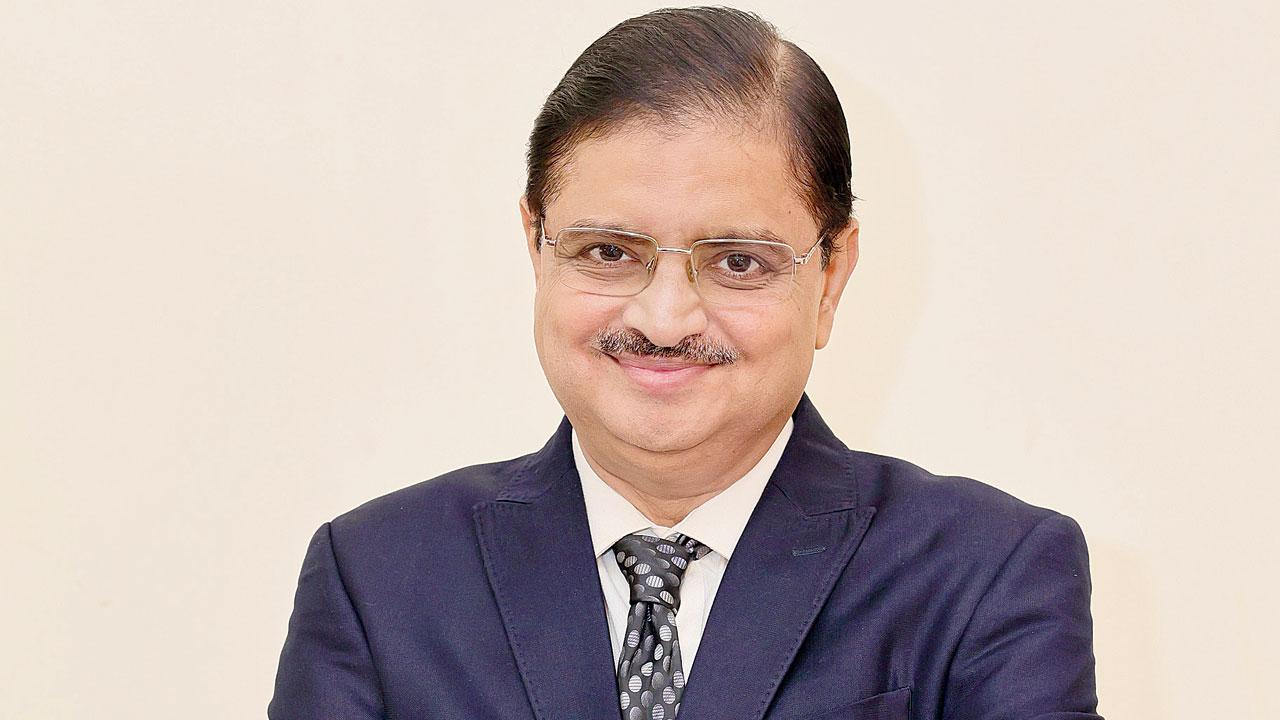
Sanjay Tandon
People say Amit Kumar was born with a silver spoon, but I have also seen the hard life-Amit Kumar
8:30 AM

Debarati S Sen (MID-DAY; October 26, 2023)
Amit Kumar has been the voice of almost all big stars in Bollywood including Dilip Kumar, Sanjay Dutt, Govinda, Anil Kapoor, Rishi Kapoor, Shah Rukh Khan and Salman Khan. In a candid conversation with us at his Juhu home, he admits he is nothing like his genius father Kishore Kumar, talks about the maestro, the ups and downs in his musical career and being in a phase where he is enjoying live performances. Excerpts:
Your father was a genius but also known and loved for his quirkiness. How much of him do you see in yourself?
Oh! We can’t be compared at all!
But would you say that you are temperamental, a trait your father was known to have?
You could say that. My father was temperamental, and I used to be like that, too. I guess all artistes have that to some extent. But my father was also a very down-to-earth person and a very simple man at heart. Earlier, I had a restless mind like him, but over the years, I have calmed down a lot. I regularly meditate now.
Over the years, you sang for almost all the big heroes in Bollywood, but then there was a lull. What do you think was the reason behind that?
My first recording was in 1973, but the song came out five years later. Then sang a duet with Asha Bhosle, and one for Madan Mohan and Salil Choudhary, but none of them released on time. Bade Achhe Lagte Hai (Balika Badhu, 1976) became a popular song even though the film didn’t do so well, and it is my bread-and-butter song even today. My songs in the 1979 film Baton Baton Mein were all hits. With Bappi Lahiri, I did Govinda’s first film, and the song I Am A Street Dancer was a super hit. After that, I sang for films like Afsana Pyar Ka, Kabhi Haan Kabhi Naa and Baaghi. I sang many songs for Anil Kapoor in Tezaab, Judaai, Rakhwala, Khel, Jamai Raja, Kala Baazar, Kishen Kanhaiya and others. I became his voice with hits. There were also many other good songs, but those films didn’t run at the box office, so they weren’t heard by most, just my luck!
Now, you are not actively into playback singing, are you enjoying doing live shows?
I do stage shows frequently. I have performed in Amsterdam and the US recently. In November, again, I will be out of the country. I am also constantly creating and composing music for the digital platform. The fact that people still want to listen to me on stage and buy tickets for my shows is overwhelming. I am 71 and still going strong and loving it. I have been performing on stage for the last 50 years! Whether good or bad, I have played my innings, and now I am relaxed and enjoying this stage of my life.
How do you view your journey in the music industry?
I have never spoken about this, but when I was in the Calcutta Youth Choir, I travelled all over India. We would travel in a third-class compartment in trains, carrying heavy bags. It was tough, but fun. People say Amit Kumar was born with a silver spoon, but I have also seen the hard life. My father used to say you must see all this to grow. When he introduced me at Shanmukhananda Hall (Mumbai) with the show ‘Daddy Kishore and sunny Amit’, it went on for three years, and every single weekend was houseful. It was because of my father, of course, but that made a difference in my life and gave me immense confidence.
Wasn’t your singing style compared to your father? Did you consciously try not to sing like him?
R D Burman had told me in the early days, ‘Don’t try to sing like your father. Don’t clone him. Sing what you are. Just do your own style.’ He egged me on. The composers I worked with helped and I developed my own style.
A lot has been written about your father. What is that one thing that most of his fans don’t know about him?
My father used to do stage shows for the army, but he never publicized that kabhi bhi apna dhol nahi pita. Sab bolte the ki Kishore Kumar kanjoos hai, but no one knew how much he did for others. He did the maximum free shows for the jawans of our country. Not many people know this. I have been doing shows to support cancer patients for the last six to seven years and consider myself extremely fortunate to be able to give back to society. And I too have been doing shows to support cancer patients for the last six to seven years and consider myself extremely lucky to be able to give back to society like this. I am blessed with everything and to be able to do such charity shows, it feels great. This year it is special because my 18-year-old daughter Muktika debuted on stage with me. She isn’t a professional singer, but I feel she has it in her.
Love Story (1981) was your first major hit?
Yes my stardom in playback singing was with Love Story and I became the voice of Kumar Gaurav. We went on to do many films together for five years after which Kumar Gaurav’s films began flopping and slowly, I was out too. Over the years my career has been like the waves in the ocean, full of ups and downs. I did so many songs for Anil Kapoor and became his voice with all the super hit songs! The fact that you journalists are still coming to me for interviews shows I must have done something right.
Your first stage performance was with your father? You weren’t based in Mumbai in those days. How did that happen - coming from Kolkata where you stayed with your mom, and working here?
I landed in Bombay when I was 19. My father introduced me for the first time on stage 50 years ago in 1973, at Shanmukhananda Hall. Then we went on to Europe, America, all over the world for shows. People talk of my father, but no one speaks about my mother, Ruma Guha Thakurta. She was instrumental in my life, encouraged me a lot. I used to sing in her group, Calcutta Youth Choir that she set up along with Salil Chowdhury and Satyajit Ray. I grew up in Uttam Babu’s (film star Uttam Kumar) neighbourhood. My first stage program was during Durga Puja, and Uttam Kumar had called my mother saying, ‘Ruma your son is a good singer, will he sing on stage?’. My mother refused saying he has studies. But he coaxed me to sing anyway. I rehearsed four songs but sang 10 and got Rs 800 for that show and we friends went over to Park Street the same night and spent all the money eating there.
My ma wanted me to have a stable career like a doctor as she knew music was not a steady profession. She complained to my father, ‘Your son is singing here and there, not studying. Gali gali mein gaana ga raha hai awaara jaisa. Fail ho gaya hai (at the famous institution Patha Bhavan). But my Baba hearing all this said, ‘Very good, very good! Time for him to come to me in Bombay’. That was typical of my father (laughs) He then came to Kolkata and saw me perform live at Rabindra Sadan. He said never keep a seat for me because the audience will get distracted and won’t hear you. So, he watched me from backstage. That’s when he was convinced. I learnt classical music for a bit but bouncer gaya. I learnt tabla and then it all began. Music directors like R D Burman, who was like family, Kalyanji Anandji, Laxmikant Pyarelal, Rajesh Roshan, they stood by me. They knew how to extract the best from me and I learnt a lot through experience.
Kishore Kumar’s granddaughter Muktika Ganguly to mark stage debut with son Amit Kumar
8:28 AM
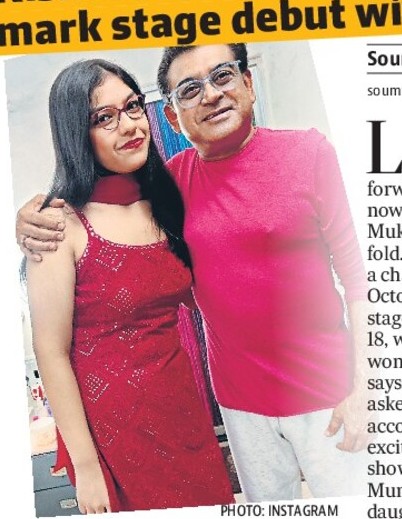
Soumya Vajpayee (HINDUSTAN TIMES; October 4, 2023)
Late singer Kishore Kumar’s son, singer Amit Kumar, took his legacy forward decades ago. And now, his granddaughter, Muktika Ganguly, joins the fold. She is set for her first gig, a charity show in Mumbai on October 7. Set to share the stage with her dad, Muktika, 18, will raise funds to support women cancer survivors.
Amit says, “When the organisers asked me if she could accompany me on stage, I got excited. I performed my first show with my daddy in 1971 in Mumbai and now, my daughter will accompany me. It’s like life coming full circle.”
He adds, “I never told her, ‘You have to do music and take the family’s musical tradition forward’. It’s not easy to carry the legacy forward. I have done it for years and I know how difficult it is to do that.”
Amit feels if Muktika has to make a career in Bollywood, “she will have to be diplomatic and will have to learn classical music”.
My father hasn’t been with us for over 35 years, but he is on top and is still remembered-Amit Kumar
9:04 AM

The singer is glad that his dad, late singer Kishore Kumar’s legacy and music still lives on
Soumya Vajpayee (HINDUSTAN TIMES; October 8, 2022)
Singer Amit Kumar is known for taking the rich legacy of his father, late singer-actor Kishore Kumar forward. And, he’s glad that his dad’s music and legacy lives on. “His voice is remembered because he was one of a kind. He was not only a singer, but also an actor and a performer. He was a brilliant singer. Even today, most of the songs played on All India Radio are his renditions. My father hasn’t been with us for over 35 years, but he is on top and is still remembered. It shows his diversity and versatility,” says the 70-year-old, who will be performing at Amit Kumar Live In Concert to raise funds to help women who are battling cancer.
Ask what’s the greatest role his father’s music played in his life or what’s been his greatest learning, and Amit tells us, “Like for so many artistes, he was my inspiration too and I was blessed (to be his son). I have learned everything from him. He showed me how to sing in front of a microphone.”
While Kishore Kumar is known for his iconic songs that continue to top most playlists, Amit feels with the changing times, even those songs might fade away. “If we look back, there were legendary singers like K L Saigal and others, but many people don’t remember them. People are forgotten, that’s life. My father may be remembered for another 50 years, but there will come a time, say after 100 years, when he will be forgotten. He will become history, this is what I believe,” the singer ends.
What: Amit Kumar Live In Concert
When: Today (October 8)
Where: Rangsharda Auditorium, Bandra (W)
Timing: 7 pm onwards
If sob stories weren’t working on reality shows, we wouldn’t be seeing them so often-Sonu Nigam
8:14 AM

Tanvi Trivedi (BOMBAY TIMES; June 14, 2021)
Singer-composer Sonu Nigam, who had relocated to Dubai last year, came back to Mumbai around three months ago. In an exclusive chat with BT, he speaks about why he chose to come back to Mumbai during the pandemic, why sob stories work for reality shows and how the pandemic gave most of us a new perspective. Excerpts:
You had relocated to Dubai with your wife Madhurima and son Nevaan last year. Now, when Dubai has opened up to a large extent, you returned to Mumbai. What inspired the move?
This year, I spent the entire lock-down in Mumbai. I have been here for the past three months. When I relocated to Dubai last year, I did not know that the lockdown would last for so long back home. I felt guilty being there because I was far away from my father and sister, who were alone in Mumbai for six months. This year, though my wife and son are in Dubai, I am happy that I am spending quality time with my father and sister. My father (singer Agam Kumar Nigam) occasionally cooks for me, sometimes I cook for him, he watches my sister and me work out in the gym, we recall memories of my struggling days and talk about the present and future plans.
Have your wife Madhurima and son Nevaan adjusted to life in Dubai? It must be hard to divide your time between two bases…
Schools have opened up in Dubai, and my son is happy as he is not studying online anymore. We have many friends and Madhu’s sister is staying with them, so they are fine. There has to be a balance in the time I spend with my families. I can’t forget my first family to be with my wife and son. It is my duty to be with my father, too.
As for being in two cities, I have never depended on a place. Even if you keep me in the woods, I will be happy. But partly, my purpose of being in India was to contribute to society during the pandemic, but I don’t like to talk about how I am helping others.
Whatever I am doing in this pandemic is not some act of greatness. We are all doing our bit, because at the end of the day we are in the same boat.
You recently posted a video on the controversy that erupted after singer Amit Kumar said that he was asked to praise the contestants on Indian Idol. What’s your take on music reality shows that often dramatize sob stories to move the audience to tears?
If they weren’t working (sob stories), it would not be happening so often on reality shows. In the deepest corner of my heart, I feel sob stories are working. It is a marketing thing, and people are not fools. Their hearts are in the right place. I also feel that the contestants in reality shows are extremely talented. They are ‘dhurandhars’. Secondly, the definition of entertainment varies from person to person. Recently, I was watching a Korean film and I connected with it because it reminded me of my struggles, but it could be boring for someone else. Who am I to comment on the music reality shows? They are doing well, getting good viewership and the singers are phenomenal.
Would you judge a music reality show at this stage of your career?
I will go with my gut feeling. If I feel I can contribute to a show and they come with an offer, why not? If I feel I am a misfit, I won’t do it.
Remixes seem to be the order of the day, and many non- filmi tracks, too, have been reprised lately. Would you consider recreating any of your hits?
No, I don’t think so. I feel they aren’t working so well now. Many of my songs were sung by singers and they were trolled heavily. I am also scared of singing a song originally sung by someone else (laughs!). Anil Kapoor had requested me to sing a Mohammed Rafi song (Badan Pe Sitaare) in Fanney Khan, and it was only after he convinced me that it was about a stage singer who is a fan of Rafi saab singing it in the film, that I agreed to sing it.
Your son seems to have inherited your love for music and has been seen performing with you. Would you encourage him to become a singer?
I want my son to be a happy child and don’t want to advise him on his career. Zaroori nahi hai ki doctor ka child doctor aur singer ka child singer banne…Yesterday, he told me he wants to become a lawyer, a few years back he wanted to become a cricketer. I believe in happiness and not success. I feel that an enlightened man is successful and not otherwise.
Last year, you had expressed that the music industry needs to change and give a fair chance to young talented singers…
Not just the music industry, the entire universe got a break due to the pandemic. Things have changed a lot, post the pandemic. Sabko aate aur dal ke bhaav pataa lag gaya hai. So, many changes have taken place and there will be many corrections.
With the digital space opening up, do you want to give acting a shot seriously again?
I did the short film Spotless in 2019, which got good reviews in festivals abroad. After that, I got a few good offers. There are no major plans to act, but I will consider it if I am offered something interesting.
I have a phobia about giving screen tests-Raima Sen
8:05 AM

Raima Sen, who features in The Last Hour, on finding a foothold in the web world while missing from Bollywood
Shaheen Parkar (MID-DAY; May 16, 2021)
Last seen in Vodka Diaries (2018) alongside Kay Kay Menon, Raima Sen may be missing from Bollywood, but has been finding a fresh lease of life in the digital world. After Forbidden Love, Black Widows and Hello 2, Sen featured in The Last Hour. The supernatural thriller, which dropped on Amazon Prime Video on Friday, sees the actor play Sanjay Kapoor’s wife in the series. “There’s a mystery element to my character,” she says, refusing to divulging any details. “It’s an intriguing crime drama; there are a lot of questions that need answers.”
Like most actors, Sen, too, finds the OTT world throwing up “new challenges” to actors by providing an opportunity to portray “diverse roles”. The Last Hour came her way out of the blue. She was in Kolkata when she got a call from the show’s creator-director Amit Kumar, who earlier helmed the Nawazuddin Siddiqui-starrer Monsoon Shootout (2013). “He told me that he needed to do [my] screen test. I have a phobia about it. I avoided it by telling him that I will do it in Mumbai,” adds Sen. Later, they caught up in the city and she agreed to go through the process. “I had this inkling that I will never get it, but to my surprise, he later called to say that I was on board.”
The series is backed by British filmmaker Asif Kapadia, who is known for his docu-dramas on Diego Maradona and Amy Winehouse. “But I did not get a chance to meet him,” says Sen. “We shot in the North-East, which has been woven into the storyline,” adds the actor, who also features in Anushka Sharma’s upcoming Netflix series, Mai, starring Sakshi Tanwar.
Sen has shot for two Bollywood films, 3 Dev and Aliya Basu Gayab Hai, which are yet to see the light of day.
I have worked for the past 25 years, and have never auditioned for any role-Sanjay Kapoor
8:00 AM

Sanjay Kapoor on how he bagged the part of cop in upcoming crime thriller The Last Hour
Uma Ramasubramanian (MID-DAY; May 12, 2021)
For Sanjay Kapoor, the digital entertainment boom has brought with it many firsts. If it introduced the actor to long-format storytelling, it also made him embrace remote shooting for The Gone Game. His upcoming outing, The Last Hour, too has been a novel experience. “The director [Amit Kumar] told me that he has watched my films and loved my work. He then went on to say that he wanted me to audition so that he could [judge] if I looked convincing as Arup [his character]. I have worked for the past 25 years, and have never auditioned for any role. So, it was a challenge that I eagerly took on, and I am glad that I proved myself [in the screen test],” says Kapoor.
The Amazon Prime Video offering, which also features Shahana Goswami, Raima Sen and Karma Takapa, sees the senior actor as a tough cop who is investigating the murder of a small-time actor. The series, created by Kumar and Anupama Minz, marries elements of a crime thriller with the supernatural. “There is no ghost or elements of horror in this show. I have been reading stories where people [have communicated with] spirits. I may not believe in ghosts, but I do believe in energies, and this show offers a believable [resolution].”
The unusual storyline aside, Kapoor says it was his character’s vulnerability that drew him to the project, which is executive-produced by Asif Kapadia. “I am playing a cop for the first time, but he is not the larger-than-life Bollywood cop. He has anxieties and worries, like any of us,” adds the actor.
Once Kishore Kumar was sure of the person, he never faulted-Vijay Desai
8:25 AM

Roshmila Bhattacharya (MUMBAI MIRROR; October 12, 2019)
October 13 is a bittersweet day for me. It’s one of my long-time favourites Ashok Kumar’s 108th birth anniversary, but it was on this day, too, that he lost his beloved youngest brother, Kishore Kumar. In fact, his wife Leena Chandavarkar had recounted how Kishore da had coaxed his elder brother, who was still mourning his wife Shobha’s demise and was in no mood to celebrate the day, to drop by on his way back from a shoot. He spent the day planning a surprise party for his Dadamoni. Kishore da’s son, Amit Kumar, away on a foreign tour, was expected to be back that day and his other brother, Anoop Kumar, had also promised to come over, as had Danny Denzongpa, with whom he wanted to discuss a film. A little after 4 pm, while laughing and joking with Leena ji, he suffered a heart attack and by the time his guests started arriving, Kishore da was gone.
“I got a call from Bappi da (Lahiri, singer-composer) telling me, ‘Dada chale gaye’. I rushed to his Juhu bungalow, only Leena ji and their son Sumit were there at the time, and then drove with his body to his native place Khandwa, where his last rites were performed,” recounts Vijay Desai, the manager of Melody Makers, the orchestra which had accompanied the legendary singer even on tours abroad, playing with him for almost a decade.
The media-shy gentleman still remembers the crowds lining the road through the night, paying their respects to their favourite singer as the ambulance carrying him whizzed past. “In Khandwa, his body was placed on the stage for the final darshan, and while patting it down, I discovered a bundle of Rs 10,000 notes tucked in the pocket of his kurta, which I promptly handed over to Leena ji,” says Desai.
Their journey began on February 12, 1982, when Siddharth Kak, along with the Music Directors’ Association, organised the musical extravaganza Mortal Man, Immortal Melodies at Mumbai’s Shanmukhananda Hall to celebrate the 50th anniversary of sound in Indian cinema. It featured singers across five decades and was a glorious reunion for two legends - Noor Jehan, on a rare trip from Pakistan, and Lata Mangeshkar. Also present were veterans like GM Durrani, Surendra Nath, Rajkumari, Ashok Kumar, Hemant Kumar, Talat Mahmood and Mahendra Kapoor, along with the younger brigade. The day after the show, the manager of Melody Makers was surprised to receive a call from a person who introduced himself as Kishore Kumar Ganguly. He initially dismissed it as a prank call but when Desai realised it was Kishore da for real, he rushed across to his bungalow as asked.
The orchestra had been founded in 1961 by Ashokkumar Saraf, Pramodkumar Saraf, Subashchandra Kulkarni and Surendra Akolkar to collect funds for the flood-affected in Pune. It boasted of some fine musicians and singers like Sudesh Bhosle. “Impressed with our performance at the event, Kishore da politely asked if the orchestra would like to be associated with him and without asking anyone, I gave the nod,” Desai narrates, saying after that they played at most of his stage performances, including concerts abroad in the US, Canada, UK, West Indies and the UAE. “One day, he called to ask why the orchestra was leaving him. I pointed out to him that I’d asked him if he had any shows scheduled for the month and when he had said there were none, I had sought permission to play with another party. But if he didn’t like it, we would turn down the latter to which he replied, ‘No, no, keep your commitment par mujhe kabhi chhodna nahin.’ And till his untimely demise, Melody Makers were with him.”
There have been stories in plenty about the eccentric singer and while Desai admits that like any artiste he was moody, he refutes rumours that Kishore da was kanjoos. “He would casually ask how much he owed someone, then, tell the person he’d pay up in a day or two and quietly write down the amount. The next few days, he would feign memory loss and keep asking how much was due. If the person, thinking he had forgotten, upped the rate, Kishore da would pay the original dues, telling the person not to return to him in future. It was his way of judging someone’s integrity and once he was sure of the person, he never faulted. He was a real gentleman whose mind was focussed on his music 24x7 and whose only aim was to make people happy. At concerts he always sang what the public demanded,” asserts Desai, adding, “There never was, and never will be a genius like Kishore Kumar whose name and chartbusters even today, 32 years after he passed away, bring a smile to faces.”
Kishore Kumar came home and sang till my parents agreed to our marriage-Leena Chandavarkar
7:57 AM

The legendary singer’s wife, Leena Chandavarkar, speaks up while attending his 90th birth anniversary celebration
Debolina Sen (BOMBAY TIMES; August 7, 2019)
 The pretty face of the Hindi film industry of the ’70s still glows warmly. The soft countenance and the innocent smile are still in place. Leena Chandavarkar, who also made headlines for her marriage to Kishore Kumar — a man 21 years older than her — amazes you with her childlike simplicity. We caught up with the former actress when she was in Kolkata recently, to attend Tomay Poreche Mone — Kishore Kumar’s 90th birth anniversary celebration. She spoke about her life, films, Kishore Kumar and more. Excerpts:
How did Kishore Kumar influence your personal and professional lives?
I have innumerable memories of him. He was like a pillar of strength who taught me to accept the good and bad in life. He looked at life as a whole and understood that you win some and lose some. He would show his funny side to the world, but never his sad face. He also taught me to do that. I went through a lot in life and it was only because of him that I could come out of depression. So, I have written this song for him now — Kaun tha woh kya tha, Jadugar ya farishta tha, Athwa woh ajooba tha. Even he always wanted me to write songs. After he passed away, Amit (Kumar) asked me to fill in some dummy words, to which he gave the tunes and it got approved. So, I think it’s Kishore da who has again guided me from heaven. His song, Hamein Aur Jeene Ki Chaahat Na Hoti, is one of my favourites because it resembles my relationship with him. He would also mention that he always came across talented people as life partners. True, you see Ruma didi was there. Amit received a letter from the President of India after Ruma didi passed away. That’s a great honour. Both of Amit’s parents were extremely talented people. He has also carved a niche for himself. It’s extremely difficult to match up to a father like Kishore Kumar, but he has done well for himself.
You live with your son Sumit Ganguly and stepson Amit Kumar Ganguly. It is a rare sight in Indian households today where sons take care of their ageing parents.
I wouldn’t know what triggered this bond, but it feels like the expression, Sago se zyada apna. Amit respects his father a lot. He would always ask for his advice when taking an important decision. Sumit was only five years old when Kishore da passed away, but he scolds me and tries to guide me now (laughs). Amit and Sumit have a beautiful bond between them. In fact, Amit brought up Sumit. If I would ever forget to pick up Sumit from school on time, Amit would leave his recordings and rush to his school. Then he would scold me. Amit was also responsible for getting Sumit married. Now, the family is complete.
You have dealt with deep personal losses. What would you have to say to people who are unable to deal with the ups and downs of life?
Kishore da was the reason why I could successfully deal with all the pain in life. He could give strength to anyone. He would also say, ‘Hum log travellers hain duniya mein. Kisiko first class milti hain, kisiko third class. Par free mein duniya dekhne ko saab ko milti hain na?’ (laughs). I went through a lot in life. My brother committed suicide and my mother passed away just after Sumit was born. After Kishore da passed away, I would depend a lot on tablets and injections to deal with depression. Then one day, Amit said he would be busy with shows abroad and that so, I’d have get out of my depression and take care of Sumit. So, a supportive family is extremely important. But to stay out of depression, you have to accept life the way it is.
Tell us about your marriage with Kishore Kumar.
Kishore da and I had many funny memories together. I had told him that he marries whoever he works with, so I wouldn’t do a film with him. He then cancelled the proposal because according to him, two August-born people shouldn’t marry each other. He was born on August 4 and I, on August 29. Then, when my father hurt me by saying ‘Yeh phirse mere ghar wapas aa gayi’, I called Kishore da to get married then and there because I wanted to leave my father’s house. I even called him up to say that I would ask the drivers of every car that passes me that night if they would marry me. He said, had he thought that only he was eccentric, but I had joined that list. My parents were apprehensive about me marrying him. My mother said he had married thrice, but wanted to know his ancestral origin. I told her he must be Christian since I had seen many statues of Christ and other biblical things at his house. Until our wedding, I never knew he was a Bengali Brahmin (laughs).
He told me that he couldn’t marry me unless he got divorced from Yogeeta Bali, his third wife. He had stopped doing playback for Mithun (Chakraborty) at that time. Mithun did gauge the situation, but still came home to ask him why he wasn’t singing for him. After all, every hero wanted his voice in their songs. He told him about the divorce clause. Mithun saw to it that the divorce was through in no time. Then, I said, ‘Let’s get married now’, but he said he wanted to get my parents’ approval. He came home and sang till every member of the family agreed to our union, even my father. He sang Nafrat karne walo ke seene mein pyar bhar du, Arey mein woh parwana hu, Pathar ko moum kar du (laughs)!
You belong to an era that saw some of the biggest superstars in Hindi cinema. How difficult or easy was it making your presence felt when working with them?
For some people like me, dreams do come true. If you want to pursue something with all your heart, you don’t find the effort too difficult. I had learnt a lot from the superstars who were my costars. They were like family. Dilip Kumar would be so natural while acting that his voice would sound muffled at times like it does when we speak in our normal tone. I would often miss his dialogue cues (laughs). Shammi Kapoor would make me laugh a lot.

Sanjay Kapoor trades ALT Balaji's comedy show for Amazon Prime thriller
8:22 AM

Actor lets go of Ekta’s web show to feature in Asif Kapadia’s drama, set in the hilly terrains of the North-East
Upala KBR (MID-DAY; June 8, 2019)
Six months after reports of Sanjay Kapoor signing up for ALT Balaji’s web show, Soggy Hoga Tera Baap hit headlines, mid-day has it that the actor has opted out of Ekta Kapoor’s offering to green-light an Amazon Prime show instead.
Kapoor, along with co-star Shahana Goswami, has been quietly shooting for the Asif Kapadia production that sees Monsoon Shootout director Amit Kumar taking charge of the project. Says a source close to the project, “Every detail, including the title, is currently under wraps as Amazon wants to make the announcement, and those associated with the project have signed a [non- disclosure] contract. It is a dark and edgy thriller set in the hilly terrains of the North-East. Sanjay, as the protagonist, plays a character with shades of grey.”
Barring the lead protagonists, also including Goswami, the cast includes actors from Sikkim, Nepal and Darjeeling, where the show has been filmed. “Only the last schedule was shot in Mumbai last Friday.”
Shooting for the offering, we hear, kicked-off in January, two months after news of Kapoor’s association with the ALT Balaji show, hit headlines. It is suggested that Kapoor’s dates were blocked for this offering in advance. “Sanjay and Ekta tried to work out the dates, but it didn’t materialise. They are now in talks for a couple of other projects.”
Sanjay and Ekta are now in talks for a couple of other project’
Nawazuddin Siddiqui-starrer Monsoon Shootout to finally release after a four year wait
7:41 AM

Avinash Lohana (MUMBAI MIRROR; November 8, 2017)
Anurag Kashyap and Guneet Monga’s Monsoon Shootout, directed by Amit Kumar and featuring Nawazuddin Siddiqui, will finally see the day of light. The noir thriller premiered four years ago in the Midnight Screenings section at the 2013 Cannes Film Festival.
“It revolves around a cop, Vijay Varma, who has to decide whether he should or should not shoot a suspect played by Nawaz. The same story is told three times in different ways which is what makes the film unique. The distributors then were unsure about whether the audience would understand a film like this,” admits Guneet who excited by the idea sold her apartment to fund the film.
She goes on to add that the narrative demanded some amount of violence and the way it’s shown in the film could be another reason for distributors to shy away. “We patiently waited for the right time to release it. Over the last few years I have seen a collective consciousness towards good content with films like Newton, Hindi Medium and Haraamkhor making waves. The market has opened up with big digital players and new buyers coming in and I am hopeful that after Haraamkhor and Monsoon Shootout, I’ll be able to bring out Peddlers, Vasan Bala’s crime thriller featuring Gulshan Devaiah, Nishikant Kamat and Nimrat Kaur,” exults Guneet who had been really depressed these two years but now it’s all well that ends well.
After all these years, Kishore Kumar is still number one-Amit Kumar
7:58 AM

With the fervour for Kishore Kumar songs still going strong on the legend's 88th birth anniversary, singer Amit Kumar Ganguly gets candid about life with his iconic father
Debarati Sen (BOMBAY TIMES; August 5, 2017)
The best of men have been
struck by the fickleness of time and relegated to obliv ion, not Kishore
Kumar. He just gets stronger. You can hear him everywhere - films,
radios, music reality shows, remixes, speculations (personal life or a
potential biopic), theatrics (Jhumroo) and even politics (his stand
during Emergency). It makes you wonder if it's really been 30 years
since he passed away in 1987. “He is still the number one!“ beams the
legendary entertainer's son, noted singer Amit Kumar Ganguly. In an
exclusive interview with Bombay Times, on the celebrated entertainer's
88th birth anniversary (August 4) week, Amit gets candid about life as
Kishore Kumar's son. Excerpts...
 Kishore Kumar's presence is as
all-encompassing in the world of entertainment and music even now, as it
was 30 years ago. What gives him an edge considering he wasn't trained
like his contemporaries?
I am his son and I am not going to be defensive, but the fact is that trained or untrained, this man has been an institution. He made his way from scratch to the very top. He succeeded in all the departments of his field without any so-called training. R D Burman (a great music director who was with my father from the beginning) and his father S D Burman (my father's guru) were once discussing various singers. When my father's name cropped up, R D said, 'Kishore da ke saamne jitney bhi bade ustad ko rakh do, during the actual take of any song, woh un sab ko utha ke phek sakte hain'. Pancham da used to say that 'syncopation' like tatada-ta-tada tadarum - would never sound as good when done by others. Who says he didn't know classical? I think he knew everything about music. He used to sing straight from his heart. He used to say, 'Main seedha gaata hoon, nakkashi (harkatein) kum karke, dil ko choona chahta hoon, so that even the street boys, the paan wala can relate to my song - unke mann ko lagna chahiye'. He was a technical man, he wouldn't take chances, but that didn't mean he did not know it. Unke samne bade bado ki chutti ho jati. I don't want to take names, but big singers would get nervous before him. He was one-of-a-kind. After all these years, he is still the number one. Aaj bhi sabse zyada gana unka hi bajta hai.
What are your memories of your father?
This bungalow (Gauri Kunj) was built by him. It may sound filmy, but we feel his presence here; we feel that his soul is still here. That's why we are blessed and have been staying here for so many years.
How does your brother Sumit relate to his memories? Or your daughter Muktika?
When my father left us, Sumit was only five and he does not have many memories of him. He tells me that I am the father-figure for him. My father always wanted Sumit to learn the piano. He used to dream of him being on a stage in Vienna, wearing a bow-tie and playing the piano, while we clapped in the audience. I made sure Sumit learnt the piano for four years. He's a brilliant musician. When it comes to singing, he's an original and does not sound like his father. We have a music company together and he looks after our offices here. Muktika is only 12. She's got a shundor voice, but we are not forcing her to learn singing. Her tribute song to her grandfather 'Mere Baba', two years back, went viral.
You sang Kishoreda's Himmatwala song, while Sumit reprised Bachna Ae Haseeno for a film - was it easy?
Singing the Himmatwala song (and another of his songs) was the biggest mistake. It's fine to sing his songs on stage. As a son, yeh mera haq banta hai. But I am not as great a singer as him, and singing his song on record was a blunder. Aaj bhi main apne aap ko kosta hoon. As for the Bachna Ae Haseeno song, Sumit just sang a few lines, which was okay.
When you do Kishore Kumar tribute shows, what are the responses abroad vis-a-vis back home?
I have been singing for more than 50 years now and have seen several ups and downs - success and more failures. Sab dekh liya hai maine in this whimsical industry. I have travelled all over India gully gully ghuma hoon doing tribute shows. We generally do 25 per cent Amit Kumar and 75 per cent Kishore Kumar songs. Main jitna bhi chahoon ki main pitaji ka gaana nahi gaaunga to avoid comparisons, I still get requests for his songs. People want to hear him. We always get full houses - be it in Mumbai (brilliant cosmopolitan audience), Pune (superb), Punjab (terrific) and even abroad, especially in England and America.
Songs in recent times that you feel should have been sung by Kishoreda?
I don't really listen to today's Hindi film music as they all sound similar. But I think the song sung by Arijit Singh, Ae Dil Hai Mushkil - woh agar Pitaji gaate toh accha hee gaate, he would have sung it beautifully. Hala ki Arijit has sung this song very nicely. Mujhe pasand bhi hai yeh gaana.
You share anecdotes from his life on your stage shows and radio shows. Do you ever plan to write a book on him?
Kitab toh mujhe likhna hi hai. My father told me to write a book on him when he is not around. Naam bhi soch liya tha - 'My Father As I Knew Him'. So, I will write a book as I've seen him up close for 35 years of my life.

Now, Antakshari enters the Limca Book Of Records
7:54 AM

Natasha Coutinho (MUMBAI MIRROR; October 7, 2016)
Antakshari entered the Limca Book of Records with an initiative flagged off by the film content house Shemaroo Entertainment. Their Filmi Gaane Antakshari ran for a week on Twitter, from September 26 to October 3, totalling 168 hours, making it the first and longest antakshari to be played on a digital platform.
Says a source associated with the initiative, “During the course of its run, on an average one winner was selected every five minutes with a total of 2016 winners in 168 hours. A prize of Rs. 10,000 will be announced soon for the one who showed the maximum participation. It broke the last record of 2,858 tweets with 34,949 tweets in a day and will now be a weekly event which retro music lovers can play every Tuesday. The game will also be available for Facebook and Instagram users.
Amit Kumar who had just returned from Chicago when contacted by Mirror revealed that he had started the record run with the opening lines, “Baithe baithe kya karen, karna hai kuchh kaam, shuru kare antakshri, leke mere baba ka naam.” Baba referred to his father, legendary singer-composer-actor-filmmaker Kishore Kumar.
“I did it even though we never play Antakshari at home on a regular basis. The tribute to baba and the fact that it could get me into Limca Book excited me and today I am thrilled to be amongst the records,” Amit Kumar exults.
The Kala Chashma debate: Music veterans speak out against remixing old, popular songs
7:59 AM

Music veterans overwhelmingly feel old wine in a new bottle isn’t a trend that bodes well for Bollywood
Subhash K Jha (DNA; August 6, 2016)
The zingy hip-hop bhangra track Kala chashma filmed on
Katrina Kaif and Siddharth Malhotra for new director Nitya Mehra’s Baar
Baar Dekho, is a re-mastered version of Amar Arshi’s Bhangra pop hit
Tenu kala chashma jajtave, which was composed by Kam Dhillon and
released in 2005. To this hip-swinging and mellowishnumber, Badshah has
added more insistent beats, a rap interlude and vocals by Neha Kakkar.
We are constantly re-mixing old numbers. Bollywood’s most distinguished
musicians react...
‘To eliminate the original is a very different task’ - Lata Mangeshkar
“I think it is principally incorrect for singers to give voice to others’ songs. Let me recall an incident. There was a time when I’d sing a lot on stage. I was once asked to sing a song by Suraiya. I refused. The organisers argued that I’d do full justice to the song. But according to me, a Suraiya song was a Suraiya song in the public’s mind. To eliminate the original is a very difficult task. Once someone asked my opinion on a song of mine that another singer had sung. I said, “Dekho main unees hoon aur woh bees hai. Lekin mein apni jagah pe unees hi rahungi, woh nahin ho sakti. One of my tracks Thoda Resham Lagta hai composed by Bappi Lahiri for the film Jyoti and made into a track by the American rap band Truth Hurts. Quite frankly, I didn’t remember this number at all. When I heard it in the number by Truth Hurts, I asked my family where it was from. It was they who told me that I had sung it in a film called Jyoti. I had no idea who Truth Hurts was. I didn’t pay much attention to the song Thoda Resham Lagta Hai. I didn’t mind it being used in the American song because they haven’t tampered with my voice or the composition in any way. It’s far more preferable to the remixes in our country.”
‘No point clinging to the past’ - Asha Bhosle
The world has moved on. Earlier, the female singer sang at a high pitch and the male singer at a low pitch. Now that has been reversed. There’s no time for slow soft sentimental songs. No point in clinging to the past and pining for nostalgia. If you remember, happy occasions whether it is the mehndi ceremony or a wedding, have always been celebrated with songs. Every individual wants to dance and sing. Rhythm ka zamana hai. No one listens to the words. You can’t stop the world from moving on. If you try you’ll get left behind. It’s not as if we don’t have talented singers. Sukhwinder Singh is inviolable. I am open to singing any kind of songs as long as the words are not cheap. People at my age are confined to retirement. I am still singing. The language isn’t of primary importance as long as I sing something that I and my fans are satisfied with. I’ve done two albums of his remixes.
When I did Rahul & I, I wanted to be faithful to the original. But my son Anand, who’s a big fan of Burman Saab and who looks after all my interests, told me to just leave it to him. I surrendered to him. He designed it according to today’s tastes. And he was right. The album was a resounding success. No one can stop others from doing re-mixes. People are forever cashing in musical names. You’ll see big posters of Lata Didi and mine at concerts. They turn out to be shows of our songs sung by other singers. CDs have our big pictures and a small ones of the actual singers. Music and musicians have suffered heavy losses because of these deceptive imitations. But what to do? Duniya aisi hi hai. You can’t fight it. But please, if you doing remixes, do be thoughtful towards the original. I didn’t tamper with one note, one lyric...no changes at all. Only the instruments have been modernised. As for the cynics, they’re bound to have their say. When some years earlier, I did my songs of RD Burman in the album, Rahul & I was criticised even by those who were my admirers. But I remember a four-year-old boy at a restaurant coming up to me to sing, Piya Tu Ab To Aaja. I was so happy that a new generation would be familiar with RD’s tunes.
‘Hindi music is finished’ - Amit Kumar
From the day remix songs and even cover versions of popular songs started, I immediately said to myself, ‘The downfall of Hindi film music has begun.’ Whether it is a renewal of the original’s shelf-life or a sign of desecration, I don’t know. All I know is, Hindi film music is finished. I’ve heard some re-mixes of my father (Kishore Kumar)’s songs which made me shiver.”
‘Nothing beats the high of composing an original’ - Shankar Mahadevan
It all depends how one does it without destroying the aesthetics of the original composition. On the plus side, these classics are made accessible to younger generations who have probably never heard these songs. But due credit must be given the original composer. Sometimes these remixes are embarrassing to listen to. But all said and done, there is nothing to beat the high of composing an original song.”
‘Directors get desperate’ - Lalit Pandit
An alarming number of songs are being re-recorded and reshaped with modern programming and also a lot of modulation in style of singing is also being done. I wonder why! Firstly,the older song is already popular and heard by generations of people and since there is familiarity with the tune, what is the point of re-mixing the song? Why would we want to hear Lataji’s Lag Ja Gale or Ashaji’s Dum Maro Dum in any other voice? Producers and directors are desperate looking to have a hit in their films. This is an easier way to achieve success. Secondly, it’s easier for composing for a composer because then there is nothing to compose,except rehash the already composed song. It saves a lot of trouble and hard work for both teams, composer and producer/director. I wouldn’t say that composers today are not capable. It’s just that directors get desperate and sometimes don’t even know what they want. It’s at this stage that an old song rehash option is worked on.”
‘They’re just attempts to cash in on original songs’ - Adnan Sami
Remixes are nice when done with a ear on nostalgia. But sometimes, they are just attempts to cash in on iconic songs. I wouldn’t want to do a re-mix of a Bahon Mein Chale Aao or Lag Ja Gale because Lataji has taken the songs to the pinnacle of perfection. You can’t take them any further.
BMC sends notice to Jeetendra, Juhi Chawla, Anil Kapoor for 'breeding mosquitoes'
3:03 PM

MUMBAI MIRROR (September 25, 2015)
The Brihanmumbai Municipal Corporation (BMC) has served notices to three Bollywood actors, Anil Kapoor, Juhi Chawla and Jeetendra, and singer Amit Kumar after their residences in suburban Juhu and Malabar Hill were found to be breeding grounds for mosquitoes.
From January 1 to August 31, 13,587 breeding grounds for mosquitoes were identified and 866 people served notices for not complying with the guidelines and overlooking preventive measures issued by the BMC. The civic body takes action and levies fine under Section 381 of the Bombay Municipal Act which varies from Rs 2000 to 10,000 depending upon the gravity of the case. A fine of Rs 23.38 lakh has been recovered from erring persons.
"The notices were issued after an inspecting team conducted a check at their residences and found out that the bungalows of these celebrities were the breeding grounds for this deadly disease," informed Rajan Naringrekar, insecticide officer of the BMC.
The insecticide teams also inspected Amitabh Bachchan four bungalows, along with the homes of actors Shabana Azmi, Shilpa Shetty and Ranjeet, filmmakers Mahesh Bhatt and Sanjay Khan, and cleared them after they were found to have taken preventive measures.
Balika Vadhu: 40 years and still bade achhe
8:38 AM

Roshmila Bhattacharya (MUMBAI MIRROR; August 25, 2015)
Bade Achche Lagte Hain...Kya?... Yeh dharti, yeh nadiya, yeh raina... Aur? Aur tum...
Four decades have passed since Amit Kumar recorded the song in early '75 for Balika Badhu and the singer admits that it's become his bread-and-butter song.
"But when the film opened in '76, it wasn't an instant hit. Its popularity has grown over the years, peaking after Ekta Kapoor used it as the title track of her tele soap. Today, no matter which part of the world I go to, I have to open a show with R D Burman's signature melody," smiles Amit.
He's quick to point out that it's not his first Bollywood track. That was Hosh mein hum kahan for a forgettable Ramsay horror film, Darwaza, which only opened in '78. Two other films, one featuring Rajesh Khanna, also remained in the cans, though both the Salil Chowdhury composition, Humko kisne jana hai, and a duet with Asha Bhosle, Hai shaam badi matwali, tuned by Madan Mohan, are playing on YouTube today.
During one of his trips to Mumbai, he accompanied his father, Kishore Kumar, to R D Burman's music room. He was sitting quietly, while his baba and Manna Dey rehearsed a comedy track, when RD came up to him. "Panchamda had been hearing a lot of good things about me and enquired if I'd like to sing for them," he reminisces. Urged on by the musicians, Manna Dey and his baba looking on, a nervous Amit sang a song from Jhumroo.
"On our way home, baba admonished me for being so shy and singing badly. I told him I was happy doing shows in Kolkata and that got me another rap for my lack of ambition," he smiles.
The following evening Kishore was surprised by a call from RD who wanted Amit to record a song for him. "We rehearsed the song at Panchamda's place before he drove me in his blue Fiat to Film Centre where Shakti Samanta (the film's producer), Tarun Majumdar (director) and the other musicians were waiting. Panchamda gently urged me on, telling me he didn't want me to copy my father. He wanted Amit Kumar, not Kishore Kumar. He even sang the O majhi re portion himself and in a couple of hours, Bade achhe lagte hain was recorded," says Amit.
Soon after, Kishore started his home production, Shabash Daddy, and Amit would play the song which RD had recorded for him on a cassette, on the sets. After the film's release, he accompanied Kishore to South Africa for a 50-show tour. "Baba was the first Indian artiste to enter the country still torn by apartheid. I always sang this song on stage with baba ribbing me from the wings," he says. "It was my first hit and every top music director wanted Kishore Kumar ka beta. Being baba's son was a bonus."
Balika Badhu was the coming-of-age story of a teenage bride and her school-going husband in pre-Independence earlier. In '67, Majumdar had made it in Bengali with a schoolgirl, Moushumi Chatterjee. For the Hindi version, he opted for another new face, Rajni Sharma.
Shakti Samanta's son, Ashim, was still in college when the film was being shot but got his first lessons in editing during the post production, recalls Anil Kapoor turning up in a dhoti-kurta one day to audition for the role of the husband, Amal.
"Dad was keen on Anil, but Tarunda eventually settled for Sachin," he says. "Both Sachin and Rajni made a cute pair but Balika Badhu is remembered today for Bade Achche Lagte Hain."
Kishore Kumar's granddaughter Muktika sings him a birthday gift
8:35 AM

The song will be launched under the new music label of his sons, Amit Kumar and Sumeet Kumar
Roshmila Bhattacharya (MUMBAI MIRROR; July 27, 2015)
On August 4, his 86th birth
anniversary, Kishore Kumar will get a gift. Sons, Amit Kumar and
Sumeet Kumar, are launching their music label, Kumar Brothers Music
(KBM), online, with a six-song album, Baba Mere. The title track has
been sung by Kishore's granddaughter, Muktika Ganguly. The 10 year old
has also featured in the music video which sees her meeting her dadaji
for the first time in a dream.
“The idea came to me four years ago. I composed a tune which I sang to my daughter every night like a lullaby. Leenaji (Kishore's wife Leena Chandavarkar) wrote the lyrics and I began urging Muktika to sing it. We recorded it last September,“ says Amit.
Muktika admits that for the first four days, she was so terrified that every time the subject came up, she'd burst into tears. On the fifth day, she entered the studio but as soon as Amit stepped inside, she started crying. “My father stomped out, looking angry. But chachu (Sumeet) coaxed me to sing freely. With every take, the beats got easier. And baba proudly told everyone his daughter had sung it,“ she beams. Muktika celebrated her grandfather's birthday by decorating the living room and cut a cake. This year, they will celebrate with her debut song. “My favourite song is my dadu's Koi hota jisko apna from Mere Apne. It's melodious and emotional, like Door Ka Rahi, my favourite film,“ she says.
Despite her shyness, Muktika is a prankster like Kishore who'd scare the watchman pretending to be a ghost. “I scare my parents too by popping up from behind the door. If dadu was around, we could have been naughty together,“ she laughs.
She has accompanied Amit for concerts but never sung. Even in school she needs a couple of other students to join her. But she wants to follow the family tradition and become a singer. “Baba is already planning another song with the entire family,“ she says.
This song will not be in this album which has five other tracks including one which goes Main hoon badnaam. “Leenaji has written the songs, I've composed all of them and sung a few, Muktika has crooned one, Sumit has arranged two and the title of the album came from my wife Reema. So this one too is a family effort,“ Amit signs off with a smile.
Some of the shots in Door Gagan Ki Chhaon Mein were similar to Pather Panchali-Amit Kumar
7:50 AM

Roshmila Bhattacharya (MUMBAI MIRROR; June 23, 2015)
Buzz is, Kishore Kumar's Door Gagan Ki Chhaon Mein was inspired by his mama, Satyajit Ray's debut film, Pather Panchali. But his son, Amit Kumar, insists that though his baba had lent Ray Rs 5,000 to complete his Song of the Road and had seen the film 13 times, he was actually influenced by Michael Curtiz's The Proud Rebel which he adapted in Hindi.
"Some of the shot takings were similar to Pather Panchali, like the croaking of the frogs in the rain, but the content was borrowed from the 1958 Western. Based on a story by James Edward Grant, it revolved around a former confederate soldier, John Chandler, and his 10-year-old son David who had not spoken a word since he had witnessed his mother's death in a fire," points out Amit.
Kishore himself stepped into Alan Ladd's shoes as the impoverished war hero and started auditioning for the role of his mute son. He was looking for a boy who could speak through his eyes and even placed an ad in the Times of India. None of them impressed him and finally, urged on by his cinematographer, Aloke Dasgupta, and his actor friend Ifftekar, decided to screen test Amit who was down from Kolkata on vacation.
"One day, baba called me and told me to hide behind the curtain. When he called out, I was to step out and say, 'Bapu, tum kab aaoge?' reminisces Amit who did what was asked and was rewarded with a "Bahut achche."
He was eight when the film flagged off in '60, and unfazed by the challenge, because he had no dialogue sheets to learn by rote. He spoke just one line of dialogue at the end which saves his bapu's life.
Kishore was going through a lean phase as an actor and everyone discouraged him from making a film without comedy or commercial elements. Only his mother, Gauri Devi, supported him, even pawning her jewellery. The first day's scenes in Juhu were shot in the light of the car's headlights. It took him three years to complete the film.
Door Gagan Ki Chhaon Mein opened in 1964. The press show at Blaze in Liberty cinema drew all the top critics, including Baburao Patel, the editor of Filmindia. A line in his review, 'Door Gagan Ki Chhaon Mein just misses out on being a classic' made Kishore happy and proud since he rarely praised a film.
The premiere, at Metro cinema, was attended by George Fernandes, the leader of the Opposition, along with half the film industry, including Raj Kapoor and Ashok Kumar. "Baba was very quiet during the screening. And after it was over, too overwhelmed to speak, so Iftekhar uncle gave the speech," recalls Amit.
The next day, they watched the film with six others at Lotus cinema. There were only half-a-dozen others in the stalls below and distributor Hiranandani was beating his head, moaning, "Kya hoga iss film ka?" Kishore laughed away his concerns, chiding him for buying a film without any naach gaana.
Collections were poor in the first week but following the reviews and good word-of-mouth publicity, started picking up and by the third week it was drawing full houses. "Baba and I would go and sit outside Alankar theatre. He would chew paan and wait for the 'Housefull' board to go up, then tell the driver to take us back home," laughs Amit.
After seven weeks at Alankar, Door Gagan Ki Chhaon Mein moved to Super Cinema where it ran for 23 weeks. Collections only started slipping in the 22nd week. Kishore was asked to put in some money so the film could complete a silver jubilee run. "But baba had got more than what he had expected and pulled it out after 23 weeks," says Amit.
However, the film celebrated a silver run in Delhi and Uttar Pradesh. In Kolkata, to everyone's surprise, it ran for just eight weeks but Amit remembers that the premiere was a star-studded affair. Everyone from Uttam Kumar and Chabi Biswas to Pankaj Mullick and Satyajit Ray was there. Ray liked the 'sensible' film and admitted it wasn't what he had been expecting from Kishore.
"Door Gagan Ki Chhaon Mein proved that baba was as good with serious films as he was with comedies. Today, half a century later the strains of Koi lauta de mere beete hue din and Aa chalke tujhe mein leke chaloon still echo through the vales, dales and our memory lanes. It makes me speechless today, literally," admits Amit.
Subscribe to:
Posts (Atom)