Showing posts with label Afghanistan. Show all posts
Showing posts with label Afghanistan. Show all posts
The Americans were bullshitting when they were saying, so-called good Taliban, bad Taliban-Kabir Khan
11:12 AM
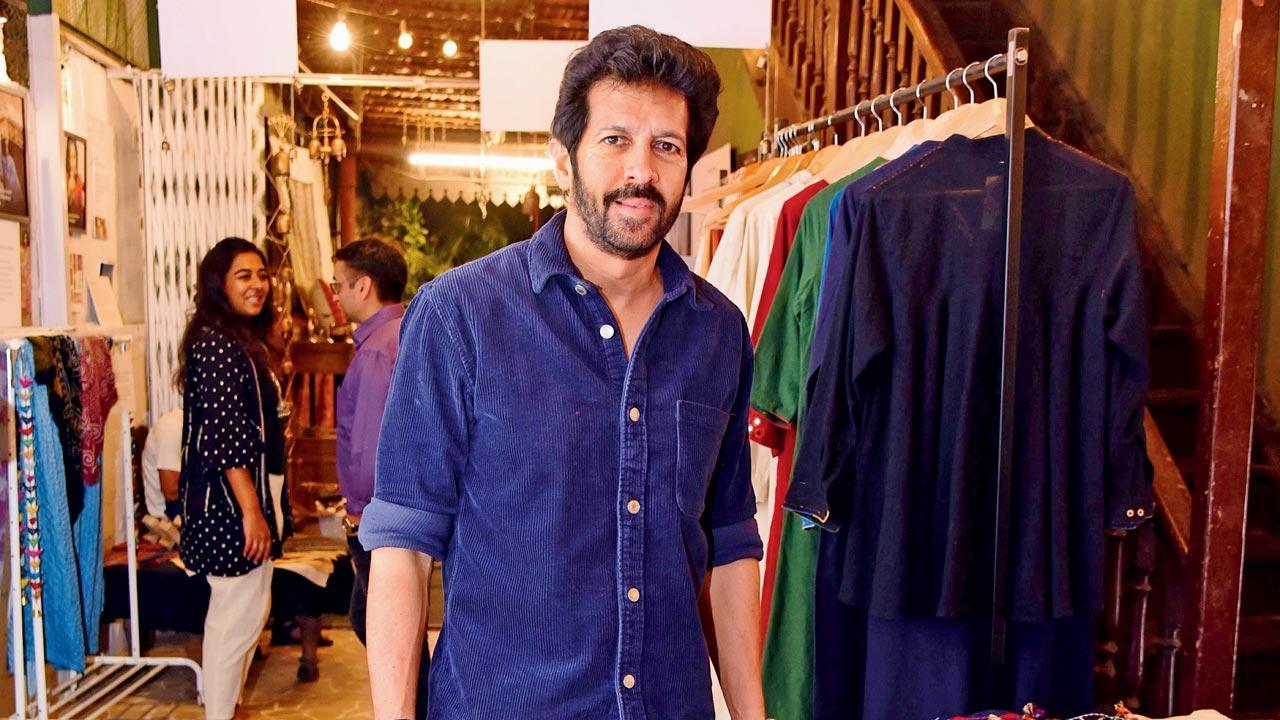
Noting that the news cycle has moved onto other pressing issues, director Kabir Khan says his short film Setara is an attempt to remind people of Afghan women’s plight
Mohar Basu (MID-DAY; March 7, 2025)
In a recent interview, director Chaitanya Tamhane told mid-day that stars and filmmakers should make one film for the kitchen and one for the soul. Filmmaker Kabir Khan has been living that motto from the start of his career. In his filmography, there are blockbusters like Ek Tha Tiger (2012) and Bajrangi Bhaijaan (2015), as well as hard-hitting offerings like Kabul Express (2006) and New York (2009).
“It’s not a conscious thing, I just go with what my heart tells me to do. I've never been, thankfully, a victim of this race of being commercially viable. I've never done that. I've been fortunate, despite that, I've had some really big commercial successes. Which is important in this industry, it keeps you relevant, it keeps you going, it allows you to do anything you want. I've often said that, for me, my success is not about how much money my films earn me, or the producers and stuff. For me, my success is, till the day I can select what I want to do, and nobody's telling me, no, don't do this, do this. The day I'm told to do something according to a brief, then I know that I'm okay servicing a script, and I'm just doing it, maybe for money, maybe to just keep myself busy, maybe to pay for the rent of the office. But up till now, I'm fortunate that I've just been able to pick up the films that have really struck a chord with me. Because it's very important, you have to have that passion for a project for a year and a half. If you pick it up for the wrong reasons, it won't last you more than a month. By the time you're on set, you'll say, 'Why am I doing this?',” says the director.
His search for such stories led him to My Melbourne. The anthology, which sees four directors – Imtiaz Ali, Rima Das, Onir and Khan – unite to tell short stories, is releasing in India on March 14. Khan’s short Setara tells the true story of a 15-year-old Afghan girl rebuilding her life in Melbourne after fleeing the Taliban, and finding a sense of belonging through cricket. A chance encounter brought this subject to the director.
“This is, of course, something completely out of the blue. Mitu called me and said, I'm trying to do this anthology, and will you come? And first it began as, will you just mentor one director. And then there are different subjects, there's the gender aspect, there's the disability aspect, there's the LGBTQ aspect, there's race relations. She asked me - will you do the race relations? I said, yeah. And we kept looking for stories, and actually, because all the stories, all four of them are picked up from real life. She kept sending me a few that some of the writers are developing, and nothing was really striking the chord. It was decided I'll only do this if I really get excited about the story. And then this thing started because my film, 83, was getting the award at the Melbourne Festival, so me and Kapil sir travelled there. At one of those receptions, I saw these four, five, girls in their hijabs coming in really excited. I said, why are these girls so excited to see Kapil sir? And then I realized they were members of the Afghan women's cricket team, which had to run away from there. And that's how it started. This is such a fascinating story that Melbourne has played host to this team after they ran away from Afghanistan. And it immediately struck a chord with me because I think it brought so many things that I feel for together. Afghanistan is a place I've always felt for. I love the underdog stories. We found this 16-year-old cricketer called Setara. See, it's not 83 when I'm taking a year to train the boys. It's a five-day short film. And I saw her bowling. I said, oh my God, it's unbelievable. She's so thin and tiny. And when she bowls on the field, it's magic. We workshopped her for a bit. She has such a beautiful face. Her face tells a story. I said, you don't need to act, you can be yourself. I'll tell you when I want you to do something. Otherwise, you just be yourself. She was fabulous. Better than a lot of trained actors I've worked with. So to the point, subtle, never getting overwhelmed by the cameras.”
As we talk about Afghanistan, we recollect Meryl Streep’s statement about cats having more freedom than women in Kabul. Having studied the country since his days as a documentary filmmaker, Khan rues the current situation.
“The Americans were bullshitting the world when they were saying, so-called good Taliban, bad Taliban. What the hell? There's no good cancer, bad cancer. Cancer is cancer. It's going to get to you, right? So when they were basically trying to pull this fast one on the world because they wanted to somehow not be held responsible for just overnight upping and leaving this country after 25 years of being there and leaving it to people who want to do this. So they made us believe that this is Taliban 2.0. Initially, the Taliban played along with them because I'm sure they were paid money. And, but, now you see, they're worse than the first version. What girls like Setara are going through, they’re so similar in the way these girls are having to abandon their... You know why it's sadder, see, Taliban - the first version came on the heels of 25 years of unbroken civil war. So, they were going through hell and then came a worse hell. This is worse because suddenly you had 20 to 25 years of relative peace. You allowed a generation to dream and then you shut them down again. There's a whole generation of girls who were born post the departure of the Taliban in 2001 and just when they were ready to spread their wings and fly, you said, okay, girls, we're going back to square one. Nothing for you. No jobs for you, no school for you, no university for you, no living life as a regular human being for you. It's worse and what is sad is we're slowly, day by day, forgetting it. There are many more important things coming on our news. Gaza takes prominence, Ukraine takes prominence, everything is going to take prominence. Who's talking about Afghanistan today? So, in a certain way, at least, these little films keep provoking a conversation, some level of thought. People are going to just forget about what's happening in the world. It's very easy for these mindsets to travel and these mindsets are everywhere. We shouldn't fool ourselves into believing that these mindsets don't exist. Any patriarchal society has this mindset. I am happy I made this film and I'm so happy to see this girl who is full of enthusiasm for the future that she's ready to sort of grasp with her own hands. You can come from the experience and the trauma that you went through and, in a way, the film talks about that. It's like the mother says, just put your head down and do what's necessary. Don't play cricket. You've escaped this thing. But she holds strong. Cricket was fine in Afghanistan when you were playing it. We haven't gone through this entire experience so that you can come here and waste your time playing cricket. Just study, make something of your life, get a job. And this girl says, why? This is me. I will do that. In Afghanistan, you never thought that the two are mutually exclusive. So, why are you thinking one will stop me from the other and she refuses to bury her dream. It's a very uplifting story where she defies all odds including her own mother and goes and pursues her dream. I hope the film made her become more confident. Otherwise, they were always on a bit of a back foot. They were always traumatized by that experience. Cricket really, in a certain sense, made her find her place.”
Ali Fazal thrilled to share the screen with Phoebe Waller-Bridge
8:18 AM
Renuka Vyavahare (BOMBAY TIMES; November 12, 2024)
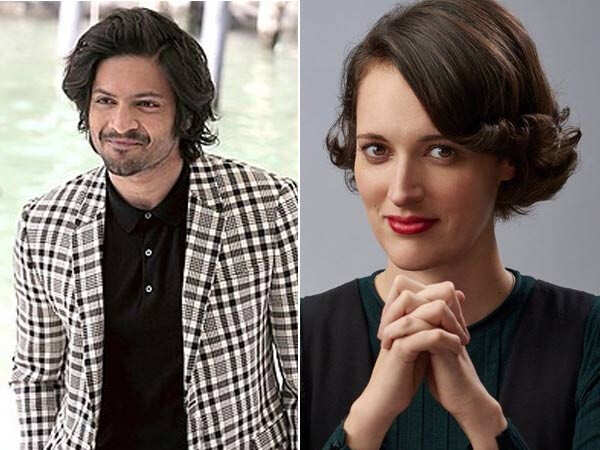
Noted English actress-screenwriter Phoebe Waller-Bridge will be seen in an upcoming film Rule Breakers also starring Ali Fazal. Formerly known as Afghan Dreamers, the film explores themes of resilience and defiance in Afghanistan.
Ali, who has been seen previously in international projects like Victoria & Abdul and the acclaimed series Furious 7, is keenly looking forward to his collaboration with Phoebe. “I am thrilled to be a part of Rule Breakers and to share the screen with such a talented actress as Phoebe Waller-Bridge. This project resonates with me deeply, and I believe it’s crucial to tell stories that highlight the strength and resilience of individuals in challenging circumstances. I look forward to bringing this narrative to life and reaching audiences globally.”
Directed by American filmmaker Bill Guttentag, the film is based on the inspiring true story of an all-girls robotics team from Afghanistan called Afghan Dreamers. The film throws light on the chaotic, sometimes dangerous backdrop of the country’s politics.
Ali added, “I am so thrilled to be able to support a film that we think every parent should take their daughter to watch in the theatres. And the story being so inspiring, it was no surprise that Phoebe also stepped in. Her addition to this film has lifted it to greater heights. We play key roles at different stages in Roya Mahboob’s (the founder of the Afghan Girls Robotics Team) life and journey along with the Afghani robotics team for girls.”
With Pathaan, our aim was to create a film that would raise the bar of action movies in India-Siddharth Anand
8:09 AM
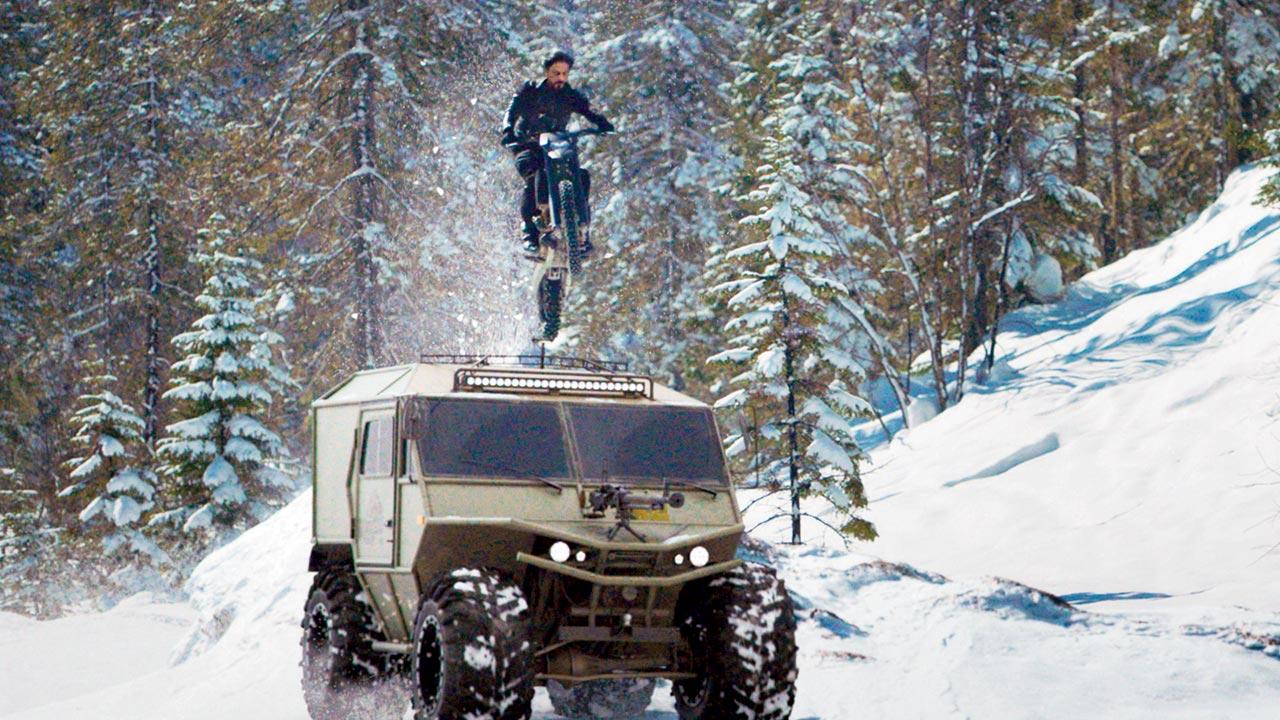
Pathaan director on taking his cast across eight countries to film sequences for Khan’s return vehicle
Hiren Kotwani (MID-DAY; December 2, 2022)
With Pathaan marking Shah Rukh Khan’s first film in four years, director Siddharth Anand was keen to create an offering that befit his stardom. In a bid to make Pathaan a “visual spectacle”, Anand took his cast and crew, including Khan, Deepika Padukone, and John Abraham across eight countries for the shoot of the actioner.
“The selection of the right locations is always an important part of making a film, and it was more crucial for an actioner like this one. We wanted to create a spectacle for audiences; one that they have never seen before,” says Anand, whose previous offerings include dramas like War, Bang Bang, and Bachana Ae Haseeno.
Filming for Aditya Chopra’s production took place across Spain, UAE, Turkey, Russia and Siberia, Italy, France, and Afghanistan. “This was done to achieve a variation in the [settings]. A lot of planning went into deciding how we would go about filming.”
Pre-production for the film, which also releases in Tamil and Telugu, took nearly two years to complete. “Our aim was to create a film that would raise the bar of action movies in India. We have shot in remote and exquisite spaces so as to make the film both immersive and outlandish,” says the director of the January 25 release that was shot near Paris’s Eiffel Tower, and Siberia’s snow-clad mountains.
Afghan Dreamers is a very important story that needs to be told-Ali Fazal
8:10 AM

The actor’s next Hollywood project follows the inspiring true story of an all-girls robotics team from Afghanistan
Renuka Vyavahare (BOMBAY TIMES; November 9, 2022)
After elaborate wedding celebrations across cities, Ali Fazal is back to work. The actor has dived into his next Hollywood venture, which will be directed by filmmaker Bill Guttentag, a two-time Oscar winner for his shorts You Don’t Have To Die and Twin Towers.
Ali will be seen as one of the leads in the film based on the inspiring true story of an all-girls robotics team from Afghanistan called Afghan Dreamers. The team from Herat, Afghanistan, founded in 2017 by Afghan tech entrepreneur Roya Mahboob includes girls in the 12 to 18 age group and their mentors.
While a documentary made by David Greenwald captures the all-girl team’s struggle to succeed in international competitions while combating their male-dominated culture and the threat of the Taliban, Guttentag’s feature film will also follow the story about the program that was started by Roya to help young women develop their skills in the field of science and technology. The film is set against the chaotic and sometimes dangerous backdrop of the country’s politics.
Ali says, “I am excited and humbled to be directed by Bill, who has an impeccable body of work. Afghan Dreamers is a very important story that needs to be told, and I’m happy to be part of its cinematic retelling.”
The film’s shoot recently began in Morocco. A majority of the 50-day schedule is being filmed across Morocco and Budapest.

Tigmanshu Dhulia cancels Afghanistan leg of The Great Indian Murder 2 shoot due to the political scenario
8:02 AM
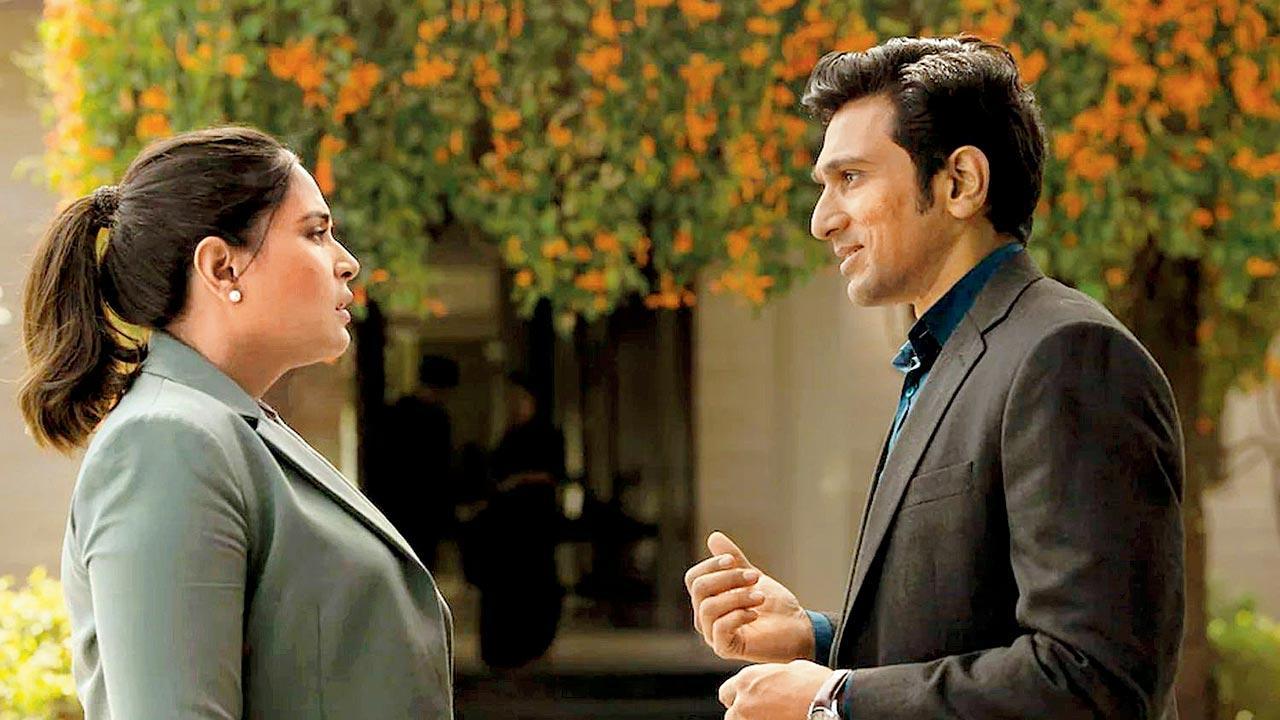
Sources say Tigmanshu has cancelled Afghanistan leg of The Great Indian Murder 2 shoot due to the political scenario; scouting for similar locales in India
Mohar Basu (MID-DAY; May 25, 2022)
Having left the first season of The Great Indian Murder on a cliffhanger, writer-director Tigmanshu Dhulia is gearing up for the second edition. A chunk of the upcoming instalment of the Pratik Gandhi and Richa Chadha-starrer was to be shot in Afghanistan, primarily in and around Kabul. However, owing to the current situation in the war-torn country, the makers have cancelled the plan. With the series expected to go on floors by July, the team is now working at a brisk pace to find alternative locations.
A source close to the production team reveals, “Filming in Afghanistan is out of the question because of the change in the country’s leadership. We are now looking at places with a similar landscape.” It is heard that the makers are considering Uzbekistan, and parts of Gujarat and Rajasthan for the stint.
The Disney+ Hotstar series is adapted from Vikas Swarup’s bestseller, Six Suspects, and traces the murder investigation of a politician’s son. While one of the suspects was shown dead at the end of the first season, the spotlight will now be on the remaining five characters — essayed by Ashutosh Rana, Raghubir Yadav, Paoli Dam, Sharib Hashmi and Shashank Arora.
Coming soon: A ton of foreign films and series shoots in India
8:44 AM

To push India as a shooting hub for foreign projects, Film Facilitation Office (FFO),which comes under the I&B Ministry, has been ensuring timely permissions for film shoots. In fact, this year, at Cannes, the India Pavilion will focus on positioning India as the ‘Content Hub Of The World’
Niharika Lal (BOMBAY TIMES; May 16, 2022)
Over the last few years, the I&B Ministry’s efforts to make film shooting an easier and more seamless experience for foreign filmmakers seems to have paid off, with India becoming an increasingly popular shooting destination with foreign filmmakers. Even as the Film Facilitation Office (FFO) — which comes under the ministry — collaborates with states and central agencies to ensure timely permissions for film shoots of foreign projects — this year, at Cannes, the India Pavilion will focus on positioning India as the ‘Content Hub Of The World’ and establishing international partnerships in film shooting, distribution, co-production, and more.
As a result, while the pandemic may have put a temporary pause on foreign shoots, post reopening, several series and movies from across the world are lined up for shoot in India in the coming months. In addition to this, post-July, over 10 Hollywood and other foreign projects will be shot in India, say line producers.
KASHMIR AND VARANASI TO KARNATAKA: FOREIGN FILMMAKERS SHOOT ACROSS THE LENGTH AND BREADTH OF INDIA
Rahul Singh, a line producer who recently shot the Czech film Two Words As A Key in India, says, “We filmed in Varanasi, in hilly areas, at railway platforms and in trains. Broadly, for foreign filmmakers, prime Indian locations are — Varanasi, Delhi, Haridwar, Rishikesh, Spiti, Jaipur-Jodhpur and snow-capped mountains of Kashmir.”
A producer adds, “A few upcoming projects will also be shot in cities such as Kanpur and Bhopal, where foreign filmmakers intend to create the Bombay of 60s-70s. While metros have undergone massive changes, these small towns have retained that look, so they are preferred for such projects.”
Deborah Benattar, Indian producer of several French films such as The Best Is Yet To Come, Animal (a French documentary, shot in Mumbai, which was one of Cannes Film Festival 2021’s selections), Fahim (shot in Kolkata), Maya (in Goa), says, “We just completed the shoot of a French film, The Braid, in Uttar Pradesh and Karnataka. As far as we know, it was the first foreign feature film shot in India after foreign filmmakers were allowed to shoot in India amid the pandemic, and we had around 120 cast and crew members. The film has been shot at three railway stations. A special train was also booked for the shoot. Before the pandemic hit, the Swiss film And Tomorrow You Will Be Dead was filmed in Rajasthan in February and March 2020. We created Pakistan in Rajasthan.”
Tanvi Gandhi, an independent film producer, who recently finished an Estonian production, Wait Of Light, a film on ragpickers in Delhi, says, “I took permissions through the FFO and was pleasantly surprised by how smooth it was. I was getting follow-up emails and calls from Delhi Tourism, and it was quite a great experience. When foreign filmmakers come to India, their shoot is specific to the script. Often, they want to show locations that the global audience can identify India with — be it backwaters, rural spaces and places through which they can show the beauty of the country.”
TIBET, AFGHANISTAN, PAKISTAN: FILMMAKERS RECREATE FOREIGN LOCALES IN INDIA
Indian producers point out that foreign filmmakers, be it big-budget producers or those with modest budgets, have always been inclined to shoot in India as the country offers a variety of shoot locations. And now, with a relatively easier process, they are also recreating other foreign locales, like Tibet, Afghanistan, Pakistan and Bangladesh, in India.
Tanvi Gandhi, an independent film producer, says, “The sand dunes of Afghanistan can be recreated in Rajasthan’s deserts. If shot smartly, some areas of Himachal and Kashmir can be shown as European countries. The rough terrain of Ladakh can be recreated as Tibet, as in the case of the French film To The Top. Even the dense forests of the northeast can be shown as southeast Asia.”
Pravesh Sahni, Indian producer of several international projects, adds, “We have recreated Pakistan in Chandigarh and Patiala for films like Zero Dark Thirty, where we even recreated US Embassy’s building in Pakistan. In recent years, for Chris Hemsworth’s Extraction, Bangladesh was recreated in Ahmedabad. Our job is to find identical locations, and then the art department creates signage and the look.”
‘RAILWAY PERMISSIONS HAVE BECOME SO EASY NOW, TOO’
Line producers point out that while airport permissions remain a bottleneck for foreign projects, filming in India has become easier even in areas where permissions were difficult earlier. Back in 2011, a train sequence — which included a scene on top of a moving train — for the James Bond film Skyfall couldn’t be shot in India because of issues between the production team and the Indian Railways.
Pravesh Sahni, Indian producer of several international projects, says, “The Indian railways is a unique entity in itself, and foreign productions often want to include a few shots of railways. Lately, the permission in railways has become quite easy, which was not the case before.”
Indians are in a much better place than many other countries-Daler Mehndi
8:11 AM

Juhi Chakraborty (HINDUSTAN TIMES; January 26, 2022)
Singer Daler Mehndi has one wish for every Indian this Republic Day — to feel grateful to be living in this country. He urges his fans to “love our country” as he gears up to stage India’s first virtual live concert in the metaverse on R-Day.
The singer, who is dedicating the performance to the nation and all the people residing in it, will steal the spotlight with his evergreen hit albums such as Namoh Namoh, India India and Jago India. Brimming with excitement, he says, “The whole world will be a part of it. It is a new concept in India and a challenging thing to achieve. At first, I didn’t understand the concept but then I realised it is quite popular outside India. It is a digital avatar and totally virtual and I think after a few years, this is going to be the next big thing.”
Glad to see his music resonating with people during these grim times, the 54-year-old feels that the country has done far better in dealing with the Coronavirus crisis for the past two years, as compared to other countries.
Explaining the statement, the singer known for songs such as Bolo Ta Ra Ra, Tunak Tunak Tun and Na Na Na Na Na Re shares, “We [India] are a thriving economy. Look at Afghanistan and the turmoil that is there in the country. There are so many countries that are undergoing internal and external conflicts across the world. We [Indians] are in a much better place than many other countries. Even with Covid-19 itni badi trasdi guzar sakti thi but aisa nahi hua, third wave bhi humne samhaal liya.”
‘Hindustani Islam’ is different, says Naseeruddin Shah & slams Taliban backers
10:05 AM

Mohammed Wajihuddin (THE TIMES OF INDIA; September 1, 2021)
Mumbai: Drawing a distinction between “Hindustani Islam” and the practice of the faith in other parts of the world, noted actor Naseeruddin Shah on Tuesday condemned sections in the Indian Muslim community who are “celebrating the Taliban’s return to power”, reports Mohammed Wajihuddin.
In a clip recorded in Urdu, Shah criticised those who welcomed the revival of Taliban. “Though the Taliban’s return to power in Afghanistan is a cause of concern for the whole world, celebration of the barbarians by a section of Indian Muslims is no less dangerous,” he said.
He said every Indian Muslim should ask themselves if they wanted a reformed, modern Islam—“jiddat pasandi modernity”—or the barbaric values (“vaishipan”) of the past centuries. He also reiterated that Indian Islam has always been different from Islam in other parts of the world. Ending his statement on a prayer, he said: “May God not bring the day when Hindustani Islam is changed so much that we don’t even recognise it.”
I am unable to reach my friends in Afghanistan-Saumya Tandon
8:06 AM

The actress had shot for an international project in Kabul in 2008
Neha Maheshwri (BOMBAY TIMES; August 25, 2021)
People across the globe are still in a state of shock over the manner in which the Taliban swiftly took over Afghanistan. Many are fervently praying for the safety of their friends in the country. Saumya Tandon, who had visited Kabul in 2008, says that she is worried for her friends in Afghanistan. Saumya says, “It’s heartbreaking to see what’s happening in Afghanistan and how people are scrambling for their lives… the visuals are extremely disturbing. I shudder to think what the future has in store for them. I hope and pray that they are safe.”
The former Bhabi Ji Ghar Par Hai! actress feels a strong connection with the Afghans and remembers their warmth, hospitality and generosity. She recalls, “I had been to Afghanistan and stayed in Kabul for a month to shoot an international project, in which I played an Afghan girl, Khushi. The story was about a girl, who aspired to be a doctor and fulfils her dream despite facing resistance from people and society. It was a story of women empowerment and what’s happening right now is ironic.”
Saumya says, “I got an opportunity to explore Afghanistan and it was such a beautiful experience. The cast, comprising Afghan actors, helped me with the language. The locals are so warm and giving. When I visited shops and the minute the owners realised that I was from India, they would give me things for free, as gifts. The people there have a very strong sense of self-respect. They like to do things for others. What I experienced during my stay was so different from the perception I had of the country, which has been facing war for so many years. The locals always had nice things to say about India, because they felt that we have always supported them. I shot at the Indira Gandhi Hospital and they showed me a lot of places, which India helped them build.”
While she enjoyed her time shooting in Afghanistan, Saumya was also worried about her safety. She recounts, “There were two women in the unit, including my co-actor and a crew member. They told me how difficult it was for women and how much they had to fight for their freedom. My co-actors spoke about the constant terror they lived in. They were living in fear and uncertainty for many years and look what has happened to them again.”
The actress made several friends during her stay in Kabul and is now worried for their safety, as she hasn’t been able to connect with them. She says, “After the recent unrest, I tried contacting my Indian friends through whom I had gone there, but I didn’t get any reply. I hope they are safe. I just want to reach out and ask them if they are okay because the visuals that we are seeing are very disturbing. I feel helpless, but my prayers are with them and my heart goes out to them.”
In Afghanistan, I couldn’t step out alone at night to get medicines for my unwell mother-Warina Hussain
8:04 AM

Renuka Vyavahare (BOMBAY TIMES; August 23, 2021)
The events that unfolded in Afghanistan recently have left people around the world shaken up. Taliban’s takeover resulted in chaos, confusion and an alarming sense of unrest and fear among the people of Afghanistan and many others who are currently stranded there. Bollywood actress Warina Hussain, 25, moved from Afghanistan to Uzbekistan years ago due to the longstanding political turmoil in the country. After that, she migrated to India 10 years ago, and she made the country her home. Warina, who made her Bollywood debut in 2018 with Loveyatri, says that she can relate to those wanting to leave Kabul in the aftermath of the Taliban seizing power.
“My life was a struggle. I have no father. If you don’t have a man in your family, it’s more difficult. Since the conditions in Afghanistan were not good, we went to Uzbekistan,” the actress had revealed in a previous interview. The family stayed there for four years before moving to India as they could speak Hindi and English. Given the craze for Bollywood films in Afghanistan, Warina and her mother were familiar with Hindi over Uzbek or Russian. After modelling in Delhi for a while, she moved to Mumbai, where she finally made her foray into Bollywood.
The actress whose family has now migrated to the United States, said, “I was supposed to join them, but I chose to make Mumbai my home. I have worked hard to establish a career for myself here.”
Talking exclusively to Bombay Times from the UK, where she is currently shooting for a film, Warina voiced her thoughts on the raging crisis in Afghanistan. Excerpts from the conversation…
Afghanistan is facing a massive humanitarian crisis today. Visuals of people trying to cling onto flights to leave the country or crowding the airport in the hope to seek refuge in other countries are tragic. What were your first thoughts on seeing the events unfold on news channels?
I saw myself in each Afghan person clinging onto a flight for the sake of survival. My life, like theirs, is the result of migration from a war-torn country.
My family moved from country to country in search of a better life. Finally, we arrived in India, a liberal and loving country that welcomed us and we made it our home. Like anyone else fighting for survival, I began working at a young age and had no idea I would one day become a Bollywood actress. After years of struggle, a big launch by Salman Khan sir (who produced Loveyatri) and an opportunity by A R Rahman sir (99 Songs), made me eternally grateful. Having walked in the shoes of someone who has migrated, I can tell you that it is not an easy journey. Not every immigration ends up being a success story. That is why, for the past few days, all I have been thinking about is the survival of the Afghan people. Since the war in Afghanistan began, the number of Afghan refugees fleeing for their lives has increased dramatically, raising the question of how long will they be able to do so. If the country does not achieve the long-awaited peace it deserves, what I have suffered, what my mother has faced, and what others are facing now will become the tale for future generations, too.
The Taliban claimed in their press conference that the rights of women in Afghanistan will be respected ‘within the framework of Islamic law’. Do you trust these reassurances?
The cruel memories of the past still send shivers down our spine, and given the current uncertain situation, trust is a luxury the Afghan people cannot afford anymore.
You have predominantly lived in an Afghanistan that did not have Taliban rule. At that point, was life better for women in terms of safety and education?
Yes, I have lived in an Afghanistan where I enjoyed family picnics and the smell of independence. However, since it was still a country with newly gained independence from the Taliban, it had its dos and don’ts. For instance, a girl couldn’t go out alone at night. There were times when I couldn’t step out alone at night to get medicines for my unwell mother. It’s the product of many years of war, which has tainted people’s views. If we actually want to talk about a peaceful Afghanistan, we need to go back to the time of my grandmother and her forefathers, when Kabul was known for its fashion, art and culture, tourism, trade, and independence were all part of everyday life. Speaking of leadership, it’s high time the people of Afghanistan have the basic freedom of choosing their own leaders.
How do you think the current political situation in the country will impact women and their rights?
I am afraid that all these years of progress will vanish into thin air, and that after years of fighting for women’s rights, women will once again be treated as second-class citizens and deprived of basic rights.
Would you feel safe enough to visit your country under Taliban rule as a Bollywood actress?
Whether I’m an actor or not, I’ll never be comfortable visiting any country where women are restricted from simply being free humans.
A lot has been spoken about the implementation of Sharia law (religious law) in Afghanistan by Taliban. How does it affect women and children?
Khadija, Prophet Muhammad’s wife, was one of the first to accept Sharia. A religious law was created for the safety of women and also because of injustice, and today, injustice is still occurring under the name of religion. I’ve heard of girls being forced out of their homes against their will to marry men they despise. These men should be held accountable for the lives of innocent mothers and children killed in bomb blasts. One cannot deny basic human rights to people while asking them to follow Sharia law.
As an Afghan working in India, what are your expectations from the Indian government or other countries at the moment?
I am confident that India, as a friend of Afghanistan for decades, will do its bit. However, I would like to urge the United Nations to step in, because the concept of a peaceful country is preferable to simply relocating asylum seekers. One may flee, find a better life, but the identity crisis, multi-cultural problems, and deep-down homesickness will remain. One will always struggle to answer the question, ‘Aren’t we all one world?’
Syria is not peaceful, Palestine is not peaceful, but nobody really speaks about it-Gauahar Khan
7:59 AM

Sugandha Rawal (HINDUSTAN TIMES; August 23, 2021)
Actor Gauahar Khan is spending her birthday wishing for peace all across the world. She hopes that the exploitation of people in the name of religion will end. “I spend every birthday, in fact every day, wanting peace. I want the suffering to end. I want people to just stop (doing) everything in the name of power, religion. They need to stop exploiting people’s minds to take them away from the real issues. I really want people to find peace and happiness,” shares Khan, who turns 38 today.
Throughout the years, the actor has been vocal about significant issues, from patriarchy and global conflicts to Islamophobia, and the ongoing crisis in Afghanistan. She uses social media to voice her opinions. Asked about the same, she says, “Right now, everybody is talking about the Taliban entering Kabul, which is absolutely crazy. I want to know how many people actually spoke up about the issues that were happening in Afghanistan in the last 20 years when America was there. It was not at all happy and hunky-dory.”
She continues, “It was a war zone, people were still dying. The Taliban was still attacking people. It was not a peaceful land, Syria is not peaceful, Palestine is not peaceful, but nobody really speaks about it. I feel it is a media operated propaganda that people want to be selective about the causes they support”. According to her, humanity is “across religions, sex, faiths and countries”.
“If you are humane, you should have the same kind of values for everybody. It has got nothing to do with, ‘humko matter karta hai toh hi hum baat karenge warna nahi karenge’. Your voice is yours. You need to use it wisely and use it for the correct topics,” says the actor, who has been having an eventful birthday month with back to back releases. Meanwhile, her birthday also marks one year since actor Zaid Darbar proposed to her for marriage, making it more special.
It was because of this war and turmoil that my family was forced to flee Afghanistan-Warina Hussain
8:11 AM

Sugandha Rawal (HINDUSTAN TIMES; August 22, 2021)
The visuals of people desperate to leave Afghanistan reminds actor Warina Hussain of her traumatic past, and revives memories of her family leaving the country in the middle of a turmoil.
“It’s eerily similar to 20 years ago. It was because of this war and turmoil that my family was forced to flee Afghanistan, now I see others losing their homes,” she says of the crisis after the Taliban took charge.
The actor left Afghanistan as a child, and has been in India for over a decade. But memories of what was once her homeland are still alive. “My memories will always be of family picnics, food, and a beautiful spring in Kabul, which I doubt will ever be the same again; the only air one will now breathe will be of suppression,” she says in dismay.
As a refugee, she can understand how difficult it is. “I was fortunate that India accepted me and became my home but I’m afraid that isn’t the case for everyone. Such a country’s conditions result in thousands of refugees and asylum seekers arriving in neighbouring countries, where immediate accommodation may be difficult,” says the actor, who made her Bollywood debut with Loveyatri in 2018.
Hussain appeals for other countries not to abandon Afghanistan. “And for the United Nations to intervene. It’s the wish and plea of a woman who doesn’t want her fellow Afghan women to be treated as second-class citizens,” she ends.
My heart breaks for all those people who spent the last two decades rebuilding Afghanistan-Celina Jaitly
8:03 AM
BOMBAY TIMES (August 22, 2021)
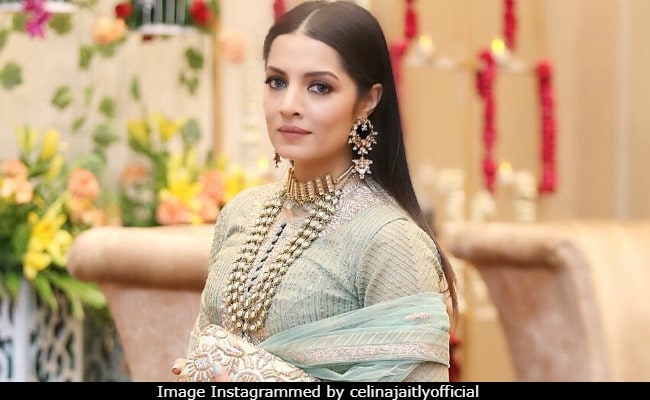
Actress and UN Equality Champion, Celina Jaitly, who has her roots in Afghanistan, took to social media to voice her opinion on the current political turmoil caused after the Taliban took over. Talking about why she hasn’t addressed the issue so far, she said, “In order to protect the safety, security and location of friends and people known to me who are stranded in Afghanistan, I had no option but to wait until things were better for them. The current outcome is shocking, I never believed we would see this day. Having said that, my heart breaks for Afghanistan, it breaks for my Afghan brothers and sisters around the world, it breaks for people who spent the last two decades rebuilding Afghanistan and it breaks for all those people who put their faith in powers whom they thought would protect them.”
The actress further added, “I also feel a sense of great guilt that I survived, but I survived thanks to the courage of one woman who fled oppression four generations ago and came to seek refuge in India. India offered refuge, dignity, respect and opportunity for that family’s generations to grow and evolve. And therefore, I stand here today in order to speak from that voice of four generations ago, that it is our... it is the governments around the world... it is their moral and legal responsibility to protect the people fleeing from oppression, from bullets, trying to save the children from being trafficked, and you never know the very person that you protect today and give refuge to, may one day become the pride and joy of your country. Being a mother myself, I know, and I am sure that no one puts their children in a boat unless they know that the water is safer than land. A lot of people put everything on land to rebuild Afghanistan in the last two decades, their lives are all in jeopardy at the moment.”
While she applauded the strength of the aid workers, she said that the world cannot ignore the issue. “Afghanistan is a wound that is bleeding, and if we all turn a blind eye to this wound, this blood will come and knock on everybody’s door in the near future.”
All the militancy aside, Afghanistan is a beautiful country with warm and hospitable people-Satyadev
8:09 AM

Filmmaker Jennifer Alphonse and actor Satyadev recount the experience of shooting for their film Habeeb in Afghanistan and tell us why the current situation is heartbreaking for them
Suhas Yellapantula (BOMBAY TIMES; August 21, 2021)
The chilling visuals coming in from Kabul and other parts of Afghanistan as Taliban took over the country has shocked the world. But for filmmaker Jennifer Alphonse and South actor Satyadev, the sense of grief feels personal. They had shot in Afghanistan in 2017 amid death threats for a Hindi film titled, Habeeb, with the help of local Afghani artistes and technicians. The makers of Habeeb released a lyrical video, giving the first glimpse of the film, but for Jennifer and co, there’s only one thing on their minds — the safety of their Afghan friends.
Speaking to us, Jennifer says, “It’s heartbreaking to see the situation in Afghanistan right now. We shot in Kabul, Jalalabad and Panjshir along with a crew of 20 Afghani artistes and technicians. I’ve remained in touch with them and many of them are still stuck there. In fact, I spoke to one of my friends from Afghanistan recently and I just felt helpless. To listen to their plight is terrible and we can do nothing, but pray for their safety.”
Jennifer and her crew shot for 30 days in Afghanistan. They are the second Indian film crew (after Khuda Gawah in 1992) to shoot in the region. “I’m probably the only Asian woman to have shot a film there. When I first told people that I’m going to Afghanistan to make a film, they thought I was crazy. It was a war zone and there was a risk to our safety. But I think the passion for cinema is what drove us to go ahead and shoot there. I felt if I have to die making a movie, so be it,” says Jennifer.
For Satyadev, the current situation in Afghanistan brings back memories — both good and bad — of the time he spent in the war-torn region. “Although people had warned us not to go there, I was adamant as an actor that we should take the risk and shoot in real locations in Afghanistan. The day after we landed, there was a bombing at the national assembly there and everything was on red alert. We received death threats, but we were determined to go ahead with the shoot. Having travelled so far, there was no question of turning back,” he says.
Admittedly, one day the cast and crew were handcuffed and held at gunpoint by the militants as well. “Only after we promised to never return to the place did they let us go. It was a spine-chilling, unforgettable experience.”
Jennifer chips in saying, “The Taliban consider cinema as haraam and we received threats from them on a daily basis. But it was our passion for cinema that kept us going. Thankfully, we had protection from Afghan police — there were eight to nine officers with us all the time. Sometimes, we’d hear gunfire while shooting. The Afghan officials would get irritated with us at times because they were at war with the Taliban and here we were, making a movie.”
The risks of shooting in a war-torn region notwithstanding, Satyadev says they had a great time interacting with the locals. “All the militancy aside, it’s a beautiful country with warm and hospitable people. They are very proud of their culture and introduced us to authentic Afghani cuisine, which was delicious. I’ll always cherish my trip to Afghanistan, it was an unforgettable adventure,” says the actor.
Jennifer adds, “In no other country have I seen people treat Indians the way Afghans do. As soon as we tell them that we are Hindustani, they greet us with a hug or a warm handshake. It breaks my heart to see them in anguish today.”
Satyadev hopes the people in Afghanistan can find peace soon. “The visuals from the Kabul airport particularly hit hard. It was the same place that we had landed at not so long ago. We may be the last Indian film crew to shoot there for a long time. But I genuinely hope things get resolved soon, so that people can go and explore this beautiful country,” the actor adds.

The Taliban won’t allow Afghanistan film industry to survive-Kabir Khan
8:14 AM

Sugandha Rawal (HINDUSTAN TIMES; August 20, 2021)
Filmmaker Kabir Khan is disturbed and concerned about the ongoing Afghanistan crisis with Taliban gaining power, and he fears it will first cut the entertainment cord of the country. “It is bizarre that after 20 years Taliban can come back. It makes me remember one little incident from my documentary, where we were interviewing some of their members. One senior Taliban member just looked straight into my camera, said, ‘You think we are gone, we will be back’,” he says.
The 52-year-old, who documented his own experiences in his directorial debut, Kabul Express (2006), is worried about the safety of the people. “One of my friends, actor Bashir has been forced to go underground,” he reveals.
The director feels artistes are anyway soft targets. “In the first avatar of Taliban in 1996 -2001, they did not even allow photography. I have serious doubts whether they will let the film industry, which is pretty dynamic now, survive. We know their opinion on cinema and music. The Taliban ideology will not allow them to continue.”
But is he planning a follow up to his documentary? “It is early days. I want to see how it all pans out. But there could be a possibility of doing some work,” he adds.
Every filmmaker will be always very keen to shoot in Afghanistan-Girish Malik
8:13 AM

Juhi Chakraborty (HINDUSTAN TIMES; August 20, 2021)
Having shot parts of his film Torbaaz (2020) in Afghanistan, filmmaker Girish Malik is gutted with the present situation in the country. “We may not have shot with actors in Afghanistan but we did shoot backgrounds in the country because the story was set there. We shot in the borders of Afghanistan and in Kyrgyzstan and worked with around 500 native Afgani,” shares Malik.
Talking about his experience of working with the locals, he says, “The moment you meet any Afghani person, you form an immediate connect. They love Bollywood and everything about India. I asked a lot of people about their opinion of India and they told me that when they look at India, they we feel safe. Every Afgani’s dream is to visit India.”
The film, which starred Sanjay Dutt, was set in war-torn Afghanistan. The story of the film was about a coach who wants to train refugee camp kids in cricket, despite opposition from a militant leader, who wants to recruit them as suicide bombers. “When you meet the people there or the refugees, they will tell you that this turmoil has been happening for the last 40 years. It is a great suffering that the country has gone through and continues to,” he laments.
Malik wants normalcy to resume soon so that the cinematic relations between the two countries can continue. “No one can deny the raw beauty which the country has. Every filmmaker will be always very keen to shoot there. I just hope that this is not the end of India and Afganistan film relations,” he ends.

I remember leaving Kabul overnight as a child due to the escalating violence-Tisca Chopra
8:27 AM
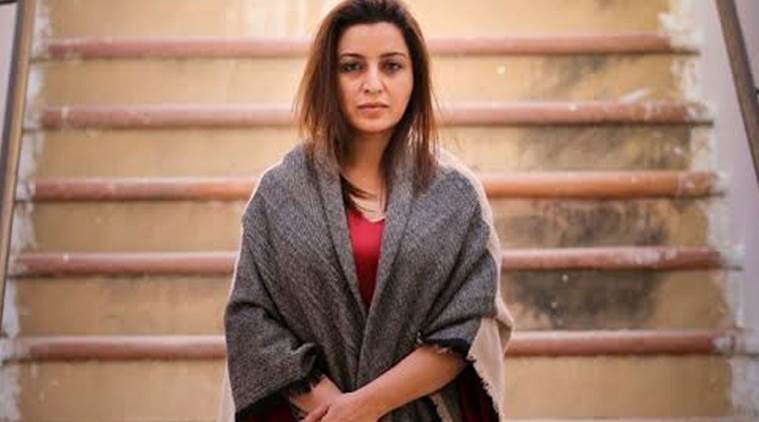
The actress, who lived in Kabul for ten years, says her “whole childhood is connected to that land” and that the pictures and videos of people attempting to flee the country have left her heartbroken
Divya Kaushik (BOMBAY TIMES; August 19, 2021)
For Tisca Chopra, who spent 10 years of her childhood in Kabul, the photos and videos of Afghanis attempting to flee the country as Taliban took over the capital city of Afghanistan, were “disturbing and heartbreaking”.
“I worry for the women and children of Afghanistan under the Taliban regime because the freedom to work, education... all that might no longer exist. So many women fought so hard for years for progress, for their basic rights, and all that might just disappear, which is heartbreaking. From what we all have been seeing on the Internet, and whatever I have been reading and watching about Afghanistan, everything is disturbing. My whole childhood is connected to that land. I can understand the sense of betrayal that the Afghanis might be feeling. What are they going to do? The images of people hanging to the wheels of the aircraft that was leaving, falling to their death, were heartbreaking. For them, death was better than living in that country. To see such images, to think about what those people must be going through is disturbing,” says Tisca.
Tisca, who recently shared a picture of her as a child in Kabul on social media, says that Afghanistan “is the land of utmost beauty and utmost turmoil.”. “It is very tragic that the beauty and splendour of something so beautiful has to be cursed by something like this. It’s a strange dichotomy that the land faces. It’s constantly been in turmoil over years. I have so many Afghan filmmaker friends, now settled in different parts of the world. I have been talking to them and they all are so heartbroken. It is going to be the worst for women and children. I just hope something could prevent what we all could see is now going to happen in Afghanistan,” she says.
Reminiscing about her growing up years in Kabul, Tisca says that even that was a time of war for the country. “I don’t think Afghanistan has never not been at war. In my childhood I have seen some very violent incidents, like a tank burning in the middle of the street, just two streets away from my house. We went to somebody’s house on Christmas and had to stay there for three days because curfew was declared in Kabul. These were just some of the things that we saw while growing up in Kabul. My dad was the principal of India International School and we were very good friends with the entire Indian community that was staying in Kabul at that time. It was a close-knit community and those friendships exist even now. I remember we had to leave Kabul overnight as it was getting very violent and the Indian embassy asked all the Indians to evacuate. Leaving overnight was very similar to what is happening now, but at least we had a chance to leave. I never had the chance to visit Afghanistan again and it looks like I am not going to get it for a long time now,” says Tisca.
Sanjay Dutt-starrer Torbaaz to get an October 2020 release
8:08 AM

In the making for almost three years, producer of Sanjay Dutt's Torbaaz to release the film in October
Uma Ramasubramanian (MID-DAY; March 14, 2020)
Over two-and-a-half years since the project went on floors, Sanjay Dutt's Torbaaz is finally gearing up for release. Producer Rahul Mittra says that the actioner, which revolves around child suicide bombers in Afghanistan, is eyeing an October 2020 release. "This is the worst time to even think about releasing one's film, as all movies are being pushed [due to the Coronavirus scare]. But I can assure you that Torbaaz will be a 2020 offering; we are planning to release the film in October."
Interestingly, while Dutt has been mum about Torbaaz, he took to social media yesterday to announce that his other offering, KGF Chapter 2, will hit the marquee on October 23.
Torbaaz, which also stars Nargis Fakhri, had rolled in Kyrgyzstan in December 2017, followed by another shooting stint in May 2018. After a spate of intermittent shoots, the Girish Malik-directed venture reached the finish line in February last year. Ask Malik why the post-production took almost a year, and he attributes it to the visual effects employed in the thriller. "The film is high on VFX; we have recreated the entire city of Kabul with the help of special effects. Such films take time." Mittra chimes in, "Since we had to [depict] Afghanistan, we did a recce for six months to get the right location [and zeroed in on Kyrgyzstan]. So, one can't say that the film is delayed because such processes take time."
There were snipers sitting on top of mountains in minus 15 degrees to keep us safe-Kabir Khan
7:00 AM

Roshmila Bhattacharya (MUMBAI MIRROR; December 20, 2019)
 On December 15, 2006, Kabir Khan rode into Hindi films on the Kabul Express. Thirteen years later, he admits he could make an entire film on the making of his debut directorial. In fact, a lot of what he went through himself, found its way into the script.
Before the Taliban took control, Kabir and his executive producer on the film, Rajan Kapoor, had gone to Afghanistan to make a documentary for the Red Cross on the effect of war on children there. That project remained incomplete, but stayed on their mind, and when they saw the Taliban regime crumbling, the duo decided to return to the war-ravaged country and complete it. “But while other journalists and filmmakers were entering via Peshawar, we knew that being Indians we would never get a visa for Pakistan, so, we flew to Uzbekistan, then, drove down to Tajikistan and tried to cross the border into Afghanistan. But the airports had been bombed out, snow storms had caused an avalanche, so, roads were blocked while the rivers were flooded. Even the helicopter we were to take, crashed on the eve of our departure,” Kabir reminisces.
They were stuck there for two weeks, and, on Rajan’s urging, returned to the air base one last time where they learnt that two Russian helicopters were on their way to Kabul with medical supplies. For $2000, one of the pilots agreed to smuggle them across in the cargo. “But just before we were to reach Kabul, the pilot took the chopper down to 15-20 feet above ground, and told us to jump out with our bags as we couldn’t be seen travelling in an Air Force plane. We had no choice but to comply. Surrounded by snow-capped mountains, the first thing we saw, as we touched terra firma, was a Mujahideen walking towards us with his Kalashnikov cocked. And I told myself, ‘This is how your end was written’,” the filmmaker shivers at the memory.
As the man walked towards them, both Rajan and he started shouting in desperation, “Hindustan, Hindustan”. Surprisingly, he responded, asking, “Hindustan? Amitabh Bachchan?” In answer to their nod, he broke into a Big B song and when told that they were on their way to Kabul, made a quick call. “And like John (Abraham) and Arshad (Warsi) in the film, we entered Kabul riding in a military tank,” he chuckles.
They were shooting in December 2005, in real locations, and after around two weeks, they were asked to meet the Indian ambassador who informed them that he had got an intelligence tip-off that the Taliban had sent five men with instructions to kidnap and kill Kabir, Rajan, John and Arshad. “There had been a lot of stories in the international media about a Bollywood unit filming in and around Kabul and this had upset the Taliban who had sent out spies to track where we were living and shooting, before dispatching the hit men. And when the world’s most dreaded terrorist organisation sends out death threats, you couldn’t but take them seriously,” points out Kabir.
The two actors were sent home and the unit may have returned too, but the government felt that if the Taliban managed to chase them out without them completing their shoot, it might tarnish the country’s image. “The Afghan security minister got in touch and assured us that we would be given adequate security. We were provided with 60 commandos, equipped with everything from rocket launchers to guns. After reviewing the arrangements, the military attaché assured us that the Taliban did not have the firepower to take on this kind of security,” recalls Kabir, adding that this was the only time his producer Aditya Chopra called to assure him that no film from their production house had been stopped midway and that they would recreate Kabul anywhere in the world if need be. Knowing this, Kabir was told to decide what he wanted to do. He decided to stay back and shoot in Kabul once John and Arshad assured him they were returning too. “Not too many heroes would risk their lives to complete the film of a first time director, but they were truly brave and showed a lot of faith.”
And for the duration of the shoot, the unit rode around in a mile-long motorcade of SUVs with guns sticking out of every window in a radius of 100-km outside Kabul. “Some of the locations were still under Taliban regime and inaccessible but we pulled it off thanks to the support of the local government and its people. There were snipers sitting on top of mountains in minus 15-20 degrees to keep us safe. We were there for two months and shot the film over 38 days with a lot of local, non-trained actors. My first film ran on pure passion, sheer grit and a lifetime of courage,” Kabir signs off.
Whenever I am in doubt, I reach out to Salman Khan-Warina Hussain
7:36 AM

Gunjan Sharma (BOMBAY TIMES; August 2, 2019)
Model-turned-actress Warina Hussain had a dream debut last year when she starred in Salman Khan’s LoveYatri alongside Aayush Sharma. However, Warina admits that Bollywood was never on her mind. “I started as a model at a young age. But after a few years I realised that I never attended college, I don’t have a degree and will not be able to choose a different career option. So I thought ab yahin rehna hai toh I might as well take the next step. Luckily, things have been great for me,” says Warina.
The actress adds that this wouldn’t have been possible without Salman Khan, who is also her mentor now. She says, “Salman is a bundle of positivity and he is very supportive. Whenever I am in doubt, I reach out to him. Mentally, I am at peace knowing that he is there for me.”
‘PEOPLE RECOGNISE ME NOW AND I LIKE IT’
While Warina is one-film-old, the actress has gained popularity. She reveals that before becoming an actor, she would travel in autos post-3am just to chill. “I love my auto rides. It’s just me and my earphones and we would travel around Mumbai. But one day an auto driver recognised me asked for a selfie. It was a new experience for me,” she says, adding, “Life has changed in many ways post LoveYatri. Earlier I had a very normal routine. Kabhi film dekhne chale gaye, gym chale gaye. But now, wherever I go, people come up to me and ask for pictures. And I am not complaining about it at all. In fact, I appreciate all the love coming my way.”
‘SALMAN KHAN HAS A HEART OF GOLD’
Salman is known for giving opportunities to new talents. Warina, who was launched by the actor, says that it’s a big responsibility. “He has a heart of gold. He has given opportunities to a lot of people and I feel really lucky that I got this chance, too. I think that it is our responsibility to live up to the chance that he has given us. If we don’t make good use of it, or if we don’t work hard, then it’s pointless. I don’t feel pressurised that ‘Oh, I have been launched by Salman Khan, I have to give my best’, but yes, I do feel that it is my responsibility to not let him down.”
‘I STARTED MY MODELLING CAREER IN DELHI’
Warina moved to Delhi from Afghanistan in 2013 and started working as a model in the capital. However, the actress has moved to Mumbai now. She says, “Delhi will always be special because I started my modelling career here, but after a while, I shifted to Mumbai. Delhi is more about fashion shows, ramp walks and I never wanted to do that. Mumbai is all about commercial modelling, you can get ads or work in music videos. That’s what I wanted to do, so I shifted to Mumbai.”
Subscribe to:
Posts (Atom)