Showing posts with label Adnan Sami interview. Show all posts
Showing posts with label Adnan Sami interview. Show all posts
I’ve made a living out of Mumbai’s monsoons-Adnan Sami
2:56 PM

Onkar Kulkarni (BOMBAY TIMES; August 14, 2026)
For Mumbaikars, the monsoon means different things — steaming cups of chai, waterlogged streets, long traffic snarls, sometimes, a dreamy kind of romance. For singer-composer Adnan Sami, the season has always evoked something more musical. The sound of rain, the mood it creates and the city’s transformation under grey skies have found their way into some of his most memorable songs. He shares with us his love for Mumbai’s monsoon and the memories it holds.
‘I have so many songs that are attached to rains’
Adnan says, “I don’t know why I get so attached to the rain. Right from Bheegi Bheegi Raaton Mein, the number of songs I’ve done that are associated with rain is uncanny. When people say, ‘Oh, I don’t like the monsoon,’ I tell them, ‘Listen, I have made a living out of it!’”
The musician’s latest track Ishq Tamasha, too, has an element of rain. But his love for the season goes beyond music. Sami says he has always been captivated by the atmosphere that rain creates. “I just love the whole vibe of monsoon. I find it extraordinary. My wife is from Munich and my family likes going there for holidays during this period. But I tell them I’m not going anywhere! I want to spend the monsoons in Mumbai.”
‘Bheegi Bheegi Raaton Mein was inspired by the monsoons of Mumbai’
For Adnan, however, the connection between Mumbai’s rain and his music is not merely poetic hindsight. One of his most memorable rain songs was quite literally born out of the city’s monsoon.
“Bheegi Bheegi Raaton Mein was actually inspired by the monsoons of Mumbai,” he reveals. The inspiration came from something as simple as the sound of rain itself. He adds, “The sound of the rain hitting the windowsill was what inspired me to come up with the rhythmic pattern of the song. From there, I came up with the idea of the whole song. That song is absolutely dedicated to the monsoons of Mumbai.”
Adnan’s first memory of a Mumbai monsoon dates back to 1991, when he walked out of a recording studio to discover that the city was witnessing its first hardcore rainfall of the season.
He shares, “The studio didn’t have any windows, so we were completely locked in. When I came out, it was raining cats and dogs, and I had no umbrella. My car was parked far away, so I had to walk all the way to the parking lot and was totally drenched. The song that was running through my mind at that time was Kishore Kumar’s Bheegi Bheegi Raaton Mein. That first experience of Mumbai’s rains has stayed with me forever.”
Virality is just a new name for a superhit-Adnan Sami
3:58 PM

Onkar Kulkarni (BOMBAY TIMES; May 20, 2026)
From delivering chartbusters like Lift Karadey, Tera Chehra, and Kabhi Toh Nazar Milao to carving a niche as a singer, composer, and performer, Adnan Sami has witnessed the evolution of music across generations. Known for being one of the fastest keyboard players in the world, he has seen the industry transition from cassettes and CDs, to streaming platforms and now the era of reels and viral culture. Despite the changing landscape, Adnan believes the essence of music remains the same.
‘Earlier, audiences were far more patient’
Talking about how virality has become the buzzword in today’s music industry, Adnan says the phenomenon itself is not new. “You see, terminology keeps changing. What you call virality today was called a superhit in the past. What you call an item song today was earlier known as a cabaret song. So, the words change, but the principles remain the same,” he says, adding that what has truly changed is the audience’s patience span.
“The concept of longevity has changed because people have changed. Earlier, audiences were far more patient. Look at cinema – Sholay actually flopped in its first couple of weeks before slowly picking up, and the rest is history. Today, your fate is sealed over a weekend. And this isn’t just happening in our field. It’s happening everywhere. In sports, you started with five-day Test cricket, then came One Day Internationals, then T20s, and now even 10-over formats. Eventually, they’ll probably just do a toss and say, ‘Right, you won!’” he laughs.
‘I use AI as an assistant to create rough demos’
While he admits to using AI tools in music production, Adnan, who recently dropped his single, Lipstick, is clear that technology can only assist and not replace originality. “I use AI extensively as an assistant. Things that would earlier take hours, sometimes even days, can now be done much faster with AI-based tools. I’m not talking about composing melodies – I mean the technical embellishments around the music. Sometimes, when I compose a song, I first create a rough demo using AI tools just to get an idea of how it might sound. But I always come back to the human element in the end. Because ultimately, the nucleus has to be yours. The DNA has to be yours. There’s no escaping that. The soul of the music must belong to you. AI can help enhance things, but it cannot replace the core creative identity.”
‘Everything around us has accelerated’
Drawing parallels with the larger world, Adnan Sami shares, “It’s the same with food – you have fast food versus gourmet dining. The world has started moving psychologically very fast. But the funny thing is, while everything around us has accelerated, it still takes 365 days for the earth to go around the sun. That hasn’t changed. Which means the speed is psychological.”
Adnan also points out how songs themselves have become shorter over the years. “Tera Chehra was around seven minutes long, and even the video was about five minutes. Today, songs are usually three-and-a-half to four minutes at best. Earlier, songs had three or four antaras. I was working in that format for many years. One day, I was collaborating with some younger musicians, and after finishing the track, I asked, ‘Where’s the second antara?’ They looked at me in shock and said, ‘Second antara?’ That’s when I realized how much things had changed.”
‘You can’t say making music in any format is easy today’
The musician, however, refuses to believe that shorter music means easier music. In fact, he insists the challenge today is even greater. “Every profession has its own challenges. A television actor might be looked down upon, but the truth is that the television actor probably reaches far more people because he enters people’s homes every single day. The same thing happens in music. A classical musician may say, ‘My performance lasts 30 minutes, while pop artistes finish in three or four minutes.’ Then there’s the advertising composer whose music lasts only 30 seconds, and he has to hook you in just those few seconds. So, you can’t say making music in any format is easy today. In fact, it has become more difficult.”
I was constantly seen as that piano playing singer-Adnan Sami
9:54 AM

Revealing that he felt trapped creatively in the past few years, Adnan Sami discusses stepping away from film music and finding a new sonic direction with ‘Lipstick’
Komal RJ Panchal (MID-DAY; May 18, 2026)
Unexpected and unfamiliar is the road Adnan Sami has taken with his latest single, Lipstick. Visually, the singer has embraced a quirky avatar, complete with kohled eyes, tattoos, and heavy jewellery. He has turned in a different direction sonically as well, blending his songs with spiritual and Sufi-inspired elements. In a candid conversation with mid-day, Sami reflects on his new chapter, where he feels ready to showcase his artistic evolution through his music.
Excerpts from the interview.
Your new video, Lipstick, has a distinct look. Was that a conscious departure from your image?
Absolutely! It would have been easy for me to simply play myself sitting behind a piano, but that felt expected. I wanted to do something rooted and playful. The song has upbeat energy, but I’ve blended it with traditional elements — Rajasthani vocals, folk textures, and Sufi touches. I wanted the visuals to reflect that too. Dressing up as a slightly eccentric, Sufi-like character with rings, surma, and tattoos was great fun.
Why centre the song on lipstick and superstitions?
I realized lipsticks cut across class, culture, and age. Whether you’re rich or poor, young or old, there’s something about putting on lipstick that gives you confidence. Even my daughter loves experimenting with it, and so do grandmothers. Then came the superstition angle. We’ve all grown up with strange beliefs — don’t cut nails at night, black cat crossing your path [is a bad omen]. These things exist in every culture. We’re not mocking these beliefs. We’re holding up a mirror and saying, ‘This is who we are.’
Why have you stayed away from film music in the last few years?
I’ve been evolving both personally and musically. For a long time, I wanted to express that evolution, but I wasn’t able to because people want to slot you into one image. I was constantly seen as that piano-playing singer; there’s more to me than that. I didn’t want to remain trapped creatively. I consciously stepped away — now there’s a spiritual and Sufi-inspired direction in my music, and I finally feel ready to express it. I’m working on a series of songs that sound different from anything I’ve done before.
Do you think Bollywood music has changed?
Completely. Earlier, films had five or eight lip-sync songs. Cinema today has become more realistic, so songs are often part of the background score. At the same time, independent music is making a comeback because of streaming platforms. Earlier, every singer wanted to become a playback singer. Today, that concept is changing. You can build your own audience independently.
Is this a better era for singers and musicians?
In many ways, yes. Everybody has a fair shot now. Earlier, access was controlled by a handful of gatekeepers. Today, anyone can upload music and reach audiences directly.
About the music video
In the video, Adnan Sami wanted to depict the earthy and vibrant nature of India’s small towns. He explained, “It would’ve been easy to make a flashy urban video with luxury cars, glamorous styling, and tiny outfits. But that’s not the majority of India. I wanted something proudly desi.”
Adnan Sami on how the music industry’s biggest revolution has also become its toughest battleground
2:33 PM

Onkar Kulkarni (MUMBAI MIRROR; May 13, 2026)
For an artiste like Adnan Sami, who has witnessed the music industry’s transition from cassettes and CDs to digital playlists and viral streaming hits, the evolution has been dramatic. The singer believes technology and streaming platforms have completely transformed how music is created, distributed and consumed — making the industry more democratic, but also far more competitive. Reflecting on the shift, Sami says the old system relied heavily on record labels and physical sales.
“Earlier, everything used to be hard sales — cassettes, CDs and all of that. Today, that’s no longer the case. The whole format has shifted to streaming,” he says.
‘Artistes were completely reliant on labels’
Sami points out that earlier, only a handful of music companies controlled access to the industry because they alone had the infrastructure to manufacture and distribute music physically. “Because there used to be physical sales, only record labels and companies were able to release music. Artistes were completely reliant on them to get their music out there,” he explains.
Today, however, he feels the gates have opened for everyone. “All you have to do is upload your song and it becomes accessible to the public. Earlier, friends abroad would tell me, ‘Arre, gaana hamare yahan pahuncha hi nahi hai.’ That was the reality during the cassette days. Now, the moment a song releases, it is available everywhere instantly,” he says.
While streaming has made music more accessible, Sami believes it has also made survival tougher for artistes because of the sheer volume of content online. “Because technology has become so accessible now, everybody who wants to give it a shot can do so. That has advantages, but also disadvantages because now you literally have millions of releases every single day. You need to work really hard to keep your head above water,” he adds.
On his latest single
Talking about his new single, Lipstick, Sami says, “I’ve always found lipstick to be one of the most interesting cosmetics. Girls, when they want to quickly leave home, will just put on lipstick and run. My eight-year-old daughter wears it and grandmothers wear it too. There’s something psychologically empowering about it — once you wear it, it gives you the confidence that you are ready to face the world.”
"Why London? Come to Mumbai": Asha Bhosle’s advice that changed Adnan Sami’s life
10:54 AM

HINDUSTAN TIMES (April 13, 2026)
The passing of Asha Bhosle on Sunday morning has left the music world grieving. For singer Adnan Sami, her loss also brings back memories of a turning point that changed his life. Sami, who became an Indian citizen in 2016, has spoken about feeling sidelined by the Pakistani music industry early in his career.
In an interview with India TV in 2025, he recalled how Bhosle’s advice helped him find a new path. “After I released a few songs in 1998, people in the Pakistani music industry just decided I was done,” he said. “There was no promotion, no marketing. It disappeared like it never existed. That really broke me,” he added.
Living in Canada at the time, Sami reached out to Bhosle. “I told Asha ji, ‘I’m dejected…’ and asked if we could record in London.” Her response changed everything. “She said, ‘Why London? Come to Mumbai. This is where magic happens’.”
Sami followed that advice. “Main boriya bistar le ke pahuch gaya Mumbai,” he recalled, adding that Bhosle and her family welcomed him warmly. “She made me stay in RD Burman’s house.”
What followed was a career-defining phase. Kabhi To Nazar Milao and Lift Karadey became massive hits. “The love and acceptance I received… I never imagined it,” Sami said.
I love music, but I hate the music business-Adnan Sami
10:47 PM
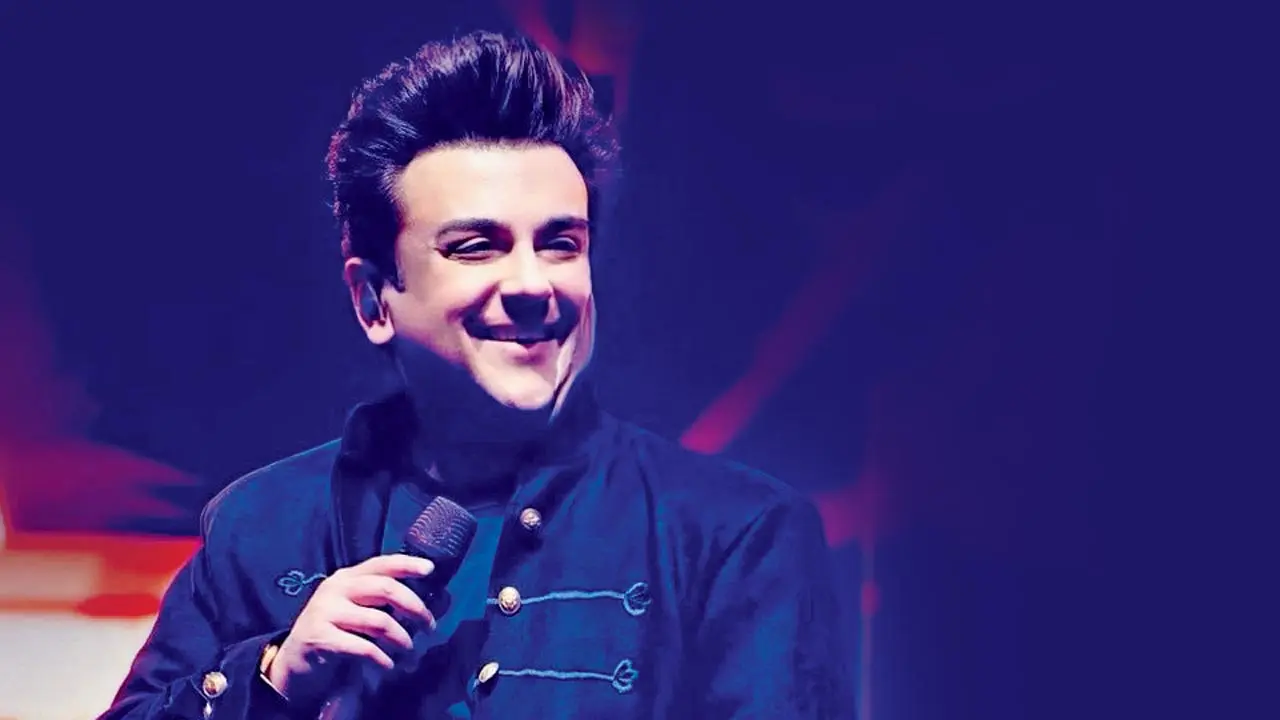
Adnan Sami slams the music industry for creating songs driven by data rather than creativity
Letty Mariam Abraham (MID-DAY; September 1, 2025)
I love music, but I hate the music business,” says Adnan Sami, at one point in the interview. Well, we don’t know about the hate, but we’ve all felt his love for the art every time we listened to one of his songs. This time too, the singer has woven his magic with Bheegi Saree in Param Sundari. In a chat with mid-day, Sami talks about his process, the industry’s obsession with data, and why romantic melodies will never go out of style. Excerpts from the interview.
You’ve sung everything, from romantic songs to heartbreak numbers. How do you get into the zone mentally before recording them?
I have to hear it many times, get it into my musical DNA, as it were. I have to put myself in that frame of mind. If it’s a sad song, I [look deep] into my inner self and think about something that can bring out those emotions naturally. Bheegi Saree is a fun, flirtatious song about rain. So, I tried to bring out that essence in my performance.
After the song is picturized and released, do you go back and watch it? Did you watch Bheegi Saree?
Yes, I was delighted to see the picturization of the song. It was vibrant, done tastefully, and Sidharth [Malhotra] and Janhvi [Kapoor] performed it beautifully. I loved the retro car and the song’s opening. It has an old-world charm to it. Sometimes a song lives up to [how] you imagined it, and at times it doesn’t.
Do you think romantic melodies are making a comeback in movies?
Absolutely! It’s like the good old saying — if it ain’t broke, don’t fix it. I don’t know why they [filmmakers] decided to do away with them because today when everybody is so data-obsessed, they should know that you don’t mess with [romantic numbers]. It’s a no-brainer. Data will show you that romance is always going to work.
Are you working on independent music? We haven’t seen any new albums coming out.
People are more driven by singles these days. Some time ago, I released something with Asha ji [Bhosle]. We just did it because we hadn’t worked together for a long time and thought it might be fun to do something. But yes, I am now in the studio recording some new stuff, and it should be coming out in the next few weeks. Music brings out the child in me, and I love to work with new people and ideas.
Having spent 36 years in the music industry, where do you think Hindi film music stands today?
Everybody is obsessing over data, which is ridiculous because music is not made on the basis of data. It’s made on the basis of inspiration or pure creativity. Data is good as a guide, but it cannot dictate your next creative move. Why are people trying to be surgical about it? Music is not surgery. Otherwise why isn’t everyone coming up with hits? When you try to repeat something that has already happened, you don’t generate the same kind of interest. Once Avengers started working, everyone wanted to make their own universe. It’s the same with music. I understand the obsession of wanting to play safe, but thodi si toh hadh karo yaar. [Filmmakers] should give composers the space and time to do what they are hired to do. Don’t tell them, give them a free hand.
How do you think the business side of the music industry has fared over time?
That is a humongous topic. I love music, but I hate the music business. I tolerate all the other crap because I’m so passionate about music. If I wasn’t, I would never be involved in the profession because it’s a difficult one. From the business aspect, there is a lot that needs to be accomplished for the rights of musicians. It’s not just in India, it’s worldwide. Just when people thought they had nailed it in the West, music went digital. So, the royalties went for a toss. Now, we have new challenges with AI. How I tackle it is, ‘Theek hai yaar. Par tum yeh tune suno, yeh bahut acchi hai’.
I grew up amid the same propaganda in Pakistan, until I came to India and witnessed things myself-Adnan Sami
9:33 AM
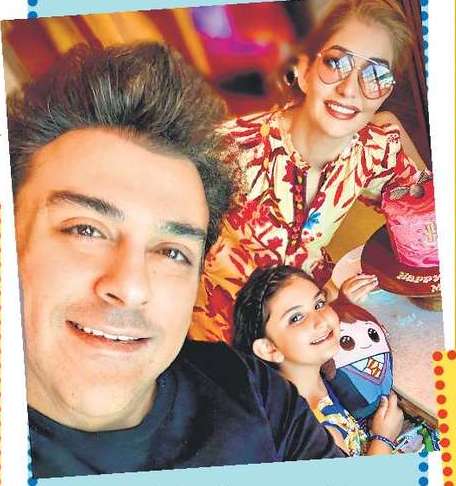
In an exclusive chat, Adnan Sami, who completes a decade as an Indian citizen this year, tells Soumya Vajpayee why he left his Pakistani identity behind
Soumya Vajpayee (HINDUSTAN TIMES; June 21, 2025)
You don't spare the trolls. Why?
I am the son of a diplomat. So, growing up, we were told to never blow our own trumpet and be humble. But now we are living in a time when everyone is marketing themselves: ‘Maine yeh kar liya, maine woh kar liya’. Earlier, if I felt sharing my opinion on something would be slightly controversial, I would just stay quiet, because main jhooth nahin bol sakta. But log khamoshi ko meri kamzori samajhne lagey, unhe lagne laga, ‘yeh to backfoot pe hai’. Hence, I started speaking the language people understood, because the trolls needed to be told off.
Why did you choose India?
When you’re born into a family of a certain faith or social status, it’s not your choice. You inherit it. But when you convert to another religion, you study the philosophy of that belief. So, it’s an informed decision. Making India my home didn’t come on a platter. I could’ve become a German, British, Canadian or US citizen. I chose India because of conviction. And that’s something Pakistan cannot stand. I too grew up amid the same propaganda in Pakistan, until I came here and witnessed things myself. If someone says I moved to India for money, they should know that I left assets worth crores when I moved to India. When I stand at any Indian airport and look at the flag, I tell myself: ‘My kids better remember what their father went through to get that flag, because it’s something that didn’t come on a platter’. I live with those emotions. I have every right to love my India, my country.
How are you so fearless?
People evolve. I realized a few years ago that the good old cliche that ‘the truth will set you free’ is so apt. Hum poori zindagi darr ke rehne mein guzaar dete hain. But when you realize ki zindagi ka sabse bada khauf sirf maut hai, aapko aur kisi baat ka khauf nahin hona chahiye. Your destiny is written by the Almighty, so why have the fear of anyone else? I have seen so much in life that I don’t care about the consequences anymore.
What's Asha Bhosle to you?
Asha ji is like a mother to me. My relationship with her is how a normal mother-son bond is. We love each other and we fight too. There’s no one as brilliant and versatile as her. She’s 91 and is still so magical. Lata Mangeshkar (late singer) once said, ‘Jo gaane main gaa sakti hoon, woh Asha gaa sakti hai. Par jo gaane Asha gaati hai, woh main nahin gaa sakti’.
There was an anti-outsider sentiment in the industry at the time you started out. Did you experience that?
Pakistani musicians such as Mehdi Hasan, Farida Khanum, Ghulam Ali, Nusrat Fateh Ali Khan etc. were working in India for many decades. But when I and some other Pakistani musicians (such as Atif Aslam, Rahat Fateh Ali Khan and Ali Zafar) came in the scene, there was a difference between them and me. I was living in India and working here, while they would come, work and leave. So, this section that had an issue (with outsiders) comprised artistes who were frustrated and were barely working. They should have realized that India was such a big market for music that people from across the world would want to work here. But the reason for not allowing Pakistani artistes in India now is absolutely valid. There’s nothing like art has no boundaries. No matter who you are, you belong somewhere. Else, artistes wouldn’t have been issued passports!
Is your daughter Medina also into music?
Yes, very much. She is 8 and plays the piano. I don’t teach her. She has a teacher who comes in, as learning music needs a certain kind of discipline. She’s also passionate about singing and writing poetry.
How do you keep Medina guarded from negativity?
I always wanted to send her to a school where she could just be herself, and was not seen as a celeb child. I want her to have a normal childhood. That’s why I try to keep her away from all the filmi things, because this is not the time for it. When I enter the house, I am just baba who makes her a sandwich. That’s my way of keeping her guarded. Baaki sab upar waale ke haath mein hai.
THE TRICOLOUR IN-EAR UPROAR
“Whenever I display my love for India, it ignites Pakistan. They can’t take that. When they talk about the love for their flag, nobody says they are doing so to prove something. But when I do that for India, they say, ‘He’s trying to show off or prove his loyalty’. Every person shows their love and allegiance to their country. At least I am showing it to my country. In Pakistan, they show it to the Army.”
My life has been nothing short of a Bollywood potboiler-Adnan Sami
11:30 AM

Madhureeta Mukherjee (BOMBAY TIMES; June 23, 2023)
There is a lot to know about Adnan Sami, beyond his music. The gifted musician has been through life-changing experiences, personally and in his musical journey. In a heart-to-heart, he tells us what keeps him on the beat in love, marriage and music.
Some time ago, before releasing your song Alvida, you had deleted all your previous social media posts and said that it was a fresh start for you — Adnan 2. 0. What was it like to reinvent yourself?
There is a belief that to have a hit (song) is one of the easiest things, but to follow it up is a challenge. For your first hit, you have a whole lifetime, as no one knows you and nor is anyone waiting for it. But to follow it up with another, the pressure mounts up. You need to do that in six months at least, and in today’s times, even less. So, it is important to reinvent as that’s the key to longevity, more so today, as the world is moving at a fast pace. You have to reinvent and let go of your baggage.
You found success soon after you stepped into the music industry here and given your talent, you could have recorded far more songs in all these years, but you haven’t. Why?
Everyone has their own philosophy of how they want to approach their career, to each his own. Some people think that they need to churn out something every week, else they will become irrelevant. I have been stingy on that front; I have never felt the need to go into factory mode in creating music. I know my music and art... I am a pianist, composer, singer (Indian classical, Western and Jazz), and instead of quantity, I want a diverse body of work. I want to contribute to the field of music, whether it is filmi, commercial, pop music or any other genre. Whatever I will do... jaan laga doonga usme.
Since the time you came to Mumbai in 1999 to pursue a career in music, what do you think has changed in terms of the treatment of the music in our movies, and the kind of music that the audience demands?
Today, our cinema has become far more real, but the Indian audience needs their musical fix. So, there is music in our movies, but often in the backdrop. Earlier, we had 8-9 songs, today, there are about two-three songs, or sometimes no songs. I am fine with that, but what I have an issue with is that I feel in the garb of trying to be safe, musicians apni creativity ko kill kar rahe hai. Play it safe, but at least create something new. What you are doing right now is rehashing.
Every generation has the right to have certain songs that they can call their own and we need to give them that. I say that songs like Chura Liya Hai Tumne and Baahon Mein Chale Aao define my time. When aaj ka banda says Chura Liya Hai is mine, I say excuse me... that’s not yours, that’s mine.
Some of your most popular creations (Tera Chehra, Kabhi Toh Nazar Milao, Bheegi Bheegi Raaton Mein) are love songs. In your personal life, you have experienced love and heartbreak more than once. Has it changed the way you view love and marriage?
I’ve had an eventful life in that department. I’ve unfortunately had two failed marriages and sometimes, due to such disappointments, you can become cynical and bitter. But I have never been bitter about love. I am an incurable romantic and a big believer in love. My music kept me sane through it all. Music was my psychiatrist, my go-to place. When it comes to marriage, I had my parents as role models. Even today, my mother is as much in love with my father (who has passed away), if not more. I was yearning for that kind of love and that’s why I didn’t give up.
I believe that you are penning your biography, how is that coming along?
My biography is almost complete. When you read it, you will feel that you are reading a Bollywood potboiler, my life has been nothing short of that. My life is one incredible journey, and I am not exaggerating. My journey has left some scars which I bury, and maybe, I use humour and music as a defence mechanism to keep sailing. I have learnt that we should keep life simple and transparent, as life is too short. When you have been through so much of shit, then you don’t give a shit anymore. Ultimately, we are all going to die and there is no sequel, so keep it simple. That is the way I look at life.
I’m against reducing the art of music or cinema to something as crass as just data-Adnan Sami
7:51 AM
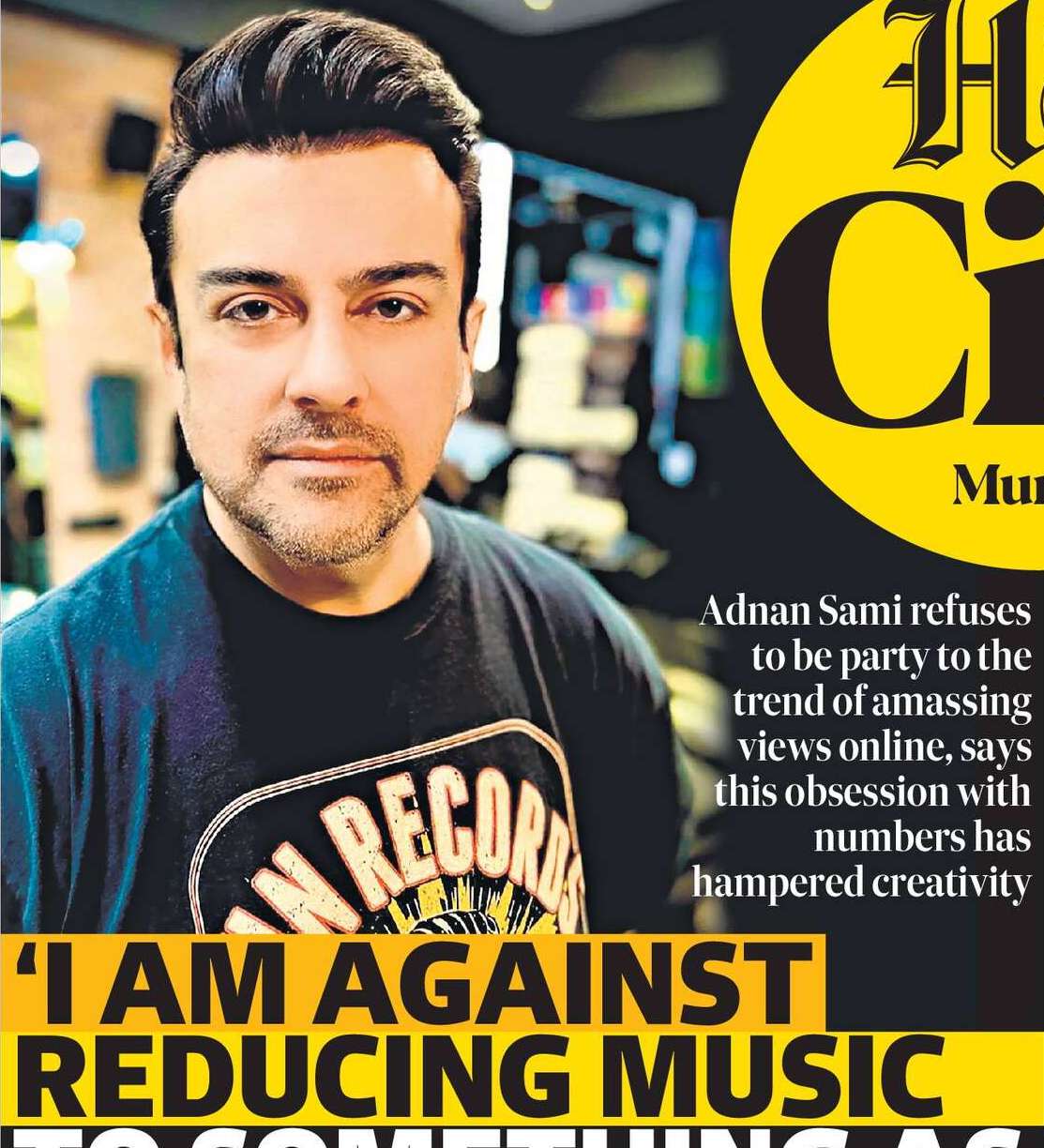
Adnan Sami refuses to be party to the trend of amassing views online, says this obsession with numbers has hampered creativity
Rishabh Suri (HINDUSTAN TIMES; November 4, 2022)
Tooothpaste is how singer Adnan Sami feels music is being treated today. Similar songs being churned out back to back in the name of hits and the number of views on a song becoming a benchmark of success are things he is miffed by, to say the least.
Sami, who is busy with a new set of singles and live shows, tells us, “I have to enjoy what I am doing, that’s why I am choosy about what I do. I’m very passionately against the concept of reducing the art of music or cinema to something as crass as just data. It’s art. You can’t equate it to, say, a soap, and be like, ‘Okay, jasmine is working, let’s make more of that’. That’s exactly what’s going on. South ki filmein chal rahi hain, toh South ki films banao. Comedy chal raha hai, comedy banao... Art is not toothpaste that you use and spit out.”
The Padma Shri awardee, 51, adds that the quest to hit a certain number of views on a song is one of the things that has curbed creativity, which has led to a dearth of meaningful songs. “We have an audience thirsty for entertainment. If you start distributing sh*t to them... It’s like making them starve and then giving them a dry piece of celery. Log toh toot padenge na uspe? If you give them biryani, they will never look at celery!” he reasons.
Citing the examples of filmmakers Christopher Nolan, Yash Chopra and music composer R D Burman, he goes on to say, “Whatever they made, they made well. In today’s time, executives and music companies have discovered a new toy — data. It’s there for guidance, don’t let it dictate you.”
“Executives are not artistes. In the past, they would not argue with creative decisions. Now, they have stumbled upon something they can have a counter argument with. That’s why ultimately, we are not coming out with stuff that has any kind of long-term impact. Everybody needs to be allowed to do their jobs. Don’t interfere, and certainly not in the name of data,” the Lift Kara De singer concludes.
The Padma Shri honour has inspired and rejuvenated me more-Adnan Sami
8:06 AM

Titas Chowdhury (HINDUSTAN TIMES; November 11, 2021)
For singer Adnan Sami, being conferred with Padma Shri has been an “unparalleled honour”. Sami describes the moment as “ethereal” and elaborates, “When I was sitting there (Rashtrapati Bhavan) and waiting for the ceremony to begin, I was absorbing the environment. I had a flashback of everything I’ve been through in my life as a person and artiste.”
The 50-year-old shares that the honour has “inspired and rejuvenated” him “with more enthusiasm”. He adds, “When somebody praises you, it makes you want to do even better. It’s a beautiful blessing that I’ve been given the award at this age. I want to believe that there’s another life in front of me and I feel the responsibility to do and share more.”
In 2016, Sami was granted Indian citizenship by the government. And so, this honour is even more special. “The most important thing to take from this is that art is above anything else,” says the Bhar Do Jholi Meri (Bajrangi Bhaijaan; 2016) singer, adding, “I started my journey in London and then moved to Portugal and then came to India. Who would have thought that I would get such a prestigious honour! It goes to show that if you believe in anything, remain focused and work hard, you will never go unnoticed.”
Another memory that Sami will cherish from the day is his four-year-old daughter Medina posing before the TV screen when Sami received the award. “She watched it live and made sure that she gets photographed in front of the TV while I was getting the award. I’m happy that we got that moment on camera,” he ends with a laugh.
I am happy that I have made it alive till here-Adnan Sami
8:08 AM

The musician shares that he has a newfound respect for life and plans on living it to the fullest
Juhi Chakraborty (HINDUSTAN TIMES; September 16, 2021)
The last two years have been extremely challenging, admits Adnan Sami. Watching people lose their loved ones and hearing and reading about so many deaths made him realise “the value of human life”.
The musician shares, “I am just so grateful that I am fine and my family is fine. I am like, ‘Thank God, I made it till here’. Not a lot of people did. So many people have left the world and that too way too young. I am happy that I have made it alive till here.”
The 50-year-old singer adds, “Today more than anything else, I am happy to be amid my family and loved ones. I am also happy that my fans are alright, because I consider them my extended family. It is wonderful to celebrate life,” shares the singer, who received the Padma Shri in 2020.
He goes on to add, “I am seeing life in a different way now, as opposed to how I used to a couple of years ago. I have a newfound respect for life and I plan on living it to the fullest.”
Another change, which he feels the current Coronavirus crisis has brought about in us, is that it has made us compassionate towards one another and forced us to prioritise our health.
“Today when we call each other, our first instinct is to enquire about each other’s health, no matter who we speak to. This would never have happened before. We were just taking our lives for granted. This is the new norm. Frankly speaking, this should always have been there. Our health should have always been our top priority. But we ended up taking it for granted, it became third, fourth or fifth on our priority list. Today, it has become paramount. It is sad that it took such a calamity to make us do the right thing, finally,” ends the Bhar Do Jholi Meri (Bajrangi Bhaijaan, 2015) singer.
It was my destiny to be an Indian-Adnan Sami
7:57 AM

Juhi Chakraborty (HINDUSTAN TIMES; August 15, 2021)
For musician Adnan Sami, his birthday falling on the same date as India’s Independence Day is not a coincidence. The Lahore-born singer firmly believes that he was always meant to be an Indian citizen and is grateful to share his birthday with his country.
“Today, I’m a firm believer that there’s no such thing as a coincidence. My destiny was written in India. My future and my dharmabhoomi were all connected to India. The love I have for India was so rooted from my childhood that it was like the angels were telling me. ‘You need to shift your focus over there’. I can’t write off this part of my life as mere coincidence. It’s far deeper than that,” he shares.
Sami, who turns 50 this year, says, “The way God created my destiny, it was almost as if it was planned that I was supposed to be an Indian. It was my destiny to be an Indian. It was unfortunate that the Partition happened, but God had his own way of telling me that I belong here. It’s like my birthday was the biggest hint that I belonged to India.”
The musician may have got his Indian citizenship only in 2016, but he admits that his relationship with India started the day he landed in the country for the first time in 1999 for work. “That was a start of an incredible love affair, and it continues, and reflects in my music and in everything I do. I’m a romantic at heart, I write love songs. And the ultimate love story I have is with India,” he muses.
However, Sami can never forget the struggle he had to face in order to get through the citizenship process and the fact that his application got rejected for technical reasons.
He recalls, “I never lost hope, I never gave up. I said, ‘I’ll do it again’. And that’s why it took me 16 years to do it. People think that one fine day, I became an Indian citizen. They have no idea how long I had to wait. And it was worth the struggle. I’d have waited another 16 years,” the Padma Shree awardee continues, “I just felt that this was home, right from the moment I landed here for the first time. This was the missing piece of the puzzle which made my life complete. I’ll never take it for granted.”
While the singer-composer is overseas with his wife Roya and daughter Medina, he says they do have some big plans for his 50th birthday. “Agar meri taraf se celebration mein koi kami aati hai toh woh pura desh poora kar deta hai. Everybody has a reason to smile on my birthday and I love that! It’s very special,” Sami concludes.
Bollywood kisi ke baap ki jaagir nahi hai-Adnan Sami
8:54 AM

Adnan Sami, a man who rarely gets angry, says enough is enough and things need to change
Anshul Chaturvedi (BOMBAY TIMES; June 27, 2020)
 No, Adnan Sami isn’t going to be uploading a video anytime soon. But the singer, presently in Germany, has made it clear which side of the ‘music mafia’ debate he stands on. His communications on the issue, while very refined in terms of language and not taking names, reflect the fact that the issue matters to him, not just as an industry observer, but on a more intimate, personal level.
Why did he join the issue, even if via a deftly worded Instagram post that spoke of creativity being controlled and people playing God?
“People need to come forward. If you are talented, bloody hell, you should get your opportunity! And if you are being denied that, then things need to change.”
The two words in circulation presently are ‘mafia’ and ‘outsider’. Isn’t Adnan himself the ultimate outsider in Mumbai – starting with his passport?
“Exactly! I was the biggest outsider you could ever think of! I had layers and layers of being the outsider. But I forced myself in.”
And doesn’t that suggest that getting into the industry for outsiders isn’t that much of an issue as it is made out to be?
No, he says, things have changed over time.
“See, you have to understand something. Keep my case aside for the moment. People take names of a few superstars and say, see, they were outsiders, they could flourish, right? Ergo, there’s no problem. But that is not a comparison you can make with today. When those names came in two decades back or even earlier, the people running the show, so to say, were far more secure, far more respectful of talent. And part of the reason was that those people – they themselves were outsiders. So nobody should try to use the success of outsiders who came in then to argue that today there is no – (he pauses at the word) – mafia happening now. Those people came in at a time when none of this was happening. The kids (of the establishment from that time) have taken over now. It’s very different... People who are talented need to be brought forward, or at least allowed to come forward without being bullied. Bollywood kisi ke baap ki jaagir nahi hai.”
How does he plan to make the point? Does anything change merely by online outrage?
“I assure you, I will take serious steps, actual steps. I want new talent to come forward because I genuinely believe that it is very important for our ecosystem.”
But wouldn’t anyone of consequence want the same? Why would anyone want to obstruct widening the talent pool in an industry such as cinema?
“My father would say that jhooth bahut dohraya jaata hai toh insaan ko khud uss par bharosa ho jaata hai. Sometimes people in powerful roles are given so much feedback about how wise they are and how everything revolves around them that they begin to believe it. This needs to stop. Sometimes we need to stop believing this lie and ask them – who the hell are you?”
Are these opinions he holds personal, or do they reflect a wider view?
“There are so many people facing these issues. New guys are facing so much, but they are scared – they are dying to speak out, many have spoken to me, but woh darey hue hain, they ask that ‘agar hamara naam aa gaya toh hamara kya hoga?’. That fear is everywhere. Yeh unke haq ki baat hai and I understand what they are facing. It has been a very, very difficult journey for me – and therefore, I will support everybody who is deserving. And if somebody is trying to stop them because of certain privileges – I will resist it, that doesn’t work for me.”
The ‘hamara kya hoga?’ sentiment would reflect that yes, if you antagonise the powerful, your career in Bollywood is actually on the line?
“Yes. What is being talked about – call it the mafia or anything else – it is there. And I feel now we can’t just issue statements about it. Then we are just paper tigers, we are no help for those still struggling. Whatever is happening, needs to STOP. The powers that be can be part of the change or they can resist it – but change is needed.”
Any throwback thoughts to his early years?
“Today, as I see all the debate, for the first time, I am proud that I am an outsider. I am genuinely proud. Because me, being such an outsider – not even being a citizen of India for most of my struggling years – and still having survived, it gives hope to millions of others who will take strength from my journey, because if I can make it in this industry, then anybody can!”
While we all tracked his songs, his marriages, his weight and his citizenship process over the years, surely there was more to it. He hasn’t spoken much about his own, inside battles of those years.
He pauses, drifts into a quiet, philosophical silence for a while.
“People ask me, ‘you’re such a happy-go-lucky person, aapki aawaz mein dard kahan se aata hai?’ It comes from there, perhaps... it was not easy. Nobody can understand that. People have no idea what I have been through. I don’t like to let the world know about my struggle, but that doesn’t mean it didn’t exist... We artistes, you know, we put on facades. But the struggles really, really wear you down. People need to understand that. And that is why, for those who struggle today – I will fight.”
I don’t want Medina to live in fear and paranoia-Adnan Sami
8:01 AM

Juhi Chakraborty (HINDUSTAN TIMES; May 24, 2020)
While everyone is talking about how the elderly are most susceptible to contracting Coronavirus, and must be taken care of, Adnan Sami feels it’s equally important to talk about the mental and physical well-being of kids amid the crisis.
And that’s why the singer-composer says he’s being “extra careful and sensitive” in dealing with his three-year-old daughter, Medina, who, like many other kids, is at home for the past two months, and often gets irritable. “We don’t really talk about children, especially young ones. They watch videos and see kids playing outside and wonder why they can’t,” says Sami, adding that each time Medina says she wants to go out, “we immediately distract her”.
The 46-year-old says that even amid the lockdown, he and his wife, Roya, are ensuring Medina doesn’t feel deprived. They even celebrated her third birthday recently with a Frozen (animated film series) theme — from the cake to the decorations.
“Ye jo hai yeh guzar jayegi, and will become a memory. I’m trying to give Medina as much of a normal existence as humanly possible. I don’t want her to live in fear and paranoia,” he says.
Besides his daughter, ask Sami about what has been keeping him busy during the lockdown and he says he’s utilising this time “composing and writing” as he’s finally getting the kind of peace required for the creative process. However, he admits that initially he panicked a bit. “We thought, ‘Kya ye qayamat toh nahi?’ I slowly started attending to things that were pending in my personal life,” he adds.
My father just did his duty as a soldier; he loved India-Adnan Sami
8:20 AM

Rishabh Suri (HINDUSTAN TIMES; February 22, 2020)
Singer-composer Adnan Sami has had millions hooked right from his first hits, Lift Kara De and Kabhi Toh Nazar Milao. Then followed classics such as Sun Zara (Lucky: No Time For Love; 2005) and Bhar Do Jholi Meri (Bajrangi Bhaijaan; 2015) over the past three decades. So it didn’t come as a surprise when he was given the Padma Shri, India’s fourth highest civilian award, this year. However, the 46-year-old had no inkling of the criticism to follow, including that of his father, Arshad Sami Khan, who was a fighter pilot in the Pakistan Air Force. Excerpts from an interview:
You were conferred the Padma Shri recently. What was your reaction to the news?
I was shocked! If I was a cartoon, my jaw would have dropped to the floor. The funny part was my wife was in the other room when I received the call. Seeing me, she said, ‘What is going on?’ When I told her, she was equally shocked. When I told my mother, she asked ‘Beta, you’re talking about THE Padma Shri na?’ She was overwhelmed. It’s such an honour.
Fans welcomed this decision, but some people questioned it. How do you react to this, questions raised over your citizenship and the like?
With these awards there will be a section of naysayers. They unnecessarily politicise something of this nature. Forget about me, look at the sanctity of this award. By doing this, you are insulting its dignity. You should draw the line somewhere.
Like not going to the lengths of criticising your father?
That was as silly as it gets. By all means, criticise the hell out of my music. It’s a free world. But suddenly going to the third party zone and saying, ‘His dad was this’… Excuse me? He was doing what he had to do, for his own country, and with honour. As a professional, respectable soldier, that was his life, I respect him for it. As much as he respected me when I told him I wanted to be an Indian citizen. He could have said, ‘How can you become that? I was a soldier’. He just said, ‘Beta, I have lived my life, these people (Indians) have loved, respected you. You have my blessings.’ The fact is, he loved India.
Do you feel getting embroiled in such controversies takes away from your creative liberty and art?
Nahin. Main inko itni lift nahi karata! (laughs) Let's say 100 people raised (objections). I've got 1.3 billion people loving me! There will be people who are going to be nasty. I just go 'Nanana na na'! (laughs)
I have so many friends who are Hindu but they will say Khuda hafiz to me-Adnan Sami
8:47 AM

Anshul Chaturvedi (BOMBAY TIMES; February 3, 2020)
Adnan Sami’s Padma Shri ran into controversy on two grounds. One, does his body of work merit it? That, however, is a question that comes up each year for one or more recipients, irrespective of the regime in power. The second question, however, is not so common — should a man whose father fought against India in a war be feted by the Indian state? When Adnan spoke to us last year, he recurrently emphasised the point that he was “loyal to India because of what my father taught me”. We ask him to comment on the recent outrage.
“See, if you have been indoctrinated with a particular belief or principle... it’s like this... once you have learnt engineering after that you apply that skill to a Maruti or a Mercedes, the principle is the same, right, because the education that you got was basically for an engine. So the indoctrination that I got from my father of the concept of loyalty, patriotism etc... he used it in his capacity, in his life for the country that he belonged to and he instilled those principles in me. Today, I am an Indian and the DNA of my upbringing and the principles that have been indoctrinated in me — I am using exactly the same principles but adopting it to my country. And so my sense of loyalty is absolutely intact, but for the country that I belong to,” he explains.
Adnan was born in the UK, his spouse is German. We put a question to him, hoping for insight: During and after WW2, nations in Europe fought bitterly, even viciously, and political and ethnic boundaries were drawn, erased, redrawn. Yet, they have been able to function collectively, even build an EU that is close to borderless – even after Brexit – without the fallout of the hatred and killing in the 1940s. How did they reintegrate while the subcontinent still simmers in the animosity of the 1940s?
“It’s a very interesting question, which I have pondered over.” He pauses for a bit.
“And I think, I mean it’s just my opinion... When Germany finally woke up and realised the horror of what their leaders had done... you see, the Nazis and Hitler, in particular, with the level of oratory skills that he had, had managed to convince the masses of their superiority, the Aryan race and the white supremacy that he had advocated and the illusions that he had created that we are going to take over the world — all of that came tumbling down at the defeat. And thereafter, with the entire world teaming up against Germany and telling them what a horrid leader they had, and the horror that he inflicted upon humanity and so on, somewhere the Germans realised ki yaar humne waaqyi bahut zyadti ki hai. Therefore, they were on an extreme back foot and they admitted defeat, they accepted humiliation and with that acceptance, they went and sought forgiveness. And when that happened, you know, humanity is such that when you do have that closure whereby the other person has admitted their mistake, things settle... If you speak to a German and you start talking about Nazis, the average German is gonna feel very embarrassed because of his history. I know this because I live there... live in the sense that I have got family there and as a result I have German friends. I know this. Today if you mention Hitler, they will feel very ashamed because they’ve realised what a monster he was. Now, in comparison, yahan pe there has been no such thing. Nobody has accepted defeat, nobody has accepted their mistake, nobody has turned around and made any apologies. Every time there has been a possibility of a handshake, the Pakistan Army decides to step in and do a Kargil or whatever in order to sabotage any possibility of reconciliation. It doesn’t suit them to have a reconciliation because then it’s going to have repercussions on their economy.”
Even his Padma award became a discussion about India and Pakistan. “When has there ever not been a discussion of India-Pakistan?” he laughs. “That is a perpetual discussion going on ever since Partition; it’s not a new phenomenon”.
That may be true, but Hindu-Muslim, majority-minority has perhaps not been as much of a perpetual discussion as it seems to be presently. As someone who moved from a ‘majority’ status to a ‘minority’ one by choice, what learnings and experiences does he have to share with us? How has his association been with those not of his faith after he moved to India?
“When it comes to my relationship with people in India, I have, frankly speaking, never been able to differentiate in my day-to-day dealings with people from different walks of life. I am not even able to sometimes tell what faith they belong to unless somewhere in the conversation or at the end of the conversation, the person turns around and says Allah hafiz or Khuda hafiz. I will only then get to know that he might be a Muslim. I have so many friends who are Hindu but they will say Khuda hafiz to me. There is no difference ki main goodbye kahoon ya namaskar kahoon ya Khuda hafiz kahoon, mere liye ek hi hai.”
And that does not make either of the two parties traitors to their respective cultures, does it?
“Of course not, of course not!” He exclaims. “The most beautiful thing in our country is that a Hindu will celebrate Eid with me, I will celebrate Diwali or Holi with him and all of us collectively will celebrate Christmas. Mere bahut saare dost joh Hindu hain woh Eid ke dauran aake kehte hain, ‘achha yaar sevaiyaan bhej rahe ho na?’ ya ‘biryani bhej rahe ho na?’. Aur hum unki Diwali ki mithaai bade shauk se khaate hain. And now that Medina (his daughter) is with us, I was telling my wife that next year we must have a Christmas tree in the house. It’s just such a beautiful thing for the child.”
What faith will Medina grow up to embrace? Will she be able to celebrate both Eid and Christmas or is that no longer politically correct in the times the world is living in?
“My child will grow up just like me. She will be able to embrace all and respect all faiths because that’s the way I have been brought up. When I was studying in England, in boarding school, the day used to start with the entire school going to the chapel. I grew up with all of those different faiths. My upbringing instilled in me to respect all faiths because at the end of the day, if you look at all faiths, the basic teaching of every faith is the same, love thy neighbour, don’t do to others what you wouldn’t have done to yourself. Which faith turns around and says that make sure that you sleep with your belly full while your neighbour is hungry? So these are the principles with which I intend to bring up Medina and that’s the way it should be.”
How do these principles play out in real life, beyond the words?
“I had gone to Israel just last year and I went to Jerusalem, I visited Masjid-E-Aqsa, I visited the Wailing Wall, which is for the Jews, and I also went on the ziyarat of Jesus Christ and paid my respects in all of these different places with the same sanctity. So that’s the way I am. Jab yahan pe Ganpati hota hai toh humein har taraf se daawatein aati hain ki please come and visit us and we go. The point is that you respect all faiths. You may have your own principles or your own beliefs, but that doesn’t mean that you cannot respect somebody else’s beliefs. To each his own. That’s the way I have been brought up and that is also the most beautiful thing about our country that we respect this,” concludes the expressive musician, who often reiterates that art is beyond politics.
Flashback 2019 (Mar 5)
“Even though my father was originally Afghan, but because of the fact that he became part of Pakistan by default because of the Partition, his blood or DNA said that I will have to now show my allegiance to this country. Because that’s the Pathan way — this is the country that I’m in now, I will show my allegiance to this country. So therefore today, I have my oath to India to honour. This is a very important thing in our blood that we honour our zabaan, our oath. If I have sworn allegiance to you, by god, I’ll give my life to you. For a Pathan, his zabaan is a very important thing, ghairat is a very important thing. Aapne agar allegiance show kar di hai... he would have said to me that you better be true to the oath that you’ve taken. He was very clear about those things. And so today, if I am patriotic or nationalistic or whatever you want to call it, it is because of the upbringing that I have from my father, and the fact that he placed so much emphasis on loyalty, allegiance and honour...”
Flashback 2018 (Aug 14)
WHAT ADNAN TOLD US:
“I have been granted citizenship under a very special clause, and that is Section 6 (1) of the Citizenship Act 1955, in which the Government of India has discretionary powers to grant citizenship to any individual who they feel has extraordinary talent or exceptional talent in various fields such as science, art, culture, and they can do so at will.”
WHAT SECTION 6 (1) OF THE CITIZENSHIP ACT, 1955 SAYS:
Section 6 (1) in the Citizenship Act, 1955 deals with citizenship by naturalisation and provides for fast-tracking of the citizenship process of an applicant based on their contribution in the field of arts and sciences. It states, “Provided that, if in the opinion of the Central Government, the applicant is a person who has rendered distinguished service to the cause of science, philosophy, art, literature, world peace or human progress generally, it may waive all or any of the conditions specified in the Third Schedule.”
I have my oath to India to honour-Adnan Sami reacts to allegations of being ISI agent
8:11 AM

In the bizarre ways of social media, Adnan Sami, default target of Pakistani trolls at the best of times, found a new response post his support for the IAF: Now, he was “Major Adnan Sami” of the ISI. Unruffled by the “creative trolling”, and not in the least defensive, he has a few words for those reminding him of his ex-PAF officer father’s ‘legacy’
Anshul Chaturvedi (BOMBAY TIMES; March 5, 2019)
 Not too long after putting out a tweet in support of the IAF, Adnan Sami discovered a surreal if amusing pattern on Twitter, in addition to the usual trolling from across the border that he is subject to: This time, he was being ‘thanked’ for having done a great job as an undercover ISI agent! While “Major Adnan Sami” understands the sharpness and the mixed nature of responses, given that his father was a Squadron Leader in the PAF, he says he learnt the idea of absolute loyalty to where he is from his father himself and doesn’t owe an explanation to anyone.
So when did you first see or hear the recent online references describing you as an ‘ISI Major’?
On Twitter, people start notifying you. And when I suddenly started seeing, ‘Well done, Major Adnan Sami’, ‘Please don’t let the secret out that you are our agent’, ‘You are our hero, thanks so much for the MiG21 information’, I started laughing. Then I realised, achha, yeh angle hai. As it went on, it became more and more creative with audiovisual and all that, and I said, yaar, these guys are putting on such a great show, they’ve put in such an effort. As an artiste, I appreciate art, and this is art, creativity of another level. I have to appreciate and applaud it.
 At any other time, across-the-border trolling about you is default, but given the circumstances and the mood of the people in both countries, at this point, does it come across as funny or as hurtful or as something which you see as malicious?
Actually, the people who are orchestrating it, behind it all, I know them too well. And it actually doesn’t come across to me as malicious or derogatory. It shows their desperation. Because what they’re trying to desperately do is create a narrative which they feel has been shaken by the events that have taken place recently. Behind the jokes there’s a serious problem, which is leading to this kind of desperate measure of somehow trying to create this diversion. Does it make sense, what I’m trying to say?
Basically, that the son of an ex-PAF officer has gone on record about the IAF to praise it, is something which can’t be left unattended. So something has to be done to bring it down a peg, to make it look silly or spoofy. Is that how you see it?
Because you see, the point is, all said and done, I might be finding it funny, which I genuinely do. But behind it is a serious effort being made by certain powers, which is not exactly rocket science to figure out who. Because obviously they find it very, like you said, the son of a person who used to be in the PAF, openly praising the IAF, is an attack on their ego.
So is it better strategy to ignore it than to engage with it, even in humour?
I would say that I’m ignoring 99 per cent of it, and rightly so, it’s all ignore-worthy. But the point is that it is also funny... I belong to a father who would put his head into a lion’s mouth and start finding humour in that. So I’m always up for a good laugh, regardless of whether it is at my cost or not. I’ll laugh at anything. In fact, I ignore it when it’s malicious, but when it’s in humour, then I’ll probably add two cents to it. When it comes to humour, I’m always up for it and I find humour in everything, whether it was my obesity or anything else. I will always appreciate a good sense of humour even if it’s at my cost. So it doesn’t bother me.
You see, the last thing I would want them to think is that I’m staying silent because I’m offended. Because I’m not. The point is, the kind of mentality they have is that they gave back our Wing Commander because they had to give him back because of the Geneva Convention and the pressure that was on them. But while giving him back they had to turn around and say, ‘Oh humne daya kha li’. Ya phir humne favour kar diya aap par. Excuse me, you did no favour, you were supposed to do it. So if I’d stayed quiet, with that kind of mentality that exists, they would have said, arre he’s been rattled or he’s been scared. So I know that mentality also na — ‘woh issliye nahi bol raha hai kyunki usski phat gayi hai’. I know the bully mentality. So I need to put it across ki, excuse me, that’s funny.
 Any of your older friends or associates in Pakistan whom you were on good terms with, do you get sermons from them ki you shouldn’t have said this, your father wouldn’t have liked it? Kabhi unke doston se? Are there dilemmas, conflicting sentiments?
No. First of all, my old friends, or family, they know who I am. They respect the fact that the decisions of my life, regardless of what those decisions may be, are my decisions, and I’ve got the right to take them. And they respect my freedom of choice and they respect the fact that it’s my life and it’s up to me how I wish to lead it. And they judge me by how I conduct myself with them, how my relationship with them is, one to one. So it doesn’t affect my relationship with anybody. Because we, as individuals, know our boundaries, I will not question their choices in life and they will not question my choices in life. As long as we’re good to each other, love and respect each other, that’s what matters.
They don’t ever have the audacity of being so presumptuous of thinking what my father would or would not react to. They know that my father and I were each other’s other self, if you know what I mean. My father knew me better than I knew myself. So they know that the last thing they can ever do is presume what my father would think vis-a-vis me. They know that my father gave me his blessings and the matter finishes there. And they also know that I would never do anything without my father’s blessings, or anything which would make my father cringe. I know one thing for a fact — my father was an Afghan (his roots were Afghan). But because of the fact that Peshawar was where they had to leave, we are basically from Herat, and my great-grandfather was the governor of Herat, so when the Revolution took place, the family had to flee to Peshawar, and Peshawar was, at that point in time, part of Afghanistan. And then the British took over a part of Peshawar and it became a part of British India. Even though my father was originally Afghan, but because of the fact that he became part of Pakistan by default because of the Partition, his blood or DNA said that I will have to now show my allegiance to this country. Because that’s the Pathan way — this is the country that I’m in now, I will show my allegiance to this country. So therefore today, I have my oath to India to honour. This is a very important thing in our blood that we honour our zabaan, our oath. If I have sworn allegiance to you, by God, I’ll give my life to you. For a Pathan, his zabaan is a very important thing, ghairat is a very important thing. Aapne agar allegiance show kar di hai... he would have said to me that you better be true to the oath that you’ve taken. He was very clear about those things. And so today, if I am patriotic or nationalistic or whatever you want to call it, it is because of the upbringing that I have from my father, and the fact that he placed so much emphasis on loyalty, allegiance and honour...
So you are carrying forward the same value system, not ‘insulting his memory’, right?
Absolutely not! And you know, his brother lives in Canada, he said to me, you are doing absolutely the right thing, your baba would have been proud of you for holding on to the values of honour. So I’m very much following his legacy of allegiance.
Your grandfather is Afghan, father Pakistani and you’re Indian.
(Laughs!) Yes. So the point is that I’ve got a bit of everybody in me. But my value system is very much like a typical Pathan. Humare liye yeh kaagaz ke koi maayne nahi hote, humare liye zabaan sab kuch hoti hai. Ek dafa zabaan de di, toh bas de di.
So your general message to trolls — be they crass or refined — would be, ‘not going to change any reflex in the future either’?
No. Not at all. In fact, I would just urge them to be a little more creative. Because I’m enjoying their creativity and sense of humour! In today’s language, it’s like, ‘is that all you got for me, bro?!’
---------------------------------

Adnan Sami’s father (Arshad Sami Khan, left) was a decorated fighter pilot in the Pakistan Air Force, and served three Pakistani Presidents as Aide-de-Camp. Adnan dismisses those Pakistanis who today remind him of his ‘legacy’ when he praises the Indian Air Force, with, “I’m hearing more about him being a war hero today than I did when he was alive... Uski qabr kahaan hai woh toh tum jaante ho, woh zinda kahan tha kya yeh jaante ho?”

WHY ADNAN’S PRAISE OF THE IAF PARTICULARLY RATTLES IN PAKISTAN
Adnan’s father Arshad Sami Khan was in the Pakistan Air Force (PAF) and a decorated war hero. He fought in the Indo-Pak war of 1965 and was Aide-de-Camp to three presidents — Ayub Khan, Yahya Khan and Zulfiqar Ali Bhutto. He retired from the PAF and joined the Foreign Office, served as ambassador to 14 countries, Chief of Protocol for seven prime ministers and presidents, Foreign Secretary and Cultural Secretary.
His bestselling book, Three Presidents And An Aide, was published in India and released by former PM IK Gujral after failing to find a publisher in Pakistan.

A SUBCONTINENT IN A FAMILY
Adnan’s great-grandfather and grandfather belonged to the Afghan aristocracy. The family had to flee to Peshawar, a part of British India and later, Pakistan. By virtue of the boundaries drawn after Partition, Adnan’s father became a Pakistani. Adnan, born a Pakistani, became an Indian citizen in 2016. “So the point is that I’ve got a bit of everybody in me,” says Adnan, “Although my father was Afghan, the fact that he became part of Pakistan by default because of the Partition, his DNA said, ‘This is the country that I’m in now, I will show my allegiance to this country’. Because that’s the Pathan way. Today, I have my oath to India,my zabaan, to honour.”

Pakistan doesn't value its artistes-Adnan Sami
7:51 AM

Two years after he procured his Indian citizenship, Adnan Sami reflects on what prompted him to switch nationalities; singer to perform live in India for the first time
Sonil Dedhia (MID-DAY; November 24, 2017)
Former Pakistani national Adnan Sami seems unperturbed while chronicling the struggles he faced from the neighbouring country, even confessing to being bullied by social media users online. As he celebrates three years since he procured Indian citizenship in December 2015, the singer tells mid-day how Pakistan gave him little hope as an artiste.
"Pakistan doesn't value its artistes. I will get trolled for what I have said, but, that is the reality. It is unfortunate. Pakistan never valued Nusrat Fateh Ali Khan saab until English songwriter Peter Gabriel started collaborating with him. After that, the country suddenly realised that it has an amazing talent. This is the story of a lot of artistes there."
Following a decade-long struggle to receive an Indian passport, Sami was denied Pakistani citizenship a month before he became an Indian national. The move has left the singer with bitter memories. "The way the Pakistani government treated me is only testimony to the ill-treatment meted out to artistes. There was outrage against me. People were amazed that I had applied for citizenship in India. I don't give a damn about getting trolled. I have earned immense respect and love in India," says Sami, who is gearing up for his first live performance in the country.
That the neighbouring country has also failed to condemn terror attacks perpetrated against India has also irked the singer. He points out that while Pakistani artistes have condemned the attacks in Orlando (2016) and Munich, few spoke against the September 2016 Uri attacks in India. "When Indians have loved and embraced Pakistani artistes, why can't the latter come out in their support when injustice has been meted out to the people? No one wants these artistes to wage a war against their government. People didn't demand that they condemn their own country. They just expected them to say something for the sake of humanity," Sami says, as he recalls Mahesh Bhatt pleading Pakistani artistes "with folded hands" to condemn the attacks.
Sami is looking forward to performing at the charitable event, World's Biggest Guestlist Festival, which will educate one lakh underprivileged kids. "It is surprising that I have never performed live here. I am happy that with one performance, I will be able to educate so many kids. I will always be proud of this."
Sami first grew to fame with the
chart-topper, Lift Kara De (2000) with Govinda. Ever since, he has
collaborated with several Bollywood artistes, including Rani Mukerji,
Ameesha Patel and Dia Mirza.
I don't know why some people wont to run down something that brings a sense of normalcy in Srinagar-Adnan Sami
8:03 AM

There may have been more than a hint of a message in inviting the man who gave up his Pakistani passport to embrace India to perform in Kashmir, but Adnan Sami laughs that off as easily as he does singing Mehbooba Mehbooba Mehbooba there
Anshul Chaturvedi (BOMBAY TIMES; October 9, 2017)
What is the background to the Srinagar concert? Was it at your initiative, or the government's?
The initiative was completely from the government's side. They called me up and said we want to do something like this in Srinagar, in a bid to promote tourism and as part of our efforts to create normalcy, and would you be willing to do it? Without even blinking an eye I said yes, it would be an honour to be part of such an endeavour. And I said I would want to do something like this as a service to the country, not as a business, so I did it completely gratis. I was very excited. It was an historical moment.
It's one thing to try to organise a concert in Srinagar - that in itself is an aberration given the way things have gone the past year or so. But to have that concert by the most prominent Pakistani citizen who renounced his original citizenship to take up an Indian passport that had very strong under tones and messages being sent across, don't you think?
(Laughs and laughs, then comes back to being politically correct) Regardless of what the insinuations and undercurrents may be, for me what was most important was to be part of an activity, in whatever magnitude, that was part of an effort to bring some peace to that place which is otherwise a surreally beautiful heaven on earth. As a musician, to be part of anything that promotes peace is very rewarding. I said at the concert as well, I hope this is the beginning of many such activities in the valley.
Was it entirely coincidental that, invited to a government-hosted concert in Srinagar, you were found singing Mehbooba Mehbooba Mehbooba?
(Attempts to draft coherent answer amidst laughter) Arey... frankly ... it was coincidental. See, actually, I often begin my concerts with that one since it was my first Bollywood song to be released (Ajnabee, 2001), it's like taking the audience on a journey, my own journey through all this. Mazey ki baat yeh thi that we had a meeting with her and her family in the afternoon. And it was only when I went on the stage and by reflex began to begin with that number, was when I myself realised ki iss ke toh mainey badal jaate hain (resumes laughing)!
Kashmir has not been the quietest place the past few months. Did you have any security-related apprehensions?
There was, understandably, very heavy security, since they wanted to ensure that everything goes through without, you know, without any incident, which, by the grace of God, it did. Of course it required a tremendous amount of security. When you are doing something like this for the first time, it is understandable that you are extra careful about everything. But at the end of it when they saw the enthusiasm of the public, when they saw the keenness of the local youth to participate in such an activity that was just wonderful. By the time it ended, and we had Lift Kara De as the final song, the entire audience stood up and sang and they danced and they enjoyed... it was quite a spectacle! And when people wanted to stand up and dance and come near the stage, the security didn't stop them they let them be. Which was wonderful. It wasn't as if people were cordoned off on security grounds. And in fact, given the fact that MoS Home Kiren Rijiju was also there...
Why am I not surprised at Rijiju being present at an Adnan activity and vice versa?
(Laughs again) No, listen, the interesting part, since I was on the stage and I saw this, was that despite the fact that he was sitting in the front row and people came in front of him and began dancing, nobody made any effort to even stop that. Short of people actually climbing onto the stage, I don't think anyone was restricted from anything - so it was not like an oppressive security-obsessed activity, which I thought was very welcome!
What you did promotes music in Kashmir. But did you have time to think about the music of Kashmir - it barely exists in popular consumption anymore. We hear of it occasionally, but beyond the santoor performances on state-run channels, where do you really see it anymore? What names do you think of if you say 'Kashmiri music'?
I know what you are saying. I'll tell you something interesting. After I reached Srinagar, I had an interesting interaction, a very casual one, with many local artists. Some of them sang, some of them played instruments and I was stunned to see that among them were some absolutely incredible artists. And I was asking myself, why is their work not known anywhere outside where they are physically? Inka kaam baahar kyun nahi aaya aaj tak? I was saying to them ki aap iss cheez ko sirf yahan tak mat mehdood rakho, iss ko baahar duniya mein aana chahiye. And they said, hum bhi bahut tadap rahe hain yeh karne ko, lekin agar log baahar ubharne ki koshish karte hain toh fatwe nikal aate hain. They still remember woh bechaari bachchiyon ke saath hua tha, the ones who tried to form a girl band (in February 2013, Kashmir's first all-girl rock band, Pragaash, comprising three teenagers, was forced to disband after death threats on social media and a fatwa by a cleric ordering them to stop as he deemed music “unIslamic“). This is very tragic. I hope concerts become a regular activity so that the locals also get a chance to perform on a wider stage.
The fatwa-centred ideology killing off music is not dissimilar to the story you would be working on for your first film, on an Afghan musician forced to flee his native country.
Absolutely. Which is why I understand their frustration, how they are bound down. (Pause) We perform all over the world, but joh wazan, joh symbolism kal ka tha, that is far bigger than any other concert I have done and it is not just that the government organised it, but that the people supported it. That was incredible.
You're sure they did? Dozens of Twitter posts spoke about empty chairs and all that.
Yes. Aur mazey ki baat pata kya hai? For a concert that began at around 7pm, when it was dark, woh dopahar ke dhai baje ki photographs laga kar khush ho rahe hain. Who will be there at 2.30 in the afternoon? Since the concert was outdoors, the sun will tell you at what time the photos have been taken! They were trying to create that impression - but the sad part is that no matter which side of the political spectrum you are on, why are you trying to run down something that is non-political, something that brings an evening of normalcy to your own people?
Perhaps because locals attending a concert - more so, a concert by you, given your history - doesn't fit in with the narrative of what they need to sell each day?
Yes! That shows your mindset. That shows that you are genuinely not happy with anything that brings normalcy to your region. It's a very dangerous attitude and it is so frightening that aise logon ko kuch logon ne guru maana hua hai...
The initiative was completely from the government's side. They called me up and said we want to do something like this in Srinagar, in a bid to promote tourism and as part of our efforts to create normalcy, and would you be willing to do it? Without even blinking an eye I said yes, it would be an honour to be part of such an endeavour. And I said I would want to do something like this as a service to the country, not as a business, so I did it completely gratis. I was very excited. It was an historical moment.
It's one thing to try to organise a concert in Srinagar - that in itself is an aberration given the way things have gone the past year or so. But to have that concert by the most prominent Pakistani citizen who renounced his original citizenship to take up an Indian passport that had very strong under tones and messages being sent across, don't you think?
(Laughs and laughs, then comes back to being politically correct) Regardless of what the insinuations and undercurrents may be, for me what was most important was to be part of an activity, in whatever magnitude, that was part of an effort to bring some peace to that place which is otherwise a surreally beautiful heaven on earth. As a musician, to be part of anything that promotes peace is very rewarding. I said at the concert as well, I hope this is the beginning of many such activities in the valley.
Was it entirely coincidental that, invited to a government-hosted concert in Srinagar, you were found singing Mehbooba Mehbooba Mehbooba?
(Attempts to draft coherent answer amidst laughter) Arey... frankly ... it was coincidental. See, actually, I often begin my concerts with that one since it was my first Bollywood song to be released (Ajnabee, 2001), it's like taking the audience on a journey, my own journey through all this. Mazey ki baat yeh thi that we had a meeting with her and her family in the afternoon. And it was only when I went on the stage and by reflex began to begin with that number, was when I myself realised ki iss ke toh mainey badal jaate hain (resumes laughing)!
Kashmir has not been the quietest place the past few months. Did you have any security-related apprehensions?
There was, understandably, very heavy security, since they wanted to ensure that everything goes through without, you know, without any incident, which, by the grace of God, it did. Of course it required a tremendous amount of security. When you are doing something like this for the first time, it is understandable that you are extra careful about everything. But at the end of it when they saw the enthusiasm of the public, when they saw the keenness of the local youth to participate in such an activity that was just wonderful. By the time it ended, and we had Lift Kara De as the final song, the entire audience stood up and sang and they danced and they enjoyed... it was quite a spectacle! And when people wanted to stand up and dance and come near the stage, the security didn't stop them they let them be. Which was wonderful. It wasn't as if people were cordoned off on security grounds. And in fact, given the fact that MoS Home Kiren Rijiju was also there...
Why am I not surprised at Rijiju being present at an Adnan activity and vice versa?
(Laughs again) No, listen, the interesting part, since I was on the stage and I saw this, was that despite the fact that he was sitting in the front row and people came in front of him and began dancing, nobody made any effort to even stop that. Short of people actually climbing onto the stage, I don't think anyone was restricted from anything - so it was not like an oppressive security-obsessed activity, which I thought was very welcome!
What you did promotes music in Kashmir. But did you have time to think about the music of Kashmir - it barely exists in popular consumption anymore. We hear of it occasionally, but beyond the santoor performances on state-run channels, where do you really see it anymore? What names do you think of if you say 'Kashmiri music'?
I know what you are saying. I'll tell you something interesting. After I reached Srinagar, I had an interesting interaction, a very casual one, with many local artists. Some of them sang, some of them played instruments and I was stunned to see that among them were some absolutely incredible artists. And I was asking myself, why is their work not known anywhere outside where they are physically? Inka kaam baahar kyun nahi aaya aaj tak? I was saying to them ki aap iss cheez ko sirf yahan tak mat mehdood rakho, iss ko baahar duniya mein aana chahiye. And they said, hum bhi bahut tadap rahe hain yeh karne ko, lekin agar log baahar ubharne ki koshish karte hain toh fatwe nikal aate hain. They still remember woh bechaari bachchiyon ke saath hua tha, the ones who tried to form a girl band (in February 2013, Kashmir's first all-girl rock band, Pragaash, comprising three teenagers, was forced to disband after death threats on social media and a fatwa by a cleric ordering them to stop as he deemed music “unIslamic“). This is very tragic. I hope concerts become a regular activity so that the locals also get a chance to perform on a wider stage.
The fatwa-centred ideology killing off music is not dissimilar to the story you would be working on for your first film, on an Afghan musician forced to flee his native country.
Absolutely. Which is why I understand their frustration, how they are bound down. (Pause) We perform all over the world, but joh wazan, joh symbolism kal ka tha, that is far bigger than any other concert I have done and it is not just that the government organised it, but that the people supported it. That was incredible.
You're sure they did? Dozens of Twitter posts spoke about empty chairs and all that.
Yes. Aur mazey ki baat pata kya hai? For a concert that began at around 7pm, when it was dark, woh dopahar ke dhai baje ki photographs laga kar khush ho rahe hain. Who will be there at 2.30 in the afternoon? Since the concert was outdoors, the sun will tell you at what time the photos have been taken! They were trying to create that impression - but the sad part is that no matter which side of the political spectrum you are on, why are you trying to run down something that is non-political, something that brings an evening of normalcy to your own people?
Perhaps because locals attending a concert - more so, a concert by you, given your history - doesn't fit in with the narrative of what they need to sell each day?
Yes! That shows your mindset. That shows that you are genuinely not happy with anything that brings normalcy to your region. It's a very dangerous attitude and it is so frightening that aise logon ko kuch logon ne guru maana hua hai...

So what if my daughter is born in Germany? That doesn't stop her from being a Hindustani-Adnan Sami
6:55 AM

Tanvi Trivedi (BOMBAY TIMES; May 12, 2017)
After getting Indian
citizenship earlier this year, musician Adnan Sami and his wife Roya
have another reason to celebrate. The couple became proud parents of a
baby girl on Monday (May 8). They have named her Medina Sami Khan. In an
exclusive conversation with Bombay Times, Adnan talks about his new
bundle of joy and why he doesn't want to comment on any controversy.
Excerpts...
How does it feel to become a father again?
It's been more than a decade since I had my first child. When you are in love with the right person, you want to start a family with him/her. My son Azaan was born in 1993 and now, after the birth of my daughter, I have started understanding the 'daddy's girl' concept. My songs are high on emotions and I can't describe the surge of fatherly love that I am feeling now.
You have named her Medina after the holy city...
Yes, I have named her after the city of Medina, which embraced Prophet Mohammed when he was forced to leave Mecca. Even today, the city is known for its love and hospitality. It's also here that you'll hear the most beautiful Azaan, immersing you in a wave of spirituality. So, I felt that Medina was an apt name for my baby.
Now that you have mentioned Azaan, you must be aware of the recent controversy around Sonu Nigam's tweet against loudspeakers...
I am in a happy state of mind right now. I don't want to talk about anything that leads to any negativity.
There was a lot of furore over the legality of triple talaq as well...
The word 'Talaq' is too negative to be spoken about at a time when I have happiness in the family.
Your daughter was born in Munich, so she is a German citizen by birth. Considering the long and tedious process you went through to become an Indian citizen, didn't you want her to be born here?
So what? That doesn't stop her from being a Hindustani. She will eventually come to India and we'll apply for her Indian citizenship. Mumbai is home to us. Medina was born in Munich because Roya's family lives in Germany and she had five sisters to help her while I was travelling for work.
You've had two failed marriages before you finally found love, and settled down with Roya. Did your previous experiences make you cynical?
I never gave up on love. Despite two failed marriages, which was unfortunate, I strongly believed in the institution because my parents had a good marriage. I am an incurable romantic and Roya came into my life wreck. when I was an emotional. She helped me during my tough times and gave me stability. One should never be cynical about love or marriage.
Mumbai, for the last few days, was gripped by the Justin Bieber mania. Your comments...
No, I am not aware of that, but I know that our country is warm and will go out of its way to extend hospitality.
You were last seen singing a qawwali in Bajrangi Bhaijaan. Are you being selective when it comes to Bollywood?
Formats in film music have changed, and so has the number of songs. I've been in the business for 32 years and have never followed herd mentality. I did Bhar Do Jholi Meri because I was getting to sing a qawwali for the first time. Also, Salman Khan and I go back 20 years. His father Salim Khan is a father figure to me.
How does it feel to become a father again?
It's been more than a decade since I had my first child. When you are in love with the right person, you want to start a family with him/her. My son Azaan was born in 1993 and now, after the birth of my daughter, I have started understanding the 'daddy's girl' concept. My songs are high on emotions and I can't describe the surge of fatherly love that I am feeling now.
You have named her Medina after the holy city...
Yes, I have named her after the city of Medina, which embraced Prophet Mohammed when he was forced to leave Mecca. Even today, the city is known for its love and hospitality. It's also here that you'll hear the most beautiful Azaan, immersing you in a wave of spirituality. So, I felt that Medina was an apt name for my baby.
Now that you have mentioned Azaan, you must be aware of the recent controversy around Sonu Nigam's tweet against loudspeakers...
I am in a happy state of mind right now. I don't want to talk about anything that leads to any negativity.
There was a lot of furore over the legality of triple talaq as well...
The word 'Talaq' is too negative to be spoken about at a time when I have happiness in the family.
Your daughter was born in Munich, so she is a German citizen by birth. Considering the long and tedious process you went through to become an Indian citizen, didn't you want her to be born here?
So what? That doesn't stop her from being a Hindustani. She will eventually come to India and we'll apply for her Indian citizenship. Mumbai is home to us. Medina was born in Munich because Roya's family lives in Germany and she had five sisters to help her while I was travelling for work.
You've had two failed marriages before you finally found love, and settled down with Roya. Did your previous experiences make you cynical?
I never gave up on love. Despite two failed marriages, which was unfortunate, I strongly believed in the institution because my parents had a good marriage. I am an incurable romantic and Roya came into my life wreck. when I was an emotional. She helped me during my tough times and gave me stability. One should never be cynical about love or marriage.
Mumbai, for the last few days, was gripped by the Justin Bieber mania. Your comments...
No, I am not aware of that, but I know that our country is warm and will go out of its way to extend hospitality.
You were last seen singing a qawwali in Bajrangi Bhaijaan. Are you being selective when it comes to Bollywood?
Formats in film music have changed, and so has the number of songs. I've been in the business for 32 years and have never followed herd mentality. I did Bhar Do Jholi Meri because I was getting to sing a qawwali for the first time. Also, Salman Khan and I go back 20 years. His father Salim Khan is a father figure to me.
Subscribe to:
Posts (Atom)