Showing posts with label Aditya Dhar. Show all posts
Showing posts with label Aditya Dhar. Show all posts
Shafi Inamdar, Rakesh Bedi taught me the choicest Hindi gaalis-Swaroop Sampat
3:21 PM

Back on stage after 25 years with Jaane Pehchaane Anjaane, Swaroop Sampat reflects on the choices that defined her life
Faheem Ruhani (MUMBAI MIRROR; July 7, 2026)
If you were old enough to watch television in the 1980s, you know Renu Verma. During the pandemic, you met her again. She was the witty, level-headed neighbour from Yeh Jo Hai Zindagi, the 1984 Doordarshan sitcom that found a new audience on OTT. The character became one of Indian television’s most enduring icons, thanks to former Miss India Swaroop Sampat.
Now, after a 25-year break from theatre, Sampat is back on stage opposite Anupam Kher in the musical Jaane Pehchaane Anjaane. We meet at a rehearsal studio where she talks about the lessons she learnt from Shafi Inamdar and Rakesh Bedi, and why she believes no other actress could have achieved what she has outside cinema.
A return to the stage
Director Gajendra Ahire first thought of casting Sampat after visiting her home to meet her younger son, Aditya Rawal.
“I was amazed that someone so accomplished was serving us tea so casually,” he recalls. When Anupam Kher decided to adapt Ahire’s Marathi play Shvegyachya Shenga into Hindi, Ahire suggested Sampat for the lead.
The offer left her conflicted. Husband Paresh Rawal warned that theatre demanded too much after such a long gap. Her sons were divided. “Anirudh said, ‘I don’t know if you should do it, but it will be nice if you do.’ Aditya said, ‘Come what may, you have to do it.’ They weren’t much help!” she laughs.
Then Kher sent her a brief voice note: “Aap toh aise na the, Swaroop ji.” She gave in.
The play marks her first stage appearance since Shaadi@Barbaadi.com, in which she starred with Paresh Rawal 25 years ago. Yet theatre was her first home. Her father, Bachu Sampat, was Chief Producer of the Indian National Theatre, and she practically grew up backstage.
“By nine, I had learnt make-up by watching theatre doyenne Sarita Joshi. I also learnt how to change saris in seconds. In this play, I have nine costume changes, and I think of her every night.”
The woman behind Renu
After winning Miss India in 1979, Bollywood came calling. But she turned away from most offers. “The films being made in the 1980s did not match my sensibilities.”
She appeared in Naram Garam and Nakhuda, but it was Yeh Jo Hai Zindagi that made her a household name. Behind the scenes, she says, the cast became family. “Shafi Inamdar and Rakesh Bedi taught this South Bombay girl the choicest Hindi gaalis,” she laughs.
Although she stepped away from the spotlight to focus on family, she never entirely left acting. She later appeared in All The Best, and more recently in Ki & Ka and Uri: The Surgical Strike.
“Now, Aditya Dhar is the kind of director I’d love to work with. I’m also open to OTT if the role and the project excite me,” she says.
A different legacy
Interestingly, some of her most significant work happened far from film sets.
A conversation with Paresh Rawal inspired her to complete her education after dropping out years earlier. She eventually earned a PhD in Education from the University of Worcester on a full scholarship. Her doctoral research, The Role of Drama in Enhancing Life Skills in Children with Disabilities, became the foundation for years of work in education policy and classroom training across India. She taught life skills to children in some of the country’s most remote regions, including Bindevpada, a village whose name translates as “A Place Without God”.
“I am ambitious, and I chose to do what truly made me happy,” she says. “No actress could have done what I’ve done in education.”
The remark is neither boastful nor defensive. It is simply how she measures success.
Moments later, rehearsal calls. Despite nursing an injured foot, Sampat heads upstairs for another run-through. The tour will soon take Jaane Pehchaane Anjaane across the US and Canada. After decades away, the stage once again feels like home.
Sooraj Barjatya told me ‘You’re harming the industry by working less’-Irshad Kamil
10:24 AM

Lyricist Irshad Kamil says the biggest challenge before him isn’t writing another hit. It’s finding a more honest language for romance
Soumya Vajpayee (MUMBAI MIRROR; July 12, 2026)
Irshad Kamil has little left to prove. Over two decades, he has written some of Hindi cinema’s most memorable songs, from Tum Se Hi, Nadaan Parindey and Kun Faya Kun to Agar Tum Saath Ho and the recent Saiyaara. Yet the National Award-winning lyricist insists he is still a student.
“My journey has been about coincidences and evolution,” he says with a laugh. “It’s about what I want to become.” Sitting over tea on a rain-soaked afternoon in Andheri, Kamil looks back at a career that began almost by accident. As a student with a deep interest in theatre and poetry at Panjab University, he drifted into television before finding his way to films. More than 100 films later, he still believes every project teaches him something new.
Still learning
“I stumbled into television. I stumbled into films,” he says. “With every song, I understand a little more about what it means to be a lyricist. There are so many layers to lyric writing. Just as there are many kinds of love, I’m still learning them.” That desire to keep evolving changed the way he works.
For years, Kamil deliberately restricted himself to four films annually. Then filmmaker Sooraj Barjatya offered advice that stayed with him.
“‘Irshad, you’re harming the industry by working less,’” he recalls. “That really struck me.” He decided to say yes more often. “The more time you spend in a creative environment, the more you learn. That’s how projects like Krishnavataram and the ghazal EP with Papon happened.”
Making love believable
If there is one emotion Kamil keeps returning to, it is love. Ironically, he considers it the hardest to write. “I feel most love songs don’t have the purity that love deserves,” he says. “My language for every film is love. I want to redefine that language for today’s world.”
His ambition is not to make lyrics more poetic, but more truthful. “Love has evolved. Society has evolved. I want to reflect that in my writing. I want songs to feel less fake.”
That philosophy shapes Main Vaapas Aaunga, on which he worked alongside A R Rahman while simultaneously writing for Tere Ishk Mein. Before beginning, the pair watched James Mangold’s Bob Dylan biopic, A Complete, Unknown together. “Bob Dylan’s journey charged me creatively,” he says.
One song from Main Vaapas Aaunga, Kya Kamaal Hai, juxtaposes images of Partition with those of present-day refugees. “For me, it isn’t just a song,” he says. “It’s a dream of love, peace and hope.”
No room for ornament
Kamil is equally clear about what he doesn’t want his lyrics to become. “In every art form, people struggle to balance mass appeal with artistic quality,” he says. “We’re diluting art to make it more popular. Dilution isn’t the solution. Accessibility is.”
Instead of reaching for ornate vocabulary, he prefers words people are familiar with. “I don’t want to impress listeners with difficult words from a dictionary. I’m trying to make my lyrics more accessible without compromising on quality. At the same time, I’m trying to redefine myself, and romantic songs in films.”
That openness also informs his collaborations. Having worked with veterans such as Rahman, Pritam, Vishal-Shekhar, Amit Trivedi, and now with a younger wave: Shashwat Sachdev, Tanishk Bagchi, Sachet-Parampara, Vishal Mishra, Sarthak Kalyani, Hiral Viradia, is the process of working with new-age composers different? “There’s no fixed pattern,” he says. “Every composer has a different way of thinking, so every project challenges you differently. That’s where the learning happens.”
Some of his most rewarding work has emerged from those unstructured sessions. While writing Dhurandhar, he, director Aditya Dhar and composer Shashwat Sachdev often worked through the night, with Dhar’s home doubling up as a studio.
“We’d start at six in the evening and sometimes continue till six the next evening,” he says. “Phir Se was born during one of those sessions.”
The long game
Unlike singers and composers, lyricists rarely enjoy the visibility of live performances. But Kamil believes the profession has become more sustainable.
“Being a lyricist now comes with a pension plan,” he says, referring to royalties collected through IPRS. “Sometimes the royalty from a successful song can become many times what you were originally paid. And it keeps coming.”
Social media often compares him with Gulzar, Javed Akhtar and Anand Bakshi. Others have likened aspects of his recent work to Bob Dylan. Kamil accepts the compliments but rejects the comparison.
“There can never be another Bob Dylan,” he says. “Just as there can never be another Sachin Tendulkar. Every artist has their own zone. Irshad Kamil has to remain Irshad Kamil.”
Perhaps that is why, even after two decades in Hindi cinema, Kamil still speaks less about success than about discovery. At 54, his ambition is simpler, or perhaps some might say harder: to write songs that feel a little more honest than the ones he wrote yesterday.
We believed brain rot cinema would work-Suniel Shetty
10:01 AM

Upala KBR (MID-DAY; June 29, 2026)
Although Suniel Shetty was initially hesitant about joining Welcome To The Jungle, today, the actor is happy he did a rethink. Ahmed Khan’s directorial venture has reportedly crossed the Rs 50 crore mark over its first weekend.
“Initially I was skeptical about doing it as I wasn’t sure whether justice could be done to so many actors,” said Shetty of the ensemble film that has a principal cast of 30-plus actors. “I knew the script was over-the-top but because I was comfortable with my producer Firoz A Nadiadwallah and Ahmed, I said yes to it.”
Many have drawn parallels between Welcome To The Jungle — also starring Akshay Kumar, Sanjay Dutt, Raveena Tandon, and Disha Patani, among others — and Ben Stiller’s Tropic Thunder (2008) where a film crew’s shoot in the jungle turns into a real-life combat operation.
The comparisons don’t affect Shetty, who reasoned, “Comparisons will keep happening. What makes a difference is the writing, performances, the director’s vision, and our belief that over-the-top, brain rot cinema will also work. We are nobody to judge. Audiences have enjoyed Welcome To The Jungle.”
After the laugh riot, the senior actor is shifting gears to the action thriller, Hitman. In the Sachin Ravi-directed offering, Shetty plays a mentor to Tiger Shroff’s character. Chatter suggests that Shetty’s role has grey shades — something that he remained tight-lipped about, only saying, “I cannot say anything till the producer announces it. Grey is always good, but black never is.”
Suniel Shetty noted that making comedy films is as important as doing spectacle films like ‘Dhurandhar’. “I love Aditya Dhar’s cinema. For me, entertainment is [a movie] that appeals to kids and families. The way they are going to the theatres for ‘Welcome To The Jungle’ speaks for itself,” he said.
Making of Dhurandhar to release in theatres later this year
4:59 PM

Akash Bhatnagar (HINDUSTAN TIMES; April 22, 2026)
Filmmaker Aditya Dhar’s Dhurandhar (2025) and Dhurandhar The Revenge have shattered multiple box office records, crossing Rs. 3,000 crore worldwide. Now, HT City has exclusively learnt that the making of the Dhurandhar franchise is headed to theatres, which is a first-of-its-kind move for an Indian film.
An insider source reveals, “The craze for Dhurandhar is so much that the makers have decided to turn even the making of the film into a spectacle. All the behind-the-scenes footage and cast interviews will be collated into a full-length feature film and will be unveiled as a theatrical release in the last quarter of 2026, and then eventually make it to OTT as well.”
The source adds, “All the major players in the film, including actors Ranveer Singh and Arjun Rampal, and Aditya, are not doing any media interactions because their first interviews will be part of this BTS film. It is a first for any Indian film, and the makers are ensuring that no BTS footage goes out on social media before the release,” the source adds.
We reached out to the team of Dhurandhar for comment, but did not receive a response till the time of going to press.
Hrithik Roshan can eat 14 chapatis, Vicky Kaushal can digest a brick-Mustafa Ahmed
10:17 AM

Mahima Pandey (HINDUSTAN TIMES; April 17, 2026)
Before he became an undercover spy alongside actor Ranveer Singh in Aditya Dhar’s Dhurandhar films, actor Mustafa Ahmed began his journey in the industry as a celebrity trainer.
We caught up with him to find out some interesting facts about the actors he has trained. “All of them are foodies,” he laughs. For actor Hrithik Roshan he reveals, “He can eat! I’ve seen him having 13–14 ghee waali chapatis. He only stopped because the next one took time to arrive. He’s an absolute foodie!”
Talking about actor Vicky Kaushal, whom he trained for the now-shelved The Immortal Ashwatthama, Mustafa shares, “He can eat a brick and digest it! I don’t know what kind of metabolism he has. It is so difficult to make him gain weight or muscle.”
On actor Yami Gautam Dhar, he shares, “She loves her chai and ghar ka khaana.”
And when it comes to Ranveer? “He can sniff out Nutella from anywhere; he will find it!” That love for food, however, became an advantage during Dhurandhar. Mustafa reveals, “It was Aditya sir’s brief that Ranveer had to look like a beast, but not stiff. We had very little time. He was around 75–76 kilos, and by the first day of the shoot, he was 87 kilos. He had to eat a lot!”
Despite the intense transformation, Mustafa calls him a dream client: “Ranveer is a treat to train. Everyone knows his energy. He enjoys weight training. In his words, ‘Sir, loha todte hain (Let’s pump iron)’.” The regimen was relentless: “Two sessions a day for four to five weeks. That’s how we got him to look like someone who could rip a person apart with his bare hands.”
Rajiv Rai on suing Dhurandhar 2 makers over use of Oye Oye: "Didn’t create song for some guy to mutilate it"
11:31 PM
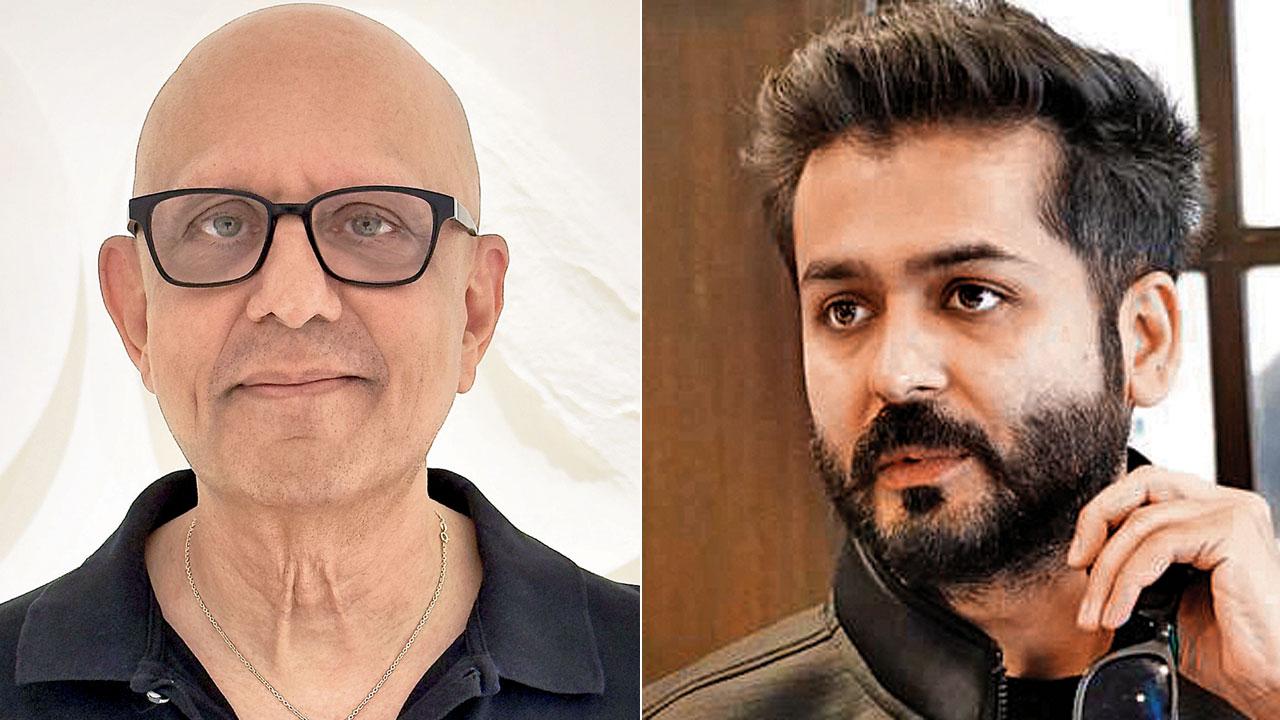
Suing ‘Dhurandhar The Revenge’ makers over alleged copyright infringement, ‘Tridev’ director Rajiv Rai says his ’80s contract with the music label didn’t include remix clause
Upala KBR (MID-DAY; April 10, 2026)
Oye Oye was everywhere when the film, Tridev, released in 1989. Today, over three decades later, the chartbuster has landed filmmaker Aditya Dhar and his massive hit Dhurandhar The Revenge in legal trouble. Last week, Tridev filmmaker Rajiv Rai filed a lawsuit against Dhar’s banner B62 Studios for allegedly using his song in the movie without seeking his permission.
“After I saw the movie and my song in it, I was in shock. I filed [the legal suit] now because it takes time to move the court,” said Rai, on a call with mid-day.
In the first hearing that took place on April 9, Rai’s production house Trimurti Films alleged that the usage of Oye Oye amounted to copyright infringement. While the filmmaker admitted that Tridev’s music was sold to late Gulshan Kumar and his label T-Series in the late ’80s, his point of contention is that the contract did not mention anything about the songs being remixed. According to him, composer Shashwat Sachdev reimagining it as Rang De Lal is a copyright violation.
He said, “I count all my songs as my creativity, along with that of the music director and lyricist. The catch is when you sold the music in the ’70s and ’80s, you had to sign a [contract]. In it, there was no [mention of] remixes or that one could take a song and put it in another film. That phenomenon didn’t exist then. I’m sure when you sign that piece of paper, you don’t sign away your copyright, IP [Intellectual Property], or creative rights. I have not created the song for some guy to mutilate it.”
For Rai, what added insult to the injury is the reinterpretation of the track. “They have mutilated Oye Oye, and the young producer [Dhar] feigns innocence. They have crossed the line. Where is their conscience? My lawyer said [the case] becomes too ambiguous [due to the contract]. But where have I given the permission to mutilate my song?”
What’s the practice today?
- During a film’s making, the producer is the primary copyright holder for the music.
- The music label acquires these rights from the producer while buying the film’s music. Contemporary contracts of labels include the all formats clause, which means the company has the power to remix and recreate the acquired songs.
- In the absence of an all formats clause, before remixing a song, the label has to take consent from the producer, who in turn has to seek permission from the composer, lyricist, and other stakeholders.
------------------------------------------
Natasha Coutinho (HINDUSTAN TIMES; April 10, 2026)
Even as Dhurandhar The Revenge continues shattering box office records, the Aditya Dhar film has landed in legal trouble. Production house Trimurti Films has filed a lawsuit against Dhar’s B62 Studios over ‘unauthorised use’ of the song Oye Oye.
The dispute concerns the rights to the track, co-composed by Kalyanji-Anandji and Viju Shah with lyrics by Anand Bakshi. Originally featured in Rajiv Rai’s 1989 film Tridev, the song was sung by Amit Kumar and Sapna Mukherjee. In its plea, Trimurti Films has claimed that the song, or a version substantially similar to it, has been used in Dhurandhar The Revenge without obtaining the necessary licences or permissions.
When contacted, Dhar’s legal representative Parag Khandhar, told us, “The matter was heard in court on Thursday. No interim injunction was granted over the song in the film. The Delhi High Court has referred all parties to mediation, scheduled for April 22, and deferred the hearing to May 6.”
A representative from Trimurti Films also confirmed that the matter is currently being dealt with in court.
Gaurav Gera reveals the audition scene which landed him a role in Dhurandhar
10:11 AM

After the success of Dhurandhar and Dhurandhar The Revenge, the actor says that he already knew his character was ‘a special one’
Yashika Mathur (HINDUSTAN TIMES; April 8, 2026)
Comedian-actor Gaurav Gera’s serious turn as a spy handler in director Aditya Dhar’s Dhurandhar franchise left audiences stunned. Now, his emotionally charged scene of taking the fall for Ranveer Singh’s Hamza in Dhurandhar The Revenge is receiving a fresh wave of appreciation. Speaking to us, the 50-year-old reveals it was this very scene that secured him the role.
“I was auditioned for that intense and heavy scene only. I was called to (casting director) Mukesh Chhabra’s office and asked to perform it. So it wasn’t a surprise for me,” the actor shares.
The scene, which is Gaurav’s final appearance in the film, marks a crucial turn in the narrative.
“When I heard the full narration, I realized where the scene was placed in the film. Mere liye koi aisa shock nahin tha. I knew it was a character people would like; someone who is Hamza’s only support and understands everything. I knew it was a special role,” Gaurav adds.
The character’s quirky dialogue, “Darling, darling dil kyun toda, peelo peelo Aalam doodh soda”, has also gone viral, becoming a fan favourite.
The actor says that the response has been overwhelming, with the line among the most common messages from friends and family: “Bahut saare messages toh yehi aa rahe hain ki ‘darling, darling dil tod diya’!”
Known for his comic characters like Chutki and Shopkeeper, Gaurav confesses that he is not keen on revisiting them anytime soon. “I’ve done that for eight years. Creating video content takes a lot of effort. I enjoyed Dhurandhar, and right now, I want to explore more roles like that,” he signs off.
A new trend has started of calling films propaganda; log yeh ek naya kabootar pakad liye hain!-Ravi Kishan
10:54 AM

Actor-MP Ravi Kishan calls out the lack of support in the industry for Dhurandhar; compares the film franchise to Sholay
Deep Saxena (HINDUSTAN TIMES; April 7, 2026)
Aditya Dhar’s Dhurandhar The Revenge entered the Rs. 1,000 crore club on its third Sunday, the fastest Indian film to achieve the feat after Pushpa 2 (2024). Even as the film continues its strong run, a section of viewers labelled it ‘propaganda’.
Reacting to the criticism, actor and Lok Sabha MP Ravi Kishan says that the film franchise “revived the industry and brought out facts in cinematic brilliance”.
“Calling it a propaganda film is very wrong! Actors from the South supported it openly; everyone should do that,” Kishan opines, adding, “A new trend has started of calling films propaganda; log yeh ek naya kabootar pakad liye hain!”
The actor, recently seen in Maamla Legal Hai Season 2, compares the franchise to the 1975 blockbuster Sholay: “The writer picks topics from real news and incidents, and the team cinematically presents them on the screen. The truth needs to be brought in front of people.”
While the 56-year-old was not a part of the franchise, he has “no regrets”. “Someone somewhere must be writing a Dhurandhar for me. Log chal ke aate hain, main reng ke aaya hoon after 35 years and 750 films,” he laughs, adding, “But I’d like to work with Aditya or (filmmaker) Sanjay Leela Bhansali, like I got to work with (filmmaker) Karan Johar in (upcoming film) Naagzilla.”
I had not anticipated the kind of response the character of Pinda received-Udaybir Sandhu
9:12 AM

Actor Udaybir Sandhu opens up about sharing screen space with actor Ranveer Singh and the response to his role in the Dhurandhar franchise
Vishakha Pandit (HINDUSTAN TIMES; April 5, 2026)
The success of Dhurandhar The Revenge has brought unexpected attention to several performances, including actor Udaybir Sandhu as Pinda, the childhood best friend of Jaskirat, played by actor Ranveer Singh.
What began as a relatively small role on paper turned out to be a significant one, thanks to its emotional impact and strong recall value. Udaybir shares, “I had not anticipated the kind of response the character received. Like any other actor, I was concerned about my screen time.”
However, a conversation with director Aditya Dhar shifted his perspective: “He told me, ‘Whatever you have will be impactful.’ Sometimes you just have to believe in the director’s vision. I gave my best, and the rest is history.”
The role also demanded a physical transformation, as the character is shown across different timelines. “We shot the older portion first. I had about 45-50 days to prepare, and I bulked up around 15 kilos. I wanted the audience to feel these were two different people,” says the 29-year-old.
Sharing screen space with Ranveer added another dimension to the experience. He says, “Ranveer bhai is one of the most talented people I’ve seen. He’s like an older brother, and he guided me in every scene.”
As the film continues to spark both praise and criticism, including debates around its themes with some calling it propaganda, Udaybir urges audiences to view it simply as ‘a film’. “It’s entertainment; you don’t have to take it so seriously. We’ve all put our heart into it,” he ends.
Dhurandhar’s dialect coach Faiz Mohammed Khan says Aditya Dhar aimed for ‘asli Pakistani’ lingo
4:31 PM

S Farah Rizvi (HINDUSTAN TIMES; April 3, 2026)
Actor Faiz Mohammed Khan, who played the role of Sajid Mir in Dhurandhar (2025) and Dhurandhar The Revenge (2026), has a double reason to celebrate: his performance in the film as well as his role as dialect coach for the film. After 14 years in the industry, he’s proud to be part of a film he calls a “history in the making.”
Faiz, an NSD alumnus, was brought on board by casting director Mukesh Chhabra. “One day Mukesh ji asked, ‘Faiz kya tum dialect par bhi kaam karoge? You are well-versed in Urdu. So that’s how my dialect coaching began,” he shares. He adds that director Aditya Dhar’s focus on the Urdu dialect was for it to be accessible. “It was never about ‘khalis (pure) or difficult Urdu’, but rather about the ‘asli Pakistani’ lingo that felt more like more like ‘hamare beech ki language’,” says the 39-year-old.
Faiz considers all the actors on set as his favourite students. “Sabko sikhne mein maza aa raha thaa because the entire team was so passionate about the narrative.” However, he singles out Sara Arjun, who played Yalina, as an amazing student. “She would say, ‘Sir, abhi theek aya nahi dialogue, aur practice kare, aur acha hona chahiye’,” says the actor who was previously seen in Kedarnath and Padman (both 2018).
The dialogue, ‘Darling, darling, dil kyon toda…,’ by actor Gaurav Gera’s character Aalam became an instant hit, and Faiz remembers they both worked really hard to set the right tone.
Currently, Faiz is balancing acting, with projects like Gandhi ready for release, with backstage work on Pankaj Tripathi’s play La Ilaaj.
Ranveer Singh is the first actor I know who takes notes on fights and choreography-Oh Sea Young
3:56 PM

Dhurandhar The Revenge’s action director, Oh Sea Young, reveals how Ranveer Singh became a killing machine by writing down each fight sequence and seeking demos
Upala KBR (MID-DAY; April 2, 2026)
Relentless action fuels the almost four-hour saga that is Dhurandhar The Revenge. To bring his story from paper to screen, filmmaker Aditya Dhar roped in action directors Oh Sea Young, Yannick Ben, Aejaz Gulab, and Ramazan Bulut. According to Young, the film has shaped up as a stylised action fare for two reasons — Dhar’s vision and leading man Ranveer Singh’s “obsession”.
“Ranveer is a beast — pure energy,” Young told mid-day. Even as the South Korean stunt director has worked with several action heroes in Bollywood, he noted that Singh’s dedication to perfect the scenes is almost unmatched.
“He is the first actor I know who takes notes on fights and choreography. He’d ask things like, ‘If I’m throwing a right hook, where is my left hand?’ He would write everything down. He even asked for demos right before the camera rolled. I was shocked he hadn’t done a pure action film before. Ranveer can master it in a short time through sheer obsession.”
From Singh’s bathroom fight sequence to the last train scene with Arjun Rampal, Young shared that every set-piece has turned out sharp because of Dhar. Apparently the director had a four-step process.
He noted, “First we’d build mock sets in the studio to design the choreography, film our test version, and then refine it with the director. Then came the actor training, followed by final rehearsals on the shoot day. The director explained action the way he does emotions, detailing the vibe and the grit he wants.”
That climax!
Oh Sea Young and Aejaz Gulab choreographed the final fight sequence between Ranveer Singh and Arjun Rampal that begins in a mosque, shifts to the fields and the container yard, and ends in a train. “It was the most challenging scene to shoot. We spent more than 20 sessions on that climax alone,” exclaimed Young.
I had said Dhurandhar will not just raise the bar but break the bar because people will see it baar baar-Rakesh Bedi
8:56 AM

Neha Maheshwri (BOMBAY TIMES; March 30, 2026)
Rakesh Bedi has built a career on consistency and craft, quietly shaping performances that linger long after the scene ends. With Dhurandhar, his portrayal of Jameel Jamali has once again drawn attention to a range that has always existed, even if not always fully tapped. Over the years, he has been part of films like Coolie No. 1, Gadar 2 and Teri Baaton Mein Aisa Uljha Jiya, as well as popular television shows including Yeh Jo Hai Zindagi, Zabaan Sambhalke, Shrimaan Shrimati, Yes Boss, Bhabi Ji Ghar Par Hai and Taarak Mehta Ka Ooltah Chashmah.
He shares, “When the first installment was released, I had said this film will not just raise the bar but break the bar because people will see it baar baar (laughs!). That was my gut feeling after seeing kis shiddat aur mehnat se yeh film banaayi jaa rahi thi. After watching my work in it, the feeling was like having a good feast. I felt full and satisfied.”
For Bedi, the size of a role has never defined its value. He says, “It’s not important whether you are playing a big role or a small one. Bobby Deol scored in a role that may not have been the lead in Animal. It’s about leaving an impact. Aapne kuchh kiya ki aadmi bole ki ek scene mein kamaal kar diya. I had the opportunity to do one scene in Uri, and Dhurandhar has been a result of that.”
He also points to the importance of filmmakers who are willing to see beyond familiar labels. He says, “Rarely does a filmmaker say he wants only one actor and is willing to wait. When a director shows that kind of confidence and says, ‘I only want Rakesh Bedi,’ then the actor feels, ‘Ab toh main bhi jaan laga doonga’. You have to repay that faith.”
Three actors who declined Dhurandhar told me after release, 'I wish we would have said yes'-Mukesh Chhabra
10:47 AM

Casting director Mukesh Chhabra spills the beans on casting for the Dhurandhar franchise and why he avoids the obvious picks
Sonal Kalra (HINDUSTAN TIMES; March 28, 2026)
With Dhurandhar The Revenge smashing box office records, following closely after its predecessor Dhurandhar (2025), the films have earned praise for their ensemble cast. Behind this casting is Mukesh Chhabra. The casting director of Aditya Dhar’s magnum opus gets talking on The Right Angle with Sonal Kalra. Excerpts:
After Dhurandhar, audiences are not just talking about the lead cast, but the entire ensemble, and ‘peak detailing’ has gone viral. Who did you enjoy casting the most?
Initially, only Ranveer Singh was on board. From there, the cast grew, starting with Akshaye Khanna as Rahman Dakait, followed by Arjun Rampal and R Madhavan. It’s very difficult to get a big star cast to do an ensemble film today. Sanjay Dutt bhai came on board almost immediately, and so did Madhavan. And that was, honestly, my favourite moment: on the first day, within just two hours, we had locked that casting. Altogether, the casting process for both films took nearly a year and a half.
Rakesh Bedi has been a fabulous actor, but no one could have imagined him for Jameel Jamali’s role. How did you get the idea?
People hire me for my opinion and my ideas. It’s not about data; it’s just about who will fit where. How do you surprise the audience? There are so many actors who said no to Jameel’s part in the beginning. But then we thought… Rakesh had done one scene with Aditya Dhar in Uri: The Surgical Strike. I said, “If you have already worked with him, why don’t you think of him again? He’s great.” People will be in shock because he does mostly comedy scenes. I immediately called him and said, “Rakesh bhai, I had told you that a big project is coming. It’s here. Talk to Aditya Dhar.” We were sitting together, and on that call, we locked him.
If I talk about Gaurav Gera, we have known him for years for his very cute, comic characters. Even people around him couldn’t recognize him as Aalam here. If someone looks so different, how do you imagine him in a completely different role?
When I read the script, I always think, how can I go against the typical way of thinking about casting? I had seen a lot of work by Gaurav. He made interesting mimicry or comic videos… I noticed things no one else has seen. Also, surprisingly, he had left Mumbai and shifted back to Gurgaon. He had given up on films. I called him and asked if he would grow his beard for a few days because I wanted to test him for a character. He agreed. After watching him, Aditya asked, “Who is this actor?” I said, “Gaurav Gera.” He exclaimed, “What?”
I think after the film, every single person in the industry messaged me and asked who the actor was, cast as Alam. They said, “He is a new face.” I said, “He is not new, he is Gaurav!”
Also, the Nawaz Sharif character in Dhurandhar The Revenge, people are amazed at the casting. I know there may be special effects or AI, but still, how did that happen?
In the whole film process, we had real-life references. So, I worked with my team for 4-5 months and did research on people’s faces. We looked at all the data: who looks close to them, their personality, their behaviour, and their height.
I divided them on the basis of their physicality in a folder. Then, I started auditioning people according to it.
Today I can tell three actors had said no to this film. They have all said after it was released, ‘I wish we would have said yes.’ And now they remind, ‘Next time, don’t forget. I will say yes, whatever you tell me’. Suddenly, after the first film, I get messages from actors: ‘You tell me what to do; I’m on’.
Tell us about Sara Arjun’s casting in Dhurandhar. It was a big project, and you were taking an actress making her proper debut.
Initially, we thought of so many big, established actors. Aditya got so many messages from different people; I got messages asking, “Why not me?” We were very clear that the whole world should feel like she’s a fresh girl — someone who doesn’t have a background in films. We auditioned so many people, more than 1,000 girls. I made it very clear: completely fresh, a new approach, and of course, language. It should feel like she’s from there because the film feels like you’re going to that country. That was the whole idea.
In the second film, that scene with Ranveer Singh where she asks, “Are you a Hindustani agent?”—that was my audition script. I decided, first, the girl’s physicality and appearance should match the role, and then whoever does a good job, we will shortlist. We did the scene with a minimum of 50 people after shortlisting. Then we shortlisted 30, came down to 20, then 10, then five, three, and one. Sara gave a kick-a*s audition. I’m going to release that soon.
If you release all the audition tapes of Dhurandhar’s casting, that will be a super hit!
I’ve been playing with one idea: releasing a documentary on the process of casting.
Was it in the fate of this project to become such a superhit?
Aditya’s conviction was seen on the first day. Even now, I remember the words: “See what will happen after this film.” Such strong conviction. His way of thinking about scenes, the way he designs them, his sensibility of music—he surprised people.
Because of your work, the overall image of casting directors has been raised. The casting industry is going to benefit a lot.
Thank you very much. I am hoping that the whole community will benefit. We have made a good base; we have done it with respect and dignity. A lot of people go for training for camerawork, for editing, for direction, and for acting. I hope in the future I also make an institute where people come to learn casting and make it a full-fledged profession. Because it took us a lot of years; today it’s been 20 years. Only now are we talking about casting, when it should have happened a long time ago. It’s a very good change.
Totally. There are a lot of aspiring actors who, even before, must have been trying to impress you. After Dhurandhar, all the more. For such aspiring actors, what advice do you have?
I don’t have one; there are two or three things that I want to explain nicely. First of all, this whole industry is a game of patience, and nothing is going to happen overnight. You keep working on your craft. Sometimes people get into the wrong networking; they get into socializing… Nothing is going to happen. Just have some patience. If it’s meant for you, it will be yours. Today’s generation loses patience very quickly. In the time of social media, they think that they will make a reel and it will go viral. No, acting is very different;
You have talked about social media: how much presence should aspiring actors have?
If you look at Dhurandhar, I have not cast any actors who are popular because of social media. On social media, you are an influencer or content creator; that is a different job. Don’t mix that with acting. Acting is a process. But you should stay on social media because you look like this, or you have a presence; this is like how your identity card looks.
Never sell your talent on social media; do it for the camera. Whatever work you are made for, do it there. I don’t think all the big directors are sitting on social media; we don’t really like to see that. Some are using these followers and content creators because they want to promote a song, a brand, or a new music video. For them it works. For us, it doesn’t.
Mashhoor Amrohi on playing Nawab Shafiq in Dhurandhar 2: "Some are saying it's AI"
4:36 PM

Pehchaan kaun?: Mashhoor Amrohi in the film; (right) former Pakistan PM Nawaz Sharif. Pics/X, AFP
As the internet declares that Dhurandhar 2 character Nawab Shafiq is a spitting image of former Pak PM Nawaz Sharif, actor Mashhoor Amrohi says the look took eight hours of make-up
Upala KBR (MID-DAY; March 25, 2026)
“How did Aditya Dhar convince Nawaz Sharif to act in Dhurandhar The Revenge?” That and many other memes are circulating online, as the audience can’t get enough of the striking similarity between the character of Nawab Shafiq and the former Pakistan prime minister on whom the role is modelled.
What does actor Mashhoor Amrohi, who played Nawab Shafiq in the action drama, think of it? Well, he is still in disbelief that his two-scene role has garnered so much attention.
“For me, the biggest compliment is that nobody believes it is me. Some are saying that it’s AI. I had not anticipated this kind of adulation. There are memes and pictures all over the internet,” exclaimed Amrohi, the grandson of late filmmaker Kamal Amrohi.
Look at the actor and you’ll find no resemblance with Sharif. But filmmaker Dhar and casting director Mukesh Chhabra felt he would be perfect to play the former Pakistan prime minister. Becoming him naturally entailed a lot of work.
Amrohi recalled, “When we sat for the first make-up test, we didn’t quite achieve what the director wanted. We had to depict the [same] body weight, face, and ageing. Preetisheel [Singh, make-up artiste] went all out — I sat through more than eight hours of make-up daily for four days. For the weight, I had a bodysuit with a paunch.”
Mujtaba Aziz Naza reveals his song Dongri Ke Sultan, shot on a grand scale, has been edited out of Dhurandhar 2
4:32 PM

Singer Mujtaba Aziz Naza reveals he recorded and shot the track Dongri Ke Sultan for Dhurandhar 2; is clueless why it was edited out
Mohar Basu, Priyanka Sharma (MID-DAY; March 24, 2026)
An almost four-hour runtime has enabled filmmaker Aditya Dhar to tell an expansive story in Dhurandhar The Revenge. But it looks like the Ranveer Singh-starrer has arrived in theatres with a trim. Dongri Ke Sultan, a song that was recorded by singer Mujtaba Aziz Naza and shot on a grand scale in South Mumbai last year, has gone missing from the action drama’s final cut.
When mid-day reached out to Naza, he shared that the song was conceived of as part of a celebratory sequence where Singh’s character Hamza returns to his den after winning the local elections. “We had shot three songs — Dongri Ke Sultan, and [the cover of] Jumma Chumma De De, and Apni Toh Jaise Taise. The set-up was elaborate — Ranveer and Rakesh Bedi were shown in a car, while there was a band on a truck performing. We shot the song over a day,” recalled the singer.
The sequence itself was mounted on a lavish scale. “That scene was actually when Ranveer was coming back from winning the election. There was a lot of fun and a lot of audience. There were at least 10 cars. We shot this in South Mumbai one day last Ramadan (2025),” he recalls.
He added, “My whole group was there. My brother Munir was there. It was an amazing set-up. We had a band on a truck, drummers in front of us, and a car ahead with Ranveer and Rakesh Bedi. It was an amazing shoot.”
The shoot, which lasted an entire day, was captured extensively. “We shot it the whole day. We recorded it live. He set up cameras on the buildings as well, and on the ground floor too. A couple of people were shooting from the buildings, and Aditya repeatedly requested the residents to not shoot from their mobile phones. He had a very big team.”
Naza is full of praise for director Aditya Dhar’s involvement in shaping the performance. “Aditya Dhar was very happy. He suggested the songs. First we recorded Dongri Ke Sultan, and then he suggested the other songs. He said, ‘Ustad ji, you sang this song a little more swingy. You don’t have to worry about the way you sing.’ He asked me to play my instrument, my bongo, a little more swingy. He shot all the scenes.”
Despite the scale and effort, the sequence and the three songs didn’t make it to the film. Was there a rights issue since T-Series acquired the audio rights of Dhurandhar The Revenge? In contrast, Dhurandhar’s (2025) music rights rested with Saregama, which allowed it access to a wide archival library. Naaz shared, “I don’t know why we had to remove them. The [makers] have edited the whole thing out. Fan clubs reached out to me, asking about the song.”
However, Naza retains the rights to the song and is now planning to release it independently. “My song was in it but could not come. So I decided that I will make an official video of it. Because it had only audio and not video. We are working on its video as well, and we are making a very exclusive video. Very soon we are going to launch the official video of Dongri Ke Sultan.”
For the singer, the experience of working on Dhurandhar 2 still holds immense value. “It is a big thing for me to go with a big movie and big artists. For me, it is an experience. And with Ranveer Singh, he has been very lucky for me because I have already had two films with him - Bajirao Mastani and Padmaavat. I have already got a lot of love from people. Working with Aditya Dhar was a very happy memory for me. I would like to thank him for the movie.”
My school teacher rejected me and told me I didn’t have it in me to be a dancer-Vijay Ganguly
10:00 AM

Once told by a teacher that he didn’t have what it takes, Vijay A Ganguly has just bagged a top award—more importantly, his choreography has colonised dance floors around the world
Nisrin Saria (MUMBAI MIRROR; February 22, 2026)
On the way to the Super Star Hall in Andheri on the metro, I noticed the person in front of me absently scrolling through reels — until one made her stop. It featured two girls dancing to the viral hook step of Shararat from the film Dhurandhar. She watched it on a loop, as though mesmerized. That is the thing about a truly great piece of choreography: it cuts through. The man behind those moves, Vijay A Ganguly, just won The Iconic Gold Awards 2026 for the same dance on February 18.
Ganguly, 45, walks into the second-floor of the dance studio dressed in a black sweatshirt, denim jeans, and black-and-white sneakers. He greets his team with enthusiasm, and immediately joins a brainstorming session for a patriotic track in an upcoming film. “When creating the choreography for this song, I want to do something that even soldiers stationed at the border in freezing temperatures could dance to,” says the Worli resident.
A meticulous process guides how each song eventually unfolds on screen. “There is always a plan before hitting the set,” Ganguly says, noting the importance of research and alignment with the director and actors. Yet, he remains open to the occasional lightning strike of spontaneity.
He points to a viral moment in Dhurandhar, where Akshaye Khanna’s Rehman Dakait character dances to Sher-e-Baloch. “That wasn’t planned. He just started dancing, and we kept the camera rolling.”
Inside the hook step
For Shararat, the creative groundwork began eight months before the first day of shooting, he says. Director Aditya Dhar provided a steady stream of reference videos to help Ganguly deconstruct the specific nuances of Balochistani wedding celebrations. Typically, at festive gatherings, these celebrations include folk dances like Chaap and Do-Chapi, which are performed in circles with rhythmic clapping and coordinated steps, often to the beat of dohol and sorna. What the film captured, Ganguly says, represents only a fraction of the energy festive Balochi dances can generate.
“What we have filmed represents only about 30 per cent of the energy that goes into it,” Ganguly says. He recalls footage of women jumping off stages, falling, then springing back up, an atmosphere he describes as “pumping with energy.” The task was to translate that raw, communal intensity into something cinematic without losing its force.
The resulting video has since amassed over 200 million views on YouTube, with the hook step being recreated globally—a clear metric of success. The impact, however, didn’t end at the steps; it was in the utility of the design. “The costumes couldn’t be revealing, but a sharara would have restricted the choreography, so we added a slit for mobility,” Ganguly reveals.
This was a relatively easy assignment, he says of Shararat, noting the final step was a mix of two options chosen by Aditya Dhar. In contrast, he designed 32 versions for Stree 2’s Aaj Ki Raat. Despite his fame in dance, editing remains his true passion: “I edit all my songs myself; Shararat was 90 per cent cut by me on my little laptop.”
Growing up near the camera
Being on set comes naturally to him, as he grew up watching his father, filmmaker Anil Ganguly, at work. “My sister Rupali and I would accompany my father and seeing how everyone listened to him on set made me want to do the same or at least something similar,” he admits. He appeared in several of his father’s films, including Saaheb, Dushman Devta, and Sadak Chap, absorbing the rhythms of production long before he understood them.
Performance, however, did not begin with easy validation. “When I was ten and wanted to take part in my school play, I auditioned to Everybody Dance with Pa Pa Pa by Mithun uncle, but my teacher rejected me and told me I didn’t have it in me to be a dancer.” The verdict lingered. For years, performance slipped into the background, returning later by chance.
A wrong that made a right
In 1999, he walked into Shiamak Davar’s academy to submit the fee cheque for his sister’s class. The receptionist assumed it was for him and enrolled him instead. Persuaded to try one session, he started at the back of a beginner’s batch, caught Davar’s attention and stayed on, eventually teaching there for 13 years.
In 2013, he left to pursue films. “That’s when my struggle started again — my father had told me at 18, ‘Find yourself; I won’t make calls for you.’”
He waited outside offices for any job he may land. Jagga Jasoos, a four-year musical, shifted his trajectory. Close to quitting in 2016, he held on after his father reminded him, “Time se pehle kisi ko kuch nahi milta.” Galti Se Mistake became his breakthrough and won him the 2018 Filmfare Award.
Ganguly is clear that he does not believe in a formula. “One of my favourite works remains Main Parwaana from Pippa because it blended jazz with Bollywood.” It did not go viral. Not everything does.
Craft without pronouns
In an industry where dance is often linked to names like Farah Khan or the late Saroj Khan, Ganguly maintains, “When it comes to dance, there is no gender.” He points to Chaka Chak from Atrangi Re as proof. As COVID restrictions thinned his team, assistant Abhishek Pai became the reference for the entire routine. “We had to set the song immediately and Abhishek became the blueprint for it,” he says. The result became one of the film’s most recognizable numbers.
Now, Ganguly champions what he calls expression-led dancing, inspired by Govinda, where a fleeting facial reaction can outshine an elaborate step. His guiding principle comes from his father: treat the crew with respect. “People leave their families and work long hours for you. If they are there for you, that day should feel worth it.” should feel worth it and you must treat them with respect.”
Once closed off to anything beyond choreography, he is now open to whatever cinema offers, be it acting, producing, directing, or simply learning the art of lighting a scene. “After all,” he says, “choreography was never the plan, yet it became my calling.”
Yami Gautam Dhar to make a cameo in Dhurandhar 2
11:38 AM

HINDUSTAN TIMES (February 5, 2026)
After the release of Dhurandhar The Revenge’s teaser on Tuesday, filmmaker Aditya Dhar reportedly has a surprise in store for fans. As per a report by Pinkvilla, his wife, actor Yami Gautam Dhar will be seen in the upcoming film.
This comes even as fans have been speculating a cameo by Vicky Kaushal, who previously worked with Dhar in Uri: The Surgical Strike (2019).
“Yami’s role is action-packed and extremely crucial to the narrative. She has already shot for nearly five days, and though it’s a cameo, it’s an important part that will leave the audience amazed,” a source told the publication.
Interestingly, soon after Dhurandhar’s release, Yami had revealed her interest in the film. “When I read his next script, I told (Dhar) it was one of those special moments I wished I were a boy. The script is amazing. However, he immediately added that he keeps his personal and professional lives separate,” she had told News18.
Aditya Dhar kicks off three-day schedule to film Arjun Rampal's character arc in Dhurandhar 2
10:55 AM
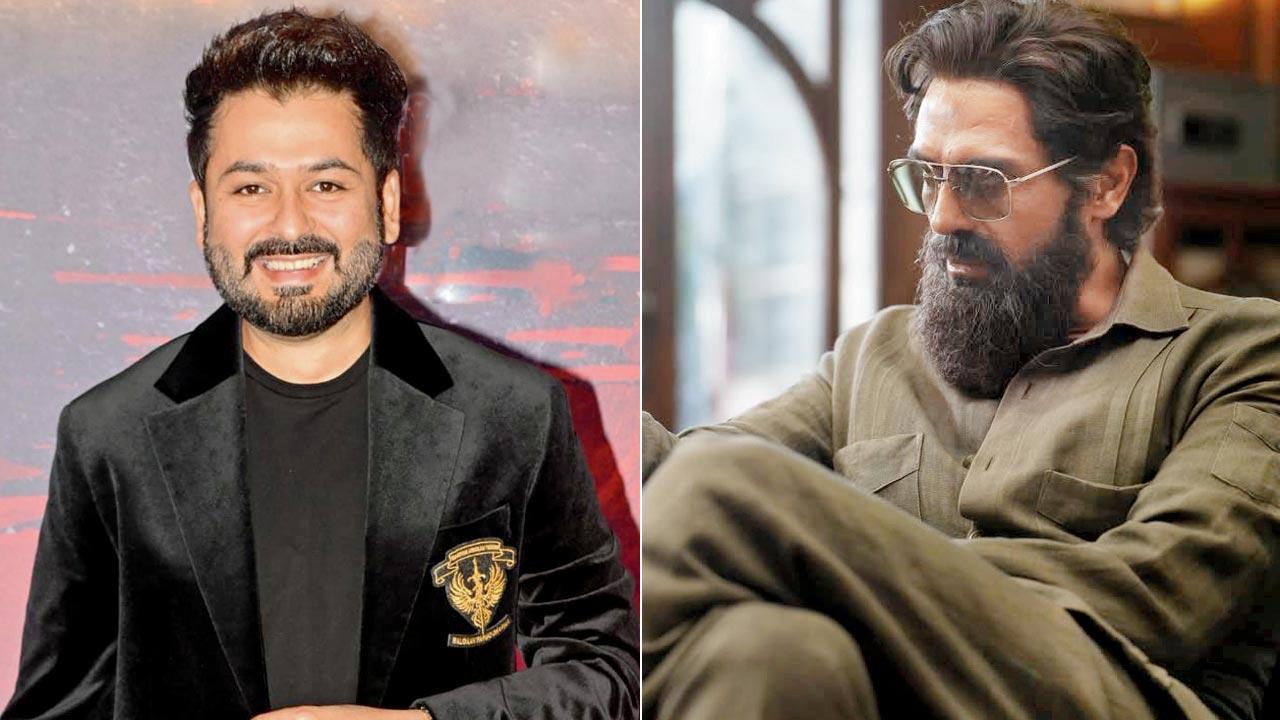
Sources say filmmaker Aditya Dhar is currently shooting with Arjun Rampal to depict his character’s personal arc in Dhurandhar 2
Mohar Basu (MID-DAY; January 26, 2026)
Less than two months away from the release of Dhurandhar 2, reportedly titled Dhurandhar The Revenge, filmmaker Aditya Dhar is giving finishing touches to the action thriller led by Ranveer Singh. We’ve heard that on January 25, the unit kicked off a three-day patch shoot at the Golden Tobacco compound in Vile Parle, Mumbai. The focus is on Arjun Rampal’s character Major Iqbal, who is shown as the mastermind behind major terror attacks in India.
According to sources, a warehouse section of the property has been redesigned to resemble a safehouse.
A unit member revealed to mid-day, “Dhurandhar shows Major Iqbal as a ruthless character. In the second part, the director wanted to give context to who he is when he’s not in the field. These portions will establish his personal stake in the events and bridge his decisions later in the story. Around 50 background artistes were present for the shoot.”
The second instalment will also see R Madhavan and Sanjay Dutt reprise their roles. The movie is simultaneously in post-production.
Aditya Dhar, Dhurandhar makers eyeing to sell broadcast rights of both parts together to maximize revenue
10:15 AM

Ahead of ‘Dhurandhar 2’ release, director Aditya Dhar to sell broadcast rights of both parts together; trade predicts the move will maximize revenue
Upala KBR (MID-DAY; January 21, 2026)
Dhurandhar’s (2025) smashing success has made its second part one of the most anticipated films of 2026. Director Aditya Dhar and the makers are leveraging the heightened interest around the Ranveer Singh-led action drama as they crack the movie’s satellite, DTH (direct-to-home), cable, and other transmission deals. Earlier this month, the makers issued a public notice that they are in the process of procuring a license for exclusive linear transmission and retransmission rights through satellite channels, DTH, IPTV (internet protocol television), cable, and other media.
What’s notable is that unlike other franchises, they are securing the rights for both instalments together, even though the second part — titled Dhurandhar The Revenge — has yet to arrive in cinemas.
The public notice was published in trade magazine Complete Cinema, which stated that the license date for Dhurandhar 1 will start from March 31.
A source revealed to mid-day, “Aditya and Jio Studios have begun discussions with satellite channels. While the first part is expected to start airing from March 31, the second instalment — that hits theatres on March 19 — will make its way to TV screens only 117 days, roughly almost four months, after its release. The team is finalizing worldwide transmission deals, except for the territories of China, Taiwan, and Macau.”
The buzz in the trade industry is that by offering the two instalments as a package deal, the makers will maximize their revenue from satellite television channels.
Trade analyst Taran Adarsh noted that it’s a shrewd business move that also shows the makers’ confidence in the sequel. He said, “If true, it’s a practical decision. Sometimes in the past, producers have clubbed two or three projects together. That way, they are assured of getting a good amount. Since Dhurandhar has broken many records, the makers can demand what they want. While they suffered some losses in the UAE [due to a ban on its release], the business they earned in the international market covered lost ground.”
Trade analyst Atul Mohan echoed that a package deal will give the makers an advantage. He noted, “Jio Studios and Aditya Dhar will get good value for the [joint] deal as everyone, everywhere is discussing Dhurandhar.”
mid-day reached out to Jio Studios and Dhar, who remained unavailable for comment.
Priyadarshan recalls mentoring Dhurandhar director Aditya Dhar: "He is one of my loyal boys"
10:49 AM

Veteran filmmaker Priyadarshan recalls mentoring ‘Dhurandhar’ helmer Aditya Dhar from his assistant direction and dialogue writing days to blockbuster glory
Upala KBR (MID-DAY; January 11, 2026)
In an industry where relationships can turn seasonal, filmmaker Priyadarshan and Dhurandhar director Aditya Dhar have kept their bond steady for over 25 years. The veteran filmmaker, who worked with Dhar long before the latter’s glory days, gets nostalgic about their journey — and doesn’t hide how “proud” he feels about his former student.
“Do you know who wrote the dialogues for the Ajay Devgn and Akshaye Khanna-starrer Aakrosh (2010)? It was Aditya. He also wrote the dialogues for Ajay, Anil Kapoor, and Kangana Ranaut-starrer Tezz (2012),” shares Priyadarshan, who worked with Dhar for three years.
“He is one of my best disciples and assistants I’ve ever had. Aditya is one of my loyal boys; he takes my blessings for everything,” smiles the senior director, adding that he recently watched the Ranveer Singh and Khanna-starrer, and “loved it.”
In 2006, it was Aakrosh’s screenplay writer Robin Bhatt — who wrote it with Akash Khurana — who introduced Dhar to Priyadarshan. “Aditya [became my] assistant director. He also sat on the script with me,” remembers the filmmaker.
“It was during the shoot of Tezz in Scotland that Aditya told me that he was a budding cricketer, in the under-19 team, but he didn’t get in because the son of a top Indian cricketer beat him to it. [Seeing his] depressed state, his friends took him to watch my film Gardish [1993]. That day he decided to quit cricket and become a filmmaker.”
Priyadarshan says Dhar still gives him the same respect. During the shoot of Bhooth Bangla, Dhar dropped by the sets to show him the trailer of Dhurandhar. “That’s the kind of relationship I share with him — a guru and shishya.”
Recalling how Dhar, despite writing a couple of scripts that became big hits, “never got his due credit because the directors took his research, hard work, and talent but kept him aside”, he says, “I am very proud of him; he has made it so big.”
On Akshaye Khanna
“In my first film with Akshaye Khanna, ‘Doli Saja Ke Rakhna’ [1998], everybody had discouraged me from signing him on. They said he is difficult and moody. But I fell in love with him from the first film itself. I never found him difficult. If I called him at 5 am, he would be there on time. He is a darling and we’ve never had a bitter moment together in [the six films we did]. He is least bothered by criticism.”
Did you know?
Aditya Dhar has been a lyricist in the movies ‘Kabul Express’ (2006), ‘Haal-e-Dil’ (2008), and ‘Daddy Cool’ (2009)
Subscribe to:
Posts (Atom)