I went and narrated Saiyaara to Anurag Basu-Mohit Suri
2:29 PM
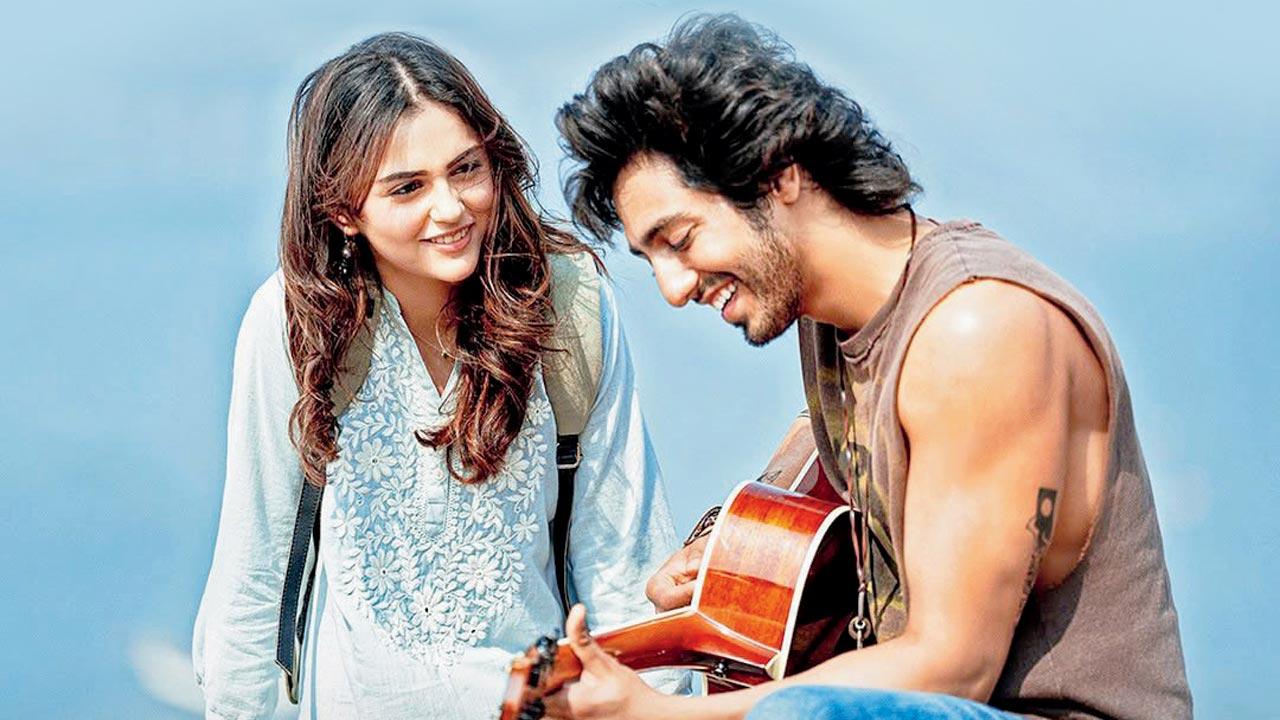
With both Saiyaara and Anurag Basu’s next centred on a musician’s heartbreak, director Mohit Suri is confident that each filmmaker will bring his own interpretation
Mohar Basu (MID-DAY; July 19, 2025)
Even a filmmaker who has delivered many hits over his 20-year career can be anxious and nervous ahead of a film’s release. Director Mohit Suri, whose Saiyaara hit the screens on July 18, says he feels an enhanced sense of responsibility with the film.
He reasons, “My actors are new. This is my first collaboration with a company [Yash Raj Films] that is known for their love stories. I was always the youngest one on the set when I started out. Now I am a grown-up, shouldering people who bank on me.”
Suri is telling a love story of a young musician and a lyricist with the film that launches Ahaan Panday and Aneet Padda in Bollywood. He remembers producer Aditya Chopra telling him early on that the love story needed new faces. How did he end up zeroing in on Panday and Padda?
“Ahaan was doing something with YRF before, which didn’t work out. I met him a couple of times, and his audition wasn’t working for me. I was going to meet him and say no. So, we went for a last dinner. That turned out to be a mad, raging night, where he was no longer trying to impress me. That’s when I saw the real him and saw the character come alive. I told him to stop calling me sir; he got into a bro-zone with me. When he stopped pretending to be somebody, I found the magic in him. For the girl, I went through a lot of people and a lot of rejection. Some really good options came to me, but I wanted a girl who comes from a Punjabi background – a city girl with middle-class values. It was after four months that I found Aneet.”
In March, mid-day reported about the similarities between the plots of Saiyaara and filmmaker Anurag Basu’s yet-untitled next with Kartik Aaryan (Many renditions of a rockstar’s romance, March 6). Both films look at how heartbreak influences a musician’s journey.
Ask Suri about the similarities, and he says, “I’m very close to Dada [Basu]. I have worked as an assistant [to him]. So, I met him when he called. He has the right to do that. I went and narrated this film to him. He had started his film and I had finished mine by then. He didn’t seem worried in the least. There was a Rockstar [2011] being made when I was making Aashiqui 2 [2013]. This is not Interstellar [2014] that we would worry about."
Suri had his own challenges in the film, one to live up to his own expectations and secondly to save himself from self- censoring. He says, "You know, there's a really interesting scene in the film where he gets violent with his own father. And I remember while coming in one day I saw Yash ji's statue outside. I called Mahesh Bhatt. I said, 'There's a scene that I'm shooting in the film. And this is a really good production house and I might be pushing (the envelope) too much. Maybe my morality is different, but the father and son in my film are getting violent with each other in the middle of the road'. It's emotional for me because I didn't realize my DP profile was a picture of my hand with my son's hand. And he said that, 'I know what your relation with your father was, and seeing your DP picture I know where it comes from. No matter what you do better, I know you wont get this scene morally wrong. Don't question yourself. I think the morality of the filmmaker cannot be to be agreeable. The audience will always get the honesty of a maker'."
Commerce is a big aspect of a Mohit Suri movie. "You need to make money for people to keep making films. I've been on the film set since I was 17 and I'm 44 today. More than 50% of my life, I've spent on set. I've been directing for 20 years. I have to keep giving that box office so called successes so that I can keep making films for the rest of my life."
We ask him what he thinks is broken in the system that films are not making money? "I think that there needs to be a certain discipline in how much we make a movie. The budgets of it. The problem is creative people are thinking about economics. And economics people are thinking creatively. I find at get-togethers, people talk either about fashion or business. No one's talking about a story. When we were young and our seniors got into parties, they spoke about art. I think now they talk about business and tie ups and profitability. So I think we need to bring the art back. Money will follow."

Subscribe to:
Post Comments (Atom)
Post a Comment