Showing posts with label Yash Chopra. Show all posts
Showing posts with label Yash Chopra. Show all posts
Actor Anita Raj, entrepreneur son Shivam Hingorani look back on unlikely beginnings, shared love for fitness
2:42 PM

Actor Anita Raj and her son, entrepreneur Shivam Hingorani look back on unlikely beginnings, a shared love for fitness and the discipline that shapes both their lives
Nisrin Saria (MUMBAI MIRROR; July 19, 2026)
Dressed in a white sleeveless top with matching trousers and pearl earrings, actor Anita Raj nudges her son, Shivam Hingorani, to show off his side profile. “Mom, you’re too filmy. Let’s just pose naturally,” he laughs, adjusting the sleeves of his beige linen shirt. On the terrace of the 63-year-old actor’s Pali Hill home, the exchange ends in laughter and an effortless photograph.
A few minutes later, Hingorani, 37, points towards a glass penthouse across the neighbourhood. “That’s Sanjay Dutt’s home,” he says, recalling his days as an assistant director on Agneepath. Once Dutt realized he was Anita Raj’s son, the two would wave and occasionally chat across the buildings. It remains one of his fondest memories from his first job in films.
His introduction to showbiz was, however, somewhat less glamorous. “In my first interview, I was asked whether I would serve tea or carry air-conditioning equipment,” he says. “Once you’re on a film set, everyone is equal.” Raj smiles, adding that his first pay cheque is still framed at home.
Hingorani earned Rs 5,000 a month and spent nearly four years working as an assistant director. “I learnt more in those years than anywhere else. There was so much competition that I was simply grateful to be on set.”
Legacy reimagined
Raj’s route into films was almost accidental. She never planned to become an actor. Although her father, Jagdish Raj, holds the Guinness World Record for playing a police inspector in 144 films, she remembers a sheltered childhood. “My sister and I learnt Kathak from Gopi Krishna,” she says. During one annual performance, filmmaker Yash Chopra spotted her and later invited her for a photoshoot. “Those photographs spread like wildfire through the industry,” she recalls.
Offers soon followed. “Tahir Hussain wanted to meet me. Then I signed Prem Geet, which became my first release.” She also credits Hrishikesh Mukherjee with her screen name. “He asked my surname. I said Khurana. He replied, ‘That won’t work. Your father’s name is Jagdish Raj, so you should be Anita Raj.’ That’s how I got my name.” Once Prem Geet became a hit, her career took off.
Shivam’s ambitions, on the other hand, were clearer. By 16, he knew he wanted to direct films, hardly surprising given that his father, Sunil Hingorani, is a filmmaker. He studied filmmaking in New York before spending four years as an AD.
“Everyone in their early twenties should be ADs,” he says. “It’s like army training. You grow disciplined, humbled and you learn to be responsible.” By 24, though, he realised his future in that line would depend on a handful of producers. “That made me feel insecure. I wanted to build something I had more control over.”
In 2018, he founded health company Ace Blend and later completed a two-year diploma in nutraceuticals from Huntington College in Texas to strengthen its scientific foundation. Today, he jokes that he’s “like Walter White from Breaking Bad, except instead of selling illegal drugs, I’m selling nutritional supplements.” The company focuses on evidence-backed formulations and has just launched a plant-based Vegan Omega supplement.
A 61-minute plank at 59
Not surprising, given that he has been no stranger to fitness. At age 59, his mother held a plank for 61 minutes at Otter’s Club after a CrossFit session in 2022. Raj says she had only planned to reach 10 minutes, but then kept going as a crowd gathered.
Of course, that did not come out of nowhere. Fitness has been a part of Raj’s life since she was 12, when she began practising yoga with her mother at home. In her early twenties, she became obsessed with aerobics, rushing to classes after film shoots and earning the nickname “Indian Jane Fonda”. In fact, it was that reputation that led to one of her earliest fitness ventures. “Pammi Bakshi [noted editor at the time] kept telling me, ‘You’re always exercising. Why don’t you release your own fitness [video] cassette?’” says Raj.
“I thought I didn’t know enough. But I already practised yoga and exercised regularly, so we went ahead with it.” The tape was recorded over two or three days at Famous Studios, but by the time it released nearly a year and a half later, she was pregnant with Shivam. “I remember telling the producer, ‘The cassette is called Keep Fit With Anita Raj and I’m anything but fit at the launch.’”
Like many women at the time, she believed weight training was only for men until she met fitness coach Parvez Mistry at 35. She travelled from her home to Colaba every day for five years to train under him, and says it completely changed the way she understood exercise, nutrition and strength. “I fell in love with weight training because I could see the changes in my body,” she says.
It was that discipline, built over decades, that eventually led to the 61-minute plank. “I never intended to set any national record. It just happened,” she says with a laugh.
These days, her routine begins at 5.30 am; she’s at the gym by 6.30 am for an hour of weight training or CrossFit. Then, she heads to Film City, where she plays Kaveri Poddar in Yeh Rishta Kya Kehlata Hai. “Whether it’s television or films, you have to put in the same effort because the audience knows exactly how you’re portraying a role,” she says.
Role reversals
While Raj built her fitness philosophy through discipline and instinct, Hingorani approaches it through science. Preparing for his wedding to Renu Oberoi in the Maldives in 2021 became one of his experiments. “I weighed every ingredient I ate. Every drop of oil was measured because I wanted to see what would happen if I went all in,” he says. It left him in the best shape of his life, but also convinced him that such perfection isn’t sustainable. Today, he trains four times a week, lifts heavy weights, and gives sleep and recovery the same importance as exercise.
“General fitness is completely achievable with balance. You don’t need to chase six-pack abs.” The dynamic at home has changed since then, too. Raj was the one who introduced him to an active lifestyle, but Hingorani now oversees the family’s nutrition, from supplement schedules to spotting missed meals. “Earlier, parents guided their children on food and health. Today, children often know more because information is so accessible,” he says.
They still train together sometimes. “She surprises me every time,” he says. “She does pull-ups with me and she’s incredibly strong.” They are also planning a family holiday after years. “We travelled a lot when Shivam was younger,” says Raj. “Those are some of our happiest memories.”
One habit, however, hasn’t changed for Hingorani. “Whenever I get a day off, I head straight to the theatre. Nothing compares to watching a film on the big screen.”
We don't have Bollywood parties anymore; people are scared-Anupam Kher
9:36 AM

Anupam Kher says trolling has become ‘favourite national pastime’, with celebrities being ‘scared of celebrations’ over public perception
Akash Bhatnagar (HINDUSTAN TIMES; May 20, 2026)
After performing his new play Jaane Pehchaane Anjane in Mumbai last weekend, Anupam Kher is bringing it to Delhi. The veteran actor is also fresh off a proud international moment. He won the Best Supporting Actor award at the UK Asian Film Festival earlier this month for the 2025 Indo-Canadian film Calorie.
Even after over four decades in cinema, the 71-year-old says that an award still gives him a high, especially on a global stage. He tells us, “It may sound dramatic, but actors don’t get to officially represent their country globally like how sportspersons do... Whenever I work abroad, I say ‘Bharat Mata Ki Jai’ before every project; I’m representing 1.4 billion people.”
But celebrating such wins, he feels, has become difficult now. “I was just talking to (actor) Anil Kapoor that people have stopped celebrating life and their wins because they think usko bhi log kuch na kuch bol denge,” the actor opines, adding, “We used to have such amazing Bollywood parties earlier by (filmmakers) Yash Chopra or Subhash Ghai; we don’t have them today anymore kyunki logon ko celebrate karne mein darr lagta hai, ki kahin na kahin koi kuch galat nikaal lega.”
As an example, Anupam points to the trolling faced by actor Alia Bhatt after her recent appearance at the ongoing Cannes Film Festival: “Losers who have nothing to do in life just want to get noticed by criticising something iconic. Criticism has become the favourite national pastime. I don’t get angry with them anymore, I feel pity.”
ON ‘STAYING ALIVE’ WITH THEATRE
The actor is currently busy with his new theatre play Jaane Pehchaane Anjane, which comes to Delhi this week after being staged in Mumbai last weekend. “I have been performing my one-man show Kucch Bhi Ho Sakta Hai for the last 21 years. But this is a new play, and this is the first time we have so many actors in one play,” he shares.
Based on a Marathi play, it has been turned into a musical by composer Anu Malik, with Anupam singing the title track himself. “Theatre shows me that I can still push my boundaries and it keeps me alive as a person, not only as an actor,” he adds.
ON TRAVELLING BY TRAIN
He grabbed attention online when he took the Vande Bharat from Jaipur to Delhi, in support of PM Narendra Modi’s save fuel campaign and austerity measures. In a Reel on Monday, he urged people to use public transport where possible: “Where possible, we should use public transport, do carpooling. We should avoid taking out our car for short distances... In our daily lives, we should make small changes.”
Why Abhishek Bachchan couldn't sleep the night before Refugee premiere
9:47 AM

Abhishek Bachchan rewinds to the star-studded première of his debut film at Liberty cinema
Letty Mariam Abraham (MID-DAY; July 25, 2025)
"It feels like yesterday,” smiled Abhishek Bachchan, recalling his film debut 25 years ago with Refugee (2000). The première of Refugee, held at Mumbai’s iconic Liberty cinema, will remain an indelible, landmark moment. The evening marked that he was ready to follow in the footsteps of his successful parents, actors Amitabh and Jaya Bachchan, but more importantly, it signified the beginning of a new identity for him.
The date of his first première is at the top of his mind: “June 29, 2000,” he rattled off. The mix of nervousness and excitement meant he “couldn’t sleep the night before the première.”
Première day dawned with light showers, and Abhishek believed it to be an auspicious omen. As evening fell, all roads led to Liberty cinema. Opened in 1949, the first film to debut at the theatre was Mehboob Khan’s Andaz, starring Dilip Kumar, Nargis, and Raj Kapoor. On this evening, one of Kapoor’s granddaughters Kareena Kapoor Khan was making her debut alongside another star kid from a legacy family.
At the première hosted by filmmaker J P Dutta, the Bachchan and Kapoor families were in attendance as was the who’s who of the industry. Abhishek shared, “I remember everyone [from the] film industry and the media was there. I walked in [and the first person] I met was Yash Chopra, who hugged me and gave me advice. I remember who was sitting next to me and how the show finished.”
Even as the show ended, the night had just begun for Abhishek, who went to celebrate his foray into Hindi cinema, with his friends. “We went to the Regal Room at the Oberoi Hotel. A dinner and party were hosted for the première. I was there until early in the morning with my friend Sikander [Kher].”
What he did next is the moment he remembers the most vividly. “While driving back at 7 am, we stopped at Marine Drive. I stood there for a while and took in the moment that I was going [to be an actor]. We also returned to Liberty to see if people had queued up to watch the film.”
That morning started the career of the actor, who would go on to have a long run at the movies; with memorable performances in Yuva (2004), Guru (2007), and Manmarziyaan (2018), among others, and who would foray into OTT before his peers did.
Of course, that morning, Abhishek didn’t know any of this. All he had was one question: Is the audience liking his movie? He laughed as he recalled, “[Later in the day], I called Bebo and told her we should do theatre rounds [to gauge reactions]. We went to Gaiety-Galaxy and Chandan Cinema.”
I went and narrated Saiyaara to Anurag Basu-Mohit Suri
2:29 PM
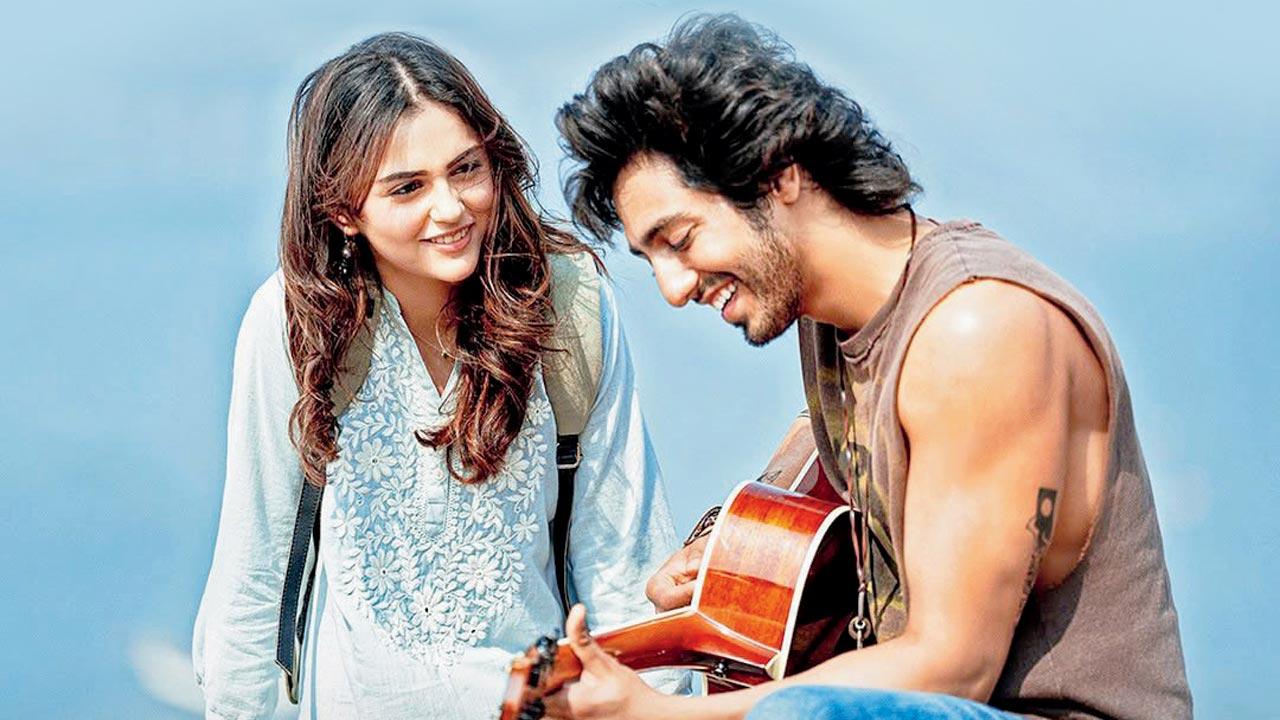
With both Saiyaara and Anurag Basu’s next centred on a musician’s heartbreak, director Mohit Suri is confident that each filmmaker will bring his own interpretation
Mohar Basu (MID-DAY; July 19, 2025)
Even a filmmaker who has delivered many hits over his 20-year career can be anxious and nervous ahead of a film’s release. Director Mohit Suri, whose Saiyaara hit the screens on July 18, says he feels an enhanced sense of responsibility with the film.
He reasons, “My actors are new. This is my first collaboration with a company [Yash Raj Films] that is known for their love stories. I was always the youngest one on the set when I started out. Now I am a grown-up, shouldering people who bank on me.”
Suri is telling a love story of a young musician and a lyricist with the film that launches Ahaan Panday and Aneet Padda in Bollywood. He remembers producer Aditya Chopra telling him early on that the love story needed new faces. How did he end up zeroing in on Panday and Padda?
“Ahaan was doing something with YRF before, which didn’t work out. I met him a couple of times, and his audition wasn’t working for me. I was going to meet him and say no. So, we went for a last dinner. That turned out to be a mad, raging night, where he was no longer trying to impress me. That’s when I saw the real him and saw the character come alive. I told him to stop calling me sir; he got into a bro-zone with me. When he stopped pretending to be somebody, I found the magic in him. For the girl, I went through a lot of people and a lot of rejection. Some really good options came to me, but I wanted a girl who comes from a Punjabi background – a city girl with middle-class values. It was after four months that I found Aneet.”
In March, mid-day reported about the similarities between the plots of Saiyaara and filmmaker Anurag Basu’s yet-untitled next with Kartik Aaryan (Many renditions of a rockstar’s romance, March 6). Both films look at how heartbreak influences a musician’s journey.
Ask Suri about the similarities, and he says, “I’m very close to Dada [Basu]. I have worked as an assistant [to him]. So, I met him when he called. He has the right to do that. I went and narrated this film to him. He had started his film and I had finished mine by then. He didn’t seem worried in the least. There was a Rockstar [2011] being made when I was making Aashiqui 2 [2013]. This is not Interstellar [2014] that we would worry about."
Suri had his own challenges in the film, one to live up to his own expectations and secondly to save himself from self- censoring. He says, "You know, there's a really interesting scene in the film where he gets violent with his own father. And I remember while coming in one day I saw Yash ji's statue outside. I called Mahesh Bhatt. I said, 'There's a scene that I'm shooting in the film. And this is a really good production house and I might be pushing (the envelope) too much. Maybe my morality is different, but the father and son in my film are getting violent with each other in the middle of the road'. It's emotional for me because I didn't realize my DP profile was a picture of my hand with my son's hand. And he said that, 'I know what your relation with your father was, and seeing your DP picture I know where it comes from. No matter what you do better, I know you wont get this scene morally wrong. Don't question yourself. I think the morality of the filmmaker cannot be to be agreeable. The audience will always get the honesty of a maker'."
Commerce is a big aspect of a Mohit Suri movie. "You need to make money for people to keep making films. I've been on the film set since I was 17 and I'm 44 today. More than 50% of my life, I've spent on set. I've been directing for 20 years. I have to keep giving that box office so called successes so that I can keep making films for the rest of my life."
We ask him what he thinks is broken in the system that films are not making money? "I think that there needs to be a certain discipline in how much we make a movie. The budgets of it. The problem is creative people are thinking about economics. And economics people are thinking creatively. I find at get-togethers, people talk either about fashion or business. No one's talking about a story. When we were young and our seniors got into parties, they spoke about art. I think now they talk about business and tie ups and profitability. So I think we need to bring the art back. Money will follow."
It always feels patriotic to do a film that goes to a prestigious festival-Neeraj Ghaywan
9:07 AM
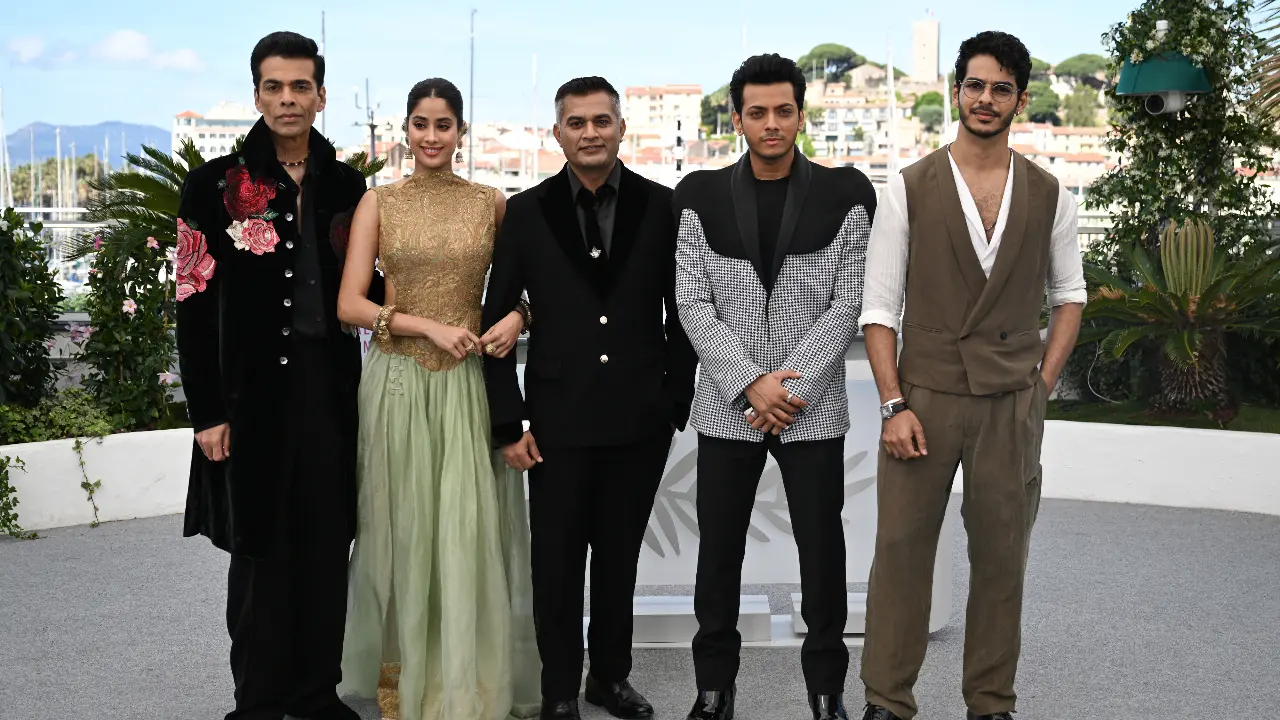
Niharika Lal (BOMBAY TIMES; May 22, 2025)
When Neeraj Ghaywan first attended Cannes, it was in 2015 for his directorial debut Masaan. The film was selected in the Un Certain Regard and won two awards – FIPRESCI Award and the Prix de l’Avenir Prometteu. A decade later, he’s back at the fest with Homebound (2025), another human story, but this time with a little help from some very big names including Martin Scorsese and Karan Johar.
As Ghaywan’s new film made the screening in the Un Certain Regard section this year, the filmmaker was joined by the team at the red carpet, the makers discussed Homebound at the Bharat Pavillion at Cannes.
‘WE SEE URBAN STORIES IN FILMS, AND THEN THERE IS A GAZE THAT IS TOWARDS SMALL-TOWN INDIA’
“The story that I wanted to say was about these two friends,” Neeraj said during a discussion at the India Pavilion at Cannes ahead of Homebound’s screening. He added, “What I also feel is that more than 60 per cent of our economy, our people, live in villages, and in our films, we don’t see villages anymore. We see urban stories in films, and then there is a gaze that is towards small-town India. But where are we talking about the stories from the heartland? That was one of the motivators for Homebound.”
The filmmaker continued, “Whenever we talk about films across the world, say, people of colour, creed, they’re all spoken of in numbers. They are part of the statistics. And when you say that, it’s like you’re trying to persuade your urban guilt – like hiding your apathy by showing false sympathy. I felt, what if we pick one person out of that statistic and see what happens in their life and how they arrive at this point? That will make for some great story, and will truly represent the kindness, empathy – that has been my intent so far.”
I feel this collaboration is quasi-disruptive in a way: Neeraj Ghaywan
Talking about collaborating with Karan, Neeraj said, “I’ve been wanting to work with Karan. (He also directed Geeli Pucchi, a part of the Ajeeb Daastaans anthology in 2021). I feel this collaboration is quasi-disruptive in a way. Independent filmmakers are always trying to figure out how to go about it.
Either we’re doing co-productions or seeking government funding, which comes with a lot of paperwork. But here, if Karan is producing my film, then it’s a different thing altogether – it paves the way for different kinds of possibilities. Our default perception is: go to a co-production, make it happen. But for me, this is a new model.”
NEERAJ AND I WANT TO TELL EMPATHETIC, HUMAN STORIES: KARAN JOHAR
“Neeraj Ghaywan and I come from two different schools of cinematic syntax,” Karan Johar said, “but I think one thing that lies common in both our belief systems is that we want to tell empathetic, sensitive human stories. That is common in both our cinemas. And it has nothing to do with syntax – it has to do with the heart the film offers.”
He explained, “I think when you see Masaan and when you see Homebound, you realize that interpersonal relationships, the handling of the emotional aspects of both the movies, and the spectrum of emotions they cover are the same.”
Karan said that’s what he tries to do in his films too. “My syntax is more theatrical, more opulent, a little more on-the-nose, because that is the kind of filmmaking I love and what I grew up watching. But even when I was eight or nine years old, while I loved the glory of Yash Chopra and the social drama with the opulence of Raj Kapoor, I also loved the empathy of Guru Dutt and the deep-rooted messaging of Bimal Roy. I could enjoy the brilliance of Satyajit Ray and dance to a song from a Raj Kapoor film in the same breath,” he said.
‘We’re beaming with pride that we have this kind of representation’
About Indian cinema finding global resonance, Karan said, “One important thing for me is: how to take our cinema to the world, apart from catering to our domestic audience. Last year, we had Payal Kapadia shine at Cannes with All We Imagine As Light (2024), and now she is on the Cannes jury.
This makes my heart so full. We are all beaming with pride.”
He added, “And the very next year, we have Homebound – this means we really are on the global map. I know these are baby steps. Every year, we have to make sure our stories continue to travel.”
‘Being at Cannes is proof that I’m not a one-film wonder’
“When Neeraj Ghaywan sir told me our film was selected, I was happy but didn’t grasp how big it was. After reading up, I understood its value – and it boosted my confidence as an actor,” says Vishal Jethwa, who made his Cannes debut this year.
“My dream was as simple as standing outside the Yash Raj Films (YRF) gate just to see what it looked like. Today, I’m part of a Karan Johar film directed by someone as brilliant as Neeraj sir. Attending Cannes with Homebound is a massive moment in my life. My debut (Mardaani 2) was successful, but some of my later films didn’t perform well at the box office. This film, however, has taken me to an international platform. It feels like proof that I’m not a one-film wonder – that I’m here to stay and meant for good things.”
Hum filmein banate hain peace ke liye, lekin Pakistan peace maanta kahan hai-Anil Sharma
8:07 AM

Niharika Lal (BOMBAY TIMES; April 28, 2025)
"Sab ne apne-apne tareeqe se bataya hai India aur Pakistan ka conflict. Yashji had his take, Border showed it in a different way. When we made Gadar, we wanted to say, ‘mohabbat hi sab kuch hoti hai,’” shares director Anil Sharma. In the aftermath of the Pahalgam attack, the veteran filmmaker, who is also one of the original voices of the Indo-Pak conflict on screen, shares his take on how the subject has been portrayed in cinema over the years.
‘Made Gadar with the perspective of humanity’
Through his films, Anil Sharma tried to talk about the power of humanity in the face of conflict. He says, “More than 10 lakh people lost their lives during the partition – one of the greatest tragedies the world has ever witnessed. We asked ourselves, ‘When the people on both sides of the border were so alike, what was the need to create two nations?’ Most of the Muslims living in India at that time could trace their ancestry, in some way or another, back to Hindus. There was a deep sense of brotherhood. It is also true that it was said at the time that Hindus living in Pakistan will continue to live there and Muslims living in Hindustan will continue to live there. Then why did it happen that those summons came, like we showed in Gadar, that Hindus living in Pakistan must leave their homes? Why did that violence happen? It was all because of the game of power and religion – the game that kills humanity. That’s what we tried to show in Gadar. We made the film with this perspective – tread the path of humanity.”
‘Uri showed that aakrosh hai janta mein’
In Uri, the sentiments are very different from that of a Veer-Zaara. “If (Pakistan) comes to our home and kills us, like they killed a few days back in Pahalgam, toh hum kya karenge? Hum bhi ja ke ghuss ke maarenge. Aakrosh hai janta mein – Uri showed that. I showed the same long back in my film Tahalka (1992),” says the director.
‘If we have to improve our relations, we have to think of humanity’
Talking about the attack on tourists, the director adds, “What happened in Pahalgam – why did it happen? Naam puchh-puchh ke maara – matlab kya hai iska? Aur kyun maara pehle toh? Aap ye phailana chahte hain ki Hindu-Muslim mein jhagde ho? Aur ye unki political thinking hai, unke political achievements hain, woh poore ho? Hindustan aur Pakistan ke rishton ke baare mein baat ye hai ki ek baar dono deshon ki awaam soche – politicians toh politics karte rahenge, woh badlenge nahi. Ek baar sab log soche ki hum chalein insaaniyat ke raaste par. As long as we are alive, we must spread love and peace, and that is what can improve Indo-Pak relations.”
He adds, “Consider this : we are spending billions on weapons made by foreign countries and growing poorer by the day. How does that help us? If we have to improve our relations, then we have to think of humanity. I have always made films with that purpose.”
‘Yash ji’s Veer-Zaara was a reminder Aap mohabbat ke raaste chalein’
Our films have often captured the ebb and flow of the relations between the two countries. Sharma says, “How Yash ji depicted Indo-Pak conflict in Veer-Zaara was beautiful. Having survived the partition, he brought a mature perspective that was beautifully reflected in Veer-Zaara. It was a coherent, heartfelt reminder – ‘Aap mohabbat ke raaste chalein.’”
‘We never attack first. But there is a limit to our tolerance’
For those who have lost their loved ones to conflict, there can be no “anti” or “pro” Pakistan film. Hum film banate hain peace ke liye, lekin ye (Pakistan) peace maante kahan hain?,” says Sharma, adding, “Our films are out there for the world to see what really happens. India has always been a peaceful country. We never attack first. But there is a limit to our tolerance. Whenever they attack – we give them a fitting reply. They started the Kargil war, they started the 1965 war, Pulwama, the Parliament attack – and now Pahalgam too. Whenever India reacts to their violence, provocation, or war, we make films that show how peace is possible – but only when the truth is faced.”
The director adds that our films are 100 per cent realistic. “We haven’t portrayed all of Pakistan in a negative light. Several Pakistani characters in Gadar 1 and Gadar 2 were genuine and came from a place of understanding. Hum awaam ko positive dikhane ki koshish karte hain. Awaam ko kabhi negative nahi dikhate. Hum dikhate hain politicans ko negative, jo satya hai. I believe common people in every country are inherently good. Awaam bechari ko kya chahiye? Awaam ko toh keval roti chahiye khaane ko,” he says.
Lahme was ahead of its time; people weren't prepared for it 35 years ago-Anupam Kher
8:22 AM

Yashika Mathur (HINDUSTAN TIMES; March 25, 2025)
Over three decades after it first hit the silver screen, the 1991 film Lamhe re-released in theatres last Friday. A cult favourite, the movie is also special for actor Anupam Kher, who starred alongside Anil Kapoor and Sridevi.
Talking about the film’s initial reception, Anupam tells us, “Now, it is a cult film, but back then it was ahead of its time.” He adds, “Today, a relationship between an older man and a younger woman is not a big deal, but people weren’t prepared for that 35 years ago. I find it ironic because people watch and appreciate films like Pretty Woman (1990). Aisi bahut saari films hain.”
Asserting that the film is one of the late director Yash Chopra’s finest works, the actor adds that its less-than-stellar theatrical run came as a surprise to the cast and crew: “I remember when Yash ji said ‘The film is not doing well’. It was a shock for us because we thought it was very good.”
Now that it is back in theatres, the 70-year-old feels Lamhe might get the reception it deserves. “I think people want to revisit anything to do with nostalgia. This film reminds people of the early ’90s — it’s not just about the story but about emotions.”
Juhi Chawla shares memories from the shoot of Holi song in Darr 'Ang Se Ang Lagana'
8:15 AM

Natasha Coutinho (BOMBAY TIMES; March 13, 2025)
The Holi song Ang Se Ang Lagana from Darr, starring Juhi Chawla, Shah Rukh Khan and Sunny Deol, remains popular to date. The track from the Yash Chopra directorial offered celebration and thrill in equal measure.
Recalling the shoot of the song, Juhi says, “We had shot the song on the lawns of a house in Lonavala. As for skin and hair care, we were young and clueless, and it was great. There were no fancy lotions, sunscreens and all that drama. The only thing was that we didn’t want to get a sunburn while shooting as there were a lot of outdoor shoots. I had a dupatta wrapped around my face for protection apart from the make-up we wore, and the big umbrellas held up by the spot boys.”
Juhi adds, “Back then, we didn’t have vanity vans, so the rooms on the upper floor of the house were used as make-up rooms, and we would come down to shoot, which was quite convenient. Shah Rukh came in for a day for his shots where he was playing drums, and Sunny ji (Sunny Deol), Anupam ji (Anupam Kher), Tanvi ji (Tanvi Azmi) and I continued with our portions. Sometimes, we would end up applying too much colour on our co-stars’ faces, but then we would realise that we went overboard and would reduce it to look pretty on screen. If you watch the song closely, you will notice jumps in continuity when it comes to the gulaal on our faces.”
‘Holi get-togethers at Yash ji’s home were unforgettable’
Talking about off-screen Holi celebrations, she says, “Holi get-togethers at Yash ji’s (Yash Chopra) home were unforgettable. They were full of fun, food, colour and camaraderie.”
Relationships aren’t fairy tales, love takes effort-Kartik Aaryan
4:31 PM

Renuka Vyavahare (BOMBAY TIMES; February 14, 2025)
He won over young fans with his perfectly delivered monologues in romcoms like Pyaar Ka Punchnama and Pati Patni Aur Woh, and then, Kartik Aaryan went on to become the charming face of tongue-twisting movie titles like Sonu Ke Titu Ki Sweety and the upcoming Tu Meri Main Tera, Main Tera Tu Meri (try saying that fast on a loop). The actor’s take on love, however, is anything but complicated. When it comes to matters of the heart, Rooh Baba is refreshingly real. Bombay Times exclusively caught up with one of B-Town’s most eligible bachelors on Valentine’s Day and quizzed him on love, modern dating, relationships, situationships and everything in between. Read on…
What do you think of Valentine’s Day? Do you believe in the concept of a soulmate?
I think Valentine’s Day is a sweet celebration of love, but honestly, if you truly love someone, every day should feel special. As for soulmates – yes, I’d like to believe there’s someone out there who just gets you. But I also think love is about effort and growing together, rather than waiting for the perfect person to show up. Relationships aren’t fairy tales, but they do have their own magic when two people make an effort.
How different are you as a person when single as opposed to when you are in a relationship?
When I’m single, my life is all about the hustle – shoots, promotions, scripts, gym and late-night binge-watching. But If I were in a relationship, my world would revolve around that one person. I’m always busy making that person feel special every moment. I become that person who texts khana khaya kya? a hundred times a day, plans surprise dates, and cancels night-outs with friends just to spend time with her. I still don’t know how to balance things out (laughs).
From Pyaar Ka Punchnama to Love Aaj Kal 2, Luka Chuppi to Satyaprem Ki Katha, and now a rather intense musical with Anurag Basu – does the choice of these films reflect your evolution as a lover, too? Are you more serious about finding love today?
Every film I’ve done has shown different shades of love – some fun, some intense, some heartbreaking. And just like my characters, I’ve evolved too. I think romance has always been my strong suit, and I’m grateful filmmakers see that, too. And honestly, my approach to relationships in real life helps me bring out the best on-screen, too. It’s all connected, and it always reflects. Audiences and fans only connect with us as performers when we are able to bring that authenticity to our characters. You will see an intense, never-seen-before side of me in Anurag Basu da’s musical love story and then you will see me playing a fun, yet, character with gravitas in Sameer Vidwans’ Tu Mera Main Teri Main Tera Tu Meri. 2025 is shaping up to be a romantic year for me.
How integral were Bollywood movies in shaping your perception of love? Growing up, were you a Shah Rukh Khan and Yash Chopra fan?
Bollywood definitely shaped my idea of romance. I grew up watching Shah Rukh Khan spreading his arms and making it look so effortless. Dilwale Dulhania Le Jayenge, Mohabbatein, Dil To Pagal Hai, Kuch Kuch Hota Hai, all those films made love feel larger than life and magical. And yes, I’m a huge SRK and Yash Chopra fan. Who isn’t?
We all go through heartbreak, and some of us, even unrequited love. How do you heal from a heartbreak?
I’m a diehard romantic, on-screen and off-screen. I don’t rush the process. I let myself feel everything, but I also make sure to channel my emotions into something productive, whether it’s work, fitness, or spending time with friends and family. I think the key is to surround yourself with love in different forms—whether it’s from your close ones, your passion, or even your pet. And some of the best love stories are born after a heartbreak.
What’s your love language, and what, according to you, is the true definition of love?
For me, love is about effort, consistency, honesty and showing up for the person you care about. It’s not just about grand gestures but also the little ones. My love language is a mix of quality time and acts of service. I believe in being present, and in making life easier and happier for the person I love.
What’s your take on the modern dating culture of situationships and no-strings-attached relationships?
I’m a diehard romantic. Love is pure, in-depth emotion, and I feel there is no place for practicality when you are in love. I understand that times are changing rapidly, and our dating culture is also evolving with it. People have different ways of expressing love, and that’s okay. Personally, I believe in something more meaningful and long-term rather than just fleeting connections.
What does a ‘green flag’ mean to you in a relationship?
For me, a real green flag is feeling secure, not just in yourself but also in your partner’s success and achievements. No one’s perfect, but what really matters is appreciating and supporting each other. At the end of the day, if you truly love someone, you should be their biggest cheerleader.
You often talk about your bond with your mother and sister. How has growing up around strong women shaped your perspective on love and relationships?
Everything I am today because of them. Watching my mother’s resilience and my sister’s strength has taught me what true love and respect mean. They’ve always been my biggest cheerleaders, and that has influenced the way I treat people, especially women. I believe love should be built on mutual respect, support, and understanding – just like the bond I share with them.
Deewaar made the grey, varied, flawed character very cool 50 years back
7:58 AM

For actors, it remains a reference on how to play the angry young man. For writers, it’s a masterclass in screenplay writing. As Deewar, a cult classic that made the anti-hero likeable, turns 50, we take a look at its legacy
Niharika Lal (BOMBAY TIMES; January 28, 2025)
‘When you make a film, let it speak for itself’
Talking about the making of Deewaar, Rajiv Rai, son of the film’s producer Gulshan Rai, says, “Deewaar has inspired many films in various Indian languages. The film received a massive response upon its release. My father, Gulshan Rai, who produced the film, didn’t really talk much about its success. I believe that when you make a film, you don’t come home and discuss it – you let the film speak for itself. Every scene was a gem, and everyone has their favourite moments from it. Pran Mehra, an ace editor of his time, played a major role in the making of the film. He was a highly sought after editor at the time and instrumental in making this film what it became.”
‘Deewaar made the anti-hero likeable’
Film historian Gautam Chintamani says, “Deewaar made the anti-hero cool 50 years back. It was among the first few films that made the anti-hero, the hero. The 70s was the point in Indian cinema where films focused on anti-establishment themes, changing the system, and how the system oppressed the common man and his fight against the system.”
Writer Saurav Dey adds, “The film talks about taking a stand against the establishment, capitalism, and has social commentary – but the entertainment value of the film is still high. It is not a morose, silent film despite the heavy topics it deals with. It made the grey, varied, flawed character very cool 50 years back.”
“Films like Deewaar, Shakti, Zanjeer, and other such films of Bachchan sahab, gave us the confidence to stand up against those who were superior to us. These films gave us the belief that one can stand up for something we truly believe in,” says Adil Hussain, adding that Deewaar was one of the films that inspired him to get into acting.
Deewaar was very rugged and one wondered if Yash ji would agree to do something like this: Bachchan
In the documentary The Romantics, Amitabh Bachchan talks about Deewar and says, “Yash ji was looked upon as this new-age young director wanting to make different films. Salim-Javed suggested that he should direct Deewar. Yash ji, by that time, had established himself as a director who worked more in beautiful sceneries, objects and the beauty of nature. Deewaar was very rugged and one wondered if he would agree to do something like this. He never lost his mind towards nature and towards romance, even when he was doing a film like Deewaar.”
‘Deewar cemented Amitabh Bachchan’s legacy as the Angry Young Man’
Talking about the cult status of Amitabh Bachchan’s Angry Young Man persona, film historian Shivendra Singh Dungarpur, shares, “Deewaar has had a very strong influence in enhancing Amitabh Bachchan’s Angry Young Man persona – a rebel who takes on the system and almost single-handedly revolutionized the ideology surrounding workers’ rights. At the end, the film shows the triumphs of righteousness, as his own brother kills him. The intensity and drama between the two brothers and their mother, combined with the way the angry young man became a powerful symbol after this film, are unforgettable. Deewaar cemented Amit ji’s legacy as the Angry Young Man.”
Trivia
- Deewaar’s screenplay was written in 18 days and dialogues were written in only 20 days
- Two songs were removed from the film because of its length
- Aruna Irani and Deven Verma are credited in the film, but their scenes were removed because of the length
I am never considered for high society roles-Manoj Bajpayee
8:49 AM
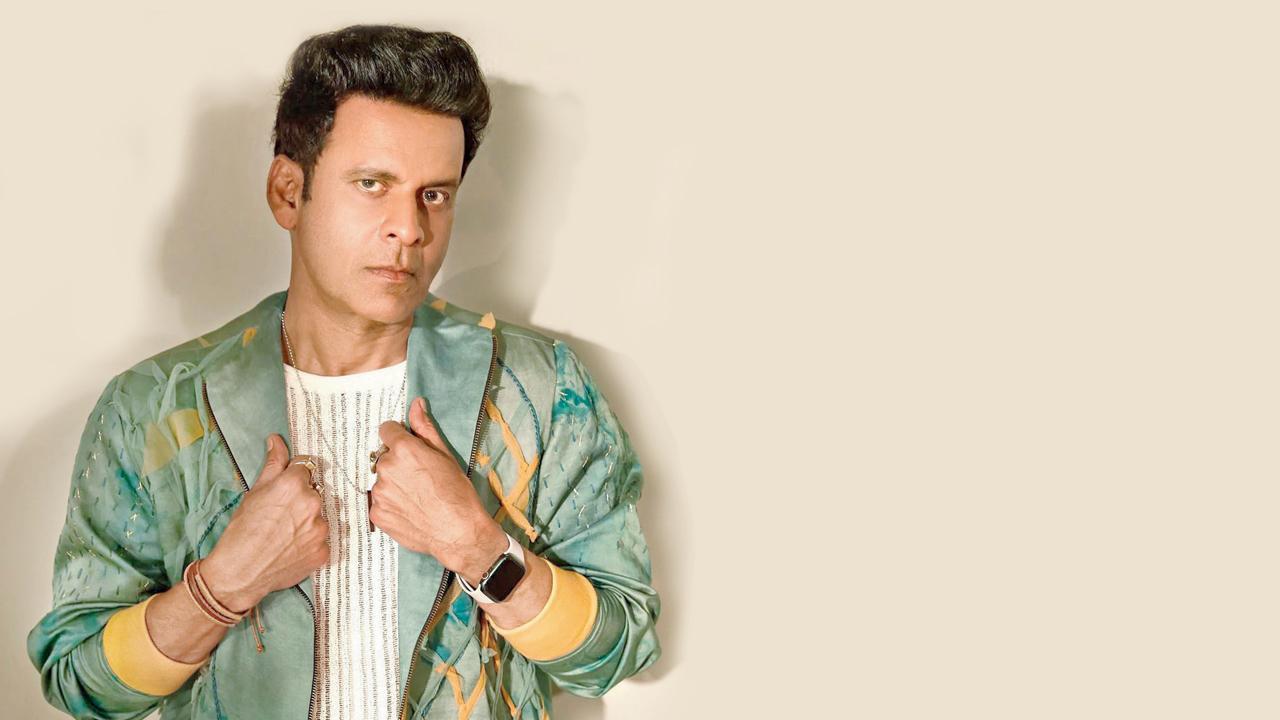
Renuka Vyavahare (BOMBAY TIMES; September 25, 2024)
Manoj Bajpayee, whose career boasts of some remarkable and versatile power-packed performances, points out the stereotyping that exists in Bollywood and says that it’s time the film industry looks within and works on its weaknesses instead of defending them.
‘I am never considered for high society roles’
Talking about how stereotyping exists, looking back at his own film journey, Manoj says, “The only film before Gulmohar (2023) where I played a rich guy was Zubeidaa (2001). That was Shyam Benegal’s conviction. He was the one who felt that real maharajas were not Greek gods. They looked normal. In Veer-Zaara (2004), I played a politician from Pakistan. I had two scenes in it, but Yash ji (Chopra) was adamant that I do it. He cast me after watching Pinjar (2003). These filmmakers had that vision which stems from seeing life up close. Bakiyonko mujhe rich dikhaane mein dikkat hoti hai. The roles that I portrayed were mostly set in middle-class and lower middle-class stories. I am never considered for high society roles. No director could think of me as a rich guy, barring the two stalwarts that I mentioned. This stereotyping exists.”
‘Most people in decision-making positions in our industry belong to a generation that hasn’t seen India’
Manoj feels there’s a larger problem that the industry is facing today. He feels, if you dig deeper, you’ll notice that our industry (Bollywood) lacks insight towards life, our country and people.
The celebrated actor explains, “No one can plan a hit or flop. No one sets out to make a bad film. The problem that our industry is facing is lack of insight. Most people who are at the helm of studios or decision-making positions, belong to a generation that hasn’t seen India. They are completely cut off from reality. Their references are other films and not real life. And there came a point when tickets became unaffordable and south films in dubbed versions became people’s staple diet in the north because those films were more relatable.”
‘If you wish to pursue a career in Hindi movies, you must learn the language’
He also believes that actors in Hindi cinema need to have a command over the language. “As parents, those who can afford it, we want our kids to study in the best of English medium schools and get the best education. There’s nothing wrong with that. However, if these kids wish to pursue a career in Hindi movies, you must learn the language,” he argues.
Manoj adds, “You will be surprised to know, 20 years back, I didn’t have to struggle to get my script in Devanagari. Today, it’s a struggle because 98% actors read Hindi lines written in English. Without defending our weaknesses, we need to look within and correct those areas.”
‘People like me who come from remote places have seen life’
Talking about the advice he once gave an aspiring actor, he said, “People like me who come from remote places, we have seen life. I once told an aspiring actor, ‘Train mein baitho aur ek saal Hindustan dekho. Mere gaon chale jao, mera ghar khulva doonga. Stay there. That’s where you will learn about relationships as you will talk to common people’. For me, that experience will teach you more than any acting school.”
My mother said, 'Do your part so well that people take notice of you, even among the biggest stars'-Divya Dutta
8:55 AM

Preeti Atulkar (BOMBAY TIMES; July 15, 2024)
Divya Dutta confesses that being an actor is no easy feat. “This is a kind of profession where every day you dig a well. You have to keep up and keep working hard. It's not like, aaj toh mujhe saare critics ne keh diya ki showstealer ho tum, toh ho gayi meri zindagi set," shares Divya. In an interaction, the Dhaakad actress speaks about the importance of women having the freedom to make choices and applauds the changing portrayal of female characters onscreen. Excerpts from a chat:
‘Female characters are depicted with more depth across different age brackets’
Divya feels that female characters are becoming more relatable and multi-dimensional, resonating with viewers at a deeper level. "The shift in audiences' preferences can be attributed to the rise of OTT platforms. Gone are the days when women were confined to singing songs as the leading ladies or playing characters like the hero's mother,” she says, adding, “Nowadays, there is more depth to our roles, irrespective of the age-bracket. They are far more layered and relatable. You're not just a goody-two-shoes or a vamp. And I guess it's a beautiful time to be writing characters and for actors to perform them."
On getting the kind of roles she wants, Divya says, “I took up smaller roles at one point in my career and made my presence felt. Now, I am happy that roles are now being written for me.”
'People should get the opportunity to live without regrets'
A strong advocate of feminism, Divya says it’s all about the freedom to make your own choices. "It’s not about saying I am better," she shares, adding, "Aapko haq hona chahiye ki aap apni zindagi ki choices decide kar sake. I was lucky that my mother stood by me. I feel people should get opportunities to live without regrets and I feel fortunate to be able to make my own choices. Even if they turn out to be mistakes; they are mine."
She recalls, "After Veer-Zaara, I was getting similar roles. After Bhaag Milkha Bhaag, I was offered sisterly roles. Things changed with Badlapur, which got me back to being a commercial actress. So, my journey has been a fun ride."
The actress adds, "Earlier, filmmakers would acknowledge my talent but cast someone else in their projects. After I won the National Award for Irada (2017), I started being looked at as an actor with gravitas."
On being sceptical about playing Shabbo in Veer-Zaara...
Divya, who completes 30 years in showbiz this year, shares that her first tryst with fame came from Veer-Zaara (2004). The actress shares that she had reservations about playing a supporting role. "When I was approached for this movie, I felt that my dream of wearing chiffon saris and dancing in the Alps would finally come true. However, during the script narration, Aditya and Yash Chopra revealed that I would be portraying Shabbo, a friend of Zaara (played by Preity Zinta). I was a bit sceptical. I thought if I played a friend’s role in a Yash Chopra film, then everyone’s going to offer me a friend’s role only. Adi probably read my face and said, 'You will be remembered for this role'. Also, when I confided in my mother, she told me, 'Do your part so well that people take notice of you, even among the biggest stars'. And that's exactly what happened."
25 Years of Kuch Kuch Hota Hai: I saw my father smile during the release of a film for the first time in many years-Karan Johar
8:28 AM
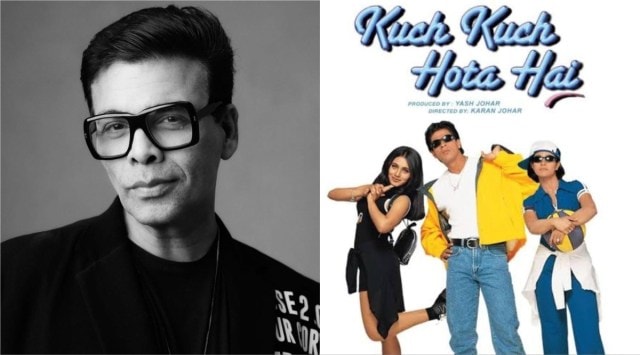
Onkar Kulkarni (BOMBAY TIMES; October 16, 2023)
As Kuch Kuch Hota Hai (KKHH) celebrates its 25th anniversary, in a chat with BT, Karan Johar takes us down the memory lane of a film that launched his career as a director in Bollywood. The filmmaker talks about what went into making this movie, and the love and criticism he’s got for it over the years…
In an interview, you had said that you began working on KKHH when Dharma Productions had backed five-six movies, which hadn’t worked.
At a time like that, what gave you the confidence to go all out with making your debut as a director with such a large-scale film?
After my father’s (Yash Johar) first film Dostana (1980), he had given a series of films that had not worked commercially. I have seen the tough times he went through and the financial losses we faced. Actually, it was Yash uncle (Yash Chopra) who I consider a father figure, who had asked me to direct a film for his banner. But when I went home and told my father that, he said, ‘You are my son, and it would be nice if you directed (a film) for Dharma Productions’. I asked him if we could afford it? He had faith in me, and he said he would take a loan. He also said, ‘Karan, we will give it our best shot, but in the worst-case scenario, if the film doesn’t work, I don’t want you to keep doing something where you will continuously see failure, and that is only what I ask for’. That was the advice he gave me.
My father was a very loved man by the industry, and everyone wanted the film to work for him, it wasn’t about me. When the film made the money, we bought our first home in Mumbai. I saw my father smile during the release of a film for the first time in many years!
In a country that’s obsessed with cricket, what made you pick basketball to portray some key emotions and scenes in the film?
I needed a sport that was interactive and looked kind of sexy when two people are playing it in close proximity. It couldn’t be cricket, football, table tennis or badminton, it had to be basketball, because you are actually playing it in a way that can be intimate between two people. Remember that scene in the second half where Anjali (Kajol) plays the game in a saree, and Rahul (SRK) is wearing a shirt and a tie? There’s something sexy about it. So yes, that’s the only reason, otherwise, I had no clue about basketball as a sport.
We were shooting in Mauritius, and I kept calling it a ‘goal’ until Shah Rukh took me aside and corrected me and said, ‘Karan there are a lot of people who are actually laughing at you because it is called a ‘basket’…you score a basket, you don’t score a goal! This isn’t football’.
While the film appealed to a huge section of the audience, it has also faced its share of criticism over the years. Like some think the film is too shallow and superficial, in fact, at times even you have laughed at some of the memes and jokes around it. Twenty-five years later, how do view it?
Absolutely, I take it all in a good stride. I feel Kuch Kuch Hota Hai is a result of my passion for Hindi cinema and what I grew up on. I was younger and less evolved when I made the film. I was not aware of what I am today. My woke metre was zero, so, the gender politics is very questionable in the film. And yes, it can come across as superficial and there are logical loopholes. Today, I would not make those errors. I made a film like Rocky Aur Rani Kii Prem Kahaani recently, which has been praised for its wokeness. I didn’t have this maturity at that time. I had a different sensibility, but you grow with time. I can’t regret it because I made it with a different mindset. But I am completely in agreement with the criticism. I also want to add that there was a certain innocence with which I made Kuch Kuch Hota Hai. It was never made with a bad intention.
From KKHH and Kabhi Alvida Naa Kehna to Ae Dil Hai Mushkil and Rocky Aur Rani Kii Prem Kahaani, all these films have a common thread – coming-of-age romance, intense love and heartbreaks. Have you personally felt close to these subjects and emotions?
Each one of these films is my growth as a human being. I did Kabhi Alvida… at 31, when I had seen enough of life. I had seen people struggle in their relationships. That film came from a lot of conversations I had with my married friends at that time or people who I had seen from a distance go through relationship traumas. Ae Dil… is a piece of my own heart. I felt like I had succumbed to an unrequited love story, and it was a personal film for me. Rocky Aur Rani…, is a result of a lot of younger people that surround me on a daily basis. It’s about their thoughts on gender fluidity and equality, as well as what true feminism is. I have leveraged my observations and relationships and have always been able to create stories around them. I believe life gives you the best stories and a strongly led life will always give you amazing stories. All you have to do is open your heart and mind to those stories and you can always be a relevant filmmaker.
Karan on his equation with Shah Rukh Khan
"I was working as an AD on Dilwale Dulhania Le Jayenge where Shah Rukh and I became friends. I was already close to Kajol as we have kind of grown up together. Shah Rukh and I got organically very close to each other where he became almost like my brother. When I wanted to make my first film, it was just natural that he would be a part of it. He had told me that whenever I made my first film, he would like to do it and he followed through with his promise. Thereon, it wasn’t just a relationship of a director-actor, but we became family. It is not just a legacy of love that we have created cinematically…it is also the legacy of love we all have as human beings for each other."
Karan On casting Rani Mukerji
"Rani was worried as Shah Rukh-Kajol was an iconic pair and they had a legendary film behind them – Dilwale Dulhania Le Jayenge. I told Rani to trust me, and she was a trooper from day one. She always says that she’s very thankful that we didn’t change her voice because in Ghulam her voice was dubbed. I always felt her voice was amazingly individualistic, and there was no way that I would want to change that."
KKHH - Rapid Fire
Your favourite scene from Kuch Kuch Hota Hai...
The moment where Shah Rukh and Kajol meet after years at the summer camp. There’s this awkwardness and the sad version of the song plays in the background. In that moment, they do their signature gesture also in a very uncomfortable way. They don’t know what to say and how to say it. It is the most beautifully uncomfortable moment that I have created on screen.
Anjali or Tina... your favourite character?
That’s a tough one. How do I answer it? It’s like asking me to choose between Yash and Roohi, I can’t!
If KKHH was to be remade with a younger lot of actors, what would the casting be like?
I think they are an irreplaceable cast, but if you put me in a hypothetical situation, then I would say Alia would be a great Anjali. Maybe, Janhvi (Kapoor) or Ananya (Panday) would be a great Tina. Rahul is tough… maybe Ranveer Singh.
My love for romantic songs stems from the melodies in Shah Rukh Khan’s films-Amaal Mallik
8:19 AM
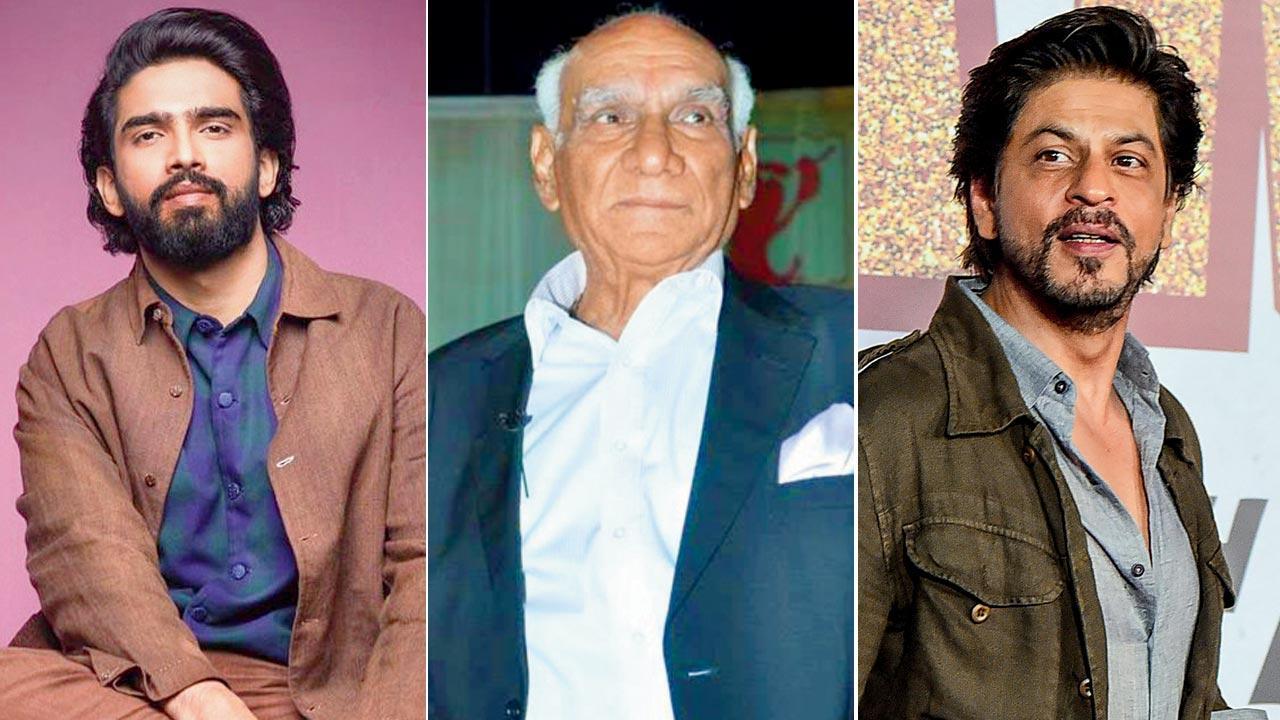
Singer-composer Amaal says his new single Mohabbat is a tribute to SRK and late Yash Chopra
Priyanka Sharma (MID-DAY; June 16, 2023)
Amaal Mallik’s discography is dominated by soft, romantic ballads — be it Kaun tujhe in MS Dhoni: The Untold Story (2016), or Soch na sake in Airlift (2016) or Chal wahan jaate hai (2015). Taking his love for romantic numbers forward, the musician has dropped a new composition, Mohabbat, today. The song holds a special place in his heart as it is an homage to the late Yash Chopra, and Shah Rukh Khan, who together shaped the language of romance for generations of audiences.
“I have been an ardent admirer of the filmmaker-actor duo. Their movies and songs have influenced my music. My love for romantic songs stems from the melodies in Shah Rukh Khan’s films. That’s why my latest track serves as a small tribute to these legends,” he says.
Keeping in mind how Chopra would shoot his numbers against the backdrop of mountains to glorious effect, he decided to film his ballad in Ladakh.
“To capture the essence of a classic Bollywood song, we shot Mohabbat in the mountainous landscape of Ladakh. With chiffon sarees and picturesque locations reminiscent of Yash-ji’s films, the song replicates the essence of old-fashioned romance,” says Mallik, who served as the composer and singer on it.
I took Pamela to B R Chopra’s daughter’s wedding, where Yash Chopra and she met for the first time-Simi Garewal
8:19 AM
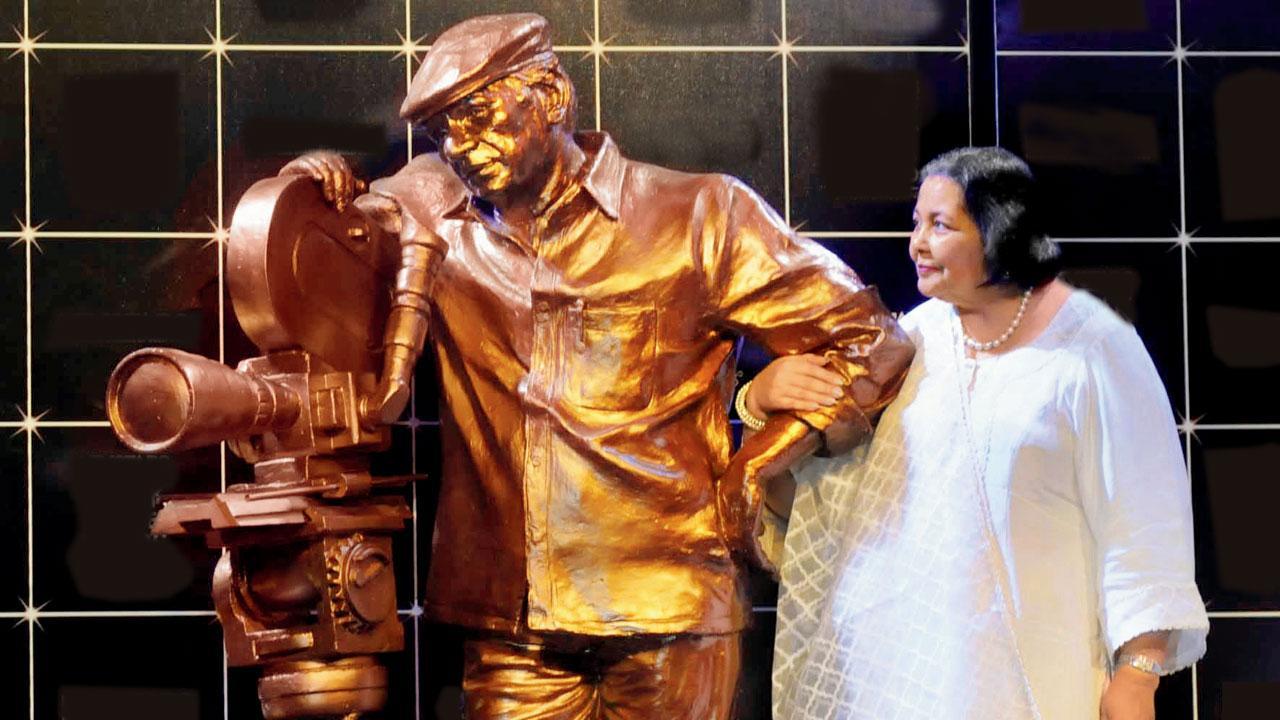
Cousin-actor Simi Garewal reminisces about spending her childhood with the singer-producer who became the 'bedrock' of the Chopra family
Simi Garewal (MID-DAY; April 21, 2023)
Although she was my maternal cousin, Pamela [Chopra] was like my own sister. We shared rooms when she visited us four to five months in a year. It was as if my mother [Darshi Garewal] had adopted her as the third daughter. Pam was a movie buff who knew more about cinema than I did. She taught me Bharatnatyam. She was a warm, vibrant, creative, and charming person who would [often] accompany me on shoots.
I took her to B R Chopra’s daughter’s wedding, where Yash and she met for the first time. She [felt] that he was paying more attention to Hema Malini, but I had caught Yash sneaking a glance at Pam several times. A few months later, B R Chopra and his wife [met] my mother [for a marriage alliance] between Yash and Pam. Her father, Mohinder Singh, who was in the army, was initially hesitant as the Chopras were wealthy [in comparison]. But my mother assured that she would take care of everything. She took care of her like her own daughter.
Strangely, after her marriage with Yash, she started distancing herself from us, which hurt all of us deeply as we couldn’t understand what happened. Though we would go for Aditya [Chopra] and Uday’s [Chopra] birthdays, which eventually stopped. When [we met at] Yash ji’s funeral, Pam was warm. We never got a chance to find out what happened, [even when] we spoke, laughed, and joked around. We never dove into what happened.
Pamela was Yash ji’s muse, friend, philosopher, and the guiding light of Yash Raj Films in the initial years of their marriage. She was a creative force, musically inclined and his sounding board. She later became busy with the family. Pamela was the gentle, positive, practical influence in Yash ji and their children’s lives. She ensured that they were grounded, balanced, and well-mannered. Pamela was the bedrock of their family.
As told to Upala KBR
50 Years of Daag: Yash Chopra was a live wire and always full of Punjabi endearments-Sharmila Tagore
8:10 AM
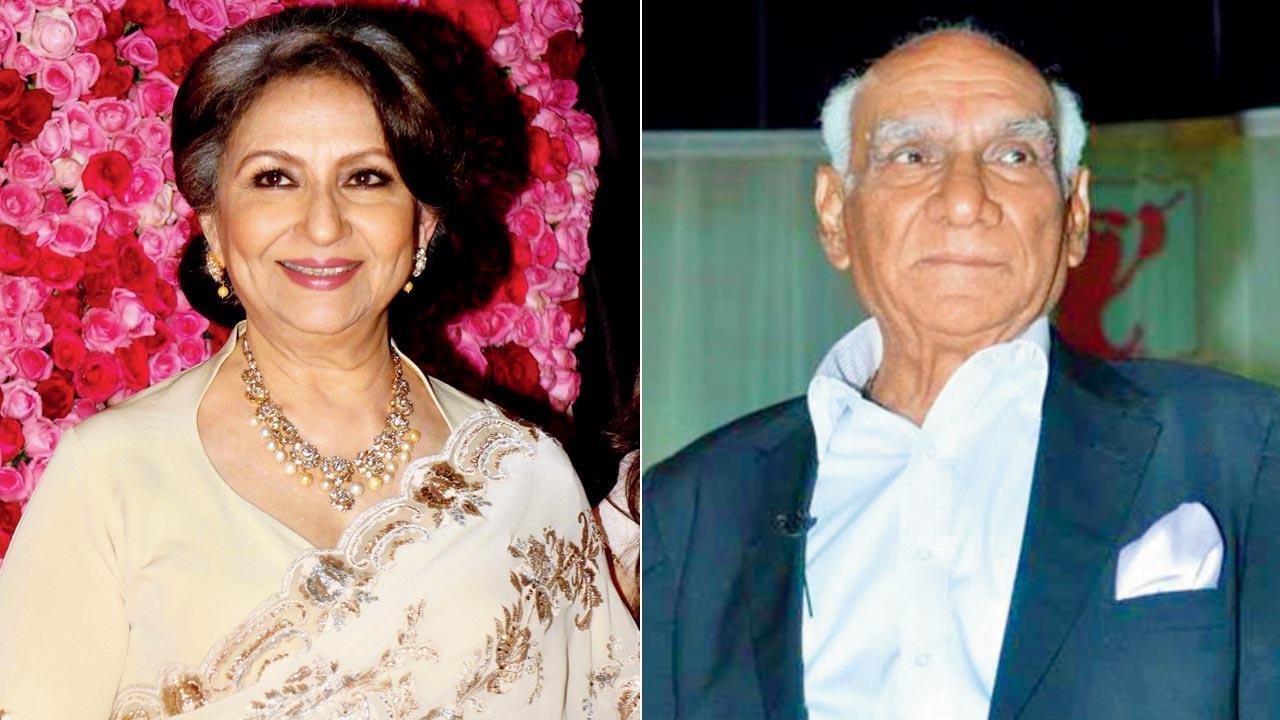
As Daag completes 50 years today, leading lady Sharmila says it was a ‘compliment’ to front film that laid the foundation for Chopra’s banner
Upala KBR (MID-DAY; April 27, 2023)
It’s hard to pick a favourite film when you have a filmography as rich as Sharmila Tagore’s. But to the veteran actor, the late Yash Chopra’s Daag: A Poem of Love is among the movies closest to her heart. As the romantic drama, also starring Rajesh Khanna and Rakhee, completes 50 years today, Tagore says it was a joy to be a part of the movie that laid the foundation for Yash Raj Films.
“I saw it as a great compliment to be a part of Yash’s first venture as a producer. Fifty years since, Daag and its songs remain so popular. Recently, Manoj Bajpayee [during the shoot of Gulmohar] was constantly singing Jab Bhi Jee Chahe,” she laughs.
With the 1973 drama, Chopra stepped away from his signature romantic movies to explore the theme of bigamy. Regardless of the brave theme being explored on screen, the mood on the set was always vibrant, remembers Tagore. “Working on Daag, or even Waqt [1965], was a wonderful experience. As a director, Yash was a live wire and always full of Punjabi endearments.”
In a Yash Chopra movie, one could always be assured of stunning locations. But the senior actor jokes that the behind-the-scenes action of Daag wasn’t always pretty.
Recollecting an incident, she says, “In Shimla, which was snow-covered, I had to walk to the set. I was ready in costume, hair and make-up, and had barely walked five steps when a bunch of girls started hitting me with snowballs. I tried explaining to them [that it was ruining my outfit], but they were happy playing. I threw some snowballs at them too. But I had to change at the location because I was drenched.”
The film reunited her with Khanna after their hits Aradhana (1969) and Amar Prem (1972). She remembers, “Kaka looked gorgeous in his mustachioed avatar in the film.”
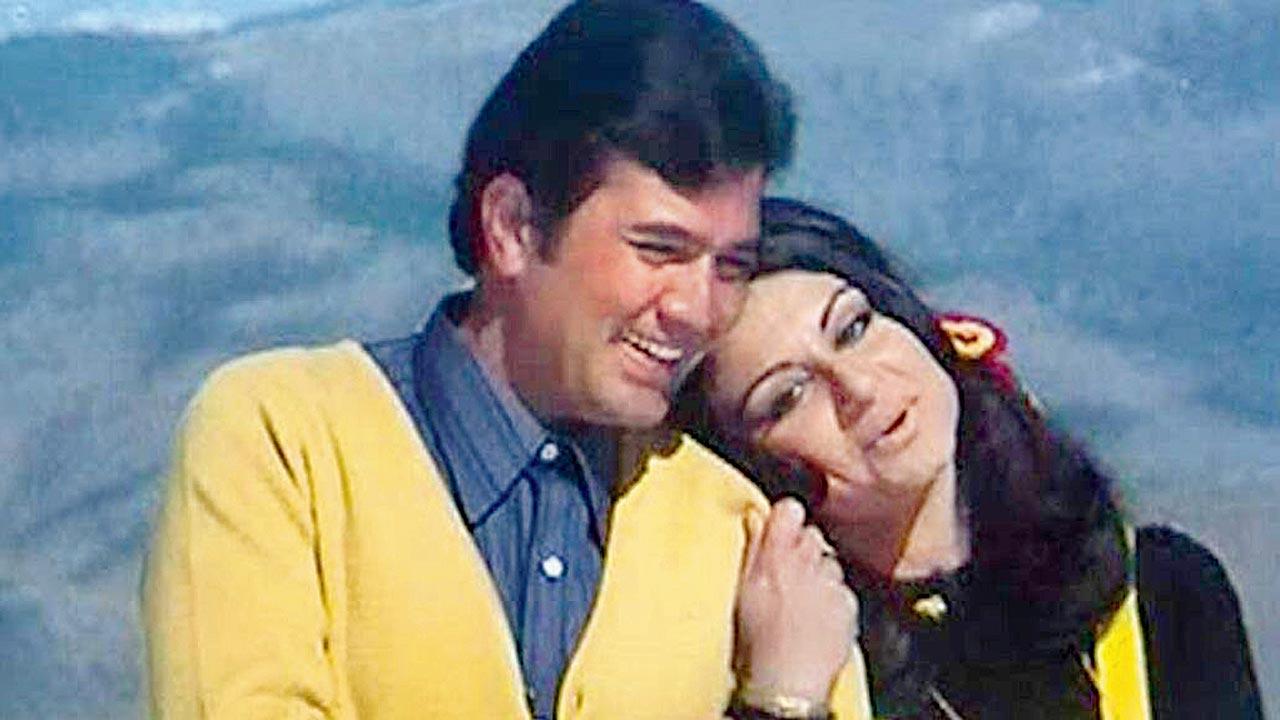
Pamela Chopra, Yash Chopra’s wife and muse, passes away
9:40 AM
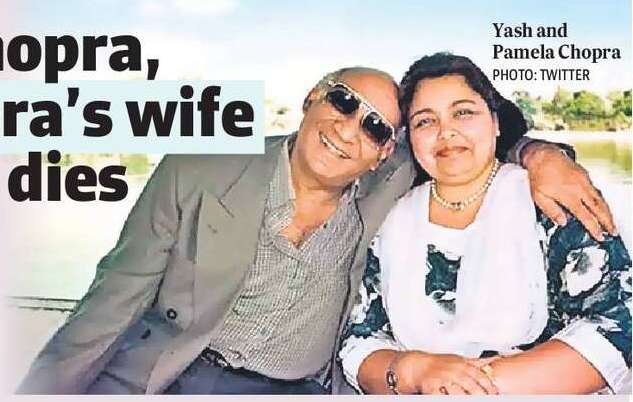
BOMBAY TIMES (April 21, 2023)
Pamela Chopra, singer, writer and late filmmaker Yash Chopra’s wife, died on Thursday in Mumbai. She breathed her last at a suburban hospital where she was admitted after being diagnosed with pneumonia. She is survived by her sons, filmmaker Aditya Chopra and actor Uday Chopra.
In a statement released yesterday, the family said, “With heavy hearts, the Chopra family would like to inform that Pamela Chopra, 74, passed away this morning. Her cremation took place at 11 am today in Mumbai. We are grateful for your prayers and the family would like to request for privacy in this moment of deep sadness and reflection.”
While some members of the industry took to social media to offer condolences, others, including Shah Rukh Khan, Hrithik Roshan, Karan Johar, Katrina Kaif and Vicky Kaushal, among others were seen visiting the Chopra residence.
Pamela Chopra married Yash Chopra in 1970 and remained an important and strong influence throughout his career. She sang many songs for his films, including Surkh Jode Ki Jagmagahat in Kabhi Kabhie, Khud Se Jo Vada Kiya Tha in Silsila and Ghar Aaja Pardesi in Dilwale Dulhania Le Jaayenge. She wrote the story of Kabhi Kabhie (1976), which was directed by her husband and featured Amitabh Bachchan, Raakhee, Shashi Kapoor, Waheeda Rehman, Rishi Kapoor and Neetu Kapoor. She also co-wrote the screenplay of Dil To Pagal Hai.
Besides singing and writing, she was involved in her family’s production banner as a costume designer, producer and associate producer. She recently featured in The Romantics, a docu-series celebrating the movies and legacy of Yash Chopra, who passed away in October 2012.
-------------------------------------------------
HINDUSTAN TIMES (April 21, 2023)
Pamela Chopra, film writer, producer and singer, passed away on Thursday at the age of 74 in Mumbai. She was the wife of late filmmaker Yash Chopra, mother of filmmaker Aditya Chopra and actor Uday Chopra, and mother-in-law to actor Rani Mukerji.
The family announced the news on social media, expressing their grief and requesting privacy in this difficult time. “With heavy hearts, the Chopra family would like to inform you that Pamela Chopra, 74, passed away this morning. Her cremation took place at 11 am today (April 20),” the statement read.
Reportedly, Pamela had been admitted to a hospital in Mumbai 15 days ago and was put on a ventilator when her health deteriorated. Her passing has left the film industry in mourning, with actor Ajay Devgn and lyricist Javed Akhtar expressing their condolences.
Pamela played an integral part in Yash’s movies and was a driving force behind many of his iconic works. As per the docu-series The Romantics, her last appearance on camera, Pamela had written the script for the classic Kabhi Kabhie (1976), styled the cast of Silsila (1981) and co-wrote the 1997 hit Dil To Pagal Hai. Besides this, she also played a prominent role in the music of his films.
That’s how Smriti Mundhra got Aditya Chopra to face the camera
8:21 AM
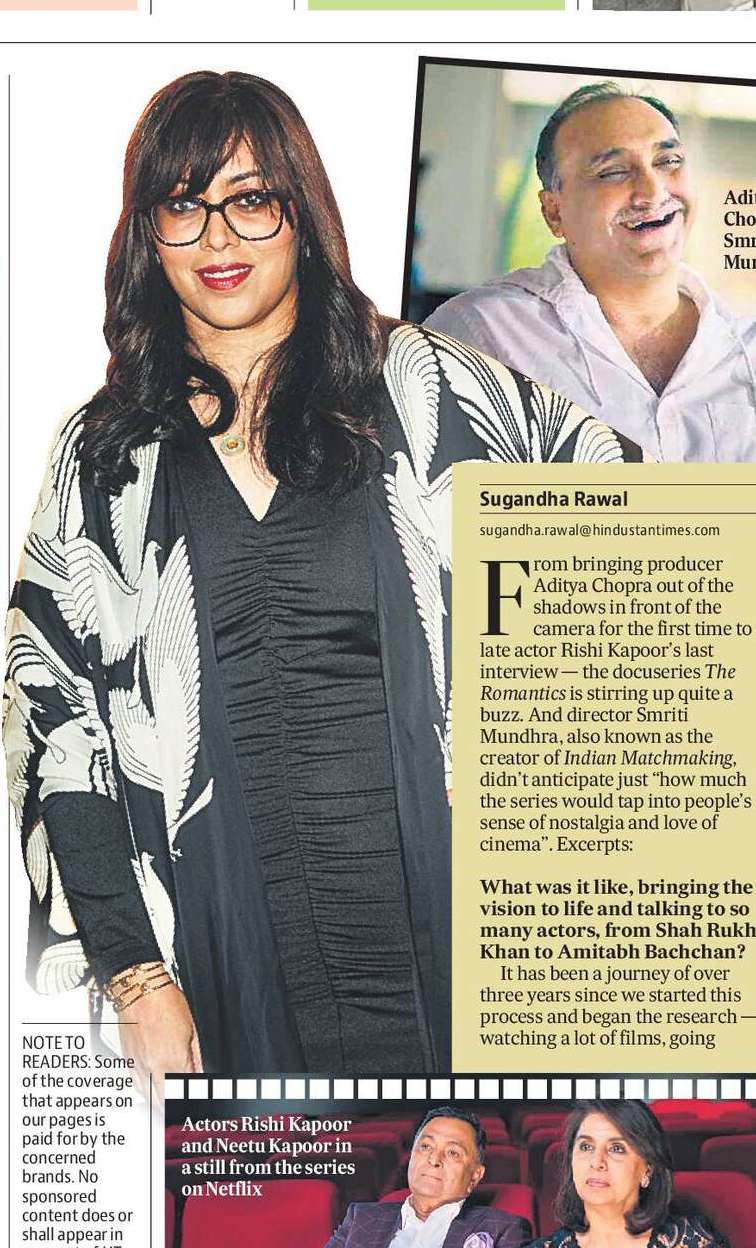
Sugandha Rawal (HINDUSTAN TIMES; February 22, 2023)
From bringing producer Aditya Chopra out of the shadows in front of the camera for the first time to late actor Rishi Kapoor’s last interview — the docuseries The Romantics is stirring up quite a buzz. And director Smriti Mundhra, also known as the creator of Indian Matchmaking, didn’t anticipate just “how much the series would tap into people’s sense of nostalgia and love of cinema”. Excerpts:
What was it like, bringing the vision to life and talking to so many actors, from Shah Rukh Khan to Amitabh Bachchan?
It has been a journey of over three years since we started this process and began the research — watching a lot of films, going through the whole catalogue of the production house and what was happening around the time these films were made. All this [was] because we wanted to paint a larger picture in terms of what movies tell us about the time we live in.
Tell us about putting the spotlight on the evolution of Indian cinema with the project.
One of the reasons I wanted to tell the story through the lens of Yash Chopra was because of the longevity of his career and how it started in the aftermath of the Partition. I realised how closely these elements of the political and socioeconomic climate are braided into their personal story.
This is the first time that filmmaker Aditya Chopra is facing the camera. You added the video interview footage of Aditya on the editing table and showed it to the team for his views. How relieved you were after he agreed to the cut?
Once I could show him what the series and telling of the story of his father would be with his perspective, that’s probably what convinced him, finally. Anyone who has worked in any capacity with Aditya Chopra can tell you that he holds creative integrity to the highest standard, and will move mountains to make sure that the creative integrity of whatever project he is involved with, is intact.
How did he react watching your first cut from his video interviews, which he agreed for archival use?
He kept a cool head with me. He had some time after seeing it to just absorb before I talked to him. Maybe if he was really angry, or horrified, he conveyed that to somebody else, but he didn’t convey that to me. After he saw it, the first conversation that I had with him was him saying, ‘Okay, I see what you mean’.
Can you walk us through late actor Rishi Kapoor’s final interview that also features in the docuseries?
It is one of the highlights of my career. I feel so lucky and privileged that I got that opportunity, not knowing that just a month later, we were going to lose him. He seemed his best on the day I interviewed him. He looked great, was gregarious, very chatty and charming. There was Neetu ji (Kapoor, actor and Rishi’s wife) with him, and they just had such great banter going on. I’m so glad that I got to interview him when he was in the mood to talk, especially given that it was his last interview.
I met Yash Chopra, Subhash Ghai, Chetan Anand, Govind Nihalani, but nobody gave me work-Pavan Malhotra
8:27 AM

Soumitra Das (AHMEDABAD TIMES; February 15, 2023)
Be it plays, TV shows like Nukkad, acclaimed movies like Bagh Bahadur, Pardes, Black Friday and Rustom, or OTT projects, Pavan Raj Malhotra has aced every medium in his nearly four-decade long career. The veteran actor, who was in Ahmedabad to attend the Karnavati Literature and Film Festival 2023 as a speaker, was at his candid best during the session and spoke at length about his journey in showbiz. Excerpts:
‘I NEVER THOUGHT I WOULD BECOME SO SUCCESSFUL AFTER COMING TO MUMBAI’
I used to do a lot of theatre, but I never thought that I would get a chance to do films. I would think, Mumbai mein kaun mujhe kaam dega? My dad would always tell me, ‘Theatre kar ke kuch nahi hone wala, you must join our family business.’
In Mumbai, right from Yash Chopra, Subhash Ghai and Chetan Anand to Govind Nihalani, I met all big directors, but nobody gave me work. But eventually, I worked with many of them and I have learnt that jo aap ke hisse mein hoga, woh aap ko right time pe milega. Most of the work I did after that fell into my lap. I never thought that I would become so successful and I am grateful for all the love I have received.
Also, one important lesson that I have learnt over the years is that no matter how successful you become, you must remain grounded. The beauty of our profession is that it always keeps you on your toes and every role comes with a new challenge. There’s no such thing as going beyond the script, sab kuch script mein hi hota hai.
Also, it’s always a delight to work with filmmakers who have an eye for talent. For instance, who other than Satyajit Ray could have thought of Amjad Khan as Wajid Ali Shah in Shatranj Ke Khilari, especially after he had played Gabbar? I am also happy to see realistic cinema getting its due. So, the exposure that OTT has ensured for our audience has brought about a welcome change.
Aditya Chopra's interview was harder than coordinating an interview with Salman Khan-Smriti Mundhra
8:27 AM
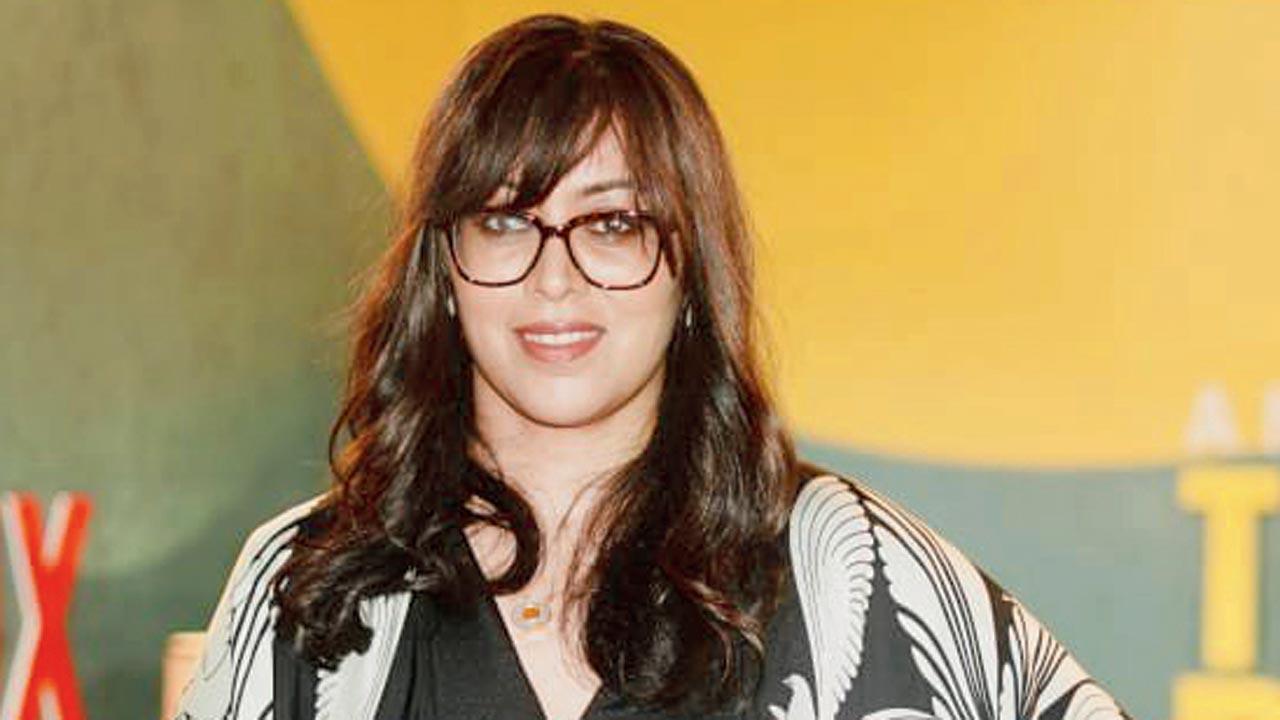
How do you get Aditya Chopra to sit before the camera? Manage time with Salman Khan? Inspire Rishi Kapoor to speak for three hours straight? The maker of a new docu discusses the late director-producer’s legacy, and the highs and challenges of going behind the scenes
Priyanka Sharma (MID-DAY; February 19, 2023)
More than 25 years ago, when Raj and Simran’s love in the lanes of London faced patriarchal conservativeness, an Indian-American teenager felt like someone had mirrored her identity crisis as a young member of the Indian diaspora.
Unsurprisingly, as the fan grew into a filmmaker, Smriti Mundhra desired to pay homage to the man behind the film, Yash Chopra. The result is the Netflix documentary, The Romantics.
“I wanted to explore the films that were important to me and formative in my adolescent years,” says Los Angeles-based Mundhra. To document the legacy of the late filmmaker, whose career spanned five decades, was anything but easy. To top it, she wanted to go beyond Chopra, and dip into the contribution of his son, Aditya, who has been at the helm of the production house since his father’s death in 2013.
“I first pitched the idea to YRF [Yash Raj Films] since they have the archival material, behind the scenes footage, no one had seen before. I was sure that it existed somewhere in a vault. So, I approached them to tell the story of Hindi cinema history through the lens of Yash Chopra and the studio he built. The timing was right because the studio was approaching its 50th anniversary. They were in a reflective headspace.”
The next hurdle before Mundhra was to be able to schedule meetings with the stars central to Chopra’s universe. “Everybody was willing and eager to talk because of the love and respect they have for him. But coordinating actors’ schedules was quite the challenge,” says the director, who eventually managed to get Amitabh Bachchan, Shah Rukh Khan, Salman Khan, Aamir Khan, Ranbir Kapoor, the late Rishi Kapoor, Rani Mukerji, Madhuri Dixit and Katrina Kaif among others to be part of the series.
Now, she had to convince Aditya Chopra himself. Famous for being the recluse, he is behind the running joke in Bollywood: Aditya Chopra is merely a rumour. His love for his father and his work managed to compel him to sit before a camera for an interview for the first time in 20 years.
“It was harder than coordinating an interview with Salman Khan, honestly. But we managed. He has so much respect and regard for his father that it was difficult for him to say, no,” Mundhra says.
While archival interviews of Yash Chopra that find their way into the series take the audience through his perspective on movies and approach to filmmaking, Aditya’s interview delves into how Yash Raj Films turned into the Yash Raj Studio. Mundhra found a stark difference between the way the two think; the reason perhaps for the director’s realization that Aditya is the producer Yash Chopra could never be.
“He is knowledgeable about the film industry in a way that’s similar to his father, but also very different. Yash Chopra was all heart, passion and love. Aditya is all brain, he is so smart. What they have in common is utmost respect for the audience. Their common and ultimate goal is to please the viewer.”
And so, the late veteran responded to the sentiment of the time. The initial years saw him make movies inspired by a broken post-Partition India, whether it was Dhool Ka Phool (1959) or Dharamputra (1961). His inclination towards poetry and human vulnerability was evident in the 1973 hit Daag, which was also his first film as independent producer. And while he knew that he had found a lifetime companion in romance, he reacted to the anti-establishment sentiment in 1975 India by giving the audience Deewaar. As Chopra evolved, so did his hero, eventually moving away from the “angry, young man” image to the softer, sometimes messier individual unafraid to love.
Aditya picked up from where his father left off and took it a notch higher when he made Dilwale Dulhania Le Jayenge, bringing to screen a hero who was desired by women and whom men aspired to be like.
This progression is what makes Hindi cinema unique, thinks Mundhra. “It was interesting for me to see how the male archetype evolved over the course of the studio’s filmography.... from say, Amitabh Bachchan in Deewaar to him two years later in Kabhi Kabhie—dramatically different. And then, in 2015, you have Ayushmann Khurrana in Dum Laga Ke Haisha. The idea of what a leading man or leading lady should be is constantly evolving, film after film, generation after generation,. And you see lots of unexpected heroes and heroines along the way, which I really love about Hindi cinema,” she says, adding that it was “incredible” to speak to perhaps the biggest of Yash Raj heroes, Shah Rukh Khan.
“He looked at Yash Chopra as a father figure. They were extremely close. And I think there’s still a bit of sadness [in Khan] that he’s no longer with us. Dare I say, I think he misses him. I don’t want to project too much, but I think there’s a [special] bond between the Chopra family and him. Obviously, their fates are intertwined too. Shah Rukh’s career is closely linked with YRF and its success. It’s like they’ve grown up together; the studio and the star.”
And while the hero was at the centre of it all, Chopra was faithful to portraying female desire, aspiration and dilemma. He didn’t view the woman’s identity as one derived from the actions of men, but rather made it one nurtured by agency and the ownership of her aesthetics and fallacies. Both, female film stars and women viewers wanted to be Yash Chopra heroines.
“There are ways in which he portrayed his female characters with respect for their desires and wants... I think those films were ahead of their time. He was sensitive to a woman’s point of view, which I don’t think too many filmmakers from his generation can claim,” she says, adding that while movies by Chopra, his son and the studio itself have been criticized for lacing stories with lavishness that only the privileged can afford, their complex themes, provocative and progressive reflections on relationships and love, made them stand the test of time.
“He would package them like big, multi starrers, with beautiful costumes. So, you didn’t realize immediately that he was gradually shifting your idea of what conventional love and marriage is.”
Mundhra rates her interview with the late Rishi Kapoor as one of her next favourites. She shot with him and his actor wife Neetu Kapoor a month before the veteran passed, in April 2020. “There was some energy that day [in the room] when we were talking... we talked for more than three hours. He wanted to keep talking, and had so many memories to share. He offered great insight. It was a magical conversation,” she recalls.
The documentary appears to have satiated the fan and filmmaker in Mundhra. She now hopes that the experience does to the audience what it did for her: bring them closer to the movies. “What we really want, as humans, and especially as Indians, is to remember that we are passionate about cinema. It’s so central to our culture, history and tradition; it’s a part of our contribution to the world and people are excited to be reminded of this, and don’t like to feel cynical when they think of Hindi films or Bollywood.”
Subscribe to:
Posts (Atom)