Ekjute completes 45 years of making plays and moulding actors
5:06 PM

Mohammed Wajihuddin (THE TIMES OF INDIA; October 4, 2026)
Razia Sajjad Zaheer, Urdu writer and wife of the Marxist ideologue Sajjad Zaheer (1905-1973)—one of the founders of the Progressive Writers’ Association—had a delightful way of describing the progress of her four daughters. When her third daughter Nadira graduated from National School of Drama (NSD) with a gold medal in 1971, Razia celebrated it saying: “Jo dramebaaz thi woh NSD se paas huee (the one who would do drama passed out from the NSD).”
Interesting anecdotes like this animate ‘Ek Lamhaa Zindagi: A Love Story 1938-1979’, a play depicting the love between Razia and Sajjad Zaheer, the famous couple whose South Mumbai home hosted many memorable events, including the nikah of poet-lyricist Kaifi Azmi with Shaukat Kaifi.
This was one of the plays that Ekjute, Nadira Zaheer Babbar’s theatre group, staged last week at Prithvi Theatre as the group turned 45 this year. Founded in 1981, Ekjute (meaning together) has evolved into a major theatre movement. With dozens of plays, hundreds of performances and annual theatre workshops, it doesn’t just stage plays, it mentors actors.
“When Raj sahab (Raj Babbar, Nadira’s fellow NSD alumnus, whom she married in 1975) and I moved to Mumbai in the early 1980s, I knew that I wanted to create a platform for aspiring actors,” says Nadira, whose group has produced acclaimed plays like ‘Sandhya Chhaya’, ‘Look Back in Anger’, ‘Begum Jaan’ and ‘Sakku Bai’.
Theatre critic Shanta Gokhale says she enjoyed ‘Begum Jaan’, based on the life of a classical singer on hard times, where Nadira plays the protagonist. “Though I have not followed all her plays, she and her group certainly played a role in creating a vibrant theatre culture in the city,” says Gokhale.
A place that has shaped Ekjute’e journey is Prithvi Theatre. “I couldn’t have done so much had Jennifer and Shashi Kapoorji not opened their hearts, home and this place for me,” she says. It was here that she staged her first production ‘Yehudi Ki Ladki’, reviving the Parsi theatre style of storytelling. Years later, Nadira and Raj’s daughter Juhi Babbar Soni would make her stage debut with ‘Yehudi Ki Ladki’.
Juhi was one of many actors and directors — including the late Sushant Singh Rajput, Richa Chadha and Rakul Preet Singh — who trained at Ekjute’s theatre workshops. “I grew up with Ekjute, imbibing its vibrant literary and acting culture,” says Juhi, who co-directed the critically acclaimed ‘Ek Lamha Zindagi’ with actor-director Makarand Deshpande.
Deshpande admires the way Ekjute has evolved. “Nadira ji’s knowledge of Urdu enables her to give powerful performances in plays like ‘Begum Jaan’. Few theatre groups have survived 45 years. This alone is worth celebrating,” he adds.
Ashish Vidyarthi, who plays a small-town man dreaming of joining Bollywood, but ends up a clerk in ‘Dayashankar Ki Diary’ says, “This story has universal appeal. I have played this character for 25 years and every show excites me.”
Both Nadira and Juhi say they carry the rich legacy of Razia and Sajjad Zaheer. Zaheer and writer Mulk Raj Anand formed the Indian Progressive Writers’ Association in 1935, while at Oxford. A member of the Communist Party of India, Zaheer was sent to Lahore in 1948 to establish the CPI in Pakistan, but was arrested along with poet Faiz Ahmed Faiz. Razia moved mountains, and even sought Nehru’s support for her husband’s release.
This scene appears in ‘Ek Lamha...’ a play marking Ekjute’s 45th anniversary.
When you say things like ‘Botox must have gone to his brain’, you are personally attacking me-Rohit Roy
5:01 PM

Hasti Doshi (BOMBAY TIMES; October 3, 2026)
Rohit Roy’s recent remark on a podcast that television is a dustbin medium, you watch it today and will forget about it tomorrow, sparked a debate, drawing reactions from members of the industry as well as netizens. Rohit has now clarified that his comments were about the quality and nature of television content and were not intended to demean the medium or its actors.
‘The choice of the word was definitely wrong’
In a conversation with us, Rohit says, “The word ‘dustbin’ obviously didn’t sit well with a lot of people, and they have every right to air their opinions. But I do wish they had gone through the entire interview and not reacted just to a clickbait line. Having said that, in retrospect, I should have used a better word. The choice of the word was definitely wrong. It was insensitive, and I shouldn’t have used it.”
Rohit explains that his larger point was about the kind of content television actors have been doing for years. “I was talking about what all of us TV actors have to go through because we are getting the same kind of work to do over the last few years. A lot of people who have been associated with television have spoken about it. This is the first time I’ve spoken about it, but the fact of the matter is that the content is definitely not getting better. Reality shows are coming in, big shows are happening, money is pouring in, but if I compare it to the kind of work we used to do on television 15 years ago, you don’t see shows like those anymore. That’s all I was saying. I intended to talk about the need for better content.”
‘Whatever I am today is because of Swabhimaan’
Addressing the criticism over his comments about film actors being more graceful, he says it was a general statement. “The one thing we should realise is that I am a television actor first, who moved to OTT and cinema. Whatever I am today is because of Swabhimaan. My brother and I both started our careers with TV. How can I deride an entire industry? I was trying to say something for the betterment of an industry. I stand by my thought that we need to make better content on TV. ”
He adds, “Whatever I say are my personal opinions and people have a right to comment on them. But they should know that I wasn’t targeting anybody.”
On the work front, Rohit says he continues to be open to television and is in discussions for projects. “I have been meeting a lot of people to do work on TV. I want to do something that I enjoy going to work for. It has been like this throughout my career. I have done work that I have enjoyed, and that makes me want to wake up in the morning and rush to the set. I won’t do television just for the sake of doing it. So hopefully, something good works out soon.”
‘To a few actors who have got personal, I would say I didn’t attack anybody personally’
The actor also responds to those who have made personal comments about him following the controversy.
“I am not reacting to anybody. They all have a right to say things, just as I have a right to say things. But to a few actors who have got personal, I would say I didn’t attack anybody personally. When you say things like ‘Botox must have gone to his brain’ or ‘He has forgotten what television has given him’, you are personally attacking me. I didn’t take anybody’s name. I meant it in good faith, as a collective unit, and for the betterment of the industry that has given me everything.”
John Abraham on why he is so private: "I’ve always believed not everything needs to be shared"
4:58 PM

Vinay MR Mishra (BOMBAY TIMES; October 3, 2026)
In an age where visibility, algorithms and constant access have become integral to stardom, John Abraham remains one of Bollywood’s more private actors. He tells us how protecting that space has never felt particularly difficult.
“I actually don’t find it difficult. I’ve always believed that not everything needs to be shared. Some things become more valuable when they remain personal,” he says. While he understands why visibility has become central to the way celebrities operate today, the Force actor says he has never felt compelled to change his approach.
“The world has changed, and I completely understand why many people choose to be more visible today. But I’ve never felt pressured to do something simply because the ecosystem demands it. At the end of the day, I want people to engage with my work. If they connect with my films, that’s enough for me,” he explains.
In an earlier interview with us John also spoke about not going against the grain in the industry. Whether it was taking on grey characters early on in his career, staying away from the party circuit or maintaining a relatively restrained presence on social media, the Satyameva Jayate actor said his choices were never part of a carefully constructed effort to appear unconventional.
“I don’t know if I’d call it a conscious choice. It’s just who I’ve always been. I’ve never had a strategy to be different or going against the grain. I’ve simply tried to make choices that felt authentic to me at that particular point in my life and career. The truth is, trends change every few years. What’s considered the right thing to do today may be completely different tomorrow. If you keep chasing that, it can get exhausting,” he said.
BMC entertainment tax proposal likely to marginally increase ticket prices by Rs 5-10
4:56 PM

Rajesh N Naidu (THE ECONOMIC TIMES; October 3, 2026)
The recent Brihanmumbai Municipal Corporation (BMC) proposal to raise the tax on films per show is likely to marginally increase ticket prices in the Maximum City, as the new entertainment levy impacts revenues shared between exhibitors and distributors.
Mumbai, which has high penetration of multiplexes and single-screens and has significantly higher Average Ticket Price (ATP) relative to the national mean, contributes 20-25% to India’s gross box office collections.
Recently, the BMC proposed to increase the entertainment tax on per film show—not per ticket—of exhibitors to Rs. 400 from existing Rs. 60, amounting to a jump of nearly seven times.
This new entertainment tax on shows is likely to reduce box office revenue collection available and consequently, exhibitors estimate the average per ticket price may increase in the range of Rs 5-10, exhibitors and producers told ET.
Concerns loom over a possibility of a ripple effect of the tax to other territories in India amid what exhibitors claim to be a rather tepid business environment.
“The new BMC tax proposal defeats the purpose of a one nation-one tax policy framework. It has come at a time when the business in India’s exhibition industry has not comprehensively surpassed pre-Covid levels,” said Devang Sampat, managing director, Cinepolis India.
A key aspect in the proposed entertainment tax is that the levy is on shows and not on tickets, pointed out producers. But it will impact the box office revenues available for sharing between exhibitors and distributors after deducting the taxes, they said. “This is a fixed tax per show regardless of how many tickets are sold by exhibitors,” said Suniel Wadhwa, co-founder, Karmic Films. “But a higher tax on per show reduces the collection available for sharing between exhibitors and distributors.”
Film trade analysts said that occupancy in theatres will be an important variable which will impact the tax costs for exhibitors. Lower the occupancy higher will be the tax costs incurred, thereby reducing box office revenue available for sharing. “The new proposed tax is tightly linked to occupancy. This is because the tax is on shows and not on tickets,” said Girish Wankhede, a movie trade analyst.
On average, exhibitors estimate the average ticket price in Mumbai may go up in the range of Rs5-10 once the proposed tax is implemented. “Without getting into granular details, the hike of Rs. 340 entertainment tax per show will be passed on to consumers. This may lead to an increase of Rs 5-10 per ticket," said an exhibitor, requesting anonymity.
| BMC New Proposed Entertainment Impact | ||
| Particulars | Current tax | Proposed tax |
| Gross collection (Rs) | 100000 | 100000 |
| Less: GST (18%) included in gross (Rs) | 15254.2 | 15254.23729 |
| Less: service charge (Rs) | 1000 | 1000 |
| Less: show tax (all shows) (Rs)* | 420 | 2800 |
| Net collection available for sharing | 83325.7 | 80945.7 |
| Exhibitor share (50%) | 41662.8 | 40472.8 |
| Distributor share (50%) | 41662.8 | 40472.8 |
| Distributor difference vs current (Rs) | 0 | 1190 |
| Source: Karmic Films, number of shows considered is seven | ||
Shivendra Singh Dungarpur explains how he restored Pakeezah and kept its soul alive for the audiences in 2026
4:53 PM
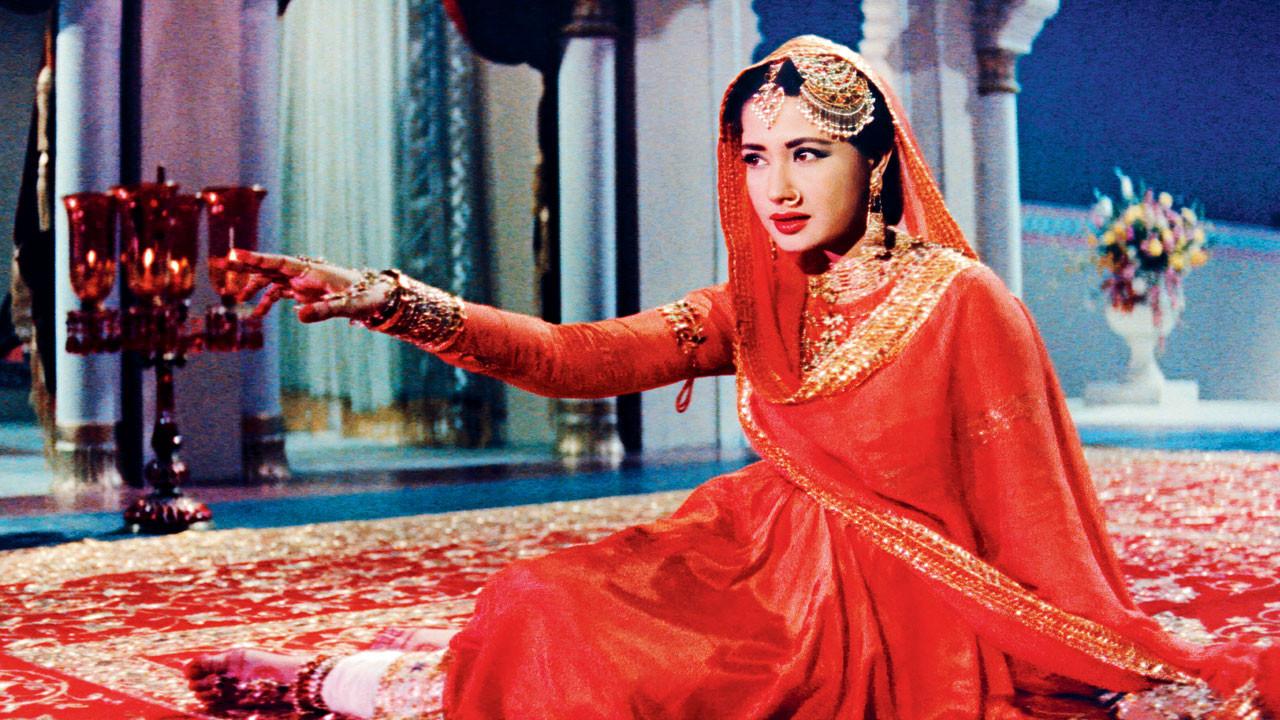
For Shivendra Singh Dungarpur, the main challenge about restoring Pakeezah was to keep its soul alive for the audiences of 2026
Komal RJ Panchal (MID-DAY; September 27, 2026)
Midway through our conversation about restoring Pakeezah, Shivendra Singh Dungarpur’s phone rang. “Mr [Amitabh] Bachchan is calling me,” he said, stepping away for a moment, for Bachchan to compliment him. It was a small, fitting reminder of how much Kamal Amrohi’s 1972 classic still means to people, more than 50 years on.
For Dungarpur, this one was personal. He grew up watching Pakeezah — his grandmother loved it — and had wanted to restore it for years. That finally became possible after he met Amrohi’s children, Tajdar and Rukhsar, and, through their son Bilal, convinced the family to let him take it on. Nearly two years later, he calls it one of the most fulfilling restorations of his career.
The problem with no “mother”
The first roadblock was simple but severe: there was no original camera negative. What survived was third-generation material — copies of copies, each one having bled away detail. “The original camera negative is the most important, it’s called the mother for that reason,” Dungarpur explains.
“It’s the material that came directly out of the camera.” He compares it to the difference between a high-resolution photo and a version that’s been screenshotted and reshared a dozen times over. “If you have the source, you have the origin.”
With nothing but degraded copies to work from, the team went almost frame by frame, pulling out whatever information they could. He’d faced a similar problem restoring Sholay (1975) — but Pakeezah’s tangled colour history made this one harder still.
When a colour disappears
Pakeezah actually began life as a black-and-white film before the switch to colour, eventually shot on Eastman Kodak stock in CinemaScope. But decades on, the surviving prints couldn’t be trusted to show what those colours actually were. The clearest case was Meena Kumari’s costume in Inhi Logon — the prints had faded so badly that nobody could agree what shade it was even supposed to be.
Rather than guess, the team went back to old photographs and worked with the Amrohi family to match the dress to its real, original tones. For Dungarpur, that’s the heart of restoration: not repainting a film in whatever colours look good now, but doing the research to get back to what audiences actually saw on release.
Fourteen years in the making
Part of what makes Pakeezah so tricky is that it didn’t get made in one continuous stretch — the production dragged on for roughly 14 years. It started in black and white, including the earliest version of Inhi Logon, before shifting to colour partway through. The delay even reshaped the cast: Ashok Kumar, originally attached to the film, had aged out of his part by the time shooting resumed, and Raj Kumar stepped in as the lead. Restoring the film meant preserving something that had physically passed through several different eras of Indian cinema before it ever reached a screen — which is part of why Dungarpur sees it as a film that shaped generations after it, from Sanjay Leela Bhansali onward.
Don’t scrub away the soul
For Dungarpur, restoration isn’t about making an old film look new. It’s about keeping what made the film feel the way it did — grain included. “Grain is like the bloodstream in your body,” he says. Strip it all out chasing a spotless digital image, and you lose something essential. That matters more now that audiences are used to the over-sharpened look of streaming platforms. “What does your eye see when you open your eyes, and what does your Amazon or Netflix show you? What they show isn’t what you actually see. There’s a difference.”
Celluloid, he says, came closer to how the eye naturally perceives things — so the goal with Pakeezah wasn’t to make it look freshly shot today, but to bring back its lost detail and colour while keeping its original texture intact.
Can AI bring back what’s gone?
That same philosophy shapes how Dungarpur thinks about AI in restoration. He doesn’t dismiss it outright, but he’s wary of calling something “restoration” when it’s really recreation.
His analogy: if a piece of the Taj Mahal’s original marble falls off, the instinct should be to track down the real marble first — not swap in a nicer-looking replacement just because it’s available. “There are shops outside selling even better marble than that. We could do that too. It won’t match.”
If the original element still exists, he says, use it. If it’s truly gone, AI might have a role to play — but the line between restoring and recreating has to stay clear. “There’s a lot of manual work in film preservation right now. Maybe AI evolves into something more. Whether that makes things better, we’ll have to see.”
He points to the runaway success of Christopher Nolan’s The Odyssey — shot on celluloid, no digital effects, no AI — as evidence people haven’t lost their appetite for the real thing. He sees the same pull in how audiences are responding to restored classics like Sholay at Film Heritage Foundation screenings. “There must be a reason people want to connect back to their roots.”
Did you know?
International première
The restored 4K version of the 1972 classic Pakeezah is set to have its world première at the Festival Lumière in Lyon, France, in October, followed by a screening at the BFI London Film Festival in the United Kingdom.
The original negative is gone
Pakeezah’s original camera negative — the closest surviving source to what was filmed — was unavailable for the restoration. Dungarpur’s team had to work with much poorer, third-generation material.
That “pink” costume may not have been pink
The surviving prints had faded so severely that the colour of Meena Kumari’s costume in “Inhi Logon” was difficult to establish. The team referred to photographs and consulted the Amrohi family to recreate the original colour tones.
------------------------------------------
Soumya Vajpayee (MUMBAI MIRROR; October 3, 2026)
Some love affairs start early. Shivendra Singh Dungarpur’s began at three, in Bihar, at his grandmother’s side. Maharani Usha Rani of Dumraon was, he says, “absolutely crazy about Pakeezah”, and the LPs of Inhi Logon Ne and Chalte Chalte spun repeatedly at home. “The colours, the impact of Meena Kumari, the songs, the story. There was something magnetic about that film.”
Nearly six decades later, that fascination has become a two-year labour of love. This month, Film Heritage Foundation’s 4K restoration of Kamal Amrohi’s 1972 classic has its world premiere at Festival Lumière in Lyon, presented by Thierry Frémaux, before a gala premiere at the BFI IMAX during the BFI London Film Festival.
A negative gone to ruin
It very nearly did not happen. After Dungarpur persuaded Amrohi’s children, Tajdar and Rukhsaar, and grandson Bilal to entrust the film to FHF, he inspected the original camera negative. “I was utterly distraught because the film had melted,” he says. “In fact, the images from the negative had gone.”
Pakeezah already had a complicated history. Amrohi began it in 1956 in black and white, then restarted in Eastmancolor in 1958. Production stretched across some 15 years, through cast changes, rewrites and personal upheaval; part of the early negative was lost in a studio fire.
With the camera negative unusable, the restoration became cinematic archaeology. FHF turned to a 35mm interpositive in its collection and a colour reversal intermediate preserved by the NFDC-National Film Archive of India. Both bore the scars of age, from scratches and mould to chemical deterioration and faded colour. The work was undertaken at L’Immagine Ritrovata in Bologna.
“You’re almost looking at something which is third generation,” Dungarpur says. “You have to make it look like that film was one of the most important films in India’s cinematic history. That was really challenging.”
The hunt for Meena Kumari’s colours
Colour proved particularly tricky. The film had been shot across so many years that its sections had aged differently, while no member of the original crew survives to say exactly what Amrohi wanted.
His family became the restoration team’s memory bank. Rukhsaar had photographs and costume references; Tajdar, who knew the sets as a boy, remembered individual scenes. An original still helped establish the colour of Meena Kumari’s costume in Inhi Logon Ne.
“You need a reference and a history,” says Dungarpur. “The research into restoration, into piecing together the history, is very important so that you don’t go wrong.”
The aim was to preserve the richness of Josef Wirsching’s cinematography and early Eastmancolor. “Eastman Kodak had just come in, and it had very vibrant colours. I was trying to keep that vibrancy.”
There was better news with the soundtrack. The original sound negative survived, allowing Ghulam Mohammed’s music to be restored in 5.1, along with Amrohi’s own voice. Even the train demanded fidelity. “Kamal Amrohi was so particular about getting that particular sound of the train,” Dungarpur says.
Giving Amrohi his due
Dungarpur believes Amrohi himself has never quite received his place in Indian cinema. Before Pakeezah came the eerie romance of Mahal in 1949, with Lata Mangeshkar’s Aayega Aanewala, and his work on Mughal-E-Azam. Dungarpur also counts the lesser-discussed Daera among his favourites.
“Kamal Amrohi is one of the greatest Indian directors who’s not got his dues,” he says. Pakeezah, with its exquisite Urdu, music and sumptuous visual world, perhaps makes the argument most completely. “It is the language, the Urdu language, and the way it’s been crafted, and the characters, and the story in it.”
Back to the big screen
For Dungarpur, saving films also means putting them before audiences. FHF now has two functioning 35mm projectors at Mumbai’s Regal Cinema, where screenings have drawn a new audience for old films.
He wishes more of Indian cinema’s biggest names would publicly champion preservation. Christopher Nolan, who first came to India with artist Tacita Dean to advocate for celluloid, has remained a supporter of FHF with producer Emma Thomas; Wes Anderson worked with the foundation on its restoration of Satyajit Ray’s Aranyer Din Ratri.
“Public advocacy for film preservation is something I feel we miss in Indian cinema,” says Dungarpur, citing Martin Scorsese’s The Film Foundation as a model.
But Pakeezah may be the most eloquent argument he can make. “I always wanted to restore Pakeezah because it was one of my earliest memories of my childhood.” Now, all these years later, he has made sure somebody else can have that first memory too.
Korean actors in Lust Stories 3 are actually from Korea. One of them is in Bombay right now-Vikramaditya Motwane
4:49 PM
Mayank Shekhar (MID-DAY; September 23, 2026)
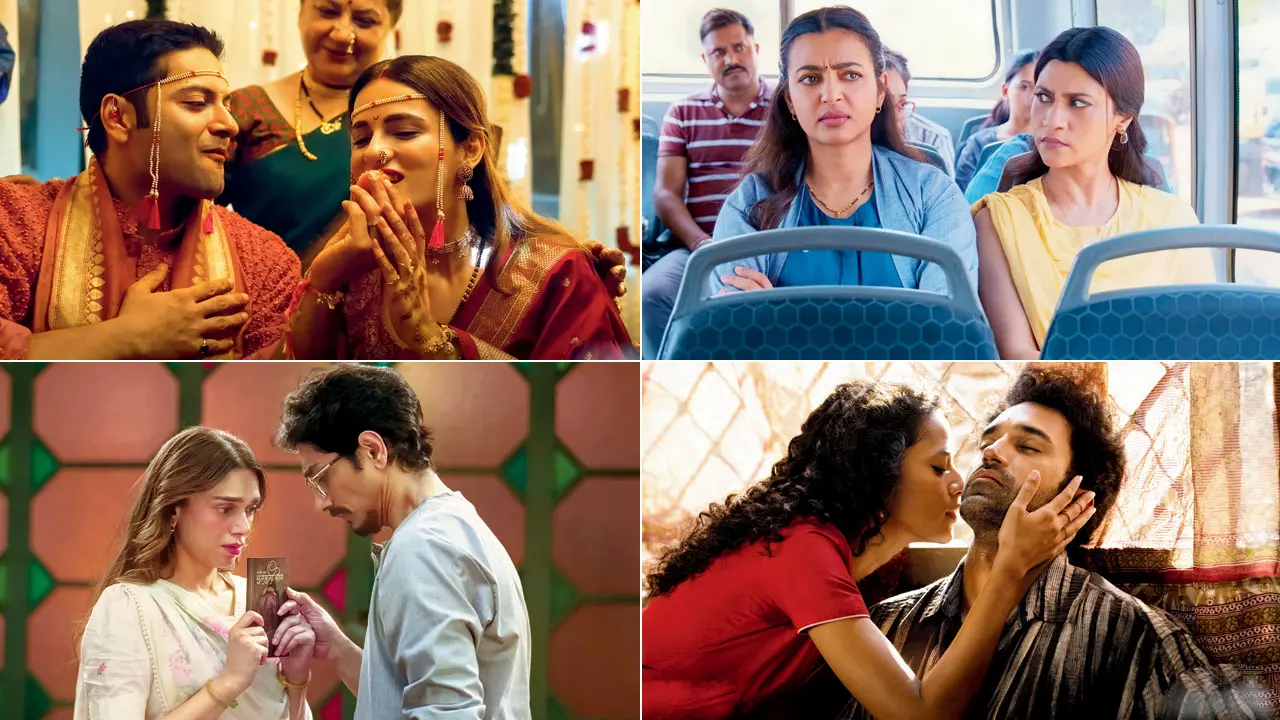
As with Shakun Batra, director Kiran Rao made her first short film, in her early 20s, at film school (Jamia, in Delhi) that, she recalls, was about a 31-year-old’s birthday gone south, because of a husband, who doesn’t care. Her short film debut in Netflix’s Lust Stories 3 — as with most shorts — would be hard to describe, without a spoiler, though.
Suffice it to state that it’s a play on Shakespeare’s Comedy of Errors, but rather serious. Shakun’s, on the other hand, with Ali Fazal, Radhikka Madan, felt to me as a running narrative on the addictive nature of ‘break-up sex’. Shakun disagrees, but adds, that could make for a fine elevator pitch!
Three of the four directors on the threequel of the Emmy-nominated Netflix franchise, competently produced by Ashi Dua, are men — while the anthology, looking at relationships through the prism of sex alone, for the most part, seems entirely from the women’s PoV.
Take Vikramaditya Motwane’s opening comedy (starring Radhika Apte, Konkona Sen Sharma) on couple-swap. The best bit that actor Vijay Varma gets in it is that his character experiences trauma from whisky + ghazal, because they remind him of his alcoholic dad. Hilarious!
The filmmakers, on the other roster, direct features, otherwise. Vishal Bhardwaj, who’s filmed several shorts in the past, says he finds the medium hugely liberating: “The commitment involved isn’t as long. And you have the opportunity to say something crisply, with design and craft.”
Which is precisely what Vishal does, transporting his plot to 1980s Hyderabad — about an anonymous, Urdu writer of smut (Aditi Rao Hydari), whose fantasies, chiefly imagining her husband (Siddharth) soar over her everyday married life.
What did you think of the said short films? My favourite was Vishal’s, while enough people have told me they loved Vikramaditya’s or Kiran’s more. An online survey on my social media handle rates Shakun’s, by far, the best. The comparisons are immaterial. What matters is, if the anthology works as a whole. It sure does.
Lust legacy
In ‘Lust Stories’ (2018), filmmakers Anurag Kashyap, Zoya Akhtar, Dibakar Banerjee, and Karan Johar came together to tell four distinct stories exploring desire and relationships. In ‘Lust Stories 2’ (2023), R Balki, Konkona Sen Sharma, Sujoy Ghosh, and Amit Ravindernath Sharma gave their takes on desire
Quick bytes with the directors...
Personally, how do you make a distinction between love and lust?
Kiran Rao: When you see someone, you’re attracted to, is that lust? The curiosity about a person you want to be with, or know more about, does that start from love, or something chemical? Lust can be the starting point. Could it be the ending point too?
Absolutely. Also, what makes a person sensually attractive, often, is the conversation, their humour. You [could] find a person sexy, because of their smile; not necessarily for how they look with their shirt off. It’s hard to distinguish. But I do think love comes after knowing a person, including their flaws.
Everyone must watch (Belgian psychotherapist) Esther Perel, when she talks about how to keep the spark in a marriage alive. One of the things missing, once you’ve been married for long, is you know the person too well.
Mystery’s gone. There’s no chase. Why is it that people are interested in extramarital affairs? Because there’s something unknown. There’s potential of knowing someone. Therefore, to keep lust alive in a marriage is always work.
Your film gets funnier, once you introduce Korean drama into the story, with the imaginary characters Jin and Min — did you dive deep into the popular TV genre to understand it better?
Vikramaditya Motwane: I didn’t do a deep-dive. My research was, I asked my ADs (assistant directors), do you follow K-dramas? Yes. So as long as they are K-drama fans, I’m gonna trust them to surprise me, and let me be.
Netflix did get me in touch with people in Korea. We had a couple of conversations, where I said this is what we are trying to do, and if it’s kosher. They kinda told me, where it would land in the Korean landscape, and what my title [sequence] should be. The actors are [actually] from Korea. One of them is in Bombay right now. The other is a professional actor living in Delhi!
Of all the lust stories, why are you looking at marriage, when you’ve never been married yourself, or is that the reason?
Shakun Batra: I was [actually] going through a relationship, when we weren’t able to communicate, and sex was filling up the gap. I started reading about how bodies tend to communicate. They’re very primitive. The body needs closure too.
Without giving away spoilers, these two people [in the film, Ali, Radhikka] haven’t addressed some of the grief part of their marriage. The sex then is still trying to keep them together, right? It happens with most relationships. Your heart and mind may say this relationship’s over. But bodies still, sometimes, tend to continue. And why’s that? For me, that is very exciting.
[Let alone Lust Stories] you’ve done Zubaan Pe Laga… Namak Ishq Ka (from Omkara) — the world’s lustiest song, ever; was that the intention?
Vishal Bhardwaj: Gulzar Saab is a master. Even Beedi Jalai Le, if you read minutely, is about adultery. When he says, Itni Sardi Hai Kisi Ka Lihaaf Lele, Ja Padosi Ke Chulhe Se Aag Lele — he means the neighbour’s wife. That was the theme for Omkara, so lusty; and that’s how involved he gets in the script. Namak Ishq Ka was originally written as the antara of Beedi Jalai Le.
I drifted from that metre, while composing the tune. But I usually have 50-60 chhilke (shells), or rejected lines of Gulzar Saab, lying around, which I saw in my notebook, when making the new song. I picked up this line, where he writes, Zubaan Pe Lage Namak Ishq Ka Toh Duniya Savaadi Lage… which became Balam Se Maanga Maanga Re, Namak Ishq Ka… and then the final version.
I thought the only way to be loved is if you’re broken-Ira Khan
4:41 PM

Trisha Majumder (BOMBAY TIMES; September 22, 2026)
For Ira Khan, mental health has never been a straight road. There are good days and bad ones, periods when treatment works and moments when she knows she needs to ask for help again. After nearly nine years in therapy, she says she’s in a steadier place with her depression now, though she knows that stability won’t last forever. Today, as a mental health advocate, she is interested in something much bigger than therapy — how we learn, build relationships, cope with change and simply get through life.
In an interview with Bangalore Times, she reflects on her childhood, growing up in the public eye and why AI can never replace human connection. Excerpts:
‘I began telling myself not to show when I was upset’
One of the earliest internal dialogues Ira had with herself was about what kind of person deserved love. “When I was growing up, I wanted to be a broken person who was physically very strong,” she says, describing childhood fantasies shaped by spy films like the James Bond series. She imagined being someone who could keep other people’s secrets no matter what happened to her. Her therapist later helped her recognize the pattern: “It seemed like I thought that the only way to be loved is if you’re a slightly broken person who then saves the day.”
She connects this partly to how she processed her parents’ divorce. Although her parents, actor Aamir Khan and producer Reena Dutta, made sure the family stayed close and that there was stability for their children, Ira says she interpreted the absence of conflict as a sign that the divorce was “not bad enough.”
She recalls, “In my perception, it was so normalized that I thought it was not bad enough. I began telling myself not to show when I was upset and to simply carry on. So I feel like I kind of walked myself into isolating, keeping things inside,” she says. She remembers even telling herself to “bottle this up so that one day it’ll burst.”
‘My parents come with me to the psychiatrist’
Ira realized she needed professional help during college when she stopped eating. “Everything else I could still pass off as, ‘I don’t understand why this is happening. I don’t know what’s going on,’” she recalls, “But when I stopped eating, I was like, people are not supposed to stop eating.”
That was when she reached out to her mother. “I’ve had to ask for help multiple times, not just once, because it’s not a linear journey,” she says, adding, “Whenever I need, they come with me to the psychiatrist. I feel completely comfortable with my parents.”
‘If anything is ever on the internet, it’s going to be on the internet forever’
Ira doesn’t feel her mental health struggles are solely due to her in the public eye. But it has had an impact. One lesson she learnt early was to be careful about what she put out into the world. If she was uncomfortable with a photograph, she learnt not to take it in the first place.
“When I turned 18, I started getting objectified...if anything is ever on the internet, it’s going to be on the internet forever,” she adds. Her response was to shut the noise out. “I told myself, ‘Don’t look, don’t read.’ It’s the only way to survive. I shut it out completely, I don’t read comments, I don’t check any of those things,” Ira shares.
‘I strongly encourage people to go out and make friends’
On the growing use of AI chatbots for emotional support, Ira sees both the appeal and the danger. “I think AI is a tool. Like all tools, it has pros and cons,” she says. But she remains wary of technology that is still poorly understood: “The worry about AI is that it’s a tool that we don’t understand.”
She also understands why people turn to chatbots, particularly when professional help can be expensive, difficult to access or limited by short appointments. “I see why someone would talk to a chatbot,” she says. AI, she suggests, can be useful for information or helping someone prepare for professional care — for example, figuring out “the top five questions I should ask” when there are only 10 minutes with a clinician.
But she draws the line at replacing human connection. “I would strongly encourage people to go out and make friends,” she says, adding, “Everybody’s sad and lonely and everybody wants friends.”
‘If today’s a bad day, try again tomorrow’
Ira’s battle with depression became the foundation for her mental health advocacy. “Because of my depression, I got really scared of the whole concept,” she says.
Her privilege also made her question how people with fewer resources cope. “If I have so much privilege, and it was so horrible for me, then I don’t know how other people are surviving this.”
She founded the Agatsu Foundation, a nonprofit focused on helping people seek care for mental illness, in 2021. The early years were difficult. “I didn’t realize that I was going through a depressive episode at that time,” she says, describing symptoms including difficulty concentrating, indecisiveness and low confidence — all of which made running an organization harder. Now, she says, “it’s going really well.”
She also urges people to seek support early. “If today’s a bad day, wake up tomorrow and try again. It’s really important to get help early because the chances of you getting better are higher,” she says, comparing it to getting off the wrong train sooner rather than later. “Having good mental health makes your life much easier,” she adds.
Waheeda Rehman to make rare screen comeback as Mahatma Gandhi’s mother Putlibai in Manoj Bajpayee starrer
4:36 PM
Iti Shree Misra (BOMBAY TIMES; September 21, 2026)
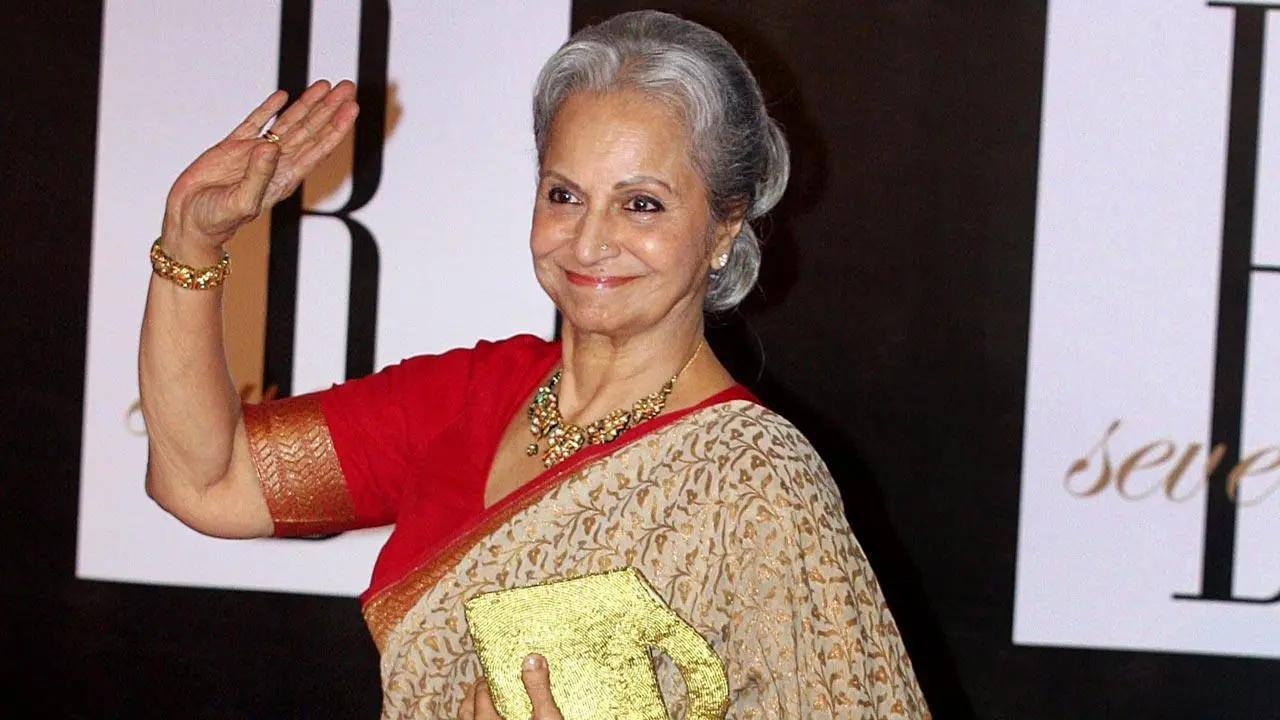
It took more than a few sittings and a promise of the best food in Lucknow to coax Waheeda Rehman back onto a film set. After a brief, memorable appearance in the 2021 OTT film Skater Girl, the veteran actress had been reluctant to take on new assignments, citing age and a desire to step back – until now. The actress will be seen in a major role in Sudhir Mishra and Anubhav Sinha’s next.
The pitch that worked
Director Sudhir Mishra was adamant about having Waheedaj i in his Mahatma Gandhi film, and producer-director Anubhav Sinha backed him with a series of patient meetings.
“Waheeda ji was rather unsure of coming back to acting in another movie. But Sudhir was very keen on having her as part of the cast,” Sinha says.
Over several rounds of conversation, Mishra reassured her about the role, while Sinha leaned into charm and cuisine. “I promised to feed her the best food in Lucknow,” he says.
Waheeda Rehman, who had visited Lucknow a long time ago and wasn’t very familiar with the city, finally agreed. She is now in Lucknow, shooting for the film and playing what the team describes as a very important part although not Putlibai, as some reports suggest.
Sinha further shared, “Waheeda ji found the script very exciting and the character very interesting but she was reluctant and unsure if she wanted to come back to acting. But Sudhir and my insistence and the story convinced her enough to say yes to the role.”
For the two filmmakers, securing Waheeda Rehman was less about casting and more about legacy. Sinha says that sitting with her to discuss cinema and this particular script has been ‘an incredible honour’.
A 21-day chapter, a starry ensemble
The yet-untitled film, currently working under the title Gandhi And My Mother, focuses on a lesser-known 21-day chapter from Gandhi’s life. Manoj Bajpayee essays the Mahatma, reuniting on screen with Saurabh Shukla after Satya (1998) and Aarakshan (2011).
The ensemble also includes Divya Dutta, Aamir Bashir and Ashwath Bhatt in significant roles. Divya, incidentally, plays Sushila Nayyar, Gandhi’s personal physician and close associate, who authored several books on her experiences with him. Her brother Pyarelal Nayyar served as Gandhi’s personal secretary.
“For me to be playing such an iconic character is a real high”: Divya Dutta on playing Sushila Nayyar
For Divya, signing up for the biopic felt like a double win. “For me to be playing such an iconic character is a real high. Being on the set and just playing the role takes me back to that remarkable era and that feels amazing,” says the actress.
The film also marks her first collaboration with Mishra, a filmmaker she has long admired. “To be part of the cast of such a talented and amazing director is like a dream come true,” she says. With producer-director Anubhav Sinha, meanwhile, it’s reunion time. “This is my second film with Anubhav who’s an amazing friend and being back on the set with him is like party time,” Dutta adds.
Though Divya and Manoj Bajpayee have acted together in several films earlier, this will be the first time they share screen space in the same frame, a milestone she notes with quiet excitement. In a project that blends legacy, craft and camaraderie, Dutta’s enthusiasm is simple, “It’s an all-out win-win situation for me!”
I was very clear that main masti karunga, but I wouldn’t do chichorapanti-Shreyas Talpade
4:27 PM

Neha Maheshwri (MUMBAI MIRROR; September 19, 2026)
Shreyas Talpade is making his debut as a host on Hindi television with Sa Re Ga Ma Pa – Hindustan Ka Sangeetsthan, drawn to the show by its legacy, scale and emphasis on music. He also looked forward to sharing the stage with singers he has admired over the years.
He says, “Sa Re Ga Ma Pa has such a strong legacy. It’s not only iconic, but now it has a heritage status of its own. It not only created great singers, it created great listeners too. For this season, I was told about the scale of the show, with more than 100 musicians, the performances and the fantastic fusion happening in the songs. That seemed unique. The most important question I had was, ‘Yeh sab hone ke baad bhi kya autotune hoga?’ I was told, ‘Jo hoga, saamne hoga.’ Besides, there are names like Shankar Mahadevan sir, Neeti Mohan, Javed Ali and Sanu Da (Kumar Sanu). I was particularly excited about associating with Sanu Da. There are certain things that are not just nostalgic, you take something from them with you. Ten or 20 years down the line, when you look back, what will you take with you? Paisa toh nahi le jaoge aap, yaadein lete, lete hi aap jaoge na. So, all these factors made me say, ‘Chalo, karte hain.’”
Having seen reality shows where hosts sometimes rely on exaggerated comedy or banter with judges, Shreyas was conscious of maintaining a different tone.
He says, “I was very clear that main masti karunga, but I wouldn’t do chichorapanti. There’s a very fine line, and I wouldn’t cross it. We try to maintain that decorum and respect as much as possible. Music has to take centre stage; everything else is just adding to it.”
For him, that also means resisting the temptation to push humour for the sake of a bigger reaction. He says, “I don’t want to go below the belt ever. Very often, you may say two extra things for a laugh and get a reaction in that moment, but I would rather compromise that laughter. If two fewer laughs come, so be it. I don’t need them.”
Singing reality shows have often faced criticism over the use of contestants’ personal struggles and emotional backstories to heighten drama and generate audience engagement. Shreyas was keen to ensure that the contestants’ journeys are acknowledged without turning their circumstances into manufactured emotional moments.
He says, “Before saying yes, these were all my concern areas. I was clear that I didn’t want to get into sob stories. We might refer to a contestant’s background naturally, but we don’t want to unnecessarily create a sob-story moment. If the channel chooses to do something like that, it is completely their call. But as far as what happens on the floor and in the edit is concerned, we are very clear. There is no reason to make it dramatic or melodramatic.”
Farah Khan would spend more time roasting me than answering the questions-Anil Kapoor
4:22 PM

Shruti Sampat (MID-DAY; September 18, 2026)
Jhakaas! That’s exactly the feeling when Anil Kapoor announced his return to reality television with India Ke Top 1%. After bringing his trademark energy to Bigg Boss OTT 3 in 2024, the veteran actor takes on a new challenge with the JioHotstar game show, which tests how people think rather than what they know. While Kapoor enjoys being the host, he admits that if the positions were reversed, he would “probably convince myself that the simple answer can’t possibly be correct”. In conversation with mid-day, the veteran actor discusses what drew him to the show, the Bollywood personalities he would love to see compete, and why actors must constantly evolve.
What was your first reaction when you heard the concept of India Ke Top 1%?
My first reaction was, 'This is different.' Most quiz shows test what you know, but this one tests how you think. I loved the idea that ordinary people could surprise everyone with their perspective and problem-solving skills. It’s entertaining, but it also makes you think, which is a rare combination.
Is there a question from the show that you think even your Bollywood friends would struggle to answer?
Absolutely! That’s the beauty of the show. Some questions look simple at first, but they completely challenge your assumptions. I think many of my friends in Bollywood, including me, would find ourselves second-guessing our answers. Intelligence on this show isn’t about expertise, it’s about looking at things differently.
What does being in the 'Top 1%' mean to you beyond simply being intelligent?
For me, being in the Top 1% isn’t just about intelligence. It’s about curiosity, discipline, consistency, and the willingness to keep learning. In life, the people who keep asking questions are often the ones who keep moving forward. That’s why I love the show’s thought process, baat khatki toh jeet pakki! Sometimes it’s that one small thought, that one different perspective, that makes all the difference. Whether it’s your profession, your relationships, or personal growth, it’s the effort to keep improving every day that truly sets people apart.
If you were a contestant on the show, which category would make you the most nervous?
Probably anything that requires me to sit quietly and overthink! I’ve always trusted my instincts. Sometimes when you analyze a question too much, the obvious answer is right in front of you and you still miss it. Knowing me, I’d probably convince myself that the simple answer can’t possibly be correct.
Who from Bollywood would you invite to compete on India Ke Top 1%?
I would love to call Amitabh Bachchan, Javed Akhtar, Shah Rukh Khan, Ranveer Singh, Ranbir Kapoor, Farhan Akhtar and Karan Johar for this show. They all would be fascinating because they have a unique and way of looking at the world. Even Anupam Kher would be entertaining because he always has an answer for everything, whether it’s the correct answer or not, we’ll find out on the show! And Farah Khan would be a strong contender. She’s extremely observant, very sharp, and has a wicked sense of humour. I’d just be worried she’d spend more time roasting me than answering the questions.
Do you feel actors today need to be more versatile because audiences have so many choices?
Without a doubt! Audiences today have access to content from all over the world. They can watch a film, a series, a documentary, or a reality show at the click of a button. That means actors need to constantly evolve, experiment, and push themselves. Versatility is no longer a bonus, it’s essential.
Would you consider doing more television or reality shows after India Ke Top 1%?
I’ve always believed that the medium doesn’t matter, the content does. Whether it’s cinema, streaming, television, or reality shows, if something excites me and gives me an opportunity to connect with audiences in a meaningful way, I’m open to it. Right now, I’m enjoying this experience and taking it one project at a time.
Subscribe to:
Posts (Atom)