Shivendra Singh Dungarpur explains how he restored Pakeezah and kept its soul alive for the audiences in 2026
4:53 PM
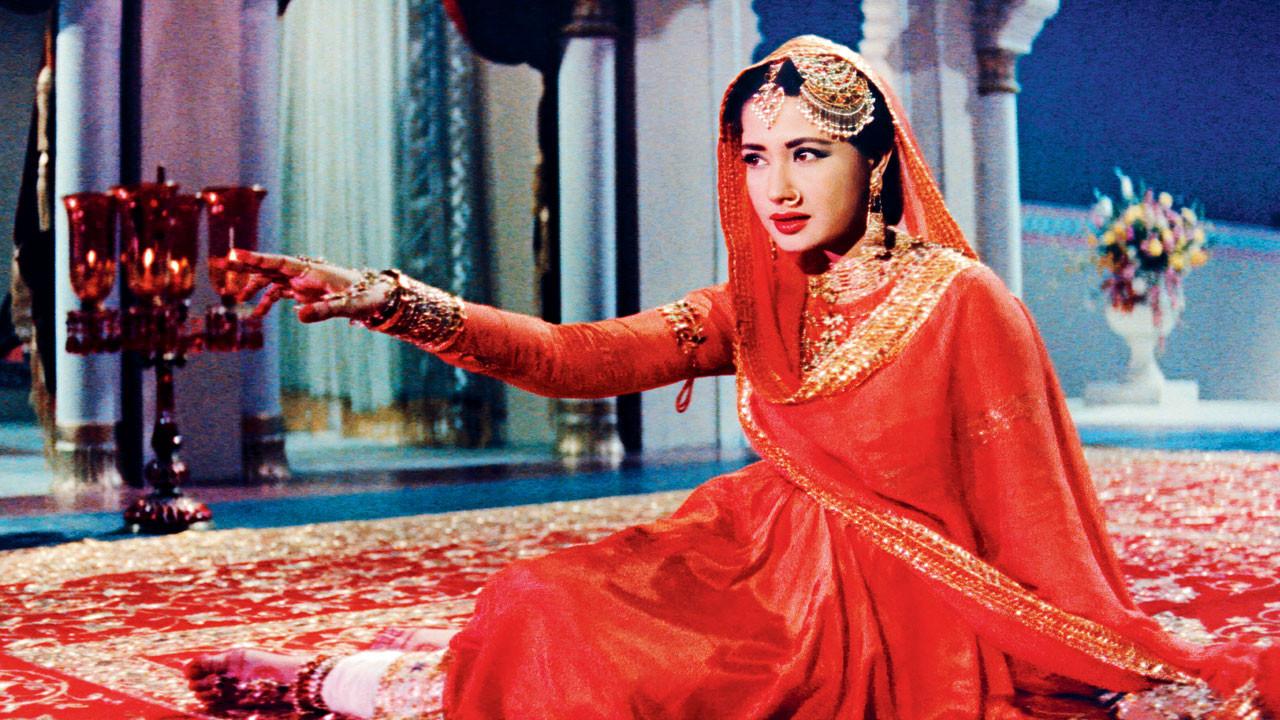
For Shivendra Singh Dungarpur, the main challenge about restoring Pakeezah was to keep its soul alive for the audiences of 2026
Komal RJ Panchal (MID-DAY; September 27, 2026)
Midway through our conversation about restoring Pakeezah, Shivendra Singh Dungarpur’s phone rang. “Mr [Amitabh] Bachchan is calling me,” he said, stepping away for a moment, for Bachchan to compliment him. It was a small, fitting reminder of how much Kamal Amrohi’s 1972 classic still means to people, more than 50 years on.
For Dungarpur, this one was personal. He grew up watching Pakeezah — his grandmother loved it — and had wanted to restore it for years. That finally became possible after he met Amrohi’s children, Tajdar and Rukhsar, and, through their son Bilal, convinced the family to let him take it on. Nearly two years later, he calls it one of the most fulfilling restorations of his career.
The problem with no “mother”
The first roadblock was simple but severe: there was no original camera negative. What survived was third-generation material — copies of copies, each one having bled away detail. “The original camera negative is the most important, it’s called the mother for that reason,” Dungarpur explains.
“It’s the material that came directly out of the camera.” He compares it to the difference between a high-resolution photo and a version that’s been screenshotted and reshared a dozen times over. “If you have the source, you have the origin.”
With nothing but degraded copies to work from, the team went almost frame by frame, pulling out whatever information they could. He’d faced a similar problem restoring Sholay (1975) — but Pakeezah’s tangled colour history made this one harder still.
When a colour disappears
Pakeezah actually began life as a black-and-white film before the switch to colour, eventually shot on Eastman Kodak stock in CinemaScope. But decades on, the surviving prints couldn’t be trusted to show what those colours actually were. The clearest case was Meena Kumari’s costume in Inhi Logon — the prints had faded so badly that nobody could agree what shade it was even supposed to be.
Rather than guess, the team went back to old photographs and worked with the Amrohi family to match the dress to its real, original tones. For Dungarpur, that’s the heart of restoration: not repainting a film in whatever colours look good now, but doing the research to get back to what audiences actually saw on release.
Fourteen years in the making
Part of what makes Pakeezah so tricky is that it didn’t get made in one continuous stretch — the production dragged on for roughly 14 years. It started in black and white, including the earliest version of Inhi Logon, before shifting to colour partway through. The delay even reshaped the cast: Ashok Kumar, originally attached to the film, had aged out of his part by the time shooting resumed, and Raj Kumar stepped in as the lead. Restoring the film meant preserving something that had physically passed through several different eras of Indian cinema before it ever reached a screen — which is part of why Dungarpur sees it as a film that shaped generations after it, from Sanjay Leela Bhansali onward.
Don’t scrub away the soul
For Dungarpur, restoration isn’t about making an old film look new. It’s about keeping what made the film feel the way it did — grain included. “Grain is like the bloodstream in your body,” he says. Strip it all out chasing a spotless digital image, and you lose something essential. That matters more now that audiences are used to the over-sharpened look of streaming platforms. “What does your eye see when you open your eyes, and what does your Amazon or Netflix show you? What they show isn’t what you actually see. There’s a difference.”
Celluloid, he says, came closer to how the eye naturally perceives things — so the goal with Pakeezah wasn’t to make it look freshly shot today, but to bring back its lost detail and colour while keeping its original texture intact.
Can AI bring back what’s gone?
That same philosophy shapes how Dungarpur thinks about AI in restoration. He doesn’t dismiss it outright, but he’s wary of calling something “restoration” when it’s really recreation.
His analogy: if a piece of the Taj Mahal’s original marble falls off, the instinct should be to track down the real marble first — not swap in a nicer-looking replacement just because it’s available. “There are shops outside selling even better marble than that. We could do that too. It won’t match.”
If the original element still exists, he says, use it. If it’s truly gone, AI might have a role to play — but the line between restoring and recreating has to stay clear. “There’s a lot of manual work in film preservation right now. Maybe AI evolves into something more. Whether that makes things better, we’ll have to see.”
He points to the runaway success of Christopher Nolan’s The Odyssey — shot on celluloid, no digital effects, no AI — as evidence people haven’t lost their appetite for the real thing. He sees the same pull in how audiences are responding to restored classics like Sholay at Film Heritage Foundation screenings. “There must be a reason people want to connect back to their roots.”
Did you know?
International première
The restored 4K version of the 1972 classic Pakeezah is set to have its world première at the Festival Lumière in Lyon, France, in October, followed by a screening at the BFI London Film Festival in the United Kingdom.
The original negative is gone
Pakeezah’s original camera negative — the closest surviving source to what was filmed — was unavailable for the restoration. Dungarpur’s team had to work with much poorer, third-generation material.
That “pink” costume may not have been pink
The surviving prints had faded so severely that the colour of Meena Kumari’s costume in “Inhi Logon” was difficult to establish. The team referred to photographs and consulted the Amrohi family to recreate the original colour tones.
------------------------------------------
Soumya Vajpayee (MUMBAI MIRROR; October 3, 2026)
Some love affairs start early. Shivendra Singh Dungarpur’s began at three, in Bihar, at his grandmother’s side. Maharani Usha Rani of Dumraon was, he says, “absolutely crazy about Pakeezah”, and the LPs of Inhi Logon Ne and Chalte Chalte spun repeatedly at home. “The colours, the impact of Meena Kumari, the songs, the story. There was something magnetic about that film.”
Nearly six decades later, that fascination has become a two-year labour of love. This month, Film Heritage Foundation’s 4K restoration of Kamal Amrohi’s 1972 classic has its world premiere at Festival Lumière in Lyon, presented by Thierry Frémaux, before a gala premiere at the BFI IMAX during the BFI London Film Festival.
A negative gone to ruin
It very nearly did not happen. After Dungarpur persuaded Amrohi’s children, Tajdar and Rukhsaar, and grandson Bilal to entrust the film to FHF, he inspected the original camera negative. “I was utterly distraught because the film had melted,” he says. “In fact, the images from the negative had gone.”
Pakeezah already had a complicated history. Amrohi began it in 1956 in black and white, then restarted in Eastmancolor in 1958. Production stretched across some 15 years, through cast changes, rewrites and personal upheaval; part of the early negative was lost in a studio fire.
With the camera negative unusable, the restoration became cinematic archaeology. FHF turned to a 35mm interpositive in its collection and a colour reversal intermediate preserved by the NFDC-National Film Archive of India. Both bore the scars of age, from scratches and mould to chemical deterioration and faded colour. The work was undertaken at L’Immagine Ritrovata in Bologna.
“You’re almost looking at something which is third generation,” Dungarpur says. “You have to make it look like that film was one of the most important films in India’s cinematic history. That was really challenging.”
The hunt for Meena Kumari’s colours
Colour proved particularly tricky. The film had been shot across so many years that its sections had aged differently, while no member of the original crew survives to say exactly what Amrohi wanted.
His family became the restoration team’s memory bank. Rukhsaar had photographs and costume references; Tajdar, who knew the sets as a boy, remembered individual scenes. An original still helped establish the colour of Meena Kumari’s costume in Inhi Logon Ne.
“You need a reference and a history,” says Dungarpur. “The research into restoration, into piecing together the history, is very important so that you don’t go wrong.”
The aim was to preserve the richness of Josef Wirsching’s cinematography and early Eastmancolor. “Eastman Kodak had just come in, and it had very vibrant colours. I was trying to keep that vibrancy.”
There was better news with the soundtrack. The original sound negative survived, allowing Ghulam Mohammed’s music to be restored in 5.1, along with Amrohi’s own voice. Even the train demanded fidelity. “Kamal Amrohi was so particular about getting that particular sound of the train,” Dungarpur says.
Giving Amrohi his due
Dungarpur believes Amrohi himself has never quite received his place in Indian cinema. Before Pakeezah came the eerie romance of Mahal in 1949, with Lata Mangeshkar’s Aayega Aanewala, and his work on Mughal-e-Azam. Dungarpur also counts the lesser-discussed Daera among his favourites.
“Kamal Amrohi is one of the greatest Indian directors who’s not got his dues,” he says. Pakeezah, with its exquisite Urdu, music and sumptuous visual world, perhaps makes the argument most completely. “It is the language, the Urdu language, and the way it’s been crafted, and the characters, and the story in it.”
Back to the big screen
For Dungarpur, saving films also means putting them before audiences. FHF now has two functioning 35mm projectors at Mumbai’s Regal Cinema, where screenings have drawn a new audience for old films.
He wishes more of Indian cinema’s biggest names would publicly champion preservation. Christopher Nolan, who first came to India with artist Tacita Dean to advocate for celluloid, has remained a supporter of FHF with producer Emma Thomas; Wes Anderson worked with the foundation on its restoration of Satyajit Ray’s Aranyer Din Ratri.
“Public advocacy for film preservation is something I feel we miss in Indian cinema,” says Dungarpur, citing Martin Scorsese’s The Film Foundation as a model.
But Pakeezah may be the most eloquent argument he can make. “I always wanted to restore Pakeezah because it was one of my earliest memories of my childhood.” Now, all these years later, he has made sure somebody else can have that first memory too.

Subscribe to:
Post Comments (Atom)
Post a Comment