For a movie star, OTT requires a shift in gear-Karisma Kapoor
10:55 AM

Hasti Doshi (BOMBAY TIMES; August 31, 2026)
From a teenage actor finding her way on film sets to an established performer, Karisma Kapoor says her career has been one of constant evolution. In a conversation with Bombay Times, she reflects on growing up in the industry, adapting to new mediums and the role of dance in her life.
‘Being an actor means evolving every day’
After being in the industry for over three decades, Karisma believes an actor’s learning never really stops. “Being an actor means evolving every day. I have not only grown with every film, but every single day. I like to learn and grasp things from various people and various sets. It’s that constant growth that makes you evolve.”
Having started working at a young age, Karisma says much of her growing up happened on sets. “I started very young, in fact, Prem Qaidi released four days before my 17th birthday. So, I’ve literally grown up in the industry. I’ve learned from my experiences, from all the ups and downs. And literally climbed the ladder one step at a time. When you look back and feel that you could have done things differently, it means you’ve grown as an actor.”
‘When you’re doing an episodic show, you need to be on the ball’
Karisma, who in recent times has been part of OTT shows like Mentalhood and Brown, feels each medium comes with its own demands. While she is grateful for the opportunities, she admits that the transition to OTT was challenging initially.
“OTT is very different from filmmaking. If you ask me, it’s pretty tough. Because when you’re doing an episodic show, you need to be on the ball. In one day, you may be shooting scenes from episode one or seven. So, the pace and the way it’s shot is different. For a movie star, OTT requires a shift in gear. Even television is a different ballgame.”
For Karisma, instinct has always mattered more than a carefully mapped-out career. “I’ve always been the kind of person who, if I want to do something, I do it, and if I don’t, I don’t. I’ve never really planned anything in my career. I think I’ve been lucky enough to have had some memorable films and played some amazing characters throughout my career,” says the Raja Hindustani actress.
‘Dance has been an integral part of our lives’
Currently, Karisma is seen judging India’s Best Dancer on television. But long before dance became part of her professional identity, the actress says it was something she enjoyed at home. Her memories include dancing with her younger sister, Kareena Kapoor Khan, to songs from the films they watched as kids. “As a child, I was a huge fan of Sridevi. I remember Kareena and I used to dance for our parents to the song Tathaiya Tathaiya, Naino Mein Sapna. Dance has always been important to me.”
Karisma also learnt Kathak as a child and remembers Kareena watching her during her dance classes. “Whenever I practiced with my ghungroos, she loved watching me and listening to the beats. Dance has always been an integral part of our lives, with so many great dancers in the family, including Shammi uncle, Chintu uncle and Shashi uncle, who had their own distinctive styles.”
One has to consciously step away from the digital world-Arjan Bajwa
10:48 AM

Neha Maheshwri (MUMBAI MIRROR; August 30, 2026)
The ease of accessing news, information and entertainment at the tap of a screen has also made it harder for people to step away from it. Arjan Bajwa believes the habit of constantly checking social media is affecting attention spans and turning an information-driven medium into an addiction.
The actor, who has been part of films such as Fashion, Rustom and Kabir Singh, says, “Social media is informative because it has largely replaced the editorial material we used to consume. It gives us access to information, news and ideas from across the world, but one has to strike a balance. We have become so addicted to Instagram and Facebook that the moment we are free, we pick up our phones to see what is happening. One has to consciously step away from the digital world and put the phone down. Digital detox is very important to maintain a balance between time and attention.”
While Arjan considers social media an important professional tool for actors, he believes they should be mindful of how much of their personal lives they share.
He says, “For actors, social media has become an important way to connect with the audience and give information about what’s happening in their professional space. There are also people who display their lives on social media because audiences are interested in knowing what their favourite actors are doing and how they are living. But there has to be a limit.”
He adds, “There are a lot of very big stars who are not on social media, and things are going absolutely fine for them as well. It’s one’s own choice how much you want to let people into your life and personal space. Actors also need to maintain a certain exclusivity or novelty about what they are doing. There has got to be a balance between maintaining a presence online and keeping people engaged and intrigued to know more about you.”
Shahid Kapoor and I are passionate but in very different ways-Mira Rajput
10:46 AM

Vinay MR Mishra (MUMBAI MIRROR; August 30, 2026)
From entrepreneurship to motherhood, Mira Rajput says she approaches every aspect of her life with intent. While juggling her ventures and raising her children, she admits that finding a balance isn’t as difficult as it may seem. “Balance isn’t a perfect formula; some days are messy, and that’s okay. For me, it’s about being present where I am, and I try to compartmentalize my mental energy. When I’m with my kids, I’m fully present. When I’m working, I give that my focused energy,” she says.
For Mira, wellness rituals also play a role in helping her stay grounded. “Whether it’s meditation, a simple skincare routine or a red light bed therapy session,” she adds.
Does being married to actor Shahid Kapoor mean the couple ever exchange notes on entrepreneurship? Mira says their approaches may be different, but that makes their conversations all the more interesting.
“We’re both passionate but in very different ways. Shahid is instinctive — he goes with his gut when he believes in something. I tend to be more measured; I like to analyse before deciding. But that balance works for us — it’s what makes the conversations at home very interesting,” she concludes.
Mira Rajput and Shahid Kapoor’s relationship has unfolded largely away from the constant glare of the spotlight. The two got married in a private ceremony in Gurugram in July 2015, when Shahid was one of Bollywood’s most sought-after actors. They welcomed their daughter, Misha, in 2016, followed by their son, Zain, in 2018. Over the years, Mira has carved out an identity beyond being known as Shahid Kapoor’s wife, building her own presence across entrepreneurship, wellness and lifestyle. While they may approach work and decision-making differently, as Mira says, those differences have also shaped their conversations at home.
Art must challenge what we normalize-Kumud Mishra
10:43 AM
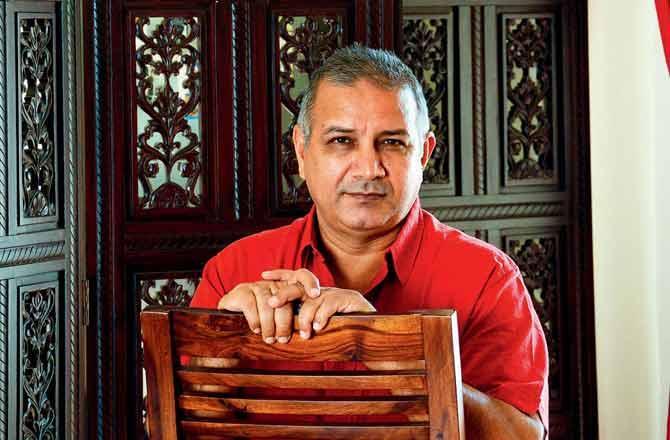
Amina Ashraf and Manas Mishra (THE TIMES OF INDIA; August 29, 2026)
Kumud Mishra, known for roles in both commercial movies like Sultan and socially conscious films like Article 15, has carved a unique space in Hindi cinema. During a recent chat, the actor spoke to us about the changing landscape of Indian cinema and the responsibility of artistes today.
‘WE HAVE STOPPED LISTENING TO EACH OTHER’
When asked about the rise of socially driven films and what drives this shift in storytelling, the Article 15 actor replied, “We are becoming insensitive as a society. We are becoming intolerant. We have stopped listening. We have stopped talking to each other. The space for dialogue is ending. Only the space for monologue is going on. One person will speak a soliloquy and the other will listen. In such times, it becomes the responsibility of art to create an environment where the issues we are ignoring, the issues we are normalizing, should not be normalized. In life, whenever anything is normalized, it will be dangerous.”
He added, “I think it is important to have discussions and debates on socially relevant issues. We have started talking about them, but today, when something happens, we often react by saying, ‘Yes, this happened, we got the information,’ and move on. It has stopped affecting us in the same way. Does an incident have to be more horrific for us to take notice? When the Nirbhaya case happened, there was a huge uproar. For a moment, it felt like society still cared. But over time, we normalized such incidents. That is dangerous. As artistes, I believe it is our responsibility to talk about and engage with such issues.”
On theatre, commerce and the next generation
Discussing the commercialization of theatre and offering perspective for young theatre actors, Kumud said, “The complaint about theatre people not earning has always been there and will remain, but that is not a problem. I think theatre is doing quite well, and the commercial aspect, I think if any medium is giving you money, then it is a very good thing, it is necessary. Along with that, what do you do with it? What do you do with success? That is your responsibility. If you become a slave to that success and you adopt that same formula, then that is unfortunate. But if you are taking that and giving something new to your art, to your medium, then it becomes an interesting thing.”
For young theatre actors specifically, his advice is simple yet powerful. “I don’t have any advice because every generation comes with its own new challenges and new directions and they are fully capable, much smarter than us. The only thing is you’ll have to read a lot, work hard and keep doing it.”
The conversation around films has shifted from craft to crores-Subhash Ghai
10:39 AM

Neha Maheshwri (MUMBAI MIRROR; August 29, 2026)
August has been a significant month in Subhash Ghai’s career, with several of his best-known films, including Karma (1986), Saudagar (1991), Pardes (1997) and Taal (1999), releasing during the month. Decades into a career defined by commercial cinema, the filmmaker believes the industry’s relationship with success has changed, with box-office numbers increasingly dominating conversations.
Ghai recalls how he approached filmmaking earlier in his career. He says, “In our time, the respect for art and craft was much higher. Today, you tell a newcomer that his film is doing well, he will reply, ‘Ki itne crore bana liye hain.’ Even the stars in the ’80s and ’90s never used such language. The conversation revolved around the craft then. My principle is that money will follow if I give a good product. We have produced 42 films, of which I have directed 18, and 34 out of 42 are hits. This is because we always focus on scriptwriting and the making of the film. We never made a project. We made films. We told stories. We gave music.”
The celebrated filmmaker also feels the atmosphere on film sets has changed, particularly the sense of unity within large crews. He says, “During my time, 200 logon ki film release tak ek family jaise thi. Kyunki kisi aadmi ka vision toh raha hi nahi. Sab alag alag kaam karte hain.”
Having worked with some of the biggest stars of his time, Ghai also recalls how he managed to bring large ensembles together, even as the culture of entourages existed then too. “Yeh mere time par bhi tha. This is about demand and supply, where you respect people because of their status.”
One of the exceptions, he recalls, was Shashi Kapoor, who maintained a clear distinction between professional and personal expenses.
He shares, “When Shashi ji would go to Kashmir for a shoot, he would ask at the hotel reception to make separate accounts for billing, personal and professional. He wouldn’t burden the producers with his personal expenses. That’s why he survived so long. These people created discipline. Integrity matters.”
Mukesh - The voice that made heartbreak sing, 50 years on
10:37 AM

Renowned playback singer Mukesh died on this day in 1976, hours before a Detroit concert. Half a century later, his son Nitin recalls the haunting final days of a voice that continues to comfort millions
Avijit Ghosh (THE TIMES OF INDIA; August 27, 2026)
For anyone nursing a heartbreak, his voice fell like gentle rain on parched earth. With every note rendered, the heart seemed to heal to its touch.
Even now, exactly 50 years after his passing on August 27, 1976, Mukesh, the master of melancholy, continues to comfort millions on aching afternoons and vagabond nights.
The Delhi-born singer passed away following a fifth heart attack, shortly before a sold-out musical show with the peerless Lata Mangeshkar in faraway Detroit. The two singers, who shared a close bond, were on a series of shows across cities in the US and Canada.
The Delhi-born singer passed away following a fifth heart attack, shortly before a sold-out musical show with the peerless Lata Mangeshkar in faraway Detroit. The two singers, who shared a close bond, were on a series of shows across cities in the US and Canada.
Last days, final moments
Mukesh’s son, Nitin Mukesh, who was with him in his room at Hotel Pontchartrain during the fatal heart attack, remembers that three days earlier, his father had asked Lata in Montreal if Nitin could sing a few songs at the show.
“I don’t know why he said that. He had never done that before,” says Nitin, who would go on to become a popular playback singer in his own right.
Introduced by Lata to the audience, Nitin sang the chartbuster Kabhi Kabhie Mere Dil Mein. Mukesh played the harmonium. After the show, Nitin received accolades from the audience.
But when he asked his father about his performance, Mukesh simply said, “Bahut achha tha (it was very good), but there is room for improvement.”
“He didn’t praise me to the skies,” Nitin says. “But my mother told me later that he called her and said, ‘Tumhare bete ne to apne baap ko bhi peeche chhod diya (Your son has left his father far behind)’.” The next day, Nitin again crooned a few songs, this time in Toronto. The father-son duo sang Jaane Kahan Gaye Woh Din from Mera Naam Joker as a duet.
Nitin got to sing a lesser-heard stanza: “Is dil ke ashiyaan mein bas unke khayal reh gaye / Tod ke dil woh chal diye, hum phir akele reh gaye.” The words turned out to be strangely prophetic. “It’s been 50 years since I sang those lines, but they still haunt me,” Nitin says.
That was to be the last time Mukesh sang on stage. They took the train to Detroit on August 26, a day before the scheduled show. Father and son shared a room at the hotel. On August 27, the fateful day, Nitin stepped out for lunch.
“When I returned, I saw him peacefully asleep. I let him be and dozed off,” he says. Nitin remembers being woken up by his father, who teased him: “Aaj mera gala ekdum theek hai, aaj tujhe nahi gaane doonga (My voice feels perfect today, so I won’t let you sing at all).”
Mukesh then stepped into the shower. “Suddenly, I had an awful vision. I did something which I had never done before. I knocked on the door and said, ‘Papa’. He was almost irritable. ‘Kya hai? I am getting ready.’”
Nitin started feeling more relaxed. But when Mukesh took more time, he called him a second time — only to get a similar response.
A couple of minutes later, the door opened and Mukesh emerged, panting. He took a cushion and sat on the chair. “I instantly sensed something was wrong, and started patting his back gently. He said, ‘Don’t touch me, I am feeling uncomfortable.’ He was also sweating.”
Nitin called Lata and the hotel reception. The paramedics arrived within minutes, but before them came Lata with her ‘bhabhi’. She applied a tika on Mukesh’s forehead. “Lata didi was scared and aghast,” says Nitin.
“My father scolded me, ‘Why did you have to call her, main theek ho jaoonga (I’ll be alright),’ he said.” Before the paramedics put him on a wheelchair and took him down to the ambulance, Mukesh asked for the Ramayan, which he read and recited every day. “In the ambulance, he was calling out to his own mother,” says Nitin.
The ambulance reached Detroit General Hospital in about 10 minutes. Nitin was relieved to see an Indian doctor among the medical staff. “I knew that at least one of the doctors would know who he was treating,” he says. Mukesh was wheeled into emergency. The Ramayan was returned. That was the last Nitin saw him alive.
Mukesh was only 53. Sadly, two other singing greats — Mohammed Rafi and Kishore Kumar — also died in their 50s.
The importance of no. 9
Nitin says the number nine held a special significance in Mukesh’s life. Nitin Mukesh was born on July 27 — the numerals adding up to nine. When his father travelled to Kenya and Mauritius for shows in 1963, he chose June 27 as the travel date. In 1976, they left for the US-Canada tour on July 27. In Detroit, after Mukesh saw that the hotel room number was 2007, he said: “Sabse achha show hoga (It’ll be the best show).” The Detroit performance would have been the ninth show of the tour. Ironically, Mukesh also passed away on August 27.
The Ramayan album
Mukesh’s seven-album magnum opus, Tulsi Ramayan, remains an evergreen classic. One of the albums, Sundarkand, has 6.6 million plays on YouTube, along with more than 3,500 emotional comments.
Old-timers recall how the devotional tracks would play in temples near their homes, becoming a part of their daily lives.
Many singers have since recorded the Ramayan, but Mukesh was “the pioneer”, Nitin points out. “So many people come and talk to me about the Ramayan. And, till date, the album fetches royalty,” he says.
Mukesh’s rendition of the epic is rich, resonant and filled with a devoutness that comes from deeply feeling the words. The seven albums were recorded over seven to eight years, during which the singer survived four heart attacks. The album’s composer and Mukesh’s friend, Murli Manohar Swaroop, once reassured Nitin after his father’s fourth attack:
“Chinta mat kar, Nitin, papa ko kuchh nahi honewala hai. Ramayan baaki hai, bhai (Don’t worry, Nitin, nothing will happen to your dad. The Ramayan is still left).”
The recording of the final Ramayan album was completed just a few days before Mukesh and Nitin flew out for the tour. “When he came back home that night, he sobbed like a child and said, ‘My mission is complete’.”
A special duet with Salil Da
Many of Mukesh’s signature tracks were recorded with Shankar-Jaikishan. But several of his unforgettable numbers, including the song for which he received the National Award, Kai Baar Yun Bhi Dekha Hai from Rajnigandha, were composed by Salil Chowdhury.
“So many male singers sang for him. But he handpicked the songs that he gave Papa. They sat and sang together, ate and drank together,” says Nitin.
Nitin also recalls that Salil da ruffled feathers when he gave the Anand song Kahin Door Jab Din Dhal Jaaye to Mukesh.
The original Bengali version, Aamaye Proshno Kore Neel Dhrubotaara, had been sung by Hemant Kumar. “But he insisted that Mukesh would sing the number,” Nitin says.
He also remembers the forgotten Kaise Manaoon Piyawa from the 1961 film Chaar Diwari — a song that “perished like an unseen desert flower” when it was first released. “But in America, the audience still asks for that song.”
Salil Chowdhury’s tunes for Madhumati and Anand were chartbusters. But Nitin points to two other Salil classics sung by Mukesh — Zindagi Khwab Hai from Jagte Raho and Nain Hamare from Annadata. “They are perennial favourites,” he says.
A great match
Leg-spinner B S Chandrashekhar, who fashioned a bunch of unforgettable Test victories for India in the 1970s, was perhaps Mukesh’s greatest fan.
Journalist Raju Bharatan once wrote in the Weekly that the ace spinner possessed more than 100 records of K L Saigal and over 300 albums of Mukesh.
Former India captain Sunil Gavaskar has recalled how Chandra would be fired up by a Mukesh song playing on a transistor radio in the stands.
When Ajit Wadekar’s team returned after winning India’s first Test series in England in 1971, Chandrashekhar was the toast of the nation. His leg-breaks and googlies had produced a dream spell of 6/38 and destroyed England at The Oval. Mukesh was in hospital at the time, having suffered his second heart attack. Chandra drove straight from the airport to meet his idol.
“He was India’s man of the moment. But he came to the hospital to meet Papa. My father was also thrilled and humbled. The doctors took care to ensure that he wasn’t too excited. Both were in tears,” recalls Nitin. “Chandra could hardly speak Hindi. But he knew every Mukesh song.”
Over the years, the singer and the cricketer developed a strong mutual admiration society. Every time Chandra was in Bombay, he would visit Mukesh at his residence. “On different occasions, he brought Gavaskar, Vishwanath, and Syed Kirmani home,” Nitin says.
In 1973, against Tony Lewis’s visiting team, Chandrashekhar scalped a record 35 wickets at Bombay’s Brabourne Stadium. “Chandra signed and gifted the record-breaking ball and a bat signed by the Indian cricket team to my younger brother, Mohnish,” he recalls.
Chandra was in Bangalore when Mukesh passed away. The story goes that the flights were fully booked and Chandra barely managed to get himself onboard. “He was heartbroken, absolutely uncontrollable,” says Nitin. Chandra later named his son Nitin as a mark of respect to the singer.
The voice that never left
Mukesh may have been gone for five decades, but the emotional intimacy of his voice has never really faded.
His songs continue to find listeners in moments of loneliness, nostalgia and heartbreak. His Ramayan continues to play in homes and temples. And the memories of the man behind that unmistakable voice continue to live on through those who knew him.
The singer is long gone. The songs endure.
Gen Z is discovering CID. Forget Gen Z, even Gen Alpha is-Dayanand Shetty
10:25 AM

TV’s favourite door-breaker trades carefully scripted scenes for food trails, travel and freewheeling video diaries, and a younger audience is eating it all up
Soumya Vajpayee (MUMBAI MIRROR; August 24, 2026)
The history of the Indian television detective can be traced through his tools. Karamchand had a carrot and an assistant named Kitty; the crime procedurals of the satellite era brought forensic laboratories, mobile vans and officers who could extract a confession before the next commercial break. Today, CCTV footage and phone locations do much of the sleuthing.
Between these eras sits CID, which began in 1998, survived the saas-bahu boom and remained on air until 2018. Its return in December 2024 after a six-year absence proved that reruns, memes and YouTube clips can keep a television institution alive long after its original audience has grown up.
For Dayanand Shetty, 56, stepping back into Inspector Daya’s familiar jacket felt less like a comeback than reporting for duty. Plans for a feature film had taken shape during the pandemic before the channel opted for a new television season. “Ultimately, it’s the fans’ prayers, love and affection that made the show come back,” he says. “For me, it was nostalgia, but I felt I never left. We were continuously working on the show, the story and trying to do something in a film format.”
When characters take over
The programme’s great trick was allowing its officers to become larger than the cases. ACP Pradyuman’s raised finger, Abhijeet’s suspicions and Inspector Daya’s approach to locked doors became more memorable than most murderers.
The series could also be technically ambitious. In 2004, 22 actors and a 175-member production unit filmed a 111-minute episode in one continuous shot, earning a Guinness World Record. Yet the line that travelled furthest required only four words: “Daya, darwaza tod do.”
“I won’t say it’s a national meme, but people love it,” Shetty says. “Wherever I go, news anchors use ‘Daya, darwaza tod do.’ It’s used in cricket commentary, interviews and across platforms, along with ‘Kuch toh gadbad hai, Daya’.”
Memes can flatten an actor into a punchline. In Shetty’s case, they became free syndication, carrying the character to viewers born after the original episodes were broadcast. “Gen Z is discovering it. Forget Gen Z, even Gen Alpha is!” he says. He has encountered children as young as three who refuse meals until an episode is switched on.
Strength without the gym
The role’s physical authority preceded Shetty’s acting career. He was a competitive shot-putter and discus thrower until a knee injury led him towards theatre, advertising and television.
“I was never a bodybuilder or a model. The career just happened,” he says. “I used to go to the gym regularly because I was an athlete. When I quit athletics, I joined a gym just to stay active.” He stopped heavy weight training more than a decade ago and now relies on stretching, occasional cycling and home-cooked food. Television’s most famous battering ram has evidently required less maintenance than the doors.
The detective unbuttoned
Shetty’s move into vlogging now lets viewers meet the men behind the severe expressions. Friends and colleagues had repeatedly reminded him that “the entire world is doing something on YouTube”. He and Aditya Srivastava began Safar Khane Ka, retracing filming locations and visiting the restaurants that fed them between shoots.
“People saw where we ate after shoots and where we ordered food from. The audience loved it,” Shetty says. His channel now carries behind-the-scenes footage and updates about forthcoming projects. “It’s just my first step as a vlogger.”
The appeal lies in surrendering some of the control required by acting. “Vlogging is much more convenient because it’s extempore. You live in the moment and speak your mind without worrying about scripts, lighting or sweating. As an actor, everything is calculated: how Daya stands, looks and speaks.”
He and his long-time colleagues are now developing the Udupi Series, too, another crime programme for the internet. “Crime shows are our forte, but I also love emotional, family-based dramas focused on relationships,” he says.
But the online audience is a different beast. Viewers want to enjoy their shows with takeaways, while planning holidays; creator culture also feeds on access. It’s a whole different world he’s entered. And after decades spent breaking into rooms, Shetty appears to have understood that the contemporary performer is less about breaking down doors, but more about opening them to let viewers in.
Inlaks aka the Bombay dream goes in for redevelopment
10:23 AM

This Versova society welcomed actors, screenwriters, and anyone with a Bollywood dream with open arms, including Sanya Malhotra and Rajkummar Rao. As it heads for redevelopment, many ask: Where will aspirants find solace now?
Mohar Basu (MID-DAY; August 23, 2026)
If you have lived in Andheri West and worked in the film industry, chances are you couldn’t have missed Inlaks, the soon-to-be-torn-down society that has been a rite of passage into Bombay’s film world. There is a long-running joke that all roads in Versova lead to Inlaks — sometimes for an unforgettable night of partying with friends, sometimes to huddle around a laptop and write your first film, and more often than not because it was one of the last housing societies in this supposedly progressive city that didn’t interrogate you before handing you a key: Which religion do you belong to? Are you married? What do you do for a living? And, the most humiliating of all, “Movies mein ho? Toh phir ghar kyun denge?”
My entry into Inlaks was after an unfortunate sabbatical I took from mid-day to pursue my Bollywood dreams. I landed up in the office of screenwriters Raghav Raj Kakker and Kashyap Kapoor in 2023 after a decade of avoiding the mystical, magical land that has been the starting point of hopes for many. NDAs forbid me from telling more of what we made and what eventually happened (or didn’t happen to it), but it sure did one thing: It brought me back to life through a really dark phase of my own career. So when I decided to write this piece, I went back to meet them where I began, at that very office.
The glorious 2010s
In 2011, when Kakker first came to Inlaks, Versova was still a very different place. “This used to be such a deep end of the city, that literally a dust bowl was flying here,” he remembers, “This wasn’t even a paved road, it was a rough road.”
Over the years, the society became known as a kind of unofficial film-school extension, a place where people who had come to Bombay to work in films could find a home, often before they had found a career. The society itself had a different purpose when it came up. Kakker recalls that Inlaks was created as low-cost accommodation for members of the Sindhi community through the Amil Panchayat.
Over time, however, it acquired another identity, one that would become almost inseparable from Mumbai’s film industry. Directors, cinematographers, art directors, actors, casting directors, and acting trainers lived there or regularly hung around. “They used to call it a mini FTII,” he says, “Rajkummar [Rao] bought an Audi and the joke was that it was a car worth more than a house. So, I would see Rajkummar chilling outside. A lot of directors, DPs, art directors from FTII would hang out here. When casting directors were not even a legitimate profession, casting director and acting trainer Prashant Singh used to hang out here. Actors Aakash Dahiya and Chandan Roy Sanyal used to hang out here.”
What mattered, though, was not simply the number of film people living in one place. It was the fact that everyone was at a different point in the same journey. “There was a sense of community. Outside Inlaks and inside Inlaks, there are a lot of people like me who are in different degrees of success. Some are just starting out, some are about to start, some have already started. And the common factor was this space.”
The feeling, he remembers, was simple — you could walk outside, bump into somebody who has just made it and think, “tomorrow it will be my turn”. That became part of Inlaks’s mythology. Kakker remembers the building going into a small frenzy at the famous chai tapri outside over the belief that Aamir Khan had visited during the shoot of Dangal (2016) because Sanya Malhotra was apparently living there. “I don’t even know if it’s true or not,” he says.
There was a piece of folklore about Inlaks that Kakker remembers clearly. “If you come to the industry and don’t live in Inlaks, you haven’t come to the industry.”
The reason the joke stuck was because the society had a reputation for making room for people who might not have found it elsewhere. “Bachelors used to get houses. Four boys used to get houses. Minorities used to get houses. Industry people used to get houses.” That was crucial for people entering an industry built around irregular work. Actors don’t necessarily have salaries.
Writers didn’t necessarily have salaries. A person could have talent, ambition and a promising audition, and still not have the paperwork or income that made a conventional landlord comfortable. Inlaks had room for that person.
The tea stall outside
For casting director Aakash Dahiya, who worked with Mukesh Chhabra in their early years, the film industry didn’t just exist inside Inlaks. It existed at the tea stall outside.
Dahiya lived there from 2008 for four to five years. He and Chhabra were working together on casting, and the tea shop became their adda, a place where actors, casting people and other film industry aspirants would meet. They would find out from one another where auditions were happening, who had gone for which audition, and who was looking for whom. It was an informal network before the industry had the kind of digital networks it has today. The tea stall was where information travelled.
He tells us, “It was an informal network, you found out about work simply by being around. For four-five years while I was there, so much of my life happened there. Mukesh and I were doing casting. We would sit there, meet people, find out who had gone for which audition, where the next one was happening, who was looking for whom. That was how you found work, through people. Even industry seniors lived there — so you had Raj, Vinod, Vineet Kumar Singh, Manoj bhai and so many others around you. And personally, I did D-Day while I was living there, Delhi Crime season one was made while I was there. My first car was there. I fell in love there, I had a breakup there. So when you tell me Inlaks is going away, it doesn’t feel like you’re just taking down a building. We have seen a life there.”
The loneliness antidote
Actor Ashish Verma, known for his roles in Sui Dhaaga, Article 15, Haseen Dillruba, Atrangi Re, Teri Baaton Mein Aisa Uljha Jiya and Tere Ishk Mein, as well as shows including InMates and Court Kacheri, came to Inlaks in 2012, during his transition from FTII to Bombay. He moved through D Block, C Block and A Block over roughly two years. The society was known to be friendly towards artistes and freelancers, and people were willing to accommodate unconventional living arrangements, including living in with his then partner, now wife Ronjini Chakraborty.
His own early years there were modest. He remembers 10-by-10 rooms, two-room arrangements and sharing the space with filmmaker Avinash Arun.
“I kind of graduated through the years. At that point, they would allow you to live there, even if you were in a live-in relationship. When I got here from FTII to Bombay, Inlaks became a very natural transition for us. Divyenndu was there, Deepak Nambiar was there, Rajkummar was there. There were so many of us. The beautiful thing about that FTII gang is that we have seen each other growing. We have seen each other at every stage. Today we might all be busy, we might not meet for months, but nobody has really changed. You meet again and you start from exactly where you left off.”
“I remember Divyenndu around the time of Chashme Baddoor, when he had just started shooting. Avinash was a DOP then, and he was working on a script on the side, which he kept coming back to. That eventually became Killa. You were literally watching people’s careers take shape around you,” he says.
For Verma, Inlaks was also a mohalla. It was almost like a hostel, where every night there would be people around. “Mumbai can be very lonely, and the film industry can be brutal because actors are rejected every single day. Here, you would come home and there would be 10-15 people around you. It became this mini-hostel, this community of people who were all trying to figure their lives out together. And that is something I think you don’t easily recreate.”
But his reaction is far more pragmatic. He says, “I am a strong believer in evolution, so I don’t want to say that nothing should change. Geography changes, cities change, and something more beautiful can come out of it. A few of my friends have gone on to buy houses and move ahead in life. But when you see Inlaks going into redevelopment, you also realize that a very particular kind of space is disappearing, the space that allowed all of us to be young, broke, and uncertain and still be in Bombay, still be close to the industry.”
A 300-square-ft sanctuary
For screenwriter Kashyap Kapoor, the Juhu boy who was introduced to this world by his writing partner Kakker, Inlaks became their first workplace. The duo, whose credits include Inmates, Class, Faraaz and The Buckingham Murders, have their office there.
For Kapoor, the significance of that office was not simply that it was inexpensive. “Inlaks in that sense is a safe space and a sanctuary,”
Kapoor says, “It gave us the dignity of an office from a coffee shop. If you get a sense of space, irrespective of whatever that space is, suddenly it’s yours and you are more responsible to your work. There is a respect for space. People come and work there. There is that energy.”
From that small room, however, their stories travelled. “We have been able to write stories of Bangladesh, the UK, North India, South India, Manipur. And I think that is one of the highlights of this place — that we could still be in Bombay and be cut off enough to say stories of the world. We all spent years in this room together creating something that we were really proud of, irrespective of whether it got made or not.”
Kapoor remembers the first big cheque they received at the office. “We were literally one light, two chairs, and one table and arrives this big cheque and it felt like we have made it. It is also so serendipitous; the first show we wrote at this office (an eight-part series for a leading platform) went on floors last week. It will be our last delivery from this space too. It makes me also feel that this is a place where a lot of dreams come true for a lot of people, including us. So, no matter how hard it gets, the only way to make it here is to stay at it and someday, many years from the day you wrote something, it will be out there for the world to watch it.”
The professional high, however, was accompanied by the very ordinary realities of the building. After returning from London following The Buckingham Murders, they came back to Inlaks and
the monsoon arrived. “We came back and it started raining and our roof started falling on our heads, quite literally. We spent a day mopping the ceilings and the walls, laughing about the irony called life.”
That Midas touch
Artiste manager Amandeep Khubber remembers another Inlaks entirely. She left her home earlier this month after an eviction notice was sent to those renting apartments. Her memory of the place is not of the crowds outside, but of looking out from her window.
During lockdown, there was a small ground below her house. She spent much of her day at the window. She began noticing the birds. There were different kinds every day. There was a pair of hummingbirds that she would sit and watch. There were monkeys too.
She lived in the same house from 2017 to 2021 and eventually it became her office. “I didn’t necessarily move to Inlaks because I wanted my immediate social circle to be there, but if I look at my career, I grew 100 per cent while I was living in that house. I took a sabbatical in 2023, and when I went independent in 2024, I really saw the shift. I registered my own company and suddenly actors started approaching me for representation. Manoj and Seema-ji, Suvinder Vicky, Vijayant sir, these are some of the people I associate with that phase of my life. Mehoob Brar was also working on Operation Safed Sagar (the newest hit show on the streamer) while he was there.”
“I sometimes joke that Inlaks had a Midas touch. I don’t know what it was about that place, but people seemed to grow there. I could work from there, live there and have this very quiet space while my career was changing completely. That’s what I will miss most — not just the building, but what that house represented for me.”
‘Where will the artiste live?’
That is what Kapoor finds hardest to reconcile with the redevelopment. “This was the last bastion of those who are starting out,” he says. “The artiste who used to come, who needed a house in his budget, who wanted to live in Versova… Because now where will the people live?”
He points to the old Shah Rukh Khan story, the outsider who arrived in Bombay and became its biggest star. “There is always a growing conversation about how artistes are not getting a place in Mumbai. The classic Shah Rukh Khan story, that he came from far and became the king? That story can never be made again because we are not leaving a place for him.”
For people who grew up around Inlaks, that is what makes its redevelopment sting. The building is changing at exactly the moment when the city around it has become increasingly difficult for the people who once made it. For some perspective and wisdom, we reached out to a filmmaker-actor whose Inlaks story of living there for decades, is apparently put down into a script and is parked with a streamer.
She and husband moved to Mumbai in 1994, where they built a life together in this very society. She told us, “Well, life moves on. As for artistes, they are a resilient bunch; they will find their way...”
Perhaps she is right. Because, right now, the set of Ram Gopal Varma’s Daya Nayak biopic is parked right next to the crumbling building. Its leading man is Harshvardhan Rane, who left home at 16, struggled for eight years before landing his first acting gig. It took him 26 years to give the biggest hit of his career last year. Well, dreamers do find their way.
Broker Speak
Real-estate broker Mohit Sharma says the numbers around Inlaks tell a very different story from the era remembered by its former residents. “Today, a 1-BHK in and around Inlaks and Yari Road can command roughly Rs 45,000 to Rs 55,000 a month, depending on the building, condition and furnishing. In the society, till last year, rent was in a similar range. You can find lower or higher quotes, but the old idea of getting a decent 1-BHK in this part of Versova for the kind of rent artistes once paid is simply not realistic anymore.”
Recent 2026 listings around Yari Road and Inlaks show 1-BHKs at about Rs 53,000, with numbers going up to Rs 1 lakh for 2-BHK homes.
Shaan, wife Radhika Mukherjee buy 3 Bandra flats for Rs. 48 cr
10:19 AM

Singer and wife Radhika Mukherjee bring three apartments together to create a grand 6,300-sq-ft luxury home
Diwakar Sharma (MUMBAI MIRROR; August 22, 2026)
Bollywood singer Shantanu ‘Shaan’ Mukherjee and his wife Radhika Mukherjee have made a sizeable luxury property purchase in Bandra West, spending Rs 48 crore on a sprawling 6,300-sq-ft residence created by combining three apartments.
The property is part of Palmera by NVK Realty, located at the junction of Turner Road and St Martin’s Road. Sources told Mirror that the Mukherjees’ residence is on the 18th floor of the 22-storey luxury tower.
The deal was brokered by Propbay India LLP and registered on August 20, said Vikas V Bhatia, who handled the luxury transaction in Mumbai.
The three units have been combined across roughly one-and-a-half floors. Two apartments are interconnected, while the third remains an independent unit.
“It is a luxury property on Bandra’s Turner Road. The three units have been combined across approximately one-and-a-half floors,” a source said.
Palmera, a 22-storey residential tower, was constructed after the demolition of the old bungalow of actress Mala Sinha. The building also has a pool and bar on the 23rd floor, although its Occupancy Certificate (OC) is yet to be issued, sources said.
The Rs 48-crore purchase adds another chapter to Shaan’s longstanding association with Bandra. The singer has been a longtime resident of the suburb, with his family’s connection to the area spanning generations. His father, musician Manas Mukherjee, was also associated with the music industry, making Bandra a familiar family address.
The latest acquisition comes amid a bustling luxury housing market in Mumbai. The city recorded 1,499 luxury property registrations worth Rs 14,903 crore between April and June, according to the latest Quarterly Luxury Real Estate Report by Lighthouse Luxury.
The report, based on verified Maharashtra stamp duty and registration data, said Mumbai’s luxury market is clocking roughly 16 transactions of homes priced at Rs 5 crore or more every day. It pegged the average value of luxury transactions at around Rs 164 crore a day during the quarter.
For Shaan, though, the latest purchase has a more personal ring to it. His new Bandra address brings three apartments under one roof while continuing his family’s longstanding association with the suburb — albeit on a considerably grander scale.
Sunny Leone in Mahendra Dhariwal’s horror comedy, Chudail
10:17 AM

Paresh B Mehta (MID-DAY; August 14, 2026)
The upcoming horror-comedy film Chudail is gearing up to terrify and entertain audiences with a unique blend of music, rivalry and supernatural elements. With Sunny Leone in the titular role, and Mandana Karimi playing her adversary, the film’s cast also includes Southern star comedian Brahmanandam, Sunil Verma (the antagonist in Pushpa), Rahul Dev and Dev Gill.
Produced by Mahendra Dhariwal along with Rocky Sandhu (it is his landmark 50th film) and Paramveer Sandhu and directed by T L V Prasad, Chudail marks a grand return to the supernatural genre for its lead star cast.
“My 1997 film of the same name was a super-duper hit, so we renamed ‘Lucky’ to ‘Chudail,’. Further with horror films trending nowadays, the release is perfectly timed,” Dhariwal justified the reason for change in title.
Rivalry and Royal Hauntings of this Horror-Comedy
“The core plot of Chudail revolves around an intense professional conflict. Both Sunny Leone and Mandana Karimi portray singers in the film who are fierce and uncompromising competitors,” reveals Dhariwal adding that the conflict is pushed to its limits.
To capture the eerie, larger-than-life atmosphere required for a supernatural thriller, he emphasises, “The film has a Royal Backdrop in Uttar Pradesh and Haveli setting as it is almost entirely shot in a colossal, authentic royal palace in Bulandshahr.”
“This horror-comedy features a total of five distinct songs meticulously woven into the narrative. The absolute highlight of the soundtrack is a specific, bone-chilling recurring ‘haunted song’. Instead of playing just once, this signature track is strategically split across the narrative,” Dhariwal mentioned.
Revealing that ZEE Music Company has acquired the music rights, he said, “While the recurring haunted anthem brings the chills, the remaining four tracks are designed as soft, soaring romantic songs to balance out the horror.”
The highly anticipated horror-comedy Chudail is currently on track for a grand theatrical release by September-end.
Riding the Horror Wave
The decision to release the film by late September is highly strategic. Recognizing a major shift in audience preferences, the producer notes, “It is the trend of horror films nowadays, and hence its timely release.”
Mahendra Dhariwal’s ambitious upcoming ventures
Looking beyond the horror genre, Mahendra Dhariwal along with Rocky Sandhu and Paramveer Sandhu is mounting the most ambitious project of his career, titled Mahadev Ki Mahima.
“Setting a new benchmark for Indian cinema, this mythological venture will be driven by advanced Artificial Intelligence (AI) technology with big artist dubbing that is visualized on a grand scale with a staggering budget of Rs. 150 Crores,” he conveyed.
Adding to his high-octane lineup, Dhariwal also confirmed that ‘Maa Tujhhe Salaam 2’ is in the pipeline, “Following the massive action-patriotic legacy of the original 2002 hit, this sequel is being designed to bring high-stakes drama back to the silver screen.”
Subscribe to:
Posts (Atom)