Showing posts with label Yuva. Show all posts
Showing posts with label Yuva. Show all posts
If I could do Guru again, I’d do a much better job-Abhishek Bachchan
10:05 AM

Ankita Kanabar (MUMBAI MIRROR; November 24, 2025)
With a career spanning over 25 years, Abhishek Bachchan has several successful films to his credit. Yet, one movie that a lot of his fans and critics swear by is Guru. This Mani Ratnam film helped Abhishek garner love and appreciation in the industry. However, Abhishek says that if given another chance, he would love to work on Guru again, shot by shot, and do a better job.
In a chat, he said, “If given the opportunity to do the film again, I can unequivocally say that I can do a much better job today. Having said that, I don’t compare my movies or treat this as a benchmark to other movies because every film is different. But if Mani Ratnam gave me the opportunity to do Guru scene by scene, shot by shot again today, 100 percent, I’d do a much better job for him.”
On one hand, where Guru is loved for its storyline and performances, it also holds a special place in Abhishek and Aishwarya’s love story. “I proposed to her at the premiere, after the premiere in New York,” said the actor.
He further added, “But all my films are very personal. And I ensure that. There are possibly one or two that might not be as personal. But my rule of thumb is it has to be personal. If it’s not personal, then I’ll probably not do it.”
During the conversation, he spoke about another character and movie he did with Mani Ratnam — Yuva. Speaking about Lallan from Yuva, Abhishek shared, “The first time you are working with the great Mani Ratnam, you don’t say anything. But Mani sir involved me so deeply in Lallan, in the preparation of Lallan, and allowed me to have an opinion on him. He heard me very sweetly; he didn’t need to. I thought Lallan was the sweetest character, you feel for that guy.”
Walking down memory lane, he added, “There was this one scene in Yuva which sadly never made it to the final cut, which I thought was very important, wherein he’s had a huge fight with Rani (Mukerji), his wife, and she’s like, Why can’t you change? He’s lying down on the bed and she is sitting next to him. He is on her lap, and he is howling. Because she has caught him going back to what he was doing, and she’s trying to bring reform to him. So, she asks him, ‘Why can’t you change?’ And there was a line that Anurag (Kashyap) had written, which just summed it up for me. I felt so bad when I read that. Lallan says, ‘I am trying, lekin suvar goo khana chhodta nahi hai (A pig never stops eating shit or being around shit).’ I felt so bad when I read that. He said, I’m trying, but I don’t know anything else.”
Subrata Roy got front row seats of Air Sahara flight removed so I could be accommodated with stretcher-Vivek Oberoi
8:21 AM
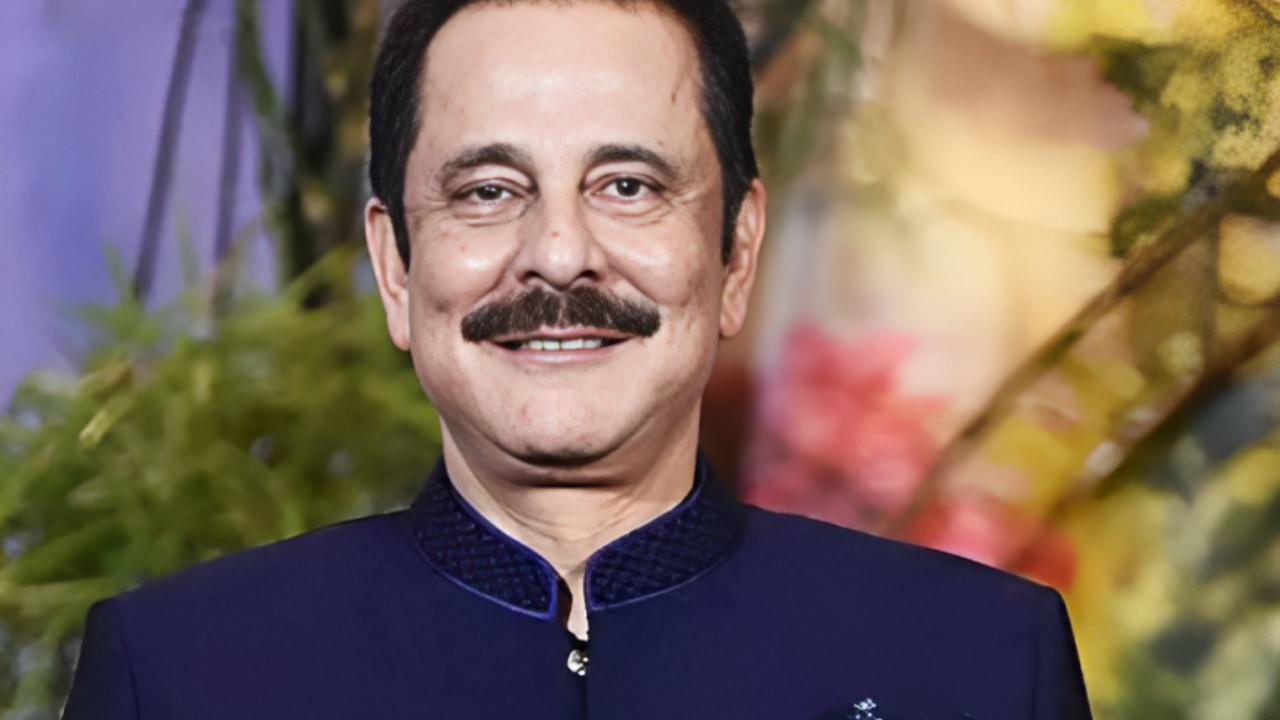
Entertainment industry grieves loss of Sahara Group founder Subrata Roy, who won stars and common folks over with his trademark humility and compassion
Hiren Kotwani (MID-DAY; November 16, 2023)
Subrata Roy, who passed away on November 14 at the age of 75 after a prolonged illness, played a key role in the careers of several film fraternity folks. Ever since his foray into showbiz in the early 2000s with Sahara One Motion Pictures, he not only backed several movies that set the trend with the advent of the multiplexes but also bailed out several actors and filmmakers from their financial crises. Apart from film production and distribution, Roy expanded his media conglomerate with news and general entertainment channels, too.
Revitalizer of careers
That’s not all. His studio gave a new lease to the careers of actors like Sridevi and Karisma Kapoor with television serials like Malini Iyer and Karishma: The Miracles of Destiny on the group’s general entertainment channel, Sahara One. Moreover, several B-Town celebrities like Amitabh Bachchan and Aishwarya Rai were on the board of directors of Sahara entities. Not surprising then, that whenever any Sahara event was scheduled in Lucknow, where the group headquarters were located, most of Bollywood would fly down to show their allegiance to and solidarity with Roy.
At the same time, it’s also not surprising that when Roy and his Sahara Group got caught in financial issues in 2011, several film industry folk began keeping their distance from the ‘controversial’ businessman.
Actor’s unforgettable memories
However, few continued to associate with Sahara Shri, as he was called. One of them is Vivek Oberoi, who forged a bond with the businessman-industrialist before he began working with the latter’s studio. Beyond the equation they shared, the actor remembers two unforgettable instances. One is when the actor got injured during the shoot of Yuva on the Howrah bridge in Kolkata.
“Even Mani Ratnam sir had a heart issue and had to be hospitalized. Ajay Devgn and Abhishek Bachchan were taking care of me. Sahara Shri called me, spoke to my father and took over—he organized the beat doctor and orthopedic for me at Hinduja Hospital. When I was to be flown down to Mumbai, he got the front row seats of an Air Sahara flight removed so I could be accommodated with the stretcher,” recalled Oberoi.
The actor was even more touched to see the business magnate had flown down to Mumbai to be by his side. He added, “After the surgery, while I was in and out of consciousness, Dada sat there by my side. It was great a gesture from Dada, a billionaire industrialist who had tons of things to do in his corporate empire.”
The other instance was when the actor was getting married to Priyanka Alva in 2010. Businessmen, industrialists, politicians and VIPs were invited to the wedding, besides his friends and colleagues from the industry. “Even though he was a VIP himself, he asked if there was something he could do. Dada was there on stage like a family member, receiving guests, ensuring they were looked after, asking if anyone needed anything. That is what set him apart as a person; his honesty and integrity also continued in his relationships,” reminisced Oberoi.
‘Rooted for home-grown tech’
That Roy later had issues with the authorities never changed Oberoi’s equation with him. The actor said, “Today, I genuinely miss the man who was like an elder brother and father figure who was there for me in my toughest and happiest times.”
Praising the magnate’s patriotism, the actor said, “Many years ago, Dada would talk about the self-reliant India that we are seeing today. He didn’t want to buy a Mercedes till it was manufactured and assembled in India. He was the first to speak to me about organic food and distribution. Also, telecom through satellites, which Elon Musk is doing through his space link now. He was fiercely Indian and rooted for home-grown technology. In case of foreign tech, he’d insist on transfer/sharing of tech for things to be made in India.”
‘An optimistic visionary’
While Oberoi was outside the country and regretted not being able to see Roy one last time, veteran actor and politician Raj Babbar was on his way to Lucknow to pay his last respects to his dear friend. Madhur Bhandarkar, who has known Roy for 15 to 20 years, called him a visionary.
He said, “He was always positive and helpful, not just towards those in the film industry and sports stars but also to people who worked in the Sahara Group. And irrespective of good times or bad, I’d always see him smiling. He would light up the room with his cheerful spirit. His positivity would cheer you up and dispel any negativity that was bogging you down.”
Recalling his meeting with Roy a couple of months ago in the hospital where he was undergoing treatment, the filmmaker said, “I spent an hour with him, we spoke about movies and current affairs. He was always down to earth and enjoyed tremendous goodwill. He treated everyone with respect and ease. He was humble with everyone, whether it was someone from films, sports or politics. When someone came to him for help, he ensured that no one went back disappointed or heartbroken.”
‘Mentioned OTT decade ago’
Sandeep Bhargava, who worked as the COO at Sahara India Motion Pictures (Sahara Movie Studios), credited the business magnate for ushering in corporate culture in the film industry. “The advent of the multiplexes had just about begun then. The kind of films we started with—Page 3, Malamaal Weekly, Sarkar, Bose: The Forgotten Hero—are proof of the kind of content he wanted to make and market through the studio. The other studios started following suit after 2006,” he said.
He revealed that while OTT is witnessing a boom today, Roy was the first to think of a streaming platform a decade ago. Bhargava added, “When I joined him again in 2013, he spoke about launching Sahara QCloud, India’s first OTT platform. He was a visionary in every sense of the word.”
‘His humility set him apart’
What made Roy an influential person for the film fraternity was not the clout he wielded, but his humility and compassion, said Bhargava.
“He was always there for those who needed his help or needed to be bailed out in difficult times. Not just the film fraternity, sports stars and politicians, but common people. For him, those working in the Sahara Group were a part of the family. He would always remember your name, the last conversation, address you by your first name, first ask how you are doing etc., before getting down to business. His human side is what set him apart from the others,” he said.
Jab We Met is ghar ki khichdi, you want to see it again and again. It doesn’t get old-Kareena Kapoor
8:27 AM
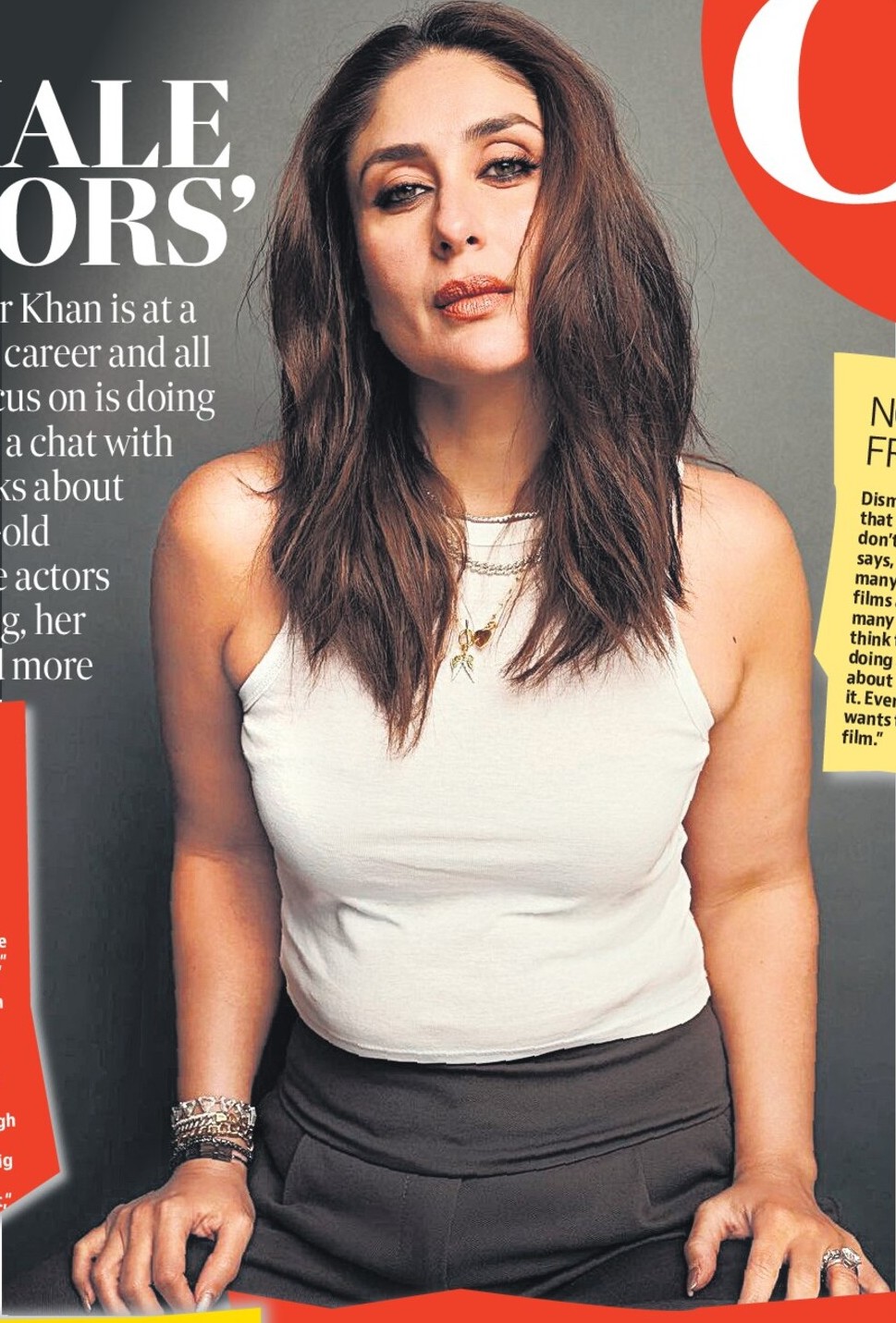
Kareena Kapoor Khan is at a zen stage in her career and all she wants to focus on is doing quality work. In a chat with us, the actor talks about defying the age-old notion of female actors not getting along, her ‘other’ films and more
Rishabh Suri (HINDUSTAN TIMES; June 6, 2023)
‘EXCITED TO WORK WITH TABU’
“Lolo (sister, actor Karisma Kapoor) and Tabu have done some stellar films together. So, I am super excited because I have never worked with her,” says Khan, who will star with actors Tabu and Kriti Sanon in The Crew soon. “All of us working on the film are women, including our producers (Rhea Kapoor and Ektaa Kapoor). These two have always been cool enough to break the mould and do something different. It’s a big screen film and I am pretty sure the audience will love it,” she adds.
NO FRICTION
Dismissing the notion that female actors don’t get along, Khan says, “I have worked in many women-centric films and alongside many female actors. I think today, it’s about doing a good film, not about who or what’s in it. Everybody just wants to do a good film.”
‘JAB WE MET DOESN’T GET OLD’
“Of course, Jab We Met (2007) is ghar ki khichdi, you want to see it again and again. It doesn’t get old. That’s a rarity; every time you watch it, it’s like you are watching it for the first time. It’s just the character,” says Khan, referring to the vivacious Geet.
‘TALK ABOUT MY OTHER FILMS TOO!’
Every film Khan does is compared to her iconic performances in Kabhi Khushi Kabhie Gham (2001) and Jab We Met (2007). “They are iconic, I understand. But, I feel like people should talk about [my other films like] Chameli (2003), Yuva (2004), Omkara (2006) and Heroine (2012), too. They are underrated in terms of my performance. Why don’t people talk about that? I am also doing The Devotion Of Suspect X; that’s a very different kind of spectrum for me,” she asserts.
A star’s gender has no role to play in a film’s success-Rani Mukerji
8:09 AM
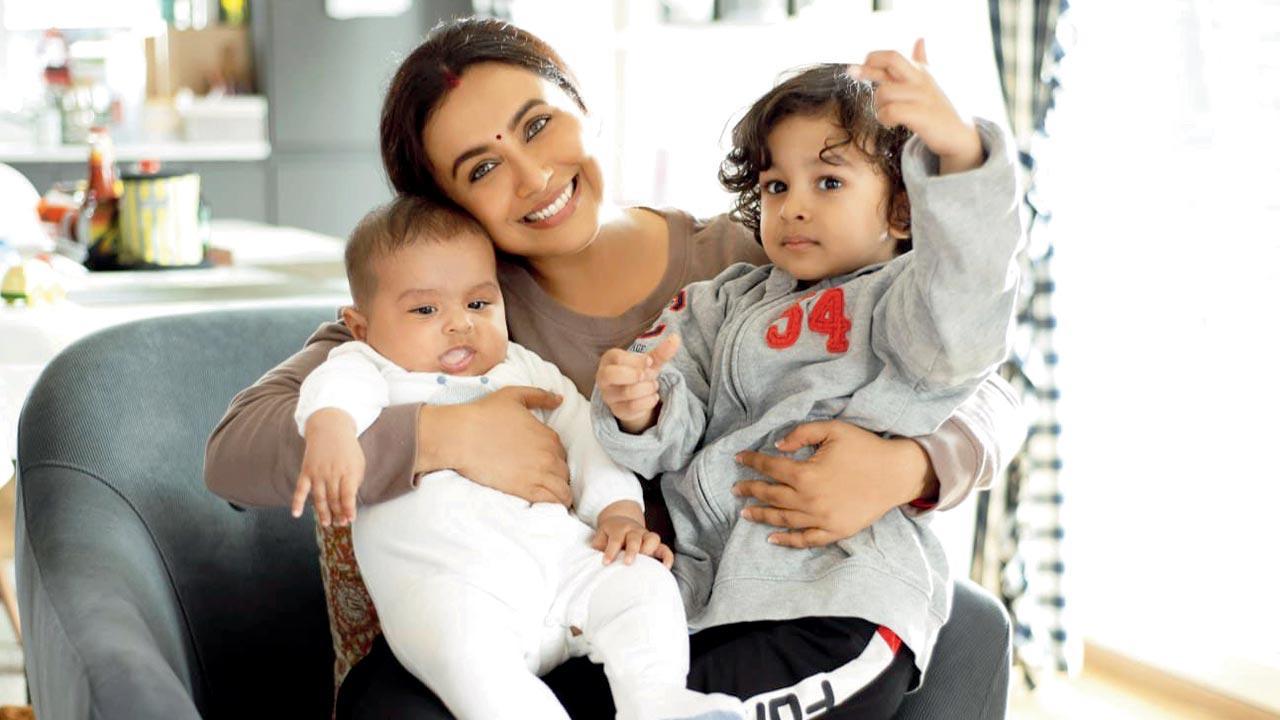
With Mrs Chatterjee vs Norway dropping online, Rani says movie’s strong BO run busted myths that only male stars and Rs. 100-crore collections make a hit
Mohar Basu (MID-DAY; May 30, 2023)
In the two weeks since it dropped on Netflix, Mrs Chatterjee vs Norway has reached audiences far and wide, consistently finding a spot in the streamer’s top 10 movies in India. It only echoes the Rani Mukerji-starrer’s successful run at the box office. The March release, said to be made on a modest budget, earned Rs 37 crore, becoming one of the few Bollywood hits of the year so far. With it, Mukerji is happy to have busted one of the Hindi film industry’s myths — that only a Rs 100-crore earner is a true box-office hit.
“There are misconceptions about what a hit means. A film is a hit when producers make money from it. It’s not only about how much it collects at the box office; one should also factor in the film’s cost,” emphasizes the actor.
So far, 2023 has witnessed a blockbuster in Pathaan, and hits in Mrs Chatterjee vs Norway, and The Kerala Story. The strong run of Ashima Chibber’s directorial venture also shut down detractors who had doubts about the prospect of women-led films, in the post-pandemic scenario.
Mukerji asserts, “There is constant chatter about whether women-centric films are box-office draws. Of course, they are! A good film will always bring people to the theatres, and a star’s gender has no role to play in a film’s success.”
Inspired by the real-life ordeal of Sagarika Chakraborty, Mrs Chatterjee vs Norway sees the leading lady play a fierce mother who takes on the legal system of Norway when her kids are taken away from her by the welfare services, on grounds of parental neglect. The drama aligned with Mukerji’s vision of bringing courageous women’s stories to the screen.
“As an actor, my vision for cinema will evolve, but the one thing that has stayed with me is the way I want to represent women on screen. I choose films where the woman is pivotal to the plot, where she is projected with dignity and power. For me, women have always been agents of change; they are independent, courageous and caring. I wanted to highlight these facets by choosing characters that echo my belief system — be it in Yuva [2004], Black [2005], No One Killed Jessica [2011], Mardaani, or Hichki [2018].”
Why Bengali films are giving trams a pass now
8:13 AM

Scrapped trams stored at the Tollygunge tram depot
Modern Kolkata Moves In The Metro And App-Cabs While Its People Are Shifting To Highrises. So, The Tram Is Reduced To A Cliche That Appeals To The Outsider But Not Contemporary Bengali Directors
Priyanka Dasgupta (THE TIMES OF INDIA; February 19, 2023)
There’s a West Bengal tourism commercial that shows the city through the lens of a foreigner. Its last sequence features a tram car chugging past the Maidans by night on Route 36. The climax is the spectacular entry of Bengal’s brand ambassador, Shah Rukh Khan, singing Tagore’s ‘Ami chini go chini tomare ogo bideshini’. When the tram car finally chugs out of the frame, the camera zooms in on the words, ‘Experience Bengal: The sweetest part of India’.
Six years since the commercial aired and a pandemic later, Kolkata’s once-ubiquitous trams are chugging out of the city. Even the sound design of contemporary Bengali cinema no longer uses the chimes of tram bells to capture Kolkata’s essence.
Inseparable For Years
Bengali cinema’s tram connection meandered from Satyajit Ray’s ‘Mahanagar’ (1963) to Amitabha Chaterji’s ‘Manohar & I’ (2018) via Buddhadeb Dasgupta’s ‘Kaalpurush’ (2005), Atanu Ghosh’s ‘Abby Sen’ (2015), Nandita Roy and Shiboprosad Mukherjee’s ‘Praktan’ (2016), Srijit Mukherji’s ‘Ek Je Chhilo Raja’ (2018), and Raj Chakraborty’s ‘Parineeta’ (2019).
Not just films, even their opening credits celebrated this connection. Subrata Mitra filmed the two-minute-long title sequence of Satyajit Ray’s ‘Mahanagar’ (1963) by only focusing on a moving tram cable. Once Ray’s credits for the film’s screenplay, music and direction have rolled, the camera moves inside the tram car to freeze on Anil Chatterjee’s tired face.
“Ray used just the electric cable to depict the big city. In the background score, he also changed the tempo and volume of violin, flute and cello to heighten the drama of everydaylife,” said Riddhi Goswami, a member of the Ray Society.
Criss-crossing tram wires form the backdrop for the opening title card of Mithun Chakraborty-Rahul Bose-Sameera Reddy starrer ‘Kaalpurush’. “My father loved everything quaint and old that stood witness to time and defined his Kolkata in its purest form,” said music director Alokananda Dasgupta, daughter of the film’s director, the late Buddhadeb Dasgupta.
Later in the film, Bose falls asleep inside a compartment and has imaginary conversations with his father about his love, hatred, regret and memories. “It is such a vulnerable and sensitive scene. What better than the long-lost tram to act out this metaphor of extended realism in his film,” she added.
Metaphorical Journeys
Ritwik Ghatak used trams in ‘Bari Theke Paliye’ as a metaphor for Kolkata’s mechanical transport. But film scholar Sanjoy Mukhopadhyay said Ray and Ghatak used trams differently. “In Ray’s ‘Apur Sansar’, the tram becomes a space where dreams turn into reality when Apu reads the editor’s letter. In contrast, the tram in ‘Bari Theke Paliye’ symbolizes crude mechanization and not fantasies.”
Trams also appear in Mrinal Sen’s ‘Interview’. “The protagonist nabs a pickpocket in a tram. That was more of an emblem of day-to-day life and living in 1970s’ Kolkata,” Mukhopadhyay said.
Parked In Nostalgia
Once an emblem of modernity and the metropolitan mind, trams now symbolize old-world charm. “People who joined college in the midor late-1980s remember how romantic tram rides were during noon, especially if a couple got the front seats just behind the driver’s cabin,” said Atanu Ghosh, who directed the 2015 sci-fi film ‘Abby Sen’. “As a tribute to my fond memories, I devised the tram ride scene as a metaphor for nostalgia and romance in ‘Abby Sen’. In the story, Abby travels 33 years back in time from 2013 to 1980 and meets his wife in an illusion scene inside a tram.”
Poet-turned-filmmaker Srijato penned ‘Chol rastae saji tramline’ for Srijit Mukherji’s ‘Autograph’ (2010) that highlighted the word tram. Despite the song’s popularity, Mukherji didn’t use a tram shot to picturise it. He waited for eight years to use the tram as the setting for the conversation between Aparna Sen and AnjanDutt in ‘Ek Je Chhilo Raja’. “Tram for me is quintessential Kolkata. I use trams to portray a character of the city which is traditional, old-world, slightly laidback with its own rhythm or something very intimate, quaint and personal,” Mukherji said.
Few contemporary Bengali films use trams for a nuanced portrayal of urban loneliness. One rare exception is a 13-minute-long scene from ‘Manohar& I’, which is among British Film Institute’s 10 great films set in Kolkata. Two strangers-turned-acquaintances hop on to a tram car. The languid pace and the empty space of a tram car allow a lot of time for the characters to communicate. The camera placed up close captures the hoardings and wall graffiti through the huge windows while the protagonist garnishes his narrative with half-truths and yearnings.
“In between their conversation, I deliberately kept some top shots of a serpentine tram negotiating the traffic. The tram becomes a metaphor for Kolkata’s indifference that alienates migrants from the suburbs. The metropolis shuts them up inside boxes. Their existence resonates with tram cars moving around the city like long matchboxes in motion,” director Amitabha Chaterji said.
Iconic For The Outsider
Most contemporary Bengali films steer clear of the tracks to avoid clichés. Besides, their plots have long shifted to highrises where the chimes of tram bells hardly reach. “As a child, I used the tram regularly while commuting. But trams have now disappeared from the cityscape. If I set a realistic film in the city, where is the space for trams since my characters will use the metro and app-cabs?” said director Aniruddha Roy Chowdhury.
But those who haven’t lived in this city as an insider rely on trams, Howrah Bridge and Victoria Memorial to reinforce a stereotype. From Mani Ratnam’s Yuva (2005) and ‘Guru’ (2007), Sujoy Ghosh’s ‘Kahaani’ (2012), Tigmanshu Dhulia’s ‘Bullett Raja’ (2013), Shoojit Sircar’s ‘Piku’ (2015), Dibakar Banerjee’s ‘Detective Byomkesh Bakshy!’ (2015) to Mridul Toolsidas’ ‘Toolsidas Junior’ (2022), Kolkata’s trams and even tram depots remain the perfect backdrop for period films and romantic songs.

Longevity comes from embracing your age and the person you are-Rani Mukerji
8:28 AM

Rani discusses how she has no qualms playing mother to 10-year-old in Bunty Aur Babli 2, and the joy of teaming up with Hum Tum co-star Saif Ali Khan
Mohar Basu (MID-DAY; November 13, 2021)
For someone who is recovering from a knee injury, Rani Mukerji is surprisingly upbeat as she promotes Bunty Aur Babli 2. The wacky energy of her film and the fact that it reunites her with Hum Tum co-star Saif Ali Khan after 13 years probably keep her going. But above all, she is happy to be Babli all over again after the 2005 hit. “When Bunty Aur Babli was first developed, we wanted to take the franchise forward. Shaad [Ali, director] wasn’t convinced. Adi [Aditya Chopra, producer] kept the story for a long time, looking for a director who would make it his own. Finally, it was Varun [V Sharma, director] who whipped up a fantastic screenplay. It is not a regular comedy; it has its heart in the right place,” she begins.
Mukerji believes that Khan and she have matured, just like their on-screen characters. “Saif was a little childish when I met him on the sets of Hum Tum [2004]. Today, he is mature and sorted. We have rediscovered our chemistry with this film. This time, we brought our love and respect on screen. I admire him as an actor; his comic timing is impeccable. We fed off each other’s energies. Our common ground this time was that we were both parents. So, we exchanged notes.”
Well, it appears our Hum Tum characters grew up. Probably the right time to ask if there will ever be a sequel to the romantic drama. “For now, no. But I hope there are more Bunty Babli sequels in the offing.”
Letting go of their vanities, Khan piled on the kilos to play the average Fursatganj middle-aged man while Mukerji plays mother to a 10-year-old in the con caper. That must be refreshing compared to 10 years ago, when vanity was sacrosanct to an actor’s existence. “Today, it’s liberating how movies have changed and how actors are viewed. Earlier too, I did Black [2005] and Yuva [2004] where I didn’t care about my characters’s [appearance]. I like interesting parts because longevity comes from embracing your age and the person you are. I don’t want to convince the audience otherwise. That said, I’ve done a glamorous film after so long.”
Commercial movies are a part of my DNA-Kareena Kapoor
8:14 AM

Kareena Kapoor Khan has no qualms about doing masala potboilers, but she tries to do ‘something different’ with each film
Juhi Chakraborty (HINDUSTAN TIMES; December 17, 2019)
Not just with her fashion choices, Kareena Kapoor Khan has also been quite a trendsetter when it comes to her film career. It began right from her first film when despite being a star kid, she chose a non-glamorous debut with cross border romantic film, Refugee (2000), something which was considered to be an unconventional choice. Nineteen years on, she continues to push the boundary with each of her films, and life choices, too.
“I think it’s just always been a conscious decision to at least try to do something different. When I had my son Taimur (born on December 20, 2016), not many people expected that I would take up a film with four girls,” she says referring to Veere Di Wedding (2018), which also starred Sonam K Ahuja, Swara Bhasker and Shikha Talsania.
The 39-year-old admits that many questioned her decision to do a female ensemble cast film that marked her return to films after becoming a mother.
“Everyone was like ‘You just had a baby, so why don’t you come back to the screen with a heroine-oriented film where the story would be all about you’. That is the norm here but I don’t think like that. I have a slightly unconventional thinking and that has always been a part of my journey. From Dev, Chameli, Yuva (all 2004) to Omkara (2006), I have always tried to do something different and that gamble has actually paid off well,” shares the actor, who is busy promoting her upcoming release, Good Newwz.
In all these years, Kareena has been a part of several commercial potboilers, and given memorable characters, from Poo in Kabhi Khushi Kabhie Gham...(2001) to Geet in Jab We Met (2007).
So, is there anything that is left to be desired at this stage of her career?
“There is so much more to explore now with lines blurring and great scripts coming to life more than ever before. I am not going to say that especially for women because I have never believed that. I always thought women have had the opportunity to choose. There is a lot left to explore. These are the exciting times. I have done it all — meaningful films or big banner entertainers. Big commercial movies are a part of my DNA and that’s never going to change, I will always be part of those, but I am trying to do something different with each film,” Kareena muses.
The actor has a slew of films lined up next including Angrezi Medium, Laal Singh Chaddha and Takht. But other than films, there is one thing that she wants to try her hands at. “I would love to do theatre but I am really scared. In films, we are used to delayed gratification. But I feel performing on stage is an instant thing and I am very scared of that,” she concludes.
Manmarziyaan is my take on a potboiler-Anurag Kashyap
8:21 AM
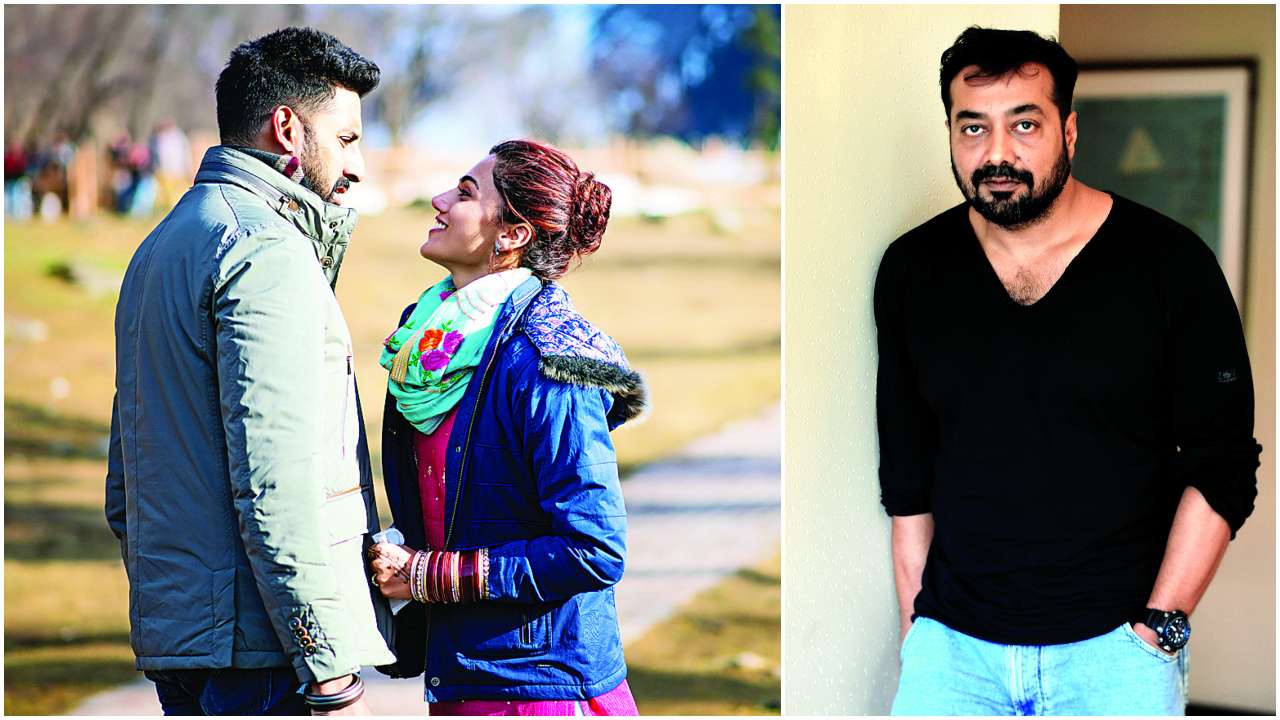
Rinky Kumar (DNA; September 4, 2018)
Anurag Kashyap is probably in one of the best phases of his career. His web series Sacred Games as well as one of the shorts, which he has helmed as part of the anthology Lust Stories, have got positive reviews. His performance as the antagonist in the recent Tamil thriller Imaikkaa Nodigal has been appreciated. The 45-year-old’s last directorial stint Mukkabaaz (2017) struck a chord with the audience for showcasing the trials and tribulations of a sportsman, who dares to take on the system. Now, the maverick filmmaker is gearing up for the release of his forthcoming movie Manmarziyaan, starring Abhishek Bachchan, Taapsee Pannu and Vicky Kaushal. As we settle down for a chat, Anurag says, “My Tamil film is getting good reviews. I’m only getting acting offers.”
However, in the same breath he adds, “I hate acting. I only want to direct. Someone had once told me, ‘Anurag, tu acting karega na, toh tu aur tera producer dono paise kamayenge. Tu direct karta hain, phir bhi paise nahin kamata.’ On that note, we begin our conversation and he tells us how cinema gives him a better perspective about life and why, in reality, he is a far cry from the aggressive filmmaker that he is made out to be. Excerpts…
What appealed to you about Manmarziyaan?
The character of Rumi played by Taapsee Pannu. We like love stories and aspire to have one in our lives. But I don’t believe most of that. Manmarziyaan is something that I believe in because it shows how people behave in love and how indecisive they are.
So, what’s your idea of romance?
The most amazing thing is the quest for it. Love isn’t there, we romance the idea of it. And everything else is included in that journey.
Dev D, which released in 2009, was a romantic musical. Your forthcoming film is also being termed as one. So, was it like homecoming for you?
Both the movies are different from each other. If I would say in filmmaker Neeraj Ghaywan’s words, ‘That was Dev’s story, this is Paro’s story.’ But I think it’s more than that. I don’t like to define things. We simplify things for ourselves by putting them in words that are understandable. I like things to be complex. And I would want people to talk about it rather than define it in one word.
All the characters in your films are quite angst-ridden. Do they come from a deeply personal space?
It’s not like that. I make crime films but that doesn’t mean I commit crime. I’m actually a peaceful person. I’m more peaceful as compared to other people who make lovely movies.
This is your second collaboration with Aanand L Rai after Mukkabaaz. How was the experience as both of you have different sensibilities?
It’s been good. I wanted to make Mukkabaaz, he wanted to make Manmarziyaan. We read each other’s scripts and decided let’s do both. As for our sensibilities, I never think about them. I connect with Aanand and always tell him whether I like his films or not. Aanand L Rai has been appreciative of my work. I enjoy a massive support system in the industry among the directors. I feel fearless while making my films because I know that tomorrow if no studio or producer will stand by me, the directors will. I get a great sense of security from Aanand. I know I will be allowed to be myself as a creative person while working with him because he gives me immense breathing space. And that gives me a lot more confidence to explore things because Manmarziyaan was his idea. Kanika Dhillon wrote it, it went to two sets of people before it came to me. I was clear that I would give it my own sensibility and interpretation. So, I changed the cast first and then the music.
Music plays a pivotal role in almost all your films…
My love for music comes from my inability to play it. You always desire what you don’t have. In the pursuit of becoming a Tansen, I became a Kansen (laughs). My thinking is that if you keep saying ‘no’ to what you don’t like, you are eventually left with what you like. That’s my process.
You also tend to improvise a lot on the sets…
I can’t deal with actors who come too prepared. They have to be in the moment. It’s not their job to keep in mind the graph of their characters.
Do you think it enhances their performance?
I don’t know, but that’s the way I work. I just want them to be believable. I want to do what I believe in, if I don’t, then it’s pointless.
In one of his interviews, Aanand mentioned that while working on this film, he felt you were much calmer...
Aanand knows me because we would meet at public events. He knew me as a filmmaker through my movies, blogs and interviews. I’ve been the same person all my life. Even when I made darker films, I was still the same person. Anyone who works with me for the first time is initially shocked because it’s the perception of me that has been with them.
On the first day of shoot, even Abhishek Bachchan was surprised to see you jumping and dancing on the set…
I was a writer for Yuva (2004). So, he and I didn’t interact much. I’ve always been an aloof person. I don’t get out of my room except when I’ve to work. But if you talk to people with whom I have worked on the first film, they will tell you I dance on the set, I never scream. Abhishek told me, ‘I expected you to sit in a corner with light falling on your brooding face’ and I told him, ‘I don’t brood.’ When I do, no one sees me because I am in my room. People have a perception of me that has been built by the media. I’m happy in my own space. Everyone thinks I’m super aggressive as I say things bluntly.
But you didn’t love his performance in Yuva..
I wrote in my blog that it could have been better. And I think Abhishek took it hard because that was a performance that everyone appreciated. He thought a writer usually doesn’t say such things. We didn’t talk to each other for 10-15 years.
So, how was it working with him now?
It was lovely; today, we have become good friends. You know when you work with someone, you think they have got your back. I felt the same with him.
You didn’t have reservations before collaborating with him?
I had reservations before I met him. But once I did, they disappeared.
What is it that drives you about cinema?
The possibility of exploring things and telling stories, baaki kuch nahin (smiles). I articulate through cinema. It’s also my process of understanding things. When I am going through something in life or something is affecting me, I put it in my film and figure out what it means in the process.
Do you enjoy acting?
Not at all…
But you usually get good reviews for your performances…
That’s because I’m a good actor. However, I like acting on stage. Recently, I met Makarand Deshpande who has directed me in his plays and he asked me, ‘Why don’t you act?’ I told him I like to do so on stage as theatre is an actor’s medium, but cinema is a filmmaker’s medium. I’m very selfish, I want it to be my medium.
How do you look back at your journey as a filmmaker?
I’m very happy. I’ve had 25 good years of filmmaking. I’ve done more than 100 films as a writer, director, producer. I came here to make one movie.
Will we ever see you helm a commercial potboiler?
Manmarziyaan is my take on a potboiler.
I had the fear of being forgotten-Abhishek Bachchan
8:00 AM
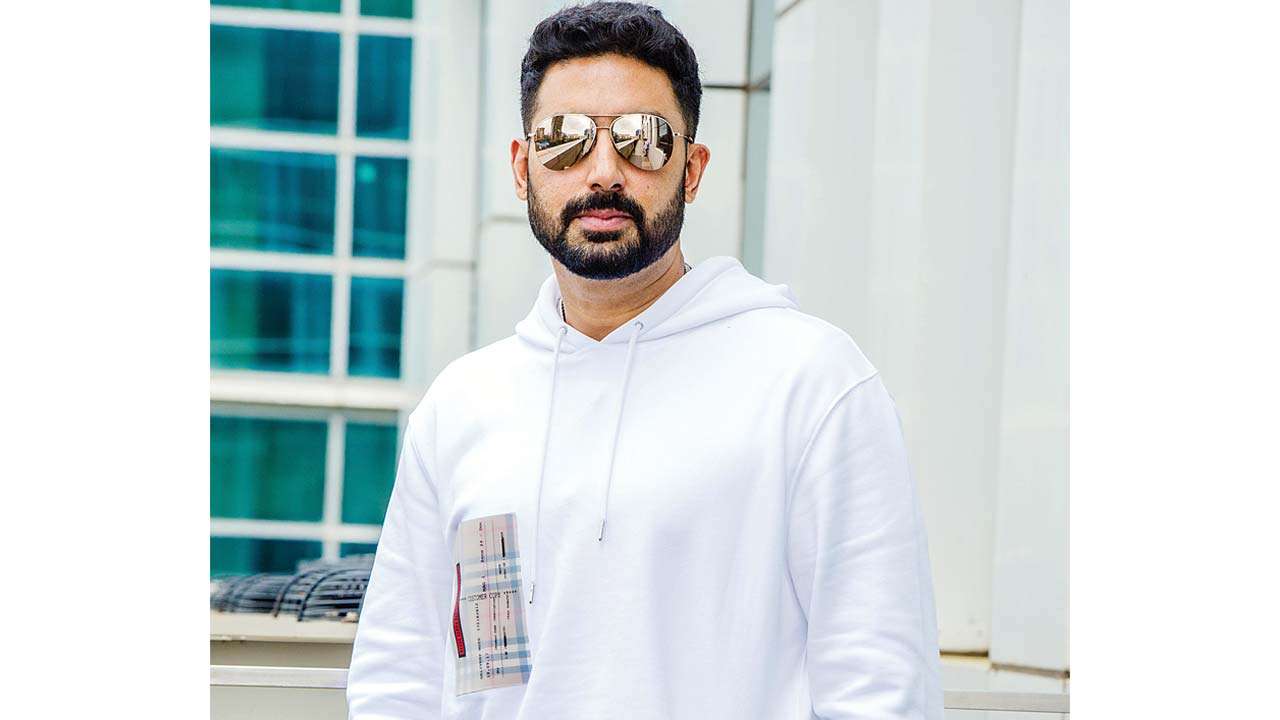
Nayandeep Rakshit (DNA; September 1, 2018)
Abhishek Bachchan is just 10 minutes late, but he apologizes profusely. That is proof enough that he is a thorough gentleman. Tell him you’ve grown up watching his movies and he laughs saying, “I’ve grown up watching myself.” In the last two years though, he has stayed away from the arclights, trying to figure out a new strategy in an attempt to reinvent himself. While for most actors, it can get frustrating, the star son explains why the break was ‘absolutely necessary’ for him.
When you meet him, you feel you are interacting with a 2.0 version of Abhishek.
Over the next half an hour, Junior B gets candid about his break, making a comeback with Anurag Kashyap’s Manmarziyaan, and the alterations he made in his life. Over to him.
Did you feel that a few choices went wrong in the last couple of years?
Not at all. In fact, my last couple of movies are possibly some of the most successful ones that I have done in my career. In everybody’s life, there comes a juncture when you need to just pause and re-evaluate. That’s very important. It was a personal choice for me not to work for a bit. Actually, I have never been somebody who thinks what I’ve done has been a mistake. Whatever decision you take — whether it works out for you or it doesn’t — I believe, you always have to figure out a way to turn that into a positive thing. If you do a film and it becomes successful, you learn from that. But if it doesn’t, you still learn a lot. You come out a winner, no matter what. For me, that’s always the kind of person I’ve always been. My films did good numbers and I was getting appreciated too, but that’s not just the way I wanted it to be.
What did you want to do then?
I decided to stop signing films and take some time off to set up my other businesses. I was keen to re-energise and then come back to work. I didn’t want it to be robotic. I needed to remove myself from my comfort zone, and be challenged. I wanted to check what I was doing. But more importantly, it was about how I was doing it. I felt that there was a great sense of complacency that had crept into my work and I have always said that it’s the death of an actor. It’s important to be nervous, stay on edge and have doubts — about how am I going to do my work and if things will be proper. When those fears are no longer there and you are doing a lot of work like I was back then, you feel you are just coasting along.
Does the fact that people still want to watch you give that confidence?
I’d be lying to you if I said no. Let’s be honest — we are all actors and a large part of what we do is for the acknowledgement and the appreciation. We all want somebody to come and say, ‘Okay, you tried your best’. I always looked out for people to react. So, when the promos of Manmarziyaan were out and the audience reacted positively, it was overwhelming for me because at the back of my mind, I knew that they still remember me. I heaved a huge sigh of relief. Phew, they remember me! It was a boost for sure because I had the fear of being forgotten. However, that was even before I took the sabbatical. I was speaking to my family and I just told my dad that I wanted to take a pause. He asked me if I was sure because he had told me that in the early ’90s, when he took a sabbatical of around four-five years, he considered it to be the biggest mistake of his life. He felt he had lost touch with what was going on, so his opinions stemmed from that experience. But I knew that I had to do this. Times have also changed since then.
Have your choices changed then?
Like I said, the films I was doing weren’t the issue, the problem was how I was doing them. I don’t know if my perspective has changed. But yes, my attitude has changed. What I want to do will change every day, because that’s evolution and you never know creatively what will excite you. But now, I know what I don’t want to do and that’s shockingly something I never did before. I never sat down and put down a plan. I was always happy to be an actor who’s just acting and got the opportunity to go and make movies.
Did you ever feel dejected or lost in the process?
No, I didn’t. I was lost before I took the decision to go on a break. The plan was to stop, pull back and re-evaluate. The last two-and-a-half-years have actually been a well-thought-out plan.
When and how did Manmarziyaan come about?
In January this year (smiles). I had started listening to scripts since the last year-and-a-half. Aanand (L Rai) spoke to me and told me he had this script and wanted me to hear it. I’ve known him and have immense respect for him as a filmmaker. He sent across Kanika (Dhillon), the film’s writer, who narrated it to me and I liked it. I had one or two notes which she sweetly agreed to try and incorporate. There were a couple of more meetings in which we just discussed the script. At the end of it, I told Aanand that I liked the story but I asked him who’s directing the film. Then, he said Anurag will be helming the movie. I was like Anurag who? He told me, it’s Anurag Kashyap. After 15 seconds, I just said it’s great.
Why the 15-second pause?
Because the film is a love triangle. You don’t use Anurag Kashyap and love stories in the same sentence. But it looked interesting and I knew it would be a challenge. I feel he has a unique creative voice and his craft is fantastic. He knows how to do things from a different perspective and he had an interesting take on the story. Then, we met and within a minute, I knew this was absolutely the right decision. He just blew me away with how he wanted to treat the film. He was a bit nervous about what I’d say. And within four to six weeks of me saying yes, I was on set in Amritsar.
Weren’t there differences between you and Anurag?
That’s history now. I first worked with Anurag in Mani Ratnam’s Yuva (2004); he had written it. I don’t think he liked my work in the film (laughs). And it’s only fair because we had spent a lot of time doing readings for the film. So somewhere, maybe he felt a little disappointed when he watched the movie. But we never spoke about it. Now, we’ve put all that behind us. Manmarziyaan ticked all the boxes because I instinctively knew that I wanted to be uncomfortable, have sleepless nights and this guy was going to help me do that. Also, I would never allow ego to come in the way of my work.
They say the profession comes with a lot of insecurities. Do you agree?
Absolutely, and those insecurities are important. The only thing is, you can’t allow some of them to take control of you. But insecurity is good, because it keeps you alive and wanting to improve all the time.
Not playing the lead in ensemble films — didn’t that matter to you?
For me, it’s always been about what the role is and how it’s impacting the script. But I’ve to confess that’s going to change. If our audience is perceiving something in a particular way, you can’t expect them to think otherwise. I started thinking that if I have a particular audience who expects something of me, I’ve to cater to that. I can’t be on this journey thinking I’ll continue to do whatever I’m doing. I loved being part of films like Bol Bachchan, Housefull 3 and Happy New Year; they’re still being spoken about. But I understand when people ask me why I’m taking up these supporting roles. I never understood that back then but now, I know to interpret it differently. I think my audience wants more from me. Does that mean I’m going to stop acting in ensemble films? No, not at all, because I enjoy it. I’m just going to work towards changing the perception.
I want to be challenged, I want to be uncomfortable-Abhishek Bachchan
7:58 AM

Stating that his complacency had got the better of him, Abhishek Bachchan on how the two-year-long hiatus helped him gain perspective
Sonil Dedhia (MID-DAY; September 1, 2018)
In an industry that largely functions on the out-of-sight-out-of-mind premise, Abhishek Bachchan took a gamble when he opted for a two-year-long sabbatical. As he kicks off his second innings with Manmarziyaan, the actor says the decision of taking a hiatus has paid off in the form of "clarity of thought" and "an informed approach".
"I was surprised why I hadn't done this before," smiles Bachchan, emphasising that amid the frenetic pace of work, it is important for an artiste to "pause, take a step back and reflect. It allowed me to introspect about the kind of work I wanted to do. The time-out helped me gain perspective."
Looking back, he reflects that it is easy to lose sight of the long-term goal as one flits from one box office release to another. "I was happy to be an actor who didn't have a plan in place. I had become complacent. But then, I realised that I didn't want to coast along. Now, I want to be challenged, I want to be uncomfortable."
By choosing to make a comeback with an Anurag Kashyap film, Bachchan proved that he is ready to walk the talk. "The moment Aanand L Rai [producer] told me that Anurag is directing Manmarziyaan, I knew he was going to push me to an extent that I haven't been pushed before. I knew his expectations from an artiste since I had worked closely with him in Yuva (2004), a film that he had written."
Bachchan has an interesting line-up of films, including Gulab Jamun with wife Aishwarya Rai Bachchan. "It is a beautiful script that Sarvesh [Mewara, director] offered us a year ago. We intend to do the film, but we are working out the dates."
Salman Khan is like the elder brother I missed while growing up-Sonu Sood
7:47 AM

From being an engineer to becoming a Bollywood star, Sonu Sood never shied away from taking the hard way up
Noyon Jyoti Parasara (BOMBAY TIMES; July 31, 2015)
You just turned 40. What does life at 40 look like and what are the les sons you have learnt?
When I look back, it seems I came to the city just a couple of days ago. I am still trying to learn the lessons of the trade. With every film you do, you make a lot of friends, from who you get to learn. I have learnt to stay grounded.
It has been over 15 years as an actor. Has it been a rough journey?
Being an outsider, I knew it was not going to be an easy journey. Initially, I used to share a small apartment with other people. We used to go to each and every office in Mumbai, travelling by locals and buses.I had my share of struggle. But I wanted to go through the grind.
You are an engineer by qualification. How did acting happen?
When I was doing my engineering, I used to do some fashion shows as an amateur. Then friends said I should come to Mumbai.
You made a mark with villainous roles in Telugu and Hindi films...
I never wanted to cast myself into a particular genre. When Dabangg was offered to me, I did not want to do it. Then, we had to remould my character and brought that comedy streak into it. The film did well and my character was noticed. But, I have said no to the best of filmmakers. Even when I had no work, I used to sit at home and wait for good work. Thankfully, films did well and good filmmakers came my way.
You have worked with SRK and Salman. What do you like about them?
Shah Rukh Khan still has the focus and urge to give his best like it is his first film. There is a boyish factor. He is a very humble guy and with lots of energy. I would love to have that. Salman spoke really less in the initial days of shoot. But after we bonded well, I could speak to him about anything. He is like the elder brother I missed while growing up.
You played Amitabh Bachchan's son in Bbuddah Hoga Terra Baap. There is a lot of talk about your resemblance to him. Have you two ever spoken about that?
We have never spoken about it. It is a huge compliment when someone compares us. When we were shooting for Yuva, I remember Mani Ratnam sir used to say that Abhishek and I look like real brothers. And that an ideal script would be Mr Bachchan playing the father and you two playing his sons. I never knew that one day I would get to play his son!
Tell us about one crazy fan experience you have had.
I remember a family used to send me gifts every two or three days. It continued for a couple of months and finally, I had to request them not to do it. There were not a super rich family and lived in a small place like Vishakapatnam. They make you feel special.
Any message for the one who follow you on Follo? Do you look forward to chatting with your Follo'ers?
I would love to interact with them. I would like to thank them for all their wishes and prayers that helped me reach here today. There are still miles to go and I hope they keep praying for me and I hope to connect with them very soon!
When I look back, it seems I came to the city just a couple of days ago. I am still trying to learn the lessons of the trade. With every film you do, you make a lot of friends, from who you get to learn. I have learnt to stay grounded.
It has been over 15 years as an actor. Has it been a rough journey?
Being an outsider, I knew it was not going to be an easy journey. Initially, I used to share a small apartment with other people. We used to go to each and every office in Mumbai, travelling by locals and buses.I had my share of struggle. But I wanted to go through the grind.
You are an engineer by qualification. How did acting happen?
When I was doing my engineering, I used to do some fashion shows as an amateur. Then friends said I should come to Mumbai.
You made a mark with villainous roles in Telugu and Hindi films...
I never wanted to cast myself into a particular genre. When Dabangg was offered to me, I did not want to do it. Then, we had to remould my character and brought that comedy streak into it. The film did well and my character was noticed. But, I have said no to the best of filmmakers. Even when I had no work, I used to sit at home and wait for good work. Thankfully, films did well and good filmmakers came my way.
You have worked with SRK and Salman. What do you like about them?
Shah Rukh Khan still has the focus and urge to give his best like it is his first film. There is a boyish factor. He is a very humble guy and with lots of energy. I would love to have that. Salman spoke really less in the initial days of shoot. But after we bonded well, I could speak to him about anything. He is like the elder brother I missed while growing up.
You played Amitabh Bachchan's son in Bbuddah Hoga Terra Baap. There is a lot of talk about your resemblance to him. Have you two ever spoken about that?
We have never spoken about it. It is a huge compliment when someone compares us. When we were shooting for Yuva, I remember Mani Ratnam sir used to say that Abhishek and I look like real brothers. And that an ideal script would be Mr Bachchan playing the father and you two playing his sons. I never knew that one day I would get to play his son!
Tell us about one crazy fan experience you have had.
I remember a family used to send me gifts every two or three days. It continued for a couple of months and finally, I had to request them not to do it. There were not a super rich family and lived in a small place like Vishakapatnam. They make you feel special.
Any message for the one who follow you on Follo? Do you look forward to chatting with your Follo'ers?
I would love to interact with them. I would like to thank them for all their wishes and prayers that helped me reach here today. There are still miles to go and I hope they keep praying for me and I hope to connect with them very soon!
I have signed an intense film-Abhishek Bachchan
7:44 AM

After several comedic roles, Abhishek Bachchan changes course
Nayandeep Rakshit (DNA; July 22, 2015)
Abhishek Bachchan is on a comedy spree. In Happy New
Year as Nandu Bhide he drew the loudest cheers. His upcoming release All is
Well, also has comic connotations. Not just that, he’s already signed
up for Hera Pheri 3 and Housefull 3, both out-and-out madcap comic
capers.
Not afraid of stereotypes
While most of his contemporaries are trying out different genres, doesn’t Abhishek fear being stereotyped? “Not at all. I like to mix it up. I don’t think about stereotypes. In fact, most of my career has been invested in not trying to be stereotyped with a particular image. When I did Yuva and Dhoom, I was considered this intense, serious actor. Then I did a Bunty Aur Babli which was completely opposite. The audiences started loving my avatar in B&B when I did a Sarkar which was again a very serious character. I like breaking the mould. When they wanted to see me in action, I did a Guru. Straight after Guru, I did a Jhoom Barabar Jhoom,” AB Jr explains.
Satiated by comedy
Doesn’t he miss doing something like a Guru now? “I was in this frame of mind where I wanted to do comedy as I enjoyed the blaiseness of comedy. Hence I did a Happy New Year and All Is Well, Housefull 3, and Hera Pheri 3 back-to-back. I enjoyed that and wanted that. I have had my feel of it, I am happy with that. I am satiated with that fact. I have grown through that emotional gamut,” he says.
Let’s get aggressive
Now that he’s satiated, he tells us that he’s game for something different. “Now, I look forward to doing something more intense next. I want to do something which is more aggressive now. I think I am ready for that.”
Not just that, he reveals he’s already in talks with a filmmaker for the same. “Yes, of course, I have spoken to directors. I have also signed something. But I can’t really talk about that because I always like the producer to make these announcements.”
Subscribe to:
Posts (Atom)