Showing posts with label Warner Bros. Show all posts

Analyzing Obsession's India box office: The horror obsession that Gen Z can’t quit

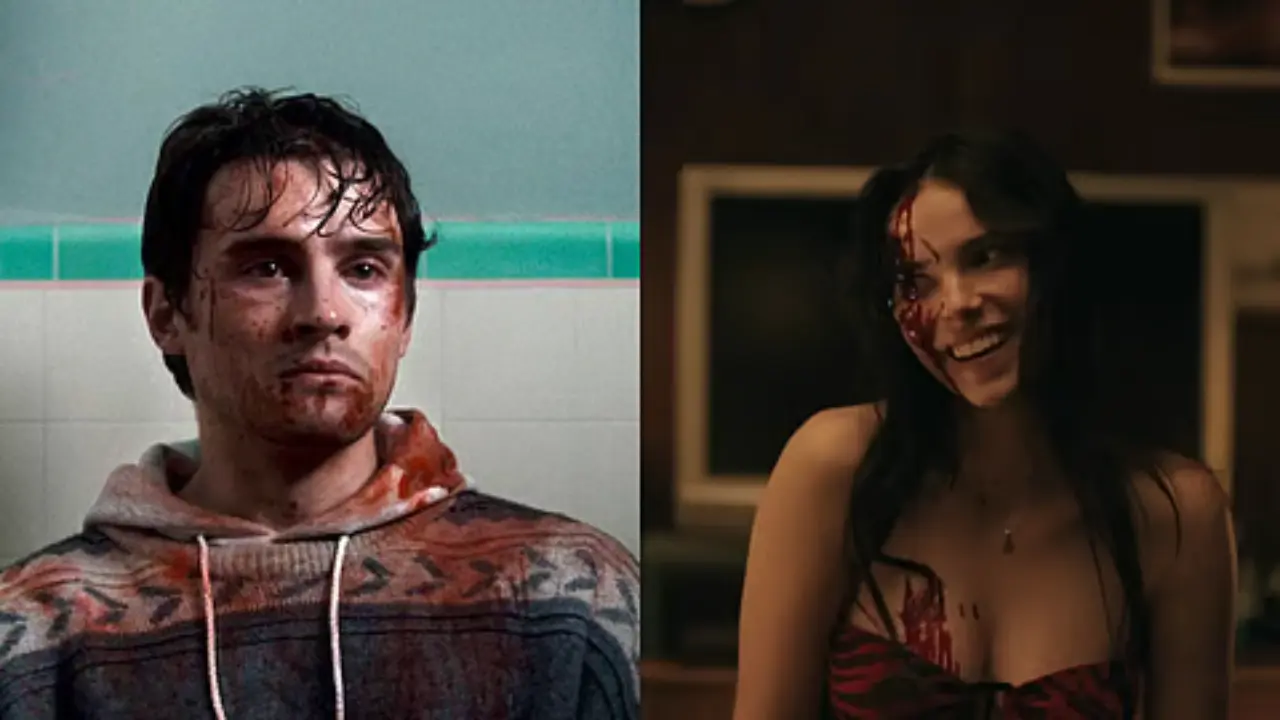
Stills from Obsession's trailer

Niharika Lal (BOMBAY TIMES; June 25, 2026)

Indian audiences are obsessed with Obsession. With earnings of over Rs. 91 crore, the Curry Barker directorial is the highest-grossing Hollywood film of 2026. According to box-office data, since its release, the film has not dropped below its first-weekend numbers.

Its momentum has continued to snowball, making it the third highest grossing Hollywood horror film in India. The top two spots are occupied by The Conjuring and The Conjuring 2.

The film’s non-stop run is also because of a larger trend. There has been a clear boom in the horror genre at the Indian box office over the past two years. Exhibitors say globally branded international horror films have set new benchmarks in production values, sound design and immersive theatrical experiences. But Obsession’s success is not just about horror. It is also about Gen Z. We take a look at what worked.

‘Great work gets a film to opening day. What happens after that is the audience deciding whether to recommend it to their friends’
Denzil Dias, Managing Director, Warner Bros. India, says, “Most films follow the same curve: a big weekend, a steady decline, and they’re done by Wednesday. Obsession is running in the opposite direction. A first-time director has made a film that genuinely unsettles audiences, with performances from Michael Johnston and Inde Navarrette that stay with you long after you leave the cinema. The foundation of everything is the film itself. Great work gets a film to opening day. What happens after that is the audience deciding whether to recommend it to their friends.”

He adds, “What drove that word-of-mouth? The experience. Horror is perhaps the one genre where cinema is genuinely irreplaceable. The jump scares, the collective gasp, the nervous laughter, someone screaming three rows behind you and the entire hall erupting together – you cannot stream shared dread. Someone watched it, then told five people. Those five told ten more. We started with a plan for 100 screens. The audience took it to over 800. That’s what happens when the cinema experience itself becomes the recommendation. That is cinema doing what only cinema can do.”

Continuing a trend seen last year, younger audiences have played a major role in driving the film’s success. So why has Obsession connected so strongly with Gen Z? Cinema experts say the film taps into anxieties that are deeply familiar to younger audiences – consent, clingy partners, insecurity and emotional dependency. These themes have sparked conversations online and offline, helping the film spread by word of mouth.

The growing demand has translated into theatrical business. Exhibitors have increased the number of shows week after week, responding to audience demand. They say the film has shattered the myth that movie theatres are becoming outdated for Gen Z audiences and that younger viewers would rather watch films at home.

‘HORROR FANS SHOW A DISTINCT PATTERN OF ENGAGEMENT AND LOYALTY’
Exhibitors say that for horror films, online buzz and virality are especially powerful. It’s no longer just about watching a new film — it’s about going to the theatre because everyone is talking about it.

Exhibitor Aamer Bijli, tells us, “From our view, horror fans show a distinct pattern of engagement and loyalty. Gen Zs are drawn strongly to horror because it offers novelty, edge and social currency. They watch with friends, talk about the jump scares, post reactions and often return for repeat viewings with a group. For them, the theatre becomes a social outing tied to the genre.”

‘WHEN A HORROR TITLE STARTS TRENDING, WE OFTEN SEE AN UPTICK IN OCCUPANCY’
The impact of social media on horror films is also becoming increasingly evident. Last year, Bijli told us, “Our data shows that when a horror title starts trending through Instagram/X reactions and YouTube trailer engagement, we often see an uptick in occupancy, along with stronger holdovers.”

‘GEN Z AUDIENCES ARE PRIORITISING CULTURAL RESONANCE AND AUTHENTIC STORYTELLING OVER SHEER SCALE’
Social aspect is also one of the biggest drivers behind the film’s sustained run, according to distributors and exhibitors.

Sanjeev Kumar Bijli, Executive Director, PVR INOX Limited, says, “Gen Z audiences are prioritizing cultural resonance and authentic storytelling over sheer scale. This film has sparked conversations, built communities on social platforms and turned cinema-going into a shared cultural moment. Obsession proves that distinctive voices and emotionally grounded narratives can deliver both critical relevance and commercial impact.”

Devang Sampat, MD, Cinepolis, says, “Obsession has completely rewritten the playbook for Hollywood films in India. While the horror genre generally performs well here, the film opened modestly and then grew stronger every weekend, defying every historical trend we track. Audiences are clearly hungry for intellectually mature storytelling over spectacle.”

He adds, “It has been our most-watched film over the last three weeks, even against local releases. The film proves that a brilliant script and pure psychological tension can outperform bigger movies when driven by strong word-of-mouth. Late-night weekday occupancies in metros are touching 90%. It’s historic.”

I did not get in this business to hurt the theatres-Ted Sarandos


The New York Times | BOMBAY TIMES (January 18, 2026)

Ted Sarandos, the co-chief executive of Netflix, sent shock waves through the entertainment world last month when his company announced a $83 billion deal to buy Warner Bros Discovery’s movie and TV business. The deal elicited a strong – and largely negative – reaction within Hollywood. It also upset the plans of Paramount, which had been aggressively pursuing a deal for all of Warner Bros. Paramount is still aiming to buy the company, launching a hostile bid and threatening a board fight.

Netflix wants to “win the box office,” Ted said, adding that Warner Bros films will retain the existing 45-day theatrical window.

In an interview to The New York Times, Ted explained that they had held a lot of assumptions that weren’t necessarily true and shared, “The general economics of the theatrical business were more positive than we had seen and (what) we had modelled for ourselves. I think we’ve got to take ownership of the idea that when people are excited to go out and see something, they go. You’ve seen some really nice upside at the box office this year. They saw it in our Stranger Things finale experience. You give people a reason to leave the house, they will gladly leave the house.”

‘WE WEREN’T IN THE THEATRICAL BUSINESS NOT BECAUSE WE HATED IT, BUT BECAUSE OURS WAS DOING SO WELL’
Discussing the harsh reaction to the deal in Hollywood, Ted Sarandos, Netflix’s co-chief executive said, “A lot of it was folks who questioned, rightfully so, our intent with theatrical because we hadn’t said anything about it. A lot of it was the emotions around that more than anything else. We had a lot of assumptions that weren’t necessarily true. We weren’t in the theatrical business not because we hated it. We weren’t in that business because our business was doing so well. I understand that folks are emotional about it because they love it and they don’t want it to go away. And they think that we’ve been doing things to make it go away. We haven’t.”

‘THEATRICAL BUSINESS IS OUTMODED FOR SOME’
In 2022, Ted stated, “We make our movies for our members, and we really want them to watch them on Netflix.”

The remark, made at a New York summit, drew headlines for its dismissal of the traditional theatrical model as outdated. Addressing if he regrets calling the theatrical model ‘outmoded,’ Ted said, “I said 'outmoded for some'. I mean, like the town that Sinners is supposed to be set in does not have a movie theatre there. For those folks, it’s certainly outmoded. You’re not going to get in the car and go to the next town to go see a movie. But my daughter lives in Manhattan. She could walk to six multiplexes, and she’s in the theatres twice a week. Not outmoded for her at all.”

‘Theatres are not a competition’
Speaking about the belief that streaming has reduced cinema attendance, Ted said, “I would say one of the other myths about all this is that we thought of going to the theatres as competition for Netflix. It absolutely is not. When you go out to see a movie in the theater, if it was a good movie, when you come home, the first thing you want to do is watch another movie. If anything, I think it helps, you know, encourage the love of films. I did not get in this business to hurt the theatrical business. I got into this business to help consumers, to help movie fans.”

Netflix's $83-billion Warner Bros Discovery deal sparks alarm among multiplexes


Warner Bros has a longstanding contribution to movie release calendars: MAI
Javed Farooqui (THE ECONOMIC TIMES; December 7, 2025)

Mumbai: The Multiplex Association of India (MAI) has raised concerns over Netflix's acquisition of Warner Bros Discovery's studio and streaming assets, warning that the growing trend of streaming platforms buying major studios does not bode well for the theatrical business.

Amazon's $8.5 billion takeover of MGM did not attract similar pushback because the studio, though modest, was operational at the time, and Amazon has since focussed on increasing its theatrical output. Amazon MGM Studios plans to release three to four films annually in India. Netflix, by contrast, has maintained a limited and selective approach to cinemas.

Netflix's $83 billion deal for Warner Bros Discovery, following the spinoff of the linear TV networks and Discovery+ into Discovery Global, is among the largest entertainment mergers in recent years. Its scale mirrors Disney's $71 billion purchase of 21st Century Fox in 2019.

MAI said Indian cinemas rely on a steady and diverse film slate to sustain a vibrant theatrical ecosystem. The takeover of a major Hollywood studio by a streaming company that has deprioritized theatrical releases poses a competitive and economic threat.

Kamal Gianchandani, president, MAI, said the Indian theatrical market thrives on choice, scale and cultural diversity and highlighted Warner Bros' longstanding contribution to release calendars.

"Cinemas in India are more than entertainment venues. They are cultural hubs and major economic engines. They support millions of livelihoods across production, distribution, exhibition, food and beverage and ancillary services," he said.

He added that Netflix has made its stance clear through its restrictive approach to theatrical releases. "If this acquisition proceeds, the risk is two-fold: a meaningful reduction in high quality content for cinemas and the potential for shortened or non existent theatrical windows. This would impact revenues, limit consumer choice and weaken the broader film ecosystem. A consolidation of this size requires careful scrutiny and MAI will continue to raise its concerns with regulators in India and abroad," he said.

Netflix said on Friday it expects to maintain Warner Bros' current operations and build on its strengths, including theatrical releases.

Multiplex executives privately admit the deal may have limited short-term impact in India because Hindi and regional films dominate the box office. Ormax Media data shows the 2025 box office reached Rs. 11,077 crore by October, up 24% from last year. Hollywood contributed 10% of the total, with Indian films accounting for the rest.

Hollywood remains a strong double-digit contributor for chains such as PVR Inox and Cinepolis, though Warner Bros Discovery's share is in low single digits. "While WBD's contribution in India is not very large, this merger will shake up global cinema in the years ahead. There is already strong opposition to the deal in the US," said a senior multiplex executive.

Netflix casts new spell to take over Warner Bros. Discovery in $83 billion deal


Warner Bros’ studios, HBO, its streaming app to move hands in cash-and-stock deal
THE ECONOMIC TIMES (December 6, 2025)

Streamer Netflix’s acquisition of the iconic Hollywood Studio Warner Bros. Discovery (WBD) will add muscle and sinews to its content offering, but experts said locking cricket rights that will be up for grabs in 2027 might be a gamechanger on the Indian subcontinent.

Netflix has agreed to acquire WBD in a landmark deal valuing the company at an enterprise value of $82.7 billion and an equity value of $72 billion, after WBD spins off its global television networks into a new listed entity, Discovery Global, giving the streaming giant control over one of Hollywood’s most well-known studios and creating a global entertainment behemoth.

Once the spin-off is completed in the third quarter of 2026, Netflix will take over the Warner Bros. film and TV studios, along with HBO and streaming platform HBO Max. Netflix expects $2-$3 billion in annual cost savings by year three and says the deal will be accretive to GAAP earnings per share by year two. The transaction is targeted to close in 12-18 months.

The deal has also drawn comparisons with Disney’s $71 billion acquisition of 21st Century Fox in 2019, with analysts noting that while the two transactions differ in scope, the Netflix–WBD combination moves Netflix closer to the studio scale Disney reached after the Fox merger.

Analysts say it remains unclear how the deal would affect India, though some note that a larger consolidated content catalogue could shape future licensing decisions.

A few industry observers cautiously add that the strengthened portfolio may, over time, prompt Netflix to reassess broader growth opportunities in the market, including whether to evaluate cricket rights when they come up for renewal in 2027, although there is no indication that the company is considering such a move at this stage.

“The Netflix-WBD acquisition is a watershed moment for global streaming and its ripple effects in India will be profound. Content consolidation will bring HBO’s prestige series and WBD’s blockbuster franchises under Netflix, reducing fragmentation and creating Netflix a premium destination for global hits. Licensing disruption is inevitable as existing deals with other platforms expire, paving the way for Netflix exclusivity. This will drive industry to recalibrate their strategies, focusing on sports rights, regional originals and ad-supported models. Competitive pressures will intensify, driving innovation in pricing, bundling and localized storytelling. This deal definitely accelerates India’s OTT evolution towards a more consolidated and consumer-centric ecosystem,” said PwC India partner and leader for media and entertainment Rajesh Sethi.

“This acquisition gives Netflix access to franchises it has historically lacked, reflecting a strategy similar to Disney’s past content acquisitions such as Marvel and Star Wars. The price is significant, and its impact in India may be limited because the audience for premium HBO content remains relatively narrow. In this market, meaningful scale is unlikely unless Netflix eventually pursues cricket,” said N V Capital managing partner Nitin Menon.

Netflix will pay $27.75 per WBD share, including $23.25 in cash and $4.50 in stock. The sale followed a competitive process involving Paramount Skydance and Comcast.

Reuters reported that preliminary bids in November valued WBD at close to $24 per share for the full group in Paramount’s case, while Netflix and Comcast bid only for the studios and streaming assets. Netflix later raised its offer to about $28 per share for the restructured perimeter.

WBD then enters exclusive talks with Netflix. Discovery Global will house CNN, Discovery, TNT Sports, free-to-air European channels and Discovery Plus, all of which remain outside the deal.

Netflix says the acquisition will provide more choice and greater value by combining complementary strengths. Warner Bros.’ studios and HBO’s premium programming will deepen Netflix’s catalogue, and Netflix plans to preserve the studio’s existing operations, including theatrical releases. The combined slate is expected to boost engagement and revenue, expand Netflix’s production capacity and create more opportunities for creators.

Netflix enters the deal in a position of financial strength. It reported about $39 billion in 2024 and has projected $45 billion in revenue in 2025, has a market capitalization of about $437 billion and trades near $103 a share. Its gross debt is about $14.5 billion, and has cash and equivalents of $9.3 billion. WBD posted about $39 billion in revenue, has a market cap of around $60.8 billion, trades near $24.50 a share and carries gross debt of about $34.5 billion with $4.3 billion in cash, equivalents and restricted cash.

Netflix co-CEO Ted Sarandos said the combined libraries would strengthen its mission to entertain the world, citing classics such as Casablanca, Citizen Kane, Harry Potter and Friends.

“This acquisition brings together two pioneering entertainment businesses, combining Netflix’s innovation, global reach and best-in-class streaming service with Warner Bros.’ century-long legacy of world-class storytelling,” he noted.

“This acquisition will improve our offering and accelerate our business for decades to come,” added Greg Peters, co-CEO of Netflix.

WBD CEO David Zaslav said the merger would extend Warner Bros.’ century-long storytelling legacy. “By coming together with Netflix, we will ensure people everywhere will continue to enjoy the world’s most resonant stories for generations to come,” he said.

The deal will face regulatory review in the United States and Europe. Analysts say the combination of two major streaming services could draw scrutiny. Some have suggested earlier that a Paramount Skydance bid for the entire WBD group might have had a smoother path because it did not merge two large global streamers.

Netflix has about 302 million subscribers globally and HBO Max has about 128 million (including discovery+), giving the combined services roughly 430 million users.

Larry Ellison, co-founder of Oracle, is a key financial backer of Paramount Skydance through his son David Ellison, who took control of Paramount after Skydance’s 2024 merger.

Analysts said Ellison’s longstanding ties to Donald Trump and his political donations could have eased regulatory prospects, although there is no public indication of any official preference.

The restructuring will affect WBD’s India operations. Linear TV channels will move to Discovery Global. WBD had delayed an HBO Max launch in India and instead licensed HBO and Warner Bros. content.

HBO content exited Disney Hotstar in 2023 and moved to JioCinema, now part of the JioStar-led JioHotstar platform. JioStar pays $20 million per year for WBD content. Analysts expect HBO titles to return to Netflix once the multi-year deal ends.

India is not expected to see a major immediate impact from the deal. Netflix has over 20 million subscribers in the market, but HBO and Warner Bros. titles alone are unlikely to shift the competitive landscape because cricket remains the key driver of streaming growth in India and is controlled by JioHotstar, not Netflix.

While HBO series such as Game Of Thrones, Succession and The Last Of Us and Warner Bros. films like Oppenheimer and Barbie have strong followings, their return to Netflix will not materially alter market dynamics. Netflix could make a bid for cricket in India when it comes up for renewal in 2027.

Hollywood studios shift from acquiring films to co-owning IPs in Indian productions to unlock new revenue streams


Global film studios shift from acquiring films to co-owning IPs in Indian productions to unlock new revenue streams
Javed Farooqui & Rajesh N Naidu (THE ECONOMIC TIMES; October 21, 2025)

Foreign studios are stepping up their India push as box office collections rebound and streaming reach expands. In what industry executives call Hollywood’s “second wave” in India, global players that once focused on acquiring and distributing Hollywood films are now moving to owning/co-owning local film IPs, shifting from a low-risk distribution model to investing in Indian-language productions that offer deeper presence and long-term value.

Amazon MGM Studios will release three to four Indian films theatrically every year starting 2026, with each title later premiering on Prime Video. The move aims to blend theatrical scale with streaming reach.

“While our core business is streaming, we believe in the theatrical window and the magic of theatres,” said Nikhil Madhok, head of originals, Prime Video India and Amazon MGM Studios at an industry event recently. “Depending on the kind of film that we are producing, we take a joint call with our creators in terms of which project can go to theatres first.”

Warner Bros. Pictures has signed an exclusive five-film partnership with Bhanushali Studios and JOAT Films to develop Indian adaptations of classic Warner titles. The studio will provide IP and global distribution support, while Indian partners lead creative adaptation and production.

Universal Studios, part of Comcast Corporation, is reportedly planning an indoor theme park in India near Delhi. At the same time, it has held early‐stage discussions with Farhan Akhtar and Ritesh Sidhwani founded Excel Entertainment about a potential stake partnership, though no formal deal has been finalized.

“Global studios are renewing their focus on Indian cinema, moving from distribution to local production,” said Nitin Menon, managing partner, NV Capital.

“Amazon MGM’s Superboys Of Malegaon, Nishaanchi and Mirzapur mark a shift toward theatrical storytelling. Warner Bros.’ partnership, coinciding with Paramount’s potential acquisition, could unlock capital for deeper expansion. Universal may follow with co-productions as Hollywood recalibrates its India playbook. Theatres are back in focus, though Netflix remains committed to digital-only releases.”

According to Ormax, the cumulative box office for 2025 releases stands at Rs. 9,409 crore till September, up 18% from a year ago. India’s OTT universe now includes 601 million users, with 148 million active paid subscriptions through direct payments, telecom bundles and aggregators.

Rebuilding the market
After the pandemic slump, multiplex admissions and box office collections have rebounded across languages. Streaming adoption has accelerated, creating a dual-market dynamic where films earn from both theatrical runs and platform licensing.

For studios, local productions offer a way to build IPs with international potential and unlock new revenue streams from music, merchandising and streaming. Collaborating with Indian producers also helps ease distribution challenges and brings valuable market insight.

“Hollywood’s second wave in India is about reducing risk, not planting flags,” said Adi Tiwary, a Sydney-based producer and consultant. “The trend is to build with Indian partners, use library IP to de-risk, and let theatrical and streaming work in tandem. Hollywood has learned that India rewards local muscle and disciplined windowing.”

Cautious comeback
“They’re re-entering cautiously, focusing on mid-budget, locally rooted films rather than big productions. With cost rationalization underway in the US, it’s about testing the waters and understanding audience shifts,” said Neeraj Vyas, CEO of Bhanushali Studios, about the Hollywood studios’ second coming.

A decade ago, Hollywood’s presence in India largely revolved around distribution. Studios like Disney UTV and Fox Star acquired completed films such as Race, Kick and Tamasha for high minimum guarantees.

Today, global studios are stepping into the creative process, co-developing stories and co-owning IP with Indian partners, a shift toward building scalable franchises and retaining long-term rights.

“The foreign studio model has matured from buying content to co-owning it,” said Suniel Wadhwa, co-founder and director, Karmic Films. “Streamers like Amazon and Netflix set that template through partnerships such as Amazon–Maddock and Netflix–Balaji. Now global studios are following suit, as seen in Warner Bros. Discovery’s collaboration with Vinod Bhanushali to create original Indian IPs for global audiences. These alliances are no longer about one-off films but about building exportable Indian story worlds.

Hollywood movies deliver a hit for Warner Bros in India

The Conjuring: Last Rites

Studio doubles India market share this year as its bets on originals and franchise movies pay off amid poor run of Hindi films
Rajesh N Naidu (THE ECONOMIC TIMES; September 19, 2025)

Hollywood films have emerged handsome winners in 2025 outshining mainstream Bollywood films in the Indian box office. And the big hitters have been F1: The Movie, Mission Impossible: Dead Reckoning, Jurassic World: Rebirth and the latest, The Conjuring: The Last Rites.

Interestingly, in this smooth ride of Hollywood films in 2025, The US-based Warner Bros. Pictures saw its market share in the India collection jump two times in 2025.

“The right balance of mid-and-small and big films across diverse genres has worked for us,” said Denzil Dias, VP and managing director, India Theatrical, Warner Bros. Discovery, the parent company of Warner Bros. Pictures.

Till date, in 2025, Hollywood films have collected more than Rs 862 crore in India, half of that for Warner Bros. movies, accounting for 24% in 2024.

“We want to build an audience base. They will come for blockbuster films. But we also want mid-and-small-budget to work in theatres,” said Dias of Warner Bros. Discovery.

Dias stressed that after the pandemic audiences have become selective in their theatrical outings, making filmmaking far more serious and responsible affair. “But the silver lining is that audiences are willing to pay a premium price to watch good films in theatres,” he added.

In 2025, Warner Bros. Pictures films such as F1: The Movie, Final Destination Bloodlines, Superman, Weapons, A Minecraft Movie, Dune: Part Two, Sinners and The Conjuring: Last Rites have performed noticeably well in India, taking the cumulative collection of its films to Rs 432 crore till date.

“For us, film distribution and marketing are not just about releasing films in the right theatres and getting the right number of shows. It is also about releasing films in the right language,” explained Dias. 

“We were clear about releasing Jurassic World: Rebirth in dubbed Hindi version. Today, 40% of our collection in India came from the Hindi dubbed version of the film,” he shared. Universal Pictures, which distributed Jurassic World: Rebirth, has a tie-up with Warner Bros. Picture to distribute films in India.

Two things have worked well for Warner Bros. Pictures. The studio has taken bold calls by backing mid-and-small originals such as Weapons and Companion, which paid off. Another aspect is handling of its franchise films.

“Ultimately only storytelling works and audiences smell a good film promptly. We have nurtured our franchise films. We identified filmmakers who were passionate about our franchise films. So, they made these films like a fan, which worked for these films,” Dias said.

In India, Warner Bros. Pictures has been collaborating with local influencers to review their films in Hindi which helped market their films well and reach a wide audience.

“We must understand what the audience wants. We sensed an opportunity in audiences’ resonance with games-related IPs. That is how the idea of the Minecraft movie germinated,” pointed Dias.

In the coming months, the studio has two distinct releases: One Battle After Another and Bugonia. “Today, even a small film like Bugonia can be an event film if it brings like-minded people into theatres,” explained Dias.

Dias is quite optimistic about the performance of Hollywood films in India in the coming months. “India is a movie-loving country. This is a big positive. It is about being authentic by creating right awareness and good stories. Audiences largely reward such an authentic approach,” he said. 

Top Five hits for Warner Bros. Pictures (Rs crore)
FilmIndia Collection
F1: THE MOVIE125
THE CONJURING: LAST RITES100
FINAL DESTINATION BLOODLINES74.1
SUPERMAN59.5
MINECRAFT15.6
WEAPONS11.3

Nude and intimate scenes in Adrien Brody’s The Brutalist gets censored for India release

Nude and intimate scenes in Adrien Brody’s The Brutalist gets censored for India release

Ahead of The Brutalist’s release in India, CBFC instructs the makers to snip two minutes of the film, including some intimate scenes
Mohar Basu (MID-DAY; February 24, 2025)

Adrien Brody’s The Brutalist, which has secured 10 nominations at the upcoming 97th Academy Awards, is readying for its India release on February 28. However, the Central Board of Film Certification (CBFC), which has been intensely scrutinising every international release, from The Apprentice (2024) to Conclave, has pulled out its scissors for Brady Corbet’s directorial venture too. It has been learnt that over two minutes of the period drama have been trimmed by the CBFC.

The Brutalist depicts the struggles of Hungarian Jewish architect Laszlo and his wife, played by Brody and Felicity Jones respectively, as they rebuild their lives in America after the Second World War.

An insider tells mid-day, “There is an intimate scene between Laszlo Toth and a sex worker, which has been cut short. The nudity has been blurred and the sexual acts, snipped. In another intimate sequence, the visual of the genitals has been clipped. There was a scene where Laszlo is watching a pornographic clip; that has been deleted. Nearly two-minute footage of the film has been removed, and a minute of it has been replaced after the CBFC viewing.”

In addition, multiple sequences, where the characters are shown smoking or consuming liquor or drugs, carry the required disclaimers.

Warner Bros, which is bringing The Brutalist to India, has agreed to the changes as it wants the film to be released in the Indian market. The period drama has been widely acclaimed, and has earned nominations in three major categories—Best Picture, Best Director, and Best Actor—at the Oscars. 

Joker: Folie a Deux set for a huge opening in India

Joaquin Phoenix’s Joker: Folie à Deux looks at huge opening in India

With Joker: Folie à Deux’s advance booking opening a month before its Oct 2 release, trade says the move signals India is an important market for Hollywood
Mohar Basu (MID-DAY; September 24, 2024)

This year, Bollywood doesn’t have a big release slated for October 2. But cinephiles have already pencilled in the holiday as their date with Joaquin Phoenix’s Joker: Folie à Deux. Knowing the anticipation around Todd Phillips’ directorial venture, Warner Bros Discovery seems to have found a way to maximise early ticket sales. While films usually open their advance booking a week ahead of release, the studio opened the counters on September 2, a month ahead of its October outing. Local trade experts suggest that the Hollywood studio is capitalising on the absence of big domestic films. 

To the suits at the studio, the early access is their effort to provide Indian audiences the same experience that is enjoyed in international markets.

Denzil Dias, VP & Managing Director, India Theatrical, Warner Bros Discovery, states, “To provide fans with ample opportunity to secure their preferred seats, we have made tickets available well in advance. This early access aligns with international practices, offering Indian fans the same experience enjoyed by audiences worldwide.”

Trade expert Akshaye Rathi views the development as another sign that India has become an important market for Hollywood. He cites the example of Oppenheimer’s (2023) incredible run in India, making the country among the film’s top five markets.

“Hollywood has always looked at India seriously for the sheer population and the market size that they get. Avengers: Endgame [2019] was among that year’s top three grossers in India. So, now, many studios are all the more focused on enhancing their market share in India. Sony Pictures and Disney have become aggressive with their promotional campaigns,” he explains.

In the month since Stree 2’s runaway success, the box office hasn’t seen a Bollywood hit. Trade analyst Taran Adarsh points out that Joker: Folie à Deux has the potential to end the dry spell in urban centres. “It’s too early to give projections, but Joker will [open] huge. The only film that could be a competition is Devara - Part 1.”

The Telugu action drama stars Jr NTR, Saif Ali Khan and Janhvi Kapoor. Rathi states there is little chance of Joker hampering the September 27 release’s box-office prospects.

He notes, “It is a fact that Indian movies are not doing as well as they should. But I don’t think Hollywood cannibalizes our business. In fact, [films] doing good numbers encourages more theatres to flourish. Devara and Joker have different audiences; the former is [for] the masses and Joker has an urban reach.”

CBFC refuses to divulge information about Monkey Man’s release in response to RTI application

Kaala bandar that no one can see?

CBFC refuses to divulge information about Monkey Man’s release in response to RTI application; trade sources say Patel’s film won’t release or stream in India
Mohar Basu (MID-DAY; May 11, 2024)

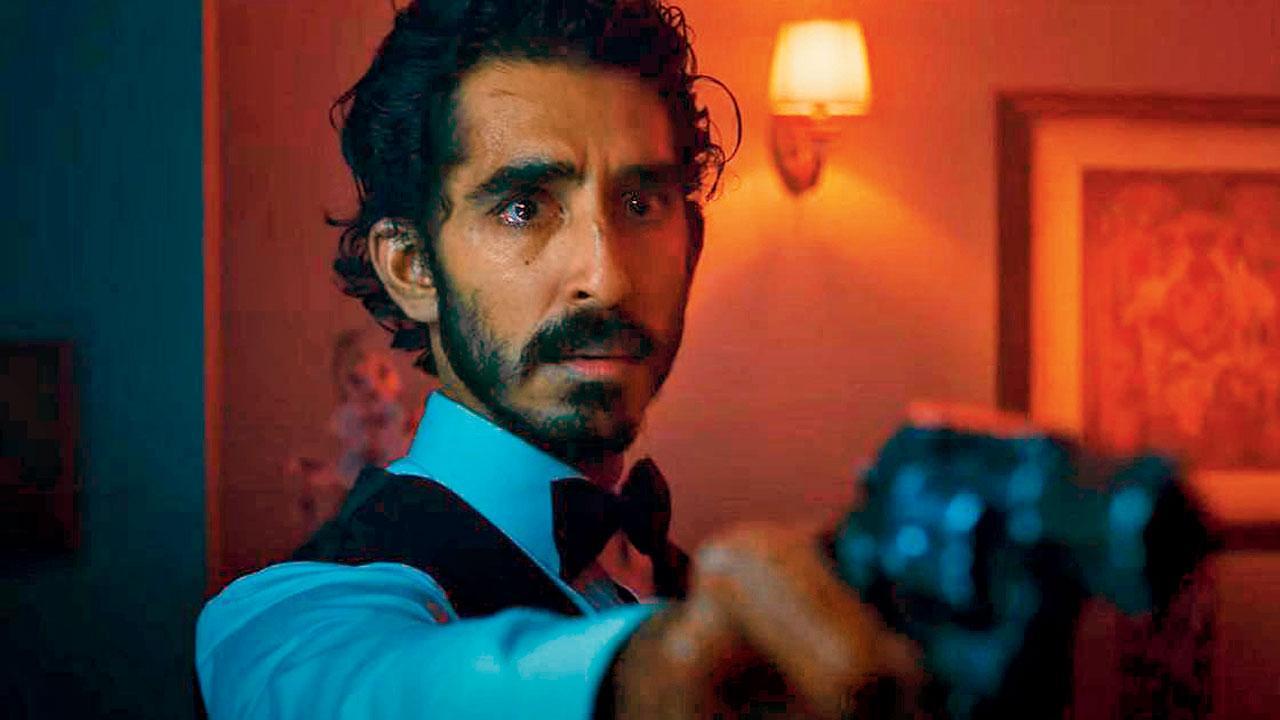
It has been over a month since Monkey Man opened in US theatres, and subsequently was available on video-on-demand platforms internationally. But Dev Patel’s maiden directorial venture has yet to arrive in Indian theatres. Now, it has come to light that after the initial plan of April 19 India release did not materialise, an application was filed under the Right to Information (RTI) Act, seeking that the decision of Central Board of Film Certification’s (CBFC) Examining Committee and Revising Committee be made public.

On May 9, the request was dismissed, with the CBFC stating in its reply, “There is no larger public interest that warrants the disclosure of such information, and hence the requested information cannot be provided.”

A copy of the CBFC’s response to the RTI application has been doing the rounds of social media since Thursday. As soon as the news reached the film industry, trade circles were abuzz with how Patel’s action thriller won’t see the light of day here.

A trade insider, on condition of anonymity, told mid-day, “Since its theatrical release is in dispute, a CBFC clearance will be required to even stream it on OTT platforms in India. So, in all likelihood, Indian viewers might not even be able to catch it online. One way ahead could be to take the matter to court, but since India is not its main market, it’s highly unlikely that Universal Pictures and Warner Bros will take that step.”

The film, fronted by Patel and also starring Sobhita Dhulipala, examines corruption in India.

Warner Bros. Discovery sees highest ever box office collections in India, says country head Arjun Nohwar

Warner Bros Discovery’s India Show Continues to be Super Hit

Arijit Barman (THE ECONOMIC TIMES; May 3, 2024)

Riding on the success of Barbie, last year’s biggest movie that grossed over $1.5 billion in box office collections worldwide, including being the “highest ever non-dubbed” English film in India, Warner Bros. Discovery’s (WBD) stellar run seems to continue this year with theatrical hits like Godzilla X Kong: The New Empire already crossing Rs 100 crores in India collections, making it the highest grossing Hollywood film in the first four months of 2024.

The top 3 Hollywood films for 2024 in India including Kung Fu Panda 4 and Dune: Part Two are all from the WMD stable or are distributed by the company, said its top executive of the region.

Together the trio have already grossed over Rs 175 crores in theatres in the country so far. These films made it to the top 10 films for the month of March, as per Ormax, a media consulting firm. This, in a market, where Hollywood productions (including dubbed versions) contribute just a tenth of all-India films.

“With people coming back in droves to theatres, we are seeing 100 percent increase in box office collections for us, and it's the highest ever that WBD’s theatrical and distribution teams in India has ever recorded in terms of revenues,” said Arjun Nohwar, GM, South Asia, Warner Bros. Discovery.

In 2023, with Rs 630 crores gross box office (GBO) collections for Warner Bros. and Universal films, the company cornered over half of the market share. Building on that momentum, though still early in the year, in the first 4 months WBD has dominated the space with more than 90% of the market share in India with Rs 200 crore GBO to date.

Dubbing popular titles into regional languages have helped WB & Universal films to appeal to masses. In 2023, close to 60% of box office billings for Fast X came from dubbed versions while the original English version contributed 41% of sales. For Godzilla x Kong, 21% of sales have come from Tamil Nadu alone, when there were no Tamil films in the Top 10 movies of March. "The popularity of these films is not restricted to the theatres,” said Nohwar. “These films can also be watched on the Jio Cinema platform when released subsequently.”

Instead of launching its own streaming service Max (formerly HBO Max) in India, last year WBD signed a content licensing agreement till 2026 with Jio Cinema last April to showcase its original movie and shows catalogue that includes Succession, Game Of Thrones, Lord Of The Rings and the Harry Potter series among others on Reliance’s app. The development came a month after WBD parted ways with its long time digital partner Disney+ Hotstar. Earlier in 2020, HBO ceased to exist as a linear movie channel across the pay TV universe in the Indian subcontinent.

Despite the theatrical successes of its international movies, WBD is not keen to immediately revive its production arm in one of the largest movie markets in the world after an unsuccessful attempt in 2010-11. Nohwar, however, said it cannot be “ruled out in the near future.”

Following the 2022 spin off of Warner Media from AT&T and merger with Discovery Inc, the priority has been on profitable growth. That influenced the original decision of launching Max – the 2nd most profitable streaming service globally after Netflix -- in India on hold and opting for a strategic content partnership with Jio Cinema instead to tap into their “400 million plus subscriber base.”

Nohwar however remains non-committal if the company is planning to launch Max locally once the time bound agreement ends with Jio, simply saying we will “evaluate” what is the right India thesis for us -- Launching Max, or a partnership or “ by continuing to license.” The challenge he says is to feed a platform with enough local content for it to be a local success, but simultaneously achieve scale and a healthy balance sheet.

WBD, in India, is a unique media conglomerate as it straddles 5 different businesses - more than any of its global peers present in the country. Its largest vertical is the network operations that beams 19 feeds or channels such as Discovery Channel, Animal Planet, TLC; Kids channels like Cartoon Network, Pogo, Discovery Kids; Sports broadcast with Eurosport and its News platform, CNN.

The second vertical is the streaming platform, discovery+ third is the theatrical business that releases, markets and distributes Warner Bros. and Universal Studios movies, while the fourth is the TV distribution and licensing business that licenses shows to OTT players like Jio Cinema. Merchandising or Consumer Products, and Gaming is the smallest but fast growing vertical.

“Our greatest strength is our ability to monetize our collection of content in multiple ways through a broad distribution strategy designed to optimize asset value. For instance, we have continued to leverage partnerships locally with players such as Jio, Tata Play Binge and Dish TV Watcho to expand the reach and engagement of the discovery+ platform”, adds Nohwar.

The company continues to invest in Indian originals for their linear and streaming platform, discovery+. “Our investment in Indian originals is geared towards boosting engagement, expanding market share and solidifying our position as the leading network for non-fiction content in India”, says Nohwar. “It’s equally strong even across the network on account of the large global Indian diaspora.”

Talking about media consolidation around the world including India, Nohwar said a lot of this has to do with concentration of capital and the flight of some of that across different markets. Disney chose to consolidate its global operations and as a part of that merged its India business with Mukesh Ambani led Viacom 18.

“India has seen its own fair share of mergers closing and some of them as near misses (Read: Zee-Sony). When we look at the Indian landscape, we will look at opportunistic partnerships that would help us to profitably expand our presence in the market.”

Monkey Man leaked online on Monday night amid uncertainty over its India release

Kya hai iss bandar ke andar?

Monkey Man leaked online on Monday night amid uncertainty over its India release; film’s team pulls down all links by Tuesday evening
Mohar Basu (MID-DAY; April 25, 2024)

On Tuesday, while believers celebrated Hanuman Jayanti, social media was abuzz with Dev Patel’s Monkey Man. While uncertainty prevails around the India release of Patel’s maiden directorial venture, it won wide acclaim on its US release earlier this month and is now available on video-on-demand platforms in the US. Consequently, pirated copies have surfaced online. Sources tell us that the film’s pirated link was leaked on late April 22, and was all over social media by the next day.

A source reveals that the Warner Bros team, which manages Universal Pictures’ releases in India, swooped into action on Monday night itself. “But it took the team more than 12 hours to find the source link. After the first link was pulled down by Tuesday afternoon, it was circulated by people on Google Drive. It wasn’t until 8.30 pm on Tuesday that all links were successfully pulled down. Several accounts that had shared the link on X have been sent copyright violation notices by the micro-blogging site.”

Monkey Man sees Patel play the central character, who sets out on a quest to avenge his mother’s death at the hands of corrupt leaders and emerges as a defender of the marginalized.

The source adds, “The film has been awaiting a censor clearance in India since March. While the extreme violence is a concern, many real-life incidents have been depicted, making it a sensitive release in the election year.”

Warner Bros Discovery puts HBO Max India launch on indefinite hold


Gaurav Laghate (THE ECONOMIC TIMES; August 22, 2022)

Warner Bros Discovery has put the plans to launch popular American subscription video-on-demand (SVOD) service HBO Max in India on hold, even as the company is looking at cost-cutting measures globally and working on merging Discovery+ with HBO Max in the existing markets.

The move has prompted the India content head of HBO Max, Saugata Mukherjee, to quit within one year of joining.

“There is no clarity on what Warner Bros Discovery is planning around HBO Max in India. Earlier, the plan was to launch in 1-2 years and the content team had started working on some great projects. Now they are not even sure if they will launch a service in India,” said a senior executive with direct knowledge of the developments. “All we were told is that it will not launch till the end of 2024. In a fast-changing OTT world, two-years is a very long time.”

Mukherjee, who had joined as content head of HBO Max last year in November, is expected to go back to Sony LIV. He remained unavailable for comment.

“Saugata has decided to leave the company. He is an incredibly talented leader, and we wish him the very best in his future endeavours,” a company spokesperson told ET.

When asked about the company’s plans for India, a company spokesperson replied, “The intent is to launch a combined streaming service, including in key Asia-Pacific territories in 2024.”

Earlier in June, Arjun Nohwar was appointed as GM, Warner Bros Discovery for South Asia. Prior to this, he was responsible for the launch of HBO Max in India.

The changes at the company have stemmed from Warner Bros.’ merger with Discovery Communications, after the former was spun off from AT&T.

“It’s a major miss for the Indian content creators,” said a top producer, who was developing a series for HBO Max in India. “It’s a tough industry and we were working hard for the last nine months. In our business, it’s a long time. Just because Netflix and a few other international OTTs have not been able to crack the Indian market, doesn’t mean that India is not a good country to work in. It's been unfortunate that their strategy changes every week.”

In June, after the merger got regulatory approvals, company’s CEO and president David Zaslav put in place a slew of cost cutting measures across the globe, to save $3 billion, which has resulted in the exit of many HBO old timers globally.

Earlier this month, the company laid off around 70 workers, or 14% of its workforce, at HBO and HBO Max. The company had also shut down the CNN+ streaming service in the US within a month of the launch, which cost it around $300 million.

Globally, the company has done massive restructuring, which has resulted in a shakeup of the entertainment industry in the US. These include the cancellation of the movie, ‘Batgirl’ and several shows.

In Soviet-era flashback, Russia theatres turn to pirate screenings

The Oktyabr movie theater in Moscow. Ticket sales to see films in Russia were reported to have fallen by about half in March, compared with the same period last year.

THE TIMES OF INDIA (May 3, 2022)

Since the invasion of Ukraine, Hollywood’s biggest studios have stopped releasing movies in Russia, and Netflix has ceased service there. But recently, some of the companies’ films have started appearing in Russian movie theatres — illegally. The screenings are reminiscent of the Soviet era, when the only way to see most Western films was to get access to a pirated version. Whereas those movies made their way to Russians in the form of smuggled VHS tapes, today, cinemas in the country have a simpler, faster method: the internet. Numerous websites offer bootleg copies of movies that take minutes to download.

Some theatres in Russia are now openly screening pirated movies; others are being more careful, allowing private individuals to rent out spaces to show films, free or for a fee. One group, for example, rented out several screening rooms at a theatre in Yekaterinburg, then used social media to invite people to buy tickets to watch “The Batman.”

In Makhachkala, capital of the Dagestan region, a movie theatre is screening “Don't Look Up”; and in Chita, a city near the border with Mongolia, people can watch “Turning Red,” the animated film from Disney and Pixar.

These surreptitious screenings are the latest attempt by theatres in Russia to survive after US studios like Disney, Warner Bros and Paramount left the country in protest. Before the war in Ukraine, movies produced in the US made up about 70% of the Russian film market, according to state media.

But despite the attempts to draw viewers, Russians are barely going to the movies. Theatres saw ticket sales fall by about half in March, compared with the same period last year, according to the country’s Association of Theatre Owners.

Artem Komolyatov, 31, a video game producer in Moscow, noticed the shift when he and his wife went on a Friday date to the movies a few weeks ago. They chose “Everything Everywhere All at Once,” a film from American studio A24, which stopped releasing films in Russia in mid-April. “But, there were only three other people there besides us,” he said. “We went at 8pm (local time) on a weekend. Usually the theatre is full.”

Given the dearth of viewers and of content, the Association of Theatre Owners predicted that at least half the theaters in Russia would go out of business in the next two months.

Even if that prognosis is true, history has shown that films will reach audiences with or without legal channels. Decades ago, Soviet citizens gathered in empty office spaces, living rooms and cultural centers to view pirated copies of Western classics like “Rocky,” “The Terminator,” and “9 ½ Weeks” that had made their way behind the Iron Curtain.

Hollywood stops film releases in Russia after its invasion of Ukraine; music concerts cancelled

Hollywood bats for Ukraine

BOMBAY TIMES (March 2, 2022)

Following Russia’s invasion of Ukraine, many production houses have halted their planned releases in the country. Hollywood studios Disney, Warner Bros, and Sony Pictures Entertainment said they would pause theatrical releases of upcoming films in Russia in response to its invasion of Ukraine and the unfolding humanitarian crisis.

“Given the unprovoked invasion of Ukraine and the tragic humanitarian crisis, we are pausing the release of theatrical films in Russia, including the upcoming Turning Red from Pixar,” a Disney spokesperson said in a statement, adding, “We will make future business decisions based on the evolving situation. In the meantime, given the scale of the emerging refugee crisis, we are working with our NGO partners to provide urgent aid to refugees.”

Within hours, Warner said it would pause this week’s release of The Batman in Russia. “In light of the humanitarian crisis in Ukraine, Warner Media is pausing the release of its feature film The Batman in Russia. We will continue to monitor the situation as it evolves. We hope for a swift and peaceful resolution to this tragedy,” a spokesperson for the studio said in a statement.

After this, Sony followed suit. “Given the ongoing military action in Ukraine and the resulting uncertainty and humanitarian crisis unfolding in that region, we will be pausing our planned theatrical releases in Russia, including the upcoming release of Morbius,” the studio said in a statement referencing the SpiderMan spinoff slated for early April.

Over the weekend, the Ukrainian Film Academy created an online petition that called for an international boycott of Russian cinema and the Russian film industry following the invasion.

Russia is a significant market for Hollywood, accounting for $601 million in box office in 2021, or about 2.8% of worldwide ticket sales, which totaled $21. 4 billion last year, according to reports.

MUSICIANS CANCEL CONCERTS IN RUSSIA
Several concerts planned in Russia and Ukraine have also been cancelled due to security reasons. Louis Tomlinson announced on February 28 that he is cancelling his upcoming tour shows in Moscow and Kyiv. He said, “Due to the recent events in Ukraine, I have to announce that my tour shows in Moscow and Kyiv are cancelled until further notice,” he wrote on Twitter.

American rock band Green Day also decided to cancel its concert in Moscow and said, “With heavy hearts, in light of current events we feel it is necessary to cancel our upcoming show in Moscow.”

Other musicians and groups that have cancelled their concerts in Russia include Yungblud, AJR – all showed support for Ukraine while announcing the cancellations.

As per reports, performances by several Russian ballet companies and musicians have been cancelled across US and UK,as part of the global boycott of Russia following its invasion of Ukraine.
---------------------------------
MID-DAY (March 2, 2022)

As per the Hollywood Reporter, Warner Bros has pulled The Batman from its Russian release calendar in the aftermath of Russia’s continuous invasion of Ukraine. A spokesperson confirmed the news in a statement.

The Robert Pattinson-starrer was to release on March 3 in Russia in accordance with the film’s global roll-out. The decision has been taken despite Russia being a lucrative market for Hollywood, with Sony’s Spider-Man: No Way Home earning more than $44.5 million to date since opening in December.

Since the attack in the last week of February, Hollywood releases like Joe Wright’s Cyrano and Paramount’s The Godfather 50th Anniversary released in Russia. The decision to continue to send films to Russia sparked conversation over the weekend. 

Disney became the first big Hollywood studio to hit the pause button on releasing its movies in Russia as it cancelled the March 10 release of the comedy, Turning Red. The statement regarding The Batman quickly followed. 

Sony followed by announcing that it won’t release Morbius in Russia next month. The Jared Leto-starrer was due on March 24 in the country. The Motion Picture Association has also reportedly backed “the international community in upholding the rule of law and condemning Russia’s invasion of Ukraine,” as per a statement.

Fenil's Bollywood Talk # 684

MIMI LEAKS ONLINE; FILMS TO FINALLY RELEASE IN CINEMAS FROM FRIDAY, JULY 30!

A lot of films have made their way online since the lockdown started in March 2020. Mimi, which was supposed to release on July 30, seemed like any other digital release. However, in the afternoon of Monday, July 26, media, trade and industry got shock when it came to light that the film leaked on the internet! With no other option, the film’s release was preponed and it came out on Netflix and Jio Cinema on the same day in the evening! Thankfully, the film got glorious reviews from all quarters and it took away a lot of negativity. But this sort of incident scared everyone.

There are reports that Netflix has not taken this breach lightly and has decided to renegotiate the remuneration that it was offering to the producers. Thus, from now on, every producer would remain doubly cautious because a leak could lead to a lesser pay for them from the streaming giants.

Mimi stars Kriti Sanon in the leading role along with Pankaj Tripathi and Sai Tamhankar. It is directed by Laxman Utekar, who last made Luka Chuppi, one of the surprise hits of 2019. The film is a story of a girl aspiring to be an actress who decides to go for surrogacy to earn quick bucks. Almost everyone was unanimous that had this film been released in cinemas, it would have been a huge success. But imagine if Mimi had leaked 4 days before its theatrical release? The damage would have been devastating. With a digital release, Netflix could at least immediately put it out so that as many viewers as possible could view the film legitimately.

Meanwhile, Warner Bros decided last weekend that they’ll start releasing their films in cinemas. Ideally, any studio would want that both the key centres – Mumbai and Delhi – should have cinemas operational and only then it makes sense to release a film. But the government in Maharashtra is going slow with the reopening. Hence, hoping that Mumbai would open up soon is not a great idea. Hence, everyone was hoping that at least the Delhi government would restart theatres since the cases there are negligible. The studios waited a lot and finally, Warner decided that they’ll release some of its films even if Delhi is shut. Thankfully for them, the Delhi government on Saturday, July 24, gave the go-ahead to cinemas to reopen from July 26.

Now only Maharashtra, Tamil Nadu and West Bengal are the key markets that are shut. The first film that’ll be released is Mortal Kombat, on Friday, July 30. It did release in India on April 23 but only in South India as the rest of the country was shut. This time it’ll be released in places where it didn’t last time but only in English and Hindi. This would be followed by the release of The Suicide Squad. It is releasing on August 5, the same day as it releases in the USA and other markets. Finally, the horror film The Conjuring: The Devil Made Me Do It will be released on August 13, in Independence Day week.

Today, Universal Pictures announced that Fast & Furious 9 would storm into cinemas on August 19. It is a big film and it’ll, however, make it to the big screen only if Mumbai is open. Hence, the exhibitors are still hoping that the Maharashtra government would understand their grievances and finally give the much needed go ahead.

Fenil's Bollywood Talk # 670

RADHE’S HYBRID RELEASE PLANS STUNS THE INDUSTRY
 
Almost all Hindi films scheduled for release in April have been pushed ahead as the second wave of Coronavirus has wreaked havoc. Now all eyes were on the releases in May. There was buzz that the much awaited Salman Khan starrer, Radhe, would also be pushed ahead. After all, it’s a big film and with theatres shut in most parts of the country, it won’t be able to do the desired business.
 
Shockingly, yesterday, the makers announced that Radhe would release as scheduled on May 13, on Ramzan Eid. However, it’ll have a hybrid release. It means that it’ll release in theatres and simultaneously on ZeePlex as well. ZeePlex is a pay-per-view platform. It's different from say a Netflix or Amazon Prime where one pays a subscription fee for a month or a year and can then enjoy all the content available on the platform for that period. In the case of ZeePlex, one needs to pay in order to watch a particular film. Also, one needs to see it within a stipulated time, that is within 12 or 24 hours of paying for the film.
 
Hollywood has adopted this model and is doing well. In fact, Warner Bros has been similarly releasing all its films in cinemas and also on its pay-per-view platform, HBO Max, in North America (USA and Canada). This approach of Warner Bros commenced with the 2020 Christmas release, Wonder Woman 1984. This was a time when most cinemas were shut in the USA and the residents were able to enjoy the Gal Gadot starrer at the same time as the rest of the world thanks to its same-day digital release. Many felt that this would sound the death knell for cinemas. The argument was that if a film is available online, most viewers would not prefer going to the theatres. However, this notion was proved wrong last month with the release of Godzilla vs. Kong. The film got record viewings on HBO Max but at the same time, managed to get record footfalls post pandemic in cinemas as well. As of April 18, Godzilla vs. Kong collected $80.6 million in North America. Its worldwide total is $390.9 million and is all set to soon cross the $400 million mark. Interestingly, it was made at a budget of approximately $165 million. In other words, it has proved to be a profitable venture.
 
Talks of Radhe’s hybrid release have been going around since a long time in the trade. Then, the argument was that the hybrid release won’t affect box office as not all have access to streaming platforms. Hence, those who want to see it in cinemas would still do so. However, things have changed a lot in the last few weeks. Theatres in most cities like Mumbai, Pune, Delhi, Ahmedabad, Rajkot, Jaipur etc are shut. There’s no guarantee if the administration in these places would allow cinemas to resume operations by May 13. In fact, cinemas in many more cities can also shut in the coming days since the pandemic refuses to die down. In such a scenario, one wonders where Radhe would get a theatrical release and what would be its collections from the few places where it manages to release in cinemas? Hence, most viewers would have no choice but to watch it in their homes. The question that now arises is – how many of them would actually pay a certain amount to watch Radhe on ZeePlex? Indian viewers are different from that of the USA and are still stingy when it comes to paying online for content. As a result, most viewers would access the film on pirated websites.
 
In other words, Radhe’s domestic box office would be very poor. While the number of people paying to view it on ZeePlex will also be very few. One then wonders how Zee Studios would be able to recover the Rs. 230 or Rs. 240 crores it has paid to producers Salman Khan, Sohail Khan and Atul Agnihotri to buy the film.
 
The other point of view is that a large number of viewers, especially the affluent one and those living in cities would be ready to shell out money to see Radhe on ZeePlex. Moreover, it will have a release Overseas where it’ll be released only in cinemas. In UAE, it’s expected to have a record opening as it releases on Eid, a huge festival there, and also because it’s the first big Hindi film to release in more than a year. The UK box office is opening up from May 11. USA, New Zealand and Australia markets are already back on track to a great extent. So the makers are hoping to recover a chunk of investment through international box office.

Tenet completes 100 days today at Indian box office; still running successfully in CINEMAS!

Tenet, the Hollywood biggie, directed by Christopher Nolan, and backed by Warner Bros, released on December 4, 2020 in the cinemas in India. And today, that is, March 13, 2021, it has completed 100 days at the box office. It is in its 15th week, and believe it or not, it is still running in cinemas.

Tenet released in 750 screens and collected around Rs. 1.20 crore on day 1. It managed to gradually get audiences to cinemas. Everyone expected it to hang around in cinemas for a few weeks or till the release of Wonder Woman 1984, another Warner Bros biggie, which released on December 23. However, no one realized in their wildest dreams that it’ll have a run of 100 days. It's lifetime collection till date is close to Rs. 15 crore.

A trade source is amazed as he says, “Look at the challenges the film faced. It came during the pandemic and was one of the first biggies to hit cinemas post lockdown in India. It was a delayed release with HD print being available on the day of release. Also, it’s a Christopher Nolan film and he makes confusing films. So his films are meant for niche audience. Yet, the fact that it ran for 100 days and would remain in theatres for a few more weeks is commendable.”

In this 15th week, Tenet is running across many cities in India. It has maximum shows in Delhi-NCR (8) followed by Jaipur (6 shows; 3 in dubbed Hindi version). In the Rajasthan city of Kota, it has 3 shows, 2 of which are in Hindi. In Chandigarh, Ahmedabad and Surat, it has 2 shows. Even in Kolkata, it has managed to secure 3 shows, 1 of which is in Hindi. Chennai has 1 show while the small town of Sri Ganganagar in Rajasthan is also playing one show of Tenet, in the Hindi version!

Finally, in Mumbai, it sadly has just 1 show, in Inox Megaplex, Inorbit Mall, Malad. Surprisingly, till Wednesday March 10, it was running successfully in PVR Juhu. But the programming team removed the film to accommodate the new releases – Roohi and Mera Fauji Calling. When this writer enquired, the team of the film were ignorant of the fact that Tenet completes 100 days in cinemas.

Amit Dadhich, an ardent movie buff says, “So many shows of Tenet are there across the country but I don’t understand why it’s not given enough shows in Mumbai, especially in this iconic week. Sadly, cinemas are not even aware of its 100 days completion. Theatres should never forget that this was an important movie for them as it was the first major Hollywood release post lockdown. People flocked in huge numbers, as per their convenience though, and gradually. And in some properties, it did really well. To remove it from one such theatre is a disappointing move.”

Amit Dadhich is also pleasantly surprised with it’s 100 day run as he states, “In the pre-Covid times, Tenet would have never run for 100 days. Moreover, it was available on the internet soon after its release in India. Yet, it managed to run in so many theatres for such a long time and managed to get a good turnout. It speaks volumes of the charm of the big screen.”

He signs off by saying, “I hope it continues for another 10 days before the release of Godzilla vs. Kong.” The monster flick, also by Warner Bros, releases in India on March 24, 2021.

Meanwhile, Wonder Woman 1984 will also cross the 100-day mark, on April 2.

The cities where Tenet is running in this week is as follows:
Delhi NCR – 8 shows
Mumbai – 1 show
Chennai – 1 show
Chandigarh – 2 shows
Ahmedabad – 2 shows (both shows 1 multiplex, in Time Cinema)
Kolkata – 3 shows (1 in Hindi)
Jaipur – 6 shows (3 in Hindi)
Kota – 3 shows (2 in Hindi)
Sri Ganganagar – 1 show (in Hindi)
Surat – 2 shows (both shows 1 multiplex, in Time Cinema)
TOTAL: 29 shows

Fenil's Bollywood Talk # 650

TENET RECORDS EXCELLENT ADVANCE!

Since last couple of weeks, we have been stressing in our Bollywood Talks that exciting films should start releasing in cinemas, notwithstanding the Coronavirus pandemic. Although the virus has not gone anywhere, the curve has been flattening here in India. A second wave was feared post Diwali. It’s almost 20 days since the Festival of Lights and yet, the cases have been decreasing. Since November 22, the daily number of cases hasn’t breached the 45,000 mark. All this shows that the situation has been improving.

Yet, the Bollywood industry has been reluctant in releasing the film as the filmmakers fear that audiences might not come. The other unfounded fear is that a second lockdown might happen which also seems unlikely as it’ll lead to major economic repercussions and plus, as mentioned above, it won’t be needed when cases are reducing. The industry failed to see that audiences are bored and are hence heading to Juhu Beach, Marine Drive etc in Mumbai and also other places for leisure. Also, restaurants and pubs are getting great footfalls. These places are a little riskier as one has to remove the mask to consume food and drinks. Cinemas are safer as all precautions are strictly in place and moreover, one has to compulsorily wear the mask.

Yet, the industry remained adamant. It has scheduled small films like Indoo Ki Jawani and Shakeela for release. A film like Shakeela, in fact, is shockingly releasing on the lucrative Christmas weekend. These films look interesting but won’t attract audiences in hordes. And when these films will flop, the industry will feel vindicated and shout from the rooftops how they have been right all along that audiences are scared to visit theatres!

These silly excuses of the industry are all set to run out of steam this weekend. Tenet, the much awaited Hollywood film of Christopher Nolan, is releasing tomorrow. It is not a mainstream masala flick like Avengers or Fast & Furious series. It was released way back in August-end and September in the rest of the world and the reviews have been mixed. Yet, the audiences here are eager to see it, that too, on the big screen due to Nolan and its unique concept. The advance booking of the film started on Saturday and Sunday and believe it or not, by Monday, a lot of shows got sold out! The IMAX shows especially got full first as these are limited across the country. But even the non-IMAX shows began to get excellent bookings.

The trade was left stunned as 25,000 tickets got sold for Tenet over the weekend, that is, 5 days before release! In today’s times, when occupancy generally increases just hours before the show, this is a feat. Another shocker is that 2020’s biggest hit, Tanhaji: The Unsung Warrior, had sold just 20,000 tickets, in advance, for its first weekend! In fact, a box office website also claimed that if Tenet had sold 25,000 tickets a day before release, even that would have been very good. But here, it managed to do so days before it’s release. And this speaks volumes how people are ready to come to cinemas in large numbers if the film is exciting enough! Is Bollywood listening?

Last year, Warner Bros released Joker which collected Rs. 5.25 crore on Day 1. This was because it was released on Gandhi Jayanti holiday. However, it collected despite clashing with War and Sye Raa Narasimha Reddy. Despite maximum 50% occupancy, Tenet (also produced by Warner Bros) can collect close to Joker’s collections. Even if the collections are in the Rs. 3.50-4.50 crore range for day 1, it’ll be praiseworthy. A weekend in the Rs. 11-13 crore range will be more than enough, considering the challenges and the perception that no one will come to cinemas!

The exhibitors who have been struggling to get patrons can now finally heave a sigh of relief. They are excitedly wondering that if a film like Tenet can manage such advance sales, then how much would Wonder Woman 1984 manage, which releases on Christmas, and has far more appeal than the Nolan-directorial? Here’s hoping the Bollywood industry finally wakes up, sheds his fear and announces a big or mid-sized for Christmas or New Year at least.

Warner Bros and Universal Pictures join hands to sustain business

HBO to close down in India, Pakistan, Bangladesh, and the Maldives by December 15
Himesh Mankad (MUMBAI MIRROR; October 24, 2020)

Since the last two years, speculations have been rife about Fox Star Studios shutting operations in India as their business model was not viable in the domestic market owing to several factors. The speculations were finally put to rest this year, when Disney took over their operations, aiming to create a sustainable business model while letting go of film acquisition. Months after the merger, another international studio, Universal Pictures, has decided to shut operations in India by the year-end.

“However, despite shutting its office in India, Universal’s Hollywood releases will continue to arrive in theaters, in tandem with Warner Brothers who will look after the domestic distribution. Meanwhile, films produced by Warner will be distributed by Universal in overseas markets like Australia and New Zealand,” revealed a source close to the development.

According to an industry insider, the agreement is done in a way to maximise the reach of both studios in countries where they have a strong hold, like Warner in India and Universal in Australia and New Zealand, rather than operating independently and adding to the overheads for both studios. “The two studios, going forward, will work closely with each other in all aspects,” added the source.

Warner will be closing down its long-running TV channel, HBO, known for Hollywood blockbuster premieres, in India, Pakistan, Bangladesh and the Maldives from December 15. They will however continue with the kiddie entertainment channel, Cartoon Network. “The idea is to focus on their home-grown OTT platform, which is gearing up for some massive original content,” informed the source.

The upcoming films of Universal that will be distributed by Warner in India, include the next Bond film No Time To Die, Fast And Furious 9, The Boss Baby: Family Business, and Jurassic World: Dominion to name a few.

Warner, on the other hand, has Wonder Woman: 1984, Tom & Jerry, Godzilla vs. Kong, The Conjuring: The Devil Made Me Do It, and The Batman among other films up for a release in the next two years. 

Fenil's Bollywood Talk # 638


TENET’S CHINA AND USA PERFORMANCE BELOW EXPECTATIONS BUT NOT ALL HOPE IS LOST

Last week, we discussed how Tenet has opened very well in Canada and international markets. The film released in these territories in the last week of August. This development gave a lot of hope that the Christopher Nolan-directed flick would do even better in its home market USA when it releases there on September 3. Also, China, where the film arrived on September 4, has been creating history with its box office numbers. Hence, fans and trade looked forward to its release in these two countries eagerly.

Sadly, the numbers are below par. In the USA, it earned just $20 million, despite the Labour Day weekend holiday. Even in China, the opening was not as expected and over the weekend, it managed to accumulate just $30 million. The China numbers couldn’t be justified since the box office has picked there hugely. The local film The Eight Hundred, which had amassed $277 million as of August 30, managed to take its collection to the $325 million mark by September 4. Hence, for Tenet to do meager numbers was disappointing.

But when it comes to the USA, there’s still hope. 30% of the cinemas are still shut, in some of the major cities. As a result, a section of trade experts feel that in that regard, the collections are impressive. They believe that slowly and gradually, it will get more people and once more theatres resume operations, the collections will increase. On the other hand, in the last weekend of August, Tenet had managed to earn around $53 million in Canada and international markets. That number jumped to $132 million approx in a week. Hence, the total collection till September 7 of Tenet was around $200 million.

Experts believe that considering its budget and other costs, it’ll need to collect around $450-500 million to break even. Nothing can be said as of now since we are living in unprecedented times. Tenet might not be able to make it to that figure. On the other hand, it has chances of doing so because of the pent-up demand. Not to forget, it’s still to be released in many countries like Hong Kong, Mexico, Japan, Romania, Brazil etc and also in India. Hence, collections can sustain or even increase in the coming weeks.

Regardless of its eventual box office fate, the producers of Tenet deserve praise for having the guts to release the film this year itself. The Coronavirus pandemic has spread rapidly, prompting many studios to release their big-ticket films to 2020-end or 2021. But Warner Bros and Nolan were determined to release their much-awaited flick as soon as there was some degree of normalcy. Many felt this move was suicidal and predicted the film would bomb badly. The makers however have proven them wrong. Tenet’s performance, though not huge, has surely given hope to many filmmakers across the world to release their films right away instead of waiting for the pandemic to end.