Showing posts with label Vivek Krishnani. Show all posts
Showing posts with label Vivek Krishnani. Show all posts
All of Bollywood is sitting in Mumbai, so it feels like we are being victimized-Anand Pandit
8:25 AM

PVR ECX, a multiplex at Citi Mall, Andheri West, has remained shut since the first week of April 2021. Theatres across Maharashtra have been kept out of the state government’s unlock plans, until further orders. Pic/Satej Shinde
With Bellbottom and Chehre makers taking leap of faith to release their films in theatres despite 50 per cent occupancy cap and Maharashtra lockdown, industry says it may be time to show pluck. As one maker puts it, after all, we make movies for theatres. They survive, we survive
Jane Borges (MID-DAY; August 29, 2021)
In December 2020, over two months after the Centre had given its nod for movie theatres to reopen, theatres in Andhra Pradesh and Telangana were still relying heavily on Hollywood productions like Christopher Nolan’s Tenet to revive from the losses the industry had suffered due to the extended Coronavirus lockdown. A surprise Christmas Day release, Solo Brathuke So Better, a romantic comedy starring Sai Dharam Tej, nephew of film actor-politician Chiranjeevi, proved to be a glimmer of hope.
Hyderabad-based Balgovind Raj Tadla, partner at two single screen cinemas, Sudarshan and Devi, says the crowd’s reaction almost felt like a “revenge-response to COVID-19”. “The movie garnered a lot of media attention,” he recalls.
It also set the stage for three big January 2021 releases, Red, Krack and the Telugu-dubbed Tamil film Master that had superstar Vijay in the lead. All three did phenomenally well with Krack leading the race. But it was Uppena, another romantic drama, which stole the show, collecting over Rs. 150 crore when it released in theatres in Telugu-speaking regions in February, followed closely by Jathi Ratnalu.
Tadla, who is also joint secretary of the Telangana State Film Chamber of Commerce, says this is when film producers and exhibitors predicted an upward swing. But, the second wave that swept the country soon after, came as a huge blow. “At this point, only 10 per cent of the big ticket films had been released. The rest were still waiting it out. [Actor] Pawan Kalyan’s Vakeel Saab was going to be the next big release. It hit theatres on April 9, but despite someone like Pawan in the lead, people didn’t turn up at the theatres.”
Another dry spell due to the more devastating second wave, put theatres out of business again, before cinema halls started opening up by end of July. “I would say that we are still in the first 20 minutes of the film. We are yet to get into the story. It will take another 20 days for us to see where this goes. It should pick up, unless of course, COVID haunts us again.”
The confidence the film industry in the South has shown right from the beginning of the unlock phase has been unparalleled, considering its more popular sibling, Bollywood, has been holding its cards close to its chest, daring only a few odd releases since March 2020. This changed last week, when Akshay Kumar’s spy thriller Bellbottom released in theatres across India. The film hit the screens on August 19 and at the end of the first weekend, it had made around Rs. 15 crore gross in India. It became the first superstar-backed Bollywood film to be released in the pandemic. According to news reports, the movie will release on OTT in September.
Amitabh Bachchan and Emraan Hashmi’s Chehre, which released last Friday, is the next big ticket film to have hit the screens. What makes these new releases significant is that, in a first, they won’t be screened in Maharashtra due to Coronavirus pandemic restrictions, which is home to the heart of Bollywood, and contributes a lion’s share of the box office revenue.
Film exhibitor Vishek Chauhan, who is based out of Bihar’s Purnea, where he runs Roopbani, the oldest single-screen theatre in the district, says releasing Bellbottom, in such a climate, was “a very gutsy move” by the makers, producers and Akshay Kumar, as well. “Maharashtra is more than 25 per cent of Bollywood’s market. So, effectively they were left with just 75 per cent of the market to begin with. Out of this, Kerala, Tamil Nadu and Assam theatres are still shut. That means the producers lost another five per cent. Add the 50 per cent occupancy cap, and curfew and other restrictions in some select cities and districts, and that left them with just 25 to 30 per cent [of their targeted audience],” says Chauhan, adding, “One might say that they didn’t make enough at the box office. But, for us that Rs 13-15 crore was pure gold. It has helped get the audiences back, and is now enabling cinemas to plan ahead.”
Though Bellbottom producer Jackky Bhagnani was unavailable for comment, Chehre producer Anand Pandit reiterates why production houses need to show more chutzpah. The film, directed by Rumy Jafry, was originally slated for release in July 2020. With cases peaking in March this year, it was pushed to August. “The narrative, storyline, and cast [of the film] lent themselves to the big screen. Watching it on the iPad or smart phone wouldn’t have justified the experience that we were trying to create for our viewers. I didn’t want to throw away such a film for Rs. 5-10 crore more [on OTT],” explains Pandit.
He says that filmmakers and producers shouldn’t forget that it’s the theatre industry that made Bollywood what it is today. “They have been by our side for the last 70-odd years. At one point, theatre was the only avenue to release films. Today, because of the pandemic, there are over 10 lakh people, connected to the business, struggling to keep afloat. Many have even lost their livelihoods. I think, those who can, should come out and extend their support by releasing their films in theatres.”
Not all risks are worth taking. Director Sanjay Gupta says he learnt it the hard way. Gupta’s Mumbai Saga featuring an ensemble cast of John Abraham, Emraan Hashmi, Kajal Aggarwal, and Prateik Babbar, made it to the big screen on March 19 this year. “We announced the release just a month prior, in February. At the time, the cases were down, and the second wave was nowhere around the corner. We were confident about our film, and also the fact that people would return to the theatres. Looking back, I think we were probably over-confident about the public’s mood,” he says.
When the film released, the second wave had just about begun. “We hadn’t expected COVID-19 cases to rise exponentially. A lot of theatres had opened just to screen our film. It was too late for us to back out by then.”
Having said that, Gupta feels that some measures need to be taken to ensure that the theatre chain survives. “Ultimately, we make movies for theatres. And if they survive, we survive. Most cinema halls have been shut for over a year-and-a-half. At some point, we need to resume. That’s the sentiment with which we had gone ahead. Unfortunately, it didn’t work out, and we suffered.”
According to box office numbers available on bollywoodhungama.com, the movie, which had a production budget of Rs 50 crore, made a gross of Rs 19.68 crore in India and Rs 2.61 crore overseas; its worldwide gross collection was estimated at Rs 22.29 crore. The movie later released on Amazon Prime.
Chauhan says now that most theatres are open, they’d need movies to keep the business going. Post Chehre, there will be a long gap. Kangana Ranaut’s Tamil political drama Thalaivii, based on the life of J Jayalalithaa, will arrive in theatres only on September 10. Bollywood is yet to make further announcements of any new releases. A few odd Hollywood films can help theatres tide through the lean phase, but what after that, asks Chahaun.
Sony Pictures Films India has announced its Hollywood line-up, with Don’t Breathe 2 releasing on September 17, and Spider-Man: No Way Home on December 17. There are a slew of Bollywood films that are ready, but a decision on their release hasn’t been taken for now.
Vivek Krishnani, managing director, Sony Pictures Films India, says that in the last few years the entire “content fabric” has changed. “There are only certain kinds of films, which drive people to the theatres. And this kind of content has to tick off certain boxes. First, it has to have mass appeal. Next, it has to be good enough for people to leave their houses, get into their cars, go to the cinema, find parking, and buy tickets. During the pandemic, we’ve noticed that people have started evaluating their own approach of going to the cinema, and that’s probably because of the kind of exposure they have had to diverse content on OTT. If they are going to be taking the effort to come to a movie theatre, they need to be rewarded for that effort with content that is different and exciting enough, and which they cannot get on the smaller screen. This [consumer behaviour] has forced us to rethink our own creative strategies,” he says, while discussing what parameters they consider, when choosing which film goes for OTT, and which film should wait it out for the big screen.
He alludes to the record turnout that the Tamil film Master saw, when it released on January 13. “People went into the cinema in a big way. Our release Godzilla vs. Kong also had a humongous box office earning, despite releasing in March. What we have seen is that when theatres are open, and the right content comes along, there is but a natural tendency for people to go into cinemas and consume this content. It’s held true in the past, and I don’t see why it won’t in the future.”
Krishnani, however, isn’t sure about the hybrid model, which is being widely discussed ever since Salman Khan’s Radhe released simultaneously across multiple platforms, including theatres outside of India, and via pay-per-view. The film’s collection in India till July 13 was at Rs 1.85 lakh, as it was released on the big screen only in three cinemas, that too in the state of Tripura, bollywoodhungama.com reported.
“A hybrid model is where the movie runs in theatres and is also being offered as a premium video on demand (VOD). The VOD usually comes at a very expensive price point. This model hasn’t been embraced in India yet. And I think, the jury is already out on what it does to the theatrical revenue. Another issue is that in India, we aren’t used to paying for a one-time watch; we’d rather opt for subscriptions.”
There’s also the issue of piracy, which Krishnani, admits has spiralled with the OTT boom, thus, bringing about newer challenges for content creators. Delaying Hollywood releases in India doesn’t make sense for a similar reason, as most films have already released globally, and pirated content then becomes available online.
“The truth is that there has been a sharp increase in content consumption [during the pandemic], and that’s because accessibility has increased. Though [OTT] subscriptions have grown, it is but obvious that there’s an audience that’s not paying for this. We do not have metrics to prove this, but this is something we have been able to infer,” says Krishnani.
Sony Pictures Films India is waiting to release Major, a Telugu and Hindi co-production, which is based on the life of Major Sandeep Unnikrishnan, who was martyred in the 26/11 attack at the Taj Mahal Palace Hotel. “It’s a cinematic experience, because of the story, visuals, and the emotions it draws. I think it is important for stories like this one to be seen in a theatre.”
What’s then, holding back producers and filmmakers from releasing these films?
Shibasish Sarkar, Group CEO, Reliance Entertainment, says that the opening of theatres in Maharashtra will be key to deciding the future of big releases. “The situation is still quite uncertain. While theatres in a majority of the states have opened up, it’s not the case with Maharashtra, which is 25-30 per cent of our market [depending on the film]. At least for pan-India, Hindi films, it is quite a challenge to go ahead and release a film, without Maharashtra. So, while I think we will see a few-odd [Hindi] releases in the coming months, a majority of them are going to wait it out for Mumbai and the rest of Maharashtra to open.”
The release of Kabir Khan’s biographical sports film '83, starring Ranveer Singh in the lead, which has been co-distributed by Reliance Entertainment, has been postponed thrice already. “It was first set to release on April 10, 2020, then we had planned a December Christmas release last year, before pushing it to June 4 of this year. Right now, we are clear that we won’t make any announcement, until and unless there is a semblance of normalcy,” he says, adding, “When I say normalcy, the basic expectation would be that Maharashtra opens up. Only if that happens, can we even have a discussion. Otherwise, there will be no point in doing this exercise all over again. For us, it doesn’t make sense, creatively or business-wise, to ignore 30 per cent of our market.” Director Rohit Shetty’s Sooryavanshi, starring Akshay Kumar, is also hanging in the balance for the same reason.
Pandit feels that by keeping theatres in Maharashtra shut, the state government is depriving “cinema owners the opportunity to revive their businesses”. “All of Bollywood is sitting in Mumbai, so it feels like we are being victimized. The [state] should, [on the contrary] be supporting the industry,” says Pandit.
Tadla, whose theatres in Hyderabad have been open for nearly a month now, however, has seen a worrying trend of late. Bell Bottom got a luke warm response in his city. “Suddenly, it feels like the audience has lost the habit of movie-watching. I think the second wave was damaging, and that has made people more cautious and wary. We [cinema-owners] are obviously concerned. There was a time, when, even if a movie wasn’t good, it would run for about four weeks at least.”
The digital boom, he feels, has made the audience less tolerant. Today, the fate of a film is sealed is one weekend.
Image: This Diwali, play Aankh Micholi with this crazy, hilarious family
8:24 AM

(L-R) Paresh Rawal, Divya Dutta, Darshan Jariwala, Abhimanyu, Mrunal Thakur, Vijay Raaz, Abhishek Banerjee, Sharman Joshi, Grusha Kapoor and child artist Ricky Patel
BOMBAY TIMES (February 20, 2020)
 Director-producer Umesh Shukla and Sony Pictures Films India have joined hands for a hilarious family entertainer, Aankh Micholi. The film features Abhimanyu and Mrunal Thakur in the lead. Abhimanyu had recently won the Filmfare Best Debut Actor award, and this will be his second outing with the studio.
Apart from the two, the film, which will be shot across India and Europe, has an impressive line-up of actors, including Paresh Rawal, Sharman Joshi, Divya Dutta, Abhishek Banerjee, Darshan Jariwala, Grusha Kapoor and Vijay Raaz. It has been written by Jitendra Parmar.
 Vivek Krishnani, Managing Director, Sony Pictures Entertainment India, says, “As a studio, we are always looking out for engaging and riveting stories that can not only charm the audience, but also evoke strong emotions. With such a stellar ensemble and Umesh in the driver’s seat, this Diwali will truly be a rib-tickling roller-coaster ride for viewers worldwide.” Umesh Shukla shares, “Aankh Micholi is close to my heart and I am proud to have been able to bring such an exciting cast together. Since it’s a family entertainer, we thought of releasing it on Diwali, and I can promise that the audience will be in for a laugh riot.”
Aankh Micholi, produced by Sony Pictures Films India, Umesh Shukla and Ashish Wagh’s Merry Go Round Studios, is scheduled to release this Diwali
Abhimanyu Dassani and Shirley Setia bag Sabbir Khan's Nikamma
8:10 AM

Director Sabbir Khan’s next film, which brings together Abhimanyu Dassani and Shirley Setia for the first time, promises a good dose of action, comedy and romance with an emotional story at it’s core
BOMBAY TIMES (July 22, 2019)
 A few weeks ago, we had reported that Sony Pictures International Productions and director Sabbir Khan will be coming together for an action entertainer. We now have it that the film will be titled Nikamma.
Interestingly, the movie will introduce a fresh pair to Bollywood — Abhimanyu Dassani — son of actress Bhagyashree — and singer Shirley Setia, who is popular on social media. Abhimanyu won appreciation for his debut film Mard Ko Dard Nahi Hota in 2018, and this film will mark Shirley’s debut in Bollywood. Touted to be a complete entertainer, Nikamma is in line with Sabbir’s big action entertainers — Heropanti and Baaghi — and promises action, comedy, romance and emotions that will find a connect with the audience.
Sabbir, who launched Tiger Shroff and Kriti Sanon in Heropanti, says, “I am always going to try and introduce new talent to the industry and I am excited to present Abhimanyu and Shirley. They are a breath of fresh air and remind me of the zest that Tiger and Kriti had in their debuts.”
 Vivek Krishnani, Managing Director, Sony Pictures Entertainment, India, adds, “Nikamma is part of Sony’s larger plans, where the studio is focussed on introducing new talent to the industry — backed by strong content and talented filmmakers — as it mounts an impressive slate for 2020. We are glad to associate with Sabbir, who has such a successful track record of creating big-scale entertainers.”
Talking about being a part of the project, Abhimanyu says, “The belief that Sabbir sir and Sony Pictures have shown in me is exhilarating. Also, this genre brings a whole new set of challenges that are very exciting.”
Shirley, who is excited to make her debut with the film, adds, “I couldn’t have asked for a better launch and I am glad that my first foray into Bollywood is a prestigious association with an international studio and Sabbir Sir, who has successfully launched such good talent in the industry.”
The makers have already wrapped the first schedule of the film, and a song and a few scenes have been shot on a huge scale.
Nikamma, produced by Sony Pictures International Productions and Sabbir Khan Films, is scheduled to release in the summer of 2020
Sony Pictures joins hands with four filmmakers for an impressive line-up in 2020
7:50 AM

BOMBAY TIMES (June 19, 2019)
Sony Pictures International Productions has an impressive slate of Hindi films for 2020. The line-up includes films across genres, from an action entertainer to a biopic thriller.
The studio has ramped up its production in India by collaborating with four leading filmmakers —Umesh Shukla (OMG Oh My God! and 102 Not Out), Sabbir Khan (Baaghi, Heropanti), Sajid Samji (director of Housefull 3 and co-writer of multiple Bollywood hits, including Judwaa 2, Singham and Simmba)) and Sashi Kiran Tikka (Telugu film Goodachari). All the four films will go on floors before the end of this year.
The studio’s aim is to develop strong in-house content by partnering with writers, directors, and creative production houses. Vivek Krishnani, MD, Sony Pictures Entertainment (SPE) Films India Private Ltd, says, “We are excited to work with such talented filmmakers, with whom we share a common vision, as we seek to become a content-led studio. With Umesh, Sabbir, Sajid and Sashi working on different subjects, we can’t wait to bring entertaining, clutter-breaking content to the audience.”
Laine Kline, head of Sony Pictures International Productions, shares, “India continues to be a top priority for us. These filmmakers epitomise what makes Indian cinema special, and their distinctive creative visions will elevate each project on our upcoming slate.”
The directors, too, are excited to join hands with the studio. Sabbir Khan says, “I am happy to partner with them, as I like their approach. We have been collaborators, right from brainstorming various ideas to penning the final draft of the script. They have a team of like-minded people, who are facilitating everything to make the right kind of films.”
Umesh Shukla adds, “I want to offer content that’s relevant, entertaining, funny and which conveys a message. Having known this team since 102 Not Out, I know that they have always tried to make meaningful cinema.”
Sajid Samji shares, “Working with an international studio is a big high, but what makes it truly exciting is that the entire team is approachable. Their faith in the director is encouraging. I also feel that I am in safe hands, as I know that they will do a good job; apart from producing the film, they will take its marketing and promotions to another level.”
On his part, Sashi Kiran Tikka notes, “As filmmakers, we look for opportunities to tell stories that inspire and move us. The life of Major Sandeep Unnikrishnan, who was martyred in the 26/11 attacks, is one such story, and I’m grateful to Sony Pictures and G Mahesh Babu Entertainment for giving me this opportunity.”
Meanwhile, the studio is also gearing up for a big Hollywood line-up this year. While Men In Black: International released recently, the upcoming films include Spider-Man: Far From Home, Angry Birds 2, Once Upon a Time… In Hollywood, the Charlie’s Angels reboot and the sequel to 2017 hit, Jumanji: Welcome To The Jungle.
Mahesh Babu inks deal to co-produce movie on 26/11 martyr Major Sandeep Unnikrishnan
8:05 AM

MUMBAI MIRROR (February 28, 2019)
The last words of the brave heart Major Sandeep Unnikrishnan, who died in the line of duty during the November 26 attacks in Mumbai in 2008, were, “Don’t come upstairs, I will handle them.” Sony Pictures Entertainment and Mahesh Babu are bringing the story of real-life hero, Major Sandeep Unnikrishnan, to life on the big screen. The brave NSG commando had saved several hostages during the 26/11 attack at the Taj Mahal Hotel in Mumbai and ended up sacrificing his life for the nation. He was decorated with the Ashok Chakra, India’s highest military honor in peace time for his bravery. The film titled Major will dive deep into the life of legend Major Unnikrishnan whose courage and bravery has made the nation proud.
Major is a bilingual and will be released in Hindi and Telugu. It marks the foray of Sony Pictures International Productions into the Telugu film industry as well as Mahesh Babu Productions’ entry into Hindi cinema. The film is co-produced by Adivi Entertainment, Sharath Chandra and Anurag Reddy’s A+S Movies.
Major Unnikrishnan’s role will be played by Adivi Sesh, a young actor who has previously written and featured prominently in breakout Telugu hits, Kshanam and Goodachari. The film, that will explore the life of the martyr, will be directed by Shashkiran Tikka.
Vivek Krishnani, MD, Sony Pictures Entertainment in India, says “We are excited to partner with Mahesh and Namrata who are such creative forces and are equally thrilled to welcome them in the Hindi film industry. Sesh and Shashi make their debut in Hindi cinema wth this film and we absolutely love the passion with which they have envisioned Major.”
Namrata Shirodkar Ghattamaneni, MD, G Mahesh Babu Entertainment says, “Mahesh and I have envisioned GMB to bring stories that resonate globally. We are excited to be able to tell such a unique and original story about a National hero’s life. The honesty of Sesh and Sashi’s vision for Major’s story echoed with us and in Sony Pictures we found the right partners to bring the incredible story on the big screen not only for a Pan-Indian audience, but an international one.”
Major will go on the floors in the next few months and is expected to release by 2020.
Rishi Kapoor-Juhi Chawla's upcoming film likely to restart
8:04 AM
Hiren Kotwani (DNA; October 9, 2018)
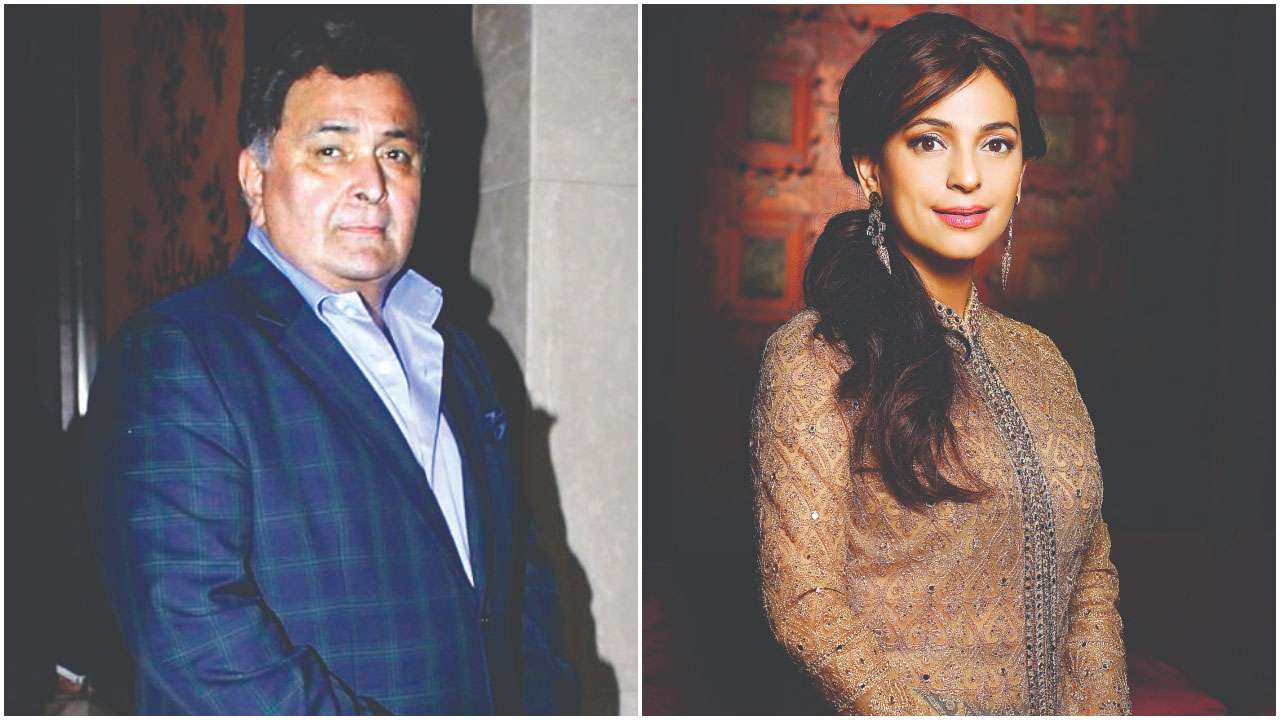
Rishi Kapoor is currently in New York for a health ailment. Before he flew to the Big Apple, the Hindi cinema icon was shooting in Delhi for a slice-of-life film, which is helmed by debutant director Hitesh Bhatia. Rishi teams up with Juhi Chawla, his Bol Radha Bol leading lady, in it. The initial schedule was meant to be a 45-day affair. However, the shoot had to be cut short because of the actor’s health concerns.
When contacted about the film’s status, Vivek Krishnani, Managing Director, Sony Pictures Entertainment, India, which is backing the film, said, “Rishi ji is unwell and abroad for his treatment. The team wishes him a speedy recovery and looks forward to having him back with the unit soon.”
Rishi Kapoor and Juhi Chawla reunite on screen for a comedy
8:20 AM

BOMBAY TIMES (September 17, 2018)
After striking a chord with the audience through films like Pad Man and 102 Not Out this year, Sony Pictures International Productions (SPIP) India has partnered with MacGuffin Pictures, producers of the acclaimed A Death In The Gunj (2016), for a hilarious family comedy that unites actors Rishi Kapoor and Juhi Chawla.
Directed by Hitesh Bhatia, who is making his directorial debut, this yet to be titled co-production is set in Delhi and has already gone on floors. Co-written by Hitesh Bhatia and Supratik Sen, the comedy drama furthers SPIP India’s ongoing quest for entertaining and breakthrough content that resonates with audiences worldwide.
Vivek Krishnani, Managing Director, Sony Pictures Entertainment, India, says, “As we continue to ramp up our local production slate with a keen focus on stories that audiences have never seen before, we are extremely thrilled to get started on this family comedy. The moment our partners Abhishek Chaubey and Honey Trehan brought the story to us, we were sold on the idea. We are excited to work once more with Rishi Kapoor after the success of 102 Not Out and promise a fun, rib-tickling, roller-coaster ride that’s filled with emotion and commotion.”
Commenting on the partnership, Abhishek Chaubey, partner, MacGuffin Pictures, adds, “I’m excited about our association with Sony Pictures International Productions, India, for the film. I am doubly excited about working with Rishiji and Juhiji on a delightful script penned by Hitesh and Supratik.” Sharing the sentiment, Honey Trehan, partner, MacGuffin Pictures, says, “As producers, we’ve always been interested in making films across the genre spectrum and I feel this is the perfect film for our company to break into the comedy/family drama genre — a pitch-perfect entertainer that the whole family can sit and watch together.”
Rana Daggubati dubs for Avengers: Infinity War; Here's why Indian actors' voice works well for Hollywood films
8:09 AM

Rana Daggubatti lent his voice for Thanos (inset) in the Telugu version of Avengers Infinity War; Amitabh Bachchan dubbed for The BFG and Varun Dhawan was the voice of the protagonist in Captain America: Civil War
Melissa D'Costa D'Silva (DNA; April 4, 2018)
Rana Daggubati — the antagonist Bhallaladeva in Baahubali — is the voice of Thanos in the Telugu version of the Avengers: Infinity War. Rana is one of the many actors who have dubbed for Hollywood characters for a regional audience. However, does a famous name guarantee box-office success? Why do studios continue to get popular actors to give voiceover to such films? These were some of the questions that we posed to industry experts. Here’s what they had to say.
TALENT V/S CONTENT
Critics of popular actors dubbing for regional versions of Hollywood flicks often have the misconception that talent and content are not on the same side. And, that’s not the case according to trade analyst Komal Nahta. He says, “When a studio approaches a popular actor to dub for a film, people are excited to see it because it has their favourite actor’s voice. At the same time, content is primary. If the film is bad, even if you get Shah Rukh Khan, Amitabh Bachchan, Salman Khan and Aamir Khan to dub, it won’t work. The actor’s voice is like an embellishment that only enhances the content.”
TALENT HAS TO BE THE RIGHT FIT
Sources from studios echo Komal’s views. Vivek Krishnani, MD, Sony Pictures Entertainment, India, explains, “Getting Indian stars to dub for Hollywood films helps in building awareness and connect with audiences.” However, he adds that the decision of rendering a known star’s voice must be well-thought through and it should, along with their persona, suit the character.
He says, “Tiger Shroff, who dubbed for Spider-Man: Homecoming Hindi is a huge fan of Spider-Man and is one of the most popular youth icons in the country. His association worked really well for us in bringing the young audience.” The studio also had Rana dub for Inferno in Telugu and Ravi Kishan for the Bhojpuri version of Spider-Man 3, with similar success. “These associations create huge marketing buzz and PR around the film. But, it’s also important to get the script right as well — make a film more relevant with localised elements and humour, which regional audiences would enjoy,” Vivek explains.
MATCHING THE MANNERISMS
From an actor’s perspective, the voice has to match the mannerisms of the character. Actor Rajesh Khattar, who dubbed for Jack Sparrow (Pirates of the Caribbean) and Tony Stark (Avengers series), talks about how not having the right voice for a character can actually become a liability. He reasons, “Studios tend to approach popular actors because they want to grab eyeballs. When it comes to the south actors, this may work because they cater to a different kind of audience, and it might make a difference there. However, in the Hindi film space, having a famous name only works in specific cases.” He cites the example of Big B lending his voice to Steven Spielberg’s The Big Friendly Giant (BFG), which suited the character. “Getting a random star whose voice is not the right fit for the character but simply adds star value is avoidable as that can actually irk the audience,” Rajesh says.
 Priyanka
Chopra lent her voice for Kaa in Jungle Book; Shah Rukh Khan dubbed for
Mr Incredible in The Incredibles; and Arjun Kapoor dubbed for Buck the
Weasel in Ice Age: Collision Course.
ANIMATED FLICKS V/S LIVE ACTION MOVIES
While voicing for animated flicks is easier as it’s accepted readily, live-action movies can be a challenge for voiceover artistes and popular actors. Rajesh elaborates, “As voiceover artistes, we don’t transcribe; we translate. One has to communicate what the character is feeling, and introduce humour where needed with a regional flavour that the audience can relate to.” But there are times when things are not well-received by all. For instance, the reference to ‘infinity stones’ as ‘anant mani’ in the forthcoming Avengers flick’s Hindi trailer, which did not go down well with certain fans. Rajesh says, “The criticism has come from audiences who have seen the English trailer and are comparing it with the Hindi version. They are not really the target audience. The Hindi trailer is aimed at an audience that is eagerly awaiting this version as that’s the language they are more comfortable with.”
Then, there are fans of film franchises, who are obsessive about every minute detail associated with their favourite film franchise. So, getting a popular actor will not shield you from the brickbats. It will arouse curiosity and even set expectations. And while some assume that an actor’s fan base can bring in the audiences, there’s no way to actually measure whether the audience who came to watch a film did so because a particular star dubbed for it.
POPULAR STARS WHO HAVE DUBBED FOR HOLLYWOOD CHARACTERS
RANA DAGGUBATI
Thanos, Avengers Infinity War (Telugu, 2018)
ARSHAD WARSI
Captain Jack Sparrow, Pirates of the Caribbean: Salazar’s Revenge (2017)
TIGER SHROFF
Spider-Man, Spider-Man Homecoming (2017)
AMITABH BACHCHAN
The BFG (2016)
VARUN DHAWAN
Captain America, Captain America: Civil War (2016)
ARJUN KAPOOR
Buck the Weasel, Ice Age: Collision Course (2016)
NANA PATEKAR, PRIYANKA CHOPRA, OM PURI, IRRFAN KHAN
Sher Khan, Kaa, Bagheera, Baloo respectively in Jungle Book (2016)
SONAKSHI SINHA AND IMRAN KHAN
Jewel and Blu, Rio 2 (2014)
VIVEK OBEROI
Electro, The Amazing Spider-Man 2 (2014)
SHAH RUKH KHAN
Mr Incredible, The Incredibles (2004)
 Arshad
Warsi dubbed for Jack Sparrow in POC; Rajesh Khattar has dubbed for
Iron Man in the Avengers series; and Imran Khan and Sonakshi Sinha
voiced Blu and Jewel for Rio2.
Free all-women screenings of Pad Man to be held in PVR Cinemas in several cities
8:43 AM

To create awareness on menstrual hygiene, Akshay joins hands with multiplex chain to organise ladies-only screenings of Pad Man across metropolitan cities
Mohar Basu (MID-DAY; February 12, 2018)
By signing a film like Pad Man, Akshay Kumar took the first step towards de-stigmatising menstruation — a topic that has unfortunately been taboo in India. The actor and his producer wife Twinkle Khanna were certain that the R Balki-directed film would initiate a much-needed dialogue on menstrual hygiene. Now, in a bid to promote the cause further, the makers have tied up with a multiplex chain to organise all-women screenings of the film. Taking Kumar’s vision ahead, PVR Cinemas has arranged exclusive all-women Pad Man shows that kickstart today and will run till February 15. The special screenings, which will have women patrons enjoy the Sonam Kapoor and Radhika Apte starrer free of cost, will be arranged across metros like Mumbai, Delhi, Bengaluru, Kolkata and Hyderabad among others. Turns out, it was an idea that Kumar and the makers were toying with, right through the development of the film that is based on social entrepreneur Arunachalam Muruganantham, who devised a low-cost sanitary pad-making machine. Given the subject of the film, the actor was of the opinion that it should reach as many women as possible. Aware that the prohibitive prices of tickets could be a deterrent, the team decided that the social drama be screened for the female audience free of cost on the chosen dates.
Confirming the story, Vivek Krishnani, MD, Sony Pictures, co- producers of the film, says, “It’s our way of expressing gratitude for the incredible love and support the film is receiving.”
Gautam Dutta, CEO, PVR Cinemas says, “We are happy to collaborate with the team of Pad Man for this unique initiative. The movie has been successful in garnering good response from the audiences, and we hope that it continues to inspire everyone.”
Amitabh Bachchan and Rishi Kapoor starrer 102 Not Out to release on May 4
7:52 AM

BOMBAY TIMES (February 9, 2018)
After 27 years, Amitabh Bachchan and Rishi Kapoor will share screen space once again in director Umesh Shukla and writer Saumya Joshi’s slice-of-life comedy, 102 Not Out. The film has been co-produced by Treetop Entertainment, Umesh Shukla’s Benchmark Pictures and Sony Pictures International Productions. Sony will also distribute the movie worldwide.
Adapted from Joshi’s popular Gujarati play by the same name, the ageless comedy features the veteran actors as father and son. Amitabh Bachchan, who plays a 102-year-old man living life to the fullest, shared, “Teaming up with Chintuji after so many years and so many successful historic films, has been the greatest joy during 102 Not Out. A novel story, competent direction and a qualified crew have made the experience even greater. I know the country loves the younger, fresh and vibrant new generation, but whoever said that the oldies are not capable of doing something similar. We know you may not love us, but given a chance, we shall not disappoint you either. And that is as immodest as I can get. BADUMBAAAAAAAAA!” (sic) Rishi, as Bachchan’s 75-yearold reel son, said, “Being in this film brought back a lot of fond memories that I have shared with Amitji during my younger days. I am glad to reunite with him on such a special and unusual film. It will definitely delight our fans.”
Umesh Shukla, on his part, added, “Amitabh sir and Rishi sir make for a dream cast. I sensed a deep responsibility in bringing them together. I am thankful to Treetop Entertainment and Sony Pictures India who have helped me realise my vision,” he asserted.
Vivek Krishnani, MD of Sony Pictures Entertainment India, the studio backing the film, added, “With films like Padman and 102 Not Out, our constant endeavour is to look for stories that matter, that don’t just entertain but also leave us with a thought. We were sold from the word go when Umesh, who was behind the successful OMG — Oh My God!, shared the idea of this rare, heartwarming story of a father and son. We can’t describe our excitement to take this ageless comedy, with two of the greatest artistes of Indian cinema, to the audience.”
102 Not Out, billed as the year’s most unusual father-son story, is slated to release on May 4. The teaser of the film will be launched at 11 am today on Sony Pictures India’s social media channels and has also been attached with Pad Man.
Sony Pictures Entertainment backs Akshay Kumar-starrer Pad Man
7:49 AM

BOMBAY TIMES (November 15, 2017)
From the time it was announced, R Balki’s Pad Man has been in the news. Akshay Kumar plays the protagonist in this film that is inspired by the life of Arunachalam Muruganantham, an Indian entrepreneur who invented the low-cost sanitary pad making machine and revolutionised the movement of cost-effective female hygiene in the country.
Scheduled to release on January 26, the movie, also starring Sonam Kapoor and Radhika Apte, is a progressive family entertainer. After Toilet - Ek Prem Katha, which also centered around the issue of open defecation, Pad Man once again reinforces Akshay’s commitment to social entertainers — films that entertain as well as address significant social issues. To ensure the film reaches the widest audience, Sony Pictures Entertainment is distributing it worldwide, while also ramping up its India division simultaneously, by tying up with KriArj Entertainment on the film. Upbeat about their new association, Sanford Panitch, President, Columbia Pictures, Sony Pictures Entertainment, says, “What makes Akshay and Twinkle (Khanna) special is that they have found a way to make a wonderfully affecting and heart-warming movie that can also bring about a social change. Not only are the movies he makes the kind that the big mass audience enjoys, but he is uniquely successful because he has been courageous about his instincts. We are looking forward to working with Akshay and Twinkle on many projects.”
Calling Pad Man a very special film for many reasons, Akshay says, “It is my wife’s first film from her production house, Mrs Funnybones Movies. She introduced me to Arunachalam Muruganantham and his wonderful story that has a universal resonance and Balki has brought it to life beautifully. Sanford and the Sony Pictures team are ideally placed to take it to audiences worldwide and we look forward to sharing this journey with them.”
Excited to partner with Akshay, Twinkle and KriArj Entertainment on this film, Vivek Krishnani, Managing Director, Sony Pictures Entertainment, India, says, “Pad Man is bound to make every Indian proud because it celebrates a true indigenous inventor and innovator who brought a massive social change.”
Arjun N Kapoor of KriArj Entertainment, sums it up saying, “This film will be path-breaking in more ways than one and we believe that if there are stories that deserve to be told, this one tops the list. We couldn’t have had better creative forces combined than Balki, Akshay Kumar and Twinkle Khanna to portray this extraordinary tale of an ordinary man.”
Hollywood sequels score over Bollywood sequels in 2016
8:13 AM

Rachana Dubey (BOMBAY TIMES; December 12, 2016)
For both Bollywood and
Hollywood, 2016 has been a year of sequels and franchises. While
Hollywood had over a dozen franchise sequels releasing in India this
year, Bollywood, too, had its share of notable ones. Jason Bourne, The
Conjuring 2, Kung Fu Panda 3, London Has Fallen, Finding Dory, Inferno,
X-Men: Apocalypse, Captain America: Civil War and Underworld: Blood Wars
are just some of the titles from the West.
Kyaa Kool Hain Hum 3, Ghayal Once Again, Tere Bin Laden: Dead or Alive, 1920 London, Jai GangaaJal, Housefull 3, Great Grand Masti, Raaz: Reboot, Rock On 2, Tum Bin 2, Force 2 and Kahaani 2 represented the desi stable. The trade report card suggests that Hollywood sequels franchise movies have outdone the fare from Bollywood. While only Housefull 3 became a hit like the previous outings in the series, Jai GangaaJal and Kyaa Kool Hain Hum 3 recovered the production cost, but didn't set the cash registers ringing exactly. GangaaJal, spearheaded by Ajay Devgn in the lead role, back in the day was critically and commercially acclaimed. Also, the previous films in the Kyaa Kool Hain Hum series were notches higher in terms of comic value and audience footfall.

Raaz: Reboot and Rock On 2 remained on the other extreme, failing to draw the audiences. Though trade circuit indicates there wasn't enough pre-release buzz about Rock On 2, demonetization seemed to only add to their woes. Force 2, which came a week later, managed to register decent numbers during the cash crunch phase. Of this year's Bollywood sequels, Great Grand Masti suffered the biggest jolt, with the censor copy leaking few days before its theatrical release. As for their off-shore competitors, films like The Conjuring 2, X-Men Apocalypse and Captain America: Civil War had an impressive run at the box office here.
Independent distributor Amod Mehra insists that the reason Indian sequels and franchise movies haven't really kicked a storm is the lack of a great story to take the baton ahead. “We're only learning half the lesson from the West. They make a sequel or continue a franchise only when they have something worth telling. But we seem to be making them irrespective of whether we have a great story or a solid reason to do what we're doing. The reason why films like Rock On 2 and Tum Bin 2 didn't impress is that they lacked a strong story. The audience also feels cheated because our producers here often confuse a sequel with a franchise,“ he rues.
The trend of sequels-franchises in Bollywood, in recent memory, began with Sridevi's Naagin and Nigahein. The latter tanked. Cut to the beginning of the new millennium; Raaz and Raaz 2 opened the floodgate for Bollywood producers all over again. The films, in their genre, brought in a lot of promise. The first three films in the franchise hit the bullseye at the box office too.
 From the way it appears,
Bollywood can't quite give up its fascination with sequels and
franchises. In 2017, the industry has an impressive list like Baaghi 2,
Judwaa 2, Jolly LLB 2, Commando 2, Sarkar 3, Baahubali 2, Hate Story 4,
Aankhen 2, 2.0 (sequel to Robot) and Golmaal Again lined up. Hollywood
will throw in titles like XXX: The Return Of Xander Cage, Resident Evil:
Final Chapter, Fast And Furious 8, Pirates Of The Caribbean: Dead Men
Tell No Tales, Spider-Man: Homecoming and Smurfs: The Lost Village.
The competition will only get stiffer.
Distributor Anil Thadani believes that a good film, timed well, will work wonders at the box office. For instance, Rock On 2, he says, did take a beating also because of the demonetization drive. “Most sequels have worked. At least, they have recovered costs. Whether a sequel or a franchise works or not depends on the film itself. For the last month alone, I'd give the Hindi releases a benefit of doubt. But Hollywood content in general has been great on quality. And the results are visible in their box office numbers. The films, when dubbed in regional languages, have an even bigger audience base. Its budget, production quality, scale and the overall output are much better than our films,“ he says.
 Vivek Krishnani, who heads
the Hollywood studio in India that helmed The Angry Birds Movie,
believes that a sequel or a franchise works when it offers a fresh story
or a point of view with familiar characters, a technique that Hollywood
has more or less mastered. “Some Hollywood sequels work in India
because they are visually appealing. Indian actors dub parts of these
films, which makes them even more attractive. In the past, Indian films
like Tanu Weds Manu Returns and the Dhoom franchise worked because they
had familiar characters in a different, challenging environment. A
sequel's success depends on how the story is being taken forward and
whether it is more entertaining than the prequel. This logic applies to
films all over the world.“
Having said that, what cannot be missed is that like Bollywood, even Hollywood sequels haven't had a 100 per cent track record. Independence Day: Resurgence and Jack Reacher: Never Go Back, for instance, were box office downers. Producer Vipul Amrutlal Shah believes that though the trend of making sequels and franchises is catching on in India, it is going through its initial teething issues. “We scaled up Force 2 and it worked despite the demonetization drive. Maybe we need to get our sequels on floors sooner and also up the quality of the content with each film in the franchise,“ he avers.
Sunil Bansal, a distributor from Rajasthan, points out that Hollywood franchises or sequels largely work because they find takers among young Indians, who are huge in number. Year after year, the anticipation for Hollywood sequels and franchises has only swollen in India. Franchises like Paranormal Activity, Hangover and Austin Powers among others have a huge fan following and people earmark their release dates. Irrespective of how they fare abroad, these films have a loyal fan following in the country. “I've generally seen youngsters thronging cinemas when a big Hollywood franchise releases. The overall quality of our films has also dipped. We need to first work on that and then work on sequels and franchises. In the current year, Hollywood has only done 20 per cent better than us. The number could have been higher had the demonetisation drive not affected cinema-goers. We must also not forget that they have some exceptionally big franchises and sequels lined up for next year.We need to pull up our socks,“ he sums up.
Kyaa Kool Hain Hum 3, Ghayal Once Again, Tere Bin Laden: Dead or Alive, 1920 London, Jai GangaaJal, Housefull 3, Great Grand Masti, Raaz: Reboot, Rock On 2, Tum Bin 2, Force 2 and Kahaani 2 represented the desi stable. The trade report card suggests that Hollywood sequels franchise movies have outdone the fare from Bollywood. While only Housefull 3 became a hit like the previous outings in the series, Jai GangaaJal and Kyaa Kool Hain Hum 3 recovered the production cost, but didn't set the cash registers ringing exactly. GangaaJal, spearheaded by Ajay Devgn in the lead role, back in the day was critically and commercially acclaimed. Also, the previous films in the Kyaa Kool Hain Hum series were notches higher in terms of comic value and audience footfall.
Raaz: Reboot and Rock On 2 remained on the other extreme, failing to draw the audiences. Though trade circuit indicates there wasn't enough pre-release buzz about Rock On 2, demonetization seemed to only add to their woes. Force 2, which came a week later, managed to register decent numbers during the cash crunch phase. Of this year's Bollywood sequels, Great Grand Masti suffered the biggest jolt, with the censor copy leaking few days before its theatrical release. As for their off-shore competitors, films like The Conjuring 2, X-Men Apocalypse and Captain America: Civil War had an impressive run at the box office here.
Independent distributor Amod Mehra insists that the reason Indian sequels and franchise movies haven't really kicked a storm is the lack of a great story to take the baton ahead. “We're only learning half the lesson from the West. They make a sequel or continue a franchise only when they have something worth telling. But we seem to be making them irrespective of whether we have a great story or a solid reason to do what we're doing. The reason why films like Rock On 2 and Tum Bin 2 didn't impress is that they lacked a strong story. The audience also feels cheated because our producers here often confuse a sequel with a franchise,“ he rues.
The trend of sequels-franchises in Bollywood, in recent memory, began with Sridevi's Naagin and Nigahein. The latter tanked. Cut to the beginning of the new millennium; Raaz and Raaz 2 opened the floodgate for Bollywood producers all over again. The films, in their genre, brought in a lot of promise. The first three films in the franchise hit the bullseye at the box office too.
From the way it appears,
Bollywood can't quite give up its fascination with sequels and
franchises. In 2017, the industry has an impressive list like Baaghi 2,
Judwaa 2, Jolly LLB 2, Commando 2, Sarkar 3, Baahubali 2, Hate Story 4,
Aankhen 2, 2.0 (sequel to Robot) and Golmaal Again lined up. Hollywood
will throw in titles like XXX: The Return Of Xander Cage, Resident Evil:
Final Chapter, Fast And Furious 8, Pirates Of The Caribbean: Dead Men
Tell No Tales, Spider-Man: Homecoming and Smurfs: The Lost Village.
The competition will only get stiffer.Distributor Anil Thadani believes that a good film, timed well, will work wonders at the box office. For instance, Rock On 2, he says, did take a beating also because of the demonetization drive. “Most sequels have worked. At least, they have recovered costs. Whether a sequel or a franchise works or not depends on the film itself. For the last month alone, I'd give the Hindi releases a benefit of doubt. But Hollywood content in general has been great on quality. And the results are visible in their box office numbers. The films, when dubbed in regional languages, have an even bigger audience base. Its budget, production quality, scale and the overall output are much better than our films,“ he says.
Vivek Krishnani, who heads
the Hollywood studio in India that helmed The Angry Birds Movie,
believes that a sequel or a franchise works when it offers a fresh story
or a point of view with familiar characters, a technique that Hollywood
has more or less mastered. “Some Hollywood sequels work in India
because they are visually appealing. Indian actors dub parts of these
films, which makes them even more attractive. In the past, Indian films
like Tanu Weds Manu Returns and the Dhoom franchise worked because they
had familiar characters in a different, challenging environment. A
sequel's success depends on how the story is being taken forward and
whether it is more entertaining than the prequel. This logic applies to
films all over the world.“Having said that, what cannot be missed is that like Bollywood, even Hollywood sequels haven't had a 100 per cent track record. Independence Day: Resurgence and Jack Reacher: Never Go Back, for instance, were box office downers. Producer Vipul Amrutlal Shah believes that though the trend of making sequels and franchises is catching on in India, it is going through its initial teething issues. “We scaled up Force 2 and it worked despite the demonetization drive. Maybe we need to get our sequels on floors sooner and also up the quality of the content with each film in the franchise,“ he avers.
Sunil Bansal, a distributor from Rajasthan, points out that Hollywood franchises or sequels largely work because they find takers among young Indians, who are huge in number. Year after year, the anticipation for Hollywood sequels and franchises has only swollen in India. Franchises like Paranormal Activity, Hangover and Austin Powers among others have a huge fan following and people earmark their release dates. Irrespective of how they fare abroad, these films have a loyal fan following in the country. “I've generally seen youngsters thronging cinemas when a big Hollywood franchise releases. The overall quality of our films has also dipped. We need to first work on that and then work on sequels and franchises. In the current year, Hollywood has only done 20 per cent better than us. The number could have been higher had the demonetisation drive not affected cinema-goers. We must also not forget that they have some exceptionally big franchises and sequels lined up for next year.We need to pull up our socks,“ he sums up.

Global acclaim, Bollywood praise helps regional films find larger audience
7:47 AM

With many regional movies creating a buzz even among audiences that don't speak those languages, filmmakers feel it is because of the content they show, not the money they make
Niharika Lal (BOMBAY TIMES; October 13, 2016)
The Tamil movie Visaranai
is the official entry for Oscars this year in the foreign language
category and just like last year's Marathi movie Court, this film not
only managed to avoid the annual fuss created over which film is 'worthy', but was also applauded by the filmmakers.
From the tweets about regional language movies which were not heard of, to the huge posters of regional movies, next to the most awaited Bollywood releases at the cinema halls, and winning awards for best film at film festivals, the regional language films were present everywhere this year. Thanks to the mainstream actors, they even managed to reach the average movie buff. Unless you have been living off the social network, it is very unlikely that you have not found yourself googling about a particular regional movie just because your favourite Bollywood celeb tweeted or praised the film in his/her interviews. If the exhibitors are to be believed, the word of mouth not only helped in getting more publicity but also audience. They say that this is the push that regional cinema needed.
REGIONAL MOVIES FLOORED BOLLYWOOD
When Thithi was screened at the BRICS festival in the capital recently, the hall was so packed that the late arrivals had to sit on the floor. How did a Kannada movie became so popular? Thithi director Raam Reddy told us, “I am overwhelmed with the response of the audience and I was expecting it because many people came and told me that they never got to know if the film was even released in Delhi or not. It was, but just for a week.“ He further added, “People got to know about the film after it got support from Bollywood. I went to Mumbai to show my film to as many people as possible but the support that I received from Anurag Kashyap, Kiran Rao and especially Aamir Khan was really instrumental in changing the image of my film. It was really wonderful to see that people are watching a film for the content and language barrier is not stopping them. Praise by Bollywood stars made a huge difference as our national advertising budget was zero and still Thithi was seen and discussed.“
Bollywood directors like Anurag Kashyap, Karan Johar, Sudhir Mishra and Imtiaz Ali came out in support of many regional films apart from Thithi. If Anurag Kashyap organised Thithi's special screening, then Irrfan Khan did the same for Sairat.
During an interview, Irrfan recently said, “Fortunately, now the audience is kind of exposed to the world cinema. They want a similar thing coming from India too. That's why Talvar, that's why Piku, that's why Sairat. All these films are being lapped up by the audience. Chaar crore ki film sattar crore ka business kar rahi hai.“
Last year films like Court, Killa and Kaaka Muttai also garnered good response in the mainstream space. The filmmakers (of regional movies) agree that Bollywood support helps them get publicity and more business. In an interview, Nagraj Manjule, director of Sairat said, “I never knew it would cross the language barrier so easily and in such overwhelming numbers. Today when Aamir Khan or Irrfan tweets about the film, it's a huge thing for me.“
WORD OF MOUTH PUBLICITY MEANS BETTER DISTRIBUTION
Talking about the impact of Bollywood push, Raam said, “Irrfan and Shekhar Kapur tweeted about the film. These actors have a huge fan following. Aamir has more than 17 million followers and if he tweets something, people will stop and see. Word of mouth helps because even the exhibitors get an idea on whether the film will attract audience or not. As the opinions of these actors are valued, so exhibitors know that if they allot more screens, people will come. Even in Karnataka, we had a really tough time explaining to the exhibitors what is this film about, without music and usual story. But Bollywood's reaction is valued.“
Agreeing to it, Vivek Krishnani, Managing Director of Sony Pictures India said, “Stars talking about a regional film definitely works in their favour and regional cinema is growing in mainstream space which is a good sign. The word of mouth publicity has its own importance.“ Yogesh Raizada, Corporate Head, Wave Cinemas, adds, “For a north Indian to know about a Marathi release or a Kannada release is rare, but when the information comes from a celeb route, it makes the film a must watch.“
AUDIENCE IS MATURE ENOUGH TO BE OPEN TO CONTENT, NOT LANGUAGE
The exhibitors told us that there are fantastic films that come from the regional cinema industry, and people who love cinema will appreciate the content, but the same content finding a place in the larger market is a different game altogether.
Ajit Andhare, COO, Viacom18 Motion Pictures, said, “The regional cinema is at a different stage, so the studios have to be really alert on what content they are offering in which market. Only that can determine whether they will be successful or not. There is lot of new audience that is more concerned about the content, not whether the film is being made in language A, B or C.“
Kamal Gianchandani, CEO, PVR Pictures, said, “Punjabi films have done well at the Box Office, Tamil and Telugu continues to do excessively well. All language movies are co-existing, you can't say these films are competing with each other, but they co-exist. A good film always works, it will always discover its audience. Ultimately, its the power of content which works. When somebody of the stature of Aamir Khan, Irrfan Khan and even Anurag Kashyap speaks about the films, it definitely creates a buzz and attracts more audience, but let's be fair and not take the credit away from the film also.“

In a first, Irrfan Khan to hog limelight in desi trailer of Inferno
8:07 AM

Sonil Dedhia (MID-DAY; October 4, 2016)
With his versatile acting, Irrfan Khan has carved a niche in Bollywood as also in the West. Thanks to his Hollywood films like The Namesake, Life Of Pi and Jurrasic World, the actor has been a favourite among a lot of filmmakers abroad.
Irrfan will now be seen with Tom Hanks in Inferno, and looking at his popularity, the filmmakers have decided to cut a special trailer exclusively for India in which the actor will hog all the limelight. This is said to be the first of its kind for a US production.
Says a source, “An exclusive India trailer is unheard of. The makers of Inferno have gone the whole hog to prove their faith and anticipation from the Indian audience and market. From Slumdog Millionaire to Life of Pi and The Namesake, we have seen so many Indian stories told on global celluloid, but it’s for the first time that a special trailer has been cut for the Indian market. It’s a mark of respect to Irrfan’s talent and his body of work on the world stage.”
The trailer of the film will be launched by Irrfan on October 7 . The actor says, “I am happy that something like this is happening for the first time. It feels good to be presenting this special trailer for a Hollywood film in India.” The film releases in India on October 14, two weeks before its US release.
Explaining why India has emerged as an important market for Hollywood, Vivek Krishnani, MD Sony Pictures Entertainment-India says, “There has always been an appeal for Hollywood films in India, which is the second largest English speaking country in the world after US. Hollywood films are also contributing to the overall growth of the Indian market. They are breaking records at India box office and a few, like The Jungle Book, have gone on to become bigger than some of our local tent pole films.”
Why Hollywood distributors no longer worry about competing with Bollywood flicks
9:07 AM

Hollywood distributors no longer worry about competing with Bollywood flicks — and their risk is paying off. We explore the trend
Ria Lawrence (MID-DAY; May 15, 2016)
While India has always been deemed as a niche market for Hollywood to crack, there were some hit franchises which struck a chord with the audience. Apart from the regulars though, Hollywood cinema was never considered a threat daunting enough for big Hindi releases. The trend, however, seems to have undergone a drastic makeover. The surge in Hollywood cinema has almost been theatrical with movies like The Jungle Book, Captain America: Civil War and Deadpool making a remarkable entry into the Indian market and giving tough competition to Bollywood biggies. Maybe, it’s the authentic storylines, larger than life visuals, arresting cinematography or subtle yet striking performances. But whatever the formula, it seems to be working and has definitely raised the benchmark for Hindi movies. Case in point: A much-awaited, big-budgeted affair like Fan starring Shah Rukh Khan suffered visibly because of The Jungle Book. The coming week will see popular franchise X Men going head-to-head with Sarabjit, starring Aishwarya Rai Bachchan and Randeep Hooda in lead roles.
Kamal Gianchandani, CEO- PVR Pictures, says, “As film marketers in India, we have observed a rising demand for Hollywood over time. People are always on the lookout for good content, both visually and intellectually. Speaking of Hollywood, it undoubtedly has an upper hand in film technology as compared to Bollywood. In the past, Hollywood distributors would shy away from releasing their films at the same time as big budget Bollywood releases. But with changing demands, this trend is no longer applicable, the best example being the release of Udta Punjab and Now You See Me 2 on the same date.”
While one could argue that movies like Life of Pi and Slumdog Millionare hit the right chord with the audience, thanks to their massive Indian appeal, even past visual spectacles like 2012 and Avatar, not to forget global superheroes like Iron Man and animated movies like Kung Fu Panda, created quite a stir with the audience pouring into theatres and preferring those to big Hindi releases at the time.
Says Vivek Krishnani, managing director, Sony Pictures India, “Hollywood films have particularly seen good growth thanks to an increase in multiplexes and 3D screens as well as changing audience preferences. We have always believed that there is an audience for all kinds of films in India, especially films that have quality content and it’s just a matter of getting space in this overcrowded and under-screened market. For instance, The Angry Birds movie has high awareness among ages eight to 80 years.”

Tim Burton’s Alice: Through The Looking Glass is to release with five Hindi movies (Cabaret, Phobia, Veerappan, Fredrick and Waiting) but has generated quite a buzz among cinegoers
Amrita Pandey, vice president, Disney Studios, believes that Hollywood movies in India are enjoying their moment in the sun. However, this could be for a few tentpole movies each year. She says, “In 2015 too, three of the top 10 grossing movies were from Hollywood (Fast and Furious 7, Avengers: Age of Ultron and Jurassic World), which is a big deal, but if you take away the top five English movies each year, the business for the others isn’t at the scale of medium to big Hindi movies. It shows the massive potential that India as a market represents for a few big movies that our audience does take to. For both The Jungle Book and Captain America: Civil War, localisation was given huge priority. We pushed for the right voice talent and that helped bring in larger revenues from the regional markets.”
Vijay Singh, CEO, Fox Star Studios says the debate has little to do with Hollywood and Bollywood per se. “It’s a battle of good content vs the not so good content. Content is the king eventually and that can come from any industry.”
Grirish Johar from Zee Studios believes the foothold that Hollywood has been gaining along with strict competition with Hindi films has got Indian producers a bit rattled. “Bollywood producers are now keeping an eye out for big Hollywood franchises while fixing their release dates. So, that mental check has seeded itself in their minds,” he explains.
Whether the trend continues being a threat to Bollywood and mid- budget movies also get the recognition they deserve remains to be seen. One can’t, however, argue that Hindi movies are feeling the heat and content-driven films are becoming the need of the hour.
Trade analyst Amod Mehra sums it up, “People want entertainment, whether it comes from Bollywood or Hollywood. This trend will grow further, but that does not mean all English films will work. Those already established franchises will have an upper hand. It’s a wake-up call to our producers.”

Suicide Squad will release on August the 5 and is one of the big Hollywood releases to hit the screens this year
Launching film's first look much before release: Will this strategy work?
11:34 AM

Asira Tarannum (MID-DAY; July 20, 2015)
Of late, the teaser trailers of big-ticket Bollywood projects are being launched several months before the film hits the theatres. We find out the pros and cons of this marketing strategy...
In the West, it is not uncommon for teasers and trailers to come out a full year ahead of a film's theatrical release, more so in case of big-ticket movies. This practice seems to have seeped into the Hindi film industry lately. Ajay Devgn was the first to go the Hollywood way by providing a glimpse of his on-off-on project 'Shivaay' in mid-May. Ekta Kapoor's 'Azhar' biopic followed suit a week later.
The latest movie to be added to this fast-growing list is 'Raees'. On the eve of Eid, Shah Rukh Khan fans got a sneak peek into the crime thriller, which is slated to release on that festive occasion next year. Before that, the teaser of another SRK film, 'Fan', was publicised on various platforms. Producer Ritesh Sidhwani says, "Since 'Raees' is releasing on Eid 2016, the ideal time to showcase the first look of the film was this Eid. This is a special Eidi for all fans." Red Chillies Entertainment also released two posters and the teaser trailer for the film, which is slated to clash with Salman Khan's 'Sultan' — another not-yet-on-the-floors project whose introductory ad was presented by YRF last month.

A new trend
Ajay Devgn has booked 2017 Republic Day for his maiden directorial venture, 'Shivaay', whose first look came out in May — 20 months in advance — although the shoot will commence in Bulgaria only in January 2016. It will mark the debut of Sayesha Saigal, yesteryear actress Saira Banu's grand niece.
Speaking about the strategy behind such early marketing, the spokesperson of Eros International says, "Movie audiences have become smart and are now looking forward to something new. As movie marketers, there is the demand to constantly innovate and market the movie differently to attract eyeballs and widen our reach to the viewers. By releasing the teaser much in advance, movie marketers want to engage with not just the Indian moviegoers, but also touch base with millions of international movie consumers as well."
Agrees Vivek Krishnani, senior vice president (Revenue and Marketing), MSM Motion Pictures, which is collaborating with Ekta's Balaji Motion Pictures for the 'Azhar' biopic starring Emraan Hashmi. "If you are dealing with a larger-than-life subject, you have to treat the film and its promotion in similar fashion. Azhar, the film based on one of India's most loved and yet most controversial cricketing captains, deserved the kind of buzz and build-up leading to the release of the film. So, we came out with a specially shot teaser announcement, which was perfectly timed and aired during the IPL finale," he states.
Even this film is yet to roll though an announcement of the release date has been made — May 13, 2016. "This scale of promotion places the film in the consciousness of the audience, as a movie to watch out for in 2016. Incidentally, after Azhar's announcement, a lot of other big films have taken the same route, be it Sultan or, more recently, Raees, since that helps in building perception and blocking the date as well," adds Krishnani.
Gaurav Verma, chief revenue officer, Red Chillies Entertainment, says the idea is to engage with the consumers at an early stage, to share with them what the film is all about and when are they likely to see it. And as the number of releases is increasing every year, there are no ways to differentiate them other than the cast involved. "For us, Eid was a wonderful window as 'it's this time next year' and the response was also phenomenal. Now, viewers know about the film, how it is and when it is expected. Also, in the movie business today, we are much more organised with regard to planning, prep work and the final product. Producers are spending more time on preparation, campaign planning and publicity. So, they are ready beforehand," he says.
Risks involved
Coming out with a teaser trailer much in advance arguably helps the film become a talking point. But a long gap between this event and the movie's actual release also has its set of disadvantages. With the teaser out, what are the other publicity materials to be explored when the film is just a few weeks away from hitting the marquee? What if it fades out of audience memory since it is bombarded with scores of film trailers every month? And what about the risk of overkill? Krishnani believes that there always lurks a danger of firing the shots in advance and then running out of ammunition, which has to be strategically handled. "Especially in case of the 'Azhar' biopic, we have contextualised the film and placed the premise before the audience and media, which clearly speaks about the exciting, engaging and entertaining content, thereby creating a lot of curiosity. There is also the risk of misfiring if the content fails to connect with the audience. You have to take a calculated risk and do it only if you are confident of the content," he suggests.
The Eros spokesperson says that before marketers start any movie promotion, a certain audience feedback/ research is taken into account before developing and building a strategy. "Each asset of the movie like teaser, trailer, songs and even dialogue promos needs to be backed by a different marketing strategy and spread out across a certain timeline. The objective is to keep the buzz alive among the audiences by constantly feeding them with interesting assets and ensure there is necessary anticipation before the release. Risk is involved in every business and the same goes with movie marketing. But it is important to take these risks — some may work in favour of the movie, while some wont. But ultimately, if your content is good, the results will reflect in your box office collections," he states.
Verma feels marketing campaigns today are long term and have become very specific to target audience. "A longer campaign actually helps us know what's expected and the eventual deliveries. This only has given us the flexibility to come out with a teaser so early. We don't think of it as overexposure. In fact, there is nothing such as overexposure today. Rather, you may ask if we will be able to maintain this excitement till the release next year. We think we can and are confident of maintaining it," he signs off.

Subscribe to:
Posts (Atom)