Showing posts with label Vishal-Shekhar. Show all posts
Showing posts with label Vishal-Shekhar. Show all posts
Some of our best work has come from creative clashes - Vishal-Sheykhar
4:29 PM

Debarati S Sen (BOMBAY TIMES; March 25, 2026)
From Dil Diyan Gallan, Aankhon Mein Teri, Sheila Ki Jawani to Besharam Rang, composer duo Vishal–Sheykhar have shaped the sound of Bollywood for 25 years.
Known for their instinct-driven partnership and genre-bending hits, the two continue to reinvent themselves while keeping the fun, and the music, at the heart of their collaboration. In this conversation with Bombay Times, they look back on their journey, the trust that binds them, and the madness behind their melodies. Excerpts...
After so many years, do you finish each other’s musical sentences, or argue over commas?
Vishal: Absolutely. We do finish each other’s musical sentences. That’s uncannily true about us. But yes, we also have those “commas” you mention. We argue, we debate, we break things down—where a song can go, where it should go, what it should sound like, the beat, the energy—everything is discussed to the bone. And yet, somehow, we always end up on the same page.
Sheykhar: At this point, we know each other so well musically that one of us can easily complete a thought that begins in the other’s head.
Twenty-five years is a long time in any profession. What has been the glue that’s kept you both together all this while?
Vishal: Honestly, it doesn’t even feel like 25 years. We still have fun doing what we do, we love the process, and we’re always laughing—whether we’re working or just hanging out. There’s a deep respect for each other, and just as importantly, we give each other space. Every person needs an individual identity, even within a partnership, and I think holding on to that individuality has kept us strong all these years.
Sheykhar: At the heart of it, it’s always been about the music—the joy of creating something bigger than either of us. That singular purpose has been the driving force of our collaboration from day one.
When you both hit a deadlock in opinions, how do you break it?
Sheykhar: Taking a break usually works best. Stepping away gives us distance and helps us regain perspective. Sometimes, even a really long break has done the trick. As our friend, lyricist Irshad Kamil, once wrote, “Kuch rishton ka namak hi doori hota hai, na milna bhi bahut zaroori hota hai.” That thought has stayed with us. At the end of the day, it’s always about the music, and whatever makes the song better is what wins.
Vishal: Honestly, we don’t really have deadlocks. We don’t see them as conflicts, just as strong opinions. Both of us are secure enough in our partnership to voice what we feel without ego getting in the way. But if ever there was a deadlock, we’d just step away for a couple of days, come back refreshed, and move on.
Do you have unspoken rules at work, or do you still surprise each other?
Vishal: In many long-term partnerships, roles get fixed. Thankfully, that’s never happened with us. Sheykhar is a far more qualified musician, he’s taught me a lot, but our process is symbiotic. Anyone can do anything. If he sings me a tune and I tweak it, he runs with it. If I sing him an idea and he adds a line, that becomes part of it. It’s fluid.
Sheykhar: Life would be boring without surprises. Over time, we’ve both grown individually, and those experiences naturally shape how we collaborate. The ‘rules’ keep rewriting themselves as we go.
Looking back, is there one moment in the studio or on stage that perfectly sums up your equation as collaborators?
Sheykhar: Honestly, every day in the studio or on stage asks something different of us. Each director is unique, every audience responds differently, so our collaboration keeps shifting too. We’ve learned to recalibrate pretty organically—whether it’s composing for a film or performing live. That ability to adapt has kept things seamless for us all these years.
Vishal: If I had to pick one defining moment, it would be the composition of Jo Bheji Thi Dua (Shanghai). That song was pure instinct. I’d been carrying the hook melody in my head for a couple of days, and when I walked into the studio, Sheykhar already had the mukhda. The hook just slipped in there like they were meant to be together.
If your 25-year journey as a duo were to be described as a track, what genre would it fall into—rock, pop, EDM, or a mashup? Or name a song.
Sheykhar: I’d definitely describe it as a Mashup.
Vishal: For me, it’s Dus Bahane Karke Le Gaye Dil (Dus). By hook or by crook, you’ll end up loving our music, we’ll draw you in. Our songs are meant to become part of people’s lives, and we want everyone to feel included in that experience. I still remember the first time a car drove past playing Woh Pehli Baar from Pyaar Mein Kabhi Kabhi. It blew my mind! I’ve been hooked to that feeling ever since.
Take us inside a Vishal–Sheykhar jam session—how does a melody or beat usually find its way from your minds into a finished track?
Vishal: And these sessions don’t always happen in a studio. It could be in the car, at a coffee shop, or even on the phone when we’re in different countries. Wherever we are, once we’re in the zone, it becomes a session. It’s unstructured, but it has its own rhythm, a method to madness. Sometimes we begin with a melody, sometimes with words, sometimes by just sitting with a script or listening to a director’s narration. Ideas can spark from anywhere.
Sheykhar: The seed of an idea or melody can come from either of us, but it’s our different perspectives that merge to create something we’re both proud of. Sometimes, even the occasional casual jam has turned into a hit unexpectedly.
You’ve often been described as having very different temperaments. How has this contrast been a superpower, and how has it sometimes been a stumbling block?
Sheykhar: Disagreements and differences are inevitable in any partnership. In fact, some of our best compositions have come out of creative clashes. Even when we don’t see eye to eye, the key is trusting each other’s instincts. If one of us feels strongly about an idea, the other gives it room to breathe. Over the years, we’ve learned when to push, when to pull back, and when to simply listen.
Losing my voice was deeply disturbing and shocking-Shekhar Ravjiani
8:44 AM

Soumya Vajpayee (HINDUSTAN TIMES; November 20, 2024)
Composer-singer Shekhar Ravjiani, one-half of the popular composer duo Vishal-Shekhar, recently took to social media to reveal his battle with a health condition (left vocal cord paresis) that caused him to lose his voice two years ago.
Speaking to us about the “difficult phase”, the 45-year-old shares, “Losing my voice was by far the most traumatic experience of my life. Even contemplating a life where I might not be able to sing was the most frightening thought. It was extremely hard to stay positive when something so precious was being taken away from me. I suddenly had no voice and just air coming out instead. The phase was deeply shocking and disturbing. Even today, I shudder when I think about it.”
This phase, besides having physical repercussions, also affected his mental health. “A situation like what I went through can pull you quickly into a very dark place. I remember feeling extremely low and despondent at times. It was hard to see any light at the end of that tunnel. I had to put up a strong front at home just to make sure that my family didn’t feel my pain. I continued my work at the studio and pushed myself much harder at concerts. Mentally, I was a bit disturbed. But I avoided expressing or talking about it,” Ravjiani says.
Ravjiani also posted a photo of the Hanuman Chalisa with his post. Ask what, other than spirituality, helped him recover, and he says, “All the credit for my recovery goes to Dr Erin Walsh, who I refer to as my angel. She was unwavering in her commitment to making sure I overcame this setback,” adding, “Vocal exercises curated by Dr Erin helped me to get my voice back. And one huge learning was that a vocal warm-up is extremely important before getting on stage. Otherwise, you can cause great harm to your voice.”
Hrithik Roshan, Deepika Padukone’s next romantic song shot as dream sequence as it doesn’t fit into Fighter's story
11:07 AM

Sources say Fighter director shot Hrithik-Deepika’s upcoming romantic song as dream sequence as it doesn’t fit into the story about IAF pilots; number filmed in Italy against bonfire setting
Upala KBR (MID-DAY; December 27, 2023)
With Fighter less than a month away from release, director Siddharth Anand has already given us a peek into the film’s world with the teaser and two songs. While the party number Sher khul gaye saw Hrithik Roshan, Deepika Padukone and Anil Kapoor hit the dance floor, Ishq jaisa kuch served crackling chemistry between the leads. Given that Fighter is an aerial action thriller, it turns out that the director wanted to keep the songs to bare minimum. Sources tell us that two more numbers are on the anvil, with one picturised as a dream sequence since Anand felt that it didn’t lend naturally to the thriller that sees Roshan and Padukone as fighter pilots in the Indian Air Force.
Like Ishq Jaisa Kuch, the upcoming romantic number, composed by Vishal-Shekhar and shot by Satchith Paulose, has been canned in the picturesque Italian island of Sardinia. Apparently, the director’s brief to choreographer Bosco Martis and art designer Rajat Poddar was to make it look dreamy.
A source reveals, “Ishq Jaisa Kuch and the other romantic track are part of dream sequences and not related to the film’s proceedings. Both songs were shot in October, across the beautiful locales of Sardinia. Siddharth wanted each number to look grand, glamorous and distinct. Since Bosco and Rajat have worked with him on chartbusters from War [2019] and Pathaan, they knew exactly what he wanted. While Ishq Jaisa Kuch has been imagined as a sensuous number on the golden beaches, the upcoming one is an exotic dance track set in the outdoors. Caravans, bonfires, barbecue and a dance floor form the set-up.”
The last track has been filmed in Kashmir and will serve as a background song. The source adds, “In the movie, it has been used to introduce the central characters, including those essayed by Akshay Oberoi and Karan Singh Grover. It focuses on the pilots’ indomitable spirit and their camaraderie.”
I won’t do film albums that have more than one composer; public will not know ki kiska gaana kya hai-Amit Trivedi
8:54 AM
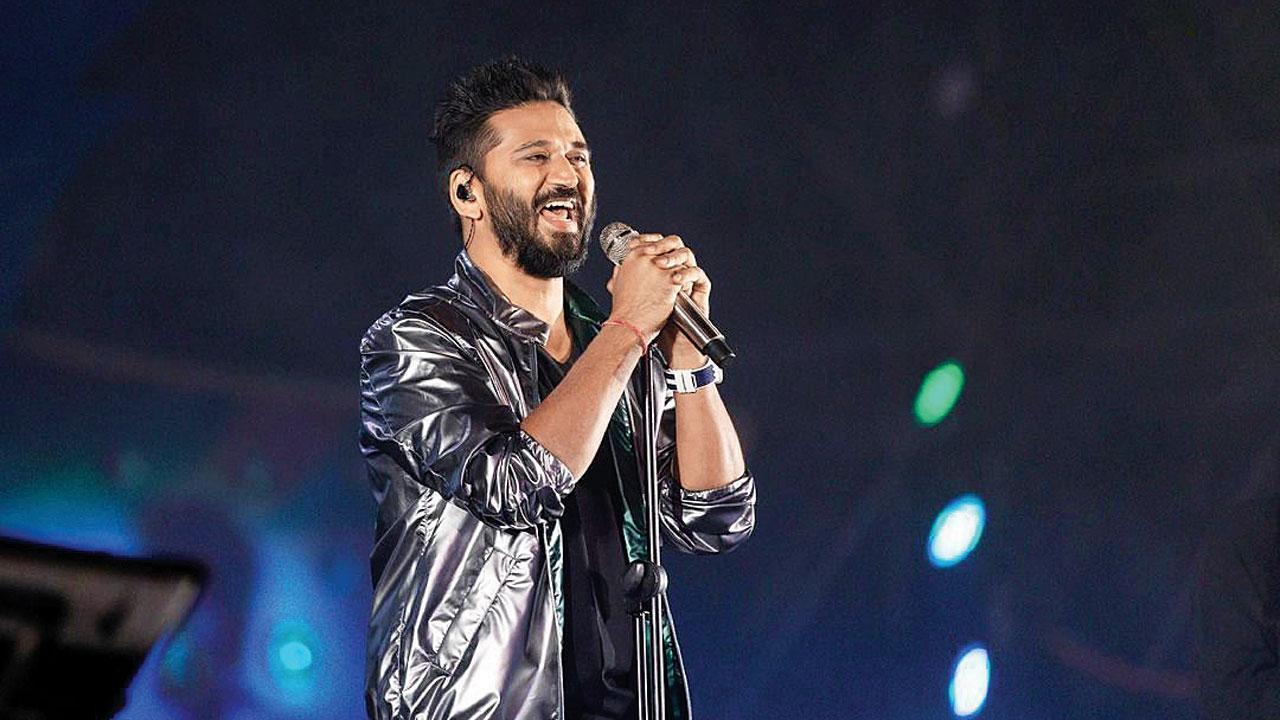
Debarati S Sen (BOMBAY TIMES; October 14, 2023)
In 2009, Amit Trivedi’s soundtrack of Dev D changed the way Hindi film music sounded. Over the years, his willingness to experiment with diverse musical landscapes, blending of traditional elements with contemporary sounds, resonated with music lovers and his songs like Iktara (Wake Up Sid), London Thumakda and Kinare (Queen) to the electrifying beats of tracks from Udta Punjab gave Indian cinema a refreshing musical identity.
In a candid conversation with the musician at his Andheri studio, we discussed his love for freedom as a music composer, how he works multiple mediums whether it's films, OTT or the independent space, and more. Excerpts from our interview…
Mostly, all your film work has been complete albums. But there are many that have three to four composers working on one single film. Did you consciously take a stand against such albums?
Yes, I have said a no to such work. I won’t do film albums that have more than one composer. I feel bad for composers who do that because the public will not know ki kiska gaana kya hai and so your identity will be lost. In the long run, no one will remember. But if it is an individual composer then people would know and recall far more easily. For example, if it's Pathaan, we all know it is Vishal-Shekhar.
Did you ever have to give up your creative freedom for others? For the director or producer of the film?
That keeps happening. I won’t take names but when my fans feel ‘this song isn’t an Amit Trivedi one’, those are the times when I have faced this interference! In those songs mujhe creative freedom nahi diya gaya tha. Curb kartein rahein. Yeh mat karo, woah karo etc. And that is when the result is like that. Whenever I have not had any interference, those tracks and albums have worked extremely well like a Dev D, Udaan, Lootera, Kai Po Che, Queen. In Udta Punjab thoda bahut interference tha, but not much. I did the music for Qala in just three days. I didn’t let anyone interfere at all, kisi ko mauka hi nahi diya! That’s my learning after all these years in this industry!
You’d completed the first six songs of the Dev D album in six months, and it was released without any changes. Has that ever happened in recent years?
It happened with Qala and Jubilee. It is such a pleasure to work with filmmakers like these. They just let you be. They give you that freedom to create. Their ideas and visions are really great. What they want to say in their films is also unique and working on such projects is an experience. To be a part of that vision and getting to create the way you want to and the freedom to bring in what you can in that space, is magic. But if you are chasing a certain parameter of success, whether it is commercial or there is a certain mindset, it is a different ballgame, and I don’t operate from that level.
It’s been 15 years as a composer in the Hindi film music industry. Would you say your journey has been more about ups than downs?
Life is like that – ups and downs toh rehta hi hai. Mostly ups and very little downs so far, and it has been a beautiful journey and I am immensely grateful for that. Jo bhi bura hona hai woh toh hota hi hai. But then, I have a habit of rubbing things off and moving forward constantly. I never look back. Never have. Always aage chalo. Keep working. I never look at the lows in life.
My mother, wife and daughter loved my lyrics Saaqiya, as did Emraan Hashmi, Vidya Balan-Milan Luthria
8:08 AM

Turning lyricist with Saaqiya, Sultan Of Delhi director Milan Luthria says Vidya, Emraan and his friends’ reactions have given him confidence to pursue songwriting
Upala KBR (MID-DAY; October 13, 2023)
Sultan Of Delhi promises to be a signature Milan Luthria fare, complete with larger-than-life characters, well-mounted action sequences and dialoguebaazi. At the same time, the gangster drama marks a departure for the director, who has turned lyricist with the number, Saaqiya. Penning the song was an organic process, says Luthria.
“When the melody was sung to me, I gave them a rough line, but couldn’t go further than that. I have worked with some of the best songwriters of my time, be it Vishal Dadlani or Rajat Arora, and the musical great Nusrat Fateh Ali Khan. You end up watching and learning from them,” says the director.
After giving the first line, Luthria started thinking how he could take it forward. “That night at home, I said, ‘Forget it, it’s not my job’ and went to sleep. When I woke up the next morning, I realized that I had written the mukhda at some point last night. My assistants, my producer and the music composer loved it. Later, on a holiday, one of my friends insisted that I complete the song, and I did!”
Now that he is bitten by the writing bug, he is keen to pen more songs. “My mother, wife and daughter loved Saaqiya, as did Emraan Hashmi, Vidya Balan, Vishal-Shekhar, Pritam, and Manish Malhotra. That has given me some confidence, but I don’t know when I will crack the next one.”
So, is a book of poems on the cards? Nope, maybe a book on his experience of shooting films, says the director. “I’ve worked with some of the biggest stars, including Amitabh Bachchan, Ajay Devgn, Rani Mukerji, Vidya, Akshay Kumar and Sanjay Dutt. I got to see a side of actors that few see—they are light-hearted, kind and caring. The book [can capture] the behind-the-scenes anecdotes of my film shoots. I’ll start working on it soon.”
Fighter: Siddharth Anand to film two songs with Hrithik Roshan, Deepika Padukone in international locations
4:10 PM

Fighter cast to film song celebrating pilots’ camaraderie; two songs with Hrithik, Deepika to be shot later
Upala KBR (MID-DAY; September 9, 2023)
After travelling across India, Fighter director-producer Siddharth Anand brings his crew back home to Mumbai to film the last of select major sequences of his Hrithik Roshan-starrer. Apart from canning dramatic scenes, the leg also includes a party song that will be picturized on the actor and his co-stars.
“This is a party number. It is a song that celebrates the camaraderie between the actors [who play pilots] in the film. Hrithik, Anil Kapoor, Deepika Padukone, Karan Singh Grover, and Akshay Oberoi will be seen grooving to the peppy number that has been composed by Vishal-Sheykhar and choreographed by Bosco Martis. The set designer is Rajat Poddarr, and the director of photography is Satchith Paulose,” says a source close to the production, adding that filming commences today.
After this number, the director will also film two songs that will be picturized on Roshan and Padukone. “Those will be filmed on international locations.”
The makers kicked off the first schedule at the Tezpur Air Force base, Assam in November last year, and also subsequently shot a month-long climax sequence in April that was choreographed by SeYoung Oh, who has worked on films like Snowpiercer (2013) and the 2019 Roshan-starrer War.
Working on the special effects, we are told, will commence in October. “Siddharth has planned his shooting schedules in such a way that the film can meet its January 25, 2024 date with the audience.”
Deepika Padukone makes sure to own my voice on screen-Shilpa Rao
7:53 AM

Sundas Jawed (CALCUTTA TIMES; February 12, 2023)
She is the voice behind several chart-topping numbers, but still believes in introspection while making decisions. That is what makes the Tose Naina Laage, Khuda Jaane and Besharam Rang fame singer a music sensation in Bollywood and beyond. After taking the Kolkata audience on a melodious trip on Friday, Shilpa Rao spoke to CT about the mantra behind her flexibility, benefits of training early, her formula for success with Deepika Padukone and more. Excerpts:
You have been praised for the versatility of your musical style and for adapting to the needs of a song. What is the creative process behind this flexibility?
More than the creative process, you need to be open-minded towards different genres. It’s very important to listen to all kinds of music without preconceived notions while connecting with it. Once you start doing that, it starts showing in your own music and that helps you develop varied styles.
Your songs for Deepika Padukone seem to be a sure-shot formula for success. What is the secret chemistry behind this?
It is very simple. We do the work together. I do half the work in the studios, she expresses it on screen. She makes sure to own my voice on screen. We share each other’s work. It is a two-way process.
The diverse kinds of movies being made now have created room for singers with more distinctive voices and timbre. Do you agree, or can singers still be typecast in playback singing?
The journey is entirely independent of each other. I think no one should compare anyone with anyone else. We need to focus on what we want to do and what makes us happy. To do this, one needs to introspect daily. Everyone should have their own path, their own voices because there is always room for new things.
Popular songs like Besharam Rang acquire a life of their own when content creators make it their own. Sometimes they work really well, sometimes not so much, and the original singer, composer and choreographer do not have control over it anymore. Does it get bothersome at any point?
Yes, no one has control over it. Once we release a song, it belongs to the audience. It’s all on you. We are just in control when we are working on the song. When I am in the studio, I have that song with me and I have the pleasure to live that song and have a great time. That is my time to have fun with the song. I have my party in the studio and nobody can take it away from me. Once it releases, it belongs to everyone else.
Having worked with almost all music directors, who do you think has been a mentor and who is the most fun to work with?
Everyone has been a mentor and a fun friend. I am happy that I have been able to befriend so many people on this journey – be it Pritam or Vishal-Shekhar. We have created a space where it is fun to be around each other and share our thoughts and music advice.
You were in Kolkata for a singing reality show. Do you think there is a pressure to get stage-ready too early and less emphasis on the training? Or is it that learning to be a performer and starting early helps?
Training never ends; one keeps learning. I don’t see it as completely good or bad. Some take to it very nicely but for some it becomes an auto-pilot thing and later they lose that thrill of going on stage. It could be either case but learning from an early age is very advantageous. The sooner you start going to a school teacher, a guru to learn, the better. And when to get into the performance zone should be advised by the teacher or guru. They know it best.
What is it like to perform for an audience in Kolkata?
It is amazing. There is a different charm and energy here. These people are so artistically inclined. It comes from the soil. They all have a soft corner for the nuances of art – be it music, dance, films or other artworks.
Mid-Day Exclusive: Deepika Padukone glows in gold for Pathaan's party number, Besharam Rang
8:17 AM

Upala KBR (MID-DAY; December 9, 2022)
In November, the makers of Pathaan unveiled the film’s teaser, giving fans a glimpse of Shah Rukh Khan as a spy who has resurfaced three years after his last mission. Now, mid-day brings the first look of Deepika Padukone, who joins Khan in his comeback vehicle.
Interestingly, the makers have decided to release the film’s songs before they unveil the trailer, thus piquing the audience’s curiosity around the espionage thriller. The first song, Besharam Rang, has been shot in the picturesque beaches of Mallorca, and sees Padukone match steps with the leading man.
Director Siddharth Anand says, “Besharam rang will present two superstars of our generation, Shah Rukh Khan and Deepika Padukone, in their hottest avatar yet. This will be the party anthem of the season.”
Composed by Vishal-Shekhar, the number will drop online on December 12.
Those criticizing me are the ones dancing to my tunes-Tanishk Bagchi
8:30 AM
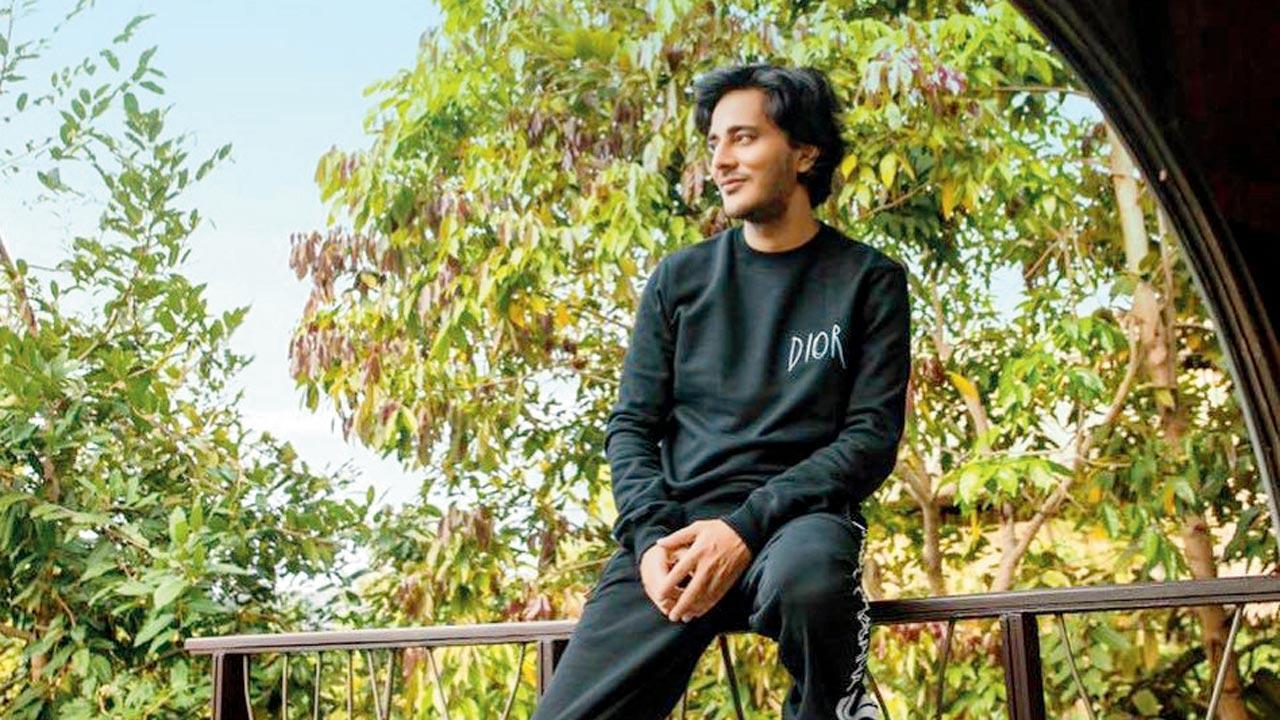
Undeterred by the brickbats he gets for remixing old ditties, Badhaai Do composer Tanishk Bagchi gets candid about emerging as the go-to person for filmmakers in search of chart-busters
Sonia Lulla (MID-DAY; January 31, 2022)
New music composers in the industry either win the favour of cinephiles and critics, or face brickbats. Tanishk Bagchi, however, faced an unusual predicament during his early years in Bollywood — he found favour in cinephiles, and faced the brickbats of critics. The Humma song, one of his first remixes, became a chartbuster in no time, and paved the way for a fresh trend in the industry. Bagchi’s scores became hot favourites among music consumers, a development that sat well with label heads, but not with composers of the original ditties that Bagchi was revisiting.
“I wasn’t the first one,” Bagchi tells mid-day in a candid chat. “Amit Trivedi did it with Hungama Ho Gaya, and Vishal-Shekhar with Bachna Ae Haseeno. When I started doing it, people questioned me. So, I decided that if I created two remixes, I’d make two original tracks as well. If I made Humma Humma, I made Akh Lad Jaave too. If I was at the top due to my remixes, I was also at the top because of my original songs.”
Bagchi’s resume evidently backs his claim. In 2021, apart from being a top performer on Indian music apps, his Shershaah composition Raataan Lambiyan made it to the Billboard charts as well. Emraan Hashmi-starrer Lut Gaye, and Nach Meri Rani were other Bagchi compositions that were also seamlessly adopted by music lovers.
Assured in the knowledge that “those criticizing me are the ones dancing to my tunes”, he says reinventing music is only a way of celebrating the work of revered composers. “My dad [Nandakumar Bagchi] would say that during the end of R D Burman’s life, few were there [with him]. But when he [passed away], people started reinventing his music. Nobody is trying to reinvent the work of those who are here. Only when they go do we say, ‘Wah, kya kaam kiya tha’. How do we get these legends back? We can do collaborations. Maybe, Anu Malik and I could collaborate.”
Despite the criticism he has faced, Bagchi is the go-to person for filmmakers seeking a hit track in their offerings. With as many as 20 projects under his belt as we speak, he gears up for his next, the Rajkummar Rao-starrer Badhaai Do. “I worked on the [franchise’s] first film as well, so I had the theme in my mind already. I begin to visualise the film through the music as soon as the story is narrated to me. I also like to think about it like a director would, and match the director’s vision. The dialect plays a crucial role as well. For instance, a Delhi-based film will have a Punjabi song. For a film set in UP, I will try to incorporate the flavour that we had in Badrinath Ki Dulhania. With 20 films [in my kitty], I need to be fast. It would usually take me a month, but, now, if a scenario is explained to me, I can churn out a track in a day.”
Matching the desired quality, one would assume, would be a challenging feat. But, Bagchi says his only aim is to appease himself. “Even if my manager or anyone else says a song I’ve made is good, I won’t present it unless I like it. If it doesn’t appeal to me, I will throw it out. I will also never repeat a certain kind of song. I can do a Makhna with Jacqueline Fernandez, a Nach Meri Rani with Nora Fatehi, a Raataan Lambiyan, which is [like a] sufi track, and a Tip Tip Barsa for Sooryavanshi. They all sound different.”
Bagchi admits that understanding the ways of the industry took a fair amount of toil. He didn’t find it easy to get work when he arrived in Mumbai from Calcutta, and turning down offers that he knew could easily go to other composers didn’t seem like a wise decision. “If I said no, producers would go to someone else. So I focussed on doing the best I could. At the end of the day, I focus on the good. When I will no longer be here, [my songs] like Ve Mahi and Baarish will be immortalized.”
We're doing whatever we can to save Dus Bahane song-Vishal Dadlani and Shekhar Ravjiani
8:50 AM

Vishal Dadlani and Shekhar Ravjiani intervene to take charge of rehashed version of their 2005 original, Dus Bahane, after learning that Baaghi 3 makers were working on one
Sonia Lulla (MID-DAY; February 3, 2020)
 Upon its release 15 years ago, Vishal Dadlani and Shekhar Ravjiani's Dus Bahane became a party anthem of sorts. Now, the fast-paced number from Dus (2005) has been revisited by Tiger Shroff and Shraddha Kapoor for Baaghi 3. In an age where Bollywood songs are constantly being reinvented, Dadlani has been at the forefront, criticising the trend.
In a previous interview with mid-day, he had referred to his slate of angry tweets when reiterating that he wouldn't take lightly to filmmakers contemplating remixing their songs, asserting that the feat may take away from the body of work of artistes who were "trying to create a legacy". It hence took us by surprise when we learnt that the duo was willing to rehash their own song. In a joint statement, the duo says, "We're doing whatever we can to save our song. It had already been shot to some chop-shop version, before we found out and objected. We insisted on creative approval, remuneration and primary and sole credit for our composition. Thankfully, everyone concerned has recognised and understood our right to protect our work, [and] our refusal to allow it to be released with anyone else's name on it. Ahmed Khan and Sajid Nadiadwala have been supportive. Bhushan Kumar too had a long chat and promised to never re-use our music without our involvement. Since this had already been shot to a version we didn't particularly care for, we are now trying to fix it so that a song that we all love, and one that has stood the passage of 16 years, isn't reduced to merely another shoddy 'remix'."
Responding to suggestions that Dadlani may also render his vocals to the revisited track, the duo says, "We haven't decided about that yet. We may keep the original vocals, because Shekhar and I are great friends with [original singers] KK and Shaan. We started together, and were part of this path-breaking track. But, since the tempo and verse have changed, we may need to replace the vocals too. Will decide in a day or two."
-------------------------

Upala KBR (MID-DAY; February 3, 2020)
Contrary to reports that suggested that Disha Patani would be seen in the reprised version of Dus bahane, mid-day has learnt that the song has the film's leading lady Shraddha Kapoor matching steps with Tiger Shroff. A source from the creative team reveals that director Ahmed Khan shot the track last December. "It was filmed across Serbia, Georgia, the Sambhar Salt Lake in Rajasthan, and Mumbai. Ahmed reimagined it as a stylised number that was shot against white backgrounds across the locales. He roped in couturier Aki Narula to design bright-coloured outfits for the leads."
Image: Hrithik Roshan-Tiger Shroff's War to feature Holi song, Jai Jai Shiv Shankar
5:02 PM

Chaya Unnikrishnan (DNA; September 20, 2019)
Their upcoming film, War, is being pitched as an action face-off between Hrithik Roshan and Tiger Shroff, but the dancing sensations will also come together to show off their moves. Director Siddharth Anand states, “Since the inception of the film, people were speculating there would be a huge dance anthem featuring two of the best dancers of our country — Hrithik and Tiger. This has been the biggest anticipation that automatically becomes a huge pressure for the people to deliver a cracking song that would become an anthem.”
A big-budget Holi song, Jai Jai Shiv Shankar will see the duo matching steps. “Firstly, we had to get the track right — one that justifies them dancing on it together. Hrithik and Tiger have had great songs and hit numbers to their credit; since we’re bringing them together for the first time, we have all the more responsibility to deliver a track that becomes a blockbuster instantly,”
Siddharth says, adding, “I told Vishal and Shekhar (composer duo) that this is not just a song but responsibility. I think it’s the blessings of God and Hrithik and Tiger’s fans that we have been able to create a track that’s truly an anthem. You have to hear it to understand it.” The director divulges that after they got the song with uptempo beats, they couldn’t have shot it in any lesser way. The video, featuring over 500 dancers, was conceptualised by Bosco and Caesar for more than a month before it was taken to the actors.
Siddharth informs that Hrithik and Tiger rehearsed for three weeks to make it a visual spectacle. “This is a Holi song. What got me excited was its lyrics, ‘Jai jai Shiv Shankar, aaj mood hai bhayankar. When you see this song, you’ll get into a bhayankar mood to dance. You will just freak out and that is the killer part of it.”
After Porto, War makers shut down beach in Positano in Italy for Hrithik Roshan-Vaani Kapoor's party song
8:25 AM

Mohar Basu (MID-DAY; September 5, 2019)
Director Siddharth Anand was always certain that War had to be a visual spectacle that would justify the on-screen union of two of Bollywood's hottest action heroes — Hrithik Roshan and Tiger Shroff. If the October 2 release promises to have action sequences mounted on a grand scale, the director has spared no effort while filming the songs. Turns out, Ghungroo — a party number featuring Roshan and the movie's leading lady Vaani Kapoor — is the first Bollywood track to be shot on the beaches of Positano in the Amalfi Coast of Italy. A tourist hotspot, the beach was shut down by the makers as they filmed the number with the lead pair.
A source reveals, "The Vishal-Shekhar composition is a foot-tapping number. As soon as Siddharth heard the composition, he was clear that the song had to exploit Hrithik's dancing skills to the optimum while presenting a never-before-seen locale on the big screen. After discussing a few location options, Siddharth and choreographers Bosco-Caesar and Tushar Kalia thought the pristine beaches of Positano will be a perfect backdrop for the party track. Over 150 dancers were flown in from Milan to match steps with Hrithik."
Anand knows well the expectations that surround a dance song featuring Roshan. Pleased with how the track has shaped up, the director tells mid-day, "Everything about War is about the scale. With Ghungroo, we will present the most good-looking beach day party to the audience. No other film or artiste has ever shot a song on the Amalfi Coast because of the exclusiveness this destination brings. I'm glad we will be the first film to show the locale in all its glory." The team had reportedly shut down a bridge in Portugal to film an action sequence between Roshan and Shroff.
Image: Hrithik Roshan-Vaani Kapoor to create dance fever with War song 'Ghungroo'
8:48 AM

DNA (September 2, 2019)
The makers of the action entertainer, War, will soon launch the first song of the film, which we hear will be a party track. Titled Ghungroo, the track will have the dancing sensation Hrithik Roshan and the sexy Vaani Kapoor grooving to it. Versatile singer Arijit Singh has been roped in for the duet with Shilpa Rao.
Says director Siddharth Anand, “Arijit is the biggest singing sensation of our country and we were clear from day one that we wanted him to sing our party anthem. Arijit singing a dance number for Hrithik is a huge USP for us and he has done a phenomenal job. We also have Shilpa singing for Vaani in the film. Shilpa swept away all the awards for Khuda Jaane (Bachna Ae Haseeno, 2008) and since then, she has sung in every film of mine. So, it was amazing collaborating with her again. Ghungroo is the party anthem to watch out for.” The song is composed by Vishal-Shekhar.
Alia Bhatt held my hand to calm me down-Shreya Sharma
8:22 AM

Dhaval Roy (DNA; August 18, 2019)
Shreya Sharma didn’t believe that her first commercial song, The Doorbeen’s Prada, had become a smash hit till it reached 10 million views. The crooner enthuses, “First, I didn’t believe that Alia Bhatt herself was going to be in the video till I saw her giving the first take. Then only after the song crossed the 10-million mark, did it sink in that this was happening. It’s so surreal!” That’s not all. She hasn’t stopped adding ‘I sang Prada’ when introducing herself. “It’s like throwing your resume on the table but it feels great,” she giggles.
The singer has so far only released covers of popular songs on her YouTube channel, and her first pop outing has been a massive hit. But when she sang the scratch, Lamberghini had just released and no one knew the Doorbeen were on to something so big. “We were just having fun making Prada and I didn’t think it would be at this level where Alia would be in the video and Bosco Martis would work on it. When I was introduced to Onkar Singh and Baba, I just clicked with them. I heard the song and thought it was fresh and fun, so, I did it,” Shreya tells us.
The roaring success of Lamberghini also made her sceptical that Prada would be received so well because the audience doesn’t always respond positively to something experimental after a tried-and-tested offering. “You can never tell with listeners. So, I was nervous, despite what anyone said when they heard the track,” she reasons.
About lending her voice to Alia, she says, “I was so starstruck when I met her for the first time. Actually, I was extremely nervous then and also while doing the behind-the-scenes interview with her. She could see that and put me at ease. There was a moment in the interview where she just held my hand. And it was so calming.” For the artiste, seeing the Raazi actress’s work ethic and professionalism was inspiring. “I saw her jamming to the song,” says Shreya, for whom the track is extra special because the actress has debuted in the music video space with her voice.
Apart from opening many doors for her, a humongous track like Prada for a debut must also put pressure on her to up the ante with her forthcoming songs, we ask. She replies, “It’s not really a pressure; I enjoy the challenge. But, I have always been mindful of the quality of what I release even on my channel. For me, the true test is whether I would like to listen to it as an audience. Even if there’s a bit of a flaw, I work on it.” She believes now that she has a certain audience, it will give her a chance to experiment.
Of course, she would love as an artist to sing for Alia in films but who else is on her wish list? “Deepika Padukone, Taapsee Pannu, whom I loved in Nach Lena (Dil Junglee). I feel Sonakshi Sinha’s personality always shows through in any music video that she does,” Shreya points out. As for composers, A R Rahman. Vishal-Shekhar and Salim-Sulaiman also figure on her list. She tells us that in the non-film space, she’d like to collaborate with Sukriti-Prakriti as she loved their single, Maafiyan and Lisa Mishra of Tareefan fame.
Shreya is currently working on a wedding song since it’s going to be the shaadi season soon. “I’m thinking of doing a romantic and soft one and another peppy and fun number. One of them is a remake and the other one an original,” says the singer who would like to explore the electronica and trippy genre as an artiste.

Salman Khan gets in the festive mood for Bharat?
8:33 AM

Himesh Mankad (MUMBAI MIRROR; January 30, 2019)
 Salman Khan’s Ali Abbas Zafar directorial Bharat, which is to hit the marquee on Eid this year, also celebrates other Indian festivals. And according to a source close to the project, the film features six songs to reflect the festive fervour. While three songs are centered around Holi, Diwali and a wedding each, the rest have romance and tragedy as their backdrop.
Ali, who has collaborated with composer-duo Vishal-Shekhar and lyricist Irshad Kamil for the third time after Sultan and Tiger Zinda Hai, is currently filming the wedding song at Filmcity with his leads, Salman and Katrina Kaif, and their co-stars Sunil Grover and Aasif Sheikh. “For the ongoing 40-day schedule, the team has recreated Delhi of the 1950s and ’60s. The music sittings started much before the film went on the floors in July last year and unlike the current trend, the album doesn’t have any recreated numbers,” the source added. During the Malta schedule in July last year, the director had shot a romantic number featuring Salman and Katrina, which will be the Diwali song.
Meanwhile, it had recently emerged that Varun Dhawan, who has a cameo in the period-drama, plays a businessman and shot for his portions during the film’s Abu Dhabi schedule in October last year.
Salman Khan to sport 4-5 avatars in Bharat?
7:55 AM

Actor’s Eid 2019 release sees him sport four-five different looks over 60 years as a common man
Sanyukta Iyer (MUMBAI MIRROR; February 9, 2018)
Salman Khan’s 2019 Eid release Bharat, which marks his third collaboration with Ali Abbas Zafar, kicks off in June and will be filmed in Abu Dhabi, Spain, Punjab, Mumbai and Delhi. Mirror has learnt that several landmark events in India’s history will be revisited in the film which spans six decades and is the official remake of the South Korean film, Ode To My Father. The Partition of 1947 figures among the aforementioned events for which a set is being created in the Abu Dhabi desert to resemble the Indo-Pakistan border.
“Salman sports four-five looks in the film through 60 years, and one crucial part will focus on his late 20s, in which the 52-year-old actor will look leaner and much younger,” a source told Mirror.
Prep and recce is complete. Musician-duo Vishal Dadlani and Shekhar Ravjiani are composing a unique theme music for the film which will be insync with the narrative that follows one man witnessing history being made several times in his life. Other tracks, written by award-winning lyricist Irshad Kamil, are also being developed.
The 2014 original depicts modern Korean history from the 1950s to present-day, from the Hungnam Evacuation, the government sending nurses and miners to West Germany, and the Vietnam War. “For Bharat, Indo-Pak relationship through Partition, the 1965 war, till recent times, will be highlighted, including other historical references that impacted the common man,” the source added. The film’s shooting will involve intensive travel and elaborate sets.
It hurts when I listen to remakes that don’t do justice to the originals-Anushka Manchanda
8:10 AM

Debarati Sen (BOMBAY TIMES; December 3, 2017)
A true artiste is never really restricted to a single form of expression. Multi-faceted, they usually begin early by dabbling in many areas and eventually, excelling in quite a few. Anushka Manchanda is one such artiste. She began her journey into stardom as a teenager, by winning one of India’s earliest reality shows to bag a place in the country’s first all-girl band, Viva. Since then, she has donned multiple hats with élan — singer, music producer, songwriter, video editor, biker babe and an actress. Excerpts from an interview...
You were in your teens when you won the Viva talent hunt in 2002. How was the experience, especially since you had never really planned a career in music?
I was 17, and hadn’t even finished school. I had no idea what I was getting into, but everybody around me, including my teachers at school, told my parents that this was the right thing to do. We were meant to migrate to the US earlier that year, but I had an accident which delayed the move. Now, I believe that everything, no matter how bad it seems at the time, happens for the right reason.
Viva was a glamorous band, which had four talented, young and gorgeous girls. Did you ever feel that the music industry did not take you seriously?
Right after Viva split, I became a VJ and one of my first shows was V Launchpad. One day, I did an impromptu jamming session and as soon as I stopped singing, I saw all these indie musicians looking at me incredulously. One of them said, ‘Hey, you can actually sing!’ I grew up on rock and roll, and felt like a fish out of water in the pop band. So, to finally get acceptance from others felt pretty good. Having said that, if I could go back and give an advice to my 20-year-old self, it would be to not worry about being accepted.
It took you four years after Viva to make your Bollywood debut with the title track of The Golmaal – Fun Unlimited (2006). That song is still popular. How did it feel to be appreciated for your first attempt at playback?
If there was a person from the band who had the least chances of being a playback singer, it was me. So, when these songs started to come in, I was shocked. However, I didn’t overanalyse it and just went with the flow. I landed the song because Vishal and Shekhar (music directors) had heard my voice at a show I was hosting. Needless to say, that track turned out to be super lucky for me.
While you were an untrained singer, the music industry, including Bollywood, has always laid a lot of emphasis on the singers being formally trained. Did you ever face any disadvantage because of that?
Yes, I felt that it was such a big drawback. I had played the piano for many years and my basic knowledge was strong, but mostly, I grew up listening to Aerosmith, Rage Against The Machine, Prodigy, Metallica and Apollo 440. So, my style and approach were completely different. It worked for me at times, but many times, it didn’t. For example, once I had to record a song for Jatin-Lalit and I spent most of the time crying in the bathroom because I just couldn’t sing in that style well enough and I felt so bad about it.
Since the Golmaal track, you have sung over 100 songs in films. How has the journey been?
It’s been an adventure. I actually learnt everything about singing on the job. There is this soft side to my voice that I didn’t get to explore much in Bollywood, but I use it a lot for advertising. I wish I could do more of that in films, too.
What’s your take on the current scene in Bollywood music? Over the last few years, do you think that it has changed a lot?
Honestly, it’s a bit confusing. There are so many new, talented artistes in the music industry. But then, there are also songs that make you question everything you believe in. In all humility, let me say that it hurts when I hear remakes of old songs that don’t do justice to the original. I’m not a purist, but some things are sacred.
You have also dabbled in acting, with Pan Nalin’s Angry Indian Goddesses that won critical acclaim, globally. Tell us about the experience...
It was educative — I learnt about filmmaking, acting processes and methods. I also learnt about myself and what I am capable of. I was surrounded by technicians and artistes who were passionate about what they were doing, and it reinforced my conviction about the kind of work I want to do.
Do you find acting as cathartic as music? Or did you explore it out of curiosity?
After Angry Indian Goddesses premiered at the Toronto Film Festival, an article was published about 15 breakthrough actors from the festival and my name was on the list. That gave me a high and I want to do more work that excites me.
Having been successful in various fields, what do you see yourself as — a singer, model, actress or VJ?
Whenever someone asks me that question, I say that I am a new music producer who has been singing for many years. I have also edited some music videos for which my brother, Shikhar Manchanda, and I composed the music.

I was offered Ude Dil Befikre as I could sing in Arabic-Benny Dayal
7:49 AM

Singer Benny Dayal reveals how he landed the Befikre title track, and key advice he got from A R rahman on staying ‘unique’
Soumya Vajpayee Tiwari (MID-DAY; December 14, 2016)
Singer Benny Dayal’s dwindling discography of Bollywood tracks in 2016 is in stark contrast to his meaty compilation of the last few years. Yet, his second Hindi number this year is already climbing the charts for aptly portraying the freedom demanded by the song. Ude Dil Befikre, the title track of Aditya Chopra’s Ranveer Singh and Vaani Kapoor-starrer composed by Vishal-Shekhar, has Benny humming an Arabic verse in it.
“I was offered the song because Vishal and Shekhar realised I could sing in Arabic. It seems like a simple track but was hard to deliver,” says the singer, adding, “I used to participate in inter-school Arabic singing competition. That’s also how I met Mr rahman (A R Rahman). He told me, ‘You can sing in Arabic. Don’t ever let this quality fade away. This makes you unique’.”
Ranveer, on whom the track is picturised, performed it at the global Citizen Festival india last month. “I met him before he went on stage. He gave me a hug before that,” says Benny. The singer was delighted to share the stage with Jay Z and Coldplay at the event, and confesses that it was a fanboy moment. “I didn’t get the opportunity to interact with them because of the high security, but just seeing Jay Z perform live made my day. I was really excited,” he says with child-like joy. The singer has been selective with his choice of songs because he wishes to green-light projects that are “experimental”. “I want to have diverse songs in my repertoire. I’d rather do great work than worry about delivering hits. I have learnt this from Mr Rahman and Salim Merchant.”
Asked if any other creative art, besides music, interests him, Benny says he enjoys whipping up delicacies in the kitchen. “My wife and i often spend time cooking together [he tied the knot with longtime girlfriend Catherine Thangam in June]. I really enjoy making indian food, especially chicken curry. Recently, my maid went on leave for a month. So, my wife and I had a great time trying our hand at different cuisines.”
Anurag Kashyap gives space to the composer; Aditya Chopra is open minded & has strong vision-Mikey McCleary
6:53 AM

Befikre music producer Mikey McCleary on the most carefree thing he has done
Bryan Durham (DNA; December 10, 2016)
It’s been a while since we’ve spoken with Mikey McCleary and now’s as good a time as any to catch up — he’s the music producer of the just released Befikre and is responsible for how the film’s soundtrack ‘sounds’. Here, he talks about the film’s director Aditya Chopra’s involvement in the making of the music and how he collaborated with Vishal-Shekhar who composed the film’s OST.
How different is it to work with an Aditya Chopra as compared to Anurag Kashyap?
I enjoy making music for a wide range of cinema, from more edgy independent films like Margarita With A Straw to Bollywood blockbusters like Befikre. Every director has a different style of working. The pieces of music I’ve made for Anurag have mostly been done without him there in the studio. I think he likes to give space to the composer to create the music. More indie-type films usually allow for greater experimentation. Over six weeks of producing the songs and another six weeks of composing the background music score, Adi Chopra would pop into the studio every other day to listen to the work in progress and give me his thoughts. He has very strong musical sensibilities. He can hear a piece of music just once and be able to clearly point out the elements that he likes and the ones he would like to change. Our working dynamic was easy and pleasant. He’s open-minded and yet has a strong vision of what is looking for in the music.
Do producers and directors intervene at all with your work?
Yes of course! Often their input can be helpful, but sometimes not. Some who I have worked with, such as Dibakar Banerjee, have very good understanding of music. Collaboration with a good director will make the music better, most of the time.
Explain the work-sharing between Vishal Shekhar and you?
Vishal and Shekhar composed the vocal melodies. Sometimes, they had an idea of what style of music production and genre they wanted, but most of the time they let me experiment with the genre and arrangement. They enjoy hearing an unexpected musical interpretation of the composition. Once I have a direction they like, I fine-tune the music further and they also input ideas.
For those unaware of the technicalities, how do you explain the difference between music production and direction.
In India, the music director is the composer of the vocal melody. They also guide the general direction of the music and approve the final result. They also usually are very involved in directing the singer. The music producer creates the other elements. The beat, the bass-line, the chord progression and all the additional melodies that come in the song. The instrumental melodies and hooks are usually created by the music producer. It’s an important role because the music producer really determines how the song sounds. In the west the role of the music producer is more recognised and many stars like Timberlake, Avicii or Swedish House Mafia are actually music producers.
The average listener is generally unaware of the amount of work that goes into music production. Some even perceive it as a thankless job, despite credits now being given wherever necessary. What needs to change?
For starters, when a music producer has made the music for an entire film I think they should get a ‘Songs produced by such-and-such’ front title credit in the film. I have been given this for Befikre.
What else have you been busy with?
TV ads as usual. Writing the screenplay for a Bollywood film which I’d like to direct myself. It’s a surprise. My interest in filmmaking started from directing my music videos for The Bartender and TV Dinners.
Another Bartender album in the offing?
Yes there certainly is. Most of the songs are finished.
What’s the most Befikra (carefree) thing you’ve done in life?
The most Befikre thing I can’t tell you, I have my proper reputation to think of. But one carefree decision I made (one of my best decisions) was to leave my life in London and move to Mumbai eight years ago.
One incident while putting together the album that has stayed with you.
Recording Vishal playing the spoons for one of the songs. It’s a real thing, you take two spoons and slap them between your thigh and hand to create a percussive rhythm.
For a singer, inspiration feeds off music and lyrics-Shilpa Rao
7:44 AM

Debarati Sen (BOMBAY TIMES; October 7, 2016)
Shipla Rao's latest release
Bulleya from Ae Dil Hai Mushkil is already climbing charts. Though a
high-energy track, it is inherently Sufi and soulful in its nature - which is one of the primary reasons for its widespread appeal. Shilpa's
sombre, full-throated, yet expressive voice has a distinct charm and
what makes her stand apart is that she modulates and experiments with
her vocal texture to belt out numbers that make it to not just the
charts, but also people's hearts. Her earlier releases include Meherbaan
from Bang Bang, Subhanallah from Yeh Jawaani Hai Deewani, Khuda Jaane
from Bachna Ae Haseeno, Malang from Dhoom 3, Mudi Mudi Ittefaq Se from
Paa and Ishq Shaava from Jab Tak Hai Jaan. In a quick chat, the singer
talks to us about Bulleya and more...
How did Bulleya happen?
Bulleya is Pritam's USP - the way he has composed it. He asked me to come and try out the lines and we did the song. Amitabh has written some beautiful lyrics and definitely, my inspiration comes from that and he way Pritam has put a tune to them. The combination of Amitabh-Pritam is fabulous and that's how Bulleya came together.
Your last Bollywood song was in 2014. What took you so long to come back?
Meherbaan for Bang Bang was my last. We keep doing songs, it's just that the release dates are not in our hands - sometimes a song releases in a month and sometimes, a year later. What is important is the newness that you bring to a song. And that is what I always try and do, so that the audiences have a new perspective and a fresh sound from me each and every time.
You don't have a conventional playback singer's voice. Has that worked for you? Or do you think, over the years, you have lost out on some songs because of that?
As far as Bollywood singing is concerned, I don't think this exists anymore, because each singer has his own way of singing. And I think every composer is actually welcoming that. I have been really fortunate that every composer I have worked with, has let me be myself and has let me express the song in my own way.
There are too many talented and young singers in the industry. Does that affect you?
I think it's a great thing. Film music is diverse these days and to cater to that I think you need a variety of singers bringing their own ideas and uniqueness into a song. What each singer can do is unique. Somebody else could do a similar thing, but in their own manner. So, I think it's a great time for musicians, lyricists, composers and singers these days. And each one has a unique way of expressing himself or herself.
What do you have to say about the kind of lyrics that are being written these days?
Well, every form of art is actually a reflection of the society, so, as the society keeps changing, our music, films, lyrics and art work also keeps changing accordingly. And, I think every time has its own highs and lows. I guess it also holds true for music. Some great work has come out this year and I really hope every composer is trying to put out his best work. It's always a pleasure to hear something great from people like Pritam, Vishal-Shekhar, Mithoon. I really hope music keeps reflecting our times.
How important are music and lyrics for a singer? Do these affect your work too?
Music and lyrics both are very important for a singer, because that's where our inspiration feeds off. So, when I go to sing a song the lyrics and the tune, actually inspire me to express myself in a certain manner. When I work with a composer or with a lyricist, it is really important for me to feel connected with the song and to feel inspired by it.
Subscribe to:
Posts (Atom)