Showing posts with label Viacom18 Studios. Show all posts
Showing posts with label Viacom18 Studios. Show all posts
Peepli Live director Anusha Rizvi to make satire on demonetization
8:32 AM
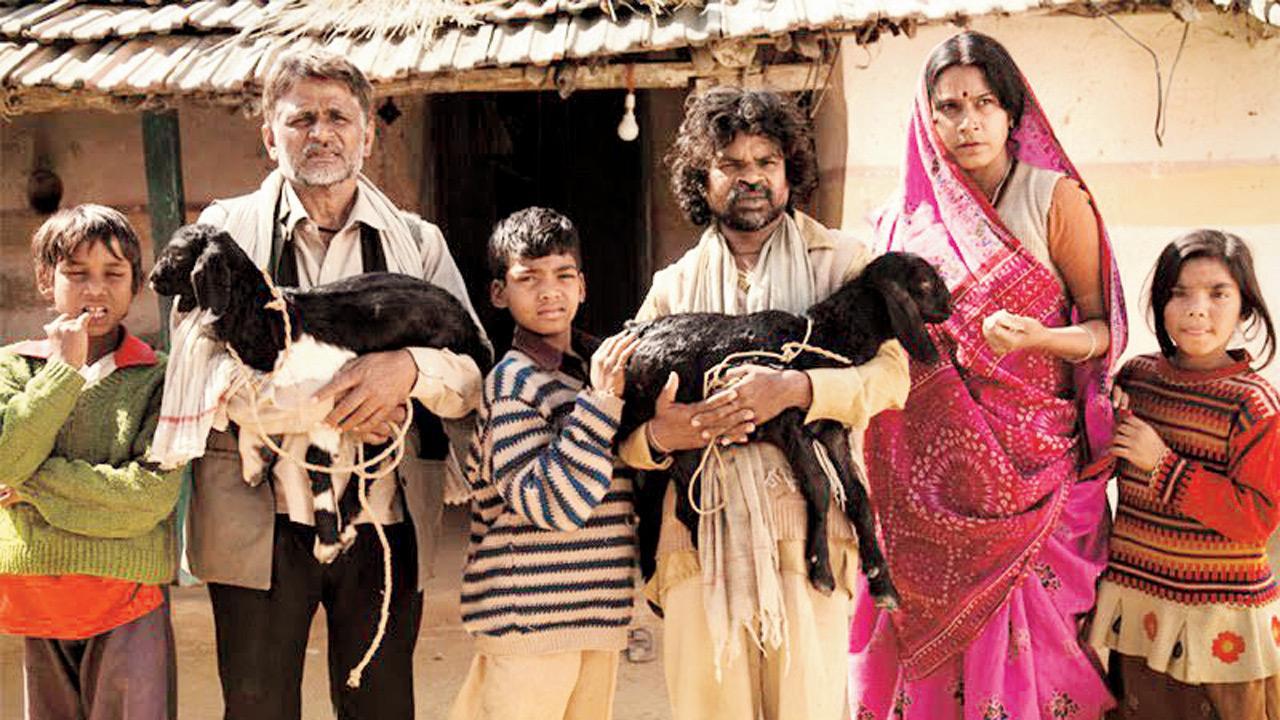
Sources say Peepli Live director Anusha Rizvi to make a satire on India’s 2016 demonetization; makers scouting for five new faces to lead the black comedy
Mohar Basu (MID-DAY; February 4, 2025)
In 2010, Peepli Live gave Bollywood not only a gifted debutant writer-director in Anusha Rizvi, but also a sharp satire that the industry is often starved of. Naturally then, the industry folk as well as the audience were eager to see what the director would do next. It has been a long wait of 15 years, but Rizvi is now set to take her place behind the camera again. mid-day has learnt that she is crafting a black comedy that explores the impact of the demonetization that was effected in India in November 2016.
A source close to the project reveals, “Anusha has written a story reflecting the absurdity and chaos that followed the policy shift. The film isn’t about the economic fallout, but primarily about how people in different social strata navigated a crisis that upended their lives overnight.”
While Rizvi’s second offering belongs to the same genre as Peepli Live, it also has a stark difference. We’ve heard the yet-untitled film, backed by Viacom18 Studios, is a female-centric story. “The story is centred on five female characters. The role demands fresh faces, people who can bring rawness to the parts. Anusha and the makers are scouting for new talent and have held multiple auditions in Mumbai and Delhi. The lead actors are yet to be locked,” the source adds.
The satire is expected to roll by mid-2025, with shoots planned across north India. “It will have the same rooted texture as Peepli Live,” adds the insider. We texted Rizvi, who didn’t respond till press time.
TV is far from dead; streaming has immense growth potential-Uday Shankar
8:36 AM

Javed Farooqui & Vinod Mahanta (THE ECONOMIC TIMES; November 28, 2024)
JioStar, the newly formed media behemoth spawned by the merger of Walt Disney’s Star and Viacom18, has the potential to reshape India’s media and entertainment landscape, Vice Chairman Uday Shankar says. “The merger gives us a strong foundation to innovate and experiment, paving the way for transformative change,” he tells Javed Farooqui and Vinod Mahanta in an in-depth conversation that touched upon subjects as diverse as industry structure, vision for the combined entity, and execution challenges in synergy capturing.
Announced last week, the merger has created a company with Rs 26,000 crore ($3.1 billion) in combined revenue for FY24, reaching 750 million viewers through 115 TV channels under the Star and Colors brands. It also includes two of India’s leading streaming platforms, JioCinema and Disney+ Hotstar. In this exclusive interaction, Shankar discusses the vision for building India’s largest media and entertainment company, the challenges of competing with global tech giants, strategies to address sports business losses, and the future for television that many believe is in an attritional decline. Edited excerpts:
Will the scale of JioStar be able to create a powerful differentiating factor?
This merger presents a tremendous opportunity to redefine the relationship between content and consumers, as well as with key stakeholders like advertisers and distributors. While the merger itself doesn’t directly alter the consumer’s experience, it lays the foundation for us to innovate and experiment in ways that could transform the industry.
With our combined reach of 750 million people and significant presence across critical content pools, we have the scale to lead impactful change. In my experience, when the industry leader takes bold steps that resonate with consumers, others tend to follow. This is especially important in a media landscape that’s undergoing rapid transformation globally and here in India, driven by technology and evolving consumer behaviours.
Television, in particular, remains a dominant force in India, and I believe reports of its decline are premature. Yes, every medium has its lifecycle, but television in this market still has a long way to go. The merger gives us the ability to explore new ideas and create offerings that strengthen the connection between content and audiences while adapting to the broader changes shaping the media and entertainment landscape.
If you have 90 million homes paying for TV every month and 125–135 million families watching TV daily, it’s clear that television is far from dead. There’s a significant opportunity to reinvent, revitalise, and make TV stronger and healthier.
On the other side, the streaming business offers immense growth potential. With 700-750 million people using mobile phones and consuming data in some form, we have a huge opportunity to connect with each one of them, given the compelling nature of our content. But achieving this isn’t just about providing content—it’s about transforming the entire consumer experience.
India is evolving rapidly, and with that comes the need for innovation across the content ecosystem. From how we create and offer content to how we monetize and produce it—everything needs to adapt. This merger gives us the scale to experiment, innovate, and execute these changes on a much larger level. It’s about reimagining what the future of entertainment can be, both in traditional and digital spaces.
And how do you intend to go about doing this?
By fundamentally changing the way content creation works, though it’s not something that can happen overnight. We already have a lot of content that’s performing well, and we’re running a successful business. It’s essential not to disrupt that core too much or too quickly.
This process has to be calibrated. We’ll start by experimenting selectively, seeing what works, and scaling up successful initiatives. As new ideas and content take shape, some of the older approaches will naturally phase out.
It’s a dynamic process, and while I can’t say we have a fully defined plan at this stage, we are firmly committed to this strategic direction and evolving with the changing needs of the audience.
The merged entity includes a profitable entertainment segment but also loss-making digital and sports businesses. Will these losses impact the overall financial health of the new entity?
Historically, when Star made significant bets, such as investing heavily in IP, there were similar concerns. Many believed Star was taking an enormous risk, but those investments worked out brilliantly. Star built a high-quality, integrated sports franchise and monetised the IPL, which turned out to be a game-changer. On the back of the IPL, Star was able to create Hotstar, which would have been impossible otherwise. Additionally, Star leveraged its integrated sports and entertainment content to secure a disproportionately large share of distribution revenues.
In our case, while some expensive rights exist, they are typically short-term—3 to 5 years at most. This has both drawbacks and advantages. The short tenure allows us to assess and recalibrate quickly.
The entertainment segment is robust and financially strong. Our streaming business, while at scale, continues to operate at a loss as part of the ongoing investment phase. However, these investments are essential to building a future-proof ecosystem. With the right strategies and synergies, we’re confident in managing these dynamics to strengthen the overall financial health of the new entity.
But even the streaming business is operating at a loss?
Right now, yes, it’s still in the investment phase, but that’s intentional. Take sports rights, for example—Jio Cinema wasn’t profitable initially, but that was a conscious choice. We were building a platform that didn’t exist before, and no business starts making money from day one. First, you build the product, create the market, bring it to customers, and then you start monetizing.
With Jio Cinema, we knew that putting IPL on the platform wouldn’t make money immediately—it was about investing in growth and building the foundation. Now, the platform has matured, and we’ve established a solid customer base on both the ad and consumer sides. This allows us to start recasting our strategy and become more disciplined.
For instance, with the recent Asia Cup rights, we chose not to bid because it didn’t align with our strategic priorities. While we are willing to invest heavily in assets that are strategically important, we’re disciplined about evaluating their long-term value. Back in 2017, when we invested in IPL at Star, many thought it was expensive. But without that investment, we wouldn’t have been able to build a world-class TV sports franchise and Hotstar.
Looking ahead, we’ll continue to evaluate expensive rights. We’ve carried the burden for some time, and as the renewal periods approach, we’ll decide whether it makes sense to continue or to pivot. It’s all about being strategic and disciplined.
When you say some of the rights are expensive, are you referring to those that came with the merger?
That’s all history now. Everything is part of us, and we were fully aware of the rights we were inheriting when we made the deal. So there’s no point in revisiting that. That said, the cumulative value of the rights is significant—no question about it being onerous. However, we’re optimistic that we’ll be able to create incremental value from these assets to justify the investment.
What is the board’s mandate to you in terms of profitability, users, and scale?
To clarify, I’m not directly running the company. We have a team of executives, including three CEOs (Kevin Vaz, Kiran Mani, and Sanjog Gupta), who are responsible for the day-to-day operations. My role is more about shaping the strategy and guiding the leadership team. I’m part of the team that establishes the mandate, but execution lies with the operational leaders.
I’ve made an investment from my fund in this business, and there are other shareholders, with Reliance being the controlling shareholder. Naturally, there’s a clear expectation that this business will deliver very attractive financial returns—that’s the foundation on which I’ve raised money from my investors. Reliance, as a highly business-focused company, has similar expectations. It’s a given that we need to generate strong returns on investment and capital.
However, beyond financial returns, I have a very clear mandate from Reliance and other stakeholders: to redefine the media and entertainment ecosystem and prepare it for the future. While the media already has massive reach, I believe there’s a far greater opportunity to deliver content people love, whenever they want it, to the entire population of the country.
Previously, distribution was the biggest barrier, but that challenge has largely been addressed with the proliferation of mobile and broadband, a revolution that Reliance itself has been instrumental in driving. This transformation creates an incredible opportunity to reimagine how content reaches and engages audiences at scale.
I believe there’s a significant opportunity to drive deeper penetration and better consumption of content. To achieve that, we need to completely rethink how we approach content creation and delivery. This is what I referred to earlier—we must redefine many aspects of the process.
One key issue is the current concentration of content production and supply, particularly Hindi-language content, which remains heavily centralised in Mumbai. This model has its limitations. Gone are the days when a single production ecosystem could cater to the entire population north of the Vindhyas.
India is changing rapidly, with people’s tastes, aspirations, and expectations undergoing a dramatic transformation. To keep up with these shifts, we need to diversify and decentralise how and where content is created. That’s just one example of the kind of changes we’ll need to make to meet these evolving demands effectively.
You’ve said that the obituary of television has been written prematurely. Do you believe that the TV business still has a lot of potential in India?
Let me explain why I say that. In the US, television became very expensive, with consumers paying $60, $70, or even $80 as the minimum monthly cost. Streaming emerged as a cheaper and more convenient alternative—you paid $10 for a streaming service and got access to a wide library of content. While it wasn’t fresh content, it didn’t matter because most consumers hadn’t seen it yet, and they enjoyed the convenience of watching on their own schedule. Streaming addressed both affordability and convenience in that market.
In India, however, the dynamics are entirely different. Television is already extremely affordable, while streaming services aren’t as inexpensive. The Western narrative that TV is dying because consumers are shifting to streaming to save money simply doesn’t apply here.
In fact, the global streaming landscape is evolving too. With so many streaming services now available, consumers in markets like the U.S. are spending more collectively on subscriptions than they did on cable or TV. This just reinforces the point that television’s role, especially in India, remains strong and far from obsolete.
But isn’t it the case that once people cut the cord, they’re unlikely to return to traditional TV?
Once people get used to streaming, no, they’re not coming back. However, the number of streaming services in existence today is overwhelming, and many are struggling—except for one or two that are doing well. Affordability and quality of product remain a major factor. My point is that for any platform to succeed, the product must be both attractive and affordable.
In India, television’s biggest strength is its affordability. It delivers content that, while it might not appeal as much to certain segments of the urban elite, connects deeply with a vast population across the country. That connection gives television enduring power, and I believe it will remain relevant if reinforced with more innovation.
There’s a strong case for greater creative innovation on both sides—television and digital. Right now, both seem to be following predictable templates, and that’s where the opportunity lies: breaking out of the mould and offering something fresh and engaging.
Additionally, pay TV subscriptions have seen a significant decline over the past few years. What’s your perspective on this trend?
There are two or three key points here. First, the decline in pay TV numbers isn’t the full story. What really matters is the overall television universe, including free TV (DD Free Dish), and that hasn’t come down. In a value-conscious market like India, if consumers don’t see enough value in pay TV but find reasonable value in free TV, they’ll naturally migrate to free TV.
What exacerbated this trend is that many pay TV providers began offering their content on free TV platforms (DD Free Dish). Once that happened, why would a consumer pay for something they could watch for free?
However, live sports remains a stronghold for pay TV. It continues to perform exceptionally well because live sports are a unique draw—they’re best experienced in real time, and the TV viewing experience for live sports is unparalleled. While some mandatory sharing of live sports happens on platforms like Doordarshan, the core TV experience for live sports remains a major pull for audiences.
And I believe Star Sports has set the benchmark for creating a robust ecosystem that delivers an exceptional viewing experience. People aren’t walking away from that—it’s all about maintaining a compelling value proposition. Let me give you some background to illustrate this point.
Back in 2007, when I took over Star, there was a similar narrative—television was said to be in decline, people weren’t paying, ratings were dropping, and so on. Around the same time, Colors entered the market, shaking things up and sparking intense competition. The battle between Star Plus and Colors played out over several years, but it also led to a significant surge in the reach of Hindi entertainment. Suddenly, audiences were seeing fresh, engaging content, and they were excited again.
Another example is when we experimented with Satyamev Jayate. It brought in entirely new audiences and reinvigorated interest. Media thrives on innovation and creative disruption. It’s not just about maintaining the status quo—it’s about constantly finding ways to excite and engage audiences with something fresh and meaningful. That’s the essence of this industry.
The key difference between then and now is that, back then, we only had television screens, whereas today, the widespread adoption of smartphones has introduced multiple screens into our lives.
It doesn't make any difference to me as a media company since we are providing content across screens. If your universe of monetization expands, unit values don't matter. We have created an artificial divide between TV and digital. Viewers don't see that way. They go to the screens that are easily available to them and the experience that they want. For a laid-back, relaxed experience, they will go to broadcast TV or connected TV. They will watch it on mobile if they want to watch content on the go during the weekday. We just want to be ubiquitous on all screens and create great experiences for consumers.
Many traditional media companies, including Viacom18 and Star, have been heavily investing in digital platforms, often at the expense of television. As a result, investments in TV have significantly decreased, with funds shifting towards digital. Given your optimistic outlook on television, will you be increasing your investments in this area?
I can’t speak for what others are doing—those decisions are made by their leadership teams. But we’re very clear that we’re not cutting down investments in one area to favour the other. We see significant growth potential in both digital and TV.
Of course, digital is growing at an incredible rate, so naturally, we’ll need to allocate more resources to fully capitalize on that massive universe, which is set to become a billion screens. However, that doesn’t mean we’ll reduce investments in TV. In fact, given the strength of the franchises and brands (Star and Colors) we have on the TV side, we intend to invest even more in television.
It’s a different scenario now compared to when we were at Viacom18, which had a smaller television business. Back then, we had to prioritize, and it wasn’t feasible to grow a small TV business while simultaneously building a large digital platform. Now, with a strong presence at scale in both TV and digital, there’s no reason not to continue building on both fronts.
Even today, nearly $10 billion (Rs 83,000 crore) of revenue comes from traditional TV business. Why would we step back from such a significant space? Instead, we’ll double down on investments to ensure both platforms thrive.
Do you consider big tech companies to be a significant threat to traditional media companies?
I wouldn’t call them a threat, but they are certainly formidable players with immense resources. They’ve built scale at a global level and have access to vast amounts of data, which gives them a significant advantage in terms of targeting.
However, I don’t see them as direct competition. The market is large enough, and the growth opportunities are substantial enough for multiple operators to thrive and grow. Big tech will continue doing what it does, but that doesn’t mean traditional media companies can’t succeed and scale alongside them.
The key lies in ensuring we build the right safeguards to protect consumer interests while leveraging our strengths to grow. While big tech excels in technology, traditional media has its own unique value propositions, and there’s plenty of room for both to coexist and flourish.
Media companies don’t necessarily need to replicate the data-driven ad stack that big tech companies excel at. Trying to compete on their turf, where you’re already at a disadvantage, doesn’t make sense.
In my view, media companies should focus on what they’re inherently good at—creating compelling content and building strong consumer connections. It’s about running your own race, staying confident in your strengths, and recognizing that every runner has a different style. The key is to leverage what makes you unique rather than chasing a game designed for someone else’s strengths.
What time frame are you considering for integrating the two organizations?
There’s no fixed rule for how long integration should take, although these processes can often drag on. From the very beginning, it was clear that I didn’t want the organization to be paralyzed by volatility, uncertainty, or a lack of clarity.
We announced the merger last week and have already moved quickly. In fact, one of the unique aspects of this merger is that we announced the entire senior-level leadership team on the very day of the merger.
I’m fully committed to finalizing all aspects of the integration in the next few weeks and then focusing on creating value in the business. Whatever it takes, we’ll make it happen. From my experience handling other mergers, I know the uncertainty these processes can create, and that uncertainty can be damaging to the organization, especially to smaller teams. We’re determined to avoid that and move forward decisively. We have brought in EY to help with the integration.
Given the potential duplication of roles, will there be layoffs during the integration process?
Wherever there’s more than one person for the same role, we’ll first look to find them another meaningful position within the organization. However, in some cases, there may be redundancies. We’re committed to managing this process thoughtfully and transparently. You know both sides are very familiar with each other. It's a small ecosystem.
Given the likely overlaps of channels during the integration process, how do you plan to address this issue?
Yes, there may be some overlaps, but our primary focus is ensuring that corporate actions don’t disrupt the consumer experience. A viewer of Star Plus is a committed viewer of Star Plus, and the same goes for Colors. Just as we aim to minimize internal confusion, we are equally committed to avoiding any confusion for external stakeholders, whether they are advertisers, consumers, or producers.
Each company has its own relationships, and we don’t want to disrupt those in the name of efficiency. The goal isn’t to force changes unless they genuinely enhance the experience or add value. Simply put, we won’t make changes just for the sake of it.
For now, all these brands will continue as they are. Of course, there are certain obligations imposed on us by the Competition Commission of India that we’ll need to adhere to, but beyond that, there are no immediate plans to make significant changes.
Have you decided whether to keep both streaming apps separately, or will you combine them to create a super app?
That’s exactly the kind of discussion we’re having—exploring the merits of various approaches. There are strong arguments on both sides, whether to differentiate the platforms by content type or take another route. Personally, I’ve spent more time debating this specific aspect of the integration than almost any other topic. It’s a critical decision that requires careful consideration.
Do you expect a shake-up in the broadcast industry due to the size and scale of JioStar?
On the TV side, I don’t see much of a shake-up. Essentially, what’s happened is that four companies have consolidated into three. While there’s a change in ownership and some consolidation, it’s not the kind of shakeup it’s being portrayed as. For advertisers, consumers, and producers, the impact will likely feel minimal.
What I do believe, however, is that this consolidation presents an opportunity to create incremental value. We’ll experiment, and in my experience, when the leader experiments successfully, it often sets a new norm for the market. This has the potential to benefit the entire industry.
In fact, I’ve seen this happen before—moments like these often invigorate the industry, infusing it with fresh energy and creativity. I hope this merger will lead to something similar, bringing renewed momentum to the broadcast space.
Considering the merger of two major players and Sony's cautious bidding approach, do you anticipate a correction in sports rights costs during the next cycle?
We chose not to bid for the Asia Cup this time because the base price was set at a level we didn’t find viable. As you mentioned, we already have a substantial sports portfolio with serious financial commitments, so we decided to sit this one out.
I believe the cricketing world needs to address a critical issue: the current model, where buyers rarely make money while rights holders continue to profit, is simply unsustainable. Disproportionate value in cricket comes from one market—India—and within that market, it’s heavily reliant on the media sector.
For the long-term health of the ecosystem, rights owners need to consider the interests of broadcasters. If they don’t, it’s a shortsighted approach that risks undermining the very market they depend on. Sustainable partnerships are key to ensuring the growth and success of the sport and its stakeholders.
Do you view losses as one of the primary challenges for JioStar over the next two to three years, particularly in relation to sports rights? This is especially relevant considering that, unlike Star, entertainment profits might not be sufficient to balance out the losses from sports.
First of all, I wouldn’t say that entertainment profits are capped or unable to grow. I believe there’s still substantial headroom for growth in TV entertainment, and even more so on the digital entertainment side. In sports, I see significant opportunities for incremental value creation within the business itself. The key is to unlock that potential effectively.
As for entertainment, if our content is compelling enough to consistently deliver 25–27% viewership on TV, there’s no reason it shouldn’t generate similar engagement on the digital side. The challenge is curating the digital experience better—leveraging advanced technology and deeper customer insights to enhance the way audiences interact with our content.
It’s not about compensating for losses but about realising untapped value across both entertainment and sports. With the right focus and strategy, I’m confident we can achieve sustainable growth in both areas.
Will JioStar go public some time in the future?
That decision rests entirely with the controlling shareholder. At this point, an IPO isn’t something we’re actively considering. Our focus is on building a strong, scalable business that could support a highly successful IPO, if and when the time comes. Whether there will be an IPO, I can’t say. As for myself, I will need an exit eventually, but there are several ways to achieve that beyond just an IPO.
How did the talks between Star and Viacom18 begin?
The conversation started between the principal stakeholders at Reliance and the senior leadership on the Disney side. I believe there was an understanding that if the two companies came together, it would address many of the emerging challenges in the media landscape.
You have to understand that, whether it’s television or digital, the biggest challenges aren’t coming from within the media industry itself—even in India. The real challenges, in terms of value and consumption, are coming from global tech media companies. There was a shared appreciation of this reality, and I think that’s what led to the belief that joining forces could help reset the landscape and create a stronger foundation for the future. That’s how the talks began.
How did you find yourself at this stage after leaving Star in 2020?
To be completely honest, these things don’t happen overnight—it’s a process, a series of conversations, and decisions along the way. When I was leaving Star and Disney after serving as Head of Asia Pacific for Disney, I thought my time in media was done.
For someone who never set out to be a CEO, even for a day, it wasn’t part of my ambition. I started as a journalist, and my only goal was to become a good editor, which I achieved. I was fortunate enough to create brands I was proud of and found fulfilment in that phase of my career.
What happened next was almost serendipitous. One thing led to another, and I was brought into Star, where I spent close to 15 years. It was an incredible journey, but when the time came, I had to ask myself: Do I continue doing this for a few more years, or do I take a leap and try something new?
It was clear that this wasn’t going to be the final chapter for me. It wasn’t an easy decision, but I felt ready to move on and explore what else was out there. And here I am, in a role and space I never could have fully envisioned back then.
And then there were areas of personal interest that I felt strongly about, given my background and experiences. I’ve always had a point of view on social issues, and earlier in my career, news was one way for me to engage with those. I also deeply believe in the power of media, both entertainment and news, as a socially transformative tool.
However, having already explored those avenues, I began to think about what else could make a meaningful impact. One area that always excited me was the power of technology to solve big social and consumer problems in India—especially in sectors where access and affordability have been longstanding challenges.
Two areas stood out in particular: education and healthcare. These are deeply personal to me because I’ve seen parts of India where access to both is severely limited and the impact that lack of access has on people’s lives. At the same time, I’ve witnessed the incredible transformative power of ensuring availability and affordability in these critical areas. That realisation has fuelled my interest in exploring how technology can be leveraged to bridge these gaps and create lasting change.
We are all fortunate to be sitting around this table because we had access to good education. That realisation led me to consider two possible paths to make a difference—one through a not-for-profit model and the other through a corporate structure.
Early in my career, I spent several years in the not-for-profit sector, so I’ve seen that world up close. I worked with organizations like Anand and was closely associated with the Centre for Science and Environment (CSE), where I served as Associate Director for many years. Those experiences shaped my understanding of how impactful not-for-profits can be, but they also highlighted the challenges of scaling their efforts.
That’s what made me curious about exploring a corporate approach to tackling some of these pressing issues, combining purpose with scale and sustainability.
I realized that while the intent behind not-for-profit work is always admirable, its impact is often constrained by scale. You’re limited by the resources you can secure and constantly dependent on external funding. For me, the challenge was how to tackle social issues in a way that allowed for meaningful, scalable impact. That’s when I decided to pursue these ambitions within a corporate structure—a social business model that could combine purpose with scale and sustainability.
Around that time, I connected with James Murdoch, and one thing led to another. He’s always been very passionate about India, deeply connected to the country, and excited about its potential. Although he had already set up his own family office, we decided we could do something meaningful together. We identified sectors we both felt strongly about and agreed to move forward.
That’s how Bodhi Tree Systems was born. Together, we raised funds and established a structure to drive impactful initiatives while operating on a corporate framework. It was a way to align our shared vision for transformative change with the ability to execute at scale.
That’s when Reliance reached out to us. They knew about our background in media and said, “You’re media guys, and we have a media business with exciting plans—why don’t we collaborate to shape something together?” And that’s how this partnership came to be.
JioStar: Merging of Jio Cinema and Disney+ Hotstar to go live on November 14
8:25 AM
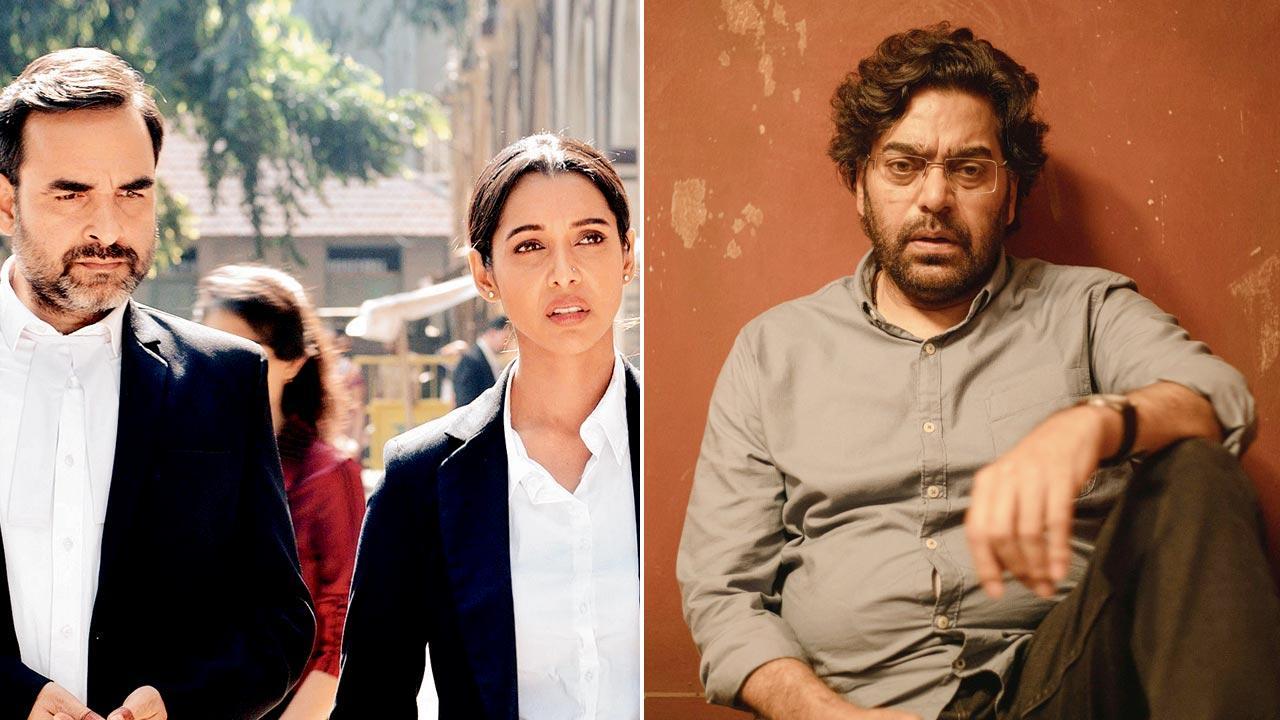
The fourth season of Disney+ Hotstar’s Criminal Justice will stream soon; (right) Murder In Mahim was one of Jio Cinema’s originals
Sources say as the first step of Viacom-Disney Star merger, JioCinema and Hotstar content to stream on new domain JioStar from tomorrow; the networks’ channels to be merged and unpopular shows axed
Mohar Basu (MID-DAY; November 13, 2024)
On Tuesday, the JioStar website went live, with the text on the screen simply reading, ‘Coming soon’. This marks a new chapter in the months-long merger that has been underway between Reliance Industries Limited’s Viacom18, and Disney Star India. In the months since the merger’s official announcement in February, there has been speculation about the road ahead for the two media networks’ OTT arms, Jio Cinema and Disney+ Hotstar.
With JioStar expected to be fully functional on November 14 midnight, an insider tells mid-day that the content of the two platforms will be merged. “The merging of Jio Cinema and Disney+ Hotstar will be complete by November 13. After JioStar goes live on November 14 midnight, the content of both streamers will be available on this platform under separate sub-domains,” reveals a technical hand from Jio Cinema.
The question now is: What does the merger imply for the multiple channels under the two networks? While Disney Star brings with it over 20 channels across general entertainment, sports and movies, Viacom18 has its own bouquet that includes Colors and regional channels.
A production source from Star says, “Both Star and Colors have multiple regional channels targeting Bengali, Punjabi, Odia, Kannada audiences and more. So, instead of the two channels vying for the same viewers, the content of the weaker channel will be merged into the more popular counterpart. For instance, Star Marathi is doing considerably better than Colors Marathi; so, the latter will dissolve into the former. If there is a stand-out show that brings in high TRPs or pulls in a new audience, it will be retained. An example of this is Anupamaa, which is originally a Star offering. But largely, the idea is to stop replication of channels. In addition, there are many Hindi general entertainment channels, including Star Bharat, Star Plus, Star Utsav, and so on. These could be in direct competition to Colors TV. So, the channels will merge in the near future after a final programming has been locked. The final branding of these channels will be determined in the months to come.”
On the streaming front, the overlapping of international content is far less. While Disney+ Hotstar houses popular content from ABC and Showtime, such as Grey’s Anatomy and Modern Family, Jio Cinema has the HBO and Paramount slates.
The source adds, “JioStar, in that regard, will boast a diverse and enviable library. From old offerings like Game of Thrones to the more current winners like The Bear, it will have something for everyone.”
The popular homegrown titles of Disney+ Hotstar remain untouched. A hand from Disney+ Hotstar informs, “If there is a big title well in its third or fourth season, it will continue. For instance, we will soon release the fourth season of Criminal Justice. Other franchise shows such as Aarya and The Trial remain, while new series will be picked up January onwards. The operations will require synergy and will be worked out by December-end.”
Naturally, with the two networks’ workforce being consolidated, it will result in multiple people in the same roles. A trimming of head count is likely to take place.
The biggest highlight of the merger, however, is the idea of taking OTT to the last-mile consumer. It is heard that Uday Shankar, who is serving as the vice-chairman of the merged entity and will establish its strategic direction, wants to emphasize on Advertising Video on Demand (AVOD) and Transactional Video on Demand (TVOD) to lure a wider demographic.
Another source from the Jio team says, “This merger will redefine how TV and streaming will be integrated, and thus change the content landscape. We are looking at reaching every Indian, which will be possible only when you stop making it premium. That’s why we’re taking the three-pronged approach with JioStar: there will be AVOD for the widest base. Then comes SVOD at an affordable price; we noticed that the Rs. 29 per month model worked for Jio Cinema. The third will be TVOD, wherein you can rent certain digital content for a price. JioStar will make room for every viewer, as per how much they can afford.”
mid-day reached out to the communication teams of Viacom, Jio and Hotstar, who did not respond till press time.
Reliance to retain Disney+ Hotstar as sole streaming platform for merged entity
2:08 PM
Javed Farooqui (THE ECONOMIC TIMES; October 19, 2024)
Reliance Industries is expected to retain Disney+ Hotstar as the only streaming platform following the merger of Star India and Viacom18, sources familiar with the matter told The Economic Times (ET).
Jio Cinema will merge into Disney+ Hotstar, positioning it as the central streaming platform for the combined entity, sources added.
RIL had explored various strategies for the streaming business. At one stage, it considered integrating Disney+ Hotstar into Jio Cinema, and there were discussions about running two separate platforms—one for sports and another for entertainment.
"However, Reliance's leadership opted to keep Disney+ Hotstar due to its superior tech infrastructure," a source aware of the discussions said.
ET first reported on August 19 that Reliance Industries Ltd (RIL), which will control the merged Star-Viacom18 entity, is inclined to consolidate Jio Cinema and Disney+ Hotstar into a single OTT platform.
Disney+ Hotstar, the streaming service owned by Walt Disney's Star India, has over 500 million downloads on the Google Play Store, compared to Jio Cinema's 100 million downloads, which is owned by RIL-controlled Viacom18.
In February, RIL and Walt Disney signed agreements to merge Star and Viacom18, creating an $8.5 billion media powerhouse with over 100 channels and two streaming platforms.
According to RIL’s annual report, Jio Cinema reached an average of 225 million monthly users. In contrast, Disney+ Hotstar had 333 million monthly active users in Q4 2023, according to Sensor Tower.
As of June, Disney+ Hotstar had 35.5 million paid subscribers, significantly down from its peak of 61 million when it offered content like the Indian Premier League (IPL) and HBO.
Earlier, Viacom18, controlled by RIL, had merged its various OTT platforms under the Voot brand into Jio Cinema. Viacom18 had previously operated three platforms: Voot, Voot Select, and Voot Kids.
Viacom18, Star India expect to complete merger by October
8:56 AM

NCLT has already put the merger scheme for final disposal; CCI order also likely in two months’ time
Javed Farooqui & Maulik Vyas (THE ECONOMIC TIMES; August 2, 2024)
Reliance Industries-promoted Viacom18 and Walt Disney-owned Star India are hopeful of completing their merger by October, when the Competition Commission of India (CCI) is also expected to issue its order, officials familiar with the matter told ET.
The National Company Law Tribunal (NCLT) has already put the merger scheme between Star and Viacom18 for final disposal. The merger, which was announced on February 28, is expected to receive the NCLT green signal as creditors and shareholders of both companies have approved it.
"The biggest barrier to the merger proposal is the CCI approval. Once the competition watchdog approval comes, the merger deal will be more or less concluded. The expectation internally is that the CCI approval might come in October," said one of the officials tracking the development.
As part of its probe into the likely impact of the merger on the competitive landscape, CCI has started reaching out to other broadcasters, streaming platforms, TV distributors, and advertisers.
"CCI has reached out to us a couple of weeks back to know our views about the Star-Viacom18 merger," said a top executive with a rival media firm, on condition of anonymity.
The executive stated that this is a standard approach adopted by the CCI in all merger transactions, enabling the competition watchdog to assess a merger's impact in an industry.
"Even in the Sony-Zee merger case, CCI reached out to all the key players in the industry," the executive said, adding that the commission typically issues an order a few months after its industry outreach.
Both Star and Viacom18 have already made their submissions to the CCI, arguing that the merger will not have an appreciable adverse impact on the M&E industry in the country since there is enough competition in the market, said a third media executive who didn't want to be named.
Media analysts predict that Sony, Zee, Sun, Netflix, Prime Video, and YouTube will provide sufficient competition to Star-Viacom18 in both linear TV and streaming segments.
"While they (Star-Viacom18) will have a lot of synergistic benefits together, which we also talked about when we were trying to do our merger (Sony-Zee), it does not restrict or make us less capable of competing with them," Zee Entertainment CEO Punit Goenka said during the company's Q1 earnings call when asked about the impact of the Star-Viacom18 merger on Zee.
ET had reported in March that the CCI will conduct a more thorough investigation into the merger between Star and Viacom18 because it has the potential to disrupt the M&E business. In May, Star and Viacom18 filed a combination notice with the CCI seeking approval for their merger deal.
With over 100 TV channels across entertainment and sports and two of the top streaming platforms, Disney+ Hotstar and JioCinema, Star-Viacom18 will have a commanding presence in both segments, with the nearest competitor being a distant second in both segments.
The combined operating revenue of Star and Viacom18 was roughly Rs 25,000 crore in FY23, with the combined revenue of the nearest competitors in TV (Zee) and streaming (Netflix) being Rs 11,000 crore.
The combination will make Star-Viacom18 the biggest player in sports with properties like Indian Premier League, India international bilateral cricket, International Cricket Council, Indian Super League, and Pro Kabaddi League.
However, Star and Viacom18 argue that these properties were acquired through transparent open market bidding, where competing players also bid aggressively. The argument was made that the accumulation of sports rights, which are awarded for a limited time, cannot significantly impact competition.
In its order in the now-defunct Sony-Zee merger scheme, CCI ordered Sony-Zee to sell three channels to mitigate potential adverse impact on the sector.
Legal experts believe that the CCI might order Star-Viacom18 to divest certain assets since this merger will lead to the creation of a much bigger entity than the Sony-Zee combine.
Paramount Global exited Reliance's Viacom18 with attractive returns-Top executive
7:33 AM
Javed Farooqui (THE ECONOMIC TIMES; May 1, 2024)
Paramount Global’s sale of its 13.01% stake in Viacom18 to Reliance Industries (RIL) has provided the company with an opportunity to exit the Indian joint venture (JV) with an attractive return on investment, a top company executive said.
13.01% stake to RIL for Rs. 4,286 crore ($517 million). The company will continue to licence its content to Viacom18.
Its Paramount+ streaming service is available on Viacom18’s Jio Cinema as a content block under the premium subscription tier. Viacom18 will continue to operate TV channels under Paramount-owned brands like MTV, Vh1 and Nickelodeon.
“Selling our stake in Viacom18 provided an opportunity to exit our ownership position with an attractive financial return on our investment while preserving our ability to monetize our content in India through ongoing licensing arrangements,” Paramount Global CFO Naveen Chopra told analysts during the company’s Q1 earnings call.
He also said that the after-tax proceeds will further benefit leverage when the transaction closes at the end of 2024 or early 2025, subject to regulatory approval.
The RIL-Paramount transaction is subject to the closure of the merger agreement between RIL, Walt Disney’s Star India and Viacom18.
Last year, Paramount saw its stake in Viacom18 get diluted to 13.01% following a Rs. 15,145 crore fund infusion by RIL and Bodhi Tree Systems. Subsequently, Viacom18 became a subsidiary of RIL with Bodhi Tree also holding a16% stake.
The company’s stake got diluted since it didn’t want to infuse growth capital into Viacom18 for investments in sports and digital businesses. Before the fund infusion, the American entertainment company held a 49% stake in Viacom18.
Paramount realised a non-cash gain of $168 million from the dilution of a 36% stake in Viacom18.
In February, RIL, Disney and Viacom18 decided to merge Viacom18 into Star India to create a $8.5 billion media giant. RIL and its subsidiary Viacom18 will own a 63% stake in the proposed merged entity, while Disney will hold the rest.
Red-hot OTT market likely to enter consolidation phase
8:52 AM

Javed Farooqui (THE ECONOMIC TIMES; March 28, 2024)
Mumbai: India's booming streaming market, which includes more than 50 OTT video entertainment platforms, is ripe for consolidation as large players look for new growth opportunities and smaller ones crave for fresh funds to survive, say industry experts.
Despite incurring losses, deep-pocketed OTT platforms are continuing operations due to regular fund injections from their parent companies, while smaller rivals are at risk of going out of business due to high capital requirements for content, marketing, and user acquisition, they said.
The small OTT platforms are hence facing two options: get acquired by larger platforms or shut shop due to growing losses as expenses continue to outpace revenues.
Zee Entertainment chief Punit Goenka said consolidation in the OTT industry has to happen since the market can accommodate only a certain number of players. As per Media Partners Asia, India's OTT video market, which generated $3 billion in 2022, is projected to more than double to nearly $7 billion by 2027. "An average subscriber is subscribing to 2.5 OTTs, so from that perspective, consolidation has to happen. It will be either consolidation or some platforms will have to shut shop," Goenka told ET in a recent interview.
Streaming in India continues to be a cash-guzzling business due to high content costs coupled with monetization challenges. India is a price-sensitive market featuring the lowest average revenue per user (ARPU) of $7.2, according to RBSA Advisors, making monetization through subscriptions a challenging task.
Though OTT platforms have made progress in monetizing through advertising, YouTube continues to be the dominant player in the ₹13,000-crore digital video ad market.
The merger of Star India and Viacom18 will make the proposed merged entity a powerful force to be reckoned with in the OTT industry, with two strong platforms in Disney+ Hotstar and Jio Cinema with 333 million and 95 million monthly active users, respectively, for Q4 2023, according to Sensor Tower.
People privy to the developments said South Indian streaming platform AHA is scouting for funds as it needs investments to grow the business. The company has held talks with multiple parties but hasn't been able to any headway so far. Despite recording strong growth, Bengali OTT platform Hoichoi has seen its net worth erode due to accumulated losses of up to Rs. 28 crore, as of March 2023. Balaji Telefilms-owned ALTT and Eros International-owned Eros Now have scaled down their operations due to intense competition.
ZEE5 had recorded cumulative losses of over Rs. 800 crore in 9M FY24. Novi Digital Entertainment, which owns Disney+ Hotstar, incurred a Rs. 748-crore loss in FY23.
Media industry expert Rajesh Sethi believes that consolidation will create a smarter content ecosystem and provide hyperscale revenue opportunities, leading to sustainable profitability. "Most OTT platforms are unprofitable, despite their widespread adoption and borderless consumption. The streaming industry will be shaped by consolidation to achieve competitive scale and efficiency. OTT platforms desirous of a national play will need to provide content in 8 to 10 languages, and each language will further require multiple pieces of fresh content across films and series, which can be achieved by consolidation," said Sethi.
According to Studio Mojo founder Radhakrishnan Ramachandran, the Indian OTT market will witness consolidation since smaller players will find it difficult to match up to the financial might of Disney+ Hotstar-Jio Cinema, Netflix and Amazon Prime Video in the new competitive scenario.
Paramount to sell its remaining stake in Viacom18 to RIL
2:33 PM

THE ECONOMIC TIMES (March 15, 2024)
Paramount Global will exit Viacom18 by selling its remaining 13.01% stake to Reliance Industries for Rs. 4,286 crore, a deal that will value the Indian media company at about Rs. 33,000 crore.
In separate regulatory filings, the US media and entertainment major and the Mukesh Ambani-led Indian conglomerate have said the transaction is subject to the satisfaction of certain customary conditions, including receipt of applicable regulatory approvals.
The transaction is also subject to the completion of the proposed joint venture (JV) involving RIL, Viacom18, and The Walt Disney Company's Star India.
RIL's stake in Viacom18 will increase to 70.49% after the completion of the deal. It currently holds compulsorily convertible preference shares (CCPS), representing a 57.48% equity stake in Viacom18.
Former Star India chairman and CEO Uday Shankar's Bodhi Tree Systems holds around 16% stake in the company while the remaining stake of about 13.5% is held by TV18.
Paramount, which owns media brands like MTV, Vh1, and Nickelodeon, will continue to license its content to Viacom18. It has launched its streaming platform Paramount+ as a bundled service on Viacom18's streaming platform Jio Cinema.
Viacom18 is a subsidiary of TV18 Broadcast, which is in the process of merging with Network18.
Paramount Global (formerly Viacom), which had formed Viacom18 as an equal joint venture (JV) with TV18 in 2007, has been ceding control of the company to RIL after the latter's acquisition of Network18 from Raghav Bahl.
In 2018, RIL took control of Viacom18 by acquiring an additional 1% stake from Paramount for a cash consideration of $20 million to take its stake to 51%.
Paramount's stake in Viacom18 declined to 13.01% from 49% last year following a ₹15,145-crore fund infusion by RIL and Bodhi Tree Systems.
The fund infusion gave RIL-owned entities a 60.37% shareholding in Viacom 18, with Bodhi Tree Systems receiving 13.08%. Subsequently, Bodhi Tree hiked its stake in Viacom18 by purchasing an additional 2.89% stake from RIL for Rs. 953.23 crore.
Paramount Global had realised a non-cash gain of $168 million for the quarter ended June from the dilution of its stake in Viacom18, the company's regulatory filings show.
The stake acquisition by RIL comes close on the heels of the joint venture (JV) deal between RIL and Disney to merge Viacom18 into Star India, a company owned by the American media conglomerate.
--------------------------------------------
Buyout Follows Reliance’s Merger Deal With Disney India
Reeba Zachariah (THE TIMES OF INDIA; March 15, 2024)
Mumbai: Reliance Industries will buy out Nasdaqlisted Paramount Global’s stake in its Indian TV channel and streaming business for $517 million (Rs 4,286 crore), strengthening its play in the $28-billion media and entertainment sector.
The move comes a fortnight after Reliance decided to merge the business of Viacom18 with the India unit of Walt Disney. Reliance will buy Paramount’s entire 13% share in Viacom 18, increasing its stake to nearly 70.5% from about 57.5%.
The development highlights Reliance’s strategy of going beyond its mainstay business of refining and petrochemicals and upping its play in consumer-facing businesses. Towards this, it has been buying assets in retail, fashion and digital.
The deal will scale back the presence of Paramount, best known for owning entertainment assets like the eponymous Paramount Studios, CBS television net work, MTV, Comedy Central and Nickelodeon, in India, which it had entered more than two decades ago. It will, however, continue to license its content to Viacom18 after the deal is closed.
The transaction is subject to the completion of the Viacom18-Walt Disney India merger deal. The share-sale will help Paramount improve its balance sheet even though international media reports have deemed it as a potential takeover target.
In 2007, Viacom Inc (now part of Paramount) formed a 50:50 joint venture with TV18 India, a company then owned by Raghav Bahl, to establish Viacom18. This company launched Hindi entertainment channel Colors and managed Viacom’s TV channels like MTV, VH1 and Nickelodeon.
In 2014, TV18 India was taken over by Reliance and in 2023, Viacom 18 was combined with one of the entities of Reliance, making Paramount a smaller shareholder of the broadcaster. The 2023 transaction also saw Bodhi Tree Systems, an investment venture of James Murdoch’s Lupa Systems and former Walt Disney India head Uday Shankar, acquiring a 13.1% stake in Viacom18.
Once the businesses of Viacom18 and Walt Disney India are combined, Reliance will hold just over 16% in the merged entity, Viacom18 will own about 47% and Disney close to 37%. Like Paramount, Disney too will see its presence scaled back in India, one of largest economies in the world.
The Reliance-Disney combination will make the business environment difficult for smaller players like Zee and Sony as they will have to individually compete with a dominant player. Analysts expect the Reliance-Disney consolidation to benefit the unified entity as its bargaining power will increase, helping it to command better advertising rates. It could also see rationalization in content costs, leading to margin improvement, they said.
Zee and Sony had attempted to merge their local operations but the deal collapsed after Sony walked away from it. Had the merger happened, Zee-Sony would have been the largest player in the sector after Reliance-Disney.
RIL, Disney announce a big, fat Indian wedding
8:41 AM

Pact to create $8.5b media behemoth after over four months of talks; RIL to be in driver’s seat with 63% combined stake, will inject Rs. 11,500 cr cash into venture
THE ECONOMIC TIMES (February 29, 2024)
Walt Disney's local unit Star India will merge with Reliance Industries (RIL) subsidiary Viacom18 to create the country's biggest media and entertainment business valued at about $8.5 billion. RIL will assume control with a combined stake of 63% in the merged entity. The joint venture will also dominate sports with all the key cricket media rights in its possession. It will have over 750 million viewers across the country and will also cater to the Indian diaspora across the world, the companies said in a statement issued on Wednesday. The merger will create a media giant with a combined FY23 topline of Rs. 25,000 crore.
Mukesh Ambani-led RIL and Bob Iger-led Walt Disney have signed binding, definitive agreements, capping over four months of hectic negotiations. ET was the first to report that Reliance and Disney signed a non-binding term sheet on December 25. As reported by ET on February 28, Nita Ambani will serve as chairperson of the merged entity, while former Star India boss Uday Shankar will provide "strategic guidance" as vice chairperson.
'Landmark agreement'
"This is a landmark agreement that heralds a new era in the Indian entertainment industry," RIL chairman Mukesh Ambani was cited as saying in the statement. "This strategic joint venture... will help us pool our extensive resources, creative prowess, and market insights to deliver unparalleled content at affordable prices to audiences across the nation."
Iger said the merger will create long-term value.
"Reliance has a deep understanding of the Indian market and consumer, and together we will create one of the country's leading media companies, allowing us to better serve consumers with a broad portfolio of digital services and entertainment and sports content," he said in the statement.
Viacom18's media business will be merged into Star India through a court-approved scheme of arrangement as part of the transaction. Additionally, RIL will inject Rs. 11,500 crore ($1.4 billion) cash into the JV for its growth strategy. With this fund infusion, RIL's total investment in the media business amounts to Rs. 22,000 crore in the past year. In April 2023, it had invested over Rs. 10,839 crore as part of a Rs. 15,145 crore fund injection in Viacom18 that saw Bodhi Tree Systems invest Rs. 4,306 crore. Bodhi Tree is promoted jointly by James Murdoch and Shankar.
On a post-money basis, the Star-Viacom18 venture will be valued at Rs. 70,352 crore ($8.5 billion). RIL, Viacom18, and Disney will own 16.34%, 46.82%, and 36.84% of the venture, respectively. Currently, the RIL group including TV18 holds 71.02% in Viacom18 followed by Bodhi Tree at 15.97% and Paramount at 13.01%.
Shankar said the venture "is poised to shape the future of entertainment in India". He had led Star under both Fox and Disney before calling it quits in December 2020.
Based on the shareholding in the joint venture, Viacom18's stake is valued at approximately $4 billion, while that of Star is slightly over $3 billion, a far cry from the $15 billion that it once commanded. Disney had acquired Star as part of a $71 billion Fox entertainment asset acquisition in 2019, during Iger's previous tenure at Disney.
The venture will be granted exclusive rights to distribute Disney films and productions in India, with a licence to more than 30,000 Disney content assets, providing a full suite of entertainment options for the Indian consumer, according to the statement.
The transaction is expected to be completed in the last quarter of 2024 or the first quarter of 2025, subject to regulatory, shareholder and customary approvals.
The deal will see the exit of Paramount Global from Viacom18. Last year, Paramount's stake was diluted to 13% from 49% after a fund infusion by Reliance and Bodhi Tree Systems.
The merged entity will have over 100 TV channels such as Colors, StarPlus, StarGOLD, Star Sports and Sports18, spread across entertainment and sports, besides two streaming platforms, Disney+ Hotstar and JioCinema.
It will have all the key sports rights such as Indian Premier League (IPL), International Cricket Council (ICC) and Board of Control for Cricket in India (BCCI) matches. It will also have the rights for the Indian Super League and the Pro Kabaddi League. Disney may contribute additional media assets to the venture, pending regulatory and third-party approvals.
--------------------------------
From September to a shaadi: How Disney found a new home for Mickey Mouse in India
Viacom18-Star India merger was sealed in 5 months, just ahead of pre-wedding festivities for Mukesh Ambani’s son Anant
Arijit Barman (THE ECONOMIC TIMES; February 29, 2024)
Ever since he landed in Mumbai a week or so ago to help give the final touches to the Reliance-Star India mega merger that was announced on Wednesday, Justin Warbrooke had been struck by a sense of déjà vu. Many years ago, Warbrooke, a Kiwi by birth but with a cool quotient that is innately Californian, had flown into and camped for weeks in India’s financial capital to play matchmaker and close another strategic transaction for his firm — Walt Disney Co’s buyout of Ronnie Srewvala’s UTV Software Communications Ltd, in tranches starting 2006. He was a young executive then, but handles a senior role in Corporate and Business Strategy.
A lot of time has lapsed between the two trades. Mumbai arguably is more polluted, a skyline that resembles a mashup between Singapore and Dubai but minus the infrastructure. Yet some things remain the same.
If the UTV investment and subsequent buyout gave Walt Disney a chance to make a comeback after its first India tie up with KK Modi Group in 1993 went south, the merger with Mukesh Ambani’s flagship Reliance Industries is expected to give the US media giant, a fresh lease of life in Asia’s biggest streaming market after several missteps ranging from losses in sports to losing top talent.
In retrospect, with the UTV deal also underachieving compared to what was originally envisaged, Disney-Reliance had to be a case of being third time lucky.
ET spoke to several executives and officials to piece together all the action that played out behind the scenes of this $8.5 billion stock and cash corporate alliance that is no less racy than a thriller. Most spoke on condition of anonymity. The genesis was in the fall of 2023 and a climax just before the grand pre-wedding party for Ambani’s youngest son Anant in Jamnagar this weekend -- all in a span of five months or so. That’s in sharp contrast with another mega merger that took two years to be called off last month.
Disney to the party
The entire Disney top brass including chief executive Bob Iger, advisor Kevin Mayer, Walbrook and K Madhavan Country Manager and President, Disney Star in India are expected to attend the three day jamboree in Jamnagar as special guests.
Interestingly, that is where the two main actors of this biggest media story playing across television screens and OTT platforms in India today -- Mukesh Ambani, the 66 yr old chairman of Reliance Industries, also the richest man of the country, and his peer Robert “Bob” Iger will meet in person for the first time ever since the negotiations between both sides began around last September. Both stayed away from the deal maths, manoeuvres or the merger minutiaes. Instead they sent two of their key lieutenants Manoj Modi and Mayers to hammer it out on the playing field.
Mayer, once seen as Iger’s likely successor, especially after the launch of Disney+, who had worked closely with the CEO on a series of acquisitions and was a key architect of Disney’s streaming strategy before leaving the firm to start Candle Partners, also a media group, only to be cherry picked and parachuted back last July to “turn around” Disney after Iger was brought in 2022 and then given a 2 year extension to fix the behemoth that was broken in every corner – soaring expenses, furious fans of its once vaunted theme parks, striking screenwriters, dipping revenues, uneven performance of Lucasfilm and Disney’s animation and live-action releases and activist shareholders baying for blood.
Mission India
Mayer’s India mandate from Iger was simple: a holistic solution and not piecemeal slump sale of assets or businesses. An exit from one of the most promising markets that is consuming content on terabytes of free data was also out of the question.
For both Mayer and his colleague Tom Staggs who also had left Disney to start Candle, with the backing of Blackstone, but brought back as Iger’s “advisors”, the world’s largest PE firm was an obvious pit stop.
They have a sizable presence in India and had over the years scoped several media assets including Sony’s local operations, Airtel DTH, Dish TV and Eenadu; and had bought into Jagran Media Network. It had also weighed a co-investment with Star in Asianet for a minority stake, after Rupert Murdoch bought a controlling interest in the Kerala-based network from Rajeev Chandrasekhar, a former telecom-and-media business magnate and the current minister of state for electronics and information technology. Madhavan, himself was the managing director and CEO of Asianet at the time.
In parallel, Madhavan too was talking to potential suitors including Carlyle to put together an investment consortium that would pump in at least a billion dollars and resuscitate Star India and consolidate his position, people aware said.
But for any financial investor, this was a tough call with Jio changing the rules of the game by offering free streaming and cheap data. The financial returns were just not stacking up. “Media in India is also a highly regulated sector with sparring media conglomerates,” said an executive in the know on condition of anonymity. “Which PE firm would want to take on Reliance in India.” None of those conversations therefore moved ahead much.
Return of the Jedi
Enter Reliance.
As talks progressed, Mayer had roped in Walbrooke, a rainmaker who now wears many hats -- head of international finance, CFO, direct-to-consumer business, and international head of business operations, to help him . Walbrooke, himself a company man, joined as a manager after a stint in consulting about two decades back, knew what his bosses and board were seeking.
Once the broad contours were in place, it gathered momentum after Walbrooke visited the Reliance Mumbai office in October followed by Mayer and Modi catching up just before Christmas at the Ambani residence in Stoke Park, London, to shake hands and sign a non binding term sheet with a February 17th deadline.
Both businesses too were to be treated as similar-sized ones, a far cry from Star India’s $15 billion valuation that was often thrown around after Murdoch family crown jewel was acquired in 2019.
Meanwhile, bankers, the valuation specialists from the big and a bevy of lawyers were already tasked to draw out the finer points. By November, the structure too was also clear – create a step-down subsidiary of Viacom18 Media, which will absorb Star India via a stock swap to avoid significant equity dilution of existing partners of Viacom 18.
Viacom18’s entertainment network in the country is a partnership between Ambani’s TV18 Broadcast, Paramount Global and Bodhi Tree Systems.
The combined business also needed money largely on account of the mounting losses of Disney’s sports franchise in India after its jaw dropping Rs 23,575 crore IPL TV rights for the 2023-27 cycle. Iger was not over eager putting more cash at this juncture considering globally it only just about “turned a corner” in the quarter ending February 2024 and announced a $3 billion share buyback programme and a 50% dividend increase to soothe its investors' nerves. So Reliance Industries stepped in with a cheque of Rs 11,500 crore (~$ 1.4 billion). That made Reliance Group (including Viacom 18) the controlling shareholder with 63.16% shareholding.
“Both Reliance, Disney are no pushovers. Both were looking at scale, and Disney retained a meaningful stake for future upside. This is a happy ending for both.” quipped a Reliance executive. “This is a merger but with unequal shareholding.”
Two sides are putting equity instead of one buying the other out for cash. Even the junior shareholder will have rights, added a Disney executive, just before picking his wedding wardrobe for Ambani Junior and Radhika Merchant wedding nuptials with echoes of another union in the background.
With Rihanna, AP Dhillon, Daljit Dosanjh performing in Jamnagar, you don’t want to forget your dancing shoes, do you?
RIL-Disney deal: Nita Ambani may be named chairperson
10:35 AM

Bodhi Tree promoter Uday Shankar could be named vice chairperson
Javed Farooqui (THE ECONOMIC TIMES; February 28, 2024)
Nita Ambani, founder and chairperson of Reliance Foundation, is likely to become the chairperson of Star India-Viacom18 merged entity, while Bodhi Tree promoter Uday Shankar could be named the vice chairperson, people privy to the development told ET.
Ambani has been deeply involved in Reliance's sports initiatives including the Indian Premier League team, Mumbai Indians, and Indian Super League, which incidentally is a 65:35 JV between Reliance and Disney. She is also the first Indian woman to be elected as a member of the International Olympic Committee.
Reliance Industries didn't respond to ET's queries.
As reported earlier by ET, the mega-merger deal between Star India and Viacom18 has been concluded. The contours of the deal have been finalised and it is expected to be announced on Wednesday, the people said.
"Nita Ambani and Uday Shankar will be the chairperson and vice chairperson of the merged entity," said one of the persons cited above. The person added that Shankar is likely to be Reliance's nominee on the merged entity's board.
The sole board seat given to Bodhi Tree is likely to be taken up by its investor, Qatar Investment Authority (QIA), the person said.
INQ Holding LLC, a wholly-owned subsidiary of QIA, had last year invested in Bodhi Tree Systems.
Both Reliance and Disney have set an ambitious deadline for completing the merger by October, another person stated.
However, legal experts cautioned that the completion of the merger will depend on the time it takes to receive Competition Commission of India (CCI) clearance. "Most merger deals have a two- to three-year sunset clause. This will be no different," the person cited above said.
People earlier told ET that Reliance may own 61% of the proposed combined company, with Disney holding 33% and Bodhi Tree having the remaining 6%.
Shari Redstone-promoted Paramount Global, a shareholder in Viacom18, is set to exit the company with Reliance buying its stake. Reliance is expected to invest $1-2 billion, primarily for infusing growth capital into the merged entity and the buyout of Paramount's stake.
Reliance, Disney may announce Star-Viacom18 merger this week
8:18 AM

RIL, which will buy out Paramount’s stake in Viacom18, may own 61%, while Disney will hold 33% in co
Javed Farooqui (THE ECONOMIC TIMES; February 26, 2024)
Mumbai: Reliance Industries and the Walt Disney Company have signed a binding agreement to merge Viacom18 and Star India, with the deal expected to be announced early this week, people privy to the development told ET. The deal, which has been in the works for over four months, will create India's largest media empire, spanning TV broadcasting, streaming, movies and sports.
The two media companies generated revenue of Rs. 25,000 crore between them in FY23. "The merger deal has finally been signed after months of negotiations. The announcement will happen early this week. It was expected to happen late last week," a top executive told ET on the condition of anonymity.
According to another person, Reliance may own 61% of the proposed combined company, with Disney holding 33% and Bodhi Tree Systems having the remaining 6%.
Despite being the larger of the two entities, Disney's Star India has seen its valuation drop to roughly $4 billion, accounting for the anticipated loss from its sports business. Viacom18 was valued at roughly $4 billion when Reliance and Bodhi Tree infused over Rs. 15,000 crore into the company in April last year. Paramount Global, a shareholder in Viacom18, is set to exit the company with Reliance buying its stake. In the US, the Shari Redstone-promoted company has become an acquisition target.
"Reliance is likely to invest $1-$2 billion, with a large part of that being deployed to infuse funds into the merged entity and a part going into the buyout of Paramount's stake," said a third person, asking not to be named.
Disney is expected to reduce its India exposure by diluting its stake in the merged entity, another person said. "Disney doesn't see India as a key priority since it wants to strengthen its position in the US, where it is facing major challenges," the person added. Reliance and Disney declined to comment.
Uday Shankar, who is the promoter of Bodhi Tree along with James Murdoch, is expected to lead the merged entity. Currently, Bodhi Tree owns 15.97% of Viacom18, while Paramount holds 13%.
The proposed combined Star-Viacom18 entity will be a dominant force in the TV broadcasting industry, with more than 100 TV channels like Star Plus, Colors and Star Sports. The entity will also have two streaming platforms, Disney+ Hotstar and Jio Cinema, with dominant market shares in subscription and advertising video-on-demand segments.
According to legal experts, the Competition Commission of India will scrutinize the merger deal due to the proposed merged entity's market share of over 40% in both TV and streaming. Star-Viacom18 entity will own sports assets like the Pro Kabaddi League and Indian Super League, which is a 65:35 joint venture between Reliance and Disney.
The combined entity will have the TV and digital rights of all key sports properties including the Indian Premier League; International Cricket Council; cricket boards of India, Australia and South Africa; PKL, ISL, English Premier League; NBA and Olympics.
The combined investments of the two companies in the sports business are pegged at $10 billion with IPL alone accounting for $6 billion, followed by $3 billion in ICC rights.
The development comes at a time when the proposed merger between Sony Group-Culver Max Entertainment and Zee Entertainment collapsed last month due to disagreement over who would lead the combined company.
---------------------------------------------------------
THE TIMES OF INDIA (February 26, 2024)
Walt Disney and Reliance Industries have signed a binding pact to merge their media operations in India, according to people familiar with the matter, as the US entertainment giant recasts its strategy amid intense competition in the country.
The media unit of Reliance, controlled by billionaire Mukesh Ambani, and its affiliates are expected to own at least 61% in the merged entity, with Disney holding the rest, the people said, asking not to be identified as the information is not public.
The latest milestone, along with other details, are likely to be announced early this week, the people said. A Disney representative declined to comment. A Reliance spokesperson didn’t respond to a query on the signing of the binding pact.
The stake split between the partners may change, depending on how Disney’s other local assets are factored in by the time the deal is closed, the people said. Disney owns a minority stake in broadcast service provider, Tata Play, which Reliance may consider acquiring, according to local news reports.
Disney has been grappling with challenges in India such as retaining subscribers and securing coveted media assets, while Reliance has cornered a larger slice of the local media and entertainment businesses in recent years. Together, they would make a formidable media behemoth in one of the world’s fastest-growing markets.
Reliance, Disney ink non-binding agreement for mega merger
8:32 AM

Pact signed in London last week; due diligence and valuation may begin soon
Arijit Barman & Javed Farooqui (THE ECONOMIC TIMES; December 25, 2023)
Reliance Industries Ltd (RIL) and Walt Disney Co signed a non-binding term sheet in London last week to move ahead with plans to create India’s largest media and entertainment business, said people with knowledge of the matter. The 51:49 stock-and-cash merger in favour of the Mukesh Ambani-led group is expected to get finalized with a view to completing all commercial ratifications and regulatory approvals by February, even though RIL is keen to wrap it up by January end.
Kevin Mayer, a former Disney executive brought back in July by chief executive Bob Iger as an adviser to help him navigate the company’s legacy television business and the ESPN sports network and Manoj Modi, a close confidante of Ambani, were among those present in the meeting. Both have been negotiating for months now to finalise the term sheet document.
Following last week’s signing confirmatory due diligence, a valuation exercise by independent valuers will officially begin and legal and tax advisors will be brought on board. There is likely to be a 45-60 day exclusivity period that can be mutually extended.
The development comes even as the fate of the $10 billion merger between Zee Entertainment Enterprises and Sony Group Corp.’s local unit, the biggest in India media amalgamation announced till date - hangs in balance even after two years.
ET was the first to report about the proposed RIL-Disney term sheet in its December 12 edition.
A Disney India spokesperson declined to comment. Mails sent to Reliance on Saturday evening did not generate a comment till press time Sunday.
The plan, as of now, is to create a step-down subsidiary of RIL’s Viacom18, which will absorb Star India via a stock swap, said the people cited above. Reliance is pitching to be the larger shareholder with at least 51% in the merged company with Disney owning the residual 49%, they said. Both businesses are being treated as similar-sized ones, so RIL is likely to pay cash for the controlling stake. Jio Cinema, a part of Viacom 18 will also be included in the deal.
The two sides are also negotiating a business plan to inject cash as immediate capital investment, expected to be $1-1.5 billion. The final shareholding structure of the entity will get crystallised and its value established based on the cash infusion from each of the parties.
In the line of fire from activist shareholder Nelson Peltz for poor succession planning, Disney appointed two new directors – Morgan Stanley CEO James Gormon and former group chief executive at Sky Sir Jeremy Darroch, late November. In the same month, Walt Disney CEO Iger said on an earnings call in November that the company was “considering options” but that it would like to stay on in India and try and “strengthen our hand, improve the bottom line”.
That statement highlighted a clear intent of staying on in India. This is Disney’s third coming in India. The first in 1993 was through an alliance with KK Modi’s Group. It went south. Then in bought into Ronnie Scewvala’s UTV but that too did not go as per script and finally in 2018 when Rupert Murdoch sold his entertainment business to Disney globally for $71.3 billion Star India was billed as the “crown jewel.”
The board is expected to have equal representation from Reliance and Disney of at least two directors each. Uday Shankar-led Bodhi Tree, the second largest shareholder in Viacom18 after Reliance with a 15.97% stake, is likely to get a seat. A minimum of two independent directors are being considered. This may change in the weeks ahead, said the people cited above.
Investor enthusiasm for Disney’s India business started depleting in 2022 after the company lost the online rights to stream the popular IPL tournament from 2023-2027 even as it successfully won broadcast TV rights. The streaming rights went to Jio Cinema — a joint venture between Ambani’s Reliance Industries and Viacom18 — following a record $6.2bn auction.
While Viacom18 shelled out Rs 23,758 crore ($2.89 billion at Rs 82/dollar exchange rate) for five years and offered free streaming in 2023, Disney Star had to shell out Rs 23,575 crore ($2.87 billion) for the same period for TV rights. This was the first time a digital bid trumped legacy linear TV rights.
Back of the envelope calculations value the Disney Star India business at $5.5-$6.5 billion.
Viacom18, which also has TV18 and Paramount as shareholders, saw its FY23 net profit slump 98% to Rs 11 crore while revenue from operations rose 10% to Rs 4,554 crore. The company's expenses increased 33% to Rs 4,586 crore. In H1 FY24, Reliance 's entertainment business primarily comprising Viacom18 reported a 97% growth in revenue at Rs 4,277 crore on the back of IPL and other sports properties.
As of September 30, TV network’s share increased by 50 bps to 10.5%, driven by the performance of Sports and Movies channels. As of September 30, Jio Cinema was the top broadcaster-OTT app in the country with an average of 210 million Monthly Active Users as per the data from Data.ai.
Walt Disney-owned Star India's consolidated net profit for FY23 dropped 31% to Rs 1,272 crore from the previous fiscal year, according to its filing with the Registrar of Companies (RoC). Novi Digital Entertainment, the subsidiary that owns Disney+ Hotstar, has seen its net loss more than double to Rs 748 crore, while revenue rose 35% to Rs 4,341 crore. Novi is in the process of merging with its parent company, Star, which holds a 78.07% stake in it.
A media Goliath may be born if Viacom18, Star India get hitched
8:32 AM

Media sector may see shakeup, paving way for a duopoly and likely regulatory scrutiny: Experts
Javed Farooqui (THE ECONOMIC TIMES; November 2, 2023)
Mumbai: The proposed deal between Walt Disney's Star India and Reliance Industries' Viacom18 could lead to the establishment of India's largest media and entertainment conglomerate, with roughly Rs. 25,000 crores in top line, say industry experts.
The combined entity will own 115 TV channels (Star India–77 and Viacom18–38) and two strong streaming platforms — Disney+ Hotstar and Jio Cinema — if the deal fructifies. The combined entity will have over 2 lakh hours of content library.
While Walt Disney is in talks with multiple parties, including Reliance, sources indicate that the deal will take some time to materialize given the complexities involved, including the valuation of Star India, which is also known as Disney Star.
Disney is looking at multiple options for its India business, including the complete sale of its TV and streaming assets besides a strategic partnership.
Reliance owns a majority stake in Viacom18, which also has Uday Shankar and James Murdoch's Bodhi Tree and Paramount Global as shareholders.
“If the deal between Reliance Industries and Walt Disney goes through, it will lead to consolidation in the industry from four national media players to two strong players, Star-Viacom 18 and Sony-Zee,” said Kurate Digital Consulting Senior partner Uday Sodhi.
“The media and broadcasting sectors will become a duopoly, which will help these companies ward off the impact of a decline in the payTV base,” he added.
It’s a step closer to the consolidation of the media sector, which many experts say is imminent now. Vivek Menon, managing partner at NV Capital, believes that consolidation was bound to happen in the traditional broadcasting space due to the rise of streaming.
“The dizzying growth of various OTT platforms over the last couple of years, especially post-Covid, was a clear indication of consolidation in the linear industry. If Reliance goes ahead with the Disney deal, it would be a case of duopoly, with Star/Viacom18 and Zee/Sony on one side, and smaller regional players on the other side,” he added.
Reliance-Disney could potentially be one of the biggest deals in the Indian M&E industry, which stood at Rs. 2.1 lakh crore in 2022 and is expected to reach a market size of Rs. 2.34 lakh crore in 2023 at 11.5% growth, according to the FICCI-EY report.
Star-Viacom18 will enjoy a huge advantage in two of the biggest segments in the Indian M&E market—TV and digital—thanks to their over 40% share—Star (30%+) and Viacom18 (10+%)—of the TV broadcast market and their near dominance of the digital video streaming market (with Disney+ Hotstar & Jio Cinema), eclipsing global giants like Netflix and Amazon Prime Video, which are yet to build scalable streaming businesses in the Indian market.
The deal, if it happens, will also likely lead to major overlaps between Star India and Viacom18 in certain segments, like Hindi general entertainment, kids, and certain regional markets like Kannada
According to Broadcast Audience Research Council data, the combined TV viewership share of Star Plus and Colors hovered between 40% and 50% in the last three months. In the Kannada market, the viewership shares of Colors Kannada and Star Suvarna ranged between 40% and 48%. The combined shares of Star Pravah and Colors Marathi would be upwards of 60%.
Legal experts believe that Star and Viacom18's large market share in certain genres could attract the attention of the Competition Commission of India (CCI), which had given conditional approval to the merger deal between Culver Max Entertainment (Sony) and Zee Entertainment Enterprises Limited (ZEEL).
“The proposed combination between the entities controlling Disney Star and Viacom18, while there is a difference of opinion with regard to the valuation of the proposed transaction, certainly does breach the threshold provided under Section 5 of the Competition Act 2002. In view of the fact that it breaches the threshold prescribed under the Act, the proposed combination will have to be subjected to an approval process by the CCI," said TMT Law Practice managing partner Abhishek Malhotra.
“In the process of evaluating whether or not to permit such a combination to be consummated, the CCI shall look into the market share of the combined entity and also as to whether or not such a proposed combination, if it were to be allowed, would have an appreciable adverse effect on competition.”
As of today, Sony-Zee is the biggest merger deal in the works in the M&E industry. In that deal too, the CCI ordered Sony-Zee to sell three channels in October 2022 to allay concerns about the merger's possible effects on the competitive landscape.
In terms of top line, the Star-Viacom18 combo will be much bigger than the Sony-Zee combined entity, which had a top line of close to Rs. 15,000 crore in FY23.
The Star-Viacom18 combo will have economies of scale, which will give it an upper hand when it comes to dealing not just with advertisers but also with content distributors like Airtel, Tata Play, Dish TV, and Hathway Digital.
Subscribe to:
Posts (Atom)