Showing posts with label Vani Tripathi Tikoo. Show all posts
Showing posts with label Vani Tripathi Tikoo. Show all posts
I hated myself during the shoot of Bandit Queen-Shekhar Kapur
9:55 AM
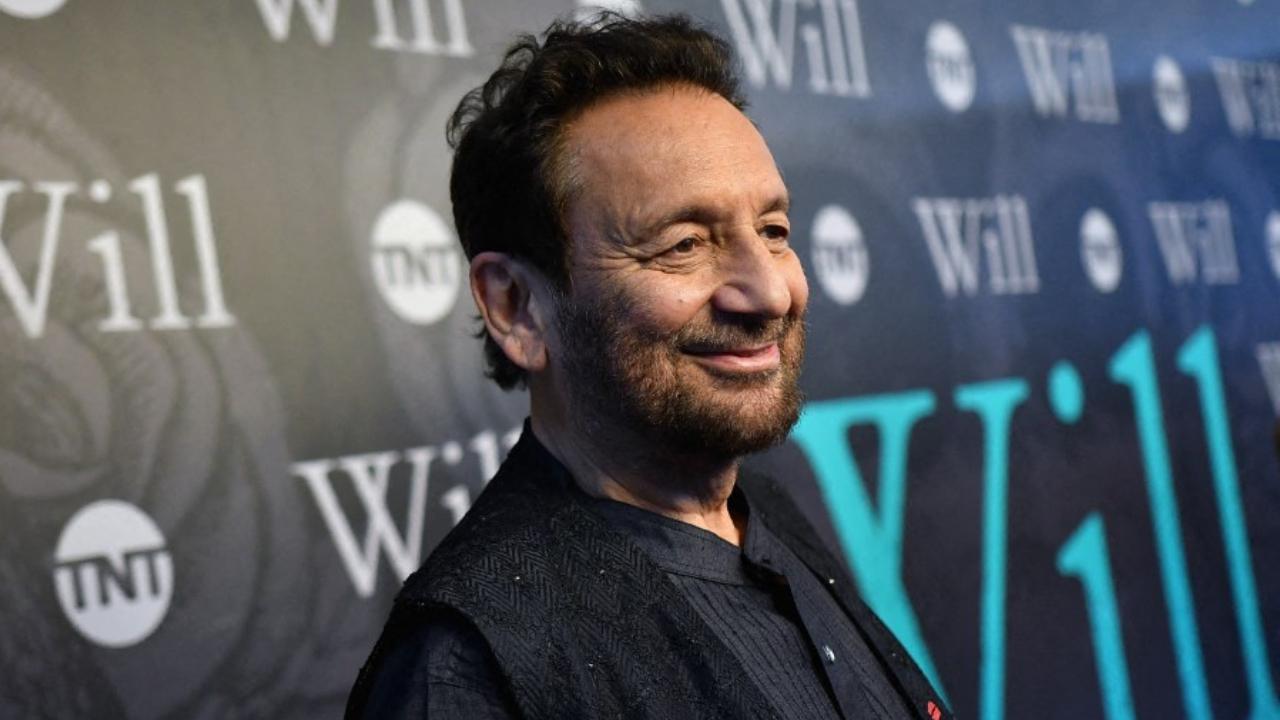
Niharika Lal (BOMBAY TIMES; April 8, 2026)
Shekhar Kapur is often asked when he will make another film like Bandit Queen (1994). The film, which won the National Award for Best Feature Film in Hindi in 1996, continues to stand out in Kapur’s oeuvre. But he has no plans to revisit it. “Kaise banaoon? Mar jaunga,” he said at the recently concluded International Film Festival of Delhi.
In a conversation with Vani Tripathi Tikoo, Artistic Director, IFFD, the filmmaker reflected on why he couldn’t imagine making another film like Bandit Queen, and how “everything about Masoom (1983) is Delhi.”
‘I APPROACHED BANDIT QUEEN FROM A PLACE OF GUILT – THAT I AM RESPONSIBLE FOR WHAT HAPPENED’
Discussing the journey of Bandit Queen, a film that chronicles the life of Phoolan Devi and lays bare the brutal realities of caste, gender violence and survival, Shekhar reflected on the emotional toll of making it.
“It’s difficult to describe the journey of Bandit Queen. I used to live in Nizamuddin at that time. I read about Phoolan Devi – it used to appear on the second or third page of the newspaper. Mujhe pata hi nahi tha ki yeh duniya hai kya. I didn’t know a world that existed right at my doorstep,” he said.
Shekhar elaborated how every film begins with an attitude. “Every filmmaker has to have an approach. I approached the film from a place of guilt – that I am responsible for what happened there. I have this tendency of becoming every character – as if it is me. Unless I become the character, I don’t know how to explain it to the actor.”
Discussing the everyday language used for girls, he told Vani, “In Punjabi, we say, ‘Kinni pyari hai, kinni soni hai, kinni sharmili hai’. Then I started thinking – this is the worst thing to say to a young girl. ‘Kinni sharmili hai’ means how submissive she is.” That thought shaped the film.
He shared, “Then I started asking – who am I in this film? I am a macho Punjabi man. It became a film that fundamentally said: rape is not a sexual act, it is an act of domination. It has nothing to do with sexuality.”
‘Bandit Queen was an expose of macho Shekhar Kapur’
At a certain point, he said, the film takes over. “Banate banate film ki ek marzi aa jati hai. And then the film takes over. You are no longer the director – you are following the dictates of the story.” After a pause, Shekhar spoke about filming one of the most difficult scenes of Bandit Queen.
He told the audience, “I was thinking for days – how do I shoot the gang rape scene? In films, such scenes are often shown as sexual. I sat locked in a room for two nights, trying to understand – what does it mean to be raped? What does it feel like? How do I shoot a rape scene and take the sex out of it? So, if you watch Bandit Queen – the scene is suggestive. Darwaza khul raha hai, band ho raha hai, log aa rahe hain – it’s all very suggestive. But I knew what was happening there. And so, while directing, I was constantly throwing up. The crew was watching me – ‘What is happening to him?’ I said, ‘Kal shoot karte hain, ab nahi ho raha.’ But they said, ‘Abhi shoot kar ke khatam karte hain.’ People ask me – ‘Bandit Queen jaisi film phir se kab banayenge?’ Kaise banaoon? Mar jaunga. I started hating myself, I hated myself during the shoot of Bandit Queen.”
After the film released, he recalled, even those close to him were unsure. They would tell him, “Film aise thode hi banti hai, Shekhar? Film mein gaane hote hain.” He said, “Par maine nahi banayi. Film ne khud ko banaya. Bandit Queen was an expose of macho Shekhar Kapur.”
‘Everything about Masoom is Delhi’
Speaking about Masoom (1983), Shekhar said, “Everything about Masoom is Delhi. At that time, Delhi was transitioning – from a bureaucratic city to a business city. Everyone I spoke to would say, ‘I do import-export.’ That’s how Saeed Jaffrey’s character’s profession came about. Masoom was not set in Delhi because it was easier to shoot there – it was because I knew these people.”
No work environment is safe for women, but film sets are-Imtiaz Ali
7:46 AM

Niharika Lal (BOMBAY TIMES; November 24, 2024)
At the inaugural session on women’s safety and cinema at the 55th IFFI, Imtiaz Ali, Bhumi Pednekar, Suhasini Maniratnam, Vani Tripathi Tikoo and Khushboo Sundar discussed the attitude toward women on set, how newcomers are treated and more. When asked whether the film industry can change, they shared personal accounts, stressing that, overall, film sets are safe spaces.
‘There have been three people whom I have sent back in my life, from different sets’
Discussing safety on sets, Suhasini Maniratnam said that her husband Mani Ratnam recently “threw out a person from the set because he crossed a line.”
To this Bhumi added, “Okay, you take that first step where you make sure that person is not on your set. But that person will be working on some other set. What are those strong steps we can take so that when there is a true perpetrator, that person is punished?”
Suhasini asked Imtiaz, “Can you tell what happens if there is a perpetrator and a violation? How does a film unit react to it?”
Imtiaz replied, “There have been three people that I have sent back from different sets, from different cases. I’m happy that there were only three.”
Recalling one of those incidents, he said, “We were shooting Highway on the rural highway and there were no proper vanity vans back in 2013. Alia had to change, go for nature’s call in unusual places. Once I had to send this guy back from the set when he was trying to be around her during those times. So yes, it did happen with me as a filmmaker thrice, but not anymore. Times have changed, changed drastically. Actresses are really safe on the sets. It’s not like that anymore.”
Is Cannes a film festival anymore?
8:57 AM

Is the buzz around non-industry red-carpet appearances taking away from Cannes’ essence, especially in a year an Indian film is in the running for the biggest award at the festival?
Monika Rawal Kukreja (HINDUSTAN TIMES; May 24, 2024)
It’s raining influencers on the Cannes red carpet, and social media is inundated with visuals from VIP gala dinners and after-parties. All while everyone back home wonders why. As social media users debate the prestigious film festival transmogrifying into another Met Gala — it’s worth reiterating that after 30 years, a film (All We Imagine As Light by Payal Kapadia) is competing for the Palme d’Or – Golden Palm (Main Competition) category? Or, that six other Indian films are being screened and competing across categories.
‘Red carpet not the main realm of Cannes’
Actor-producer Vani Tripathi Tikoo laments that the festival’s purpose is falling by the wayside. “It’s unforgivable. Cannes is not about who is walking the red carpet. Just like the ads we see online, the red carpet is also a sponsored activity and not the main realm of the festival,” she says.
Referring to the Indian films in contention at Cannes, actor Richa Chadha says, “Shouldn’t we know what these Indian films are about? Payal’s debut feature is in competition with (Francis Ford) Coppola and (David) Cronenberg!”
Referring to actors Aishwarya Rai Bachchan, Deepika Padukone and Vidya Balan, who have been on Cannes juries in the past years, Tikoo says: “They are not just hot bodies with great faces who walk the red carpet. They have been a part of amazing cinema, so people need to differentiate between the fluff and the essence of festivals.”
‘We need to take a step back from glamour and talk films’
In fact, something that has been happening for decades, came out as a big revelation to many — that celebrities have paid as much as Rs. 30 lakh to walk the red carpet. Filmmaker Shekhar Kapur says, “I’ve walked the red carpet a number of times, including as a jury member. But I’ve never heard about people paying for it.”
Tikoo says invitees being required to pay to attend different events at Cannes is nothing new: “There’s a price tag on everything these days. We have to sift out the truth, which is that Cannes is one of the most important and well-meaning festivals. That should not be negotiated. We need to take a step back from glamour and talk about films.”
Chadha concurs, “The focus must always be cinema and who is in those films — like (actors) Kani Kusruti, Tanmay Dhanania and Shahana Goswami (at the festival for AWIAL, The Shameless and Santosh, respectively).”
--------------------------------------------
Cannes has become more about show-off: Abhilash Thapliyal
Actor Abhilash Thapliyal, who visited the festival last year, calls it an expensive affair. “Cannes has become more about showoff. Walking the ramp and showing off designer wear as if it’s the Met Gala, has become the priority. So many of my friends called me to ask, ‘Kaise jayein, kya karein?’” says the actor, who flew down to the French Riviera for the premiere of his film Kennedy.
The 36-year-old laments the resulting dilution of the festival’s purpose. “There’s a need for a proper channel to let small film actors and technicians, whose films are being screened at Cannes, attend it. Kitni Indian films screen hoti hain wahan, but not everyone can afford to travel and stay there,” says Thapliyal, adding, “It’s an event for validation of good work from across the globe. It’d be great if people who attend the festival and have a backing, also support those who can’t afford to attend it on their own.”
As told to Farah S Rizvi
--------------------------------------------
Vani Tripathi Tikoo: We’re paying attention to nonsensical things and that’s unforgivable. I urge people to focus on the gorgeous cinema and great films which come and compete with the best of the best in different categories.
Richa Chadha: It’s historic that an Indian film is in the main Palme d’Or competition after 30 years! And yet there is so much more scrutiny on the red carpet, very replaceable brand ambassadors who have no clout, or newbie actors hanging around hoping to get photographed.
--------------------------------------------
Rate card?
In a series of Insta Stories, journalist Aishwarya Subramanyam has (@otherwarya) claimed that the slew of influencers red carpet paid their way to the Cannes red carpet. She also spilled the beans on the kind of money it takes to attend various events at the festival
Is the buzz around non-industry red-carpet appearances taking away from Cannes’ essence, especially in a year an Indian film is in the running for the biggest award at the festival?
Asur 2 episodes leaked before release by pirates; Scoop, too, gets affected; makers speak up
8:40 AM

With two new web shows hit by piracy recently, we speak to makers about its ripple effects
Rishabh Suri (HINDUSTAN TIMES; June 5, 2023)
With a ‘one episode per day’ policy, fans of actor Arshad Warsi’s Asur 2 were eagerly awaiting its second season on June 1. Squashing this plan, pirates leaked the entire season on a few websites and the app Telegram, an infamous hotspot for pirated content.
On June 2, the streaming platform released a statement, which read: “... fans pleaded with the platform to release the balance episodes at one go... now decided to go ‘fan-first’ in its approach and give in to the crazy fandom. The platform will release the balance five episodes at one go today.” After being a major problem for cinemas, piracy has now hit the world of OTT. Trade analyst Atul Mohan says, “25-30 percent of any streaming platform’s monthly revenue is affected by piracy.”
We speak to makers to understand how one deals with the fallout.
It is all about business
Filmmaker Hansal Mehta whose latest web show, Scoop, was also a victim of piracy, says, “My insurance agent sent me a screenshot from Scoop, saying ‘Congrats’. It had ‘HD RIP’ written at the bottom. I had to ask him why he was not watching it on the official platform. Piracy is taking away our audience.”
What does the piracy law say?
The Cinematograph (Amendment) Bill 2023, entails that the unauthorised recording and exhibition of films in movie theatres is now an offence. The government can block websites where unauthorised copies of films are transmitted. This doesn’t extend to piracy on OTT.
Vani Tripathi Tikoo, Central Board of Film Certification member: “If the content, which is going to be streamed online, is going to be leaked online, then it is very dismal. The responsibility of subscription-based OTT platforms is now paramount. I barely see any films working in theatres. The regulation mechanism for OTT is different. The debate here should not be how to control this, but to check where the leakage happening. This specific case looks like mala fide intentions. It just doesn’t add up.”
Numbers talk
In 2022, Disney+ Hotstar filed an FIR with Bengaluru’s cyber cell, against a few digital platforms that streamed its pirated content. According to a Digital TV Research report, in India, the loss of revenue for OTT, due to piracy was speculated to hit $3.08 billion last year.
CREATORS SPEAK UP
Asur 2's creator and writer, Gaurav Shukla, says, “It was daylight robbery and quite disheartening. The content is free for consumers, but advertisers are paying for it. No matter how much you watch [the show] on torrents and free sites, success matters when you watch it on the platform. Views determine success, much like tickets for theatres. I was shocked that the print of the pirated copy was almost similar to the master copy. It was that good.”
Oni Sen, director says, “I am not too well-versed with how piracy affects the business, but I assume it will in some way. The show is available for free officially, so it’s baffling why it would be pirated. The season being leaked — that’s also worrying. A lot of us are baffled at how they managed to sneak the episodes out.”

Film industry is thrilled at the Centre’s move to curb piracy
9:44 AM

With proposed amendments to the Cinematograph Act, 1952, the film industry is thrilled at the Centre’s move to curb piracy
Rishabh Suri (HINDUSTAN TIMES; April 21, 2023)
In what will come as a big relief for the film industry, the Union Cabinet approved amendments to the Cinematograph Act, 1952, on Wednesday. This has been aimed at curbing the menace of film piracy and comprehensively addressing the issues relating to film certification. Union Minister for Information & Broadcasting and Youth Affairs & Sports, Anurag Singh Thakur, said the bill would be introduced in the upcoming session of Parliament and added that it is aimed at ensuring that the films do not suffer due to piracy, as the menace causes heavy losses to the industry.
In simple words, the Cinematograph (Amendment) Bill 2023 will entail that the unauthorised recording and exhibition of films in movie theatres is now an offence. Also, now the government can block websites where unauthorized copies of films are transmitted.
A MUCH-NEEDED MOVE
Central Board of Film Certification member Vani Tripathi Tikoo tells us, “This was long overdue. I have been constantly saying that the Act is not just crying out for an amendment but that the character of the content has also changed. In fact, film piracy should be a criminal, non-cognizable offence. You must realise that cartel industries across the world, whether it’s drugs or mafia, in so many countries, have been connected to film piracy.”
HAPPY WALLETS
The amendment has been welcomed by makers, especially producers, as it’s their money at stake when a film is made. Producer Boney Kapoor, whose 2022 Tamil film Valimai was leaked by pirates on websites immediately after the release, calls it “a much-needed, positive step”. Shibasish Sarkar, president, Producers Guild of India, says: “This will help to curb the menace of film piracy and introduce age-based categories for certification for uniform categorization of films across all platforms.”
Prominent lawyer Hitesh Jain, who was instrumental in representing the interests of the entertainment industry, says, “This is a pathbreaking development. These amendments will make the system very process-oriented. Also, age-based categorization in the UA certification is a very progressive step.”
WHAT’S MORE:
The censorship certificates issued by the CBFC will now last forever instead of requiring renewal every 10 years. Film certification will be further divided, and the U/A certification of films has been divided into UA 7+, UA 13+ and UA 16+, which are only recommendatory (guardians get to take the call).
No child's play: Guidelines for child artistes’ health, education to apply soon
8:18 AM

Sugandha Rawal (HINDUSTAN TIMES; December 28, 2022)
Be it the number of working hours in a day, focus on nutritious meals or their education getting affected — the debate around the well-being of child artistes on set has been going on for a while. Now, the National Commission for Protection of Child Rights is set to issue guidelines to protect young performers on set — artistes under 18 — from exploitation. These guidelines will be applicable to child artistes in films, web shows, reality shows and TV.
“Even parents have started using children as factories. There’s no cap on working hours for kids, sometimes they shoot for 10-12 hours. They are kept hungry for long because the moment they eat, they will go to sleep. There are instances when some people poke infants to make them cry,” says actor Vani Tripathi Tikoo, a part of the committee drafting the new guidelines.
She adds, “I know of cases, where child actors’ parents have quit their own employment and have just become managers, earning millions.”
Birendra Nath Tiwari, president, Federation of Western Indian Cine Employees, says there are “instances where guardians make their kid work for extra hours”. He adds, “There is no focus on their health and education. Right now, they are made to work for eight hours with no rest.”
J D Majethia, chairman, TV division of the Indian Film and TV Producers Council, adds, “I think parents, kids’ schools and the makers need to work together to find a way so that we can develop the skill of the kids.”
--------------------------------------------
SOME GUIDELINES FOR THE WELL-BEING OF CHILD ARTISTES
No child shall be allowed to work for more than five hours a day.
Makers to ensure facilities for physical and mental health, including timely nutritional diet of the child.
One person to be appointed for a maximum of five children by the makers to look after them.
At least 20% of the child’s income to be directly deposited in a fixed deposit account in a nationalized bank in the name of the child artiste.
--------------------------------------------
Dimple Sharma, Child actor Aakriti Sharma’s mother:
Producers try to ensure a smooth ride, but parents have to pay attention to their kids’ future.
Hardika Sharma, Child actor:
Sometimes, when we are shooting with famous actors, the crew is busy around the celebs and we often get neglected. Parents must be allowed on set for supervision.

The Kashmir Files IFFI row: Red-faced establishment goes into fire-fighting mode
8:09 AM

IFFI Controversy Snowballs Into BJP Vs Oppn Row
Swati Mathur (THE TIMES OF INDIA; November 30, 2022)
New Delhi: Israeli filmmaker Nadav Lapid’s disparaging comments over the inclusion of “The Kashmir Files” in the competitive section of the International Film Festival of India that concluded in Goa on Monday triggered a strong backlash with even Israel’s envoy to India, Naor Gilon, calling them “insensitive and presumptuous”.
Goa CM Pramod Sawant, director of the film Vivek Agnihotri and its lead actor Anupam Kher also slammed Lapid, even as the political opposition latched onto Lapid’s remarks, as the chairman of the jury, as validation of their views that the movie was “BJP-backed propaganda”.
As Lapid’s comments ballooned into a political firestorm, the Israeli mission swung into damage-control mode. Ambassador Gilon said Lapid should be “ashamed” of abusing India’s invitation to chair the panel at IFFI and the trust, respect and warm hospitality bestowed on him. He said, “I’m no film expert but I do know that it’s insensitive and presumptuous to speak about historic events before deeply studying them and which are an open wound in India.”
At a joint conference with Kher, Israel consul general Kobbi Shoshani said the film was not propaganda and “carried a very strong message”.
Speaking at the closing ceremony of the 53rd edition of IFFI, the government’s marquee film festival, Lapid addressed an audience including Union ministers Anurag Thakur and L Murugan, Asha Parekh, Akshay Kumar and Rana Daggubati, and said that he and his fellow jurors were “disturbed and shocked” by the inclusion of “The Kashmir Files” since it was “a propaganda, vulgar movie”.
-------------------------------------
Swati Mathur (THE TIMES OF INDIA; November 30, 2022)
New Delhi: With the row over Israeli director Nadav Lapid’s remarks about Kashmir Files turning into a political storm, its ambassador to India, Naon Gilon said that while the friendship between India and Israel is “very strong” and “will survive the damage” inflicted by Lapid’s remarks, the filmmaker should reserve his criticism for the government in Israel.
At the closing ceremony of IFFI, Lapid had said, “There were 15 films in the international competition—the front window of the festival. Fourteen out of them had the cinematic qualities. . . and evoked vivid discussions. We were, all of us, disturbed and shocked by the 15th film—‘The Kashmir Files’—that felt to us like a propaganda, vulgar movie, inappropriate for an artistic competitive section of such a prestigious film festival.”
“I feel totally comfortable to share openly these feelings here with you on stage since the spirit that we felt in the festival can truly accept also a critical discussion, which is essential for art and for life,” he added.
Former Israeli ambassador Daniel Carmon also unequivocally condemned Lapid’s statements. The Israeli director’s comments left the political spectrum divided. Goa chief minister Pramod Sawant said Lapid had misused the IFFI platform to heap insult on the horrors faced by the Kashmiri Pandit community, but was countered by Shiv Sena MP Sanjay Raut, who backed Lapid’s charge and said ‘The Kashmir Files’ was “propaganda by one party against another”.
“A party and the government were busy with publicity… but the maximum number of killings in Kashmir occurred after this film was released. Kashmiri Pandits and security personnel were killed,” Raut said.
Congress’ Shashi Tharoor waded in, too, saying the inclusion of the film had “embarrassed the nation before the world”. “It is widely known that ‘The Kashmir Files’ . . . has received official and unofficial backing from the ruling party (sic) and its minions in the film establishment, since it serves the purpose of fomenting the Islamophobia that some in the Sangh Parivar are happy to promote,” he said.
Shiv Sena MP Priyanka Chaturvedi said Lapid’s comments “were on the quality of the film”. “It is obvious for anyone to understand that Nadav Lapid had at no point denied the Kashmiri Pandit exodus or dismissed it,” she said.
The Israeli filmmaker was pilloried and branded a “supporter of Palestine” on social media, and even faced a police complaint against him in Goa for outraging “Hindu sentiments”.
While there were no comments from most of his international juror colleagues, Indian filmmaker Sudipto Sen said Lapid’s remarks were no reflection of the jury’s views. “As jurors, we are assigned to judge the technical, aesthetic quality and socio-cultural relevance of a film. We don’t indulge in any kind of political comments on any film and if it is done, it is completely in a personal capacity,” Sen said.
The filmmaker’s controversial comments exposed the “left vs right” fault-lines and led to questions over his appointment as jury chair at IFFI. There was considerable consternation and dismay among a section of pro-Hindutva handles which questioned the event organizers over their failure to run a thorough background check into Lapid’s well-known “anti-establishment, Palestine-supporting” antecedents, and also the fact that he remains a deeply polarising figure back home.
-------------------------------------
Will quit if film is proven wrong, says Agnihotri
THE TIMES OF INDIA (November 30, 2022)
The Kashmir Files director Vivek Agnihotri said he will quit filmmaking if intellectuals, including Israeli filmmaker Nadav Lapid, are able to prove that events depicted in his film are false. “What’s surprising is how an event organized by the government of India was used to support the narrative of terrorists who want Kashmir’s separation from India and how many Indians living in India used it against the country?” he asked.
-------------------------------------
Does he know my pain: Son of Pandit slain by ultras
THE TIMES OF INDIA (November 30, 2022)
Kashmiri Pandits, whose parents were killed by terrorists in the Valley, lashed out at Lapid for terming The Kashmir Files a “propaganda movie” and “vulgar”. They demanded that Lapid be immediately deported. Vikas Raina, son of Ashok Kumar, who was killed by Hizbul Mujahideen, said, “Does he know my pain? My father was brought down from a bus and sprayed with a volley of bullet. ”
-------------------------------------
BOMBAY TIMES (November 30, 2022)
Israeli filmmaker Nadav Lapid, the jury head of the 53rd IFFI, on Monday, described The Kashmir Files as “propaganda”. At the closing ceremony, Lapid said, “All of us were disturbed and shocked by The Kashmir Files. It felt to us like a propaganda and vulgar movie that was inappropriate for an artistic and competitive section of such a prestigious film festival. ” Lapid’s comments invited reactions from the film’s crew and Israeli officials, among others.
‘LAPID’S REMARKS ARE INSENSITIVE’: Naor Gilon, Ambassador of Israel to India
Naor Gilon opposed Lapid’s statement on Twitter, writing that “it’s insensitive and presumptuous to speak about historic events before deeply studying them. . . The connection you make between your criticism of #KashmirFiles and your dislike to what is happening in Israeli politics was quite evident. . . My suggestion. As you vocally did in the past, feel free to use the liberty to sound your criticism of what you dislike in Israel but no need to reflect your frustration on other countries. ”
LAPID: AWARD-WINNING FILMMAKER, NOT A FAN OF CURRENT ISRAEL POLITICS
Lapid’s 2019 film Synonymes (2019) won the Golden Bear at the Berlin International Film Festival, while his 2021 film, Ahed’s Knee, was awarded the Jury Prize at the Cannes Film Fest. He’s also been a part of several international film fest juries, including at Cannes and Berlin. A vocal critic of Israel’s current political climate, Lapid once said in an interview, “The Israeli collective soul is a sick soul... It’s not special to Israel. This sickness or nature is characterized by young Israeli men muscular, smiling, who don’t raise any questions. They have a totally dichotomist vision of existence : Us versus all others.”
-------------------------------------
After Israeli filmmaker’s explosive put-down of Kashmir Files, embarrassed juror fronts damage control job
Priyanka Sharma (MID-DAY; November 30, 2022)
Just when it looked like all the controversies around The Kashmir Files had subsided, the film was firmly put back in the jarring spotlight after the jury head of the recently concluded International Film Festival of India (IFFI) deemed it “vulgar”, and an unfit choice for the festival’s competitive section.
Though Israeli director Nadav Lapid claimed that his co-jurors shared his opinion that the film that “disturbed and shocked” them “felt like a propaganda”, co-juror Sudipto Sen distanced himself from the stance. “It is his personal opinion, because, officially, no discussion happened between [the five jurors]. [At the ceremony], while announcing the awards, we were to read our citation from a printed page, which was [presented to] the festival authorities. But, Nadav expressed his own views. We were not consulted,” says Sen, adding that jury members often refrain from political commentary on the shortlisted movies.
While Sen claims Lapid’s opinions were not shared by others, isn’t his comment as the jury head synonymous with an official statement from the IFFI jury itself? “All our official communication happens with the authorities and then with the press. We don’t make any other comment separately,” he responds, alluding to Lapid’s decision.
The only Indian on the five-member panel, Sen reveals that the job of jurors is concluded post the official presentation. “After that, if any individual goes on any forum and speaks differently from [what was expressed at] the official presentation, how should the festival own up?”
What happened
Speaking at the 53rd edition of IFFI, jury head Lapid described The Kashmir Files as “propaganda” and “vulgar”. In his speech at the closing ceremony, he said he was “disturbed and shocked” to see the film being screened at the film festival. He was subsequently accused of whitewashing Islamist violence and disregarding the plight of Hindus in Kashmir.
Who is Nadav Lapid?
Israeli filmmaker Nadav Lapid is the jury head of the 53rd International Film Festival of India (IFFI). Via his style of filmmaking, he has also been vocal about his conflicted views of Israel.
The selection process
The Kashmir Files was one among three Indian films that were part of the Indian Panorama Section at IFFI on November 22, and was competing against 14 other films in the International Competition. The winner takes home the Golden Peacock title.
As part of the jury, Lapid had no hand in the selection process, and was presented with the 15 films — including The Kashmir Files — at the festival. The winning film was the Spanish offering, I Have Electric Dreams.
Kamalakannan’s Kurangu Pedal and Anant Mahadevan’s The Storyteller, starring Paresh Rawal, were the other two Indian films on the list.
The jury members
Apart from Sen and Lapid, the jury comprised American producer Jinko Gotoh, French documentary filmmaker and critic Javier Angulo Barturen, and French editor Pascale Chavance.
About The Kashmir Files
Agnihotri’s The Kashmir Files, a retelling of the Kashmiri Pandits’ exodus in the ‘90s, showcases the pain and suffering of the community. The narration develops around the protagonist, Krishna, a young college student who sets out to discover the truth about the untimely demise of his parents.
Reactions from the cast
Anupam Kher took to Twitter to share: “No matter how high the height of the lie is, it is always small in comparison to the truth.” In a video clip, he stated that “some individuals find it difficult to come to terms with the truth about Kashmir, and wish to perceive it through a positive lens”.
Darshan Kumaar claimed that the film depicted the plight of the Kashmiri Pandits community, who continue to fight for justice against the brutal acts of terrorism.
Director Vivek Agnihotri also shared his opinions on social media, and added that he would quit filmmaking if anyone could prove that the film was untrue.
-------------------------------------
The film’s makers, cast and industry peers are displeased with Nadav Lapid’s criticism of the film at the festival’s closing ceremony on Monday
Rishabh Suri (HINDUSTAN TIMES; November 30, 2022)
The closing ceremony of the 53rd International Film Festival of India (IFFI) is making headlines because of a statement made by jury head Nadav Lapid. The Israeli screenwriter criticised the film The Kashmir Files (TKF) that was screened at the festival, saying, “That felt to us like a propaganda, vulgar movie, inappropriate for an artistic competitive section of such a prestigious film festival.” Directed by Vivek Agnihotri, the film is claimed to be a fictional representation of the ’90s exodus of Kashmiri Hindus from Kashmir.
The Israel ambassador to India, Naor Gilon, reacted sharply to Lapid’s comments. He tweeted, “In Indian culture they say that a guest is like God. You have abused in the worst way the Indian invitation to chair the panel of judges at @IFFIGoa as well as the trust, respect and warm hospitality they have bestowed on you.”
Director Sudipto Sen, who was the only Indian member in the jury, took to Twitter to point out the films’ “subjective interpretations”.
Soon after Lapid’s speech surfaced online, social media was abuzz, with people associated with the film or in support of TKF expressing anger towards the comment. In a press conference with Consulate General of Israel, Kobbi Shoshani, actor Anupam Kher, who played the lead role in the film, said, “If he does not like a film, he is most welcome to say it. But if you’re a jury member, you cannot use words like ‘vulgar’ and ‘propaganda’. It’s a vulgar remark by a person who is vulgar and an opportunist.”
Actor Darshan Kumaar, who was also a part of the film, told ANI, “Everyone has their own individual opinions on anything they see and perceive. But one can’t deny the fact is that TKF depicted the actual plight of the Kashmiri Pandit community.”
The film’s producer, Pallavi Joshi, shared on Instagram: “It is unjust and unacceptable to stain one of the finest films of the Indian cinema with vulgar comments that delineate the harsh reality of a segment of our nation.”
In a video shared with us, Agnihotri said, “...Mere liye aashcharyajanak baat ye hai ki Bharat sarkar dwara aayojit Bharat sarkar ke manch pe Kashmir ko Bharat se alag karne wale terrorists ke narrative ko support kiya gaya... Main challenge karta hoon ki The Kashmir Files ke ek shot, ek dialogue ya event ko koi prove kar de, ki yeh poori tarah se satya nahin hai, toh main filmein banana chhod dunga (sic).”
Ashoke Pandit, Filmmaker
I am angry at people who appointed him as the jury head. This man has lowered the level and insulted IFFI. The seriousness of the festival is questionable now.
Vani Tripathi Tikoo, CBFC member and steering committee member for IFFI
I was totally flummoxed by the comment. There was a pre-selection jury, before it came to the international selection jury. To single out one film and make such comments was a shock. It puts the whole concept of independent cinema in the dock. On the one hand, you talk about creative freedom and independence of cinema. But when such incidents occur, the independence of cinema takes a beating. When we see a film, we may creatively disagree with it, but we never compromise on the process of jury selection.
Amit Behl, Actor (he was a part of the film)
I am very proud of Pallavi (Joshi; producer-actor), Vivek (Agnihotri; director-producer) and the entire team — Kher saab, Mithun da (Mithun Chakraborty) and Darshan Kumaar. We don’t even need to talk much about this. The world is talking about it. A Rs. 15 crores film did a business of Rs. 350 crores!
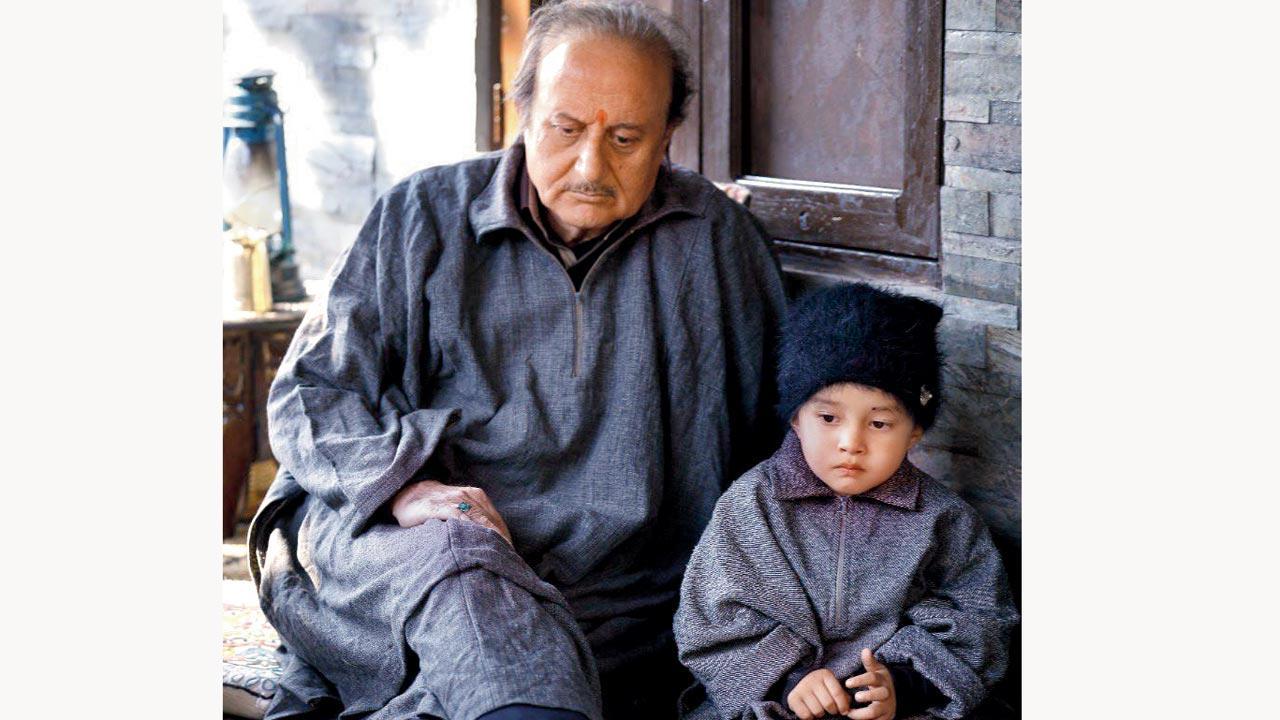
NCPCR drafts guidelines for showbiz minors; No child artiste should be made to work for more than six hours
8:27 AM

Niharika Lal (BOMBAY TIMES; July 29, 2022)
The National Commission for Protection of Child Rights (NCPCR) has drafted new guidelines to protect child artistes in the showbiz industry. One of the major highlights of the draft guidelines is that no showbiz minor should work for more than 27 consecutive days in a year and over six hours in a day. The draft ‘Regulatory Guidelines for Child Participation in the Entertainment Industry’ will cover films, OTT, TV, reality shows and other fields where child artistes are involved.
‘NEED TO ADDRESS WORKING HOURS’
Priyank Kanoongo, Chairperson, NCPCR, says that they have received many complaints for TV serials and OTT platforms. He asks, “We have received a lot of complaints regarding portrayal of kids, but who will complain about the working hours of these kids? We need to address working hours and working conditions of showbiz minors. Hence, we need strict implementation of these guidelines. "
Apart from Priyank Kanoongo, director Soumendra Padhi and other experts from the industry are also part of this committee. One of the points in the guidelines also mentions that for kids to work in the entertainment sector, they will require producers to obtain permission from the District Magistrate. This is being suggested to ensure a safe environment on sets for child artistes.
Findings indicate that unfortunately there are also parents who own the earnings of their children and rather than acting in the best interest of children, they modify kids’ schedules to fit shooting schedules. It has often been noticed that parents quit their jobs to manage their kids’ careers full time. The committee will also have meetings with heads of production houses of all major mediums and studio heads. The draft guidelines of NCPCR has come up with a list of dos and don’ts for children in showbiz. Till July 31, these guidelines are out for public feedback.
‘DRAFT GUIDELINES AIM TO PROTECT SHOWBIZ MINORS FROM THEIR PARENTS AND PRODUCERS’
Vani Tripathi Tikoo who was among the members who drafted these guidelines says that the main objective of framing the guidelines is that child artistes are treated as kids. Vani says that working conditions on sets are often not children-friendly. She says, “We need to take immediate steps about the conditions in which child actors are working on sets. The new rules in the draft guideline include things like having a tutor, child counsellor during shooting, limited work hours and regular breaks among other requirements.”
Vani, who has also worked in several films and TV serials, has witnessed that children work till late hours and rarely get free time. She points out that it is the need of hour to take a look at how showbiz minors are working. She says, “The aim of the draft guidelines is to protect child artistes from exploitation by not just producers but parents as well. These guidelines have been drafted to catch up with the ever-increasing entertainment formats as we have more child artistes working in all the mediums. Besides, the guidelines are not just for guidance but we have included provision for punishment.”
‘DUE TO TELECAST ISSUES EIGHT HOURS TURN INTO 12 HOURS’
Yeh Rishta Kya Kehlata Hai actress Ashnoor Kaur’s (now 18) mother Avneet Kaur says, “It has been said that the working hours are eight hours, but due to telecast issues, they become 12 hours, so there should be a fix on the number of hours. Ashnoor was very young, around five years when she did Jhansi Ki Rani, so there were no issues. But when she did Patiala Babes, she had her board exams and it used to get tough when we used to get home around 11pm. She would insist that she had to finish her chapters and would sleep for around four hours. That was too less for a child. She has been a very bright student, so she scored well but I feel that there should be a rule on the working hours.”
She adds, “I would also like to share how the working environment is safe for children but they should be taught to work within their boundaries and understand what’s good and bad for them. As parents we do have to take permission from Cine And TV Artistes’ Association (CINTAA) and become members so that our child can act in shows. They also have a list of regulations for child actors.”
‘IT WOULD BE HELPFUL IF MAKERS HAVE A TUTOR ON THE SET’
The new guidelines in India also mention that child artistes should be provided private tutors if they skip school. In foreign countries, this is an established norm. For instance, during the shoot of Stranger Things – as the cast majorly comprised kids – tutors were available for them so they could take lessons.
Kanoongo adds, “The guidelines have incorporated the amendments in child labour laws, Protection of Children from Sexual Offences Act, 2012 and the Information Technology (Intermediary Guidelines and Digital Media Ethics Code) Rules, 2021. It has been over ten years since these guidelines were last issued in 2011.”
Aakriti, who is 12 years old now, had acted in Kullfi Kumarr Bajewala when she was eight. Her mother Dimple Sharma says, “Aakriti was in Class II when she acted in the TV show. We did not face many issues but we had to hire a tutor as she used to attend school just once or twice a week. In such cases, when the child is dividing time between acting and school, it would be nice if the makers have a tutor on the set, too. It could be a rule now, Kullfi… makers used to help us with such things that are important for studies. Otherwise, there is no pressure on the child and the working environment is good, my daughter is quite smart, so she used to catch up on studies very well.”
— Inputs by Tanvi Trivedi
India Forum at Cannes: 'How can Indian cinema embrace its Indianness, while still being a global player?’
8:03 AM

BOMBAY TIMES (May 23, 2022)
On Day 3 of the Cannes Film Festival, the India Forum panel session on ‘India: The Content Hub Of The World’, saw a discussion on increasing acceptance of Indian content among global audiences and a debate over how Indian stories should be positioned for the international audience. Should India give a more international flavour to content to gain wider acceptability, or be unapologetically Indian in the tonality of what it makes? The session is over, but the debate continues.
UNAPOLOGETICALLY INDIAN OR CATERED TO A GLOBAL AUDIENCE: WHAT SHOULD BE INDIA’S APPROACH TO THE WORLD MARKET?
In his keynote address, Anurag Singh Thakur, Union Minister for Information and Broadcasting said that Indian content has been appreciated by the global audience, since as far back as 1946, when Chetan Anand’s film Neecha Nagar won the Palme d’Or (then known as Grand Prix of the International Film Festival). A decade later, in 1956, Satyajit Ray’s Pather Panchali won the Best Human Document award.
“India intends to give the global audience a flavour of the country’s cinematic excellence, technological prowess, rich culture and illustrious heritage of storytelling,” he said, while discussing how the country is set to manifest into the ‘content hub of the world’.
While talking about how India should approach the global market and audience, Prasoon Joshi, CBFC chairperson emphasized that India can follow the Korean approach of storytelling – in the sense that the content need not lose its local cultural connect.
He said, “How can I take India and what can be produced in India and make it palatable for the global market and reach out to that market? That’s what Korea did with K-pop or K-dramas. They reached out with a distinct Korean flavour catered to the world market. Every culture in the world has something to offer, I would hate a world which is standardized. Another thing that’s important is that India understands diversity. We are so used to diversity.”
Scott Roxborough, Europe Bureau Chief, The Hollywood Reporter, was not convinced on some nuances and pointed out the fact that though China has an incredibly strong domestic market and is now the second largest box office territory in the world, it has still not been able to really find global acceptance, even though it makes very distinct films about its culture and history.
“They (China) have not really managed to cross over to the international market, and I would argue that India hasn’t either yet, despite having a very long history of cinema, and having great traditional storytelling. The type of Indian storytelling that is so appealing to the Indian market has not yet crossed over to the international market. ”
‘LIFE OF PI TO RRR – ‘TYPICALLY INDIAN’ STORIES ARE FINDING AUDIENCE WORLDWIDE’
Scott also made the point that there should be a point beyond which governments should perhaps not get involved in the space of culture. CBFC member and actress-producer Vani Tripathi Tikoo, who was moderating the event, asked Apurva Chandra, Secretary, I&B, “Scott says the government should not be getting involved in culture, and we were discussing yesterday about education and creation of opportunities in cinema, in governance terms, what do you think should be happening? How much involvement should governance have in terms of creation of content? How does it interconnect with you and the consciousness around governance?”
Chandra said that he would like to respond to Scott as a film buff and not as a government officer. Sharing examples of Indian films that resonated with the global audience, he added, “NFDC (National Film Development Corporation of India) was the producer of The Lunchbox, a very very typical story of the Mumbai suburb, and Mr And Mrs Iyer, a film on Hindu Muslim unity. There have been a lot of stories which the world has been interested in, like Lion, Life Of Pi,and Slumdog Millionaire – that are all by foreign filmmakers but are typically Indian. And then apart from that, there are a lot of Indian films that are getting attention in other parts of the world – 3 Idiots or Dangal did very well in China. I met Ahmad Bolchin, who is a producer of RRR in Dubai, and he said that he is translating RRR into Persian, distributing it in Iran. In Dubai, they are interested in Indian serials, and would like to dub them in Arabic. That’s how Indian stories are travelling in the Middle East, in America and in other parts of the world.”
‘WE INDIANS ARE MELODRAMATIC,SO THEN WHY BE DEFENSIVE ABOUT IT?’
Veteran filmmaker Shekhar Kapur, Prasoon, and R Madhavan were all convinced that the flamboyance, the melodrama and the cultural rooting of content made in India, or by Indians, should not be something that is treated apologetically.
Underlining the social and emotional USPs of content rooted in India, Kapur said that human beings are melodramatic people and “we Indians perhaps even more so, and there is no need to be defensive about that. For us (Indians in particular, and Asians in general) everything is mythology”.
He added, “In the West, there is some kind of shyness when mythology comes up. I did a film called Elizabeth (1998), my first film outside India and I am thinking – how am I gonna do this? This is the most famous queen in the world and I am an Indian filmmaker! I was like, actually, I have a mythic idea and to me everything about Elizabeth is mythic. And when I was shooting it everybody said, ‘Shekhar, it is so melodramatic’, and I said, ‘No, it’s mythic’. Reviews also said that it is a very melodramatic film. I said, ‘Yes!’ They said it is a Bollywood film, and I said, ‘Yes!’ And then we got nominated for nine Oscars and Cate Blanchett became one of the biggest stars in the world.”
STAYING AUTHENTIC VS MAKING CONTENT THAT CAN EASILY BE TRANSLATED GLOBALLY
Kapur pointed out that there is this conflict between the West and the East and the reason Chinese films are not coming abroad yet is perhaps not because they lack a connect but because the film critics in the West have not yet learnt to celebrate the idea of living mythically.
Scott responded by making the point that succeeding in the international market comes from translation, like what Kapur did – take a very western story and telling it in a very Indian way. He said, “What you did with Elizabeth was a very compelling translation of Indian cinema – emotional, melodramatic and mythic cinema-making, with a western story. You were able to combine that and translate the language into something which was then understandable for the international audience.”
He said that it is not that Chinese cinema is not producing big distinct cinema, but that the international audience doesn’t understand that language and culture. He added, “I would argue that this is what Korea has done. They tell very Korean stories, but they have taken so much western influence to their storytelling that they are very easily translatable, and very easily understandable. Parasite, for me, could have been a Spielberg movie. It is told in a very Korean way with a very specific Korean setting, but they have managed to find a translation. And that’s what I think India needs to do ifit has to go international with storytelling, and that doesn’t mean to be untrue to the core or mythic, but you can’t expect audiences to just understand the culture.”
Madhavan also reiterated the point of being unabashed about not tailoring content to deliberately make it more globally palatable. “One of the ways that content becomes international and consumed is the fact that it becomes aspirational. Koreans have become successful because they are unabashed about how they don’t want to appease the rest of the world. They are very Korean in their nature – and that’s why my son wants to see it. I think if we are able to make those stories aspirational, of which we have many opportunities in India, we will be as much a global player as Hollywood is. ”
‘GLOBAL COLLABORATIONS CAN HELP BREAK CULTURAL BARRIERS’
To ensure that Indian stories are not lost in translation and effectively reach foreign audiences, producer Philippe Avril advised to encourage co-production across countries.
Indian musician Ricky Kej – who has won two Grammys, in 2022 and 2015, both in the Best New Age Album category, and both in collaboration with international artistes – pointed out that some of the best films narrating Indian stories have either come from Indian filmmakers who lived abroad or foreign filmmakers who told an Indian story, and hence, collaboration is the way forward.
He added, “My first major collaboration (Winds Of Samsara) was with a South African musician (flautist Wouter Kellerman), for which I won a Grammy (in 2015). My second collaboration was this year with Stewart Copeland, a former drummer of The Police from America. I won my second Grammy for that. And both albums are very strongly Indian. It is just that I got a new perspective on how to dress up the songs. The same could apply to films. I think collaboration becomes very important to break cultural barriers. ”
Even newbie male actors don’t want to work in my films-Taapsee Pannu
8:11 AM

Niharika Lal (BOMBAY TIMES; November 3, 2021)
From Pink, Badla and Thappad, to Manmarziyaan, Haseen Dillruba and now Rashmi Rocket, Taapsee Pannu has charted her own path in Bollywood, with fiery and fierce protagonists, and glass-ceiling-breaking films. During a recent discussion with CBFC member Vani Tripathi Tikoo at the FICCI Young Leaders Global Summit, the actress spoke about her unconventional cinematic choices, why she likes to be a ‘relatable’ star, and why no A-list actors want to work with her anymore. Excerpts:
‘MALE ACTORS IN A FEMALE-LED PROJECT ARE THE ONES STILL CLIMBING THE LADDER’
“The last decade or so of Indian cinema has been path breaking — in terms of creating roles where women are not hourglass figures, babes-in-the-woods or arm candies. Women are real and they are not all that perfect,” said Vani, adding, however, that A-list actors are still hesitant about starring in women-led projects. Taapsee agreed, saying, “Take the statistics — if you see any A-lister female who is headlining a project as a protagonist, the guy opposite her is someone who is still climbing up the ladder. But the reverse is not true.”
Taapsee said, “If you see the A-list male actors’ films, even for the five-six scenes opposite them, all the best female stars are cast. It speaks clearly about the sense of security and confidence of female actors versus male actors. We (female actors) know that if you’ll give us five-six scenes, they’re enough to make our presence felt. A Mission Mangal will have five female actors together in a film, who have — in their individual capacity — headlined films. It just talks about the sense of security women have.”
She added, “Every time I sit down with my producers over a list of the top five actors shortlisted for my films, those top five actors are the ones who have done just one or two films. And even they don’t want the role, because the system around them trains them to not do a film in which their role is just 10%.”
Citing the various excuses actors have given to not work in a film with her, Taapsee said, “One actor refused to do a film (in which she had a double role), saying, ‘Ek Taapsee ko sambhalna mushkil hota hai, yahan toh do hain’. There was another co-actor who was offered a film with me, and we had worked together before. He just said, ‘I don’t want to do this film because, actually, the sympathy goes more to the girl in the end.’ It was a love story! I told him I expected a little more confidence and sense of security in an actor like him. He has done way more films, and is a bigger star. But that’s the sad truth we are dealing with everyday.”
‘MY RELATABILITY IS MY TRUMP CARD’
Despite embracing strong female protagonists on screen, Taapsee remains as relatable as ever — and that’s intentionally so, she says. “Very early in my career, I realised that the trajectory of being an aspirational heroine or someone who is a diva and larger-than-life... that kind of a heroine is not going to work for me. There are many other actresses who are in that queue. It’s just not gonna make sense for me. A lot of people come to me and say, ‘Oh, you are like one of us’, and I’m like, ‘Exactly, that is the idea!’. I wanted all of you to take me back to discuss in your living room, and not just forget me when you leave the theatre. I started picking up stories that would make anyone watching the film feel, ‘this could be my story’. That relatability quotient helped me become a household name and become a very organic part of their lives,” says Taapsee.
‘PINK HELPED ME SHAPE MY CAREER & MAKE IT WHAT IT IS TODAY’
Taapsee says that Pink’s success shaped her career, and made it the “the way it is (today)... just breaking one glass ceiling after another, because it is helping my career.”
The actress adds that she was pleasantly surprised when she first found out that Amitabh Bachchan would be part of the film because she never thought that a big star would agree to the part. “We were going to have a superstar like him as the lawyer, and he was going to have lines like — ‘Are you a virgin?’. Shockingly enough, that was the opening line of the trailer as well, which instantly hooked everyone.”
‘THAPPAD CAME OUT OF A DISCUSSION ON A PLANE WITH ANUBHAV SINHA’
“While promoting Mulk, Anubhav Sinha and I were just discussing how we don’t really speak about some very basic issues of our society which we come across on a daily basis, and how we don’t make stories around them. At that time, the discussion was about whether we should base the character out of a ‘not-so-well-off household’ or a small city. I told them that was too convenient — to go, ‘Oh! hamare yahan nahin hota hai yeh. It happens to people who are not that well off’. Let’s just target the elephant in the room! This happens at every level. So that’s when Sir (Anubhav Sinha) came up with this beautiful idea of placing her in a situation where you feel like, ‘Yahan toh ho hi nahi sakta!’ The guy is so good, the family is so loving towards the girl, and even the girl is a housewife by choice,” said Taapsee.
“Even after the film released, many women thought, ‘Ek thappad hi toh tha’. I almost lost my temper at one of the screenings, when a woman said that. I said, ‘The problem with all of us is when we tell the other woman, ‘this is enough for you’ and ‘this should not be enough for you’. It destroys the whole meaning of feminism where you are telling the other woman that ‘ek tha, toh theek tha, dus hote toh theek nahi hota’,” she said.

Spend as much as you have to on a film, but don’t make compromises to make up for the expenses-Vidhu Vinod Chopra
8:11 AM

Niharika Lal (BOMBAY TIMES; February 23, 2021)

WHEN VIDHU VINOD CHOPRA ASKED FOR CASH ON THE NATIONAL FILM AWARDS STAGE
Vidhu Vinod Chopra had received the National Film Award for the Best Short Experimental Film for his first film, Murder At Monkey Hill (1976). But when he went on the stage and was handed over the award by the then President Neelam Sanjiva Reddy and the then Minister for Information and Broadcasting Lal Krishna Advani, the filmmaker realised that the award wasn’t a cash prize but was in the form of a bond (which award recipients can encash after years).
An upcoming filmmaker then, who was struggling to make ends meet, Vidhu was disappointed and kept arguing with the minister, who promised him to hand over the cash the next day. But Vidhu couldn’t be convinced and the President had to intervene. While finally after the filmmaker exited the stage, he was later told that the entire interaction was telecast live on Doordarshan! Vani admitted to Vidhu that she was flabbergasted when she read about it.
Vidhu explained, “You have to try and imagine that kid who went to Vigyan Bhawan (where the award ceremony is organised) with nothing in his pocket. All the money which I had borrowed was used up. So you have to understand that it (what he said) didn’t come from grit or some madness or courage, but it had to do with necessity. It came from the need, and I needed that money to have my dinner and my breakfast the next day.”
‘THE MOMENT YOU SPEND BEYOND A POINT TO MAKE A FILM, YOU START MAKING COMPROMISES IN YOUR HEAD’
During the virtual session of the Jaipur Literature Festival, Vidhu pointed out to Vani that if a filmmaker spends beyond a point to make his movie, there are creative compromises he has to make to ensure the film makes enough money to recover the over-expense.
He said, “I don’t have great needs, I don’t throw parties. I don’t have many friends. Most people don’t like me, and I don’t like most people, so it works beautifully. But what happens in movies is that unlike a painter or a writer, you (filmmakers) invest a lot of money. But the moment you invest, let’s say, beyond Rs. 200 crore, you start thinking of making compromises in your head. Because then you’ll say, ‘I need to put a song here, I need to do this scene there.’ So you actually sell your freedom as a filmmaker and as an artiste by spending more money on your movie.”
But whatever be the expense, Vidhu says he always wants to give the audience an authentic experience. Giving an example of his film Shikara (2020) — a love story of a Kashmiri couple in the backdrop of the exodus of Kashmiri Pandits from the valley in the 1990s — he said, “For a film like Shikara, which I knew would not earn Rs. 500 crore, I spent almost as much as I spent on 3 Idiots because that film needed that. I was showing on screen thousands and thousands of refugee Kashmiri Pandits and I also had thousands of buses that came to Patnitop (to take the refugees away). I went to the exact location where that had happened.”
Vidhu’s large-scale shoot even surprised renowned Hollywood filmmaker James Cameron, who’s known for his big budget movies. “Cameron is a great filmmaker and he saw the film in New Zealand. The first thing he told me was, ‘All those buses were real Vinod, how did you do that? Why did you get so many? I would have got three and digitally created the rest.’ I told him, ‘James, I really wanted it to be authentic’,” said Vidhu. He added, “So it’s not about how much money you spend. Spend as much as you have to. But be careful. If you spend beyond a point, you will have to dumb down and make a rubbish film so you can make enough money to recover your loss.”

During the conversation, Vani asked Vidhu about a particular section in his book, Unscripted, which they were discussing at the lit fest. Vani asked, “In the book, you have said that ‘I haven’t sold my soul then why should somebody else?’ What is that conversation all about?” Then Vidhu explained to Vani about filmmaker Ingmar Bergman’s three commandments of filmmaking that he also swears by. Not just when it comes to making films, but also as a way of life.
Vidhu, who studied Bergman at the film institute FTII, said about the commandments, “The first commandment is: ‘Thou shall entertain’, which is amazing because the job of the filmmaker is to entertain and not to preach. The second commandment is: ‘Thou shall entertain without selling your soul’, and third is: ‘Make every film as if that is your last because it easily could be’.”
He added, “Today, you can project any image on social media. You see, on Instagram, everybody is projecting their finest moments in the Maldives. There seems to be no sorrow. So I can project an image here (at the session), and even if you like the image, once the screen is off, I will be very unhappy because I will know that is not who I am. I know the truth. But if I am speaking the truth, and even if everybody says this guy is nonsense, the session is rubbish, that’s fine. I will be happy because I have spoken the truth.”
‘I DON’T BELONG TO THAT INDUSTRY’
Vani pointed out how Vidhu’s films, starting from Parinda, Munnabhai movies, 3 Idiots to Shikara, belong to different genres. Vidhu replied, “Life becomes very boring for me if I start following a certain path. After Shikara, I have written a crazy thriller, Baarish, about a couple in the middle of nowhere who want to kill each other. It is completely different. When you will see Baarish, you will think, ‘Is this the same guy who directed Shikara?’ That is the fun of it. Try different cuisine, try different cinema. To me, life is greater than cinema, far greater than cinema, and therefore I enjoy my life.”
When Vani observed, “But Vidhu ji, we belong to a film industry which is so ‘familiar-driven’,” Vidhu laughed and replied, “I must tell you that I don’t belong to that industry.”
Tandav bows down; is censorship the way forward for OTT?
8:35 AM

Industry insiders feel it isn’t right to censor digital content, add makers must avoid hurting sentiments
Rishabh Suri (HINDUSTAN TIMES; January 21, 2021)
Censorship: this word, of late, has been creating headlines. First, it was films, now, it seems to be OTT content as well. The latest instance is Tandav, the web show starring Saif Ali Khan in the lead and set against the backdrop of Indian politics. One scene that drew ire shows actor Mohd Zeeshan Ayyub playing a modern-day Lord Shiva in a college play. Netizens have alleged it hurts religious sentiments. Another scene involves characters played by Anuup Sonii and Sandhya Mridul, talking about caste. The outrage forced the makers to issue a statement, agreeing to “implement changes”. Does this point towards censorship being the way forward for OTT?
Actor-filmmaker Renuka Shahane, who directed the film Tribhanga recently, is against censorship, but says, “You can’t curtail any kind of outrage that happens these days. But I have to say that as makers...one should not put out anything that hurts anybody’s religious sentiments.”
In the recent past, shows such as A Suitable Boy and Ashram too have been accused of hurting sentiments. Vani Tripathi Tikoo, Central Board of Film Certification (CBFC) member, says she has often argued that the lens of film certification should not be used for OTT. “Theatre viewing is a collective exercise, and watching OTT more personalised. But in Coronavirus times, families have been sitting and watching them together,” she says.
Adding while we shouldn’t be censoring, she says, “Some countries have a code and industry standard for digital content. You can’t dissociate from that responsibility in a hyper sensitive democracy like India.”
Telling the story in the right way is what people are emphasising on. Joining the list is Apurva Asrani, who’s written films such as Aligarh (2015), Shahid (2013) and the latest season of the web show Criminal Justice. He says, “In a democracy, you should be able to tell your story. Someone with another point of view has the right to counter that with a story told in a similar format.”
Pritish Nandy, producer of the show Four More Shots Please! says when the state backs a point of view, generally “most people fall in line”. He elaborates, “It does not mean what they are doing is right, it means people do not want to face the consequences of taking on the might of the state. If India wants to compete in that challenging, creative space, it must learn to do with minimal censorship.”

I am probably the only person who has been criticized for being overtly progressive & also regressive-Ekta Kapoor
8:17 AM

Niharika Lal (BOMBAY TIMES; January 19, 2021)
Speaking at a session on women leaders impacting entertainment and cinema at Film Bazaar, organised by NFDC Film Bazaar on the sidelines of IFFI, TV and film producer Ekta Kapoor, Central Board of Film Certification (CBFC) member Vani Tripathi Tikoo and producer Srishti Behl Arya discussed how women have made inroads and broken glass-ceilings in the industry. They also spoke about the opportunities that exist for women in cinema today and shared their experiences, too.
WAS CRITICISED FOR BEING OVERTLY PROGRESSIVE AS WELL AS FOR BEING REGRESSIVE: EKTA KAPOOR
Ekta Kapoor said that when she had started out, she was told that “films are a male medium and women are sort of dancers and they don’t get meaty parts”. She said, “When I started in television, first accidentally, and later deliberately, we started taking female-driven narratives. Then TV became an anti-thesis of films on a much larger medium, where women were empowered, their fashion sense became a talking point. Men were there, but they had to look good. It was no longer their narrative. The protagonist was a woman.”
She added, “If you create content with women wearing sarees, people call you regressive, if they wear swimsuits, they call it sexual. And I call them judgmental. I was telling someone the other day that I am probably the only person who has been criticized for being overtly progressive and at the same time, (for being) regressive and conservative. I can be one of the two, maybe I am both! This is what we need to fight – the terminology.”

THE DIRTY PICTURE WAS THE BEGINNING OF THE BREAKING OF THE GLASS CEILING: VANI TRIPATHI TIKOO
Vani said that she thinks the glass ceiling in the cinema industry is cracking. She said, “All over the world when I go and talk about women in cinema, the mention of The Dirty Picture crops up. The movie was actually the beginning of the breaking of the glass ceiling. There were so many lessons learnt in that narrative. The first was that the more you judge a woman, the more she will turn around and give two hoots about it. That is the kind of judgment Ekta is talking about and that is the kind of judgment we face each day.”
Vani emphasised that in the last decade, The Dirty Picture has been the cusp of change. She said, “The propaganda used to be that if the protagonist of the film is a heroine, the film is not going to get financed, it is not going to get released. Ekta proved all of that wrong. So did Vidya (Balan, the protagonist of The Dirty Picture). From there came so many other films. So this decade belongs to this very narrative and this was the first huge crack in the glass ceiling; one kick more and it will be gone.”

THE FIRST BATTLE IS IN OUR HEAD AND THE FIRST BATTLEGROUND IS OUR HOME: SRISHTI BEHL ARYA
The panelists discussed that some of the best directors, best cinematographers are women. Ekta said, “So many times I have girls working with me and I make one point to them – if you want to train with me, I have no problem, you can leave this job and go anywhere. But I don’t want you to tell me after four years of training that you left your job because you got married. Don’t waste these four years and somebody else’s seat. It is sad that (for women), a job is considered a hobby, and ambition is considered bad. If you have a hard-nosed attitude towards your job, you are considered a freak or temperamental or tyrant.”
Producer Srishti added, “The first battle is in our head and the first battleground is our home. We just don’t want ambition in a woman to be considered negative. We need to reach a point where we don’t need to tell the gender of the CEO to talk about parity.”
Vani emphasised how on-screen portrayal of women changed in the last decade. She said, “The realistic side of women, their ambitions and desires are portrayed. Earlier, it always was beautiful chiffon sarees and hero coming to rescue her. This has changed now.”
I found a distributor for my first film after over a 100 screenings-Vishal Bhardwaj
7:44 AM

Niharika Lal (BOMBAY TIMES; November 30, 2019)
 Speaking at a session titled ‘Indian Cinema Inspiring Entrepreneurs’ at Film Bazaar, organised by NFDC on the sidelines of International Film Festival of India (IFFI), Vishal Bhardwaj reminisced about the first film he made and shared how the internet gave rise to opportunities that didn’t exist when he had joined the film industry. He also spoke about how the film industry has changed over time with more women occupying important positions. Vani Tripathi Tikoo, CBFC member and co-panellist in this session, advised budding filmmakers to celebrate rather than feel disheartened by rejections. Excerpts:
MY FIRST FILM TAUGHT ME MARKETING, DISTRIBUTION AND PRODUCING A FILM: VISHAL
Sharing the trouble he went through to release his first film, Vishal said, “The Children’s Films Society of India (CFSI) sponsored Makdee, my first film. They had invested around ₹ 50 lakhs. And when I showed the first cut to the committee, they rejected it. I came from a music background and there was no precedent that a music composer could become a director. When I showed the film to my friends they said that it was not a Pather Panchali, but it was not a bad film either.”
Vishal said that this gave him the courage to take the film forward. “I bought the film from CFSI, and got a loan of ₹50 lakhs, which was a huge amount for me at that time. For a whole year, I must have screened Makdee over a 100 times for distributors, and finally, I was able to con someone (laughs)! But in that one year, I had learnt marketing, distribution and every other aspect that comes after filmmaking. Those days, I used to be depressed, but later, I realised that because of that one year, I learnt how to become a producer. After this, I wrote, directed and co-produced Maqbool (2004).”
LEARN TO ACCEPT REJECTIONS WITHOUT BEING HEARTBROKEN: VANI TO BUDDING FILMMAKERS
Talking about rejections, Vani Tripathi Tikoo told budding filmmakers at the session, “You should be able to accept rejections. I tell my students not to feel bad because someone said no. The no is for the work, and not for you. You shouldn’t question your capabilities because of rejections. Instead, you should work on improving your craft. For a film, you have to work with several people, who may have a different mindset than yours. It’s almost like certifying a film.”
UNLIKE EARLIER, IT’S EASIER TO CONTACT A STUDIO NOW: VISHAL
In reply to a question on scriptwriting, Vishal said, “There was a time when it was difficult to reach a studio, but now, if you have good content, you can contact a studio. Most of the studios are now hiring writers. Junglee Pictures had developed their films’ scripts with in-house writers. Delhi Belly came to be because Kiran’s (Rao) amusement while reading the script caught Aamir’s (Khan) attention. Akshat Verma (scriptwriter of Delhi Belly) had simply sent the script to Aamir.”
Adding to it, Vani said, “Recently, I met a young filmmaker (Sanjeev Vig) who never attended any film school. But he felt very strongly about a subject and put it into a script for a short film and then sent it to Naseer bhai (Naseeruddin Shah). Naseer, who is otherwise very picky with projects, called Sanjeev and asked him to meet. The film was called Rogan Josh (2018), and it bagged several awards.”
IT’S THE BEST TIME TO BE IN THE FILM INDUSTRY: VISHAL
Vani emphasised that a young person has more opportunities to write and direct now than before. She said, “You can’t wait for eternity for someone to come and pick your script to make a film. You should make it yourself ! If no one chooses your script, use your phone camera, shoot it and post it.”
Vishal told budding filmmakers that now with the availability of multiple channels and digital platforms, it was the best time to be a filmmaker. He said, “When I came to the industry, there were two TV channels and then there were films, there was nothing in between. Today, there are so many opportunities. I think the digital boom is so good, films are doing well at the box office, so it is the best time to be in the filmmaking business. When we came to the industry, tab aisa tha jaise - film industry mein jana gunaah hai. Film mein aapka beta ja raha hai toh matlab khatam, beti ki toh baat hi chhoriye. Now, we have more female assistant directors, more female studio heads in the industry.”
CBFC has to balance cinematic sensibilities & social sensitivities-Prasoon Joshi
8:24 AM

Anshul Chaturvedi (BOMBAY TIMES; November 3, 2018)
The news space for the past few months has been lacking the almost default quota of stories about censorship vs free expression, and the theatrics of leaked stories, inexplicable cuts, appeals and tribunals. In that rare noncombative space, the CBFC and its chairperson Prasoon Joshi have been doing other things, such as a recent workshop that was attended by both the CBFC’s board members and representatives of Hindi and regional film associations. Prasoon explains why such dialogue is both unprecedented and essential, and why, while very few films are facing restrictions, collective viewing through the medium of cinema cannot yet be treated on the even more liberal benchmarks as individual viewing experiences. Excerpts:
How effective have been the recent efforts of the CBFC to engage with the cinematic community? You have held a meeting and workshop with industry representatives recently.
Filmmakers talk of sensitising the panel’s members. And we, the panel, need to get filmmakers on board, so we can both understand how people are looking at cinema with changing times. So, activities like that workshop was very important. They had their own queries in their head. It was a kind of a Q&A which I had with them to make them sort of familiar with what we are trying to do. I keep telling them it’s not about censoring, the spelling has to change to sensor. You know, if it comes from sensitivity and sensorial, then it should be sensor, not censor.
The idea is to keep talking to the film industry, taking feedback, and making sure that the staff and the people who work every day are sensitised to that feedback. That sensitisation has reflected in the kinds of films that are coming through, where people sometimes wonder how they came out without any cuts — films like Mukkabaaz or a Raazi or Padmaavat or a Mulk or recently, the documentary The Argumentative Indian, where I personally sat with the filmmaker. Or Manto.
Also, there’s more to it than clearing movies. We have digitised the entire process. We are going back to as much as our old record is, to digitise every certificate, so that if people want to get their certificate — if people have lost it and if the third generation of people want to obtain the certificate, you know — they can get it. Lakhs of them have already been done, and the process is on. We are also introducing a more contemporary design of film certificates which will also have a QR code.
Do digital processes translate into quicker turnaround time for movies?
Some filmmakers want their movies sorted very urgently. Sometimes I feel a filmmaker also needs to understand that no matter how digitised we’ve made the process, still, a film reviewing process is a human process — people have to sit, watch a three-hour film, discuss it, go through the Cinematograph Act, and offer their advice. That’s a human process. That cannot be shortened, that cannot be digitised. No computer can certify your film. It has to be understood ki yeh nahi hai ki aap aaj apply kar rahe ho aur kal aapko certificate dega... they have to give a minimum of three weeks. The process gives us many much more time — 68 days — but we don’t take that much of time, we usually take much less time, try to do it as fast as possible. But sometimes people don’t understand the volumes being handled. This year we have issued 20,000 certificates already.
By that benchmark, in 2018, the ‘CBFC vs filmmaker’ headlines haven’t been frequent.
See, those stories, when I consider them even as a marketing person, I feel it’s a very dirty way of marketing. People trying to portray as if they are resisting pressure and saying that CBFC has done this, has done that. That doesn’t do justice to the people. If you come and see the people who are working in the CBFC, they are working day and night. On Saturdays also they are working, trying to clear the backlog of films because staffing has not gone up so much as the number of films over the years. The amount of films we are producing every year has been increasing, and so has the workload.
As far as sensibility is concerned, I have worked really hard in terms of communicating that. You can talk to the CBFC people and they can tell you that films don’t face unnecessary deletions. Most of the times, in fact, people are going for voluntary cuts and voluntary changes.
Like Manmarziyaan? We’ve often had headlines saying that the CBFC buckled under a community’s pressure — this time they did not, but the filmmakers still opted to take cuts.
Yes. So, I have said that we are trying to do as much — as sensibly as possible towards the filmmaker. And being an artist I understand that, but there is also what needs to be understood is that the job of CBFC is to strike a balance. A fine balance between cinematic sensibilities and social sensitivities. It’s a tough job. And I think the industry has appreciated that.
Our interaction with the industry was a first of sorts. The industry has, in the recent past, no memory of interacting with the CBFC and tabling their issues. They felt that we are doing mostly certification, not censoring. There is nothing like that ‘the CBFC is trying to resist our creative work’. They were very appreciative, and at the same time I could communicate to them that how difficult the job is – and in terms of a fine line and in terms of striking the balance. Main hamesha kehta raha hoon — vivaad se zyada vichar-vimarsh se kaam hota hai. Vivaad se nahi hota hai. Vivaad, you know, makes everybody’s life difficult. There is nothing that comes out of it. By talking, by sitting across the table, you can resolve difficult questions.
Many filmmakers, when speaking about projects they have made for the online/streaming space recently, say ‘Here we don’t have to factor in about what certification we will get. We make it and we screen it.’
That’s their choice. What can I say about that?
When people in the censor system come with their questions and their clarifications, what are the areas where you find gaps that need to be addressed?
In terms of sensibility or in terms of process?
Sensibility...
What I ask them to understand is that ki intent kya hai. Don’t see things in suspension. Out of context aap koi cheez dekhenge, usske maayne apni tarah se aap nikalenge. But the intent of the storyteller is very important while holistically seeing the film. The camera’s intent could be objectification or portrayal. You can clearly see that, and you know when your intent is just to objectify. I will give you an example of a girl who is a police officer, and the camera is constantly, you know, caressing her body or portraying her body in a way which only reduces her to a body. It is gross disrespect to a woman in India —imagine, who fights so much to get education, then fights to get into a service like police, and is in a dignified uniform. If even then if you only see her as an object —that’s something which concerns me.
And these are things which are very fine. It can’t be communicated over one talk. You constantly interact with the people, this whole workshop thing which we are doing, and which we will be doing again, and we plan these workshops in various other regions —in Chennai, in Kolkata, in Hyderabad, in Trivandrum. We are planning to do this, more interaction with the board members because see, on one hand you have got regular staff of the CBFC, and on the other hand you have the board which has more of people who are from the world of art and cinema. So, it’s important that they spend time and understand each other’s point of view. Art is constantly evolving, sensibilities are also constantly evolving.
The judiciary has been on a liberal trajectory, with the verdicts on adultery, on Section 377, on Sabarimala. As a country, we have been opening up on at least some questions that we are not comfortable with earlier. On the other hand, something as simple as a WhatsApp video forward has caused much stress, sometimes violence and sometimes deaths. How do filmmakers, and certifiers, balance the line between ‘anything goes’ and the fallout of controversial content?
Society has a collective conscience. Things don’t change overnight. I feel ye kehna ki jaise hum kehte thay ki kya cinema samaaj ka darpan matr hai? Is it only a reflection of the society? Or is it also shaping the society? It’s both — it reflects the society and also shapes the society. You can’t just say it is purely reflecting the society. And also, sometimes cinema goes a step or two ahead and makes certain points. And also starts the debate in people’s head. It’s a two-way process. It’s constantly shaping. In every sphere, what is acceptable for society’s collective conscience is not easy to decide.
The thing is that you push it when you feel that your society is not ready to accept it because eventually you understand there’s commerce is related to it. When commerce is related, especially to cinema, you cannot just say that I want your share of wallet, but I don’t like your share of voice. With the share of wallet, the share of voice will come —you’ll have to respect that. Because it’s a commercial world, you are seeking the share of wallet, so you’ll have to respect the share of voice as well.
Would you say that the trust level between the CBFC and the filmmakers has increased in the past year or so?
I would say that. I would believe that. That’s for the filmmakers, for them to say, but I feel it being part of the industry as well, I feel, yes. I feel that they want to listen, and I want to listen. I feel that there was a dialogue.
Well, at least fewer cases seem to be going to the FCAT in the last few months.
Yes, that’s true.
How relevant is certification/censorship for cinema at a point of time when the content you can watch online is close to completely uncensored?
If you understand human psychology — you would know that collective viewing is a very different experience, a very different experience from personal viewing. And that is the reason there are certain things you might not find that offensive individually, but in collective viewing, you start finding them offensive because the person sitting next to you is not comfortable. These are the things which need to be understood. It’s not easy to take a broad stroke and say, everything should go, this is a free world. That kind of thinking —it’s not nuanced. I think it’s layered in every country’s culture, especially India. India is a very unique country- so many languages, so many intricacies of cultures. And they all cross-fertilise, intermingle.
At a personal level, are any of your equations in the industry impacted by you having to work with the industry as an adjudicator?
I have not been brought up in the industry in any case, waise bhi main aa gaya industry mein bhatakte hue. Ab aisa nahi ki mera ki main yahin pala badha hoon. I know people and they respect my work. You know, I think the fundamental thing is that I came to the industry because of my work. They know that he has a job to do. My reputation is of that kind —I have always been very professional in my projects. I have never ever missed a deadline. I have always tried to go beyond my job description to make sure that I deliver to the best interests of the film that I was working on. Now, I am playing a role where I have to strike a balance, and I think most of the people who have experience of working with me, have respect for me, would know that I will try to do this also sincerely.

‘CBFC-film industry meeting was iconic and a constructive beginning’
Divya Kaushik (BOMBAY TIMES; November 3, 2018)
In September, a two-day meeting and workshop, held under the guidance of CBFC chairperson Prasoon Joshi, was attended by CBFC board members and representatives of Hindi and regional film associations like Indian Motion Pictures Producers’ Association, Indian Film and Television Producers Council and South Indian Film Chamber of Commerce.
It was apparently after 25 years that the CBFC chairperson had held such a meeting. CBFC member Vani Tripathi Tikoo tells us, “Apparently, the last time such a round table discussion happened was when Vijay Anand was the CBFC chief and he had met representatives of film associations. But even then, it was only Vijay Anand who had met them and not the board. This meeting was a two-day affair, we had a board meeting and we had a workshop with the panel members, the actual people who form the examining and revising committee for films, to understand their point of view and to have deliberations on what sensitivity we should keep in mind while certifying film and how the changing narrative of Indian cinema should be kept in mind. Meeting the representatives from the film industry was iconic. This is good and a very constructive beginning to bring them on board because you can’t just meet for one hour and expect them to understand what the board feels. Even when we talk about the board, there are various segments, zones involved and we all got to meet together.” She added that mainstreaming the discourse with the film industry was the biggest USP of such a meet. “We are very happy and it is a welcome decision on the part of chairperson. This is an iconic moment for the CBFC that we sat across the table and started the dialogue. It is a constructive one.”
Talking about how an initiative like this will help in strengthening the relationship between the board and the film industry, Vani said, “I think this is going to be a game changer. At the end of the day, both parties need to be on the same page. Certifying has always remained an issue and we met representatives from different film bodies to understand that there are various levels of sensitivity involved when you are making a film, whether it is socio-political or rights of various communities, including the minorities. They had a lot of observations and inputs to give us, which was of great value to us and we also had some things to say to them because there is a deeper level of understanding which needs to come. Most people don’t understand that we certify more than 18,000 films in a year. It’s not a joke, and this process is also human resource related.”
One point that Vani feels should be a part of such meetings is the objectification of women in cinema. “One thing which I always speak about is objectification of women. Filmmakers will have to realise that it is non-negotiable as far as the CBFC is concerned. There is a great responsibility on the part of the board to decide that we will not negotiate on women objectification, we never have, we never will, at least this board won’t, and that is how it is,” said Vani.
Subscribe to:
Posts (Atom)