Showing posts with label Umrao Jaan. Show all posts
Showing posts with label Umrao Jaan. Show all posts
Restored & reborn: The 4K revolution reviving Indian cinema
10:00 AM

With recent film releases providing more misses than hits, the industry has turned to restoring old classics in 4K. Rajesh N Naidu writes about what this trend portends for our movie-going experience
Rajesh N Naidu (THE ECONOMIC TIMES; November 12, 2025)
Films from a bygone era are getting a new lease of life, in restored, 4K resolution. It’s introducing a new generation of audiences to cinematic legends, but it’s also having another, more unexpected benefit: It’s bringing families closer.
Imagine a situation in which a grandfather and his grandson are leaving a theatre after watching the 4K restored version of the 1957 Hindi classic Pyaasa. The grandson, a product of today’s highly visual world, says, “The dream song in Pyaasa was shot so well for its time.”
After almost a minute, the grandfather asks the grandson, “Didn’t you like the ‘lift’ metaphor in the scene after the dream song in which Mala Sinha’s character unconsciously conveys to Guru Dutt’s character that she wanted to rise in life and wouldn’t settle for a relatively poor and impractical life with him?’ The grandson says, “Yes, that scene was also shot so well” The grandfather smiles and understands that he relived what he had cherished from the classic and his grandson experienced what he chose to experience—an exquisite marriage of ‘substance’ and ‘visual fidelity’. And just like that, the two, generations apart, have something to bond over as they leave the theatre.
This is a common experience for many Indians in recent months, as several old classics in many regional languages are being re-released in theatres following a 4K restoration. Films such as Awara (1951), Pyaasa (1957), Silsila (1981), Umrao Jaan (1981), Chandni (1989), Samrajyam (1990), Ravanaprabhu (2001) and Varsham (2004) all got theatrical re-releases, and industry observers have said there is a line-up of at least six more films which are undergoing restoration. These include Pakeezah (1972), The Godfather II (1974) and Shiva (1989).
“Film restoration has two benefits: One is preservation, where you restore a valuable piece of film, but which may not make money even after a theatrical release. And second, you restore a classic like Sholay, which is likely to be a commercial success as well. This differentiation of films is key,” said Shivendra Singh Dungarpur, founder and director, Film Heritage Foundation, a non-profit that’s into restoration.
The Film Heritage Foundation, in association with director Martin Scorsese’s film restoration company, Film Foundation, restored Uday Shankar’s 1948 film Kalpana in 2012, the first Indian film to be restored in 4K.
Need of the hour
At a time when more mainstream cinema is being rejected for being too crass, violent or over-the-top, audiences are craving the simplicity of stories and depth of the performances from another era. Meanwhile, a different set of viewers appreciate the grand expanse of a visually clear classic on 70mm film. The re-released masterpieces thus offer something to everyone, creating a celebratory environment where the two sections of viewers appreciate old classics in their own unique ways.
This wave of restorations can also be attributed to more and better access to mobile streaming. “In the past few years, people have become used to a certain quality of content which they consume on smart TVs, smartphones, tablets, etc,” explained Hiren Gada, CEO, Shemaroo Entertainment.
If anything, streamers and platforms don’t even prefer to accept films that aren’t in 4K anymore. “Rights holders of old films in 4K version have an advantage over rights holders of the same old film in a non-4K version, because avenues of monetizing films are limited for the latter,” said Sushil Kumar Agrawal, CEO, Ultra Media and Entertainment Group.
Pandemic boom
The trend properly took off during the pandemic. With millions of people locked down at home and the pipeline of new films firmly turned off, restored films became a lifeline. “During Covid, there was no new content. It was a steady supply of old films in 4K which [entertained] audiences,” said Kavita Prasad, managing director, Prasad Corporation, one of the oldest film laboratories in India.
Even post-lockdown, in the early phase, it was film festivals honouring legendary actors such as Amitabh Bachchan, Dilip Kumar, Dev Anand and A Nageshwar Rao, organized by the Film Heritage Foundation in collaboration with rights holders of these films, that revived footfalls in theatres. “The Amitabh Bachchan Film Festival in October 2022, which showed 11 of his films, was a phenomenal success. It did two things: It brought people back into cinema halls, which wasn’t happening since Covid. And it showed the success of old classics,” Dungarpur said.
“It then culminated with the release of 4K versions of Telugu film icon A Nageshwar Rao’s movies on his birth centenary in September last year.”
Poor box-office performance of new Hindi films in the past few years has also hastened the trend. “Today, most new films don’t run beyond a week or 15 days. Multiplexes with multiple screens need [more] content. This need is being fulfilled by the old classics in 4K. In the South, this trend has caught on quite a bit thanks to the loyal fan bases of actors,” Prasad added.
And then, there are the producers who look at it as a form of reviving cultural memories and reliving nostalgia. “Nostalgia has value and it always sells. The 4K restoration movement marks a turning point for Indian cinema. It is about reviving our cultural memory for a new generation of audiences. It also provides today’s audiences opportunities to experience the same grandeur and emotion that once defined the golden age of Hindi cinema,” explained Suniel Wadhwa, co-founder and director, Karmic Films.
Talking business
But this has also triggered a natural question among industry observers: Will it be a fleeting trend, or does it make long-term business sense? One key advantage of restoring old films is the cost.
According to leading film laboratories, restoring an old film in 4K costs about Rs 20 to 60 lakh, depending on the condition of the original source material. “The cost of restoring old films is lesser than making a new film. One would have to invest at least Rs 10 to 50 crore to make a new film. But restoring an old film not only costs less, but also saves on marketing costs. Moreover, these films have already been made and were proven to have an appeal among audiences,” Prasad added.
But not all old classic films (especially Hindi) restored in 4K have met with success. “We restored a bunch of Guru Dutt films. But not all of them worked out commercially. There were no takers for Baaz (1953), but Pyaasa (1957) worked,” shared Sushil Kumar Agrawal, CEO, Ultra Media and Entertainment Group, which restored Guru Dutt’s films.
So, rights holders of these old films have been forming portfolios of 10-15 restored movies and then gauging their long-term performance, instead of assessing those of individual restored works. “A portfolio of old films restored in 4K can easily provide an internal rate of return (annual return) of at least 20% in the next three to five years post its restoration,” Gada added.
Companies which are into the business of film restoration also pointed out that 4K films provide premium advertising rates on CTVs and YouTube. According to a recent study by media and entertainment research firm Ormax Media, the CTV audience in India has grown by 85% to 129.2 million in 2025 from 69.7 million in 2024, reflecting the swift adoption of CTVs.
“Restoration is a one-time exercise. It increases a film’s reach significantly. A film’s rights holder can monetize it on more, bigger or better screens, targeting more premium audiences,” Gada said. “A 4K film on CTVs can easily fetch premium advertising rates, as it is targeted specifically to premium viewers who prefer superior visual quality,” added Gada.
At present, on average, at least 10% of libraries of aggregators have been restored in 4K, including other stages of upgradation in the visual format. Overall, these aggregators have restored 80-90% of their libraries in HD formats. And in the coming years, the restoration of films in 4K is likely to increase even further, given the available avenues for monetization. Industry observers believe that a lack of clarity regarding the lineup of new Hindi films for the next year may also work in the restored films’ favour.
They also believe that a genuine classic made 20 years later will have takers rather than merely re-releasing an old film in 4K. “A classic film which has a popular appeal can provide a huge 300-400% profit when monetized through theatrical and non-theatrical ways. Genuine classics have better stories which are highly engaging. People relate to these and want to see them in a better proposition, like in 4K,” explained Koushik Bhattacharya, founder, Quality Matters, a company which is into film restoration.
Understanding: What is a 4K film?
4K is essentially a display resolution of a screen. A 4K film typically shows the size of a screen horizontally and vertically in terms of pixels. Typically, a 4K film would have the following format: 4096 (size of the horizontal screen) x 2160 (size of the vertical screen) pixels.
| NFDC-NFAI Charges for 4K Film Restoration | ||
| Key Components | Per minute charge* | **Charge for 2-hour film |
| Reel Assessment & Storage | Free | Free |
| Digitisation and Grading in 4K | Rs2216 | Rs2.66 lakh |
| Restoration & Digitisation in 4K | Rs22836 | Rs27.40 lakh |
| Includes GST* | ||
| Estimated charges** | ||
From Umrao Jaan to Pakeezah, how an archive frames Bollywood history
8:30 AM

From 1945, Kamat Foto Flash has been chronicling Hindi cinema’s most iconic movies through stills
Shruti Sonal (THE TIMES OF INDIA; July 8, 2025)
When Muzaffar Ali’s ‘Umrao Jaan’ released in 1981, its poetic storytelling, the enigmatic Rekha, Asha Bhosle’s unforgettable songs, and the stunning set and costume design made it an instant classic. Over 40 years later, Ali, Rekha, and Bhosle reunited in Mumbai to celebrate the release of the film’s beautifully restored 4K version in theatres.
Alongside the remastered film, Ali also launched a limited-edition coffee table book with photography stills that captured behind-the-scenes of the film’s making. “My background in advertising and painting has made me aware of the power that images hold. I thought a book would help in keeping the film’s stills zinda (alive) for a long time, along with the different layers of truth that go behind a single scene in the film,” Ali says.
To collect the stills for the book, Ali called up Neha Kamat, daughter of Vidyadhar, the film’s official photographer who captured not only the tragic beauty of Rekha but also the pre-colonial world the film evoked. The archive yielded not only the stills he sought, but also a treasure trove of memories from the shoot— like a black-and-white image of Ali by a lake, explaining a scene to Rekha and the late Farooq Shaikh. He also found rare photographs depicting scenes that never made it to the final edit preserved in the archives of the Kamat Foto Flash, which Ali calls an “institution” in itself.
This story of this institution dates back to 1945 when it was set up by Neha’s grandfather Damodar Kamat. Though he passed away long before she was born, the fascinating world of still photography in Hindi films that he built via his studio went on to shape not only her father’s life, but also hers.
“Most children in India grow up wanting to be engineers or doctors. But I grew up surrounded by reels, negatives, and photographs — of film sets, muhurats, promotional stills, and action shots,” says Neha. By the time she turned 18, Neha knew she had to digitize the vast archive she had inherited to save it from decay. The collection included over five lakh negatives, capturing behind-the-scenes moments from nearly 800 films, some as early as ‘Gajre’ (1948).
Most were taken by Damodar himself, a Belgaum-born photographer who discovered his love for cameras in his teens. In the 1940s, he travelled to Kolhapur, then a thriving photography hub, to work as an office boy before moving to Bombay to work briefly at Bombay Talkies. Soon after, he founded Kamat Foto Flash in Mahalaxmi — unusual in an era dominated by freelance photographers. The studio soon rose to prominence, earning credits in landmark films from ‘Pyaasa’ (1957) to ‘Sangam’ (1964). This journey was cut short after Damodar’s sudden death in 1967, when his son was just 13.
When Vidyadhar was a little more grown up, he took over the studio, not only continuing his father’s legacy, but taking it into a new era. After the transition to colour photography, the studio began keeping two negatives for each still: a colour one for the producers, and a black-and-white for publicity materials. Production houses like RK Films relied on the studio for its still photography. At its peak, Kamat Foto Flash had a team of over 40 photographers, capturing the moments that made a film, like brush strokes in a painting.
Today, the studio has moved out from its Mahalaxmi office into Goregaon, and much of the archive has been digitized — at the studio’s own cost, covered largely through rights sales, says 41-year-old Neha. Directors like Muzaffar Ali, pop culture researchers, film scholars, and even reality show producers regularly reach out to Neha with requests. Each is carefully searched from boxes of chronologically numbered stills, capturing stunt scenes, dance sequences, glitzy premieres and star-studded parties.
But most interestingly, the stills are also home to many untold stories of the filmy world, including how Dharmendra was replaced by Raaj Kumar in Kamal Amrohi’s musical blockbuster ‘Pakeezah’. The few scenes he shot are etched in memory, thanks to the Kamats. There are also promotional stills that Ajay Devgn and Shah Rukh Khan shot together for ‘Kayenaat’ — before Ajay was replaced by Salman Khan, and the movie became ‘Karan Arjun’.
The Kamats’ fascinating legacy has travelled beyond India. A few years ago, it featured in an exhibition in the UK curated by Rajinder Dudrah, professor of culture studies and creative industries at Birmingham City University.
“We wanted to showcase the stills but also the art that is inherent in the visual imagery. Hand painters turned some of them into billboards outside single screen theatres,” says Dudrah. Neha believes the stills serve a deeper purpose, capturing the often-overlooked contributions of those behind the scenes — technicians, light boys, choreographers, and assistants. “It’s their stories I want to preserve, as much as the stars.”

I didn’t watch Umrao Jaan’s remake; the audience won’t allow its contamination either-Muzaffar Ali
3:55 PM

Renuka Vyavahare (BOMBAY TIMES; June 17, 2025)
Come next week, Muzaffar Ali’s Umrao Jaan will be back in theatres, 44 years after its release. On June 26, ahead of its premiere in Mumbai, the veteran filmmaker will launch a book dedicated to his celebrated film. In a conversation with us, the filmmaker takes us down a nostalgic path as he revisits his timeless classic. Excerpts:
How would you describe Umrao Jaan, a film that went on to become a classic?
Umrao Jaan is a serious tragedy, a tale of entrapment. The story revolves around a woman’s helplessness and, at the same time, her resilience to face reality. When she wipes a mirror in which she sees herself, she comes to terms with what’s happened to her. It’s about the realization of losing yourself. The whole Lucknow ambience was so compelling and romantic that it gave birth to the persona of Rekha.
Your story is rooted in Lucknow and it’s fascinating how you cast Rekha, a south Indian actress for lead and made Asha Bhosle, a Maharashtrian singer, her voice.
Only Shahryar (lyricist) and I were from Lucknow. Farooq Shaikh was Gujarati, and the legendary music director Khayyam was Punjabi, yes. I wanted to break this myth of who’s from where. They belong to the world. When I chose Rekha, I realized that there was this resilience in her eyes which could make her fall and rise in the same moment. She can be broken and not defeated. I couldn't see that in anybody else. I found in her a sense of total surrender. For this film, she knew something organic was taking place in her system to become what she could never become otherwise. Had she been reluctant about it, she wouldn’t have reached where she did. She flowed with the wind. She was weightless. Asha ji and I had a lot of discussion, and she asked a lot of questions. Shahryar (lyricist) would complain, ‘why do you make me do women's poetry’? Mushkil nahi hai, kuch bhi agar thaan lijiye. He created that kind of optimism for a woman who was abducted from her home. That was special.
What inspired you to cinematically narrate this story, which is based on Mirza Hadi Ruswa’s 1899 Urdu novel Umrao Jaan Ada?
A lot of our imagination is based on truth. So, Umrao Jaan, for the writer, Mirza Ruswa, was also a compendium of many characters he must have met in life. Coming from Awadh, I wanted to tell the story of this region. I realized that many people who've come from Awadh have got lost in the ocean of Bollywood. They had these beautiful nuances, words and cultural imagination, which became a part of someone else's agenda. So, all these rich minds that went into Bollywood, they were not themselves, you know what I mean? Particularly the poets. Even Sahir Ludhianvi was not himself, in that sense. All these people probably had as rich an imagination as mine, and that imagination needed freedom. So, for me, it was that liberated mindset, which could create an authentic artistic statement. I wanted to tell the story of Umrao Jaan the way I felt it. Be it Umrao or the protagonist, who’s a taxi driver in my film Gaman (1978), the latter doesn’t realize that he would go to Mumbai and drive a taxi with no freedom and reason to come back to his village. Umrao was also trapped in a situation where she couldn't get out of it, and she then was also unacceptable in her own home. This was many people's predicament in Bollywood.
How did you navigate artistic vision and commercial expectations while making Umrao Jaan?
This is a good question because we were all battling between art and commerce at the time. Umrao Jaan is not a box office potboiler. My film was costless; it was the most inexpensive film made at the time. I don’t think expensive, and opulence translates into emotion. Fortunately, I didn't struggle as much because I was working for Air India while making the film. After six months into the film’s making, I myself decided to quit the job because I realized the film will take almost 3 years to be made. Mr. Ratan Tata was gracious and said, “Don't we have employees who play cricket and hockey? Let him make his movie.” I worked for them for 11 years. They were extremely generous.
What were your views on the remake of Umrao Jaan made by J P Dutta starring Aishwarya Rai Bachchan?
I didn't watch the remake but saw bits of it and I didn't find anything. I didn't want to disturb my own world of Umrao Jaan. I had no point of reference when I made Umrao jaan. My point of reference was me looking inside. The remake’s point of reference was my film. They had to reinterpret it to make it look originally different and that’s not an easy step. The thing is that people don't understand the kind of layering that goes into a film that’s emotional and artistic. You're telling the story of textiles, the story of sunsets and sunrises in Awadh. You're telling the story of this light going into Rekha's eyes and coming out as a tear, so these are the nuances that the story contains. It is not my story now. I'm very fortunate that it has gone into a domain where viewers are the fortress protecting the film. They won’t allow any contamination. They want the purity of what Rekha could present to the audience. A melody which goes into people’s souls cannot be erased by some limb shaking music.
If you were to make the film today, who would you cast as the lead?
It's not easy for Umrao Jaan to find Rekha and for Rekha to find Umrao Jaan. There were layers of preparation that went into essaying this role. You must also be the right age. Kareena Kapoor has something. Alia Bhatt has something. They have a lot of magic, but I can't say till I open the book. I think actors today work in shifts. They have too many commitments, they're spread out too thin, so they don't immerse themselves in their roles as much as they should. Also, it's not just them, everybody is in a hurry these days. Everyone’s attention span has depleted.
--------------------------------------------
Deep Saxena (HINDUSTAN TIMES; June 17, 2025)
Filmmaker Muzaffar Ali believes the 1981 cult movie Umrao Jaan, based on Mirza Hadi Ruswa’s novel, should not be reinterpreted. As the film prepares for a re-release in theatres later this month, he admits he wouldn’t even attempt to remake it.
“Rekha is not easy to find! You don’t people with such commitment — what she did, no one else can do today. Every person in the film was as real as Rekha, and she, too, became part of that milieu. It reflected in everything: Shahryar’s lyrics, Khayyam’s music, Kumudini Lakya’s choreography, Asha Bhosle’s playback singing, the characterization, the actors, the cinematography, and the costumes. Everything was crafted in layers,” he says.
Muzaffar adds, “The film has reached such a level that anything new should surpass it. Films aren’t made just with budgets; they’re made with commitment and passion. I haven’t felt that same passion again, and even I wouldn’t redo it. Closure is important — you can’t make it better than this. It can’t be recreated. Others have tried and failed, so why should I? Instead, I’d rather tell new stories with the same passion.”
The film has been restored in 4K by the National Film Archive of India (NFAI) and the National Film Development Corporation (NFDC). On the release date (June 27), he will also launch his coffee table book, featuring archival pictures and write-ups, including contributions from Rekha and Naseeruddin Shah.
This is a good time for actors because the stock stereotypes have been rejected-Shabana Azmi
8:03 AM
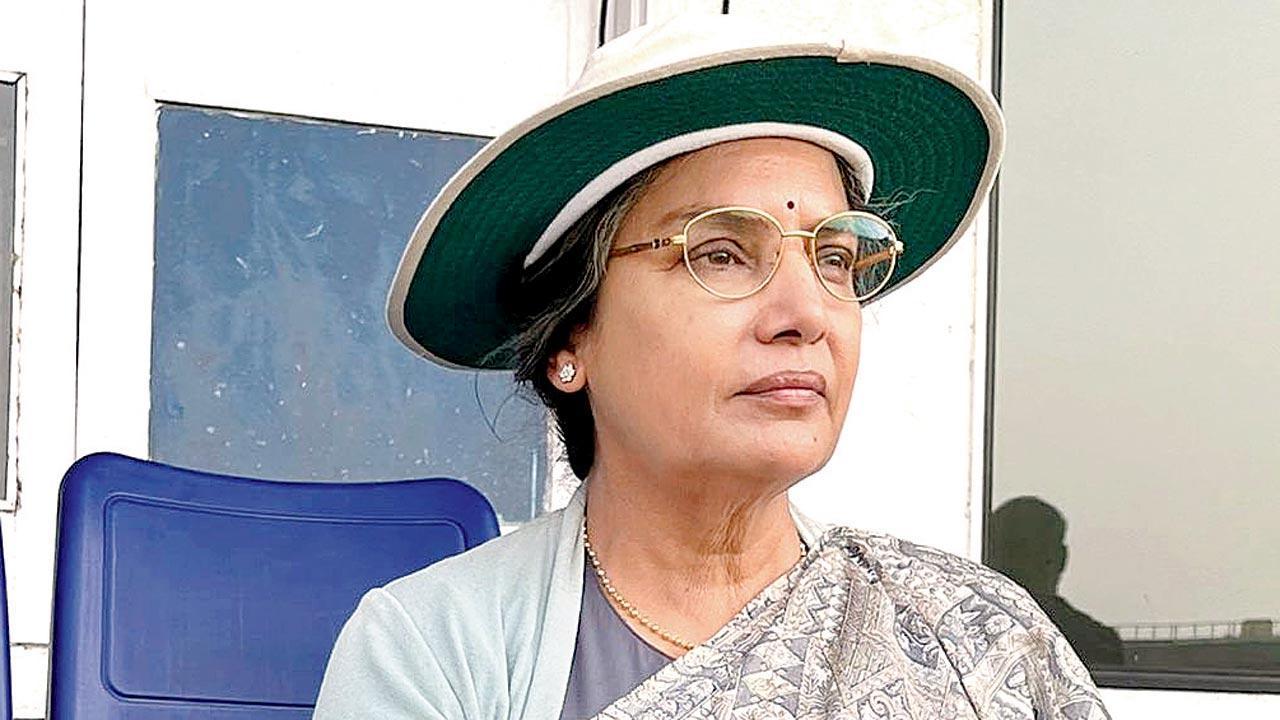
Following up Rocky Aur Rani with the sports drama Ghoomer, Azmi says she is lucky to bag diverse roles
Upala KBR (MID-DAY; August 13, 2023)
Ghoomer is her “revenge” against her cricket-fanatic family, laughs Shabana Azmi. In the upcoming R Balki-directed movie, she plays a cricket-obsessed woman who is a source of support to her cricketer-granddaughter, essayed by Saiyami Kher. This, when she isn’t fond of the sport in real-life.
“I’m considered panvati; I only have to look at the TV and somebody from the Indian team gets clean bowled. My family and staff boycott me [when a match is on]. If I enter the room, I am made to sit with my back to the TV. So when Balki offered me this role, I felt this was my revenge on the lot. Javed [Akhtar, writer-husband] is a sports buff and has tried to explain the intricacies of cricket to me often,” she smiles.
In her first collaboration with Balki, the veteran actor is deeply impressed by the director’s working style. “He is relaxed on the sets, but he will make you do the shot again and again till he gets what he wants. He adores cricket and Abhishek says this is his most emotional film.”
With Ghoomer, she comes full circle with the Bachchans. Having worked with Amitabh Bachchan earlier and more recently with Jaya Bachchan in Rocky Aur Rani Kii Prem Kahaani (RARKPK), she is delighted to team up with Abhishek.
“I had done Umrao Jaan [2006] with Abhishek earlier. He is a prankster, but also courteous and well-behaved with seniors. His role in Ghoomer is unlike anything he has done before and he has risen to the challenge impressively.”
Her last release, RARKPK, has been loved by audiences, with her character of Jamini Chatterjee being particularly appreciated. Had she expected such a warm response?
“It has been overwhelming. The credit goes to Karan [Johar, director] and Manish Malhotra in how they styled me. Anurag Kashyap said that seeing me in the soft, romantic role made him realise how important it is for directors to break the stereotypes in their heads, when it comes to casting. I’m lucky to do different roles, like the ones in Rocky Aur Rani...and Ghoomer, on the heels of one another. I’d be happy to do more of such roles in the future. This is a good time for actors because the stock stereotypes have been rejected.”
Mumbai is not conducive for filmmakers now; boycott trend comes later-Muzaffar Ali
7:42 AM
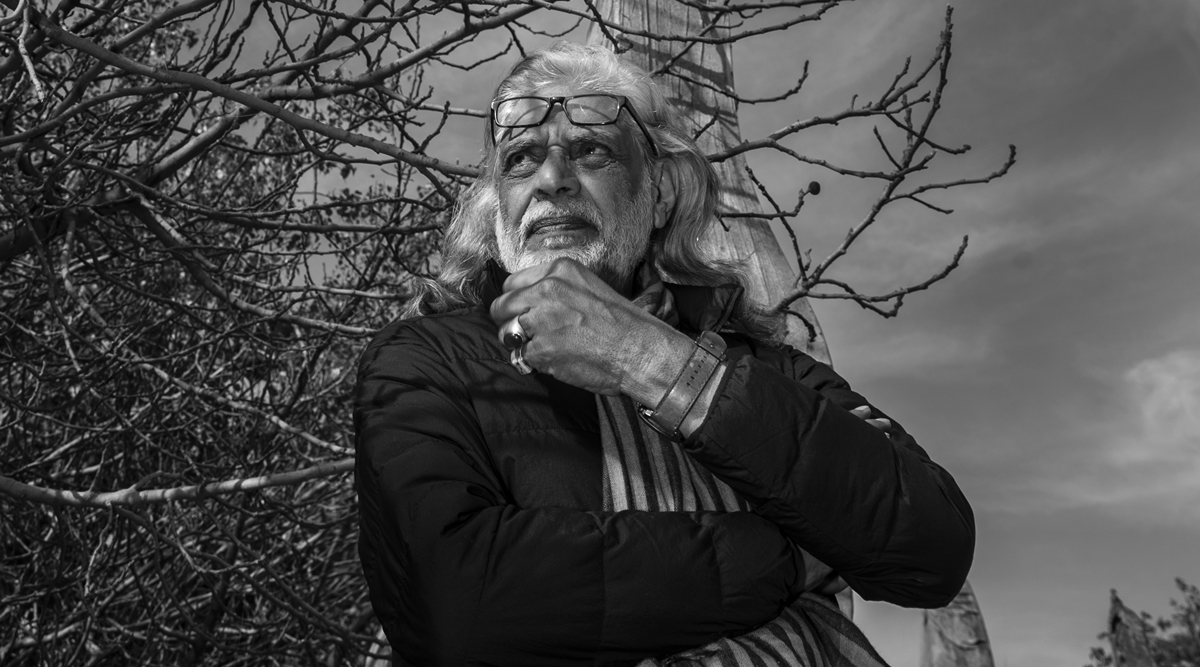
Sundas Jawed (CALCUTTA TIMES; January 17, 2023)
Muzaffar Ali recently weaved magic with his words at a literary festival in Kolkata. From sharing why Kolkata is significant for him to what went into finding his Umrao Jaan and why he is staying away from filmmaking, the 78-year-old actor-filmmaker-poet-designer touched upon topics close to his heart. Excerpts from his session and a chat with CT:
‘KOLKATA IS WHERE I GOT MY FIRST COMPLEX, CULTURAL & PROFESSIONAL EXPOSURE’
I got my first complex, cultural and professional exposure in Kolkata. Wherever I go, I go with a clean mind and when I came to Kolkata, I came with nothing but just Ghalib’s famous quote – Kalkatte ka jo zikr kiya tune humnashi, ek teer mere seene mein maara. I slowly began discovering the many layers of Kolkata, which I have never found in any other city. I got exposure to a more practical world, a world trying to make a difference through commerce, politics and at the same time helping me find myself. Kolkata in that sense became a significant place for me. Mumbai was as astounding as Kolkata, but one must come from Kolkata to understand Mumbai. And here I am not talking about the Bombay of business people, I am talking about the Bombay of the soul.
‘KOLKATA HAS GIVEN ME SO MUCH’
Kolkata is and was history in the making. It is a culturally rich city; it has always had a sense of poetry and appreciation for art, which still continues. It is a revolutionary place, and one must live here to understand the essence of the city. I have lived here for two-three years, and the city gave me so much. Kolkata is a place that challenges you, probes you, makes you think and makes you do things. Coming to its food, I don’t think there is anything like the kathi rolls of Kolkata. I first had them in the 1960s at a famous food joint in central Kolkata.
‘ART IS COMMERCIALIZED IN INDIA’
The ecosystem in Mumbai currently is not conducive for filmmakers to make movies; boycott culture comes much later in the scene. Me staying away from filmmaking has got nothing to do with boycotts. People should respect your taste and not think that your work isn’t commercial enough. Art is commercialized in India. The way money is handling art is not the way art should be handled. More than censorship, what is important is the freedom of art. The artist needs to feel a sense of elation with his art and expression.
‘IT WAS NOT EASY TO FIND UMRAO JAAN’
Casting of Rekha was another phenomenon. It was not easy to find Umrao Jaan, but I was lucky to find some photographs and after seeing them I was sure that Rekha’s eyes were the eyes that could tell the story I wanted to. However, transforming a woman into a character that could rule over the hearts of many was not easy. A lot of effort by many people had gone into bringing out the sensitive grace that Umrao Jaan needed – it required patience and creativity.
Women like Smita Patil, Shabana Azmi and Rekha are the reason I’m a part of Bollywood-Chitrangda Singh
7:47 AM

Onkar Kulkarni (BOMBAY TIMES; June 3, 2021)

The actress, who is evidently choosy about the parts she picks to play, tells us that there are certain women in cinema whose careers have always left her inspired and motivated. “Film personalities like Smitaji (Patil), Rekha ji or even Shabana ji (Azmi) have not only impressed us with their body of work in Bollywood which includes glamourous roles, but also set an example by achieving their goals in showbiz. Their passion and grace with which they made their way in the film industry has left me amazed. It is their love for the craft and the way they pursued their career that inspired me,” she says.
Talking about the choice of films of these supremely talented leading ladies, Chitrangda adds, “Their films like Mandi (1983) and Mirch Masala (1986) have inspired me and have been a reason for me to be a part of Bollywood. Also, how can we forget the performance of Rekha ji in Umrao Jaan (1981)? These women have truly been an inspiration.”
The hardest part about a musical is the casting-Salim and Sulaiman Merchant
8:01 AM

Set to follow their Broadway adaptation of Umrao Jaan with Disco Dancer, composer duo Salim-Sulaiman on transitioning from musicians to storytellers
Sonia Lulla (MID-DAY; March 9, 2020)
Seated at a spacious studio, Salim and Sulaiman Merchant are weaving for us a tale that is set to open for theatre-going audiences on March 27, through 29. The months that they have spent breathing life into the Broadway adaptation of Disco Dancer hasn't diminished their fever. It is palpable in the twinkle in their eyes as they discuss "adding a dramatic ma-beta angle", employing lavish LED sets to depict "Bombay of the '80s", and "lowering of two telephone booths for a scene."
As they discuss Saregama Carvaan's adaptation of Mithun Chakraborty's 1982 musical for the stage, which follows the composer duo's successful Umrao Jaan, it is evident that they've emerged from being musicians to story-tellers. "The hardest part about a musical is the casting," says Salim, adding, "In India, finding someone who can sing, dance, and act, is a big challenge. While people may excel in one or two [skills], it's tough to find those who are good at all three. And we need to find at least five of them." The journey to merely zeroing in on the lead actors took them seven months, reveals Sulaiman. "Our country is not geared [to creating] a sampoorna kalakar, or true performer. Our aim was to find a good singer. That's the toughest part, since all the singing is done live. We identified singers who are good-looking, and then sent them to acting class." The unit roped in to feature in the production is currently on a fitness programme designed to build endurance, and hence, enable them to sing appropriately, without struggling for breath in the midst of dancing stints.
Employing larger than life screens and abundant technology meets a two-fold purpose. Firstly, it enables them to transport viewers back to the '80s with visuals from the era. "Also, since the story demands that we create backdrops, like the inside of a police station, or [scenes from] Goa, we needed to avoid moving sets since we want this show to travel to Delhi, US and the UK."
A great story, and a promising soundtrack are the essential factors to consider when choosing a film for a theatrical adaptation. But as cinema does with reality, the duo also takes creative liberty when adapting a project for their platform. While they "introduced a conflict" in Umrao Jaan via the addition of a character, they've added comic relief to Disco Dancer by featuring a Goan friend of the protagonist, Jimmy. "We created a character called Anthony, who is Jimmy's childhood friend. The comic relief is important for people to enjoy it."
The duo has gone to great lengths to ensure Bappi Lahiri's compositions are retained "exactly the way they were" in the original film, even taking off to New York and Prague to record with instruments popular in the '80s, but no longer available in India. "Apart from his tracks, we have three original compositions. There's a beautiful love song to give [viewers] a break from all the disco [tracks]. The other a track made for a film. It's called Yaaron main toh star ban gaya, and depicts Jimmy's growth from a nobody to a superstar. It has Latin and Brazilian beats. The third is an instrumental number which comes at a crucial point. It's [along the lines of] an opera, but we're contemplating adding a song there as well."
Whether it was when creating four original songs for Umrao Jaan, or the three that they did for this offering, the duo is mindful of the music style of the original composer "so that a listener can't differentiate a fresh composition from the [original soundtrack]". "With Umrao Jaan, we tried to create songs befitting Khayyam saab's compositions. In Disco Dancer, we've retained every cheesy element that Bappi da used, and became popular."
On Amitabh Bachchan’s recommendation, Khayyam saab landed Kabhi Kabhie-Talat Aziz
8:11 AM

Roshmila Bhattacharya (MUMBAI MIRROR; February 20, 2020)
In 1978, on a visit to Mumbai from Hyderabad, at a mehfil in Khar, singer Talat Aziz ran into music director Khayyam who complimented him on the purity of his voice and promised to record a song with him for a film if he got a chance. Talat saab did not hear from him till ’80-end when, one day, out of the blue, Khayyam saab called, saying he had a song for him and asked him to come over for rehearsals. “He was very particular about rehearsals. Even Lata ji (Mangeshkar) and Asha ji (Bhosle) had to drive down all the way from town, like me, to his apartment in the suburbs for 10-15 rehearsals before going in for recording. We would sit in his music room and Muzaffar Ali, the director, would be standing at the doorway, watching me go on and on. Sometimes his wife, Jagjit Kaur ji, would feel sorry for me and tell Khayyam saab to let me go, but he would argue that I could sing it better with practice,” Talat saab recounts.
Much later, the composer confided, that singer-actress Suraiya ji, who was among the guests at the mehfil, had been equally impressed by his voice and had urged Khayyam saab to give him a break only in a good film. “He’d retorted saying he only did good films,” Talat saab shares.
 Talat Aziz made his debut as a playback singer in Umrao Jaan with the ghazal “Zindagi Jab Bhi” (left). The song was not there in the original script. But Khayyam saab pointed out to Muzaffar Ali that the Umrao had plenty of suitors and the only way the courtesan would be drawn to Farooq Shaikh’s character, Nawab Sultan, was if he wrote nazms. “The film didn’t do well commercially, so I was surprised when, after its release, I was inundated by requests for this particular song at mehfils abroad and learnt that people there had heard it on video cassettes. In some cassettes though it was snipped out because the film was too long,” Talat saab laughs.
 The following year, they collaborated on the melodious “Phir Chhidi Raat Baat Phoolon Ki” (right) for Bazaar which was recorded at Bombay Lab. Talat saab recalls how nervous he was to be singing with the legendary Lata ji, and how, when he told her “darr lag raha hai”, she quickly put him at ease. After three takes, Khayyam saab’s voice boomed over the headphones, complimenting them and saying he was on the way to their booth. “Wait and watch, as soon as he comes in, he will say, ‘ek aur’, Lata ji told me, and that’s exactly how it happened. That ‘ek aur’ was Khayyam saab’s ‘safety’ take,” he informs.
Quiz Talat saab on the man himself, and the singer describes his mentor to be “frugal” in every sense. He visited Khayyam saab at home every Friday after prayers as the mosque was next door. The composer waited to have lunch with him. “It was a simple meal of tomato soup, dal, doodhi or turai ki bhaaji and a chapati for him, and overriding my objections, he’d insist his cook Nirmala make chicken for me. After the meal, brushing away my reluctance, he’d insist I eat an apple, at least a slice, as it was a healthy dessert,” he flashbacks.
 After that, they’d chat for hours. Sometimes Khayyam saab would recite verses— “he knew Sahir Ludhianvi’s book of poetry, Talkhiyan, by heart”—and sometimes he’d narrate stories, like how he landed the 1958 film, Phir Subah Hogi (left), which was a turning point in his career. “Khayyam saab had gone to RK Studio and played different tunes for Ramesh Saigal (the film’s producer-director), and Raj Kapoor, its hero, with his team of musicians for almost an hour. Raj saab had listened without expression, then gone into the room next door. Thinking he’d been rejected, Khayyam saab was packing up to leave, when Raj saab returned after around 30 minutes, and asked him to play some tunes again. He ended up getting the film which was a big deal then for a newbie composer as it was unthinkable for RK to do a film without Shankar-Jaikishen,” says Talat saab.
 The memories continue... How one day, after Kamaal Amrohi’s Mercedes had dropped him off at home close to midnight, Khayyam saab had come upon Sahir Ludhianvi taking a nightly stroll. The lyricist told him he was doing a film with Yash Chopra. Soon after, Jaya Bachchan turned up at his door, wondering if he had the Razia Sultan song, “Dil-e-Nadaan Tujhe Hua Kya Hai” which had become a craze, on a cassette. “Amit ji wants to hear it,” she told him. He didn’t, but the next day, when he told Kamaal saab this, the filmmaker had it recorded on a cassette and rushed to Bachchan’s office. “On Amit ji’s recommendation, Khayyam saab landed Kabhi Kabhie (right),” narrates Talat saab. The film remains unforgettable for Sahir and Khayyam’s evergreen “Neela Aasmaan”, “Main Pal Do Pal Ka Shayar Hoon” and of course, the title track, “Kabhi Kabhie Mere Dil Mein Khayal Aata Hai.”
Khayyam saab has given the music for many love stories, but the one Talat saab loves best is his own. He remembers how, after his mentor collapsed in his flat last year, on July 28, nattily dressed in jacket and trousers, his trademark topi on his head, they rushed Khayyam saab to the hospital, where, soon after, his wife, was admitted too. “Three days before he died, I wheeled Jagjit Kaur ji into the ICU where he lay, eyes closed. She took his hand and whispered, ‘Dekho saab, main aa gayi hoon. Kholo aankhen, mujhe chhod ke mat jao. I love you.’ I could see something flutter beneath his eyelids as if he was trying to come out of the coma. But this time even love failed,” he sighs.
Mohammed Zahur Khayyam Hashmi passed away on the night of August 19. The next morning when Talat saab gave the news to Lata ji she sighed, “He was the last of the Titans. With him an era has ended.”
Khayyam saab and I shared that beautiful journey called Umrao Jaan-Muzaffar Ali
7:56 AM

Filmmaker Muzaffar Ali worked with Khayyam on films like Umrao Jaan and Anjuman
As told to Rachana Dubey (BOMBAY TIMES; August 21, 2019)
 Khayyam saab’s music is larger than life and his demise has created a vacuum that can only be filled by his greatness and creativity, which he has left behind as a legacy in abundance. Khayyam saab and I worked together on three projects. Umrao Jaan was a long, intense journey. We went through the throes of creating the characters and the lyrics because that film was poetry. Ek ek lamha was musically and poetically crafted. The time we invested in composing the songs is not something that often happens. Two years is a long time; we took long gaps between creating our songs so that each one sounds distinct and has the right mix of emotions.
Khayyam saab's process was long drawn out. Khayyam saab and I shared that beautiful journey called Umrao Jaan. It was a creative part of our lives that we shared with people at large, and no one can ever get it out of their mind. Creating that kind of music needs people who are rare to find like Khayyam saab. He was always ahead of his time and had the patience to nurture tunes.
The film Anjuman was a naayab project where I could make him sing. He sang a ghazal by Faiz Ahmad Faiz. Shabana Azmi sang her own songs, too, for that film. It was a dilchasp raasta where we explored the new and revolutionary phase of Lucknow, ek bilkul naye tareeqe se. It was an intense and interesting journey.
The third film we worked together for was titled Zooni, which was set in Kashmir. It was a dream which remained unfulfilled, although I want it to be fulfilled some day. I have preserved the songs that Khayyam saab had created for it, and for the sake of those, I want that film to see the light of day. The songs he created for this film deserve to reach their final destination -- the hearts of the listeners.
Unka yun guzar jaana ek bahut bada haadsa hai. It's a loss to the fraternity, because with him, we have lost a generation and a school of music. Some of us are fortunate to have worked with him and a lot of us are fortunate to have grown up on the songs he created.
Khayyam saab convinced Muzaffar Ali to add a male song in Umrao Jaan-Talat Aziz
7:54 AM

Talat Aziz bids farewell to his mentor and father figure
As told to Upala KBR (MID-DAY; August 21, 2019)
 I first met him during my performance at a private mehfil in Khar, in 1978. After my performance, Khayyam saab walked up to me and told me, ‘Beta, I like your voice. One day, I will give you a break.’ When Umrao Jaan (1981) was conceived, there was no male song in the original script. So, Khayyam saab told Muzaffar Ali [director] saab, 'I want you to include a male song so that it can lend a poetic vibe to Farooq Sheikh’s character and Umrao Jaan can fall in love with him.' That’s how the song, Zindagi Jab Bhi Teri Bazm Mein, was created, and I came into the picture. I remember going to his house for 15 days for rehearsals before we recorded the song.
Khayyam saab was a father figure to me. I used to meet him at his home every three-four days, and if I couldn’t make it, he would invariably check on me and ask me where I was. I learned the art of perfection from him. He made me record the ghazal, Nagma-e-Jaan Saaz-e-Dil, [Yatra, 2007] 20 times before he was satisfied.
He once narrated to me that when he was recording the song Hazar Raahein [Thodisi Bewafai, 1980] with Kishore Kumar, Kishore da wanted to sing the song without interludes while Khayyam saab wanted it with interludes. He let Kishore da sing it his way, but the singer was not happy with the result. That’s when Khayyam saab told him, ‘I put those interludes because the story is about an estranged couple. The director can show flashbacks of what happened in their relationship in those music pieces.’ This was the kind of detailing that Khayyam saab practised.
I was by his side all through his illness. I took care of him over the last 21 days in the hospital. I was praying by his bedside when he breathed his last.

Khayyam was accorded State Honours. Pics/ Sameer Markande, Yogen Shah
Umrao Jaan, Razia Sultan are closest to my heart-Khayyam
7:50 AM

Legendary music composer Khayyam, 93, who passed away on August 19, spoke to us last year about his musical journey, movies that were special to him, and why it is important to embrace change in music with times
Soumya Vajpayee (BOMBAY TIMES; August 21, 2019)
 A musical era has come to an end with the legendary Mohammed Zahur Khayyam Hashmi’s demise on the night of August 19. The Padma Bhushan recipient was synonymous with classical music, rich in melody and poetry. His legacy has ensured him a place amongst the immortals. Songs such as Kabhi Kabhi Mere Dil Mein and Main Pal Do Pal Ka Shayar Hoon (Kabhie Kabhie, 1976); Ankhon Mein Humne Aapke Sapne (Thodisi Bewafaii, 1980); Dil Cheez Kya Hai and Zindagi Jab Bhi (Umrao Jaan, 1981); Phir Chhidi Raat and Karoge Yaad Toh (Bazaar, 1982); and Ae Dil-e-Naadaan (Razia Sultan, 1983) are some of his haunting melodies.
In an interview with us last year, the celebrated music composer expressed satisfaction with the way his life and career panned out over the years. “By the grace of God, I’ve had a great journey in the Hindi film industry,” he had said, adding, “There were many hardships on the way, but God and my love for music kept me going. I fulfilled my responsibilities to the best of my ability. I’m happy that I made some tunes that people love and admire even today.”
Khayyam always spoke about his love for Umrao Jaan and considered it his favourite work. “I remember when I was supposed to start work on the music of Umrao Jaan (1981). The songs of Pakeezah (1972) were a rage. I was tensed as it was difficult to come up with something as spectacular and to make a mark.”
“I had to do a lot of research about the history of Awadh before composing the songs of Umrao Jaan. I wanted the tracks to have the right essence. It’s because of those challenges that Umrao Jaan is closest to my heart,” Khayyam had said.
While Khayyam was always vocal about the fact that his favourite soundtrack was Umrao Jaan, he held Razia Sultan close to his heart, too. “The film’s script and how the songs were penned made it immortal, especially the track, Ae Dil-e-Nadaan, sung beautifully by Lata Mangeshkar. It is very special to me. Another film that’s close to my heart is Phir Subah Hogi (1958); it was my first collaboration with Raj Kapoor saab,” said the National Award winner.
Synonymous with classic music, high on melody and poetry, Khayyam, however, had no qualms in embracing the changes in music with times. He said, “Music in films today has a lot of western influence, which I don’t enjoy personally, but there’s nothing wrong in that. That’s the kind of music that the younger generation enjoys. It’s the demand of the changing times. See, change is the only constant, and you should know how to go with the flow. The kind of music that’s made for a film completely depends on the subject of a project. Musicians of our time — my seniors and contemporaries — were privileged and lucky to get amazing subjects to work on as our music, poetry and melodies were all dependent on the stories.”
The Padma Bhushan recipient was a fan of the Academy Award-winning composer A R Rahman. “He does some amazing work. His song, Dil Hai Chota Sa Choti Si Asha (Roja, 1992) is incredible. I listen to it over and over again,” he said.
The last few films he composed music for were Yatra (2007), Bazaar E Husn (2014) and the unreleased Ghulam Bandhu.

MEMORIES IN MUSIC: KHAYYAM’S EVERGREEN SONGS
Khayyam, who passed away on Monday after a prolonged illness at the age of 92, created evocative, soul-stirring music reminiscent of the era gone-by in classics such as Umrao Jaan and Kabhi Kabhie. Songs such as Woh Subah Kabhi To Aayegi, Kabhi Kabhie Mere Dil Mein, Dil Cheez Kya Hai, Aaja Re O Mere Dilbar and In Aankhon Ki Masti Ke will keep Khayyam’s memory alive for generations to come
Kabhi Kabhie Mere Dil Mein: KABHI KABHIE (1976)

Woh Subah Kabhi To Aayegi: PHIR SUBAH HOGI (1958)

Main Pal Do Pal Ka Shayar: KABHI KABHIE (1976)

Dil Cheez Kya Hai: UMRAO JAAN (1981)

Aaja Re O Mere Dilbar: NOORIE (1979)

Ae Dil-e-Nadan: RAZIA SULTAN (1983)
Karoge Yaad To Har Baat: BAZAAR (1982)

Khalid Mohamed pens a tribute as Khayyam passes away
7:46 AM

Khayyam with wife Jagjit Kaur at an event in 2017
Veteran composer Khayyam breathed his last in a Mumbai hospital around 9.30 pm on Monday
Khalid Mohamed (MUMBAI MIRROR; August 20, 2019)
He always had a furrowed brow, as if he was waiting to reach an errant melody he couldn’t quite perfect. When he did, his face would soften, he would dart a rare smile and get on to the next one, which perhaps would be recorded or stay with him.
There are scores of songs which did not reach us, and perhaps never will. His repertoire of unheard compositions have departed with Mohammed Zahoor Khayyam, who passed away on Monday night. The departure, I could see was coming, at the suburban hospital where he struggled to open his eyes at least for a flicker of a moment during a month-long stay at the Tulip cabin of the ICU unit. Yeh kya jageh hai doston, Hindi cinema could have well asked, but then I’m getting maudlin here.
The end is endemic as the last stanzas of the songs Khayyam saab had created, without ever caring for the A-listers of the geetmalas from the 1950s on to the turn of another century. To be sure, because of our limited memories, the 92-year-old icon—never called one during his lifetime will be associated most of all with the ever-resonating soundtrack of Umrao Jaan.
If he was bitter to a degree, I suspect, about the Umrao experience it was because he had topped it with the songs composed for its director Muzaffar Ali’s Kashmir-set love story Zooni. The film was left incomplete, but its songs are somewhere out there on tapes mouldering in the vaults somewhere.
Khayyam was not prolific by choice. If Yash Chopra called upon him to do Noorie, Nakhuda, Trishul and Kabhi Kabhie, it was obviously because the chartbusting music directors couldn’t have touched the composer who insisted on doing it his own way and wouldn’t be subjected to prolonged sessions at ‘sitting rooms’ as they are called. The Kabhi Kabhie score especially had that extraordinary poetic quality.
When Khayyam was no longer in the Yash Chopra ‘camp’ so to speak, he kept silent. In show business, one has to move on. When I had asked him to comment on this, he had shushed me up instaneously with a have-you-come-to-talk-about-my-work-or-gossip?
His music had the USP of pauses (check out Ae-Dil-e-Naadan from Razia Sultan). The orchestra comes to a standstill, when Lata Mangeshkar’s voice returns, it’s pure magic. Incidentally, stalwart writer Javed Siddiqui points that it was Khayaam who made the completion of Pakeezah possible. “Do you know he and his wife (Jagjit Kaur) kept trying to make peace between Kamal Amrohi and Meena Kumari. And they succeeded. The film was restarted only because of them.”
Right from Footpath and Phir Subah Hogi to Shagoon and Aakhri Khat, Khayyam’s track record is classic. He would agree to a TV serial occasionally but had stopped accepting film projects which would make him compromise with his signature style – soft, gentle, romantic and from the heart.
Khayyam saab has left the ICU unit. He can never leave us, ever, because without him will never be another subah, another song of such love and longing.
Khayyam, filmdom’s master of melody, passes away
7:45 AM

Avijit Ghosh (THE TIMES OF INDIA; August 20, 2019)
1927—2019
1976 was no time for tender melody. The Emergency was on. Rajesh Khanna’s era of romance was gone. Fists had replaced dialogues in Bombay cinema. And songs were no longer what they used to be. Hardly the moment for a music director nearing 50 to make a comeback.
But Khayyam, who passed away on Monday at the age of 92 following a cardiac arrest in a Mumbai hospital, grabbed the opportunity that Yash Chopra’s ‘Kabhi Kabhie’ brought to his sluggish career.
The inter-generational love story required two different styles of compositions. Khayyam excelled in both. For the first, he produced two minimalist masterpieces of melody which enhanced Sahir’s reflective poetry. The title track, ‘Kabhi kabhi mere dil mein khayal aata hai’ became the topper in Binaca Geet Mala’s annual countdown show. ‘Main pal do pal ka shayar hoon’ became an anthem for any self-effacing versifier.
In times when action movies ruled the roost, Khayyam’s music was a figurative triumph of violins amidst violence. For the younger generation, he produced loopy tunes – Tere chehre se and Tera phoolon jaisa rang – sending a loud message to producers that the 1940’s composer could better the sound of the 1970s.
For the next 10 years, Khayyam was at the peak of his creative powers and in his commercial prime. Umrao Jaan, Noorie, Thodi Se Bewafaai and Bazaar became synonymous with melodies that drew you closer to the radio.
A perfectionist, he scored for only 54 released films in a career spanning over five decades. Some of his compositions were so delicate they did not fit into the mould of film music – Kahin ek masoom nazuk si ladki (Shankar Hussain), Aaje re dilbar aaja (Noorie), Tumhari palkon ke chilmanon mein (Nakhuda), Baharon mera jeevan bhi sawaaron (Aakhri Khat). At the same time, he could throw up surprises with simple, swinging tunes of adolescent enthusiasm - Gapuchi gapuchi gam gam (Trishul), Mausam mausam lovely mausam (Thodi Si Bewafai) and Aaj se college band hai (Khandan).
Under him, an assortment of singers thrived. Bhupinder sang his first solo for him in Aakhri Khat (Rut Jawan). His wife Jagjit Kaur sang in films like Shagoon and Bazaar. This year, Khayyam had donated Rs 5 lakh to the families of soldiers killed in the Pulwama blast.
Born Muhommad Zahoor Khayyam Hashmi in Rahon, a little town near Jalandhar, Khayyam wanted to be a singer-actor in films. To boost his chances, he learnt music from the masters, Pandit Amarnath and Husanlal-Bhagatram, and assisted composer GA Chisti. He also joined the Indian Army during World War II.
He made his debut as a music director with Heer Ranjha (1948). His first hit was Akele mein woh ghabrate to honge (Beewee, 1950). He assumed the name, Sharmaji, for these early films.
Khayyam found his musical métier with Footpath (1953). The film had one of the finest ghazals composed in Hindi cinema: Sham-e-gham ki kasam (singer: Talat Mehmood). The composer used a piano, a guitar and a solo vox, a basic form of synthesizer, and yet it sounded totally traditional. The song, Khayyam told this reporter once, was put together from several recordings.
He earned more critical acclaim with Ramesh Saigal’s Phir Subah Hogi. The film based on Dostoevsky’s Crime And Punishment had some of the finest lyrics written by Sahir Ludhianvi: Woh subah kabhi to aayegi and Chino-Arab hamara. “After listening to the compositions, Asha Bhonsle told me, ‘Khayyam saab aapki to subah ho gayee’. Mukesh immediately told her, ‘You have said the right thing’," the music director once told this reporter.
Khayyam is gone. But his melodies of matchless tenderness will always be heard and remembered.

Khalid Mohamed visits Khayyam and singer-wife Jagjit Kaur...and goes down memory lane
7:39 AM

Visiting veteran composer Khayyam and his singer-wife Jagjit Kaur, who have been inseparable from 1954 to today, in a suburban hospital’s ICU unit
Khalid Mohamed (MUMBAI MIRROR; August 14, 2019)
Inseparable ever since their romance and marriage circa 1954, music composer Khayyam and his songstress-wife Jagjit Kaur, are now in adjoining cabins, named Lily and Tulip, of a Juhu hospital’s ICU unit.
Padma Bhushan recipient Khayyam was admitted to the hospital following a fall while getting up from his armchair at home 28 days ago. Pneumonia and a lung infection were diagnosed. Four days later, his wife who had gone silent with anguish, registered an alarming drop in her blood sugar count.
When I visited them yesterday, Khayyam, in a semi-conscious state, was being treated by a physio-therapist. The revered composer clutched my hand, nodded slightly but couldn’t open his eyes or speak. Jagjit Kaur asked to be wheelchaired to see her ‘saab’ and held on to his hands till the attendants assured her that he would be “okay, not to worry.”
Brightening up, she secured a nurse’s permission before chatting in staccato sentences: *“How couldn’t I fall in love with saab after hearing his song ‘Sham-e-Gham Ki Kasam’?”
*“Raj Kapoor wanted someone who had read Crime and Punishment to do the songs of Phir Subah Hogi. Saab had read the book (by Fyodor Dostoevsky).”
*“Do you know I even sang for Umrao Jaan? What was the song called? Yes, yes… ‘Kaahe Ko Bihayee Bides’.”
*“Saab could get angry, upset with the producers… never with his singers... especially with Lata, Rafi, Talat… Asha.”
*“After marriage… I was happy being his support…would sing for him whenever he wanted me to.”
*“Waqt ke saath music ka trend changed, saab kept refusing offers. Aaj kal ke music directors are doing good work. But nothing can touch old music which was really paidar (durable).”
The durability of their love story has been one-of-a-kind, too, affirmed by the memorabilia at their seventh-floor home in Dakshina Apartments, overlooking the traffic-clogged Juhu circle. Practically every photograph on the living room’s walls and on the mantelpiece show them together, at music soirees and award functions.
A large laminated photograph of their son, actor Pradeep Khayyam, serves as a grim reminder of his premature death seven years ago following a heart seizure.
Jagjit Kaur’s Chandigarh-based niece, Rinnkie Gill, who has been in the city ever since they were hospitalised, points out that the household helps, Nirmala and Shashi, have been tending to them for over three decades. The couple was self-sufficient, inevitably slowed down by ailments which come with advanced age. He’s 92, she’s 88.
Adds Gill, “They have always enjoyed being together at home and have rarely ever travelled out of the city except perhaps to Delhi and the north. Going abroad didn’t interest them at all. Music has been their life. And one more thing —she relishes the masala chai which Khayyam saab brews personally. That’s the way he has always reached out to her heart, with a chai ki pyaali.”
Born Mohammed Zahoor Khayyam Hashmi in the Jalandhar district of Punjab, the music maestro had first used the pseudonym, Sharmaji, dispensing with it for his first full-fledged assignment, Footpath (1953), litterateur Zia Sarhadi’s slice-of-life film featuring Dilip Kumar and Meena Kumari. The soundtrack included the “Sham-e-Gham Ki Kasam” ballad written by Majrooh Sultanpuri and sung by Talat Mehmood.
Around then, Jagjit Kaur, born to an aristocratic family of Punjab, was aspiring to become a film playback singer. One evening, Khayyam followed her on the overbridge of the Dadar railway station. She felt he was stalking her and was about to raise an alarm when he summoned up the nerve to introduce himself as a music composer. Despite her father’s objections, theirs was one of the film industry’s first inter-communal marriages.
The image of the composer and his muse stays with me hours after Eid ul-Adha day—Khayyam-Jagjit Kaur just a breath away from each other in the Lily and Tulip cabins.
The muse has been informed that she would be discharged from hospital by early evening. To that she had smiled, “Really? After so many days?” On second thoughts, her face had fallen, as she said almost to herself, “But what will he do without me—alone?”
Films these days demand dhamaka in their songs, halla hona chahiye-Asha Bhosle
8:06 AM

Sandra Fernandes (BOMBAY TIMES; June 9, 2018)
She has sung some of the most popular songs in the Hindi film industry in her career spanning nearly six decades, yet, when you talk to Asha Bhosle, there is a simplicity and an air of humility that you feel. In a candid chat, the legendary songstress talks about how music directors today sound confused, performing on stage and more...
What are your thoughts on the kind of music and songs that the Hindi film industry is churning out today?
The music today is all about what the film demands. In fact, a lot of the time, it depends on the hero of the film. The hero dances, chooses his songs and even sings wonderfully most of the time, that’s how music is made these days.
What sort of changes have you seen in the music industry over the past few years?
I’ve seen so many changes. To start with, the lyrics of the songs are not good. Films these days demand dhamaka in their songs, halla hona chahiye. So, the lyrics are written according to the demand and the music is produced in a similar fashion. I feel that music directors these days are confused about what they should give their audiences. I miss the songs from the earlier years and miss the music directors from that era. They were knowledgeable about music and were extremely good and confident at their job.
Singers today know how to sing, dance and have great stage presence too. Your thoughts…
Yes, they perform on stage, they dance and sing as well, but I don’t understand that. While singing you can dance a little, but you can’t jump around on the stage and sing at the same time. Then you have to play the song and lip-sync to it. A lot of people do it. No matter how well they sing and perform, a singer shouldn’t cheat the audience, because people come to watch you sing. People will come to watch me on stage, how I look and sing when I perform.
One actress you enjoyed lending your voice to?
I loved singing all my songs. People gave me good songs to sing and I enjoyed them all (laughs). I enjoyed singing for Umrao Jaan.
You’ve sung all kinds of songs — right from romantic, dance and peppy numbers. If you had to choose one song from today, which one would that be?
I don’t know. I’m not aware of any recent songs.
You are well known for your cooking skills. What do you enjoy cooking the most?
I love to cook. Raj Kapoor’s family is very fond of food. They used to tell me, ‘Aap khana itna accha banate ho, aap gaana chod do’. I make maa ki dal and different varieties of biryanis. I feel happy when people enjoy my food. Many of them are no more, like Rajesh Khanna and some members of the Kapoor family. Dev (Anand) saab never ate much, but he enjoyed the food I cooked. Many directors used to enjoy the food, maine har ek ke begum se jaakar khana banana seekha hai.
You are on social media. What prompted you to take the plunge?
There is one person behind every artiste. My son, Anand Bhosle, is that person for me. He told me that I should write a cook book but I refused, as I thought that no one reads a cook book. Then we opened several restaurants in my name in the Middle East and London. He was the one who suggested that I get on Twitter. So, he handles everything and I sing.
What message would you like to give your fans?
Fans are fans, without them we are nothing. No artiste is complete without his/her fans. They have shown me so much love, I want to meet them and interact with them.
Amitabh Bachchan said, ‘This is the first time that somebody has asked me to stand on a stool'-Ayananka Bose
8:08 AM

Mind-reading, translation and the ability to ‘feel the film’ are crucial skills for a cinematographer, says Ayananka Bose who is shooting Salman Khan’s next
Anand Holla (MUMBAI MIRROR; April 8, 2018)
Generic lounge music plays like a dull hymn at the Versova coffee shop where we are to meet cinematographer Ayananka Bose. The lensman saunters in, wearing a printed blue shirt thrown over a pair of denims, his hand clasping a cellphone fastened to a flickering power bank. Bose has just returned from Abu Dhabi, having blazed through a month-long shoot of the Salman Khan-led multi-starrer, Race 3. “We wrapped up the shoot, spanning Mumbai, Bangkok and Abu Dhabi, in just 72 days. Now, only five days of shoot remain (sic),” says Bose, also credited for big-ticket films such as Dostana, Kites, I Hate Luv Storys, Force, Student Of The Year, Kick, and Judwaa 2.
In a career spanning 12 years, the 38-year-old has acquired a reputation in the industry for being a particularly quick worker. Bose attributes his speed to his ability to see ‘fully-formed images’ in his head. “Since I can readily translate images, even as the director talks to me, I visualise it in my head. Fortunately for me, those images are usually in sync with what the director wants to convey. And then, I already know where I want my lights to be placed,” he explains.
Cinematography, says Bose, boils down to common sense. “It’s about how you solve the problem in the fastest way possible.” Apart from top DOPs (directors of photography) such as Janusz Kaminski, Emmanuel Lubezki, and Roger Deakins, Bose is heavily influenced by legendary American photographer Ansel Adams’ ‘zone system’ of capturing images, where one controls every level of light in the frame to one’s advantage. Borrowing from Adams’ mantra, Bose knows just “where to place the highlights and where to send the shadows”.
The guiding principle of Bose’s work though is to “mind-read the director and bring his vision to life”. How different is it then for him to shoot a period drama Umrao Jaan (2006) from the frenzied excesses of Race 3? Apparently, none at all. “The basic definition of a cinematographer is one who translates the images envisaged by the director. The moment you are good at that, it won’t matter what you are translating,” says Bose.
He describes the director-cinematographer equation with a simplistic yet apt analogy: “A good marriage is one where both husband and wife take care of each other. It’s exactly the same on a film set.” Clearly, Bose believes in the sanctity of this blessed union.
Not one to play Chess with his career choices, Bose reasons that his seemingly wide-ranging filmography is merely accidental. “I don’t go by scripts, I only go by dates,” he deadpans. “In fact, I have never read the script of any film I have done. More importantly, I have never refused any work. The only downside of forever saying ‘Yes’ is not getting enough time for family.”
Understandably then, crafting a cinematic legacy has never excited Bose. “I don’t harbour big ambitions. I don’t judge scripts, directors, or films. My struggle has partly shaped my attitude towards work. My question remains — who am I to judge?” When Bose was starting out, the struggle was intense. For most of the two years leading up to that life-changing day when he walked into J P Dutta’s office, he spent his days in near penury. “I was totally jobless. I couldn’t afford more than one meal a day. I could barely pay the Rs 3,000 rent for my one-room accommodation in Kandivali,” Bose says of the days when he frequented offices of producers, hoping to secure a meeting to pitch his skills.
His turning point came in 2005 when he met Dutta, who was looking for DOPs to shoot his magnum opus, Umrao Jaan. “As he listed the names he had in mind, I felt like an idiot. Then, he asked me just one question — ‘How will you shoot this film?’ I said, ‘I don’t know. I go to a set, the location speaks to me, and I place the camera based on the feel of what the director tells me’.” It was only months after Bose began shooting the film when he gathered the courage to ask Dutta why he was chosen for the job. “He said, ‘Every cinematographer told me how they want to shoot the film; you were the only one who said you want to feel the film’,” says Bose who never looked back.
His most memorable shooting anecdote, he shares, was requesting Amitabh Bachchan to be elevated while shooting the title track of Jhoom Barabar Jhoom in London’s Waterloo Station. The idea was “to enhance the background”. “Amitabh sir asked me — ‘Are you serious?’” says Bose, laughing. “He said, ‘This is the first time that somebody has asked me to stand on a stool; it’s always been the other way around’.”
Rekha revisits Umrao Jaan classic 'Inn Ankhon Ki Masti' for Rising Star
7:55 AM

Natasha Coutinho (MUMBAI MIRROR; March 20, 2018)
 Rekha, who is up for a guest spot as a judge on the singing reality
show, Rising Star, over the coming weekend along with regulars,
actor-singer Diljit Dosanjh and singers Shankar Mahadevan and Monali
Thakur, has a surprise up her sleeve. Ahead of her TV appearance, the
actress has shot for a video that will feature her singing the memorable
verses of her Umrao Jaan ditty, “Inn Aankhon Ki Masti”.
Rekha, who is up for a guest spot as a judge on the singing reality
show, Rising Star, over the coming weekend along with regulars,
actor-singer Diljit Dosanjh and singers Shankar Mahadevan and Monali
Thakur, has a surprise up her sleeve. Ahead of her TV appearance, the
actress has shot for a video that will feature her singing the memorable
verses of her Umrao Jaan ditty, “Inn Aankhon Ki Masti”.According to a source close to the development, she shot for the video on Monday. Besides the song, Rekha will also perform a special act with the contestants in the live episode.
“Music transcends all boundaries and I believe it sets you free. With Rising Star, the channel has given many of its contestants a platform to explore music and I am looking forward to seeing the budding talent in action,” says the diva.
Rekha had made a special appearance on the dance reality show, Super Dancer, in December last year.
Rishi Kapoor & Taapsee Pannu shooting for Mulk in the same place where Junoon, Umrao Jaan, Gadar were shot
7:52 AM

Avinash Lohana (MUMBAI MIRROR; October 16, 2017)
Rishi Kapoor began filming Anubhav Sinha’s social thriller, Mulk, in Malihabad last week. Taapsee Pannu who plays his daughter-in-law joined Rishi on Sunday. Speaking from the UP town, Anubhav revealed that a day earlier Rishi had canned a confrontational scene in an erstwhile palace, where Shyam Benegal’s Junoon with Shashi Kapoor and Naseerudin Shah, Muzaffar Ali’s Umrao Jaan with Rekha and Anil Sharma’s Gadar with Sunny Deol, had been shot earlier.
“I had no idea. I had simply liked the place when I was on a recce there. It was the locals who recently told me about these iconic films being shot there. I must have been 12-13 when Shyam Babu was shooting Junoon there with Naseer bhai. This place houses the history of cinema,” exults Anubhav who flagged off the film on his son’s birthday. He’s all praise for the mango belt of North India and its gracious inhabitants. “The mango orchards spread over miles and the locals actually adhere to the Lucknavi tehzeeb of ‘pehle aap, pehle aap’. Recently I complained about the unit tea and within 15 minutes, 30 cups of tea came from someone’s home and served,” laughs Anubhav.
On Sunday, they were shooting at a local college, which they have converted into a government office. “Taapsee and Rishi ji have earlier worked in Chashme Baddoor and share a great rapport. Rishi ji is a chilled out person, doesn’t carry the aura of Rishi Kapoor and is very friendly with everyone. We are on a start-to-finish schedule and mid-November mein khatam karke hi lautunga main,” Anubhav signs off.
How Khayyam cajoled Asha Bhosle to sing at a lower pitch for Umrao Jaan
7:49 AM

Roshmila Bhattacharya (MUMBAI MIRROR; September 7, 2017)
 A day before A day before
Asha Bhosle turns 84, a song from Muzaffar Ali's 1981 period drama,
Umrao Jaan, which bagged the songstress her first National Award for
best female playback singer, returns to take me on a nostalgic stroll
down three decades, with its 90 years young composer, Khayyam. Their
association dates back to 1948 and his first film, Biwi. He remembers a
Mukesh-Ashaji duet, “Woh Subah Kabhi Toh Aayegi“ for Ramesh Saigal's
1958 Raj Kapoor, Mala Sinha-starrer Phir Subah Hogi after recording
which Asha had exulted, “All my troubles have melted away, Khayyam saab
subah ho gayi!“ She was however not quite so enthusiastic about Umrao
Jaan's first song, “Dil Cheez Kya Hai Aap Meri Jaan Lijiye, Bas Ek Baar
Mera Kaha Maan Lijiye...“
A day before A day before
Asha Bhosle turns 84, a song from Muzaffar Ali's 1981 period drama,
Umrao Jaan, which bagged the songstress her first National Award for
best female playback singer, returns to take me on a nostalgic stroll
down three decades, with its 90 years young composer, Khayyam. Their
association dates back to 1948 and his first film, Biwi. He remembers a
Mukesh-Ashaji duet, “Woh Subah Kabhi Toh Aayegi“ for Ramesh Saigal's
1958 Raj Kapoor, Mala Sinha-starrer Phir Subah Hogi after recording
which Asha had exulted, “All my troubles have melted away, Khayyam saab
subah ho gayi!“ She was however not quite so enthusiastic about Umrao
Jaan's first song, “Dil Cheez Kya Hai Aap Meri Jaan Lijiye, Bas Ek Baar
Mera Kaha Maan Lijiye...“
In retrospect, the lines penned by Shahryar
are not just poetic but prophetic too as Khayyam saab tried to cajole
the melody queen, who had sang her first cabaret number in Footpath
under his baton, along with romantic songs like “Piya Aaja Re Dil Mera
Pukaare“ and “Kaisa Jaadoo Daala Re Balma Na Jaane“ for the heroine
Meena Kumari, to record it the way he wanted. From his readings of the
Lucknowi poetess-courtesan, the music director had come to believe that
Umrao would sing her songs at a lower pitch but his low octave
experimentation threw Ashaji off. On the day of the recording, she was
distinctly uncomfortable and the atmosphere at Mehboob Studio was
decidedly tense as whispers that the duo was not in-sync over the 'sur'
slithering into the recording room. Instead of shrugging off the gossip
as idle talk, Khayyam saab admits that it was true.
“My wife Jagjit Kaur came to me after the rehearsal, saying Ashaji wanted a word with me,“ he reminisces, acknowledging that she had chided him for taking the scale down by a note and a half. “You know I have sung at a higher scale all my life, she argued. When I pointed out that this was how Umrao would have sung, she argued that she couldn't sing in a 'sur' contrary to her own.“
While everyone shivered over the prospect of an early pack-up, Khayyam saab, quietly cajoled her to give one take the way he wanted. “After that I promised that I would rewrite the notations, rearrange the music and record the song in her usual scale. She made me swear on my son Pradeep that I would go for a second take and not go back on my word. After solemnly promising her that I would, I also took a Saraswati maa ki kasam from Ashaji that she would give the first take her 100 per cent,“ Khayyam saab narrates.
After the song was canned, he invited her into the recording room to listen to 'his' version before they went for 'her' take. “Tanpura, sitar, sarangi, sab bajne lage... We started with the alaap before moving into the mukhda. Ashaji's eyes shut and she went into a trance. The six-minute song wound down but she remained as still as a statue. A hush descended over the studio as everyone waited for her to react,“ he flashbacks.
After a minute or two, her eyes slowly fluttered open and she asked softly, her voice laced with wonder, “Was that really me singing? I've never heard myself sing like this before?“ And everyone gathered there, started to breath again.
Khayyam saab got to keep his 'take' and “Dil Cheez Kya Hai“ set the tone for the rest of the songs that followed with her. From the soul-stirring “Yeh Kya Jagah Hai Doston“ to the gut-wrenching “Jab Bhi Milti Hai“, from the pathos-laden “Justuju Jiski Thi“ to the playful “Inn Aankhon Ki Masti“, each one is unforgettable. “Ashaji bahut mahir hain, she can adapt her voice to any tune, any language, any pitch, any genre,“ he raves, quick to point out that singers don't just sing for him and Jagjit Kaur. “Gaana gana aasan hain, par hum gawate hain.“
That's why the first song remains close to his heart. He insists that Umrao Jaan today has become synonymous with Rekha and her voice with Asha Bhosle's.
“Dil Cheez Kya Hai Aap Meri Jaan Lijiye, Bas Ek Baar Mera Kaha Maan Lijiye...“
“My wife Jagjit Kaur came to me after the rehearsal, saying Ashaji wanted a word with me,“ he reminisces, acknowledging that she had chided him for taking the scale down by a note and a half. “You know I have sung at a higher scale all my life, she argued. When I pointed out that this was how Umrao would have sung, she argued that she couldn't sing in a 'sur' contrary to her own.“
While everyone shivered over the prospect of an early pack-up, Khayyam saab, quietly cajoled her to give one take the way he wanted. “After that I promised that I would rewrite the notations, rearrange the music and record the song in her usual scale. She made me swear on my son Pradeep that I would go for a second take and not go back on my word. After solemnly promising her that I would, I also took a Saraswati maa ki kasam from Ashaji that she would give the first take her 100 per cent,“ Khayyam saab narrates.
After the song was canned, he invited her into the recording room to listen to 'his' version before they went for 'her' take. “Tanpura, sitar, sarangi, sab bajne lage... We started with the alaap before moving into the mukhda. Ashaji's eyes shut and she went into a trance. The six-minute song wound down but she remained as still as a statue. A hush descended over the studio as everyone waited for her to react,“ he flashbacks.
After a minute or two, her eyes slowly fluttered open and she asked softly, her voice laced with wonder, “Was that really me singing? I've never heard myself sing like this before?“ And everyone gathered there, started to breath again.
Khayyam saab got to keep his 'take' and “Dil Cheez Kya Hai“ set the tone for the rest of the songs that followed with her. From the soul-stirring “Yeh Kya Jagah Hai Doston“ to the gut-wrenching “Jab Bhi Milti Hai“, from the pathos-laden “Justuju Jiski Thi“ to the playful “Inn Aankhon Ki Masti“, each one is unforgettable. “Ashaji bahut mahir hain, she can adapt her voice to any tune, any language, any pitch, any genre,“ he raves, quick to point out that singers don't just sing for him and Jagjit Kaur. “Gaana gana aasan hain, par hum gawate hain.“
That's why the first song remains close to his heart. He insists that Umrao Jaan today has become synonymous with Rekha and her voice with Asha Bhosle's.
“Dil Cheez Kya Hai Aap Meri Jaan Lijiye, Bas Ek Baar Mera Kaha Maan Lijiye...“
Subscribe to:
Posts (Atom)