Showing posts with label Udit Narayan. Show all posts
Showing posts with label Udit Narayan. Show all posts
Even after singing well, I was replaced in many films-Udit Narayan
4:20 PM

Tanvi Trivedi (BOMBAY TIMES; April 15, 2026)
Veteran playback singer Udit Narayan has long been a voice synonymous with some of Hindi cinema’s most enduring melodies. But behind the timeless songs lies a journey shaped as much by quiet resilience as by success. Reflecting candidly on a career spanning nearly five decades, the singer opts for composure over controversy, choosing instead to highlight the discipline and mindset that have carried him through the industry’s many highs and lows.
‘I am a farmer’s son… from khetiwadi I came to Mumbai’
For Narayan, staying grounded has been central to his longevity. Speaking about industry politics and favouritism, he says, “Politics has always been there in the music industry, but I never paid attention. I only wanted to focus on my work.”
Reflecting on his early days, he adds, “I started my career with a Mohammed Rafi song. I was a farmer’s son. There was no name, no fame. It was all a struggle. We had to keep moving forward. If I have worked for 47 years, it is because I focused on my goals.”
‘My songs were dubbed by other singers’
His path, however, was not without setbacks. He recalls instances when his recorded songs were replaced. “Even after singing well, I was replaced in many films. My songs were dubbed by other singers — sometimes by my favourite actors and music directors. I would not like to name anyone or bring anyone down. Some of the iconic songs of my career like Jadoo Teri Nazar and Pehla Nasha, which the current generation even today sings in shows, did not get enough recognition. It is painful and sad, but if I kept thinking about it, I wouldn’t be able to move ahead,” he says, adding, “I chose to keep walking, like an elephant — steady and focused.”
‘Most of my songs have been remixed’
Despite past disappointments, he takes pride in the continued relevance of his music. “All my songs are being remixed — Tip Tip Barsa Pani (Mohra), Tu Cheez Badi Hai Mast Mast (Mohra), Hum Dono Hai Alag Alag (Main Khiladi Tu Anari). I even re-recorded songs for Gadar 2 after 21 years. This is an achievement,” he says, highlighting how his voice continues to reach newer audiences.
India hums 'Abhi Na Jao Chod Kar' as Asha Bhosle passes away
10:37 AM

PM Modi, celebs such as Shah Rukh Khan, Tendulkar, music fraternity remember iconic singer’s legacy
Rajesh N Naidu (THE ECONOMIC TIMES; April 13, 2026)
Asha Bhosle, whose incandescent voice lit up film screens over more than seven decades, died in Mumbai on Sunday.
Prime Minister Narendra Modi called her “one of the most iconic and versatile voices India has ever known.” Her voice had a “timeless brilliance” that elevated soulful melodies and vibrant compositions, he said.
Bollywood star Shah Rukh Khan described her voice as “one of the pillars of Indian cinema” and would continue to resonate around the world for centuries. Filmmaker Ram Gopal Varma said her voice gave Rangeela (1995) “an immortal soul and raw, youthful fire.” The title track Rangeela Re was a thunderclap that shook Bollywood, he said.
Cricket great Sachin Tendulkar called it “a deeply sad day for India, and for music lovers across the world,” saying time itself seemed to have paused, though her eternal songs would keep her timeless forever.
Ashalata Dinanath Mangeshkar was born September 8, 1933, making her debut as a singer in the Hindi film industry in the film Chunariya in 1948 at the age of 15. Three women dominated female playback singing at the time — her sister Lata Mangeshkar, Shamshad Begum and Geeta Dutt. Against this backdrop, carving out a niche was an almost insurmountable challenge. But she was undaunted, trekking from one studio to another, meeting one music director after another. She began to sing in low-budget films such as Madari (1950), Titli (1951) and Thokar (1953).
Range & Versatility
“Lata ji never reduced her fees. This fact worked in Asha ji’s favour. Music directors who could not afford Lata ji’s fees collaborated with Asha ji,” said veteran music critic Rajiv Vijayakar.
It was in 1957 that the turning point came in the form Naya Daur, when music director O P Nayyar brought out the best in her on an upbeat soundtrack brimming with hits, showcasing her vocals alongside those of Mohammed Rafi. She and Nayyar would go on to collaborate on other hit musicals such as Tumsa Nahin Dekha (1957), Howrah Bridge (1958), Kashmir Ki Kali (1964) and Mere Sanam (1965).
Life at this point was turbulent on other fronts as well. She married Ganpatrao Bhosale when she was 16 but that wasn’t a happy union, forcing her to become a single parent to three children. Later, she went on to marry R D Burman in 1980.
What made Asha Bhosle stand out were her sheer range and versatility, giving voice to a world of infinite possibilities. She could be the innocent, the nautch girl, the vamp, and, most memorably, the tawaif, delivering an outstanding performance on the Umrao Jaan soundtrack (1981).
Long Career
In a career spanning more than 78 years, she excelled in almost every emotion, sentiment, mood or genre of Hindi film music, whether it was the cabaret song Piya Tu Ab To Aaja from the film Caravan (1971), the ghazals of Umrao Jaan, or the poignant classical song Mana Anand Bhayo in Vijeta (1996). She gave her voice to actors ranging from Madhubala, Vyjayanthimala and Asha Parekh to Mumtaz, Helen, Zeenat Aman, Rekha, Urmila Matondkar, Kajol and Madhuri Dixit.
Among her international collaborations, one of the last was her appearance on the Gorillaz album, The Mountain, released earlier this year. She also collaborated with Michael Stipe of rock band R.E.M. on the 2002 track The Way You Dream and with Boy George in 1991 for Bow Down Mister. Incidentally, UK band Cornershop’s tribute, Brimful of Asha, became a hit in the late 1990s after a Fatboy Slim remix.
“The range and versatility of Asha ji’s singing is unmatchable,” said Lalit Pandit of the music director duo Jatin-Lalit. “In playback singing, there are two types of singers — one who has a melodious voice and sings what a music director has created. But an artiste like Asha ji added new dimensions and nuances to songs. In the song Zara Jhoom Loo Main (Dilwale Dulhania Le Jayenge, 1995), just listen carefully to how she sings the words ‘thandi thandi pawan.’ It is her contribution. It took the song to another level.”
This ability to add subtle detailing became a hallmark of her career. Her collaboration with music director R D Burman in films such as Teesri Manzil (1966), Caravan (1971) and Ijaazat (1987) would spawn all-time classics Aaja Aaja, Daiyya Main Kahan Aa Phasi and Mera Kuch Saaman.
These underscored not only her vocal range but her intricate understanding of music. In fact, the initial inspiration for the composition of the song Mera Kuch Saaman from Ijaazat came from her own humming of the lyrics written by Gulzar.
Music composer Anu Malik, who had a long association with Bhosle, recalled how helpful she was to a newcomer.
“I was only a 17-year-old teenager when Asha ji helped me,” Malik said. “She was at the peak of her career in the 1970s, working with all great directors. But she made time and met me. She sang my first song in the film Hunterwaali (1977). She gave me so much love and affection like her son. This shows her greatness as an artiste who had empathy and care for people around her.
Beyond film music, Bhosle was known for her ghazal collaborations with the legendary Ghulam Ali as well as with Hariharan.
Contemporary Voice
“One of the best qualities in Asha ji was that she always kept with the times,” shares veteran playback singer Udit Narayan. “There are singers whose voice quality deteriorates as they age or reach the last leg of their career. But Asha ji’s voice was always contemporary. This is the mark of a great artiste who represented not just music but the history of Indian cinema.”
Comparisons between the two Mangeshkar sisters were natural but weren’t really justified. “Both sisters must not be compared. Both represent history in different ways. In every field there are comparisons between two great people, whether it is Sachin Tendulkar or Sunil Gavaskar, or singers Pankaj Mullick and K L Saigal,” said Gujarati novelist and former music critic Anil Rawal.
“Both are great and provide a long and sumptuous thali of exquisite and diverse emotions to listeners.”
Bhosle sang more than 12,000 songs for more than 1,000 Hindi films. In addition to this, she sang in 20 Indian and foreign languages. She was awarded the Padma Vibhushan in 2008. Besides this, she won six Filmfare Awards for singing and two National Awards. She received the Dadasaheb Phalke Award in 2000.
-------------------------------------------------------
Avijit Ghosh (THE TIMES OF INDIA; April 13, 2026)
Asha Bhosle, whose voice foregrounded the rebellious notes of desire and abandon in Hindi film music at a time when such attributes were frowned upon in cinema and society, who overcame the looming shadow of her peerless sister Lata Mangeshkar to become the empress of a versatile music universe, and whose voice is sub-consciously part of every Indian's emotional archive, passed away on Sunday. She was 92.
Asha tai, as she was fondly called, was admitted to a Mumbai hospital on Saturday following exhaustion and chest infection.
A Dadasaheb Phalke recipient, her career spanned nearly eight decades and more than 11,000 songs; her best rendered under the baton of O P Nayyar and R D Burman.
Rollicking duets (especially with Kishore Kumar), bhajans, ghazals, qawwalis, discos, Indi-pop, Bhosle didn't just sing for every possible genre, she owned them all, enthralling Gen Now and Gen Nehru alike. "All singers are actors. We just act with our voices," she once said.
Her voice was an ideological antonym of her sister's. At its core, Lata's voice personified decorum and goodness, attributes tailor-made for decent leading ladies in the 1950s and 60s while Asha's embodied dissent created space for celluloid social outsiders such as cabaret dancers and gangster's girls.
Nobody also adapted better to the changing trends. And nobody defied age like her. It's scarcely believable that even in 2026, she collaborated with Gorillaz, a virtual British band. An era has ended. But Asha Bhosle is forever.
-------------------------------------------------------
Avijit Ghosh (THE TIMES OF INDIA; April 13, 2026)
Societies clinging to the past while dreaming of the future are often trapped in a duality. India, just out of the clutches of colonialism, too experienced this. The nation’s attitude to the female playback voice was complicated. After all, voices are secret catalogues of social history.
Around Independence, several singers such as Zohrabai Ambalewali, Rajkumari, Amirbai Karnataki, Shamshad Begum, Geeta Dutt, jostled for space and ascendancy in Hindi film music. But within a few years, Lata Mangeshkar’s voice encapsulating purity and propriety became the gold standard.
Asha Bhosle, almost four years younger, began her career under the shadow of her elder sister Lata. Keen to find her own voice, the Sangli-born singer listened to a farrago of foreign artistes: samba singer Carmen Miranda, the joyous Caterina Valente, even the breathless Elvis Presley. “Slowly,” Asha revealed in an interview to composer Salil Chowdhury on DD Bangla in 1993, “I carved out a different style from my sister.”
In time, the two became antonyms to each other. Lata’s voice had the innocence of a morning hymn, the sanctity of a temple while Asha’s evoked the sizzle of cabaret, the rush of a French kiss. “Lata didi and I are like Mahatma Gandhi and Nehru. Gandhi was great; Nehru wasn’t bad either,” Asha told Outlook magazine in April, 2006.
The sisters were fundamentally apart, even in their choices and their personalities. She thinks with her “head”, me with my “heart”, Asha once said. Perhaps, circumstances played a role. Lata started singing for films at 13 after their father singer-actor Deenanath Mangeshkar’s untimely demise. She never married. Lata disapproved when Asha eloped.
In the 1950s and 60s, Asha wasn’t the preferred singer of most A-list music directors, barring OP Nayyar. She was rarely the playback for major heroines. She once credited BR Chopra for giving her the chance to sing for a big movie, Dilip Kumar’s ‘Naya Daur’ (music: OP Nayyar, 1957).
By mid-60s, Asha had carved out her distinctiveness. Her range expanded. And her voice was richer in tone, more nuanced in texture. Three songs exemplify this. ‘Aagey bhi jaane na tu’ (Waqt, composer: Ravi, 1965) underlined a felicity for aligning each note with the lyric’s emotional intent. In ‘Teesri Manzil’ (1966), young composer R D Burman rewrote film music grammar, capturing the new musical zeitgeist. In ‘Teesri Kasam’, set in hinterland Bihar and released the same year, her rendition of ‘Pan khaye saiyan hamaaro’ was flawless flavouring the film with a folksy authenticity. The three belonged to three different musical worlds.
Music director R D Burman, whom she would marry in 1980, “really exploited the full potential of my voice and challenged me to greater heights,” she told journalist Kavita Chhibber in a long 2003 interview. “When he offered me Aaja aaja, I was petrified…but didi said you are a Mangeshkar and you can do it.” The remark reveals how Lata was also a mentor despite their differences.
Broadly speaking, R D preferred Lata for his more classical compositions. But the nightclubs with cigarette smoke and the grungy hippy joints were Asha’s fiefdom. These settings were home to some of the most furious and distinctive 70s rhythms. ‘Mera naam hai Shabnam’ (film: Kati Patang, 1970), ‘Piya tu ab to aaja’ (film: Caravan, 1971), ‘Dum maaro dum’ (film: Hare Rama Hare Krishna, 1972) and many more.
In 1981, ‘Umrao Jaan’ (music: Khayyam) became to Asha what films like ‘Anarkali’ and ‘Pakeezah’ were to Lata. Her voice became an extension of the courtesan’s melancholic life. “Through her voice, you reach Umrao Jaan’s soul,” Khayyam told this reporter in 2008.
Compared to Lata, Asha was more eager to embrace and adapt to shifting music trends. Hers was the sensual voice that the more conservative India sought to consign to the background. But as the country changed and evolved, she found wings. In 1980s, when disco was the celluloid favourite and ghazals the flavor of private albums, she sang ‘Disco Station’ for Bappi Lahiri (film: Hathkadi, 1982) and outshone Pakistani singer, Ghulam Ali, in Meraj-eGhazal (1983). And when Indi-Pop took centre stage in the 1990s, she delivered one of its most memorable tracks, “Jaanam samjha karo (1997).”
Much before the two sisters reached the autumn of their careers, Asha had become the preferred voice for a new generation of singers. She was their lighthouse and lodestar. Whether we like Asha or Lata has more to do with the person we are rather than the songs they sang. We see in their voices our own reflections. For true lovers of music, it is never Lata or Asha; it is always both.
-------------------------------------------------------
The most prolific recorded artiste ever, songstress from Mangeshkar clan mastered a range of genres and held millions in thrall with her sensual, exuberant voice
Bella Jaisinghani (THE TIMES OF INDIA; April 13, 2026)
Exemplary singer Asha Bhosle, whose life quilt was woven by skeins of struggle and triumph, passed away at age 92 Sunday. The evergreen artiste breathed her last at Breach Candy Hospital, a day after being hospitalized for cardiac and respiratory ailments.
An innocuous “chance” given to her by All India Radio at the age of 15 led into a career spanning 11,000 songs, the final flourish being a three-hour concert at age 90.
Her son Anand Bhosle said the final rites will be performed at Shivaji Park crematorium at 4pm Monday April 13 with full state honours. Members of the public can pay respects from 11am to 3pm at her residence Casa Grande in Lower Parel.
Born Sept 8, 1933 in Sangli to noted Natyasangeet exponent Pt Deenanath Mangeshkar and Shevantibai, Ashaji defied the adage that nothing grows beneath the shade of a vast banyan tree. She blossomed into a robust musical persona despite the abundant talent and fame of her older sister, legendary singer Lata Mangeshkar. “It is the sapling’s will to grow that helps it sprout,” she said.
Their rivalry became a frequent topic of conversation down the years. Siblings Meena, Usha and Hridaynath Mangeshkar were also stalwart artistes who bonded firmly as India’s first family of playback singing.
Financial compulsions initially forced Asha ji to accept songs that Lata ji declined -cabaret numbers, and songs picturized on the lead heroine’s sister or friend, dancer and vamp. But that turned out to be a blessing in disguise as Asha ji’s full plumage of vocals unfurled before the nation. Her partnership with Helen is history.
In her heyday she recorded seven or eight songs, flitting between studios, languages and genres. Old visuals of her recording in a pastel cotton sari with a flower in her hair slowly graduated to beautiful silken saris with similar coloured faux blossoms as the years wore on.
Diverse composers like Madan Mohan, O P Nayyar, Kalyanji Anandji, Laxmikant Pyarelal, R D Burman and Khayyam, and Marathi music directors Shridhar Phadke and Hridaynath Mangeshkar partnered her journey. Between her early hits like ‘Aaiye meherbaan’ to ‘Tora mann darpan kehlaye’ and ‘Sapna mera toot gaya’ to the memorable Umrao Jaan ghazals, everything in between was as consequential.
The in-house Mangeshkar pool of talent also created a fragrant bouquet of melodies. Ashaji laughingly recalled how she felt shy to sing ‘Tarun aahe raatra ajoon’, a beautifully erotic Marathi bhavgeet composed by her brother Hridaynath ‘Bal’ Mangeshkar. Son Hemant Bhosle tuned the whisperlike ‘Jaage jaage nainon mein’ for her in Damaad.
However the stairway to heaven was paved with gold and rocks both. Asha ji was candid about the numerous setbacks she suffered in her personal life including domestic abuse by her first husband Ganpatrao Bhosle, whom she eloped with and married as an impressionable teenager. Her liaison with composer O P Nayyar ended in bitterness while her second marriage to R D Burman was no bed of roses either.
“Irrespective of all the ups and downs I was facing in my personal life, the moment I stood before the microphone, I shut that out of my mind and concentrated solely on the song I had to deliver. There were days my children were sick but I had to come to the studio and sing a peppy or romantic number. God gave me troubles but he also gave me the strength to overcome them. I have worked hard. Very hard,” she said in an interview to Doordarshan.
Whenever I sing, I imagine an 18 or 20 year old singing-Shaan
4:21 PM
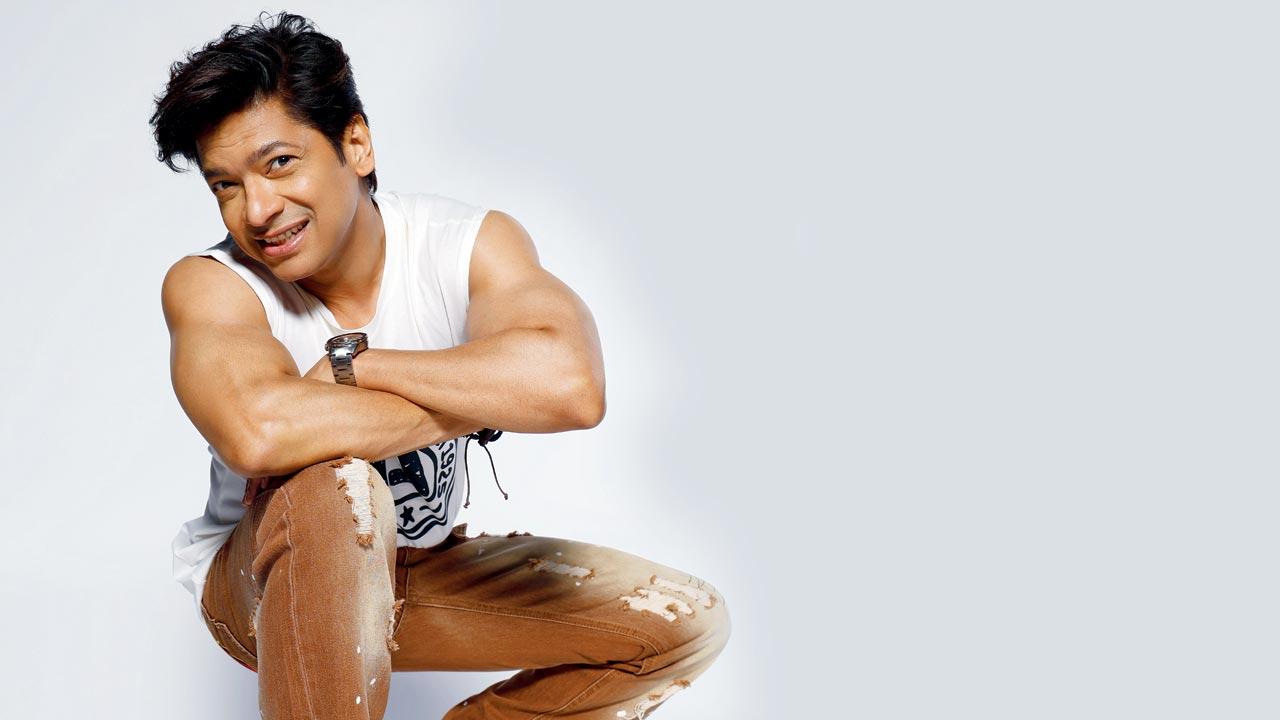
Priyanka Sharma (MID-DAY; September 15, 2025)
How does one keep the passion for their art alive over a 26-year singing career? With riyaaz, dedication, and the knowledge that the craft is almost like a lover you can’t stay away from, chuckles Shaan. In a free-wheeling chat with mid-day, the singer — who voiced Bam Bam Bhole in Sikandar and is looking forward to his upcoming song from Farhan Akhtar’s 120 Bahadur — opens up about holding on to the magic of one’s voice despite ageing, and his secret to sounding young, year on year. Excerpts from the interview.
Is it tough to keep a 26-year relationship with music alive?
Love happens first, and then it turns into a profession. What comes first will stay till the end. Obviously, there will be a point when the voice may not be how it should be. But in terms of appreciating and having an ear for music, that will always stay. For me and any singer, it can be frustrating [to be at a point] when we’re alive and not able to sing. It’s like being estranged from your lover. We have a crazy, ek tarfa pyaar with our voice.
With love comes commitment that an artiste has to their craft. After all these years, is it difficult to be disciplined and adhere to your riyaaz?
Honestly, my riyaaz has increased because after a certain point, the voice gets delicate. I started doing more riyaaz after my 40s. Until I met my guruji, my riyaaz was erratic. Sitting down, practising a bandish or doing a sargam — all that started only after 30. But by the time I got to 40, I could see a slight [change in my voice]. I could also see a lot of my seniors sounding older. I wouldn’t want that to happen with my voice. So, the only way I could postpone it was by doing riyaaz.
What do you feel is the key to your voice sounding young?
I feel young. Whenever I sing, I imagine an 18- or 20-year-old singing. Also, I often get youthful songs. If I were told that I would be singing for a mature, aged person, I would modulate my voice that way. But mostly, our romantic heroes are young. Even if they’re in their 50s or 60s, it’s important to sound young for them (laughs).
As a ’90s kid, I grew up listening to you, Sonu Nigam and many other voices, each of which was distinct. Today, it gets difficult to differentiate one singer from another, except Arijit Singh. Is it the demand today that voices sound similar?
It’s the Arijit effect; everyone wants to sound like him. Arijit is an intelligent singer. So, sometimes he surprises you with a different tonality. His voice is so popular with the [decision makers] in the industry that they think, ‘If we can’t get Arijit, at least let us get someone who sounds like him’. A singer doesn’t have much choice.
Also, aspiring singers, who have been listening to Arijit and Atif [Aslam] for 10-15 years, will think that if they sound like them, they will probably get a job. I had a similar situation when I started out. They would ask me, ‘Are you Kishore Kumar or Mohammed Rafi?’ They were two strong schools of singing. Udit ji [Narayan] had a touch of Rafi saab’s style of singing, and [Kumar] Sanu da was from the Kishore Kumar school.
So, what did you do?
I came from Hindi pop and there was no precedent to it. There was no one who was doing pop for me to copy. So, I was an original voice.
Seeing Duniya Haseeno Ka Mela come alive after so many years feels very special-Udit Narayan
9:05 AM

Samarth Goyal (HINDUSTAN TIMES; September 26, 2025)
Udit Narayan is basking in a new wave of love as his 1997 chartbuster Duniya Haseeno Ka Mela is back in the spotlight. More than two decades after its release, the track (heard in the thriller Gupt) has become a viral sensation, after it was used in The Ba***ds Of Bollywood.
“Seeing this song come alive after so many years feels very special,” the playback singer tells us, adding, “I always believed there was something timeless about it. When I was recording it, there was so much energy in the studio, and I could feel this song would be special.”
The track’s newfound virality has been staggering. Days after the show dropped online on September 18, the original music video clocked over 5 million new views on YouTube, while streams surged across Spotify and even Instagram. Now, as he sees youngsters dancing to the number, Udit admits that his initial instincts about the song feel validated.
“I feel very happy when I see so many Reels being made on this song. People are enjoying it in their own way — it shows that good music never gets old,” he tells us.
The 69-year-old also points out that this isn’t an isolated case. “Songs like Mere Mehboob Mere Sanam (from Duplicate, 1998) and Tu Cheez Badi Hai Mast Mast (Mohra, 1994) are also popular again. I think it all comes down to melody. That’s what stays, across time and across generations of listeners,” he muses.
‘Don’t give my music away, but i didn’t blink this time’
For Gupt’s director Rajiv Rai, the renewed popularity of Duniya Haseeno Ka Mela is less about nostalgia and more about creativity. “The credit for its success this time does not belong to me, but to Aryan (Khan, director of The Ba***ds Of Bollywood),” he says, adding, “Sometimes all it takes is the right moment and the right storyteller to bring it back.”
Rajiv, who helmed the Bobby Deol–Kajol starrer that the track is from, shares he doesn’t usually allow his music to be repurposed: “I generally don’t give my music away; I don’t like overusing. But, this time I didn’t blink an eyelid. Shah Rukh Khan has been gracious to me, so when he asked me [for the song], I said, ‘Whatever you want’. So happy it worked out.”
The kissing controversy did not affect my family or me-Udit Narayan
8:43 AM

Tanvi Trivedi (BOMBAY TIMES; March 23, 2025)
About a month ago, Udit Narayan made headlines after a video of him kissing a female fan on the lips during his performance went viral. When we spoke to the singer, he said the controversy has not affected him at all and even now, when people joke about it, he takes it in his stride.
He said, “My career spans more than four decades and that’s what matters. I belong to a family that was into farming and I have literally started from scratch. I believed in my dreams and made my way into Bollywood on my own. I have won two National Awards and have sung so many songs. I have sung around 200-300 songs with Bharat Ratna Lata Mangeshkar. After so much hard work, I am not affected if people bring back something from the past and make fun of it. It does not bother me because in the video, fans are just showering love and appreciation for my singing.”
Narayan also shared how people tend to blow things out of proportion on social media. He said, “After the video surfaced, people joked about it online and I was amused and laughed about it. My wife Deepa accompanies me to most of my concerts and is happy to see the love I get from people. So, such incidents don’t affect my family either.”
The singer was also seen recently on Indian Idol as a guest judge. The show is anchored by his son and musician Aditya Narayan. It was a treat for his fans and the contestants when he sang few lines from his popular songs from films like Gadar and Veer-Zaara.
It is a six month old video, amused that it has gone viral now-Udit Narayan
10:26 AM

Tanvi Trivedi (BOMBAY TIMES; February 1, 2025)
Udit Narayan stirred controversy after an undated video of him kissing a female fan on the lips while taking a selfie during his performance started doing the rounds on social media. In the video, the singer was seen performing the iconic track Tip Tip Barsa Paani when a female fan turned around and kissed him on the cheek. He then kissed her on her lips.
When we reached out to Udit Narayan, he said, "This is a six-month-old video which has resurfaced, and I am quite amused that it has gone viral. It was a concert abroad. Fans sometimes go crazy when an artiste performs to a large audience. They show a lot of affection, and we reciprocate. It is not new that fans want to click pictures with artists when they perform. I have been performing for many years now. This incident is so old that I don't recall if it happened in US or Canada. I have been laughing over it since morning because people are calling me for it."
The Padma Shri and Padma Bhushan award winner musician has had many hit songs to his credit in the 90s and 2000. His songs like Koi Mil Gaya (Kuch Kuch Hota Hai), Ae Ajnabi (Dil Se), Dil Ne Yeh Kaha Hai Dil Se (Dhadkan), Yun Hi Chala Chal (Swades), Pehla Nasha (Jo Jeeta Wohi Sikandar) have been big hits. In an earlier interview with BT, he said, "I am glad that I have been singing for the past three decades. In the past three years, I am enjoying live performances a lot."
-------------------------------------
After a video showing him kissing a fan on the lips sparked outrage online, the singer says this is how fans show love
Rishabh Suri (HINDUSTAN TIMES; February 2, 2025)
Singer Udit Narayan Jha has found himself at the centre of controversy after a clip from one of his concerts went viral. In the video, the 69-year-old singer was seen kissing a female fan on the lips during his performance of Tip Tip Barsa Paani (Mohra, 1994). This has led to outrage from social media users.
HT City reached out for his reaction to the backlash. He tells us, “Fans itne deewane hote hain na. Hum log aise nahin hain, hum decent log hain.”
Addressing this incident of kissing a female fan on the lips, he calls it a spontaneous moment: “I’ve been in Bollywood for 46 years now, my image hasn’t been such (that I forcefully kiss fans). In fact, I fold my hands when I see the love my fans shower on me, while on stage, I bow down, thinking phir aaj ka yeh waqt laut ke aaye na aaye.”
Speaking about how some fans “encourage” and “show their love through this”, he adds, “Fans think they are getting a chance to meet, so someone extends their hands for a handshake, some kiss the hands... Yeh sab deewangi hoti hai. Uspe itna dhyaan nahin dena chahiye.”
The singer also believes that there might be an ulterior motive behind the controversy. “My family’s image is such. Aditya (Narayan Jha, son and singer) chup chaap rehta hai, controversy mein aata nahin hai... There is madness when I am singing on stage, fans love me, I think let them be happy. Humein bhi unko khush karna hota hai,” he ends.
What happened
A clip going viral shows Udit singing Tip Tip Barsa Paani when several female fans approach him for selfies. He kneels down for pictures, kissing fans on the cheek. He can also be seen gesturing to the security person to let a female fan come forward. After she clicks the selfie, she kisses Udit on the cheek, who then turns and kisses her on the lips. The audience can be heard shouting and cheering.
Fans react
The video has sparked an intense debate on social media. One user wrote, “Sir age ho rahi hai respect hai apka thodi toh sharam karlo! Public me ye sab!” Some called it “disgusting.” A few also dug out past videos showing Udit allegedly kissing colleagues like Alka Yagnik on the cheek, catching them by surprise. A section also came to his defence, with one commenting, “Why? It’s consensual. The Women are smiling like hyenas after each kiss.”
Aditya brings a fresh perspective that sometimes even challenges me to think differently-Udit Narayan
8:32 AM

Soumya Vajpayee (HINDUSTAN TIMES; November 14, 2024)
While Udit Narayan has been a music legend for decades, his son, singer Aditya Narayan, too, has been rendering songs since childhood and also has some hit playback outings to his credit. Lately, the duo has been performing concerts together. Having done the Bade Miyan Chote Miyan shows in the US last month, Udit and Aditya will take the stage for a charity concert in Mumbai tomorrow. The idea behind the show is to raise funds to support underprivileged kids with cancer. On Children’s Day today, we get the father-son duo talking about learning from each other and sharing the stage.
On teaming up for shows
Udit: Performing together, as a team, has been a rewarding experience for us. As father and son, we share a bond that goes beyond music, and being able to bring that dynamic to the stage is a blessing. Teaming up has allowed us to blend our strengths and cater to a wider audience.
Aditya: It’s given me a chance to learn from my dad’s years of experience.
On learning from each other
Udit: I’ve learnt so much from Aditya. His energy, modern approach to music and understanding of today’s audience are inspiring. He brings a fresh perspective that sometimes even challenges me to think differently, keeping me young at heart.
Aditya: From Dad, I’ve learnt discipline, passion and the timeless quality that music can hold. He has a certain warmth and dedication on stage, and his ability to connect with audiences of all ages is something I deeply admire.
On performing for a cause:
Udit: Music has a way of healing and lifting spirits, and if our songs can bring even a small moment of happiness to these children, it’s worth every effort. We wish to create an atmosphere where they can forget their worries and have fun. Our set includes some fun and upbeat numbers.
Aditya: When the chance to perform for kids battling cancer presented itself, we didn’t think twice. We will keep the show very interactive. It’s more than just a performance for us. We’ve put a lot of heart into this show.
Catch it live:
What: Bade Miyan Chote Miyan
When: November 15
Where: Shanmukhananda Auditorium, Sion
Timing: 6.30 pm
As Karan Johar expresses outrage over being mimicked; comedians and celebs share their views
8:18 AM

After Karan Johar’s outraged Insta Story about being mimicked on TV, we ask comics and celebs — how far is too far?
Rishabh Suri (HINDUSTAN TIMES; May 7, 2024)
Filmmaker Karan Johar expressed hurt over being mimicked on a TV show, in his Insta Story, on Sunday. Producer Ektaa R Kapoor, too, shared it, writing: ‘Happened so many times! Ugly humour sometimes on shows…’
Social media was quick to deduce that Johar was referring to the show Madness Machayenge - India Ko Hasayenge, and the actor in question was Kettan Singh, who hosts a Koffee With Karan parody called Coffee with Churan, on the show.
Mimicry and impersonation are a routine feature on comedy shows, but the filmmaker’s outcry begs the question: how much is too much? We talk to celebs and comics on the debate.
---------------------------------------------
I was sitting and watching television with my mom... and saw a promo of a reality comedy show on a supposedly respectable channel... a comic was mimicking me in exceptionally poor taste... I expect this from trolls and faceless and nameless people but when your own industry can disrespect someone who has been in the business for over 25 years it speaks volumes about the times we live in... this doesn’t even anger me it just makes me sad! (sic)
- Karan Johar
---------------------------------------------
KETTAN SINGH’S DEFENCE
Karan sir saw the promo, not the episode. I don’t know whether he didn’t like me impersonating him or saying something that was offensive. I extend my apology and won’t argue. I can’t point out that it’s because of the writer who wrote the material, because it’s teamwork.
---------------------------------------------
The mimics
DR SANKET BHOSALE
Your intent with impersonating someone has to be very clear. There’s a very thick — not thin — line between making fun of someone and mimicking someone. Both my wife Sugandha (Mishra, comic) and I mimic people to impress them. We never use abusive language.
VIKALP MEHTA
With comedy, even if you don’t want, someone might get offended. (Actor) Ranveer Singh also mimicked (actors) Hrithik Roshan and Varun Dhawan on Koffee with Karan, and Karan ji was laughing then. I went on India’s Got Talent, Karan ji enjoyed my mimicry of (actor) Akshay Kumar. An artiste only aims to make people laugh, but yes, we should be responsible.
JAMIE LEVER
I am very mindful of where I draw the line. I will not go overboard or ever talk about say, Farah (Khan, choreographer) ji’s kids or husband, or make a remark on how she is earning money. That may be a bit below the belt. So, making fun of all that or someone’s sexual orientation... Things like that, we have to be mindful of.
The mimicked
JAVED AKHTAR, SCREENWRITER
People who mimic do end up saying a lot, but I wonder if their intentions are vicious. It’s done for fun. I’ve been mimicked on radio and stage. Kabhi agar paani sar se uncha ho gaya toh nahin karenge phir woh (upon realizing). But I will request those who mimic: there’s a limit, and never make it vulgar.
UDIT NARAYAN JHA, SINGER
I like being mimicked. Mimicry bhi usi artiste ki hoti hai jo logon ke priya hote hain. Apni-apni soch ki baat hai — for me it’s nothing to feel bad about.
Udit Narayan talks about gig at Ambani bash: "Mujhe pehli baar yeh opportunity mili"
9:58 PM

Rishabh Suri (HINDUSTAN TIMES; March 5, 2024)
The world has been witnessing the grandeur of industrialist Mukesh Ambani’s youngest son Anant Ambani and beau, businesswoman Radhika Merchant’s pre-wedding festivities that concluded on Monday. From actor Shah Rukh Khan to tech mogul-philanthropist Bill Gates — the three-day-long festivities saw global icons make their way to Jamnagar, Gujarat. Amid the stellar lineup of international and national performers such as Rihanna and Akon, singer Udit Narayan Jha also got to regale the audience with his hit numbers.
“I performed on Sunday; it was a 20-minute performance. Pritam Chakraborty ji (music composer) ne coordinate kiya hum musicians ke saath. There were many others apart from me,” Jha tells us after the gig.
Gushing about the scale of the gathering, the 68-year-old shares, “Itne bade log thhe, mahaul toh achha hoga hi. [I’m glad] mujhe bhi pehli baar yeh opportunity mili. Maine suna hai Anant Ambani ji bahut pyaar karte hain humse.”
The singer performed five of his most iconic songs for the occasion. “Pehla Nasha (Jo Jeeta Wohi Sikandar, 1992), Main Yahaan Hoon (Veer-Zaara, 2004), Udd Jaa Kaale Kaava (Gadar 2, 2023), Chand Chhupa Baadal Mein (Hum Dil De Chuke Sanam, 1999) and Jaadu Teri Nazar (Darr, 1993). Do-teen linein [each] thi bas,” he ends.
The participants of the past five editions of Idol have vast YouTube and Instagram followings-Vishal Dadlani
4:08 PM
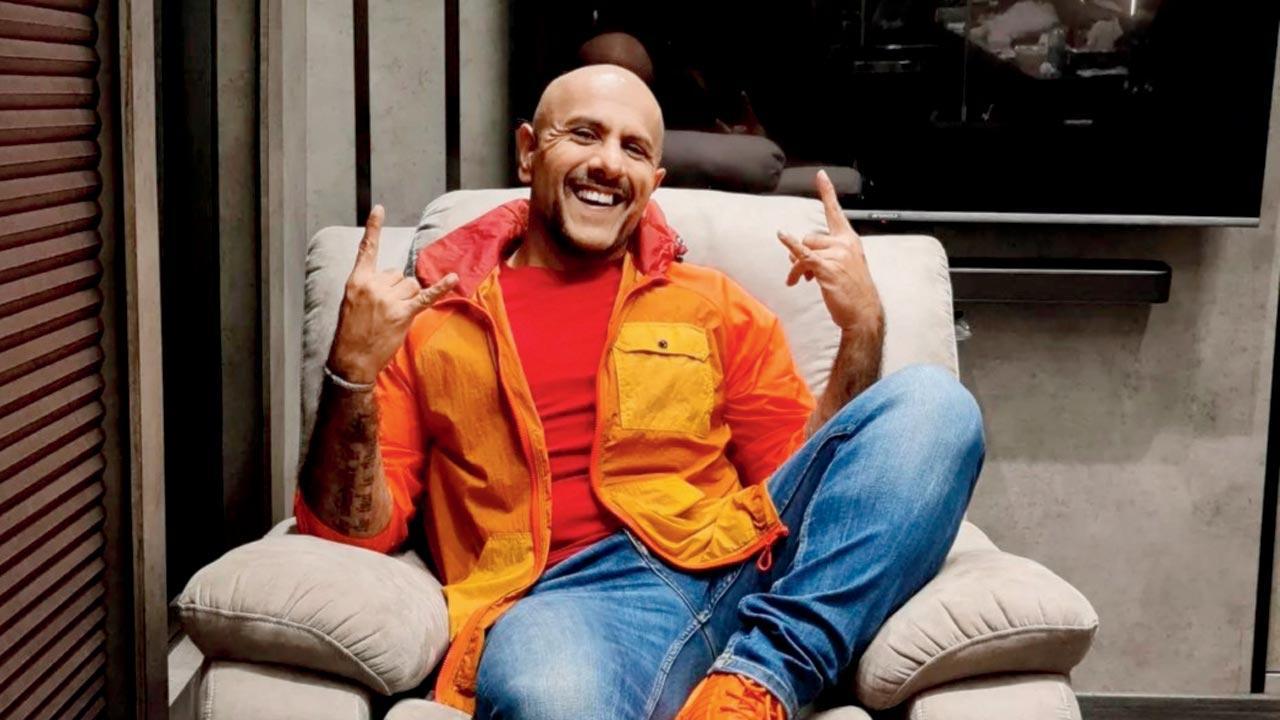
Skilled musicians may come and go, and it is one’s ability to leverage social media and market themselves that will decide their fate, says Indian Idol judge Vishal Dadlani
Sonia Lulla (MID-DAY; September 2, 2023)
Ahead of the upcoming season of Indian Idol that sees Kumar Sanu, Vishal Dadlani, and Shreya Ghoshal on the judges’ panel, Dadlani addresses the question that’s on the lips of every audience member: ‘Where do the popular singers go after the show ends?’ His answer makes it evident that in 2023, an entrepreneurial spirit is just as important as one’s skill to enjoy a lasting career. Edited excerpts from the interview.
We see reality shows coming out year after year. And often, months after they are over, the most common question that is asked is, where did the popular singers go? What are the opportunities for this influx of talent?
The music business has come to a place where a singer is his own opportunity. In the past, a singer’s career was dependent on the composer. It was dependent on the films he was singing for. That is no longer the case. [The participants of] the past five editions of Idol have vast YouTube and Instagram followings. Their shows on tours are [booked out] and they perform all over the world. A singer’s career depends on the legwork that they are willing to put in—whether that’s about meeting composers or creating and releasing their own music. Now, every singer understands that they also need to be a composer, just like, [until] a few years ago, every composer understood that they also needed to sing. You need to be an artiste and promote your own artistry. And if someone follows them, they usually enjoy the [work of the] artiste for life. A platform like Indian Idol gives these kids that head start, which is [significant] right now. The number of eyeballs that you command is your currency in 2023.
The importance of building a personal brand cuts across all industries. But, it’s not the easiest thing to do because one needs to have a fine sense of marketing as well. Are there any skilled participants who you believe didn’t get the kind of attention they demanded only because they were unable to market themselves?
Many of them. Right from season one, you could see that there were some people who promoted themselves, and who are, today, doing far better, economically, than the others who didn’t. They may not have even been the winners. That is the reality of life. You have to understand that music, art and entertainment are in the public sphere. You can’t [achieve anything] without the public. Your equity is how many people love you or the work you put out. Take [A R] Rahman as an example. He has never marketed himself. But, his first few soundtracks were so ground-breaking that people automatically began to admire him. Another example is Neha Kakkar, who is one of the most popular people on Instagram in the world. She’s built that following by actually constantly treating her Instagram followers as her friends and family. She puts her life out there. It’s something that I couldn’t do, but I admire that she can. And people connect with her on that basis.
Do you believe singers must stick to their niche? And what kind of training do participants receive on the show?
Most artistes today are known for their style of singing. In the past, either Sanu da [Kumar Sanu] or Udit ji [Udit Narayan] would sing every song in an album. That [approach] doesn’t work anymore. Now, it’s about specialists. Every singer has, and is known for one style. That’s also a more organic way of [approaching music]. Before, there was one voice for the hero; now a hero can have six voices. Songs don’t matter, what matters is how the singer serves the song. In Idol, they go through all sorts of training. To begin with, they are very accomplished. To get through the auditions, you have to be pretty good. Once they are among the top 15 contestants, they go through grooming sessions. There are [classes on] voice culture. For instance, if they have been trained in classical music, they are also taught to have an understanding of playback singing. They also need to learn how to pull back while singing. Grooming sessions help them add a certain subtlety and nuance to their delivery.
Aamir Khan acknowledged that Gadar was at least three times bigger than Lagaan-Anil Sharma
7:58 AM

Renuka Vyavahare (BOMBAY TIMES; August 12, 2023)
It’s the season of sequels in Bollywood and Hollywood. Twenty-two years after Gadar: Ek Prem Katha, the original cast – Sunny Deol, Ameesha Patel and Utkarsh Sharma – reunite in Gadar 2. Filmmaker Anil Sharma talks about why he decided to make the film after over two decades and the huge expectations from Gadar 2. Excerpts:
‘Gadar was a huge brand, but I didn’t want to cash in on it’
Anil says, “It’s the season of sequels. Everyone is making one, and Gadar was a huge brand to cash in on commercially, but that was never my objective. I didn’t want to simply resurrect a brand just for commercial purposes, unless I had a genuine story to tell that warranted a sequel. I was intrigued by the future of Tara Singh’s family. ‘Uske parivaar ka aage kya hua?’, this question hounded me. Writer Shaktimaan Talwar, who wrote the previous film, came back to me with a story that deserved to be made. That’s how Gadar 2 happened.”
Despite the immense success of the first film, the director has released himself from the clutches of expectations. “I am not the kind to put myself under this pressure. Both these films are people’s films; they will decide Gadar 2’s fate.”
‘Aamir acknowledged that Gadar was at least three times bigger than Lagaan’
Speaking of comparison, who can forget Gadar’s epic clash with Aamir Khan-starrer Lagaan: Once Upon A Time In India when it was released on the same day in 2001. Lagaan went on to win an Oscar nomination, and Gadar set new box-office records.
On his film’s 20th anniversary, Aamir had said, “If Lagaan was even one per cent less of a film, we would not have stood a chance.” Sharma reminisced, “Aamir was kind enough to say and acknowledge that Gadar was at least three times bigger than Lagaan.”
‘Gadar was a story about love transcending borders’
Along with the success, Gadar also met with its share of criticism. The director says, “I don’t remember my film getting great reviews from critics. Logon ne meri picture ko chalaya hai because they could emotionally connect with it. It was a story about a family and love transcending borders. I hope the audience is able to feel for the characters and their story once again. Sunny Deol is one of our finest actors. I have closely worked with him and the Deol family, they are nice people and that reflects in their performances as well. It was also nice to have Ameesha (as Sakeena) and my son Utkarsh back.”
‘We wanted Udit Narayan to reprise Udd jaa Kaale Kaava in Gadar 2’
Gadar’s music continues to be a roaring success. Uttam Singh’s iconic composition Udd jaa Kaale Kaava has been recreated and sung by Udit Narayan. Sharma says, “We have retained two songs from the original and Mithoon has done a brilliant job on the new album and reprising the old melodies. We wanted Udit to reprise the song. Film industry sabko bahut jaldi bhool jaati hai. I know that’s how new talent gets a chance and that’s fine. I am not averse to new people, but I don’t believe in overlooking someone only because he has been around for 40 years. He was the perfect choice.”
I can’t be influenced by society. It has to be the other way around-Mithoon
7:58 AM
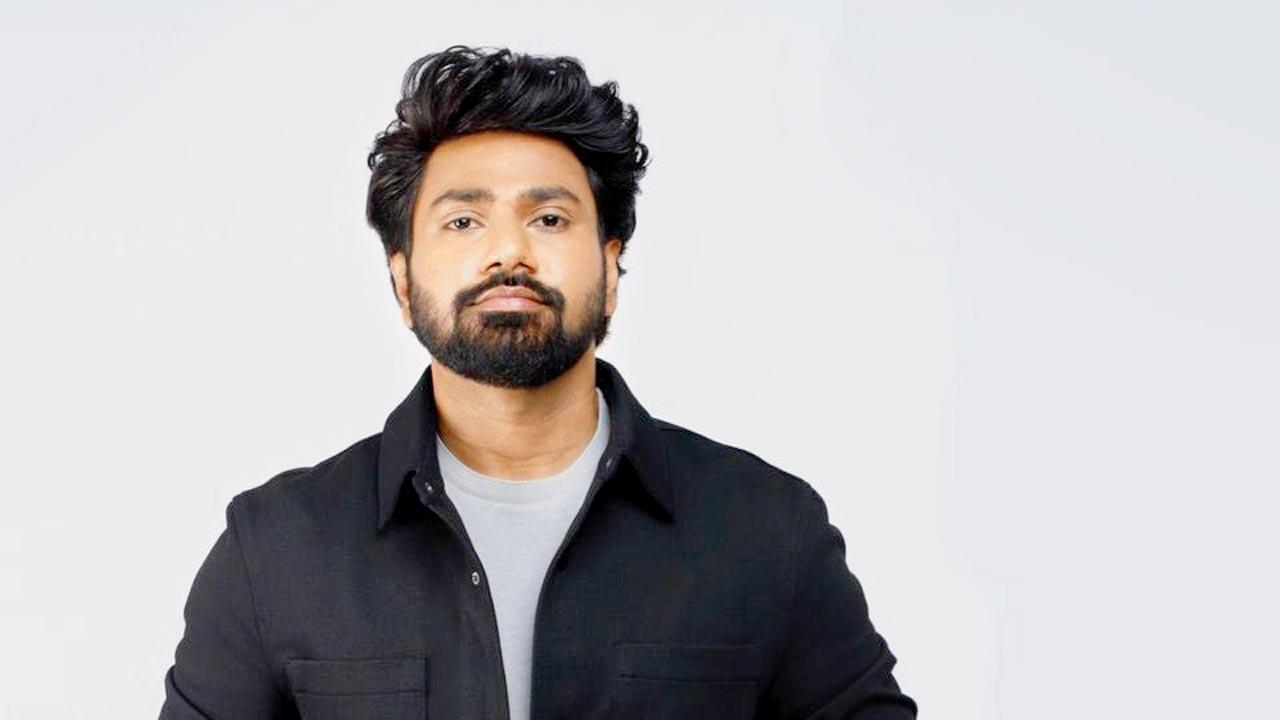
Offering a true tribute to Gadar’s Udd Jaa Kaale Kaava with his ballad-like rendition, composer Mithoon says he prefers to keep an arm’s length from discussions that attempt to unravel the reason behind his success
Sonia Lulla (MID-DAY; July 10, 2023)
Amid the spate of remixes of ’90s ditties that have flooded the music industry in the last few years, only a handful have been created with such prowess that they can make a listener skip a heartbeat. Serving as true tributes to the original chartbusters, these recreations diligently amalgamate the beauty of the classics with contemporary demands. For this writer, Mithoon Sharma’s version of the Gadar number, Udd Jaa Kaale Kaava, is one such offering. Over two decades after the release of the original, enhanced music production techniques appear to have given Udit Narayan’s vocals a new lease of life in this ballad-like rendition.
“I don’t think I would be able to imagine this song without him. He is part of the song’s genesis. The way he has maintained himself and his vocal quality is commendable; he sounds so good even today, at the age of 67. He sang each line again for this version. People have connected with the [song] and his voice,” says Sharma, who, despite being vocal about his opposition to recreations, agreed to work on this one because “cinematically, there was a [valid] reason to recreate it”.
Speaking of the track that will feature in the film’s upcoming second instalment, he says, “I was sure that I would not change the original composition or poetry. Our director [Anil Sharma] appreciated the reverence. It does have a certain folk-base, and I wanted that to be reflected in the way it was rendered. You can hear a new set of progression and I’ve added [elements] that are telling of my work. When it begins, you can gauge that this is my work,” says Sharma, who also retained the instruments used in the original.
A spate of appreciated releases behind him, Sharma attributes his success to his ability to stay true to himself, and his admirers. “It is the people with whom an artiste has conversations. They are the ones who make a song what it eventually becomes. I feel I have a strong connection with them. Whenever I have been true to my heart, my work has connected with them.” However, when his close associates attempt to unravel his work to study his recipe for success, the composer dissociates with the attempts.
“As a composer, if I think [about this] too much, I won’t be able to make music. I can’t be influenced by society. It has to be the other way around. I am grateful that my music is reaching every corner of India. It makes me realize that Indian artistes have so much more to offer.”
Royalty now a reality: Singers rejoice at landmark feat
8:43 AM
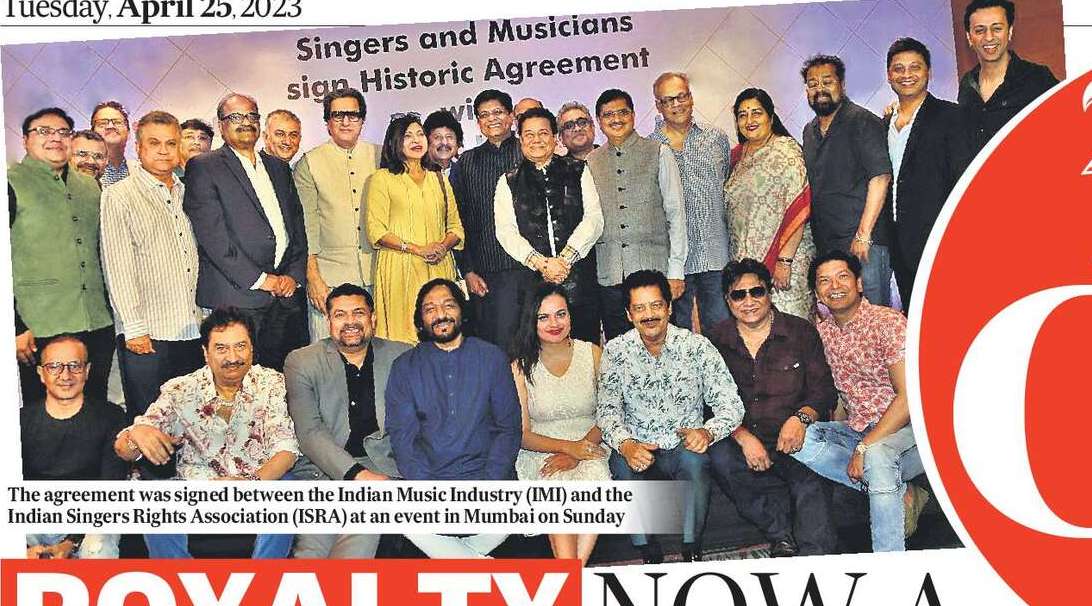
A crucial agreement signed recently has paved the way for artistes to be paid their dues
Rishabh Suri (HINDUSTAN TIMES; April 25, 2023)
In a glittering event held in Mumbai on Sunday, the Hindi music industry turned up in full force to witness a big feat for artistes. The Indian Music Industry (IMI) and the Indian Singers Rights Association (ISRA) signed an agreement, whereby all registered singers will now be paid royalty by music labels for the songs they have sung.
As per this, 25% of the collections of Phonographic Performance Ltd (PPL) — the governing body responsible for collecting and distributing royalty — will be paid to singers who are part of the ISRA. This also includes posthumous royalty paid to an artiste’s surviving family.
Union minister Piyush Goyal, who played a key role in facilitating the agreement, said on the occasion, “When this amendment was made in 2012, I was an MP of the opposition. But, in June 2019, when I took charge of the Ministry of Commerce and Industry, I came to know that nothing had been done in seven years. I felt that this was an injustice to those singers who had served the nation with their talent.”
Welcoming the agreement, singer Udit Narayan tells us, “Jiss din ka humein intezaar tha, woh ab nazdeek lag raha hai. We have struggled for this for so many years now. Chaliye, marne se pehle kam se kam royalty mil raha hai. I am very happy, thanks to ISRA and the ministry.”
For singer Alka Yagnik, this agreement has been no less than a dream. “This is a significant decision. We never really thought it would happen. This debate started in the early 1990s, so this dream has been there with me for 30 years. Pehle singers mein unity nahin thi, iss endeavour ke liye unity badhaai gayi,” she says.
How much royalty will be paid will be decided basis the number of songs of a singer played across radio stations, concerts, shows, etc. Sanjay Tandon, CEO of ISRA, informs that in India, radio stations, OTT and TV stations refuse to pay singers their dues: “Even after the 2012 amendment, where it was clear that radio stations playing a singer’s song will have to pay royalty, they (radio stations) ganged up and decided to not pay. They are people with big pockets, they expect us to take them to court, and we cannot fight them. It is a huge expense... People playing music at concerts and occasions — why do they want to play a singer’s song, but not pay them? This is why we took the initiative.”
Singer Shaan adds that the disagreement between singers and music labels has been a huge obstacle. “What they thought was fair, was not fair for us, and vice versa. A lot of credit goes to Anup Jalota ji (president, ISRA). He put that hand out and welcomed music companies towards us.”
I had sung a very big song this year, but my rendition was replaced at the last minute-Aditya Narayan
8:12 AM

Rishabh Suri (HINDUSTAN TIMES; April 9, 2023)
Aditya Narayan recently found himself in an unpleasant situation. The singer-TV host, who has crooned chartbusters including Tattad Tattad (Goliyon Ki Rasleela Ram-Leela; 2013) and Ji Huzoor (Shamshera; 2022), reveals he recorded for a “very big song”, but was replaced last-minute.
“I had sung a very big song this year, but my rendition was replaced at the last minute. This particular time, I was very upset,” he tells us, without naming anybody in particular. “Maybe I will talk about it more when some time has passed,” he adds.
Dubbing it the “biggest song” of his career thus far, Aditya adds, “It is out and a big hit. At the last moment, the makers — and not the music composer — decided to go the conventional way and pick another singer. I was looking forward to the song... But they replaced me with the best, so it’s not a bad feeling really. I am just happy that these composers are calling me. I’m very particular about the songs I associate with.”
This isn’t the first time an artiste has spoken about being replaced without notice. Aditya clarifies there’s never a contract in place which ensures that the song featuring a particular singer will be the final version — recordings are done in good faith.
“It happens to the best, it’s not a new thing. My father (Udit Narayan, singer) saw this in his time, too. The thing with Bollywood is, you are not the creator of the song. In our films, it isn’t just one person taking the call — actors, producers, everyone is involved. Time time ki baat hoti hai,” he reasons.
Doesn’t this lead to ill relations with the people who replaced you? “It could,” says the 35-year-old, adding, “I am absolutely okay with it now. I was upset then, for four or five days, when the song was playing everywhere. I knew I had done an equally good job [as the one who sang it eventually]. But at the same time, I thought, ‘Kahaan maine itne gaane gaaye honge jo doosron ke liye honge’.”
Kumar Sanu and Kavita Krishnamurti go down memory lane on Ishq's 25th anniversary: ‘The songs will live on for 100 years’
8:13 AM
Soumya Vajpayee (HINDUSTAN TIMES; November 28, 2022)
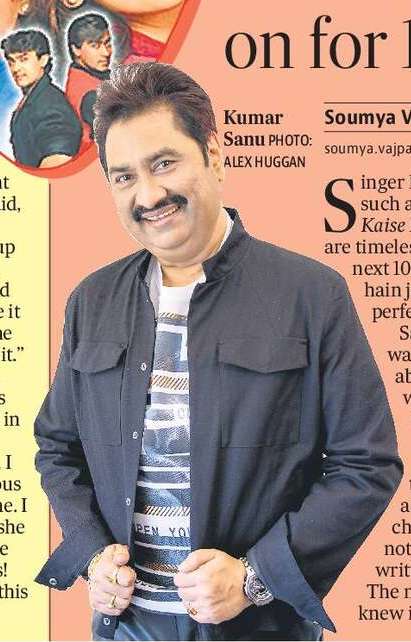
Singer Kumar Sanu enjoyed recording songs such as Neend Churai Meri and Kaise Kahoon Kaise Ho Tum from the 1997 hit. “Ishq’s songs are timeless. They will continue to live on for the next 100 years. Aaj kal aise gaane bante nahin hain jahan lyrics, composition aur voice sab perfect ho,” he says.
Sanu credits composer Anu Malik for his way of working. “An interesting thing about working with Anu ji was that we would always have arguments. Neend Churai Meri, which was a huge hit, was no exception. Whenever I found some parts tough, I’d request that he alter them, but he wouldn’t oblige. I felt the arguments were very healthy, and those challenges were fun to overcome. It was not an easy song to record. It was very well written, and every singer’s part stood out. The moment the song was wrapped up, I knew it would create magic,” Sanu shares.
-----------------------------
Soumya Vajpayee (HINDUSTAN TIMES; November 28, 2022)
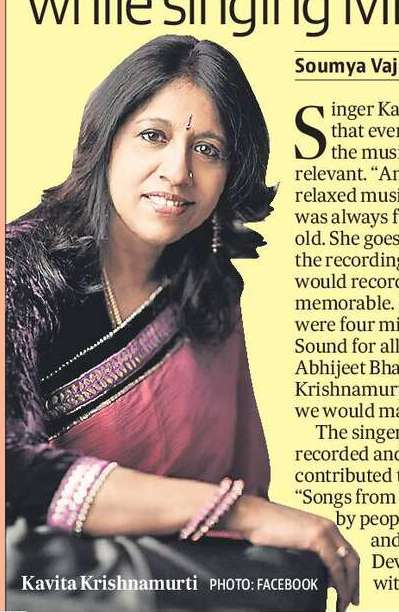
Singer Kavita Krishnamurti feels proud that even after two and a half decades, the music of Ishq continues to stay relevant. “Anu Malik (composer) is a friendly, relaxed music director. So, working with him was always full of masti,” recalls the 64-year-old. She goes on to share a fun anecdote from the recording days: “Back then, all the singers would record together, which made it memorable. For the song Mr Lova Lova, there were four microphones at Sunny Super Sound for all four singers (Udit Narayan, Abhijeet Bhattacharya, Sudesh Bhosle and Krishnamurti). Since we are all good friends, we would make fun of each other.”
The singer feels the way the songs were recorded and composed in the ’90s hugely contributed to the longevity of the tracks: “Songs from films [of that era] are still liked by people as the tunes are melodious, and [as for Ishq], the lyrics written by Dev Kohli ji were matched so well with the tunes.”
My granddaughter Tvisha keeps humming a tune; she already connects with music-Udit Narayan
8:26 AM

Tanvi Trivedi (BOMBAY TIMES; August 23, 2022)
An adorable picture of singer Udit Narayan with granddaughter Tvisha was posted by his daughter-in-law Shweta Agarwal Jha on her social media handle recently. Udit is seen holding little Tvisha and was all smiles.
Ask him about his granddaughter and he says, “She is my jaan. After so many years, God has given us a gift and she has brought immense happiness in our lives. My whole day is spent with her. At times, when I am recording songs in the studio, it does get difficult, but as soon as I finish, I run to Adit’s (Aditya Narayan) home, who stays just opposite to play with her.”
Udit shares how his grandchild has already started singing. He says, “She keeps humming a tune and we are all surprised that she already connects with music. She is also moody at times and starts kicking (laughs). Watching her do all this keeps me happy all day. My favourite song for her is Choti Si Nanhi Si Pari from the film Anaari and Oh I Love You Daddy (Akele Hum Akele Tum), which was sung by Adit and me.”
He further shares, “Tvisha sometimes looks like Adit and Shweta. But there are times when I feel she looks like me and her grandmother. I am sure that she will become a singer. Adit was a very lovely child when he was born. Tvisha is even better and makes us 10 times happier (smiles). Woh kehte hai na asal se jyada sud pyaara hota hai.”
30 Years Of Beta: I never thought the word ‘Ouch!’ would become so iconic-Anuradha Paudwal
8:40 AM

As Beta completes 30 years today, actor Aruna Irani shares how she became a part of this film
Juhi Chakraborty (HINDUSTAN TIMES; April 3, 2022)
One of the highest grossing films of 1992, Beta, starring Anil Kapoor and Madhuri Dixit Nene, clocks 30 years today. One of the pillars of the film was Aruna Irani, who played the vile and scheming matriarch Lakshmi Devi. She recalls how challenging it was for her to bag the film, despite the fact that it was helmed by her brother, filmmaker Indra Kumar.
“I had seen the Tamil version, and I wanted to do this film. But my brother never asked me to be a part of it, when he decided to remake it. And I didn’t want to ask for the role. He called up other actresses like Mala Sinha, Waheeda Rehman ji and Sharmila Tagore ji for the role, but nobody accepted the role. They didn’t want to play the vamp,” Irani shares.
The actor reveals that Kumar did come to her with the role of Mainavati (which was eventually played by actor Bharati Achrekar) but she turned it down.
“I felt very sad. I said I won’t do it. I used to do these chhichhora roles. Ghar chalane ke liye maine aise roles kiye hai with (actors) Shakti Kapoor and Kader Khan. So he (Kumar) kept on insisting that you do such roles in other films, so why not in my film? But I put my foot down firmly and told him ‘tere film mein nahi karungi aise roles, baahar karungi’,” the 75-year-old tells us. Irani says that it was actor Shabhana Azmi who convinced her brother to cast her as Lakshmi Devi in the film.
“When he finally offered me the role, I started crying. Before Beta, I used to do only chhichhora roles. This film reintroduced me (in the industry),” she adds.
While her character has attained an iconic status with her big bindi, saree and hair bun, Irani does have a regret. “A big blunder happened with my look. My hair patch didn’t look good at all, as it was not made properly. I didn’t take care of my hair. It was very patchy. I feel stupid,” she concludes.

---------------------------

As told to Kavita Awaasthi (HINDUSTAN TIMES; April 3, 2022)
When I gave voice to the love song Dhak Dhak Karne Laga, I didn’t think it would become such a huge hit. After I saw the film, I realised the magnitude. All credit goes to (actor) Madhuri Dixit Nene, who enacted so well, that the song became a huge success and is still remembered. Meri bahut aachi yaadein hai uss film se. I am grateful to God that I got the opportunity to sing such a song, and even won awards for it. In fact, I remember when we were recording, we were thinking of how to start the song, an opening, a seductive word, and then I suggested that we could go with ‘Ouch!.’
And little did I know that it would become iconic. Ek choti cheez kabhi kabhi bada roop le leti hai. There have been times at concerts jab farmaish aati hai iss gaane ki. Ek baar Bahrain mein ‘Ouch!’ sunne ke liye 7-8 baar gaana gavaya tha.
---------------------------
As told to Kavita Awaasthi (HINDUSTAN TIMES; April 3, 2022)
Udit Narayan says:
The film Beta has a special place in my heart. I have some wonderful memories.
When I heard that they were making the film, I wanted to be a part of it. But I had given playback for (actor) Aamir Khan till then, and they felt my voice might not suit Anil ji (Anil Kapoor; actor) who has a mature personality; while Aamir was a chocolate boy hero back then. I was sure my voice would match Anil ji’s persona. So, I sang one song as a trial and told them that if they felt my voice didn’t suit Anil ji, they could re-record it. But it worked out.
Even today, at concerts I sing it. This iconic song became a trademark for Madhuri ji (Madhuri Dixit Nene; actor). There is no function where I am not asked to sing Dhak Dhak.

Tvisha will take our lineage forward-Udit Narayan
8:11 AM

Soumya Vajpayee (BOMBAY TIMES; March 24, 2022)
Singer Udit Narayan is on cloud nine. Why? Because he’s loving his life as a grandfather. Ever since his son, singer Aditya Narayan and daughter-in-law, actor Shweta Agarwal, were blessed with a baby girl last month, Narayan has been quite busy. “Being a grandpa is a great feeling. I’ve never felt like this before! I can’t believe Tvisha (Narayan Jha; granddaughter) is almost a month old now. I always wanted Adi to have a baby girl. Humein bahut khushi hai ki humare ghar Lakshmi aayi. Adi ke hone par mujhe khushi hui thi, par Tvisha jab aayi, tab zyada khushi hui,” says the 66-year-old.
The Padma Bhushan recipient has a feeling that the baby has an inclination towards music. He explains, “I sing a lot for her. She sleeps instantly when I sing Choti Si Pyari Si Nanhi Si Aayi Koi Pari (Anari; 1993). Music sunkar woh bahut khush ho jaati hai.”
Does that encourage him to think that she might take up music professionally when she grows up? “I feel music is something you are born with. Aditya mein mujhse aaya and I feel Tvisha will take our lineage forward. She has a very energetic vibe and I have a feeling that woh bahut honhar bacchi hogi,” the singer says.
Meanwhile, amid his busy personal life, Narayan has also started travelling for live shows. The fact that things have started to open up again after two years makes him feel relieved: “Last Sunday, maine Khurai (Madhya Pradesh) mein perform kiya tha. Close to two-three lakh people turned up. I have a busy international travel schedule coming up with Australia in April and the USA in July. I am so glad things are getting better.”
Ask if there’s a difference in the way the audience turns up at his shows, and the Jaadu Teri Nazar (Darr; 1993) singer says, “I haven’t felt any difference... I’ve only seen excited music lovers.”
BT Exclusive: Aditya Narayan, Shweta Agarwal become proud parents to a baby girl
7:17 PM

Tanvi Trivedi (BOMBAY TIMES; March 4, 2022)
Singer-actor Aditya Narayan and his actress wife, Shweta Agarwal, are now proud parents to a baby girl. The little one was born on February 24 at a suburban nursing home in Mumbai.
Talking to BT, Aditya says, “Everyone kept telling me that it would be a baby boy. But I secretly hoped that we would have a baby girl. I believe fathers are closest to their daughters, and I am happy that my little girl has arrived. Shweta and I feel extremely blessed that we are parents now.”
Talking about the moment when his child was born, he shares, “I was with Shweta when she delivered, and I seriously feel that only a woman can show the kind of strength and perseverance to go through this and bring a child into this world. My love and respect for Shweta has doubled now. A woman goes through many things when she delivers a child and even during the pregnancy phase.”
Aditya says his child’s musical journey has already begun. He adds, “I have already started singing songs to her. Music is in her DNA. My sister has gifted her a small music player, which constantly plays spiritual chants and nursery rhymes. Her journey of music has begun because it runs in the family. But then, it all depends on what she wants to do when she grows up. Both my grandmothers, my dadi and nani, are extremely excited to see their great-grandchild. I am blessed to have so many women around in the family.”
Aditya shared how his father, singer Udit Narayan, is beaming with joy and constantly calls the baby angel. He says, “My father is in shock and he keeps looking at our little one and calls her angel! Initially, he was too scared to pick her in his arms, but after a few days, I placed her in his lap and then he got the confidence to play with her. I have already started changing diapers and doing all the fatherly duties. My little one has my eyes, and I think she looks a lot like me. I thank God for this gift.”
I guess I am the only one who sang over 200 songs with Lata Mangeshkar-Udit Narayan
8:17 AM

Rishabh Suri (HINDUSTAN TIMES; February 8, 2022)
Singer Udit Narayan refused to believe on Sunday that the Nightingale of India, Lata Mangeshkar, is no more. Having sung chartbusters such as Tu Mere Saamne (Darr, 1993), Mehendi Laga Ke Rakhna (Dilwale Dulhania Le Jayenge, 1995) and the title track of Dil To Pagal Hai (1997), among many others, with the late singer, Narayan considers himself “fortunate”.
“Main apne aap ko bhagyashali samajhta hoon. Jitna kaam mujhe Lata ji ke saath mila, mujhe nahin lagta [mere time ke] kisi aur singer ko mila hoga. I guess I am the only one who sang over 200 songs with Lata ji. And all of them were superhit. I also shared the stage with her around eight times (for live shows). She would say, ‘Udit, tumhari awaaz original hai.’ Lata Mangeshkar ji saying something like that was like Goddess Saraswati blessing me,” says the 66-year-old singer.
Narayan was devastated when he learnt that the legend is no more. Calling it a sad news for “Bollywood, the music fraternity and the entire world”, Narayan gets emotional and adds, “Ek hi Lata ji thi aur woh chali gayi.”
The singer is certain that Mangeshkar is an integral part of India’s music history and she’ll continue to live on. “February 6, 2022, was a dark day. She loved me like a younger brother, and blessed me whenever we met. It’s a coincidence that she passed away around Basant Panchami. It proves that she was Goddess Saraswati herself,” he signs off.
Subscribe to:
Posts (Atom)