Showing posts with label Tushar Joshi. Show all posts
Showing posts with label Tushar Joshi. Show all posts
Blake Lively vs Justin Baldoni: Decoding the effect of a smear campaign on a celebrity's social currency
8:32 AM

In the wake of the Blake Lively-Justin Baldoni lawsuit and very public online smear campaign, we ask Bollywood publicists, managers, entertainment editors and trade gurus about just how much can a smear campaign affect a celebrity’s social currency
Mohar Basu (MID-DAY; January 12, 2025)
It all started with conspiracy theories as to why Hollywood actors and stars of the 2024 movies, It Ends with Us, Blake Lively and Justin Baldoni, were unable to get along during the shoot of the said movie. “Creative disagreement” was the popular term used for it, but what lay underneath was slander, and an effort to put down the other. Soon, social media was rife with conspiracy theories—some experts reading body language of the two stars—some just pondering on why they were both not seen together during promotions of the movie. It was declared: the two couldn’t stand each other.
There was some truth to the fire, as in the past two week, both Lively and Baldoni have filed lawsuits against each other. Lively’s account, where she accuses Baldoni of sexual harassment, was also reported in the New York Times by Megan Twohey (who has reported on the Harvey Weinstein case) with the headline: “We Can Bury Anyone: Inside A Hollywood Smear Machine”. What took centrestage: the use of social media and the Internet to create a narrative (true or not) of the other.
But how is Bollywood viewing this? A celebrity manager, on condition of anonymity, says the best way to attack a star is to attack their “image”. “They care for nothing as much as their image. And creative disagreements and celebrity fall-outs are rampant in this industry. For instance, Salman Khan walked out of Sanjay Leela Bhansali’s film after announcing it. Of course, that couldn’t have been pleasant. But what separates that from the Baldoni-Lively case is that neither party went out of their way to pull the other one down. A classic case of a Bollywood smear campaign is what happened to Kangana.”
Actress Kangana Ranaut has publicly admitted to being at the receiving end of the industry’s inability to stomach her. In 2021, she said, “Just last week, I lost more than five lakh followers on Instagram. They gang up on you, boycott you, and if that leaves you happy and content, they ruin your image and brand. That’s how they killed Sushant [Singh Rajput]. That’s how they harass outsiders who don’t need them for work. There are paid smear campaigns happening on Instagram as well… Many derogatory memes and fake information about me are spread. Instagram is also paid as my followers numbers automatically drop, fans who unfollow don’t even realize it... There is a proper investment of troll army, creative budget to make memes, to write lies to spread smear campaigns, movie mafia + political mafia + jaded actors who are rejected lovers, you are jealous of even a fruit bowl...”
These observations were following an incident when Ranaut posted a picture of herself having breakfast, and got trolled.
A former publicist of Ranaut’s, who worked with her for a year, told us, “This whole impression that Kangana is difficult and a loose cannon, has been created. She is very professional and believes in doing her work and going home. She has a certain political leaning and believes in it strongly, but who isn’t leaning towards the establishment today. Why should she be vilified? Then it all boils down to—is she good at her work? Oh yes, she is. It’s a good question to ask then—why is she not getting films? Some part of the answer is that she has managed to offend her directors. She has wanted creative control and I personally believe, directors allow men the creative control, when women ask for it, there’s an issue. There has been a systematic smear campaign on Kangana—where videos of her using a fake horse have been leaked when every actor does that for period films. Money has been spent on bringing her down. If one wishes to study a smear campaign, they should go through Kangana’s career post 2015.”
The problem happens when a one-off dispute shifts from professional disagreements to personal attacks, with media outlets amplifying unverified claims from anonymous insiders. This pattern is a textbook example of how celebrity feuds are orchestrated and sustained in the digital age. Earlier this week, a slanderous article on Triptii Dimri appeared on a website, which claimed that she was removed from Aashiqui 3 because makers weren’t comfortable with her bold avatar in Animal. In Triptii’s case, the story may be planted by professional rivals who want to cost her an opportunity/or envious of the fact that she is currently shooting for Vishal Bhardwaj’s film with Shahid Kapoor.
But it could be a reach to say this only happens to the women in the industry. An industry veteran pointed out that in 2014, Aamir Khan met Mumbai Police to complain about “false and malicious messages” that were being circulated in social networking sites Facebook, Twitter and WhatsApp to damage his image and reputation of his issue-based show Satyamev Jayate.
“Aamir Khan complained to us about some objectionable messages getting circulated (against him),” a police official had told the press then.
But how do the smear campaigns work, and more importantly, do they succeed in today’s media landscape? Let’s take a closer look at Bollywood’s modus operandi.
Tushar Joshi, entertainment editor of India Today, tells us, “These smear campaigns are age-old in the industry. Sometimes they are direct and sometimes they are proxy. But what is going on in Hollywood is something actors in Bollywood have faced. These campaigns happen via publicists, production houses, actors and colleagues and friends who have agendas different from their rivals. Maybe emails, voice calls haven’t been made public. They might have been exchanged in private to sway the minds of the opinion makers. The only difference is most of what happens in Bollywood happens behind closed doors. With the Baldoni-Lively case out in the open now, new norms are being set.”
Smear campaigns are rarely explicit. They are carefully orchestrated efforts that exploit the vulnerabilities of digital ecosystems. A lot of the battle has moved to Redditt.
In an email interview, the Reddit account, Bollywood, tells us, “We frequently get requests to post leaks and we do so. So far, we haven’t got commercial deals but it’s only a matter of time until we get there. We list it under unverified goss. We have noticed a lot of gossip on Kartik Aaryan, Akshay Kumar, Ranbir Kapoor, Ranveer Singh and the things that we get told are juicy. Clearly, someone wants to feed these stories to the public. The tabloids have stopped carrying gossip, so we have to. A post can look organic, but it’s often the first step in a much-larger campaign.”
A Bollywood publicist tells us, “Earlier, the approach was subtle. Journalists were given insider tidbits—sometimes, stories were planted by mentioning them in passing. The goal is to create a seed of doubt in their audience’s mind. But now, it has become all about money. Influencers with followers ranging from 5,000 to 50,000 are often paid to post seemingly neutral content that’s actually part of a coordinated campaign. A simple Instagram story about a '“troubling blind item' can snowball into a full-blown scandal.”
“Smear campaigns work because they tap into our collective love for drama. Controversy sells, and people are quick to believe what aligns with their existing biases. It’s classic voyeurism,” says a Bollywood podcaster. But at the same time, a smear campaign has little correlation to a film. There is plenty of hate against Ranbir Kapoor but his film, Animal, made nearly Rs 1,000 crores.
Veteran director Anurag Kashyap had said before that a smear campaign might work for a weekend, but it can’t sustain itself if the audience connects with the work of an actor. At the end of the day, content is king.
In the end, none of the bitterness matters, says trade analyst Taran Adarsh. “The goal is that a film must work. Smear campaigns pique curiosity and fuels the news cycle. But the audience wants a movie, they want to be entertained. Often films have gone through political controversies and personal issues and have powered through because the film is good. Also none of this affects an actor’s brand value. It is a he said/she said story until someone goes to the cinema hall and says ‘oh what a film’. I have to quote a story here. B R Chopra and Madhubala went into a famous trial over a film. She was replaced by Vyjayanthimala and the film did very well despite this controversy. Collections remained unaffected. I had asked Chopra sa’ab, ‘Aapko laga nahi negativity aajayegi’ and he had said, ‘Kaam karma hota hai. Acha kaam kariye and the audience will reward you’. The interpersonal dynamics may be shaken, but cinema will last forever.”

Singham Again vs Bhool Bhulaiyaa 3: Do toxic fan clubs steer movie success?
8:03 AM
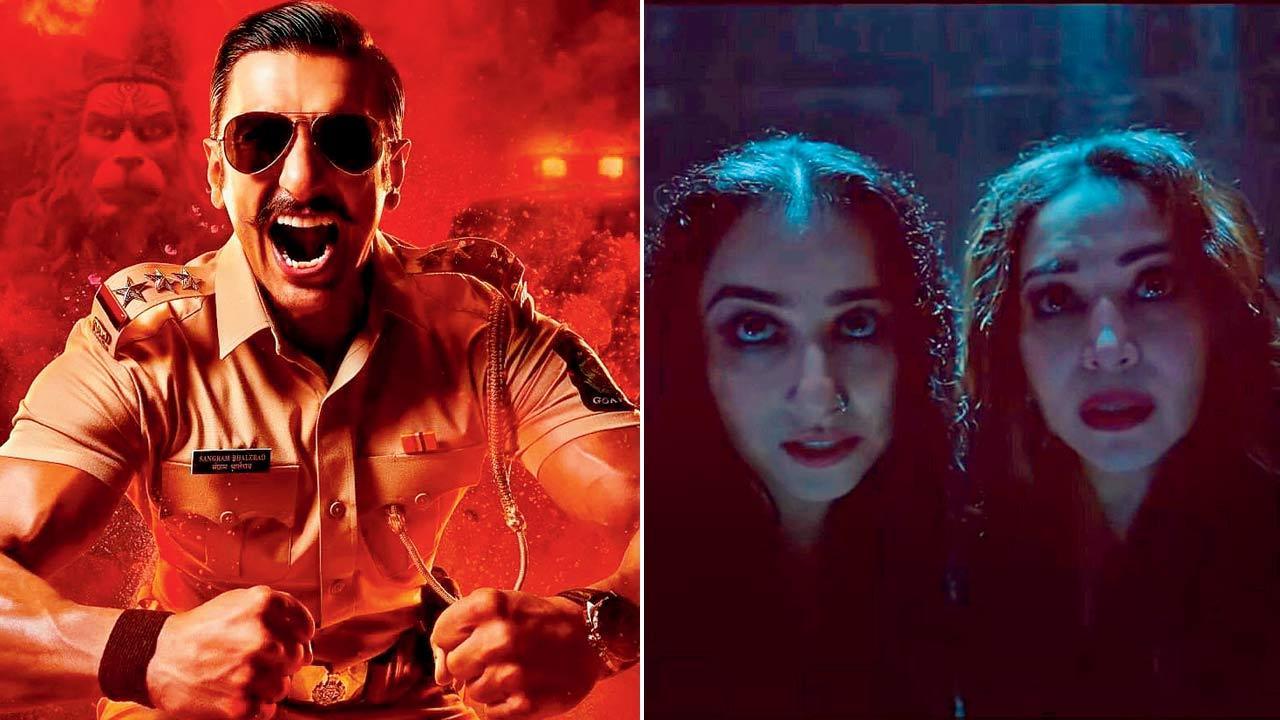
Many say a smear campaign sank Alia Bhatt’s Jigra. Should Singham Again watch out?
Mohar Basu (MID-DAY; October 27, 2024)
When the trailers for two Diwali releases Singham Again and Bhool Bhulaiyaa 3 dropped, social media went into a tizzy. Every aspect of the former was critiqued—including Deepika Padukone’s cameo and the length of the trailer—and fan clubs were locked in rivalry over the next few weeks.
Spend more than five hours a day on Twitter and Instagram, and you’ll get good at spotting social media bots. While fans have locked horns before, the tonality of clashes has grown more dangerous with this shift to social media… and it’s affecting box office numbers. Once fan groups focused on supporting favourite stars; now they have morphed into highly competitive communities that actively engage in sabotaging each other’s films, especially when big releases clash.
“Toxic fandom” is when fan criticism turns into a hostile, bigoted campaign targeting a project, its stars, or creative heads. In today’s franchise-driven entertainment landscape, where studios rely heavily on fan loyalty to boost financial success, the rise of toxic fandoms threatens movie-goers’ enthusiasm.
“The noise has become deafening lately,” a marketing executive from a major studio notes, “People are out for blood, and will make sure you know of their hate. I personally feel Jigra didn’t work because of the hate towards Alia [Bhatt].”
Jigra, which released early in October, faced multiple controversies. Producer Divya Khosla Kumar alleged manipulation of box office numbers, while Manipuri actor Bijou Thaangjam accused the producers of keeping him in the dark about the quality of his role. These controversies pivoted online debates away from the emotional core of its story.
A studio insider, who worked on the film, tells us, “While Jigra had a good opening day, its collections dropped sharply, making it one of Alia’s lowest-grossing films. Also if you look at the reactions, they are on opposite ends of the spectrum. How can a film about a sister saving her brother garner this reaction? The environment around Jigra showed the impact of fan club rivalries and how it can influence BO performance. Social media plays a significant role in shaping public perception, particularly when it comes to high-profile films such as this one.”
The same tone was used against Deepika Padukone after the Singham Again trailer. Many took issue with her portrayal of SP Shakti Shetty, labelling her performance “cringe” and saying she was miscast. Some specifically criticized her dialogue delivery and accent. The backlash was further amplified by videos of influencers mimicking her scenes, which went viral on platforms such as Reddit.
A member of a fan club on Twitter told us, “How the hate spiralled out of control is not something a loyal fan expected. Do we feel Alia’s team is generating hate? No. Hate is an entity by itself. Once you start the fire, you don’t know what shape it will take. Alia’s fans might have started it, but it turned into something none of us could have predicted.”
We traced a comment on Reddit to the IG account of Disha Pundit, a cinephile from Pune, who stood up for Padukone. “I have become increasingly wary of aggressive PR for Alia,” she says.
“Every few weeks, hate for DP shows up, and goes beyond films. For example, ‘Deepika is not pregnant, she is pretending’—how are these narratives built and propagated? It’s all too personal and exhausting. I miss when we connected with actors organically because of their acting and personality. Why are we not talking about how a movie is? Why do we care so much about what, who and how they are as people?”
“Toxic culture is particularly harsh toward women,” observes Tushar Joshi, Entertainment Head, India Today, “with sexist comparisons and rivalries. This misogynistic trend not only affects the actors but also plays into a broader, troubling dynamic online.”
With the upcoming clash between Singham Again and BB3, wars have reached fever pitch. Twitter, Instagram, TikTok and YouTube have turned into battlegrounds, allowing fans to engage directly with promotional campaigns. Fans of SA, led by Ajay Devgn and Rohit Shetty loyalists, are fiercely promoting the movie while dismissing BB3. Kartik Aaryan’s followers are not sitting idle.
“You can see patterns of hate,” says exhibitor and trade analyst Akshaye Rathi, “Dozens of micro influencers tweet the same thing, in the same language, at the same time.”
The tactics include manipulating algorithms to boost or damage a film’s perception. Coordinated down voting and leaving poor reviews on aggregator platforms such as IMDb, are standard practices. These are aimed at creating a narrative that a film is subpar, affecting its early buzz and ticket sales.
One of the most striking aspects of toxic fandoms is how well-organized they are. Members strategize attacks in closed circles on Telegram or Reddit, co-ordinating timings to make hashtags trend, flooding social media with favourable or unfavourable content, and targeting specific critics or influencers to sway public opinion.
But do these smear campaigns have any effect?
Media promotional cycles certainly get affected, says Joshi. “Fan clubs can dictate social media trends,” he tells us, “which can affect a star’s psyche and influence decisions regarding press interactions. You are playing at someone’s insecurities and vulnerabilities. An actor may choose to avoid a public engagement entirely due to a trending social media narrative; or their manager may advise against addressing it, as even a simple comment could impact the marketing, publicity, or release of their film.”
A celebrity publicist, who handles several A-listers, admits, “We don’t allow our actors to speak to the press. I need to control the narrative because even if the interviewer isn’t ill-intended, what it becomes eventually is not in his or her hands. In RJ Anmol’s interview with the Jigra team, Vasan Bala had said, ‘I had sent one very kaccha pakka [roughly drafted] email… to Karan [Johar]. Six or seven hours later, he called to say, ‘I’ve already sent it to Alia’. We were not very happy about this as Karan had to defend it when the hate for Alia got wild.”
Joshi says that actors, knowingly or unknowingly, sometimes fuel fan clubs by engaging with them. Shah Rukh Khan and Salman Khan have mastered the art of handling their fan bases. They encourage support one another’s films during interviews, something they’ve been doing long before social media’s rise.
“For example, Shah Rukh might say, ‘If my film releases on Diwali, go watch Salman’s film on Eid’,” says Joshi. “These gestures have been a hallmark of their camaraderie and contributed to their long careers.” In fact, one way to mitigate toxicity would be for actors to publicly call out their fan clubs when their behaviour crosses a line.
The longevity of older stars could, in part, be credited to their refusal to let fan clubs dictate the trajectory of their careers. While some fans may think they are helping their favourite star by attacking rivals’ films, in reality, they are contributing to a culture of hostility that affects the whole industry.
Shrenik Gandhi, CEO, White Rivers Media (a digital agency working on film promotions), breaks it down for us, “There are two types of toxic fan clubs: Organic and manipulated. The latter is driven by agendas and is located in the echo chamber of Twitter. But the first one travels [authentically].”
Another digital agency head corroborates, “Let me explain how word of mouth works. The Friday a film drops, WhatsApp, Twitter and Instagram get activated. Fake accounts of reviewers may be made. Taran Adarsh has faced it. The account will change Taran’s spelling slightly and give a one word review: Disappointing. Before you can combat it, everyone has believed the fake account. This reduces bookings considerably, no matter how big the star or film is.”
Though Rathi feels a good film can power through, he feels stakeholders have to work together to fix this. “No one benefits in a dog-eat-dog world. The insecurity in our stars is scary. People want to celebrate each other’s failures. Producers, exhibitors, stars, studios never sit down and ask each other how we can grow the market together.”
This is not good for already sliding number. “The overall turnover is not promising this year,” Rathi points out. “Last year, Jawan, Pathaan and Animal doing well showed hope for a bit. People were united. But in 2024, we have gone back to negativity, which can also be used well if there’s intent.” He cites the example of how Animal’s polarization became a marketing tool.
Fan clubs can be utilized well, and Shah Rukh Khan knows how. As do stars in the South. “Be it Allu Arjun, Rajinikanth, or Jr NTR,” Rathi says, “This is why they guarantee big openings, which our biggest stars—despite being credible actors—can’t.”
Revealed: What goes behind-the-scenes in the making of Bigg Boss
8:40 AM
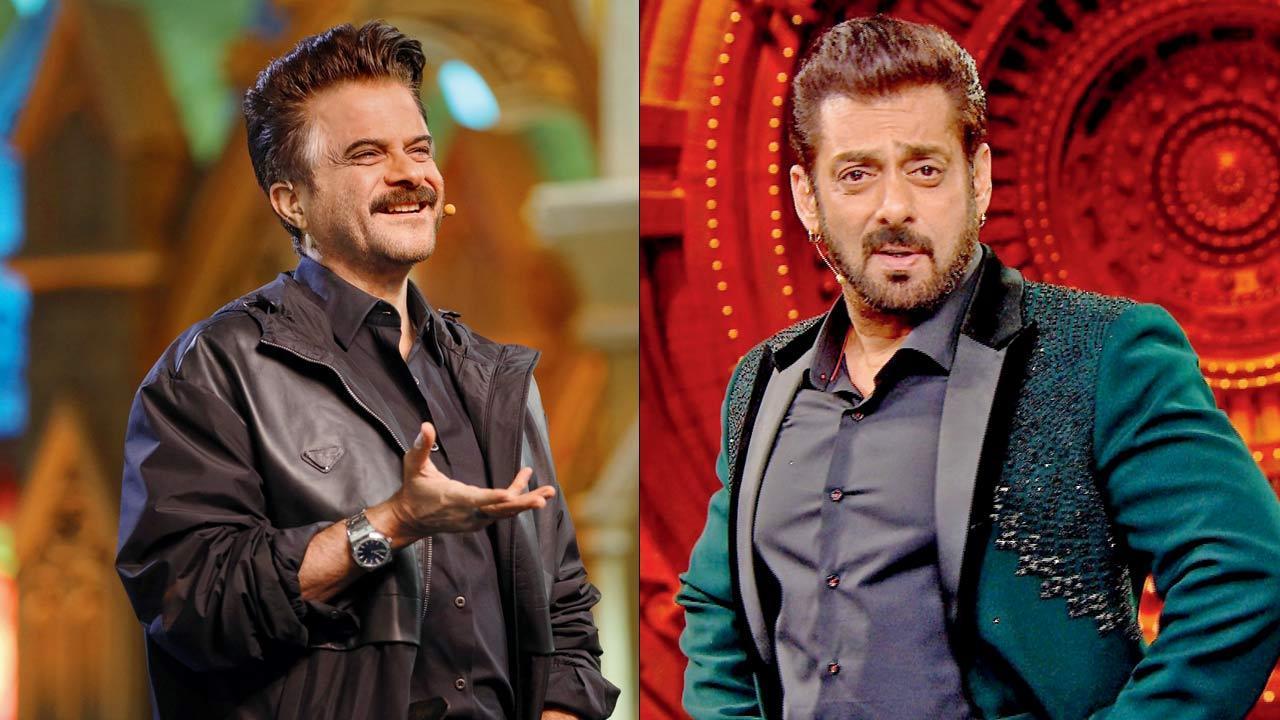
Mid-day takes a look at the behind-the-scenes action to understand the making of the longest-running controversial reality show, Bigg Boss
Letty Mariam Abraham (MID-DAY; July 9, 2024)
Pick up any season of Bigg Boss, and there is much happening on camera—from tasks to controversies, from flirtations to feuds. But things are equally dramatic off camera too. Do you know what happened after Bigg Boss season 2 contestants Rahul Mahajan and Raja Chaudhary breached the rules and jumped off the set’s outer wall? Or when Imam Siddiqui demanded to walk out of the sixth season? While we’ve seen the on-camera action for many years, this time, we zoom in on the people behind the camera who join forces every year to give us the reality show. From identifying interesting contestants to watching endless hours of footage, from running dummy episodes to setting up more than 100 cameras, they tell us what it takes to orchestrate one of the biggest reality shows.
Inception
Deepak Dhar, Founder and Group CEO, Banijay Asia & EndemolShine India, remembers that he watched the original Big Brother, a Dutch show, on DVD way back in 2005. The international team (of Banijay) had a simple ask—would it be possible to adapt the show in India?
“I was shocked when I watched it because a show like this is highly volatile and risqué. I couldn’t have watched the DVD with my family in the room. It was difficult to even fathom something like this could work in India, but I took it up as a challenge,” shares Dhar.
He pitched the adaptation to several broadcasters until Sony TV first picked it up. To date, Dhar remembers that the first contestant to enter the Bigg Boss house in 2006 was Salil Ankola, after which no one entered the house for over an hour due to a technical glitch. In the meantime, Ankola grew anxious, wondering if he was the only contestant on the show. Dhar laughs, “Salil thought it was a con job!”
Getting the right players
Early on, the makers figured out that the show was more about emotions than showcasing risqué things. “The minute we see a person with an agenda, we strike him off the list,” asserts Dhar, adding that the idea has always been to rope in people who have stories to tell.
“The fourth season was a standout, where we had Shweta Tiwari, Dolly Bindra, Khali, and Pamela Anderson. That was the turning point of Bigg Boss in the country. It was also the year we got Salman Khan as the host. We even cooperated with the authorities when they wanted to come and monitor if Monica Bedi dropped some evidence,” he shares.
The show’s detractors often speculate that Bigg Boss is scripted. But Tushar Joshi, Editor in Chief (Creative Director), rubbishes the speculation. He notes that often, the contestants provide the drama, while the creative improvises at times, but the makers have never intervened in the proceedings.
“We have never briefed any contestant, or gone in the house,” asserts Joshi, who has been associated with the show from the fifth season. He says the show relies largely on contestants’ personalities and their inter-dynamics.
“If a contestant is my biggest character, I can’t suddenly change my creative. For example, Ankita Lokhande was one of the most talked-about characters in the house. I couldn’t sideline her unless the house decided to sideline her. It’s a chess game between them and us. Whenever we make a move, they will also react.”
The makers also got a few seasons wrong in terms of casting. Abhishek Mukherjee, Head of Project, points to the ninth and 12th seasons. “In the ninth season, 10 out of 16 contestants were failures. So, we pumped up [the show] through various tasks and situations.”
Takes a village to make the show
The crew consists of over 700 people, who are then divided into weekday and weekend teams. “One is the reality team, which handles the episode from Monday to Friday, and the other is the weekend team. Despite being the weekend team, they are expected to watch the entire footage during the week. Then there is another team that takes care of my 24/7 live channel interactivity and the Unseen Undekha section,” explains Joshi.
Let’s make it happen
Which brings us to the most important part: the execution of Bigg Boss. It’s known that the show is shot 24x7 with over 100 cameras. While there are cameras stationed inside the house, there are also cameras placed near all the windows, with cameramen trying to capture the tiniest of actions and conversations. Did you know that when the contestants wash dishes at the sink, smoke in the smoking room, and sleep in the bedrooms, they have cameras directed at them from behind the tinted windows? If the cameraman takes a break, there is always someone to take their place.
Taking us around the set, Sarvesh Singh, Head of Production, says, “Everyone who enters the shooting alley around the house is expected to wear an all-black uniform to avoid reflections in the glass doors and windows. Every window is numbered. That way, when instructions are received from the control room, a cameraman can reach the right window to capture the required content. We have three rotational shifts for every crew member.”
Over 62,000 wires are laid down for every connection inside the house, which is later concealed to avoid monkeys disrupting the shoot. Mukherjee says that the pressure in the PCR (production control room) is tremendous. Ahead of a season, the crew has to undergo mandatory 15-day training, where they produce dummy episodes.
“In the first couple of days, my PCR team is taken through the old episodes, where we tell them how to divide streams, what to follow, and where the story lies,” explains Joshi.
“The next day, [a few crew members] go into the house, and start recording their own stories. In the next stage, we get dummy contestants and produce a few 12-hour episodes; we also do one 24-hour episode. It is not only for the crew, [but to ensure smooth functioning of everything]. Once the contestant enters, everything from plumbing to the smallest light needs to work for 105 days, or 45 days if it’s for the OTT. So, everything needs to be checked, including the pipes, flush, and gas. Sarvesh even instructs them to cook, just so that we can see if the stove is working.”
Everything a contestant carries inside the house is scrutinized by the team. Participants are not allowed to carry medications inside the house. If a person has a prescription for anti-anxiety, diabetes, or any other illness, it is delivered on a daily basis. “Senior journalist Deepak Chaurasia is in the house. He is diabetic and unable to walk, so we put inclines in the house for the wheelchair. Every day, his medicines and insulin shots are delivered,” explains Mukherjee.
Challenges
With a show of this magnitude, the challenges are bound to be tenfold. Singh remembers the behind-the-scenes drama that unfolded when Mahajan and Chaudhary, in the second season, breached the boundary walls, leading the creative team to consider having an early finale.
“They had made a sexist remark, stating that there were no women in the house to cook for them. Bigg Boss told them that they had to make their own food. Rahul removed the mic, and said, ‘I’m not doing anything. If you don’t provide us food, we will jump off the wall.’ We thought he was [bluffing], but they jumped off the wall and started walking towards the main gate. People started capturing them on phone cameras, so we grabbed them, put them in the car, and brought them back.”
Joshi recalls another instance when Siddiqui wanted to leave the show at 3 am. “He said he has a friend in Lonavala and he wants to go to her house. It turned out to be an old bungalow of Smita Patil, which was later bought by Imam’s friend,” shares Joshi.
Shifting from their Lonavala set after season 12 was another challenge. He highlights that despite having a medical team on standby 24x7, they have dealt with problems from “non-declared miscarriages. There were people taking 30 to 40 milligrams of anti-depressants in anger.”
The way ahead
With the world embracing AI, it’s only a matter of time before we have a Bigg-Boss-meets-AI version. Dhar says, “We have started moving in that direction; maybe by the end of the year or early next year, the process will be in place.”
Did you know?
- A season of the Chinese version of Big Brother was shot in India.
- India is the only market globally where Bigg Boss plays out across two platforms (TV and OTT) within the same year.
- The production relocated from Lonavala’s 17-acre set to three acres in Film City.
- Every year, the crucial members of the Bigg Boss team meet their international counterparts worldwide to discuss the previous season.
Experts talk about Sharmin Segal and Babil Khan's trolling: "The Internet has made being a****les cool"
8:26 AM
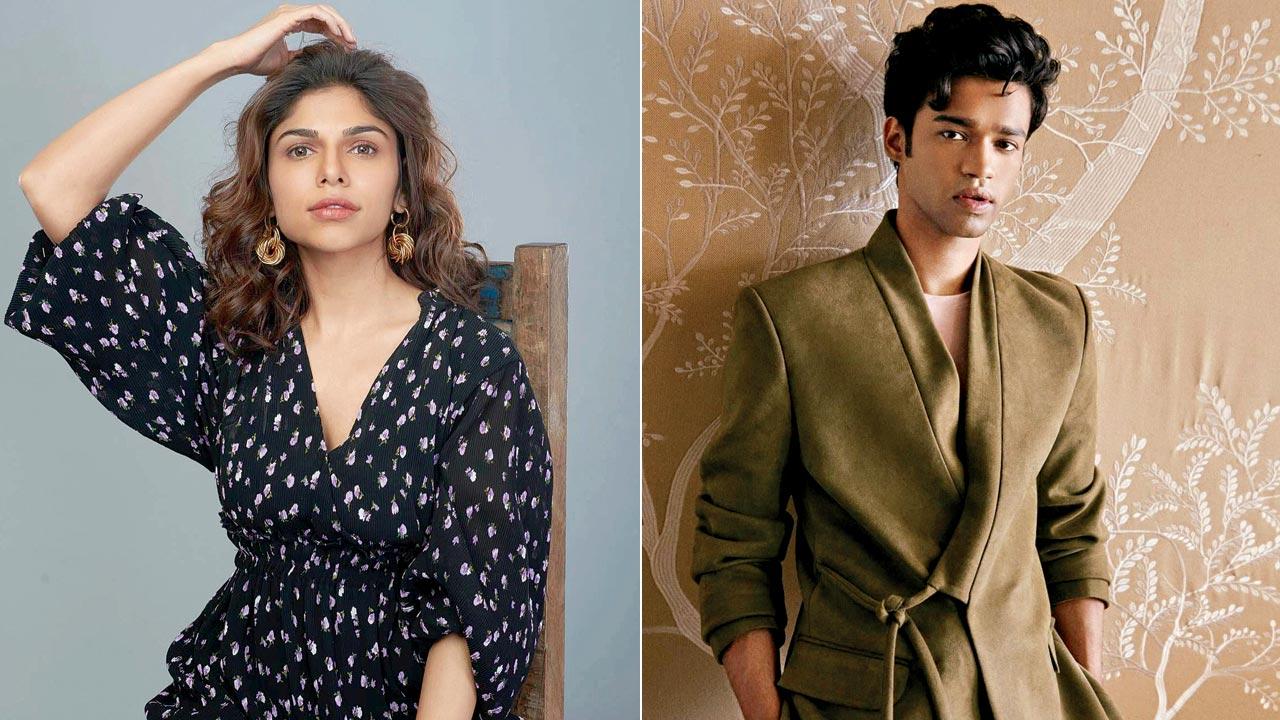
While a critic is concerned with the craft, a troll gets personal. And algorithm could be the reason the attacks on Heeramandi’s Sharmin Segal spiralled
Mohar Basu (MID-DAY; June 9, 2024)
It’s been a month since Sanjay Leela Bhansali’s ambitious OTT debut series Heeramandi dropped on Netflix and the one person who has been discussed the most is his 28-year-old niece, Sharmin Segal. This is her second project after Malaal, and the Internet has been picking away at her performance. Most reviews say Segal’s laboured performance sticks out next to that of seasoned colleagues. But the armchair critic on the ’Gram has also zoomed into the micro-expressions of colleagues as an unprepared Segal gives interviews.
Where does so much hate come from?
The industry consensus is that Segal and many young actors become soft targets for the Internet. “Hate for Sharmin comes from nepotism because she is Mr Bhansali’s niece,” says Tushar Joshi, a film critic with India Today. “In my interview, Mr Bhansali spoke about why he cast her. Alamzeb was meant to naïve, and if you watch the show with Sanjay’s words in mind, you realise that this was their vision for the character.”
Nikhil Taneja, mental health advocate and co-founder of Yuva (a Gen Z-focused media company) agrees that star kids have it worst. “The root of the vitriol towards Sharmin or Suhana Khan or Khushi Kapoor comes from the fact that people are struggling themselves; they naturally dislike those who have easy access. This happened with The Archies as well.”
While this normalized the conversation around nepotism, making it more than a passing discourse, it’s a fine line into harsh trolling. “The Internet has made being a****les cool,” says Taneja, “People need to understand that being unkind to people is not okay. To say that someone is a bad actor is understandable, but to shame people on how they look, behave and talk, you are projecting your understanding of the person.”
So much so that colleague Richa Chadha had to step in to shield her colleague to say, “Criticism has to be constructive. If someone doesn’t like your work, one could say, ‘okay the body language isn’t believable. [or] The voice tonality isn’t okay’. When we start operating like that, we help the actor grow. Actors bhi insaan hai, mental health sabka kharab hota hai.”
An image consultant adds, “The Internet and social media have simply allowed people to say things without being held accountable. We come from the culture of wanting to pull down the next.”
And, it doesn’t help, the professional says caustically that, “Gen Z stars want to be everyone except themselves. They invite hate by being inauthentic. If you are being hypocritical, you can’t cry about it.”
They say it may be their job to protect the client’s image, but that’s hard when they don’t have the personality they try to project. “A lot of it is their own doing,” the image consultant said, “They’re like: ‘Oh I wanna have Kareena’s sassy personality on the Internet’. You can’t become someone else if you are not naturally that.”
Recently, a clip went viral in which Babil Khan, actor Irrfan Khan’s son, is seen apologizing to a woman after he unknowingly bombed her red carpet pictures. One user wrote, “He makes Vanga look better as I can at least see straight forward toxicity”. Another said, “There’s something so spectacularly insidious about a man who makes a whole performance out of being nice. Like who even are u when ur not performing”.
Here, a digital content creator says, freedom of expression is rebellion against the careful curating of personalities. “Comedy is not bullying; it is a commentary,” she says, “My Babil Khan video did well because people are recognizing that his PR has a tendency of projecting him as a little saintly boy. He is already a kind, sweet, wonderful person; cut out the extra drama of buying memes saying, ‘Oh such a green flag’.”
She sees her role to be in line with the press’s: Cutting stars and their perceptions to size. “Be yourself, be authentic. Let us decide if you are a green flag,” she says.
However, Taneja, who shot with Babil last year, says, “He is a visibly anxious person. He has been very open about his grief, his mental health, losing his father so unexpectedly, his living parent. Being vulnerable has made him a soft target. His every move is analyzed, he has to live up to the pressure of carrying forward the legacy of one of the world’s greatest actors. People need to stop and analyse whether they are punching up or punching down. ”
Abhishek Thukral of the boutique PR Agency Hardly Anonymous Communications, says the hate for Segal is a case study on things going too far. And that it’s the publicist’s responsibility to coach a fresh actor on media perception, and check things when they go too far.
“No actor is great in every project,” he says, “And that’s okay. But when an actor is going for promotions of a big show or movie, they must be prepared better. There is a reason experts are hired to give sound advice to talents.”
He adds that young actors have to be trained in facing the press with mock drills to help them field questions better. “You can’t go into a Heeramandi underprepared,” Thukral says.
And in the case of someone who is being launched into the industry, a publicist’s role is to condition the audience to the new person. With star kids, it’s made to look organic with a slow trickle of snapshots from their personal life, with the more recognized or influential parent. “The world should be familiarized with the person before the launch,” says Thukral, “Who are they? What do they like?”
Where do film critics come in all this? In the era of social media, are they mindful of how far their words could travel? Are they aware harsh ones could set off a tsunami of hate?
“A reviewer’s job to take a movie or a show, recommend or fault it,” Raja Sen, film critic, says. “It is your informed opinion. You must present your perspective such that people have a solid idea as to why I like a certain show.”
The critic-filmmaker dynamic is professional, he says, and crucial for better storytelling. They serve as gatekeepers of entertainment and the craft. “Sometimes people in the movies think of criticism as a personal attack,” says Sen. “No it is not; we don’t know these people personally and we are reacting to the work, not the people. As critics, however, the review should lucidly explain what we are finding revolting so that the reader can make up their own mind.”
When the critic-audience-filmmaker is bound by this authentic service, everyone benefits. “Ram Gopal Varma once told me that bad reviews are the only ones worth reading,” continues Sen. “I am not telling a filmmaker where to start a scene; I am saying the movie was a traumatic experience for me. That should make them pause and ask why.”
Joshi agrees somewhat: “Reviews are feedback for course correction; I won’t write the person off. I won’t use harsh words; won’t slam beyond redemption. If a performance is abysmal, we need to ask ‘What isn’t working?’”
He agrees that the conversation is about the craft, not the person. “You ask if the actor getting better with their films, says Joshi, “It’s a conversation about Janhvi Kapoor right now, that her performances are of similar nature. I understand that the actor put themselves out there, [so] they have to be open to critique. But attacks can’t be of a personal nature.”
In a time when perception can be shaped through influencers, Sen believes the role of the critic is even more important. “When I look at criticism today, I see a lot of soft pedalling and pacifying in reviews. There are many agendas, many camps...” he says. “[So] the role of a reviewer is even more crucial now. A critic can’t be wishy washy. In order to stay relevant, they need to be honest.”
In many ways, Reels and other reactions on the Internet are the “authentic” response to this micromanagement of perception. “Through Reels,” opines Sen, “people are representing some authentic experience. It may not be cool, but they are true to their experience. The problem is that they are unfiltered, but they too are a work of passion.”
And once they are out there, algorithms take over, and everyone jumps on the trend to be seen. “We mirror the audience’s mood,” says content creator Arindam Thapliyal. “Our content only reflects what the public feels. Content creators are putting up videos only to stay relevant. They aren’t trying to attack any star.”
He says it’s the public mood that colours the conversation. “It makes a plain comedy video seem like an attack. The videos, if you notice say nothing; it is the comments that are hateful.”
Hate is best managed early, and the publicist we spoke to earlier believes Segal’s image spiralled out of hand. “Narratives can be controlled by buying media narratives, social media memes. The process of any damage control is different. If my client has said something elitist, ignorant, I would suggest acknowledging, apologizing and moving on. If it’s political, I suggest not meddling. If a newcomer is getting hate, you have to counter with positive narratives.”
Individual responsibility, unheard of on the web, will need to be practised soon. “The Internet is our second home and to keep it clean, hate free and non-toxic is as much our responsibility,” says Taneja. “It is not long before we all start being shaped by this hate.”
Meet Tushar Joshi, singing voice of Ranbir Kapoor in Jagga Jasoos
7:46 AM

Aastha Atray Banan (MID-DAY; July 23, 2017)
Singer and musician Tushar Joshi has watched Jagga Jasoos 50 times. And no, he isn’t a Ranbir Kapoor fan. He is his voice in the film. If you have seen the movie, you know that Jagga, the character Kapoor plays, stutters. To avoid this stutter, he resorts to singing in order to communicate. Joshi’s repeated watching of the movie was, hence, to get into the character and get modalities of tone and emotions right.
Joshi came to Mumbai in 2009 from Jabalpur. He had studied classical music, and the son of a schoolteacher and bank official, had always had the filmy keeda. “My upbringing was strict and movies weren’t really a part of my childhood. But thanks to my friends, I got interested,” says the 30-year-old.
In retrospect, he remembers having a penchant for singing in different voices and trying out songs that portrayed a myriad emotions. After pursuing a sound engineering degree at the School of Audio Engineering, he took up freelance projects and eventually found himself at Pritam’s studio, as his creative assistant. “His sound design assistant referred me, and there I was. The work on Jagga had already started, and the first six months I did nothing but observe.”
Anurag Basu heard a chance recording that has Joshi singing a dialogue. “In the beginning, every time Anurag Sir came in, it was just not clicking. The voice either had too much singing or too much drama,” he says. Joshi then started paying attention to the direction Basu was giving. “He told us don’t take this seriously, and not to sing 100 per cent. This is the voice of a normal guy. We needed to focus on getting the expression right.”
When Joshi’s voice was finally finally selected, there was barely a month left for the film’s release. The whole movie had been filmed using reference tracks, and now the voice needed to be filled in. Sleepless nights and exacting prep went into getting it right, even though Joshi still can’t believe he has managed to pull it off. “I paid attention to how Ranbir talks. Our frequencies match. He speaks softly, and then usually at a lower tone. I would stand near the mic and speak at my lowest. I just made sure I got the emotion right.”
Along with giving the voice, Joshi has also sung two full-length songs in the movie — Musafir and Khaana Khaake. “I learnt that if you channel your emotions and be yourself, that translates on the mic.”
Despite this sudden success, he is content working as Pritam’s creative assistant. “Pritam Da is passionate, and I learn something new every day. So, for now, that is enough.”
Pyaar, Dosti, Etc 2.0: Films are reflecting changing definition of love & friendship for the youth
8:10 AM

The definition of love and friendship is changing for the youth and films are reflecting that
Chaya Unnikrishnan (DNA; November 19, 2016)
"I knew the world had shifted when Katrina Kaif and Shah Rukh Khan were shown having premarital sex in Jab Tak Hai Jaan, a Yash Chopra film. It was casual, and there was no comment on it. That’s when the landscape altered irrevocably,” declares well-known film critic Anupama Chopra.
Indeed, when Yash Chopra who’s known to epitomize romance incorporates premarital sex, it becomes a bold move, a defining moment. Something which his son Aditya Chopra has taken forward in the upcoming Befikre, the posters of which have the lead pair Ranveer Singh and Vaani Kapoor smooching in different positions! The trailers too promise some no-holds-barred make-out scenes between the two, who strike up a friendship in Paris and just hang out with sex on their minds — friends with benefits, anyone?
The recently released Ae Dil Hai Mushkil questioned the very definition of love and friendship — pyaar mein junoon hai, dosti mein sukoon — sparking a debate across generations. If in Kuch Kuch Hota Hai, his 1998 debut directorial, Karan Johar showed that you can’t be friends with someone you are in love with, in ADHM, he took a 180-degree turn and showed that a boy and girl can be friends and in love but it need not be a romantic relationship!
Clearly, pyaar and dosti have undergone a sea change in cinema and what was true just five years ago doesn’t hold water now.
Liberal outlook
Says noted film critic Raja Sen, “Earlier, there were certain things that the hero and heroine were not allowed and that line has been blurring over the years. Now, it has come to a point where audience is intrigued by more unconventional cinema, by relationships that are more casually and interestingly depicted.” Take for instance, the upcoming Dear Zindagi. From what we see in the promos, it is evident that Alia Bhatt’s character goes through three romantic relationships and later seeks the guidance of Shah Rukh Khan, who plays her life coach. As Rajeev Masand, Entertainment Editor, CNN-IBN says, “Though I can’t gauge exactly what it is about, it’s definitely a new language, very different from what we were used to seeing back in the day.”
Sex and sexuality
Sex is no longer taboo in films. Since Khwahish that was publicised as the film with 17 liplocks, and Bhatts spawned the era of erotic thrillers, steamy scenes have become de rigueur. Yet, when a Karan Johar brings a gay character in mainstream cinema — Kapoor & Sons — without making it caricaturish and saddling it with clichés, or shows an older woman hooking up with a young lover in Ae Dil Hai Mushkil, it is a turning point. Aditya Chopra moving from pure romance in Dilwale Dulhaniya Le Jayenge to casual sex in Befikre, is a paradigm shift, the genesis of which was laid in his production Neal ‘N’ Nikki. Says Anupama, “Actually it was with DDLJ that the whole exploration — the question of love and friendship — started. It’s not an overnight change, it’s an ongoing process. But yes, sexuality has definitely changed. Even the conversations that happened then (during DDLJ) have a different interpretation now.” Agrees Tushar Joshi, Editor, Bollywood Life.com, “The concept of love in 2016 is different from what it used to be. Films have overcome sexuality, genders and other boundaries set by society. The third spoke in marriage — the extramarital affair that stunned people in Kabhi Alvida Na Kehna is no longer a taboo. In Ae Dil Hai Mushkil, people talked about Aishwarya’s steamy scenes, but they were not shocked that a divorced woman is having a relationship with a younger guy.” Certainly not, when you have the oh-so-beautiful Aishwarya Rai Bachchan and the good looking Ranbir Kapoor doing the deed.

Targetting the youth
With 50 per cent of India’s population in the less-than-25 age group, youth has become omnipresent. The digital platform has already logged in with web series targetted at youth whose concept of love, relationship and marriage has undergone a radical change. Series like Bang Bajaa Baraat and Permanent Roommates which tackle issues close to them like live-in relationships, love and friendship have scored big with the youth. It’s the same demographic that is now the target audience of filmmakers. Says film exhibitor Akshaye Rathi, “Romcoms typically are focussed on the young urban market. With films like Befikre and Ae Dil Hai Mushkil, filmmakers are clearly trying to reach out to the young audience — identifying their taste-buds and catering to them — as they are the ones going to the multiplexes in a big way today.” The phenomenon began in the West eight years ago and five years back in India. Says Rajeev, “Filmmakers have recognised that the paying public is the youth. That is why you see so many superhero films, sequels and franchises in the West. These films cater to the young male demographic and the same thing is happening here.”

Alienating the older generation
While filmmakers haven’t entirely abandoned the older generation, the fact that it’s the youth which goes to the movies the most, is influencing the content. “Films make maximum business on the weekends and fortunately or unfortunately, it’s the youth that still believes in watching movies first day, first show. The elders do not want to rush or jostle for the movie, they will watch it aaram se or even wait for it to air on satellite TV and watch it at home. So, the films reflect what the young college kids want,” says Rajeev. He explains that even in the West, dramas have become fewer in number, coming during the year-end when the Oscars are closer, simply because the older generation is not going to the cinemas. But Anupama feels that all sorts of movies are being made, even dramas, “Some like Sooraj Barjatya go back to the traditional mould, which he projects in his cinema.”
Way ahead
Even as audiences debate over the daring content in cinema, and filmmakers fight with the censor board over cuts, Anupama feels that our cinema is still too timid. “It is not exactly reflecting the reality, when you look at how far urban India has moved in terms of sexuality. For me, the most startling moment was in Ae Dil Hai Mushkil when a younger lover is meeting his lover’s ex husband and the conversation flows in a somewhat mature manner. They are treating each other fine. Where do you have this in Hindi cinema?” It goes without saying that filmmakers have to move with the times and reflect what’s happening around us. As Akshaye puts it, “Kuch Kuch Hota Hai was a rage among the youngsters then, but today’s youth in their 20s with the kind of exposure they have will probably cringe at the film or find it cheesy.”
Deepika Padukone tops Instagram Likes list
8:22 AM

Upala KBR (DNA; September 21, 2016)
Deepika Padukone is now the reigning queen of Instagram in India. The actress’s photos are most liked on the photo-sharing platform. It doesn’t matter if the picture is on the red carpet, sipping water at an event or an airport-spotting, the minute her pictures go up, there is a barrage of red hearts.
Dips looms over Priyanka Chopra on Twitter with a massive 15.9 million followers, beating PC’s 15 million. On Instagram, Deepika is the most popular Indian actress with 11.5 million followers on Instagram. We asked three top Indian entertainment accounts which actress’s pictures got them most likes and DP featured on everyone’s list, followed by Katrina Kaif and Aishwarya Rai Bachchan.
‘Fan clubs actively promote stars’: BollywoodLife
BollywoodLife Editor Tushar Joshi says, “Our Insta account gets the maximum likes for Katrina Kaif, Deepika Padukone and Varun Dhawan. The reason is simple, these three celebrities have fan clubs that are actively promoting them on Instagram. Katrina is a new entrant on social media with her joining Facebook, but her photos always got tons of likes even before she started her official account.”
TOP STARS: Katrina Kaif, Deepika Padukone, Varun Dhawan
‘In most cases, personal posts work’: Pinkvilla
Mukul Sharma, Pinkvilla’s Business Head, says, “In most cases, the stars’ personal posts work. In the rest, their professional posts of film shoots and events work, too. Like Deepika Padukone for xXx3 or Aishwarya Rai Bachchan at Cannes, etc. Pictures of stars with their kids also do well, like Aishwarya with her daughter, Aaradhya.”
TOP STARS: Deepika Padukone, Aishwarya Rai Bachchan, Kareena Kapoor Khan, Shahid and Mira’s pics together, Alia Bhatt, Katrina Kaif, Ranveer Singh, Priyanka Chopra
‘The cute factor works with couples’: MissMalini
Rashmi from MissMalini.com says, “Couple pictures also do well, like Ranveer-Deepika, Shahid-Mira, Akshay-Twinkle, etc. The personal pics of the stars make them popular, but with couples, it’s the cute factor. For Ranveer, he’s just that crazy so all of his pics have something interesting — whether his outfit or what he’s doing while for Deepika, it’s mostly for her outfits/make-up and how flawless she always looks always. Kareena’s the same as Deepika. And also now that she’s sporting a baby bump, everyone’s loving it even more. Alia has that relatable vibe, so her pics are always cute, like with her cat or something.”
TOP STARS: Deepika Padukone, Ranveer Singh, Shahid Kapoor (especially if it’s a picture with Mira), Sidharth Malhotra, Kareena Kapoor Khan, Alia Bhatt
In Hollywood
Selena Gomez is the undeniable queen of Instagram: Not only does she have the most-liked photo of all time (5.6mn likes), but she also has the most followers on the app (99.3mn) and gets paid a cool $550,000 per sponsored post. It’s hard to imagine anyone better suited to give advice on how to use the app — and lucky for her fans, she recently divulged the secret to her success in an interview with The Hollywood Reporter. While Selena says there isn’t really a “method to her madness,” she does think part of the reason she’s been so successful with Instagram is because she doesn’t overthink it. She gives fans a super-intimate look into her everyday life, and part of why it’s so great is because of the mediums she uses. She posts pics from professional photo shoots next to selfies and improvised videos, and that means it never feels boring.

Star kids are enjoying a popularity that even rivals that of their parents
2:24 PM

With Instagram accounts that are attracting thousands of followers, star kids are enjoying a popularity that even rivals that of their parents.
Mohini Chaudhuri (MUMBAI MIRROR; November 8, 2015)
On one of her recent visits to Mumbai, Aalia Furniturewala, daughter of film and TV personality Pooja Bedi, invited a handful of her social media followers for a meet and greet at a coffee shop. Her mother wasn't in town at the time, but a video of what transpired that day took her by surprise. "There were screaming fans, and people crying and asking for autographs. She was really taken aback. It was quite insane," says Bedi. Such hysteria is indeed jaw-dropping. Aalia is a few weeks away from her 18th birthday and still a student at New York University. Her fans are her over 60,000 Instagram followers who are in awe of her seemingly perfect life, and who also seem partly envious. Pictures of her partying with college friends and hanging out with other celebrity kids are often met with comments like 'F*** man. Look at my life', followed by a sad emoticon. "She's gathered a lot of popularity for her attitude and for the kind of thought processes she has. Youngsters love the advice she gives and how she views life," explains Bedi.
 Aalia is one of the many adolescents who has
drummed up a robust social media fan following, one that can rival that
of a bona fide celebrity. Other junior stars riding high on the
popularity scale are Ibrahim Khan (Saif Ali Khan's son), Khushi and
Jhanvi Kapoor (Sridevi's daughters), Aaliyah Kashyap (Anurag Kashyap's
daughter) and Ahaan Panday (Deanne Panday's son). Even those who don't
have personal accounts have a wide presence through fan pages and sites.
Aryan Khan, Shah Rukh Khan's 18-year-old son, has numerous fan clubs
that run unofficial Twitter and Instagram accounts, some with as many as
70,000 followers. Each time a private photo of Aryan with his siblings
or his close friends like Navya Naveli (Shweta Bachchan's daughter) is
leaked, his female admirers are sent into a tizzy.
Aalia is one of the many adolescents who has
drummed up a robust social media fan following, one that can rival that
of a bona fide celebrity. Other junior stars riding high on the
popularity scale are Ibrahim Khan (Saif Ali Khan's son), Khushi and
Jhanvi Kapoor (Sridevi's daughters), Aaliyah Kashyap (Anurag Kashyap's
daughter) and Ahaan Panday (Deanne Panday's son). Even those who don't
have personal accounts have a wide presence through fan pages and sites.
Aryan Khan, Shah Rukh Khan's 18-year-old son, has numerous fan clubs
that run unofficial Twitter and Instagram accounts, some with as many as
70,000 followers. Each time a private photo of Aryan with his siblings
or his close friends like Navya Naveli (Shweta Bachchan's daughter) is
leaked, his female admirers are sent into a tizzy. In August, popular film website bollywoodlife. com carried a post headlined, 'Sorry Shah Rukh Khan, but we can't help drooling over your son!' The story had a photo of a bare-chested Aryan at a beach, which was pasted adjacent to a similar picture of his superstar father flaunting his 6-pack abs. "It got so many shares and likes that we ourselves were stunned. Aryan had done even better than a SRK story," says Tushar Joshi, editor of bollywoodlife.com, adding that Aryan has since been on their radar. The story got further traction after it was retweeted by Shah Rukh Khan, who seemed to have taken the comparison in good humour.

The premature stardom thrust on these kids is no doubt a byproduct of being born to famous parents. Yet, it wouldn't be inaccurate to say some of them are stars in their own right. At just 14, Khushi Kapoor has everything a girl her age longs for — branded clothes, selfies with Ed Sheeran, and other star kids as friends. She has around 48,900 followers on Instagram and 2,000 followers on Twitter. She's also immensely popular on the social networking site ask. fm where her young admirers gush about her enviable long legs and slim waist, and quiz her for fashion and make-up advice.

In a recent interview, actor Saif Ali Khan admitted he was wary of his son's strong social media presence. With 30.8 lakh followers, Ibrahim is quite a prolific Instagram and Dubsmash user. "People are interested in him today also because of his family and who his parents are. It's something he should be careful about. He now understands that he needs to be a bit reserved and be seen less," admitted Saif. A celebrity mother, who didn't want to be named, says she too was quite perplexed by the unwarranted fan following her young son has amassed on ask.fm. She recently discovered that young girls were writing him letters requesting a meeting. "I'm quite disturbed with all this attention he's getting. I want him to concentrate on his studies. I don't want all of this to go to his head," she says.

"In the West you have younger stars like Miley Cyrus, Justin Bieber or One Direction who have an entire generation that tracks them. Even with the Kardashian sisters, the focus has shifted from Kim to the younger sisters — Kylie and Kendall Jenner. Over the past year, the same thing has been happening in India," explains Joshi. "Every youngster with a phone is on Instagram and Twitter and they are hungry for news on these star children, because they relate to them. They want to know what they are wearing, the food they eat and where they go. If one of them posts a picture with a hover board, every kid suddenly wants that," he adds.
With so much curiosity about them, the media too has trained its sights on these next gen stars. That's probably what led them to recently stumble upon a few risque photos of Krishna Shroff, daughter of actor Jackie Shroff. The images, which were a part of a photo shoot Krishna had done for a photographer friend, were discovered on her Instagram page a good month after she posted them, and promptly splashed across every website and publication. "If I was just some random girl who uploaded the picture I did, it wouldn't have gotten the same amount of attention," she confesses. The 22-year-old has a staggering 100K followers on Instagram, most of whom she suspects are fans of her brother Tiger Shroff.
One of the photos in question received as many as 9,537 likes and over 500 comments that went 'sexy hot baby' and 'killer cleavage'. The attention, she says, doesn't bother her, and it will not stop her from continuing to post pictures of her choice. As for her parents, they had a good laugh about the brouhaha made over the pictures. Actor Sanjay Kapoor, whose 16-year-old daughter Shanaya is a regular on social media, says he has ensured she exercises restraint on the Web. "I believe posting general pictures is fine, but at the same time both the kid and the parents should be careful of what exactly is being posted. The media too should be more responsible with them. Almost 90 per cent of international magazines would cover the face of a kid when spotted with the celebrity parents," says Kapoor.
Bedi says there have been a few upsetting incidents where she's had to get fake accounts of her daughter pulled down. But having said that, she doesn't see the sense in shielding her from the attention she's getting — good or bad. "If you're an attractive, intelligent and opinionated girl, you're bound to have a whole bunch of attention and comments coming your way. As a parent it is not my job to blinker my daughter but teach her coping skills to handle unwarranted reactions," she says. But is it too much, too soon? "At 17, it's a compliment to have such an enormous following. I say full power to her," says Bedi. (With inputs from Avinash Lohana)
Subscribe to:
Posts (Atom)