Showing posts with label Trial By Fire. Show all posts
Showing posts with label Trial By Fire. Show all posts
I found fame intrusive and ran away from it, which I regret now-Abhay Deol
8:52 AM

Jaspreet Nijher (BOMBAY TIMES; April 3, 2024)
After the stellar success of his dark comedy Dev D, Abhay Deol says he was unable to handle the fame, and he left the country. In Chandigarh for a film festival, Abhay spoke about how he feels vindicated today about his choice of films in his initial years.
“Cinema, with its larger-than-life persona, was considered a means of escapism back in the day,” he said, adding, “But while growing up I didn't want another escape, I wanted to retain my authenticity.”
On the question of catering to popular tastes while making films, he said, “I didn’t agree with that idea because I thought if I didn't like my movies, how will the audience appreciate it? Indian filmmakers were making only one kind of cinema and by always conforming, how can we create change?”
However, after Dev D, Abhay got scared of fame. “I had issues with fame because I had seen its repercussion on my family and found it intrusive. So, I ran away from the country and thought the worse was going to happen. I didn't like the idea of marketing myself, and thought it was cheap. So, I missed the fame that followed, which I kind of regret now,” he said.
Abhay’s choices of films were met with skepticism during that time. “When my films didn’t work, they criticized me. When they did, they said, ‘you are 10 years ahead of your time’. The struggle of dumbing yourself down was always there, though I proved my point with Oye Lucky! Lucky Oye!”
Commenting on modern day content Abhay says despite the evolution of cinema, the struggle remains. “Just because my web series Trial By Fire was a success, doesn’t mean acceptance comes easy now and is still a struggle,” he said, adding, “Though digital space is limitless, OTT is also looking for subscribers. Till there is resilience of some filmmakers to create change, and as long as they have strength to do so, change will continue.”
Our cinema shouldn’t be filtered like social media-Rajshri Deshpande
8:27 AM
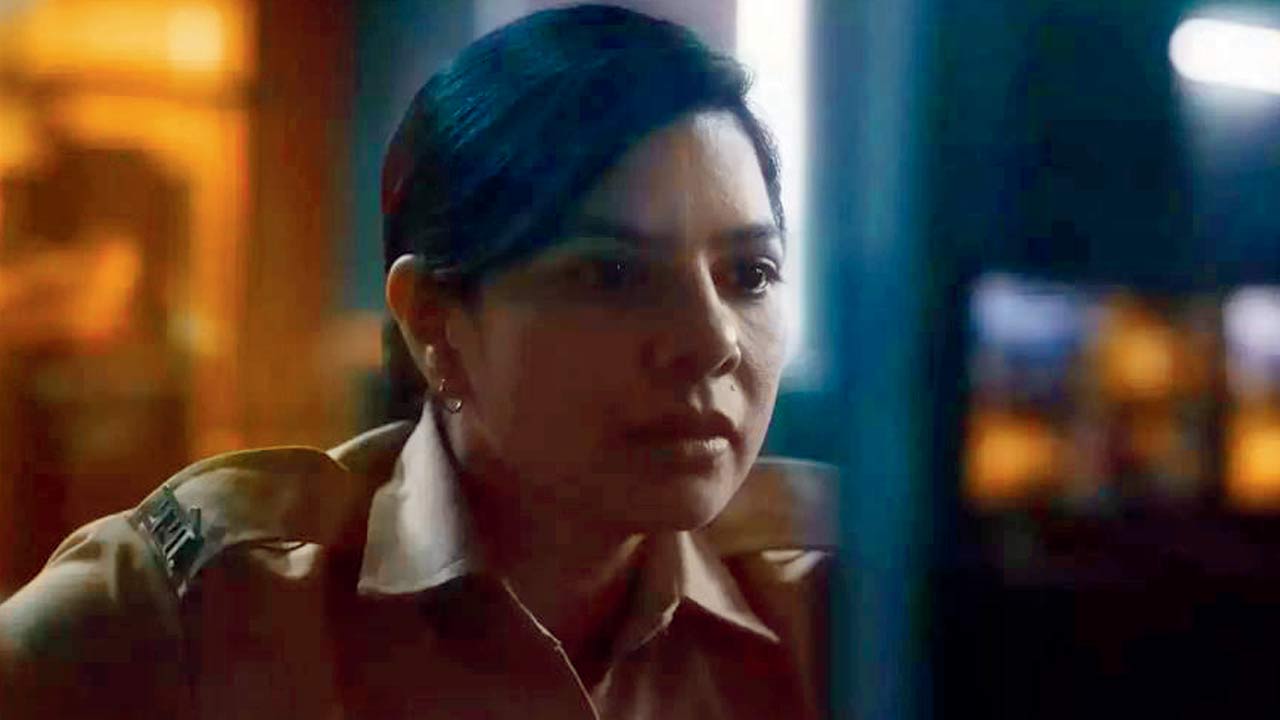
In Privacy, Deshpande plays the role of a Mumbai surveillance command and control centre operator
Heading to Bucheon International Fantastic Film Festival for the première of her film, Privacy, Rajshri on what gives her creative satisfaction
Mohar Basu (MID-DAY; July 2, 2023)
One look at the teaser of Rajshri Deshpande’s new film Privacy, which comes six months after her much-acclaimed Netflix offering Trial By Fire, and you would think that the actor is drawn to dystopia as a genre. “Isn’t dystopia a reality?” she says thoughtfully, as we sit down to chat about the film that will première at South Korea’s Bucheon International Fantastic Film Festival (BiFan).
Sudeep Kanwal’s directorial offering is a social thriller that explores themes of voyeurism and mental health. The film’s intention to depict the harsh reality drew the actor to it. “This is a genre-breaking film that wasn’t easy to get off the ground,” she says, gearing up to go to South Korea next week.
“I’m not seeking entertainment that’s always happy and shiny. Some are trying to show the world something escapist, while some like me choose shows and movies that depict the real picture. From being Ismat Chughtai in Manto [2018] to Neelam Krishnamurthy in Trial By Fire, I want to depict what we all are going through. When people see me, they see an actor who is able to strip their vanity off and be the character.”
Over the past decade, Deshpande has consistently chosen roles rooted in reality—from Angry Indian Goddesses (2015) to Sacred Games. She isn’t interested in fantasy characters, she asserts. “I don’t want to play women who have the perfect figure. Our cinema shouldn’t be filtered like social media. Not everyone is thin and has clear skin. We have to normalize all bodies and skin colours. I want to be raw, natural, and find work that echoes. It takes time. I am happy to do less, but gratifying work. I am fine not jumping on board the next big-ticket series or movie.”
After Trial By Fire, she has been inundated with congratulatory calls as well as offers. How did she navigate the noise to remain grounded? “Praise and appreciation are the real gratitude. I am still waiting for great characters post Trial By Fire. I don’t believe in parties and networking. I want to work well, and be immersed in a story as an artiste.”
I remember someone saying ‘Cast that person, PR ke liye achha hoga’-Rajshri Deshpande
8:49 AM

Rishabh Suri (HINDUSTAN TIMES; June 20, 2023)
Talent over social media followers, that’s what actor Rajshri Deshpande hopes people “see through” during the process of casting. The Trial By Fire actor shares that she’s heard about actors being cast only on the basis of their Instagram followers. Deshpande shares,
“I remember hearing someone say ‘Cast that person, PR ke liye achha hoga’. There are good casting agents, who don’t follow this trend and that’s where actors like us are discovered. [I hope] there comes a time when people realize the craft matters and that influencers, and their followers, likes or reels are not the craft.”
Recently, the actor’s latest film, Privacy, a dark social thriller, which was selected for the 27th edition of the Bucheon International Film Festival, and it will have a world premiere at the event.
While the 40-year-old got her big breakthrough with the OTT series Sacred Games, it was her show, Trial By Fire, that made people sit up and take notice.
Ask if not getting her due is a source of irritation and the actor agrees, “You definitely get irritated, but you have to learn to live with it. As an artiste, especially living in India, it’s not easy. There are a lot of people who work and don’t get any recognition or mention.”
However, “doing good projects” is what keeps the Sexy Durga (2017) actor going. “Whenever I wonder — why a lot of people don’t know me, don’t see my work, are not talking about my film or why am I not on magazine covers? — I always think back to [to the fact that] I am here [in this industry] because I’m absolutely in love with acting,” she signs off.
I don’t fit in, but after 17 years, I’m still around-Abhay Deol
8:17 AM
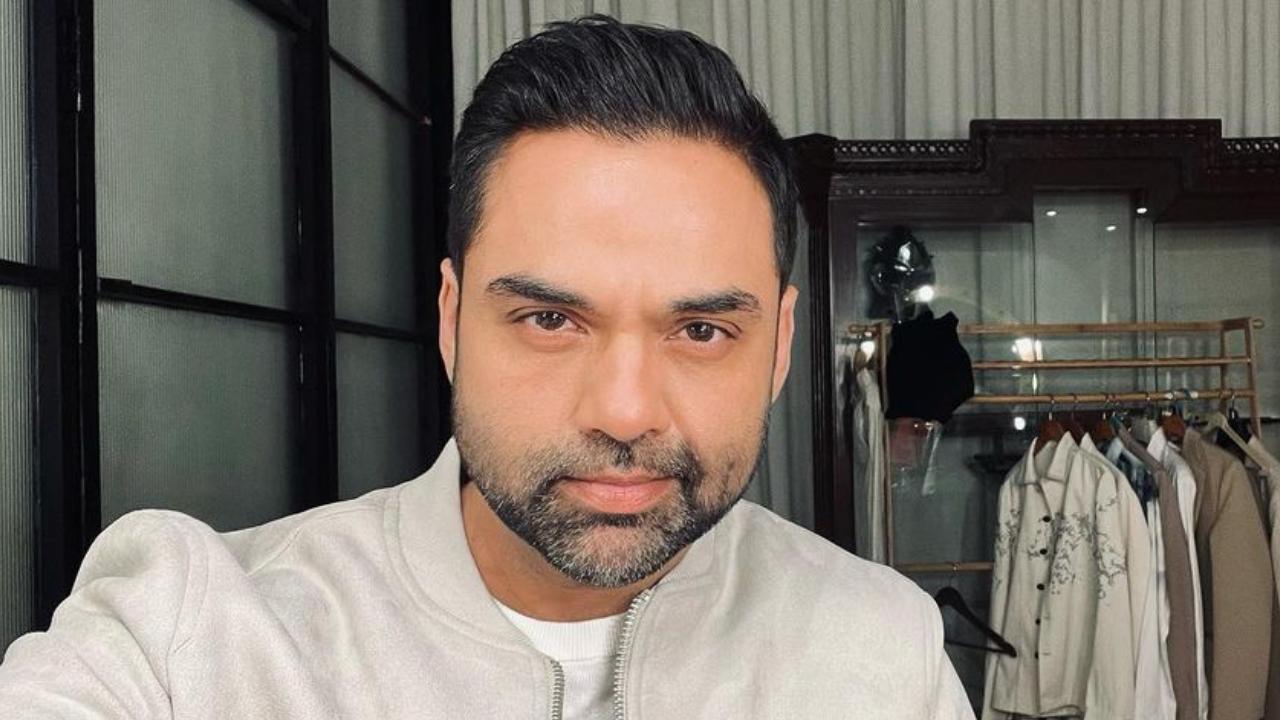
Renuka Vyavahare (BOMBAY TIMES; March 3, 2023)
In an industry where a lot of actors prefer diplomacy over frankness and prefer to follow the herd mentality, Abhay Deol has always stood by his own rules. He has a mind and a voice of his own that don’t crumble under pressure. And, of course, his choice of movies and other projects strongly reflect his belief and thought process. In an interview with Bombay Times, the actor talks about his career, beliefs, choices and how the industry accommodated him though he dared to do things differently. Excerpts:
Speaking your heart out is often misinterpreted as defiance or disrespect. Has your outspokenness worked as a double-edged sword for you?
In our space, speaking up can be mistaken as disrespect. All you are doing is speaking your mind and being honest. No one’s there to tell you whether you are right or wrong. You are just frowned upon, but that’s okay. I don’t think I was labelled as a troublemaker, so I would say the film industry has been accommodating towards me.
They may not have agreed with my methods, but they respected the stands I took. It’s highly possible that I may have lost work because of my outspokenness, but that’s okay. It’s just the consequence of you being you. There will always be work. It’s been 17 years, and I am still around. People like my work and I feel grateful. I have no regrets, anger or bitterness towards anyone. I am in a good space, and so is the industry.
As a globe-trotting actor, did you ever feel out of place in Bollywood?
I did find myself out of place. I was born in the industry, so I am very much an insider, but I became an outsider. However, I can’t be considered an outsider because I was born into a film family. So, I am neither here nor there. There was a learning process for me. I still don’t necessarily fit in, but there are a lot more people like me in the industry today than at the time that I started out. Time heals everything. I am glad I stuck to my guns.
Based on the Uphaar Cinema tragedy (1997), your recent web show Trial By Fire was a moving, undramatic portrayal of grief and the pursuit of justice. How difficult was it to revisit the incident and tap into that state of mind?
It wasn’t difficult getting into the role because the tragedy was so hard…. The pain of losing a child. So maybe you can imagine what your parents would go through if you had died. None of that is easy to deal with. Falling into that sort of tragedy because it’s a true story was easy, but getting out of that zone was difficult. This was a real incident; these are real people. You are not portraying fiction, so you can empathise and understand these people easily. It was hard to get out of it because you couldn’t shake off the fact that you just reenacted a trauma that some people went through.
Some of the films that you did back in the day were ahead of their time. Today, we are seeing that kind of content being created for OTT. For an actor like you, isn’t this phase conducive for the type of projects that you like to be associated with?
There’s a lot more of provocation, experimentation and bringing out individual artistes and their voices today than when I started out. Getting non-formulaic movies made back then was more difficult. I mostly worked with directors at the beginning of their career because they were the ones with the freshest ideas. They weren’t under the pressure of commercial constraints. I came up with more indie movies because when I was working on them, the multiplexes were just coming up. For a brief period, there was experimentation so I could bring out films like Dev D, Honeymoon Travels Pvt Ltd, Ek Chalis Ki Last Local, Oye Luck! Lucky Oye and Manorama Six Feet Under. Once the multiplexes were established and stopped expanding, things went back to what they were before, which means less experimentation. With the OTT platforms coming in, they have opened doors for people like myself too.
Legal budget for films and OTT up by 100-200%
8:18 AM

From ‘hurt sentiments’ to defamation, with makers being dragged to court over endless lists of complaints, up to 10% of a film’s budget is now spent on legal counsel
Niharika Lal (BOMBAY TIMES; February 28, 2023)
“OTT ki aaj ki date mein himmat nahi hai, Tandav ke baad sab dar gaye hain,” Anurag Kashyap said recently while responding to a query on Sacred Games Season 3. At least three criminal cases were filed against Tandav’s cast and crew, citing disruption of religious harmony. Tandav isn’t the only one. In recent years, series such as Mirzapur and Trial By Fire or films like Gangubai Kathiawadi and Samrat Prithviraj were also dragged to court over complaints.
Lawyers who have represented these films and series say that until a decade ago, film litigation was mostly limited to international studios claiming copyright infringement, but now – from defamation to ‘hurt sentiments’ – almost every other film is being dragged to court over an endless list of complaints. An expert legal team has now become crucial for a film/web series and their legal budgets have also gone up. We spoke to a few lawyers to understand this scenario.
‘LEGAL TEAMS ARE CRUCIAL BECAUSE MAKERS CAN’T AFFORD A PROHIBITION ORDER’
Ruby Singh Ahuja, senior partner, Karanjawala & Co, who was involved in litigation related to Jolly LLB, Tandav and Mirzapur, says, “Filmmaking involves huge expenditure and no filmmaker can afford a prohibition order on the telecast of the film, especially in today’s day and age when the shelf life of a film is relatively short.”
“To avoid unnecessary litigation it is common not only for in-house legal teams to review the script, but also for production houses to take advice from external counsel, especially when it comes to issues of defamation or infringement of copyright,” she adds.
‘LEGAL EXPENSES COULD BE ANYWHERE BETWEEN 1-12 LAKH’
Meghana Chandorkar, partner, TMT Law Practice, says, “Depending on the film’s budget and other factors, the portion that is attributed to the legal team on board could be anywhere between 3-10% of the film’s budget. Roughly, legal team budgets have increased by 100-200% over the years.”
Pritika Kumar, founder, Cornellia Chambers, adds, “The legal budget of a film depends on the overall budget of the production and the studio involved and can range from 1 lakh to 12 lakh or more.”
‘THE BIGGER THE FILM OR THE STARS INVOLVED, THE HIGHER THE CHANCES OF LITIGATION’
Chandrima Mitra, partner, Media and Entertainment Practice, DSK Legal, says, “Film litigation has almost become a means of publicity. The bigger the film or the stars involved, the higher the chances of claims and litigation. Unfortunately, for many, it’s like getting their five minutes of fame. Besides, it’s easy to send notice to anyone. The instances of frivolous litigations have increased significantly over the years and most of these litigations get filed in the last two weeks before the release of the film.”
‘BOLDER CONTENT MEANS MORE LEGAL EXPENSE FOR FILMMAKERS’
Pritika Kumar, founder, Cornellia Chambers, says, “Earlier, cases were usually filed for copyright infringement, especially by foreign studios where Hollywood movies were being remade in India without acquiring their rights. Now, with the advent of OTT, content has become bolder and so there has been a rise in litigation against movies for hurting cultural and religious sentiments. Filmmakers are also filing more cases because they are starting to understand the value of their intellectual property and the consequences of its exploitation.”
WHAT’S THE ROLE OF LEGAL TEAMS IN FILMS?
Meghana Chandorkar shares that legal teams are involved in the process from the stages of ideation to until the final cut of the film is ready. “The legal team reviews the concept, story, character descriptions, dialogues and the entire script as far as possible to assess the originality or identify and assist with the acquisition of all required third-party rights. They also carry out a risk analysis of the script,” she adds.
“After the script is cleared, the legal team is also consulted during the production process, with queries pertaining to the use of third-party content, music, clearances, use of brands and names, depiction of emblems, and revision of dialogues, script deviations and changes, etc. The legal team also watches the edited film to highlight issues, non-compliances, censorship violations, etc,” Meghana further says.
‘VETTING SCRIPTS ALLOWS ONE TO GAUGE THE LEGAL RISKS INVOLVED’
“Vetting scripts and content has become a crucial function of legal teams. Most big studios and OTT platforms have in-house teams to carry out this function, while some engage external legal counsel for this work. Vetting allows one to gauge the likely legal risks involved and the legal and creative teams work together to create solutions to reduce the legal risks while also maintaining the authenticity of the production,” says Pritika Kumar.
THE MOST COMMON CASES OF FILM LITIGATION ARE:
- Religious sentiments being hurt
- Distortion of facts
- Obscenity
- Portrayal of people (religious leaders, historical figures, etc in a negative light)
- Language which is offensive to specific communities or castes
- Defamation
- Violation of privacy and publicity

I am ready to apologize again to Abhay Deol-Anurag Kashyap
9:07 AM
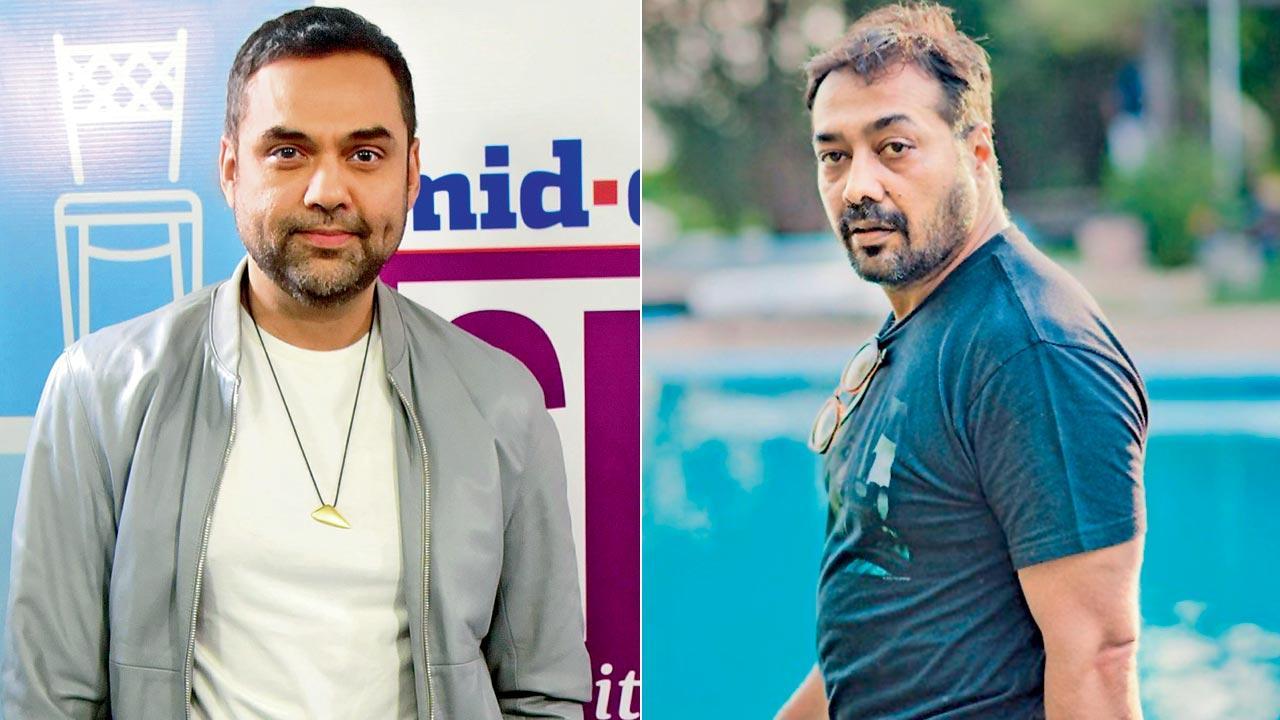
After Abhay Deol accuses Anurag Kashyap of spreading “lies” about him, filmmaker wants to let bygones be bygones and celebrate the actor’s recent success
Priyanka Sharma (MID-DAY; January 22, 2023)
More than a decade ago, Anurag Kashyap and Abhay Deol had united for the pathbreaking Dev D (2009). While the audience wished for another brilliant collaboration between the duo, Deol and Kashyap only grew apart. In the latest edition of Sit with Hitlist (OG A-B of Bollywood Indie 21/01/2023), Deol, who is basking in the success of Netflix’s Trial by Fire, opened up about his falling-out with Kashyap, over the latter’s scathing words in a 2020 interview. The director had called working with the actor “a painfully difficult” experience. He had said that Deol wanted to do artistic movies but also wanted the mainstream benefits—the luxuries of being a “Deol”.
In the recent episode of Sit with Hitlist, Deol reacted to Kashyap’s allegations, saying, “[Kashyap] went in public, and told a lot of lies about me. One was that I demanded a [five-star] hotel room [during the shoot of Dev D]. He had actually come up to me and said, ‘Listen, you can’t stay with us, you are a Deol. So, I want to put you up in a hotel room.’ He literally told me that. What he told the press was that I demanded it.”
When mid-day contacted the Gangs of Wasseypur director, he says he had apologized to Deol once and “is ready to apologize again”. He further says that he understands if the actor felt attacked by his previous comments in the press. “It is okay if that is how he feels. Everyone has his own version of the truth. Maybe he felt attacked about what I had spoken about him earlier. I have personally apologized to him for hurting his feelings,” Kashyap says.
While he is apologetic, the filmmaker also insists that his opinion was based on how the actor was in the past. “What I said was what he was [like] in the past,” he emphasizes. Kashyap added that he doesn’t wish to drag the matter, and instead hopes to celebrate Deol’s latest work. “We all evolve with time. He has done a great job in [Trial By Fire]. I think it is time to celebrate his strong performance rather than playing the ping-pong of who said what.”
I was born an insider, but I pretty much lived as an outsider-Abhay Deol
8:53 AM
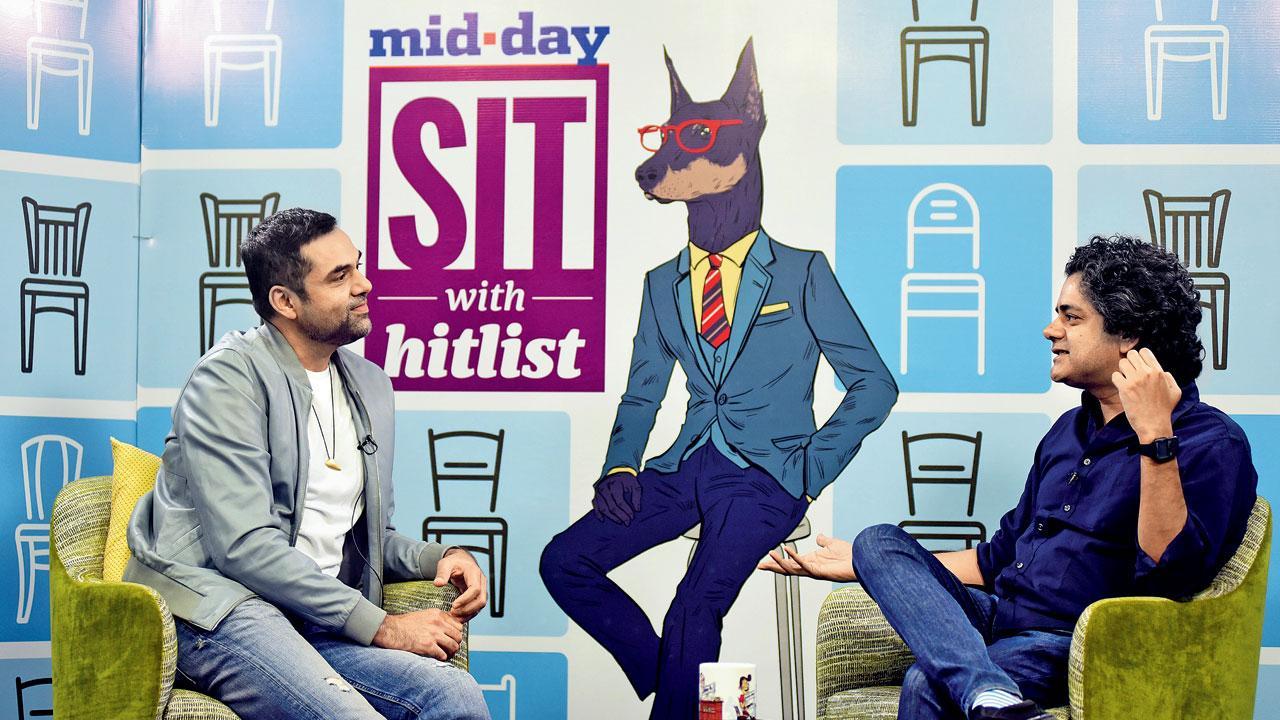
Abhay Deol with mid-day’s entertainment editor Mayank Shekhar at the latest edition of Sit with Hitlist. Pics/Shadab Khan
Decoding the rise & fall of Mumbai film industry’s ultimate insider-outsider!
Mayank Shekhar (MID-DAY; January 21, 2023)
Shortly after our conversation, before a live audience, Abhay Deol is scheduled to meet Shekhar Krishnamoorthy, the person he plays in the Netflix series, Trial By Fire — based on the life of a middle-class Delhi couple, who fought the city’s top real-estate developers, post the death of both their children, in the 1997 Uphaar Cinema fire tragedy.
Which is also when we realize Deol had chosen to consciously stay away from the real-life inspiration for his part, during the process of making the series. Deol is Punjabi by ancestry, unlike Krishnamoorthy, with the most Tamil surname. In fact, Deol has played a Tamilian before this.
That was as the bureaucrat Krishnan, for Dibakar Banerjee’s Shanghai (2012). In an episode dedicated to Deol’s films, on a podcast named Khabardaar, that I was listening to before meeting the actor, the hosts — shout-out to wonderful ladies, Aparita Bhandari, Baisakhi Roy—make an observation on Deol’s walk onscreen. They believe it is the same in all his films. Except, Shanghai, if you notice the minutiae.
Firstly does he agree, and was that consciously so, I ask Deol: “There are physical characteristics that I suppose you don’t change easily. You’re unaware of them. With Shanghai, that may be true. Not that I consciously worked on my walk, though. I did have to work on my accent. Krishnan is a Tamil Brahmin.”
“And I had to put on a Hindi, like a Tamilian would speak it, which is hard to find. Because no Tamilian really speaks Hindi — they speak to you in English. Also, we don’t have an infrastructure of accent training for actors in our country. So we found this out-of-work Tamilian writer, who I worked with, and developed a system [for it].”
If we must get deeper into this accent thing still, for instance, Deol recalls, “I hope I haven’t mixed up my memory, but I was really working on the phonetics — there is no ‘ha’ sound in Tamil, and there is no ‘ba’. In Tamil, you could pronounce my name closer to ‘Apaay’. Stuff like that was insightful. This is besides mimicking my accent-trainer off-camera — so I would know how he might say my dialogues.”
The ladies of Khabardaar podcast might wanna notice this the next time they watch Shanghai. Krsihnamoorthy in Trial By Fire, Deol points out, is different from Krishnan, because he’s a Tamilian, but essentially from Delhi.
He has what one could call a more neutrally North Indian or ‘Delhi’. Which is also a character Deol has played in Oye Lucky Lucky Oye (OLLO) — another real-life person he obviously didn’t meet, before playing him on screen. Bunty Chor was the local swindler, where would you find him?
OLLO (2008) tragically released in theatres, when the “the firings were still on” during 26/11 terror attacks in Mumbai. My favourite memory of OLLO is an off-screen one from the film’s BTS video online, where a dog is after Bunty Chor (Deol), who’s jumping off a tall building-gate. Banerjee asks him to turn around for the camera, so the audience knows the lead actor performed this himself, instead of a body-double.
Deol says, “It’s fun doing stunts, as much as I can. I think Dibakar was a bit surprised about how easily I was scaling such a large gate, and he said he wanted people to see it!”
Sticking to Delhi, and characters inspired by actual events/people still, how about Anurag Kashyap’s Dev D (2009). I learnt this much after watching the film that the role was in fact somewhat based on Deol’s own life. Meaning, obsession in love, and indeed experiments with drugs. If true, kindly elaborate?
“Well, I wanted to contemporize the (Sarat Chandra Chatterjee) book, because I felt there was something wrong there — with such a male, patriarchal view of a man-woman relationship, where women are falling over Devdas. No matter what he does, he can never be wrong. I grew up in an environment, where drugs and alcohol were all available.”
“My Chanda (Kalki’s) character was far stronger than what eventually got made into the movie. She was an East European pole-dancing escort, who is fine the way she is — making great money, traveling the world. She takes pity on him (Dev). Obviously it worked for Anurag [that] she was as vulnerable as he [Dev], and she was a victim too. For me, he was the only victim. The women only grew stronger from there.”
Did he know the Polish escort? “I am not going to tell you! I know all sorts of people; let’s just put it that way. Yeah, I know a few escorts ‘n’ all.”
Let’s pause at the movie titles here: Banerjee’s Shanghai, OLLO. Kashyap’s Dev D. Also from a time when both Kashyap and Banerjee were the ‘new-age filmmakers’, early on in their directorial careers. I wonder what Deol thinks of the trajectory they took thereafter.
Frankly, he doesn’t have much to say, besides “conforming to commercial pressure” that becomes inevitable in some cases. He could sense the “creative genius of Banerjee in LSD (2010)”. As for Kashyap, I find it surprising that he hasn’t seen any of his films since Dev D! Not even Gangs Of Wasseypur (2012)? What; did they have a fallout or something, I ask.
“Well, [Kashyap] went in public, and said a lot of lies about me.”
For example? “One lie was that I demanded a [five-star] hotel room [during the shoot of Dev D]. He had actually come up to me and said, ‘Listen you can’t stay with us, you are a Deol. So, I want to put you up in a hotel room.’ He literally told me that. What he told the press was that I demanded it.” The reference here is to Deol’s profile published in Huffington Post (June 5, 2020).
He continues, “So, there was clearly a lot going on at the time, which was not professional. I had my heart on my sleeve, and all that is great — but you get taken advantage of, and then you get reactive. So, he [Kashyap] was a good lesson for me. Then I just avoided him, because I don’t need toxic people in my life. Life is too short, and there is so much more to explore. But he (Kashyap) is definitely a liar, and a toxic person. And I would warn people [about] him.”
This outburst is evidently in response to Kashyap’s quote about Deol in the Huffington Post report. Deol adds later, “I don’t look in the past. When Anurag said that crap about me in public, he sent me ‘apology’ messages.”
“He does that all the time. He was like, ‘You want to shout at me, scream at me…’ And I was like, ‘I don’t care. It’s been 12 years. You don’t feature in my thoughts even now; get over it.’ He said, ‘Forgive me, because I have had a bad day.’”
“I said you are forgiven. I never had a personal agenda. It was far bigger than just me. That is how I feel about everything. How much of this is he going to do? And I would have never taken his name and said the things, had he not gone public [either].”
Raking this up is important only because lead actors, or stars, have always been the medium to tell stories on screen — even if in the off-stream space, so to say. And by the mid Noughties, Deol was at the centre, if not the pioneer, of a movement of sorts, within Bollywood—picking up young, untested directors to star in their scripts/films, on a leap of faith, first.
“The first five movies of mine were all by first-time directors,” he recalls. Let’s pause again to name these debutants: Imtiaz Ali (Socha Na Tha), Shivam Nair (Ahista Ahista), Reema Kagti (Honeymoon Travels Pvt Ltd), Sanjay Khanduri (Ek Chaalis Ki Last Local), Navdeep Singh (Manorama Six Feet Under).
These are also films that got defined as Hindi commercial cinema, merging with an entertaining art-house — ‘H-indies,’ if you like. At least a couple of the directors did fairly well for themselves — after that firm footing in the film industry.
I can see why it’s got Deol a li’l pissed off now that I want him to dwell on what he thinks of their careers as well — he did like Ali’s Jab We Met, more than Rockstar, which in turn was still outside Ali’s usual “love-triangle zone”, and therefore a step-up: “Why am I commenting on all this — [is that] what the show/conversation is about?” Of course not.
I guess what we’re getting at is an oft repeated jibe that a lot of these directors — take Ali, for example, who got his debut due to Deol — never worked with him thereafter. Is that a fair observation, with anything deeper to it?
“And Anurag used to say, this is why directors [don’t work with me]… I know a lot of actors don’t want to work with him. But I see what you mean. Or where you are coming from. I did sense this feeling [later towards me]: ‘You know, you are not big enough!’”
“Which is ironic, because when I worked with them, neither were they! You either believe in someone, or a vision — even if it goes against the norm. Or you can say, I will keep my vision, but I will acquire bigger powers [to execute it]. Because I will get more money, I suppose. Also, I was taking a lot of it on myself, and I know I made mistakes. I am searching for answers to give you, and I hate making it about me, when it’s about somebody else.”
Consider the career graph. In terms of box-office plus cult-grade, Zoya Akhtar’s multi-starrer Zindagi Na Milegi Dobara (2011) is possibly Deol’s high point. A string of seriously superb films right before, and after. And then there is s sharp slump 2013 onwards, almost a freefall.
He’s had a release almost every year. So he’s very much been around since. The films/series are, again, by mostly first-time directors, or fresh talents, at any rate; experimental in their own right.
You can have your views on, say, One By Two (2014), Happy Bhaag Jayegi (2016), Nanu Ki Jaanu (2018), Chopsticks (2019), What Are The Odds (2019)… Good or bad is a subjective take anyway. But you know, none of them are really, well, did he lose his mojo, how do I put it….
“It’s just a fact. You don’t have to justify [your question],” Deol comes to my rescue. As for the kind of work that comes your way, he says, “Everything is [a] collective [call]. And I don’t like talking about it, because I don’t want to come across sounding bitter, or a victim. I don’t care. But when you take a stand, then you take a stand. And that has consequences. Are you ready to face those consequences?”
Exactly what stand, for example, could do someone in? “I don’t know. Calling out people for endorsing fairness creams?” Would that mean those who endorse fairness creams would debar you right away?
“It is not as simple as that. I did a guest appearance in Shah Rukh’s Zero, and he is a really dignified man. But there is a collective [thing that happens]. Say, showing up with a black eye on a red carpet, and calling out Bhushan Kumar by name, and saying T-Series blah, blah. Or constantly saying, why do we only have song and dance [in our films]…”
Deol has been equally vocal, in public, about critiquing his own films, with misplaced intentions — whether that be Aisha (2010), or Raanjhanaa (2013). Surely that’s hardly mastering the art of winning friends and influencing people. But you can tell—frankly, he doesn’t give a damn. And that’s what makes him more fun than the current crop of polite suckers for boring heroes.
Also some of his criticisms could emanate from ideas he wished to champion, but found no takers, around that time. Navdeep Singh’s Basra famously got shelved. As did a zombie comedy called Rock The Shaadi, after shoot. I fish out an old video of him consulting a tarot card reader, in Simi Garewal’s TV show — to check if one of his dream projects would come true.
Deol remembers it was an international film, with debutant filmmakers from abroad, who nobody wanted to put money on. They still haven’t made the film, and he had to stop trying eventually.
“So yeah, post 2013, it was tough. I also took a backseat. Now I don’t want to go back and pretend like nothing ever happened, or be a different person — so, I am going to sit back, and see what comes my way. And quietly work. If that works, it works. If it doesn’t, so be it!”
As for the so-called song and dance, Deol says it’s not like he has an issue with the genre: “At least three ideas of mine are full of songs. One of them was Dev D (18 numbers in the soundtrack).”
The film was a major winner at the box-office, for its budget. Deol remembers, “Especially after Oye Lucky and Dev D, I had a red-carpet entry to whoever I wanted to work with. And this is not just because I had successes behind me. Also because I was so-and-so’s son, nephew, brother…”
Which puts him in a strange ‘middle’, in the nepotism debate, that is usually conflated to the ‘elite versus masses’ battle, pitched in the wider political/public space. Deol’s “anger and rebellion” within the family itself, he says, was his reaction to fame and its pitfalls. Something he had watched closely, growing up. Left to him, it appears, he’d rather be anonymous, but remain an actor — obviously a misnomer.
“I was born an insider, but I pretty much lived as an outsider,” says Deol. That said, his debut film was a joint-family release, from Vijayta Productions — mainly helmed by cousin Sunny, son of Uncle Dharmendra.
Interested in debutant Ali’s script, he took him to meet Sunny, who was happy to hop onboard the film, since the lead character was a lot like Abhay himself! Such is how Socha Na Tha was born, and two amazing careers took off. Only the film, that released during the low-key “exam-time, March” wasn’t hugely promoted as the proverbial ‘star is born’. Socha Na Tha is hugely loved still.
Which reminds me, why is the Deol firm named Vijayta in the first place? “On my sister, my cousin — she is younger to Sunny Bhaiya. So, it’s Sunny Deol, Vijeta and Bobby Deol? “No. Then there is [another sister], Ajeita. Then there is Bobby.”
Abhay’s father, late Ajit Singh Deol (Dharmendra’s brother), I hear, was also an actor. Except I couldn’t quite find a clip online to support this, I tell him. He smiles, “He did two movies, one of which he produced. They were all in the ’70s. One never got made. I remember Honey Aunty, Zoya’s (Akhtar) mum said the cutest thing to me once. That my father is the reason her film didn’t release. I was like, ‘What do you mean?’ She said that he had to hold her face, and he was shivering [through the scene]. She was the leading lady in that film. I didn’t even know it, because I never saw that movie!”
Insider-outsider is anyway a time/generation construct. Many of the outsiders Deol worked with at the beginning of his career are bona-fide insiders now. And maybe that’s what the revolt is about — to eventually get to the high table. The cycle continues.
“You hit success, then it doesn’t matter if you’re insider, or outsider. They all want to work with you. You have to understand it is also very cliquish — you are part of this, or that camp. I had access to all of them, but I was like, no!”
Living in the Deol household, he also had no “Bollywood Juhu gang” friends. Barring his schoolmate, director Vikramaditya Motwane, who wasn’t “Bollywood then”!
Everyone goes through their brash 20s — sometimes it lasts longer — “You wanna change the world!” I asked Deol what he thinks of, when he looks back at that decade, after which it appears, the world changes you, one way or the other!
Some of the things he says he’s learnt is being diplomatic —“also, not equating power and money, with corruption — that needn’t always be the case. Money is like energy, and it is something that you know you can make good use of — when you have a lot of it. I could do things a little smarter, to not be taken advantage of, or be gas-lit.
“Human condition is complex. Everything we have spoken about today are not black and white. You would think you’ve heard it all. There was a lot left out. Also, I am really lucky. I know I did create lot of trouble, but it was all intended for the right purpose. And I created change. People still refer to films I did 10-15 years ago.”
Which is true, once you glance at his filmography until 2013, starting 2005 — those who were born that year turn into adults in 2023, when we’re making this conversation with Deol, 46.
Also, in the intervening years, so much has changed with films itself: “The disruption we were looking at got brought in by technology itself.” So the ‘multiplex movie’ became ‘OTT content’.
Also, the Bollywood indie started hitting Rs 100 crore collections, with the likes of Ayushmann Khurrana, Rajkummar Rao. Deol was the OG ‘OTT star’, even before there were streamers: “I am not done yet. Maybe what I did was 20 years ahead [of its time]. Those 20 years have come!” Only the intentions may not be matching the outcomes for some time.
And then you watch Deol in Prashant Nair’s Trial By Fire on Netflix — a performance so subconsciously chilled, yet powerful. Without once making an unnecessary show of it. The series on the Uphaar Cinema fire tragedy is still about subtle and solid story-telling, that therefore makes the leads, the stars. Fair to say: welcome back, Abhay.
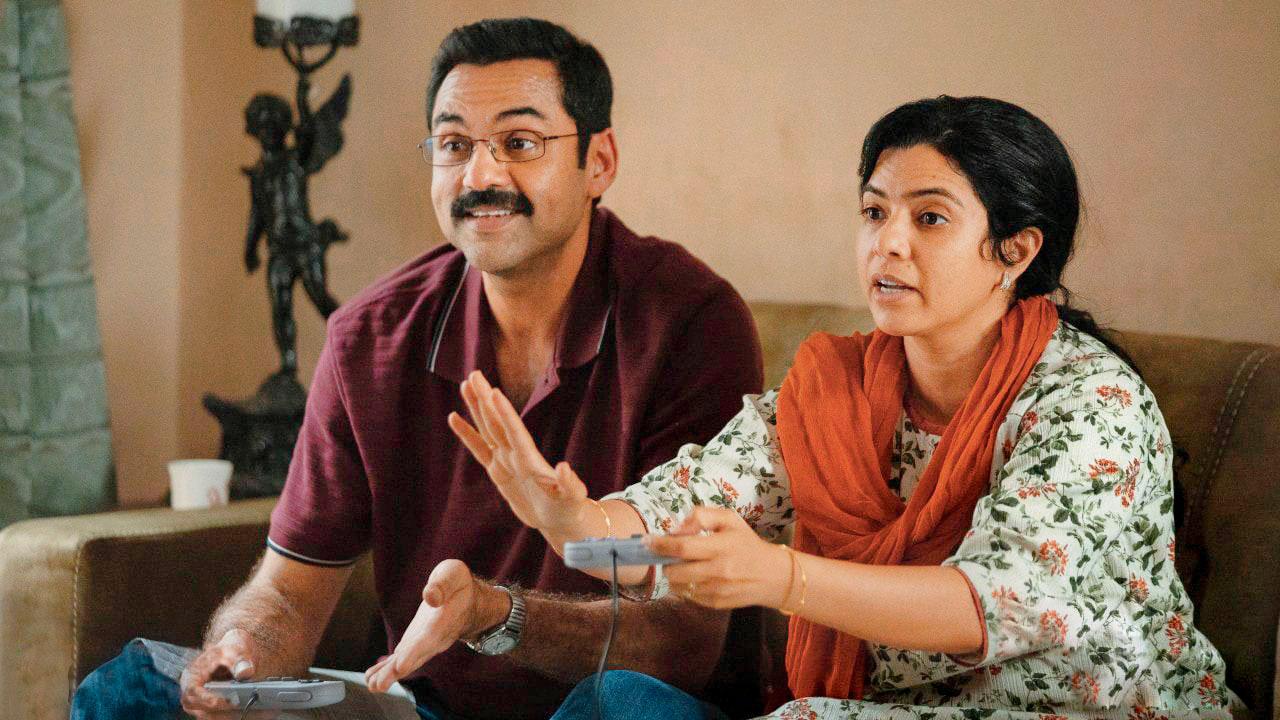
Abhay Deol and Rajshri Deshpande in Trial By Fire, which is based on the 1997 Uphaar cinema fire tragedy
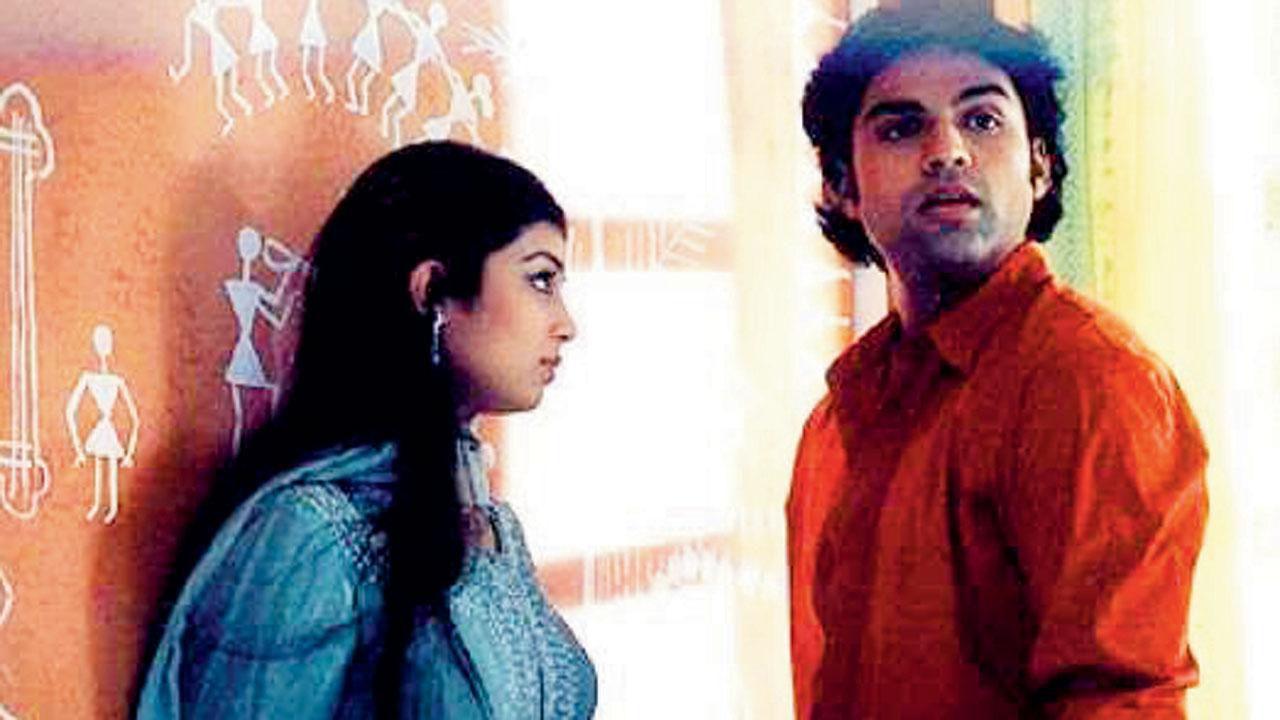
Still from Socha Na Tha (2005)
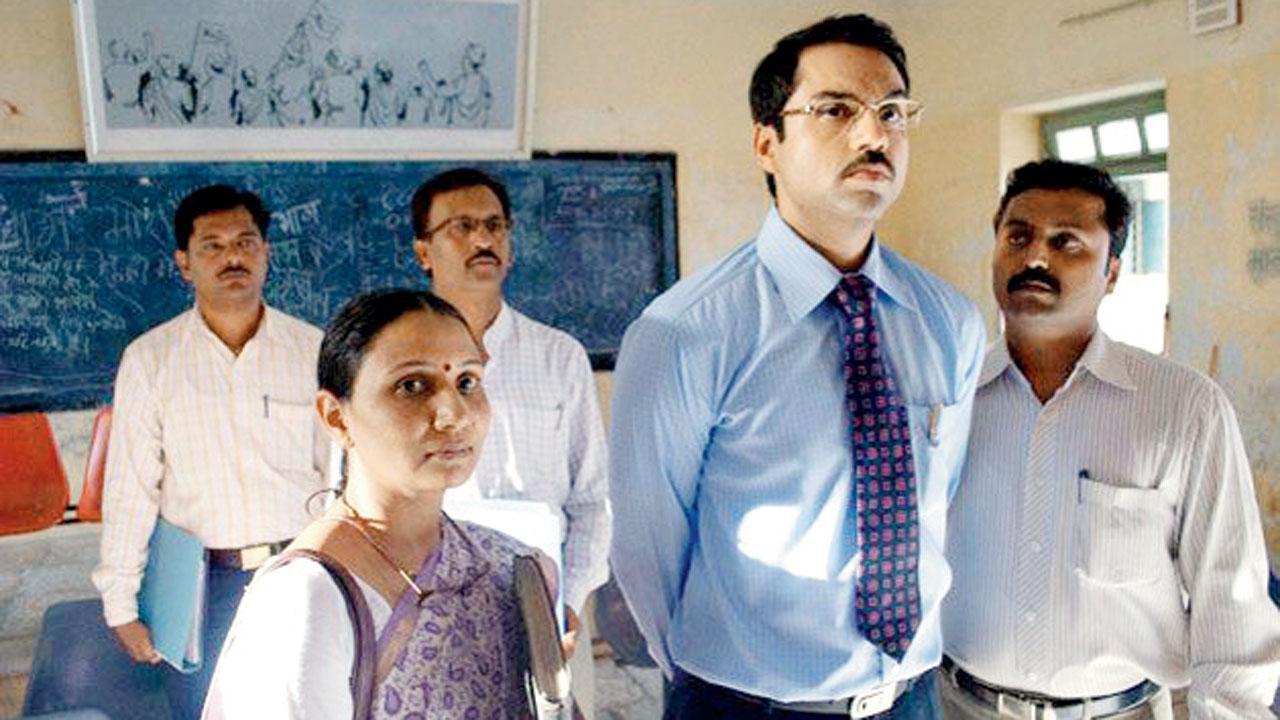
Shanghai (2012)
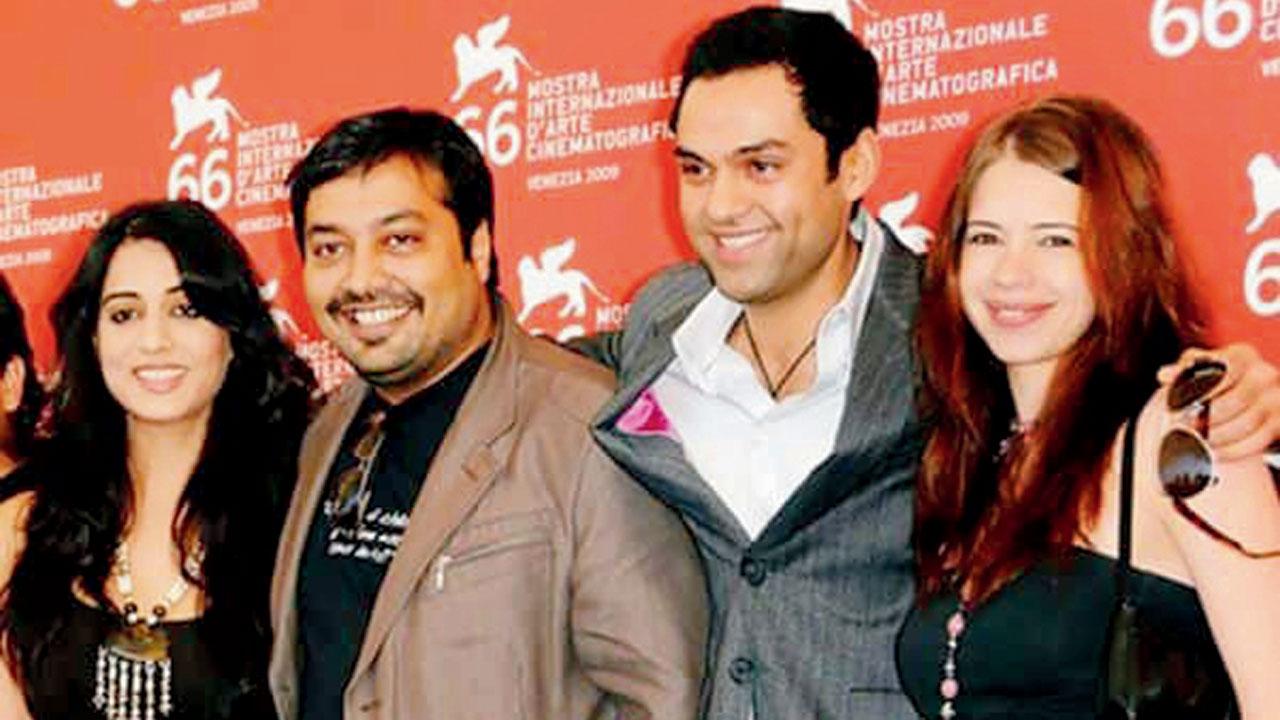
Abhay Deol with Anurag Kashyap, Kalki Koechlin, and Mahie Gill during the promotions of Dev D (2009)
Trial By Fire: How this Delhi couple has been fighting for justice for over 26 years
2:42 PM
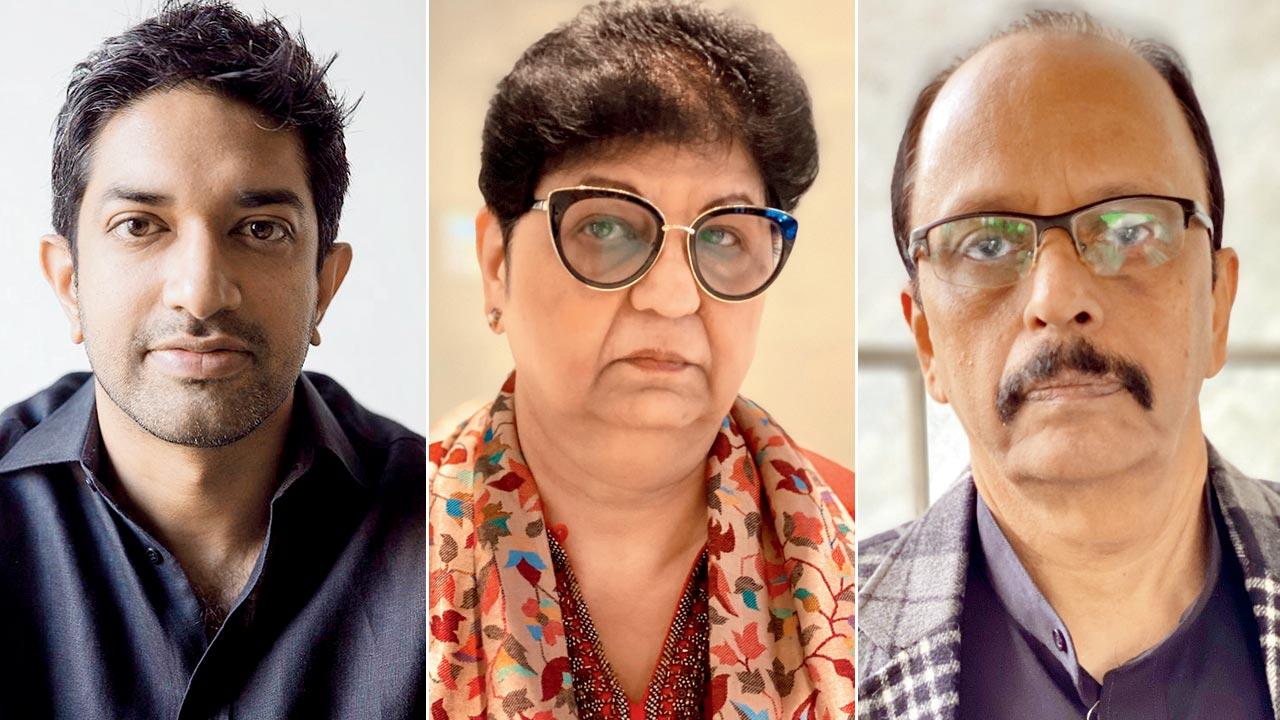
Prashant Nair, Neelam Krishnamoorthy and Suresh Krishnamoorthy
The Krishnamoorthys, who lost both children in the 1997 Uphaar fire tragedy, have been fighting for justice for over 26 years. And they are nowhere near getting it
Heena Khandelwal (MID-DAY; January 15, 2023)
June 13, 1997 was like any other day, until it wasn’t. J P Dutta’s Border was playing in theatres, and Neelam and Suresh Krishnamoorthy’s daughter Unnati and son Ujjwal went to catch the 3 pm show at Uphaar Cinema in Green Park, Delhi.
“My daughter kissed me goodbye,” recalls 65-year-old Neelam, “and said ‘Mom, I have left my lippie on your cheek’. I responded saying it is okay.”
Then she and her husband had lunch. “As we were leaving home, Shekhar said ‘Aren’t you going to remove this?’ And, I did. There are days when I wish I hadn’t.”
Considered one of the worst tragedies in the country, the fire at Uphaar Cinema took 59 lives, including that of the 17 and 13-year-olds. About 103 people were injured.
“They didn’t have to die, they all could have exited unscathed,” says Neelam. “All they [management of the cinema hall] had to do was raise an alert…”
However, series of dysfunctional processes culminated in the tragedy. The public announcement system didn’t work, the emergency light was out, one exit door was blocked by an eight-seat private box for the proprietor’s family. The gangways were also obstructed by extra seats. The entry door for balcony seating was locked from outside to avoid people without tickets enter the cinema hall. “Had the manager alerted Delhi Fire Service instead of moving the cars and cash, it would have been different,” says the distraught mother.
The parents accused the brothers Sushil and Gopal Ansal, who owned Uphaar Cinema, of neglect and have been fighting them in court for 26 years. A part of this struggle was documented in the 2016 book, Trial By Fire (Penguin Random House), which is now a Netflix series helmed by Prashant Nair, starring Abhay Deol and Rajshri Deshpande.
“To be honest,” confesses Neelam over a Zoom call from Delhi, “I wasn’t keen on it [screen adaptation]. I have become very averse to the medium and haven’t watched any films. But Shekhar and some friends said this story could inspire others, and that’s the only reason that I agreed.”
The couple saw the series just a few days ago. “They sent us the link many days ago,” say the Krishnamoorthys, “but we couldn’t open it, and when we did, we switched it off in 10 minutes. But then we gathered some courage. That’s all we have been doing all these years—gathering courage.”
The series, they say, is sensitive. “I didn’t want it to be melodramatic or have masala,” says Neelam. “It has succeeded in showing how ordinary people struggle for justice in this country, which runs at the speed of a bullock cart.”
“We had anticipated [the legal process] to take a couple of years,” adds her 66-year-old spouse, “but didn’t know it would take so long.”
Over the years, the parents have been advised to move on. “At least now we will be able to show our faces to our children,” says their father, adding, “Wherever they are. As parents, it is our duty to get justice for our children”.
Director Prashant Nair read the book in 2019. He was moved to the point of outrage by the lengths the couple had to go through: They went to Uphaar cinema to see where their children sat and understand the violations to strengthen their case. But he was also inspired by how the Krishnamoorthys stood up against all odds. “If they can find that strength, we hope others can too,” says Nair, adding that they endeavoured to capture the minutiae of the combat “for the audience to understand why went to court again and again. It was a huge sense of responsibility”.
The last 26 years have changed dramatically for the Krishnamoorthys. They used to run a business together, but now “spend more time in court”.
“Initially,” says Neelam, “I didn’t know anything and would feel handicapped. I would go to the court only to find the matter was adjourned, and didn’t know why.” They began reading all the legal documents, understanding the Code of Criminal Procedure, Indian Penal Court, bylaws, etc to know what rules were violated so that they could assist their counsel.
“When children are born, your lives revolve around them,” says Neelam, “You don’t stop being a mother if your children aren’t there.”
Though the justice system has failed them repeatedly, the couple says their fight is far from over. “I lost faith in the justice system in August 2015 when the Supreme Court allowed them to walk free after paying a fine of Rs. 30 crores each for a trauma centre in the main case. But it was restored in October 2021 when the metropolitan magistrate convicted the Ansals. But they filed an appeal and the sessions judge allowed them to walk free on the grounds of old age. It didn’t pronounce them not guilty, it convicts them beyond reasonable doubt but their seven years of imprisonment was reduced to eight months and 12 days on the grounds of old age. I felt cheated, but we aren’t giving up.”
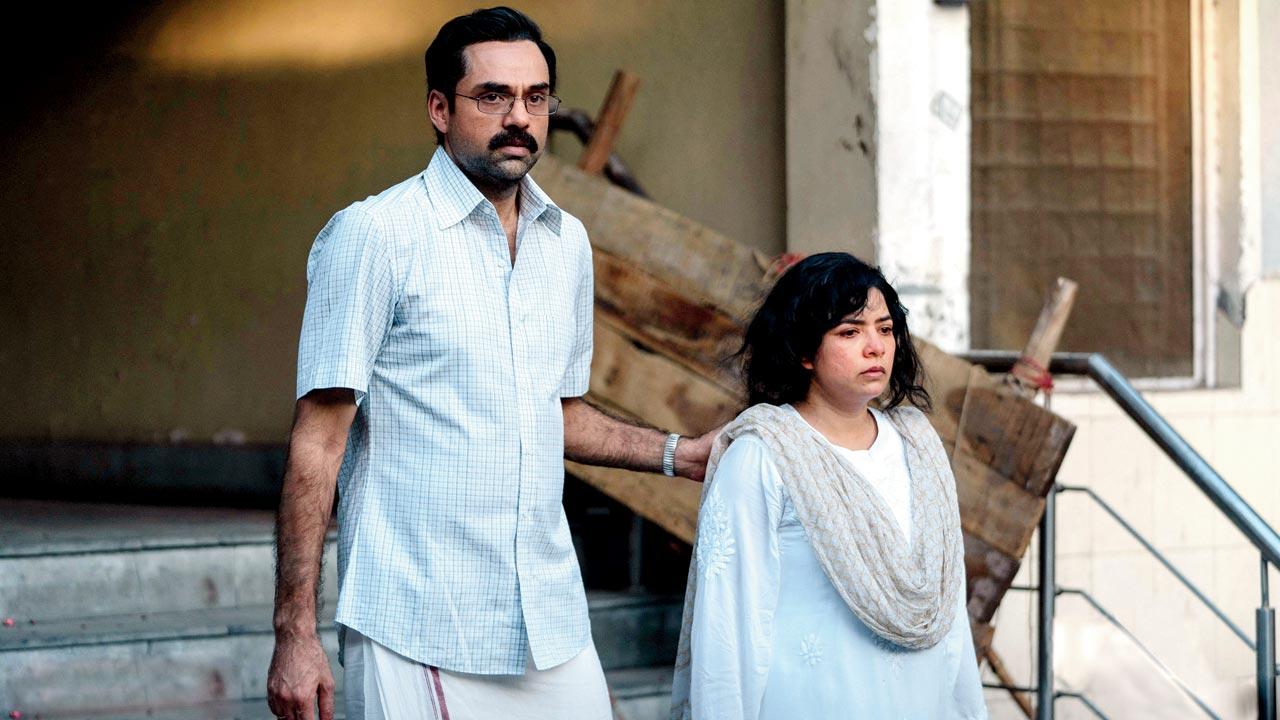
Abhay Deol and Rajshri Deshpande play the couple in Trial by Fire
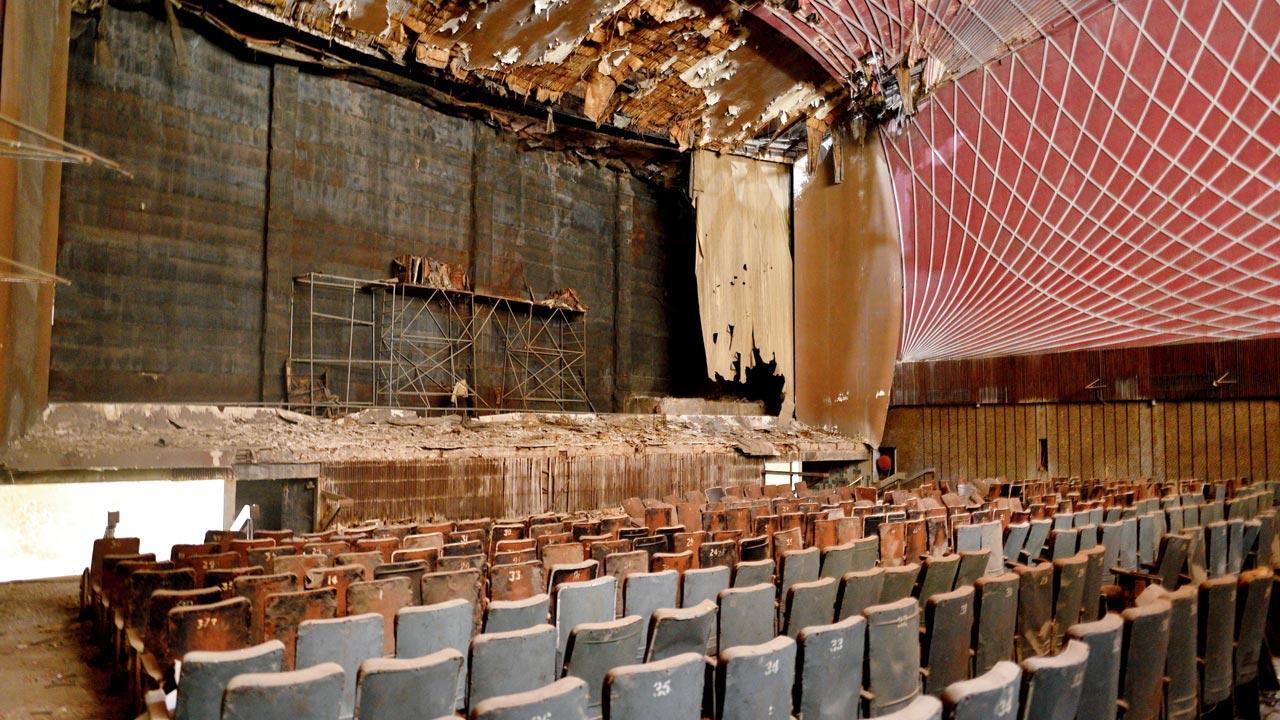
A view of the dilapidated seats inside Uphaar Cinema Hall. Pics/Getty Images
No stay on Uphaar web series; fiction not defamatory, says Delhi High Court
8:17 AM

THE INDIAN EXPRESS (January 11, 2023)
Sushil Ansal, the 83-year-old real estate tycoon, has moved the Delhi High Court seeking a permanent and mandatory restrain on the release of the Netflix show “Trial by Fire” set to be released on January 13.
Ansal has also sought a restrain of the further publication of the book ‘Trial by Fire — The tragic tale of the Uphaar Tragedy’ authored by Neelam and Shekhar Krishnamoorthy published by Penguin Random House India Private Ltd on which the said series is stated to be based. The matter is listed before Justice Yashwant Varma for hearing on January 11. Apart from the main lawsuit, Ansal has in the interim sought an “ex-parte interim” restrain on the release of the book and the web series.
Ansal’s lawsuit claims that the official teaser of the web series, produced by y Endemol India Pvt Ltd, was released on January 4 and shows “direct references” to Ansal and his dramatized role in the June 1997 Uphaar Cinema Fire and its aftermath. It has been further stated that his portrayal in the trailer and teaser of the web series has caused and has the propensity to cause “immense and irreparable harm” to his reputation and his right to life under Article 21 of the Constitution as well as his privacy.
Ansal has claimed that he is now 83 and has been punished “both legally and socially” for his association with the Uphaar Tragedy. “The family of the Plaintiff have also suffered extensively on account of the incarceration of the Plaintiff. Further, the Plaintiff has struggled to achieve a semblance of normalcy in his life along with the lives of his family members in light of the mammoth effects of the Uphaar Tragedy, the conviction, and the social ramifications thereof,” the suit states.
The book was stated to have been released in 2016 when the review petitions in the main Uphaar case were still pending before the Supreme Court. As many as 59 people were killed in the fire.
“The Plaintiff had apologized before the Hon’ble Supreme Court to the families of the victims and had expressed deep remorse towards the unfortunate incident. While the Plaintiff is sympathetic towards the pain and grief caused to Defendant Nos 4 and 5 (Krishnamoorthys) along with several others who lost their loved ones, the Defendants ought not to make the Plaintiff perpetually liable to be rebuked by the public time and again, especially after having served the sentence and complying with the Orders of the Hon’ble Supreme Court,” the plea states.
The lawsuit states that when he found out that the web series is based on the book authored by the Krishnamoorthys, he bought a copy of the same and was shocked to find that the book entails “a one-sided narration of the unfortunate incident” and that its tone is “highly emotional” and has instances of exaggerated, prejudicial and hyperbolic statements made against Ansal.
-------------------------------------------------------------------
THE TIMES OF INDIA (January 13, 2023)
New Delhi: The Delhi high court on Thursday rejected a petition moved by real estate baron Sushil Ansal seeking an ad interim stay on the release of an upcoming web series — Trial by Fire — based on the 1997 Uphaar fire tragedy, stating that the incident had made the “nation bow its head in shame”.
Ansal alleged that the show and the book, on which the show is based, defamed him and violated his right to privacy.
Observing that the OTT show alleges a systemic failure, manifests a cry of anguish against the manner in which the incident was prosecuted and tried, represents the perspective of parents who lost their teenaged children, the single bench of Justice Yashwant Varma said, “A fictional rendition of their trials and tribulations cannot, prima facie, be presumed to be defamatory. More fundamentally, their personal experience and perception of the incident or the culpability of the plaintiff would remain their belief, impression and understanding of the entire episode.”
Who wants to look the same in every film?-Rajshri Deshpande
4:10 PM

Trial By Fire actor Rajshri Deshpande on playing characters far removed from herself
Priyanka Sharma (MID-DAY; January 8, 2023)
One of the biggest dichotomies of being an actor is the desire to be a known face and a chameleon at the same time. A struggle often faced by Rajshri Deshpande, whose career is peppered with starkly distinct characters in films like 'Angry Indian Goddesses' (2015), 'Sexy Durga' (2017), and 'Manto' (2018). Deshpande is elated that people watch her work but fail to recognize her.
“[After watching the trailer of Trial By Fire], people have been wondering about me. I am glad that nobody knows me or how I look,” she says.
The actor says that she is inclined to characters that require her to shred every bit of herself and transform into a new person. “Who wants to look the same in every [film]? You want to experiment. In fact, I want [the director] to break me into pieces, construct me, and then get me together again. I like playing such characters,” says the actor, adding that her role in the Netflix’ series, 'Trial by Fire', falls in line with her pursuit for complex roles.
In the series inspired by the 1997 Uphaar Cinema tragedy, Deshpande plays Neelam Krishnamoorthy, who lost her children in the fire, and subsequently has been fighting a civil case against the cinema owners. The actor not only relied on the script and media interviews that Krishnamoorthy had given over the last 25 years, but also worked hard to find [the traits of the character] within herself.
“It’s not an easy character to play. You can’t just switch on with the camera. You have to have [the character] inside you to perform. The emotional truth has to be there. [That’s why] actors are never really on a holiday. We are always working, observing, learning, and unlearning. Since Neelam is not a fictional character, it was important to play the characters authentically.”
Series on Uphaar Cinema tragedy kicks off shoot in Mumbai
8:07 AM
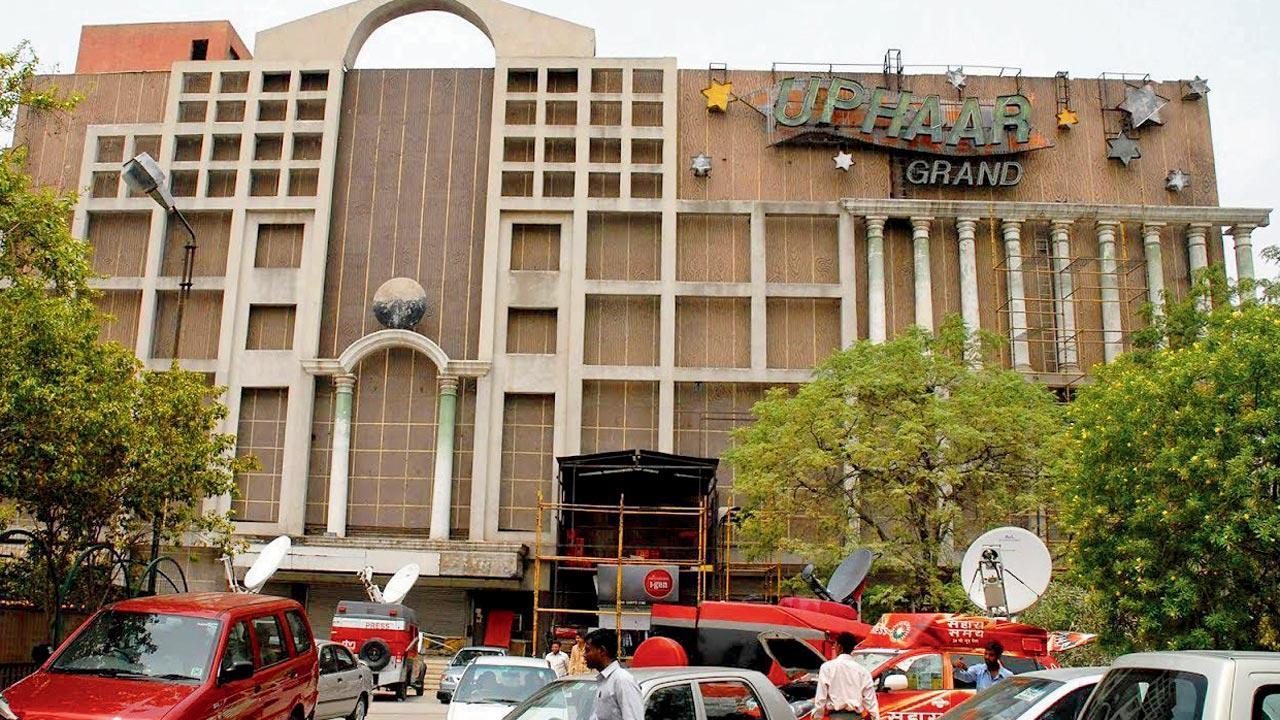
Creator Prashant Nair kicks off shoot of web series about 1997 Delhi fire; to film movie hall portions at Andheri’s Navrang Cinema
Mohar Basu (MID-DAY; June 24, 2021)
In May 2020, mid-day had reported that director Prashant Nair had bowed out of the second season of 'Made In Heaven' to develop a series on the Uphaar Cinema tragedy in Delhi (Busy working on Uphaar Cinema tragedy, May 7). A year on, the director has begun filming the drama — which will narrate the aftermath of the 1997 fire at the Delhi theatre that claimed 59 lives and injured over 100 people — at a set in Malad. Given the subject, a chunk of the series will be shot at Navrang Cinema in Andheri.
A unit hand reveals, “The art design team is working at the site, redesigning the façade of Navrang Cinema to make it similar to the Delhi theatre. The auditorium too is being reworked to suit the requirements of the narrative. The team has developed a detailed storyboard to ensure that the shoot can be done in a start-to-finish schedule in a bio-bubble.”
Nair has doubled up as the director and creator of the series that is based on the book, Trial By Fire, by Neelam and Shekhar Krishnamoorthy. “The show will be primarily told from the Krishnamoorthys’ point of view. They fought for justice for 19 years for their children, Unnati and Ujjwal, who lost their lives in the fire,” adds the source.
Endemol Shine India, which is producing the offering, will announce the cast in the coming weeks.
Subscribe to:
Posts (Atom)