Showing posts with label The Godfather. Show all posts
Showing posts with label The Godfather. Show all posts
In the post-Dhurandhar era, it’s time to elevate the masala template-Ram Gopal Varma
10:51 PM

Renuka Vyavahare (BOMBAY TIMES; January 2, 2026)
Bollywood has long been a dominant force in India’s film landscape, but the growing pan-India appeal of south cinema in recent years has challenged its supremacy. With the exception of a few Hindi releases, many films struggled at the box office, fuelling the narrative that Bollywood was losing ground. However, the massive success of Dhurandhar, which has entered the Rs. 1000 cr club, appears to have shifted the conversation – something filmmaker Ram Gopal Varma strongly believes.
In a post on X recently, RGV wrote, “The fireball of the southies’ invasion into Bolly wood has been kicked back by Aditya Dhar. From what I saw of Dhurandhar 2, if the first scared them, the second will terrify them.”
‘Aditya Dhar elevated the masala template aesthetically’
Known for his blunt opinions, Ram Gopal Varma clarified that his comment was not intended to undermine South cinema or create a divide. Speaking to Bombay Times, he said, “I referred to South cinema because their potboilers follow a certain template. Korean cinema is known for its unique style, and so is South cinema. Aditya Dhar took the same masala template, but elevated it aesthetically. That’s what has shaken everyone.”
According to him, the success of Dhurandhar will force South filmmakers to reassess their approach to scripts and storytelling. “The film is far more mature and nuanced in its execution,” he said, adding, “What makes the difference is the detailing. Instead of exaggerated action where people fly or bounce unrealistically, the action here feels believable. That level of maturity and character clarity is rarely found in traditional masala cinema, which often veers toward the tacky.”
‘In Dhurandhar, you don’t just remember Ranveer – you remember everyone’
Discussing Dhurandhar’s grounded storytelling, Varma highlighted the film’s decision to move away from the concept of hero worship, “When audiences embrace something as intense as Dhurandhar, how will over-the-top pan-India films survive? When Ranveer Singh makes his entry, the intention isn’t to make people clap. He’s treated purely as a character who disappears into the story. Every character matters equally. You don’t just remember Ranveer – you remember everyone. Giving each character their due is extremely rare.”
Addressing the claims that Bollywood is ‘finished,’ Varma remarked, “People say Bollywood is done because it stopped making films people enjoy. South masala films dominated during that phase. But would those films work the same way if they released after Dhurandhar? South cinema often strives for a perfection that ends up looking unreal – be it overly glamorous heroines or questionable relationship dynamics. That disconnect matters.”
‘The storytelling sensibility of South cinema often didn’t connect with North Indian audiences’
Reflecting on history, the filmmaker added, “Many South stars – Rajinikanth, N T Rama Rao in the ’70s and ’80s – rose to superstardom through remakes of Hindi films, especially Amitabh Bachchan’s. In the ’90s, Bollywood shifted from masala to musicals, driven by music companies turning producers. Then came a generation of foreign-educated filmmakers focused on slice-of-life cinema. The South, barring Malayalam cinema, never stopped making masala films, which is why their stars became nationally popular. But the storytelling sensibility often didn’t connect with North Indian audiences.”
He continued, “Dhurandhar uses the same action-masala template but grounds it in realism. It’s being discussed for its music, dialogues, cinematography and action. South films may generate huge numbers and entertain theatre audiences, but there’s often little to discuss afterwards – excluding period epics.”
Comparisons between Dhurandhar and Varma’s own films, like Satya (1998) and Sarkar (2005), have been inevitable. Responding to that, he said, “Human conflict is universal – whether it’s the American mafia, Mumbai’s underworld, or any other setting. What matters is how the conflict is portrayed. The Godfather (1972) became a global benchmark because of how it was made. That’s what great cinema does.”
When explaining the role of Srikant from Jubilee, Vikramaditya Motwane told me, ‘I just want The Godfather’-Prosenjit Chatterjee
8:34 AM
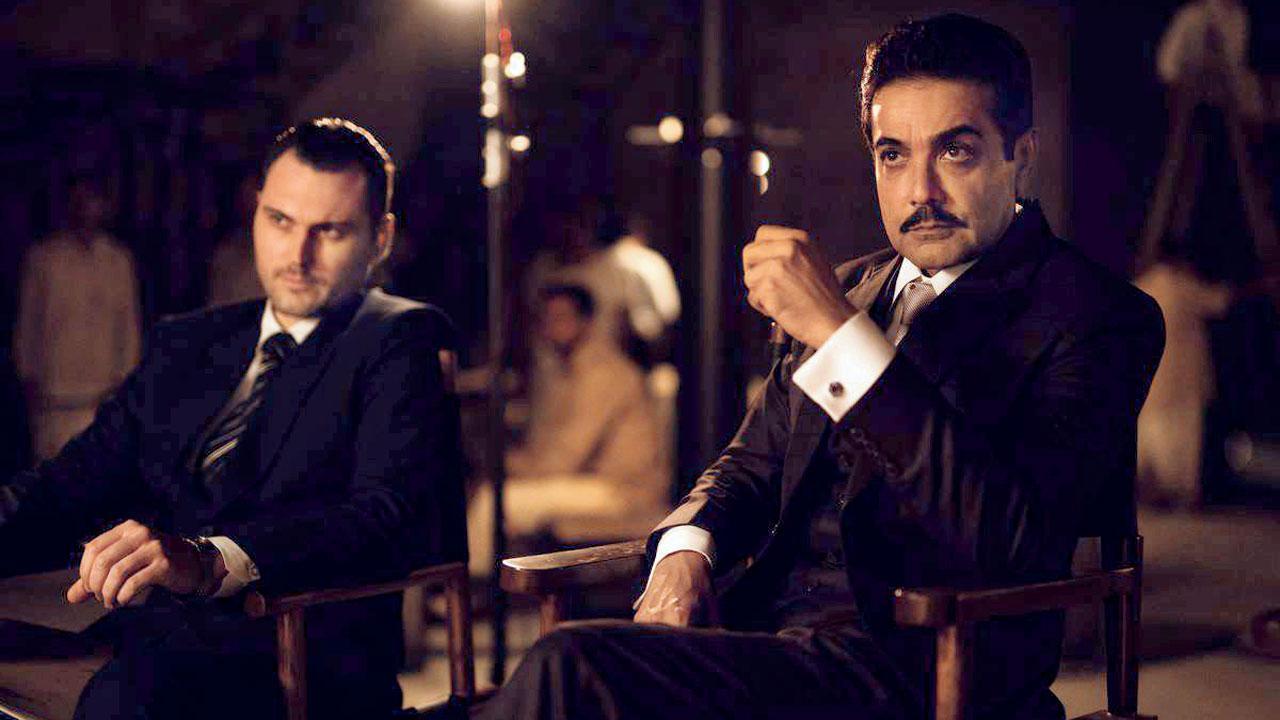
As he makes his OTT debut with Motwane’s widely praised Jubilee, Bengali superstar Prosenjit Chatterjee on how he approached his movie mogul role
Upala KBR (MID-DAY; April 10, 2023)
“Since Friday, his phone hasn’t stopped ringing,” Prosenjit Chatterjee says. Some calls are from members in the Hindi film industry, others from his peers in Bengali cinema. They all have the same thing to say — that Jubilee deserves a round of applause. “I couldn’t have asked for a better OTT debut,” beams Chatterjee, who has dominated Bengali cinema for almost four decades.
With Jubilee, creator-director Vikramaditya Motwane goes back to the Hindi film industry of the ’40s and ’50s. Chatterjee plays Srikant Roy, a powerful movie mogul owning Roy Talkies and a star-maker in his own right. The actor says he had two reasons to give his nod to the Amazon Prime Video offering — his love for that era’s cinema, and the opportunity to work with Motwane.
“Vikram is one of the finest directors of new-age cinema. When he narrated the subject to me, he said that from the day he started penning it six years ago, he had only me in mind for Srikant Roy. What makes him one of the finest directors is that even today, he [behaves like] an assistant director — he will do everything himself. Also, I know about people from that era, and their contribution to Indian cinema. One of my favourite films has been Guru Dutt’s Kaagaz Ke Phool [1959]. When I entered Jubilee’s set, I hugged Vikram and told him that he had fulfilled one of my dreams.”
Motwane’s character brief to the senior actor was pithy: “Srikant Roy is a king who only believes in his cinema”. Chatterjee brought in gravitas and restraint to the part.
“Aditi [Rao Hydari] and my characters are simmering with emotions, but cannot show them. After playing many roles, we get the maturity to handle such parts; expressing [every emotion] through our attitude, eyes and body language. [When explaining the role of] Srikant, Vikram told me, ‘I just want The Godfather.’”
The Bengali superstar is probably best remembered in Bollywood for his act in Shanghai (2012). Asked why he hasn’t been seen in Hindi cinema after Traffic (2016), he quips, “Vikram didn’t [consider] me for his last projects. I need good directors who know my body of work. Hindi movie directors, including Anurag Kashyap and Anurag Basu, have said that it’s not easy casting me as the roles are not challenging enough. I’ve been around for over 30 years. David Dhawan, who gave me my first Hindi film [Aandhiyan], told me I was mind-blowing in Jubilee. I have reached a position today where the roles have to excite me, not the project alone.”
Up next, he has the Bengali film, Shesh Pata.
If we shun cinema that doesn’t fit into one’s definition of morality, we’ll have to snub The Godfather, Darr...-Vikrant Massey
8:21 AM

Titas Chowdhury (HINDUSTAN TIMES; July 13, 2021)
Haseen Dillruba has won rave reviews for its representation of the complexities of human relationships, but some sections of the audience have slammed the film for glorifying toxic relationships. However, its leading actor Vikrant Massey remains unperturbed.
“I believe I’m an honest libertarian and it’s my responsibility to not shun any voice,” he says and asserts he’d rather focus on adulation coming his way. “There’s no right or wrong in any form of art. I’d want to request anyone unable to recognise a film as a piece of art to get off from their position of privilege and visit three-tier cities, towns and villages in our country. It’s easy to hold an expensive phone and voice out your opinion on social media.”
The Ginny Weds Sunny (2020) actor rues the burden of morality which actors and filmmakers are expected to carry. “People shouldn’t carry their baggage of morality when watching a film or reading a book,” Massey says and cautions, “If we talk about shunning cinema that doesn’t fit into one’s definition of morality, we’ll have to snub classics such as The Godfather series, Braveheart (1995), Baazigar and Darr (both 1993), as well.”
Even after 15 years, Ek Hasina Thi is still remembered for its horrific rats-Sriram Raghavan
8:19 AM

As told to Roshmila Bhattacharya (MUMBAI MIRROR; September 5, 2019)
• DIRECTOR • SRIRAM RAGHAVAN
• FILM • Ek Hasina Thi (2004)
• CAST • Urmila Matondkar, Saif Ali Khan
• LOCATION • Kharghar, Chandivali Studio
 Fifteen years since its release, my debut film Ek Hasina Thi is still remembered for its horrific rats. Interestingly, they were not a part of the initial script. In the first act—the initial 45 minutes—Saif’s (Ali Khan) character, Karan Singh Rathod, comes across as a classy guy, a suave, rich businessman, even though one is unsure about what he does.
It was while brainstorming with RGV (producer Ram Gopal Varma) on how to establish that Karan is a gangster with underworld links, that we recalled a scene from The Godfather, Part 3, where Andy Garcia and his girlfriend were in bed when a gangster surprises her in the kitchen. In our film, Urmila’s (Matondkar) character Sarika is surprised not by a man but a mouse in the kitchen. Her scream brings Karan running, but he later scoffs at her for being frightened of a mouse which has since fled.
The scene brought thrills and some laughs and helped establish that Sarika is terrified of rats till she is thrown into prison for a crime she is tricked into confessing to having committed. Behind bars, she encounters not just bullies and weirdoes, but also looks her fear straight in the eye. When she smashes a plate on one of the rats, you know her ordeal has empowered her. And that was the perfect interval point.
The second half was Sarika’s quest for revenge as she entangles Karan in a cat-and-mouse game. In the original script, we had Karan threatening her at gunpoint for the money she has stolen from his boss, making him the patsy. Sarika tells him she’s hidden it in an abandoned mine where her father worked. She takes him below, then, knocks him down and escapes in the shaft which she destroys once she reaches the top, leaving Karan to die underground.
While on a recce to Rajasthan we had found the perfect mine only to realise that it would be impossible to shoot there because how do you take a crew and equipment down there. So, we wondered what to do and someone mentioned that this place must be full of rats. That gave us the idea of using rats.
We toyed with several endings, including the usual one of Sarika pushing Karan off the cliff. Then, we came up with the idea of her trapping him in a cave where the rats come creeping once it gets dark. When I argued that since the story was set in Delhi, where would Sarika find a secluded cave, Ramu emphasised that emotion scored over logic. He told me to shoot it convincingly, confident it would be accepted.
We filmed in a quarry in Kharghar and at Chandivali Studio. It was kind of ironic that having mocked Sarika’s fear earlier, Karan is himself terrorstruck by rats at the end. Chained in the cave, in the fast fading light of the flashlight, he sees rats creep up on him, gnashing their teeth, and knows it is the end. We debated over how much to show, eventually leaving it to the audience to imagine his death as the light goes out and he screams as the rats attack… We had three junglee rats which we kept tied and used for terrifying close-ups. The rest of the rats you see in the frame were actually white mice. We had called for two dozen of them and my assistant Kusum touched them up with black tooth-powder so they appeared a darkish grey on screen. These mice are the friendly sort, and even I have held them without fear of getting bitten. For that shot where a rat runs up Saif’s leg, we used a wound-up mechanical toy.
I must confess that I had a moment of worry when my sister-in-law who was not around when the film released, excitedly called me from a theatre in Delhi a few days later to say that she was watching the film. And, she added, that Maneka Gandhi was sitting one row ahead of her. Fortunately, she didn’t have any problem with the rats in our film.
Ek Hasina Thi was a turnaround film for Saif. His first reaction to my narration was, “I have just started getting a fan following and you want me to play a villain, make them hate me!” Fortunately, both of us like the same kind of films and after I pointed out that Karan is more like a Charles Sobhraj kind of a character, diabolical but charming, he accepted the challenge despite the fact that it went against his image. Urmila too veered away from her glamorous avatar and came up with a gritty performance. After the film’s release, many girls asked my co-writer Pooja (Ladha Surti) for the location of the cave. They wanted to send someone there.
The film wasn’t a huge commercial hit, but it was critically-acclaimed. Interestingly, even though the title was Ramu’s idea, he later wanted to change it because he felt it gave the impression of a romantic film. He suggested Shock! instead. But I stuck to my guns and I am delighted Ek Hasina Thi and its rats still linger in people’s minds.
Actors have won Oscars for such roles in Hollywood-Neelima Azeem on son Shahid Kapoor's Kabir Singh
8:51 AM

Citing grey roles like Ledger's Joker and Brando's Godfather, Neelima defends son Shahid Kapoor's Kabir Singh that is drawing flak for glorifying misogyny
Upala KBR (MID-DAY; June 28, 2019)
 Its box-office numbers may tell a different story, but Shahid Kapoor's Kabir Singh has reignited the discussion of how cinema needs to be more responsible in its storytelling. The Shahid Kapoor starrer has been criticised by several critics and audiences alike for glorifying toxic masculinity. Coming to her son's defense, mother Neelima Azim says that the Sandeep Reddy Vanga film is "an intelligent remake".
"Actors have the freedom to play morally controversial characters because they make for meaty roles. Tomorrow, if you play a psychopathic serial killer, will everybody watching the movie become one? Dilip [Kumar] saab and Rajesh Khanna played grey roles in Amar and Red Rose. Are you suggesting that every grey role be scrapped? In Hollywood, actors have won Oscars for characters like these. If we can't make such movies, then we will have to scrap films like Marlon Brando's A Streetcar Named Desire, Godfather and Heath Ledger's Joker [The Dark Knight]. One needs to understand that it is a story and not a lecture on morality."
While the audience has been welcoming grey roles, the problem with Kabir Singh lies in the treatment of its central character. Point out to her how the movie celebrates his misogynistic attitude instead of condemning it, and she argues, "It is a hard-hitting film, and shows [the protagonist's] arc — he changes from the [brash] student at the university to the one who returns home after his grandmother's demise. He suffers because of his attitude. The film is not glorifying the character. Instead, it warns you against becoming like Kabir Singh."
It is not easy to dismiss the violence shown against women. A case in point being the sequence where Kapoor's character is about to rape a woman at knifepoint. "He is about to [rape her] in the dark. As soon as the light comes on, he realises [his folly] and throws the knife away. It's symbolic in that sense," says Azim.
Check out first look of Vidyut Jammwal as 'Godfather' in Mahesh Manjrekar's Power
7:45 AM

Actor’s next is set against the backdrop of the Mumbai underworld and is directed by Mahesh Manjrekar
Himesh Mankad (MUMBAI MIRROR; April 17, 2019)
Mirror had earlier reported (December 24, 2018) that Mahesh Manjrekar’s next directorial is set against the backdrop of the Mumbai underworld and is an ode to the Hollywood classic The Godfather. Titled Power, with Vidyut Jammwal and Shruti Haasan in the lead, the film kicked off in May last year and wrapped up in December.
“It is a massy action film, the journey of one man, Devi Das Thakur, played by Vidyut, who goes on to become a powerful don, taking over the mantle from his father,” informs producer Vijay Galani.
Mahesh plays Vidyut’s father in the gangster-drama. He also has a brother. The film also rides on a strong ensemble cast, many of the actors drawn from the Marathi film industry.
Quiz him on the similarities with The Godfather and Galani points to the initial reels but is quick to add that it doesn’t take long for the story to move into the action zone. “We have eight baddies and around eight hardcore action scenes,” he shares. The action, designed by Ravi Verma, a stunt choreographer from the south who has worked in films like R... Rajkumar, Jai Ho, Raees and more recently, Satyameva Jayate, is a blend of hand-to-hand combats, kicks, chases and several gun fights.
Power is Mahesh’s dream project. He has worked on the script for almost a decade and it marks his return to the Vaastav space. “The 1999 Sanjay Dutt don-drama has become a cult film. But that was more like a drama while this is an action film with elements of drama,” argues Galani.
While interacting with Mirror earlier (January 31), Vidyut had described the film, which is slated for a July release this year, as a “combination of larger-than-life action and my brand of action”.
The actor is currently on a break, as he tours the North-East.
The world might try and make you feel small, but you have to rise above that-Anupam Kher
2:59 PM

Renuka Vyavahare (BOMBAY TIMES; June 26, 2018)
He’s an actor who has awed the audience across the world with his performances for over three decades now. And even to this day, there is no stopping this powerhouse of talent. Having completed 34 years in cinema and 37 years in Mumbai, this BAFTA (British Academy of Film and Television Arts) nominee and recipient of multiple Filmfare and National Awards tells us how his path to success was muddled with obstacles, which he turned into opportunities. The story of his life is one that resonates with every aspiring actor and most of all, with the common man. To celebrate his 37 years in Mumbai, the actor took a local train ride, and BT caught up with him to talk about his real and reel life journey. Read on...
A small-town boy, who came to Mumbai 37 years ago with stars in his eyes, is today an international actor, who was also nominated at the BAFTA this year. You have said that all this feels surreal...
I was a teacher in Lucknow before I landed in Mumbai, unlike my drama school (NSD) friends, who headed straight to Mumbai after their graduation. I didn’t want to come here without any money. So after graduation, I stayed in Delhi for a year and then took up a temporary job of teaching acting in a drama school in Lucknow. I was 23 at the time, I was earning Rs 1,200 per month and everyone called me sir. I felt if I stayed in Lucknow further, I might just settle down there, so, a year-and-a-half later, I decided to move to Mumbai. It has been 37 years since I moved to this city.
Tell us about your initial struggles, when you first moved to Mumbai?
I came to Mumbai to teach acting, as I wanted a second job that could support me financially. I didn’t believe in the concept of ‘main bhookhey pet gujara kar lunga’. Eventually, I had to do that as it turns out, the school I was going to teach in, had no concrete building to begin with. So, I taught students on the beach as there was no place to stay. I soon exhausted my friends’ houses, too. This went on for almost two years and I spent all the money that I had saved. Eventually, I was homeless and had to sleep on the railway platform. I would take the local train from Bandra to Charni Road and back to kill time and observe people.
I used to act in plays, but there was no money. When you are not educated in the same field that you aspire to make a career in, you are bound to feel intimidated. But when you are a prestigious drama school student, who understands world cinema and then find yourself sleeping on railway platforms, you feel utterly humiliated. I had no alternative but to think that I have to make it.
Did you ever feel like you were reaching your breaking point?
The easiest thing in the world is to feel disheartened and disappointed. I knew that I was a trained actor and believed that I was good. That’s what education gives you — the power and confidence to carry on. My optimism was always by my side. My grandfather once wrote to me after I told him that I was contemplating going back to Shimla. He said, ‘Bheega hua aadmi baarish se nahi darta’. That changed me. Today when I talk about it, it’s a romantic take on misery and poverty, but when it was happening to me, it made me very lonely. I feel that when giving up is not an option, you just have to make it.
To top it, at that time, a hero had to look a certain type and fit in to a kind of mould...
I was not even the best looking guy to have landed in Mumbai in the ’80s! I was a skinny young man with a balding head. What you see today is a dignified, sexy bald look. Back then, having a head full of hair was more important than talent. Today, people can say that Anupam Kher actor ban sakta hai toh hum bhi ban sakte hai. Back then, there was nobody who I could refer to, so I used to look up to Telly Savalas (American singer and actor). Even Amrish ji (Puri) used to wear wigs.
You have seen the film industry change and evolve over the past three decades. In all the change you have seen, what really stands out?
Absolutely! Back then, it took me a month to just meet somebody and then another to get an audition. Today, there are so many platforms and opportunities — social media, casting directors, agencies, managers, reality shows and the entire PR machinery. Also, cinema has changed. It isn’t stereotypical anymore. Filmmakers aren’t thinking, ‘Yeh hero ya villain ke look mein fit hota hai’. This is an era of actors. If you are a good actor, it doesn’t matter how you look. Also, realistic cinema is being appreciated. I feel cinema has evolved, because it is no longer the only source of entertainment. You are competing with malls, restaurants, multiplexes, television shows and even the digital platform. Anybody who wants to consume your cinema today sits back and asks, ‘Show me what you have made. If it is good, it will work. If not, it won’t’. Every actor has a struggle story, but in today’s times, you get far more chances. When I look back, I see a beautiful journey. If I am asked if I would want the same journey again, I’d say ‘Yes’. I don’t want to sound arrogant, but I was the first actor who broke the myth of typecasting. If I did a Saaransh (1984), I also did films like Karma (1986), Ram Lakhan (1989), Khosla Ka Ghosla (2006) and A Wednesday (2008). The fact that I am not scared of failure has led me to doing projects like The Big Sick (2017), a BBC spy drama, an upcoming American TV show, as well as films like The Accidental Prime Minister.
In Saaransh, you played an elderly character, but you were just 28 years old then. While that continues to be one of your best works till date, you ended up playing a father to most actors who were almost your age later on. Do you ever regret that?
I was a beggar and beggars are not choosers. Also, only a trained actor could recognise the potential of the character that I played in Saaransh. Only an idiot will say, ‘Main buzurg aadmi ka role nahi karoonga’. You have to have confidence in yourself. If I hadn’t started off with Saaransh, I wouldn’t have survived all these years! Main gaane gaake kya kar leta? So many actors who did that in the past 34 years are nowhere today.
You have been a part of several acclaimed international films like the Oscar-winning Silver Linings Playbook (2012). You have even worked with the legendary Robert De Niro. How different is it to work in the West and interact with artistes from there?
English is not the language that I think in. I think in Hindi, translate it to English, and then to emotions — it’s a tough process. It is challenging for me. Sports people get to represent their country officially. When I work in the West, I feel that I am representing my country. Talking about Robert De Niro, I was watching The Godfather Part II (1974) the other day and I was amazed that this is the same guy who dines with me and sings ‘Happy Birthday’ for me! I was asked, ‘Everyone calls him Bob, why don’t you?’ I said, ‘Mere muh se niklega hi nahi’. Woh humare sanskar hai. Even their ADs call the actors by their first name. That’s their culture. Imagine Mr Bachchan saying, ‘Call me Amit’. Not that he will say that, but I won’t do it. These are the people who have inspired me. For me, Robert De Niro is the world’s greatest actor. I am always star-struck around him and people like Dilip sahab (Dilip Kumar). I have done a thesis on The Godfather (1972) as a drama school student and God has given me an opportunity to work with the actor who played the lead. I also look up to stalwarts like Ang Lee, Clint Eastwood and Woody Allen.
You will be essaying the role of former PM Dr Manmohan Singh in The Accidental Prime Minister. On the personal front, you are known to be an admirer of PM Narendra Modi. Was there any conflict of opinion?
It’s my job as an actor to ensure that I don’t bring my personal (political) philosophies to my roles. Just because you are vocal about somebody, it doesn’t mean you bring that into your performance. I cannot be dishonest with my profession. That’s not the purpose. If I have to say something, I will say it as a person and not as an actor.
Will we see you joining politics in the near future?
Nobody can talk about the future with confidence, but I have no intention of joining politics. Whatever I want to say, I will say it as an individual. The problem with people is that when you speak for the country, they feel that you are joining politics.
Your story of survival and success is fascinating. What are the key things that aspiring actors, who may have lost their faith, should keep in mind?
Failure is an event, not a person. An event fails, a person doesn’t. So, never give up. Reinvention is the name of the game. I have not used two words consciously in the past 27 years — bore and mood. Mood nahi hai and main bore ho gaya hoon. These words give you a false impression of being important. Also, you cannot place your happiness in someone else’s hands. The moment you do that, they will ensure that you stay unhappy all your life. Make your shortcomings your asset, then the world has nothing to mock you for. Speak in Hindi, eat with your hands — do what makes you comfortable. Aap khaake dikhaao meri tarah. When I go to a five-star hotel, they try to dwarf me with their culture. They ask, ‘Hot water, cold water, sparkling water or chilled water?’ I speak in Hindi with them and strike an instant bond! The world might try and make you feel small, but you have to rise above that. It’s liberating to be who you are and to be comfortable with that.
When a film scares and excites me at the same time, I get a kick out of it-Shraddha Kapoor
7:58 AM

Lasyapriya Sundaram (BOMBAY TIMES; September 21, 2017)
Unlike many other star kids,
Shraddha Kapoor didn't enjoy a big launch in Bollywood. Though she made
her debut in 2010 (Teen Patti), it was only with Aashiqui 2 (2013) that
she tasted success. However, since then, the actress has been slowly
and steadi ly making inroads into the industry. With her first ever
attempt at a biopic, Haseena Parkar, all set to hit screens and another
one on Saina Nehwal in the pipeline, Shraddha is living her childhood
dream of being a Bollywood heroine. Excerpts from her conversation with
BT...
You are playing the title role in Haseena Parkar, a biopic on the mafia queen, who was Dawood Ibrahim's sister. What intrigued you about her character?
When Apoorva Lakhia (director) narrated the story of Haseena Parkar, I was amazed that it was a true story. I couldn't even imagine dealing with the kind of losses she has experienced in her life. Essaying a complex character like her has been an emotionally-draining experience. After the trailer released, many people told me that they were not expecting me to play a character like this. So, if the film is appreciated, it would mean a lot to me because it is different from what I have done so far.
The gangster saga in Bollywood has essentially been about male underworld figures. When it comes to leading ladies playing a female don, the examples are few and far between. Where did you draw your references from?
To understand the quiet confidence that Haseena gains on becoming Aapa, I borrowed some inspiration from The Godfather. However, the main driving force was her own experience and how it all shaped her.
As an actor, do you submit to the director's vision or do you also bring a lot to the table in terms of fleshing out a character?
As an actor, you are living out the director's vision. He tells you how he sees the character and how he expects you to breathe life into it. Though I give my inputs too, every film and director is different, and I adapt myself to the way each filmmaker works. Talking about this film, Apoorva was like a bank of information; he had researched on the film for close to two years and had even interacted with Haseena before her death in 2014. During our interactions, I would listen intently and absorb everything that he was saying. I met her family as well. I tried to empathize with her character because in a way, her story is heartbreaking. I prepped a lot for the role, including putting on weight.
You have clearly come a long way since your first film. How much do you think you have grown as an actor since then?
I have changed a lot as an actor since my first film. Earlier, I used to think that I couldn't do many things; I had immense self-doubt. Though I have made a conscious effort to change that, I think I will always be a little doubtful about my performances because that is who I am.
It's an exciting time for actresses. Though there have been films which were shouldered by female protagonists in the past as well, their numbers have gone up significantly now. What is your view?
It doesn't matter whether films are male or female-centric, people want to watch content-driven movies. Queen, Mary Kom and Neerja received the appreciation they did because of their stories. Also, these films were inspiring.
You're the quintessential Bollywood insider. However, success didn't come easily to you. Your debut didn't do anything for your career and you had to wait till Aashiqui 2 for the tide to turn in your favour. Do you consider your journey to be a struggle despite being an industry kid?
I am proud that I am Shakti Kapoor's daughter. My father has done more than 700 films and the love and adulation that he has received is humbling. I have a long way to go before I achieve even a small percentage of that. Today, there are heated debates about star kids and outsiders, but a lot of people didn't even know that I had two releases before Aashiqui 2. There were also those who were unaware that I am Shakti Kapoor's daughter. Between my first film and Aashiqui 2, I have lost count of the screen tests and auditions that I appeared for. I have also lost count of the number of rejections that I faced. Even after Aashiqui 2, I had to audition for Haider. The point is, one has to work hard to get a film. There is no success formula that one can follow in the industry. Everyone's journey is different; they have had their struggles to overcome and I have had mine. However, when it's your childhood dream to be an actress, you somehow find the strength to fulfill it.
Your upcoming films include Saaho with Prabhas and the Saina Nehwal biopic. Did you choose these films because they let you to tap into unexplored aspects of yourself? Or were the stories irresistible?
When a film scares and excites me at the same time, I want to be a part of it; I get a kick out of it. When Saaho was offered to me, I was thrilled because I will be playing a cop for the first time. What was also challenging was the fact that I would be speaking in two languages, Telugu and Hindi. Talking about the Saina Nehwal biopic, preparations are on in full swing; I have already completed 33 sessions of training in badminton, with each session lasting two hours. For me, it's a huge responsibility to portray Saina on the big screen.
While your films are talked about, there is a lot of scrutiny on your personal life as well. How do you deal with it?
The scrutiny on my personal life doesn't affect me anymore. I don't read the papers or watch TV. I watch movies, documentaries and interesting videos on my laptop. I'm very clear about where my focus lies. I get involved with whatever I do and if something doesn't interest me, I won't even look in that direction.

I am drawn to characters who live on the margins of society and don't play by the rules-Ashim Ahluwalia
7:46 AM

Lasyapriya Sundaram (BOMBAY TIMES; September 1, 2017)
Filmmaker Ashim Ahluwalia
doesn't like playing by the rules. While his second feature film Daddy
chronicles the life of gangster-turned-politician Arun Gawli, his
narrative style, the filmmaker insists, is not borrowed from Bollywood.
He admits that stories about people who live on the fringes of society
excite him. Also, he is happy that the Hindi film industry has got a new
lease of life thanks to the independent filmmakers, who introduce new
styles of storytelling. Excerpts from our conversation with him...
Your debut feature film Miss Lovely was about the soft-porn industry in Mumbai, while Daddy tells the story of a gangster-turned-politician. Both the movies delve into the underbelly of the city. Are you particularly drawn to these narratives?
I am drawn to characters who live on the margins of society. I feel that I am on the margins of the industry and so, I like characters who don't belong and are outsiders. Be it a gangster like Gawli, a C-grade actor or a producer making something in the middle of nowhere - when they don't belong is when they are free. You see them for who they because they don't conform. I like characters who don't play by the rules.
You don't play by the rules either, when it comes to your style of filmmaking. Which section of the audience are you targetting with a biopic on a gangster like Arun Gawli?
I think of people I know when I think of the audience. That could be my driver, who knows about Gawli. Or, it could be a friend who is a cinephile. It could even be somebody who is really into Bollywood and watches every single release. I don't think you can make a film keeping box-office collections as the primary objective. People who make a film keeping that in mind often fail. I have never felt that anything I have made has lost money. When a producer says, 'Get me a star and I will give you the money to make the film', it still doesn't guarantee box-office success. Films should engage emotionally and can't be made with a calculator. So, my logic is you are better off with me because you will make a cheaper film and get back your returns faster.
You also don't want to adhere to the norms of filmmaking that are prevalent in Bollywood and yet, you are working with a mainstream actor like Arjun Rampal. Isn't that contradictory? Then, how would you slot a film like Daddy?
My films are difficult to slot. Miss Lovely went to the Cannes Film Festival, so technically, it was an art-house movie though the narrative was about the B-grade film industry. My first documentary was about call-centre about call-centre employees, but it was shot like a sci-fi movie. I take to these hybrid forms. I don't want to be slotted as a Bollywood director, an art-house director or an independent director. The best response I got for the Daddy trailer was, 'There is so much of you in this'. I take that as a huge compliment because I can retain 'me' in my films. Arjun knew what he was getting into, as we had shot a commercial together. I don't mince my words. I find filmmaking in Bollywood to be plain lazy. The industry assumes that since everybody is used to a certain format, one can continue doing that. While working on Daddy, my question to Arjun was, 'Will I have the freedom to direct it the way I want and will you back me up?' I told him that if he wants to protect this project and doesn't want to get typecast again, he needs to co-produce the film. I have a clear image about how a space, environment or a city looks. When you are making a movie like Daddy, you know that it has to be shot in central Mumbai. If I am making a film on Arun Gawli, I can't have him wearing branded clothes. Arjun agreed with me. It's not a normal gangster movie from Bollywood. I wanted to shoot with a 27-year old French Canadian female director of photography had, who never shot in India before. I was convinced that she was right for the movie. These decisions would have had other producer balking. Filmmaking is not my bread and butter, I do commercials for that. When I am making a film, I want it to be my take.

Though you don't want to be slotted, your films are essentially seen as off-beat. How do you respond to the mainstream industry calling independent films pretentious?
Well, it's an invalidated statement for me. Independent cinema is the reason why Bollywood has become more interesting, it was dying otherwise. An actor like Nawazuddin Siddiqui has infused new life into Bollywood. Many of the current directors have also come from the independent space. There is a certain synergy between the two spaces, it's not a case of one versus the other. Christopher Nolan's first project was a black and white film, which premiered at Sundance. He is now making the Batman series; he is mainstream Hollywood now.
Where do you go from here? Clearly, you won't be helming a Bollywood fantasy drama anytime soon?
The concept of Bollywood itself is undergoing change. I hated the films of the 1990s not because they were bad films, but because they didn't allow me to make the kind of films that I wanted to make. But times are slowly changing and even the most traditional producer might call you today and say, 'I want something different'.
Ram Gopal Varma is like the 'Godfather' of the gangster sagas in Hindi cinema. What is your take on his style of filmmaking when it comes to this particular genre?
I am not even a fan of The Godfather or Ram Gopal Varma. I prefer the Italian mafia films from the 1970s, which is what Francis Ford Coppola ripped off. We are obsessed with The Godfather, and I have never understood why because that's not the only film made in that genre. Satya was an interesting film because the environment and the actors were real and that was very refreshing. That is closer to the kind of cinema I love. Though it's very filmy, it was radical in what it did for the genre within the paradigms of Hindi cinema.
Your debut feature film Miss Lovely was about the soft-porn industry in Mumbai, while Daddy tells the story of a gangster-turned-politician. Both the movies delve into the underbelly of the city. Are you particularly drawn to these narratives?
I am drawn to characters who live on the margins of society. I feel that I am on the margins of the industry and so, I like characters who don't belong and are outsiders. Be it a gangster like Gawli, a C-grade actor or a producer making something in the middle of nowhere - when they don't belong is when they are free. You see them for who they because they don't conform. I like characters who don't play by the rules.
You don't play by the rules either, when it comes to your style of filmmaking. Which section of the audience are you targetting with a biopic on a gangster like Arun Gawli?
I think of people I know when I think of the audience. That could be my driver, who knows about Gawli. Or, it could be a friend who is a cinephile. It could even be somebody who is really into Bollywood and watches every single release. I don't think you can make a film keeping box-office collections as the primary objective. People who make a film keeping that in mind often fail. I have never felt that anything I have made has lost money. When a producer says, 'Get me a star and I will give you the money to make the film', it still doesn't guarantee box-office success. Films should engage emotionally and can't be made with a calculator. So, my logic is you are better off with me because you will make a cheaper film and get back your returns faster.
You also don't want to adhere to the norms of filmmaking that are prevalent in Bollywood and yet, you are working with a mainstream actor like Arjun Rampal. Isn't that contradictory? Then, how would you slot a film like Daddy?
My films are difficult to slot. Miss Lovely went to the Cannes Film Festival, so technically, it was an art-house movie though the narrative was about the B-grade film industry. My first documentary was about call-centre about call-centre employees, but it was shot like a sci-fi movie. I take to these hybrid forms. I don't want to be slotted as a Bollywood director, an art-house director or an independent director. The best response I got for the Daddy trailer was, 'There is so much of you in this'. I take that as a huge compliment because I can retain 'me' in my films. Arjun knew what he was getting into, as we had shot a commercial together. I don't mince my words. I find filmmaking in Bollywood to be plain lazy. The industry assumes that since everybody is used to a certain format, one can continue doing that. While working on Daddy, my question to Arjun was, 'Will I have the freedom to direct it the way I want and will you back me up?' I told him that if he wants to protect this project and doesn't want to get typecast again, he needs to co-produce the film. I have a clear image about how a space, environment or a city looks. When you are making a movie like Daddy, you know that it has to be shot in central Mumbai. If I am making a film on Arun Gawli, I can't have him wearing branded clothes. Arjun agreed with me. It's not a normal gangster movie from Bollywood. I wanted to shoot with a 27-year old French Canadian female director of photography had, who never shot in India before. I was convinced that she was right for the movie. These decisions would have had other producer balking. Filmmaking is not my bread and butter, I do commercials for that. When I am making a film, I want it to be my take.
Though you don't want to be slotted, your films are essentially seen as off-beat. How do you respond to the mainstream industry calling independent films pretentious?
Well, it's an invalidated statement for me. Independent cinema is the reason why Bollywood has become more interesting, it was dying otherwise. An actor like Nawazuddin Siddiqui has infused new life into Bollywood. Many of the current directors have also come from the independent space. There is a certain synergy between the two spaces, it's not a case of one versus the other. Christopher Nolan's first project was a black and white film, which premiered at Sundance. He is now making the Batman series; he is mainstream Hollywood now.
Where do you go from here? Clearly, you won't be helming a Bollywood fantasy drama anytime soon?
The concept of Bollywood itself is undergoing change. I hated the films of the 1990s not because they were bad films, but because they didn't allow me to make the kind of films that I wanted to make. But times are slowly changing and even the most traditional producer might call you today and say, 'I want something different'.
Ram Gopal Varma is like the 'Godfather' of the gangster sagas in Hindi cinema. What is your take on his style of filmmaking when it comes to this particular genre?
I am not even a fan of The Godfather or Ram Gopal Varma. I prefer the Italian mafia films from the 1970s, which is what Francis Ford Coppola ripped off. We are obsessed with The Godfather, and I have never understood why because that's not the only film made in that genre. Satya was an interesting film because the environment and the actors were real and that was very refreshing. That is closer to the kind of cinema I love. Though it's very filmy, it was radical in what it did for the genre within the paradigms of Hindi cinema.

Ram Gopal Varma has the quality of an honest man, and nobody wants to appreciate that-Amitabh Bachchan
8:23 AM

Madhureeta Mukherjee (BOMBAY TIMES; May 11, 2017)
His deep baritone spills on
to our pages, flowing into reams of stories and anecdotes, that often go
on to become 'quotables' for ever. Such is the power of his impeccable
voice and his unfettered memory. He has that supreme quality of keeping
you riveted in the movies, and stirring up a conversation on the couch
with as much passion. At 74, AB is cooler than the millenials of the day. He's a champ on social media - taking the good, the bad and the
trollers in his stride. Yes, he plays it safe with words, but his words
are seemingly unstoppable. At the same time, he's never lost the
emotional connect with the people or the 'golden' phase of cinema that
roots him to his beginnings. Long before he turned into a megastar. As
the third instalment of Sarkar, directed by Ram Gopal Varma (RGV),
awaits release, in a long-winding chat, he talks about trolls, timeless
classics of Bollywood, legends of yore and the superstars of the future.
Read on...
Ram Gopal Varma says that if you hadn't agreed to play Sarkar on screen, he wouldn't have made the film. He has also said, 'The Godfather can be made without Marlon Brando, but Sarkar cannot be made without Amitabh Bachchan.' Your reaction?
He is being too generous. Sarkar (2005) was my first film with Ramu, but even before it was made, I was always appreciative of his work. It was Abhishek who initiated the idea for Sarkar 3. Ramu and I kept meeting over the years and talking about it. We would discuss various aspects of life and movies and I would chat with him about palace politics. For instance, even in a king's home, there must be disturbances and domestic problems. We always wondered that if the king was emotionally upset about his personal issues and he had to make a decision that would impact the lives of others, would his choices be ridden by his emotional conflict. Would he carry the same vein of disappointment when he had to make a statement that would probably change the lives of millions?
That was one aspect. The other interesting aspect we explored was the several rings of power points around every powerful individual, be it a king, president, prime minister or any celebrity. Isn't it possible that each ring inadvertently becomes a power centre and has its individual influence? We thought of building a story which incorporates all of this. From Sarkar to Sarkar Raj (2008) and now Sarkar 3, the story has progressed. The main protagonist is being played by the same actor, unlike in The Godfather (1974). Marlon Brando finishes in one, and then Al Pacino takes over for the remaining two.
Talking about The Godfather, what impression did it leave on you when you first watched the film?
Who wasn't impacted by The Godfather? The whole world of mafia has been very intriguing, exciting and interesting... just to understand how it works, who are these people, what are their lives are and what is their thought process.
As part of Sarkar 3 promotions, you were interviewed for the first time ever by your director and that too, by someone like RGV who doesn't mince words...
I talk to all my directors about my movies and other films, which often leads to a healthy debate. For the first time, I was interviewed by my director (RGV) and it was filmed. I think a general interview makes for good reading, but there isn't any kind of documentation of facts and stories that go beyond the actor. I lament that and I feel that we are not leaving anything for posterity. I would love to know what went through Dilip (Kumar) saab's mind when he was doing Devdas (1955), how he prepared himself to say those lines in the way he did. What was Guru Dutt thinking when he was making Kaagaz Ke Phool (1959), which, according to me, is his most brilliant work... I would love to know why he used a certain kind of lighting or why he used a crane for a certain scene. Why did Raj Kapoor think of making Awaara (1951), and how did Mehboob saab conceive the idea of Mother India (1957)? It is sad that nobody talks about all this. So many greats have gone by and we have no documentation of these facts. After understanding those scenes, maybe you would want to go and watch the film again; it makes it so much more interesting. Somebody has to provoke actors to be able to do that. They do it in the West all the time, and not just with their own films. A friend of mine who was studying in a college in London, told me that she admired my films and wanted to meet me. When I was visiting London, she took me to SOAS (School of Asian Studies), and I went to a class where British students were watching one of my films, and the teacher (also a Brit), was decimating frame to frame. That is how they were being initiated to Hindi cinema. I am sure Indian institutes that have courses in film studies do that too, but it would be wonderful if such material reached more people. Our audiences are intelligent; it would only make them more aware if we have an archive or library where they can go and see and read all this.
In an interview, Ramu had said that while filming Sarkar, there was a scene that you wanted to shoot differently. You called him up at night and discussed it and there was a creative difference. The scene was reshot, but eventually, you retained the first cut. Do you often find it tough to detach from the character you are playing after you are done shooting for it?
Sometimes, after you finish your day's work, you go home and think about a particular scene or shot. Yes, there have been many times when I have called up directors in the middle of the night and asked them whether we should change a scene or do it better. Hrishida (Hrishikesh Mukherjee) would almost slap you and say, 'Rubbish! If you want a retake, you better pay for it'. As an actor, this is my personal attitude and I am fortunate that my directors often gave me the chance to reshoot a scene and improvise. Well, there were also times when I suggested something and it completely failed. It would happen with Manmohan Desai. I would tell him, 'Man...isko ek baar aur kar dete hai'. He would say, 'Ja, ja...sab theek hai'. I would request again and he would let us reshoot the scene. And once the shot was done, he would say, 'Pehle wala take rakhna, yeh bakwaas kiya hai isne' (laughs!). So, these are special moments we actors share with our directors.
Ramu is the kind of person who says what he feels. He is expressive, sometimes even politically incorrect, but he stands by what he says. How do you react to the flattering comments he makes about you on social media - in his own style (at times abusive, too)?
I think Ramu has the quality of an honest man, and nobody wants to appreciate that. He says what he feels, and there are very few who can express themselves. He is open-minded and he can tell you on your face that 'This is rubbish, I don't like what you are saying. I don't like what you are doing. How can you be working on this film? You have praised this film, but I think it is rubbish.' How wonderful it is to have someone who can be upfront and tell you what he is really thinking. That's his temperament and attitude and I don't think that there is anything wrong with it.
In an interview, Yami Gautam (your co-star in Sarkar 3) said that the name Amitabh Bachchan in itself is intimidating. Every time you work with actors from the younger generation, there is a process where they have to first get over their 'awe moment' and then move on to give the shot...
These are aspects in the mind of the media. We are all artistes and professionals who come on the set and act. Why should someone be intimidated by me?
Well, they would be nervous and conscious, at least?
No. In fact, I feel nervous around younger actors, because they are so well developed in their craft that I have great admiration for them. I see the ease with which the younger generation of actors work, that's the kind of ease that I never had in all these 48 years. I ask them how they are so comfortable doing what they are doing. It is quite amazing, really. I always tell Ranbir Kapoor that his face is God-gifted. He doesn't have to move his face or change his expressions much, he can just stand there and whatever he has to say is conveyed. For an actor, it is the most difficult thing to do. In Bajirao Mastani, Ranveer Singh was incredibly perfect. For someone who is not a Maharashtrian, the way he pulled off the role was impeccable. In Highway, there is a scene where Randeep Hooda is depressed and Alia Bhatt holds him close and consoles him. I cannot forget her expression in that scene. And then you see her in Dear Zindagi where she is unbelievably different. I see films of these actors and I learn a lot from them.
Lately, trolling has become a huge point of discussion and a growing concern, too. You have a massive following on social media and you are a prolific user of that platform. What are your views on it? Have you also become overcautious about what you write, tweet and blog, fearing how it will be interpreted?
I think initially, it was great fun to be able to express yourself, and more enjoyable when someone reacted to it. Then gradually, as I wrote certain things, I could see that there were people who were reading between the lines and making their own interpretations, and it appeared as though I was offending someone. I didn't want to do that. At the same time, I don't want to stop tweeting and I am not going to stop anyone from abusing me, but yes, I think I need to be a little cautious about what I say on social media and how I say it, because there could be people who could misinterpret it and perhaps, in a peculiar way, I could be responsible for either intimidating or insulting them. Sometimes, you have to be cautious about what you write. In the world that we live in today, where everything is open, known, spoken, heard and read, this has become an obvious issue. There are some who don't care about it and I admire them as they have the guts and the strength to express themselves and eventually face whatever happens. I feel that I don't want to insult anyone; therefore, I make an effort to check what I am saying and analyse it so that it doesn't offend someone.
Recently, the Harvard University Press came up with a book on your film Amar Akbar Anthony. Your thoughts?
Even around the time that it was being made (1977), there was an American author who had come down to Mumbai where I was shooting for Suhaag, and she had expressed her keenness in writing a book on Amar Akbar Anthony. There was an interest particularly in that film and many other films made by Manmohan Desai around that time. In this book, they have analysed the entire film and put it in the context of what India is today and what it means.
Do you think their perspective of the movie is very different from ours?
I don't know, I guess they would be able to say that better. I think that we make some very good cinema and when some people ask me, 'When are we going to make films like Hollywood?' I turn around and ask them, 'When is Hollywood going to make films like us?' Hai ki nahi, aisa films banake dikhao...

Image: Richa Chadha meets the Godfather and her favouroite Ghostbuster
7:43 AM

MUMBAI MIRROR (December 7, 2015)
Richa Chadha, one of the
international jury members at the ongoing 15th Marrakech International
Film Festival, took time off judging duties to strike up a conversation
with fellow panellist Francis Ford Coppola. “The Godfather is a cult
film even in India,“ she gushed to him. She also made sure to tell Bill
Murray that Ghostbusters was one of her favourite movies as a kid.
Meanwhile, another Coppola fan, Anurag Kashyap, was kicked about bumping
into Murray as well. “He's the funniest man alive,“ the filmmaker
exclaimed.
Richa is seen above with fellow jury (left to right)
Jean-Pierre Jeunet and Sami Bouajila (France), Naomi Kawase (Japan),
Anton Corbijn (Belgium), Francis Ford Coppola (America), Olga Kurylenko
(Ukraine), Sergio Castellitto (Italy) and Amal Ayouch (Morocco) at the
festival's opening ceremony on December 4
Subscribe to:
Posts (Atom)