Showing posts with label Suresh Wadkar. Show all posts
Showing posts with label Suresh Wadkar. Show all posts
Hum gaana maangne jaa nahi sakte; yeh abhimaan nahi, swabhimaan hai-Suresh Wadkar
8:31 AM
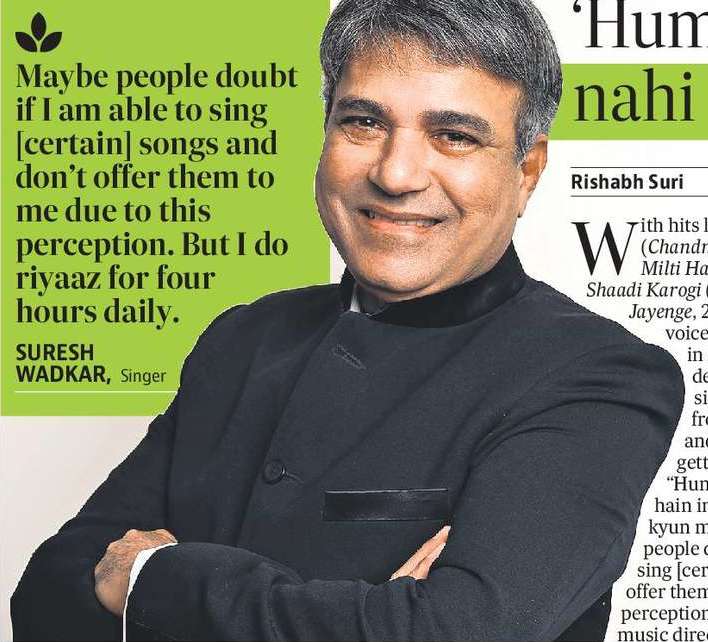
Rishabh Suri (HINDUSTAN TIMES; November 20, 2023)
With hits like Lagi Aaj Saawan Ki (Chandni, 1983), Sapne Mein Milti Hai (Satya, 1998), Mujhse Shaadi Karogi (Dulhan Hum Le Jayenge, 2000), Suresh Wadkar’s voice has left music lovers in awe over the last five decades.
However, the singer has been absent from the music industry and chalks this up to not getting work and says, “Hum gaane ke liye hi aaye hain industry mein, hum log kyun mana karenge? Maybe people doubt if I am able to sing [certain] songs and don’t offer them to me due to this perception. With new heroes and music directors, the thinking may be different. But I do riyaaz for four hours daily,” shares the 68-year-old.
With his music portfolio, Wadkar refuses to ask people for work. “Hum gaana maangne jaa nahi sakte; yeh abhimaan nahi, swabhimaan hai,” he says, adding, “Recently, a music director in Canada contacted me to sing a Hindi song in a Malayalam film and said, ‘I am a big fan, you have to sing the song’. Beech mein kisi ko yaad aa jaati hai ki aisa bhi ek singer hai.”
The Padma Shri awardee recently won the Lata Mangeshkar award from the Maharashtra government and is “happy” his work has been recognised. He says, “It felt good [to win the award] and that the government respects artistes. I feel lucky I got this award named after (late singer) Lata Mangeshkar ji, who is like Saraswati Maa [to me].”
25 Years of Satya: I was hospitalized when Sapne Mein Milti Hai was offered to me-Suresh Wadkar
7:50 AM
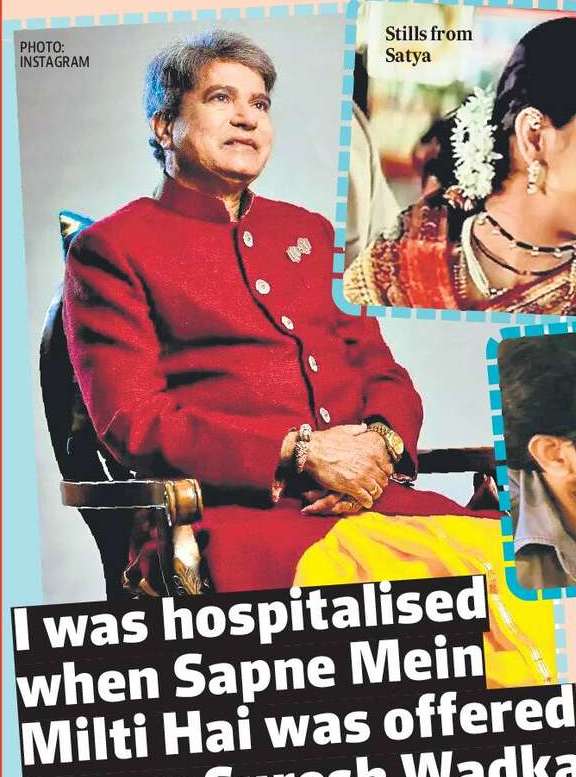
Soumya Vajpayee (HINDUSTAN TIMES; July 3, 2023)
Asong that is synonymous to the 1998 film Satya is Sapne Mein Milti Hai. Sung by Suresh Wadkar and Asha Bhosle, the track has, inarguably, earned cult status. The number is quite close to Wadkar’s heart as it came to him at a tough time.
“I was suffering from a heart ailment and was hospitalized when Vishal (Bhardwaj; composer) and Gulzar (lyricist) saab paid me a visit and said, ‘Get well soon and return home. We have a song that you have to record’. As a singer, it’s so relieving when a composer and a lyricist show that kind of trust in you and give you such comfort. I can never forget that day,” says Wadkar, as the song turns 25 today.
He adds that the song was destined to do well. “When we were working on it, we didn’t know it’d do so well. Iss gaane ki kundali bahut acchi thi. Yeh un gaanon mein se hai jisey aap sirf dil se banaate hain, zyada effort daalne ki ya bahut soch ke banaane ki koshish nahin karte,” he shares.
Though Wadkar and Bhosle recorded their parts separately, the seamlessness in the vocals stands out. “Unfortunately we couldn’t record together as Asha tai and my dates didn’t match. I recorded my part first. I think Asha tai did a much better job than me and sounded way better. Also, the way the song was picturized added to the magic,” Wadkar ends.
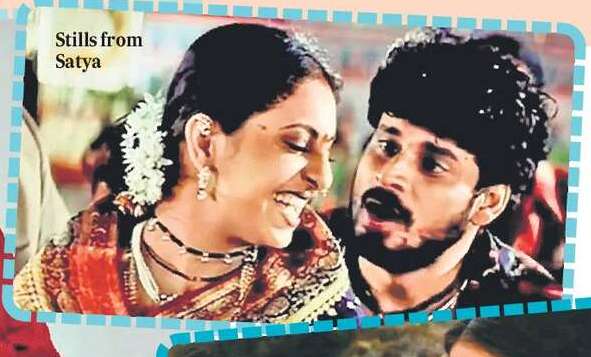
------------------------------------------------
Soumya Vajpayee (HINDUSTAN TIMES; July 3, 2023)
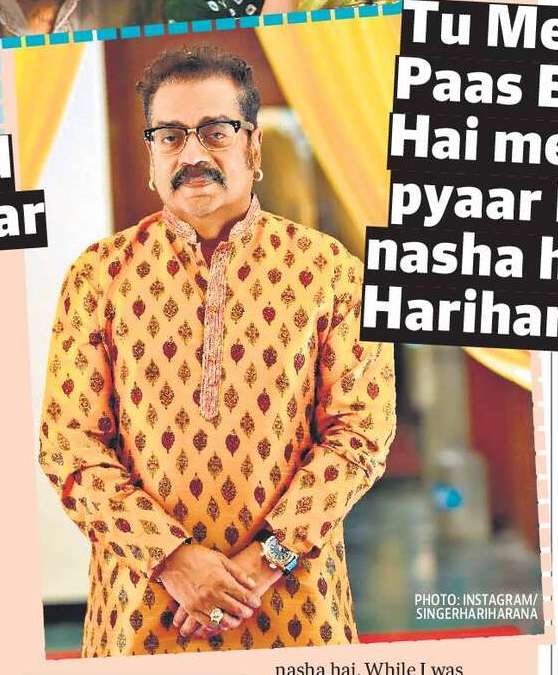
Besides impactful performances by actors Manoj Bajpayee, Urmila Matondkar and JD Chakravarthy, Satya is also remembered for is its soundtrack. The song Tu Mere Paas Bhi Hai, rendered by late legend Lata Mangeshkar and singer Hariharan, continues to feature in playlists of music aficionados. Hariharan shares:
“It was a beautiful composition and the lyrics [penned by writer Gulzar] were so meaningful. Iss gaane mein pyaar ka nasha hai. While I was recording it, I was so immersed in the beauty of the song ki aisa feel ho raha tha hum hosh mein hi nahin the. Kisi aur hi duniya mein the.”
The song turns 25 today and the Padma Shri recipient credits Mangeshkar for making it evergreen. “Lata ji was the crowning glory of the track. I feel blessed to have sung such a beautiful song with her. The way she conversed through the song felt magical. I am so thankful to Vishal (Bhardwaj; composer) bhai for giving me the opportunity to be part of the song,” he ends.
Today we have item songs with samosa and jalebi, aisa lagta hai koi restaurant wala gaana bana raha hai-Suresh Wadkar
8:19 AM

Divya Kaushik (BOMBAY TIMES; November 13, 2021)
This year in January, when the list of Padma awardees was announced, veteran singer Suresh Wadkar wasn’t surprised to know that he was being awarded the Padma Shri. He was happy and somewhat relieved that he was finally chosen for the long-awaited honour and recognition. The singer, who was in Delhi to receive the award recently, took out some time before the award ceremony to share why he feels that the recognition came his way rather late, why he is selective about his work, and his experience of being part of singing reality shows.
‘PEOPLE WOULD OFTEN ASK, ‘TUMKO PADMA AWARD KYUN NAHI MILTA?’’
The singer says, “I am getting the Padma award at the age of 67. I think I should have gotten it earlier. I was expecting that as I have been working in the music industry for 47 years, par der aaye durust aaye. I am happy to receive this honour now. I do not know what is the criteria for selection, if it is popularity or seniority, but I have seen artistes much younger than me getting it. Whenever January would come, I would tend to look in the newspaper for Padma announcement and the list of awardees. Even people would call me and ask, ‘Yaar tumko kyun nahi milta?’, and I would say, ‘May be I am not that senior or popular.’ But finally I have it now.”
‘TODAY WE’VE ITEM SONGS WITH LYRICS ON SAMOSA AND JALEBI’
The singer, who has songs from movies like Sadma, Masoom, Prem Rog and Chandni, among others to his credit, now keeps busy with his albums in different languages and stage shows. Ask him why he is selective about his work in Hindi cinema, and he says, “New music directors have come on the scene now. Earlier music directors were very particular while writing songs. They would choose the singer who could do justice to the song. Now new directors have a different thought process. Abhi koi bhi gaana koi bhi gaa sakta hai, yeh nahi hai ki woh theek gaayega ki nahi. The one who is popular gets to sing the song. Now three to four music directors work in one film, kaun sa gaana kisne banaya pata bhi nahi chalta. So I do work now, but it is limited.”
He adds that the other reason he is selective about his work is that “most songs being made today hardly have any recall value.” He says, “Earlier songs used to be situational and would reflect everyone’s life. Today we have item songs with samosa and jalebi, aisa lagta hai koi restaurant wala gaana bana raha hai. Where is the connection?”
‘NEPOTISM, GROUPISM, LOBBYING... ALL THESE EXIST AND IT IS WRONG’
Wadkar says that one reason why today we have fewer examples of movies that are known for their music is that “singers are pre-decided.” He says that “groupism, nepotism, lobbying… call it anything, par yeh hain, aap unke group mein ghus nahi sakte ho. Earlier I don’t think there was any favouritism. As the song would unfold, the music director would have the singer on his mind. Earlier, a song would decide the singer, but now the singer is decided first, and then comes the song because singer ko bola hota hai ki I will give you a chance to sing. Yeh toh apni kalaa ke saath dhokha hua. There are so many good singers like Shaan, KK and Sonu Nigam, but how many songs are they singing?”
‘STOPPED DOING REALITY SHOWS AS I CAN’T BE ONE OF THOSE JUDGES WHO RUSH TO THE STAGE EVERY MINUTE’
The singer has been part of reality shows, like Sa Re Ga Ma Pa L’il Champs, but over the years, he has distanced himself from reality shows. “I had a good experience with Sonu Nigam as a judge beside me. I think we were genuine on the show. We never followed what the channel would tell us. I would often get into fights with directors, they would whisper to me ki yeh uska beta hai, ya rickshaw chalane wale ka beta hai, and I would say that this is not related to the person’s talent. I stopped doing reality shows because I can’t be one of those judges jinko har ghadi camera apne uppar chahiye and they rush to the stage every minute.”
The government has noticed my talent; der aaye durust aaye-Suresh Wadkar
8:04 AM

Sugandha Rawal (HINDUSTAN TIMES; November 11, 2021)
Singer Suresh Wadkar strongly believes in the adage — better late than never. “Bahut din se intezar tha,” shares Wadkar, who was honoured with the Padma Shri award on Monday.
“I have been in the industry for the past 47 years, and I am 67 years old. I know it’s a delayed honour. I have no qualms about expressing it. And I am not complaining about it, but just stating a fact. The award has a big value in my life and I was waiting for it for a long time,” Wadkar says, adding, “Bahut saare logon ko kam age mein mil jaata hai. But der aaye durust aaye. The government has noticed my talent and honoured it, aage kya hi bol sakte hain.”
Wadkar has explored the world of playback singing in Hindi and Marathi, along with devotional music. He is known for hits such as Raat Ke Dhai Baje (Kaminey; 2009), Chapa Chapa Charkha Chale(Maachis; 1996), Tumse Milke Aisa Laga and Lagi Aaj Saawan (Parinda and Chandni respectively, both 1989), Aye Zindagi Gale Laga Le (Sadma; 1983).
Now, the singer wants to see how the award affects the work coming his way. “People look at the recipients of this honour in a very different way and give them more respect. Iska maan alag hota hai society mein. Kaam pe kitna asar padega, woh toh ab pata chalega,” says Wadkar, who has recorded some of his personal favourite classics of the past, and will release them soon.
I started singing jingles alongside selling cable TV points-Shaan in conversation with Sonu Nigam
8:06 AM

Shaan remembers his days of struggle with interviewer-cum-friend Sonu Nigam, as they speak about their musical journeys
Soumya Vajpayee Tiwari (MID-DAY; May 14, 2018)
While we thought getting two titans of the Indian music fraternity under the same roof would be a tough nut to crack, Sonu Nigam and Shaan made it seem like a cakewalk. In the cosy living room of Nigam's Versova home, the two transitioned from being musicians to interviewers, with utmost ease. Nigam had the perfect question to set the ball rolling, "Bhai, mere Karjat farmhouse kab chal raha hai?"
Edited excerpts from the interview.
Sonu to Shaan
You were initially known in the industry as Raja. How did you become Shaan?
Raja was not only my nickname, but also a contracted one. When I was collaborating with Raju [Singh, composer] on a Zee [Music] project in 1993, he asked me to sign the contract under that name Raja. Biddu [composer-producer] changed it from Raja to Shaan. He said Shaantanu [his original name] was too long a name. I was okay shortening it to Shaan because I liked the name, and found Shaantanu slightly thanda.
When did you first realise there is a musician in you?
I was 16, and I'd lost my dad. Until then, while singing, I would struggle to get the nuances of other singers right. Once I tried singing Mohammed Rafi saab's Subhanallah Haseen Chehra from Kashmir Ki Kali (1964) and pulled it off perfectly. I got all the notes right. I also felt as if I saw my dad's shadow on the window then. It was a spiritual moment for me.
What made you pursue music as a profession?
Since my dad had struggled to make a mark in the music industry, I decided to pursue it diligently. When I realised that I have the potential to make it big, I started singing jingles alongside doing odd jobs like taking tuitions and selling cable TV points. I also ran a DTP service, where I would create layouts and print material for clients like Jet Airways, East-West Airlines, Maersk, etc. But I was certain about growing as a musician. Since I got married around the same time, the sense of responsibility grew and I became more focused on my singing career.
When the texture of your voice changed in teenage years, how did you deal with it?
It was a tough time. When I started singing jingles at the age of five, I was made to stand right in front of the mic alongside other kids. But as I grew older and my voice began to get hoarse, I was made to stand further away from the mic. I felt so discouraged that I asked them to not call me again.
(Sonu adds)
When my voice was undergoing a transition and I wasn't able to hit the higher notes, my dad [singer Agam Kumar Nigam] couldn't understand why I was complaining about it. I was taken to doctors and given penicillin injections because they suspected that I had swollen tonsils. The injections were so painful that I would limp on my way back home. One day, I was rehearsing a song sung by Vijay Benedict from the Doordarshan show, Manoranjan, in front of the mirror. That's when I realised that my voice had come down one octave perfectly.
Did you learn music from anyone other than Ghulam Mustafa Khan saab?
I had attended some classes at Suresh Wadkar ji's academy. Since my preparation was not up to the mark, I skipped the exams and was too embarrassed to resume classes after that.
Are you disappointed when you record a song that has been attempted by multiple singers, and your version is not chosen?
Of course, it pinches. But I'm okay with the idea of recording a track that's also sung by others because I find the process challenging. When I feel my version was better than the one chosen by the makers, I just feel bad for the song (laughs).
What do you think of the way the business of music has changed over the years?
I started out as a pop singer, when people bought music and music labels backed independent projects. Now, even if you have a composition and lyrics, you need money for the production of a track. You need to invest money to shoot a music video and sometimes to also buy hits online. Today, the business of music has literally turned into a 'business' that only singers with money can 'invest' into. Of course, there are some extremely talented singers, but they are exceptions, not the rule.
Shaan to Sonu
You keep taking breaks from work frequently to travel. What's the reason behind it?
Throughout childhood, my parents never took us on vacations. It's not that we were poor; the concept of a vacation didn't exist at our home. In fact, despite having settled down in Mumbai in 1991, it wasn't until three years later that I went to the Gateway Of India at Babul Supriyo's insistence. I was so focused that my travel otherwise was limited to home and studio. I realised that I shouldn't grow old like this. That's when I started going on vacations. My South Africa trip in 2001 was the turning point — I was at Signal Hill alone and had never experienced such silence before. That's when I realised that breaks are important. I went trekking in the Himalayas. Lately, I've been going to Rishikesh a lot. Sitting on the banks of the Ganga, attending aartis and visiting ashrams gives me solace.
What is your mantra to be in sur during gigs?
There's no mantra. It's to do with the technique. If I start off perfectly, everything goes off well.
(Shaan adds)
I remember attending a show in Canada, where you performed alongside several other singers. All of them were off tune, but the moment you came on stage, you hit the bull's eye. I was amazed by your talent.
What do you prefer — when composers decide the structure of a song and ask you to replicate it, or when they give you the freedom to improvise?
It's good when composers have a clear vision, but I enjoy more when they are open to improvisation. For instance, I recently recorded the song Kulfi from 102 Not Out with Salim-Sulaiman. They are talented composers. While I was singing, Salim said, "Kuch apni taraf se karo, yaar." Aise kaam karne mein mazaa aata hai.
How did you widen your range to adapt to the trend of high-pitch singing?
As soon as I took note of the increasing demand for high-pitched singing, I started practising techniques to increase my range. In a few months, I started hitting notes that were five-six semitones higher than what I was comfortable singing earlier.
I sometimes even tried to use my charm to sell the CDs-Vidya Balan
7:47 AM

As told to Avinash Lohana (MUMBAI MIRROR; September 25, 2017)
I was studying for my MA at
Mumbai University and would often visit the St. Xavier's College from
where I had graduated to use the library. I be friended some people
there who, like me, were interested in classical music and dance. We'd
go for concerts together.
One of these friend's sister and brother-in-law had an event management company called Banyan Tree. They were looking for volunteers to help them host a festival which featured 70 artistes from across the country. I ended up volunteering for it and forged a good equation with the promoters, Nandini and Mahesh Babu, who were looking for young college students to join them. I worked with them for around three months before I landed my first Malayalam film.
They already had a lot of concerts planned, our job was to get sponsors for them. They also had a lot of records. We would set up stalls at various Indian classical music concerts and sell them. I met a lot of people during my stint with this company and remember watching a performance by Yumlembam Gambhini Devi, the Padma Shri and Sangeet Natal Akademi awardee Manipuri singer-dancer. Though I didn't understand a word, as she performed in her local language, I was truly moved by her recital.
I even met flautist Pandit Hariprasad Chaurasia and sarod maestro Pandit Shivkumar Sharma, Zakir (Hussain) bhai, the internationally renowned tabla exponent and the Gundecha Brothers. Then there was the classical music maestro Pandit Jasraj and another well-known singer, Suresh Wadkar ji. I remember at one of the concerts I had met Suresh Wadkar ji and was trying to sell a music CD to him. He actually mentioned that to me recently on a flight. He said, “I remember you from that time, Vista.“ It was really sweet.
I took my job quite seriously and would be at the concerts way before the appointed time so we could plan how we should handle things at the counter. We would set ourselves targets of how many CDs we wanted to sell. I sometimes even tried to use my charm to sell the CDs.
I would reach the office, which was in Charkop in Andheri, by 10 am and would leave around 6-6.30 pm. Most days I would think of taking the bus back home to Chembur where I lived, but almost all the money I earned was spent on auto rickshaw.
I earned Rs 3000 after working for three months for Banyan Tree. However, I had got my first cheque of Rs 1,200 from TV which I had started dabbling in when I'd just joined college. Sadly that serial was never aired. I bought my sister, Priya, a pair of earrings worth Rs 60 with the money.
My boss, Mahesh Babu, was the gentlest person I've met, he never screamed at us. In fact, he would call for wada pav every evening and indulge us. Besides him and Nandini, I had a third boss, Vinod, but he still calls me “boss“. It was an informal setup and these bosses always made us felt like our ideas are really valuable and never dismissed anything we had to suggest.
After I bagged the Malayalam film I couldn't continue working there. I had always wanted to become an actor and was biding my time. While I was doing my MA, I had a lot of time on my hand as we hardly ever attended lectures. The Kalina University campus is beautiful. On the rare instance when we went to the University, we would usually be hanging out outside.
I loved working at the Banyan Tree as I got to hear great music and meet a lot of artistes. If I ever play a classical musician, all those performances and back stage experiences will come in handy.
One of these friend's sister and brother-in-law had an event management company called Banyan Tree. They were looking for volunteers to help them host a festival which featured 70 artistes from across the country. I ended up volunteering for it and forged a good equation with the promoters, Nandini and Mahesh Babu, who were looking for young college students to join them. I worked with them for around three months before I landed my first Malayalam film.
They already had a lot of concerts planned, our job was to get sponsors for them. They also had a lot of records. We would set up stalls at various Indian classical music concerts and sell them. I met a lot of people during my stint with this company and remember watching a performance by Yumlembam Gambhini Devi, the Padma Shri and Sangeet Natal Akademi awardee Manipuri singer-dancer. Though I didn't understand a word, as she performed in her local language, I was truly moved by her recital.
I even met flautist Pandit Hariprasad Chaurasia and sarod maestro Pandit Shivkumar Sharma, Zakir (Hussain) bhai, the internationally renowned tabla exponent and the Gundecha Brothers. Then there was the classical music maestro Pandit Jasraj and another well-known singer, Suresh Wadkar ji. I remember at one of the concerts I had met Suresh Wadkar ji and was trying to sell a music CD to him. He actually mentioned that to me recently on a flight. He said, “I remember you from that time, Vista.“ It was really sweet.
I took my job quite seriously and would be at the concerts way before the appointed time so we could plan how we should handle things at the counter. We would set ourselves targets of how many CDs we wanted to sell. I sometimes even tried to use my charm to sell the CDs.
I would reach the office, which was in Charkop in Andheri, by 10 am and would leave around 6-6.30 pm. Most days I would think of taking the bus back home to Chembur where I lived, but almost all the money I earned was spent on auto rickshaw.
I earned Rs 3000 after working for three months for Banyan Tree. However, I had got my first cheque of Rs 1,200 from TV which I had started dabbling in when I'd just joined college. Sadly that serial was never aired. I bought my sister, Priya, a pair of earrings worth Rs 60 with the money.
My boss, Mahesh Babu, was the gentlest person I've met, he never screamed at us. In fact, he would call for wada pav every evening and indulge us. Besides him and Nandini, I had a third boss, Vinod, but he still calls me “boss“. It was an informal setup and these bosses always made us felt like our ideas are really valuable and never dismissed anything we had to suggest.
After I bagged the Malayalam film I couldn't continue working there. I had always wanted to become an actor and was biding my time. While I was doing my MA, I had a lot of time on my hand as we hardly ever attended lectures. The Kalina University campus is beautiful. On the rare instance when we went to the University, we would usually be hanging out outside.
I loved working at the Banyan Tree as I got to hear great music and meet a lot of artistes. If I ever play a classical musician, all those performances and back stage experiences will come in handy.
Subscribe to:
Posts (Atom)