Showing posts with label Supreme Court. Show all posts
Showing posts with label Supreme Court. Show all posts
Doing drama in court, Supreme Court tells Rajpal Yadav; gives final chance to deposit Rs. 2 cr
9:49 AM

HINDUSTAN TIMES (September 18, 2026)
The Supreme Court on Tuesday allowed actor Rajpal Yadav’s request for a “last opportunity” to deposit Rs. 2 crore with its registry as part payment in a cheque-bounce case involving dues owed to a production house. He has two weeks to deposit the amount and furnish surety for the remaining dues. Chief Justice of India Surya Kant, however, said Rajpal’s past conduct did not inspire confidence.
“Looking at his past conduct... how can anybody trust him? He’s perfect in doing drama and acting in Bollywood; he’s doing the same thing in Court also,” the CJI said.
Speaking to the press outside the court on Tuesday, Rajpal’s advocate Bhaskar Upadhyay said, “We welcome this order... The Court has graciously given us time to deposit this amount. Initially, it was Rs. 5 crores. Now the Court has reduced it to Rs. 2 crores. It’s a great relief for us, and we will comply with the orders and directions of this Court.”
Rajpal also continues to have protection from arrest until the next hearing, scheduled for October 5. But he has been directed to surrender his passport.HTC
How the legal battle unfolded
The case dates back to 2010, when Rajpal took a Rs. 5 crore loan from a Delhi-based company for his first directorial, Ata Pata Laapata (2012). His failure to repay the loan, which grew with interest and other charges, led to a cheque-bounce case. Despite multiple payment extensions from the court, the dues remain unsettled.
Remembering Tamas: A lesson in history for the ‘reasonable and strong-minded’
10:16 AM

Arushi Jain (BOMBAY TIMES; August 14, 2026)
As India observes Partition Horrors Remembrance Day, Govind Nihalani’s Tamas remains a searing depiction of Partition. First telecast on Doordarshan in 1988, the six-part adaptation of Bhisham Sahni’s novel tells the story of the violence and upheaval that accompanied the splitting of a nation into two. Nearly four decades later, its questions around history, memory and intolerance remain relevant. While Nihalani has maintained that a work like Tamas is not easy to make today, late actor Om Puri believed it would remain relevant for generations.
‘Those who forget their history are condemned to repeat it’
Adapted from Bhisham Sahni’s 1973 novel of the same name, which won the Sahitya Akademi Award in 1975, Tamas brought together a formidable cast of Om Puri, Amrish Puri, A K Hangal, Pankaj Kapur, Dina Pathak and Surekha Sikri. Sahni himself was closely involved with the series, though certain details were altered to create a more compelling screenplay.
Every episode started with a reminder: “Those who forget their history are condemned to repeat it.” The series unfolded in a fictional Punjab town, beginning with a pig carcass left on the doorsteps of a mosque, an act that sparks riots. From there, it traced how rumours snowballed into violence, how neighbours turned into enemies, and how women took their own lives to escape dishonour.
Years later, at a 2011 event, Om Puri explained why Tamas remained relevant: “A film like this should be shown to every community. This is a work of art which should be shown to every child, and it will be relevant for generations to come.”
Govind Nihalani had a story, but no money to make it
Making Tamas was not easy. Born in Karachi, Nihalani had long been intrigued by the Partition, but the courage to take it on as the subject of a film came only after he stumbled upon Bhisham Sahni’s novel. “I first saw the book at a store in Mandi House. I didn’t know the writer or what it was about, I just read the title and liked it. I still remember the first sentence – it read – ‘Aale mein rakhe diye ne ek jhapki lee’. And as I finished the first paragraph, I said to myself, ‘This is it. I am going to work on it.’ But I had no money to make the film,” he recalled in a 2017 interview with Delhi Times.
The same year, he met then Prime Minister Indira Gandhi during the International Film Festival of India (IFFI) in Delhi. During their two-minute conversation, Nihalani asked if the government would support a film on Partition. She told him, “It will all depend on the political condition of the country when you make the film.”
Nihalani soon realized that turning Tamas into a film would be a herculean task, particularly when it came to finding the money. He eventually found Lalit Bijlani of Blaze Films, who had produced Shyam Benegal’s Ankur (1974), willing to back the project. Nihalani had warned Bijlani that the film could be controversial, but he went ahead nevertheless.
His apprehensions proved right when Tamas ran into controversy after its 1988 Doordarshan telecast, with Nihalani facing threats and court cases. Yet, the film has endured as one of the finest works on Partition.
‘Making Tamas was an act of faith’
“When Partition happened, I was a little kid, but my first memory of fear, panic and blood comes from that period. My family migrated from Karachi and we settled down in Rajasthan. I was very emotional while making this film,” Nihalani had said in a 2013 interview.
That personal connection also shaped the making of Tamas. “Making Tamas was an act of faith,” Nihalani had remarked. He said he was fortunate to find some of the finest artistes for the project, “I was just lucky.”
'Some roles change your life’
For the actors, too, the series was transformative. Ila Arun, speaking at a 2011 event marking its DVD release, had said, “I didn’t know the pain of Partition until I played Lalaji’s wife. I understood what the Partition took away from people. After working on Tamas, I learnt a lot about humanity and Hindu-Muslim friendship.”
Deepa Sahi had also echoed the sentiment: “Some roles change your life and Tamas is one of those. I can write a book on my experiences from the Tamas shoot.”
Amrish Puri, though wary of overexposure on television, agreed to play an elderly Sikh community leader at Nihalani’s insistence. “It really was an agonizing role in Tamas. I was very selective about television appearances and accepted this for the sake of personal associations. When Govind wished to cast me, I didn’t allow stardom to affect my decision,” he recalled in his autobiography.
Tamas takes us to a historical past – unpleasant at times, but revealing and instructive
The Supreme Court in its 1988 judgment
Om Puri, who played the tanner Nathu, believed the show carried a larger lesson. “It is a reminder of the price we pay if we divide on the basis of communities,” he had said at the 2011 event. To look the part, he shed further kilos despite already being lean.
Tamas went on to win three National Awards – for Nihalani (Nargis Dutt Award for Best Feature Film on National Integration), Surekha Sikri (Best Supporting Actress), and music director Vanraj Bhatia (Best Music Direction). The series is currently streaming on YouTube.
‘Tamas is not entertainment. It is history’
The telecast was followed by legal battles. On January 21, 1988, a writ petition led to a Bombay High Court stay on further telecast of the serial. But two days later, on January 23, a division bench of the Bombay High Court, comprising Justices Bakhtawar Lentin and Sujata Manohar, overturned it after watching all six episodes in one day. The court famously declared: “Tamas is not entertainment. It is history. And you cannot wish away history simply by brushing it under the carpet.”
The controversy didn’t end there. There were protests, demonstrations, and Nihalani received threatening calls and needed police protection. The case reached the Supreme Court, where Soli Sorabjee, India’s former Attorney General, argued on Nihalani’s behalf that free speech could not be judged by the standards of a fanatic. On February 1, 1988, the Supreme Court upheld the High Court’s decision, ruling that Tamas must be seen through the eyes of “reasonable, strong-minded” citizens.
The court added that the HC judges who had seen the film had come to the conclusion that “the average person will learn from the mistakes of the past and realise the machinations of the fundamentalists and will not perhaps commit those mistakes again.”
An India Today report from the time had quoted Nihalani as saying, “We are becoming polarized as a society and strong consciousness is needed among people so that the saner elements in each community see this pattern.”
Ironically, the controversy also boosted sales of Bhisham Sahni’s novel. By the time the final episode aired on February 13, 1988, Tamas became both a cultural flashpoint and an important case on free speech.

Amrish Puri featured as elderly Sikh community leader Teja Singh
Sujoy Ghosh on decade-long Kahaani 2 plagiarism row: “It was one battle after another”
10:43 AM

Niharika Lal (BOMBAY TIMES; May 3, 2026)
It was like one battle after another, and winning this case was like winning an Oscar” – that’s how Sujoy Ghosh describes his decade-long battle in court over the plagiarism accusations against his film Kahaani 2: Durga Rani Singh (2016) . Now, after the case was quashed last month, he is revisiting the ordeal.
At a discussion hosted by the Screenwriters Association in Mumbai, Ghosh recalled the nightmare that the case caused.
‘IP IN OUR COUNTRY IS TREATED AS A CRIMINAL CASE’
Ghosh, who wrote and directed the film, said the complainant had first approached the SWA, which found no connection between the two scripts. He then went to court, allegedly concealing this. Ghosh said he discovered the SWA verdict later after missing the email and submitted it in court, adding that the complainant was a serial litigator.
He shared, “In 2016, we had just released Kahaani 2: Durga Rani Singh, which is the sequel to Kahaani, and Robin da (Robin Bhatt), who was part of the SWA, called me and said, ‘ Arey tune kuch kiya kya?’ I said, ‘What did I do?’ He said, ‘There is a gentleman who is accusing you of copying his script.’ I didn’t take it seriously because I had not. So I said, ‘No, I didn’t,’ and I gave all my details to Robin da.”
He explained, “I didn’t realize it. I didn’t take it seriously because it’s like somebody tells you, ‘you killed that person.’ ‘No, I haven’t!’ Why should I take it seriously? And that was my biggest mistake. And then suddenly, I had a criminal case against me because IP in our country is treated as a criminal case. So if I accuse you of plagiarizing – and that’s a big word – then a criminal case can be filed. Initially, I didn’t take it seriously. It’s like a little snowball that starts gathering momentum. It piles up, grows bigger, and before you realize it – boom! It has hit you. I was like, ‘yeh kya ho raha hai?’ It was one battle after another. It kept growing. The Supreme Court also took a lot of time. And thanks to the court, we got a judgment stating that whenever someone accuses another of copying any work, certain steps must be followed before making such a claim.”
Background
After Kahaani 2 was released, a case of copyright violation was filed against writer-director Sujoy Ghosh. The complainant, Umesh Prasad Mehta, had written a script for the film Sabak. He alleged that Ghosh had copied that script for Kahaani 2. A criminal complaint followed, and a June 7, 2018 summoning order by the Chief Judicial Magistrate triggered a legal battle that lasted nearly a decade.
In March 2026, the SC quashed the copyright infringement case, noting that Ghosh’s script had prior registration and that the complaint was baseless. Ghosh told the SC that the complainant was a serial litigator. He added that the complainant had approached the SWA, which found no similarity between the scripts and cautioned the complainant, but he allegedly concealed this verdict before proceeding with the case.
‘Would suggest fellow writers – don’t take such complaints lightly’
Writer Preeti Mamgain, who was hosting the session, and writer Jyoti Kapoor, then convenor of the SWA in Sujoy’s case, explained that regardless of who files a complaint – producer, director or writer – the SWA calls both parties. “We listen to both sides. Jo bhi verdict hota hai, we send it to both parties,” they said.
Mamgain added, “We have had cases where someone went directly to court, and the court sent the script to us.” Sujoy said, “The biggest mistake I made, which I would suggest to all fellow writers, was not taking it seriously. I didn’t give it the seriousness it deserved. There is no point in thinking you are safe because you know you are innocent.”
Yadav Ji Ki Love Story doesn’t defame community, says Supreme Court
4:41 PM

THE TIMES OF INDIA (February 26, 2026)
New Delhi: The Supreme Court Wednesday rejected a plea seeking a ban or a change in the title of the upcoming film, ‘Yadav Ji Ki Love Story’, saying the name does not portray the Yadav community in a poor light.
A bench comprising Justices B V Nagarathna and Ujjal Bhuyan rejected the petition filed by the chief of the Vishwa Yadav Parishad. Its main grievance was that the name of the film reflected the Yadav community in bad light in society.
“The title...nowhere has any adjective or any word that portrays the Yadav community in bad light,” Justice Nagarathna said. The bench called the apprehensions “wholly unfounded” and dismissed the petition.
The bench distinguished its earlier order in a similar case related to ‘Ghooskhor Pandat’ in which it had asked the producer to change the title of that movie.
“The expression ‘ghooskhor’...means corrupt. Therefore a negative meaning was being attached to the community. In the instant case, no such negativity is attached to the Yadav community. Neither of the reasonable restrictions under Article 19(2) (reasonable restrictions to freedom of speech and expression) under the Constitution are attracted. The name in no way portrays the Yadav community in bad light or any negative way. The writ petition is accordingly dismissed,” the order said.
The petitioner had alleged that the title created an offensive stereotype against the community and raised concerns over the depiction of the female lead.
Supreme Court grants bail to filmmaker Vikram Bhatt’s wife
10:34 AM
THE TIMES OF INDIA (February 14, 2026)
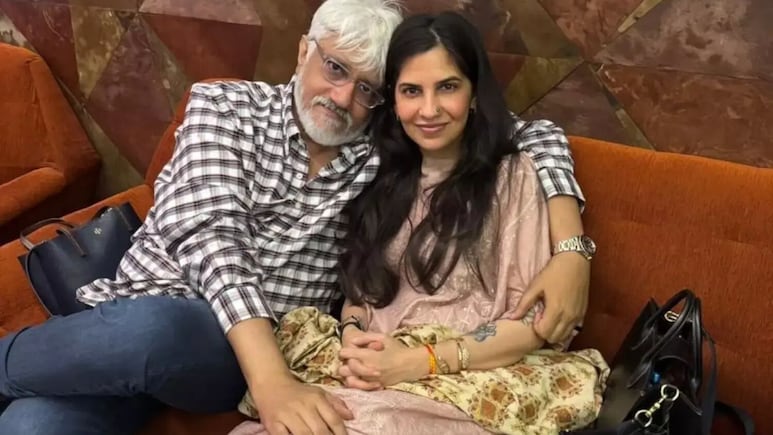
New Delhi: Terming her arrest in an alleged cheating case ‘unfortunate’, the Supreme Court on Friday granted bail to filmmaker Vikram Bhatt’s wife Shwetambari and ordered her immediate release from Central Jail, Udaipur. Senior advocate Mukul Rohatgi told a bench of CJI Surya Kant and Justice Joymalya Bagchi that on a frivolous cheating case lodged by Ajay Murdia, owner of Indira IVF and a partner of Indira Entertainment LLP, Rajasthan police had picked up the husband and wife from Mumbai in December.
When Murdia’s counsel Harsh Surana said it is a case of cheating Rs 44 crore, the bench asked, “Can a criminal case be used for recovery of dues? It is very unfortunate.” It issued notice to Rajasthan and Murdia and asked them to file response by Wednesday while posting further hearing on Thursday.
In its order, the bench said, “Meanwhile, as an interim measure, it is directed that Shwetambari V Bhatt, wife of Vikram Bhatt, presently incarcerated at Central Jail, Udaipur, be released forthwith on interim bail subject to her furnishing bail bond to the satisfaction of the chief judicial magistrate, Udaipur”. The Rajasthan HC had rejected bail pleas of Bhatts on January 31.
Vijay breaks silence on the delay of his final film Jana Nayagan’s release
10:41 AM

HINDUSTAN TIMES (February 1, 2026)
Amid the ongoing legal issue with the release of his final film Jana Nayagan, actor-turned-politician Vijay has finally broken silence on the matter.
Talking about the delay in the film’s release due to certification issue, Vijay told NDTV, “I feel bad for my producer as Jana Nayagan is suffering because of my political entry. I was mentally prepared for this and was aware that my film would be affected due to my political entry.”
The film was slated for an initial release on January 9, but it didn’t get clearance from the Central Board of Film Certification (CBFC) in time.
In the latest development in the case, the CBFC filed a caveat in the Supreme Court, as per Bar and Bench, saying that no orders shall be passed in the case until CBFC is heard.
This comes ahead of the anticipation of the producer, KVN Productions, moving the Supreme Court over the Madras High Court Division Bench order, as per Live Law.
On January 27, a Division Bench of the Madras HC allowed the CBFC’s appeal and set aside the Single Judge’s direction to grant a UA certificate to the film. The bench observed that CBFC should’ve been given time to present its case in the single-judge hearing that favoured the film.
The producer claimed in court that CBFC’s examining committee watched the film in December and informed that it would be given UA 16+ certificate after 14 cuts. They complied to it but did not hear back from CBFC till January 5, that’s when they approached the Madras HC. CBFC had claimed that the stall in certification was due to a complaint saying that the film might ‘hurt religious sentiments’ and certain scenes needed board’s clearance.
Releasing the film now makes no sense, says Thug Life Karnataka distributor
9:08 AM

HINDUSTAN TIMES (June 20, 2025)
Despite getting a go-ahead from the Supreme Court, the distributor of actor Kamal Haasan’s Thug Life in Karnataka believes there is no point to a belated release.
The film premiered across India two weeks ago, but controversy around the actor’s remarks on Kannada resulted in a stay on its release in the state.
A day after the apex court’s decision, distributor Venkatesh Kamalakar noted, “It is not a good business decision to release the film now. [Kamal’s] previous films Indian 2 (2024) and Vikram (2022) also did not do well here.”
Venkatesh, who primarily distributes big-budget Tamil films in Karnataka, added, “When it comes to his films, the success depends on how good it is. Thug Life has generally not been considered a good film, so it’s too risky.”
According to industry sources, the distributor had already paid the production house Rs. 9 crore as an advance for distribution rights. Venkatesh said the banner had promised to return the money. However, he said he isn’t anticipating any difficulty in getting the refund.
He asked, “It is not like it is our fault. Things turned out the way they did, and when there is no profit, which theatre owner will agree to showcase the film?”
Thug Life to release in Karnataka; Supreme Court says can’t allow mobs to take over streets
4:28 PM
HINDUSTAN TIMES (June 18, 2025)
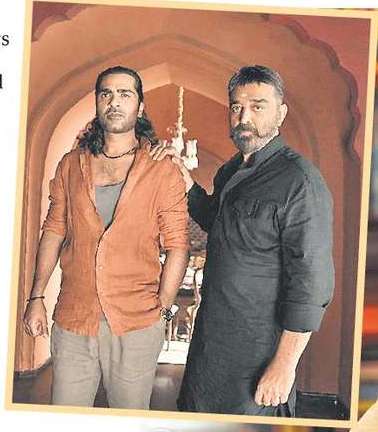
The Supreme Court on June 17 upheld the rights of filmmakers and theatre owners to release movies without threats of arson and violence while making it clear that the Karnataka government must protect actor-producer Kamal Haasan’s right to screen Thug Life in the state.
Expressing concerns over the “extra-judicial ban” on the screening of the Mani Ratnam directorial, a bench comprising Justice Ujjal Bhuyan and Justice Manmohan said the rule of law demands that any film that has a Central Board of Film Certification certificate must be released and the state has to ensure its screening.
The bench was hearing a PIL filed by Bengaluru resident M Mahesh Reddy, seeking directions to allow the screening of Thug Life, which was not released in Karnataka after certain groups issued threats against its exhibition following Haasan’s “Kannada was born out of Tamil” remarks. The Supreme Court gave a one-day time to the Karnataka government to apprise it about the release of the movie in the state.
Supreme Court junks CBI plea against HC quashing LOCs for Rhea Chakraborty
7:44 AM
THE TIMES OF INDIA (October 26, 2024)
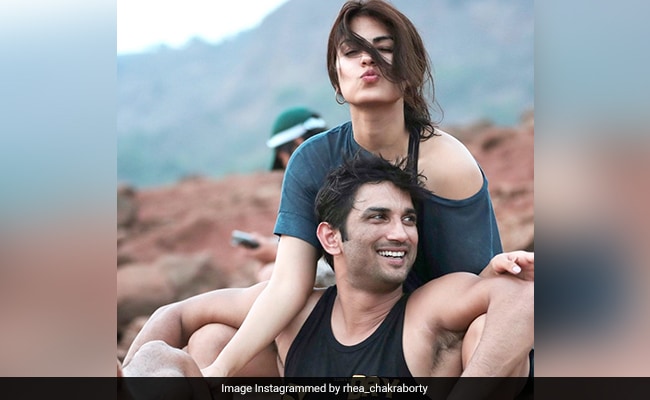
New Delhi: Supreme Court on Friday dismissed CBI’s plea against the Bombay High Court’s decision to quash the Look Out Circulars (LOCs) issued against actor Rhea Chakraborty, her brother and her father in actor Sushant Singh Rajput’s death case, and pulled up the agency for filing the appeal.
A bench of Justices B R Gavai and K V Viswanathan said the appeal was frivolous and filed only because a high profile person was involved. It asked the state counsel not to file such an unnecessary petition.
The LOCs had been issued by immigration authorities on the request of the CBI, which has been probing Rajput’s death on a complaint made by his family. The Bombay HC quashed the LOCs in Feb this year after finding that the agency had failed to spell out its reasons for the issuance of these LOCs.
Chakraborty was arrested by the Narcotics Control Bureau (NCB) under provisions of the Narcotic Drugs and Psychotropic Substances (NDPS) Act in Sept 2020 after Rajput’s death. She was granted bail by the Bombay HC.
The Bombay HC on Feb 22 quashed the LOCs issued against Chakraborty and her brother Showik and their parents — Indrajit and Sand hya. It held the LOCs — issued against them in 2020 — could not be sent out on the mere registration of an FIR, while allowing the pleas of the Chakrabortys.
The actor and her family members were observed to have cooperated with the CBI in its investigation by appearing before the agency whenever summoned without attempting to evade it.
“An LOC is a coercive measure to make the person surrender and as such interferes with the person’s right of personal liberty and free movement and curtails the fundamental right of an individual to travel, guaranteed under Article 21 of the Constitution,” the HC had said.
The bench added the reason for issuing an LOC — the apprehension of the agency — needed to be spelt out.
It was so enjoyable for both Aamir Khan me to watch Laapataa Ladies at Supreme Court-Kiran Rao
7:59 AM

Niharika Lal (BOMBAY TIMES; August 11, 2024)
Almost six months after its release, and six years after she first heard the idea of Laapataa Ladies, Kiran Rao is still receiving stellar reviews. Last week, however, it was not regular moviegoers but judges of the Supreme Court who watched the film and discussed its unique theme with Kiran and Aamir Khan after the screening. After the screening, Kiran spoke to us about her experience of visiting the Supreme Court, interacting with the judges, and how, after six months, she feels enveloped by the love for the film.
“Now I literally see hearts in people’s eyes when they look at me,” she said at the screening in Delhi.
‘Wanted to touch upon the kind of experiences women have’
Two scenes from the film that got the biggest reactions were one, the dialogue between two elderly ladies about why women of the house can’t become friends, and second is the dialogue, ‘Iss desh mein ladkiyon ke saath fraud ho raha hai – uska naam hai bhale ghar ki bahu-beti’.
Talking about what she wanted out of these moments in the film, Kiran says, “The kind of experiences that women have in their workplaces and homes were some of the experiences we wanted to touch upon. I feel that these two scenes resonated with the audience because they were genuine interactions between the characters, not lectures making a point. Both came very organically.”
‘THE GOAL WAS REALLY TO START A CONVERSATION WITH PEOPLE ON THE MANY THEMES THAT THE FILM TOUCHES UPON’
Because of the overwhelming response to Laapataa Ladies, Kiran says that she has had some of the most memorable months of her life.
“Honestly, I have been feeling enveloped in the affection and the great love that the film has been receiving. The reaction is something I didn’t expect at all, it has really affected me personally. I feel very humbled by the fact that not just women, but people in general, have been moved by the film. I have had interactions with people whose stories have been very similar. The goal was really to start a conversation on the many themes that the film touches upon and the film seems to have gone beyond themes or issues and touched people’s hearts. That is the most incredible feeling as a filmmaker.”
Kiran shares that the film speaks to people across the board. “Most of us relate to the experiences of the characters in the film, even though we may not belong to rural India or be a woman. The film has a universal humanity, which we were hoping to convey. Even when we were showing the film at the Toronto Film Festival and whenever I was traveling in Europe, the reactions have been similar across the board. People react to the fact that it reminds them of someone in their lives, resonating with the ideas it presents. So, it has become broader than just this specific story, which is what I think every filmmaker hopes to do – to create something memorable that connects with people.”
A special screening
I had to pinch myself several times to believe it was really happening. The screening was full, and there was so much warmth. People may have seen the film before, but they were watching so kindly, engaged, with so much laughter in the hall. It was so enjoyable for both Aamir and me to watch it with an audience again – especially such a responsive one.
Aamir Khan to retire from acting?
8:54 AM

L-R: Actor Aamir Khan, filmmaker Kiran Rao and Chief Justice of India DY Chandrachud
At his film’s screening at Supreme Court, the actor revealed that he might pursue producing full-time
HINDUSTAN TIMES (August 11, 2024)
Actor Aamir Khan and his ex-wife, director Kiran Rao, attended the screening of their film Laapataa Ladies at the Supreme Court on Friday. At the event, while talking about his motivation to produce the film, Khan also hinted at retiring from acting and pursuing production.
“During Covid, at the age of 56, I realized this is the last leg of my career... I might have 15 more years of active work left. I thought that I could do one film a year as an actor, but as a producer, I can [do] more films,” he said during an interaction with Chief Justice of India D Y Chandrachud, adding, “Laapataa Ladies is the first project in that sense. I want to promote this kind of talent and hopefully, I can produce four to five films a year.”
The screening was part of a gender sensitization programme and was held to commemorate the 75th year of the Supreme Court of India.
Aamir’s next is Sitaare Zameen Par, which he is producing as well. He is also producing two other films — son Junaid Khan’s next and Lahore 1947, directed by Rajkumar Santoshi, starring Sunny Deol.
Day before public screening, Supreme Court stays release of Hamare Baarah till Bombay High Court decides on plea
10:53 AM

New Delhi: Just a day before the controversial film ‘Hamare Baarah’ was scheduled for public screening, the Supreme Court on Thursday stayed its release till Bombay High Court decides a petition against the film for allegedly distorting religious text to bring disrepute and defame Islam.
The HC is examining the validity of the clearance given to the film by the Central Board of Film Certification (CBFC). Taking note of the pending case before the HC, a bench of Justices Vikram Nath and Sandeep Mehta ordered that the screening of the movie shall remain suspended till the disposal of the petition in HC and requested the court to decide the case expeditiously.
Challenging the Bombay HC’s interim order allowing release of the film, advocate Fauzia Shakil submitted that the film was derogatory of Islamic faith and the trailer itself contained provocative and derogatory statements about the sermons and messages of Surah Al Baqarah and the film should not be allowed to be screened till the court decides the case.
Shakil further submitted that the order passed by HC directing CBFC to form a panel to review the film was an unreasoned one as the petition was against the board’s decision, which is one of the interested parties. “The HC could not have directed the CBFC to constitute a committee because the CBFC was a party interested in the litigation,” she said.
The bench also said that they saw the teaser of the film and observed, “If the teaser is so offensive then what about the whole movie...,” raising questions on how the board cleared the film for public screening.
The high court had restrained the filmmaker from releasing the movie till June 14. A day later, it ordered the CBFC to form a panel of three individuals including at least one member from the Muslim community to view the movie. However, the court later allowed release of the movie after the producers agreed to delete certain dialogues from it.
Jabra Fan case: A film’s trailer is not an offer or a promise, only to create buzz, says Supreme Court
10:36 PM

The SC rules in favour of Yash Raj Films; no penalty on YRF for not including Jabra song in the 2016 Shah Rukh Khan-starrer Fan
Niharika Lal (BOMBAY TIMES; April 24, 2024)
On Monday, the Supreme Court said in a judgment that a film trailer is not an offer or a promise. A producer cannot be held liable for unfair trade practice if the contents of the promo do not feature in the actual movie. “A song, dialogue, or a short visual in a promotional trailer may be seen in the context of the multifarious uses of advertisements. These could be used to popularise or to create a buzz about the release of the film, rather than to purely represent information about the contents of the film,” a Bench headed by Justice PS Narasimha observed.
The SC held that there’s no deficiency in service because what was alleged in the complaint arose out of the complainant’s own expectation that the song would be a part of the movie.
“The fallacy in this argument is in assuming that a promotional trailer is an offer or a promise. It is under this misplaced assumption that the complainant has assumed that the subsequent formation of a contract to watch the movie is not in compliance with the promise allegedly made through the promotional trailer.”
The Court observed that promo trailer not shown in the movie don’t amount to Unfair Trade Practice.
The background
The SC judgment on Monday set aside a 2017 NCDRC (National Consumer Disputes Redressal Commission) order, directing Yash Raj Films to pay Rs. 10,000 as compensation besides litigation costs to a moviegoer who complained that she was cheated and deceived because Jabra song which was shown in the trailer of the Shah Rukh Khan-starrer Fan was not shown in the film.
What did the SC judgment say?
In his order, Justice P S Narasimha said, "A promotional trailer is unilateral. It is only meant to encourage a viewer to purchase the ticket to the movie, which is an independent transaction and contract from the promotional trailer. A promotional trailer by itself is not an offer and neither intends to nor can create a constructual relationship. Since the promotional trailer is not an offer, there is no possibility of it becoming a promise. Therefore, there is no offer, much less a contract, between the appellant and the complainant to the effect that the song contained in the trailer would be played in the movie and if not played, it will amount to deficiency in the service."
No FIR against makers, actors of College Romance, says Supreme Court
8:52 AM

BOMBAY TIMES (March 23, 2024)
The Supreme Court has quashed a criminal case filed against the makers and actors of the web series, College Romance, for obscene content. Setting aside an order of the Delhi High Court to file an FIR against The Viral Fever (TVF), the SC said that no violation of Sections 67 (publishing or transmitting, in the electronic form, any material which is lascivious) and 67A (punishment for publishing material containing sexually explicit act in electronic form) of the Information Technology Act (IT) has been made.
The SC said that it is settled that a court must exercise its jurisdiction to quash an FIR or criminal complaint when the allegations made therein, taken prima facie, do not disclose the commission of any offence.
Senior lawyers Harish Salve, Mukul Rohatgi along with Ameet Naik appeared for the creators and actors of the show. Speaking to us, Ameet Naik said, "This is a landmark judgment of the Supreme Court overruling a judgement of the Delhi High Court, holding that vulgarity and profanity cannot be equated with obscenity and dismissing the FIR filed against the makers of the show College Romance, its actors and writers under Section 67 / 67A of the IT Act, 2000. This decision is a breath of fresh air for content creators as it upholds fundamental right to freedom of speech and expression and holds that the applicability of obscenity under section 67 and 67A of the IT act for vulgarity and profanity has to be viewed in the context and not in isolation."
What did the SC say?
The Supreme Court said that the Delhi High Court has taken the meaning of the language in its literal sense, outside the context in which such expletives have been spoken. The SC bench said, "While the literal meaning of the terms used may be sexual in nature and they refer to sexual acts, their usage does not arouse sexual feelings or lust in any viewer of ordinary prudence and common sense. Rather, the common usage of these words is reflective of emotions of anger, rage, frustration, grief, or perhaps excitement. Similarly, the metric to assess obscenity and legality of any content cannot be that it must be appropriate to play in the courtroom while maintaining the court's decorum and integrity. Such an approach unduly curtails the freedom of expression that can be exercised and compels the maker of the content to meet the requirements of judicial propriety, formality, and official language. Here again, the High Court committed a serious error in decision-making."
The SC observed, "When we notice the use of such language in the context of the plot and theme of the web series, which is a light-hearted show on the college lives of young students, it is clear that the use of these terms is not related to sex and does not have any sexual connotation. Neither did the creator of the web series intend for the language to be taken in its literal sense nor is that the impact on a reasonable viewer who will watch the material. Therefore, there is a clear error in the legal approach adopted by the High Court in analyzing and examining the material to determine obscenity."
Ranbir Kapoor helped me when I got stuck during scenes-Anubhav Bassi
8:25 AM

Kanksha Vasavada (THE TIMES OF INDIA; July 31, 2023)
On his journey of becoming a stand-up comedian
After getting my BA (LLB) degree, I was hoping to crack the UPSC exams, but that didn’t work out. Then I worked at the Supreme Court for some time, later started a business but I felt there was something amiss. I used to visit the comedy clubs where I performed once, and I was told I should do more sets as humour comes naturally to me. So, I started doing gigs and gained great response and love from the audiences.
On creating jokes relatable to all
I believe in creating content that entertains all. My acts comprise anecdotes, so the language might have a couple of phrases from my birthplace and workplace, Meerut and Delhi respectively, but the content is relatable to all. If a joke must be changed according to each city, it is not even worth performing, or uploading online.
On performing on a script written by someone else
When I signed the film (Tu Jhoothi Main Makkaar), I thought it would be a challenge to perform a comic role with lines and punches written by someone else. But it turned out to be easy as Luv sir’s (director Luv Ranjan) writing and his way of delivering a punch is quite like mine. Our thought process was in sync, so he gave his best punches to my character.
On working with Ranbir Kapoor
I acted in a couple of theatre plays in school, but never had any other training in acting. When we began shooting, Ranbir (Kapoor) was my biggest supporter and taught me a lot during the scenes. Since most of my scenes were with him, he used to help me wherever I got stuck. Even off-screen, we shared a good rapport.
Ahmedabad sheher he alag hai
This city’s craze for entertainment is unbelievable. I don’t know if there are any other cities where we have had shows that begin at 9 pm. And the love people shower us with is so immense and warm, I love coming to the city and perform.
Tips up and coming stand-up comics
1. Write a lot of content. Try and test it in front of friends or at open mics
2. Don’t rush. One video rarely makes a stand-up comedian an overnight sensation, it takes years of performances to get there
3. Know your audience. If a joke you feel is brilliant but doesn’t work with the people, let it go
Supreme Court declines PIL seeking to revoke certificate of Adipurush
8:54 AM
HINDUSTAN TIMES (July 23, 2023)
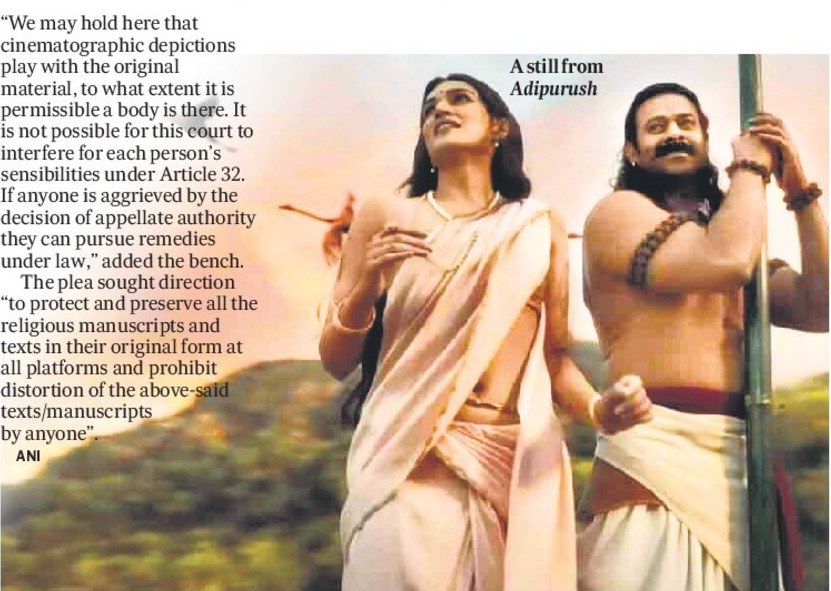
Actors Prabhas and Kriti Sanon-starrer Adipurush faced a lot of flak upon its release for tampering with Hindu epic Ramayana and hurting religious sentiments. Owing to that, a PIL was filed, seeking to revoke the CBFC certificate of the film for public exhibition. However, on Friday, the Supreme Court refused to entertain the plea and said that these aren’t matters for the court to hear.
Justice Sanjay Kishan Kaul remarked, “Why should we interfere under Article 32? Everybody is now touchy on everything. Should we scrutinize all of that? Tolerance for films, books these days is going down.”
Dismissing the plea, the bench headed by Kaul said the apex court should not become some kind of appellant authority for such matters. “We may hold here that cinematographic depictions play with the original material, to what extent it is permissible a body is there. It is not possible for this court to interfere for each person’s sensibilities under Article 32. If anyone is aggrieved by the decision of appellate authority they can pursue remedies under law,” added the bench.
The plea sought direction “to protect and preserve all the religious manuscripts and texts in their original form at all platforms and prohibit distortion of the above-said texts/manuscripts by anyone”.
Not challenging Rhea Chakraborty’s bail, government tells Supreme Court
8:56 AM

Amit Anand Choudhary (THE TIMES OF INDIA; July 19, 2023)
New Delhi : The Supreme Court on Tuesday said the Bombay High Court ruling in actress Rhea Chakraborty’s case—that giving money to a person for procuring drugs would not mean encouraging trafficking—would not be considered as a precedent while allowing NCB’s (Narcotics Control Bureau)’s plea not to challenge the bail granted to her.
At the outset of the hearing on NCB’s appeal, additional solicitor general S V Raju said the government was not challenging her bail and the legal issue regarding interpretation of Section 27A of the Narcotics Drugs and Psychotropic Substances (NDPS) Act be left open for a decision at a later stage.
The central agency disagreed with the HC’s interpretation of Section 27A (under which one can be jailed for up to 20 years for financing illicit drug trafficking and harbouring offenders) and urged the court that the ruling should not be treated as precedent by other courts.
Allowing the NCB’s plea, the bench of Justices A S Bopanna and M M Sundresh said, “At this stage, the challenge to the impugned order in so far as grant of bail may not be required. However, the question of law raised is left open to be considered in an appropriate case and, as such, the judgment may not be treated as precedent in any other case.”
Chakraborty and others, including her brother Showik, were accused of having facilitated procurement of drugs for actor Sushant Singh Rajput who died. She was arrested on September 8, 2021, and got bail on October 4, 2021.
While granting relief to the actress, the HC had pointed to the anomaly in Section 27A as the punishment for consumption of narcotic drugs was a maximum one year or imposition of fine up to Rs 20,000 but if some other person, such as a friend or a relative, paid for such drugs, the person who actually consumed the drug would be punished only with imprisonment up to one year but the person who paid for the drugs would face the prospect of spending 20 years in jail.
“Therefore, Section 27A will have to be interpreted harmoniously with other sections as well as the ‘objects and reasons’ of the Act so that it attacks illicit drug trafficking but does not extend to sentencing another accused more severely than the main offender."
I am unable to agree with the submission that giving money to another for consuming drugs would mean encouraging such a habit and would mean ‘financing’ or ‘harbouring’ as envisaged under Section 27A of the NDPS Act," the HC had said.
“I am satisfied that there are reasonable grounds for believing that the applicant is not guilty of any offence punishable under Sections 19, 24 or 27A or any other offence involving commercial quantity. There are no other criminal antecedents against her," Justice Sarang V Kotwal had said in his verdict.
------------------------------
Niharika Lal (BOMBAY TIMES; July 19, 2023)
The union government on Tuesday did not challenge the bail granted to Rhea Chakraborty by the Bombay High Court in the cases registered against her under the Narcotics Drugs and Psychotropic Substances (NDPS) Act when the matter came up for hearing in the Supreme Court. The Bombay HC had granted bail to Chakraborty in October 2020.
However, the government submitted that it wants to keep the Bombay HC interpretation of Section 27A of the NDPS Act (under which one can be sent to jail for a maximum of 20 years for financing illicit traffic and harbouring offenders) open for challenge at an appropriate time.
Representing the government in the SC, Additional Solicitor General SV Raju told a bench of Justices AS Bopanna and MM Sundresh, “We are not challenging the grant of bail, but on the interpretation of section, please keep it open for consideration. Let the order not be a precedent also.”
The SC ordered, “Union government submits bail is not being challenged. However, the question of law (is) kept open for consideration at an appropriate time. ”
NOT A DRUG DEALER: WHAT BOMBAY HC HAD SAID WHILE GRANTING RHEA BAIL
“She is not part of drug dealers. She has not forwarded the drugs allegedly procured by her to somebody else to earn monetary or other benefits... there are reasonable grounds for believing that she is not guilty of any offence punishable under Sections 19, 24 or 27A (of NDPS Act) or any other offence involving commercial quantity.”
SECTION 27A OF NDPS ACT
Section 27A prescribes punishment for financing illicit traffic and harbouring offenders, providing punishment of not less than 10 years, which may extend to 20 years. Application of Section 27A makes the offence not only non-bailable but prescribes additional condition under Section 37 that no such person shall be released on bail unless the public prosecutor has been given opportunity to oppose the bail, and, the court is satisfied that there are reasonable grounds for believing that the accused is not guilty of such an offence and is not likely to commit any offence while on bail.
NCB’S CONTENTION IN BOMBAY HC
During the hearing of Rhea and her brother Showik Chakraborty’s bail pleas in the Bombay High Court in Oct 2020, the Narcotics Control Bureau (NCB) argued that if a person does not disclose that someone known to them consumes drugs, that’ll amount to ‘harbouring’ of an offender, according to Section 27A of the Narcotic Drugs and Psychotropic Substances (NDPS) Act. This brought into focus the aforementioned section of the act and a peculiar case of not reporting a crime amounting to a far greater jail time than the actual crime itself.
West Bengal’s The Kerala Story ban puts ‘premium on intolerance’, says Supreme Court
8:18 AM

Will Hear Pleas Against Censors Approval In July
Dhananjay Mahapatra (THE TIMES OF INDIA; May 19, 2023)
New Delhi: The Supreme Court on Thursday stayed West Bengal’s May 8 ban on screening of The Kerala Story and told the TMC government that banning a movie just because some found it objectionable amounted to “putting a premium on intolerance”.
“Every film will evoke some level of intolerance in certain sections of the population. That cannot be ground for a government to ban screening of a film,” said the SC.
Bengal’s fears of “possibility of violent clashes between extremist elements” failed to impact the CJI-led bench’s pro-freedom of speech approach in dealing with the petition filed by the filmmaker, who had challenged the state’s ban. “It is the duty of the state to maintain law and order,” it said.
It also directed Tamil Nadu, where theatre owners withdrew the film after police warned of untoward incidents, to provide adequate security to the theatre-going public. However, when the state, as well as Muslim parties, made an issue about certain exaggerated and patently false narratives about conversion of Hindu and Christian women to Islam, the filmmaker volunteered to put an additional disclaimer by the evening of May 20—“There is no authentic data to back up the suggestion that the figure of conversion is 32,000 or any other established figure; the film represents a fictional and dramatized account.”
On the clearance from Central Board of Film Certification to the movie, the top court said it would hear the matter in July.
If any issue arises, don’t blame us, TMC tells oppn
TMC said that if any issue arises due to the showing of the film, the opposition should not blame the ruling party. It also asserted that the state government’s decision not to allow screening of the film was based on intelligence inputs and the party has nothing to do with it. The opposition welcomed the SC’s order.
The Kerala Story ban helped avert Akola-type violence, West Bengal government tells Supreme Court
8:30 AM

Urges SC Not To Interfere With Policy
Dhananjay Mahapatra (THE TIMES OF INDIA; May 18, 2023)
New Delhi : The West Bengal government on Wednesday told the Supreme Court that it banned the screening of the “highly controversial” ‘The Kerala Story’ to prevent violent clashes between communities, as had happened in Maharashtra’s Akola, and requested the court not to interfere with the policy decision taken by the state to ensure safety of citizens.
The Mamata Banerjee-led government said the policy decision, based on numerous intelligence reports, was taken to ensure safety and security of the people and maintenance of law and order. A bench headed by CJI D Y Chandrachud postponed the hearing, scheduled for Wednesday, to Thursday.
“The SC cannot interfere with policy either on the grounds that it is erroneous or on the grounds that a better, fairer and wiser alternative is available. Legality of the policy, and not the wisdom or soundness of the policy, is the subject of judicial review,” the state said, reminding the court about its series of judgments iterating that the scope of judicial review is only to scrutinize whether the policy violated fundamental rights of the citizens, laws or it is manifestly arbitrary.
The government told the court that it had deployed police personnel in plain clothes inside and outside theatres in the state, where the film was released on May 5, for the purpose of surveillance. As per intelligence report after the very first show of the film, the release of the movie is likely to cause “a violent clash between the extremist groups”.
“During surveillance, it was observed that the audience makes very objectionable comments whenever they see a particular scene where Hindu or Christian girls are seen tortured. While coming out of movie halls, people discuss among themselves to limit their interaction with Muslims and that these Muslims ought to be taught a lesson. On social media, videos, photos, and comments are being circulated against a particular community, which is further spewing (sic) hatred,” it said.
Referring to the violence at Akola in Maharashtra over a comment on the Prophet, the state said it bolstered the decision to timely impose a pre-emptive ban on the screening of the film.
It also said, “The film was scheduled to be released all over the UK on May 12 but prior to the release, it was announced that the British Board of Film Certification had not given the film an age-rating and therefore, the film was not publicly exhibited.”
Poor response behind dropping of The Kerala Story, says Tamil Nadu government in Supreme Court
8:21 AM

Dhananjay Mahapatra (THE TIMES OF INDIA; May 17, 2023)
New Delhi: Tamil Nadu told the apex court on Tuesday that it had made adequate security arrangements to prevent violent protests by Muslim organizations led by Indian National League against The Kerala Story, but theatre owners withdrew the film due to poor response and lack of popular stars in the cast. The SC will hear on Wednesday a plea by the film’s producer against the ban in West Bengal and ‘shadow ban’ in Tamil Nadu.
----------------------------------
Dhananjay Mahapatra (THE TIMES OF INDIA; May 17, 2023)
New Delhi: On the eve of the Supreme Court’s scheduled hearing of a plea filed by the producer of ‘The Kerala Story’ challenging the ban in West Bengal and ‘shadow ban’ in TN, the DMK government, in an affidavit by the additional DGP (law and order), said theatre owners had withdrawn the film on their own despite adequate security arrangements by the police.
Two days before the film’s release in Tamil Nadu on May 5, the intelligence department of the police had sent out a message to police stations, saying “there is every possibility that radical elements and members of religious organizations may resort to violent agitation/protest in front of theatres where the said film is released”, urging a ban on the movie.
It had asked all the police stations to take adequate precautions to “avert any untoward incident, and to maintain law and order and communal amity”.
The state said in its affidavit, “After its release, it appears that multiplex owners took the decision to stop screening the film on May 7 in view of the criticism received by it—lack of well-known actors, poor performances and poor audience response. The state exercises no control over theatre owners’ decision.”
It added, “Despite objections and protests from a few Muslim organizations, the film was released in 19 multiplexes throughout the state on May 5. It was heavily criticized, with some Muslim organizations alleging that it spread ‘anti-Muslim hate’ and ‘Islamophobia’ among the common public and has been produced solely with the intent to polarize other religions against Muslims.”
The state also said that it had made adequate security arrangements for the safe screening of the film and added, “There is no evidence of the state government’s involvement in the decision of theatre owners to discontinue screening of the film.”
Subscribe to:
Posts (Atom)